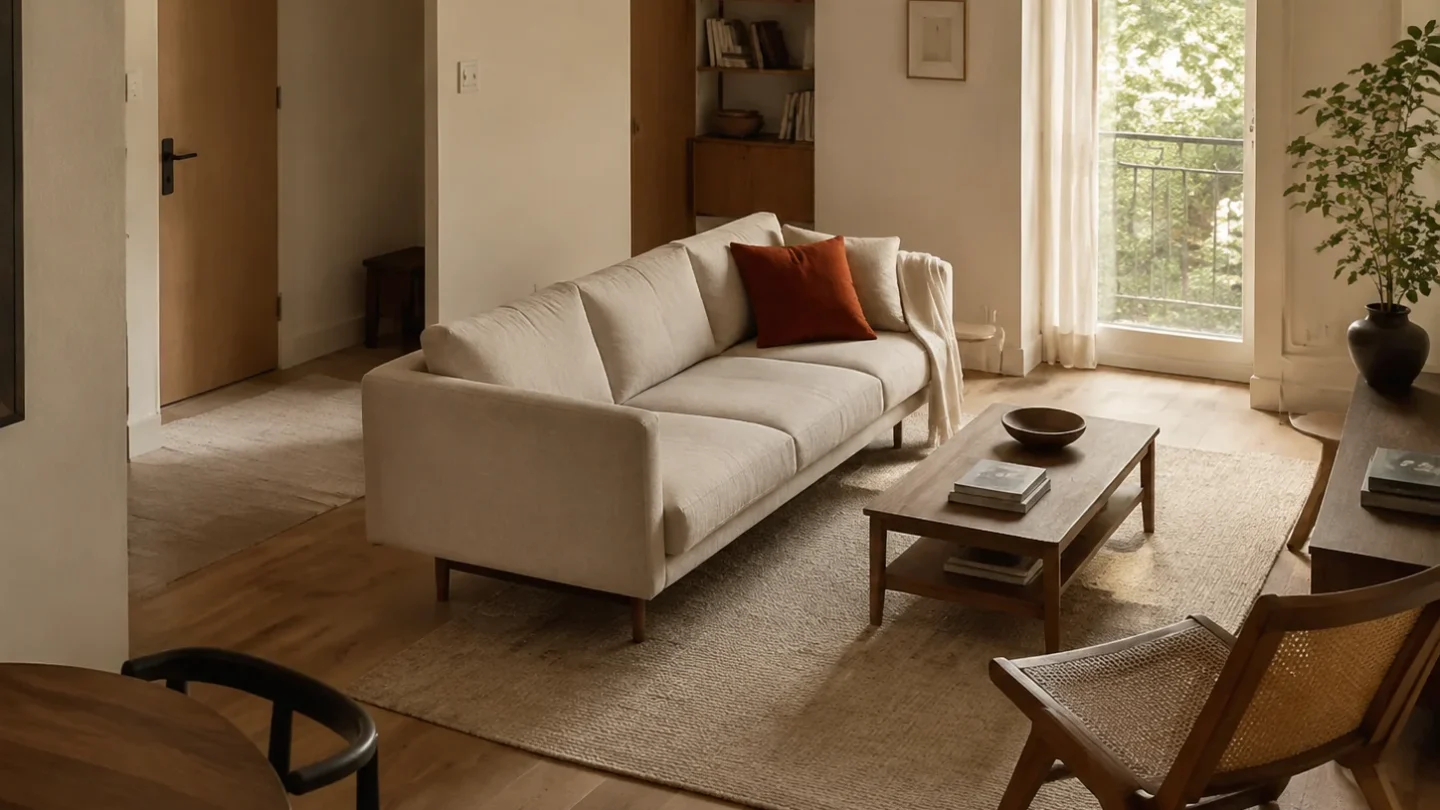
A multipurpose room can feel coherent even when its furniture changes jobs. The key is to make the background consistent, contain the transition tools, and let one visual idea connect every mode.
Choose one dominant room identity
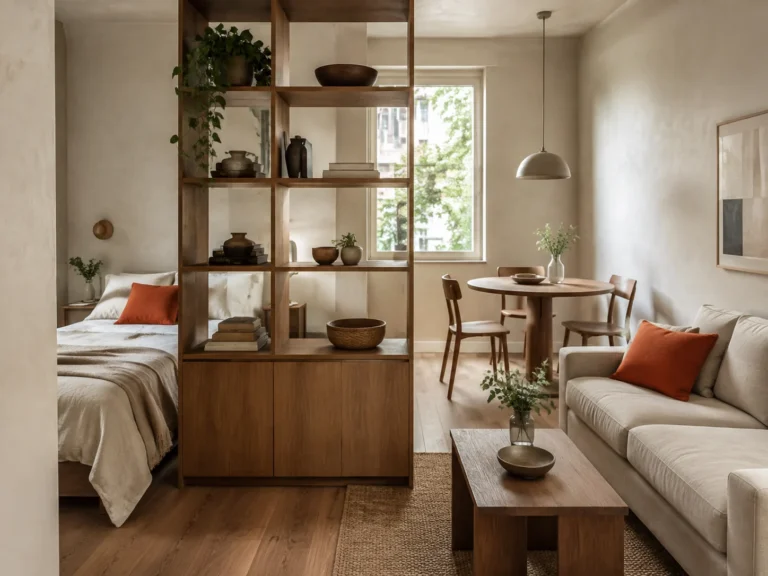
Decide whether the space should read first as a living room, bedroom, dining room, or studio. Let the largest surfaces support that identity while secondary functions use furniture that closes or blends in.
Repeat two materials across zones
The same wood tone, metal finish, or woven texture can connect a desk, dining corner, and seating area. Repetition makes different furniture feel collected rather than improvised.
Store the transition equipment together
Keep laptop stands, dining placemats, bedding, or exercise accessories in one container near the place they are used. A fast transition is more likely to happen every day.
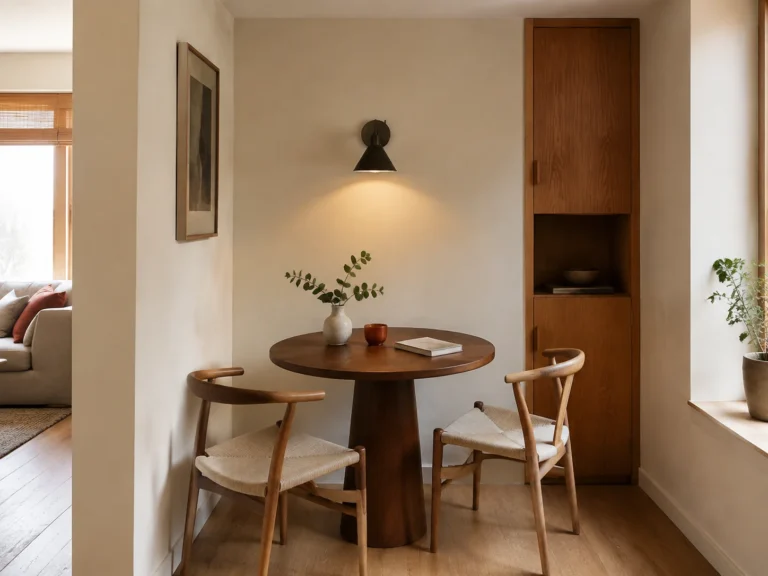
Use lighting to announce the mode
Focused task light supports work, a lower shaded lamp signals rest, and a pendant can define dining. Keep the bulb color consistent so the whole room still belongs together.
Photograph the room in each of its main modes. Any object that looks stranded in every version needs a better home, a second function, or a thoughtful exit.
Community
Join the conversation
Add a useful idea, ask a specific question, or share what worked in your space. Every comment is reviewed before it appears.