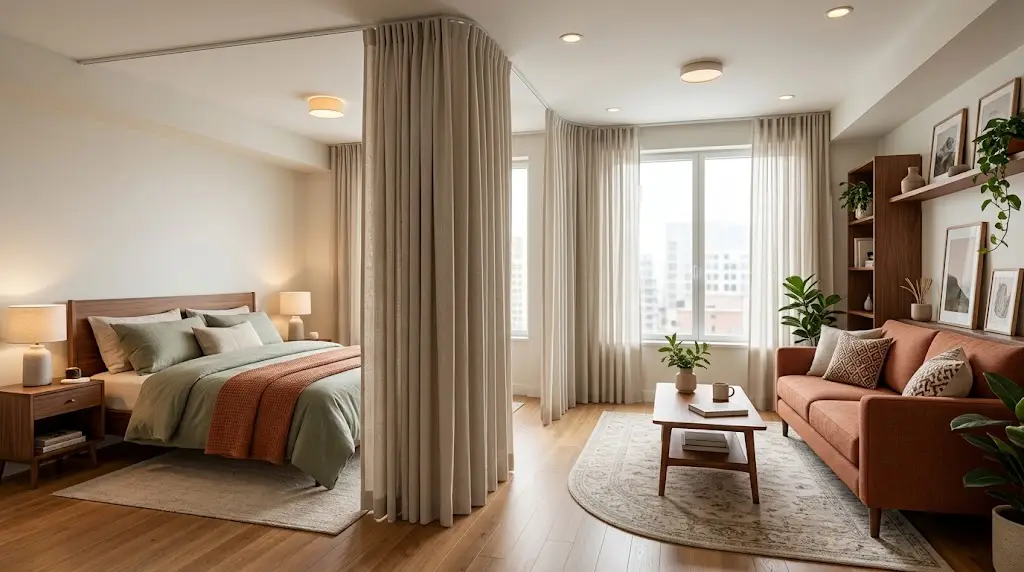
A studio apartment can feel bright and open, but sometimes it also feels a little too open.
Your bed may be visible from the sofa. Your sleeping area might sit directly beside your workspace. Guests may walk through the door and immediately see almost everything.
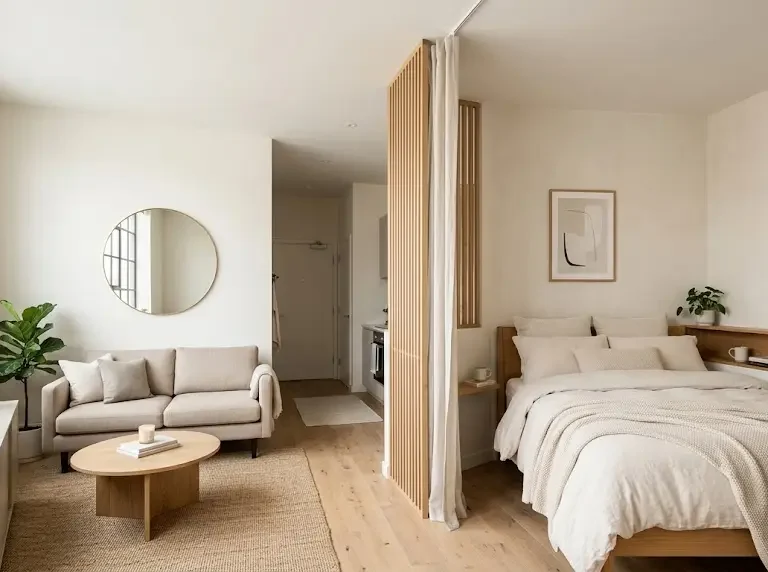
Curtains can solve that problem without taking up much floor space.
The best studio apartment curtain divider ideas create privacy when you want it, then disappear when you want the room to feel open again.
That flexibility is what makes curtains so useful in small homes.
You can use sheer fabric to gently define a sleeping zone, heavier curtains for stronger privacy, ceiling tracks for a polished look, or colorful fabric to turn the divider into part of your decor.
I have noticed that curtain dividers work especially well when they feel intentional rather than temporary. The fabric, length, placement, and hardware all make a difference.
Here are 17 beautiful ways to make one room feel like two without building a wall.
1. Hang Sheer Curtains Around the Bed
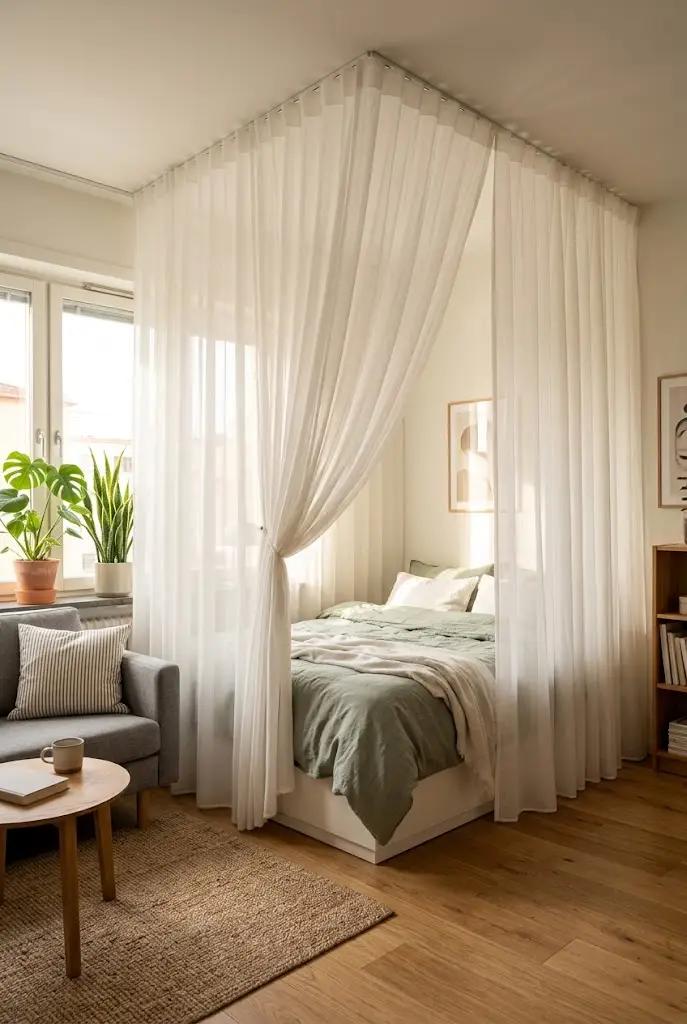
Sheer curtains are perfect when you want separation without losing natural light.
Install them around one or two sides of your sleeping area.
During the day, sunlight can still move through the fabric.
At night, the curtains create a softer visual boundary around the bed.
White, ivory, soft gray, or warm neutral fabric can make the sleeping zone feel calm without drawing too much attention.
This works especially well in studios with only one large window.
You get a little privacy while keeping the apartment bright.
2. Use Floor to Ceiling Curtains
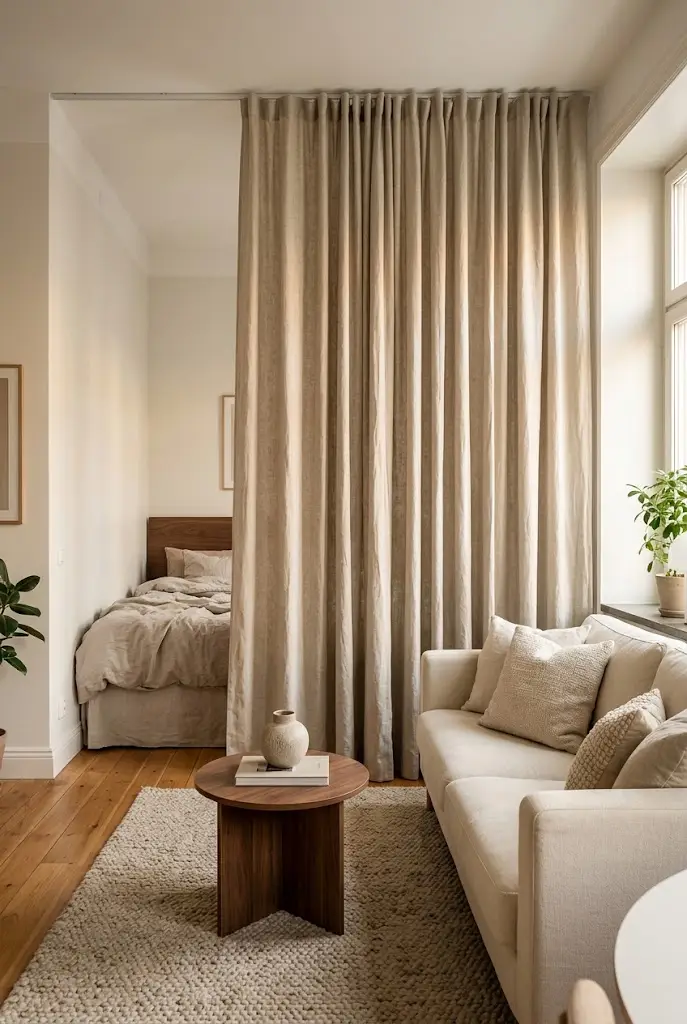
Long curtains can make a studio feel taller and more polished.
Mount the curtain track close to the ceiling and let the fabric fall almost to the floor.
This creates a stronger visual boundary between the sleeping and living areas.
The long vertical lines naturally draw the eye upward.
Choose a fabric with a soft drape so the divider feels elegant instead of heavy.
In my experience, floor to ceiling curtains often look more intentional than shorter panels because they feel like part of the architecture.
3. Add a Ceiling Track Around the Sleeping Area
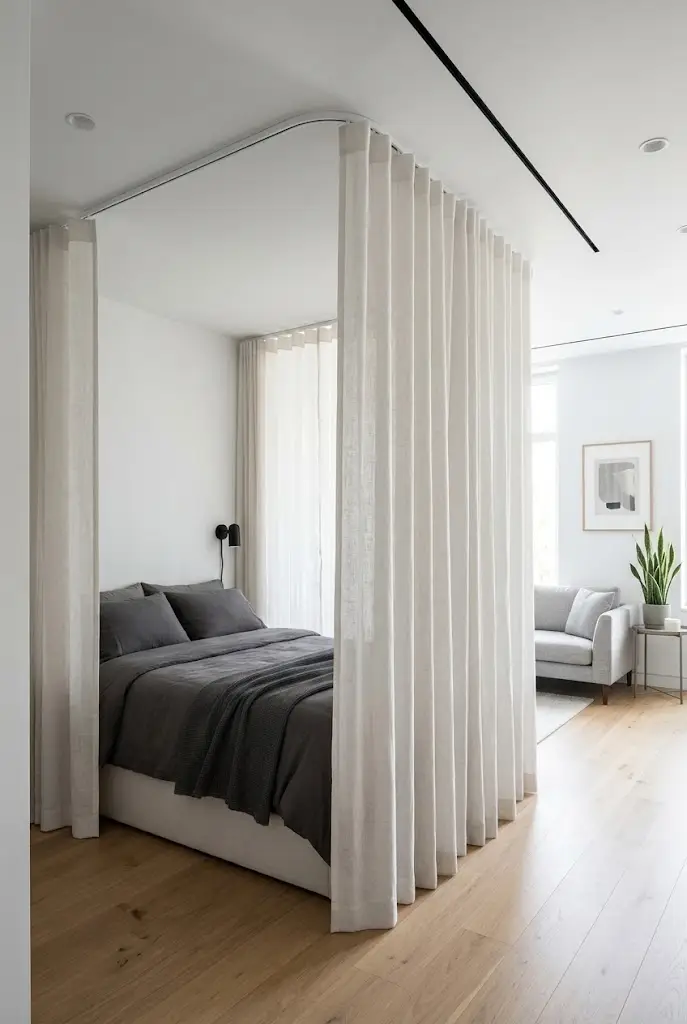
A ceiling track is one of the cleanest ways to create a curtain divider.
You can run the track along one side of the bed or wrap it around two sides for more privacy.
When the curtains are open, they gather neatly against the wall.
When they are closed, the bed instantly feels like its own room.
This is especially helpful when your bed sits in an exposed part of the apartment.
Choose simple hardware that blends with the ceiling so the fabric becomes the main visual feature.
4. Choose Linen for a Relaxed Look
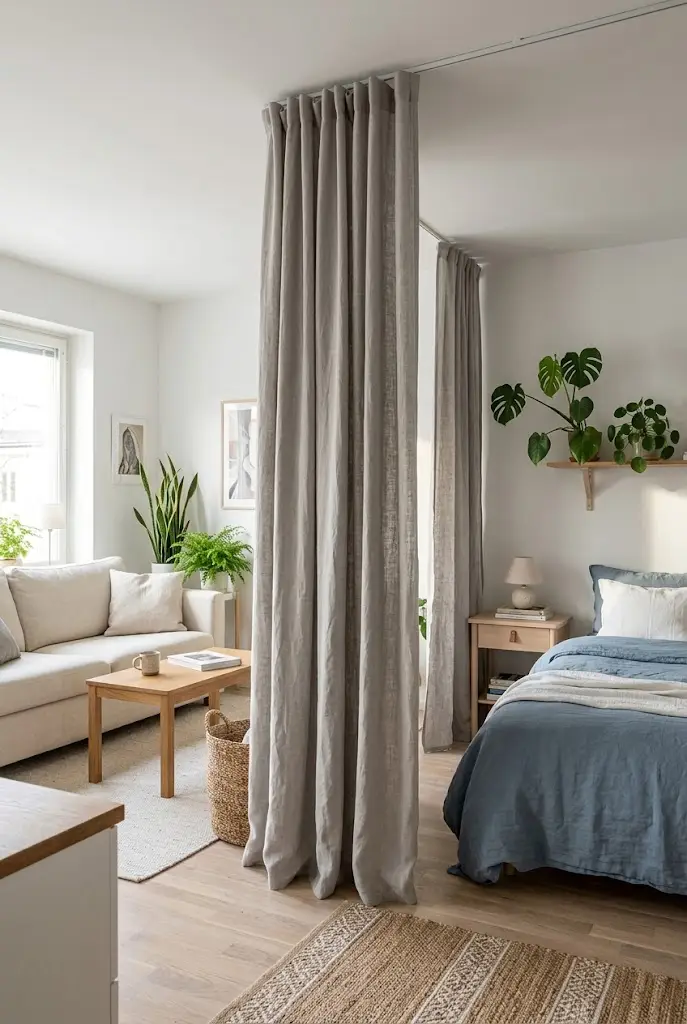
Linen curtains can make a studio feel softer and more natural.
The fabric has enough texture to add interest without making the space feel busy.
Try warm white, stone, soft beige, muted sage, or dusty blue.
Linen works beautifully with wood furniture, woven baskets, plants, and neutral bedding.
The slightly relaxed texture also prevents the room from feeling too formal.
If you want a divider that feels calm and lived in, linen is a beautiful choice.
5. Use Velvet for Stronger Privacy
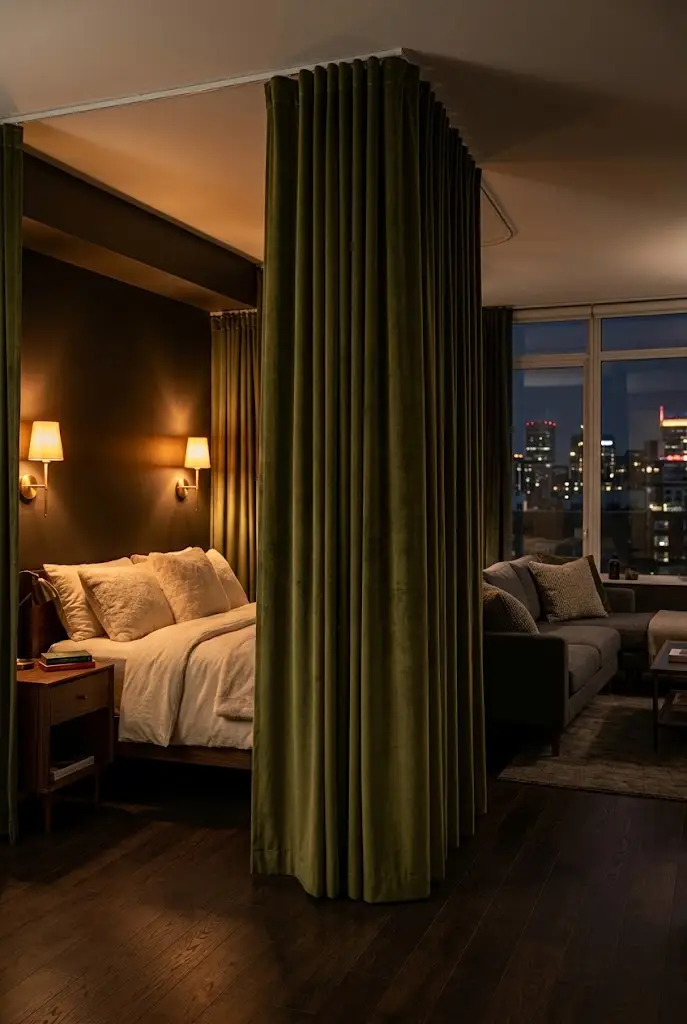
If you want the sleeping area to feel more enclosed, velvet can create a richer look.
Choose a deep color such as olive green, navy, burgundy, chocolate brown, or charcoal.
The heavier fabric blocks more visual clutter than sheer curtains.
It can also make the bed area feel especially cozy in the evening.
Use velvet carefully in a very small studio.
A dark curtain across an entire room can feel heavy, so keep the surrounding walls and furniture lighter if possible.
6. Keep One Side Open
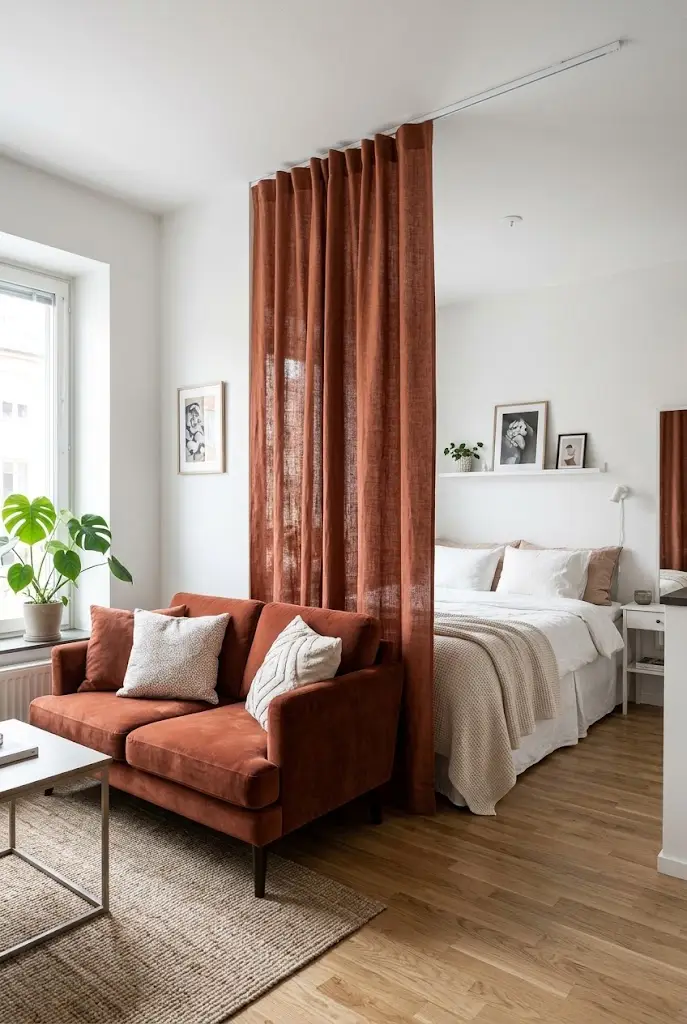
You do not need to completely surround the bed.
Sometimes one curtain panel is enough.
Place it between the bed and living room while leaving the other sides open.
This gives you privacy where you need it most without making the sleeping zone feel enclosed.
It also uses less fabric and keeps the apartment easier to move through.
This is one of the simplest solutions for an extra small studio.
7. Create a Curtain Behind the Sofa
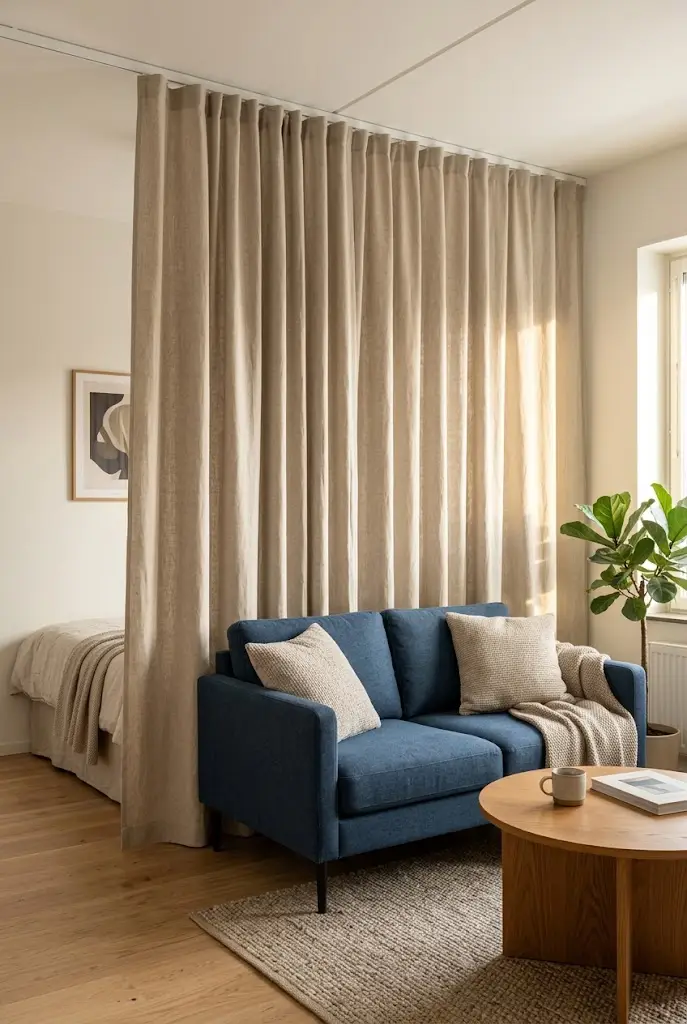
If your sofa sits in front of the bed, use a curtain between the two zones.
The living room will feel more complete because the bed disappears from view when the curtain is closed.
Open the curtain during the day to bring back the full depth of the apartment.
This layout works especially well when the sofa already creates a natural boundary.
The curtain adds another layer of separation without requiring more furniture.
8. Hide the Bed From the Entry
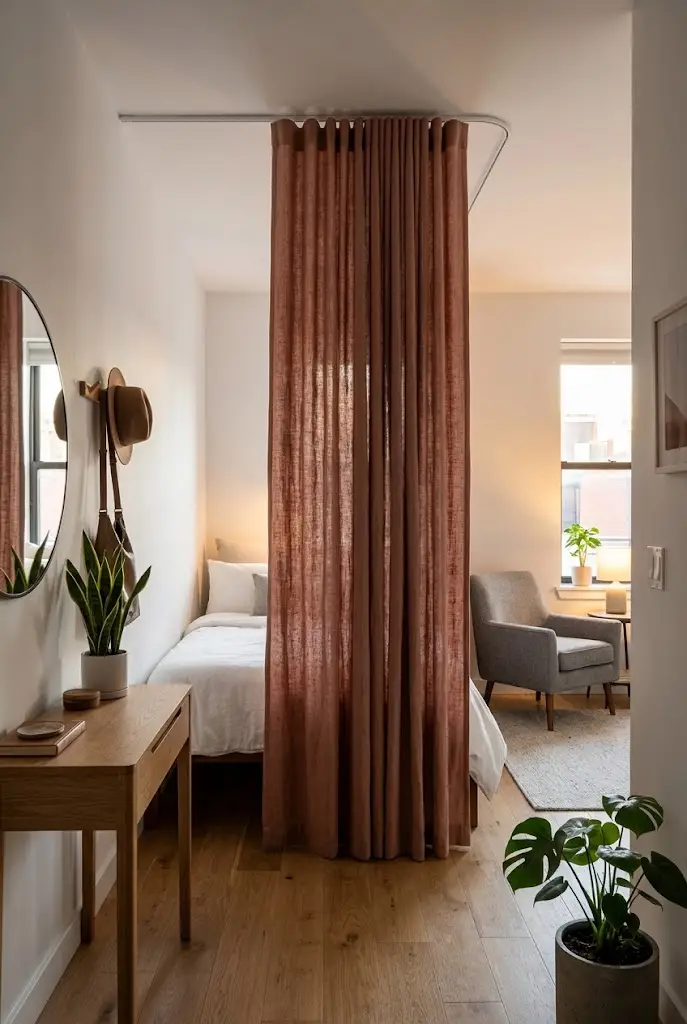
One of the most useful places for a curtain divider is between the front door and the sleeping area.
If your bed is the first thing you see when entering the apartment, hang a curtain to interrupt that direct sightline.
You do not need to cover the entire bed.
Even a partial panel can make the entrance feel more intentional.
Add a small mirror, shoe storage, or narrow console near the door to strengthen the sense of an entry zone.
Suddenly, the apartment can feel much more private.
9. Combine Curtains With Open Shelving
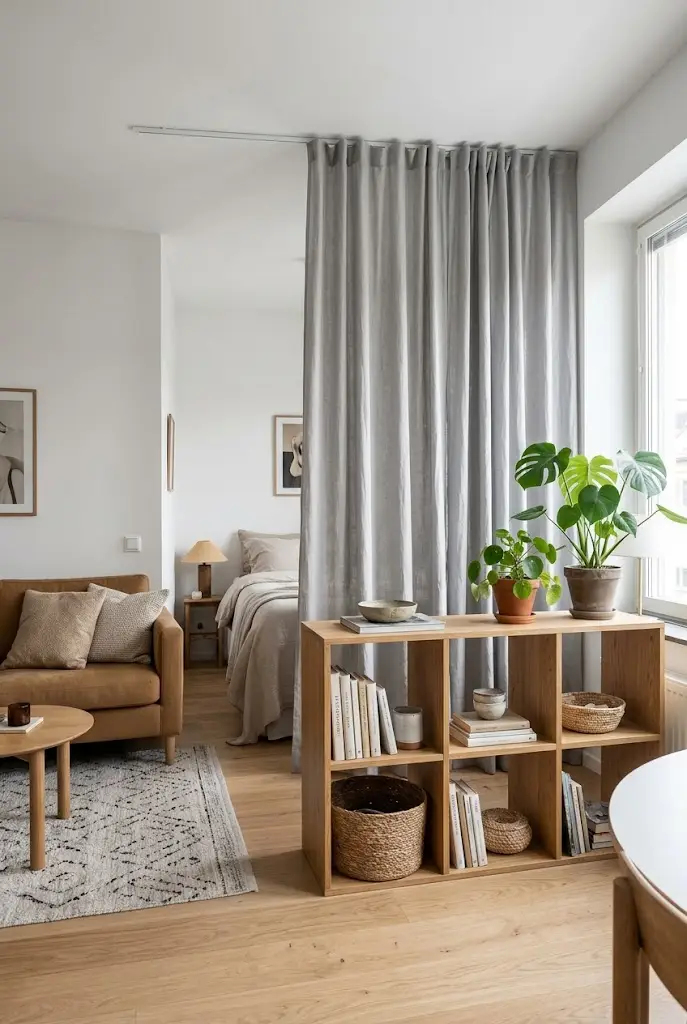
Curtains and open shelving can work beautifully together.
Use a low or narrow shelf near the bed for storage.
Then add a curtain behind or beside it for extra privacy.
The shelving can hold books, baskets, plants, and everyday items.
The curtain provides a soft backdrop.
This layered approach often feels more finished than using either solution alone.
I have seen this work especially well when the shelf stays relatively low and the curtain carries the visual height.
10. Try a Two Layer Curtain Divider
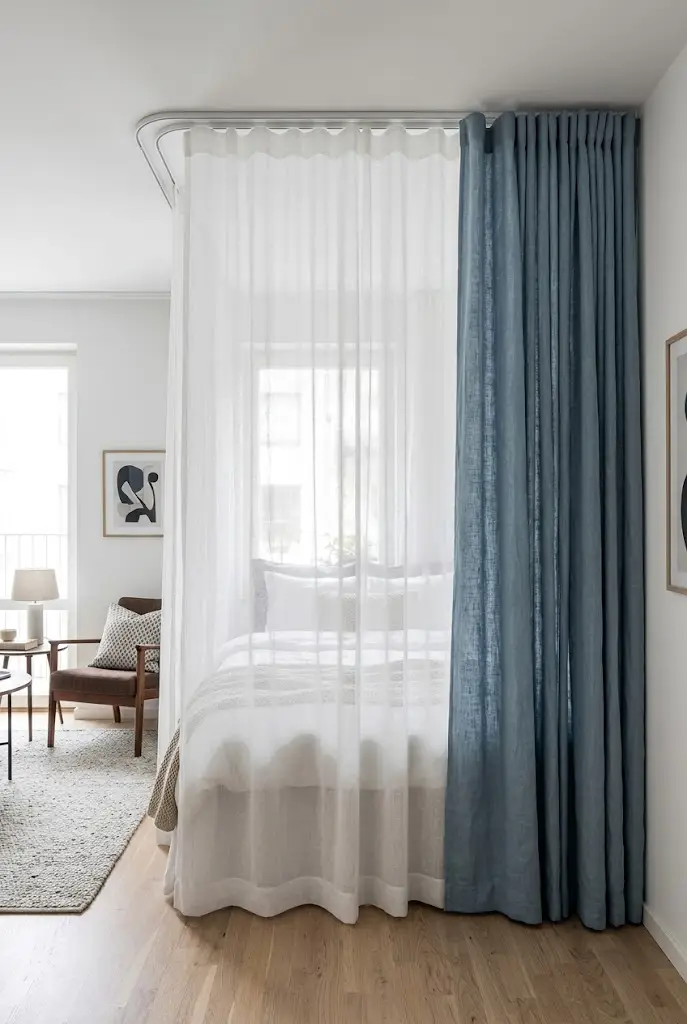
A two layer setup gives you more control over privacy and light.
Use a sheer curtain as the first layer.
Add a heavier curtain behind it.
During the day, keep the heavier panel open and let the sheer fabric soften the view.
At night, close both layers when you want more privacy.
This is useful if your studio changes throughout the day.
The same sleeping area can feel airy in the morning and cozy in the evening.
11. Add Color With a Statement Curtain
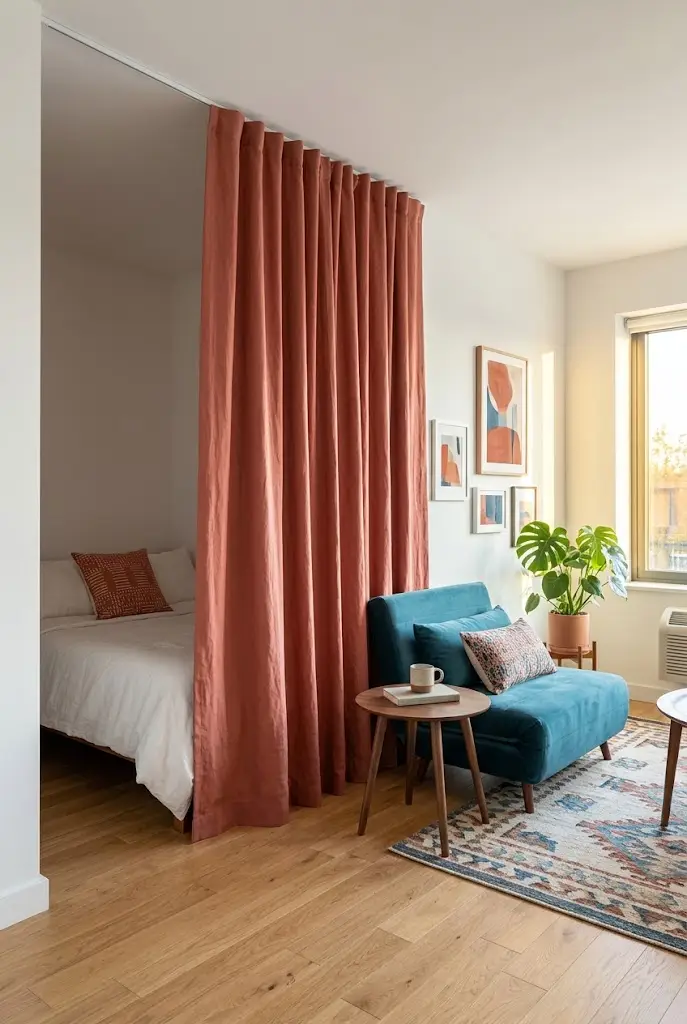
Your divider does not have to disappear into the background.
A colored curtain can become part of the room.
Try rust, deep green, muted terracotta, dusty rose, or soft blue.
Repeat that color somewhere else in the apartment through cushions, bedding, artwork, or a rug.
This makes the curtain feel connected to the rest of the decor.
In a small studio, one strong color moment can be more effective than lots of small decorative objects.
12. Use Curtains to Hide Your Workspace
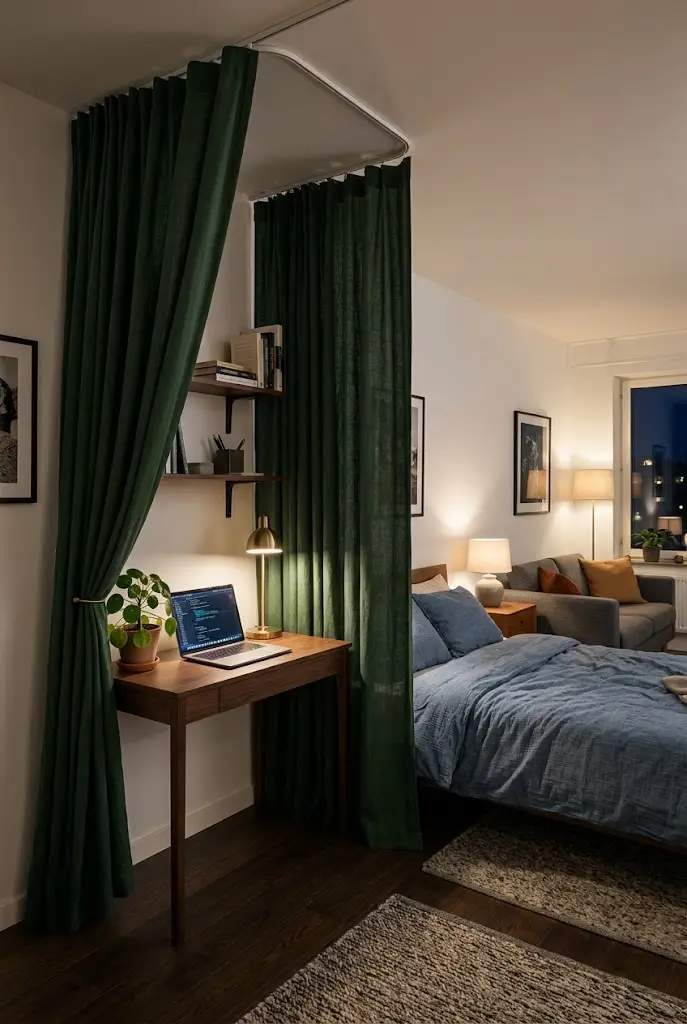
Curtain dividers are not only for beds.
If your desk sits in a visible corner, use a curtain to hide the workspace after the day is over.
Close it when you want the apartment to feel calmer.
Open it when you need to work.
This can be especially helpful if you work from home and struggle to mentally separate work from rest.
A simple fabric boundary can make the apartment feel more flexible.
13. Divide the Dining Area With a Soft Curtain
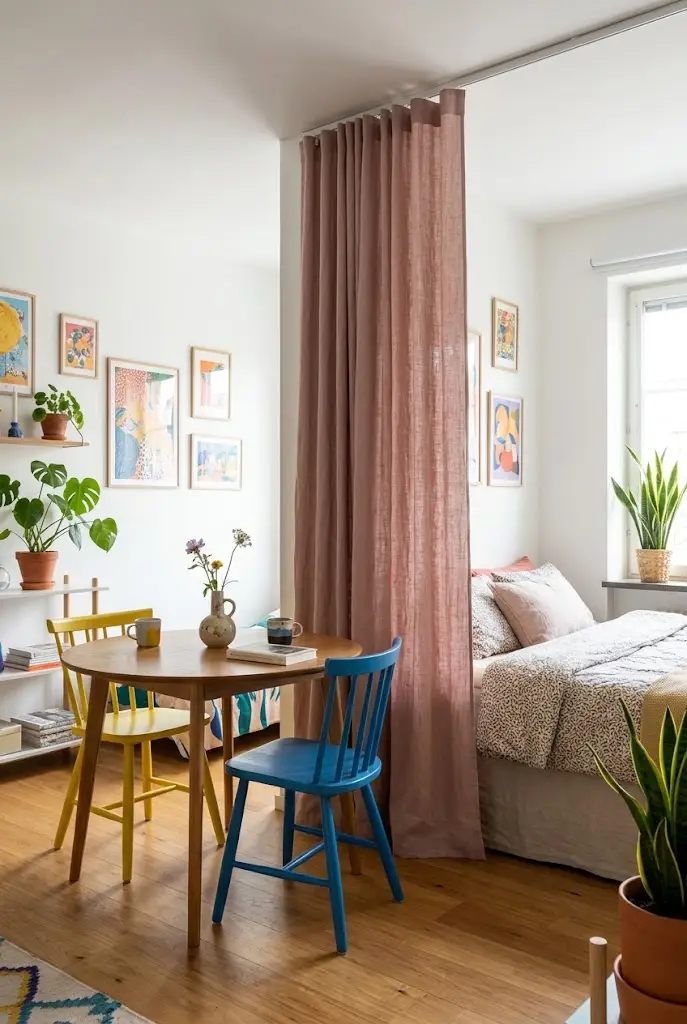
If your dining table sits close to the bed, a narrow curtain can create a subtle boundary.
You do not need a full wall of fabric.
A single panel beside the dining area may be enough.
The curtain gives the table its own visual zone while keeping the rest of the apartment open.
This works well in layouts where the dining surface also serves as a desk.
You can visually separate that activity zone from the sleeping area.
14. Use a Curved Curtain Track
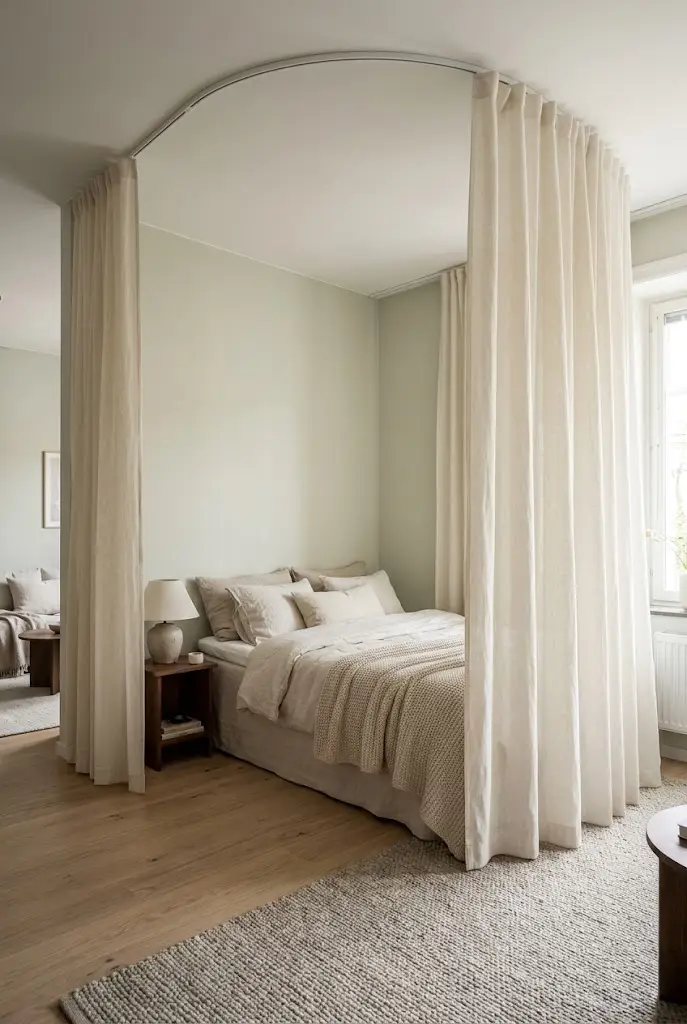
A curved track can create a cozy sleeping nook.
Instead of drawing a straight line across the apartment, wrap the curtain gently around the bed.
This creates a softer shape and can make the sleeping area feel more intentional.
A curved divider works particularly well when the bed sits in a corner.
Use lighter fabric if the enclosed zone is small.
The goal is privacy without making the bed feel boxed in.
15. Match the Curtains to the Wall Color
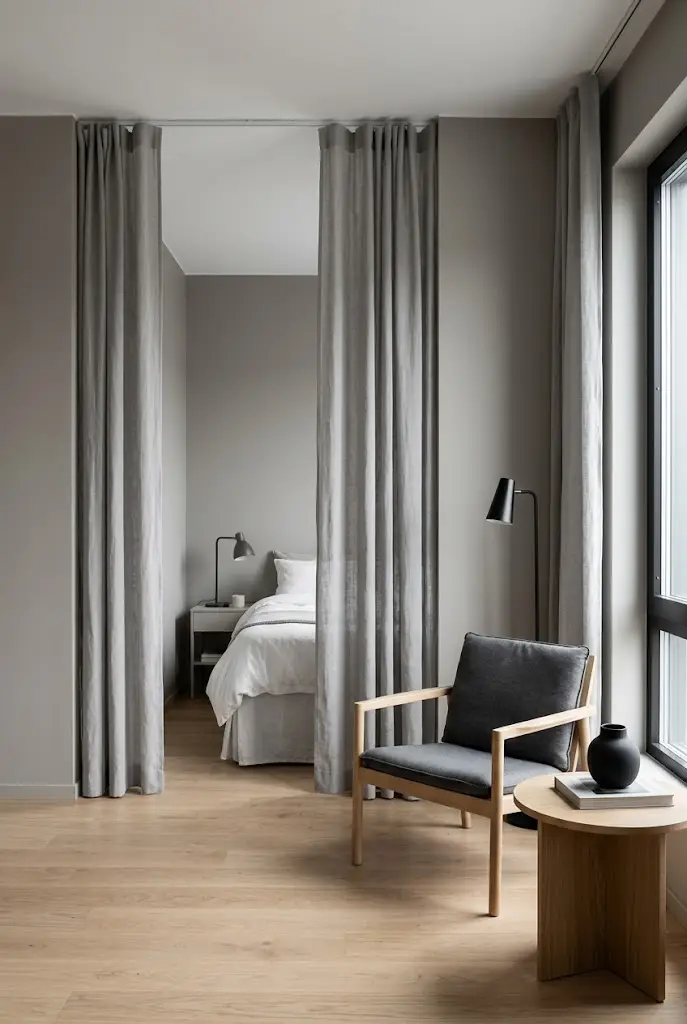
If you want the divider to feel subtle, choose curtains close to the wall color.
White walls with white curtains create a clean seamless look.
Warm beige walls pair beautifully with oatmeal or stone fabric.
Soft gray walls can work with misty gray curtains.
When the colors are similar, the divider blends into the apartment instead of visually cutting it in half.
This can help a small studio maintain a more spacious feeling.
16. Use Curtains With Warm Evening Lighting
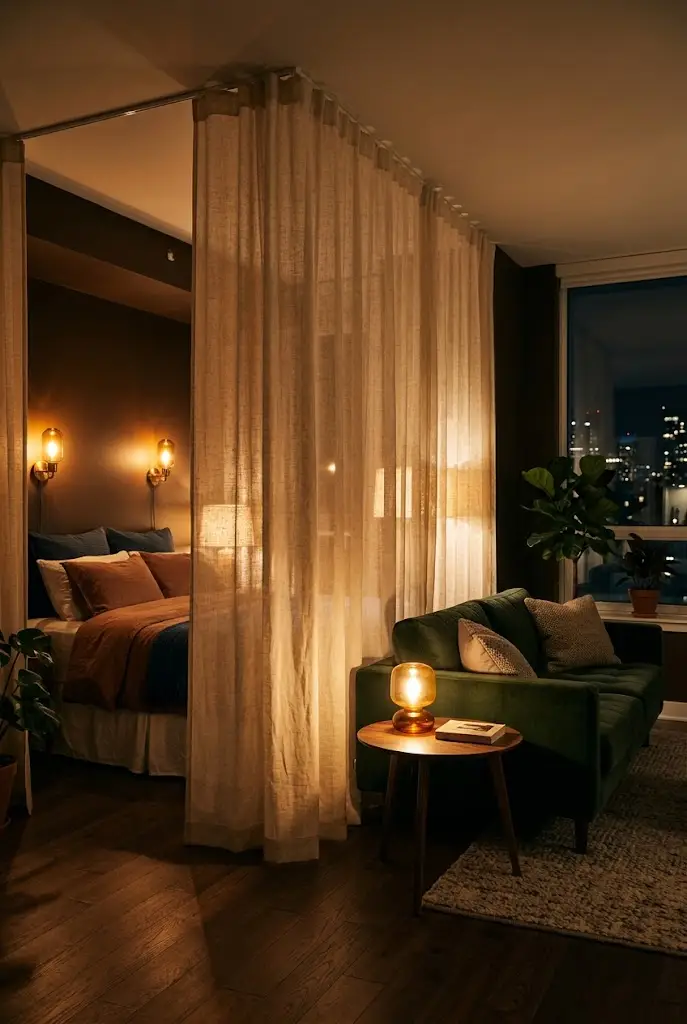
A curtain divider becomes especially beautiful after dark when the lighting is right.
Place a small lamp beside the bed or use a wall mounted light.
When the curtain is partly closed, the warm glow creates a cozy sleeping zone.
Sheer fabric can softly diffuse the light.
Heavier curtains can make the area feel more intimate.
I have noticed that evening lighting often makes simple curtain dividers look much more luxurious.
The effect comes from atmosphere rather than expensive materials.
17. Let the Curtain Stack Neatly When Open
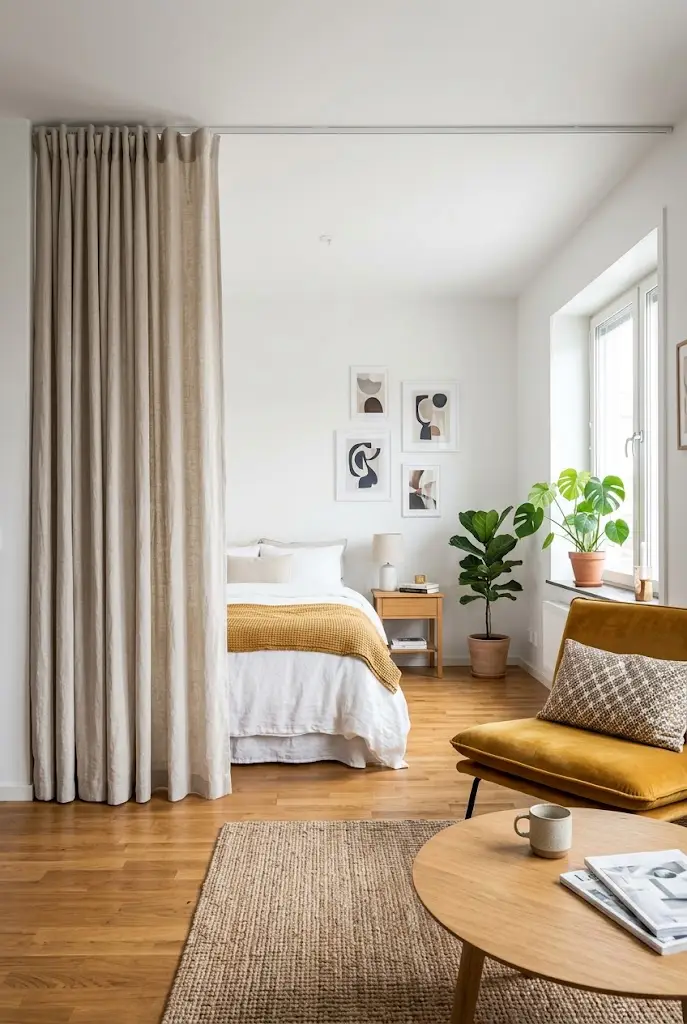
How the curtain looks when open matters just as much as how it looks when closed.
Choose enough wall space for the fabric to gather neatly.
Avoid letting a large pile of fabric block a walkway or window.
Use simple tiebacks if needed.
A curtain that opens cleanly gives you the best of both layouts.
You can have a fully open studio during the day and stronger privacy when you want it.
That flexibility is what makes curtains such a smart divider for small spaces.
How to Choose the Right Curtain Fabric
Start with the amount of privacy you need.
Sheer curtains create gentle separation but will not hide everything.
Linen offers more coverage while still feeling light.
Cotton provides a simple everyday look.
Velvet gives you stronger visual privacy and a richer appearance.
Think about natural light too.
If your bed sits between the window and living room, a heavy curtain may darken the rest of the apartment.
In that situation, lighter fabric usually works better.
What Curtain Color Works Best in a Small Studio
Light colors are usually the easiest choice if your goal is to keep the room feeling open.
White, ivory, beige, pale gray, and soft natural tones reflect more light.
Darker colors can create a dramatic cozy sleeping zone.
If you choose dark curtains, repeat the color somewhere else in the room so it feels intentional.
You can also use muted color rather than very bright fabric.
Sage green, dusty blue, warm terracotta, and soft rust can add personality without overwhelming a small space.
How to Keep Curtain Dividers From Blocking Light
Pay attention to the location of your main window.
Try not to place a thick curtain directly across the path of natural light unless privacy matters more.
Choose sheer or semi sheer fabric near windows.
Open the curtain during the day whenever possible.
You can also use a shorter section of curtain rather than stretching fabric across the entire room.
The goal is to interrupt sightlines without stopping brightness.
How Wide Should a Curtain Divider Be
Measure the area you actually need to hide.
A divider does not always need to stretch from wall to wall.
You may only need enough fabric to cover the side of the bed visible from the sofa or entrance.
Using less fabric can help the apartment feel more open.
If you want a fuller look, choose enough fabric to create soft folds rather than pulling the curtain completely flat.
That gives the divider a more polished appearance.
How to Make Curtain Dividers Look Expensive
Mount the track close to the ceiling.
Choose curtains that almost reach the floor.
Use enough fabric for gentle fullness.
Keep the hardware simple.
Repeat the curtain color somewhere else in the room.
Avoid excessive patterns if the apartment already has lots of visual detail.
I have found that simple fabric hung well almost always looks better than expensive fabric installed poorly.
Proportion and placement matter more than price.
Common Curtain Divider Mistakes to Avoid
One common mistake is choosing fabric that is too heavy for the room.
Another is hanging the curtain too low.
A low curtain rod can visually shorten the space.
Curtains that stop awkwardly above the floor can also look unfinished.
Avoid blocking the main window whenever possible.
Make sure the track placement does not interfere with cabinets, doors, lighting, or comfortable walking space.
Finally, choose a divider based on how you actually use the apartment.
A beautiful curtain is not useful if you never want to close it.
Make One Room Feel Like Two With Fabric
Curtains are one of the simplest ways to change how a studio apartment feels.
They can hide the bed from the front door.
They can create a softer bedroom.
They can separate work from relaxation.
They can help a living area feel more complete.
And unlike a permanent wall, they can disappear in seconds.
The smartest studio apartment curtain divider ideas create privacy without sacrificing the flexibility that makes an open layout useful.
Start with the sightline that bothers you most.
Choose a fabric that works with your natural light.
Hang it high.
Keep the length generous.
Then let the curtain become part of the room instead of something you are trying to hide.
With the right placement, one simple piece of fabric can make a single open room feel like two distinct spaces.
Read More:
25 One Bedroom Apartment Ideas to Maximize Every Inch
Cheap Studio Apartment Wall Art Ideas That Look Expensive
17 Cozy Fall Apartment Bedroom Decor Ideas That Feel Warm, Not Cluttered
Community
Join the conversation
Add a useful idea, ask a specific question, or share what worked in your space. Every comment is reviewed before it appears.