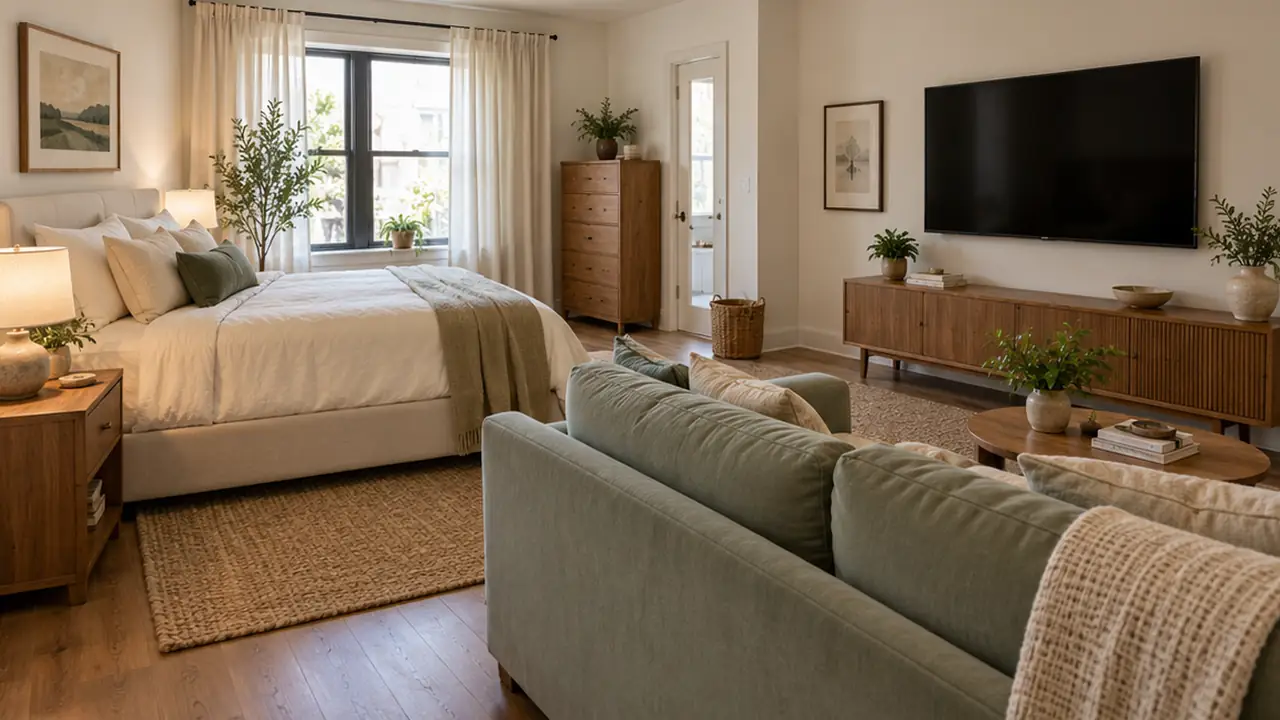
Finding bedroom with TV and sofa layout ideas that work starts with the way you move through your room. A sofa should give you somewhere comfortable to sit without turning the bed, closet, or doorway into an obstacle course. The television needs a sensible viewing position too, whether you mostly watch from the pillows or settle into a seat for the evening.
Before buying furniture, sketch the doors, windows, outlets, and pieces you already own. Then decide which seat deserves the clearest view. These seventeen arrangements and finishing details help you compare practical options, test them with simple measurements, and make a small bedroom feel comfortable for both resting and relaxing.
1. Footboard Loveseat
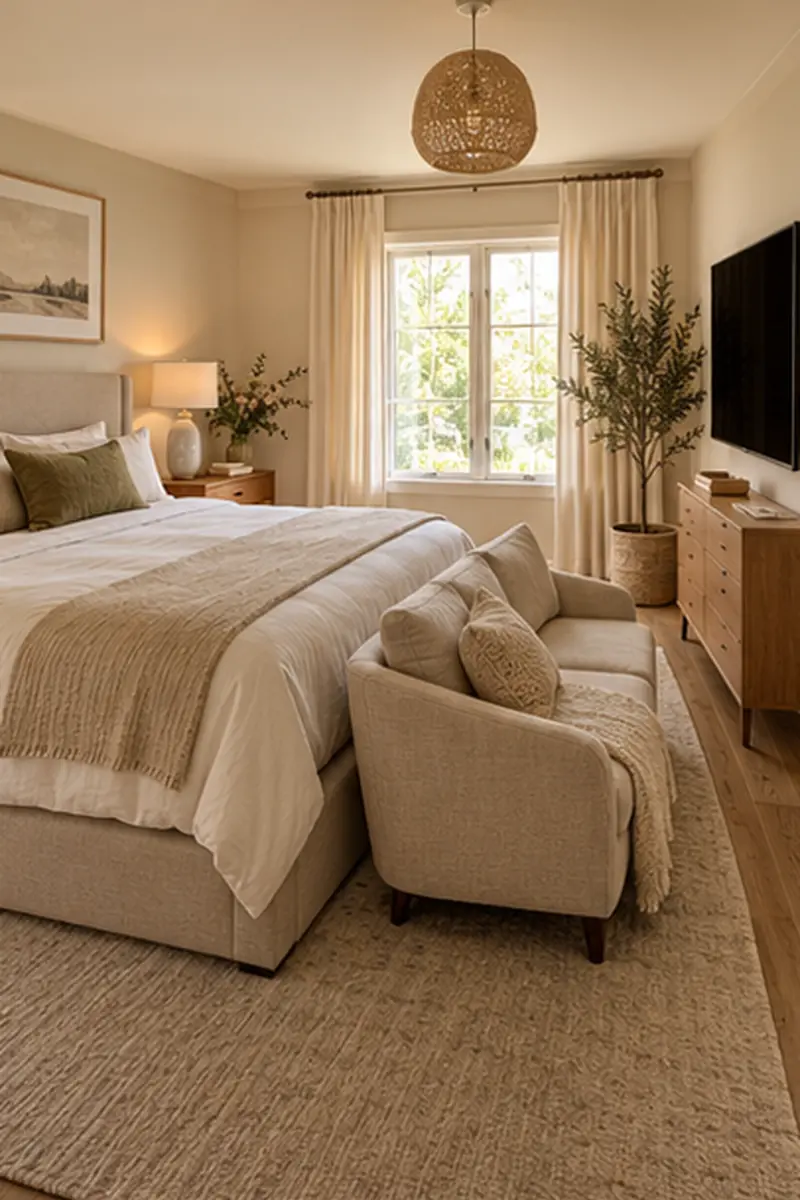
A loveseat at the foot of the bed gives evening television its own comfortable seat. Choose a back low enough to keep the room feeling open, then position the sofa facing the screen. Leave a usable gap behind it if you need access to bedding or an opening storage base.
Before committing, mark the full sofa footprint with removable tape and walk around it from both sides of the bed. Include the arms, not just the seat cushion. This arrangement suits a longer bedroom; in a short room, a sofa along the side wall may leave a better route.
2. Parallel Side Seating
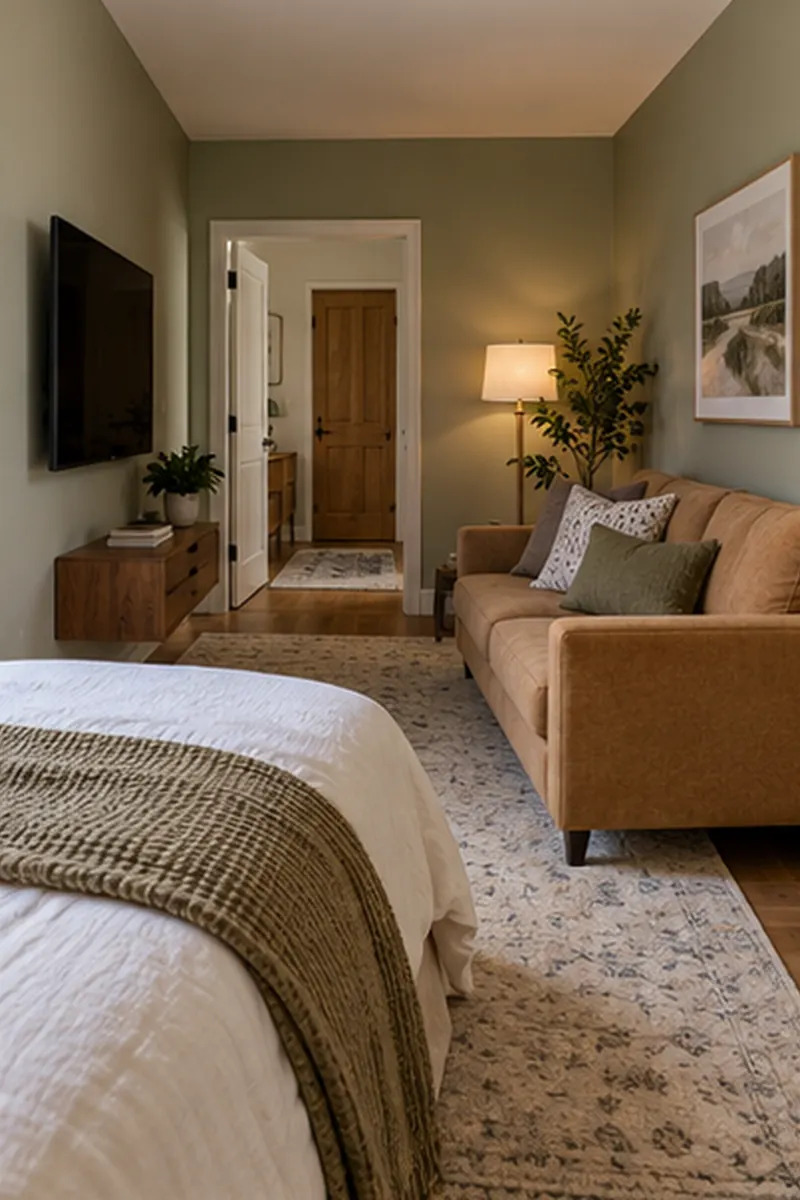
- Run a slim sofa along the same direction as the bed in a narrow rectangular room.
- Keep the main walking route between the furniture clear enough for your everyday movements.
- Place the television on the wall opposite the sofa, away from the bed’s headboard, so the main seat faces it directly.
- Use a side table at the outer sofa arm rather than putting a coffee table in the passage.
Think of the room as two long lanes, with a place to sleep beside a place to sit. A sofa with narrow arms and a modest depth helps this arrangement feel less crowded. Measure the complete bed frame too, because upholstered edges can quietly use up your available floor space.
3. Corner Viewing Nook
Quick Tip:
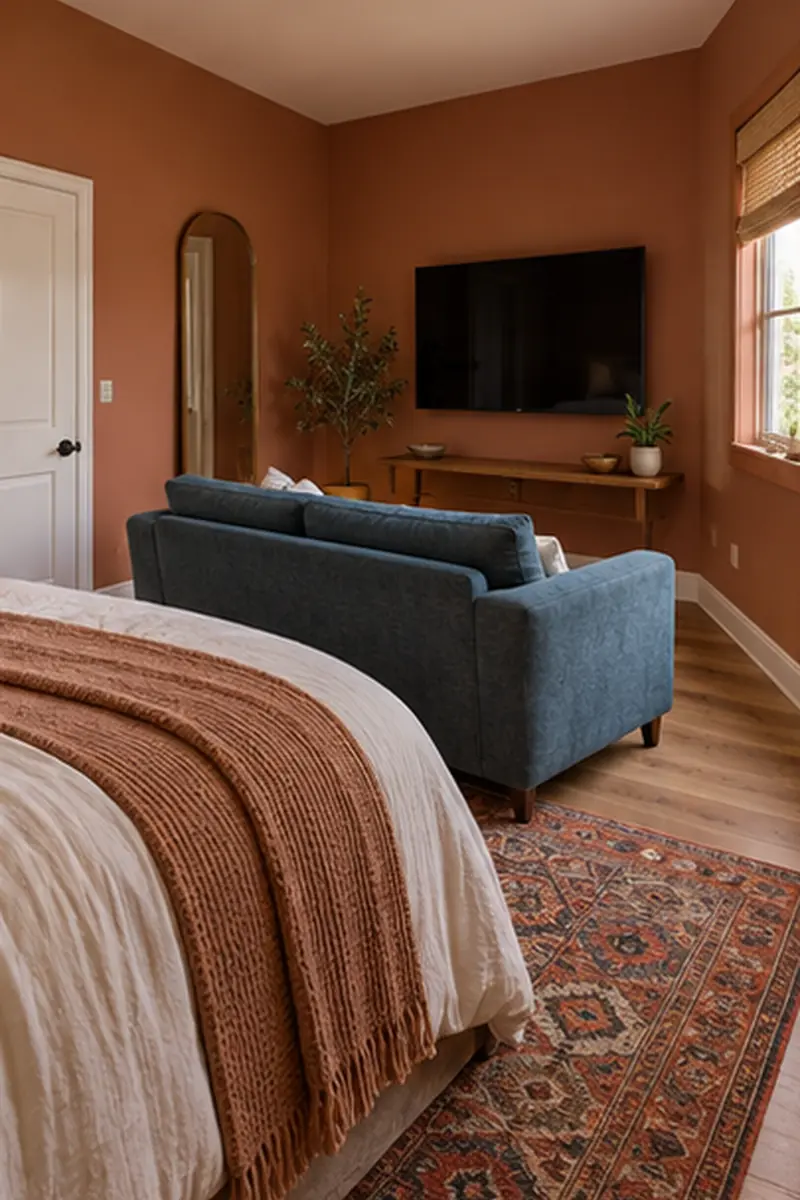
Quickly test an unused corner with a chair before moving the sofa there. Sit facing the proposed screen position, then check whether you can stand and leave without stepping around the bed.
A compact loveseat can occupy a corner that is awkward for larger furniture, especially when the television sits on an adjacent wall. Keep the angle gentle and the remaining corner empty. Choose a small reachable side surface, and let the open floor in front of the sofa serve as the approach.
4. Shared Screen Axis
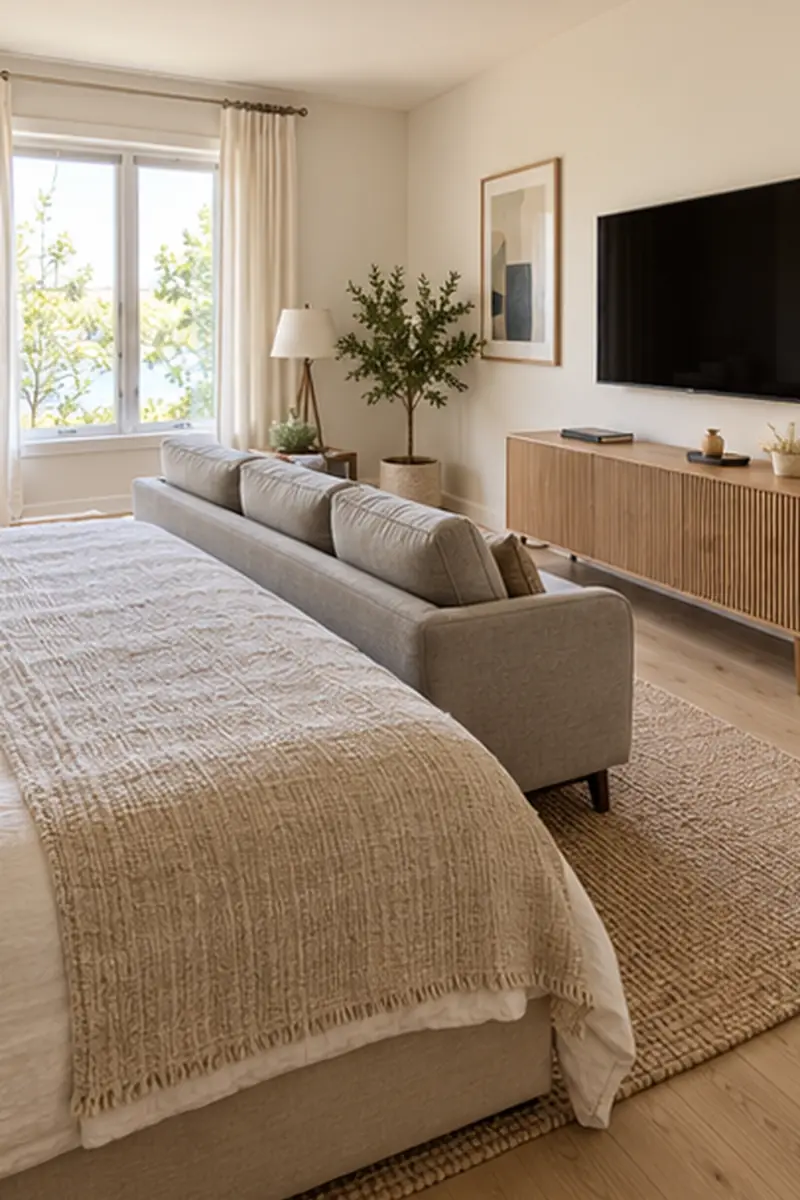
BEFORE: The sofa faces one wall while the bed faces another, leaving someone watching sideways. A tall sofa back also interrupts the view from the pillows.
AFTER: The television, sofa, and bed share a simple front-to-back line. A low-backed sofa allows a clearer view from the bed when the room is long enough.
Try both viewing positions before deciding where the screen belongs. Sit normally on the sofa and prop yourself up as you would in bed. If one position still feels awkward, choose a primary seat rather than forcing an uncomfortable compromise. Keep space beside the aligned furniture for an uninterrupted exit route.
5. Window Wall Sofa
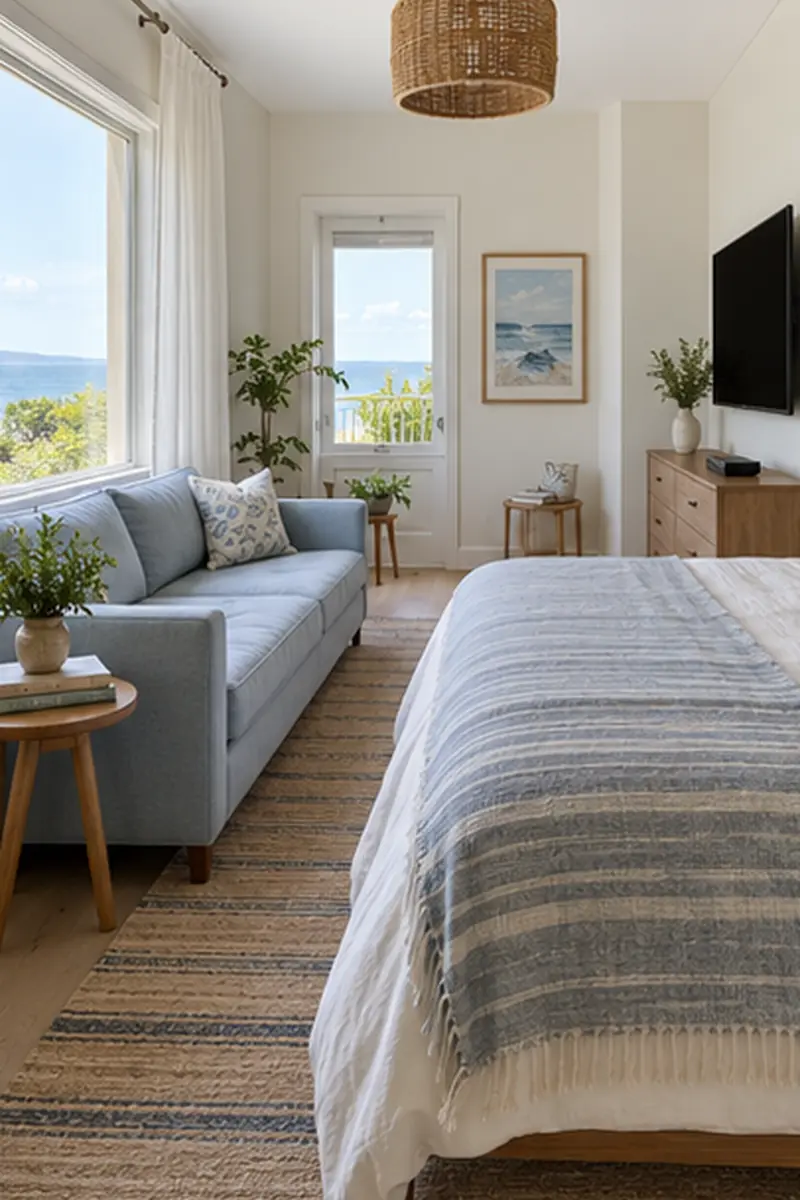
- Measure the wall beside the window and note any heater, vent, handle, or sill projection.
- Choose a sofa whose back leaves the window accessible and does not press into curtains.
- Place the screen on a suitable wall beside the daylight source, then check reflections from the seat.
- Open the curtains and window fully to confirm that the arrangement still works in daily use.
Daylight makes a small seating area feel inviting even when the television is off. Leave enough space to reach the window without climbing over the sofa, and follow any heater clearance instructions. A window wall with equipment below it may be better left open, with the sofa on an adjoining wall.
6. Compact Two Seater
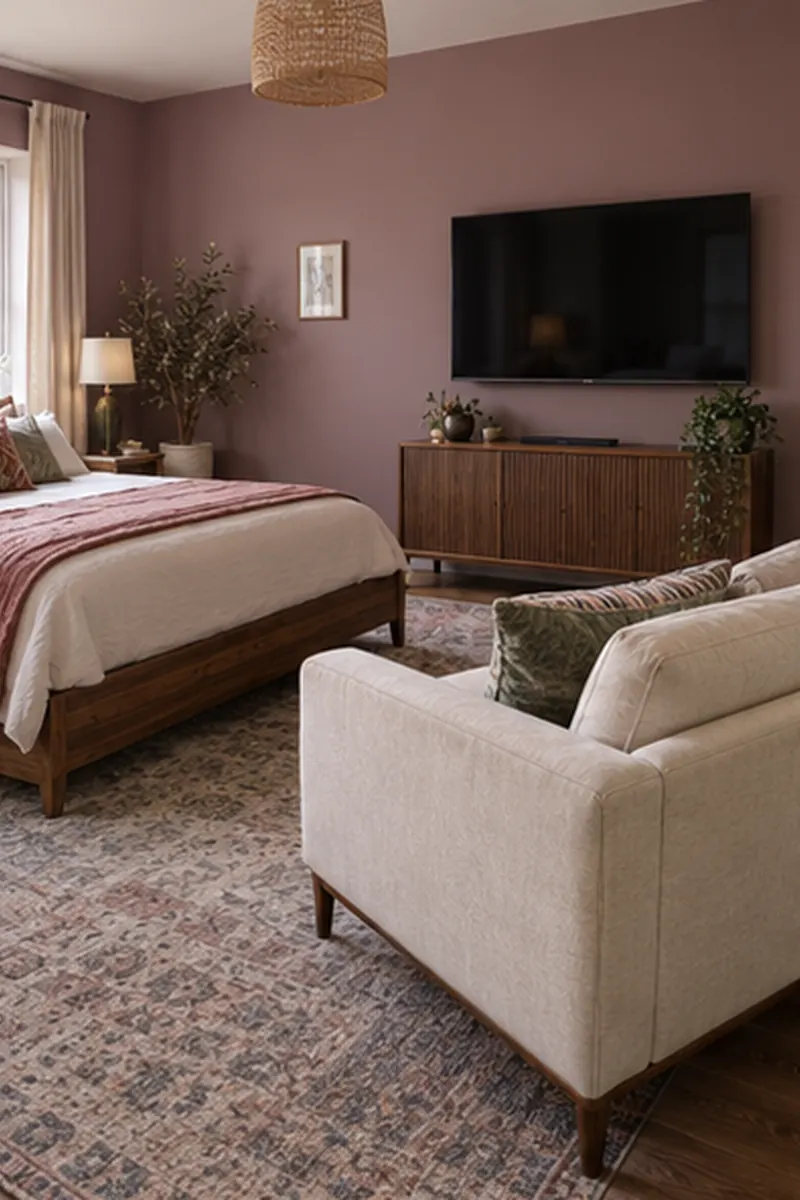
| Detail | Deep Lounge Sofa | Compact Two Seater |
|---|---|---|
| Seat feel | Room for curling up | More upright everyday seating |
| Floor footprint | Greater front-to-back depth | Often easier to fit beside a bed |
| Arms | Wide arms add bulk | Slim arms preserve sitting space |
Compare the outside dimensions before comparing seat count. Two sofas described as two seaters can occupy very different amounts of floor. Sit on your preferred style if possible, and check its delivery measurements as well. The useful choice gives you comfortable seating while leaving the bed and storage easy to reach.
7. Clear Bedside Passage
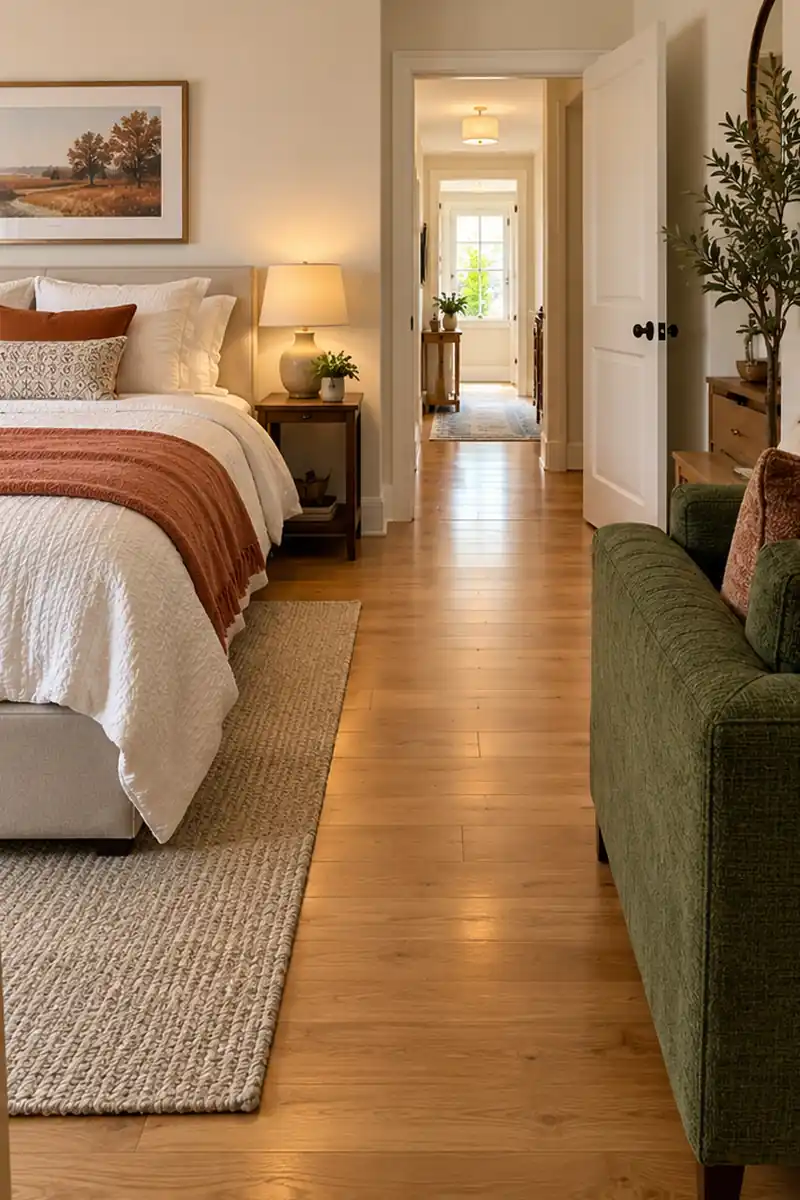
DO
- Trace the route from each sleeping side to the door.
- Leave room to stand up from the sofa without stepping into furniture.
- Test the arrangement with laundry baskets and everyday bags.
DON’T
- Fill a useful passage with an extra accent table.
- Let charging leads trail between the bed and seating.
- Rely on moving the sofa every time you need to leave.
An open strip of floor is part of the layout, even when it looks empty in a photograph. Protect the route you use most often, especially at night. If a sofa repeatedly interrupts that route, reduce its size or move it before spending time on cushions, art, or finishing touches.
8. Low Media Wall
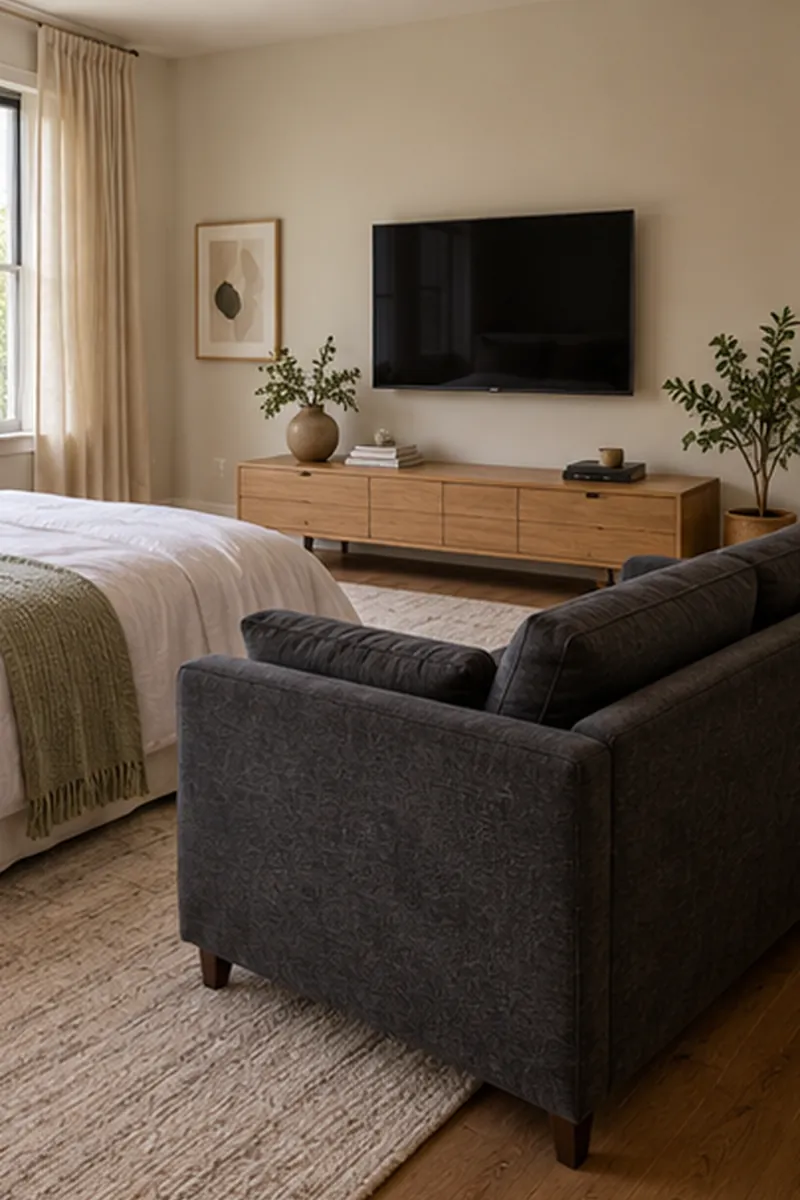
Best Position: A wall visible from your chosen main seat.
Furniture Shape: A shallow media unit designed for television equipment.
Screen Support: Suitable mounting or anti-tip restraint following manufacturer instructions.
Practical Check: Allow equipment ventilation and access to outlets.
Keep the television area visually quiet with a low cabinet and a few useful objects. Secure the screen and furniture as required, and obtain rental approval before drilling. The CPSC recommends furniture designed for televisions and securing TVs against tip-overs. Conceal loose cables without covering vents or stretching cords across walkways.
9. Angled Sofa Layout
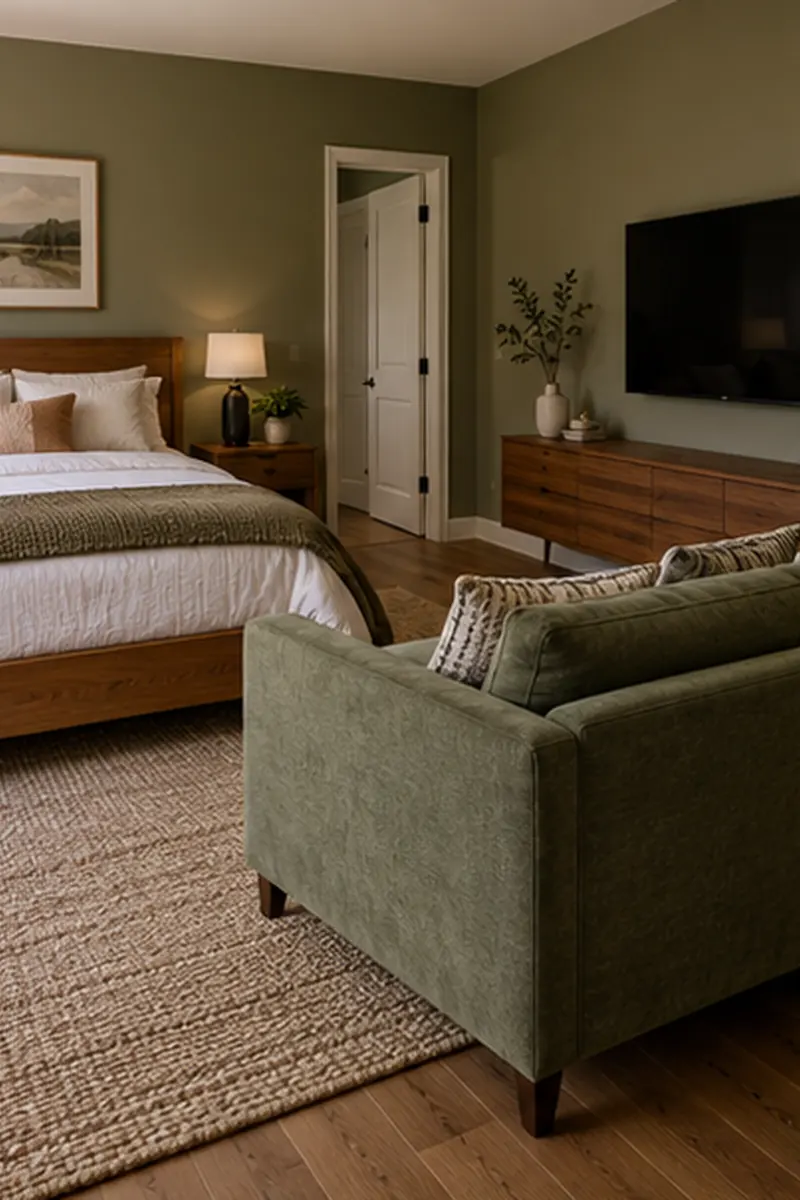
A slight angle can help a small sofa face the television when the obvious wall position feels awkward. Start with only a modest turn, then sit down to test the result. This works especially well in a bedroom with an uneven corner or an off-center doorway that limits straight arrangements.
Watch what happens behind the sofa as you rotate it. A tiny unused triangle may be acceptable, but a large wedge can waste precious floor area. Keep the nearest bed corner easy to pass, and skip a table behind the sofa if it creates another obstacle on the way through.
10. Open Closet Clearance
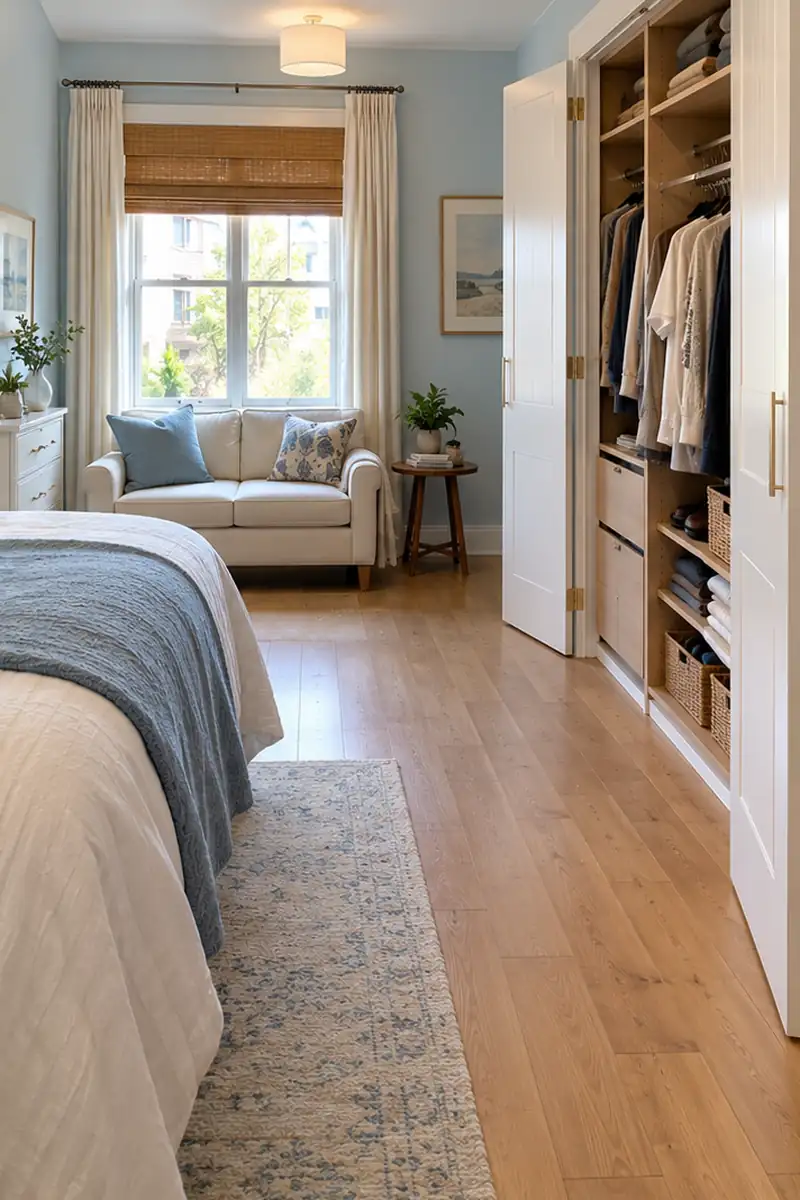
- Open every closet door before you settle on the sofa position.
- Pull out drawers fully, including low drawers that a sofa arm might obstruct.
- Leave somewhere to stand while choosing clothes, rather than measuring only the door swing.
- Check the route between the closet, bed, and bedroom door with furniture marked on the floor.
A layout can look generous until the wardrobe opens. Make storage access part of the first sketch instead of a problem to solve afterward. If the sofa fits only with a door permanently closed, try a shorter model or a different wall. Your morning routine deserves as much consideration as television time.
11. Nesting Side Tables
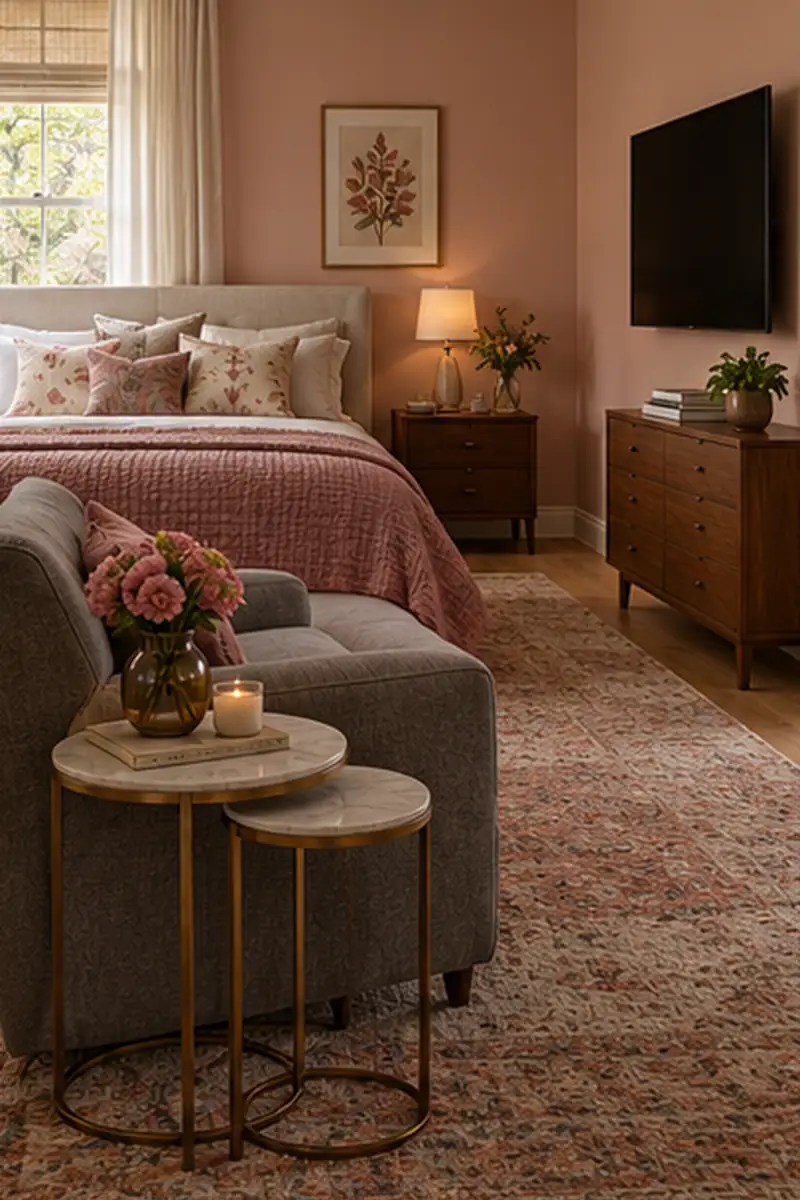
Quick Tip:
Use a small nesting pair beside the sofa rather than a permanent coffee table in the middle of the room. Pull out the second table only when you need it, then return both to their normal position.
A side surface gives the remote, drink, and book somewhere reliable to land without claiming the center aisle. Choose stable tables that are comfortable to reach from the seat. Check the nested footprint as well as the expanded one, and keep the spare table away from the route around the bed.
12. Soft Viewing Light
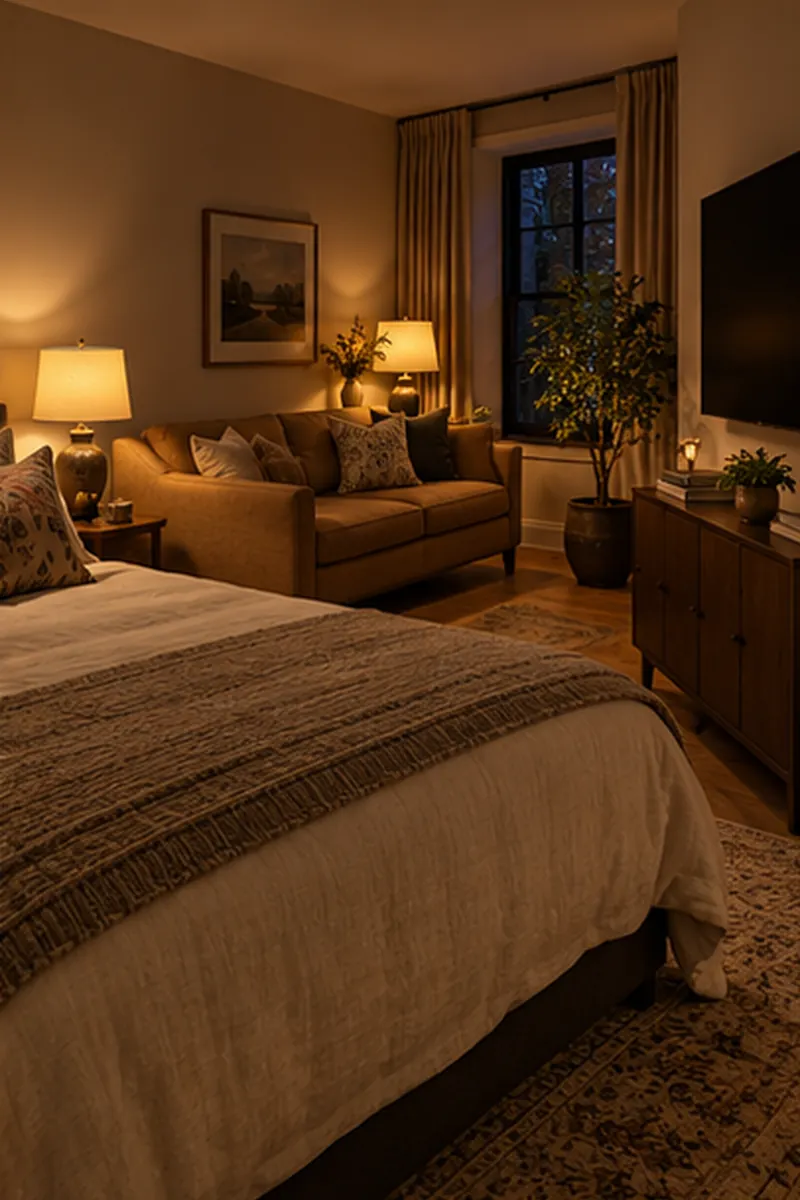
BEFORE: A bright ceiling fixture reflects on the television while the rest of the bedroom feels exposed. Switching it off leaves the route to the bed too dark.
AFTER: A shaded lamp beside the sofa provides a gentler pool of light. A separate bedside lamp makes it easy to finish watching and settle down.
Place a lamp where its bright bulb stays out of your direct view and off the screen reflection. Try the position after dark before deciding it works. Keep the base stable and the cord close to the wall. Separate switches make the two areas easier to use without lighting everything equally.
13. Glare Aware Placement
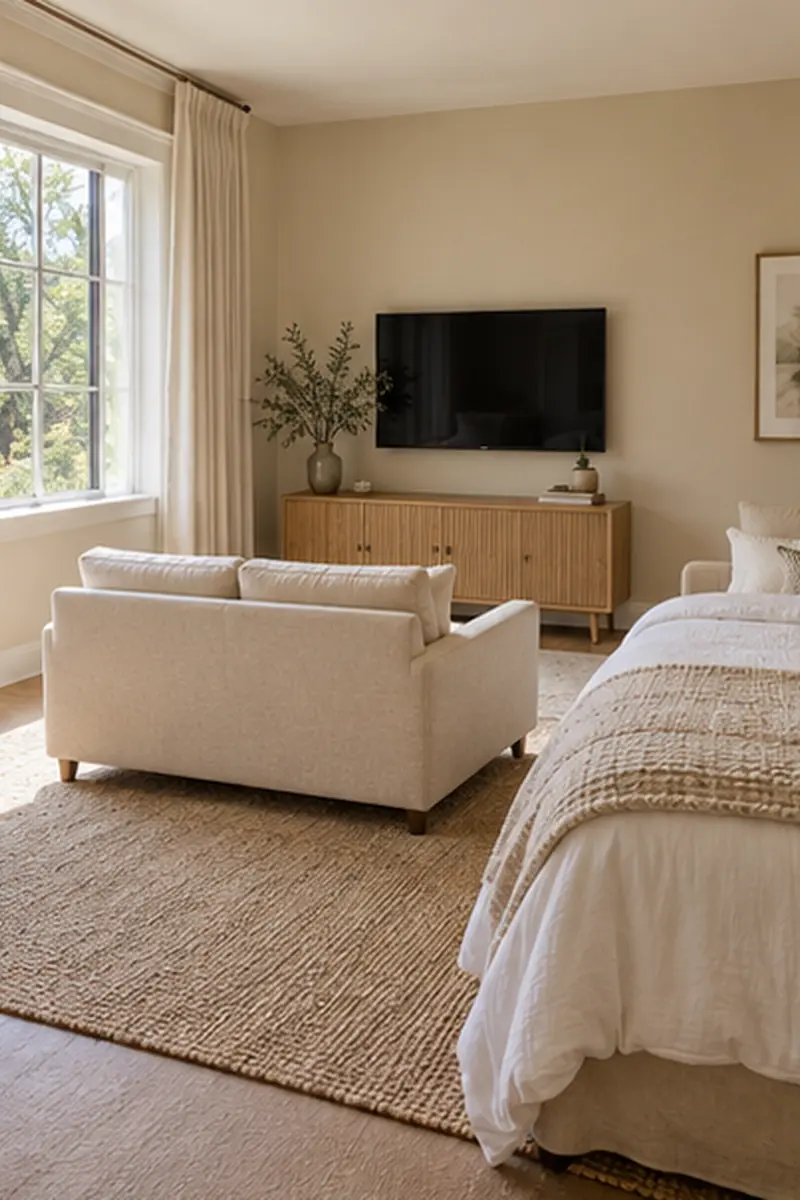
- Look at the proposed screen wall in the morning and afternoon before fixing the layout.
- Place a temporary dark rectangle there, or use the unmounted screen safely according to its instructions.
- Check reflections from the sofa, then from your usual sitting position in bed.
- Adjust the furniture position or window covering before deciding that a larger screen is the answer.
Bright windows and glossy surfaces can change how comfortable a television position feels throughout the day. A wall beside the window may work better than one directly opposite it, but test your own room. Keep window coverings easy to operate, and avoid blocking daylight permanently just to suit occasional viewing.
14. Bed First Sightline
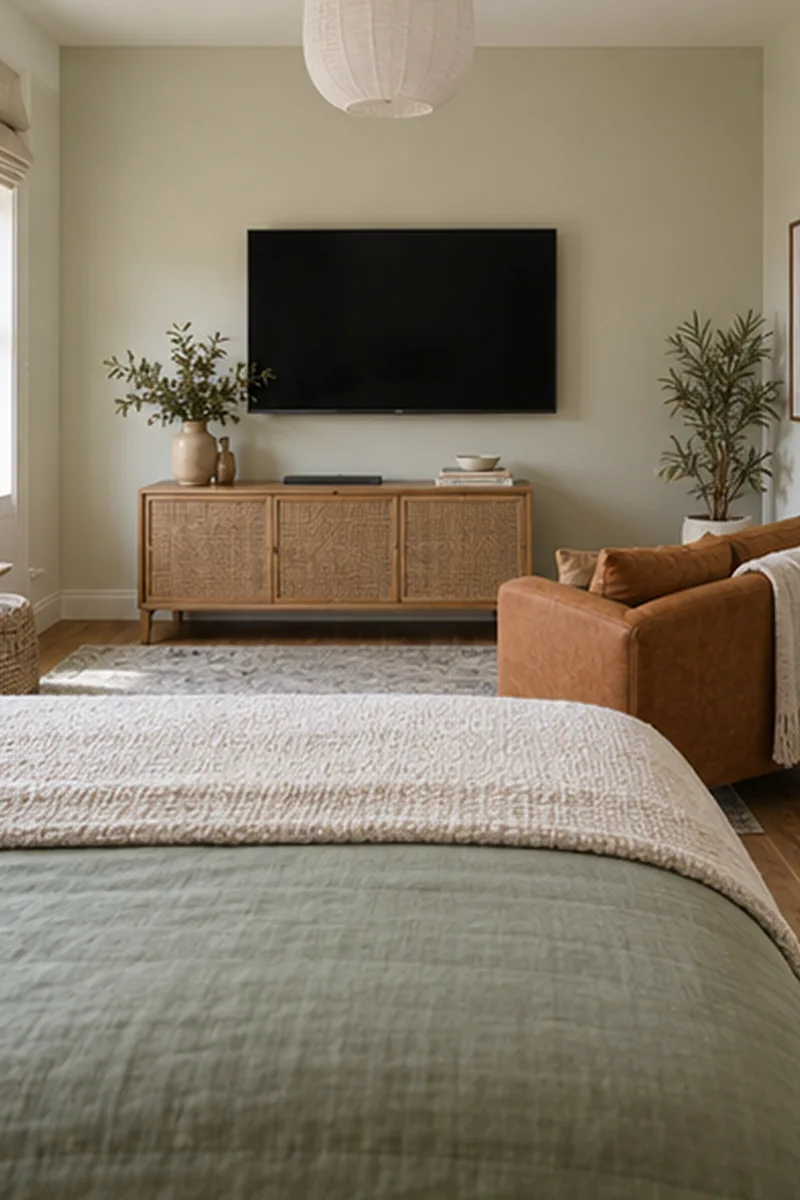
| Decision | Bed Is Primary | Sofa Is Primary |
|---|---|---|
| Screen alignment | Faces the usual pillow position | Faces the center sofa seat |
| Secondary seating | Useful for reading and dressing | Bed sits outside the main viewing line |
| Best fit | Mostly watching before sleep | Longer seated viewing sessions |
Decide where you actually watch most often before arranging every piece around the television. If it is the bed, test the screen from your supported sitting position rather than lying flat. The sofa can remain a comfortable reading spot without also having the perfect view, which makes the layout easier to resolve.
15. Sofa First Sightline
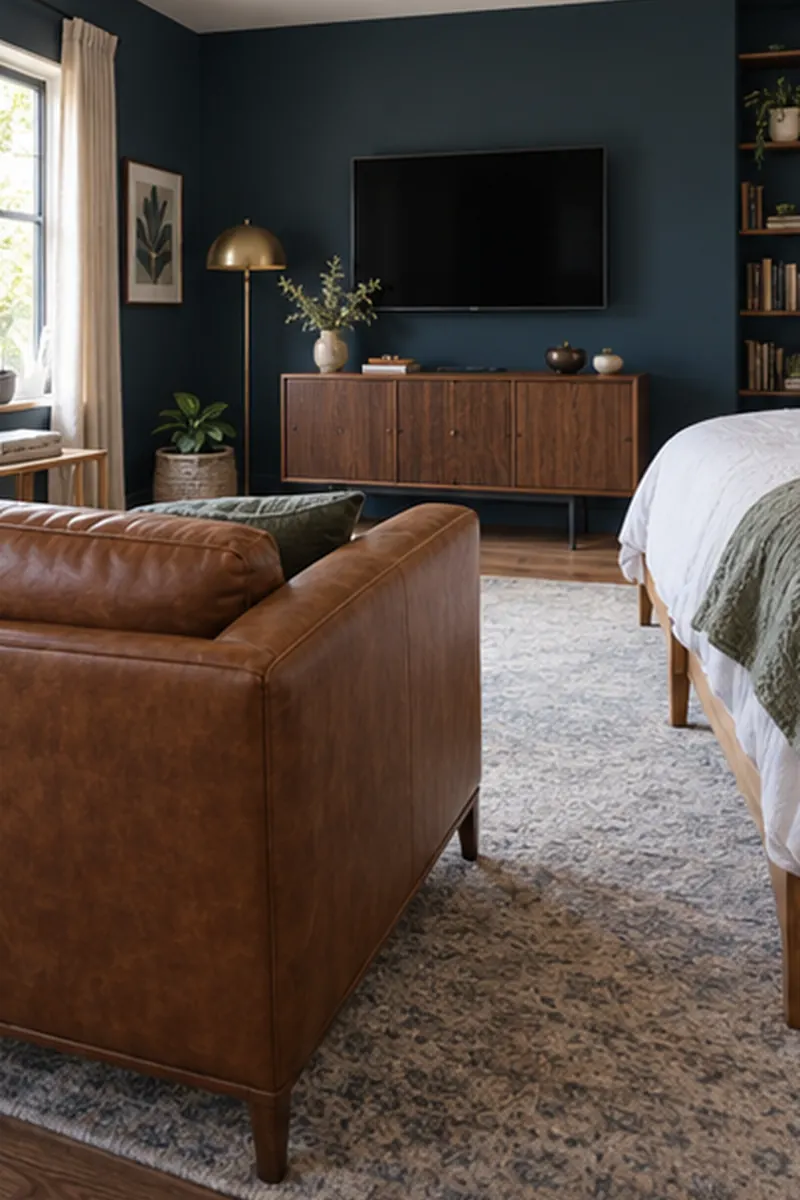
DO
- Center the sofa on the screen when seated viewing is your priority.
- Place the bed where its everyday access remains comfortable.
- Check that a person passing through does not constantly cross the screen.
DON’T
- Choose screen height only from a standing position.
- Turn the bedroom into a maze to give every seat an identical view.
- Push the sofa into a door swing to gain viewing distance.
Giving the sofa the clearest view can make the room feel like a small evening lounge. Let the bed occupy a quieter position to one side, with its own light and reachable bedside surface. This arrangement works best when the doorway leads around the seating area instead of directly through it.
16. Movable Footrest Pairing
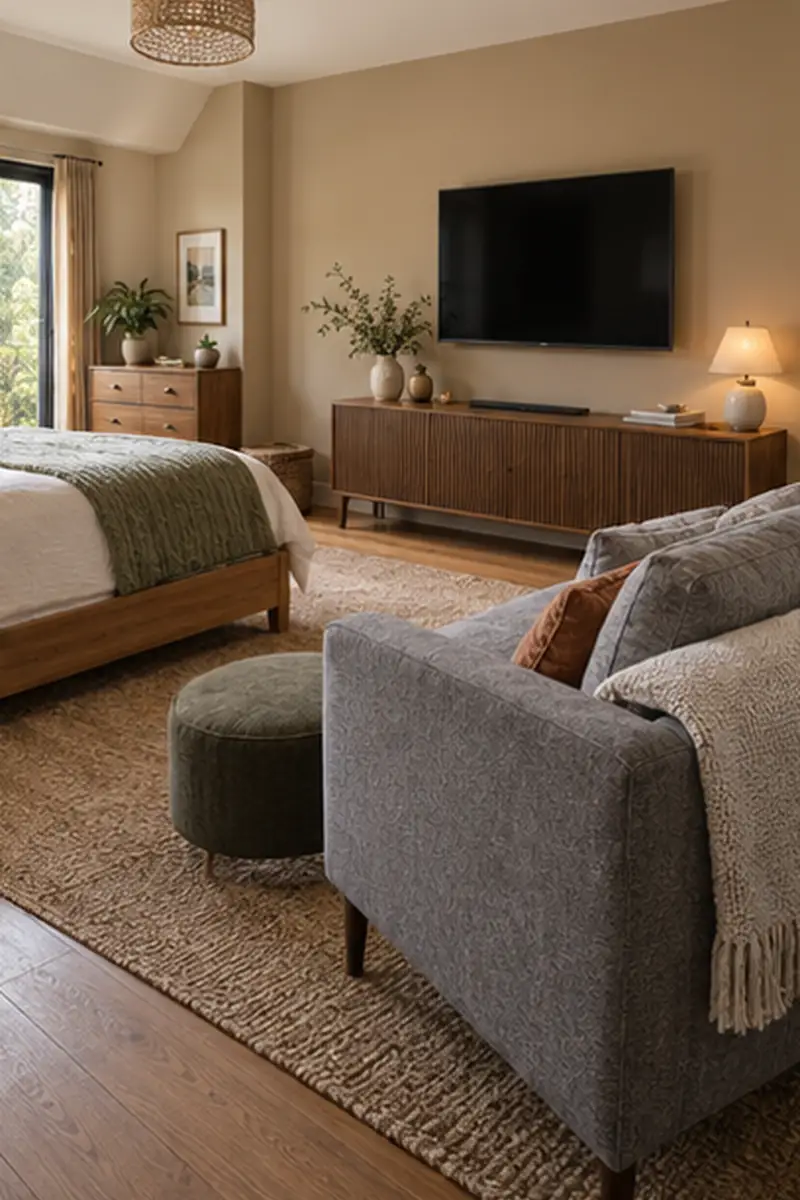
Seat Choice: A compact upright sofa with comfortable back support.
Extra Comfort: One small footstool that can move aside easily.
Storage Position: Beside the sofa when the footstool is not in use.
Layout Test: Check both the relaxed and the cleared arrangement.
A separate footrest can provide lounging comfort without the permanent footprint of a chaise. Give it a real parking place rather than leaving it in the passage. Choose a stable piece suited to its intended use, and check that reaching the bed still feels easy when the footrest is pulled forward.
17. Balanced Rug Footprints
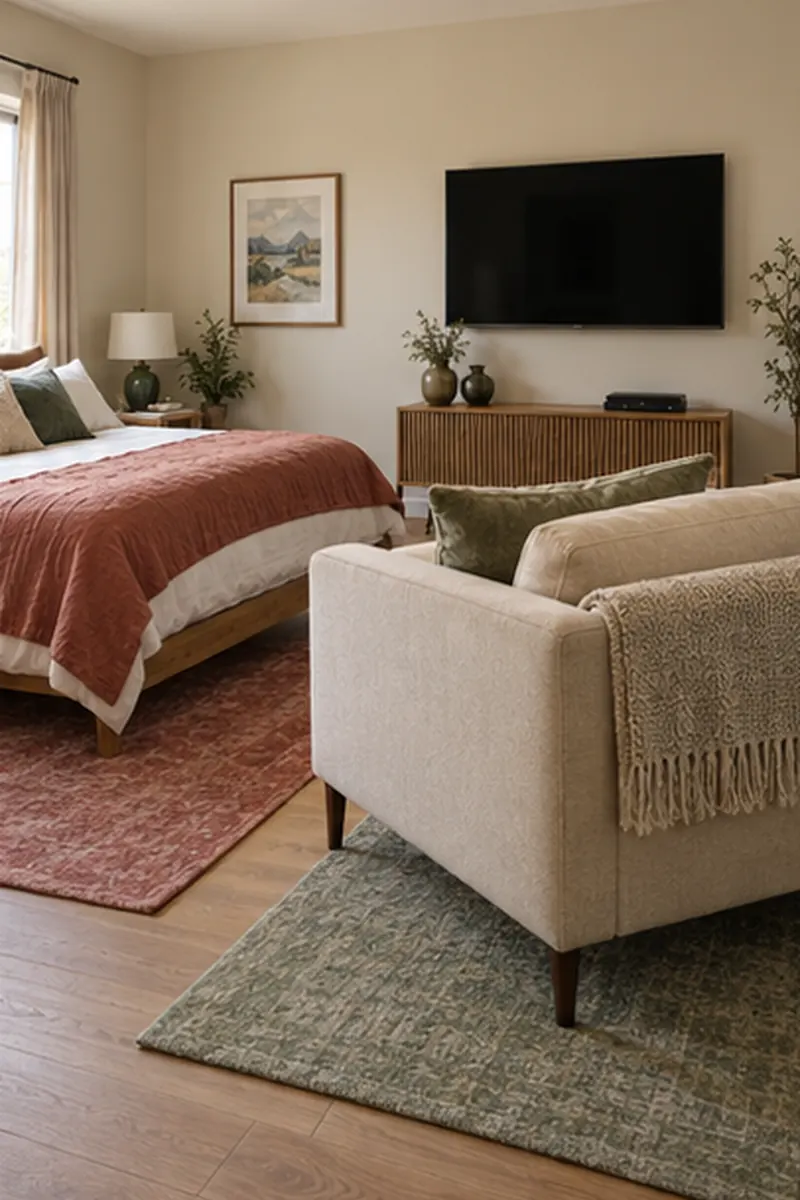
Two carefully placed rugs can clarify where the bed ends and the seating area begins. Start by marking their edges on the floor, keeping the sofa rug within the lounge footprint. A quiet pattern or shared color links the pieces while allowing each area to have its own comfortable base.
Leave a visible strip of flooring between rugs if overlapping edges would create a raised crossing point. Use suitable nonslip pads, smooth curling corners, and check nearby doors. In a very small bedroom, one larger rug may look calmer and be easier to maintain than squeezing in two separate shapes.
Conclusion
Useful bedroom with TV and sofa layout ideas begin with a clear priority: comfortable seating, a sensible screen position, and an easy route through the room. Choose the arrangement that supports your real habits, then test it with doors open and everyday belongings in place. A smaller sofa or simpler table can make more difference than another decorative layer. Save this post on Pinterest so you can compare layouts before moving furniture, try one adjustment this week, and share the article with someone planning a compact bedroom. Keep the arrangement that feels comfortable to live with after the television is off.
Community
Join the conversation
Add a useful idea, ask a specific question, or share what worked in your space. Every comment is reviewed before it appears.