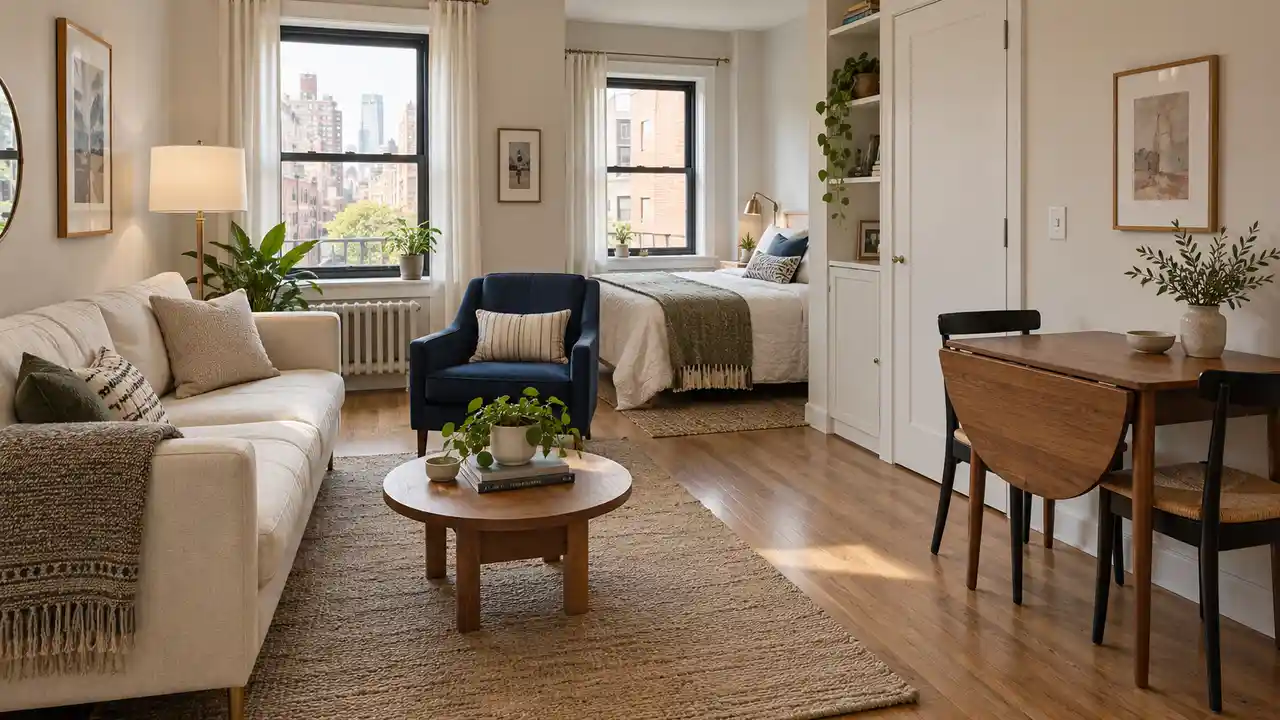
Figuring out how to decorate a small bachelor apartment means making careful choices about what earns its floor space. The goal is a home with personality, a comfortable place to sleep, and room to move through an ordinary day. You do not need miniature versions of every furniture category. A few well-chosen pieces can do more than a crowded collection of clever products. These ideas focus on modest footprints, useful flexibility, and character that does not depend on extra clutter. Measure first, keep the routes clear, and use your own habits to decide which space-saving choices are genuinely worth making.
1. Measure the Living Footprint
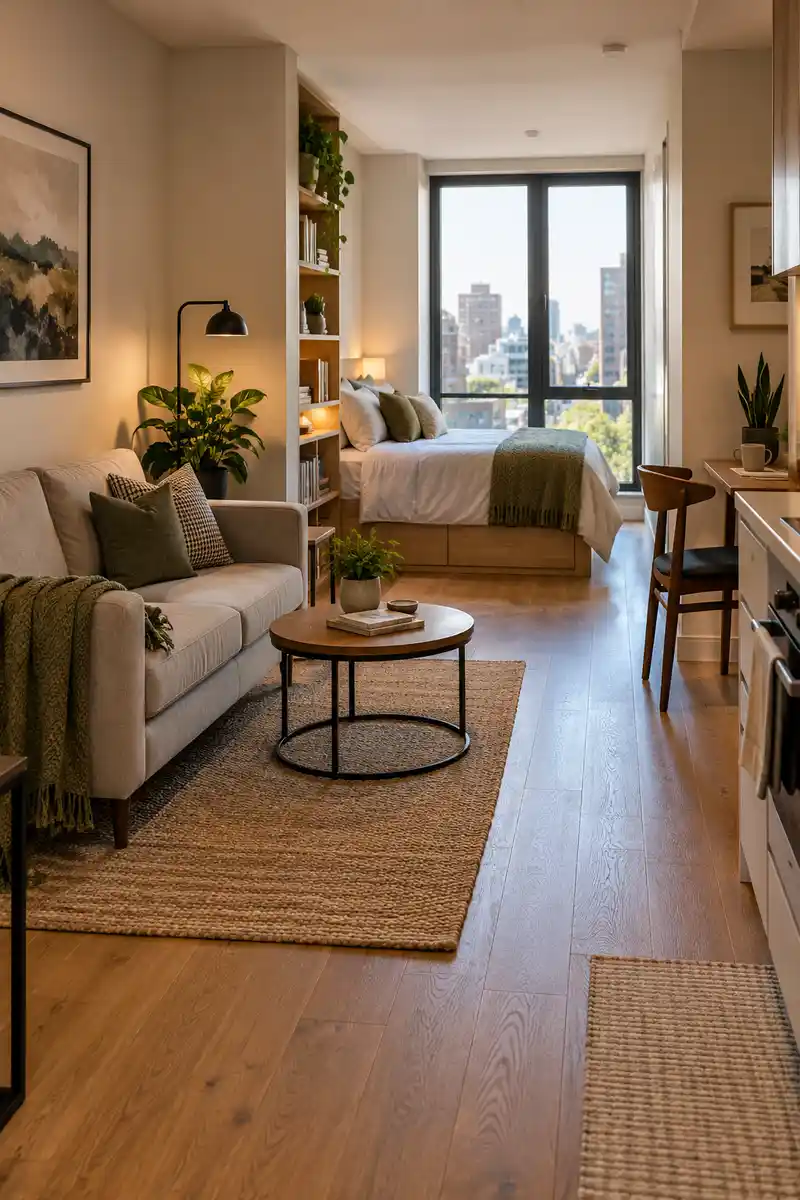
Draw the room with its doors, windows, and fixed fittings before choosing furniture. Include the space needed to open a cupboard or pull out a chair, since a piece can fit on paper and still feel awkward. Mark the main walking route first, then arrange the useful zones around it.
Keep a simple list of measurements on your phone when comparing pieces. The sofa width matters, but so do its depth and delivery route. If the room has an unusual shape, these small studio layout ideas can help you test arrangements before committing to another large purchase.
2. Choose Slim Sofa Arms
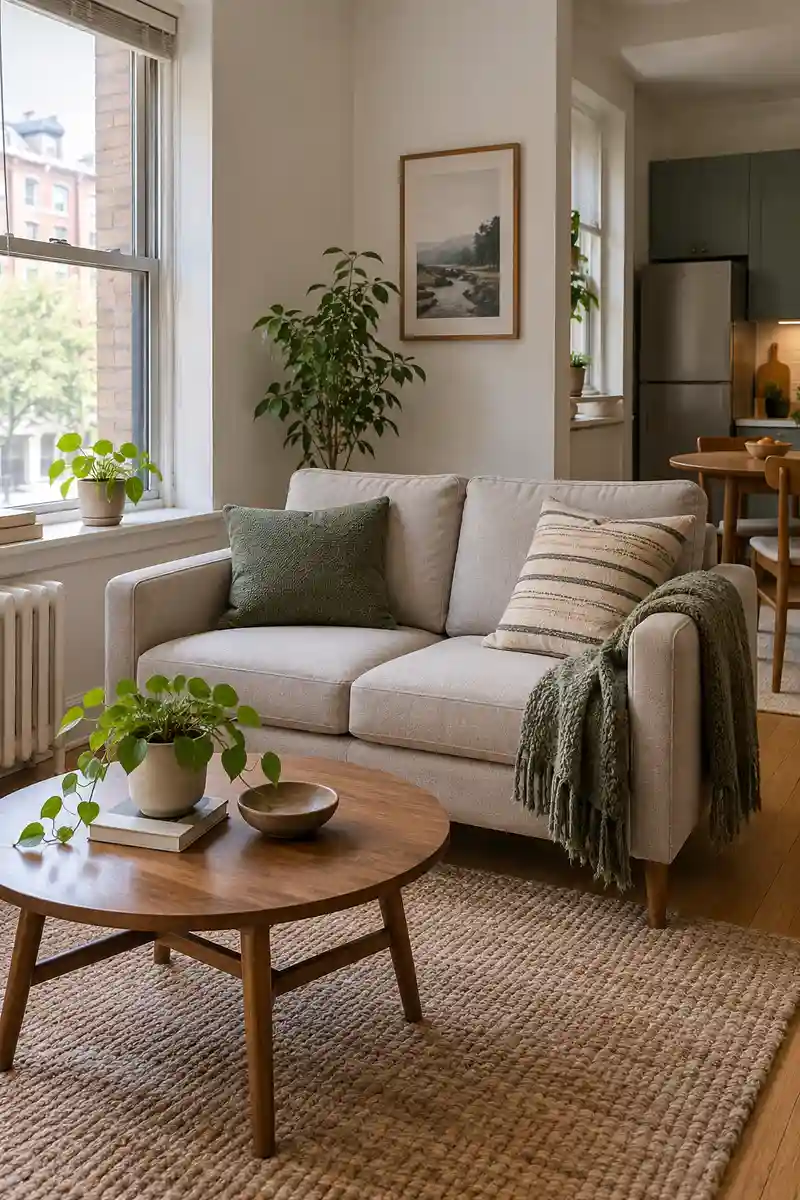
- Compare overall width with usable seat width.
- Look at the depth from back to front.
- Choose arms that suit how you sit.
- Check the view from the entrance.
Wide arms can use a surprising amount of a compact sofa’s footprint. A slimmer profile may offer similar seating room in less space, but comfort still comes first. Sit down if possible, and avoid choosing a shallow seat solely because it looks neat in a small room photograph.
3. Try a Drop-Leaf Table
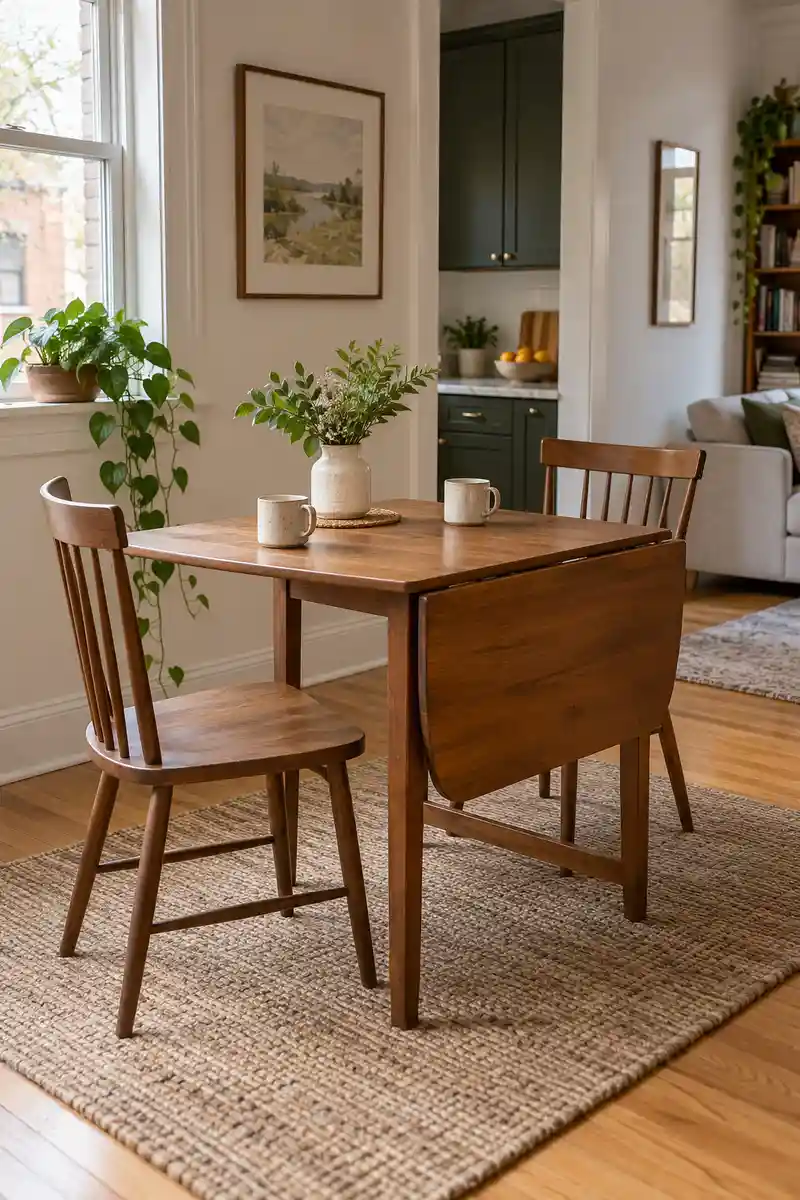
Quick tip: Keep the table folded for everyday use if you only need one place setting. Open the extra leaf when a meal or project genuinely needs the larger surface.
Choose a position where the extended table and its chairs can work together. Measure both versions before buying, including the space needed to move around it. A useful folding feature should be easy enough to use regularly; otherwise you may end up living around the largest version all the time.
4. Replace the Bedside Bulk
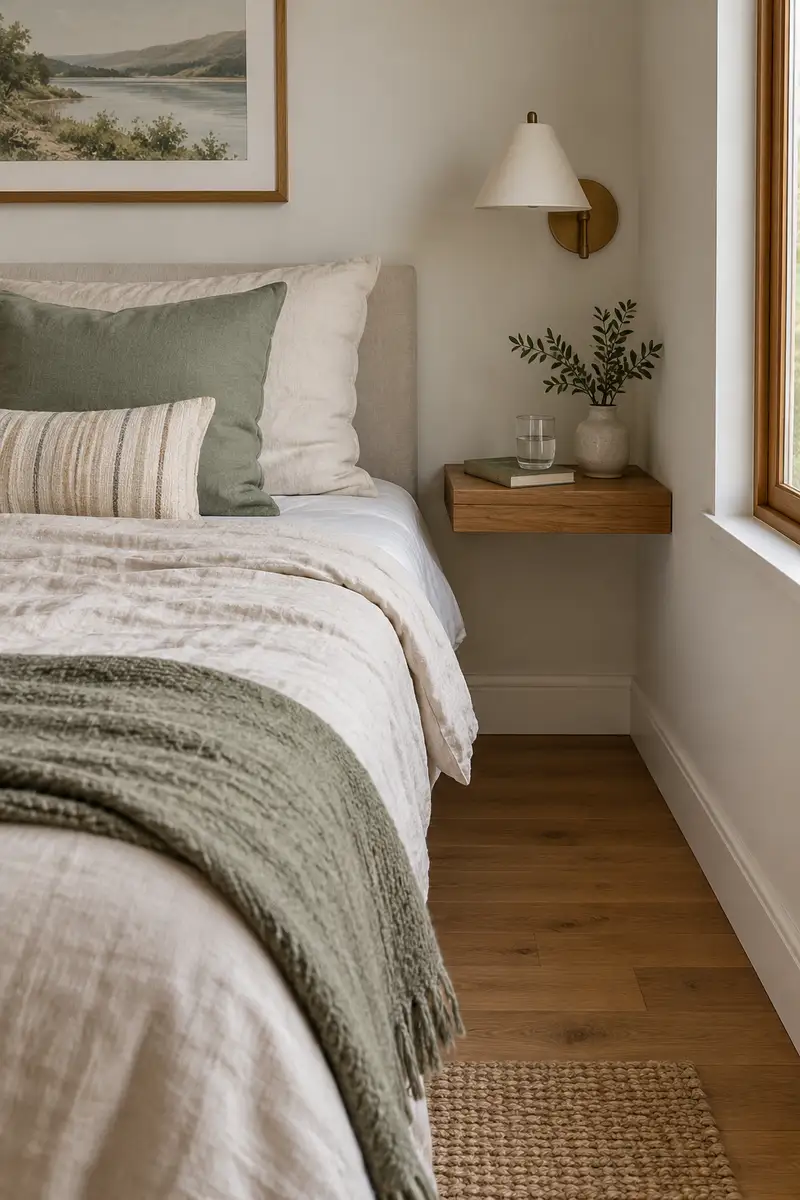
Before: A deep bedside cabinet narrows the gap beside the bed. Its back half collects objects you rarely use.
After: A shallow bedside ledge holds the current book and a glass. The floor beside the bed feels clearer.
Choose the smallest surface that comfortably holds your nighttime essentials. A wall-mounted option needs suitable installation and permission where required; a narrow freestanding table may be simpler. Check the reach from bed before settling on height, and avoid putting a fragile glass where an elbow is likely to catch it.
5. Use Underbed Drawers
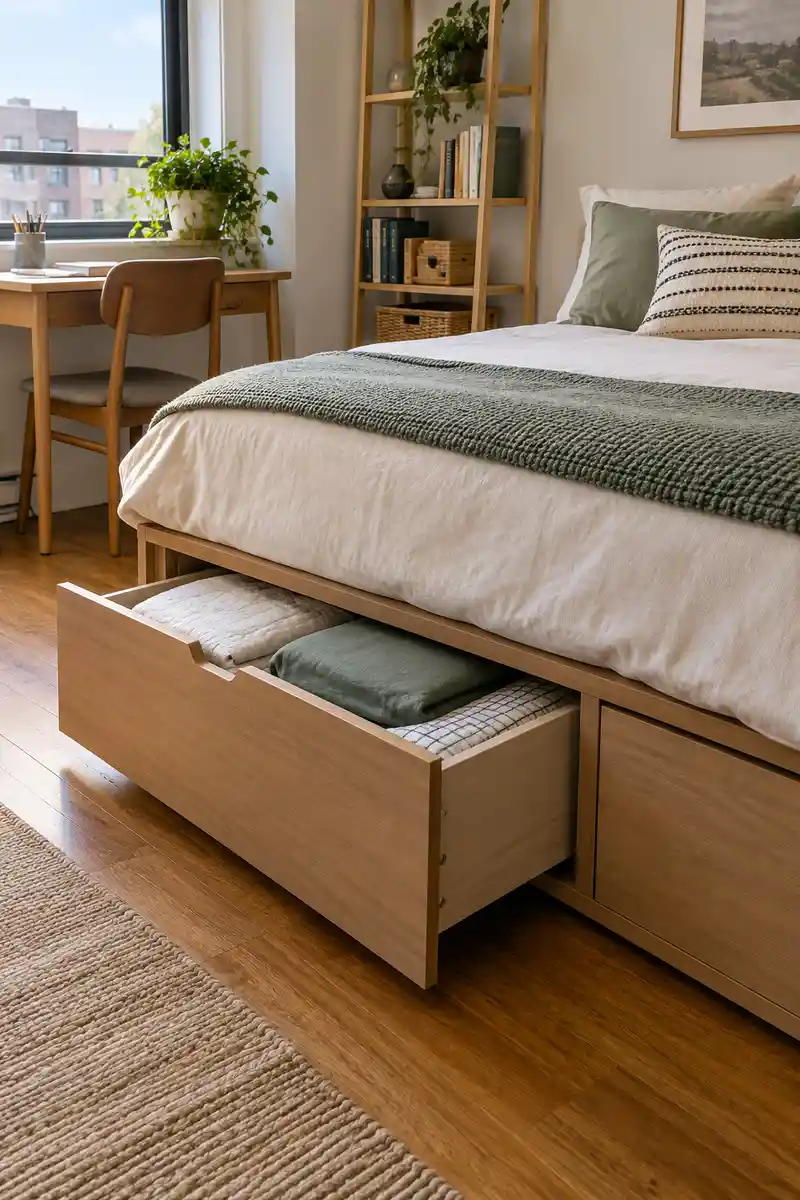
- Check the available height beneath the bed.
- Measure the full drawer opening space.
- Choose storage for items used less often.
- Keep the bed edge easy to approach.
Underbed storage earns its place when you can reach it without moving half the room. Store spare bedding or seasonal clothing here rather than daily essentials that need constant access. If the bed sits against a wall, plan around the side that actually opens instead of counting unavailable drawers as capacity.
6. Compare Flexible Side Tables
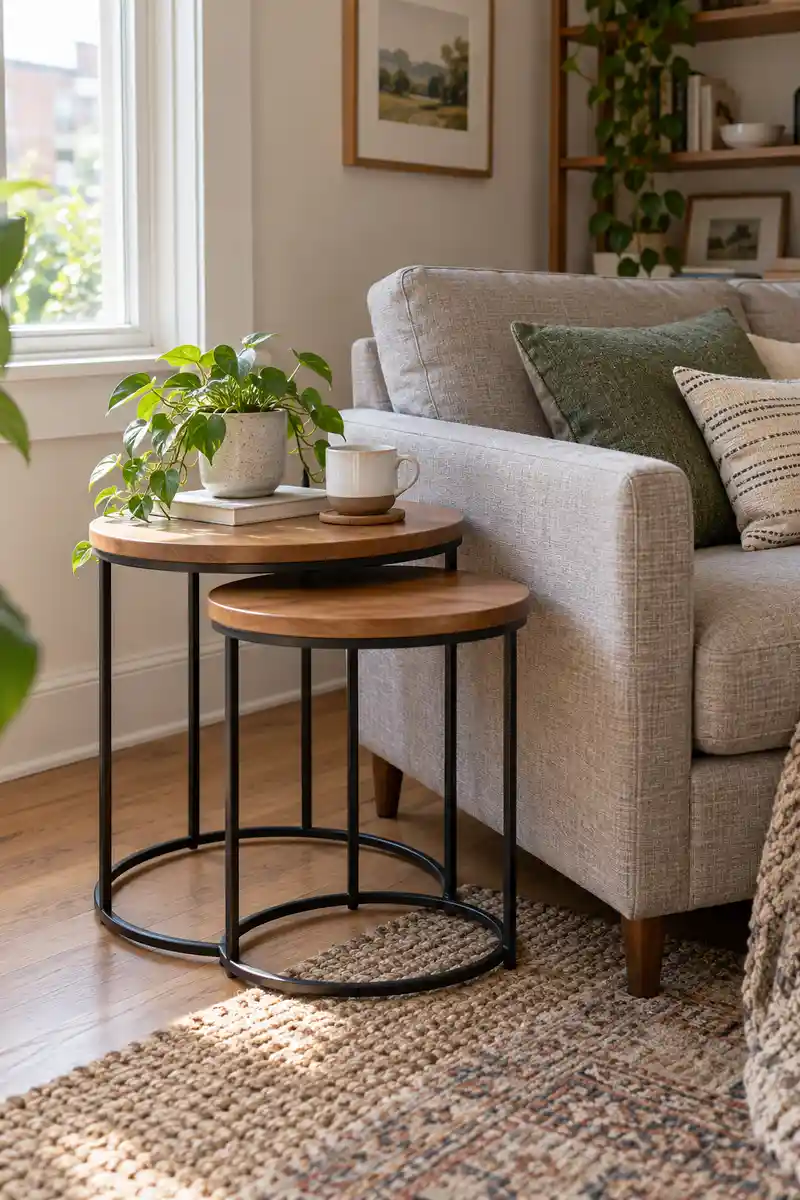
Nesting tables
Extra surface: Separate pieces when needed
Stored footprint: Smaller tables tuck underneath
Check first: Each table is useful alone
One C-shaped table
Extra surface: One surface moves between seats
Stored footprint: Base can sit near sofa edge
Check first: Base fits the actual sofa
Small tables are useful only when their shapes work with your furniture. Measure sofa legs and the underside before choosing a sliding base. For nesting tables, make sure the smaller one is not so low that it becomes awkward. Pick the option that fits the way you use your seat.
7. Use Height With Restraint
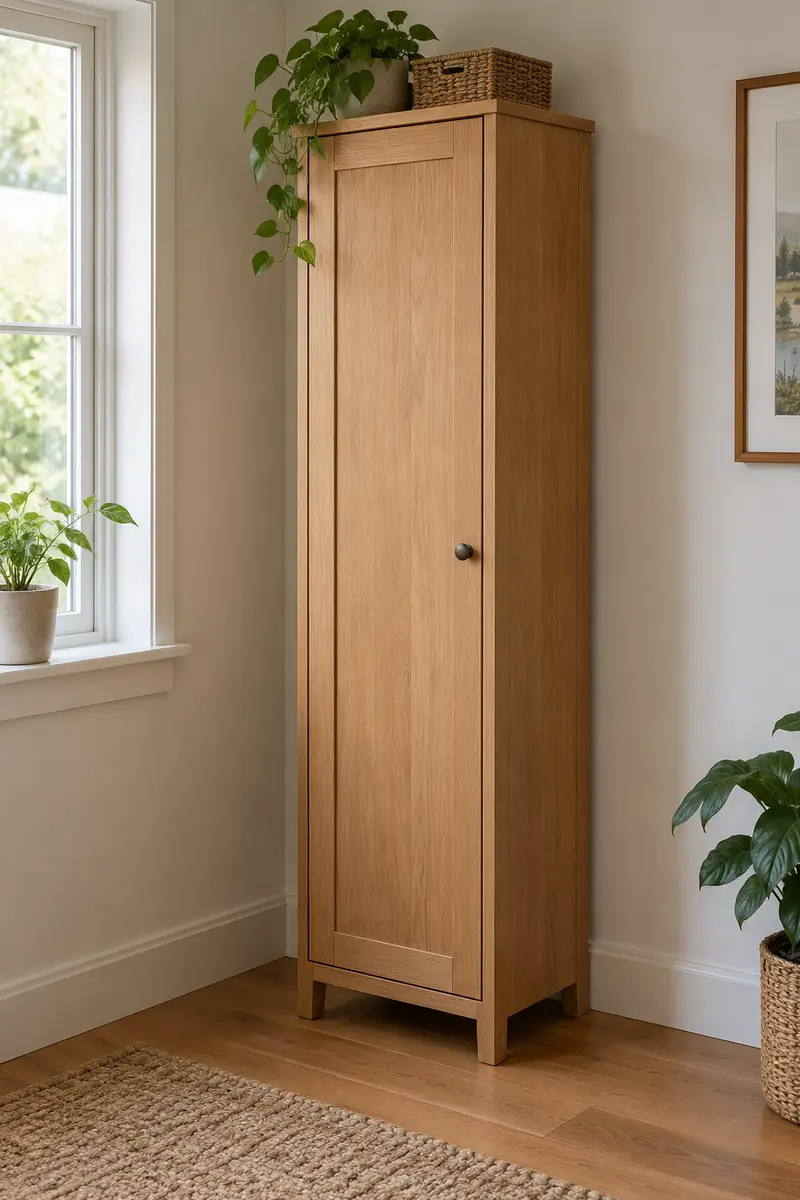
- Do: Choose storage suited to the wall.
- Do: Follow anchoring instructions.
- Do: Keep daily items within reach.
- Don’t: Cover every wall with shelves.
- Don’t: Stack unstable furniture.
- Don’t: Put heavy objects where access is awkward.
A tall, narrow cabinet can use a small footprint effectively, but its height should not become an excuse to overfill the room. Keep the nearby wall quiet and follow the furniture anchoring guidance. Store lighter, occasional items higher up, leaving the things you reach for every day lower down.
8. Choose a Storage Bench
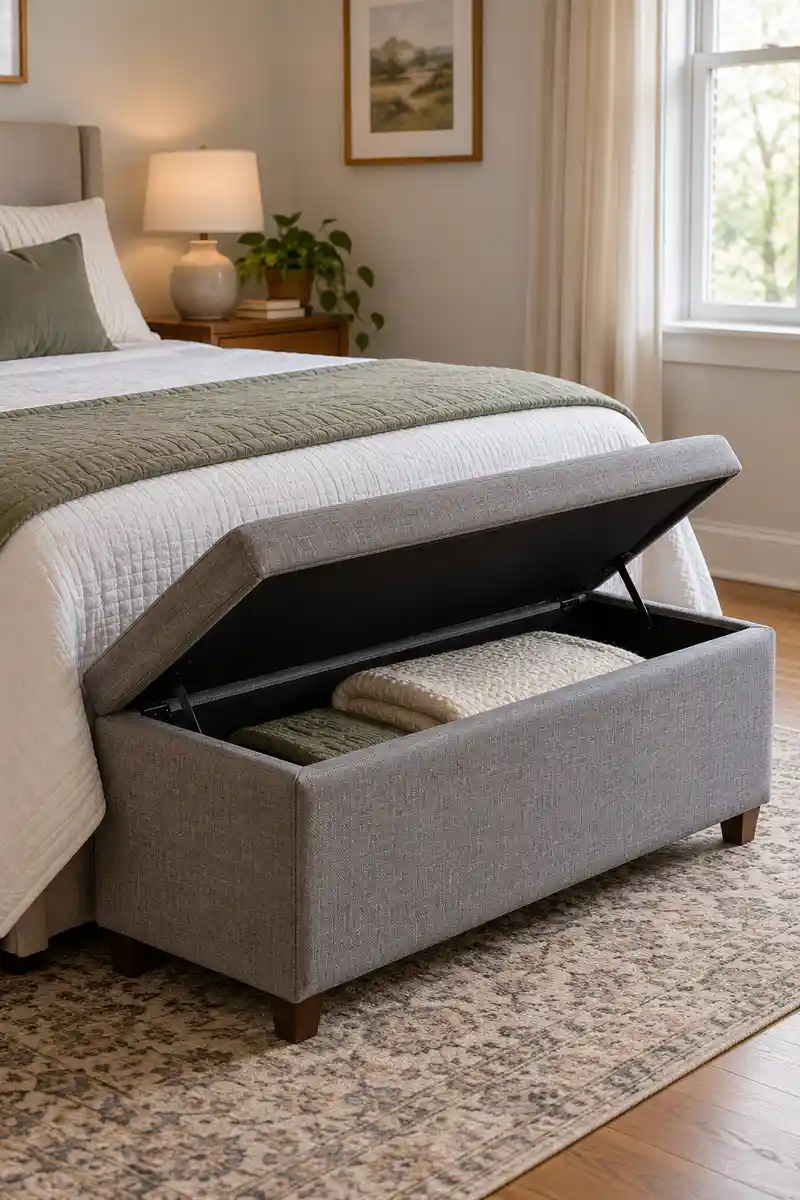
- Location: A place where sitting is genuinely useful.
- Opening: Enough room to lift the lid fully.
- Contents: A small group of related items.
- Cushion: Comfortable without sliding into the route.
A bench can combine an extra seat with storage for bedding or games. Check whether the lid remains convenient when the bench is in its everyday spot. If you must remove a pile of cushions and move a table each time, ordinary drawers may serve the room better.
9. Let One Piece Stand Out
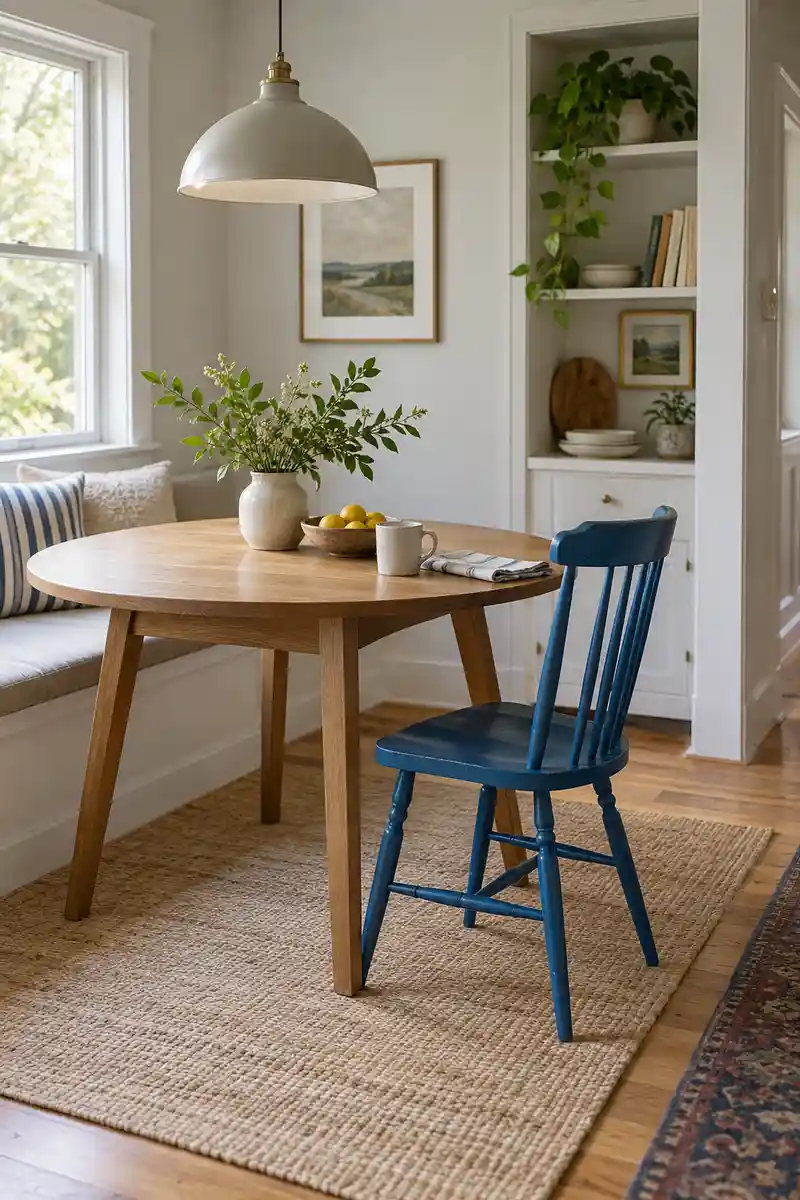
Give the apartment a distinctive piece with a modest footprint: a painted chair, an unusual side table, or a favorite vintage lamp. Choose something you genuinely enjoy rather than a large statement object that consumes the room. Keep its neighbors calmer so the detail has room to be noticed.
Character does not need a collection on every surface. One blue wooden chair can bring life to a simple dining corner while still doing an ordinary job. Repeat a hint of its color elsewhere if you like, but avoid buying several extra objects just to explain the first one.
10. Frame a Bed Nook
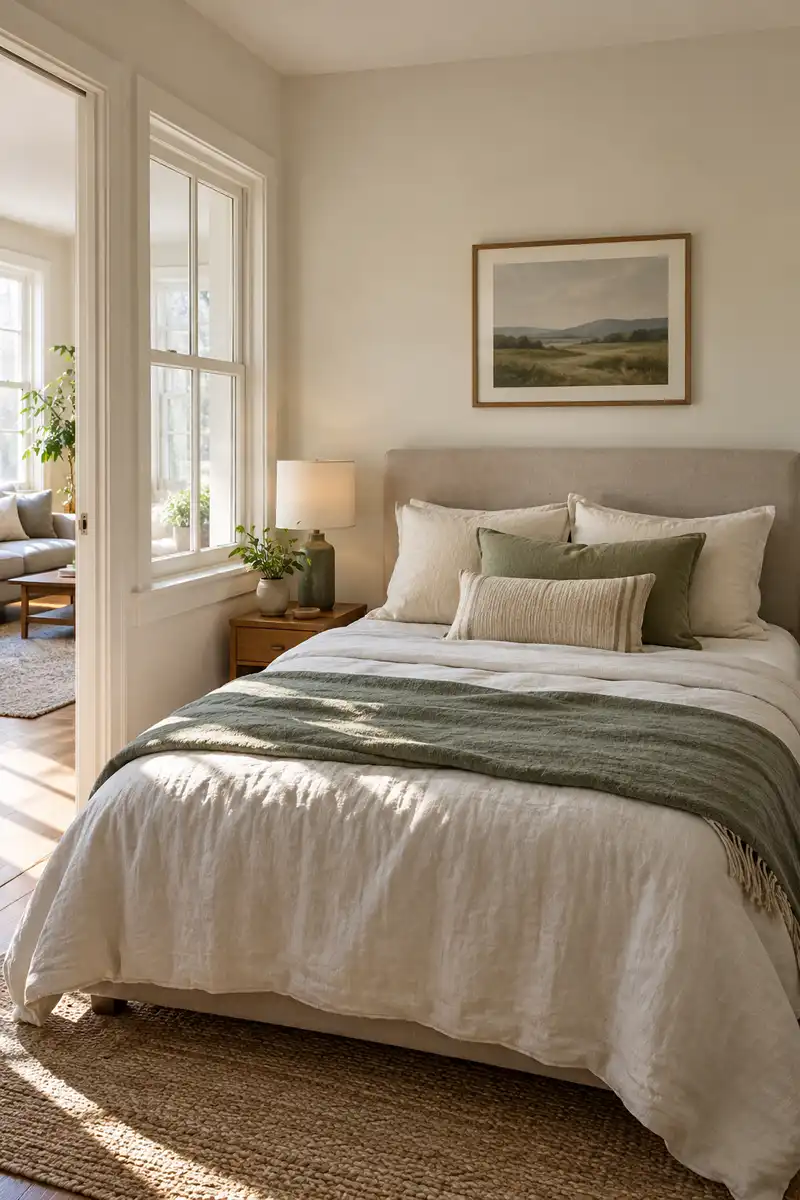
- Use bedding that relates to the living area.
- Choose one clear focal point at the head.
- Keep the bed edge free of extra furniture.
- Leave available daylight moving through the room.
A sleeping zone can feel intentional without a solid partition. A restrained headboard or picture above the bed gives it an address within the room. Let the nearby furniture face its own activity, so the studio reads as several useful places rather than a bedroom with everything else squeezed around it.
11. Move Light Off Tables
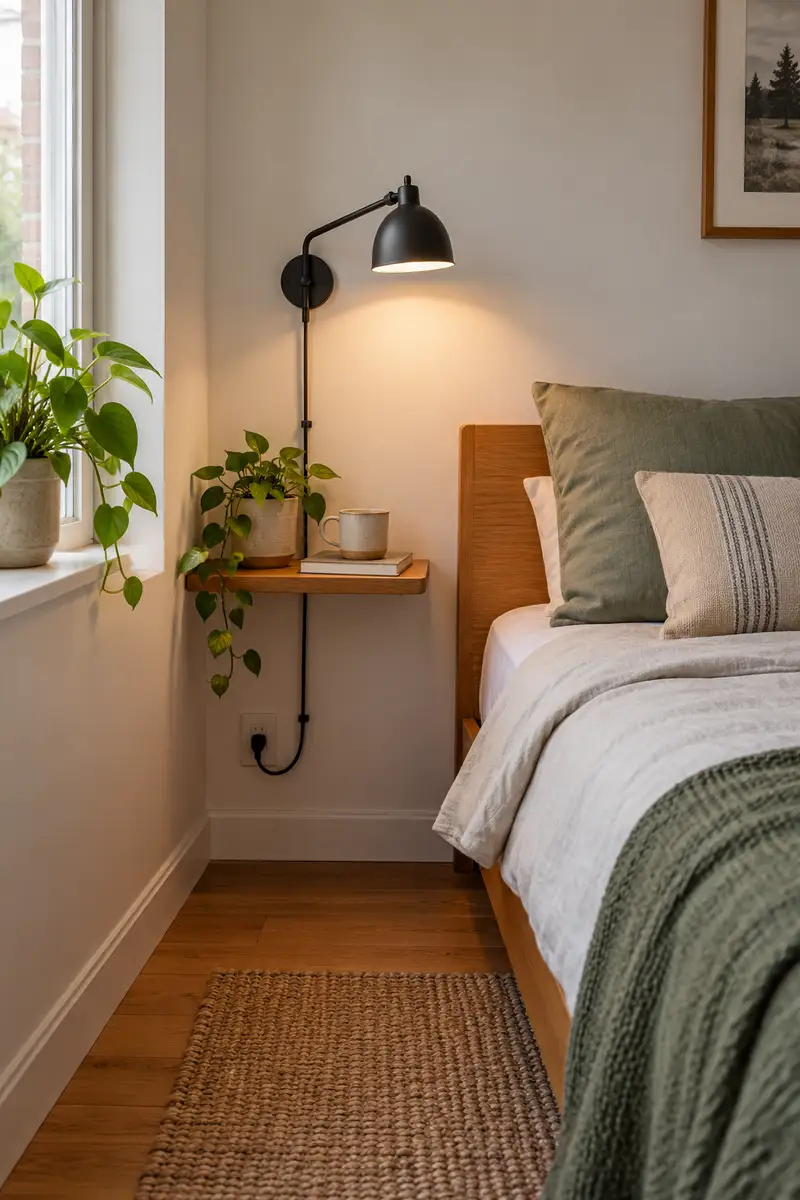
Quick tip: A wall lamp can free a small surface when installation is allowed. A compact floor lamp may be a better choice if you need to keep the walls unchanged.
Choose the light position from the seat or bed it serves, then plan a tidy cable route. Keep switches within comfortable reach and use the fixture as directed. Saving tabletop space is worthwhile only if the new lamp does not put a base or trailing cord in the walkway.
12. Simplify the Window Wall
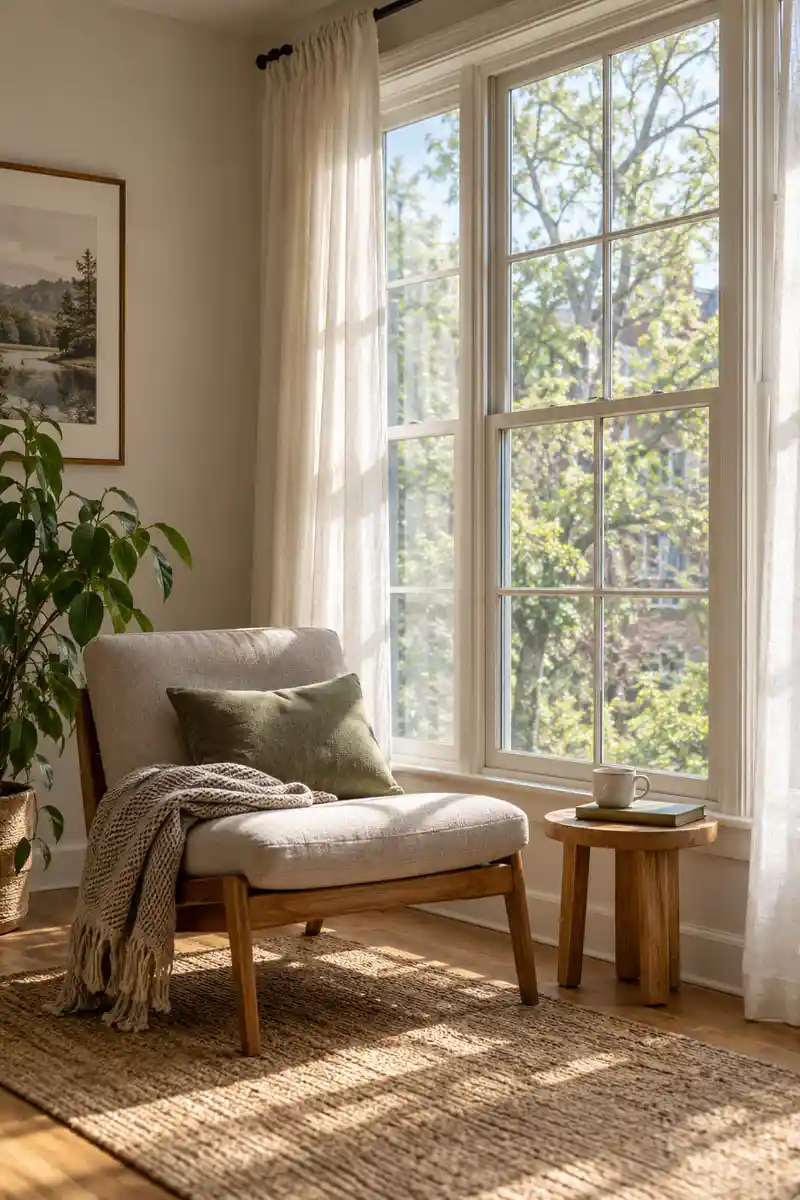
Before: Several short shelves and small objects crowd the window. Furniture interrupts the brightest part of the room.
After: A simple curtain frames the glass. A low chair nearby keeps the view and daylight feeling open.
Treat daylight as part of the room plan before filling a promising corner. Keep tall storage away from the window where practical, and make sure curtains can move freely. A clearer window wall can give the whole studio a calmer outlook without requiring white furniture or removing every personal object.
13. Put Dining Against a Wall
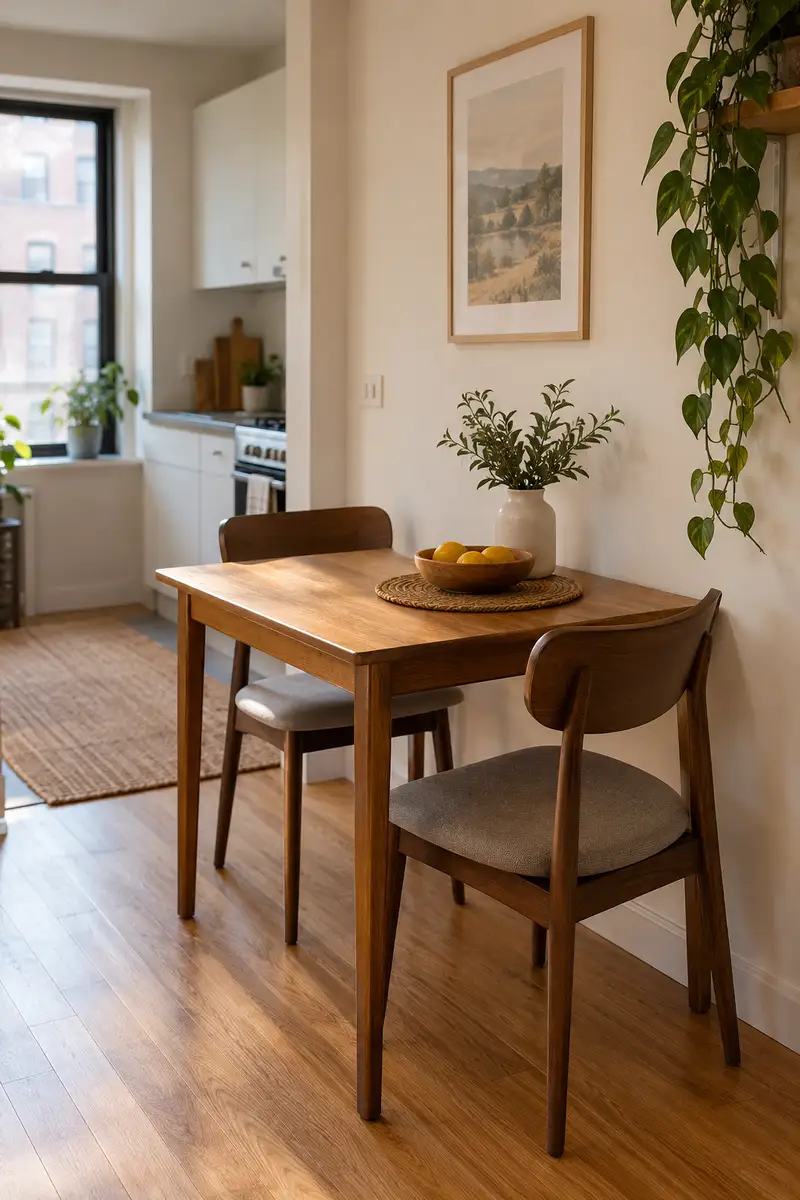
- Measure a narrow table or small round option.
- Place everyday seating on the usable sides.
- Keep the spare chair in another useful spot.
- Pull the table out only when needed.
A wall-side dining position can leave more open floor in a small studio. Be honest about how often you host before choosing a table that dominates every day. Test the chair movements and the route behind them. A small arrangement you use comfortably is better than a larger one you avoid.
14. Choose a Light Divider
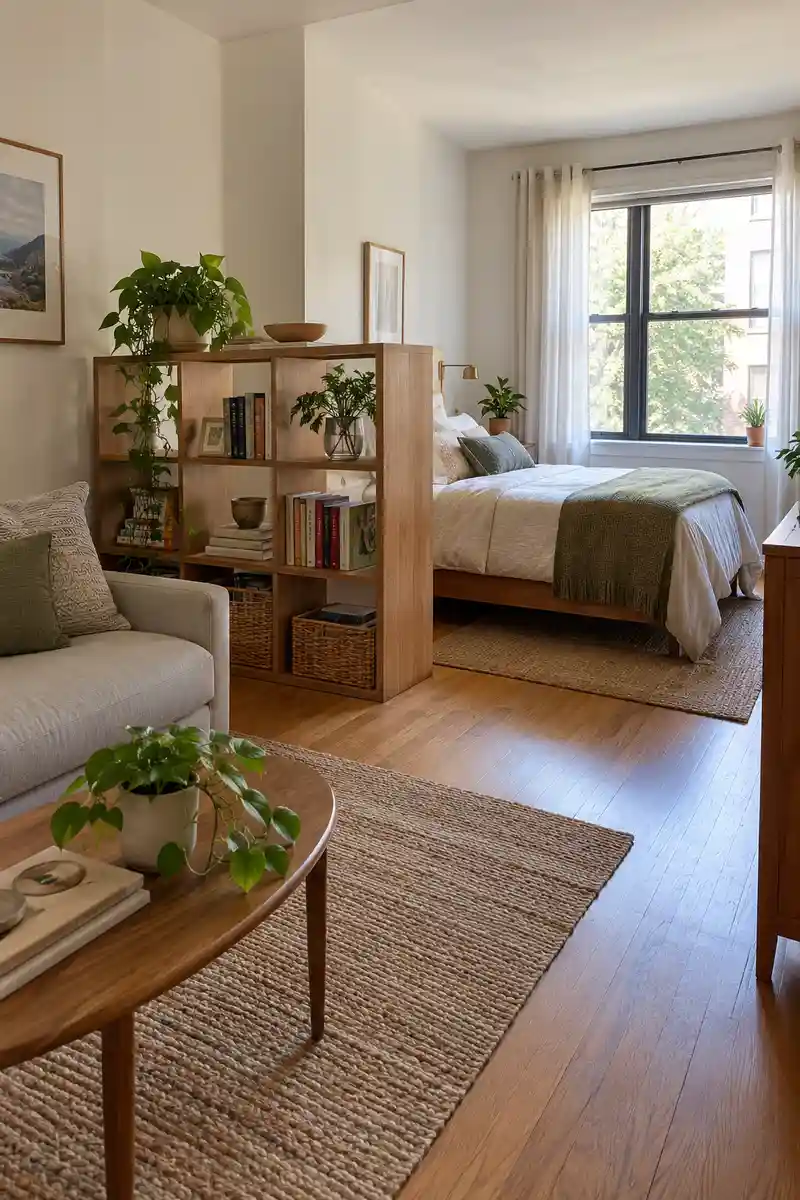
Open shelf divider
Storage: Can hold books and baskets
Visual effect: Keeps some views through
Installation: Follow stability and anchoring guidance
Fabric curtain divider
Storage: Provides no storage
Visual effect: Can soften or screen a zone
Installation: Needs a suitable track or rod
Separate only the view that bothers you. A short divider beside the bed may be enough without slicing the whole apartment in two. Check light, access, and stability before choosing a solution. Avoid making a narrow passage just to hide a perfectly ordinary part of life in a studio.
15. Edit the Open Shelves
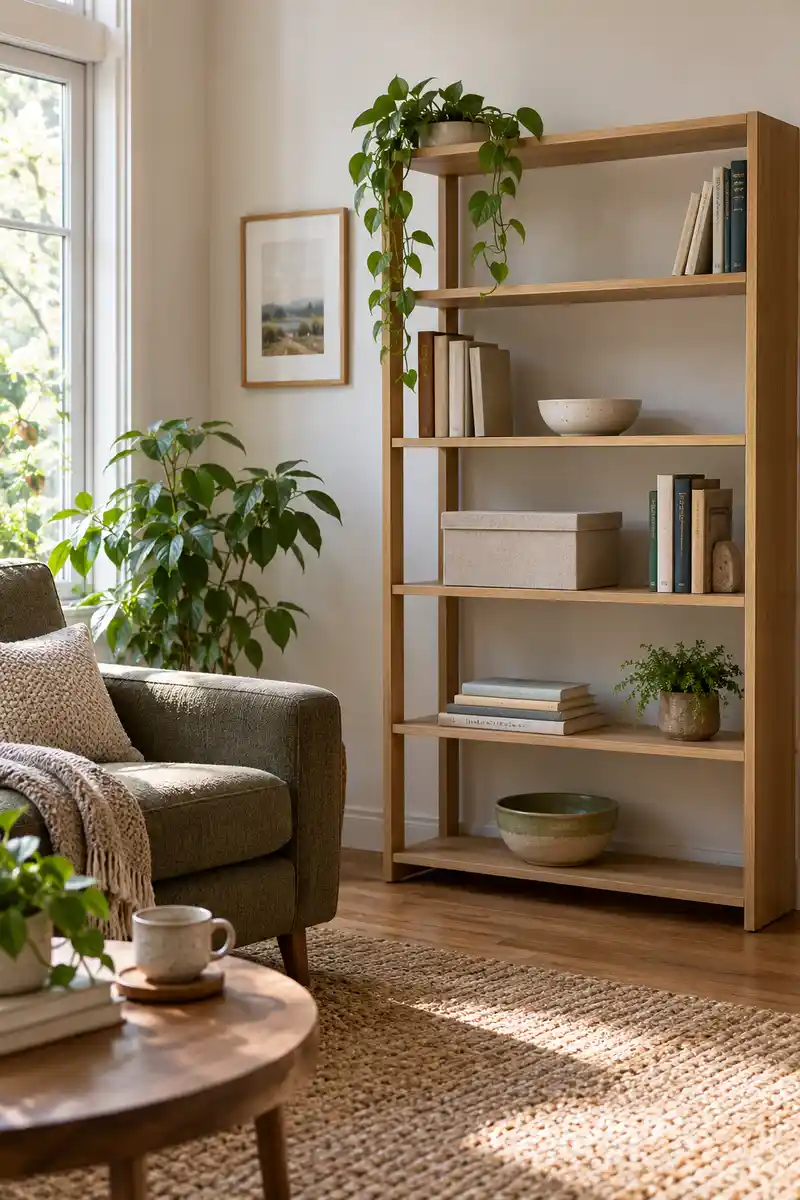
- Do: Leave visible gaps between groups.
- Do: Keep one shelf for current books.
- Do: Put small mixed items in a box.
- Don’t: Fill every gap with decor.
- Don’t: Stack beyond easy access.
- Don’t: Let display replace needed storage.
In a compact room, open shelves are always part of the view. Choose a few shapes and colors that relate, then let the useful contents remain useful. A box of cables can sit beside a ceramic bowl without apology. The important part is keeping each group readable and easy to reach.
16. Use a Folding Guest Seat
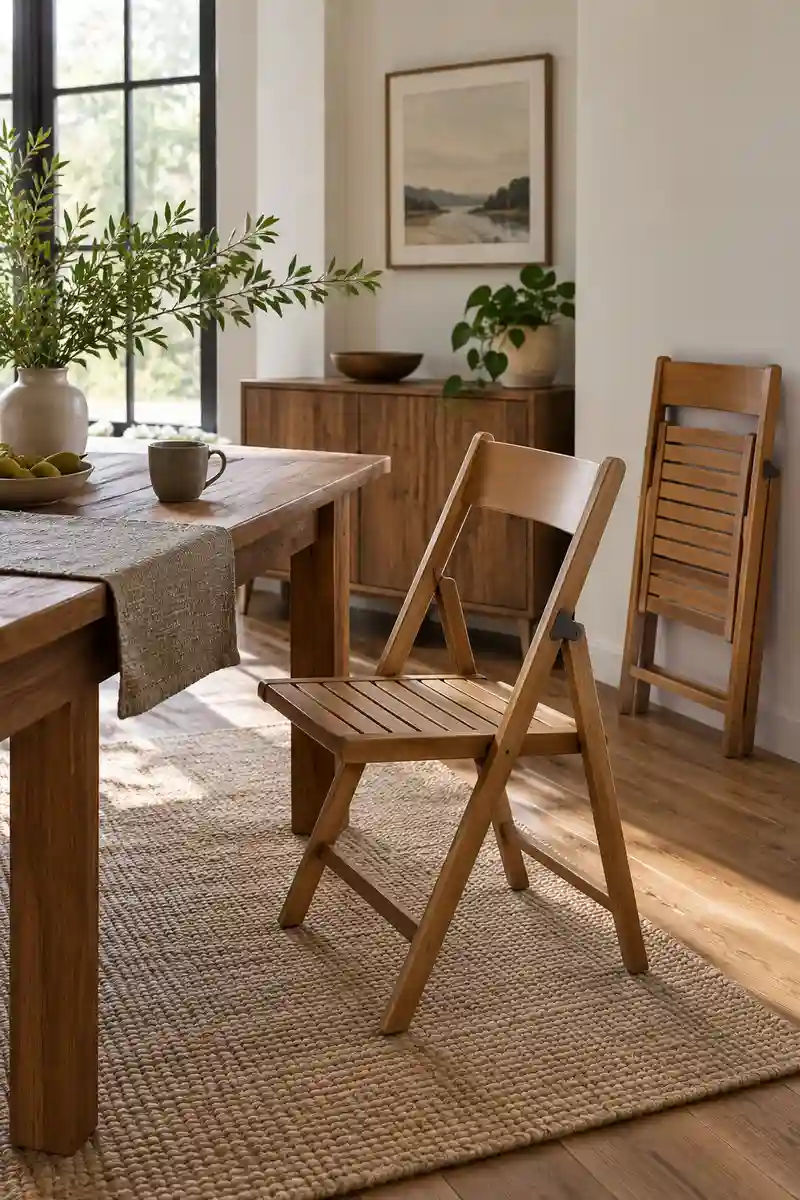
- Storage: A measured home when folded.
- Comfort: A seat suitable for a normal visit.
- Setup: Easy to open without rearranging the room.
- Frequency: Worth keeping for the guests you actually host.
An occasional chair does not need to occupy permanent floor space. Choose a folding seat you would be happy to sit on, and store it somewhere accessible. If you rarely host, borrowing a chair may make more sense than keeping extra furniture for a situation that almost never happens.
17. Keep the Center Open
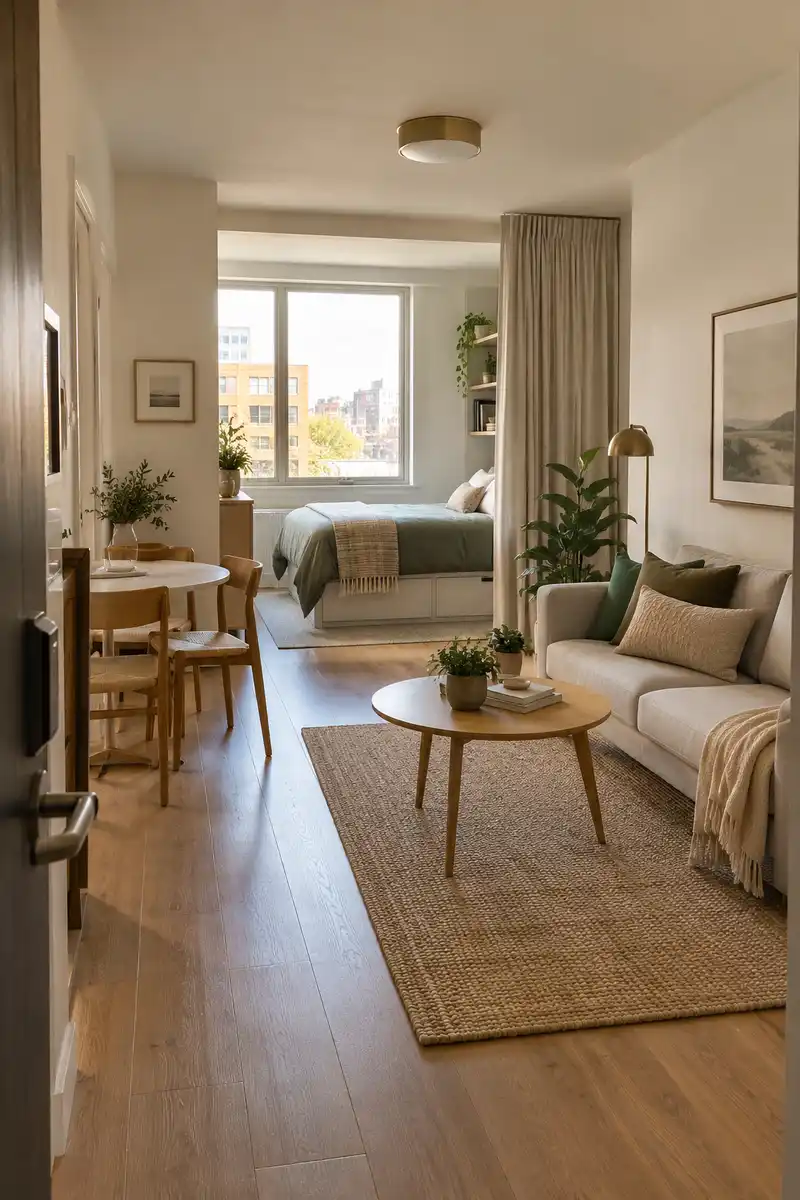
Arrange the room so the main route feels obvious as soon as you enter. This may mean leaving the center mostly open and placing compact furniture along selected edges. Do not force every piece against a wall; the aim is a clear path that connects the places you use.
Stand at the door with a bag in your hand and walk to the bed, table, and kitchen. Notice the turns that feel awkward. Removing one small obstacle may help more than replacing a large piece. Protect that useful open space as you add character, so the room stays comfortable.
Frequently Asked Questions
What furniture works best in a small bachelor apartment?
Choose furniture by usable space and everyday comfort. Slim-arm sofas, compact tables, and accessible storage can help, but measure each piece and its opening or seating space before buying.
How can I separate the bed without making the room dark?
Try a partial divider, a low open shelf, or a simple change in furniture direction. Protect the window view and walking route, and follow installation guidance for any divider you choose.
Is multifunctional furniture always the best choice?
No. A feature is useful only if you will use it and can operate it easily. A comfortable ordinary bed may work better than a complicated convertible piece that needs daily rearranging.
How do I add personality without adding clutter?
Choose one or two clear details, such as a distinctive chair, meaningful art, or a favorite textile. Leave space around them and let ordinary storage handle the objects you do not need on display.
Make It Feel Like Home
A small bachelor apartment feels better when its furniture fits both the room and your life. Start with the walking route, choose pieces with useful proportions, and save flexible features for situations you actually encounter. Then add character through one distinctive chair, a favorite picture, or a color you love. Decorating a small bachelor apartment does not require hiding every sign of daily living. It means giving those activities enough space to work comfortably. Keep the choices that help, remove the pieces that create friction, and let some open floor be part of the finished design rather than a gap to fill.
Community
Join the conversation
Add a useful idea, ask a specific question, or share what worked in your space. Every comment is reviewed before it appears.