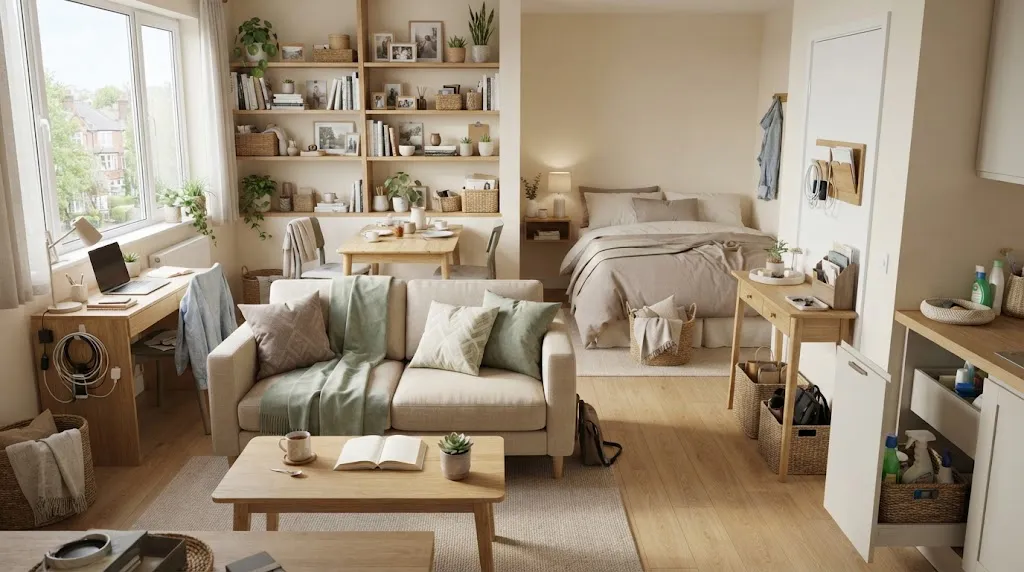
There is a particular kind of clutter that makes a tiny apartment feel messy even when everything else is relatively clean: things that have no home.
Chargers end up on the kitchen counter. Keys disappear into random bowls. Mail piles up on the dining table. Shoes collect near the door. Cleaning supplies get pushed into whatever cabinet has space. Bags land on chairs because there is nowhere else to put them.
When you organize a tiny studio apartment, these small items can be surprisingly difficult to manage because there is very little extra storage.
The answer is not necessarily buying more containers. Instead, give the homeless things in your apartment a designated place based on where you use them, how often you need them, and how much space they actually require.
These 15 tiny studio apartment organization ideas can help you create practical homes for the little things that constantly seem to wander around your studio.
1. Give the Entryway a Drop Zone
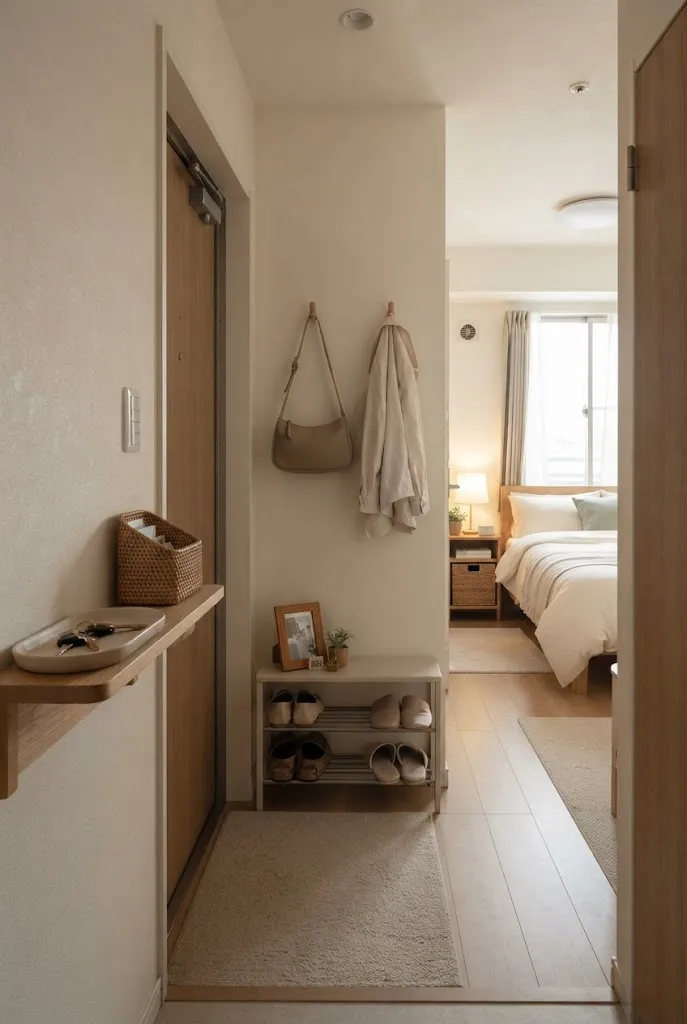
The area near your entrance is one of the most important places to organize.
Even if you do not have a traditional hallway, you can create a tiny drop zone using a small wall section, shelf, console, or narrow table.
Give this area specific jobs.
Use one hook for your everyday bag, a small tray for keys, and a basket for items that need to leave the apartment. If you have enough room, add a small shoe rack underneath.
The important thing is that everything has a predictable destination.
Instead of dropping your keys on the kitchen counter every day, you know exactly where they belong as soon as you walk through the door.
2. Create a Charging Station for Electronics
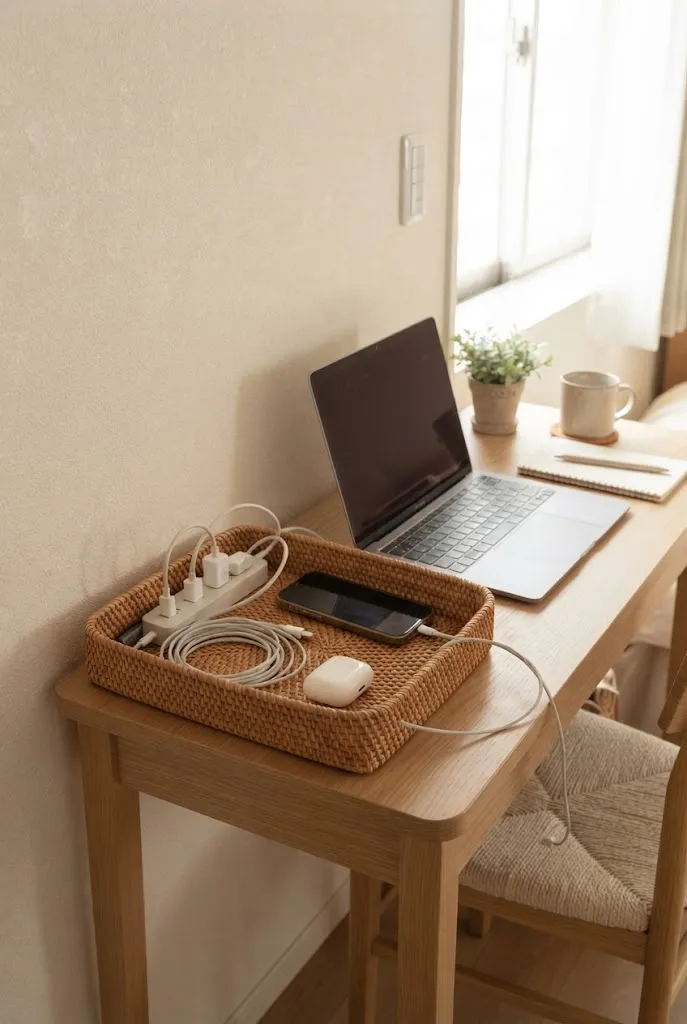
Cables and chargers are some of the easiest things to lose in a studio.
They also create visual clutter because they tend to migrate between the bed, sofa, desk, and kitchen.
Choose one location as your charging station.
A small basket on a shelf, a drawer near your desk, or a box beside your bed can work. Keep frequently used charging cables together and store extras separately.
If several devices need to charge in the same place, use a power strip and keep the cables organized rather than allowing them to spread across the room.
This simple system can eliminate one of the most persistent categories of tiny-apartment clutter.
3. Turn One Drawer Into a “Random Things” Drawer
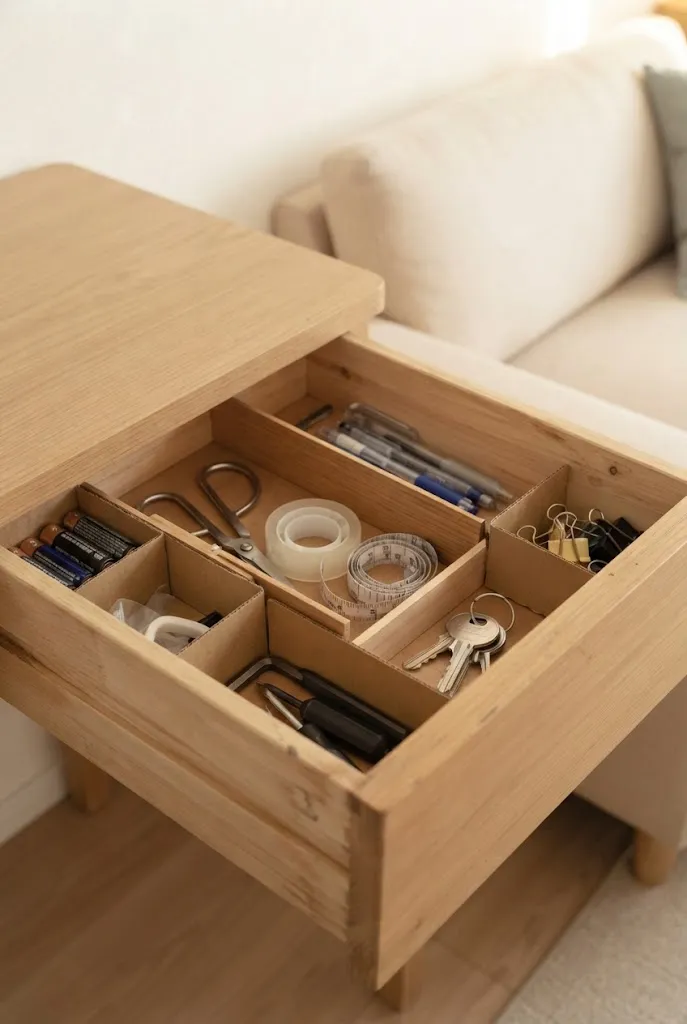
Every home has miscellaneous objects that do not belong anywhere obvious.
Instead of allowing these items to spread throughout your studio, dedicate one drawer to them.
It might contain spare batteries, tape, scissors, spare keys, small tools, measuring tape, pens, or other useful odds and ends.
The drawer should still have some organization. Use small containers or dividers if necessary.
Most importantly, avoid creating several random drawers.
One controlled location is much easier to maintain than miscellaneous clutter distributed throughout your apartment.
4. Use the Back of Doors
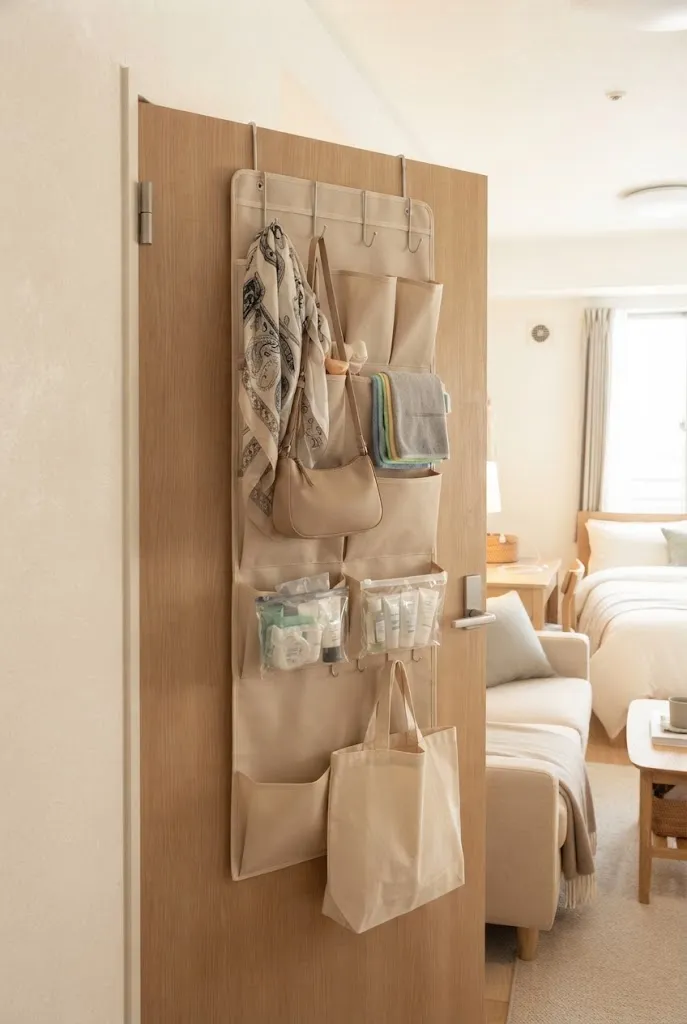
Doors are often overlooked storage surfaces.
The back of a bathroom door, closet door, or bedroom door can hold lightweight items without using valuable floor space.
Depending on what you already have, use an over-door organizer, hooks, or a hanging storage system.
This can be useful for accessories, cleaning supplies, scarves, bags, toiletries, or other small belongings.
Keep the system relatively flat so it does not interfere with the door closing.
When you organize a tiny studio apartment, unused vertical surfaces can be just as valuable as shelves and cabinets.
5. Give Bags a Permanent Parking Spot
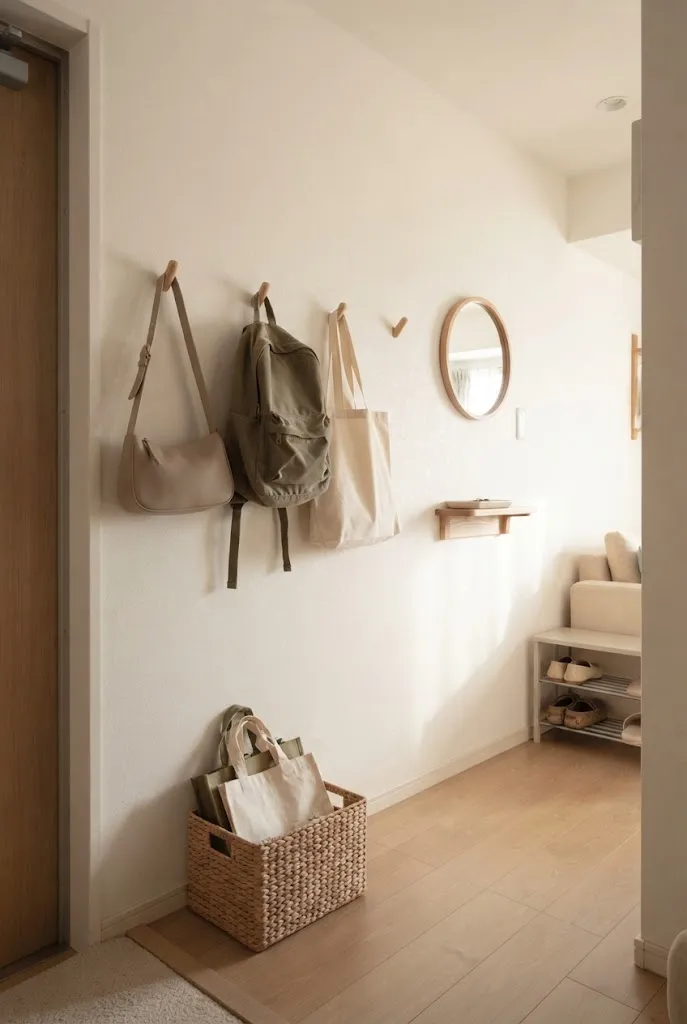
Handbags, backpacks, tote bags, and reusable shopping bags can quickly take over chairs and corners.
Choose one location for them.
Wall hooks are particularly useful because they take advantage of vertical space. If you already have a coat rack, dedicate a section of it to bags.
For reusable grocery bags, keep them inside one larger bag or basket instead of allowing individual bags to collect around the kitchen.
Your everyday bag should be easy to grab, while less frequently used bags can be stored higher up or farther away.
The goal is to stop bags from becoming temporary furniture.
6. Create a Mail and Paperwork Station
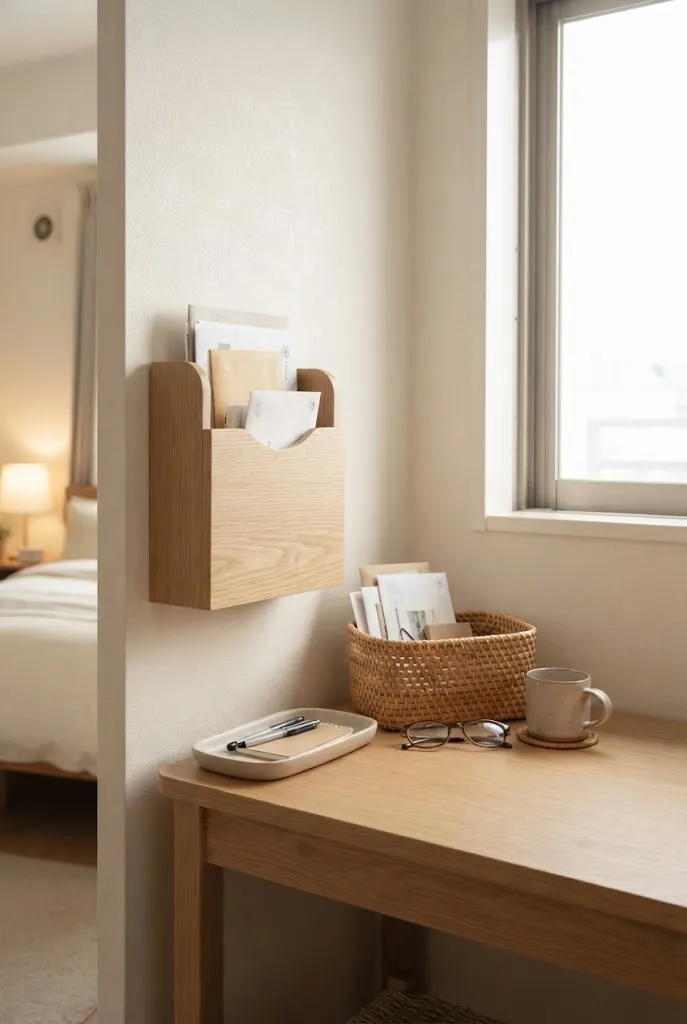
Paper clutter can make even an organized studio look messy.
Instead of placing mail wherever you happen to have an empty surface, establish one small paperwork zone.
A wall-mounted file holder, narrow basket, desk organizer, or unused drawer can work.
Create simple categories such as:
- To deal with
- Important documents
- Receipts
- To recycle
Do not allow the system to become a permanent storage pile.
Set aside a few minutes regularly to process the papers instead of letting the basket overflow.
7. Use a Basket for Items That Belong Elsewhere
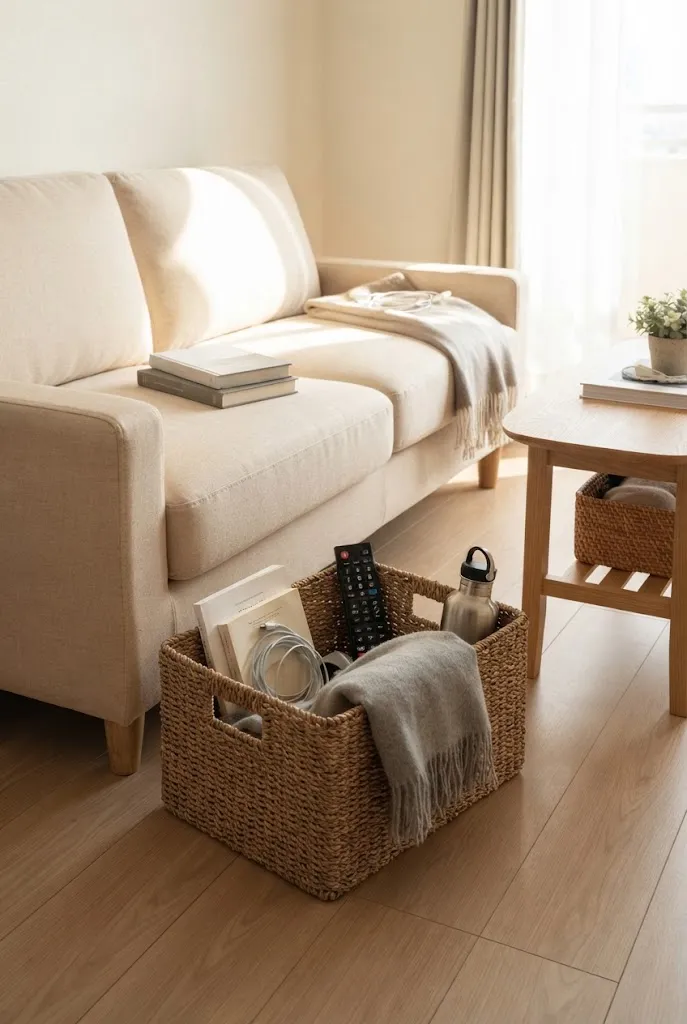
A “belongs elsewhere” basket is particularly useful in a studio because you can quickly clear surfaces without randomly moving things around.
Place one attractive basket in a convenient location.
Whenever you find something that belongs somewhere else, put it inside.
At the end of the day, return the items to their proper homes.
For example, a book that belongs beside the bed, a charger that belongs at the desk, and a pair of socks that belongs in the laundry can temporarily share the same basket.
It gives homeless items a temporary home while preventing them from remaining scattered around the apartment.
8. Give Small Kitchen Tools a Dedicated Container
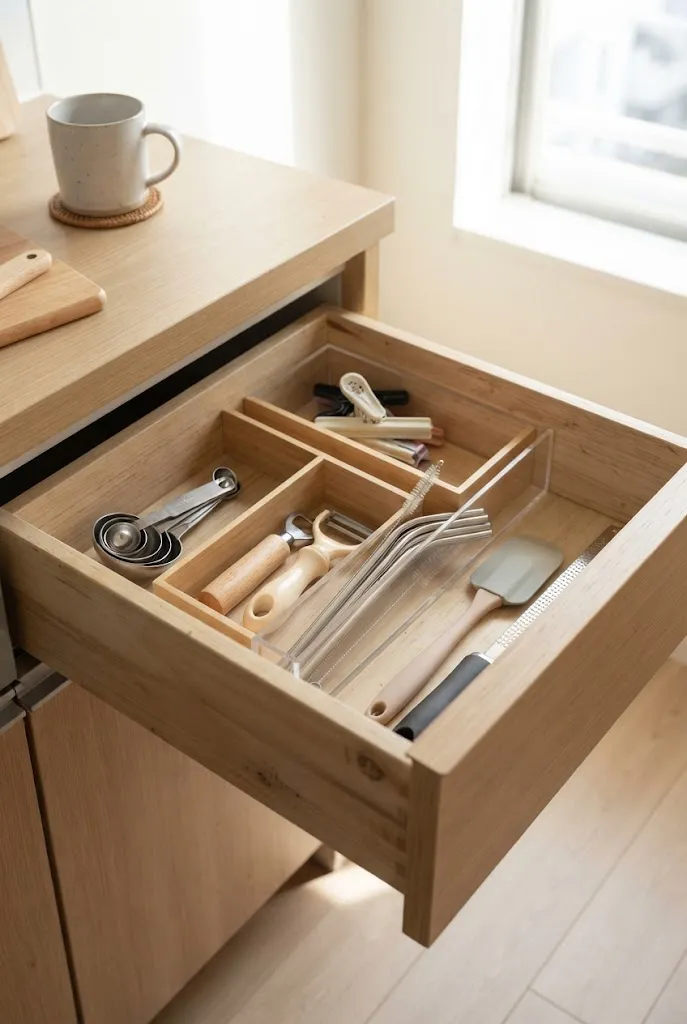
Tiny kitchen accessories can be surprisingly difficult to store.
Measuring spoons, bottle openers, clips, peelers, small spatulas, reusable straws, and other little tools often end up scattered across drawers.
Group similar items together.
Use one small container for frequently used kitchen tools and another for less frequently used accessories.
You can also use a narrow drawer organizer to keep individual pieces separated.
The key is to avoid dedicating valuable kitchen space to items you rarely use.
Frequently used tools should be easiest to reach.
9. Create a Home for Cleaning Supplies
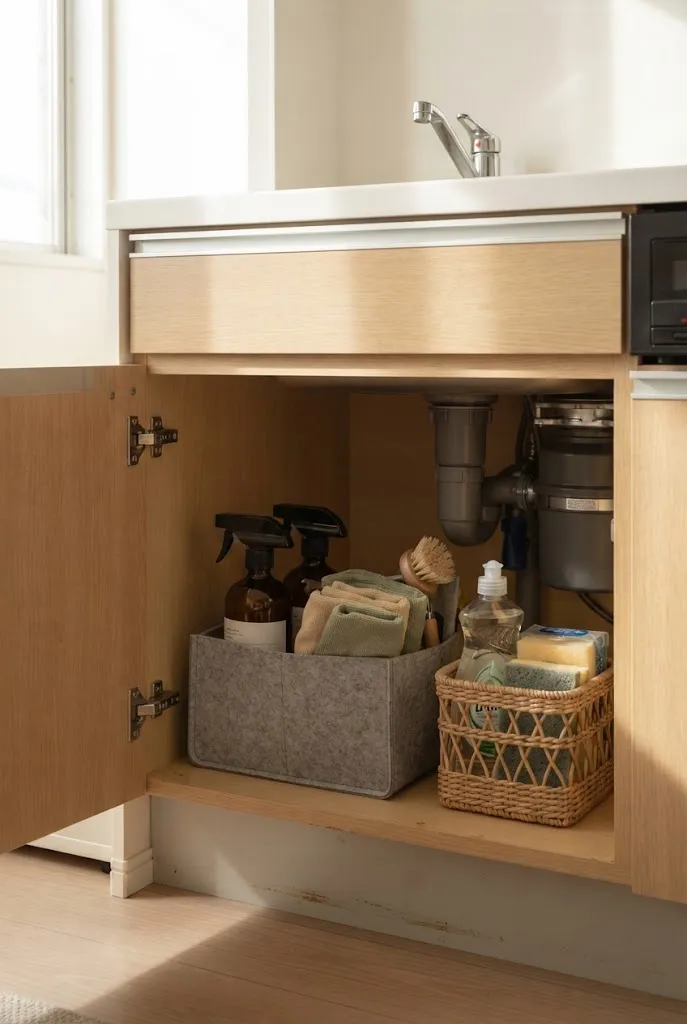
Cleaning supplies often end up under the sink, beside the toilet, behind the sofa, or in random cabinets.
Choose one storage area for them.
If you have a cabinet beneath the kitchen or bathroom sink, use baskets or a small caddy to group cleaning products.
A portable caddy can be particularly useful in a studio because you can carry several cleaning supplies at once and return the entire group to its storage location afterward.
Keep frequently used products accessible and place specialty products farther back.
This makes cleaning easier while preventing bottles from spreading into other areas of the apartment.
10. Turn Your Wall Into a Small Organization Center
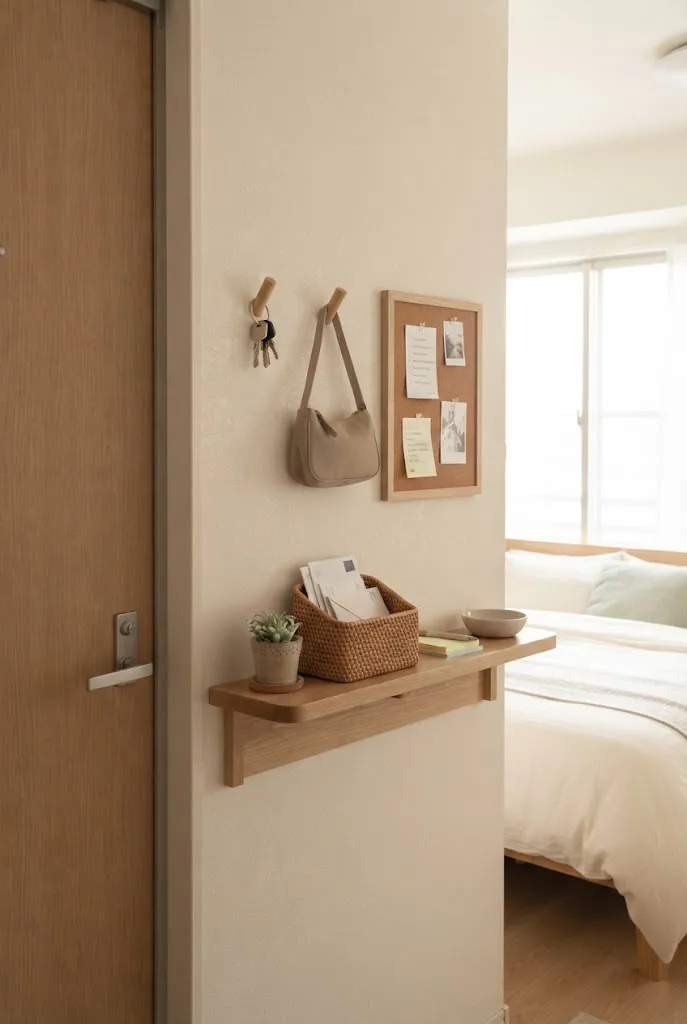
When floor space is limited, walls can solve many organizational problems.
Choose a small section of wall and combine a few useful elements.
You could have hooks for keys and bags, a narrow shelf for small objects, and a small board or organizer for reminders.
Keep the arrangement compact.
The goal is not to turn an entire wall into a storage system. A small, thoughtfully planned organization center can handle several categories of items while keeping your floor and furniture surfaces clear.
11. Store Items Where You Actually Use Them
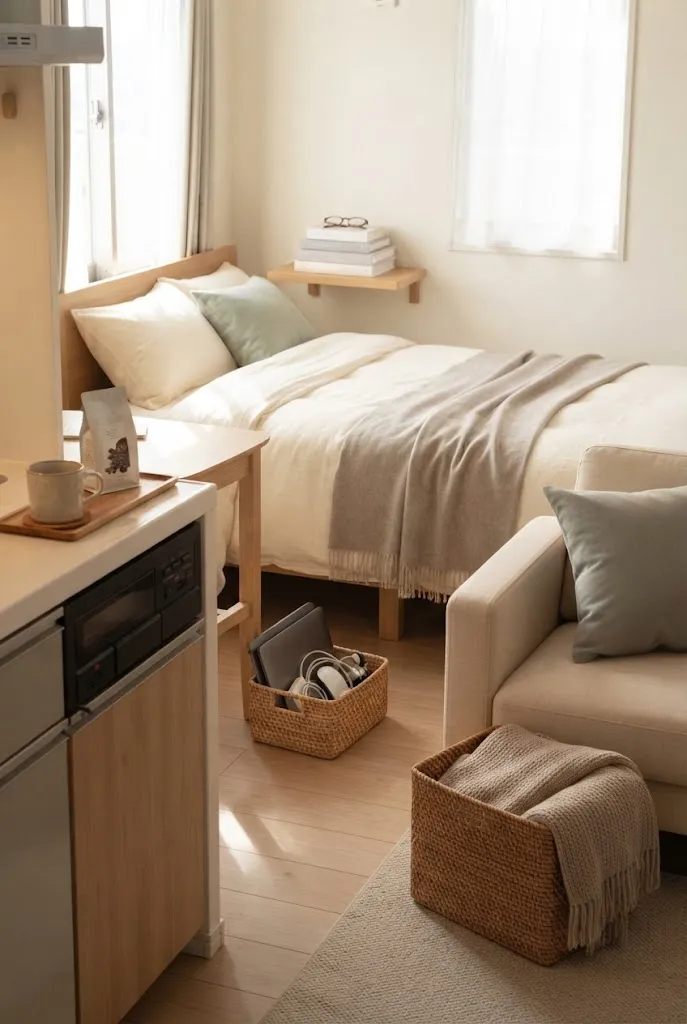
One of the biggest organization mistakes is storing things in theoretically logical places instead of practical ones.
Think about where you actually use each item.
If you read in bed, keep your current books beside the bed.
If you regularly work from the sofa, keep your laptop accessories nearby.
If you use hair products in the bathroom, do not store them across the apartment simply because another cabinet has available space.
Convenience matters.
The easier something is to put away, the more likely you are to actually put it away.
12. Use Small Containers Inside Larger Storage
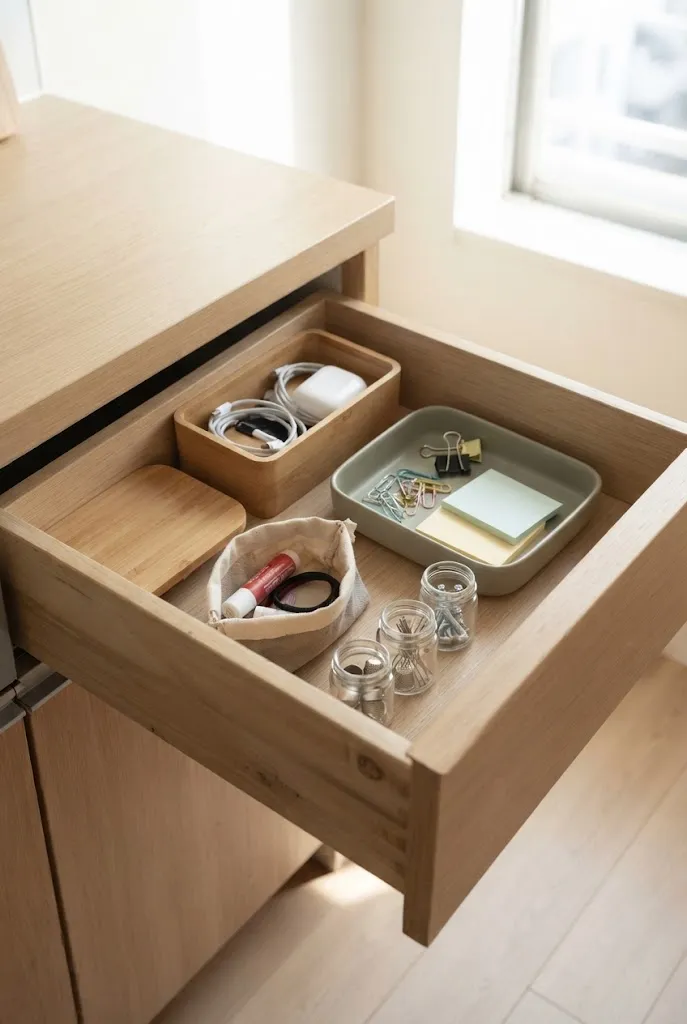
A large drawer or cabinet can technically hold many items while still being difficult to use.
Small containers can create separate categories within that larger space.
For example, use one container for cables, another for stationery, and another for small personal accessories.
In a kitchen drawer, separate utensils by type.
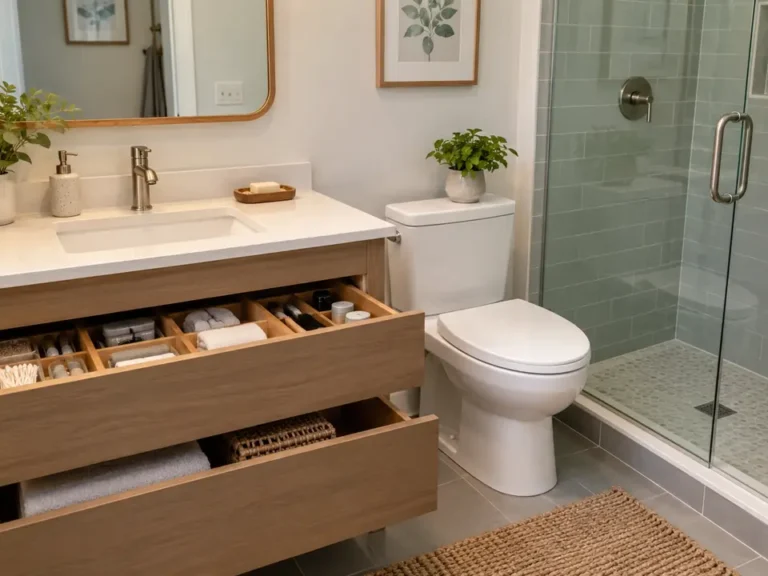
In a bathroom cabinet, group skincare, hair accessories, and backup toiletries.
You do not need dozens of matching containers. Reuse boxes, small baskets, or containers you already own when possible.
The objective is to make categories visible and easy to retrieve.
13. Create a Home for Shoes and Slippers
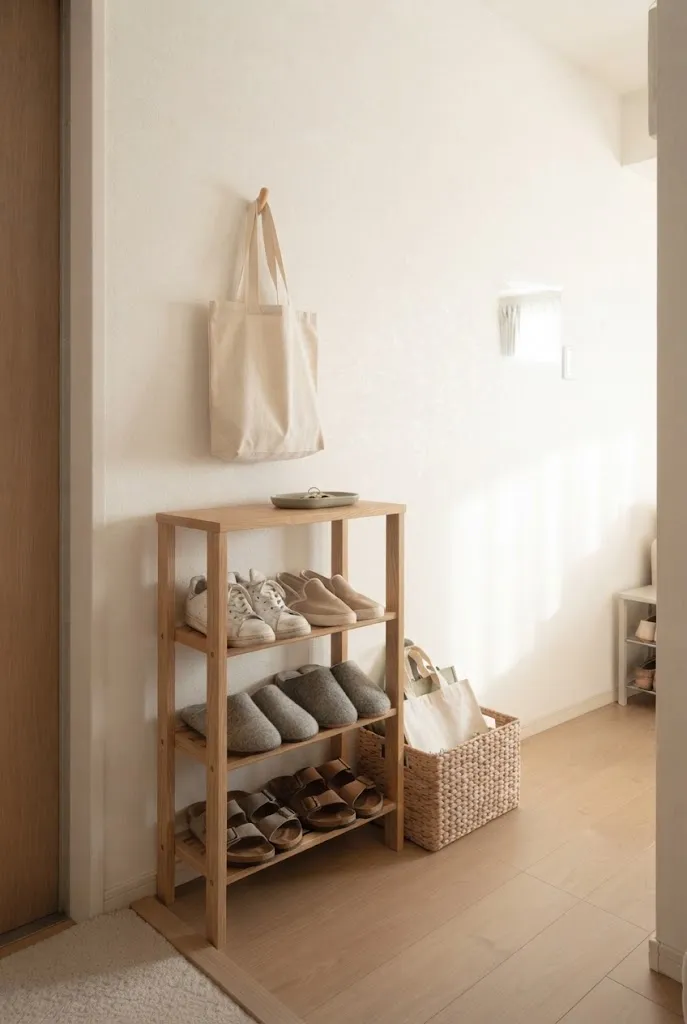
Shoes are particularly noticeable in a tiny studio because they occupy floor space.
Choose a specific shoe zone near the entrance.
A slim shoe rack, low basket, shelf, or the bottom section of a wardrobe can work.
Keep only the shoes you use regularly within easy reach.
Seasonal or occasional footwear can be stored elsewhere.
For slippers, give them one consistent location instead of allowing them to travel between the bed, sofa, and bathroom.
Keeping the floor around your entrance clear can make the entire apartment feel more organized.
14. Give Your Nightstand a Strict Limit
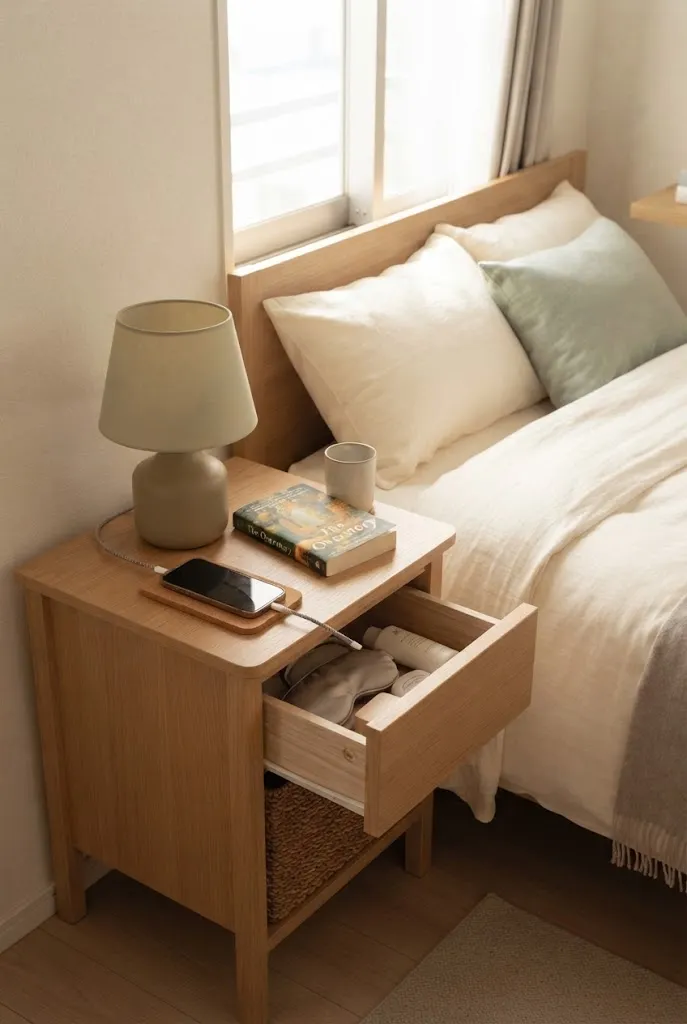
A bedside table can become a magnet for homeless items.
Books, glasses, chargers, water bottles, receipts, headphones, skincare products, and miscellaneous objects can quickly accumulate.
Give your nightstand a simple rule.
Keep only the things you regularly use before bed or immediately after waking.
A lamp, current book, phone charger, and water glass may be enough.
Everything else should have another home.
If your nightstand has a drawer, use it for small personal items that you want nearby but do not need displayed.
A controlled bedside surface can make the sleeping area feel noticeably calmer.
15. Create a Five-Minute Reset System
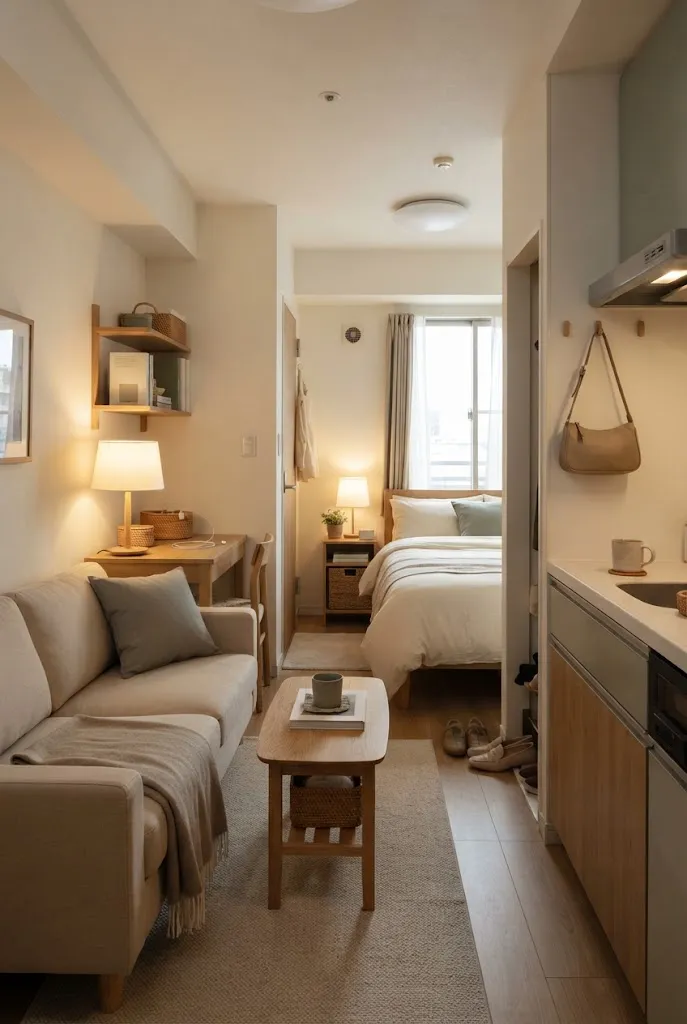
The best organization system is one you can maintain.
At the end of the day, spend five minutes returning homeless items to their designated locations.
Walk through your studio and look for objects sitting where they do not belong.
Return the mug to the kitchen.
Put the charger in its station.
Hang the bag on its hook.
Move the book back to the shelf.
Put the shoes near the entrance.
Fold the throw.
Five minutes may not sound like much, but doing this consistently prevents small amounts of clutter from becoming a major weekend project.
How to Decide Where an Item Should Live
When you find something that does not have a home, ask three simple questions.
Where do I use it most?
The answer usually tells you which room or zone it belongs in.
How often do I use it?
Daily items should be easy to reach. Occasional items can be stored higher or farther away.
Can it share storage with similar items?
If yes, create a category rather than giving the object an individual storage location.
This approach keeps your organization system simple.
You are not trying to create a perfect place for every single object. You are creating logical categories that make everyday life easier.
What to Do With Things You Rarely Use
Not everything needs prime storage space.
Seasonal decorations, specialty kitchen equipment, travel accessories, extra bedding, and occasional-use items can take up valuable room in a studio.
Move these items to less convenient storage locations.
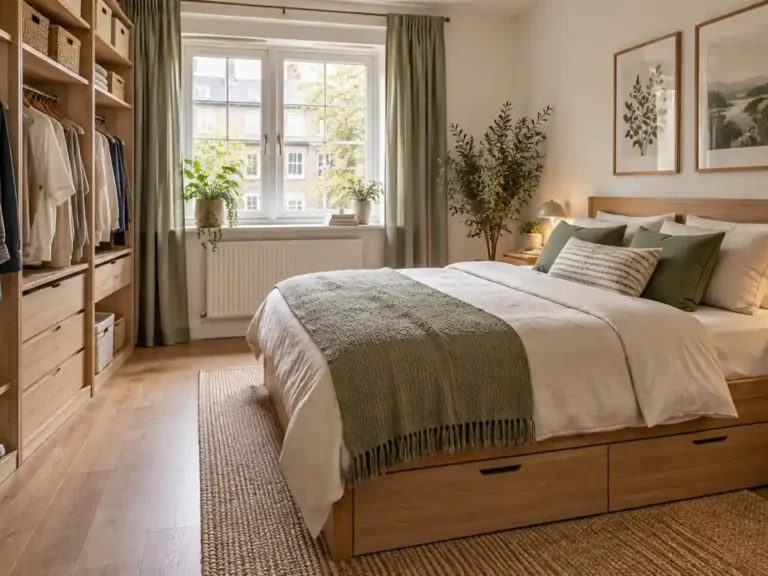
Use the top of a wardrobe, under-bed storage, high shelves, or labeled containers where appropriate.
Reserve your easiest-to-reach storage for the things you use every day.
This makes your apartment feel more functional because the items you need most are always accessible.
Organization Mistakes to Avoid
When you organize a tiny studio apartment, adding too many storage products can sometimes create more problems.
Avoid buying containers before deciding what they will hold.
Do not create a complicated system with too many categories.
Avoid storing frequently used items in difficult-to-reach places.
Do not fill every shelf simply because you have storage space available.
And avoid using every empty corner for storage. Your apartment still needs visual breathing room.
Good organization should make your daily routine easier, not turn your home into a collection of storage systems.
A Simple Weekly Organization Routine
Once your apartment has designated homes for everyday items, maintaining it becomes much easier.
Try a short weekly reset.
Monday: Clear paperwork and mail.
Tuesday: Organize cables and electronics.
Wednesday: Reset the kitchen.
Thursday: Tidy clothing, shoes, and bags.
Friday: Clear surfaces throughout the apartment.
Weekend: Return anything that has slowly migrated from its designated home.
You do not need to spend hours organizing every weekend.
Small, regular resets are usually more sustainable than occasional major decluttering sessions.
Frequently Asked Questions
How do I organize a tiny studio apartment with very little storage?
Start by assigning homes to your most frequently used items. Use vertical storage, the backs of doors, under-bed space, drawers, baskets, and multifunctional furniture to maximize the space you already have.
What should I do with things that have no home?
Group similar homeless items together and decide where they are most frequently used. Create a designated drawer, basket, shelf, or container for each useful category.
How do I stop clutter from accumulating in a studio?
Make it easy to put things away. Keep everyday items close to where you use them and perform a short daily reset so small amounts of clutter do not accumulate.
Where should I store things I rarely use?
Use less accessible areas such as high shelves, under-bed storage, the top of a wardrobe, or labeled storage containers. Save convenient storage for everyday belongings.
Are baskets useful for organizing a tiny apartment?
Yes. Baskets are particularly useful for grouping loose items, hiding visual clutter, and creating temporary or permanent homes for categories of belongings.
How can I organize my studio without making it look cluttered?
Use fewer, larger storage groups rather than many small containers scattered throughout the room. Keep frequently visible surfaces relatively clear and choose storage that fits naturally into the existing furniture and layout.
Final Thoughts
Learning to organize a tiny studio apartment is less about finding storage for every individual object and more about creating simple systems that match the way you actually live.
Keys need a home near the entrance. Chargers need a charging station. Bags need hooks. Paperwork needs one place. Cleaning supplies need to stay together. Miscellaneous objects need a controlled category instead of spreading across every surface.
Once these small decisions are made, your apartment becomes much easier to maintain.
The goal is not a perfectly organized studio where nothing is ever out of place. It is a home where everything can be put away quickly and where everyday clutter has fewer opportunities to take over.
Start with the things that currently cause the most frustration, give them logical homes, and build your organization system one category at a time.
Community
Join the conversation
Add a useful idea, ask a specific question, or share what worked in your space. Every comment is reviewed before it appears.