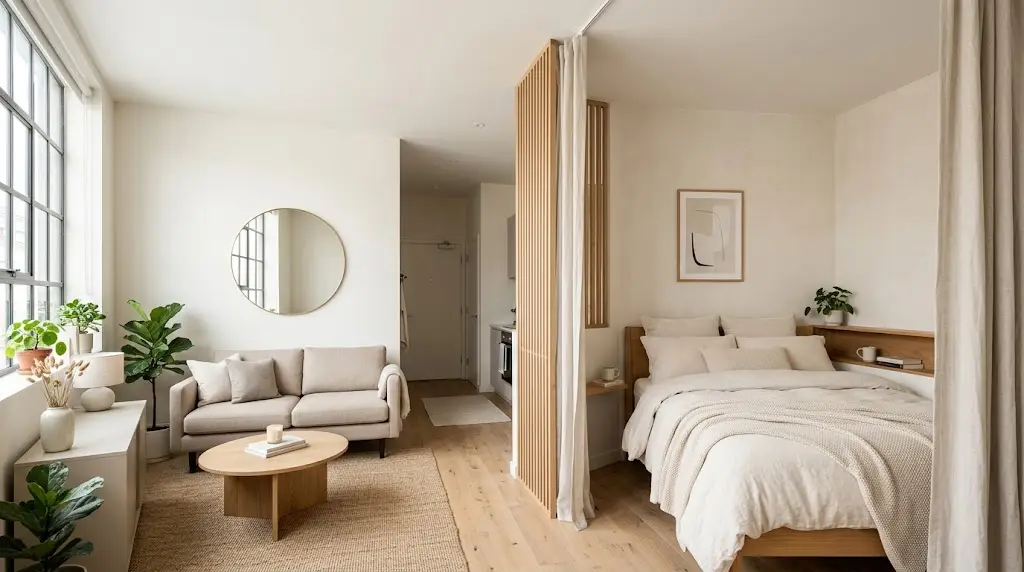
Living in a studio apartment can feel challenging when you want a bedroom that feels private, cozy, and separate from the rest of your home.
The good news? You do not need a large floor plan to create a beautiful sleeping area. These studio bedroom ideas and studio apartment bed ideas show how to make a bedroom in a studio apartment with curtains, shelves, storage beds, and smart bed placement.
With the right layout, colors, furniture, lighting, and room dividers, even a small studio can feel surprisingly spacious. A few smart changes can turn one open room into a home that feels organized and comfortable.
If you are searching for bedroom in a studio apartment ideas, these 17 decorating solutions can help you create a sleeping space that feels like a real bedroom without making the rest of your apartment feel smaller.
1. Place Your Bed in the Corner for an Instant Bedroom Zone
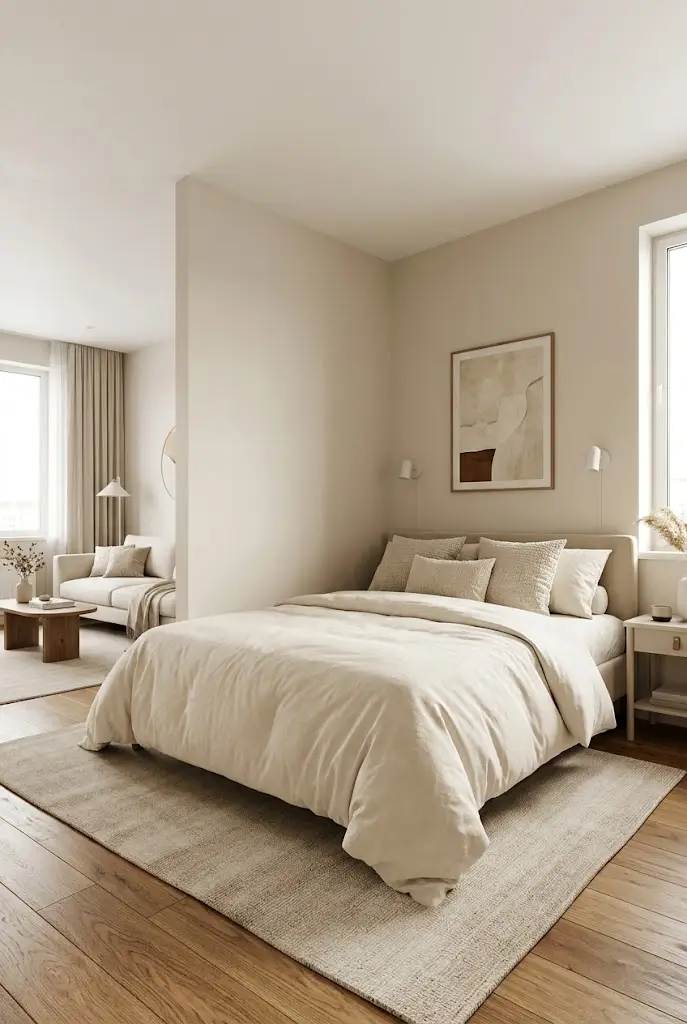
One of the easiest ways to define a sleeping area is to place your bed in a corner.
Instead of positioning the bed in the center of the apartment, push it against two walls if your layout allows. This creates a natural sense of separation and leaves more open floor space in the middle of the room.
Add a small rug underneath the bed, two wall lights, and a few pieces of artwork above the headboard. Suddenly, the corner feels like its own little bedroom.
This works especially well in narrow studios where every inch of floor space matters.
Pinterest idea: Look for a cozy corner bed with warm lighting, neutral bedding, and a large rug.
2. Use a Curtain to Create Privacy Without Closing the Room
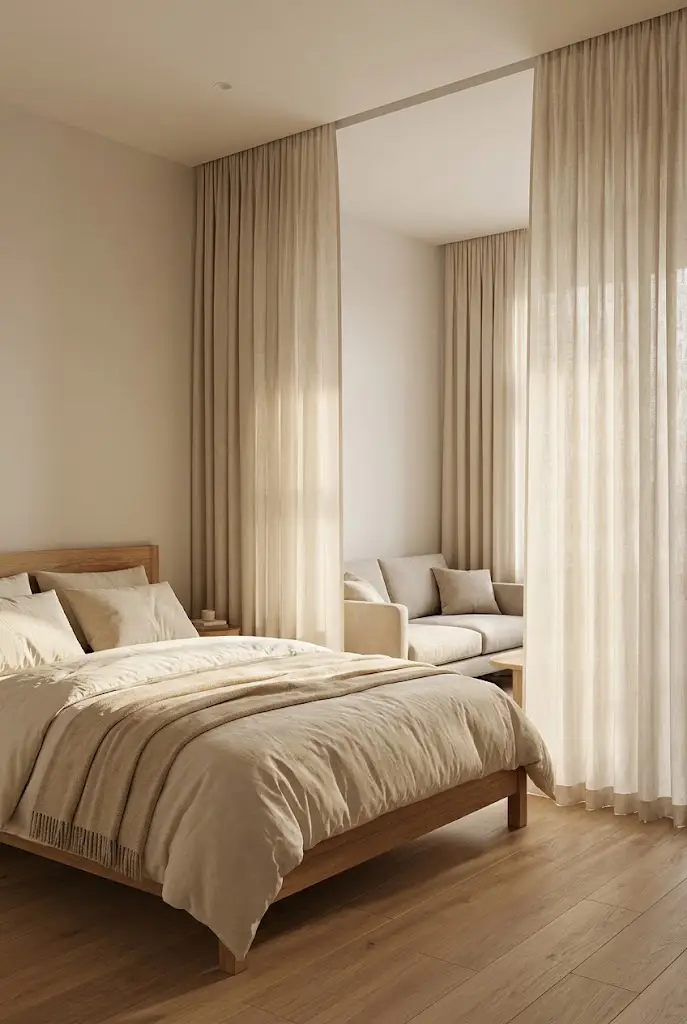
Want a separate sleeping area without installing a permanent wall?
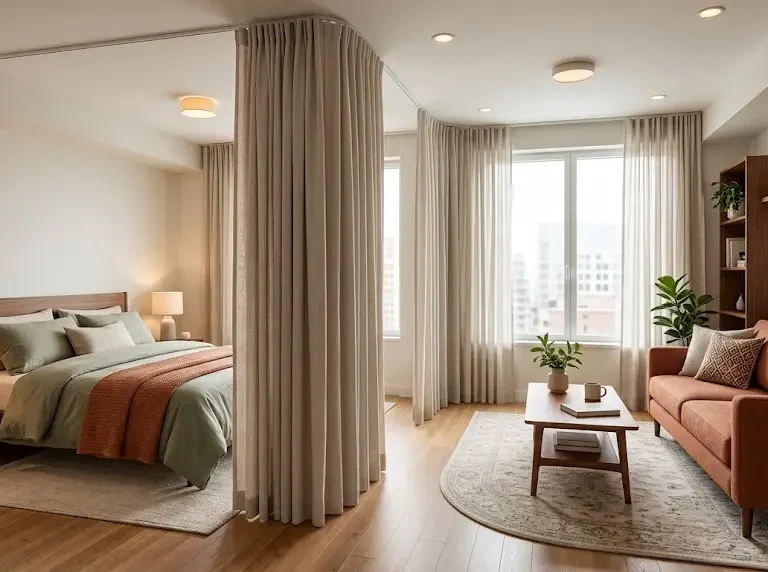
A ceiling mounted curtain can be one of the simplest solutions.
Choose a light fabric if you want the apartment to stay bright. For more privacy, use a thicker curtain that can completely cover the bed when needed.
During the day, pull it open and let the room feel spacious. At night, close it and create a private bedroom atmosphere.
I’ve seen this work especially well in rental apartments because curtains can define a space without making permanent changes to the property.
For a softer look, choose curtains that extend from the ceiling almost all the way to the floor. This draws the eye upward and can make the ceiling appear taller.
3. Try a Glass Divider for a Light and Airy Look
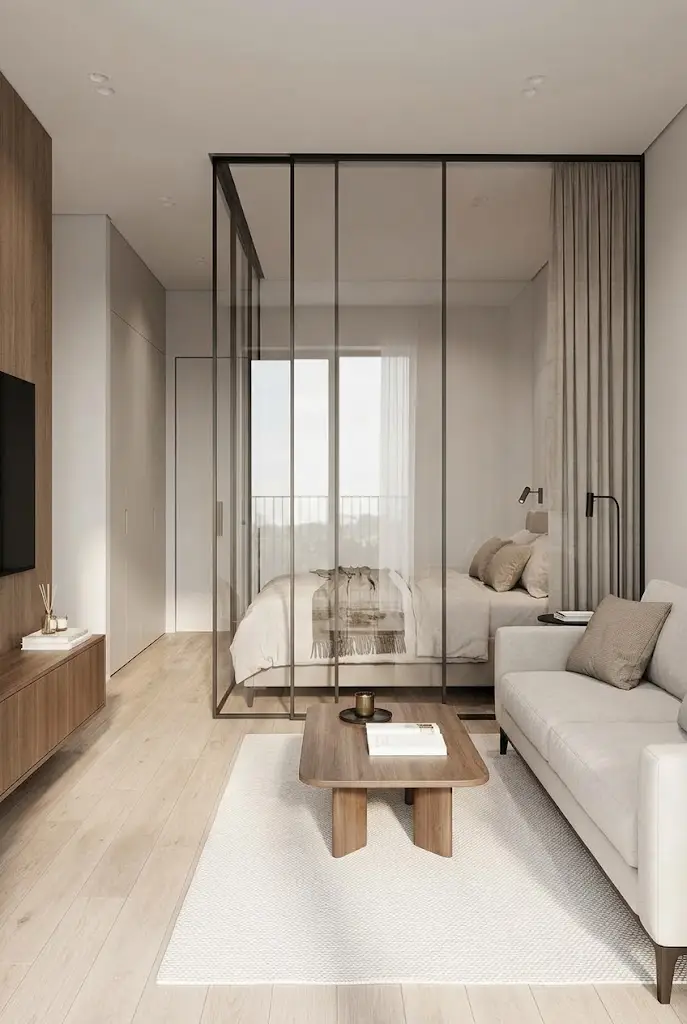
If you want a more permanent bedroom separation, consider a glass divider.
Clear glass allows light to move through the apartment while still creating a visual boundary around the sleeping area.
Frosted glass can provide more privacy while keeping the room bright.
This idea works beautifully in modern studio apartments because the divider creates separate zones without making the apartment look boxed in.
If a full glass wall is outside your budget, even a smaller glass partition can help define the sleeping area.
4. Create a Bedroom Behind an Open Shelf
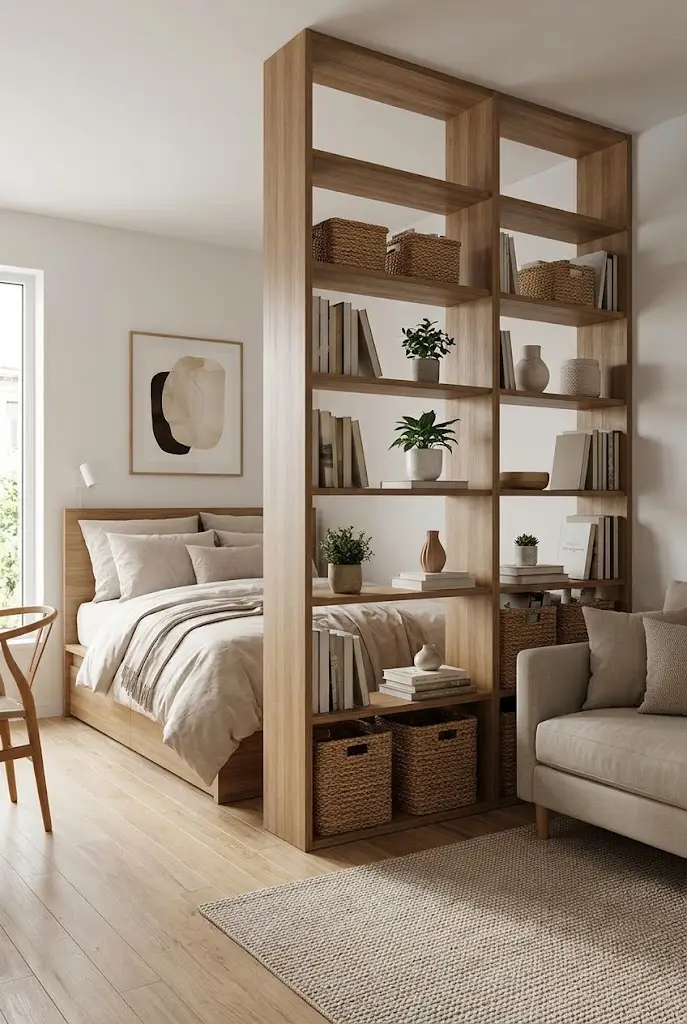
A tall open bookshelf can do two jobs at once.
It can separate your sleeping area from the living space while giving you valuable storage.
Place the shelf beside the bed and use it as a visual divider. Keep some sections open so sunlight can still pass through.
You can add books, plants, baskets, artwork, and small decorative pieces to make the divider feel intentional.
This is especially useful when you are working with a studio apartment layout that has no obvious place for a bedroom.
Just make sure the shelving unit is properly secured, especially if it is tall.
5. Choose a Bed With Storage Underneath
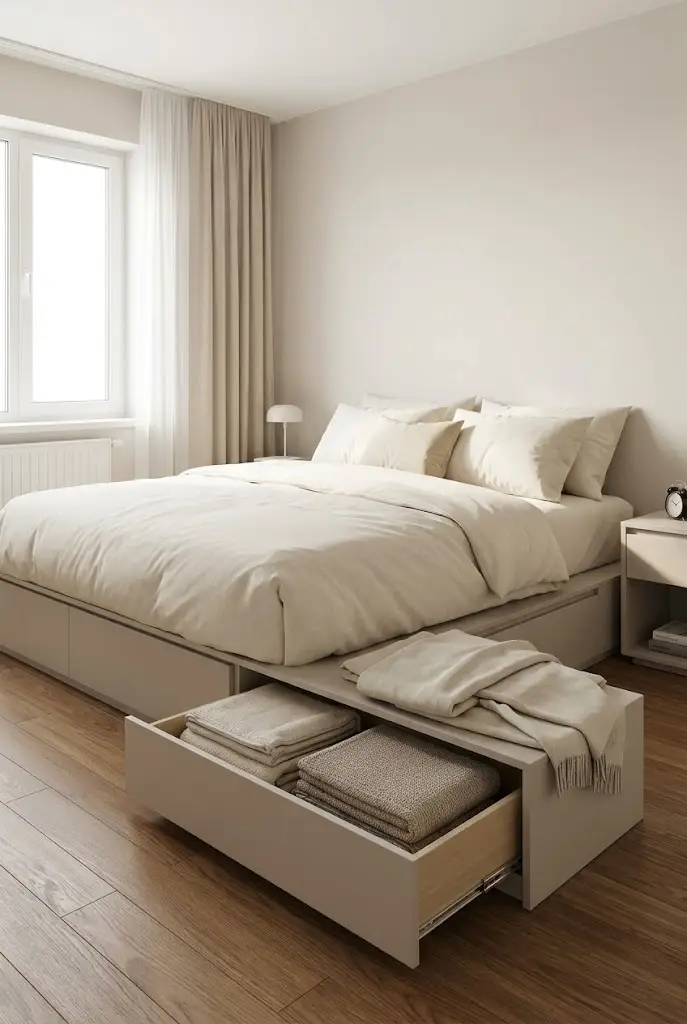
When floor space is limited, your bed can become one of your biggest storage opportunities.
Look for a platform bed with drawers underneath or use storage containers that fit beneath the frame.
You can store extra bedding, seasonal clothing, shoes, towels, or luggage out of sight.
Keeping these items under the bed means you may not need another large storage cabinet, which leaves more open floor space.
In my experience, hidden storage makes a small apartment feel much calmer because fewer everyday items are sitting in plain sight.
6. Use a Loft Bed to Free Up Valuable Floor Space
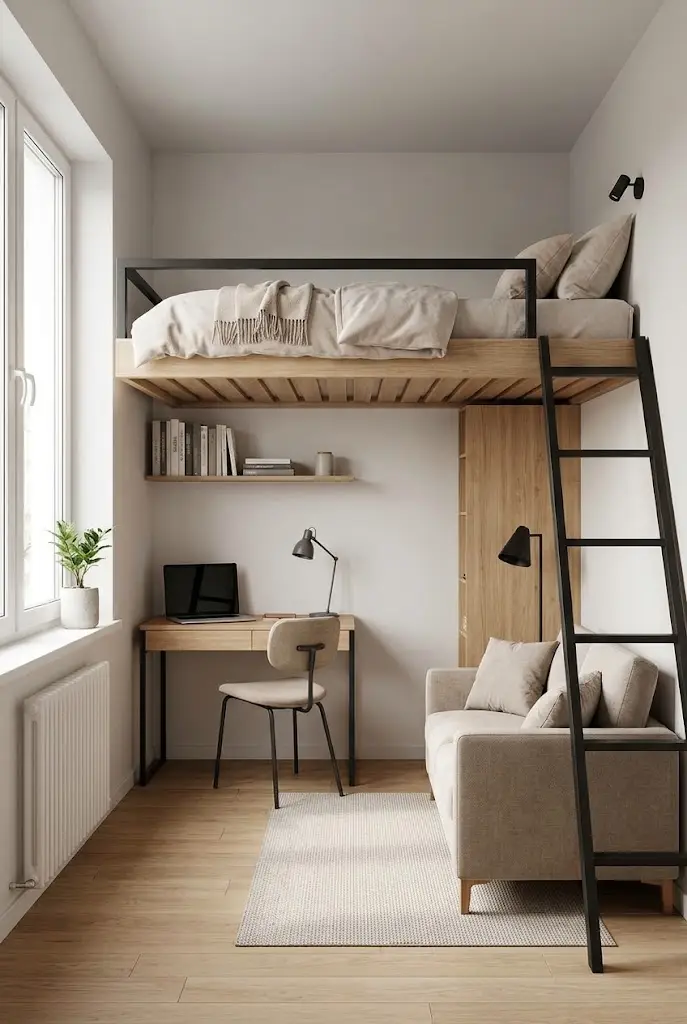
If your ceiling height allows it, a loft bed can completely change the way you use a studio.
The bed goes above your main living area, leaving the floor underneath available for a desk, sofa, wardrobe, or reading corner.
This is particularly useful for very small apartments where fitting a full bedroom area on the floor feels impossible.
Keep the area underneath visually simple. Too many large pieces can make the lower level feel crowded.
A compact desk, comfortable chair, and small storage cabinet can create a surprisingly useful space below.
7. Add a Large Rug to Define the Sleeping Area
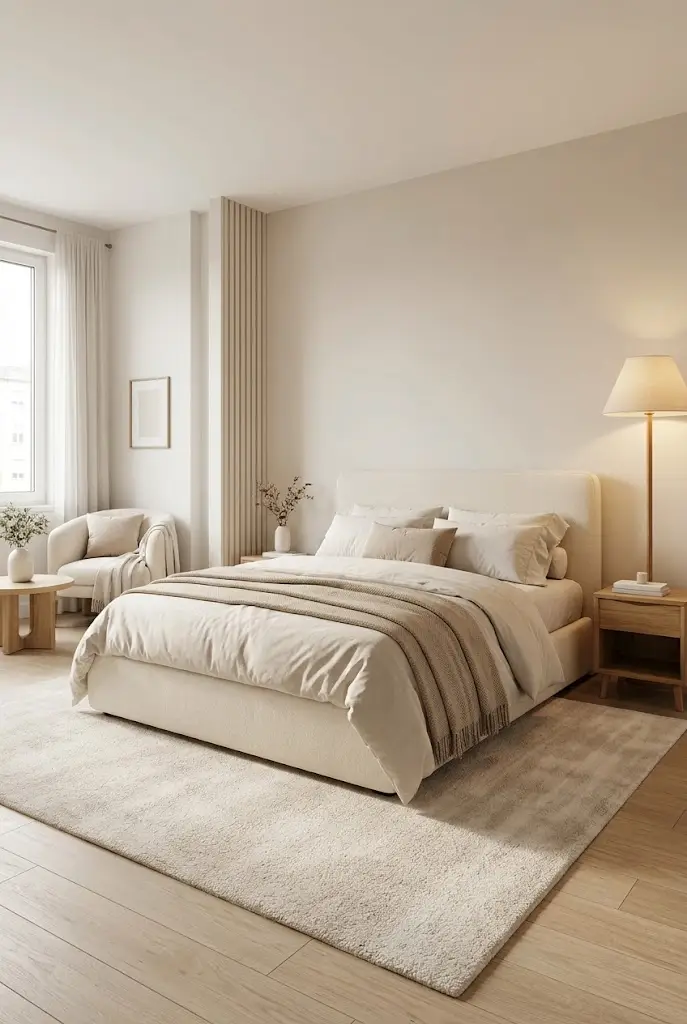
A rug can create the feeling of a separate room without any construction.
Place a large rug underneath the bed so that it extends beyond the sides and foot of the frame.
This gives the sleeping area a clear visual boundary.
Choose a soft, light colored rug if your goal is to make the apartment feel larger. A patterned rug can add personality, but keep the surrounding furniture fairly simple.
This small decorating trick is easy to overlook, yet it can make a major difference in an open floor plan.
8. Use a Different Wall Color Behind the Bed
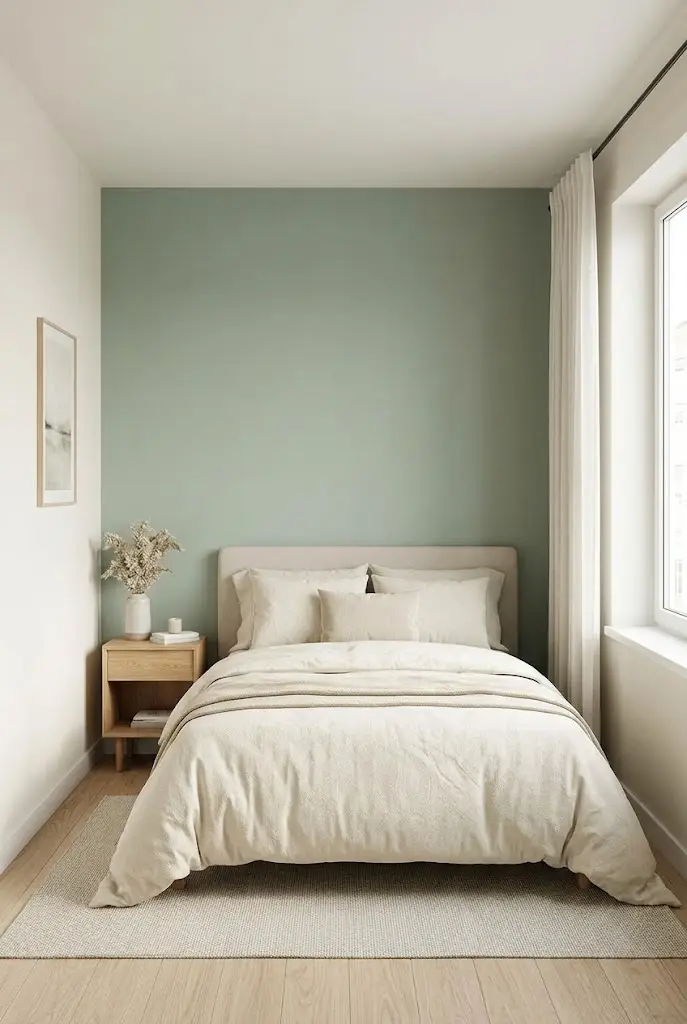
Paint can create a bedroom zone even when there are no walls.
Choose one wall behind the bed and give it a slightly different color from the rest of the apartment.
Soft beige, muted green, warm white, dusty blue, or gentle terracotta can make the sleeping area feel more intentional.
You can also use removable wallpaper if you are renting.
The goal is not to make the wall dramatically darker. A subtle color change can be enough to tell your brain, “This is the bedroom area.”
9. Install Wall Mounted Lights Beside the Bed
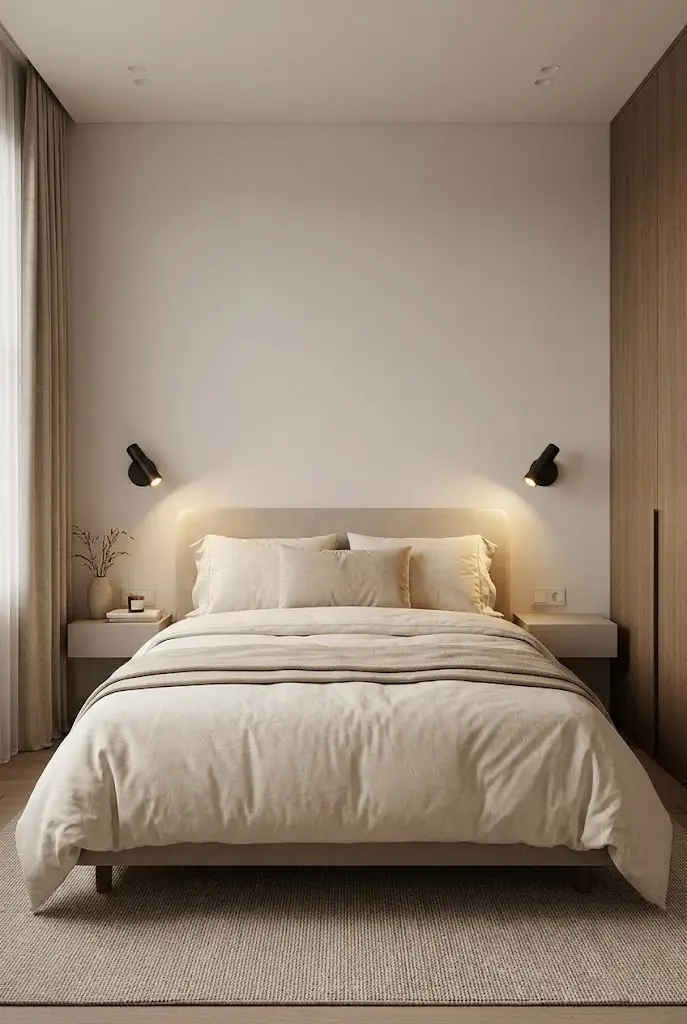
Table lamps can take up valuable surface space.
Wall mounted lights give you the same warm glow while keeping your nightstand free.
This is especially useful when your bed is close to a wall or when you have room for only a tiny bedside table.
Choose warm light for a relaxing evening atmosphere. You can also use adjustable lights so you can read in bed without lighting the entire apartment.
The result is cleaner, more functional, and visually lighter.
10. Hang a Mirror to Make the Studio Feel Larger
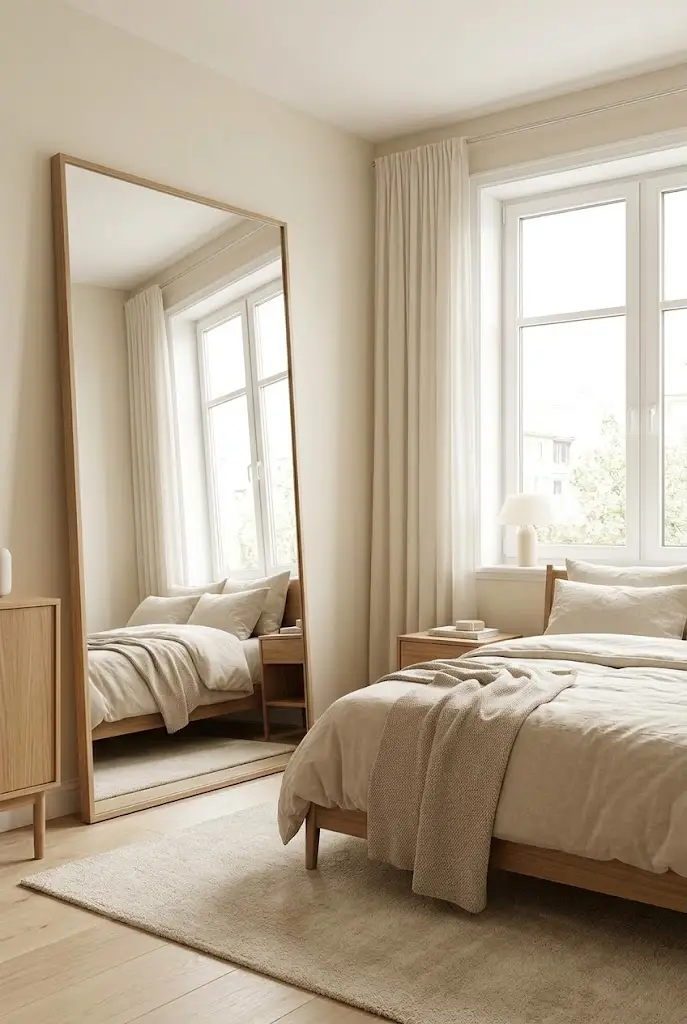
Mirrors are a classic small space trick for a reason.
A large mirror can reflect natural light and make a compact apartment feel more open.
Try placing one opposite a window so it can reflect daylight into the room. A tall mirror beside the wardrobe can also make the area feel taller.
For a bedroom area, a full length mirror is especially useful because it combines decoration with everyday function.
Avoid covering every wall with mirrors. One well placed mirror usually has more impact than several small ones.
11. Keep the Bed Frame Visually Light
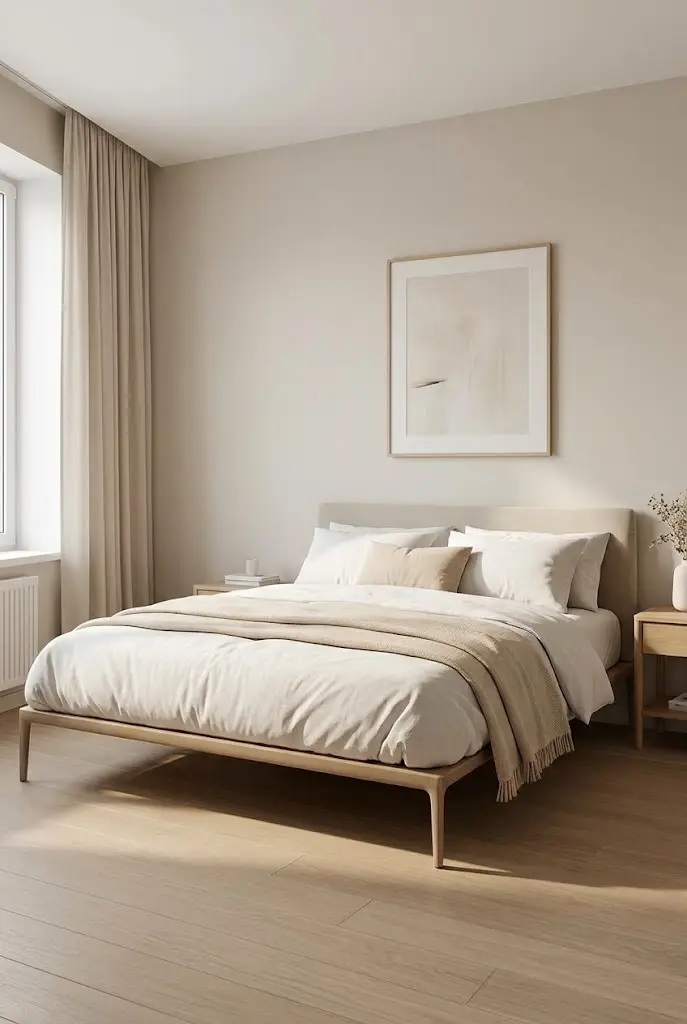
A heavy bed frame can make a small room feel crowded.
Consider a bed with slim legs, an open base, or a simple low profile design.
Being able to see some floor underneath the bed creates more visual breathing room.
Light colored bedding can help as well. White, cream, beige, soft gray, and muted natural shades tend to create a calm appearance.
You can add personality with pillows, blankets, artwork, or a small accent color instead of filling the room with large furniture.
12. Use a Folding Screen When You Want Flexible Privacy
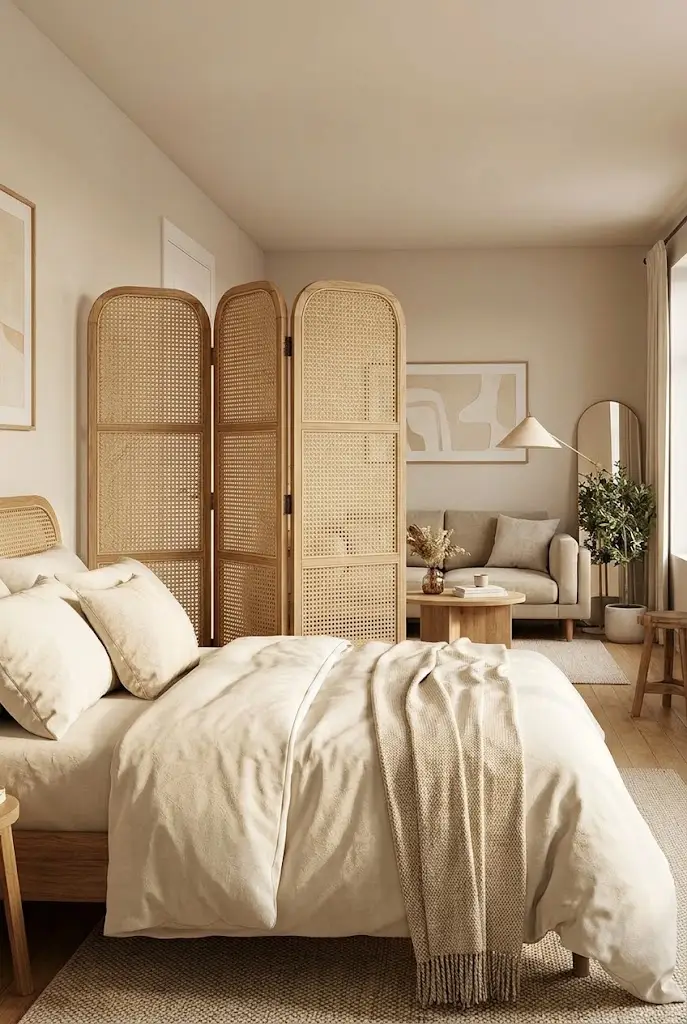
A folding screen is perfect if you want privacy but do not want the bedroom area permanently separated.
You can place it around the side or foot of the bed when you need privacy. When you want an open layout, simply fold it and move it aside.
Wooden screens add warmth. Fabric screens create a softer look. Rattan screens work well with natural and relaxed interiors.
This is also a good choice for renters because it requires no permanent installation.
13. Create Separation With a Headboard
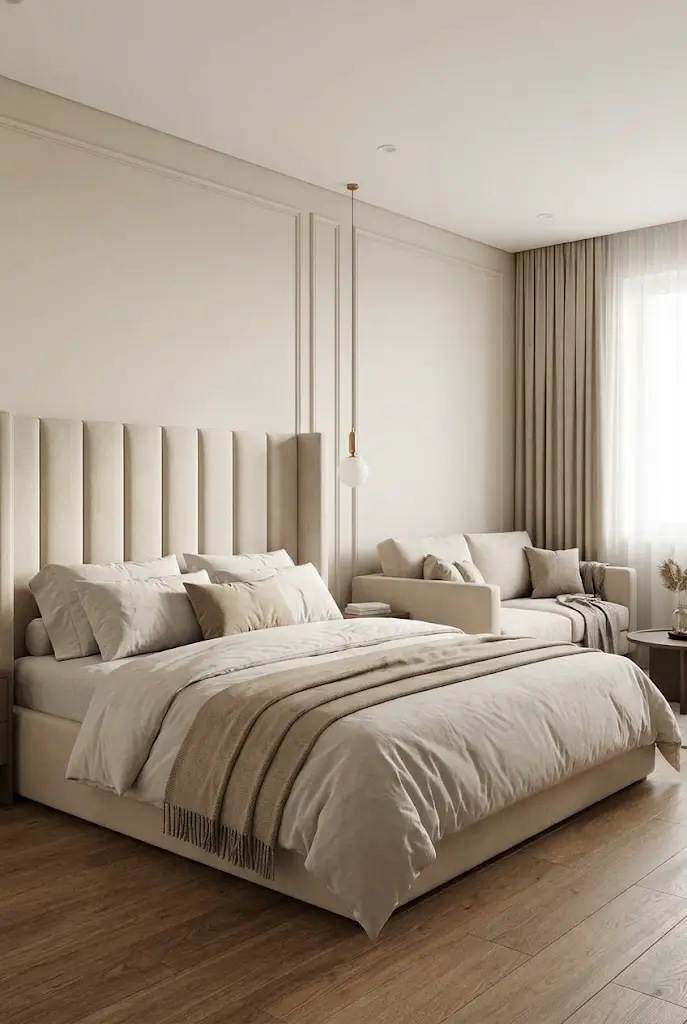
Your headboard can become a design feature and a divider at the same time.
A tall upholstered headboard can visually separate the sleeping area from the rest of the studio.
If your bed faces the living room, a larger headboard can make the sleeping space feel more intentional.
For an especially small apartment, choose a headboard with built in shelves or storage.
This gives you another place for books, lamps, and small personal items without requiring extra furniture.
14. Use Vertical Storage Instead of Taking More Floor Space
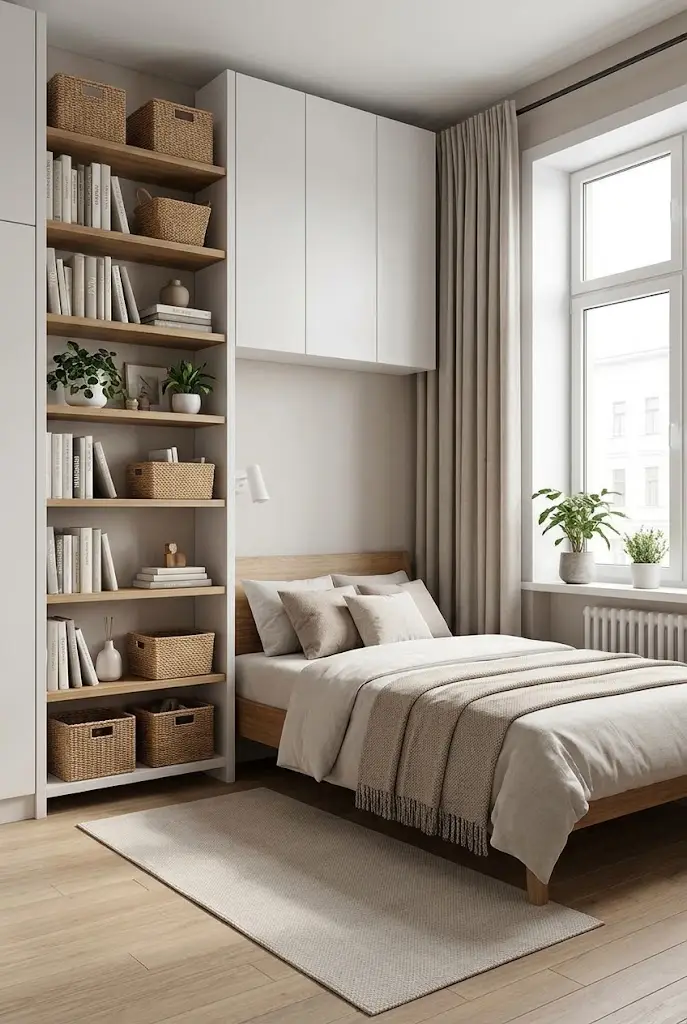
When you run out of floor space, look up.
Tall shelving, wall mounted cabinets, hooks, and vertical organizers can give you much more storage without taking up a large section of the floor.
Keep frequently used items within easy reach and place less frequently used belongings higher up.
You can also use the wall above a small bedside table for shelves.
The key is to keep the arrangement visually organized. Too many objects on the walls can create a cluttered feeling.
15. Use One Color Family Throughout the Apartment
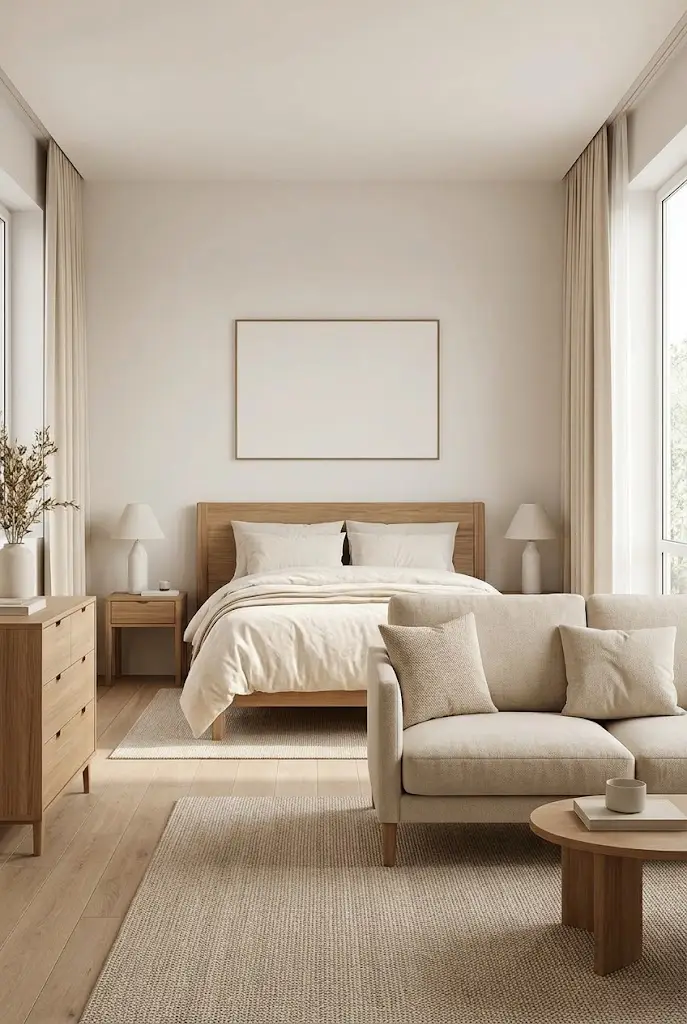
A consistent color palette can make separate areas feel connected.
Choose two or three main colors and repeat them throughout the studio.
For example, you could combine warm white, beige, and natural wood. Or try soft gray, white, and muted green.
When the bedroom, living area, and kitchen share similar colors, the entire apartment feels more cohesive.
If you want the sleeping area to stand out, use slightly warmer shades there while keeping the same overall color family.
16. Put the Bed Near a Window for a Bright, Cozy Feel
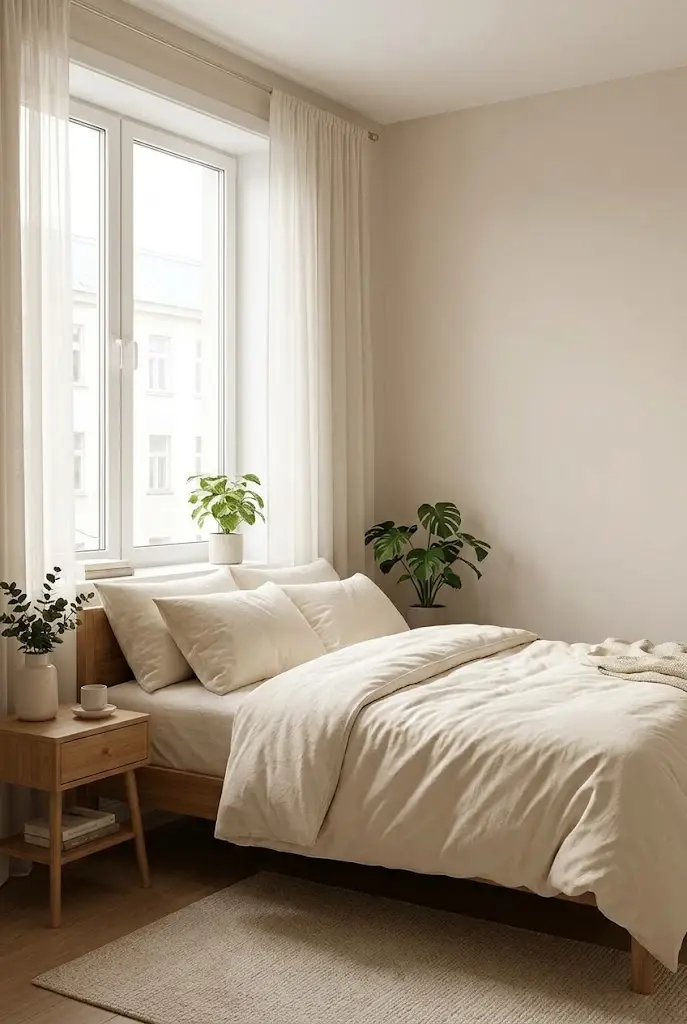
If your studio has a large window, consider placing the sleeping area nearby.
Natural light can make the bedroom feel brighter and more inviting.
A bed near a window can also create a beautiful focal point, especially when paired with simple curtains, soft bedding, and a few plants.
Just consider privacy, temperature, and access before choosing this layout. You do not want your bed blocking the only path through the apartment or sitting directly beside a drafty window.
When the layout works, though, the result can feel incredibly cozy.
17. Keep the Sleeping Area Simple and Clutter Free
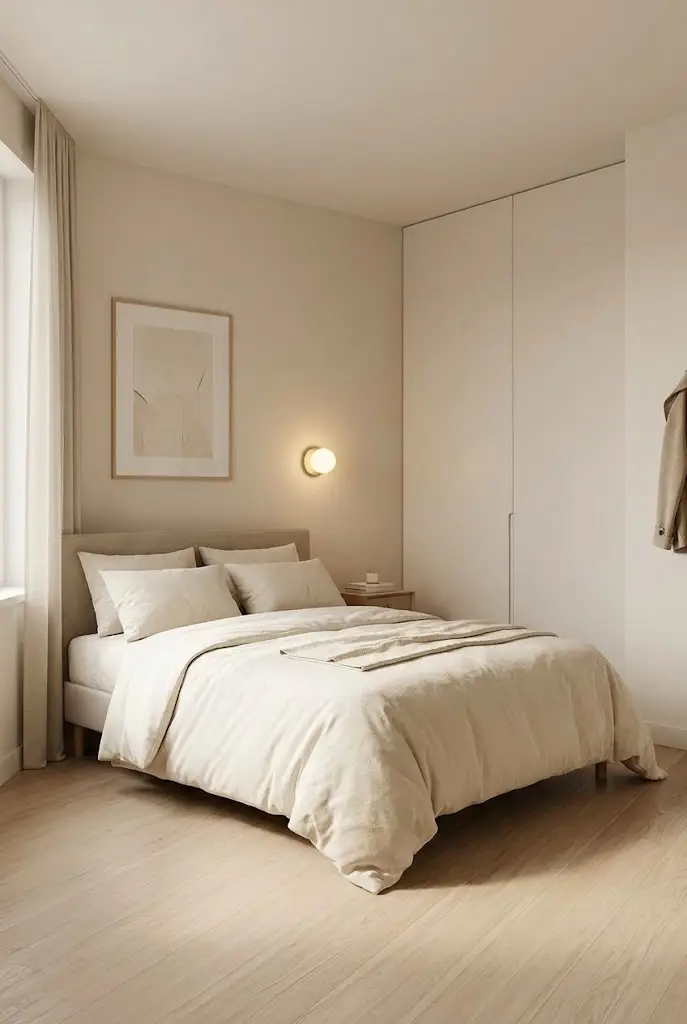
Sometimes the best small bedroom idea is removing things.
A studio apartment already has limited visual space, so too much furniture or decoration can quickly make it feel crowded.
Keep the area around the bed intentional.
Choose one or two decorative pieces you genuinely like. Keep surfaces mostly clear. Hide cables. Store extra belongings in closed storage.
A simple bed, soft bedding, warm lighting, a rug, and one beautiful piece of artwork may be all you need.
I’ve noticed that small bedrooms often feel much larger when there is clear floor space around the bed. You do not need to fill every empty corner.
How to Make a Studio Bedroom Feel Even Bigger
The layout is only part of the solution. A few finishing touches can make a big difference.
Let Natural Light Do the Work
Avoid blocking windows with tall furniture whenever possible.
Use lightweight curtains that allow daylight into the room. A bright studio generally feels more spacious than one filled with heavy window treatments.
Choose Furniture That Serves More Than One Purpose
A storage ottoman can provide seating and hidden storage.
A bookshelf can divide the bedroom while holding books and decorations.
A bed can provide clothing storage underneath.
A small desk can double as a vanity.
The more functions each piece serves, the fewer pieces you need.
Keep Walkways Clear
Try to maintain an easy path between the entrance, kitchen, living area, bathroom, and bed.
When furniture blocks the natural walking path, even a reasonably sized studio can feel cramped.
Before buying anything new, measure the room and mark out the furniture dimensions. This simple step can prevent expensive mistakes.
Use Lighting at Different Heights
Instead of relying on one ceiling light, combine several smaller light sources.
Try a wall light beside the bed, a floor lamp near the sofa, and a small lamp on a shelf or table.
Different light levels can make the studio feel warmer and give each area its own atmosphere.
The Best Layout for a Small Studio Bedroom
There is no single perfect layout for every studio.
The best arrangement depends on the shape of your apartment, window placement, doors, kitchen location, storage, and the amount of furniture you need. Use these small studio bedroom ideas as a starting point, then adjust the studio bedroom design to fit your own windows and door.
A useful starting point is to divide your studio into clear zones:
Sleeping zone: Bed, nightstand, rug, lighting, and clothing storage.
Living zone: Sofa, coffee table, television, or reading chair.
Work zone: Small desk or wall mounted workspace if needed.
Dining zone: Compact table, breakfast bar, or foldable dining surface.
The goal is to make each area feel intentional without creating too many physical barriers.
Small Studio Bedroom Mistakes to Avoid
Even a beautiful idea can work poorly if the layout is wrong.
Avoid pushing too much furniture into the sleeping area just because you have an empty corner.
Avoid oversized wardrobes when vertical storage or under bed storage could solve the problem.
Avoid using too many dark colors if the room already receives very little natural light.
And avoid placing furniture where it interrupts the main walking path.
Before decorating, measure everything. Then think about how you actually move through the apartment during a normal day.
That practical step can save you from creating a bedroom that looks great in a photo but feels frustrating to live in.
Final Thoughts
Creating a beautiful sleeping area in a studio does not require a huge budget or a separate room.
A curtain can create privacy. A rug can define the bedroom. A mirror can reflect light. Storage under the bed can free up valuable space. A simple color change can make one corner feel like its own room.
The biggest difference usually comes from choosing pieces that solve more than one problem.
Your studio can feel cozy without feeling cramped, and stylish without being difficult to maintain. Start with one of these studio bed ideas and one simple studio bedroom decor change, then build from there.
Start with the biggest problem in your space. If you need privacy, try curtains or a folding screen. If storage is the issue, look under the bed and up the walls. If the apartment feels visually crowded, simplify the furniture and create more open floor space.
Small spaces can still feel beautiful, comfortable, and completely yours.
Community
Join the conversation
Add a useful idea, ask a specific question, or share what worked in your space. Every comment is reviewed before it appears.