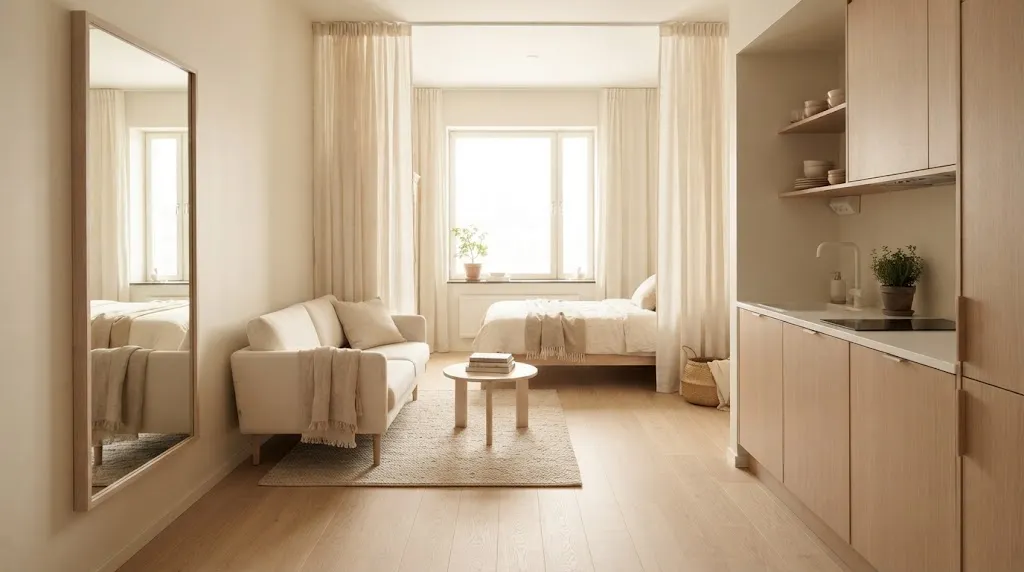
Living in a small studio does not necessarily mean your home has to feel cramped. The right visual choices can make a compact apartment appear more open, brighter, calmer, and surprisingly spacious.
If you want to make a studio apartment feel bigger, the goal is not simply to remove furniture. It is about controlling what the eye sees when you enter the room, creating stronger sightlines, choosing appropriate proportions, and using light and color strategically.
A small apartment can still feel comfortable and stylish when every design decision supports a sense of openness. These 11 practical tricks can help you create that effect without requiring a major renovation or an expensive makeover.
1. Keep the First Sightline as Open as Possible
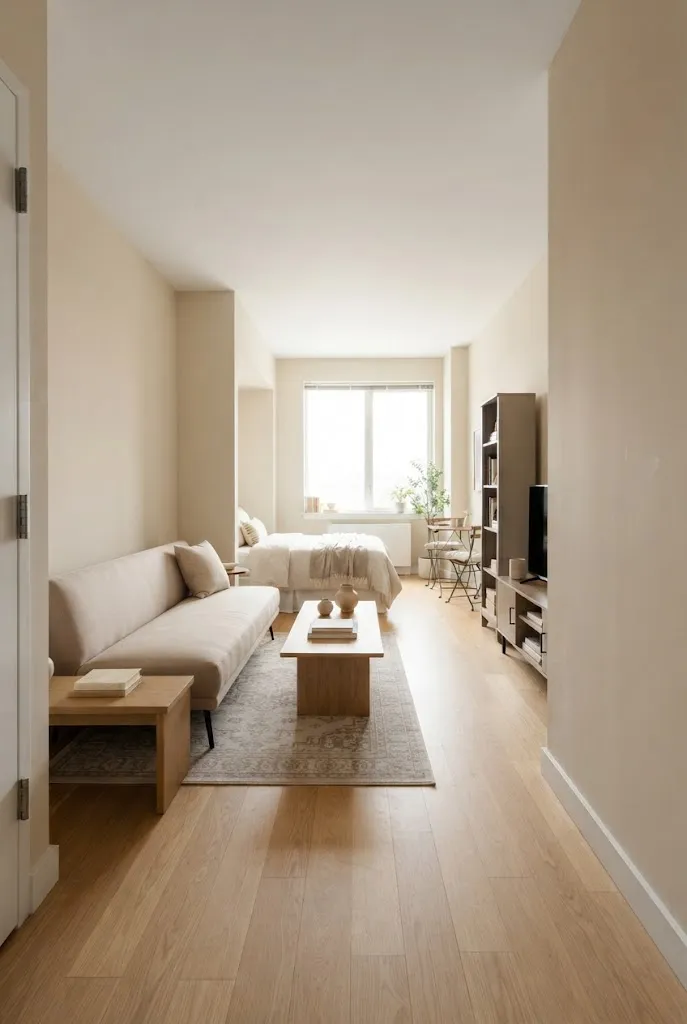
One of the easiest ways to make a studio apartment feel bigger is to pay attention to what you see immediately when entering the room.
If a tall chair, bulky cabinet, laundry basket, or large piece of furniture blocks the view, the apartment can feel smaller before you even walk through it. Try to keep the main sightline from the entrance as clear as possible.
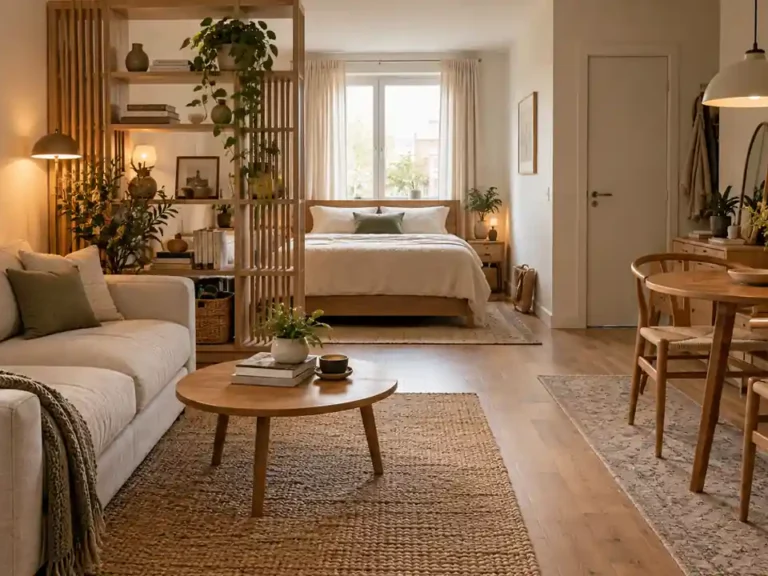
Place lower furniture along the most visible areas of the room and move taller pieces toward less prominent walls or corners. If your bed is visible from the entrance, consider positioning it so that it does not dominate the entire view.
You do not need an empty apartment. You simply need fewer visual obstacles between one part of the room and another.
This small adjustment can make the entire studio feel more connected.
2. Choose Furniture That Matches the Scale of the Room
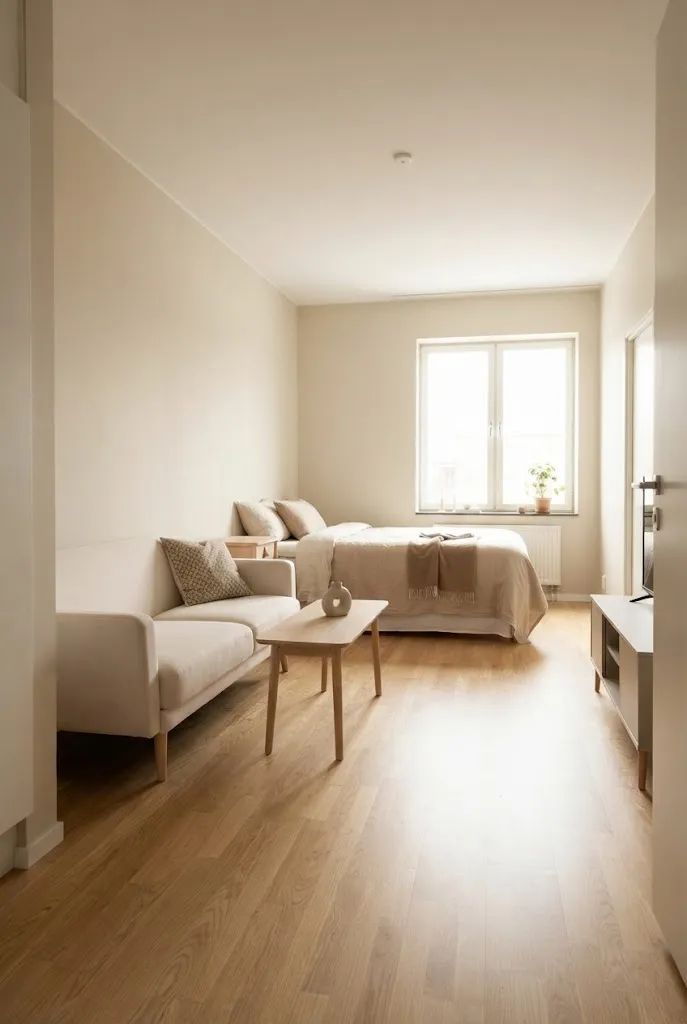
Large furniture can quickly overwhelm a studio, even when you have only a few pieces.
Instead of automatically choosing the largest sofa or bed that fits, consider how much visual space the furniture occupies. A sofa with thick arms and a deep frame may technically fit, but it can make the room feel crowded.
Look for pieces with slimmer profiles, raised legs, narrow arms, and simpler silhouettes.
A sofa that allows some floor to remain visible underneath can create a lighter appearance. The same principle works for beds, side tables, chairs, and cabinets.
The goal is not to fill every available inch. It is to create enough breathing room around each major piece so the room feels intentional rather than compressed.
3. Use One Continuous Floor Finish
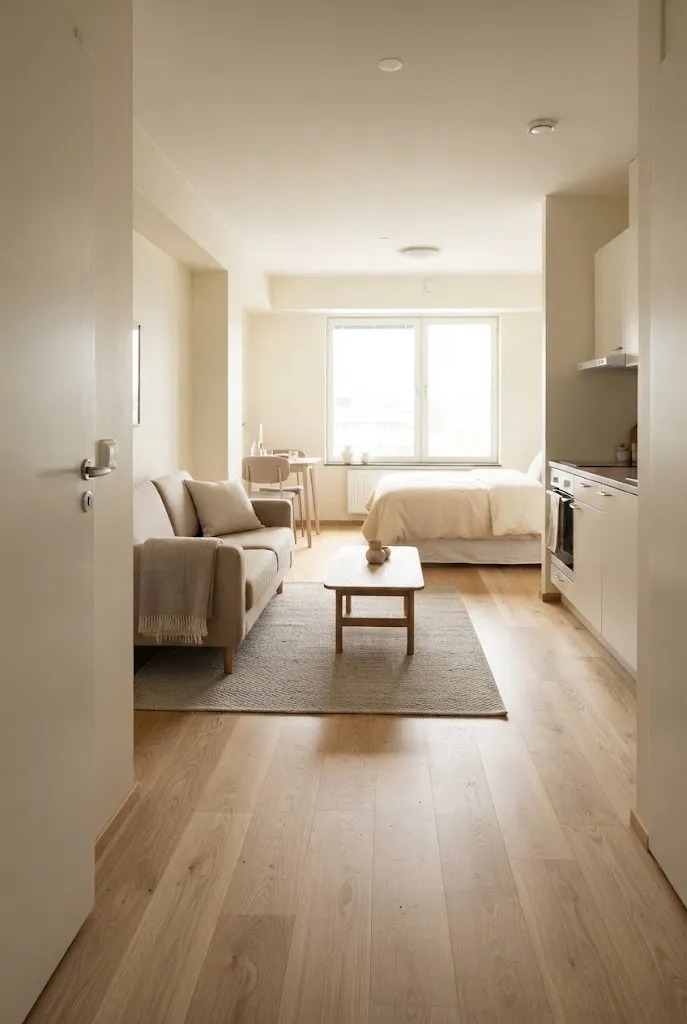
Visual interruptions can make a small apartment appear divided into even smaller sections.
If possible, use the same flooring throughout the main living area. Consistent wood, laminate, tile, or another continuous surface allows the eye to travel across the apartment without stopping.
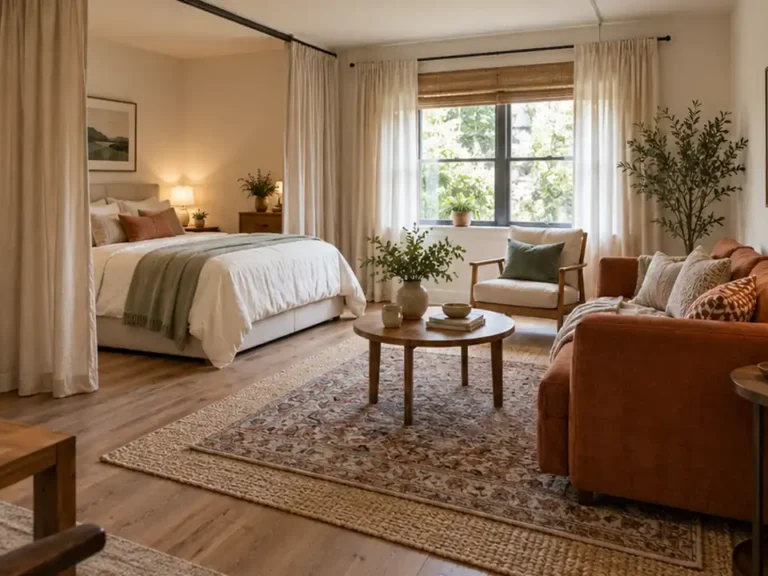
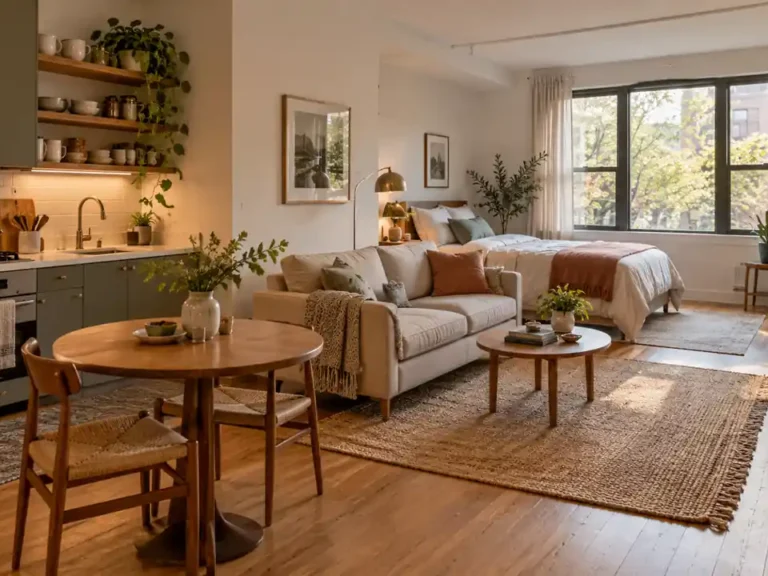
If you use rugs, choose them carefully. Multiple small rugs can visually chop the floor into separate patches. One appropriately sized rug can often create a stronger sense of continuity.
For example, a single rug can connect the sofa and coffee table while allowing enough surrounding floor to remain visible.
The more continuous the floor appears, the more expansive the studio can feel.
4. Hang Curtains Higher Than the Window
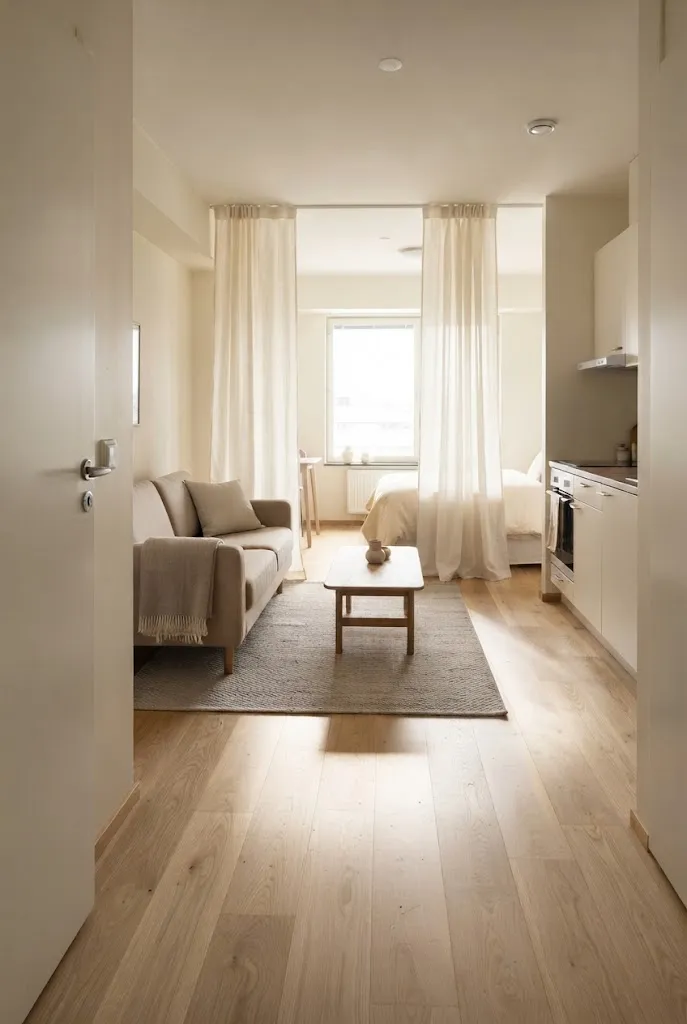
Curtains can change how tall your studio feels.
Instead of mounting the curtain rod directly above the window frame, install it closer to the ceiling when practical. Let the curtains fall all the way toward the floor.
This draws the eye upward and emphasizes the height of the room rather than its limited width.
Choose curtains in a relatively simple fabric and avoid extremely heavy materials if the apartment already receives limited natural light. Curtains that blend reasonably well with the wall can also create a quieter visual transition.
This trick is especially useful in studios with low or average ceiling heights because it encourages the eye to look vertically.
5. Make Your Largest Wall Work Harder
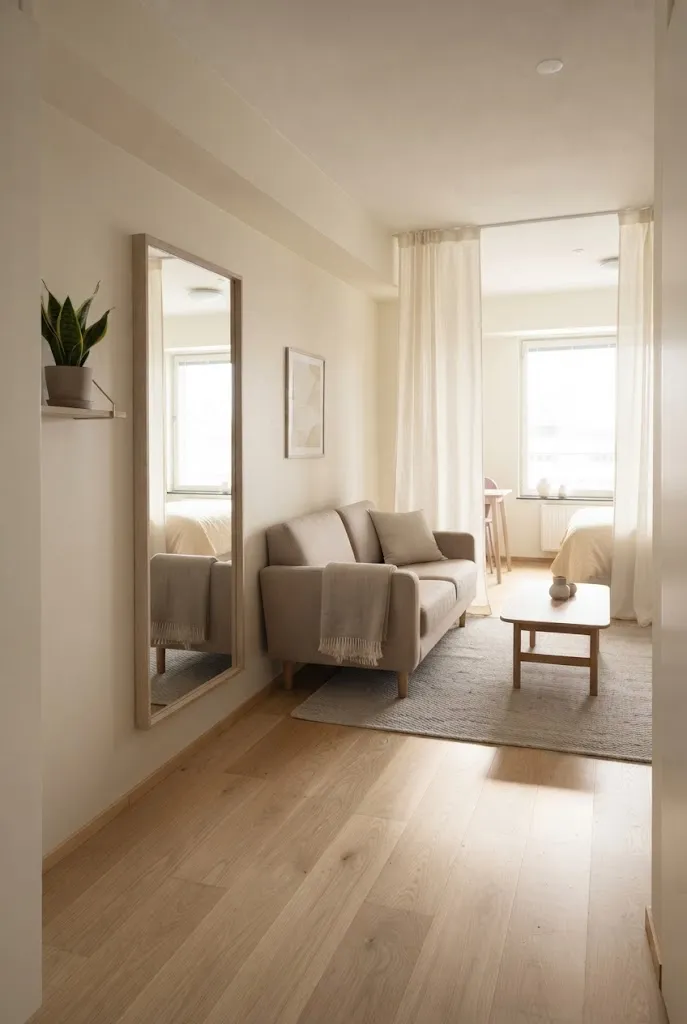
A small apartment often has one wall that could completely change the perception of the room.
Instead of covering it with lots of small decorations, use the wall to create a strong visual direction. A large mirror, simple artwork, tall shelving, or a carefully arranged vertical feature can give the wall more purpose without making it visually chaotic.
Large-scale elements can sometimes work better than many tiny objects because they create one clear focal point.
For example, a generously sized mirror can reflect light and surrounding space while reducing the need for multiple decorative pieces.
The trick is to think in terms of visual impact rather than quantity.
6. Let Natural Light Travel Through the Apartment
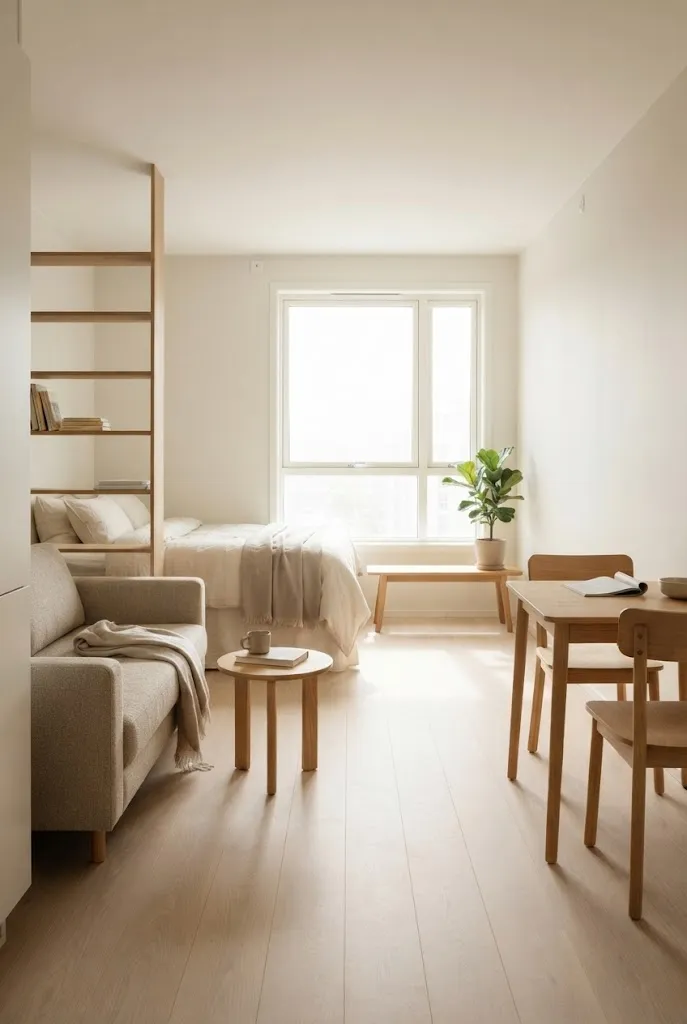
Natural light is one of the most valuable tools when trying to make a studio apartment feel bigger.
Keep the area directly around the main window relatively open. Avoid placing tall furniture directly in front of it unless there is no practical alternative.
Use lightweight window treatments that allow daylight to enter during the day. Keep reflective surfaces nearby, but use them intentionally rather than covering every wall with mirrors.
You can also position lighter-colored furniture or décor where it can benefit from natural illumination.
When daylight can travel deeper into the apartment, darker corners become less noticeable and the entire room can feel more open.
7. Create Visual Breathing Room Around Furniture
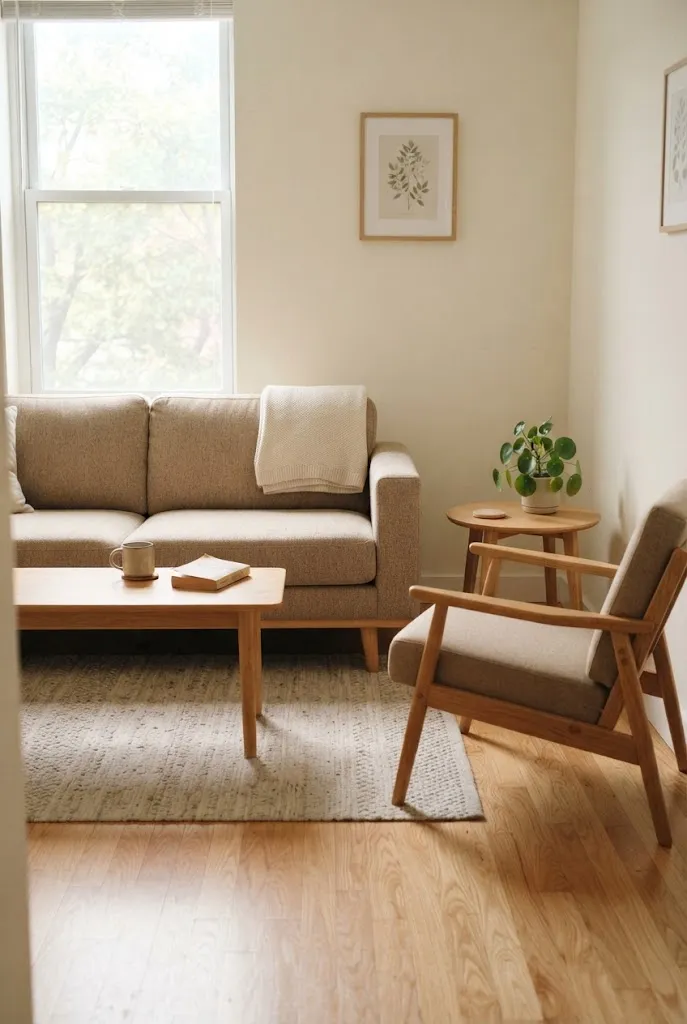
You do not need large gaps between every piece of furniture, but you do need enough breathing room for the individual pieces to remain visually distinct.
Avoid pushing every item tightly against another item simply because you have limited space.
For example, leave a small amount of visible floor between the sofa and surrounding pieces when possible. Give chairs enough room to appear separate from the coffee table. Avoid placing decorative objects directly beside large furniture if they make the arrangement look crowded.
Think of empty space as part of the design.
A small amount of visible wall, floor, or air around an object can make the entire room feel less congested.
8. Repeat One or Two Light Colors Across the Room
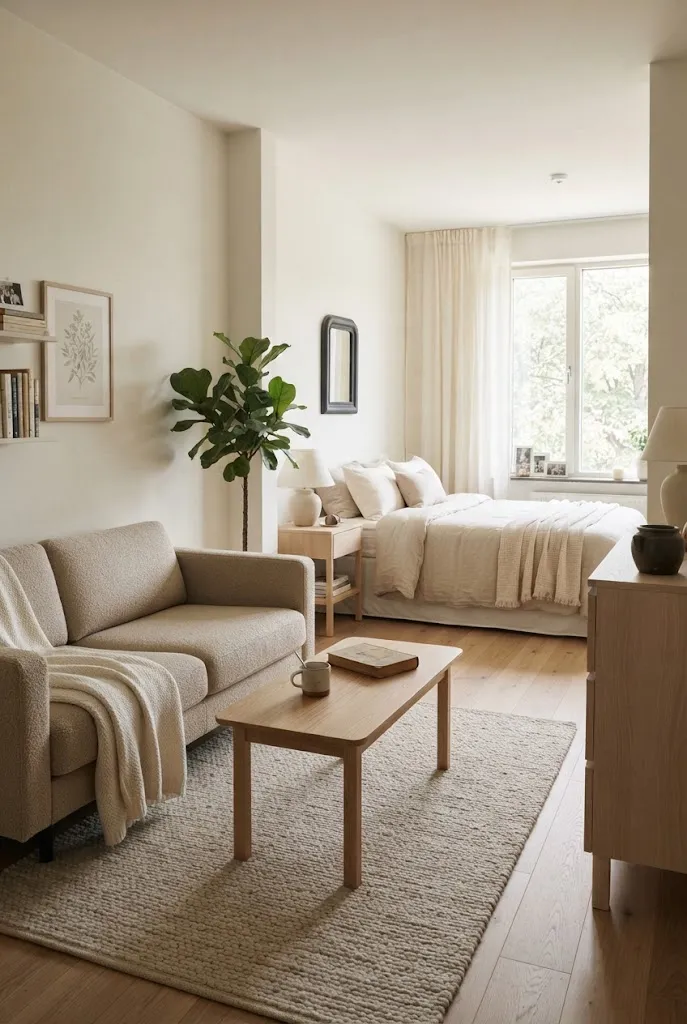
Color can either connect a studio or visually divide it.
To make a studio apartment feel bigger, consider repeating one or two lighter tones across several areas. The walls, curtains, larger furniture pieces, bedding, and selected accessories do not have to match exactly, but related shades can create continuity.
Soft white, warm ivory, pale beige, light gray, muted taupe, and other restrained tones can help create a visually calm background.
You can still use darker or brighter accents. The key is to prevent strong colors from appearing in too many disconnected locations.
When the eye sees a consistent palette, separate parts of the studio can feel more unified.
9. Use Mirrors to Extend the View
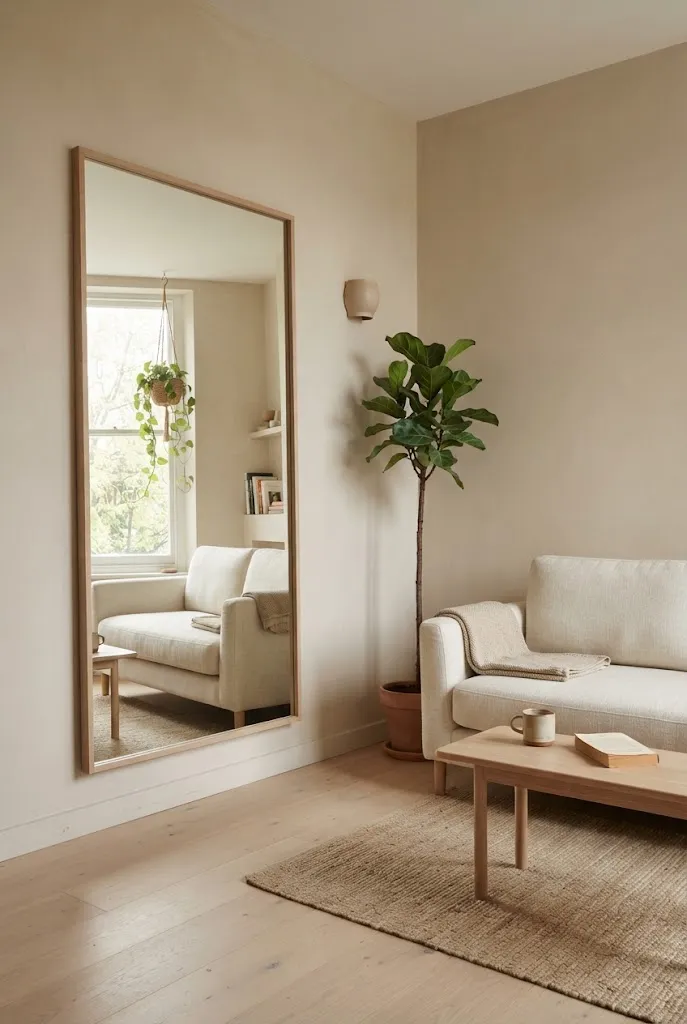
A mirror can do more than decorate an empty wall.
Placed thoughtfully, it can reflect a window, a light source, or an attractive part of the room and create the impression of additional visual depth.
A large vertical mirror can make a narrow area feel taller, while a wider mirror can help emphasize horizontal space.
However, placement matters more than simply adding mirrors. A mirror reflecting clutter, a blank wall, or an awkward corner may not improve the room.
Before hanging one, stand where you normally enter or sit and check what the mirror would actually reflect.
The best mirror placement extends something visually useful.
10. Keep Decorative Groupings Larger and Simpler
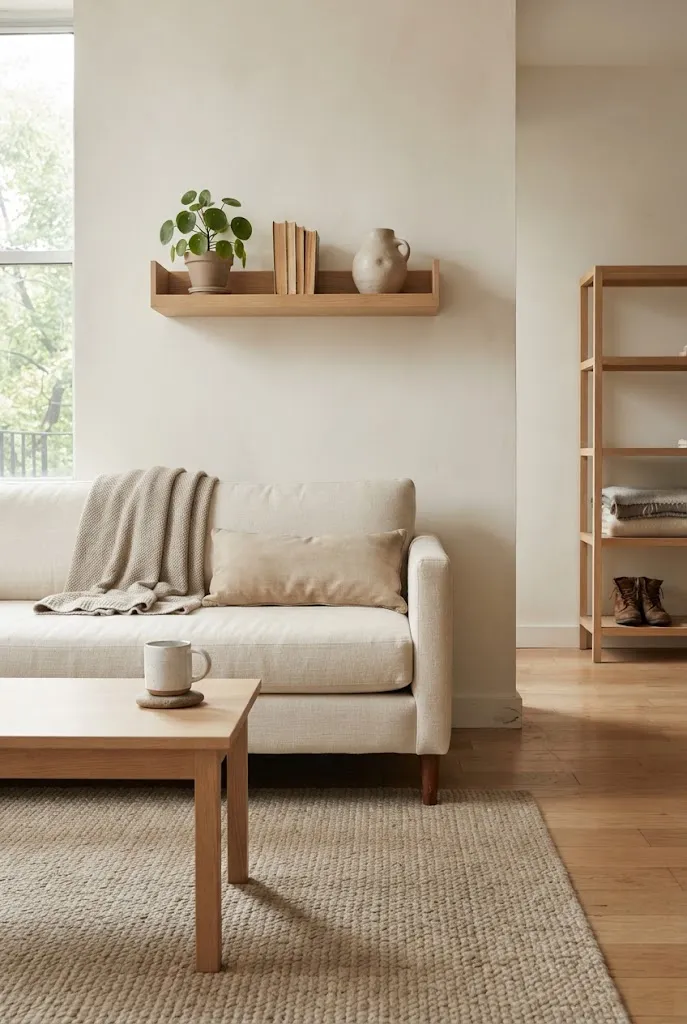
Small apartments can become visually crowded through decoration even when there is plenty of physical floor space.
Instead of spreading many small objects throughout the studio, create a few intentional groupings.
A small shelf might hold one plant, a book stack, and one decorative object rather than ten unrelated accessories. A bedside surface may need only a lamp and one useful item.
This approach creates stronger focal points while leaving other areas visually quiet.
The goal is not minimalism for its own sake. It is to make the eye understand the room quickly.
When every surface demands attention, the studio feels busier. When decorative moments are concentrated, the room can feel more spacious.
11. Photograph the Room and Fix What Looks Crowded
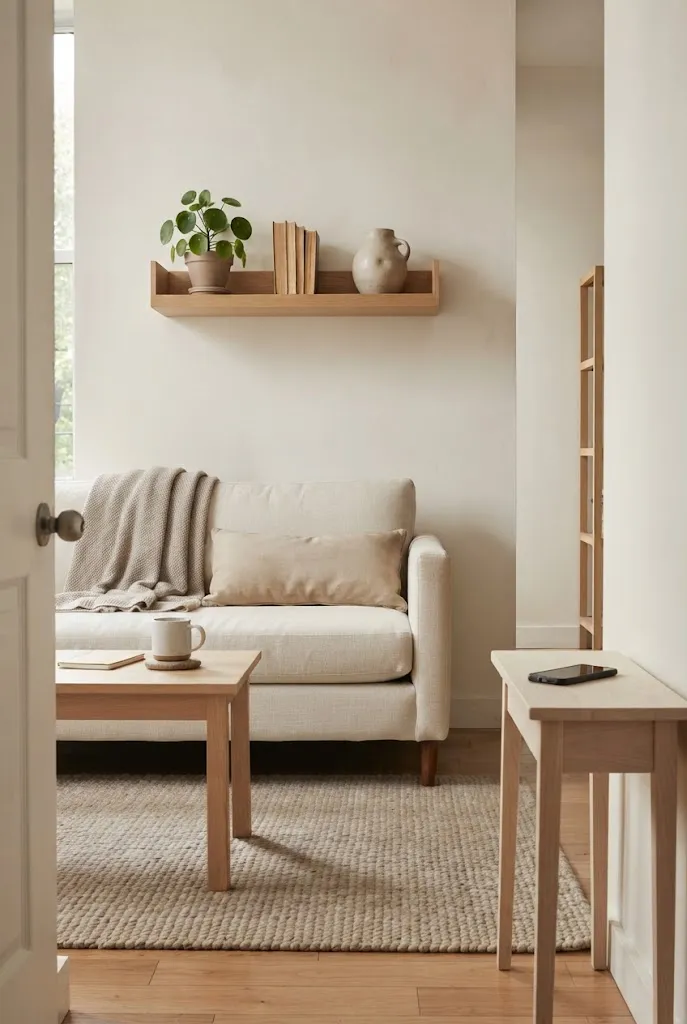
One surprisingly effective way to make a studio apartment feel bigger is to look at the room through a camera.
Stand near the entrance and take a photo facing the main living area. Then photograph the room from several other angles.
A camera can reveal visual problems that are easy to overlook when you live in the space every day. You may notice that one chair blocks a walkway, a collection of objects looks excessive, or a particular piece of furniture dominates the entire composition.
Use the photos to identify the areas that feel visually heavy.
Then make small changes instead of redesigning everything at once. Remove one object, shift one piece of furniture, clear one surface, or change one textile.
Repeat the process until the room looks balanced from several viewpoints.
Sometimes making a small apartment feel bigger is less about buying something new and more about noticing what is already taking up too much visual attention.
What Makes a Studio Apartment Look Smaller?
Some common design choices can make a compact apartment feel even tighter.
Too many small furniture pieces can create a cluttered layout, while oversized furniture can dominate the available floor area. Heavy curtains can reduce the feeling of openness around windows, and too many contrasting colors can visually break the room into disconnected sections.
Other common problems include:
- Blocking windows with tall furniture
- Using too many small rugs
- Filling every wall with decoration
- Allowing furniture to interrupt important walking paths
- Keeping every surface covered with objects
- Using bulky furniture when slimmer alternatives would work
- Creating too many strong visual focal points
You do not have to eliminate all of these things. The important part is understanding which choices are making your particular studio feel crowded.
How to Make a Studio Apartment Feel Bigger Without Spending Money
You can often create a noticeable difference without buying anything.
Start by removing unnecessary objects from the most visible areas. Move furniture away from windows, experiment with a different layout, and clear the floor around major furniture pieces.
Try moving decorative items from several small surfaces onto one or two stronger displays. Remove furniture that you rarely use if you have another practical place for its function.
You can also temporarily move rugs, chairs, side tables, or storage pieces to test how much visual space you gain.
Take photographs before and after each change. This makes it easier to judge the result objectively.
Sometimes the best space-saving solution is simply using less of what you already have.
Frequently Asked Questions
Does white make a studio apartment look bigger?
Light colors can help create a brighter and more continuous visual appearance, particularly when natural light is available. White is not the only option, though. Soft beige, ivory, pale gray, and other light neutrals can create a similar effect.
Do mirrors really make a small apartment look bigger?
Mirrors can create additional visual depth by reflecting light and parts of the room. Their effectiveness depends heavily on placement. A mirror reflecting a window or open area can be more useful than one facing clutter.
Should small apartments have small furniture?
Not necessarily. Every piece should be appropriately scaled to the room, but using too many tiny furniture pieces can make a studio feel busy. A few well-proportioned pieces often create a cleaner visual result.
Are dark colors bad for a studio apartment?
Dark colors are not automatically a problem. They can add depth and character when used strategically. If the goal is to maximize the feeling of openness, lighter colors used across larger surfaces can make that easier.
How can I make my studio look bigger without remodeling?
Focus on furniture placement, open sightlines, natural light, consistent colors, simpler decoration, and visible floor space. These changes can significantly affect how spacious the room feels without structural work.
Final Thoughts
Learning how to make a studio apartment feel bigger is less about making the apartment look empty and more about making it easier for the eye to move through the space.
Clear sightlines, appropriately scaled furniture, continuous flooring, higher curtains, useful mirrors, natural light, simple decorative groupings, and visual breathing room can all change the perception of a compact home.
Start with the changes that cost nothing. Move furniture, clear crowded surfaces, open the window area, and photograph the room from different angles. Once the layout feels lighter, you can decide whether you actually need anything new.
A studio does not need to become physically larger to feel more spacious. Sometimes a few deliberate visual changes are enough to make the same square footage feel completely different.
Community
Join the conversation
Add a useful idea, ask a specific question, or share what worked in your space. Every comment is reviewed before it appears.