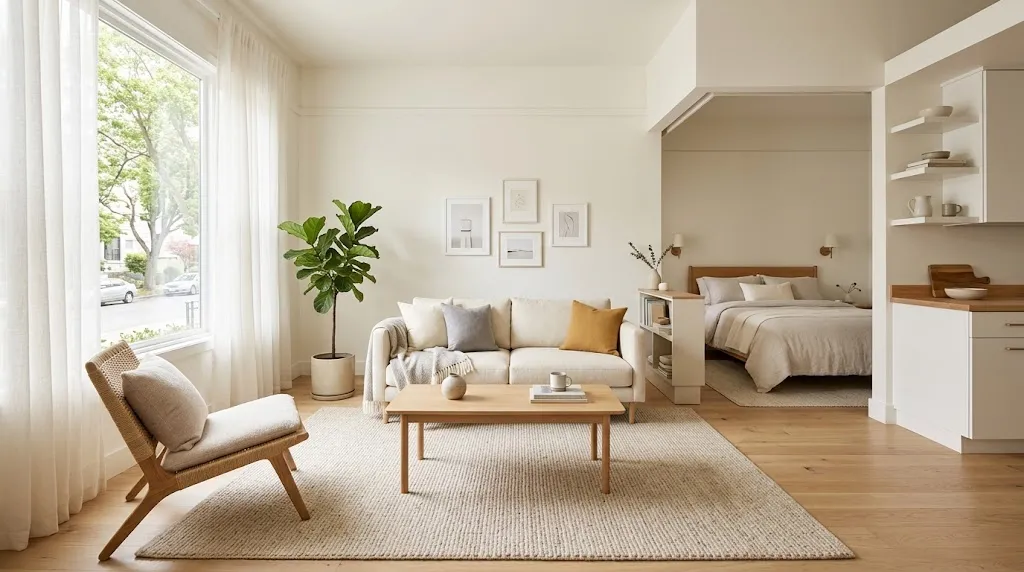
Decorating a studio apartment is a constant balancing act. You want it to feel cozy without looking crowded, stylish without sacrificing function, and organized without making every corner feel overly planned.
One of the easiest ways to change how a tiny apartment feels is surprisingly simple: add the right rug.
The best mini studio apartment rug ideas do much more than soften the floor. A thoughtfully placed rug can visually widen a narrow room, separate your sleeping area from your living space, make inexpensive furniture feel more intentional, and create the illusion that your apartment has several distinct rooms.
The trick is choosing a rug that works with your layout rather than against it.
Whether your studio is bright and airy, warm and cozy, minimalist, colorful, or rental-friendly, these rug ideas can help you make every square foot feel more polished and spacious.
1. Oversized Neutral Rug
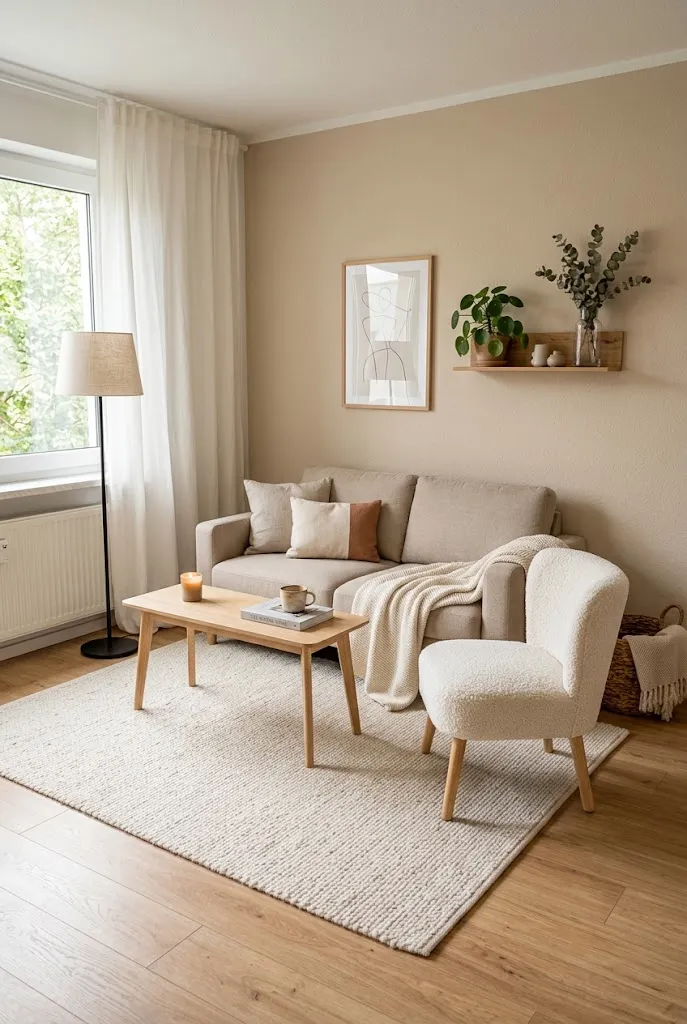
One of the biggest mistakes in a small apartment is assuming that a tiny room needs a tiny rug.
In reality, a larger rug can make the entire space feel more expansive because it creates one continuous visual foundation instead of chopping the floor into smaller sections.
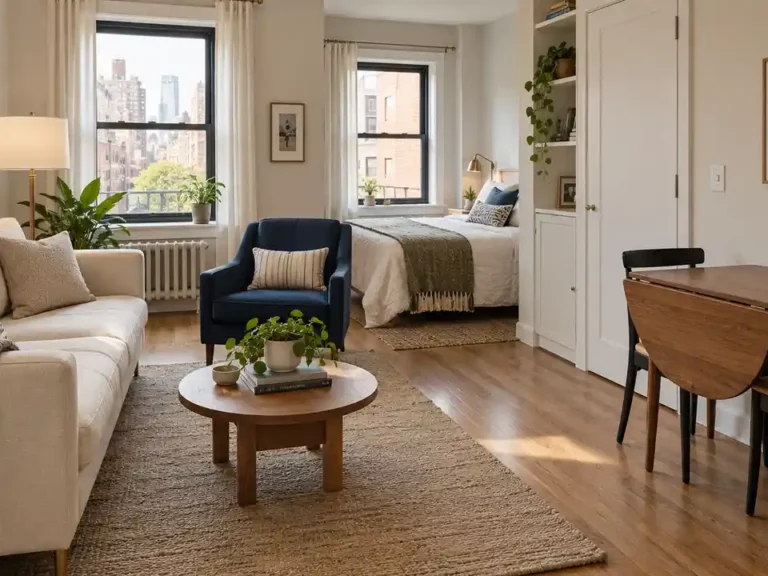
Choose a soft cream, beige, oatmeal, or warm gray rug and position most of your living-room furniture on top of it. Ideally, the front legs of your sofa and chairs should rest on the rug.
This simple placement makes your furniture feel connected rather than scattered around the room.
A low-contrast rug is especially effective because your eye moves across the floor without encountering a strong visual interruption.
Best for: Scandinavian, minimalist, Japandi, and modern studio apartments.
2. Light Striped Rug
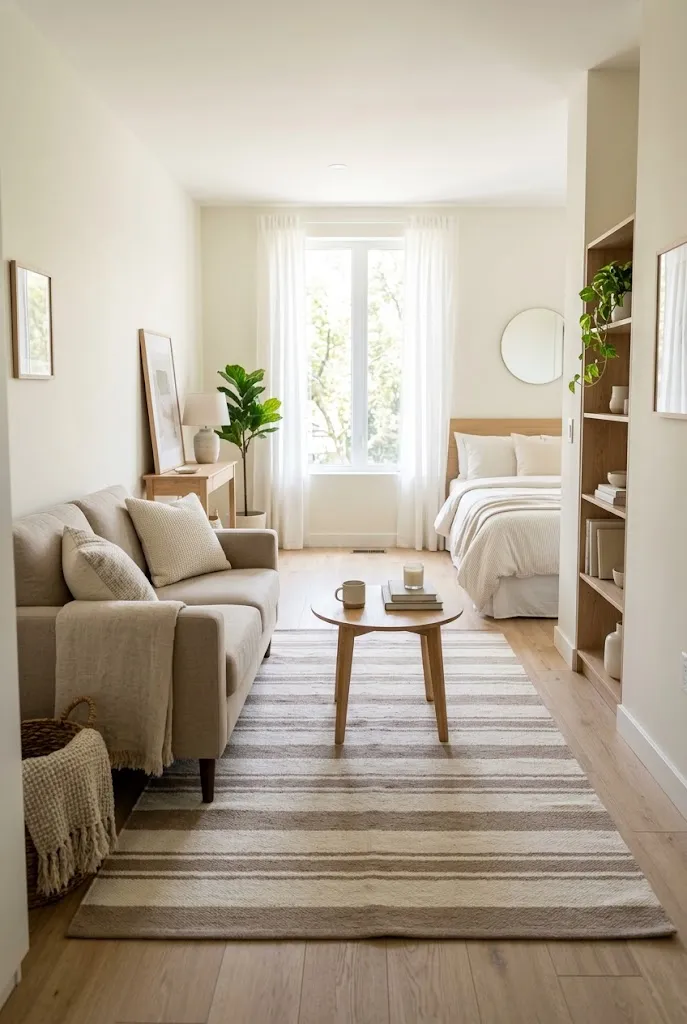
Stripes are one of the easiest visual tricks for making a tiny room appear wider or longer.
If your studio feels narrow, position the stripes horizontally across the shortest part of the room. This encourages the eye to travel from side to side, making the apartment feel wider.
For a long, shallow space, running the stripes lengthwise can emphasize depth.
Keep the contrast relatively soft.
Cream and taupe, beige and white, or pale gray and ivory usually work better in a mini apartment than bold black-and-white stripes.
You still get the visual effect without overwhelming the room.
3. Living Zone Rug
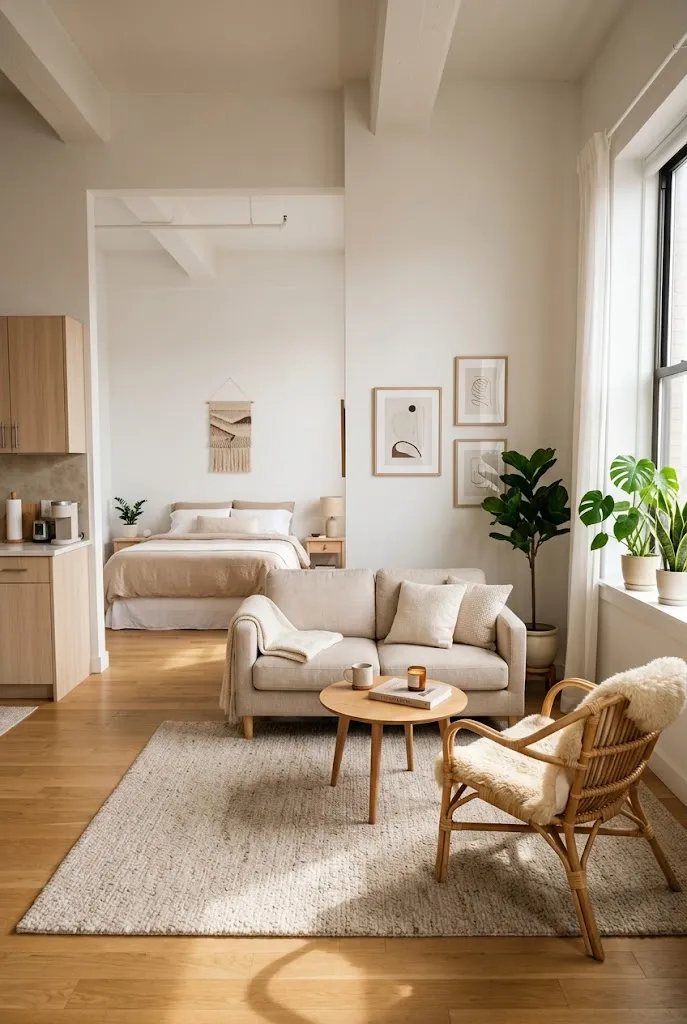
A studio apartment rarely has walls separating the living room from the bedroom, which is exactly why rugs are so useful.
Place one rug directly underneath your sofa, coffee table, and accent chair to create a clearly defined living area.
Even though there is no physical wall, the rug creates a psychological boundary around the seating arrangement.
This technique works particularly well in open-plan apartments where your bed, kitchen, and sofa are all visible from one spot.
Choose a rug that complements the room without completely matching everything around it. A subtle shift in texture or pattern helps the living zone feel distinct.
4. Bedside Runner
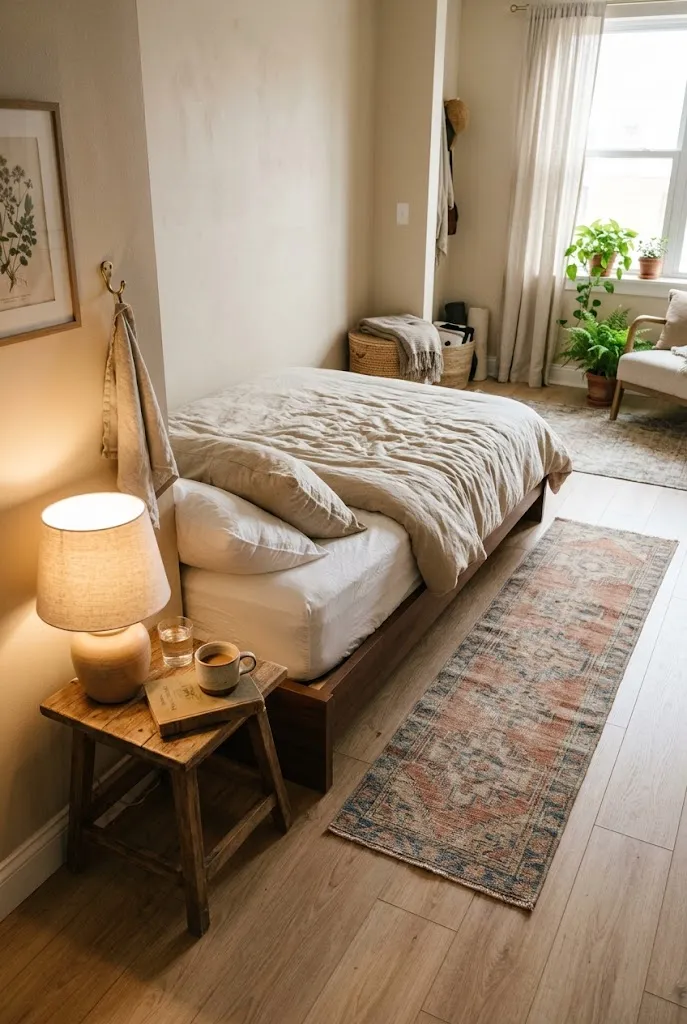
You don’t necessarily need a large rug underneath your entire bed.
A narrow runner positioned alongside the bed can add softness without taking over the floor.
This is particularly useful when your bed sits close to a wall or when there isn’t enough clearance for a traditional bedroom rug.
Try placing a washable runner along the open side of the bed.
It gives you something soft to step onto in the morning and visually establishes the sleeping area.
A vintage-style runner can bring warmth to an otherwise simple apartment, while a neutral woven runner keeps things minimal.
5. Round Accent Rug
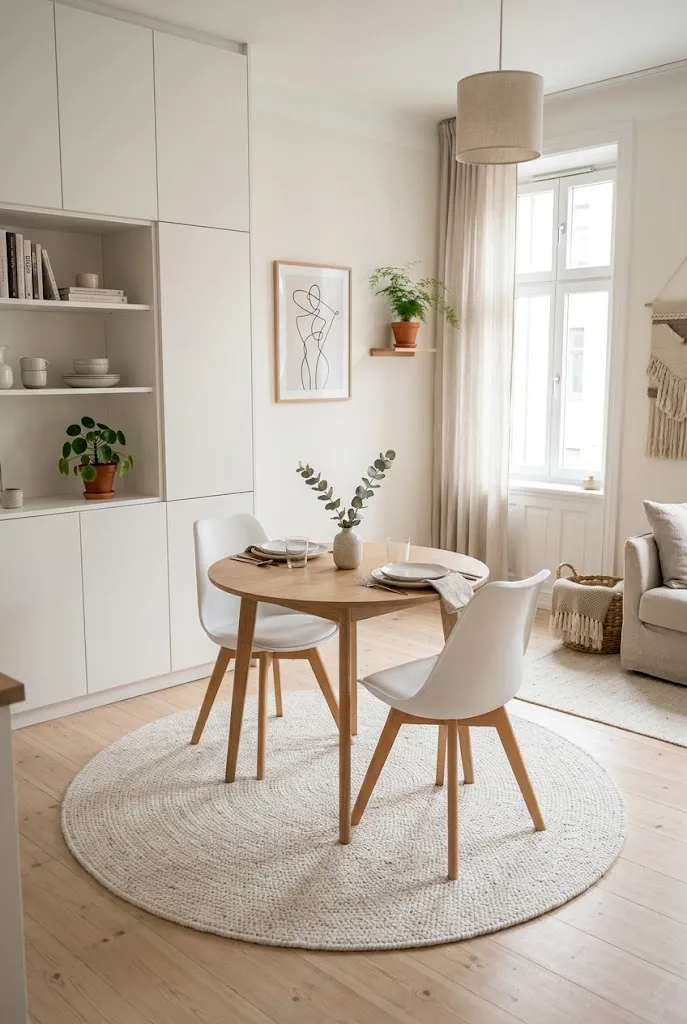
Tiny apartments are often filled with straight lines.
Walls, cabinets, beds, desks, shelving units, and sofas are usually rectangular, so introducing a round rug can soften the overall appearance.
Place a circular rug beneath a small dining table, reading chair, or compact coffee table.
The curved shape creates contrast against all those sharp architectural lines and can make a tight corner feel more relaxed.
This is especially effective in awkward studio layouts where a rectangular rug would feel forced.
A round rug also creates a natural focal point without visually dividing the room too aggressively.
6. Tonal Layered Rugs
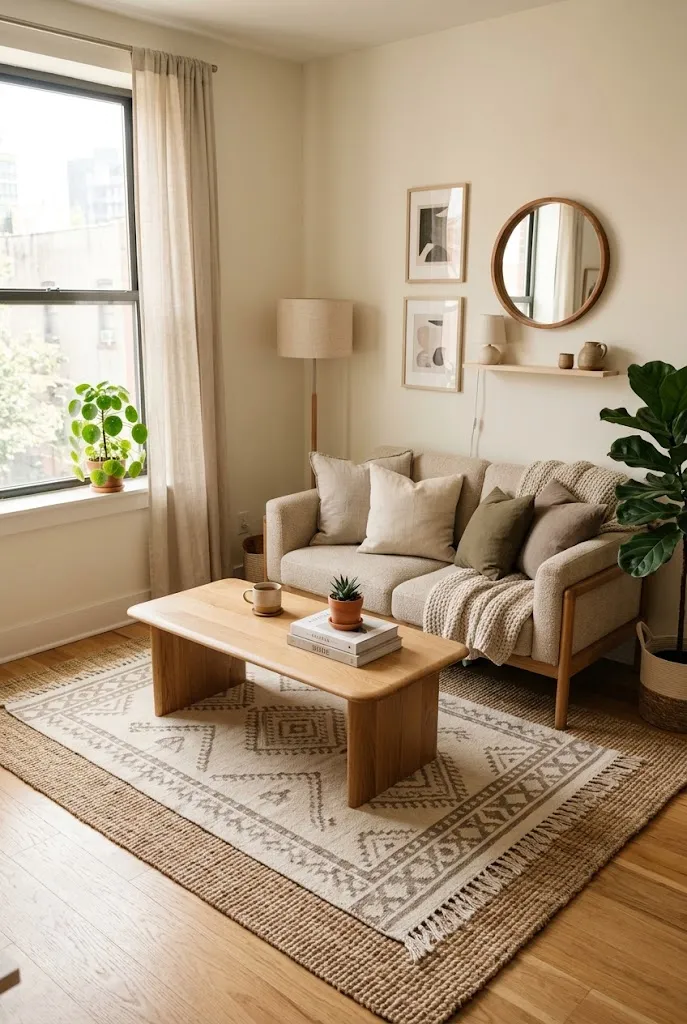
Layering rugs can work beautifully in a small apartment when the colors stay within the same family.
Start with a simple flatweave or jute-style rug and place a smaller patterned rug on top.
The base layer gives the room structure while the top rug introduces personality.
For example, you might pair a natural woven rug with a cream-and-taupe geometric rug.
Because the colors are similar, the layers add depth without making the floor feel busy.
This approach is particularly useful if you already own a rug that feels slightly too small. Instead of replacing it, layer it over a larger inexpensive base.
7. Under-Bed Rug
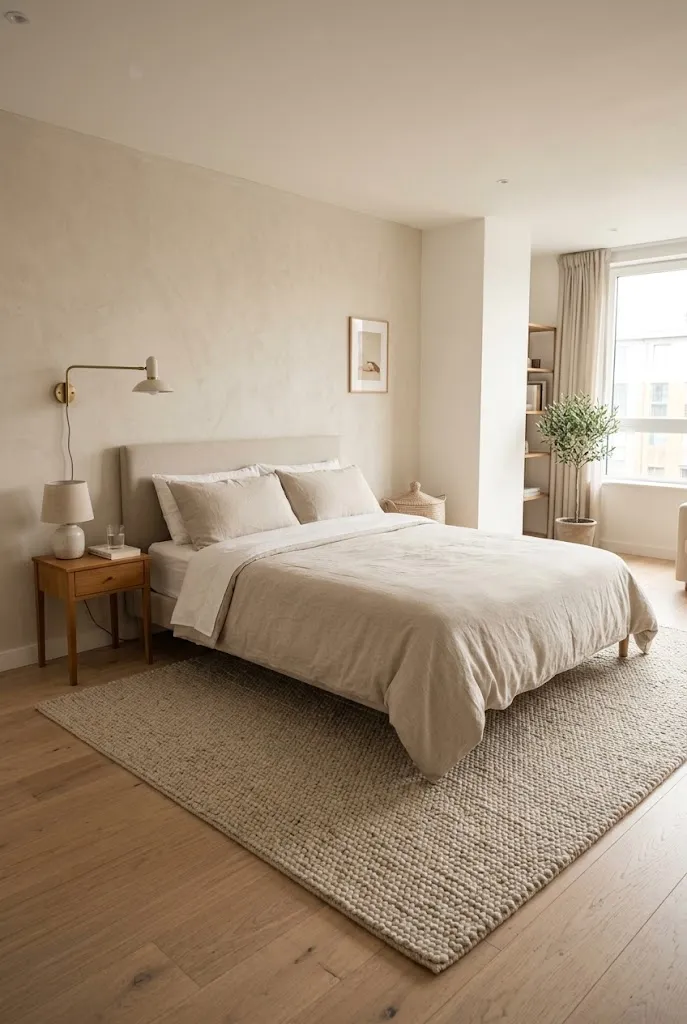
Placing a rug beneath the bed instantly makes the sleeping area feel more intentional.
You don’t necessarily need the rug to extend all the way to the headboard.
For a small studio, position it underneath the lower two-thirds of the bed so that plenty of material extends beyond the sides and foot.
This placement provides the visual effect of a bedroom zone without requiring an enormous rug.
Choose something soft underfoot but relatively low pile so the rug doesn’t become difficult to clean.
Neutral colors work particularly well because they keep the bed from dominating the apartment.
8. Sofa-Length Rug
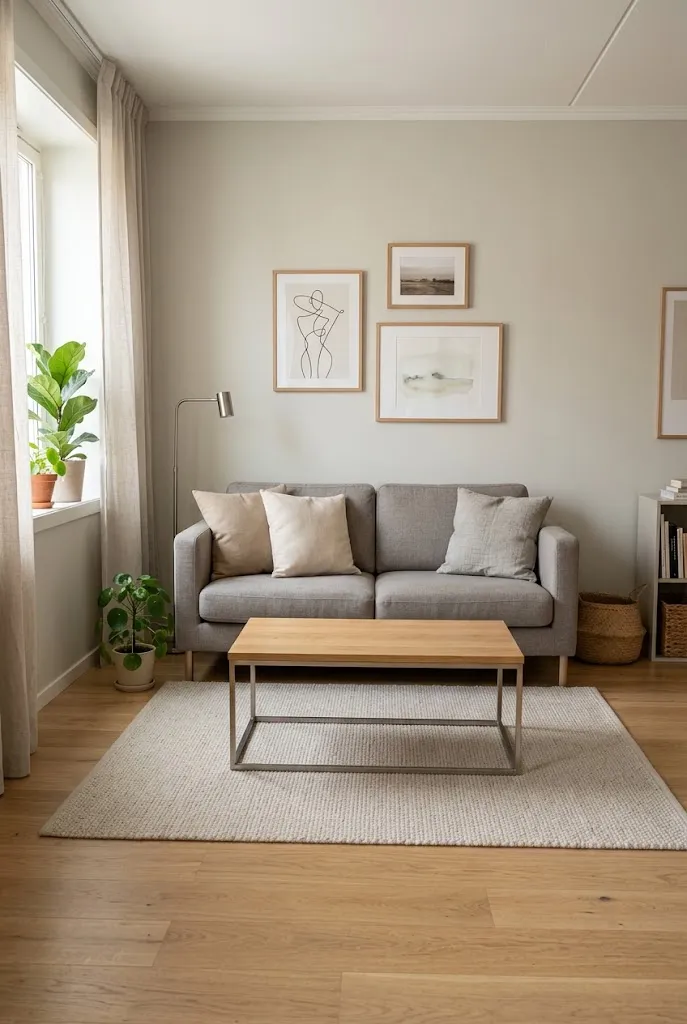
Sometimes the simplest approach is the most effective.
Choose a rug roughly the length of your sofa and place it directly in front of the seating area.
This creates a compact living-room footprint without covering too much flooring.
It works particularly well when your apartment is extremely small and you want to preserve visible floor around the furniture.
A sofa-length rug can also make your furniture arrangement look more intentional because it creates a clear anchor point.
Try a subtle geometric pattern if your sofa is plain, or stick with a solid textured rug if your furniture already has strong colors or patterns.
9. Soft Checkerboard Rug
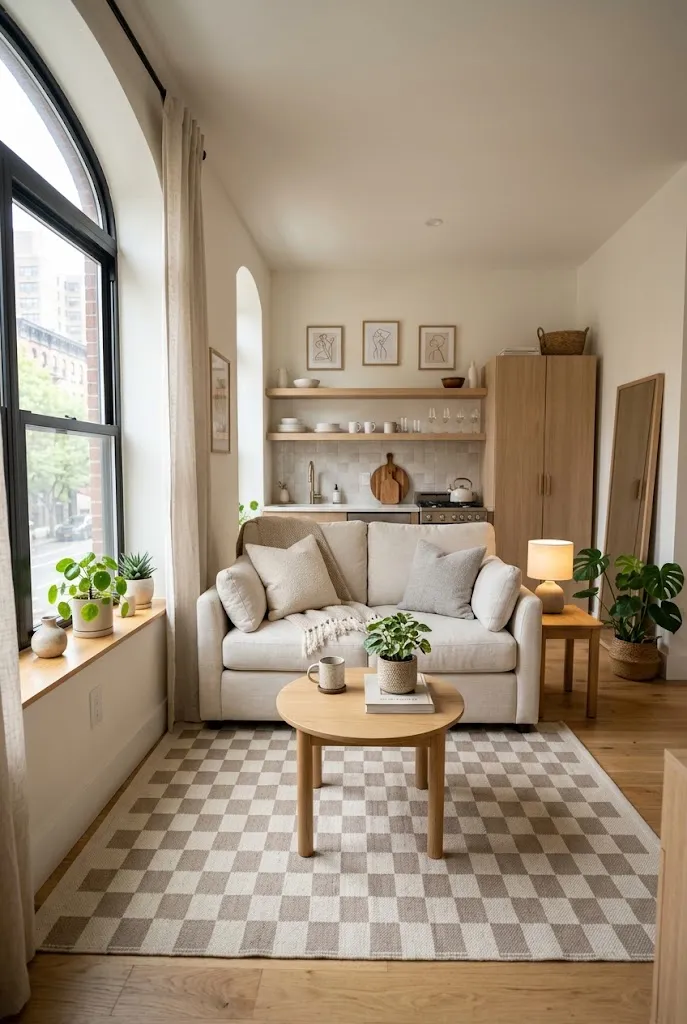
Checkerboard rugs have become popular because they add personality without requiring complicated styling.
In a tiny apartment, choose a softer version of the trend.
Instead of high-contrast black and white, look for beige and cream, sage and ivory, dusty blue and white, or muted brown and tan.
The repeating grid gives the floor structure while still feeling playful.
A small checkerboard rug works especially well beneath a coffee table or beside the bed.
Keep the surrounding furniture relatively simple so the pattern becomes an intentional feature rather than visual clutter.
10. Low-Contrast Pattern
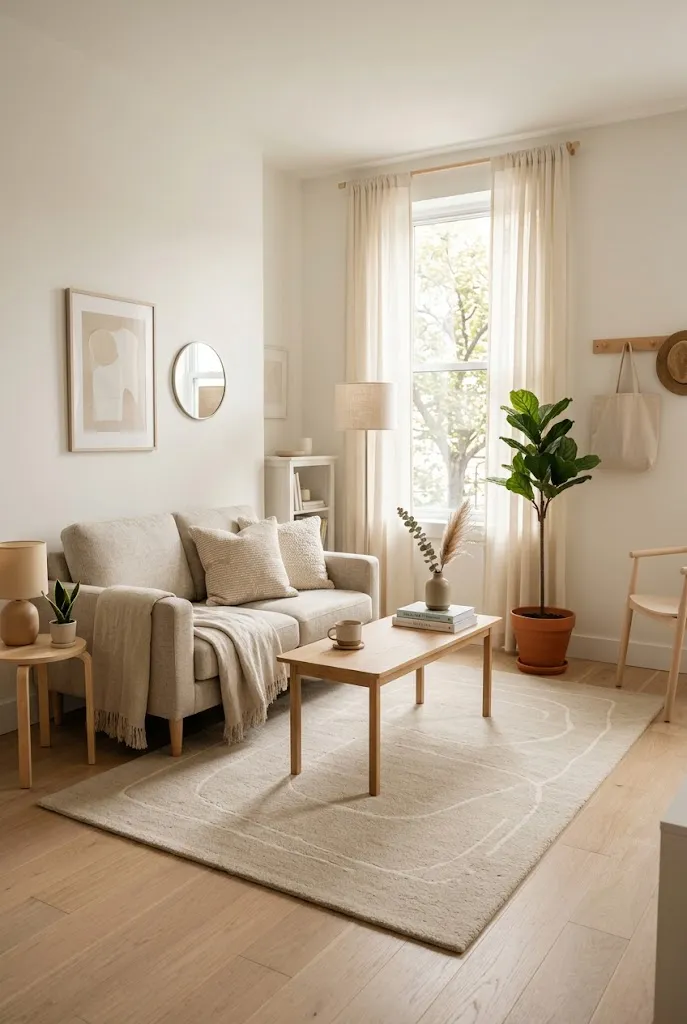
Pattern doesn’t automatically make a small room feel crowded.
The key is controlling contrast.
A rug with a faded medallion, subtle abstract pattern, or muted geometric design can add visual interest while still allowing the apartment to feel open.
Look for patterns where the background and design are only a few shades apart.
For example, a beige rug with ivory detailing will feel much calmer than a beige rug with dramatic black graphics.
This type of rug is perfect for renters who want their apartment to feel more finished without making permanent changes.
11. Natural Jute Rug
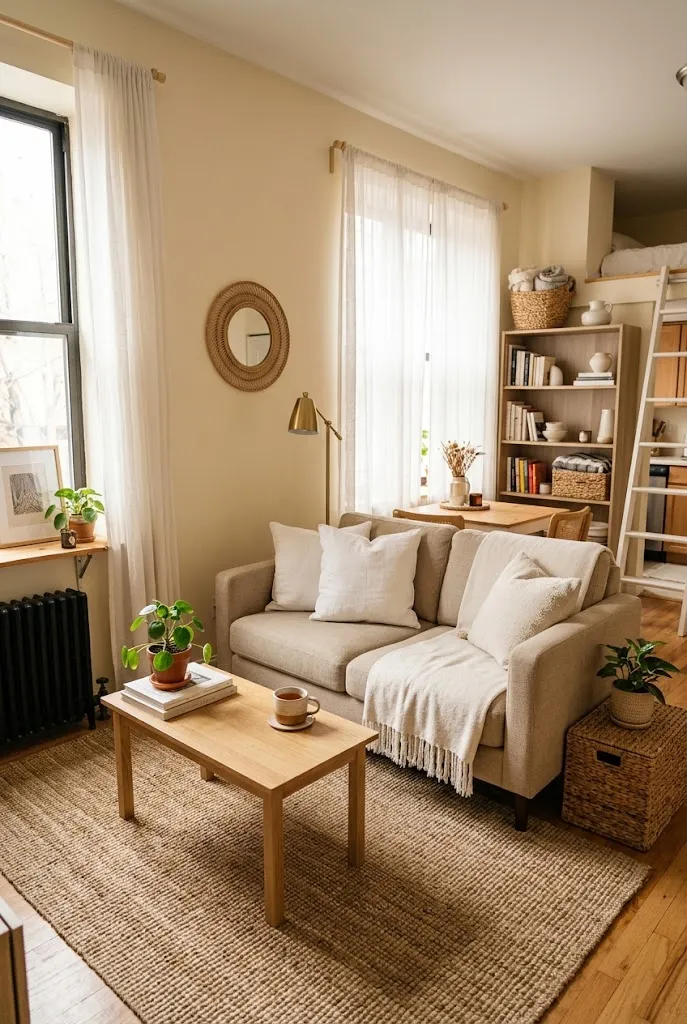
A natural woven rug adds texture without adding much visual weight.
That makes jute-style rugs especially useful in compact studio apartments.
Their neutral coloring works with nearly every decorating style, from coastal to bohemian to modern.
Place one underneath your living-room furniture or use it as a base layer beneath a smaller decorative rug.
The visible weave adds warmth to minimalist furniture and helps a studio feel less sterile.
If traditional jute feels too rough, look for washable or synthetic versions that mimic the woven appearance while feeling softer underfoot.
12. Washable Kitchen Runner
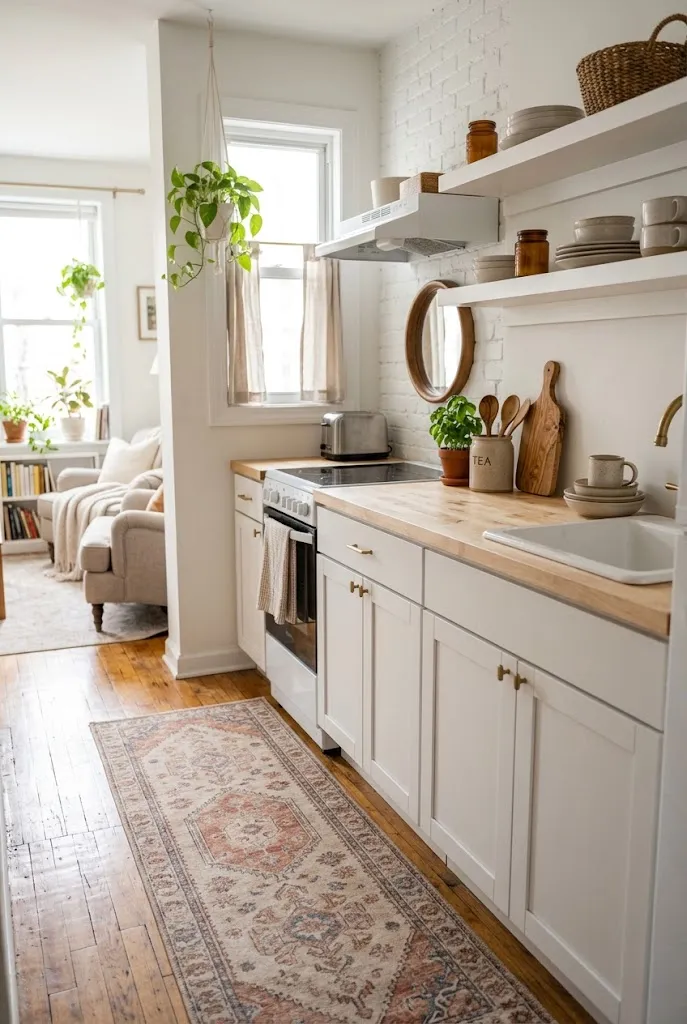
Studio kitchens are often part of the main living space, so even a small kitchen rug affects the entire apartment.
A narrow washable runner can make the kitchen area feel distinct while protecting the floor from spills.
Choose a pattern that hides everyday marks but doesn’t compete with the rest of the room.
Vintage-inspired designs are especially forgiving.
If your cabinets are dark, try a lighter rug to create contrast.
If the kitchen is mostly white, a muted patterned runner can provide just enough personality.
Keeping the rug narrow allows plenty of visible flooring, which helps the overall apartment remain visually open.
13. Matching Color Rug
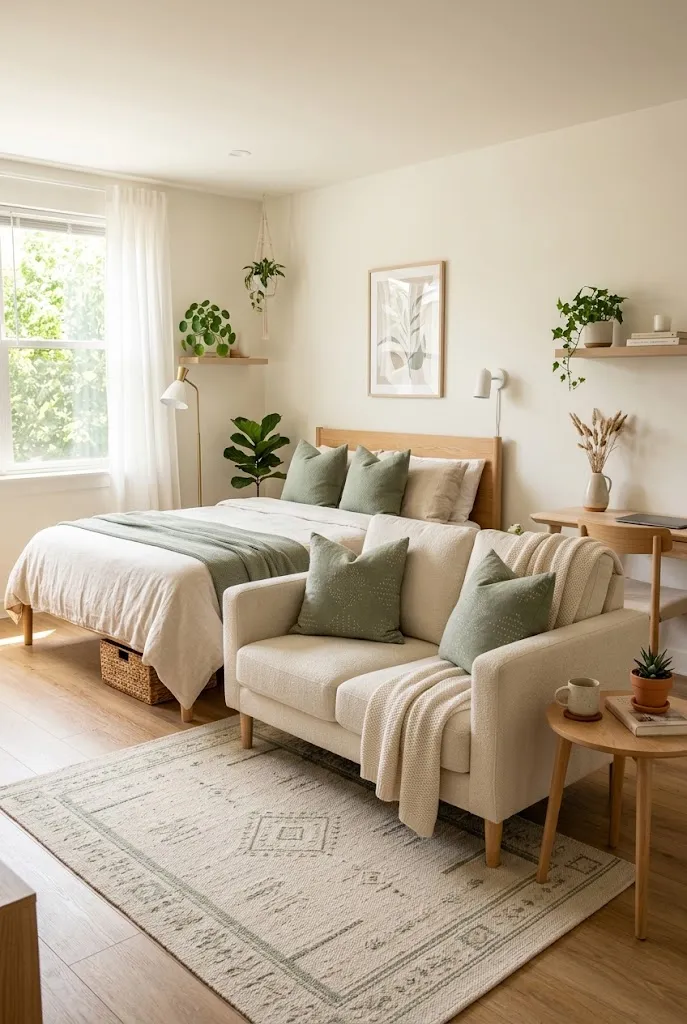
One clever way to create flow in a tiny studio is to repeat colors that already appear elsewhere in the room.
If your sofa has sage green cushions, for example, choose a rug with subtle green detailing.
If your bedding includes warm terracotta tones, repeat a little terracotta in the rug.
The colors don’t need to match perfectly.
You’re simply creating visual connections between different parts of the apartment.
This makes the entire space feel intentionally designed rather than divided into unrelated furniture zones.
It is a particularly effective trick when your bed and sofa are positioned close together.
14. Monochrome Rug
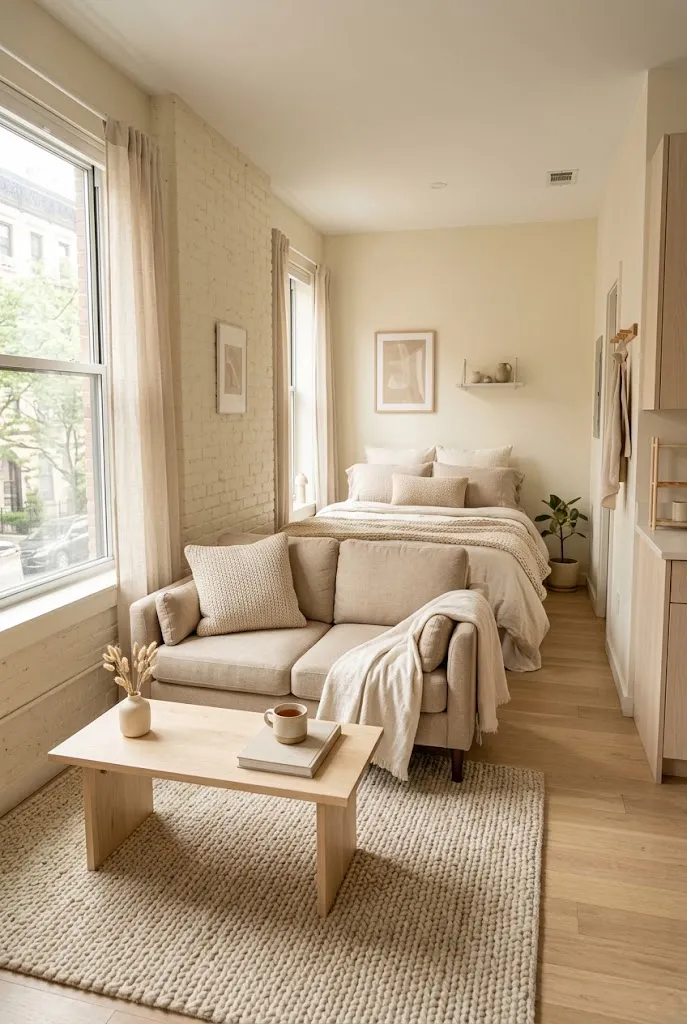
Using one color family throughout your studio can make the space feel calmer and more expansive.
A monochromatic rug reinforces that effect.
For example, an apartment decorated in warm neutrals could include an oatmeal rug with subtle cream details.
A gray-and-white studio might use a soft silver rug.
Because the rug doesn’t introduce a completely new color, your eye moves smoothly around the room.
Texture becomes more important with this approach.
Look for raised patterns, woven details, or subtle pile variations so the rug still feels interesting even when the colors are understated.
15. Vintage Faded Rug
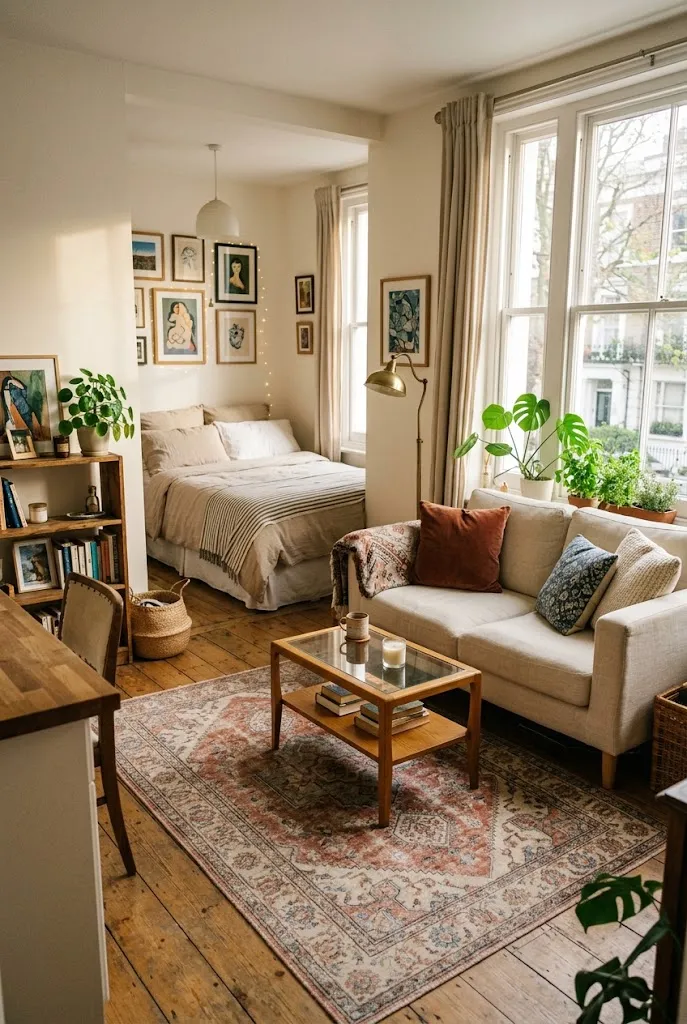
A faded vintage-style rug can instantly give a studio apartment more character.
The slightly worn appearance makes the room feel collected rather than overly decorated.
Choose designs with muted reds, browns, blues, creams, or greens rather than extremely saturated tones.
A faded pattern creates visual texture without becoming the loudest object in the room.
Try placing one beneath a small coffee table or in the center of your main living space.
Pair it with simple modern furniture for a relaxed mix of old and new.
This works particularly well if your apartment has plain rental walls and you need something interesting at floor level.
16. Rug Under Desk
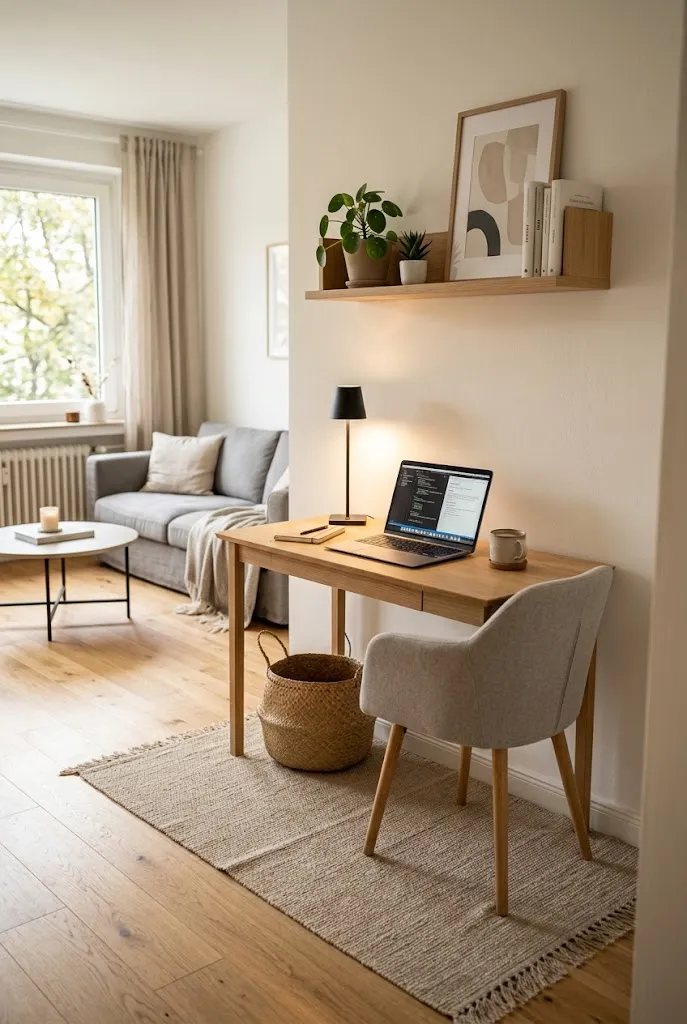
If you work from home, a rug can help your desk feel like its own mini office rather than furniture squeezed into the corner.
Place a small rectangular rug underneath the desk and chair.
Choose something low pile so your chair can move comfortably.
The rug creates a visual frame around the workspace and separates it from the rest of the apartment.
For an even more cohesive look, coordinate the rug with a desk lamp, storage basket, or wall art nearby.
This simple zoning trick can make a studio feel as though it contains a dedicated home office even when the entire workspace occupies only a few feet.
17. Diagonal Rug Placement
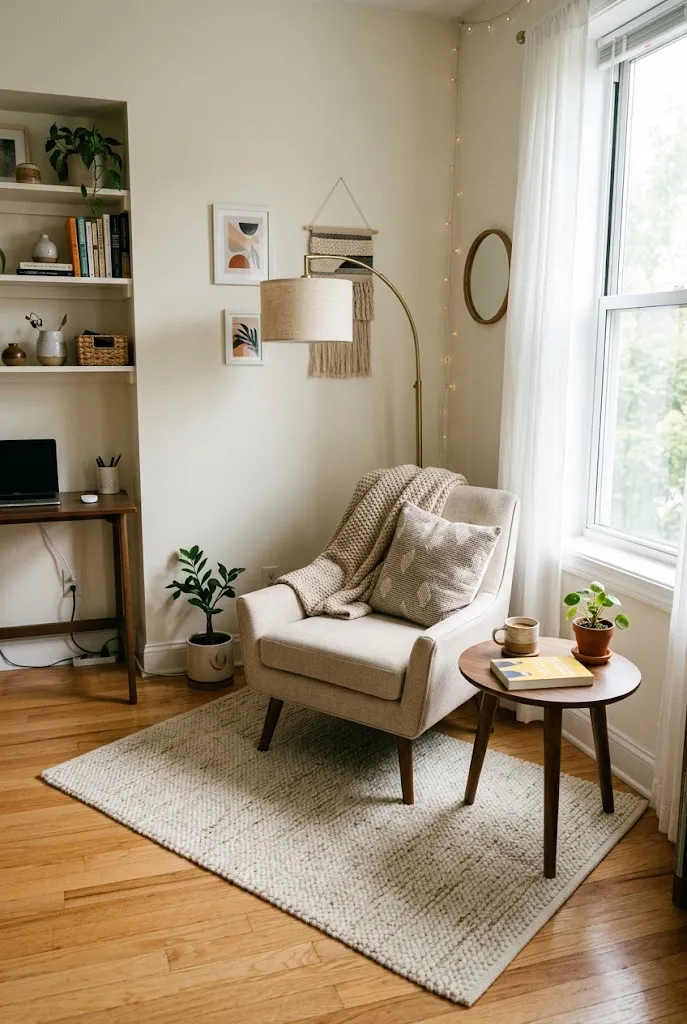
Most rugs are placed parallel to the walls, but changing the angle can completely change the feeling of a small room.
Positioning a smaller rug diagonally underneath a reading chair or coffee table introduces movement and makes the layout feel less rigid.
This works especially well in studio apartments with unusual floor plans.
The angled placement draws attention toward the center of the room instead of emphasizing narrow walls.
Because this arrangement is more visually noticeable, keep the rug itself relatively simple.
A neutral textured rug usually works better than an extremely busy pattern.
18. Corner Reading Rug
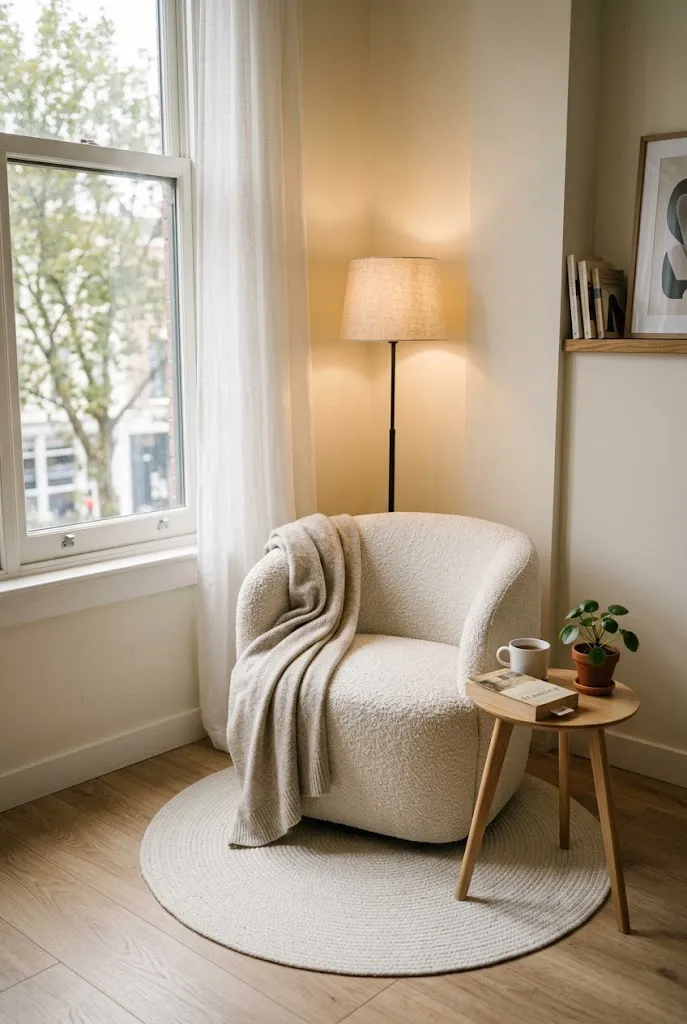
An unused corner can become one of the most inviting parts of your apartment with just three things: a rug, a chair, and a lamp.
Choose a small rug that fits comfortably beneath the front half of an accent chair.
Add a floor lamp and perhaps a slim side table.
Suddenly, what once looked like leftover space becomes a reading nook.
Round rugs are particularly effective here because they help define the area without creating another rigid rectangle.
This idea is perfect for renters who want to create separate functions within one room without buying large furniture.
19. Entryway Runner
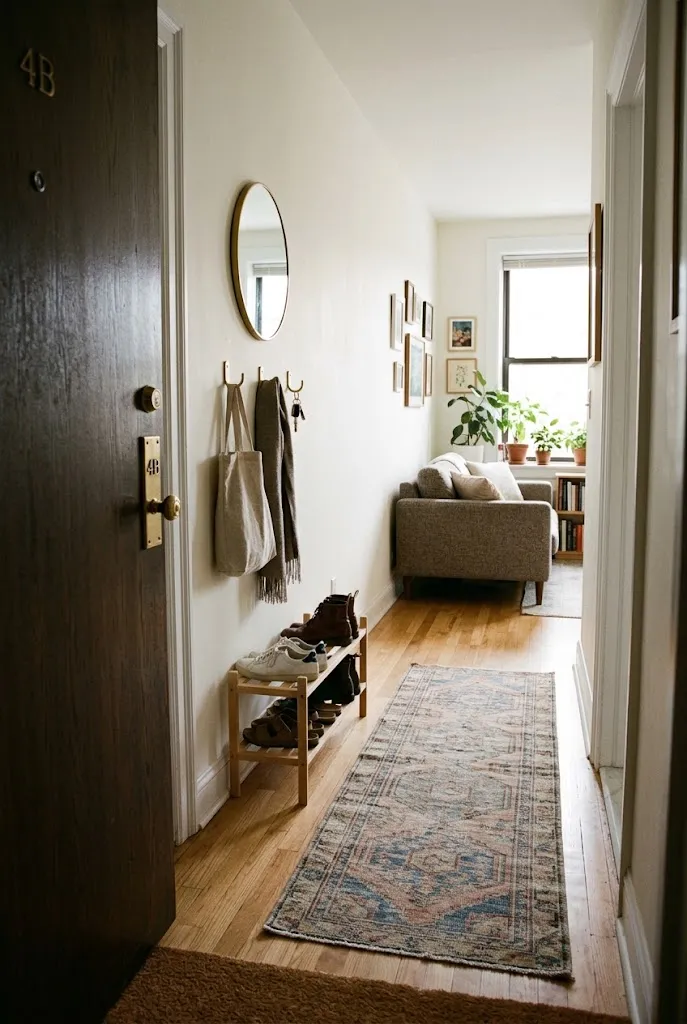
Even the smallest studio apartment benefits from a defined entrance.
A narrow runner near the front door creates a visual transition between the entry and the main living space.
This can make the apartment feel surprisingly more structured.
Choose something durable and easy to clean since this area receives more foot traffic.
A subtle striped or vintage-inspired runner can add personality without requiring additional furniture.
Pair it with a small wall hook, slim shoe rack, or mirror if space allows.
When your entryway feels intentional, the rest of the studio immediately feels more organized.
20. Bare-Floor Border
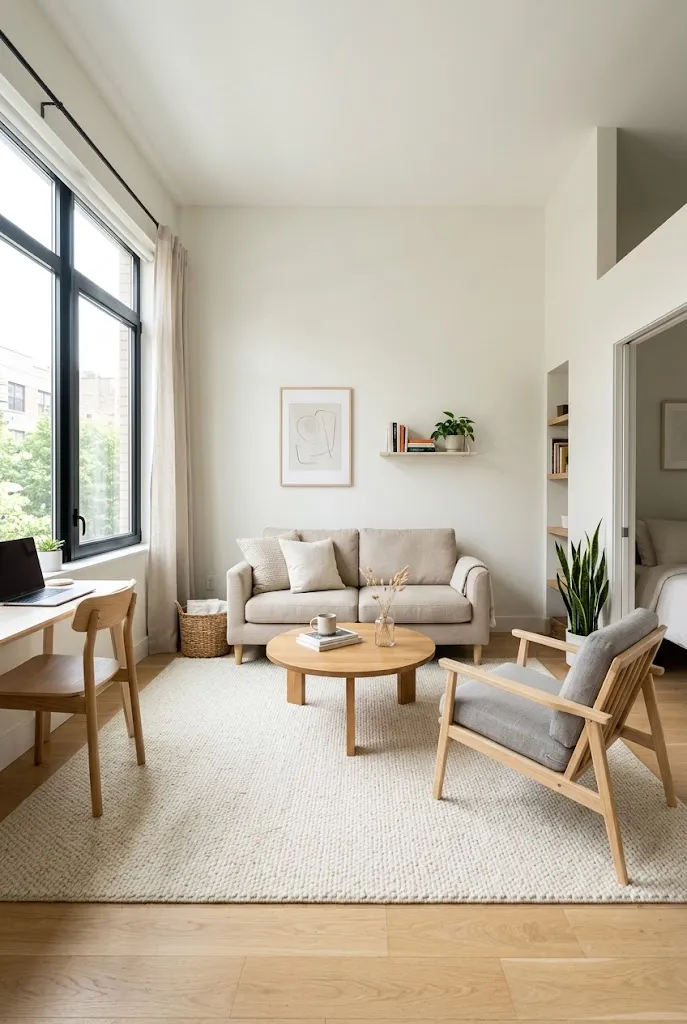
One of the best ways to make a rug work in a small apartment is simply choosing the right size.
Try to leave a visible border of flooring around the rug rather than pushing it tightly against every wall.
Seeing some uninterrupted flooring creates breathing room and makes the apartment feel less crowded.
The exact amount depends on your layout, but consistency matters more than a specific measurement.
A balanced floor border visually frames the rug and prevents it from looking like wall-to-wall carpeting.
This technique works especially well with light wood floors, which naturally reflect more light around the room.
21. Minimal Textured Rug
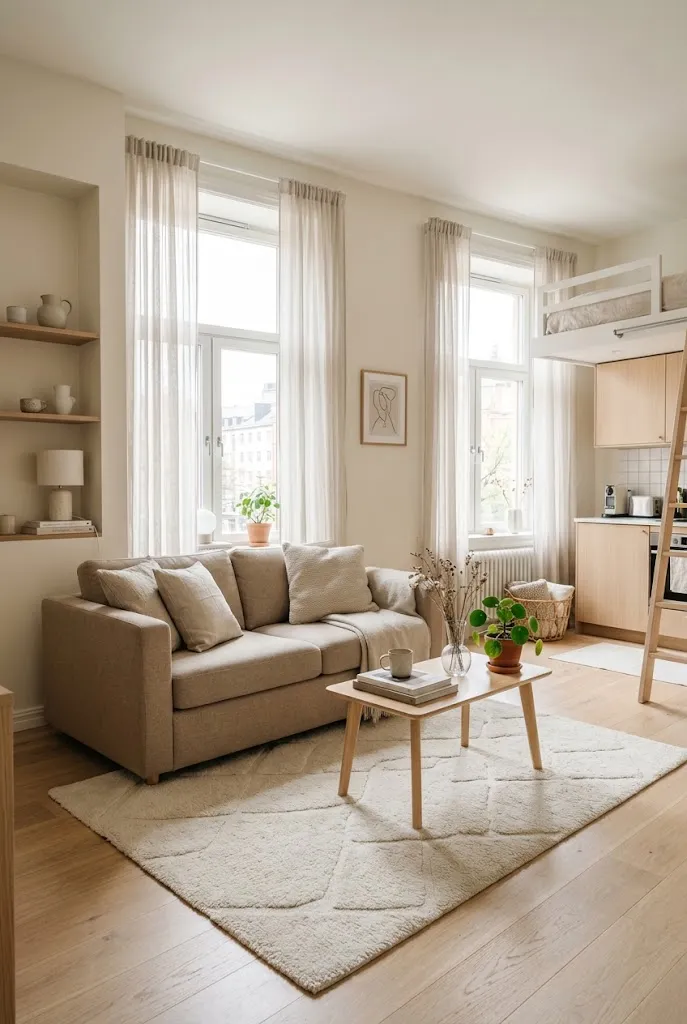
When in doubt, choose texture instead of pattern.
A cream, beige, or light taupe rug with subtle woven detailing can make a studio feel warm and polished while keeping the visual environment calm.
Look for ribbed surfaces, small raised lines, boucle-style textures, or understated geometric weaving.
These details become noticeable when you’re close to the rug but don’t dominate the room from a distance.
That balance is ideal for tiny apartments.
You get enough texture to make the room feel layered while preserving the open, airy look that makes a compact space appear larger.
How to Choose the Right Rug
The perfect rug isn’t necessarily the prettiest one you see online.
In a studio apartment, proportion and placement matter just as much as color or pattern.
Before buying anything, measure both your floor space and the furniture arrangement that the rug will sit beneath.
Whenever possible, use painter’s tape to outline the rug dimensions on the floor first. This gives you a much clearer idea of whether the rug will feel too small, too large, or just right.
For most tiny spaces, lighter colors and low-contrast patterns are easier to work with because they don’t visually shrink the room.
That doesn’t mean you have to avoid personality.
Texture, faded motifs, soft stripes, muted checks, and small pops of color can still make the apartment interesting.
It also helps to think about maintenance.
A beautiful rug won’t feel very practical if you’re constantly worried about spills, pet hair, or everyday dirt.
Washable and low-pile rugs are often especially useful in studios because one floor covering may serve several purposes at once.
Making a Tiny Studio Feel Bigger
A rug works best when it supports the rest of your layout.
Keep pathways as open as possible, avoid surrounding every piece of furniture with a different rug, and repeat a few colors across the room so everything feels connected.
In most small studios, two or three clearly defined zones are enough.
You might create one rug-defined living area, one smaller sleeping or bedside rug, and a narrow runner near the kitchen or entrance.
Anything beyond that can begin to fragment the room.
Remember that visible floor space is valuable too.
You don’t need to cover every inch of your apartment.
Sometimes the most spacious-looking arrangement combines one generous rug with plenty of exposed flooring around it.
Final Thoughts
The right rug can completely change the way a studio apartment feels.
Instead of thinking of it as a decorative afterthought, use it as a tool for defining zones, improving proportion, creating visual flow, and making the room feel more intentional.
Some of the most effective mini studio apartment rug ideas are also the simplest: an oversized neutral rug, a narrow bedside runner, a soft striped design, or a subtle textured rug beneath your living area.
You don’t need a huge decorating budget or a large apartment to create a home that feels polished.
Choose a rug that complements your layout, keep the overall color palette connected, and allow enough visible floor around your furniture.
A few thoughtful choices can make even the smallest studio feel brighter, calmer, and far more spacious.
Read More:
14 Cozy Studio Apartment Aesthetic Ideas That Feel Warm
19 Mini Studio Apartment Plant Ideas That Look Expensive
Community
Join the conversation
Add a useful idea, ask a specific question, or share what worked in your space. Every comment is reviewed before it appears.