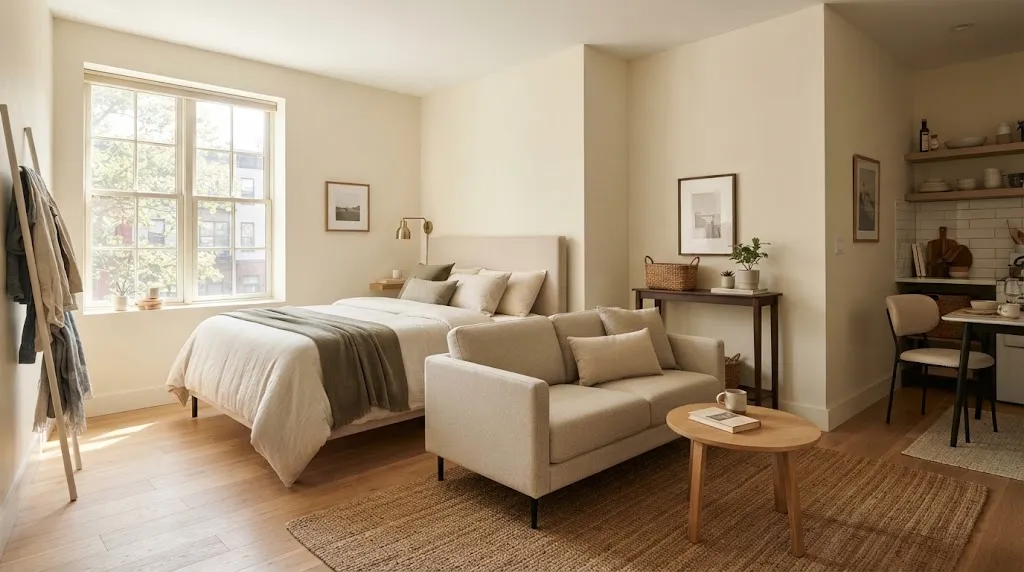
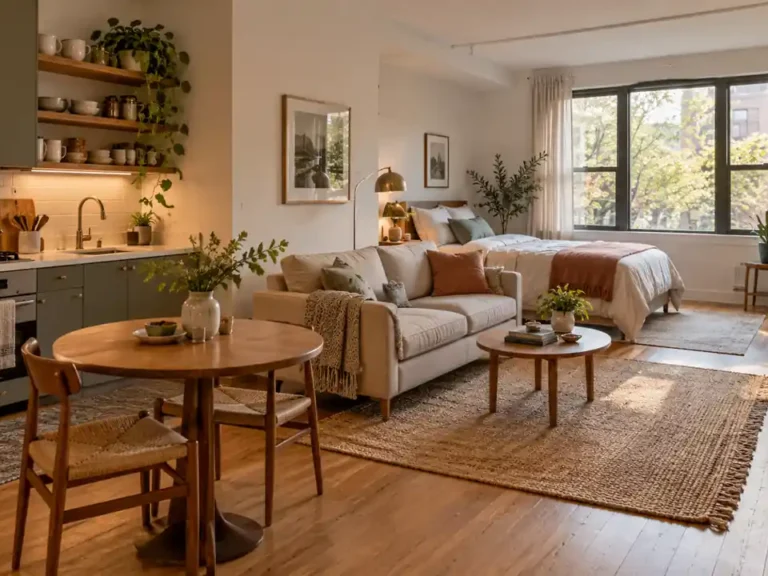
Putting a bed and couch in the same room can feel awkward at first. A bed is usually associated with a private sleeping space, while a couch belongs in a social or relaxing area. When both have to share one room, the challenge is making the layout feel intentional instead of looking like furniture was simply squeezed wherever it would fit.
The good news is that you do not necessarily need a large apartment to make the combination work. The right arrangement can create a comfortable sleeping zone and a separate lounging area while keeping enough space for walking, storage, and everyday activities.
Whether you are furnishing a studio apartment, converting a bedroom into a multipurpose room, or working with a compact one-bedroom space, these bed and couch in one room ideas can help you find a layout that feels comfortable and organized.
1. Place the Couch at the Foot of the Bed
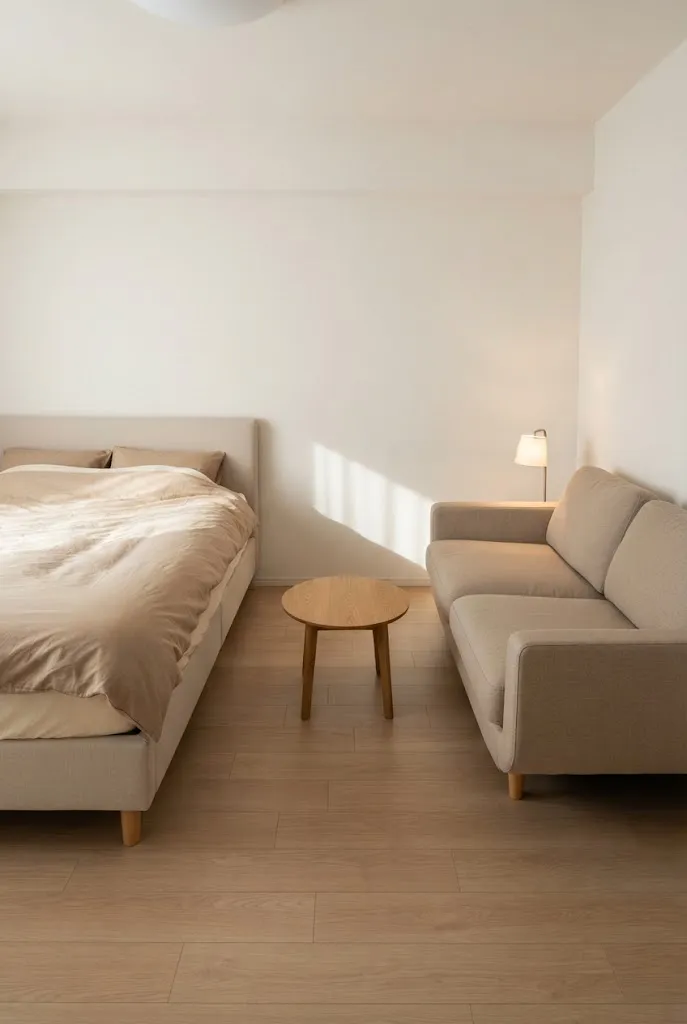
One of the simplest arrangements is placing the couch directly opposite the foot of the bed.
This creates a natural relationship between the two pieces without placing them side by side.
A low-profile couch works particularly well because it keeps the sightline open across the room. You can add a small coffee table between the couch and bed if there is enough clearance.
This layout is especially useful in rectangular rooms where the bed occupies one end and the seating area naturally fits at the other.
Keep the coffee table compact so the center of the room remains easy to walk through.
2. Put the Bed and Couch on Opposite Walls
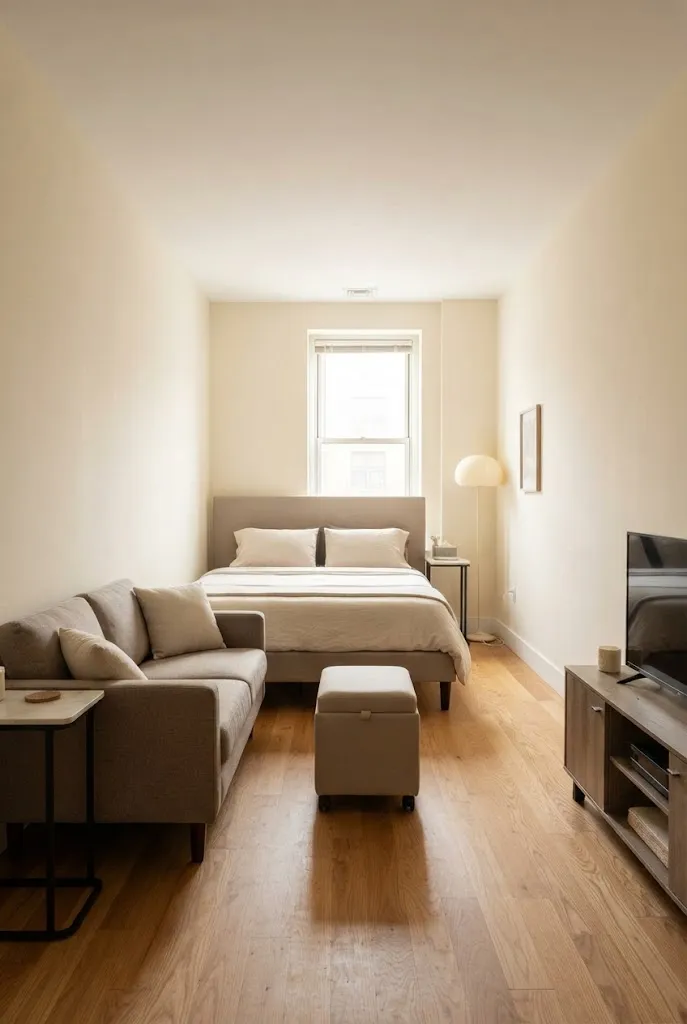
If the room is wide enough, place the bed against one wall and the couch against the opposite wall.
This creates two clearly defined sides of the room.
The arrangement can work particularly well when the couch faces a television or media console, while the bed remains oriented toward a quieter wall.
Choose furniture with similar visual weight so one side does not feel dramatically heavier than the other.
A narrow coffee table or small ottoman can fill the space between them without creating an obstruction.
3. Use a Sofa as a Visual Divider
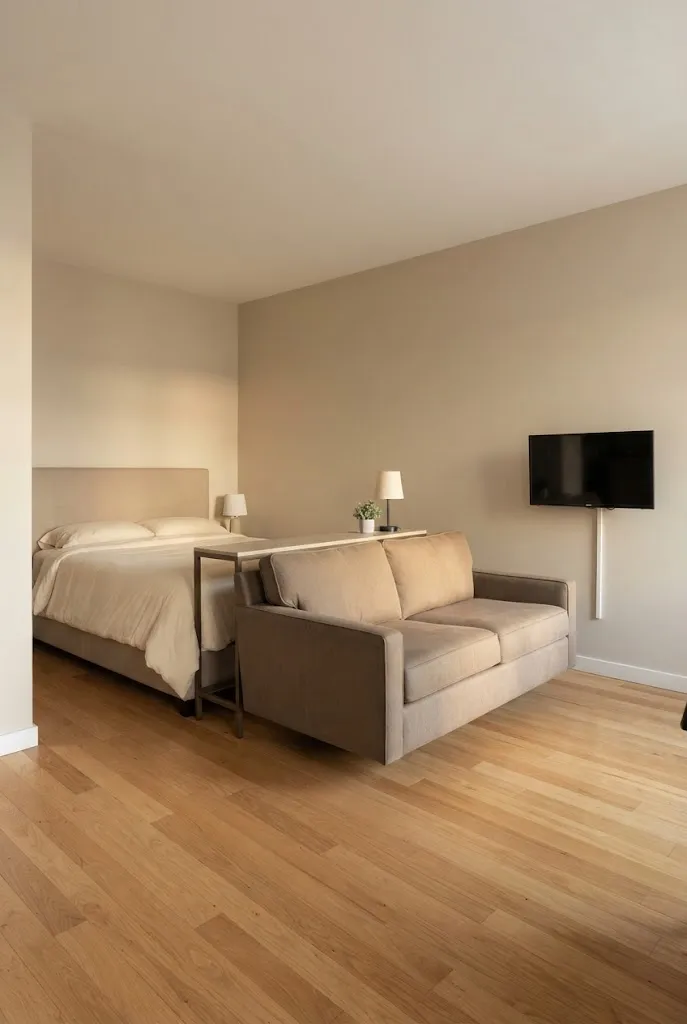
A couch can help separate the sleeping area from the rest of the room.
Instead of pushing the couch directly against a wall, position it with its back facing the bed.
The back of the sofa creates a subtle boundary between the two zones.
This works particularly well in studio apartments because it provides separation without requiring a permanent wall.
Leave enough space behind the couch for comfortable movement, especially if it is being used as the main walkway.
4. Create Two Zones With an Area Rug
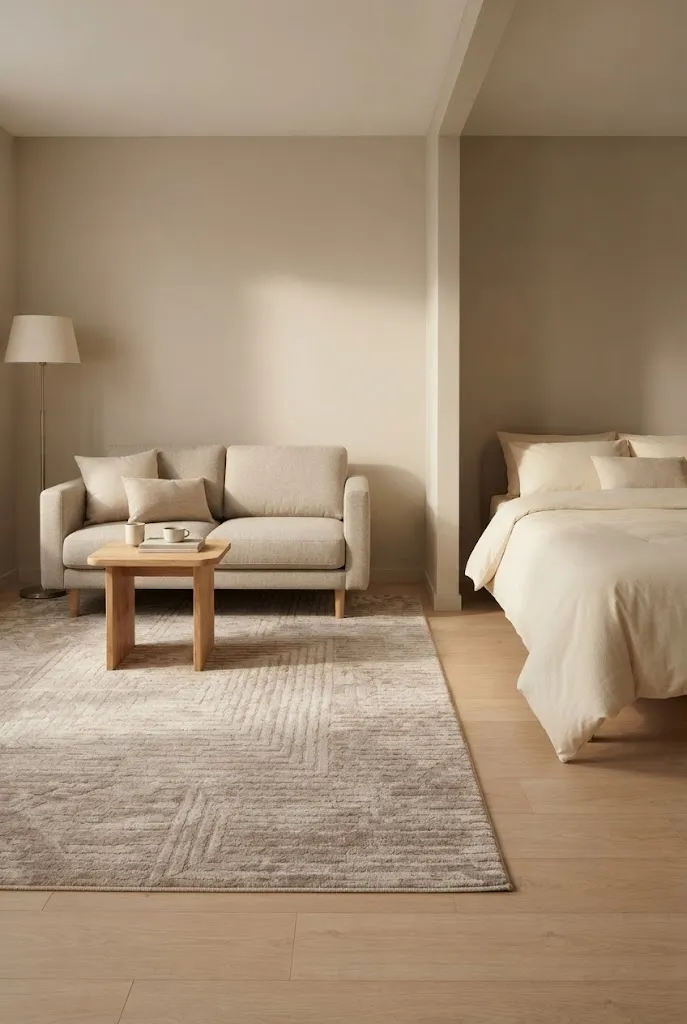
An area rug can visually define the seating area without taking up additional floor space.
Place the couch and coffee table on or partly over the rug while leaving the bed outside the rug.
This makes the living area feel like a separate zone even though both functions occupy the same room.
Choose a rug large enough to connect the furniture rather than one that sits like a small island underneath the coffee table.
A subtle pattern can add personality without making the room feel crowded.
5. Keep the Bed in the Corner
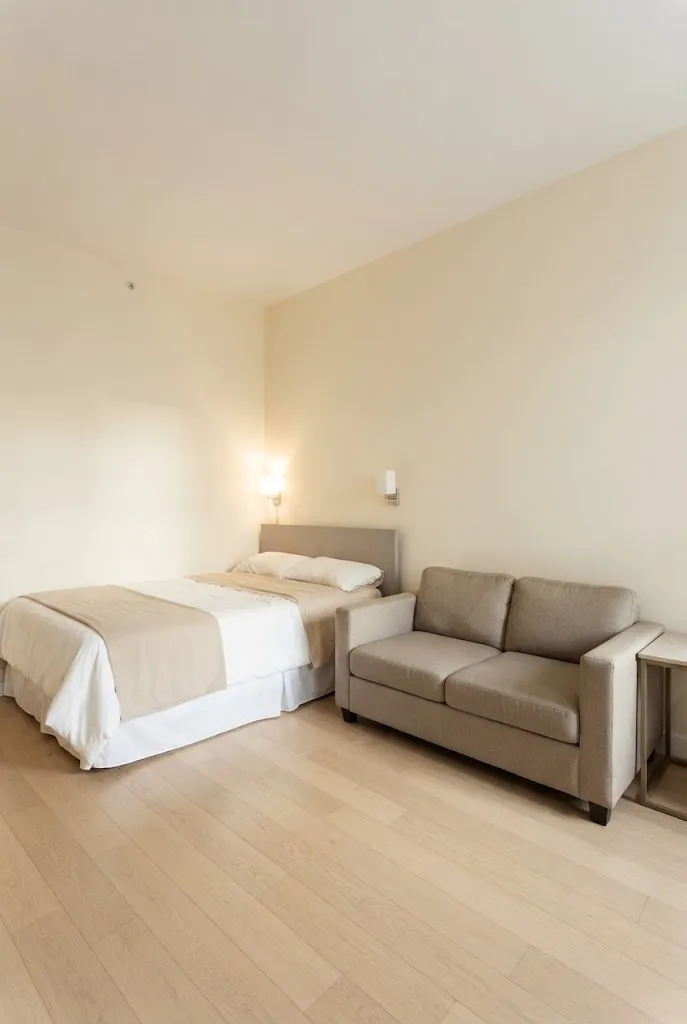
A corner placement can free up the center of the room for a more comfortable seating area.
Place the headboard against one wall and one side of the bed against another.
This arrangement works particularly well for compact rooms because it reduces the amount of floor space required around the bed.
A couch can then sit opposite the bed or along the adjacent wall.
Use wall-mounted lighting or narrow bedside furniture to preserve valuable floor space.
6. Float the Couch in the Middle of the Room
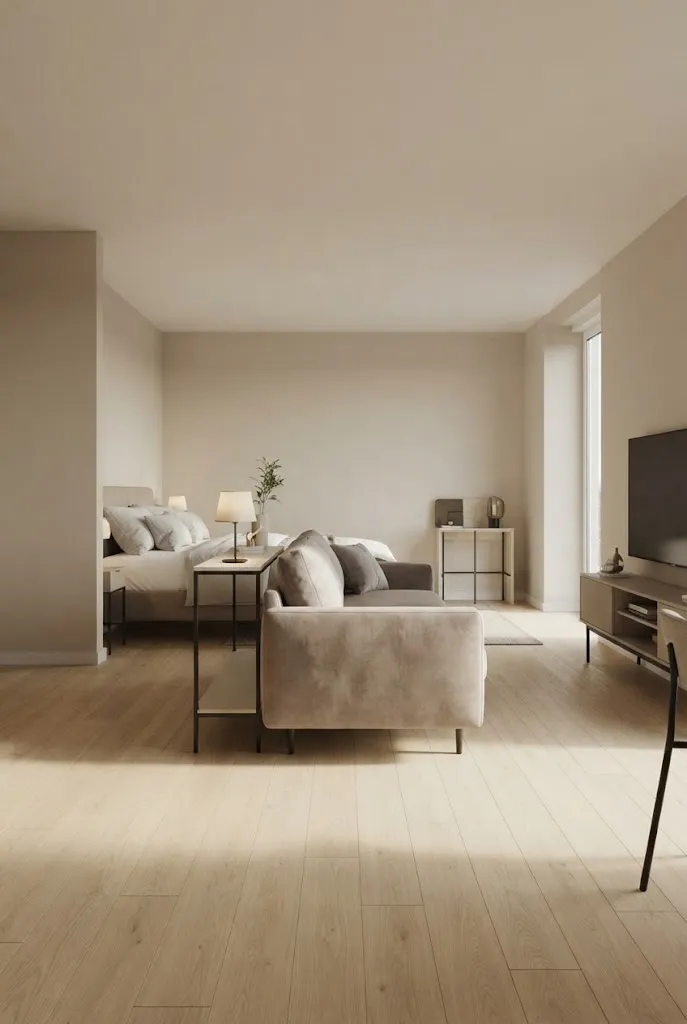
If your room has enough space, the couch does not always need to touch a wall.
A sofa floating near the center can create a clear division between the sleeping and living areas.
Position the back of the couch toward the bed and face the sofa toward a television, window, or media unit.
This layout creates a more intentional living area and can make the room feel like it has two distinct functions.
Just make sure there is enough room around the sofa for people to walk comfortably.
7. Use a Small Loveseat Instead of a Full Sofa
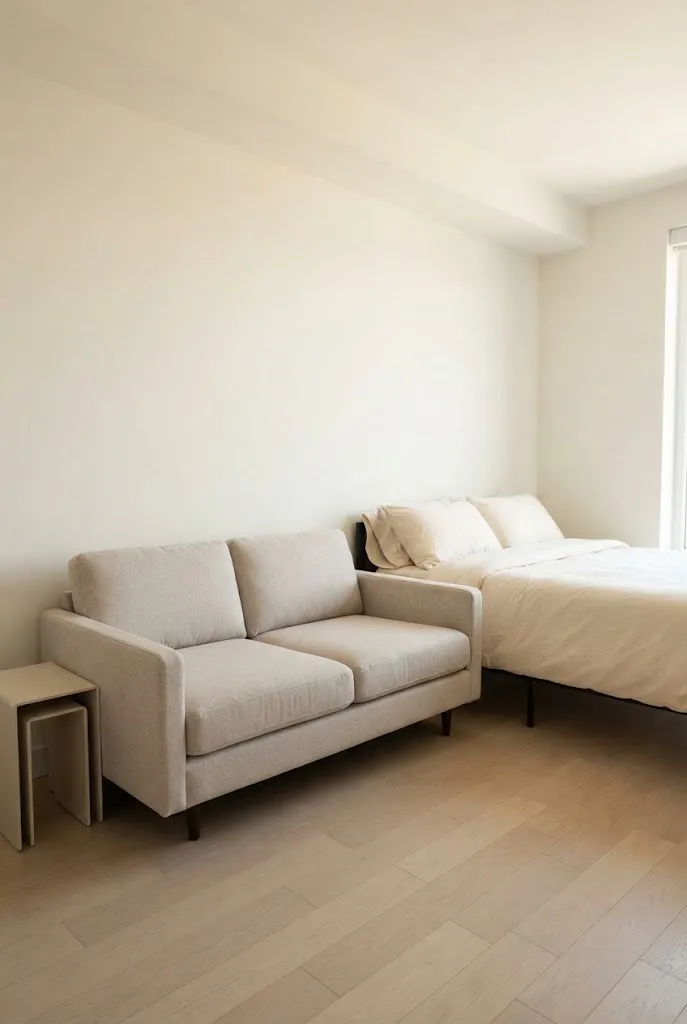
A full-size couch may simply be too large for some rooms.
A compact loveseat can provide comfortable seating while leaving more space around the bed.
Look for a design with narrow arms and a relatively shallow depth.
This can give you the appearance and comfort of a sofa without consuming as much floor space.
Pair it with a small nesting table instead of a large coffee table to maintain flexibility.
8. Try a Daybed as the Sleeping Solution
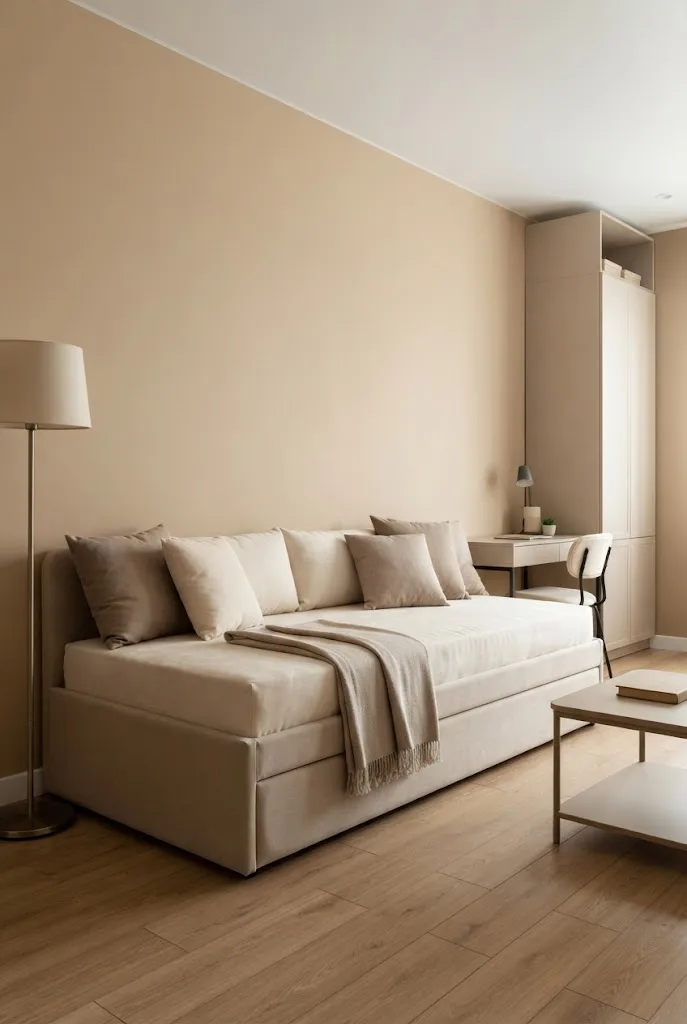
If the room needs to function as both a bedroom and living room, a daybed can blur the distinction between the two.
During the day, style it with cushions so it resembles a sofa.
At night, remove or rearrange the decorative cushions and use it as a bed.
This can be especially practical in guest rooms, home offices, or studio apartments.
Choose a daybed with a proper mattress and a frame that looks attractive from multiple angles.
9. Use a Sleeper Sofa Instead of Two Full Pieces
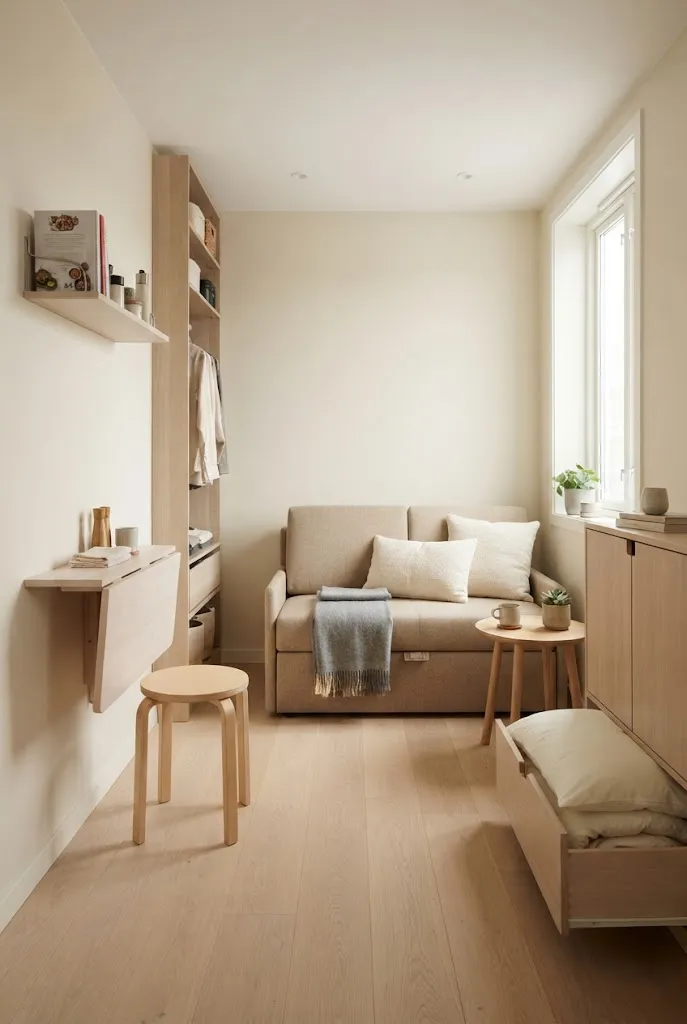
If floor space is extremely limited, consider combining the functions differently.
A sleeper sofa can serve as the main seating area during the day and become a bed at night.
This eliminates the need for two permanent large furniture pieces.
However, it may not be ideal if you need a dedicated bed that remains set up all day.
Before choosing this solution, consider how frequently you want to convert the furniture and whether the mattress will provide adequate comfort.
10. Define the Bed With a Curtain
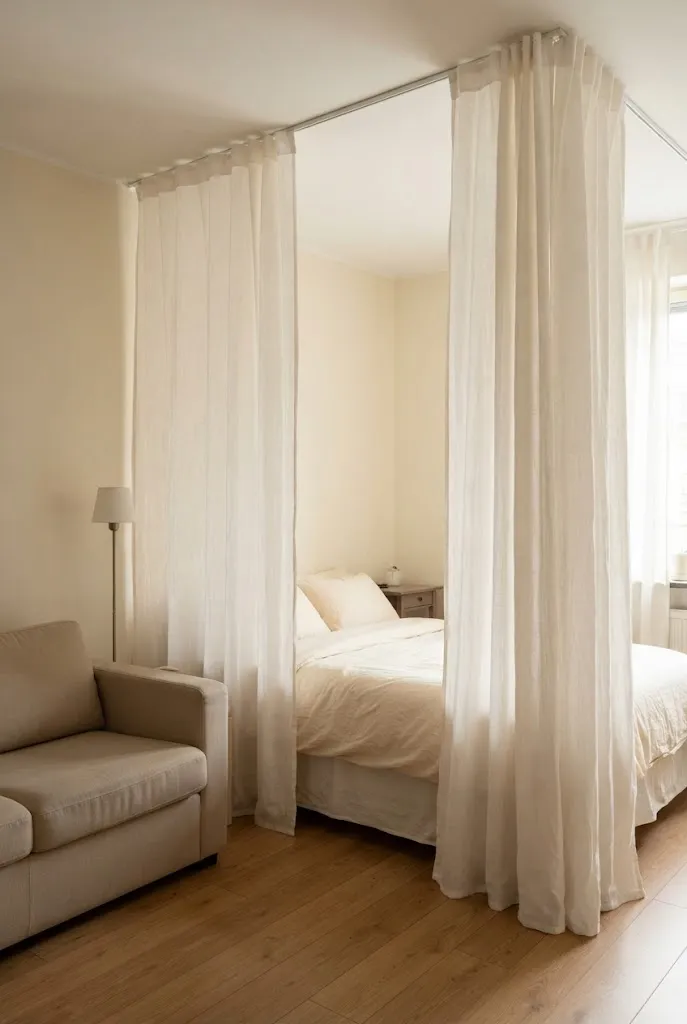
A ceiling-mounted or freestanding curtain can give the bed a sense of privacy without constructing a wall.
Choose a lightweight curtain that can be pulled closed at night and opened during the day.
The couch can remain outside the curtain, creating a subtle separation between sleeping and living functions.
For a small studio, sheer or linen-style curtains can provide separation while still allowing some light to pass through.
Avoid extremely heavy curtains if the room already receives limited natural light.
11. Place the Couch Beside the Bed
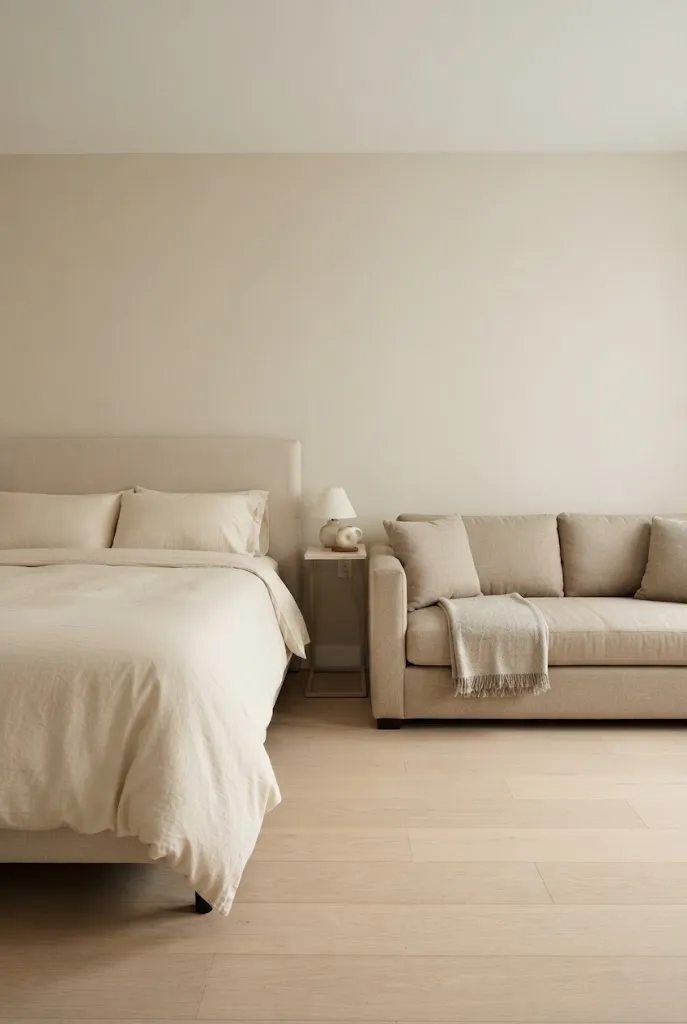
A side-by-side arrangement can work when the room is wider than it is long.
Place the couch along the wall adjacent to the bed, leaving a clear walkway between them.
This can create a more open central area while keeping both pieces easy to access.
Use a narrow side table between the two zones if space allows.
Keep the furniture heights relatively similar so the arrangement feels visually balanced.
12. Use a Bookcase as a Room Divider
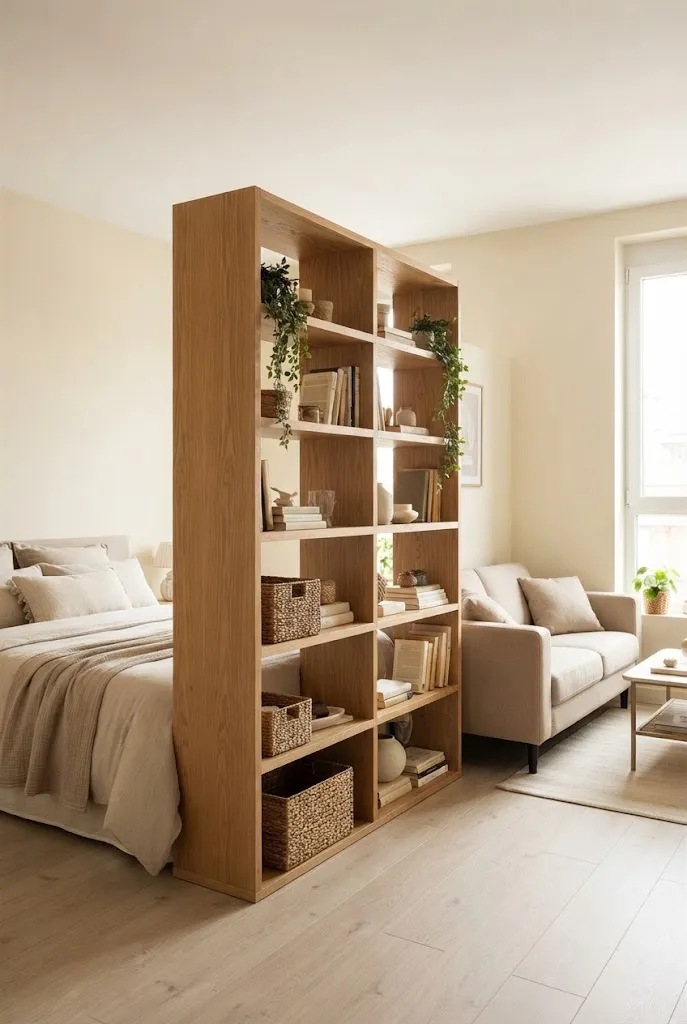
An open bookcase can separate the bed and couch while also providing useful storage.
Position the shelving unit between the two areas, preferably perpendicular to the wall.
Open shelves allow light to pass through, preventing the divider from making the room feel completely enclosed.
Use baskets, books, plants, and decorative objects selectively.
Avoid filling every shelf because an overloaded bookcase can make the room feel much smaller.
13. Put the Bed Behind the Couch
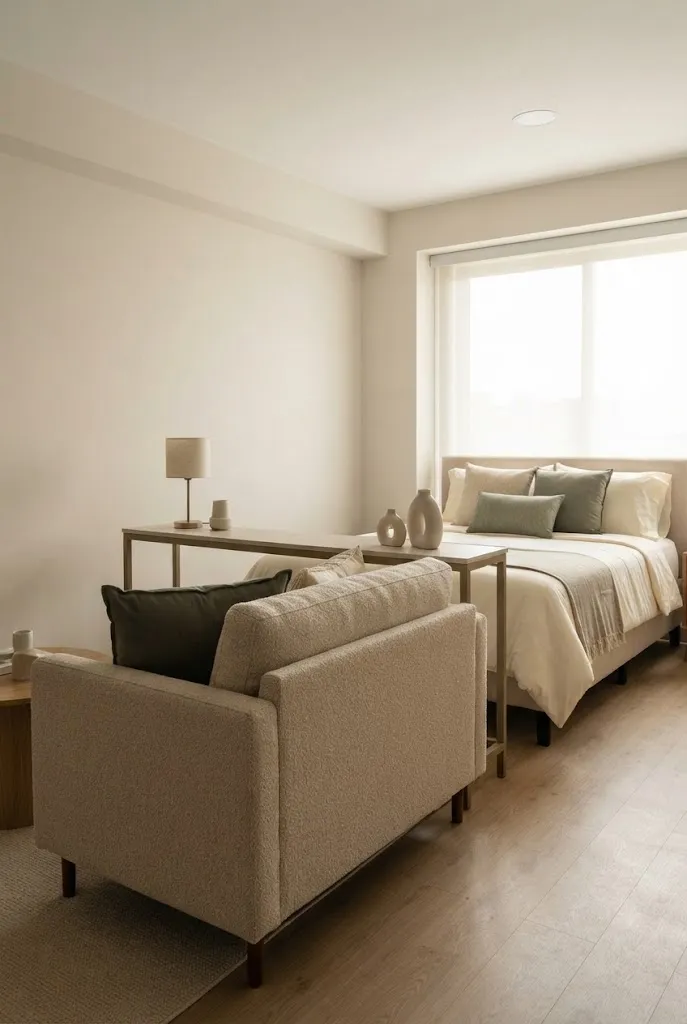
In a larger studio or open-plan room, placing the bed behind the couch can create a natural sequence.
The couch becomes the first visual element when entering the room, while the bed sits behind it as a separate zone.
Choose a sofa with an attractive back because it will be visible from the sleeping area.
A narrow console behind the sofa can further reinforce the separation and provide a place for lamps or decorative objects.
14. Match the Furniture Visually
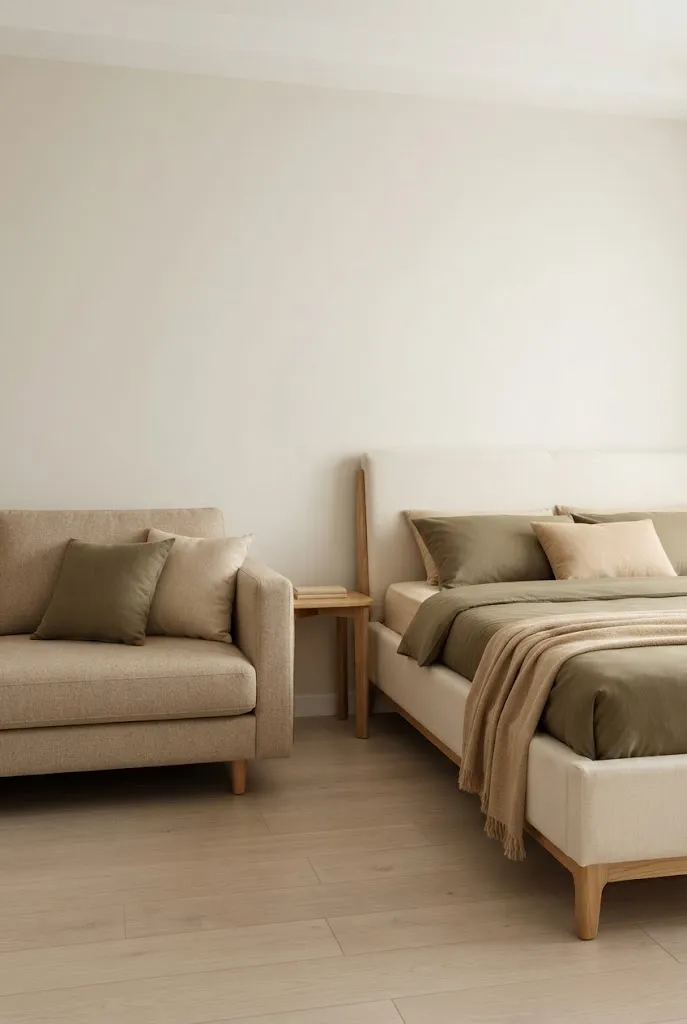
A bed and couch do not need to be part of the same furniture set, but they should feel like they belong in the same room.
Repeat materials, colors, or textures between the two pieces.
For example, a beige upholstered bed could work with an oatmeal couch, natural wood legs, and warm neutral textiles.
You can also repeat one accent color through cushions, bedding, artwork, or a throw.
This creates cohesion even when the furniture has different shapes.
15. Use a Corner Sofa to Maximize Seating
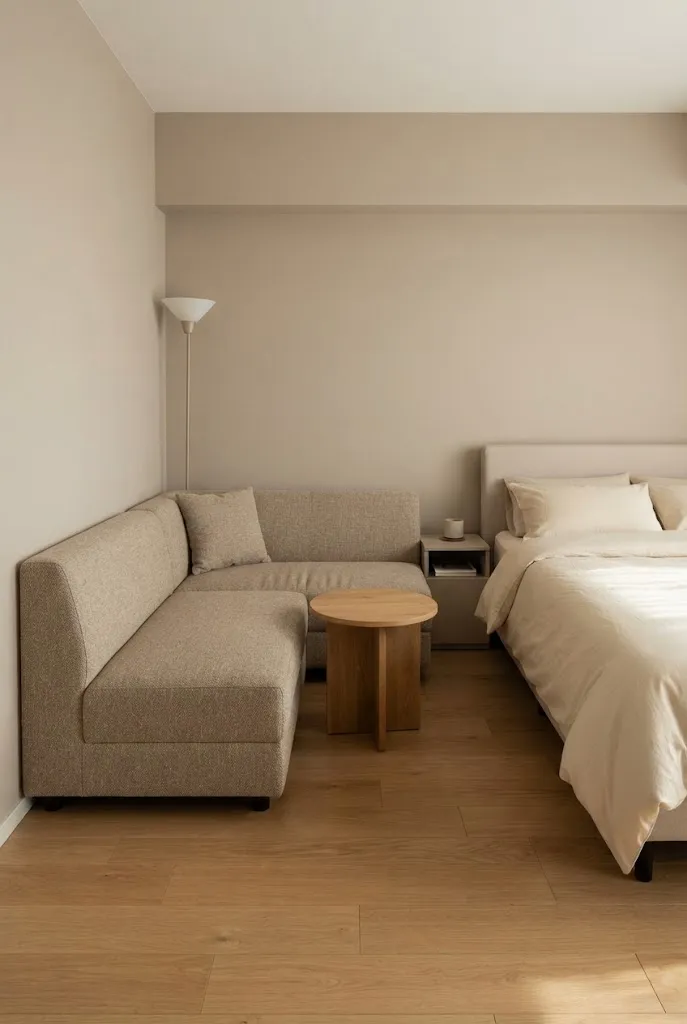
An L-shaped or compact corner sofa can make efficient use of an awkward corner.
Place the sofa away from the bed so the two zones remain visually distinct.
The corner shape provides plenty of seating without requiring a large amount of furniture.
This approach can work particularly well when one side of the room has an unused corner that would otherwise be difficult to furnish.
Choose a compact sectional rather than an oversized deep sofa.
16. Keep the Center of the Room Open
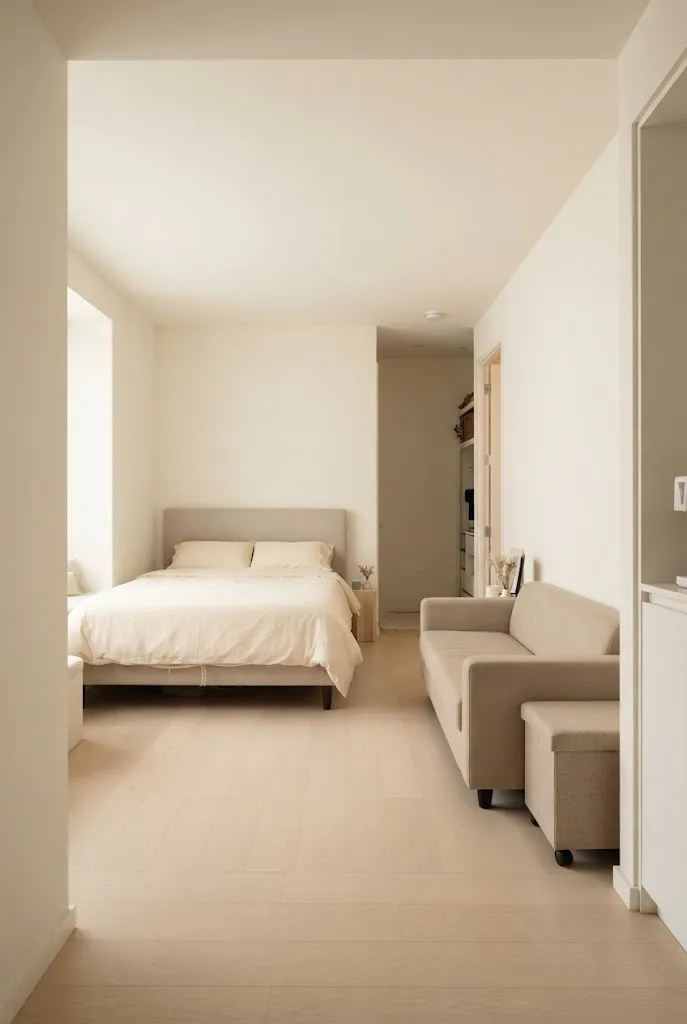
Sometimes the best layout is the one that puts the least furniture in the center.
Position the bed and couch around the edges of the room while keeping a clear central pathway.
This makes movement easier and allows the room to feel less crowded.
Avoid placing a large coffee table directly between the two pieces if it interrupts the main walking route.
A small movable ottoman or nesting table can provide flexibility without permanently occupying the floor.
17. Coordinate Lighting for Both Zones
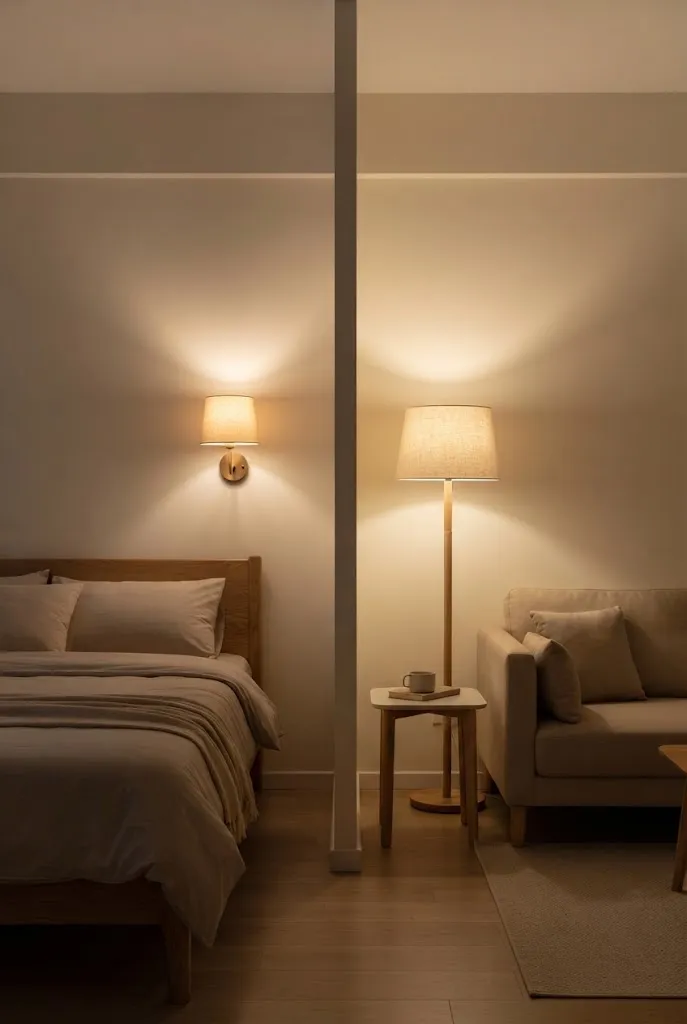
Lighting can help make the bed and couch feel like separate areas.
Use a bedside lamp or wall-mounted sconce for the sleeping zone and a floor or table lamp near the couch.
This allows each area to have its own lighting function.
In the evening, you can use softer lighting near the bed while keeping the seating area slightly brighter.
Layered lighting also reduces the need for one harsh overhead fixture to illuminate the entire room.
How to Arrange a Bed and Couch in a Small Room
Start by measuring the room and the furniture.
Do not rely only on how the pieces look individually. Measure their actual width, depth, and required clearance.
Then identify the most important walking paths.
You should be able to reach the bed, couch, door, closet, and other frequently used areas without squeezing between furniture.
Once the practical paths are established, experiment with different furniture orientations.
Even rotating the couch by 90 degrees can completely change how the room functions.
How Much Space Should You Leave Between a Bed and Couch?
There is no single spacing measurement that works for every room because furniture dimensions and circulation patterns vary.
The important thing is to maintain a comfortable passage rather than creating a narrow gap that feels difficult to navigate.
If the couch faces the bed, consider whether a coffee table is actually necessary. In a compact room, removing the table may provide much better circulation.
When the couch is being used as a divider, leave enough space behind it for people to walk between the sofa and other furniture.
How to Make a Bed and Couch Look Like They Belong Together
The easiest way to connect the two areas is through repetition.
Use similar colors in the upholstery and bedding, repeat wood finishes, or introduce the same accent color in pillows and throws.
You can also use matching or complementary lighting.
The furniture itself does not need to match.
In fact, slightly different pieces often make the room feel more natural and collected.
The goal is visual connection rather than perfect coordination.
Common Layout Mistakes to Avoid
One of the biggest mistakes is choosing furniture that is too large for the room.
A deep sofa can consume more space than expected, especially when combined with a full-size bed.
Another mistake is blocking windows, doors, closets, or heating and cooling equipment.
It is also easy to create too many small zones. A bed, couch, desk, dining table, coffee table, and multiple storage pieces can quickly overwhelm a compact room.
Prioritize the functions you actually use and choose furniture that serves more than one purpose when possible.
Frequently Asked Questions
Can you put a couch and bed in the same room?
Yes. The key is to create visual and functional separation between the sleeping and seating areas. Furniture placement, rugs, curtains, shelving, and lighting can all help define the two zones.
Should the couch face the bed?
It can, especially when the room is long and narrow. However, placing the couch with its back toward the bed can provide stronger visual separation in an open studio.
How do you separate a bed and couch in a studio apartment?
You can use the back of the sofa, an area rug, open shelving, curtains, a narrow console, or differences in lighting to create distinct zones without building a permanent wall.
What type of couch works best in a small room with a bed?
A compact loveseat, apartment-size sofa, shallow sectional, or daybed-style seating can work well. Look for furniture with a relatively small footprint and narrow arms.
How do you make a room with a bed and couch feel bigger?
Keep the center open, use appropriately scaled furniture, avoid blocking windows, choose furniture with visible legs, and define zones without creating heavy visual barriers.
Final Thoughts
Having a bed and couch in the same room does not mean the space has to feel crowded or unfinished.
The most successful layouts give each piece a clear purpose while maintaining an easy path between the important areas of the room.
Start with the bed, couch, and walking paths. From there, use rugs, curtains, shelving, lighting, and furniture orientation to create separation where you need it.
You do not have to build a wall to make a room feel divided into useful zones. Sometimes a well-positioned sofa or carefully chosen rug is enough.
The best bed and couch in one room ideas are the ones that fit the way you actually live. Focus on comfort, circulation, and flexibility, and the room can function as both a relaxing living area and a comfortable sleeping space without either one taking over.
Community
Join the conversation
Add a useful idea, ask a specific question, or share what worked in your space. Every comment is reviewed before it appears.