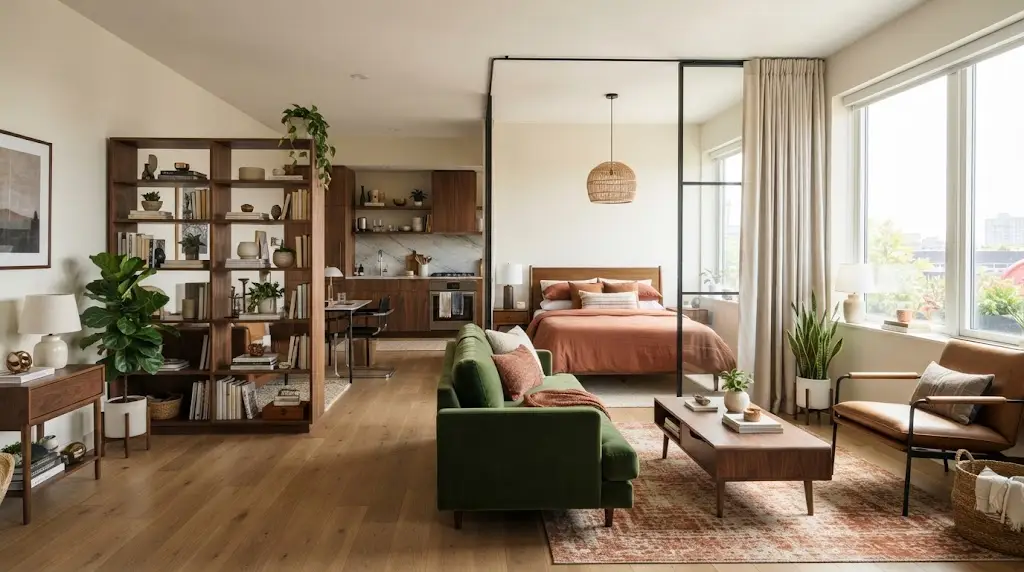
Living in a studio apartment means your bed, sofa, dining area, and workspace may all share the same room.
That open layout can feel bright and spacious, but it can also make your home feel unfinished. Your bed may be visible from the front door. Your workspace might blend into your relaxation area. You may simply want one corner to feel more private. These room divider ideas for studio apartments, from curtains and bookcases to a simple studio apartment partition, give you clear zones without building a wall.
The right studio apartment divider ideas can create separation without making a small home feel boxed in.
You do not need to build a permanent wall. Shelving, curtains, glass panels, furniture, plants, and even rugs can help one open room feel like several intentional spaces.
In my experience, the best dividers create just enough visual separation while protecting natural light and comfortable walking space.
Here are 17 stylish ways to make one room feel like two.
1. Use an Open Bookcase Between the Bed and Sofa
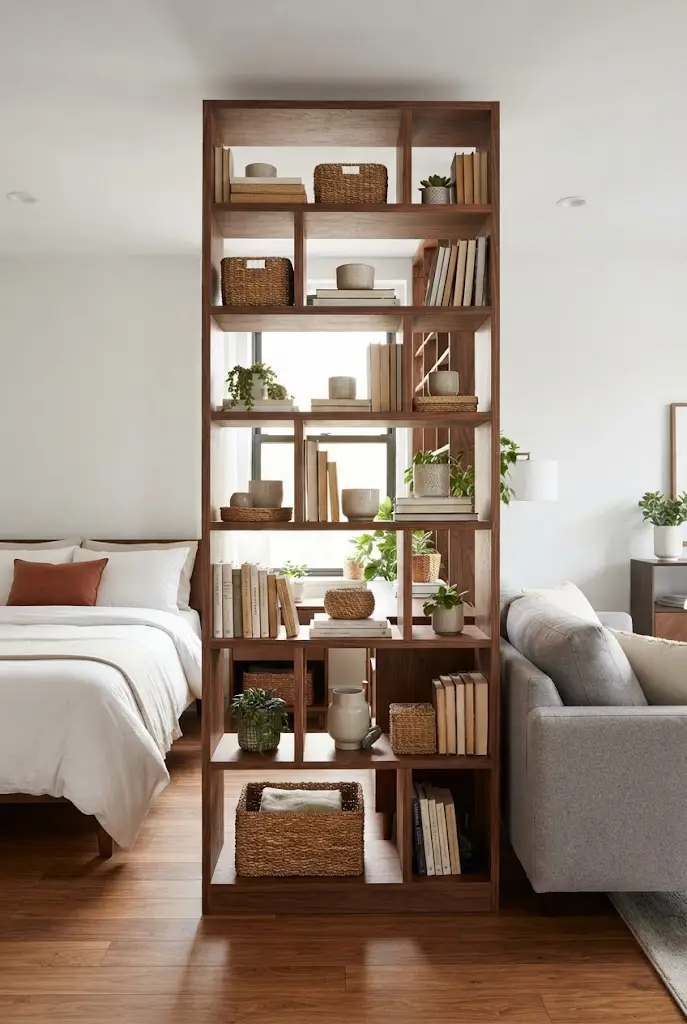
An open bookcase is one of the easiest ways to separate sleeping and living areas.
Place it between your bed and sofa so the shelving creates a clear visual boundary.
Because the shelves remain open, daylight can travel through instead of stopping at a solid wall.
Style the lower shelves with baskets and practical storage. Keep the upper sections lighter with books, ceramics, and plants.
I have noticed that leaving several compartments empty makes a huge difference. The divider feels airy instead of heavy.
This idea works especially well when you want privacy and storage from the same piece of furniture.
2. Hang Curtains Around the Sleeping Area
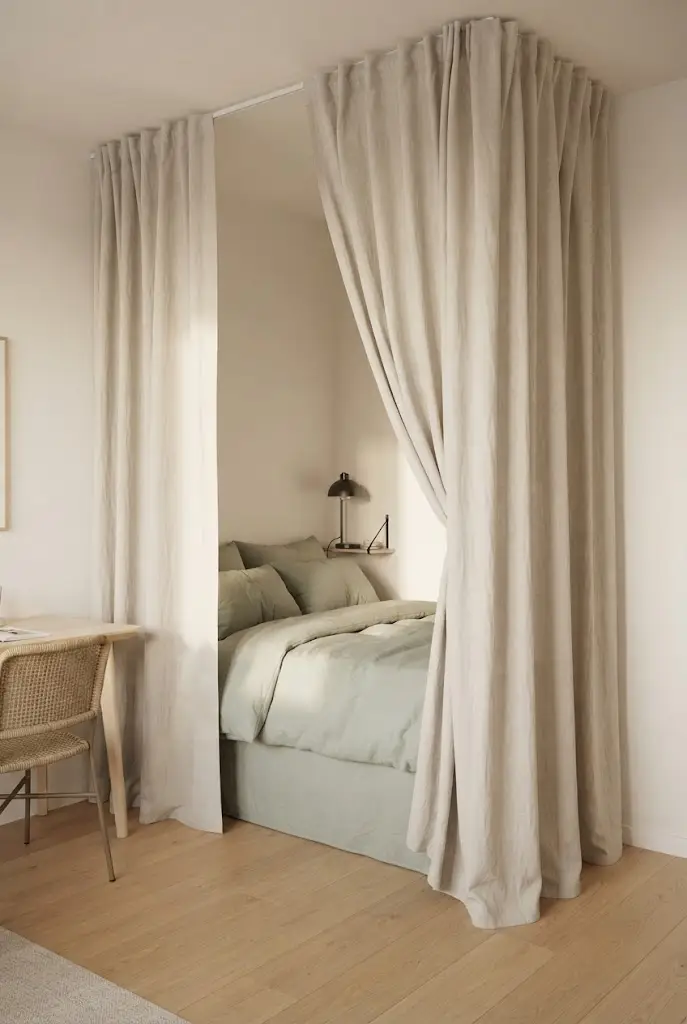
Curtains can create instant privacy without taking up valuable floor space.
Install a ceiling mounted curtain track around the bed or across one side of the sleeping zone.
Close the curtains when you want privacy and pull them back during the day.
Sheer fabric keeps the apartment bright while creating gentle separation.
Heavier curtains offer more privacy and can make the sleeping area feel extra cozy.
Choose fabric that coordinates with your bedding or walls so the divider feels connected to the rest of the room.
3. Use a Glass Divider to Keep the Light Flowing
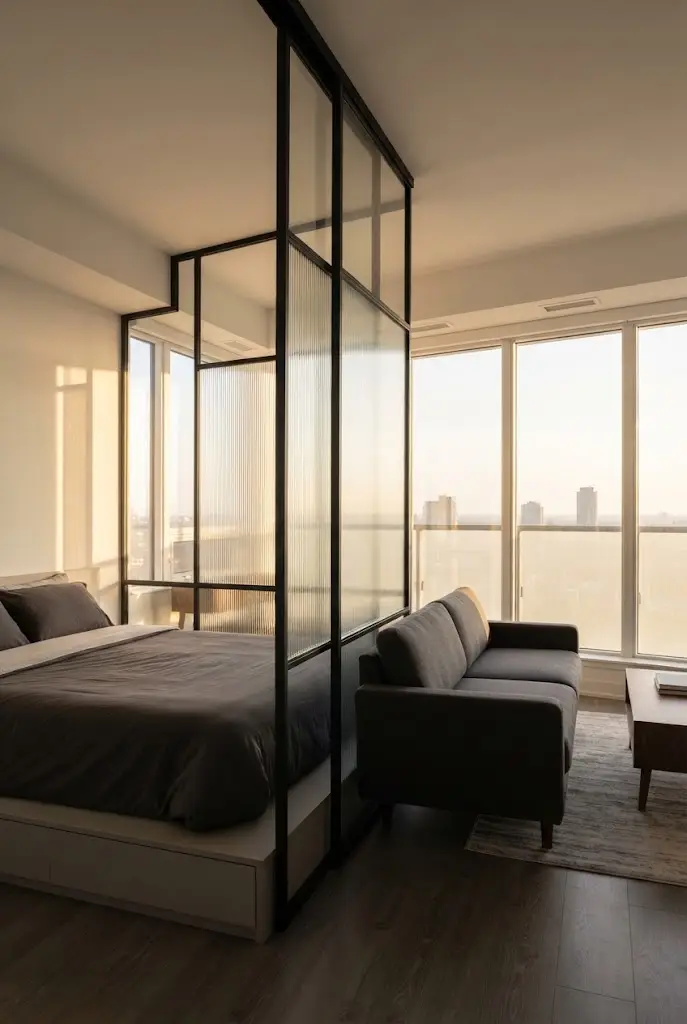
Glass can separate a room without visually shrinking it.
A fixed glass panel between the bed and living area gives each space a clear boundary while allowing natural light to pass through.
Clear glass creates the most open feeling.
Fluted or frosted glass adds more privacy while still letting light travel between zones.
A slim black frame can create a modern architectural look, while a light wood frame feels softer.
This option works beautifully in studios where blocking the main window would make the sleeping area too dark.
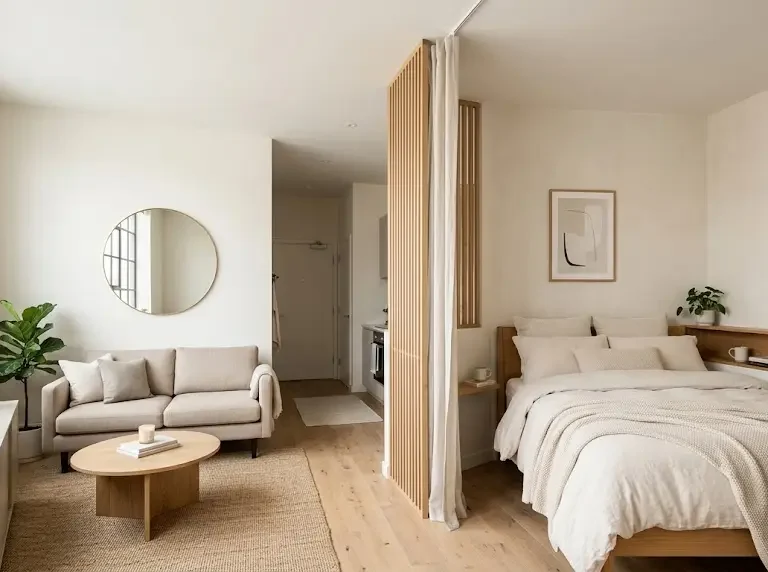
4. Create a Bedroom Nook With Slatted Wood
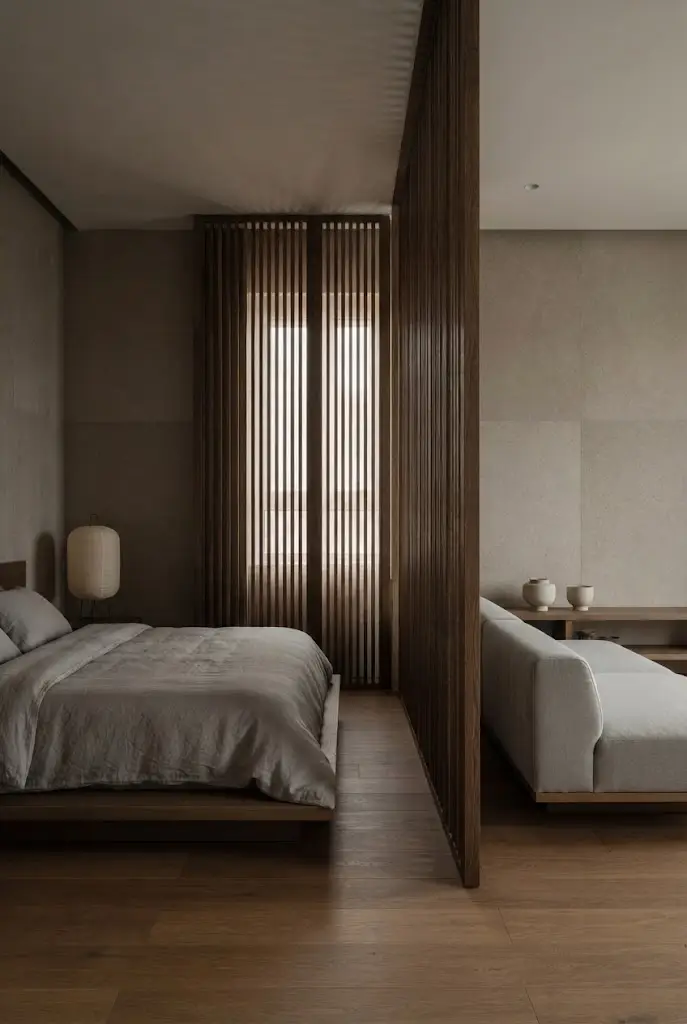
Vertical wood slats can create separation while preserving an open feeling.
Place a slatted panel beside the bed or between the sleeping zone and sofa.
The gaps allow light and sightlines to continue through the apartment.
Warm wood also adds texture, which can make a plain studio feel much more finished.
I have seen this approach work especially well in modern and Japanese inspired interiors.
Keep the surrounding furniture simple so the slatted divider becomes an intentional design feature.
5. Turn a Wardrobe Into a Privacy Wall
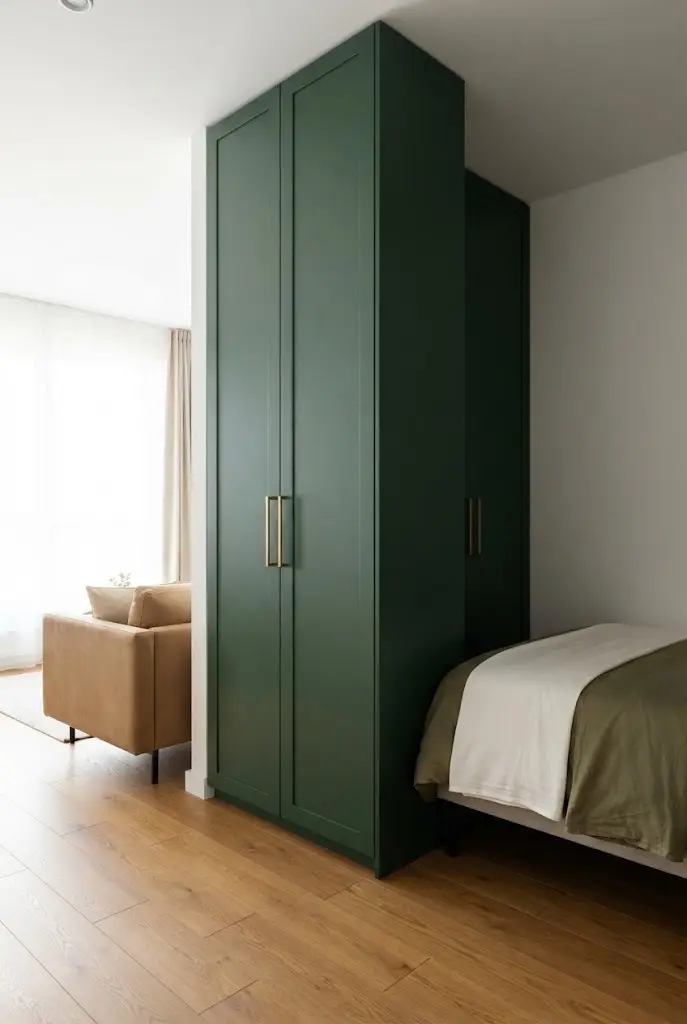
If you need clothing storage, let your wardrobe solve two problems at once.
Place a tall wardrobe beside your bed so it forms a partial wall.
The front can face the bedroom area, keeping clothing easy to reach.
The back or side can help define the living room.
This creates stronger privacy than open shelving and gives valuable floor space a second purpose.
Avoid positioning a large wardrobe directly in front of your main window.
Natural light matters too much in a small studio to sacrifice it unnecessarily.
6. Place a Low Shelf at the Foot of the Bed
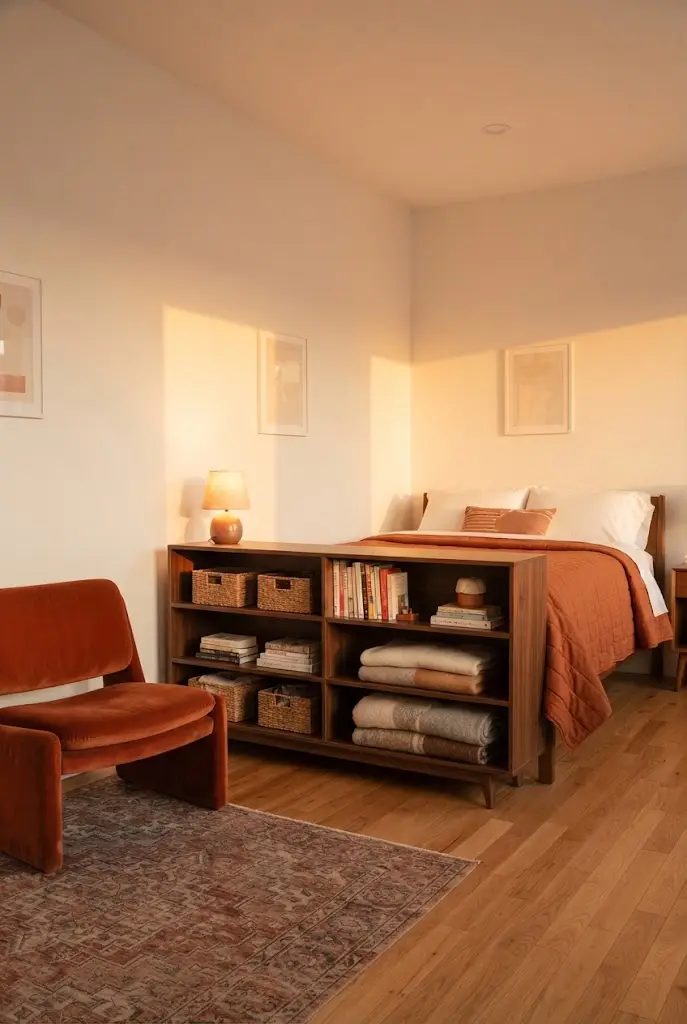
You do not always need a tall divider.
A low bookcase or cube shelf at the foot of the bed can create enough separation to make the sleeping zone feel distinct.
Use the shelves for books, baskets, folded blankets, or shoes.
The top can hold a plant, lamp, or decorative tray.
Because the divider stays below eye level, the apartment still feels visually connected.
This is a great option for very small studios where a full height partition would feel too bulky.
7. Use Plants as a Living Divider
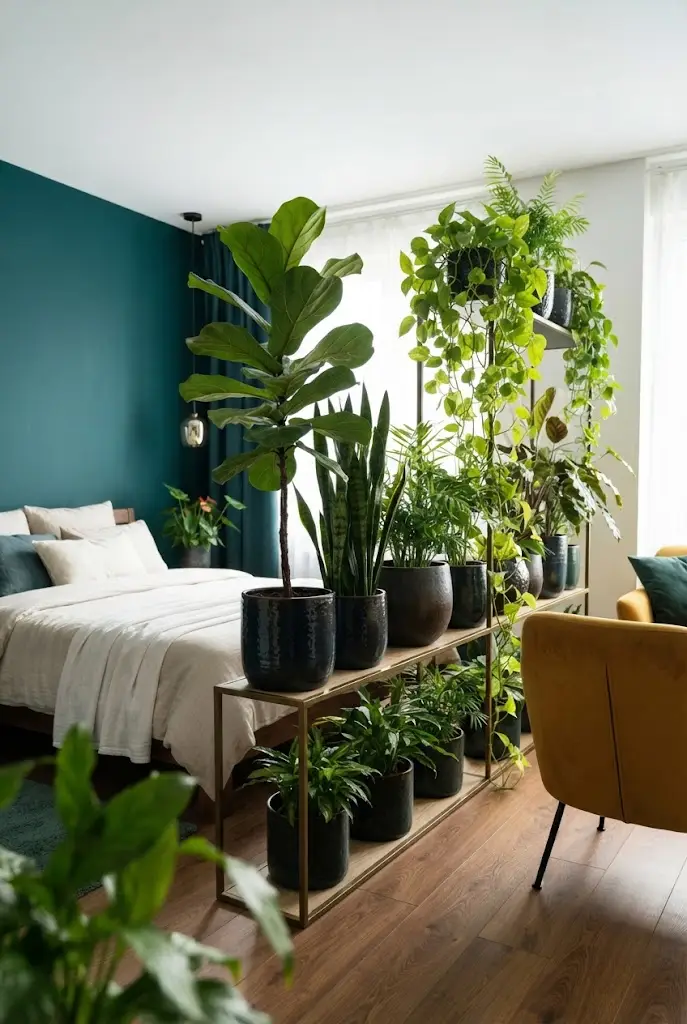
Plants can create privacy while making the apartment feel softer and more inviting.
Place several tall plants between your bed and living area.
You can use a narrow plant stand, open shelving, or a row of large planters.
Mix upright plants with trailing varieties to create different heights.
The greenery gives you a visual screen without the heaviness of a solid wall.
Before choosing plants, think about the amount of natural light in that part of the room.
Healthy plants will always look better than forcing a low light plant into the wrong spot.
8. Separate the Living Room With the Sofa
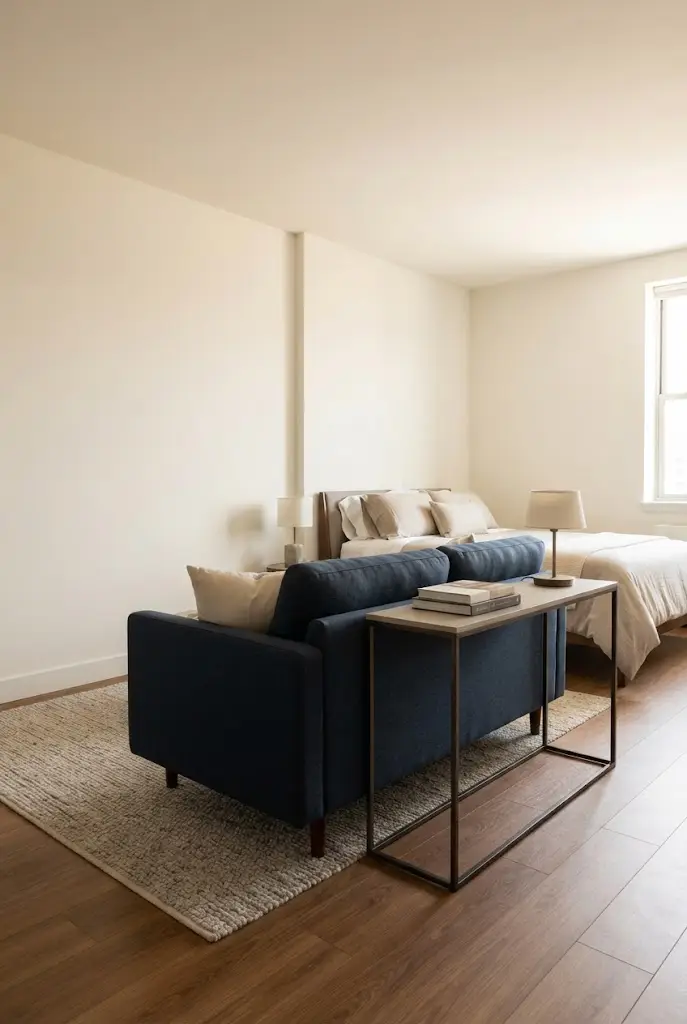
Sometimes the furniture you already own can become the divider.
Turn your sofa so its back faces the bed or dining area.
This instantly creates a clearer living room boundary.
Add a slim console behind the sofa if you want extra storage or a place for lamps and decor.
A rug beneath the sofa can make the zone feel even more defined.
This layout trick costs nothing if you already have the right furniture.
It can completely change how the room feels.
9. Add a Folding Screen for Flexible Privacy
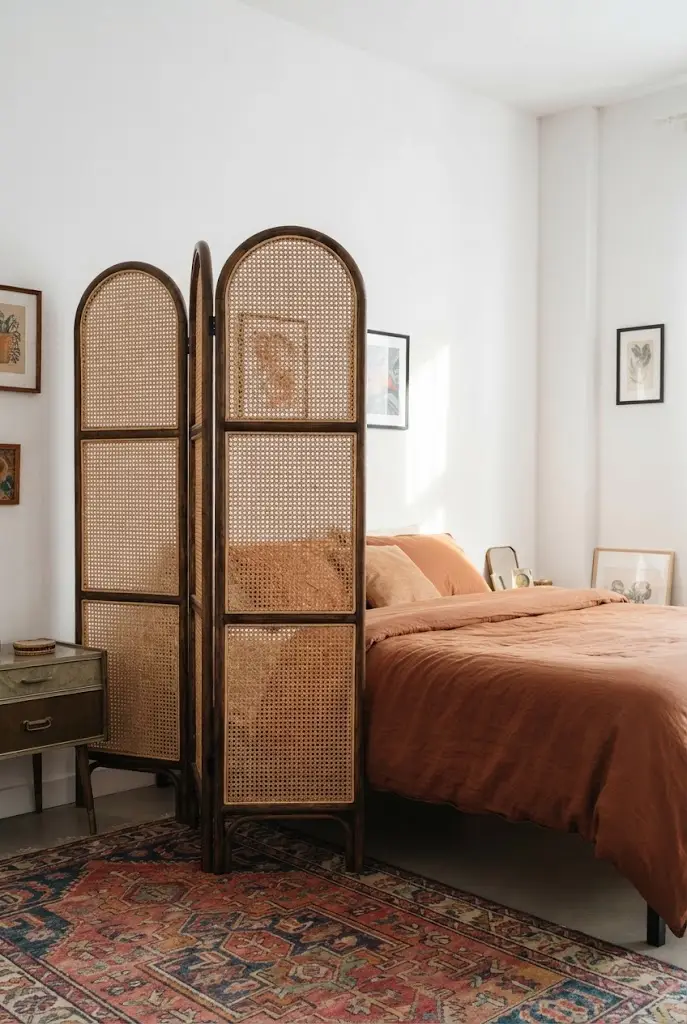
A folding screen is ideal when you want separation that can change throughout the day.
Place it beside the bed when you need privacy.
Fold it away when you want the apartment to feel more open.
Look for designs made from cane, wood, fabric, or woven materials.
A decorative screen can become part of the room instead of looking purely functional.
This is especially useful for renters because it does not require permanent installation.
10. Use Cube Shelving to Create a Bedroom Wall
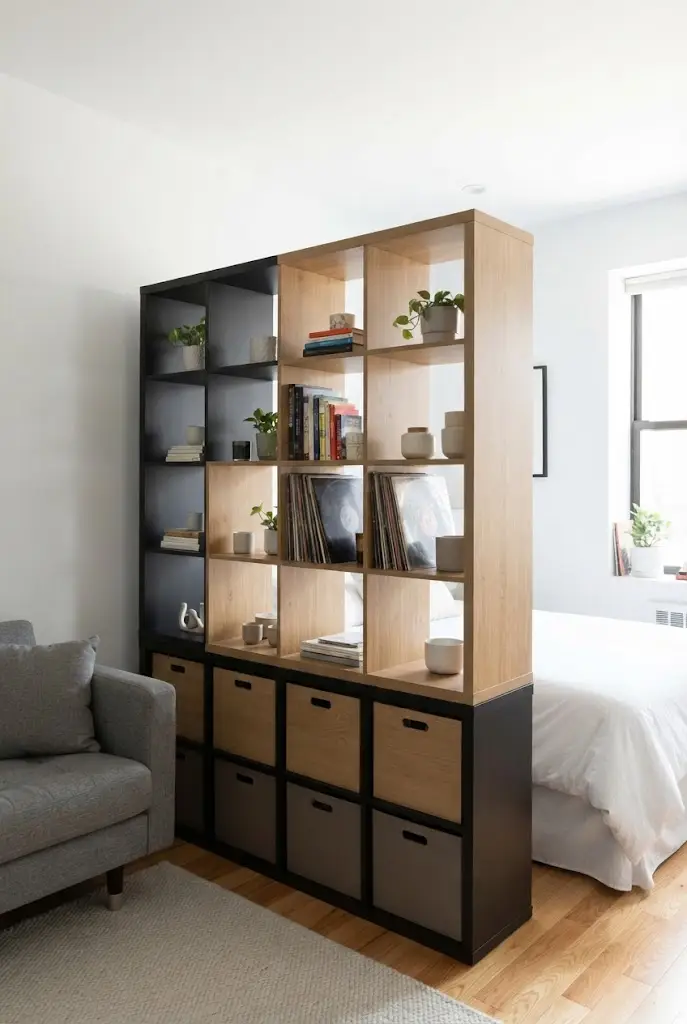
Cube shelving can provide stronger visual separation while adding useful storage.
Position a wide unit between your sleeping and living areas.
Fill the lower compartments with baskets or fabric bins.
Use the upper cubes for books, plants, and decorative pieces.
Keep several cubes open so light can move through.
In my experience, this balance works better than filling every compartment. Too many baskets can turn an airy divider into something that feels almost solid.
11. Create a Mini Entryway With a Divider
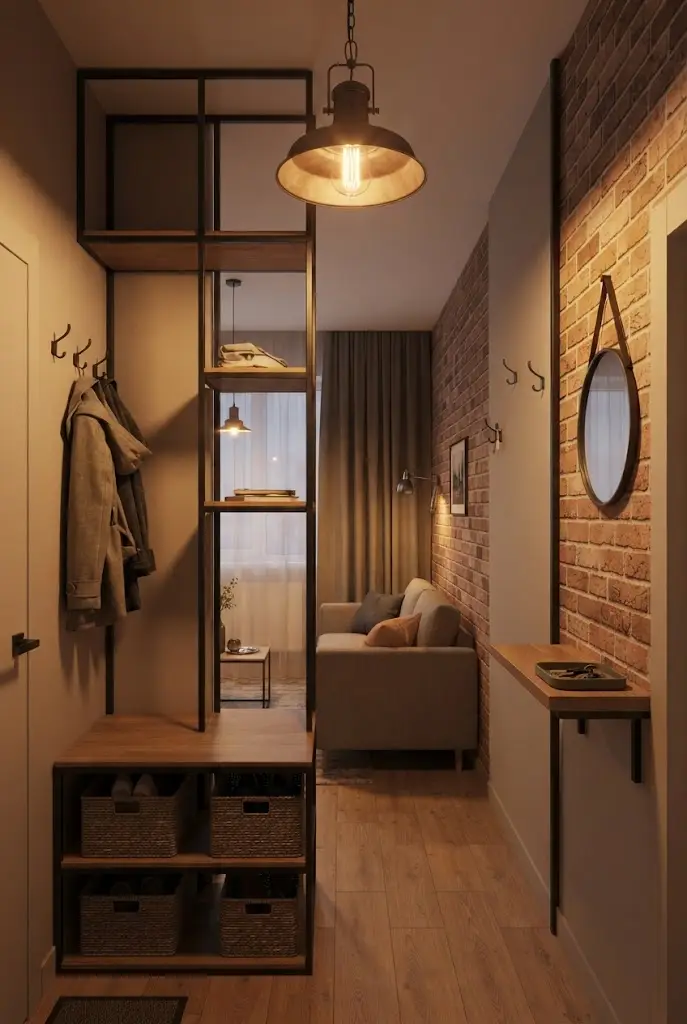
Many studio apartments open directly into the main living space.
A narrow divider near the entrance can create the feeling of a real entryway.
Use slim shelving, a small console, or a partial screen.
Add hooks for bags, a mirror, and a small shoe storage area.
This gives the front door its own zone and prevents the apartment from feeling like you walk straight into the bedroom.
Even a tiny entry area can make a studio feel more complete.
12. Separate Your Desk From the Bed
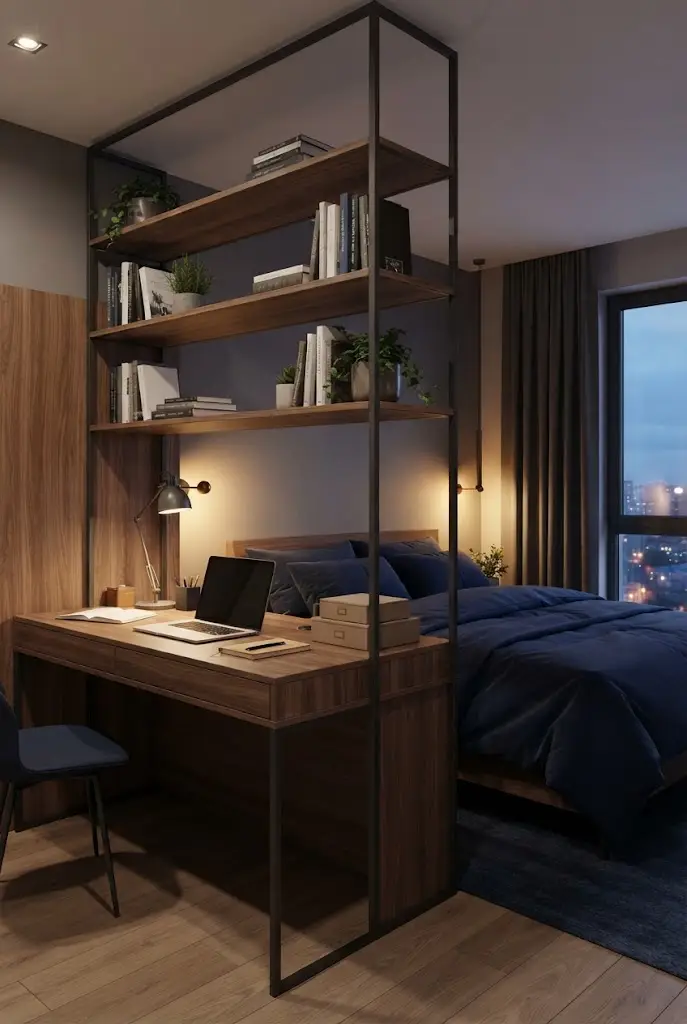
Working beside your bed can make it difficult to switch off at the end of the day.
Create a small boundary around your workspace.
Use open shelving, a narrow screen, or even a tall plant beside the desk.
The goal is not total privacy.
It is simply to make your work area feel visually separate from your sleeping area.
I have noticed that this small distinction can make a studio feel much more organized, especially when work and relaxation happen only a few feet apart.
13. Use a Curtain Behind the Sofa
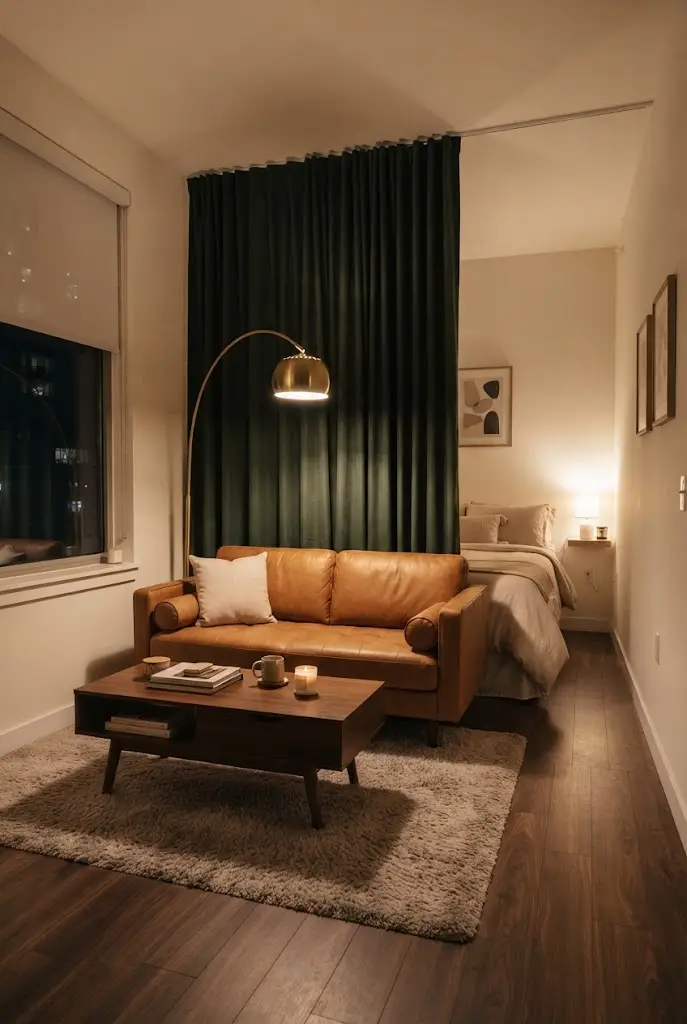
Curtains are not only useful around beds.
A ceiling mounted curtain behind the sofa can divide the living room from another zone without taking up floor space.
Keep the curtain open most of the time.
Close it when you want more privacy or visual separation.
This works beautifully when the bed sits directly behind the living room.
Choose a fabric that feels light enough for the size of the apartment.
A very dark, heavy curtain can make a tiny room feel smaller if used across a large area.
14. Create Zones With Different Rugs
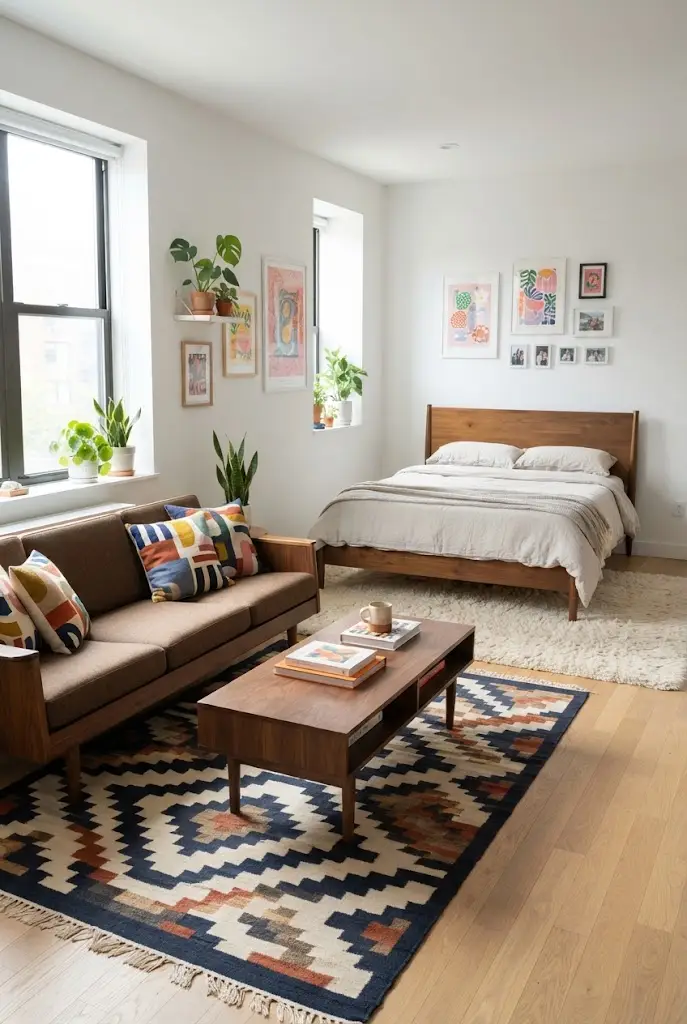
A divider does not always need to stand upright.
Rugs can create invisible boundaries between different areas.
Place one rug beneath the sofa and coffee table to define the living room.
Keep the sleeping area on bare flooring or use a different smaller rug beside the bed.
Your eye naturally reads each rug as its own zone.
This is one of the simplest options if you want the studio to stay completely open while still feeling organized.
15. Add a Half Height Divider With Storage
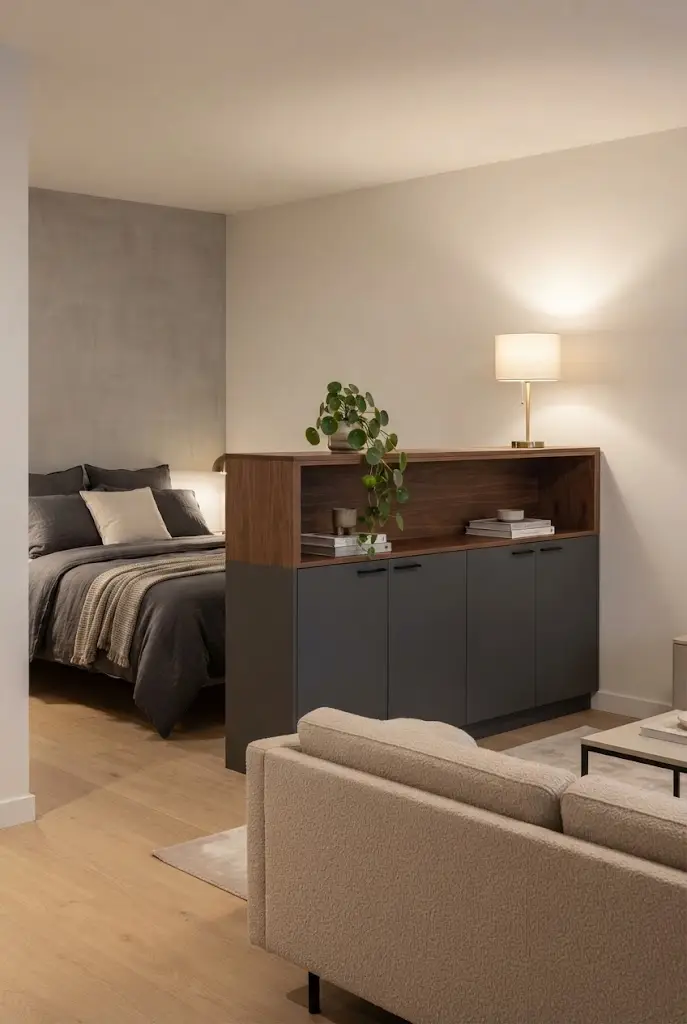
A half height partition can create separation while keeping the top of the room visually open.
Choose a low cabinet, storage unit, or custom half wall with built in shelving.
Use the lower portion for hidden storage.
The top can become a display surface for books, plants, or decorative objects.
This works especially well between a bedroom and living room because it creates privacy at furniture level without blocking daylight.
It can also give the apartment a more architectural feel.
16. Use a Narrow Console to Define the Kitchen
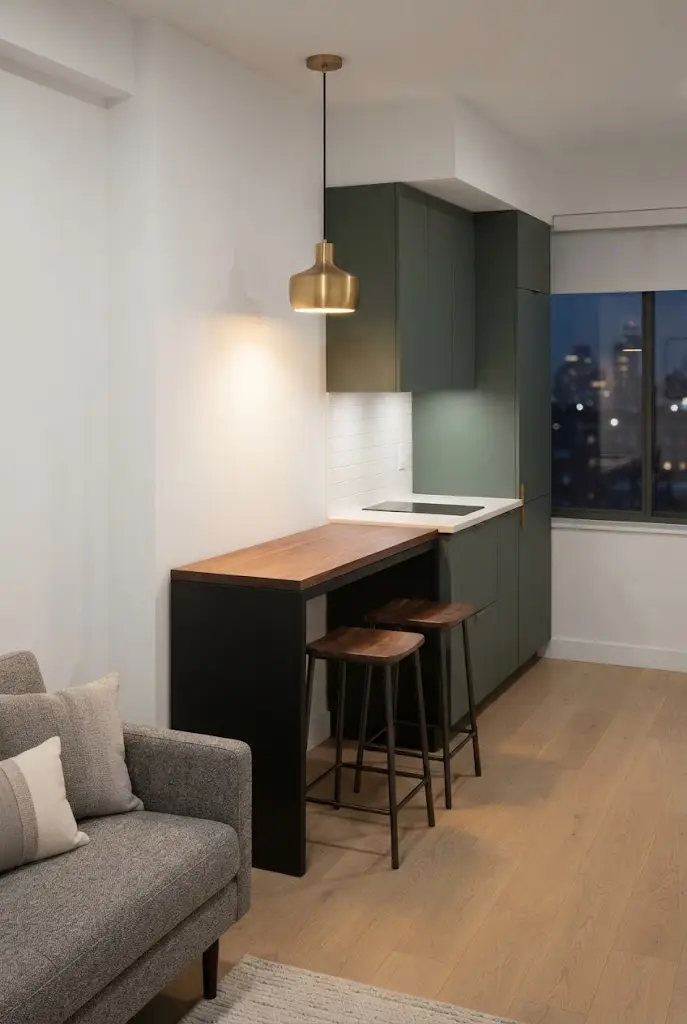
If your kitchen blends directly into the rest of the studio, a slim console or narrow counter can create a subtle boundary.
Place it between the kitchenette and living area.
Use the lower section for kitchen storage.
The top can become extra preparation space, a coffee station, or a casual dining surface.
Add stools that tuck underneath if space allows.
One piece of furniture can then become a divider, storage area, and dining spot all at once.
17. Combine Two Divider Ideas for Better Separation
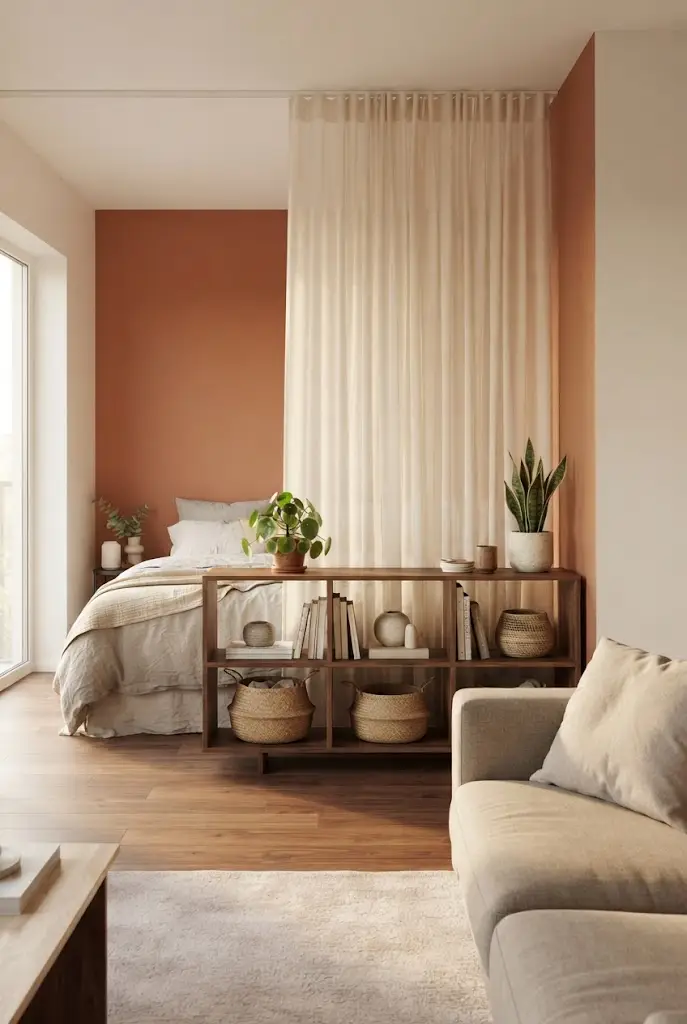
Sometimes one divider is not enough.
You can combine two light solutions instead of using one heavy partition.
For example, place a low bookcase beside the bed and add a curtain above or behind it.
Use plants with open shelving.
Pair a sofa boundary with a large rug.
Combine wood slats with a low storage cabinet.
The result can feel much more natural than installing one large solid wall.
I have found that layered separation often works best in studios because each element performs a small job without overwhelming the room.
How to Choose the Best Divider for Your Studio
Start by deciding what problem you actually want to solve.
Do you need privacy around the bed?
Do you want the living room to feel more defined?
Are you trying to hide your desk after work?
Do you need additional storage?
Your answer should determine the type of divider you choose.
If storage matters most, shelving or cabinets may work best.
If privacy is the priority, curtains or wardrobes provide more coverage.
If light is limited, choose glass, slatted wood, or open shelving.
If flexibility matters, try a folding screen or curtains.
The best solution is the one that makes everyday life easier.
How to Divide a Studio Apartment Without Blocking Natural Light
Natural light can make a small apartment feel much larger.
Avoid putting a solid divider directly between your main window and the rest of the room.
Choose materials that allow light to travel through.
Open shelving, clear glass, slatted wood, sheer curtains, and plants all work well.
Keep taller, heavier storage closer to walls whenever possible.
You can also leave more openings at eye level in a shelving divider.
This helps brightness travel deeper into the apartment.
How Tall Should a Studio Apartment Divider Be?
The right height depends on how much privacy you want.
Low dividers are best for defining areas while keeping the apartment visually open.
Medium height shelving adds stronger separation without cutting off the entire room.
Tall dividers create more privacy around the bed or workspace.
Before choosing something tall, consider the ceiling height and window placement.
A large divider can look beautiful in a spacious showroom but feel overwhelming in a small studio.
Always think about the scale of your actual room.
How to Make a Divider Look Intentional
A divider should feel like part of your decor.
Repeat materials and colors already used elsewhere in the apartment.
If your furniture includes warm wood, choose a divider in a similar tone.
If your room has black accents, a slim black framed glass panel may feel connected.
Use plants, baskets, books, and decor that relate to the rest of your styling.
The goal is to make the divider look like it belongs there instead of appearing as an object placed randomly in the middle of the room.
Common Divider Mistakes That Make a Studio Feel Smaller
The biggest mistake is choosing something too large.
A divider may create privacy, but it should not make your walkway uncomfortable.
Another mistake is blocking the only major source of daylight.
Too much visible storage can also make the apartment feel cluttered.
If you use open shelving, resist the urge to fill every compartment.
Finally, think about both sides.
A divider may look beautiful from the living room but unfinished from the bedroom.
Choose pieces that work visually from every angle.
Make One Room Feel Like Two Without Building a Wall
A studio apartment does not need permanent walls to feel organized.
The right divider can give your bed more privacy, make your living room feel like a real room, create a dedicated workspace, or even form a small entryway.
The smartest studio apartment divider ideas protect light, preserve comfortable walkways, and give each part of the room a clear purpose.
Start with the area that bothers you most.
Maybe your bed feels too exposed.
Maybe your sofa seems to float in the middle of the room.
Maybe work has taken over your relaxation space.
Choose one simple divider that solves that problem first.
When each zone has a clear purpose, one open room can begin to feel like two without sacrificing the spacious feeling that makes studio living appealing.
Read More:
17 Open Shelf Divider Ideas for Studio Apartments That Add Storage and Style
18 Studio Apartment Fall Decorations 2026 That Make Small Spaces Feel So Cozy
Community
Join the conversation
Add a useful idea, ask a specific question, or share what worked in your space. Every comment is reviewed before it appears.