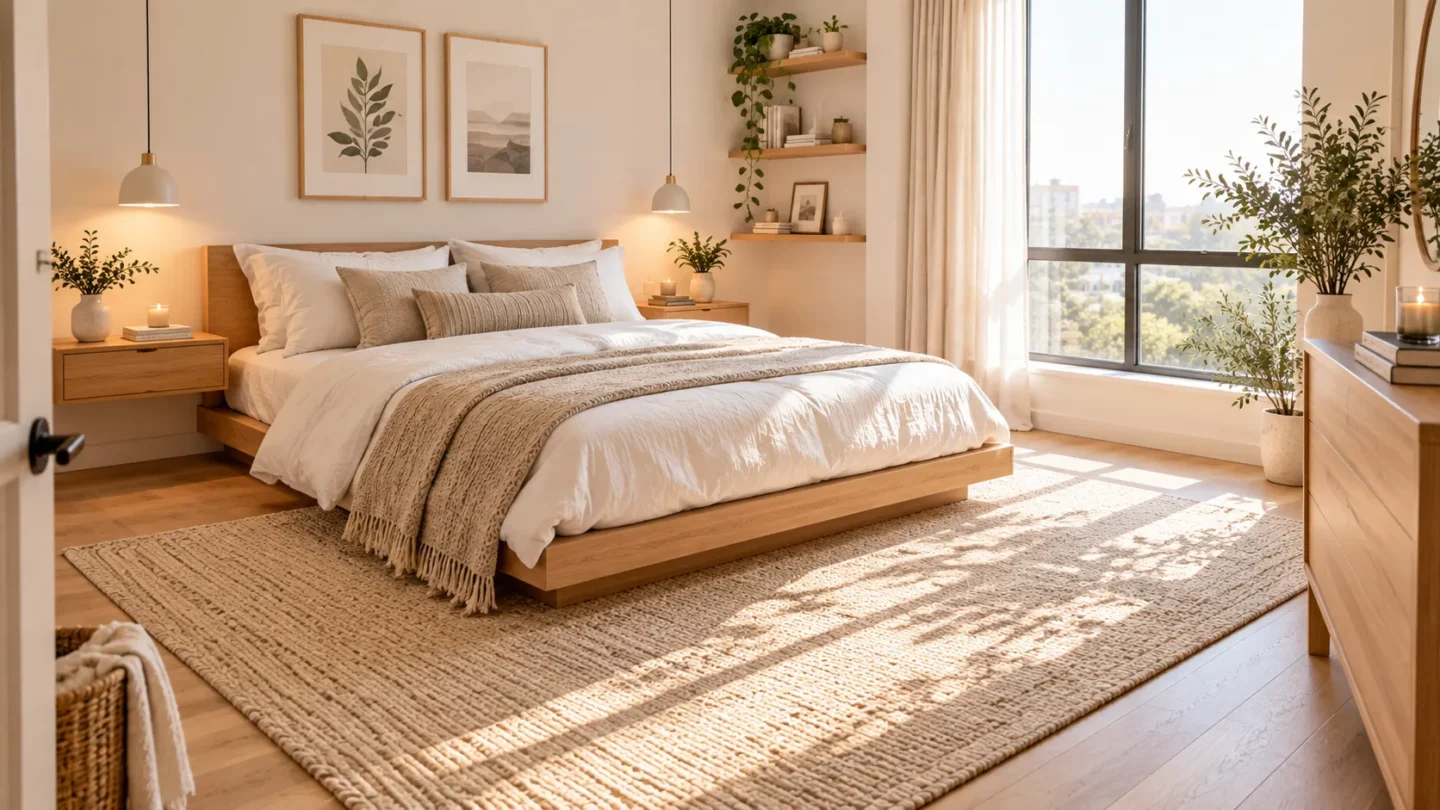
Finding clever ways to style compact quarters can feel overwhelming when floor space is strictly limited. Choosing the right studio bedroom rug ideas makes all the difference in turning a cramped room into a cozy, functional sanctuary. I’ve noticed that many homeowners struggle with cold flooring and awkward layouts that make tight areas feel uninviting.
This comprehensive guide addresses those exact challenges by showcasing nineteen stunning floor styling inspirations designed to visually expand small spaces. In my experience, even the smallest textile upgrade brings immense warmth and personal character to bare floors. Readers will gain practical design solutions that instantly elevate daily comfort while maximizing every single square inch. Dive into these curated concepts to discover how effortless texture pairing can completely revitalize your home environment.
1. Layered Neutral Textures
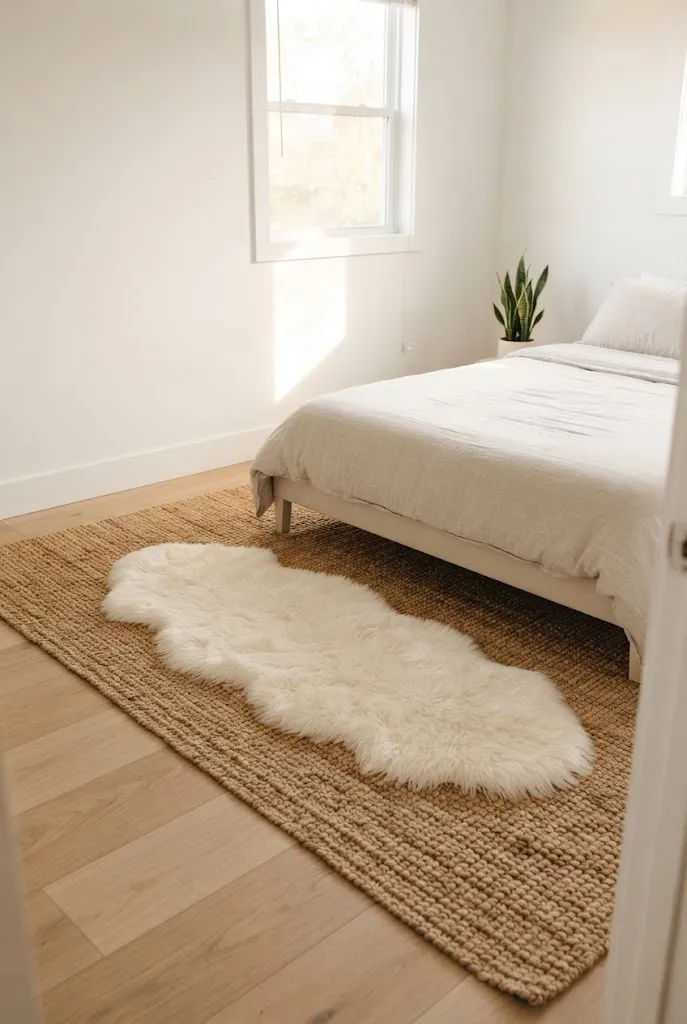
- Soft woven jute base topped with a plush cream faux-fur runner to add dimension.
- Perfect for breaking up plain hardwood floors without overwhelming a compact floor plan.
- Adds instant tactile contrast while keeping the overall color palette bright and open.
- Protects high-traffic walkways from everyday wear while maintaining a cozy atmosphere.
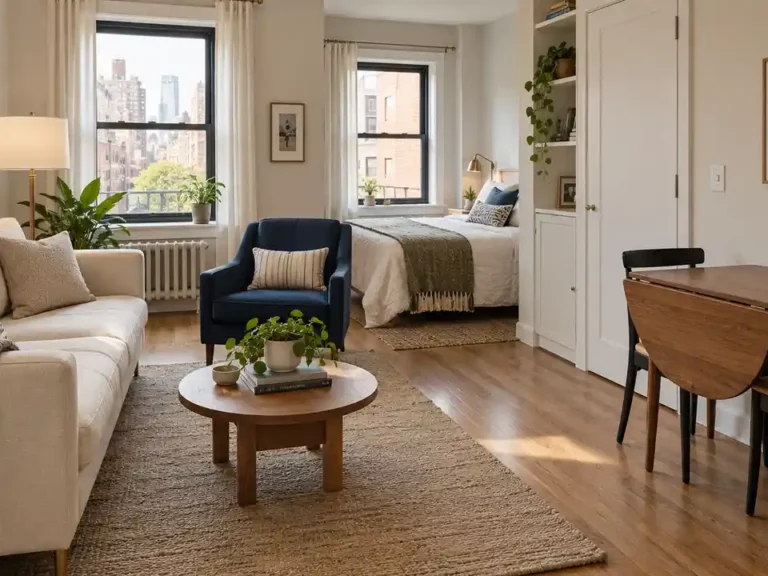
This layered approach creates incredible depth in cramped layouts by combining contrasting weaves and materials that catch the natural light beautifully. I’ve noticed that placing a smaller textured piece over a larger flat-woven jute foundation instantly makes tiny rooms feel intentional and deeply styled.
This clever setup draws the eye downward, tricking the mind into perceiving more width and openness than actually exists. Homeowners struggling with cold, uninviting flooring will appreciate how effortlessly this soft combination changes the entire mood of the room without crowding the walking paths.
Grounding your sleeping quarters with mixed textile layers offers a practical way to anchor a floating bed frame or a compact seating nook. That’s why many designers recommend pairing rough natural fibers with ultra-soft synthetic fleece to achieve balance.
This tactile upgrade softens sharp furniture angles and provides a comforting surface for bare feet on chilly mornings. Anyone seeking an affordable spatial makeover will find that mixing flat weaves with high-pile accents delivers high-end visual impact immediately. The resulting composition looks effortlessly curated while keeping upkeep remarkably simple for busy daily lifestyles.
2. Oversized Monochromatic Weave
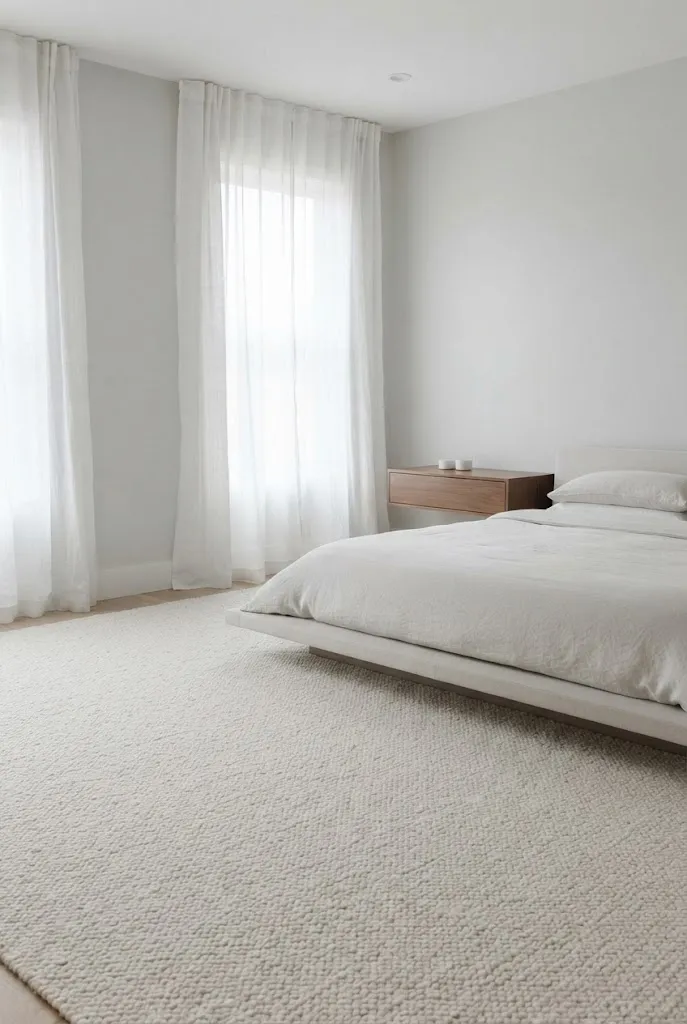
- Large cream-colored area textile that extends underneath the nightstands to trick the eye.
- Visually expands tight perimeters by refusing to chop up the floor space.
- Creates a seamless foundation that makes heavy furniture pieces look lighter.
- Minimizes visual clutter by keeping color transitions subtle and cohesive.
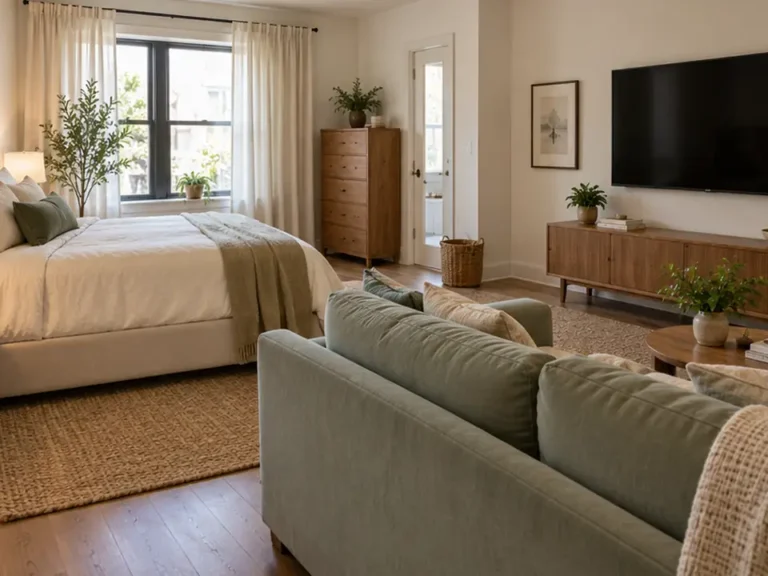
Choosing a massive single-tone floor accent completely alters how boundaries are perceived in cramped quarters by eliminating harsh visual cutoffs. In my experience, scaling up the foundation textile rather than shrinking it is the ultimate secret weapon for small layouts.
When the textile extends well past the furniture edges, the room instantly breathes and feels twice its actual size. This strategy works wonders for anyone wanting a clean, serene sanctuary that photographs beautifully from every possible interior angle.
Selecting a quiet, neutral hue prevents the room from feeling busy or overwhelming when square footage is strictly limited. I’ve tried various layout configurations, and keeping the floor covering unified with the surrounding walls creates uninterrupted horizontal flow.
This seamless design trick hides awkward floor quirks while providing a luxurious cushion underfoot. Anyone hoping to achieve a high-end minimalist aesthetic will benefit immensely from letting a single large, subtle textile anchor the entire composition without competing with decorative accents.
3. Vintage Distressed Runner
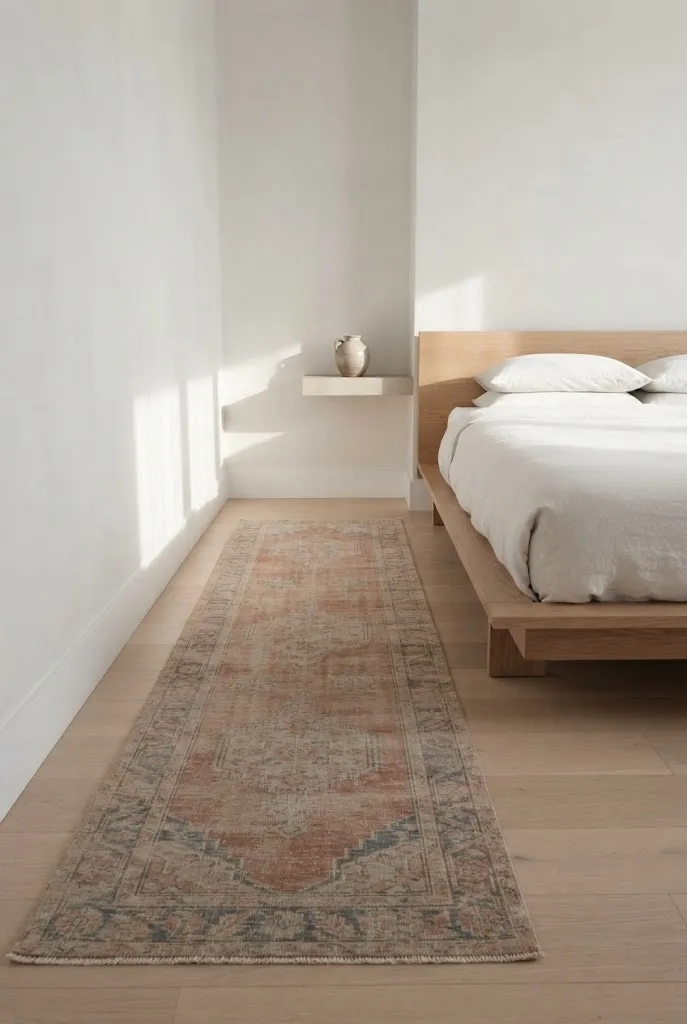
- Long narrow faded pattern runner placed neatly alongside a platform bed frame.
- Introduces subtle color and historic character without overwhelming tiny footprints.
- Fits snugly into narrow side walkways where standard square textiles fail to work.
- Hides minor everyday wear while adding effortless bohemian charm to the room.
Stretching a narrow, vintage-inspired runner down the side of a tight layout introduces rich character and historic charm instantly. I’ve seen this work well in many homes where traditional square options feel blocky and awkward. The elongated shape guides the eye naturally through the layout, creating a pleasant sense of progression and flow. This approach suits anyone looking to inject personality into a rental property or neutral space without committing to permanent architectural changes.
Faded motifs and muted color palettes prevent small floors from looking chaotic or visually heavy. That’s why many designers recommend distressed patterns that look like cherished family heirlooms found in European flea markets. The worn-in texture adds immediate warmth, making a brand-new space feel lived-in and deeply welcoming. Homeowners dealing with awkward layouts will find that a narrow horizontal runner solves tricky spatial gaps with absolute ease and timeless style.
4. Round Jute Accent
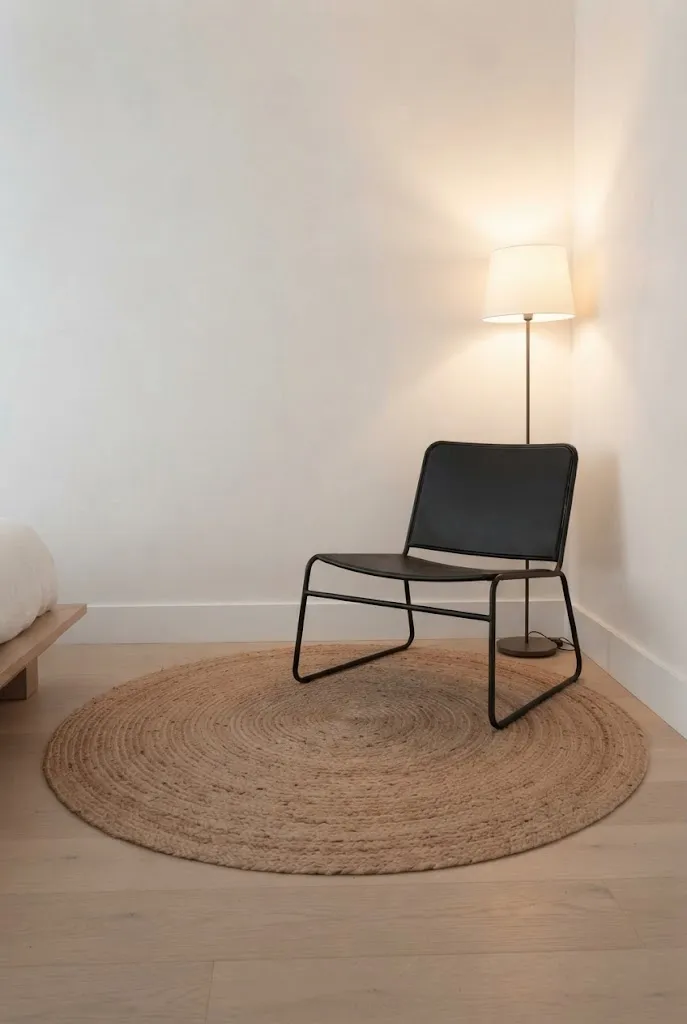
- Circular woven fiber circle placed gracefully beneath a reading chair corner.
- Breaks up the rigid boxy lines created by standard walls and rectangular furniture.
- Adds natural earthy texture while maintaining an open, breathable floor plan.
- Defines a cozy reading nook without taking up valuable visual real estate.
Curving lines play a vital role in softening the harsh, boxy geometry typical of modern compact apartments and rooms. I’ve noticed that introducing a circular natural fiber element instantly relaxes the atmosphere of a stiff or cramped layout. The organic shape disrupts predictable grid patterns, making the environment feel more fluid and welcoming. This simple design shift is ideal for anyone wanting to create a distinct relaxation zone without crowding the central floor space.
Natural woven textures bring an earthy, grounded quality that balances out sleek modern furniture pieces and smooth walls. In my experience, a round organic accent anchors standalone seating arrangements with remarkable grace and minimal visual weight. The fibrous weave adds subtle tonal variation while standing up wonderfully to heavy daily use. Anyone looking to upgrade an underutilized corner will appreciate how a simple circular design element transforms dead space into a stylish retreat.
5. Plush High Pile Shag
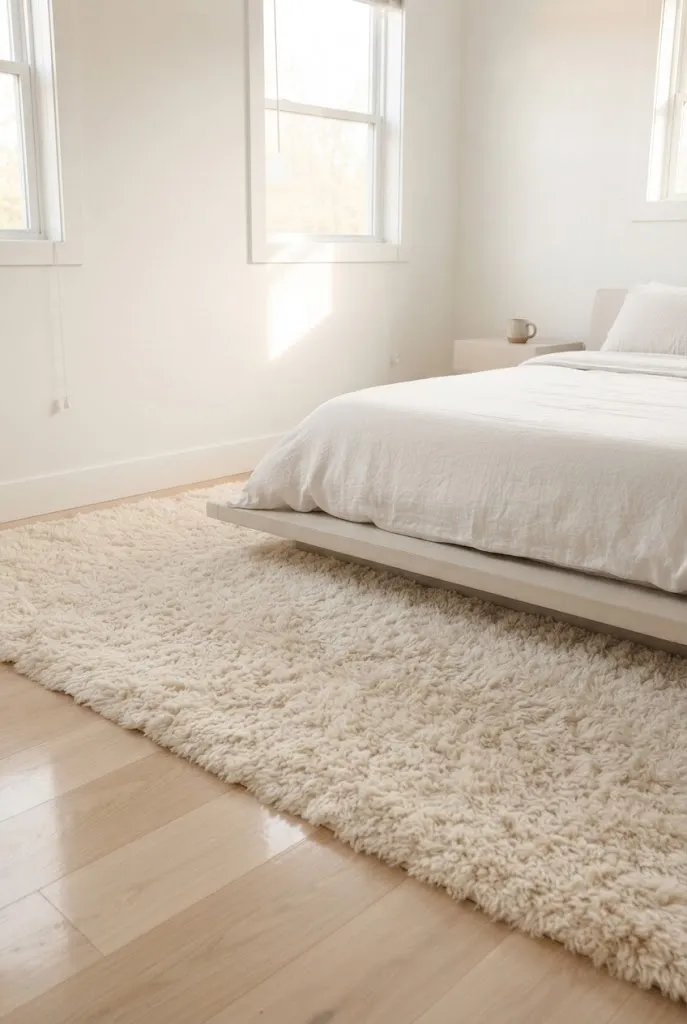
- Deep, sink-in shaggy texture that delivers unmatched comfort for bare feet.
- Instantly warms up cold laminate or tile flooring in modern apartments.
- Adds rich tactile dimension that breaks up flat, monochromatic color schemes.
- Creates a cozy, inviting focal point right beside the sleeping area.
Stepping onto an ultra-plush, high-pile floor covering transforms an ordinary morning routine into a luxurious daily ritual. I’ve noticed that adding deep texture to a compact bedroom immediately shifts the atmosphere from stark to snug. The thick fibers absorb sound, making small quarters feel remarkably quiet, private, and peaceful. Homeowners seeking instant comfort will find that this soft underfoot upgrade provides maximum sensory payoff without requiring any major layout changes.
Balancing heavy shag textures requires keeping surrounding furnishings streamlined and low to the ground. That’s why many designers recommend pairing fluffy high-pile textiles with sleek metal or light wood bed frames. This deliberate contrast prevents the room from feeling overly heavy or visually crowded. Anyone dealing with echoey, modern interiors will appreciate how effectively thick woven materials soften the acoustics and warm up the entire aesthetic.
6. Geometric Monochrome Flatweave
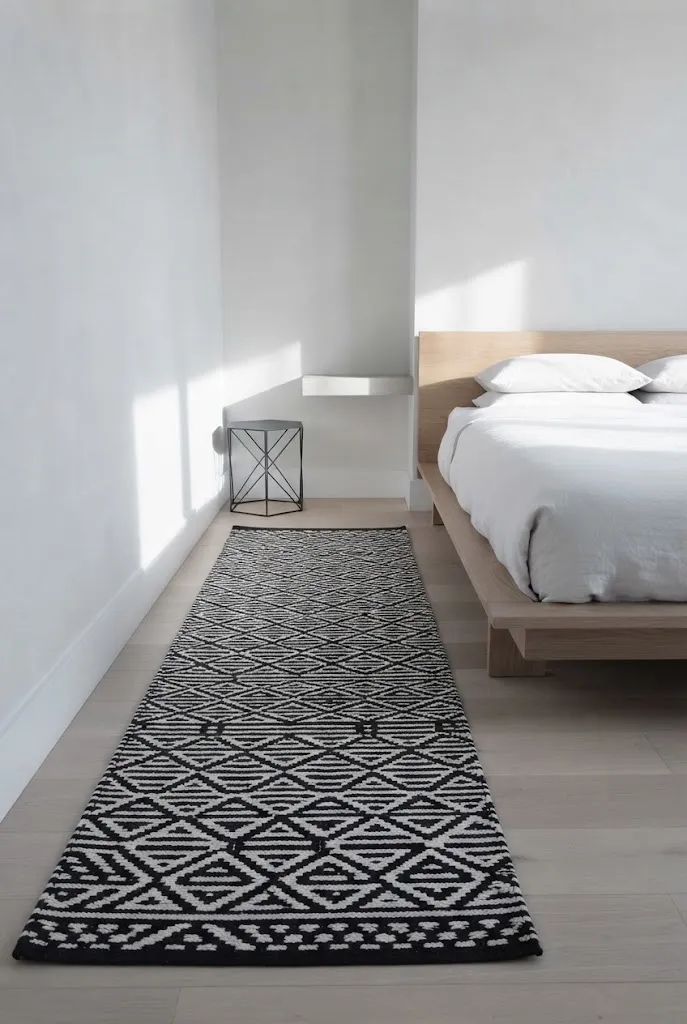
- Bold black and white geometric pattern that adds modern graphic punch.
- Flat-woven construction makes it exceptionally easy to slide chairs or doors over.
- Creates the illusion of a wider floor plan through striking optical lines.
- Low-profile design resists curling edges in narrow walkways.
Introducing sharp graphic lines through a flat-woven floor covering injects instant modern energy into neutral quarters. In my experience, bold patterns work wonders in tiny rooms by drawing the eye outward and creating dynamic visual movement.
The flat profile keeps the space looking tailored, crisp, and entirely clutter-free. This smart styling choice suits anyone looking to refresh a sterile rental without painting walls or replacing permanent fixtures.
Balancing high-contrast patterns requires keeping the rest of the bedroom decor understated and calm. I’ve tried pairing striking monochrome floor accents with solid neutral bedding and simple wooden furniture to maintain harmony. The subtle interplay between pattern and plain surfaces stops the eyes from feeling overwhelmed. Anyone wanting a contemporary, designer-inspired look on a budget will love how effortlessly a crisp geometric accent elevates the space.
7. Fringed Boho Border
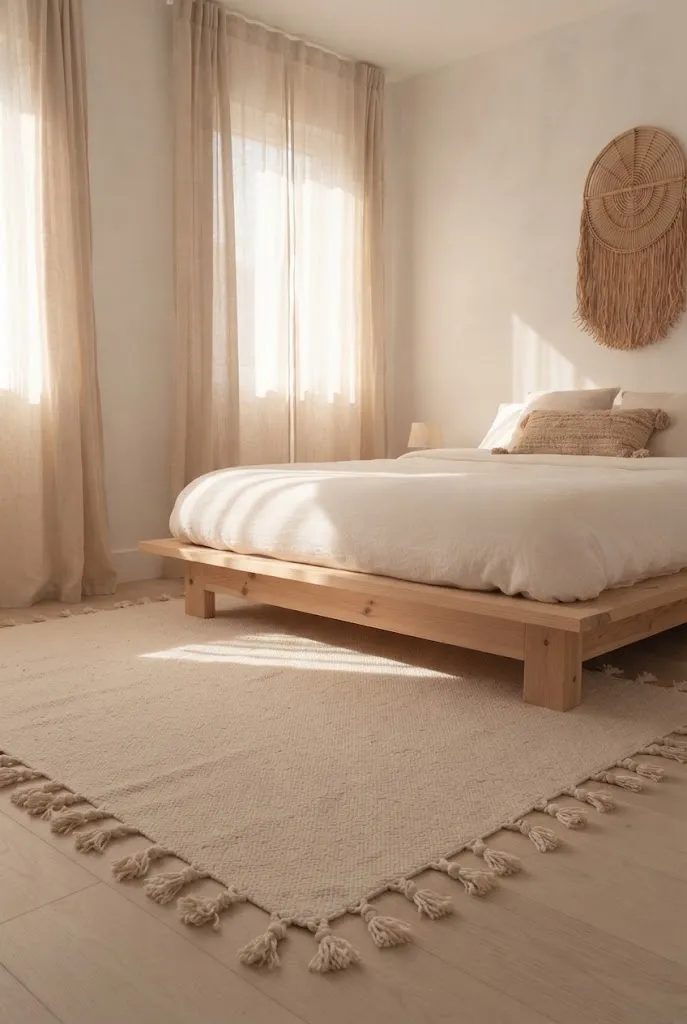
- Playful tassel fringe detailing that adds relaxed, bohemian charm to the room.
- Muted earth-toned fibers blend seamlessly with natural wood and linen accents.
- Softens rigid room perimeters with casual, unforced texture and movement.
- Anchors the lower half of the bedroom layout with subtle visual weight.
Embracing relaxed textile details brings an effortless, lived-in warmth that makes tiny quarters feel deeply personal. That’s why many designers recommend subtle fringe accents for breaking up uniform flooring without creating visual chaos. The delicate tassels add a touch of handcrafted artistry that elevates basic room foundations instantly. Anyone drawn to casual, free-spirited aesthetics will find that this charming touch breathes life into an otherwise plain layout.
Styling fringed edges calls for pairing them with breathable natural materials like cotton, rattan, and unfinished wood. I’ve noticed that keeping the color palette grounded in warm sand and terracotta tones enhances the cozy boho atmosphere. This thoughtful material combination builds a cohesive, soothing environment designed for ultimate relaxation. Homeowners looking to soften modern architectural lines will appreciate how friendly and welcoming this textured option feels.
8. Terracotta Warmth Accent
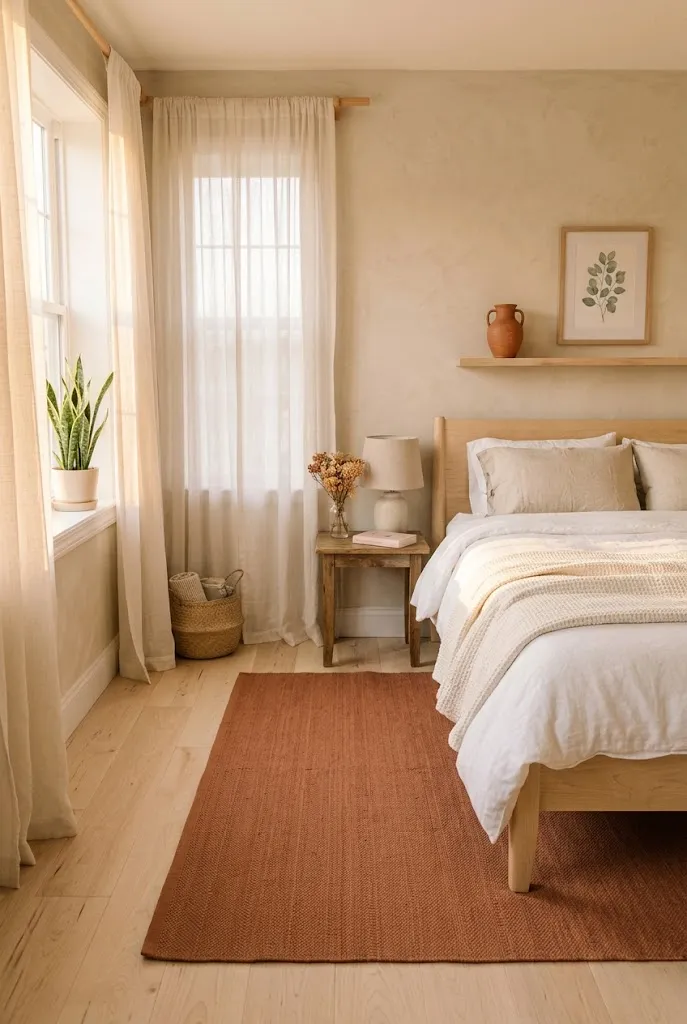
- Rich rust and terracotta tones that inject immediate warmth and earthy depth.
- Acts as a grounding color anchor for neutral walls and minimalist furniture.
- Creates a cozy focal point that draws the eye across the floor plan.
- Adds rich autumnal color without overpowering small square footage.
Infusing rich earthy tones into a neutral layout establishes a welcoming focal point that anchors the entire room. In my experience, warm rust and terracotta shades prevent small spaces from feeling cold, sterile, or uninviting. The deep pigment adds sophisticated color while keeping the overall aesthetic grounded and natural. This targeted pop of color is ideal for anyone wanting to experiment with warm hues without painting accent walls.
Balancing a saturated floor textile requires keeping surrounding large furniture pieces light and airy. I’ve seen this work well in many homes where pale oak floors and white bedding need a dose of rich contrast. The warm hue brings an organic, sun-baked quality that transforms the mood of the entire sleeping quarters. Anyone seeking a cozy, grounded sanctuary will find that rich earth tones deliver incredible visual richness.
9. Chunky Cable Knit
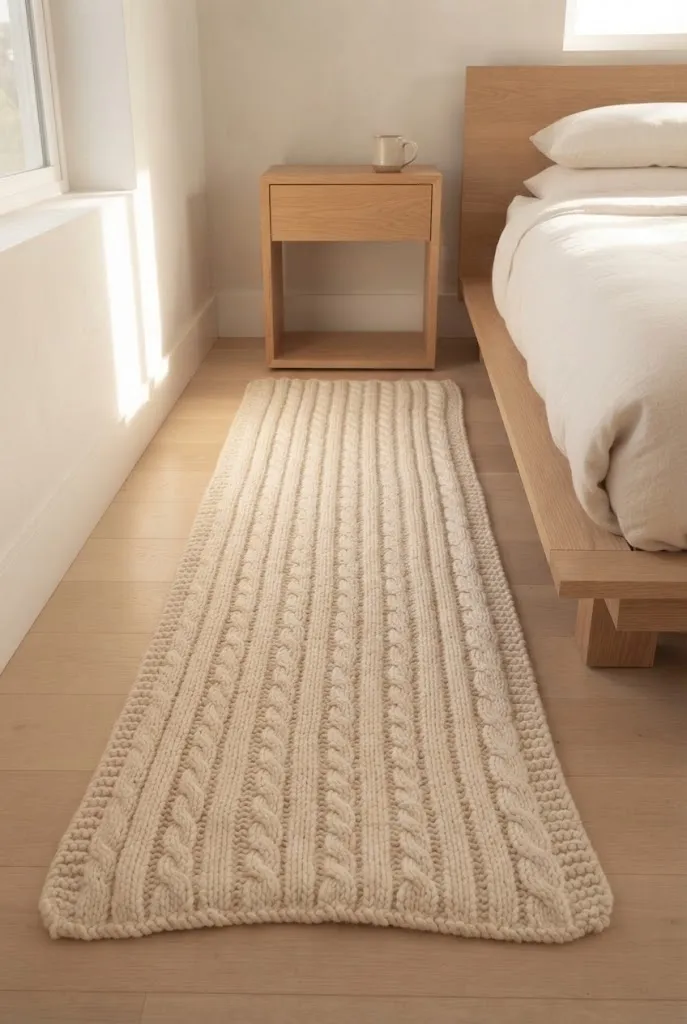
- Thick woolen cable-knit texture that resembles your favorite winter sweater.
- Adds incredible tactile richness and physical warmth to cold morning floors.
- Creates a charming focal point in ultra-compact sleeping quarters.
- Softens sleek modern furniture with classic, handcrafted charm.
Introducing classic knit textures to your floor layout brings an instant sense of homey comfort and nostalgic charm. That’s why many designers recommend tactile wool weaves for breaking up clinical, hard-surface flooring in modern apartments. The chunky pattern creates a rich visual relief that begs you to kick off your shoes and relax. Anyone striving to make a tiny guest room or studio layout feel deeply personal will love how comforting this heavyweight textile feels underfoot.
Balancing a heavy knit design requires keeping the surrounding color scheme simple and cohesive. In my experience, sticking to monochromatic ivory or soft oat shades prevents the intricate pattern from overwhelming the room. The subtle dimensionality catches morning light in gorgeous ways, adding quiet elegance without shouting for attention. Homeowners dealing with stark, minimalist architecture will find that traditional cable weaves instantly infuse soul and character into the space.
10. Abstract Line Art
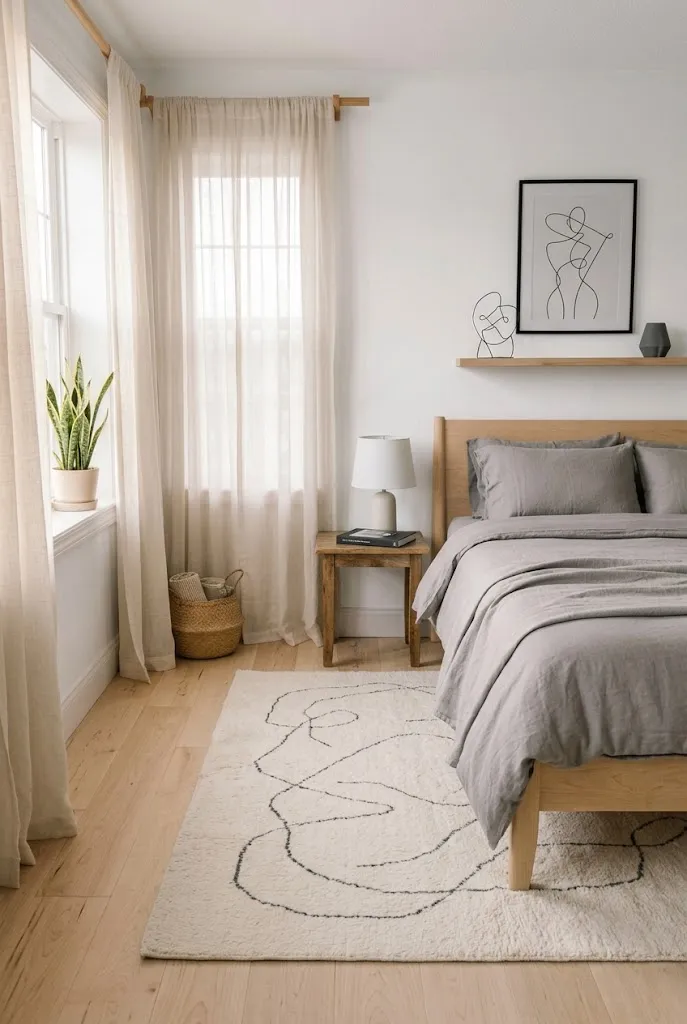
- Contemporary continuous line drawing pattern that brings gallery-style elegance.
- Subtle charcoal motifs on an ivory background keep the small space feeling open.
- Adds artistic flair without introducing chaotic colors or busy visual clutter.
- Complements modern minimalist furniture and sleek metallic accents effortlessly.
Elevating a basic floor plan with artistic line work introduces sophisticated gallery vibes into compact quarters. I’ve noticed that minimalist abstract motifs provide just enough visual interest without shrinking the perceived floor space. The graceful, sweeping curves guide the eye gently across the room, creating a seamless sense of flow. This artistic choice suits anyone wanting a modern, curated look that feels intentional rather than overly decorated.
Pairing linear patterns with plain, solid-colored bedding allows the floor art to shine as the statement piece. I’ve tried incorporating simple black wire accents and neutral linens to echo the sophisticated lines of the textile. This restrained approach keeps the overall environment calm, balanced, and visually breathable. Anyone looking to upgrade a rental property with creative flair will appreciate how a simple abstract motif transforms the floor into a canvas.
11. Soft Pastels Blend
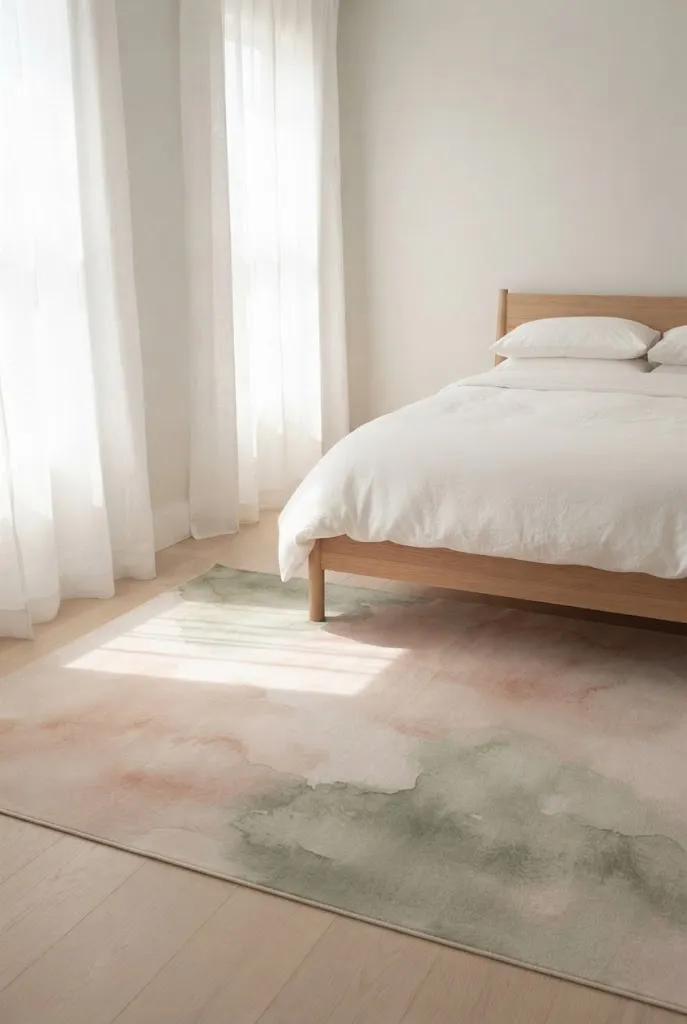
- Gentle blush and sage watercolor tones that introduce calming color accents.
- Lifts the mood of a dark or north-facing bedroom with airy brightness.
- Blends harmoniously with light wood tones and white linen fabrics.
- Adds a soothing, dreamlike quality that promotes relaxation and rest.
Infusing soft watercolor hues into your sleeping quarters creates an immediate sanctuary dedicated to peace and restoration. In my experience, muted pastel shades work magic in small rooms by reflecting light and expanding the visual boundaries. The gentle color transition adds personality without overwhelming delicate square footage. This subtle approach is ideal for anyone wanting a dreamy, soothing escape from the hectic pace of daily life.
Styling pastel floor coverings calls for pairing them with natural organic textures like raw linen and pale timber. That’s why many designers recommend keeping accessories minimal to let the calming watercolor tones take center stage. The result is a light, breezy atmosphere that feels effortlessly fresh and rejuvenating every single morning. Homeowners seeking a gentle color refresh will find that muted pastels deliver beauty without visual weight.
12. Faded Persian Medallion
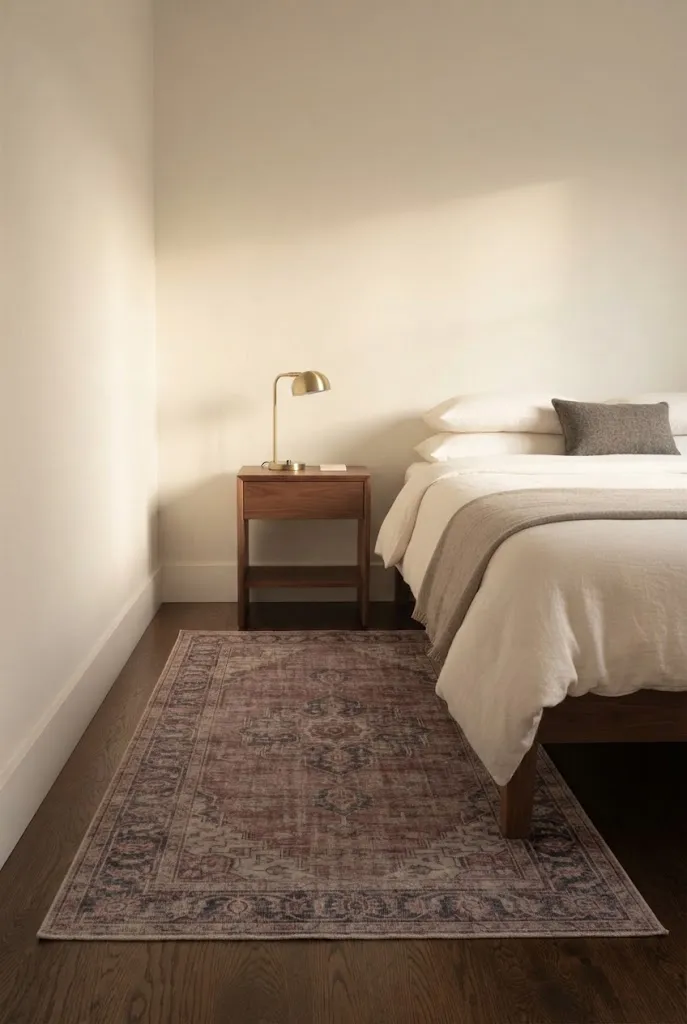
- Timeless distressed medallion pattern that introduces classic antique elegance.
- Muted jewel tones offer rich character without overpowering small layouts.
- Low-pile construction ensures doors swing smoothly over the fabric surface.
- Blends traditional heritage style seamlessly with modern minimalist furnishings.
Bringing classic heritage patterns into a compact room adds instant depth, history, and sophisticated charm. I’ve seen this work well in many homes where brand-new furniture needs a touch of soul and collected-over-time character.
The intricate faded medallion design draws the eye inward, creating a stunning focal point on an otherwise plain floor. This style choice is perfect for anyone who loves traditional aesthetics but needs something scaled for smaller spaces.
Balancing ornate traditional patterns requires keeping surrounding decor clean, streamlined, and uncluttered. I’ve noticed that pairing faded antique-style textiles with modern platform beds creates a gorgeous, high-end tension.
The contrast prevents the room from feeling stuffy while celebrating the rich beauty of historical motifs. Anyone wanting to add refined elegance to a modest bedroom layout will find that muted Persian designs offer timeless appeal.
13. Scandi Wool Loop
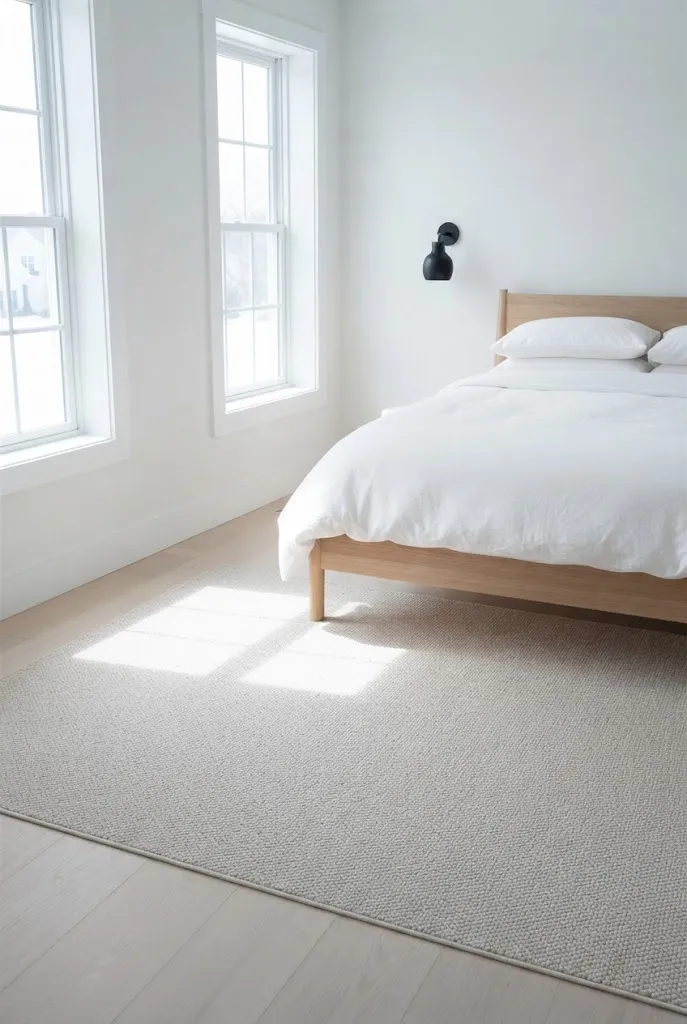
- Tight, natural wool loop construction that offers incredible durability.
- Clean, unpretentious Scandinavian aesthetic that keeps small rooms looking open.
- Resists crushing under heavy furniture legs in compact layouts.
- Provides a clean, understated backdrop for expressive accent pillows.
Embracing clean Nordic design principles helps maximize the feeling of space in tightly proportioned sleeping quarters. In my experience, tight wool loops provide a crisp, tailored foundation that never looks bulky or cluttered. The natural fibers offer exceptional resilience against everyday foot traffic while maintaining a pristine appearance. This minimalist approach suits anyone wanting a timeless, clutter-free environment inspired by Scandinavian simplicity and function.
Pairing structured wool loops with light birch wood furniture and neutral linens enhances the airy atmosphere. That’s why many designers recommend keeping floor coverings uniform and light when working with limited square footage. The subtle texture adds tactile interest without disrupting the calm, cohesive visual flow of the room. Anyone aiming for an effortless, modern sanctuary will find that natural looped wool delivers unmatched longevity and style.
14. Contrast Border Border
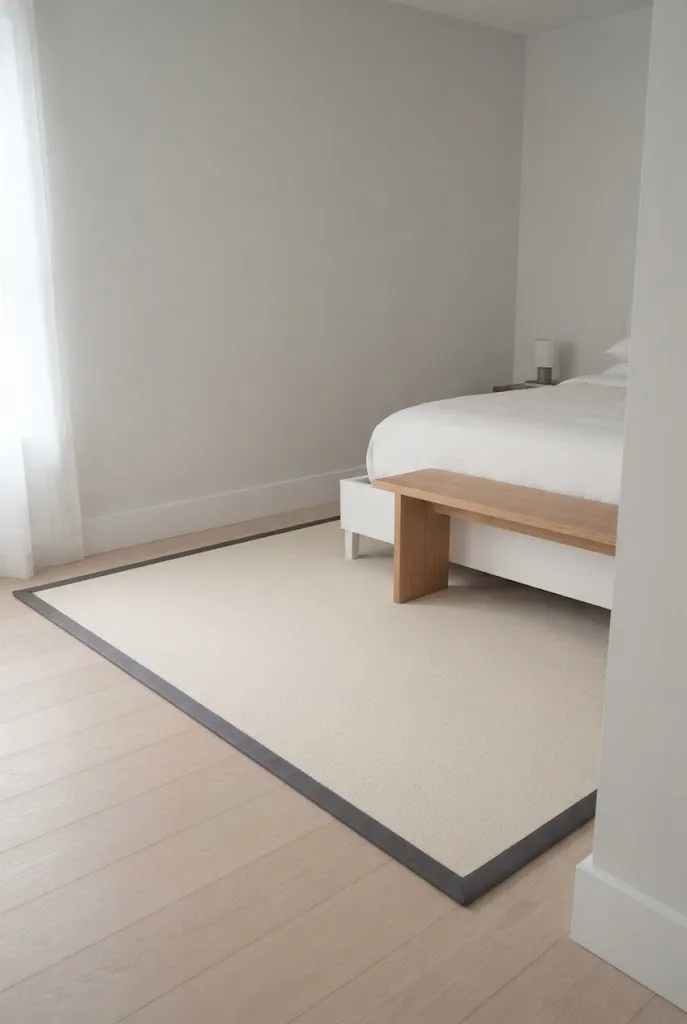
- Crisp contrasting border trim that frames the room and defines spatial boundaries.
- Draws the eye along the perimeter to make compact floor plans feel larger.
- Adds a tailored, custom-designed look without overwhelming the space.
- Keeps the central area neutral while introducing sharp linear definition.
Framing your floor plan with a distinct contrasting border creates an instant sense of architectural polish and intentional design. I’ve noticed that bordered floor accents trick the eye into mapping out wider dimensions, which works wonders in tight rooms.
The sharp outer line establishes a neat perimeter around the bed, keeping the entire furniture arrangement anchored. This clever styling trick is ideal for anyone looking to add custom detail to a basic rental space.
Balancing a framed floor textile requires keeping internal patterns solid and free of competing prints. I’ve tried pairing bordered mats with minimalist platform frames and solid-colored duvets to maintain a clean, high-end look. The crisp contrast adds definition without introducing visual clutter or chaos. Homeowners wanting a polished, designer-finished appearance will appreciate how a simple border elevates standard flooring instantly.
15. Tactile Sisal Weave
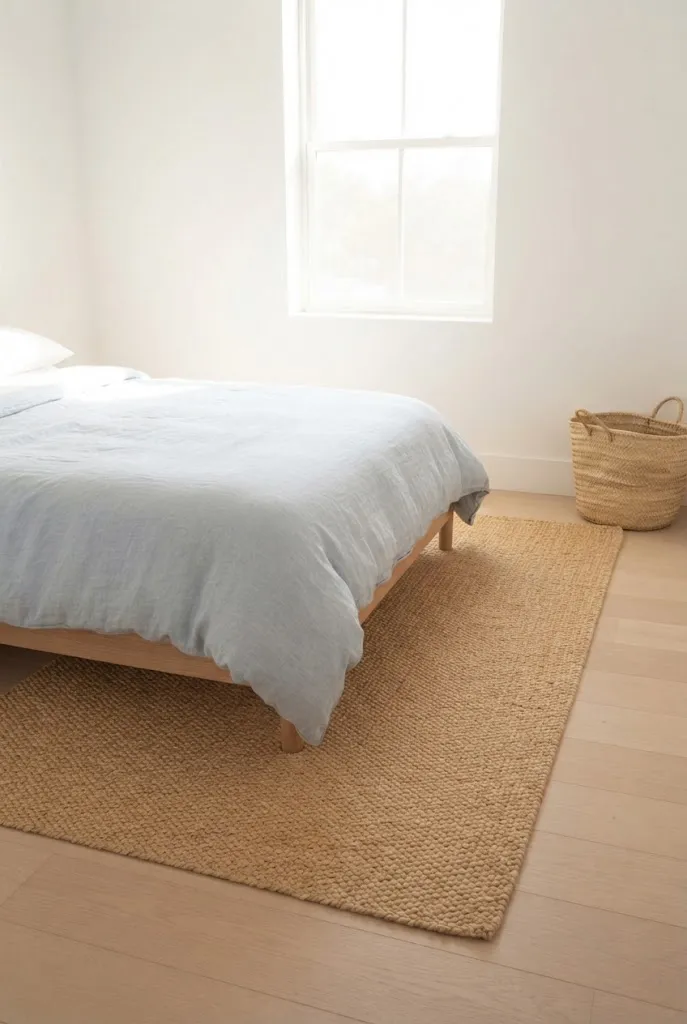
- Natural sisal plant fibers that introduce rugged texture and organic appeal.
- Incredibly durable weave designed to withstand heavy daily wear and tear.
- Adds an earthy, grounded quality that complements casual coastal decor.
- Creates a wonderful tactile contrast against smooth hardwood or tile floors.
Introducing sturdy plant-based fibers brings raw, organic energy into a bedroom looking for natural balance. That’s why many designers recommend sisal weaves for adding durable texture that handles high-traffic pathways effortlessly.
The stiff, natural fibers create a wonderful sensory contrast when stepped on with bare feet. Anyone wanting to cultivate a breezy, coastal-inspired sanctuary will find that natural woven materials bring instant authenticity to the space.
Styling coarse natural fibers works best when paired with soft, flowing fabrics like washed linen and cotton. In my experience, the interplay between rough sisal and gentle bedding creates a sophisticated, balanced environment. The neutral golden tones warm up cool architectural elements without adding heavy color saturation. Homeowners seeking long-lasting, eco-friendly durability will love how gracefully natural plant weaves age over time.
16. Monochromatic Stripe
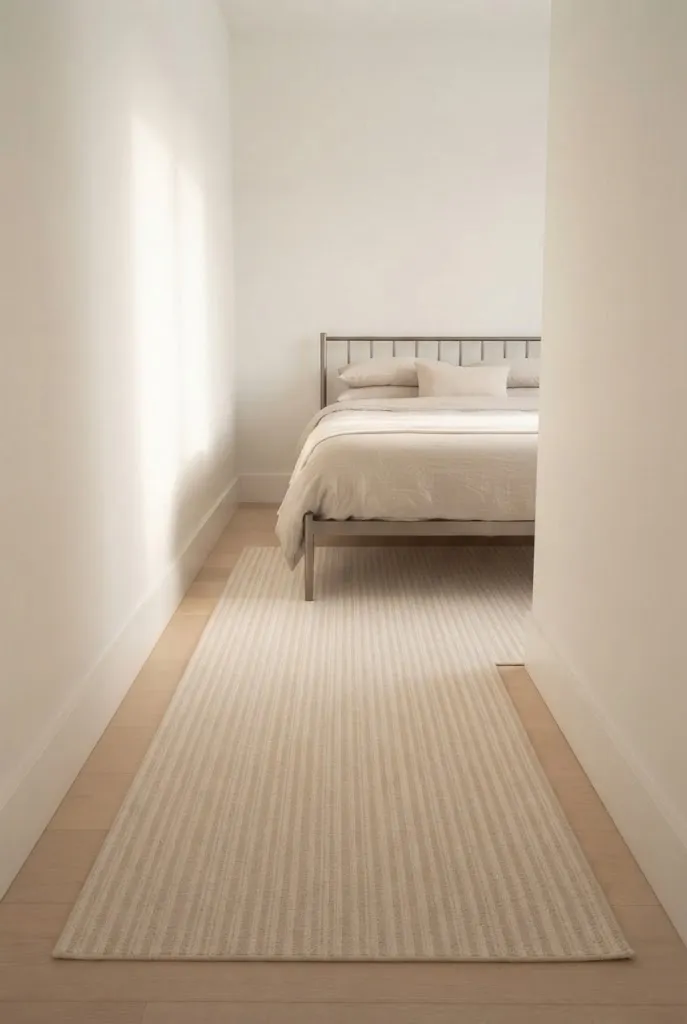
- Subtle tonal stripes that elongate the visual perspective of narrow layouts.
- Low-contrast stripe pattern keeps the room feeling calm rather than dizzying.
- Adds classic linear direction to awkward, elongated floor plans.
- Coordinates easily with a wide variety of minimalist bedding styles.
Guiding the eye along a linear path helps correct the awkward proportions of narrow, tunnel-like bedrooms. I’ve seen this work well in many homes where subtle tonal stripes stretch the perceived length of the floor.
The low-contrast pattern introduces gentle movement without overwhelming the peaceful mood of the sleeping area. This smart linear solution is perfect for anyone struggling with restrictive, long and narrow architectural layouts.
Keeping the stripe palette monochromatic ensures the room remains a restful place dedicated to sleep and relaxation. Icy or oat-toned variations add structure while blending smoothly with surrounding wood and fabric elements. This balanced approach provides geometric interest without sacrificing serenity. Anyone hoping to visually manipulate tight spatial proportions will find that tonal stripes offer a practical, stylish fix.
17. Plush Cloud Layer
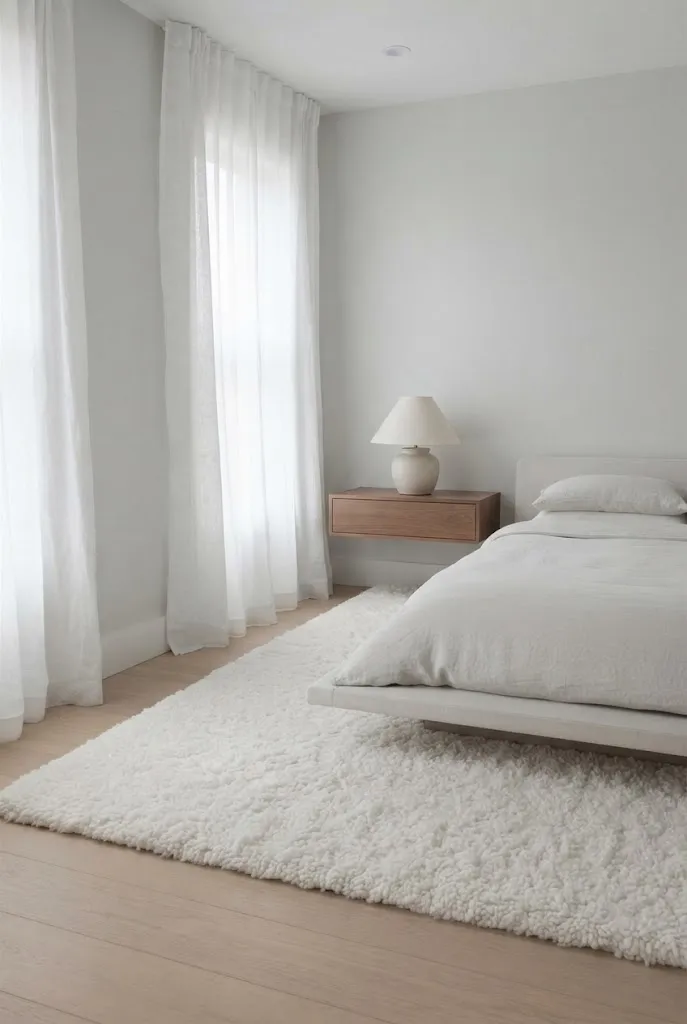
- Extra-thick cushioning that transforms hard flooring into a soft cloud-like landing.
- Adds incredible physical warmth and luxury right beside the main sleeping zone.
- Creates a rich, voluminous texture that fills out awkward empty gaps.
- Elevates everyday comfort with an indulgent, premium underfoot feel.
Stepping onto an exceptionally cushioned surface provides an instant dose of luxury that makes waking up a joy. In my experience, adding maximum plushness to a compact bedroom creates a cozy, cocoon-like sanctuary. The thick cushioning absorbs ambient sound, making the entire sleeping quarter feel remarkably quiet and private. Anyone craving maximum comfort without cluttering their floor plan will appreciate how this ultra-soft layer changes the room’s entire tactile experience.
Balancing heavy cushioning requires keeping surrounding furniture light, raised, and minimalist in design. That’s why many designers recommend pairing thick, cloud-like textures with slender metal or exposed wooden legs. This deliberate elevation prevents the room from feeling heavy or visually blocked off. Homeowners looking to turn a sterile bedroom into a warm retreat will find that maximum underfoot softness delivers instant gratification.
18. Minimalist Border Frame
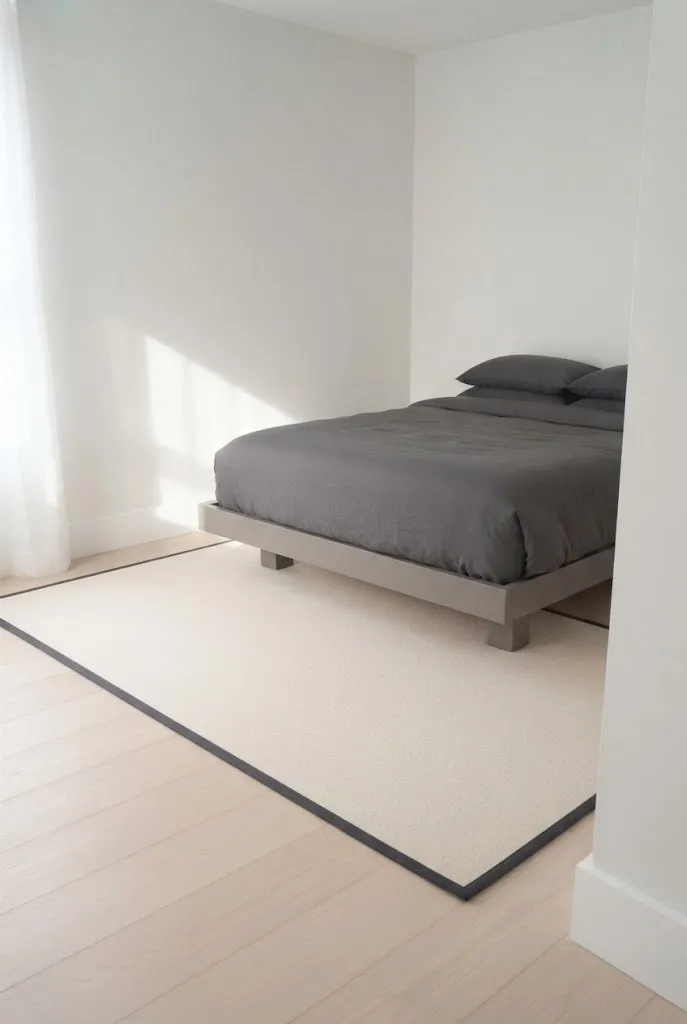
- Clean solid-color base accented by a subtle, understated framing edge.
- Defines the boundaries of the sleeping zone in an open-concept studio apartment.
- Keeps the overall look neat, tidy, and visually organized.
- Complements contemporary decor without stealing focus from key furniture pieces.
Establishing clear visual boundaries helps organize a compact floor plan into distinct, purposeful zones. I’ve noticed that subtle edge framing provides just enough geometric structure to make a room look intentionally designed. The clean solid center keeps the layout feeling breathable and open rather than cramped. This streamlined approach suits anyone wanting a tidy, sophisticated foundation that supports modern furniture arrangements.
Styling a framed floor covering works best when paired with solid neutral bedding and uncluttered surfaces. I’ve tried incorporating simple geometric pillows and sleek black hardware to echo the clean lines of the border. This cohesive strategy maintains a peaceful, uncluttered atmosphere ideal for rest. Anyone seeking a balanced, polished look will find that framed simplicity offers timeless appeal.
19. Organic Pebble Shape
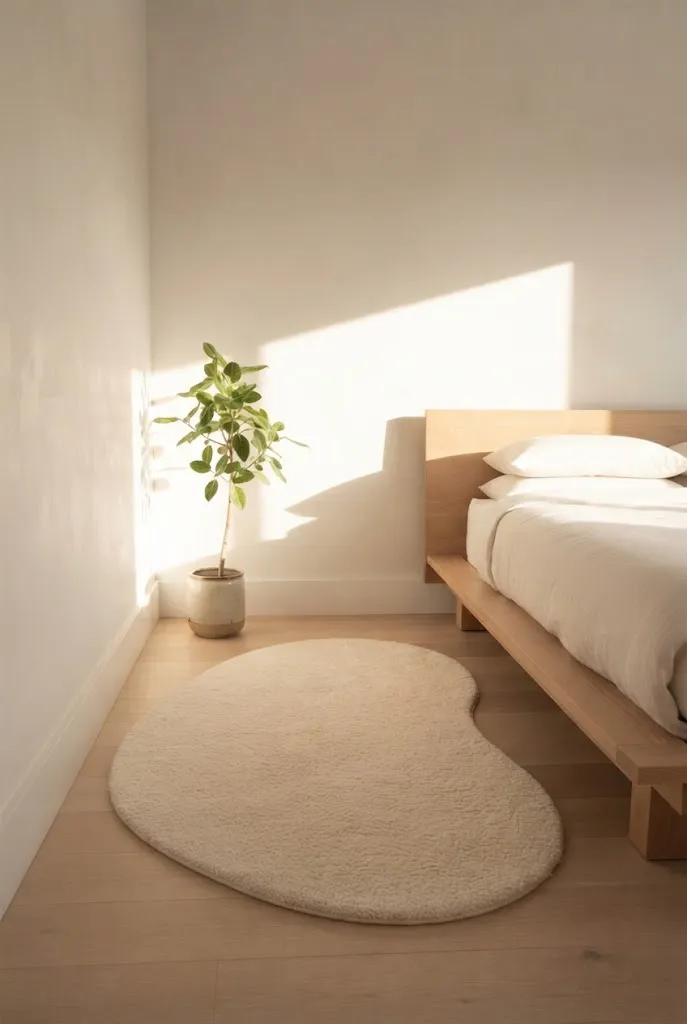
- Curved, asymmetrical pebble silhouette that breaks away from traditional rectangular layouts.
- Softens harsh architectural corners and rigid furniture angles instantly.
- Adds playful, organic movement to small spaces with limited square footage.
- Creates a unique artistic focal point that draws positive attention downward.
Breaking away from standard geometric shapes injects fresh, modern creativity into predictable bedroom layouts. In my experience, flowing asymmetrical curves instantly relax the mood of a stiff or narrow room. The unique silhouette acts as an unexpected piece of floor art that adds personality without requiring extra wall decorations. This playful design choice is perfect for anyone wanting to escape conventional rules and embrace a more fluid, organic aesthetic.
Balancing an irregular shape requires keeping surrounding large furniture simple so the silhouette remains the star. That’s why many designers recommend pairing curved floor mats with clean-lined beds and simple nightstands. The gentle contrast adds delightful visual rhythm without causing clutter. Homeowners looking to add artistic flair to a modest space will love how a non-traditional shape transforms the room’s energy.
Conclusion
Revamping your personal sanctuary does not require a massive renovation or endless square footage. By embracing these thoughtful styling concepts, you can easily turn a basic layout into a warm, inviting haven that feels uniquely yours. Selecting the right studio bedroom rug ideas brings immediate comfort and cohesive beauty to your daily routine.
I’ve seen how simple ground-up changes can completely transform the energy and proportion of a compact room.
Community
Join the conversation
Add a useful idea, ask a specific question, or share what worked in your space. Every comment is reviewed before it appears.