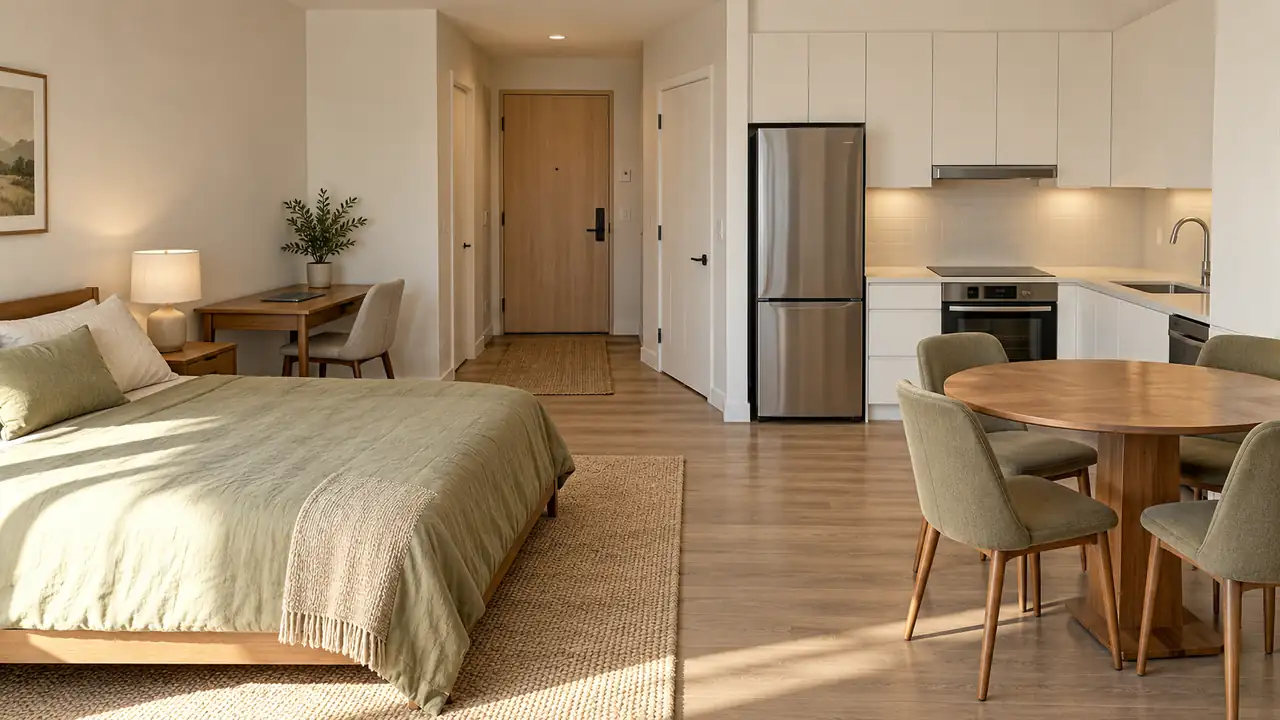
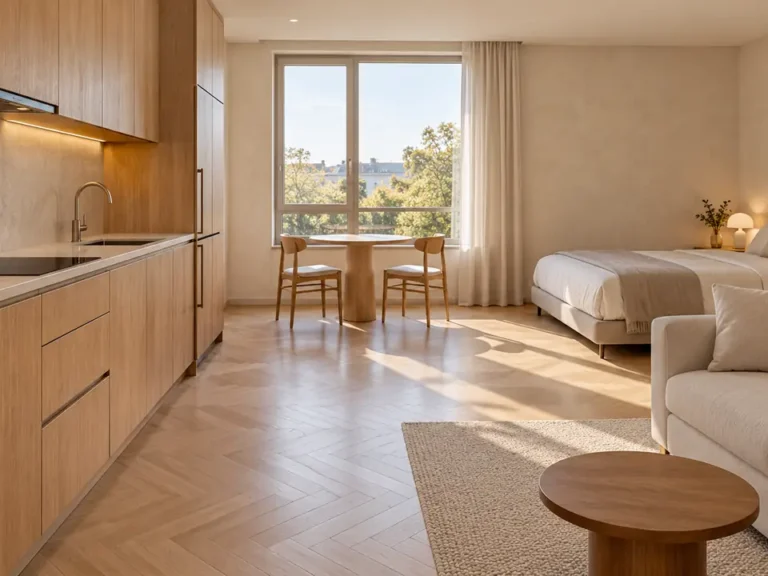
A one room studio apartment with kitchen asks the same floor space to handle breakfast, work calls, laundry, visitors, and sleep. The useful question is where each routine begins and ends. Instead of buying a divider for every activity, notice the moments when belongings cross into the wrong place: coats on the bed, paperwork beside dinner, or exercise equipment in the walking route. These seventeen ideas give those everyday activities a clear home, including temporary zones that disappear when you finish. Start with the routine that interrupts your day most often. Keep exits and appliance clearances open, check permission before adding fixings, and treat the layouts as inspiration rather than measured plans for your particular apartment.
1. Arrival Unpacking Spot
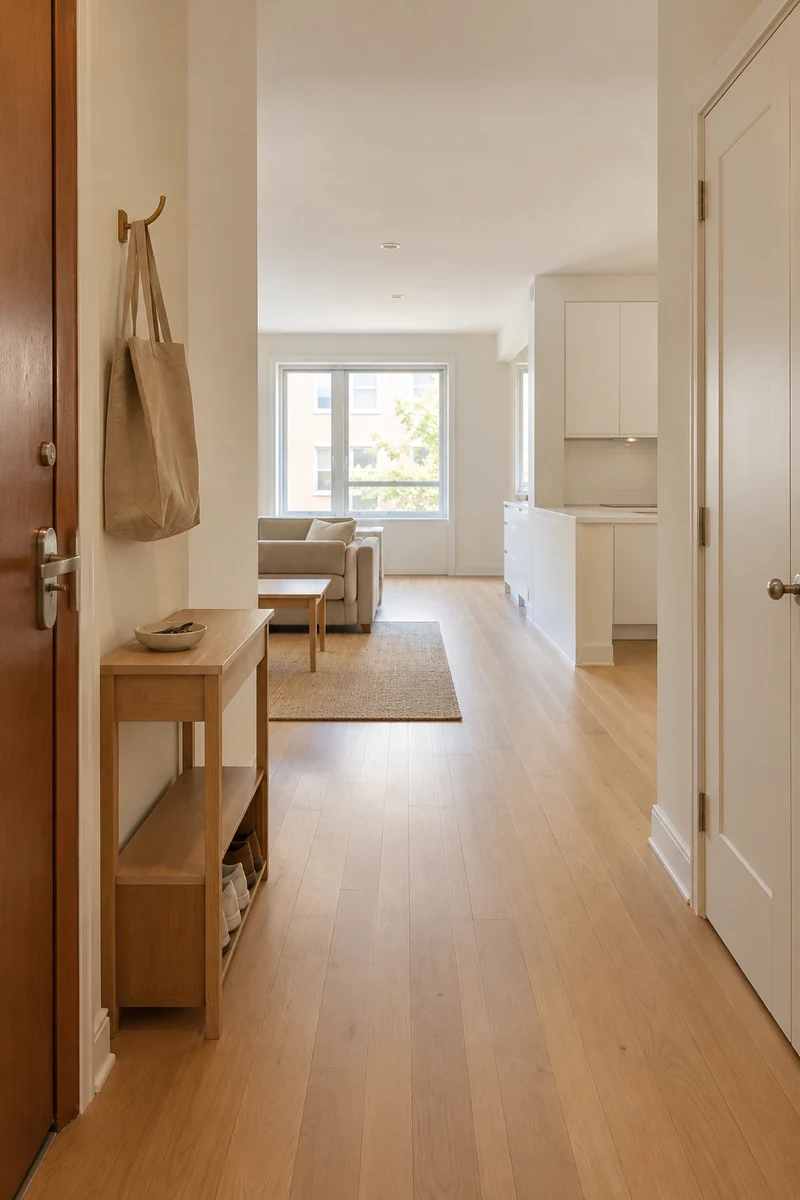
Your bag needs a home before it reaches the dining chair. Place a narrow landing surface beside the entrance, with a dish for keys and a lower space for everyday shoes. This small arrival zone keeps outdoor belongings from spreading into the places where you eat and sleep.
Choose the location with the front door fully open, then walk past while carrying your usual bag. Nothing should snag or narrow the exit. If wall hooks need new fixings, get permission first. A tray on existing furniture can handle the same routine without drilling into rented walls.
2. Grocery Unloading Route
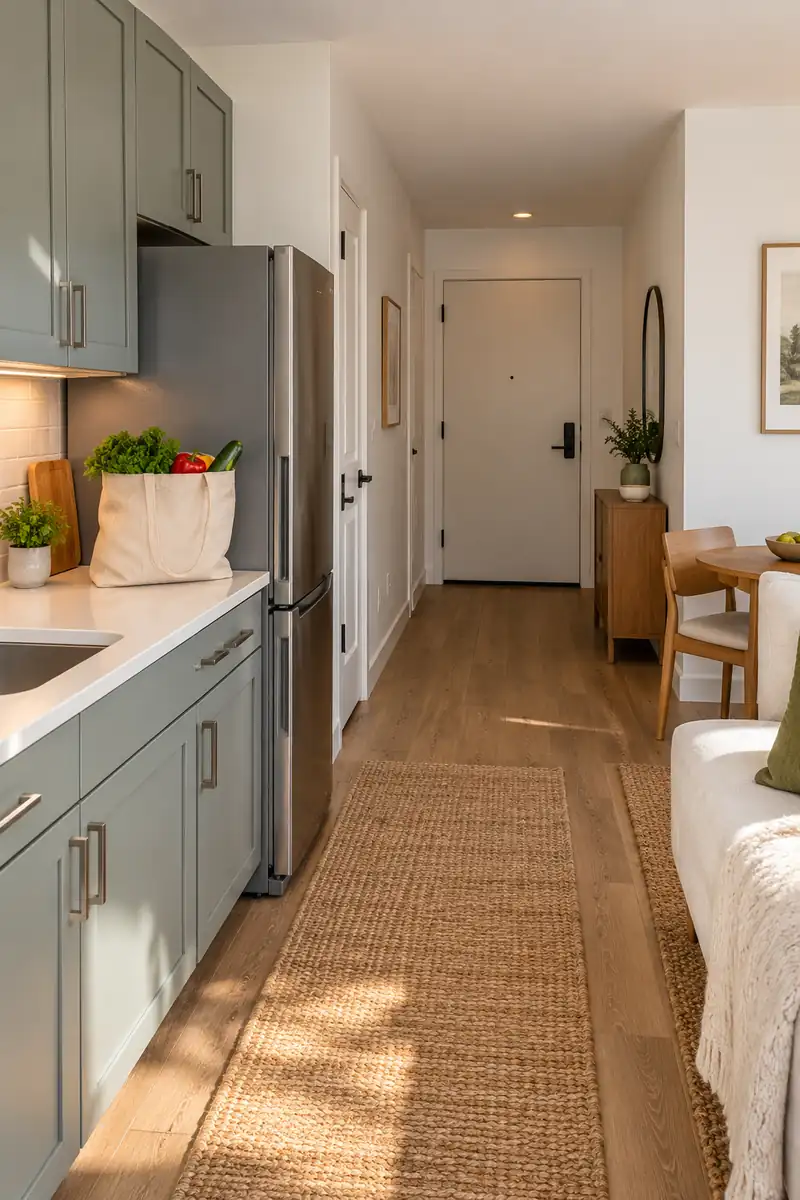
- Give grocery bags a clear counter landing spot before you leave for the store.
- Trace the route from the entry to that spot while cupboard doors are closed.
- Check the refrigerator can open without trapping you against the table.
- Store reusable bags near the entrance after unloading, away from cooking heat.
Shopping trips reveal whether a layout works in real life. Keep the unloading surface close enough to the refrigerator that chilled items can go away promptly. Return empty bags to their designated spot afterward, so the temporary grocery zone does not become a permanent pile beside your dinner table.
3. Bed Foot Dressing
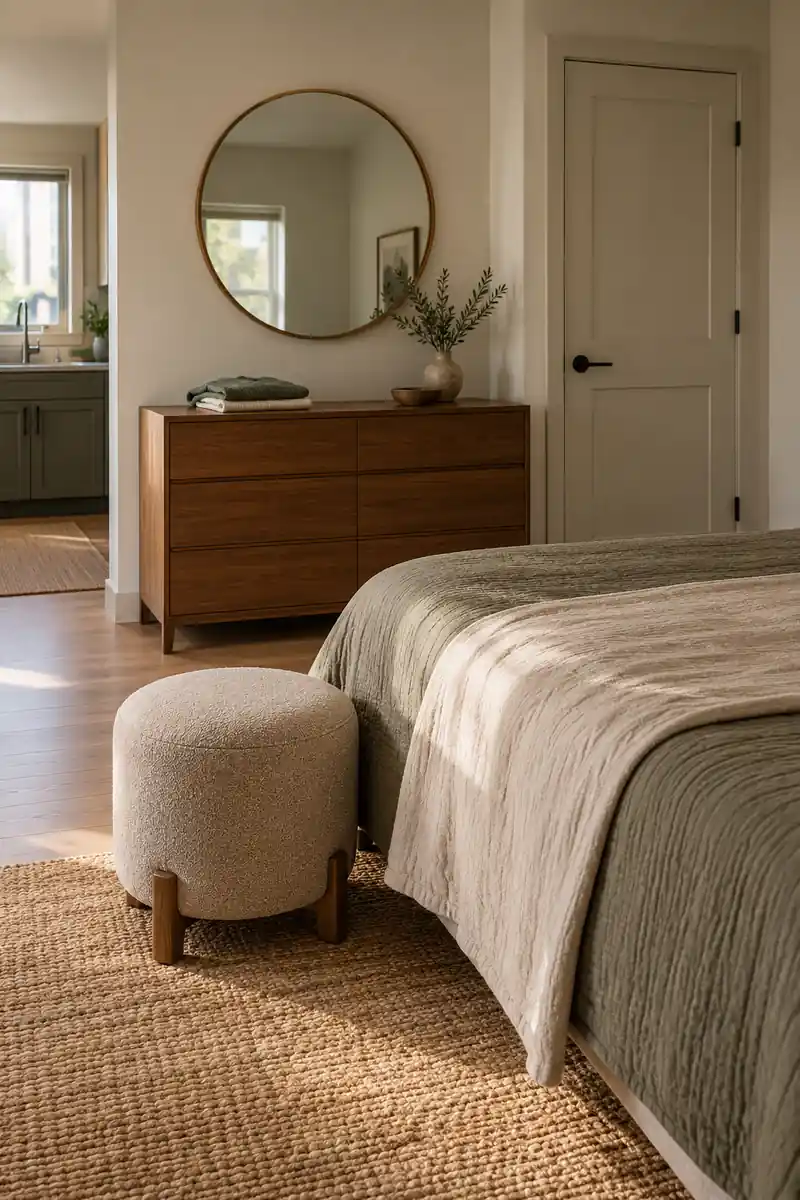
Quick Tip:
Save one reachable spot for tomorrow’s outfit. A compact stool beside the bed can hold folded clothes without turning the dining table into a dressing area. Leave enough open floor to stand and open drawers comfortably.
Getting dressed becomes less awkward when clothes have a brief stopping place. Use a small stool, a cleared dresser corner, or the bed itself if furniture would crowd the room. Keep this zone beside clothing storage, and put the outfit away each evening so the surface stays available tomorrow.
4. Video Call Backdrop
BEFORE
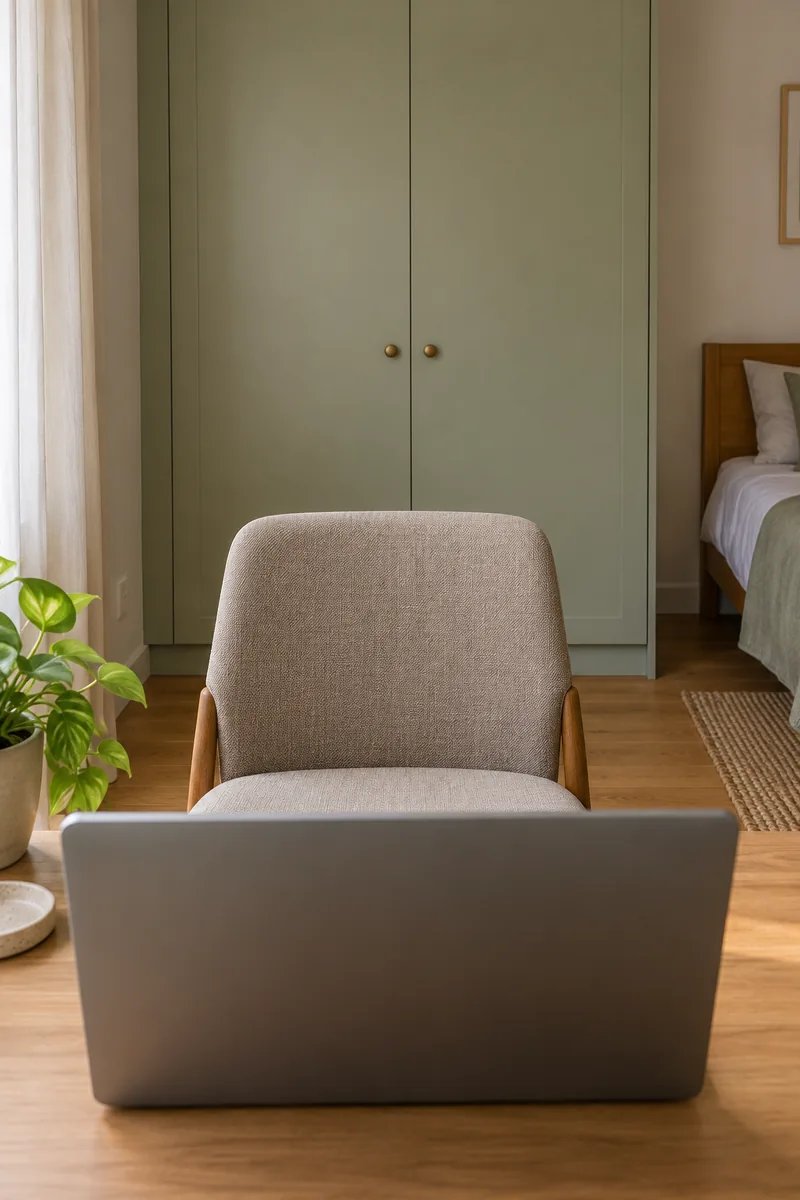
Every call shows the unmade bed behind your shoulder. You tidy half the apartment before opening the laptop.
AFTER
The desk faces into the room, with a plain closed wardrobe behind your chair. Your call background now belongs to the work zone.
A work zone can borrow privacy from the direction you face. Test the laptop camera before shifting heavy furniture, then choose the angle with the least personal clutter behind you. Close the computer when work ends and keep its charger along the wall, outside the route to the kitchen.
5. Homework Dining Switch
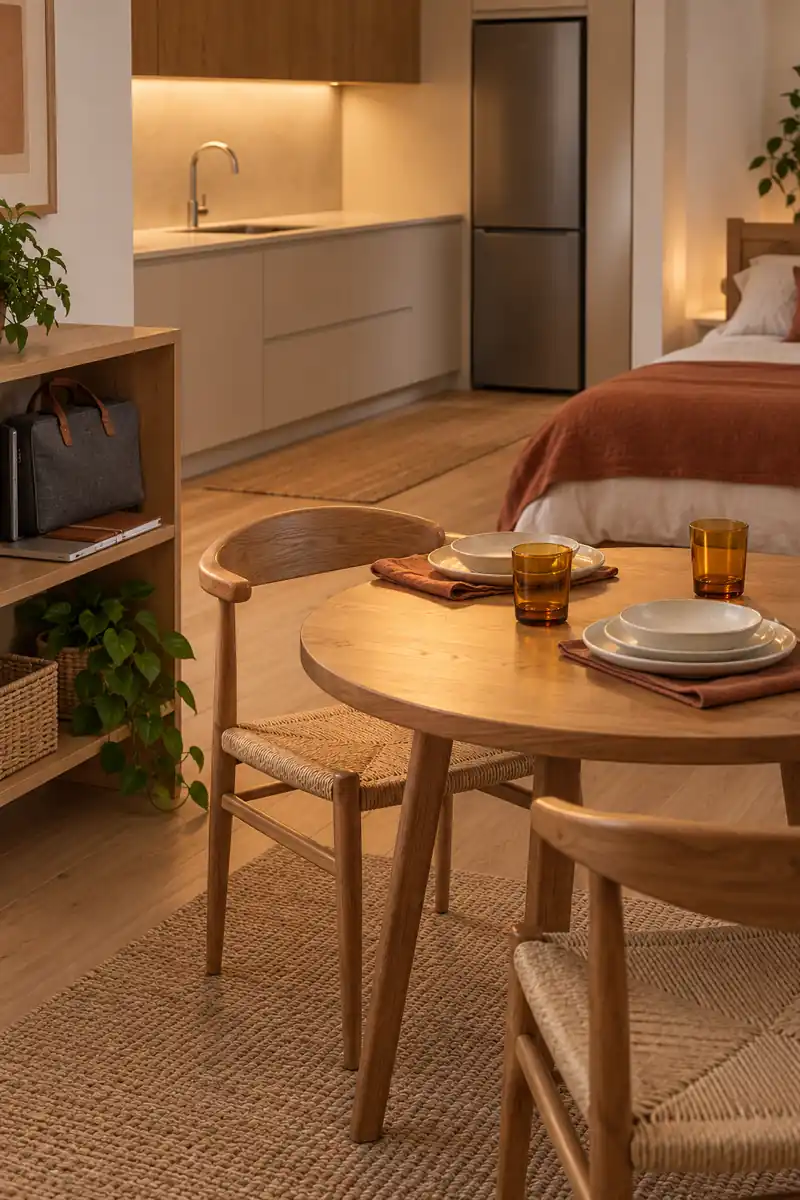
- Choose one portable tote for the laptop, notebook, and daily paperwork.
- Place the tote within reach of the table while you work.
- Pack every work item before setting out plates or drinks.
- Return the tote to its shelf, leaving chairs and the floor clear.
A shared table works better when changing its job takes only a moment. Give work supplies one container that fits on a nearby shelf, rather than several loose organizers. After the meal, decide whether the table returns to work or stays clear for the rest of your evening together.
6. Foldaway Hobby Surface
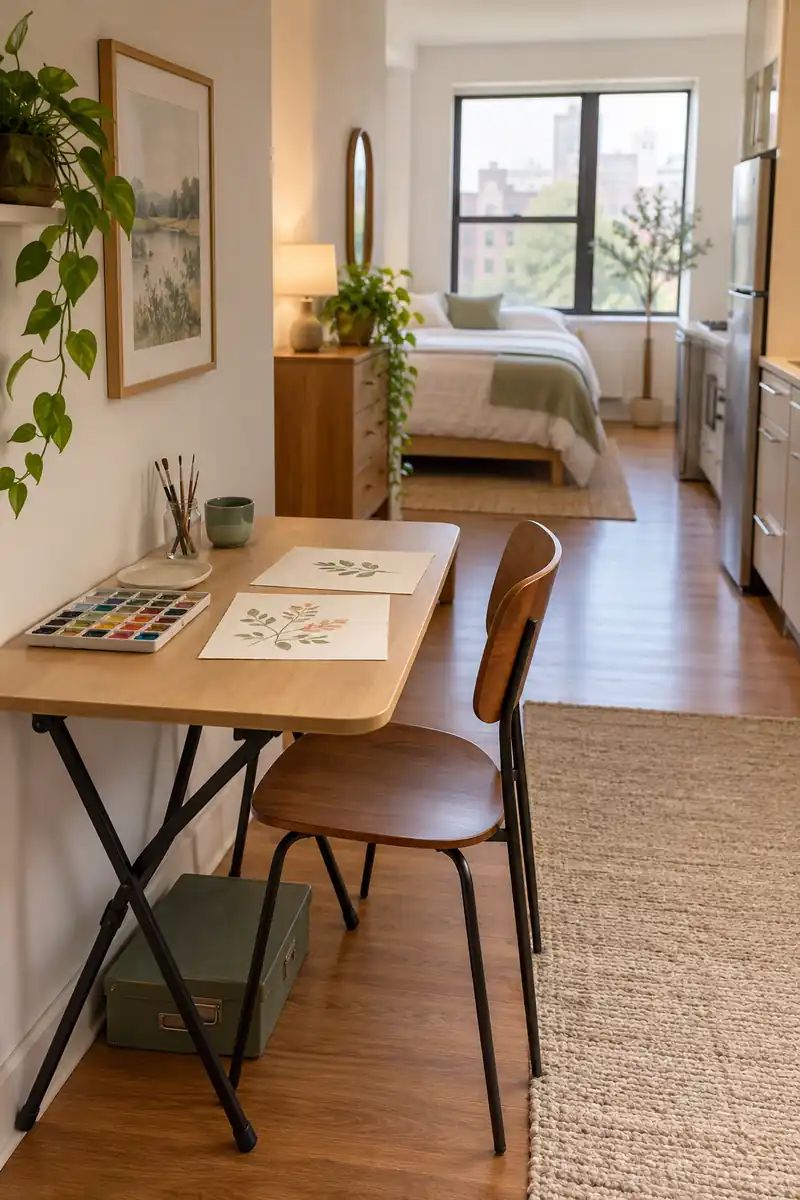
| Detail | Folding Table | Portable Board |
|---|---|---|
| Working position | Independent surface with stable legs | Rests fully on an existing table |
| Storage need | Space for the folded table | Slim dedicated shelf or cupboard |
| Best match | Longer making sessions | Small projects you pack away |
A hobby deserves a place even when it cannot keep a permanent table. Choose the option you can set up without shifting the whole room. Measure the surface while it is open and stored, and leave the route to the entrance available throughout the session, including during cleanup afterward.
7. Guest Coat Corner
DO
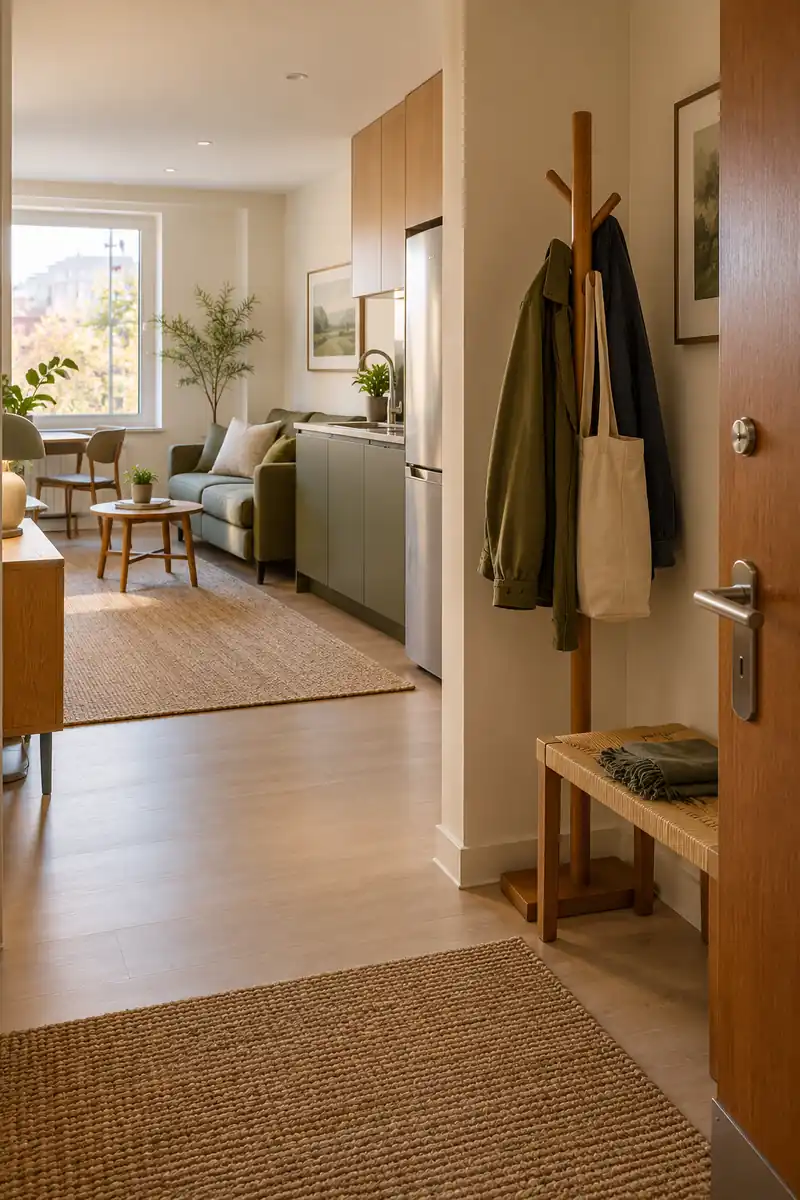
- Offer one obvious place for guests to leave a coat.
- Keep a clear route from that spot to the seating area.
- Choose a stand that fits the available space without leaning.
DON’T
- Do not drape coats over kitchen chairs needed for dinner.
- Do not place a stand within the door’s swing.
- Do not overload hooks beyond their stated capacity.
Hosting feels easier when visitors can see where their belongings belong. A spare hook or stable coat stand near the entrance keeps jackets away from the bed and food surfaces. Check the stand remains steady when loaded unevenly, and move the whole arrangement if it interferes with the door opening.
8. Shared Morning Sequence
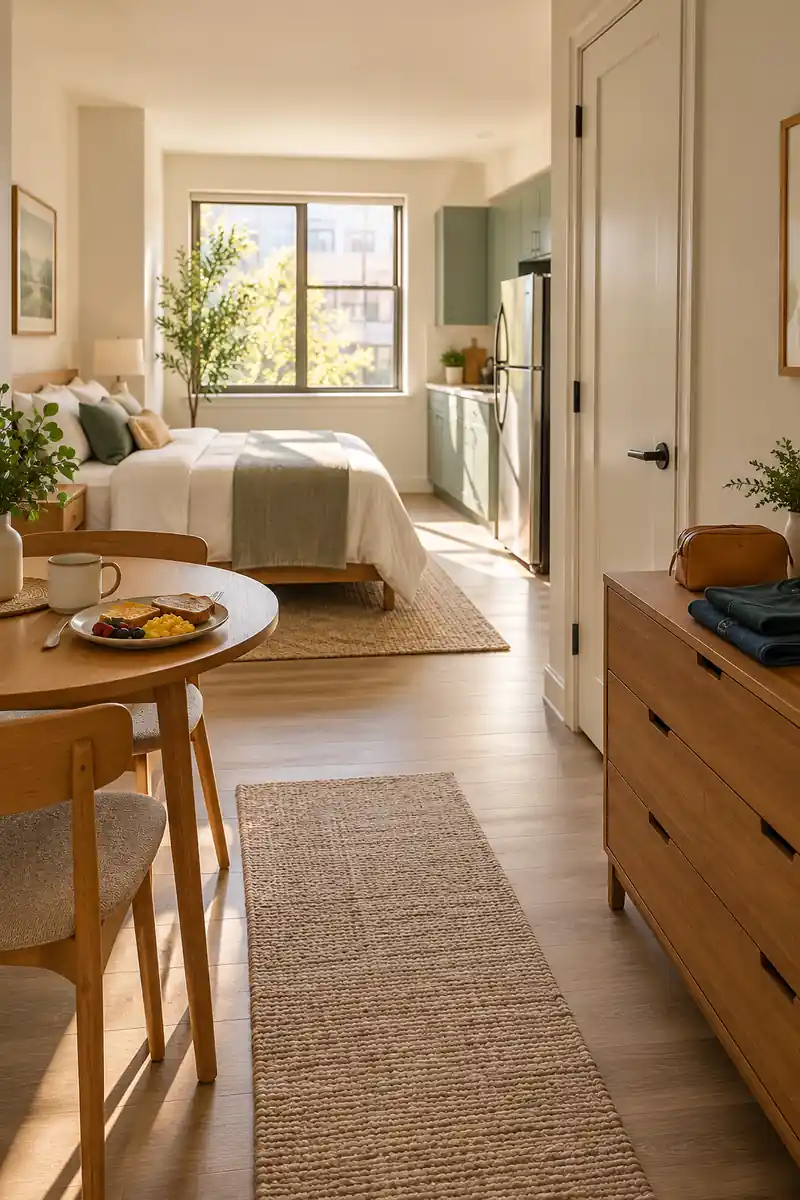
Breakfast: Keep bowls and morning drinks close to the eating spot.
Dressing: Set clothes beside the wardrobe rather than beside the sink.
Bathroom: Leave the separate bathroom and its doorway fully usable.
Timing: Stagger the one task that repeatedly puts you in each other’s way.
Two people can use a studio more comfortably when busy routines happen at different landing spots. Keep breakfast preparation in the kitchen and getting ready beside clothing storage or the enclosed bathroom. Try the arrangement on an ordinary weekday, then move the item that causes the most crossing back and forth.
9. Laundry Sorting Cabinet
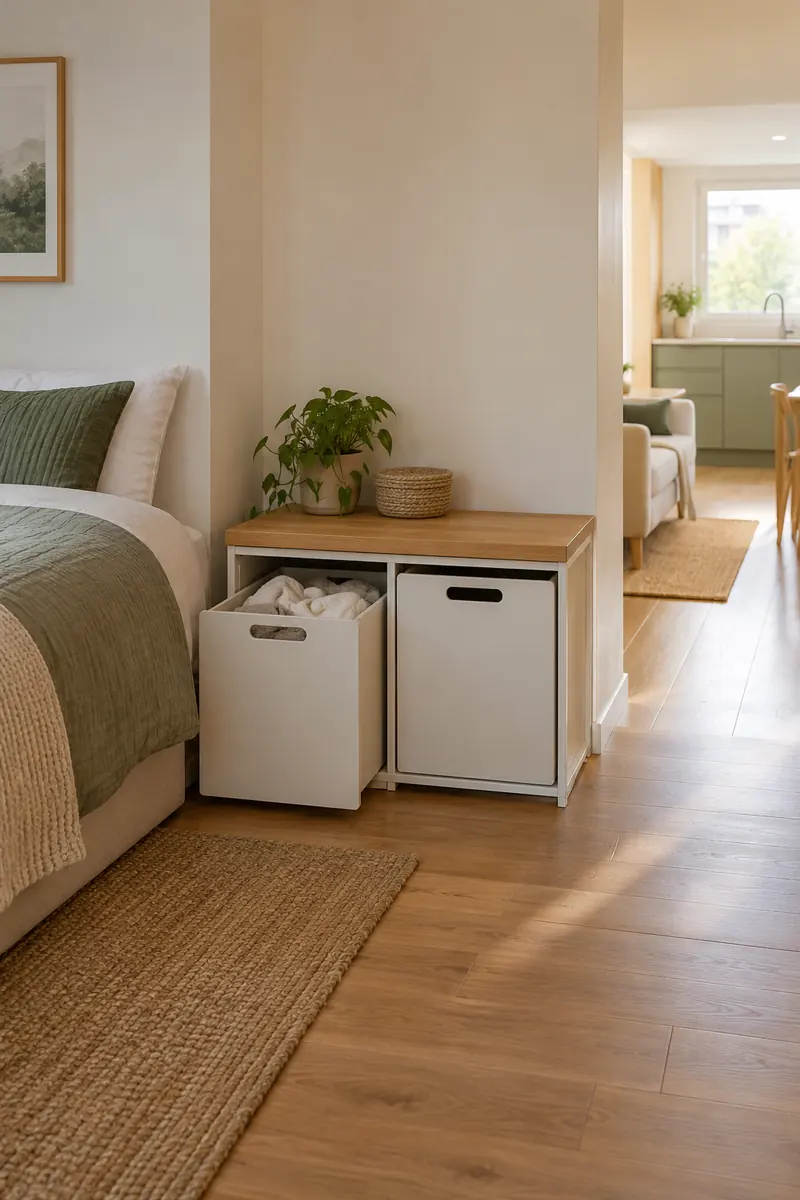
Laundry looks bigger when it drifts across several corners. Give it one contained home near the place you get dressed, using separate bins only if you genuinely sort loads that way. A low closed unit can keep the sleeping area orderly without turning the whole room into a utility space.
Measure each bin with the drawer or lid fully open before buying furniture. Choose washable containers and let damp items dry appropriately before storing them. Follow the cabinet’s anchoring instructions and obtain landlord permission where needed. This is a sorting station, so it requires no new plumbing or appliances.
10. Exercise Mat Parking
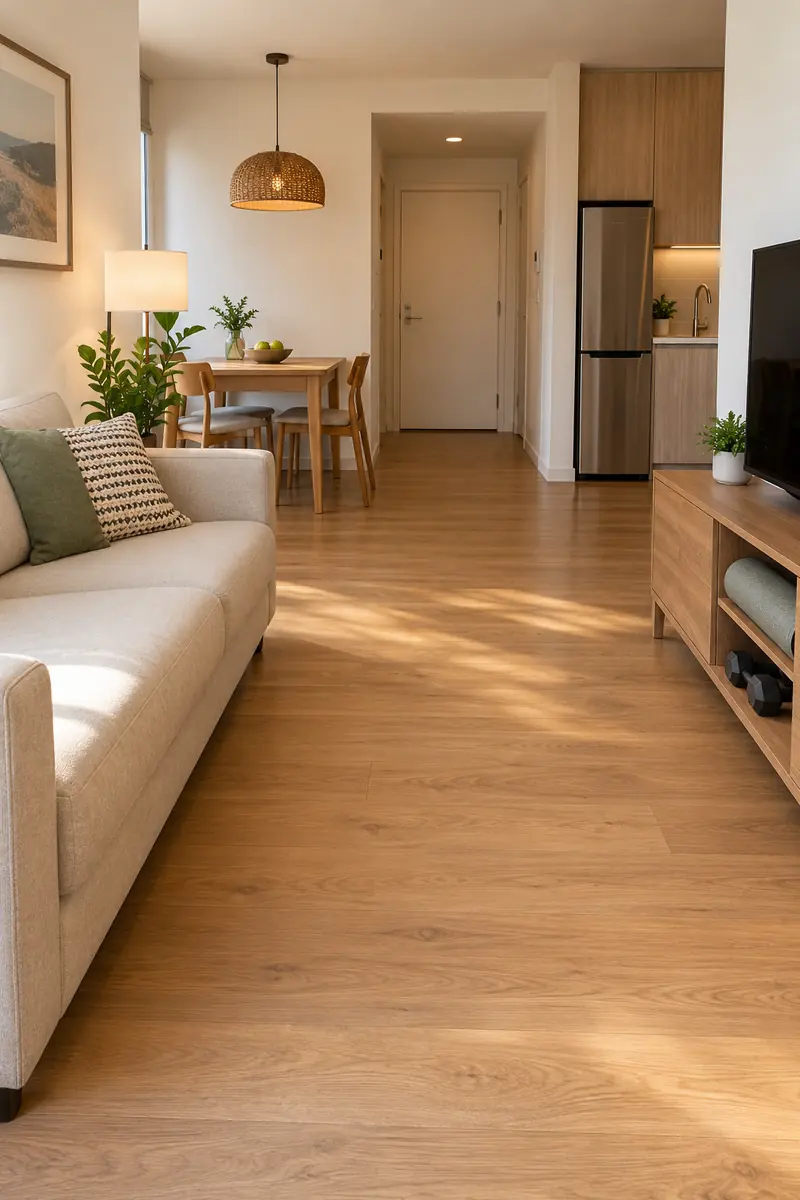
- Store the rolled mat beside the area where you normally exercise.
- Check your reach in every direction before beginning a session.
- Move lightweight furniture fully out of the activity area.
- Keep weights low and contained rather than balanced on open shelves.
Movement needs a temporary patch of floor more than a permanent fitness corner. Pick a spot that becomes clear with one small adjustment, then give the mat a nearby storage home. Return equipment immediately after use so the same space can support everyday walking, relaxing, or a guest’s chair later.
11. Quiet Nap Screen
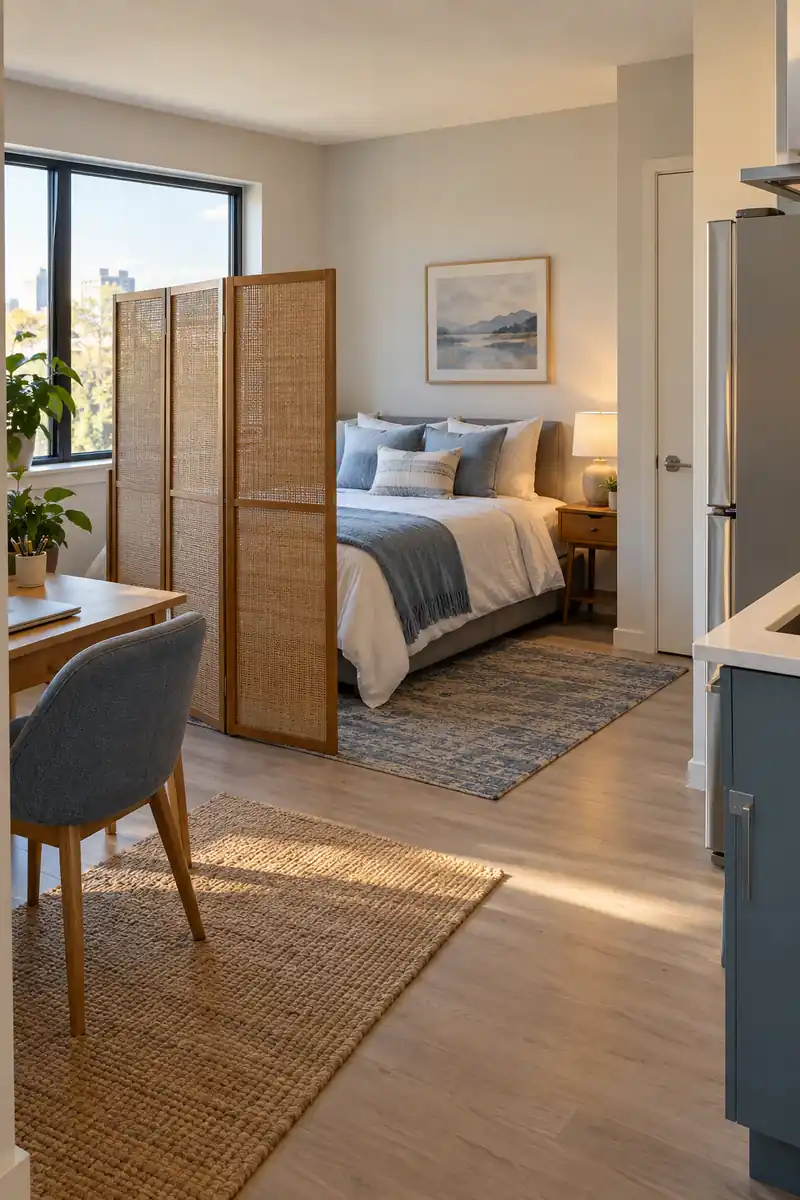
Quick Tip:
Block the distracting sightline first. Place a stable folding screen beside the bed where it hides the work chair, rather than automatically putting it across the entire room. Test the view while sitting and lying down.
Privacy can be useful for a short afternoon rest as well as overnight sleep. Choose a stable screen sized to interrupt the view from the desk, without wrapping the bed in a tight enclosure. Keep daylight, ventilation, and escape routes available, and position every fabric panel far from cooking heat.
12. Paperwork Landing Drawer
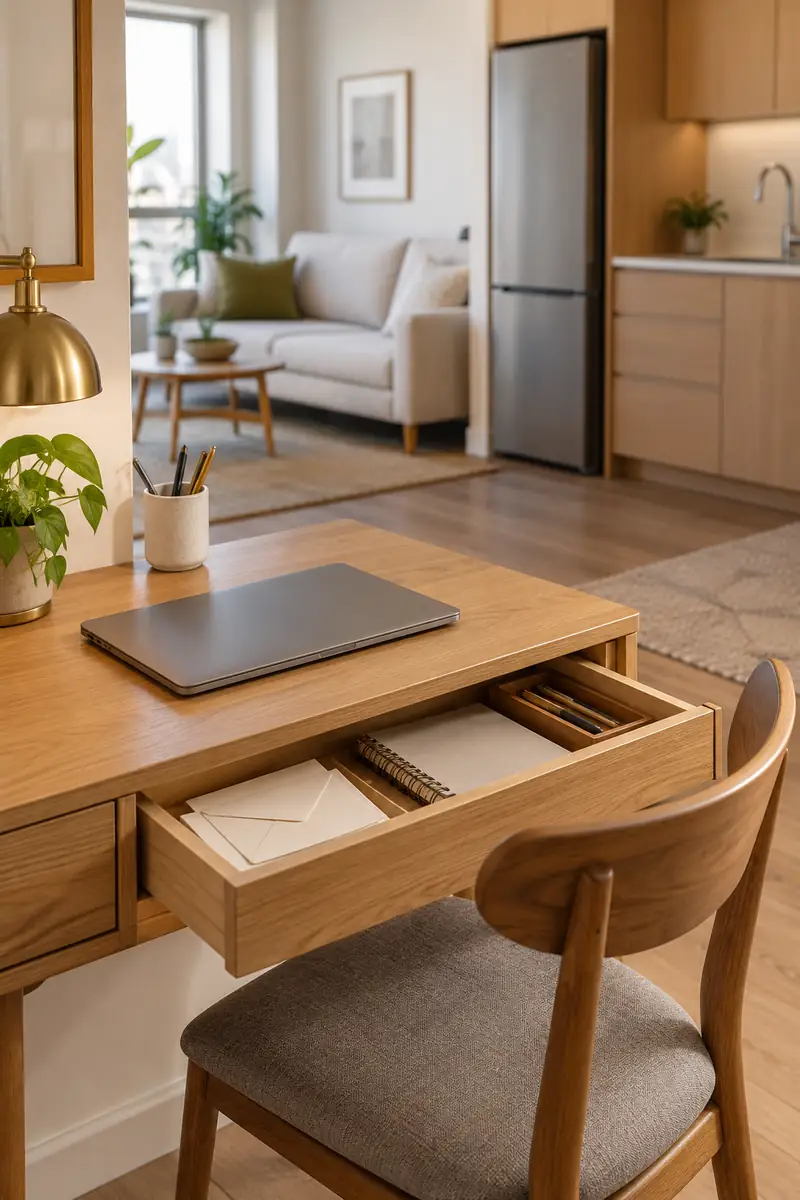
BEFORE
Mail lands on the table and slowly reaches the kitchen counter. Important envelopes disappear beneath shopping receipts.
AFTER
One shallow drawer holds incoming paperwork near the work spot. The dining surface stays available even before you have sorted every envelope.
Paper becomes manageable when its zone has a physical limit. Use one shallow drawer with a small tray for urgent items and a separate place for documents to keep. Review it regularly, recycle what is no longer needed, and avoid allowing mail to migrate onto the kitchen preparation surface again.
13. Pet Feeding Nook
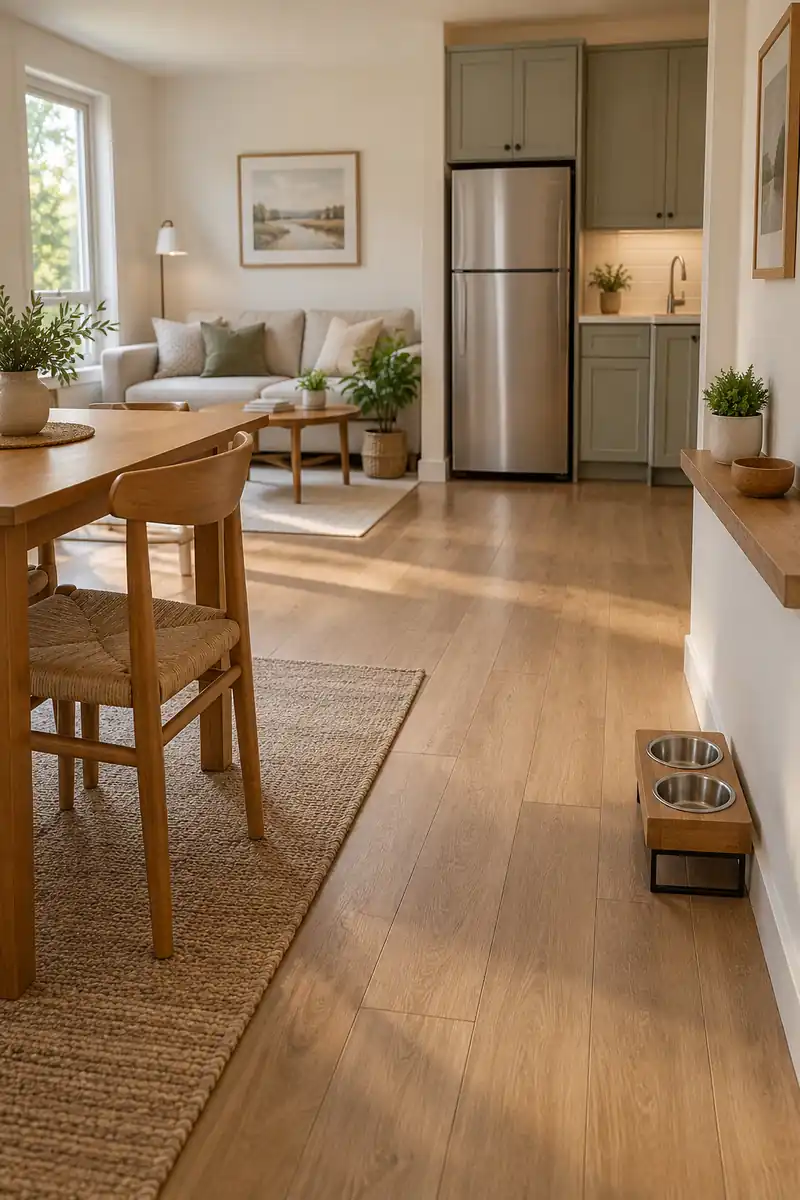
- Choose a quiet wall edge outside the main walking route.
- Set the bowls on a low washable tray that contains small spills.
- Check the pet can approach and move away without being cornered.
- Store food in its appropriate closed container away from cleaning products.
A pet’s routine needs room in the layout too. An unused wall edge can hold bowls without taking over the kitchen working area. Choose a washable setup suited to your animal, clean it regularly, and reassess placement if people keep stepping around it or the pet seems reluctant to approach.
14. Bedside Reading Reach
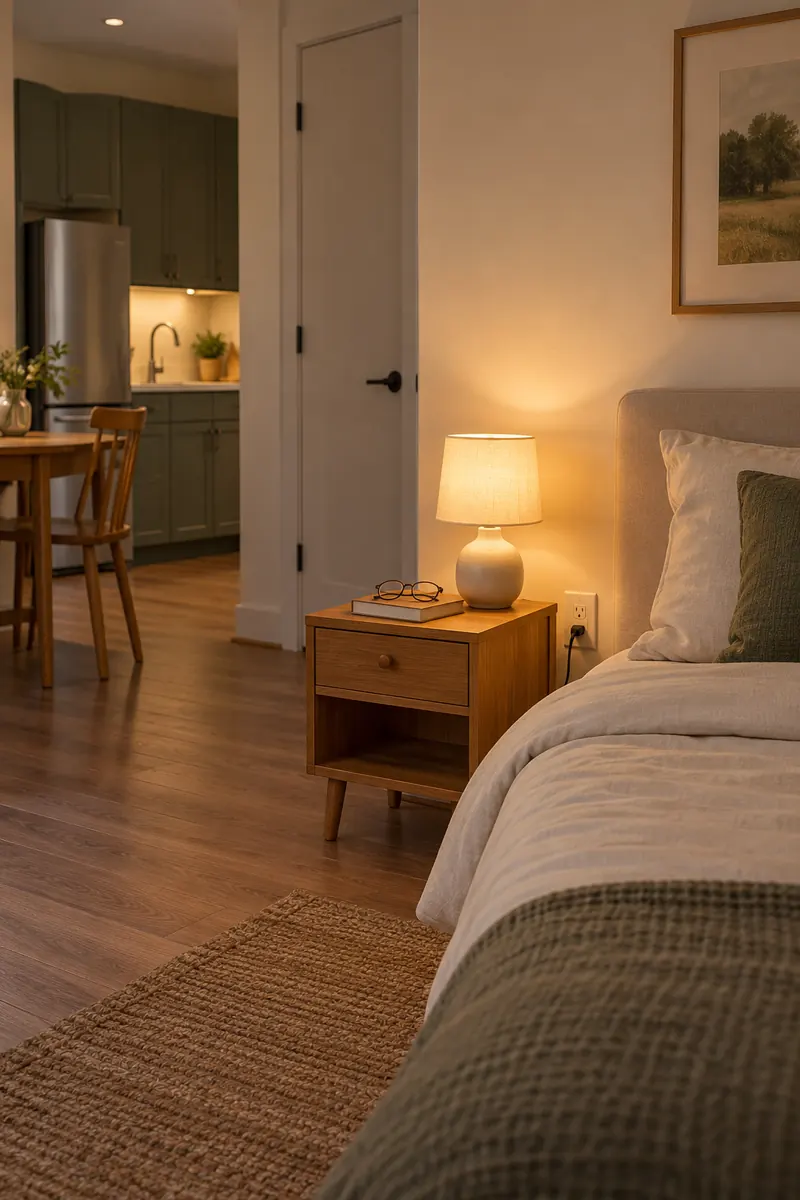
| Detail | Small Nightstand | Bedside Pocket |
|---|---|---|
| Best use | Stable surface for a suitable lamp | Lightweight book and glasses storage |
| Floor space | Needs its own footprint | Uses a compatible bed frame |
| Limit | Keep tabletop lightly furnished | Never support a lamp in fabric |
A reading spot beside the bed can stay compact if every object earns its place. Keep one current book and the light you actually use, with other books stored elsewhere. Follow the lamp’s instructions, keep it clear of bedding, and route any cord beside the wall rather than across your passage.
15. Game Night Seating
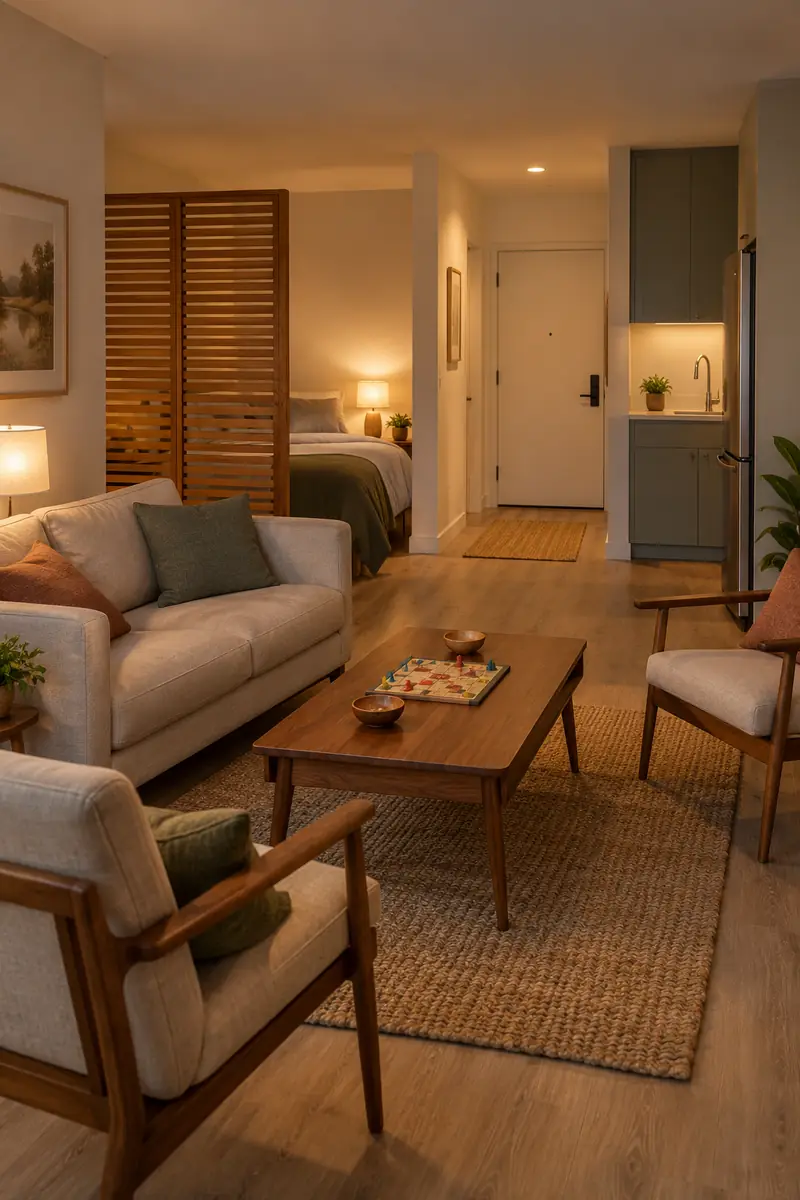
DO
- Arrange seats so everyone can reach the playing surface.
- Bring out only the extra chairs the group needs.
- Keep an open route to the entrance and enclosed bathroom.
DON’T
- Do not use the bed as the only route between chairs.
- Do not balance drinks on game boxes or unstable stools.
- Do not place spare seating against hot cooking equipment.
A studio can host a comfortable evening without leaving extra chairs out all week. Plan the guest arrangement around the actual table and the path to the bathroom. Store spare seating afterward, and put game pieces in one container so tomorrow’s breakfast starts with a clear surface rather than yesterday’s leftovers.
16. Cleaning Supply Home
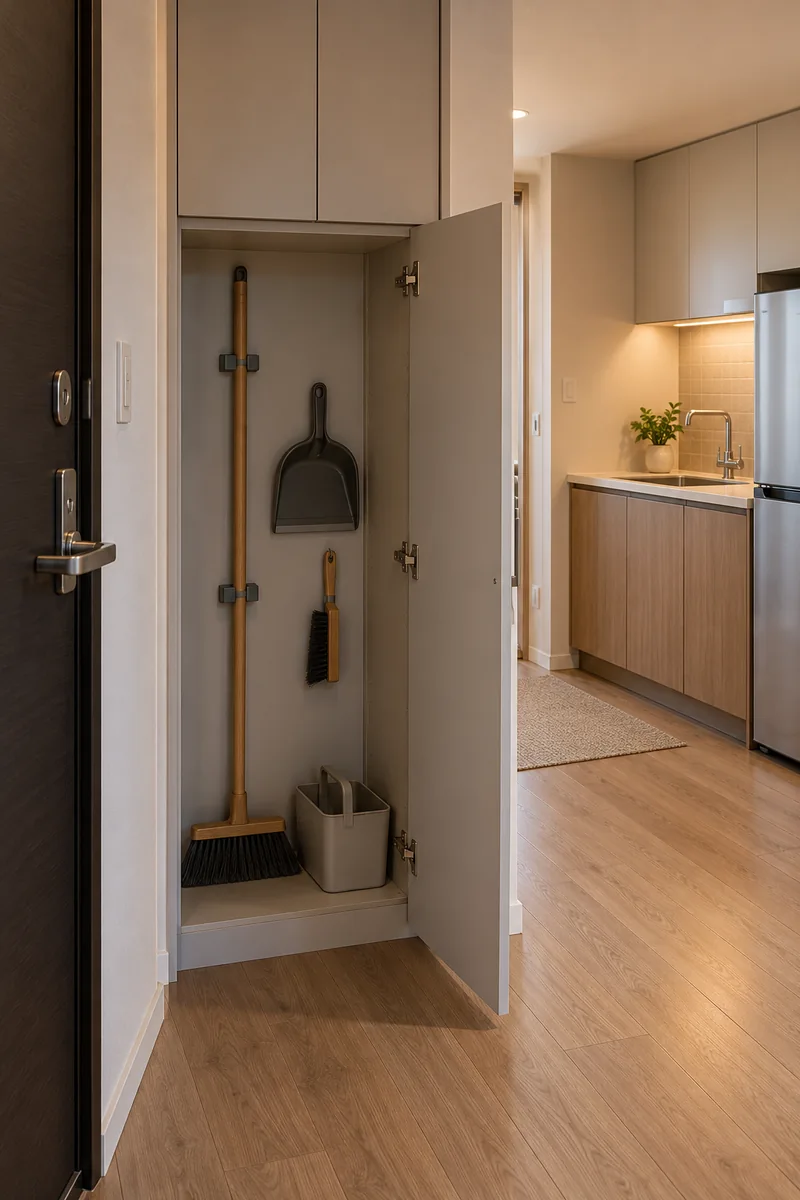
Location: Choose a cupboard away from food preparation and storage.
Containment: Keep products in their original labeled containers.
Access: Follow label directions for secure storage around children and pets.
Tools: Store the broom or mop without leaning it across a doorway.
Cleaning becomes easier to start when supplies have one reachable home. Choose a cupboard appropriate for the products and household, following their labels and keeping them separate from food. A compact broom stored upright can free floor space, while a small carry caddy helps you return everything after the job.
17. Nighttime Exit Route
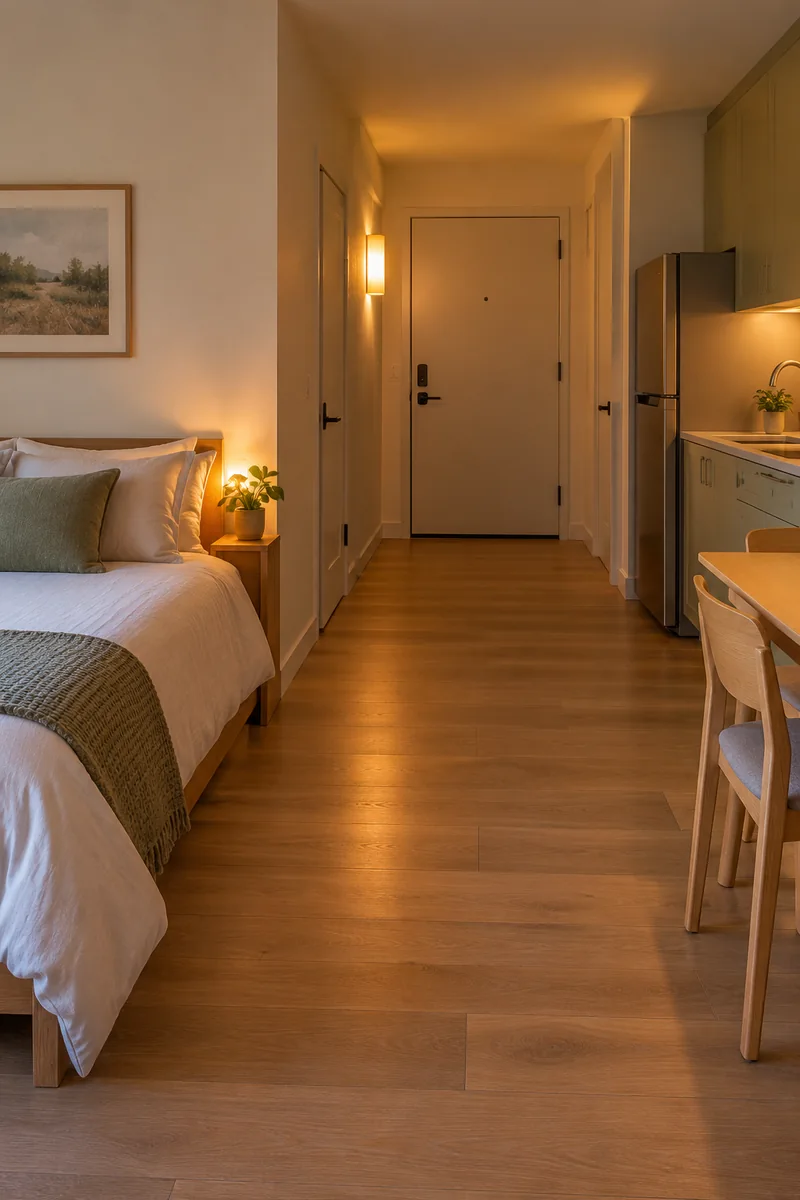
The last layout check happens after dark, when the apartment is set for sleep. Walk from the bed toward the entrance and bathroom without moving a chair or stepping over belongings. A route that works only when everything is folded away needs another look before you settle on the arrangement.
Keep doors and escape windows accessible, with clear floor space around the furniture you use at night. Suitable low lighting can help you see the route without brightening every zone. Review your building’s emergency guidance too, and treat these styling examples as ideas rather than measured or approved safety plans.
Conclusion
The best one room studio apartment with kitchen layout supports the day you actually live. Begin with one awkward transition, such as arriving with groceries or clearing the table for dinner, and give it a simple repeatable setup. Then test the room with drawers open, chairs occupied, and the bed ready for sleep. Keep the arrangements that feel easy to maintain, and remove anything that adds another obstacle. Save your favorite ideas to Pinterest so you can revisit them before shopping, try one zone this week, and share the idea with someone making a small home work harder.
Community
Join the conversation
Add a useful idea, ask a specific question, or share what worked in your space. Every comment is reviewed before it appears.