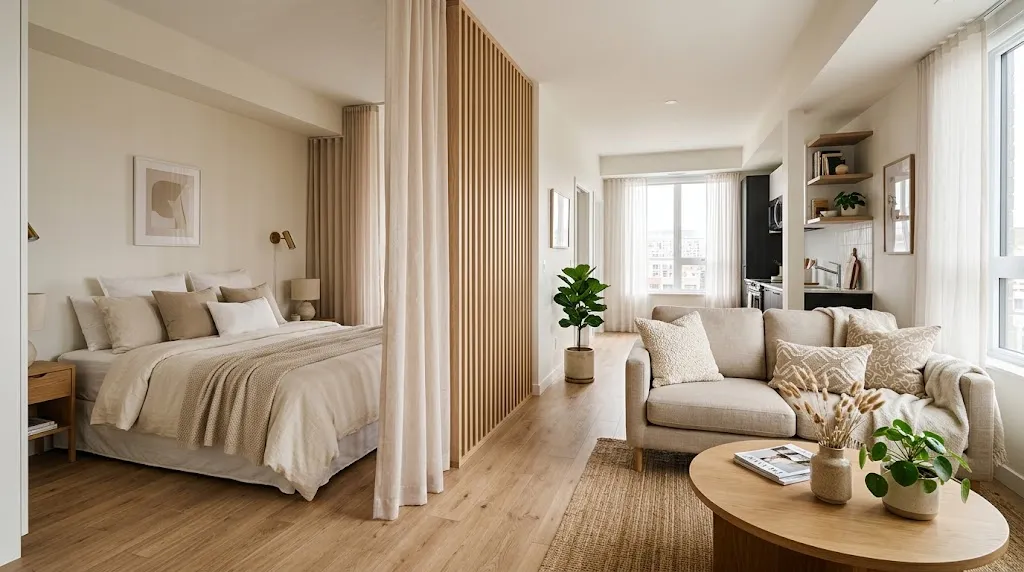
Living in a studio apartment can be cozy, stylish, and surprisingly functional—but creating a private sleeping area is often the biggest challenge. When your bed sits in the same open space as your sofa, desk, and kitchen, the entire apartment can start to feel like one room with no clear purpose.
That is where smart studio apartment bedroom divider ideas can completely change the way your home feels.
The right divider can create privacy, define a cozy bedroom zone, hide your bed from the main living area, and make a tiny apartment feel much more organized. Better yet, you do not always need to build a permanent wall.
From curtains and open shelving to glass panels and folding screens, these ideas can help you create separation while still keeping your studio bright, stylish, and spacious.
1. Ceiling Curtain Divider
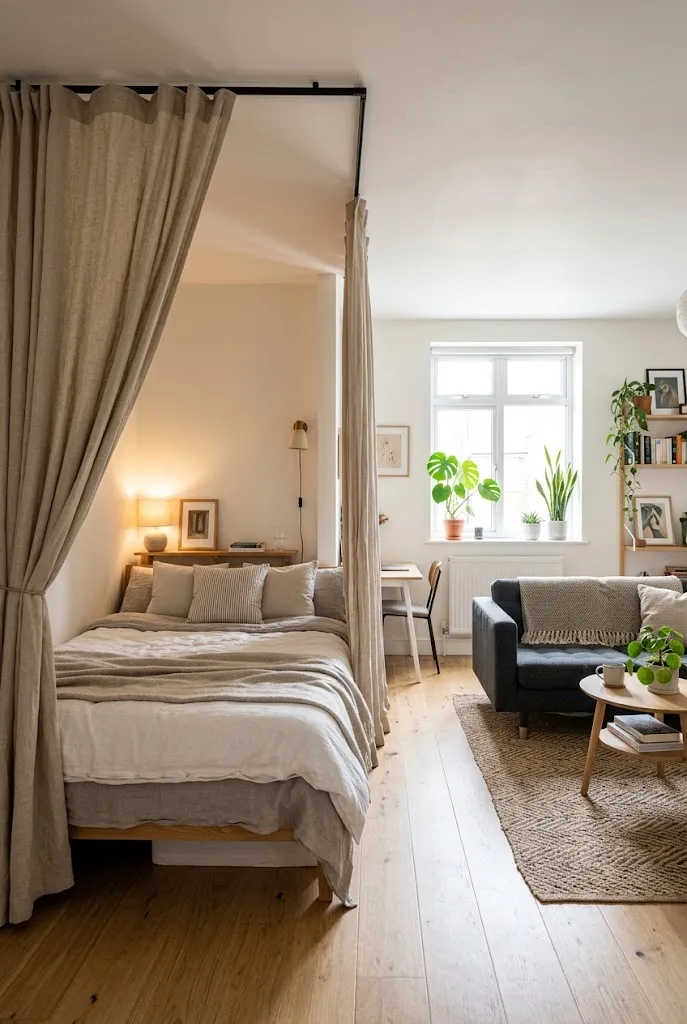
Curtains are one of the easiest ways to create a bedroom zone without making permanent changes.
Install a ceiling-mounted curtain track around the bed and use lightweight fabric that can be opened during the day and closed whenever you want more privacy.
Sheer curtains work well when you want separation without blocking light, while heavier linen or velvet curtains create a more enclosed bedroom feel.
For small studios, choose curtains in a similar color to the walls so the divider blends into the room instead of visually shrinking it.
This idea is especially useful for renters because the setup can usually be removed later with minimal damage.
2. Open Shelf Divider
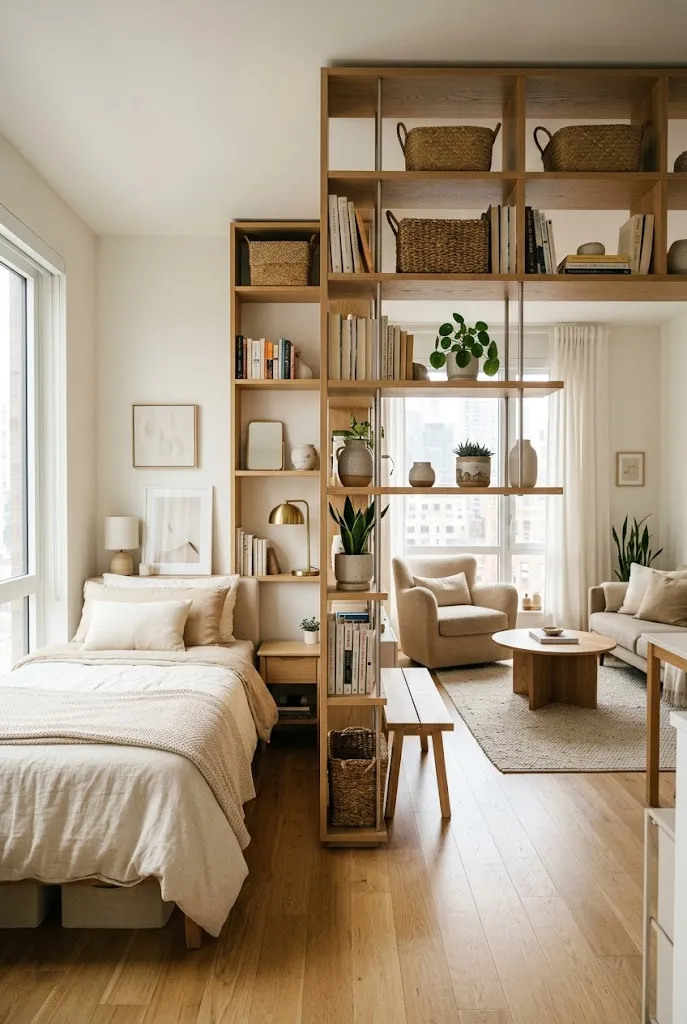
An open shelving unit can separate your bedroom from the living space while giving you extra storage at the same time.
Place a tall open bookcase between the bed and sofa rather than pushing it against a wall.
Because the shelves are open on both sides, light can continue moving through the apartment.
Use the shelves for books, baskets, small plants, decorative objects, and everyday storage.
Avoid filling every shelf completely. Leaving some open space keeps the divider feeling light rather than bulky.
This is one of the most practical studio apartment bedroom divider ideas because it combines zoning and storage in one piece of furniture.
3. Glass Panel Divider
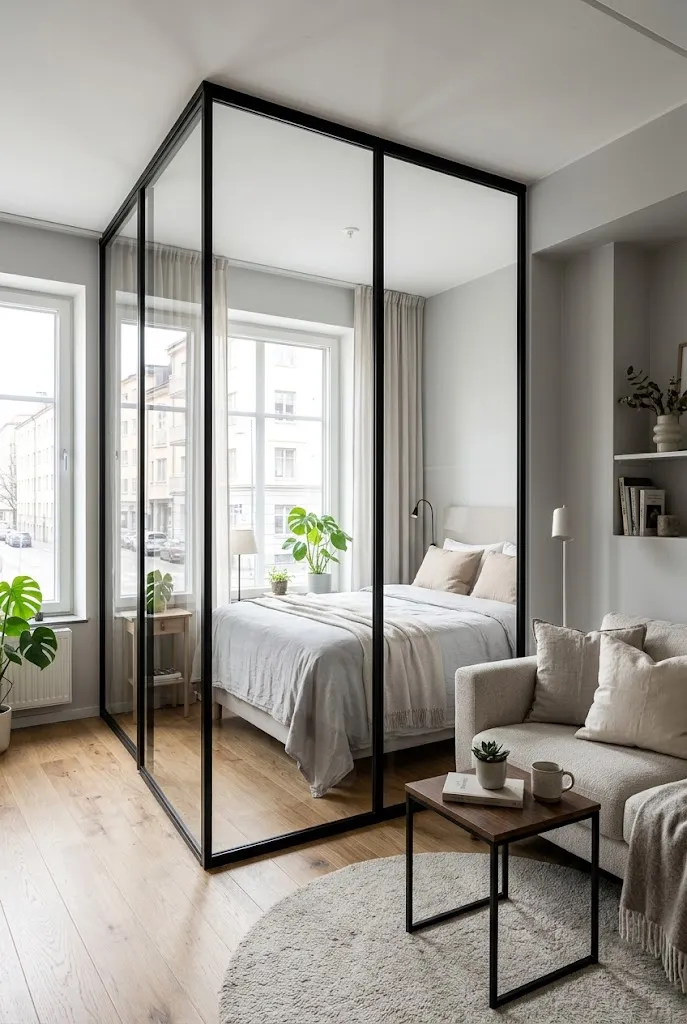
A glass partition can create the feeling of a separate bedroom without sacrificing natural light.
Choose clear glass for maximum brightness or fluted glass if you want additional privacy.
Slim black frames work beautifully in industrial or modern interiors, while frameless panels create a softer minimalist look.
A fixed glass panel beside the bed can be enough to visually establish a bedroom zone without fully enclosing it.
This option works particularly well in narrow apartments where a solid wall would make the space feel darker and smaller.
4. Sliding Glass Door
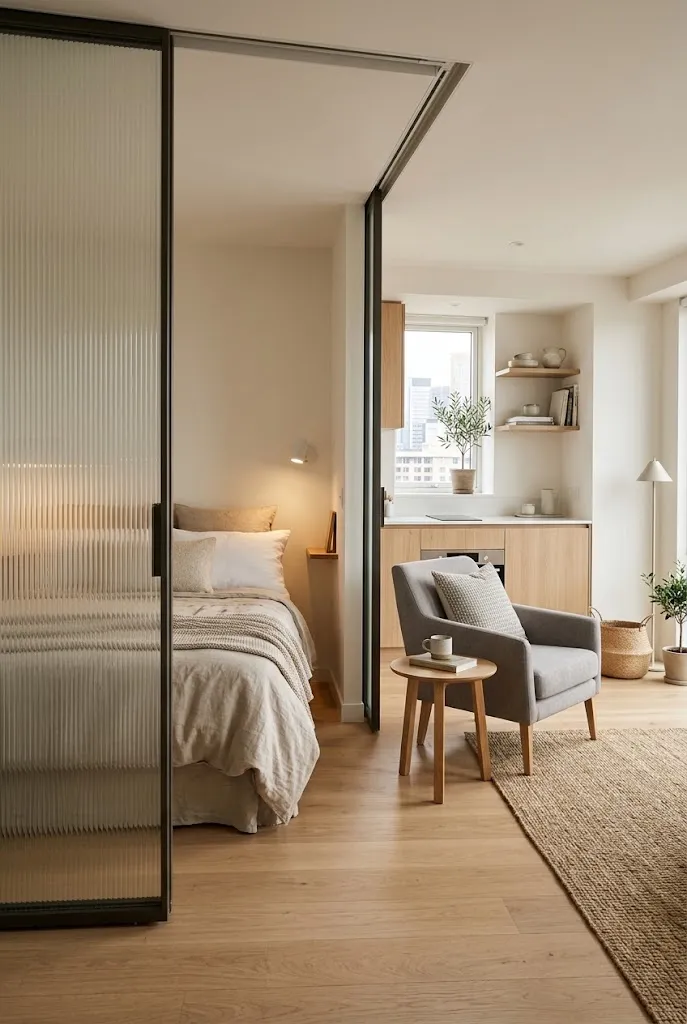
If you want stronger separation, a sliding glass door can transform an open sleeping area into something that feels much closer to a real bedroom.
Because the door slides instead of swinging outward, it requires very little floor space.
Frosted, ribbed, or fluted glass provides privacy while still allowing daylight to travel through the apartment.
Keep the frame simple and slim so the structure does not dominate your small space.
This solution feels especially polished in modern studios and can make the entire apartment look more intentional.
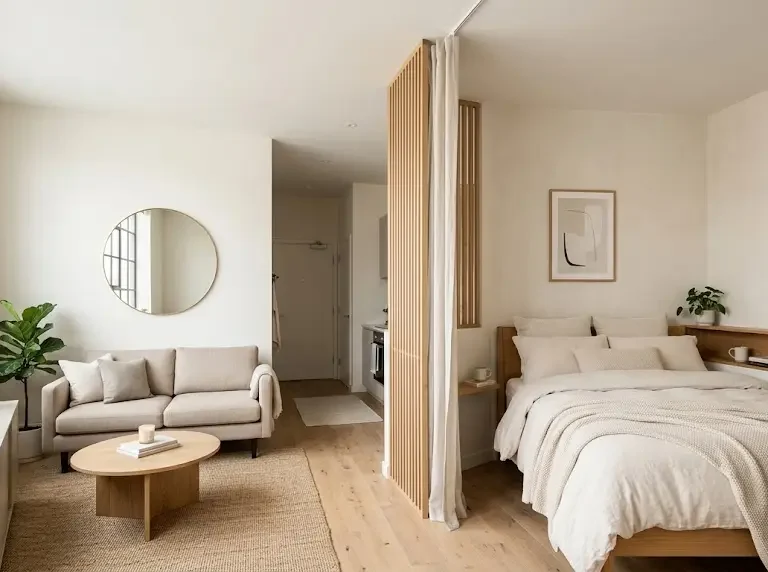
5. Wooden Slat Divider
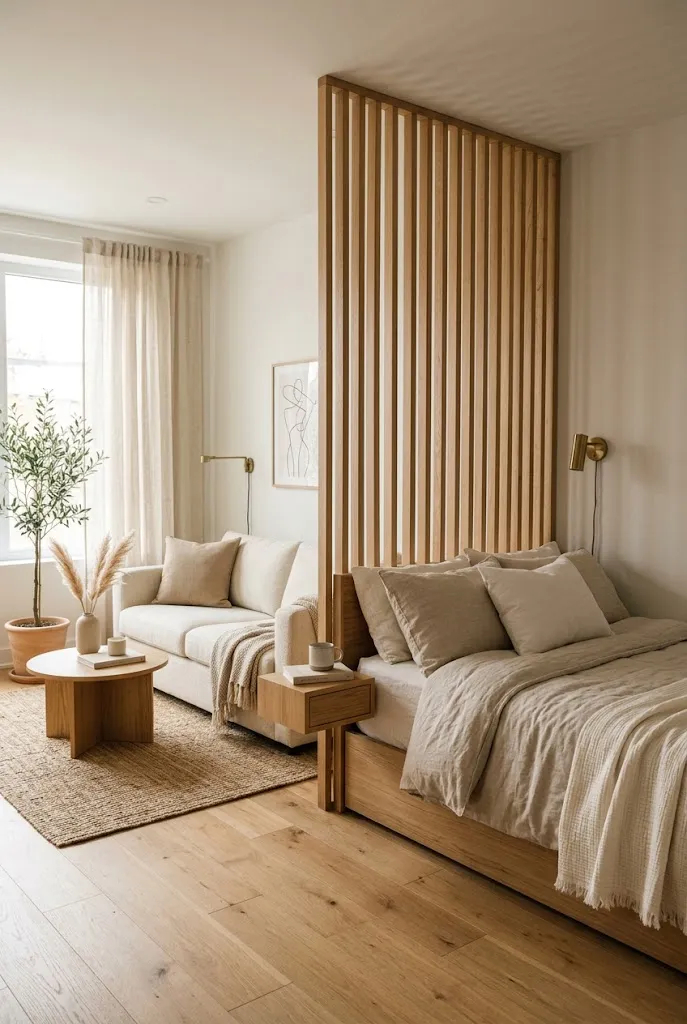
Vertical wooden slats offer a beautiful balance between openness and separation.
Install evenly spaced slats between the sleeping and living areas to create a partial visual barrier.
The gaps allow light and airflow to pass through, which helps prevent the bedroom area from feeling boxed in.
Light oak or natural wood works well in Scandinavian, Japandi, and contemporary interiors.
The vertical lines can also make the ceiling appear slightly taller.
A slatted divider is ideal when you want architectural definition without the heaviness of a full wall.
6. Folding Screen
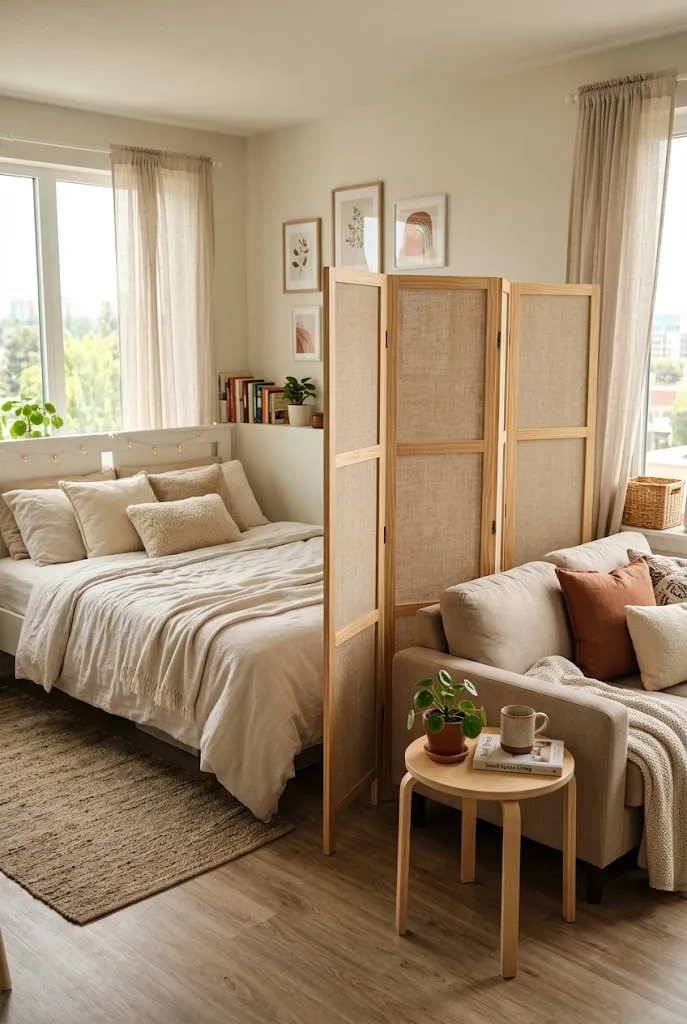
A folding screen is one of the simplest solutions for renters.
You can position it beside or at the foot of your bed whenever you need privacy and fold it away when you want the apartment to feel more open.
Look for styles made from wood, cane, fabric, or woven materials.
Natural textures can make a studio feel warmer while still keeping the overall look relaxed.
Choose a screen tall enough to hide the sleeping area but not so wide that it blocks your main walkway.
This is also a great option when you frequently rearrange your furniture.
7. Cane Room Divider
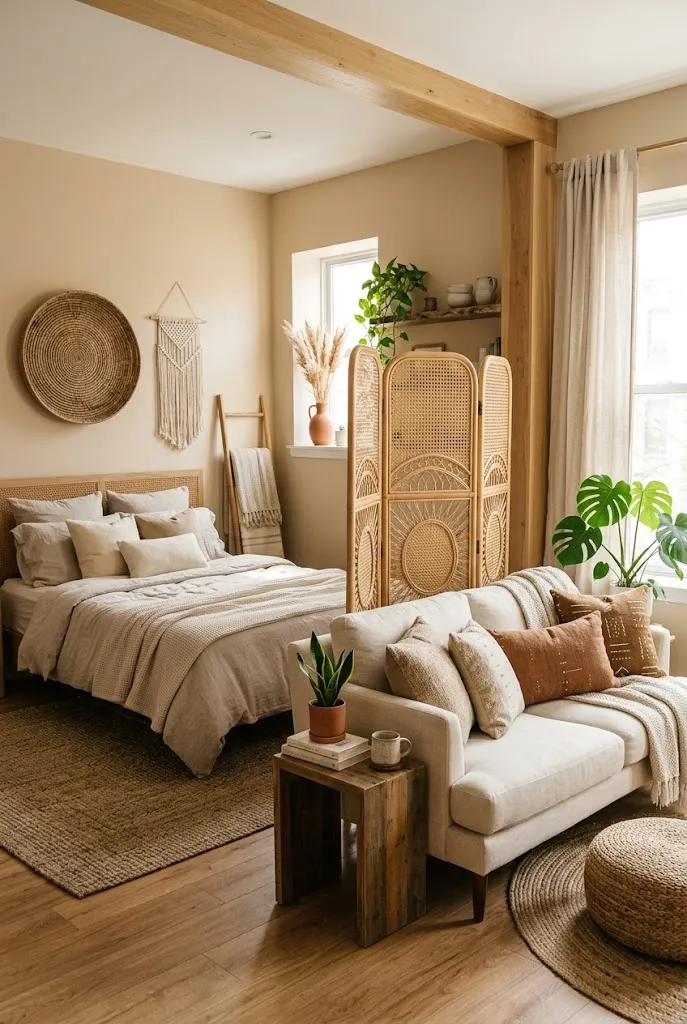
Cane and rattan dividers add warmth without making a small apartment feel heavy.
Their woven surfaces provide partial privacy while still allowing some light through.
Pair a cane screen with neutral bedding, light wood furniture, and warm white walls for a calm natural look.
This style works especially well in bohemian, coastal, organic modern, and Scandinavian-inspired studios.
Because the material has visible texture, it can also add decorative interest even when the rest of your apartment is very simple.
8. Bookcase Wall
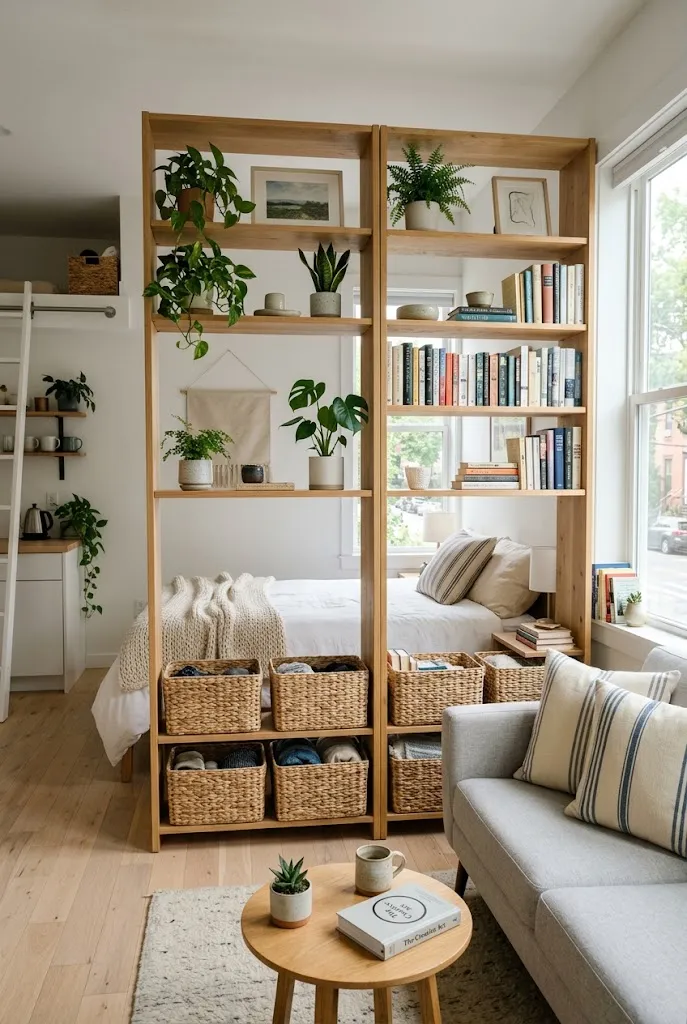
If storage is your biggest problem, use multiple shelving units to create an entire bedroom wall.
Position one or two tall bookcases between the sleeping and living spaces.
You can leave the shelves open or use baskets and storage boxes on selected sections for more privacy.
Try to avoid making the whole structure completely solid.
A mixture of open and closed sections creates enough separation while still preventing the apartment from feeling divided into two tiny boxes.
This solution can provide space for books, decor, clothes, and even small electronics.
9. Half-Wall Divider
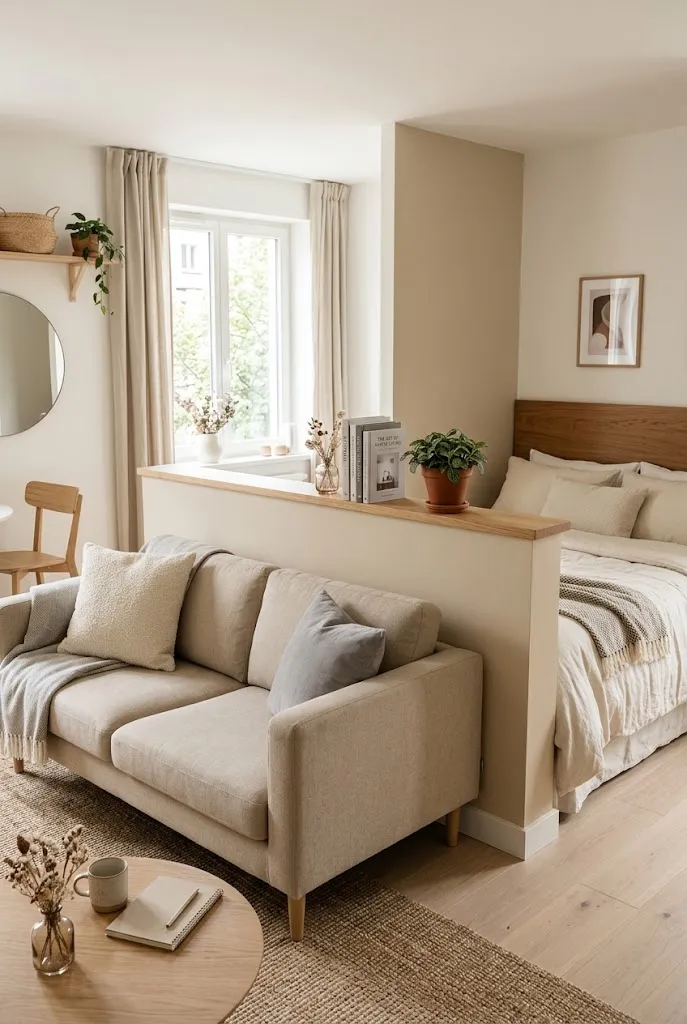
A half wall creates structure while preserving an open feeling.
Instead of building a partition all the way to the ceiling, create a waist-height or chest-height wall near the bed.
The lower portion blocks direct views into the sleeping zone, while the open area above allows light to circulate.
You can also use the top ledge for plants, books, or small decorative pieces.
A half wall works particularly well at the foot or side of the bed.
For renters, you can imitate this idea with low shelving or a freestanding cabinet.
10. Wardrobe Divider
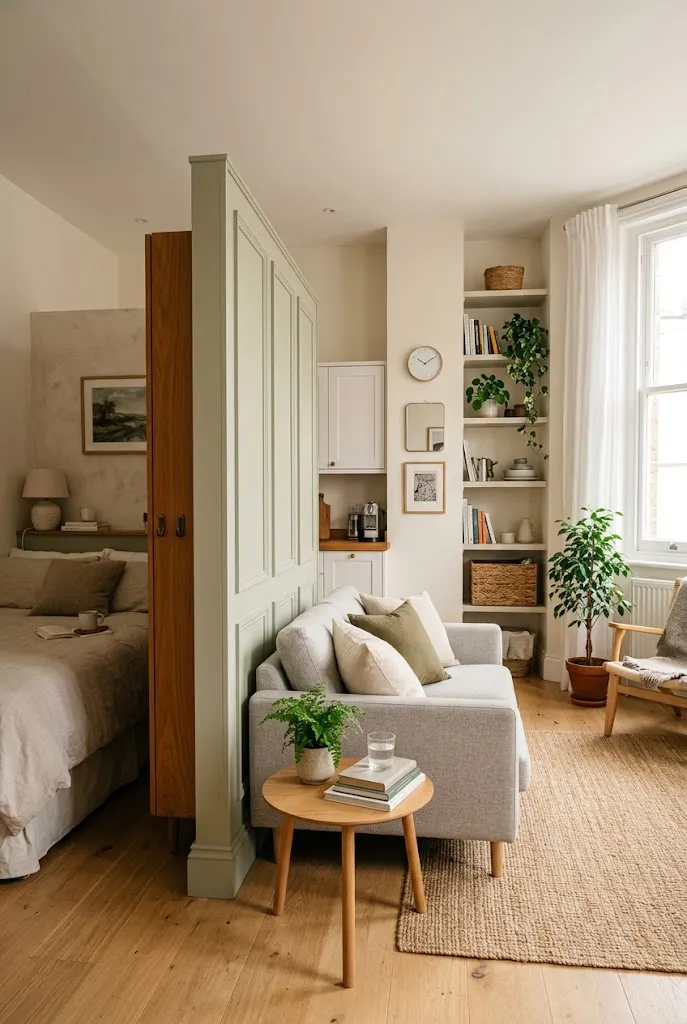
Your wardrobe does not always need to sit against a wall.
A freestanding wardrobe positioned beside the bed can become a practical divider while providing essential clothing storage.
Place the finished back of the wardrobe toward the living area.
If the back looks unfinished, cover it with peel-and-stick wallpaper, decorative panels, or a large piece of artwork.
This layout is especially useful in studios without built-in closets.
Just make sure there is enough room around the wardrobe for comfortable circulation.
11. Plant Divider
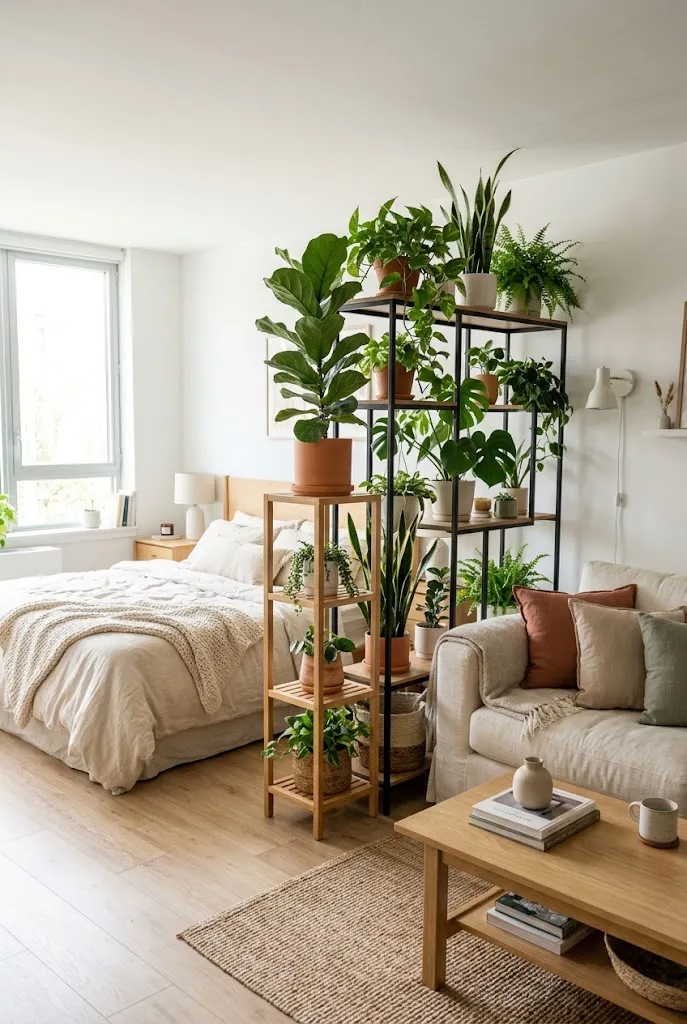
Plants can create a softer and more natural form of separation.
Use a long plant stand, open shelving filled with greenery, or a row of tall indoor plants between the bed and living area.
Choose plants with varying heights to create visual depth.
Tall species can provide privacy while smaller trailing plants soften the edges of the divider.
This approach works best when the bedroom receives enough natural light.
It is a great solution if you prefer an organic look and want the apartment to feel fresh rather than heavily divided.
Read More:
14 Cozy Studio Apartment Aesthetic Ideas That Feel Warm
19 Studio Apartment Furniture Ideas That Save You Space
12. Macrame Divider
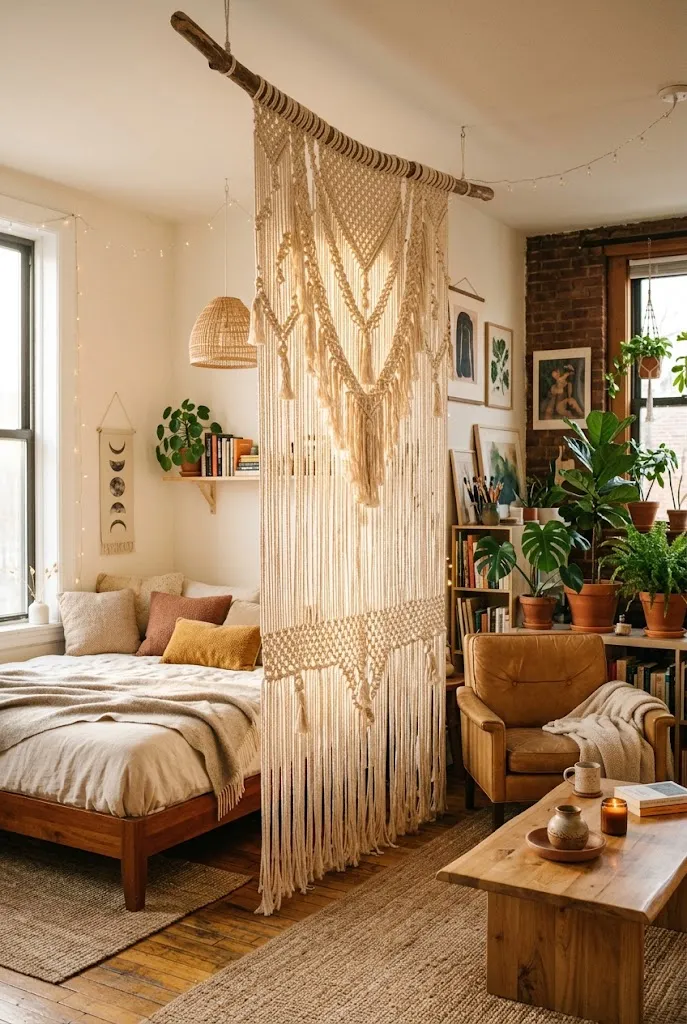
A hanging macrame panel can create subtle separation while adding texture.
Suspend it from the ceiling between the sleeping and living zones.
Because macrame has an open weave, it does not block light or completely close off the room.
It works particularly well in bohemian or relaxed interiors.
Choose a neutral cream or natural fiber color to keep the apartment feeling bright.
This type of divider is more decorative than private, but it can still clearly establish where the bedroom begins.
13. Fabric Panel Divider
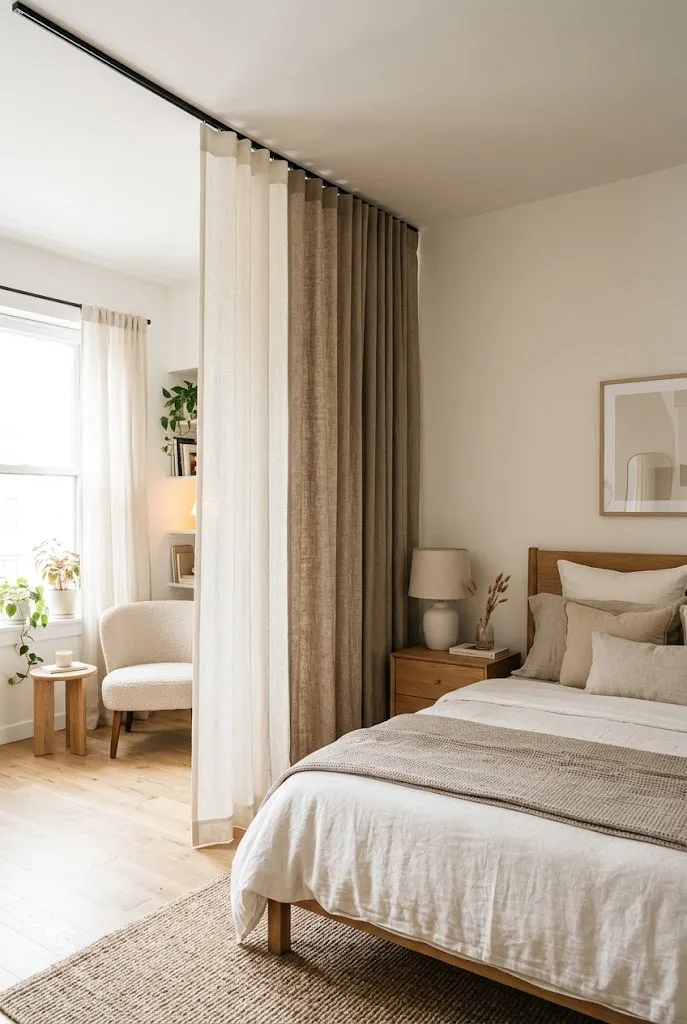
Instead of traditional curtains, use one or two structured fabric panels.
Hang them from a ceiling track or slim frame beside the bed.
Linen, cotton, or textured woven fabric gives the room a softer architectural look.
You can keep the panels stationary or slide them aside when necessary.
Neutral shades work beautifully in small apartments, while subtle patterns can add personality.
This option is especially useful when you want something softer than glass or wood but more polished than a standard curtain.
14. Sliding Barn Door
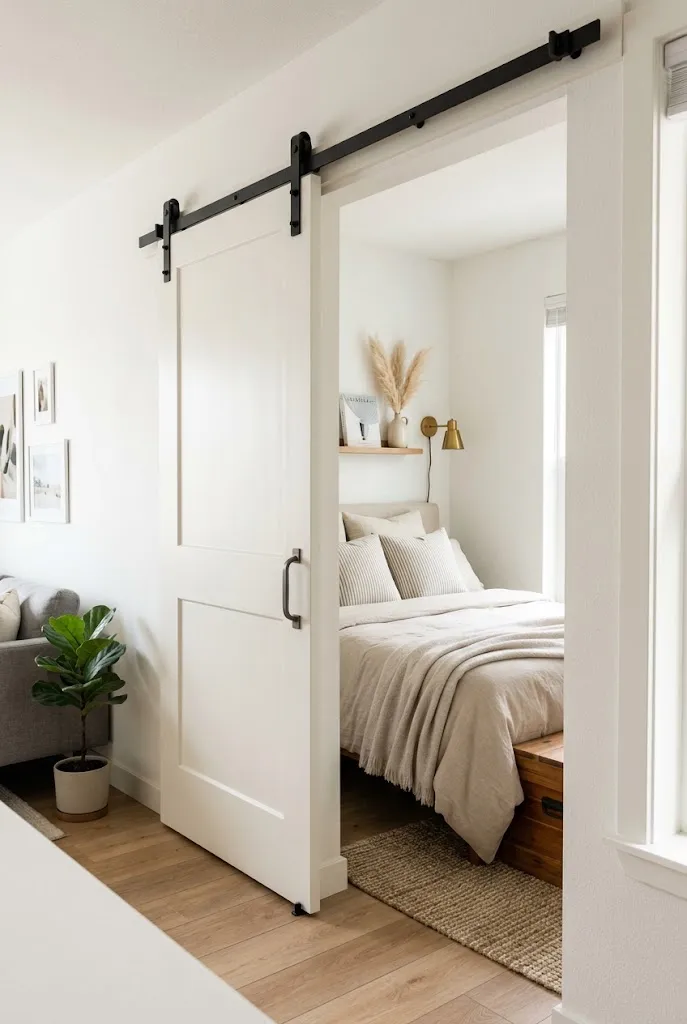
A sliding barn-style door can provide almost complete privacy without requiring the floor clearance of a traditional hinged door.
For a small apartment, choose a streamlined modern version rather than an oversized rustic design.
Paint the door the same color as the wall to help it blend into the room.
If your studio has an alcove or sleeping nook, this approach can turn it into a much more private bedroom.
Make sure the wall beside the opening has enough clear space for the door to slide.
15. Vertical Storage Divider
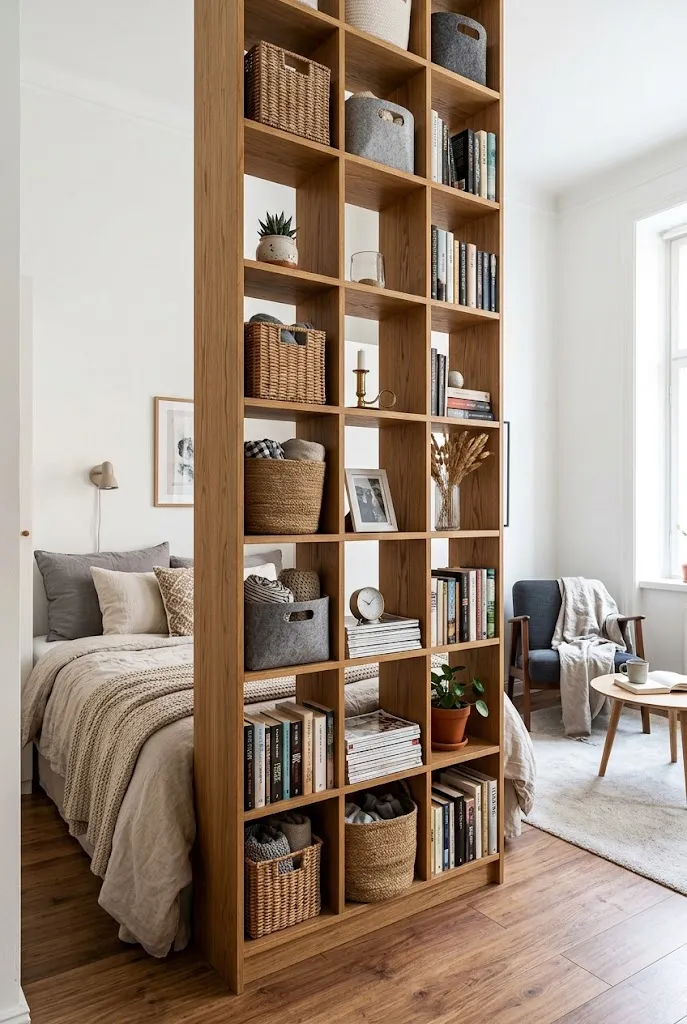
A narrow floor-to-ceiling storage structure can separate zones without using much floor area.
Think slim shelves, stacked cubbies, or a custom vertical cabinet.
Position it near the edge of the bed so that it partially blocks the view from the living area.
The vertical shape emphasizes ceiling height and provides useful storage for books, accessories, or baskets.
Keep the unit relatively narrow so it does not become a visual obstacle.
This works especially well in extremely small studio layouts where every inch matters.
16. Headboard Divider
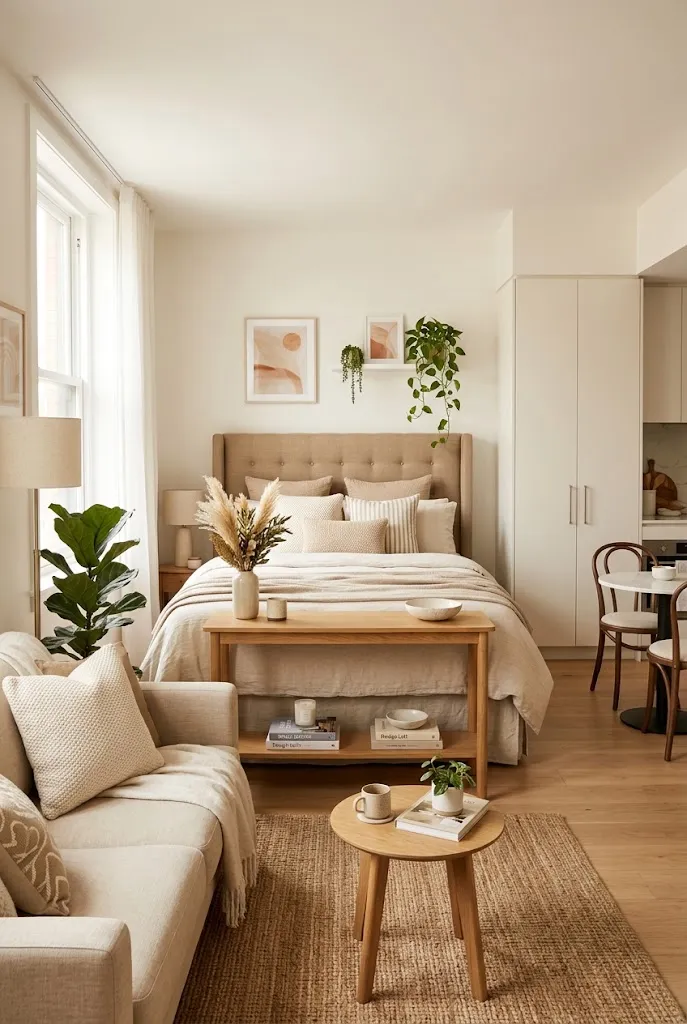
Your headboard can do more than support pillows.
Position the bed so that the headboard faces the living area, then use an extra-tall headboard to create separation.
Upholstered headboards add softness, while wood or slatted designs create a more architectural look.
You can also place a narrow console table against the back of the headboard to make the divider feel intentional from both sides.
This setup is useful when you do not have enough room for an additional screen or shelving unit.
17. TV Console Divider
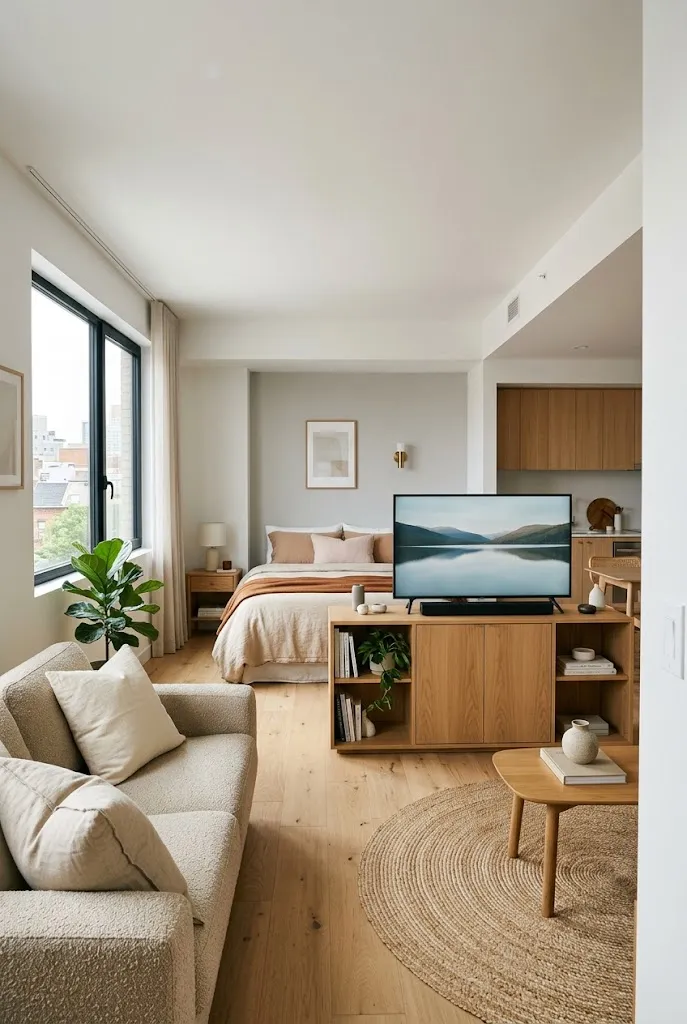
A freestanding media console can help separate your sleeping and living zones while solving another practical problem.
Position the console between the sofa and bed.
Depending on the layout, you can place the television on the living-room side and use the bedroom side for storage.
Choose a low or medium-height console rather than a floor-to-ceiling cabinet if you want to preserve openness.
This approach works particularly well in long rectangular studios.
18. Pegboard Divider
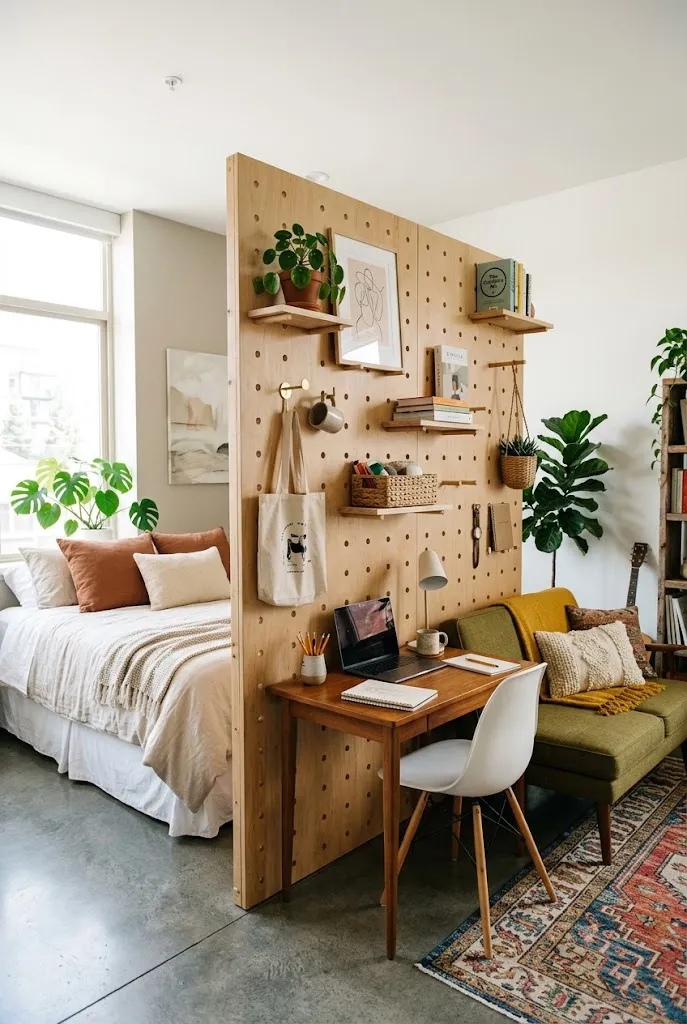
A freestanding pegboard can function as both a visual divider and customizable storage system.
Use hooks, small shelves, hanging baskets, and accessories to organize everyday items.
Because pegboard has an open surface, it feels lighter than a solid partition.
A wooden or painted pegboard can also become a strong decorative feature.
Position it beside a bed or desk to establish clear boundaries between different zones.
This is especially useful for small creative studios where flexible organization is important.
19. Fluted Panel Divider
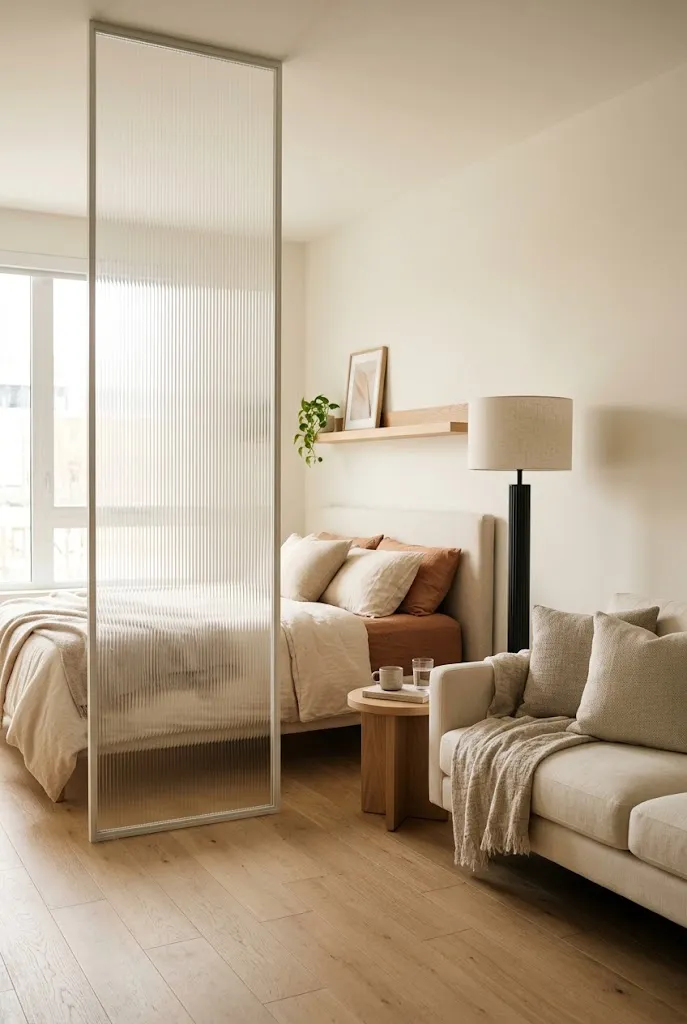
Fluted panels add texture and architectural detail while keeping the overall design simple.
Use a narrow section of vertical fluted wood or translucent fluted acrylic beside the sleeping area.
The repeating vertical lines can visually increase the height of the room.
A translucent panel is particularly useful because it offers privacy while still transmitting soft light.
This idea suits modern, minimalist, and contemporary studio apartments.
20. Archway Divider
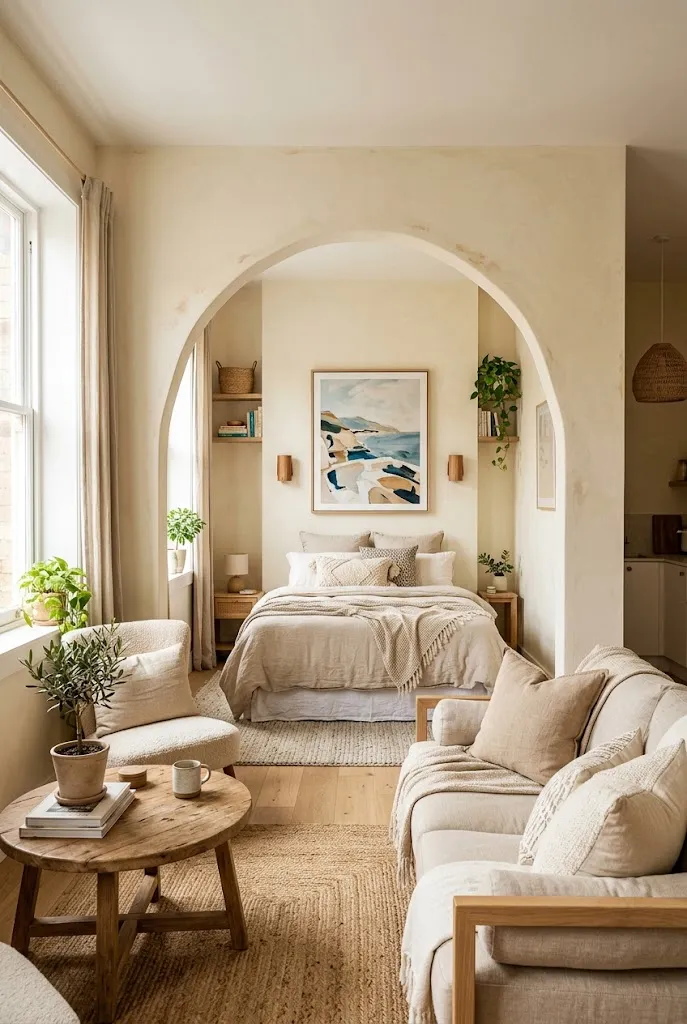
An open arch can visually separate the sleeping zone without actually closing it off.
If permanent construction is possible, create a wide arched opening between the bedroom and living space.
For a renter-friendly alternative, use a decorative freestanding partition with an arched shape.
The curve adds softness and makes the divider feel more like an intentional architectural feature.
Keep the opening generous so that your apartment still feels connected and spacious.
21. Mixed Divider Setup
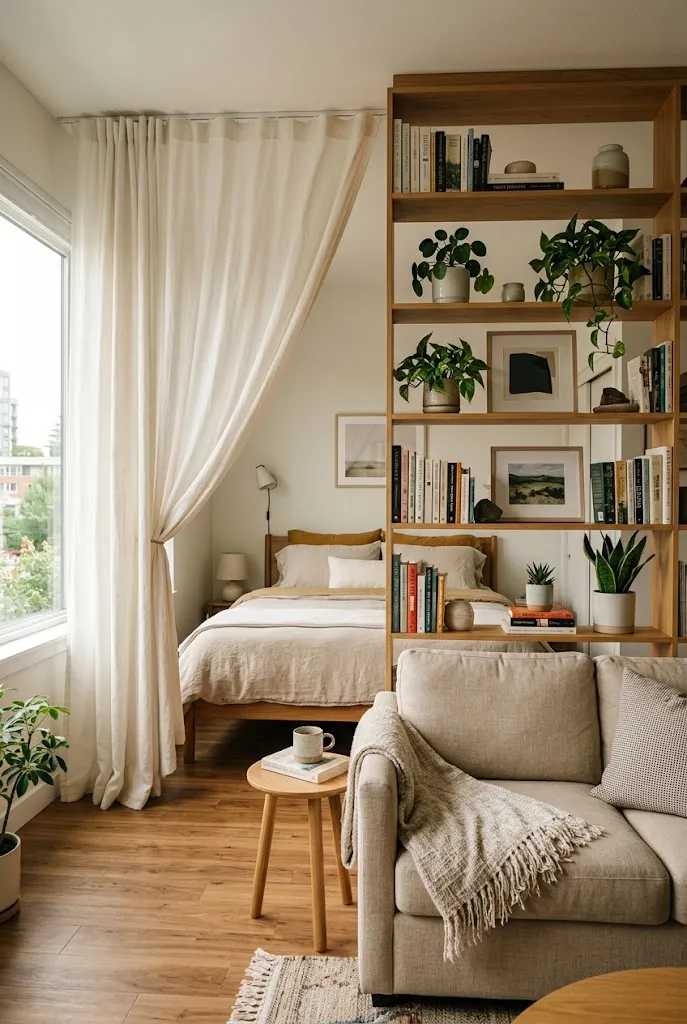
Sometimes the best solution combines two divider ideas.
For example, pair an open shelving unit with a ceiling curtain.
During the day, leave the curtain open and let the shelving provide subtle separation.
At night, close the curtain when you want more privacy.
You could also combine wooden slats with plants, a half wall with glass, or a wardrobe with a fabric panel.
Using two lightweight dividers often works better than installing one large solid partition.
The result can feel flexible, layered, and much more personalized to your studio layout.
How to Choose the Right Bedroom Divider
The best divider depends on your apartment size, lighting, storage needs, and how much privacy you actually want.
If your studio has only one main window, avoid placing a large solid divider directly in front of it.
Open shelving, glass, curtains, slatted wood, and woven screens usually allow more light to travel through the room.
Storage should also influence your decision.
If you have very little closet space, a wardrobe divider or bookcase may be more useful than a decorative screen.
Renters should focus on reversible options such as curtains, folding screens, shelving units, and movable furniture.
Before buying anything, measure the available floor space and make sure the divider will not block important pathways.
The goal is to create separation without making your studio harder to move through.
Make the Bedroom Feel Separate
A divider becomes even more effective when you reinforce the sleeping zone with a few additional design choices.
Use a rug underneath or beside the bed to define the bedroom footprint.
Choose bedding in a coordinated color palette and add a bedside lamp to make the space feel intentional.
You can also paint or decorate the wall behind the bed differently from the rest of the apartment.
Even subtle changes in lighting, texture, and furniture placement can make the sleeping area feel like its own room.
Avoid placing too many different dividers or decorative elements in one studio.
A few clear boundaries usually create a more spacious result than trying to divide every function completely.
Final Thoughts
Creating privacy in a studio apartment does not require building traditional walls.
The most effective studio apartment bedroom divider ideas use light, flexible materials and smart furniture placement to create separation without sacrificing openness.
Curtains are perfect for renters, open shelving adds storage, glass keeps the apartment bright, and wooden slats create a stylish architectural effect.
Even something as simple as a folding screen or tall headboard can make your sleeping space feel much more private.
Choose a divider that solves more than one problem whenever possible.
When privacy, storage, light, and layout all work together, even a very small studio can feel organized, comfortable, and much closer to a true one-bedroom home.
Community
Join the conversation
Add a useful idea, ask a specific question, or share what worked in your space. Every comment is reviewed before it appears.