
Two wardrobes, one bedroom, and nowhere for the laundry to land? Small Bedroom Storage Ideas for Couples can help you reclaim that crowded room without filling every spare corner with another cabinet. The goal is a bedroom that supports two daily routines while still feeling restful at the end of the day.
Start by noticing where belongings pile up: beside the bed, on the dresser, or just inside the closet. Those spots usually need easier storage, not more decoration. These eighteen ideas make practical use of existing furniture, overlooked vertical space, and clearly divided zones. Choose the options that suit your room measurements, clothing habits, and rental rules, then build a system you can both maintain.
1. Underbed Drawer Zones
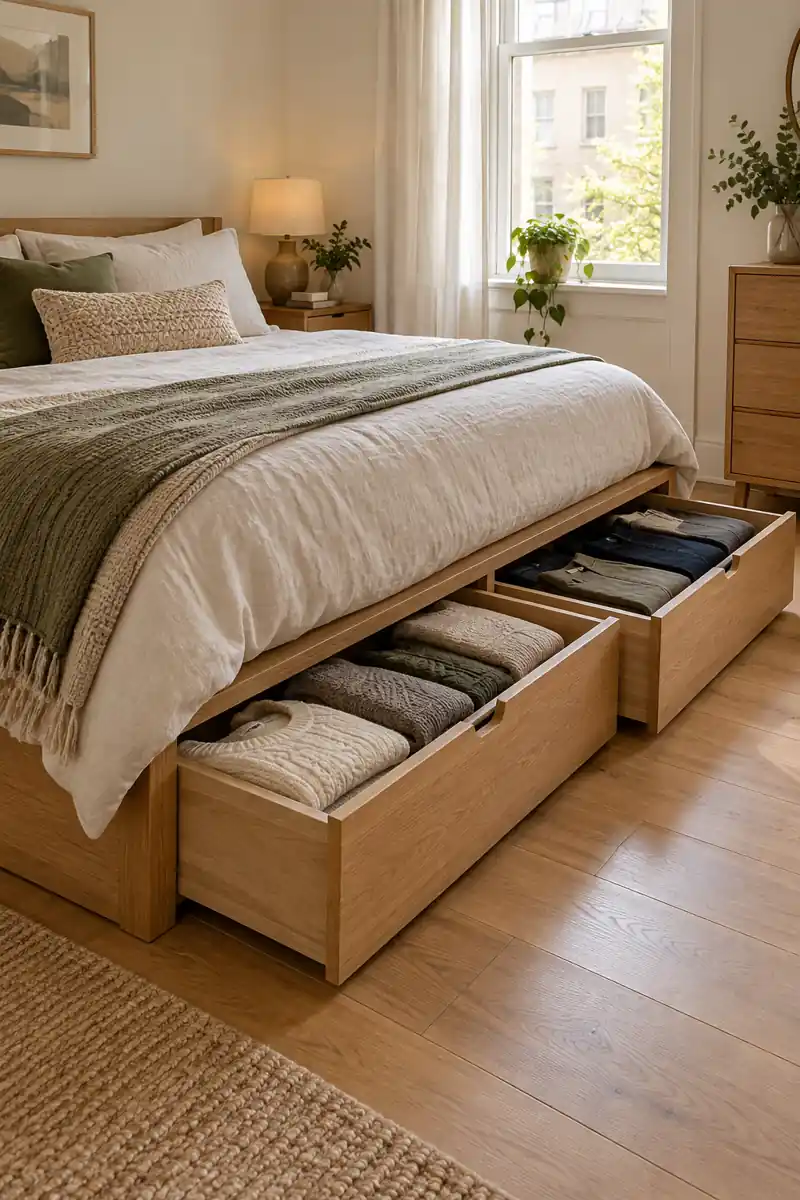
The floor beneath your bed can hold more than dust. Give each partner a separate underbed drawer for clothing that folds flat, such as knitwear, pajamas, or spare bedding. Choose low containers that slide out easily, and check the clearance beneath the bed frame before buying anything.
Keep everyday items on the side each person can actually reach. A drawer trapped against a wall quickly becomes forgotten storage. Leave enough floor space to pull it out completely, and avoid overfilling it so fabric does not catch against the frame when you close it.
2. Double Hanging Rails
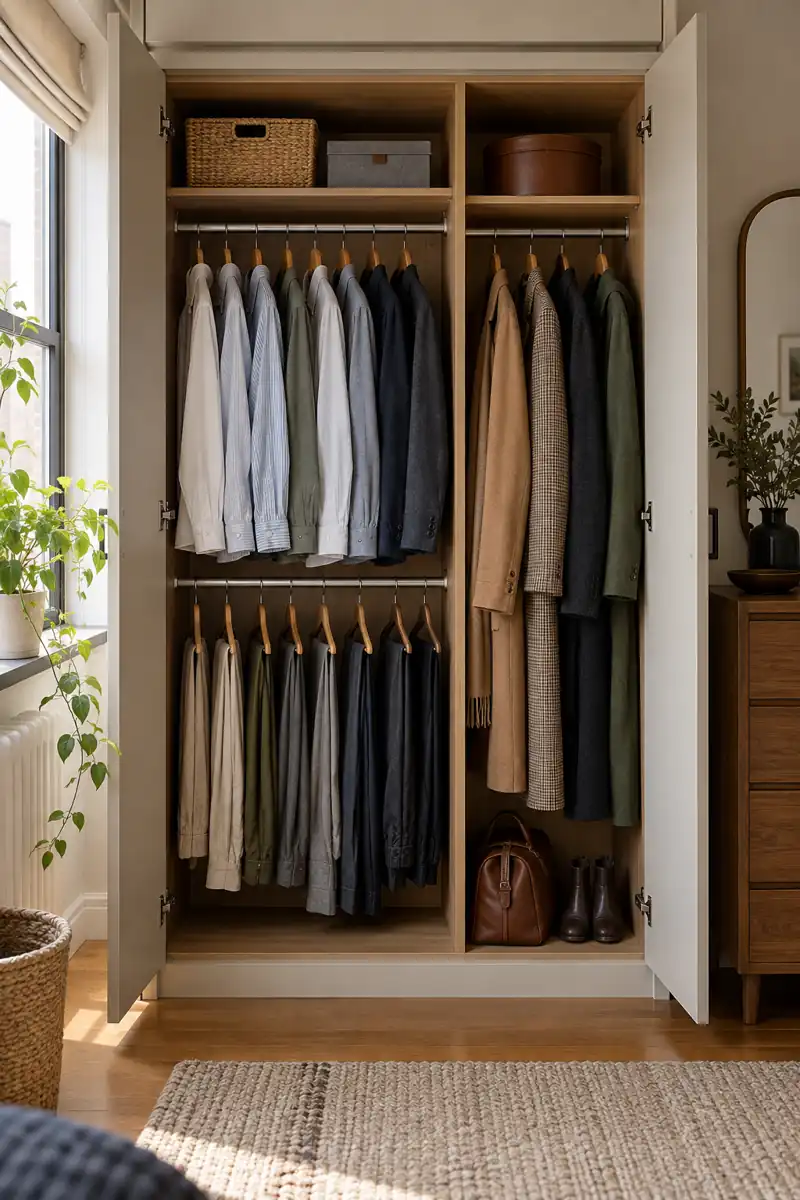
- An extra rail can rescue the wasted space beneath short clothing.
- Measure the hanging length of shirts and folded trousers before dividing the closet vertically.
- Keep one full-height section for dresses, coats, or longer garments.
- Choose a supported rail system rated for the clothing load, rather than improvising a flimsy pole.
Split hanging space by clothing length before dividing it equally between people. One partner may need more long-hanging room while the other mainly wears shorter pieces. A balanced arrangement gives both people accessible storage without forcing garments into a space that wrinkles them or hides what they own.
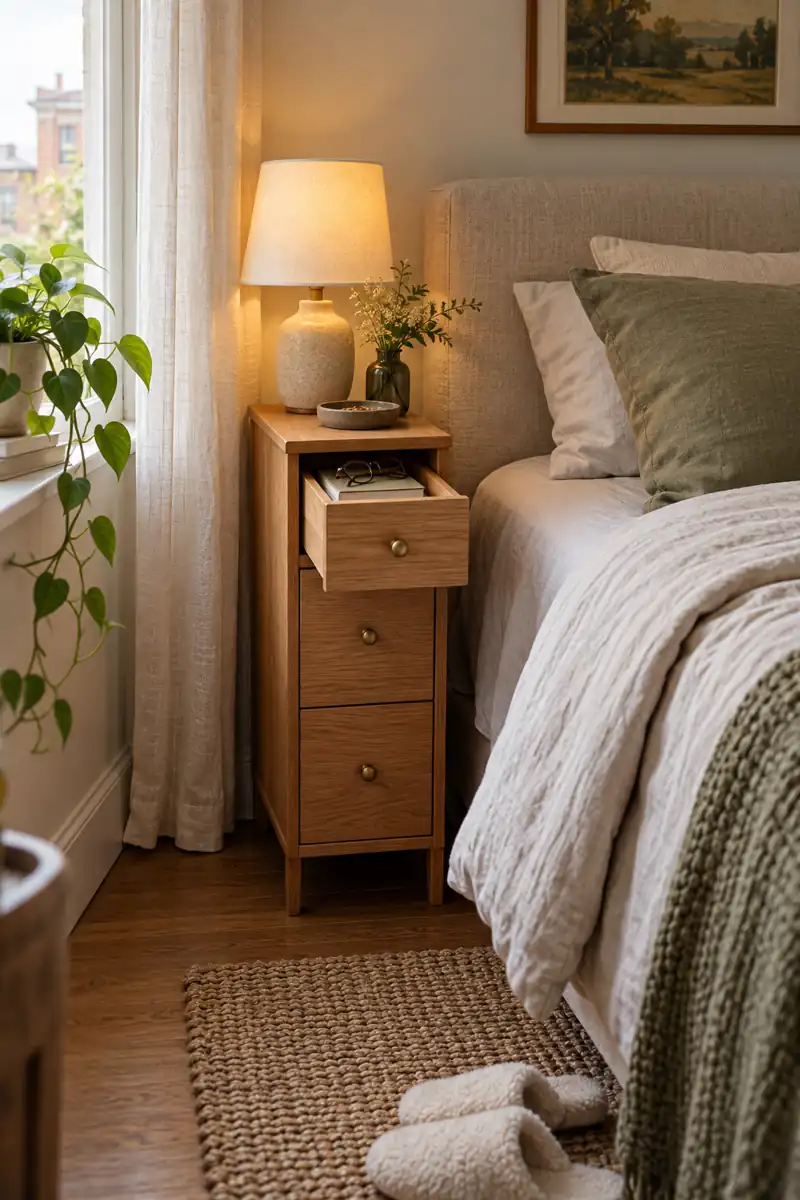
3. Slim Bedside Drawers
Quick Tip:
A bedside drawer can replace that nightly pile of small belongings. Measure the gap beside the bed, then choose a narrow unit with enough clearance to open its drawers fully. Keep the top for a lamp and one daily essential.
Two smaller bedside units can be more useful than one oversized cabinet that only one person reaches comfortably. Store reading glasses, tissues, and sleep accessories inside. Check that the base does not block an outlet you need, and follow the manufacturer’s anchoring instructions for the furniture you choose.
4. Divided Dresser Drawers
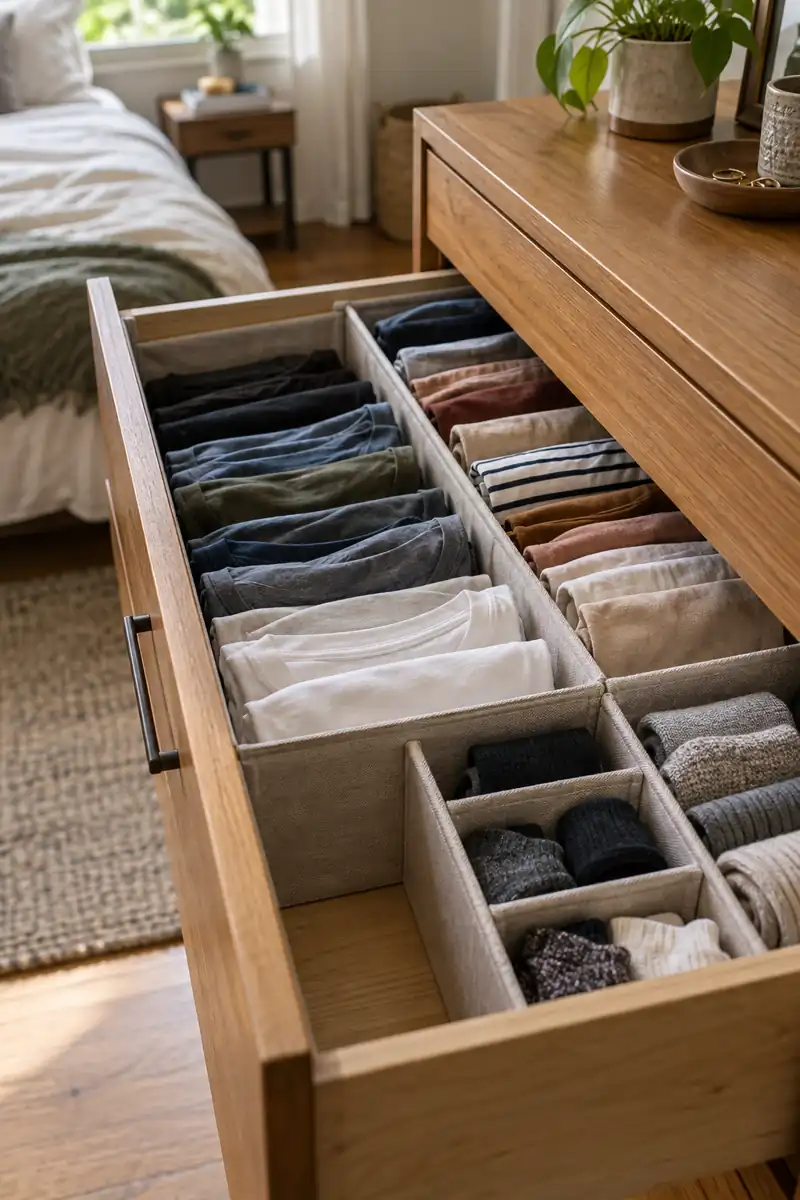
BEFORE: A shared drawer becomes a jumble of socks, shirts, and someone else’s missing belt. Searching through it disturbs every folded pile.
AFTER: Adjustable dividers give each category a visible boundary. Each partner knows which section to use, so putting clean laundry away becomes simpler.
Measure inside the drawer, including its usable height, before choosing organizers. Soft fabric compartments suit underwear, while sturdier dividers help hold folded shirts upright. Leave a little room between items so removing one does not pull out the next. The system should be easy to reset every day.
5. Overdoor Pocket Storage
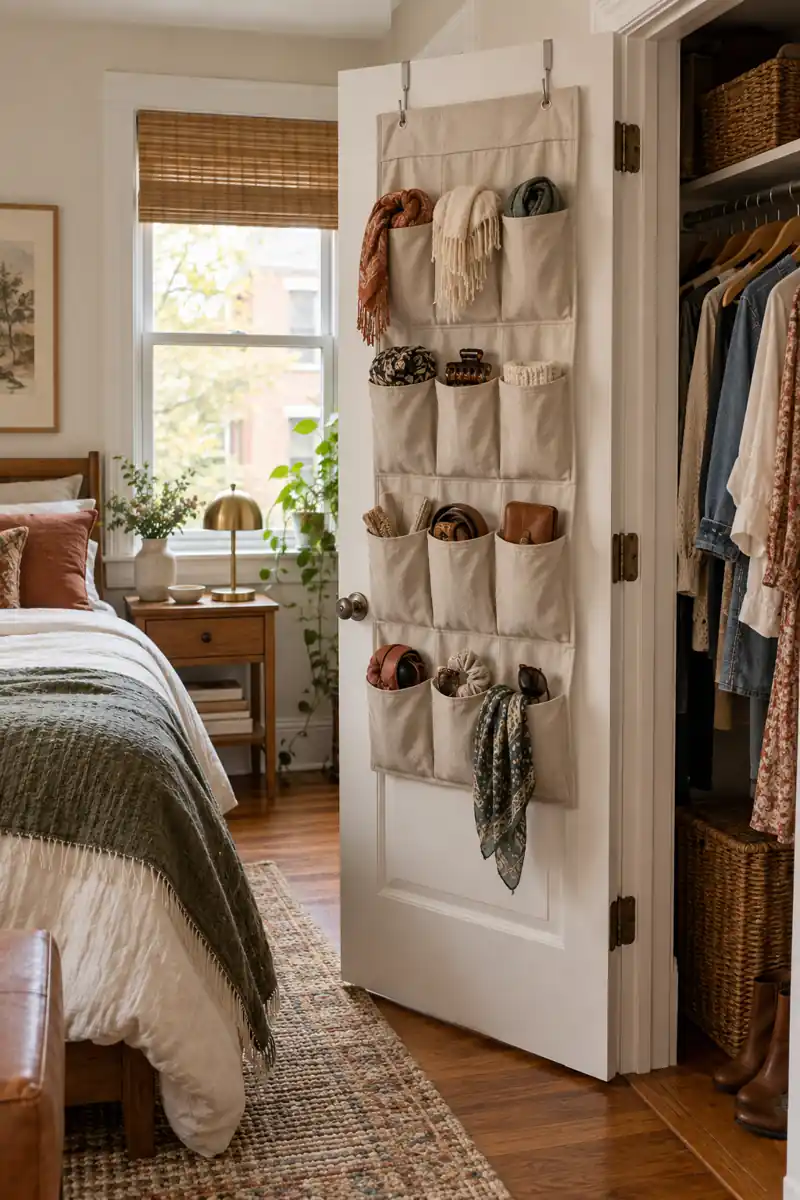
- Turn an overlooked door into lightweight accessory storage.
- Measure the door thickness and check that the chosen hooks allow it to close normally.
- Fill lower pockets with frequently used scarves, hair accessories, or small clothing items.
- Keep heavier belongings elsewhere and test the door movement before filling every pocket.
An organizer works best when its pockets are shallow enough to see into. Assign a few to each person rather than mixing everything together. Avoid hanging it where it rubs clothing, catches a door handle, or interferes with the latch. Easy access matters more than the maximum pocket count.
6. High Closet Shelves
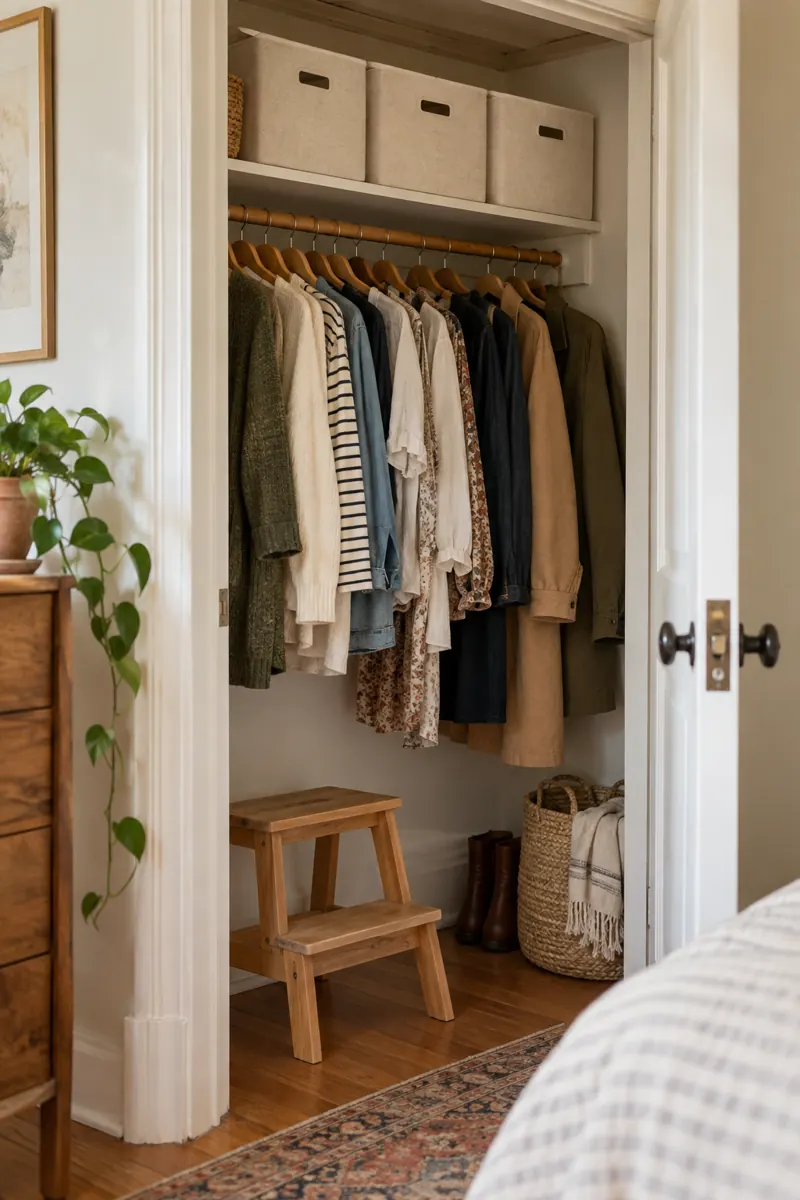
| Feature | Mixed loose piles | Handled fabric bins |
|---|---|---|
| Visibility | Items disappear behind stacks | Separate categories stay together |
| Access | Several piles need moving | One bin comes down at a time |
| Best use | Frequently worn folded pieces | Light seasonal clothing |
That upper shelf is useful for belongings you do not need every morning. Keep containers light enough to lift safely, and use a stable step stool instead of climbing on bedroom furniture. Check the shelf’s load limit and supports. Heavy items belong lower down, where handling them is easier.
7. Matching Slim Hangers
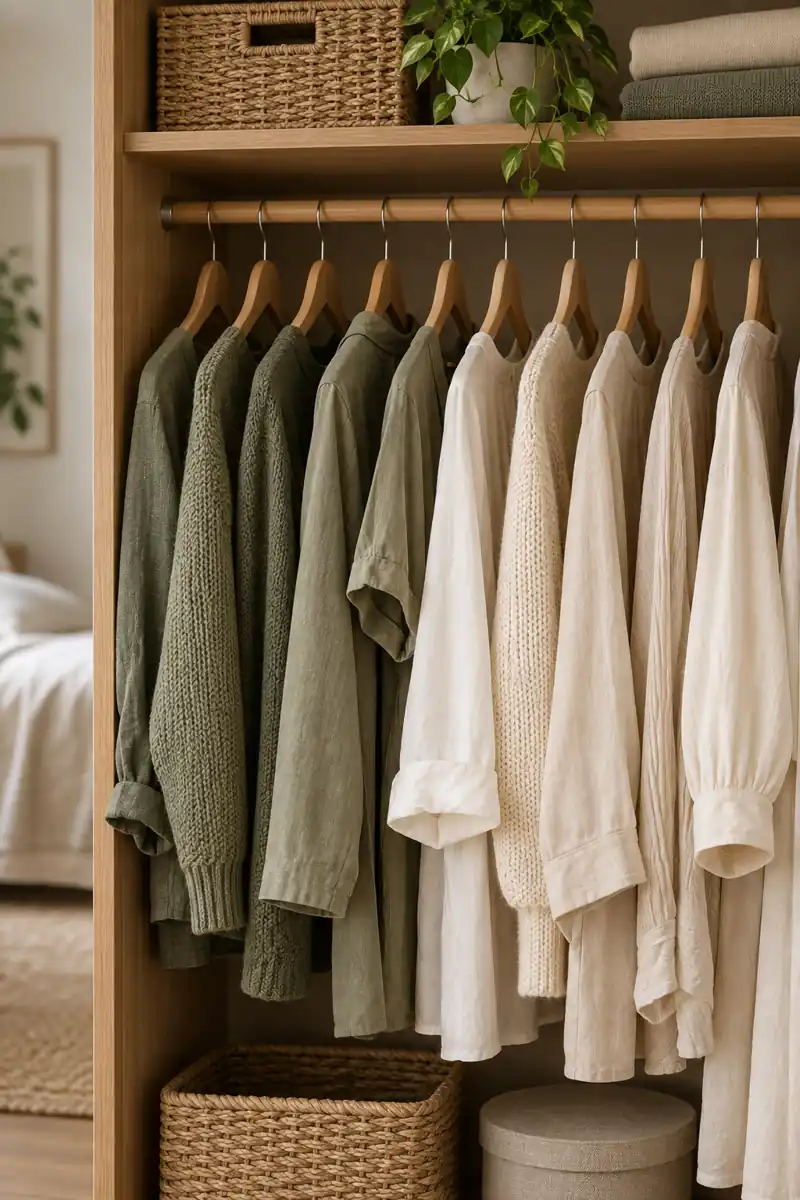
DO
- Let consistent hangers bring order to a crowded rail.
- Choose a shape that supports the clothing you actually own.
- Leave enough space to remove garments without tugging.
DON’T
- Do not force thick coats onto delicate hangers.
- Do not keep every spare hanger on the main rail.
- Do not treat thinner hangers as a reason to overload the closet.
Uniform hangers reduce visual clutter and can help clothing sit more evenly, but the biggest improvement comes from removing pieces you no longer wear. Keep a small spare supply together. Review the rail with your partner so neither person quietly loses their share of accessible space as new clothes arrive.
8. Bedside Fabric Pockets
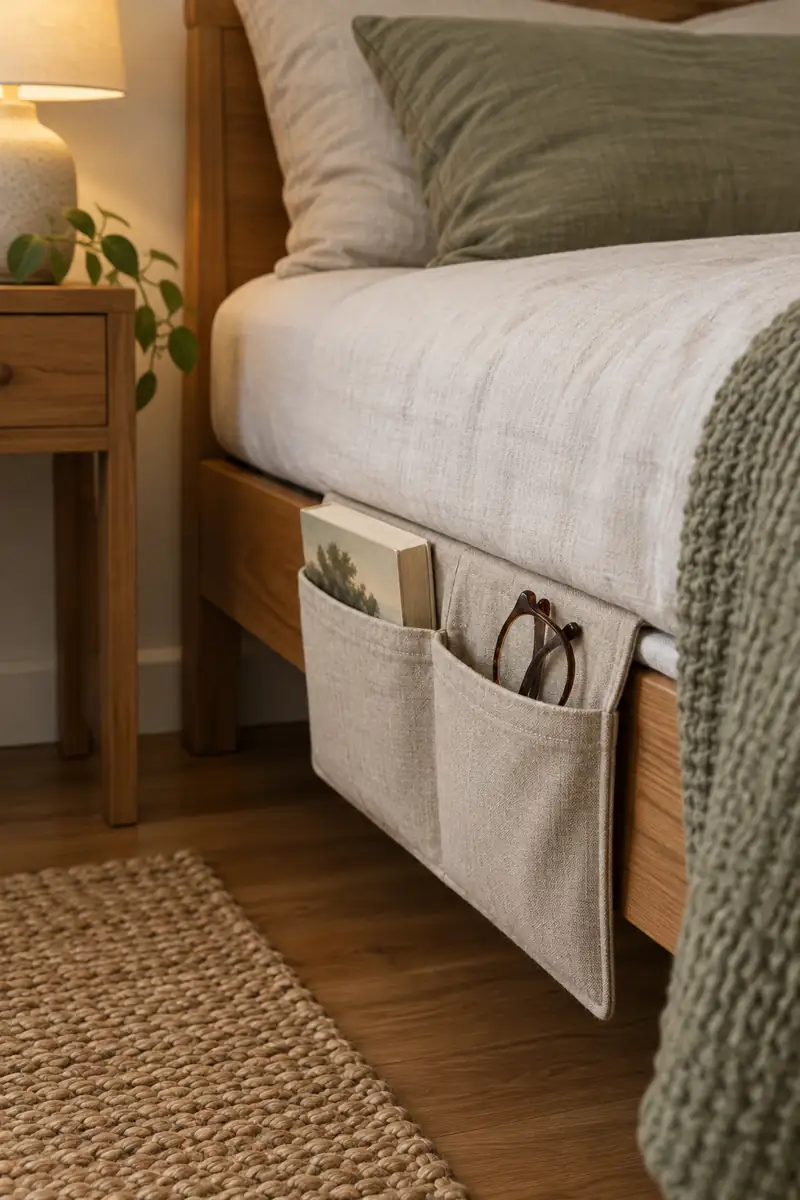
Result: A book and glasses stay close without a floor-standing unit.
Best For: Narrow gaps beside the mattress.
Installation: Choose a mattress-tuck style or a properly secured wall version.
Storage: Lightweight bedtime essentials.
Soft pockets are useful when there is little room for a conventional nightstand. Check that the organizer stays in place when the bedding moves, and keep its contents small. Avoid storing charging devices inside fabric pockets, where heat can build up. A clear bedside area is easier to clean.
9. Storage Ottoman Bench
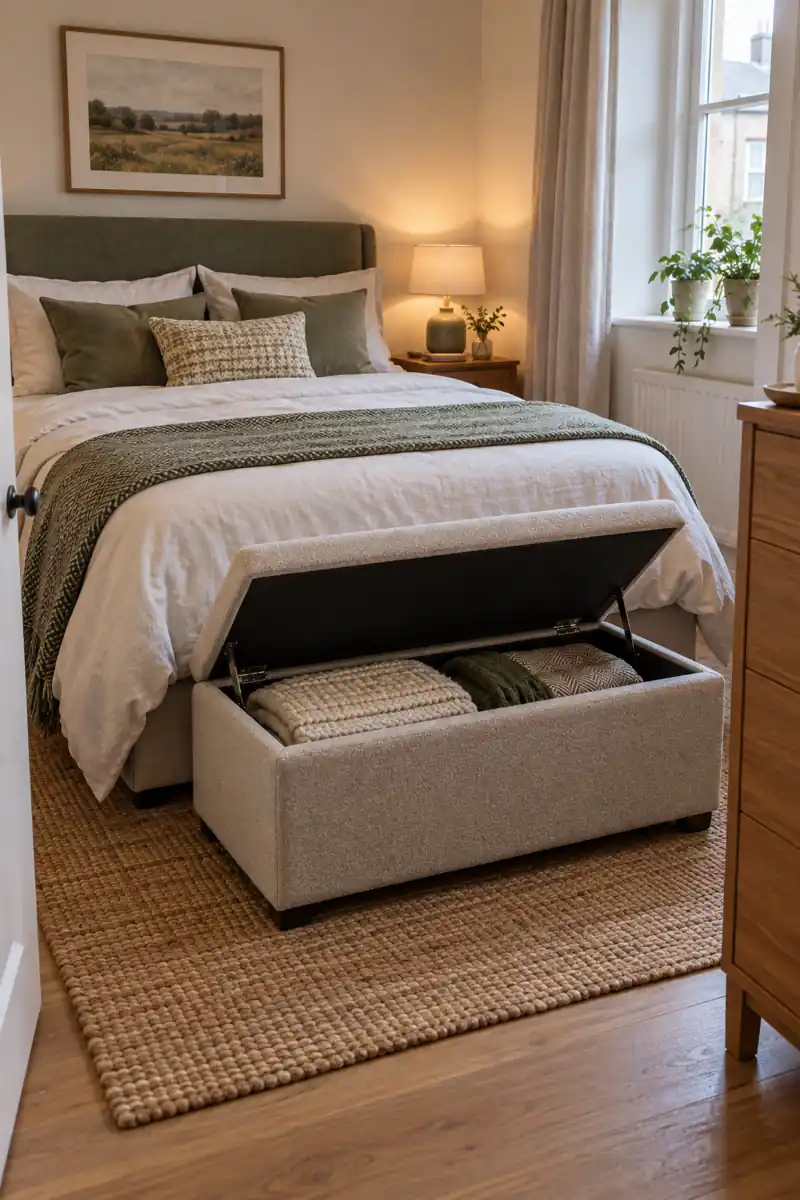
A bench can earn its place twice: somewhere to sit and somewhere to hide spare bedding. Choose a compact storage ottoman only if the foot of the bed has enough walking space. Measure with the lid open as well as closed before deciding it fits your room.
Reserve its interior for blankets or extra pillows rather than a mixed collection of forgotten belongings. A supported lid is easier to use safely, especially in a tight corner. If the bench makes either partner squeeze past the bed, skip it and use storage within existing furniture instead.
10. Seasonal Clothing Bins
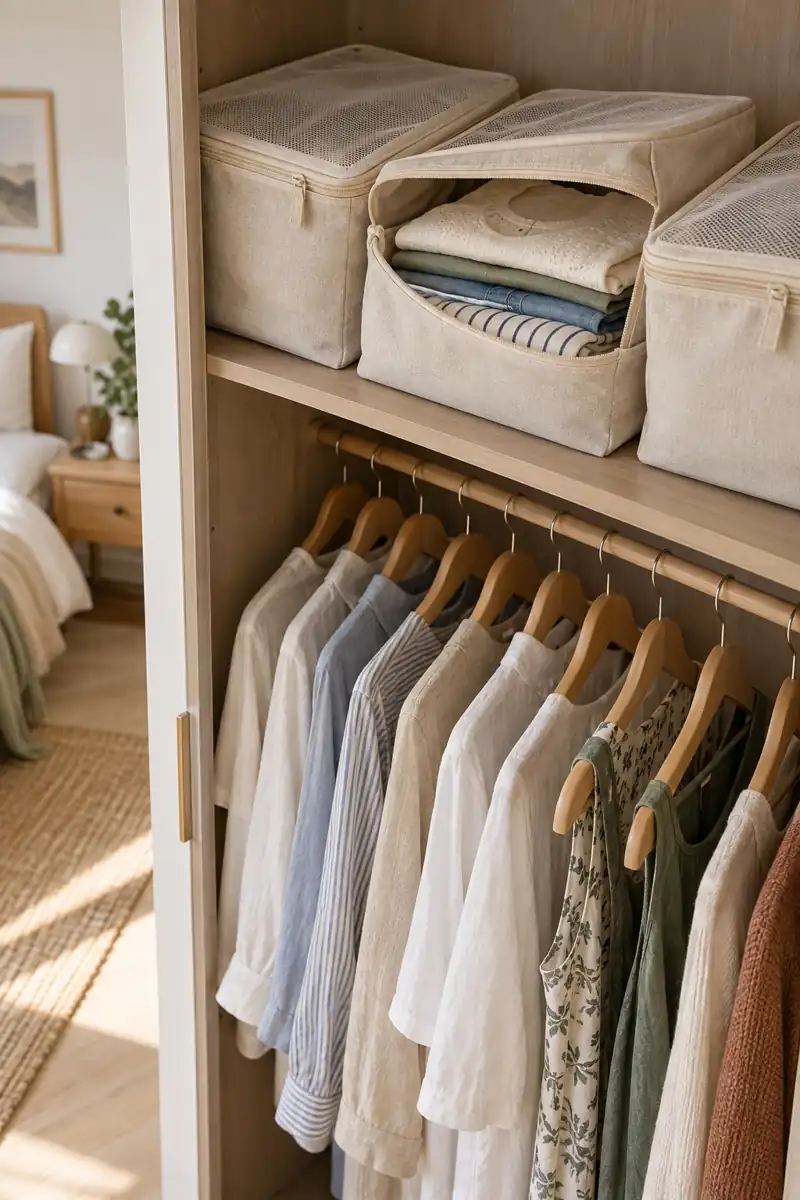
- Your winter layers do not need prime closet space all summer.
- Wash and fully dry clothing before storing it.
- Separate seasonal items into manageable containers by person or category.
- Choose containers suited to the fabric and the dryness of the storage location.
- Keep an accessible layer for unexpected weather changes.
A seasonal swap reduces the number of items competing for daily access. Use the same storage location each time so both people know where to look. Check stored fabrics periodically for dampness or pests, and avoid packing delicate garments tightly just to squeeze another container onto the shelf.
11. Vertical Shoe Shelves
Quick Tip:
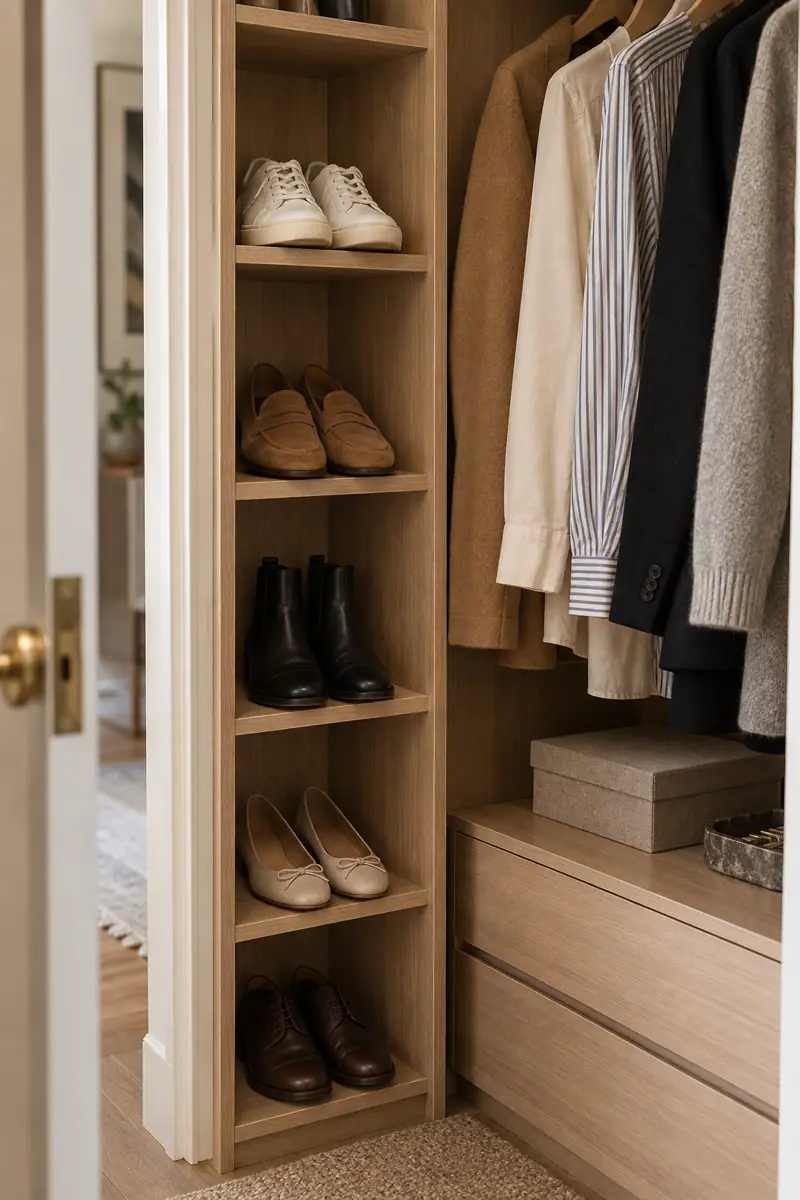
Shoes spread quickly when they have no defined home. A narrow shelf unit can use vertical closet space while keeping pairs visible. Measure the tallest footwear and leave the bottom shelf for bulkier pairs.
Choose shelf depth based on your actual shoes, not the smallest pair in the room. Keep frequently worn footwear within easy reach and avoid stacking pairs so high that they topple. Secure tall units as instructed by the manufacturer, and leave the closet door’s full opening path clear.
12. Closet Shelf Dividers
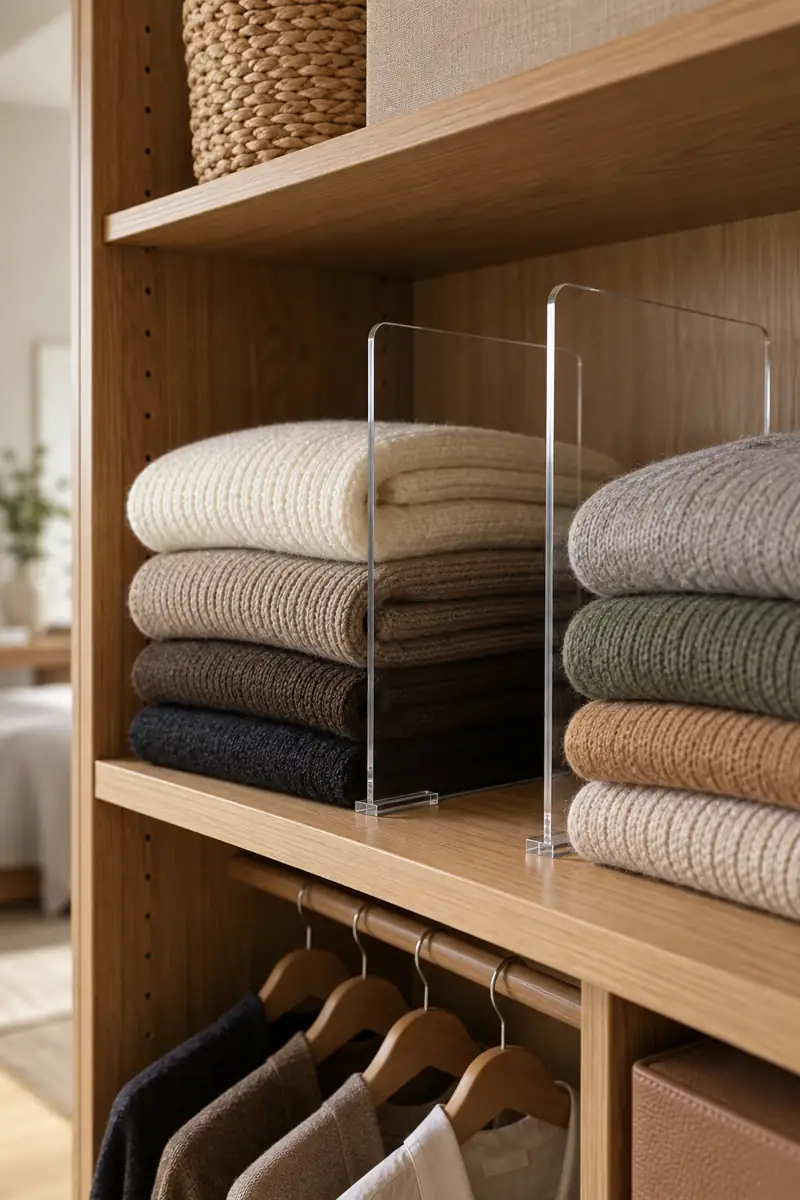
BEFORE: Folded knitwear leans sideways until two people’s piles merge. Pulling out one sweater sends the rest sliding.
AFTER: Upright shelf dividers hold smaller stacks in separate lanes. The shelf stays readable, and replacing a clean item takes less rearranging.
Check shelf thickness before buying clip-on dividers, since a poor fit can slip or damage the surface. Keep piles below the divider height rather than balancing extra layers on top. This approach suits folded clothing that you use regularly and can reach without repeatedly climbing onto a step stool.
13. Wall Hook Stations
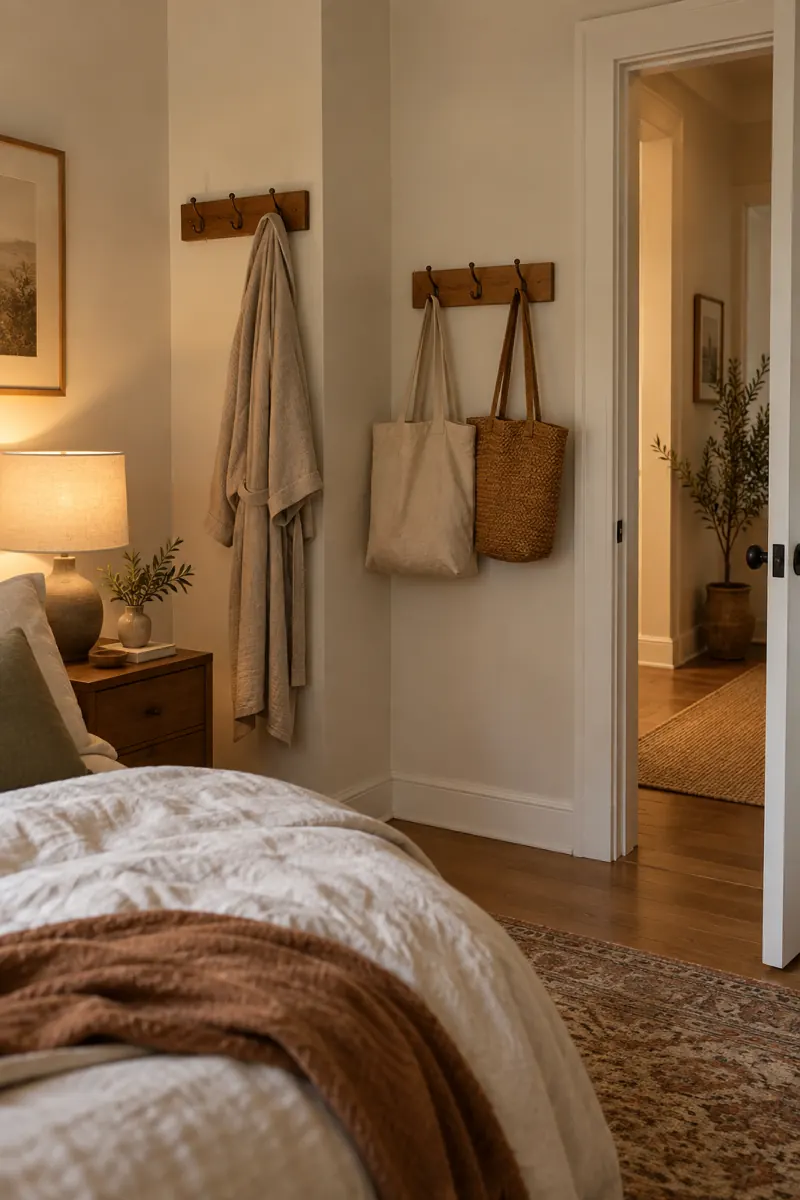
- Give tomorrow’s outfit somewhere better than the floor.
- Choose two small hook areas that sit clear of doors and walkways.
- Install suitable hooks for the wall material, with permission where needed.
- Assign each person a limited number of hooks for a robe, bag, or outfit.
Hooks are a temporary landing place, not a second wardrobe. Clear them regularly so yesterday’s clothing does not accumulate beneath tomorrow’s. Keep loads within the stated limits, particularly with removable fittings. If drilling is not allowed, a compatible overdoor rail may work better, provided the door still closes properly.
14. Rolling Closet Cart
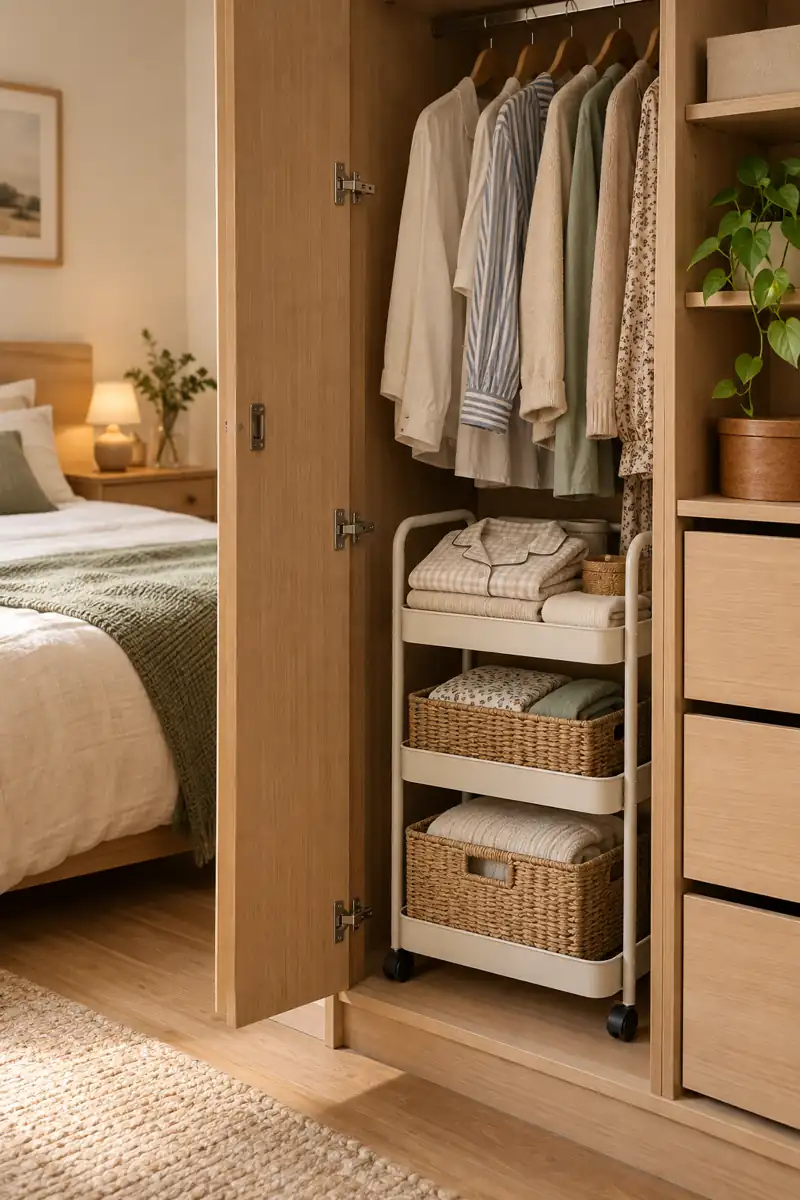
| Feature | Loose floor baskets | Narrow rolling cart |
|---|---|---|
| Access | Lift or drag individual baskets | Move the whole unit forward |
| Organization | One large mixed compartment | Separate shallow levels |
| Fit check | Floor footprint | Footprint plus rolling clearance |
The narrow gap inside a wardrobe can hold a small cart for pajamas, accessories, or folded workout clothes. Check the width at the door opening, not only inside the closet. Wheels should move smoothly on your floor. Avoid tall, overloaded arrangements that become unstable when you pull them out.
15. Lift-Up Storage Bed
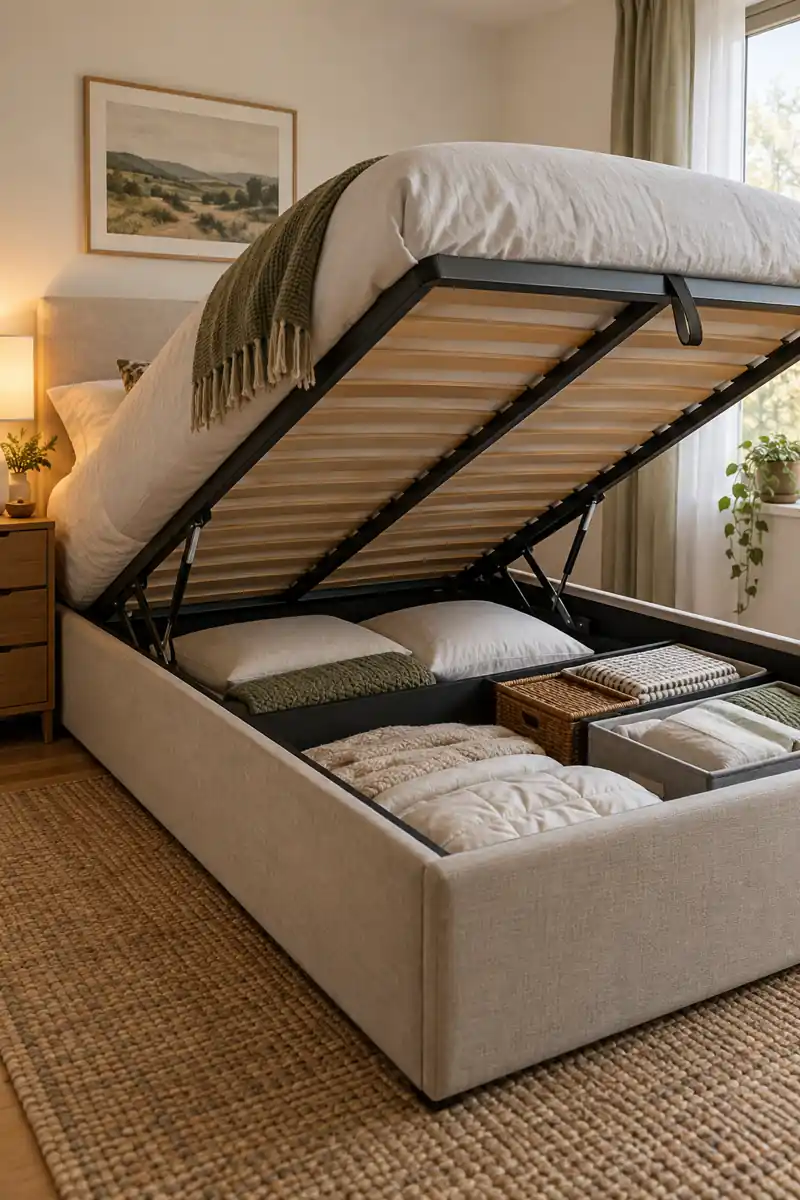
DO
- Make the bed footprint carry more of the storage load.
- Choose a purpose-built mechanism compatible with the mattress weight.
- Store seldom-used bedding in clearly divided sections.
- Follow the maker’s instructions for assembly and safe lifting.
DON’T
- Do not improvise lifting supports.
- Do not reach beneath an unsecured raised platform.
- Do not pack items into moving hinges or gas struts.
A lift-up bed suits rooms where drawers cannot open beside the frame. Before buying, check ceiling clearance, mattress compatibility, and whether both partners can operate it comfortably. Use the space for occasional items rather than daily essentials. Access should feel manageable, or the extra capacity will be frustrating to use.
16. Two-Part Laundry Hamper
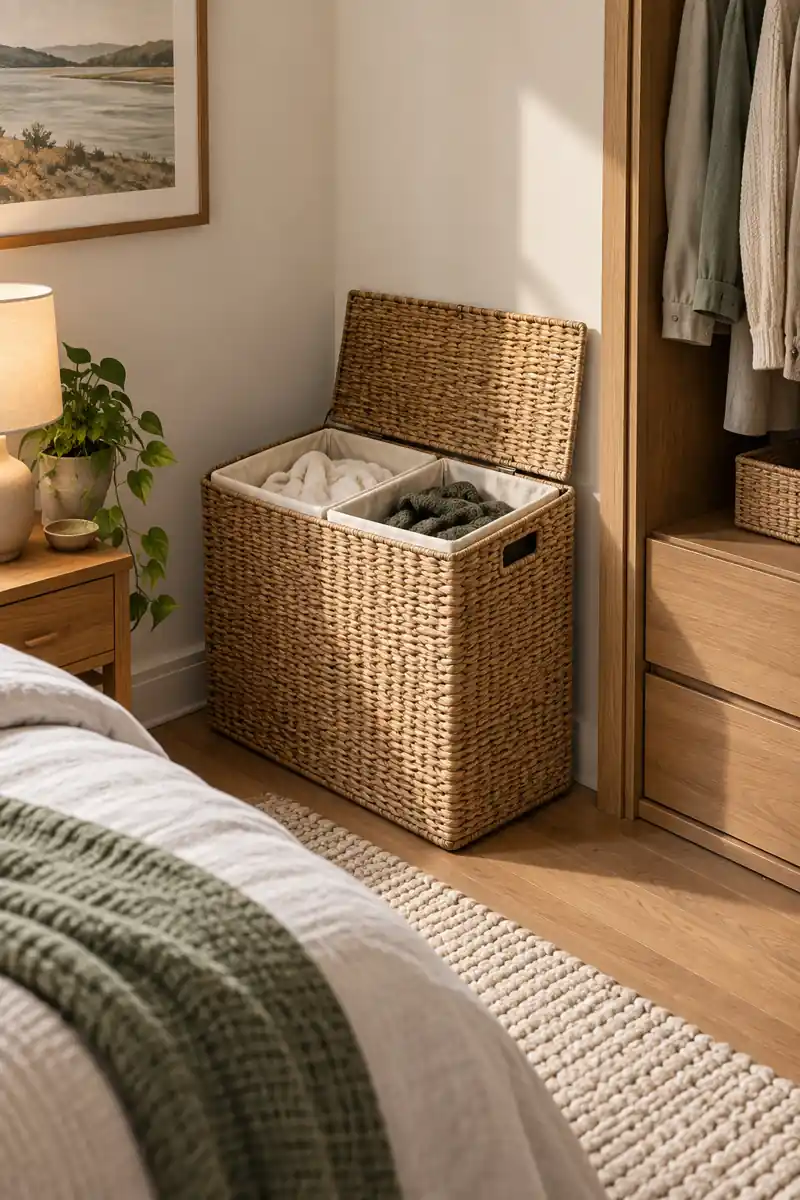
Benefit: Dirty clothing has a defined destination immediately.
Best For: Couples who sort laundry differently.
Placement: A ventilated corner with easy lid access.
Capacity: Sized to your actual wash routine.
A divided hamper can separate clothing by person or washing needs, depending on what helps you most. Agree on the categories before filling it. Choose removable bags that are comfortable to carry, and let damp garments dry before placing them inside. Overflow usually signals that the routine needs adjusting.
17. Bedside Storage Headboard
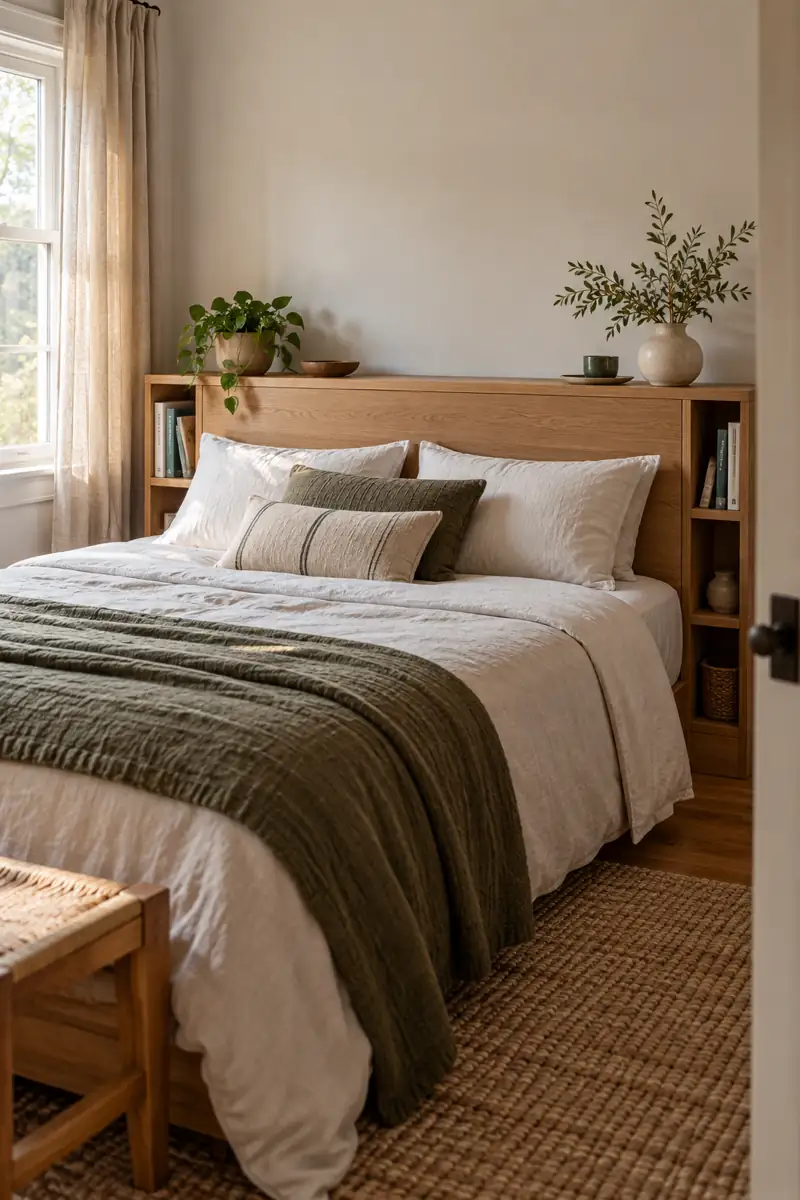
Shallow headboard storage can replace bulky bedside furniture in a narrow room. Look for side-access cubbies that hold a paperback, glasses case, or small basket without projecting far beyond the mattress. Measure the entire bed footprint because a deeper headboard can quietly steal valuable room at the foot.
Keep heavy objects away from shelves above sleeping areas, and follow the manufacturer’s installation and anchoring requirements. Each partner should reach their own compartment without leaning across the bed. Choose simple surfaces that are easy to dust, with enough open space for changing bedding and accessing any nearby outlets.
18. Shared Accessory Trays
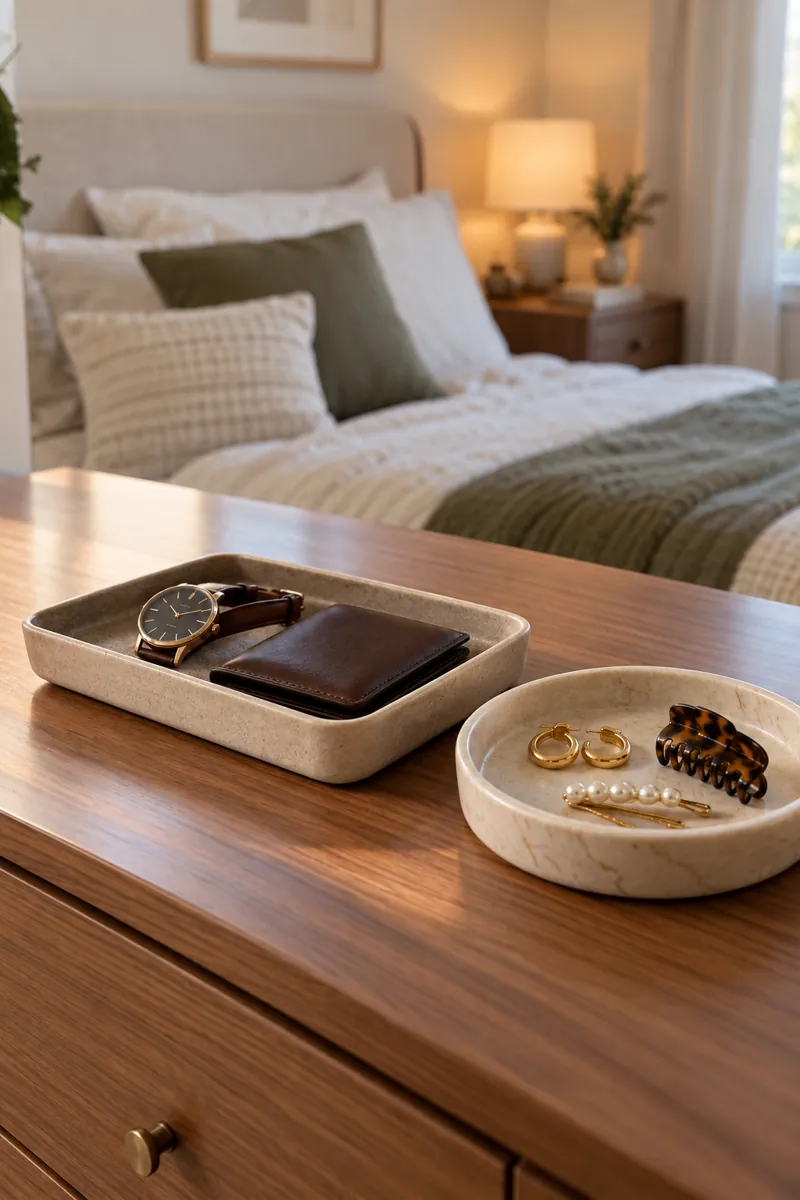
- Small objects need small boundaries before they take over the dresser.
- Give each person a separate shallow tray for daily accessories.
- Keep occasional jewelry and spare cables in a drawer instead.
- Choose a tray that fits the available surface without crowding lamps or mirrors.
- Empty stray receipts and unrelated items during a regular tidy-up.
A tray keeps frequently used pieces together while leaving the rest of the dresser available. It also makes cleaning easier because you can lift the whole group at once. Keep valuables out of view when appropriate, and resist enlarging the tray whenever it fills. Edit the contents before adding storage.
Conclusion
A shared bedroom feels calmer when both people can find their belongings without moving someone else’s first. Small Bedroom Storage Ideas for Couples work best when they match your actual routines, from getting dressed to putting laundry away. Start with one crowded area, measure carefully, and give each person a clear place for daily essentials. Leave room to open drawers and move around the bed comfortably. Save this post on Pinterest for your next organizing session, try one manageable change this weekend, and share it with someone making a small bedroom work for two. A useful system can grow gradually.

Community
Join the conversation
Add a useful idea, ask a specific question, or share what worked in your space. Every comment is reviewed before it appears.