
If you’ve been searching for “cozy bedroom ideas for couples apartment,” begin with two real routines. One person might read late, while the other wants darkness. One sleeps under a thick duvet; the other kicks every layer away. A welcoming shared room makes space for those differences without filling the floor with furniture.
Look beyond matching lamps and coordinated cushions. Notice who gets up first, where glasses land, and whether both people can reach their side of the bed comfortably. The fifteen ideas below use small changes in bedding, light, color, and placement to make daily life gentler. Choose the adjustments that solve your actual annoyances, then add the soft textures and personal details you both enjoy.
1. Separate Duvet Weights
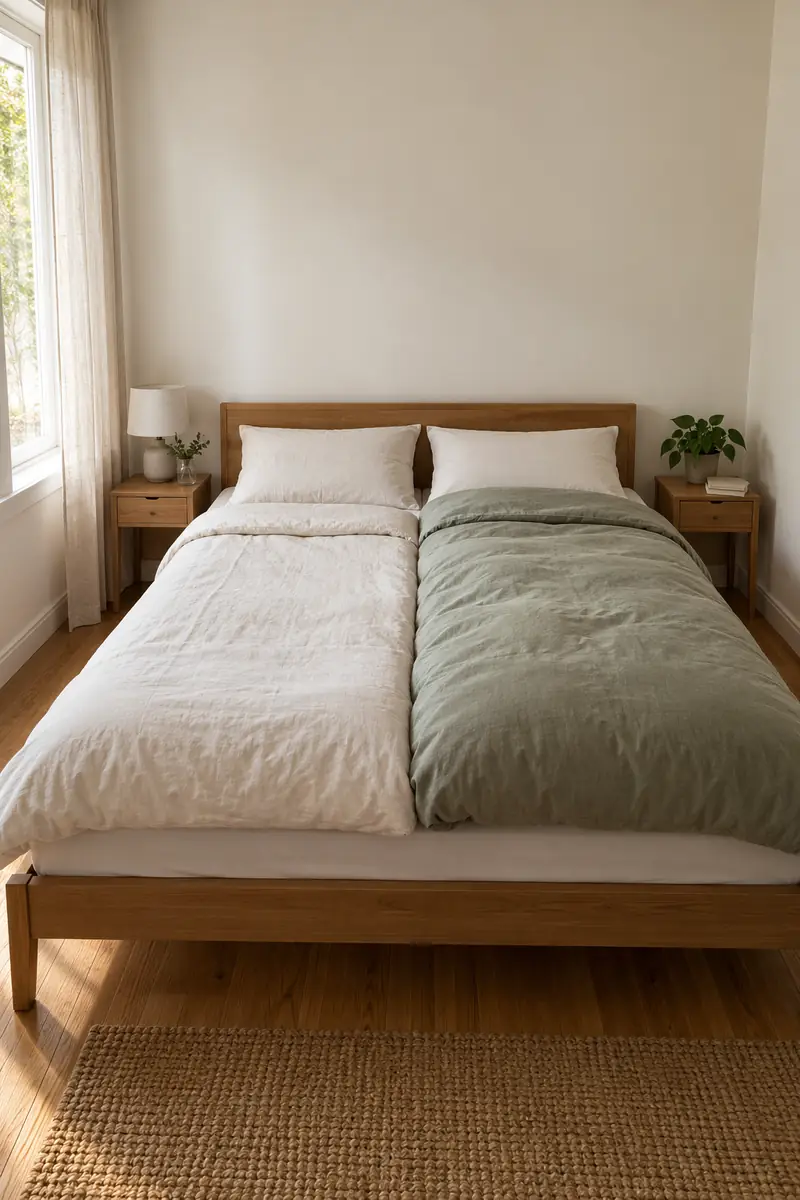
A midnight tug over the covers is a useful design clue. Dress one double bed with two smaller duvets so each sleeper can choose a comfortable weight. Keep the covers in neighboring colors, such as ivory and sage, to make the arrangement feel intentional each morning.
Fold both tops back to the same depth, then smooth their inside edges alongside each other. A shared fitted sheet keeps the base simple. Check the duvet dimensions against your mattress before buying, and leave excess fabric clear of the floor so neither person catches a foot.
2. Independent Reading Beams
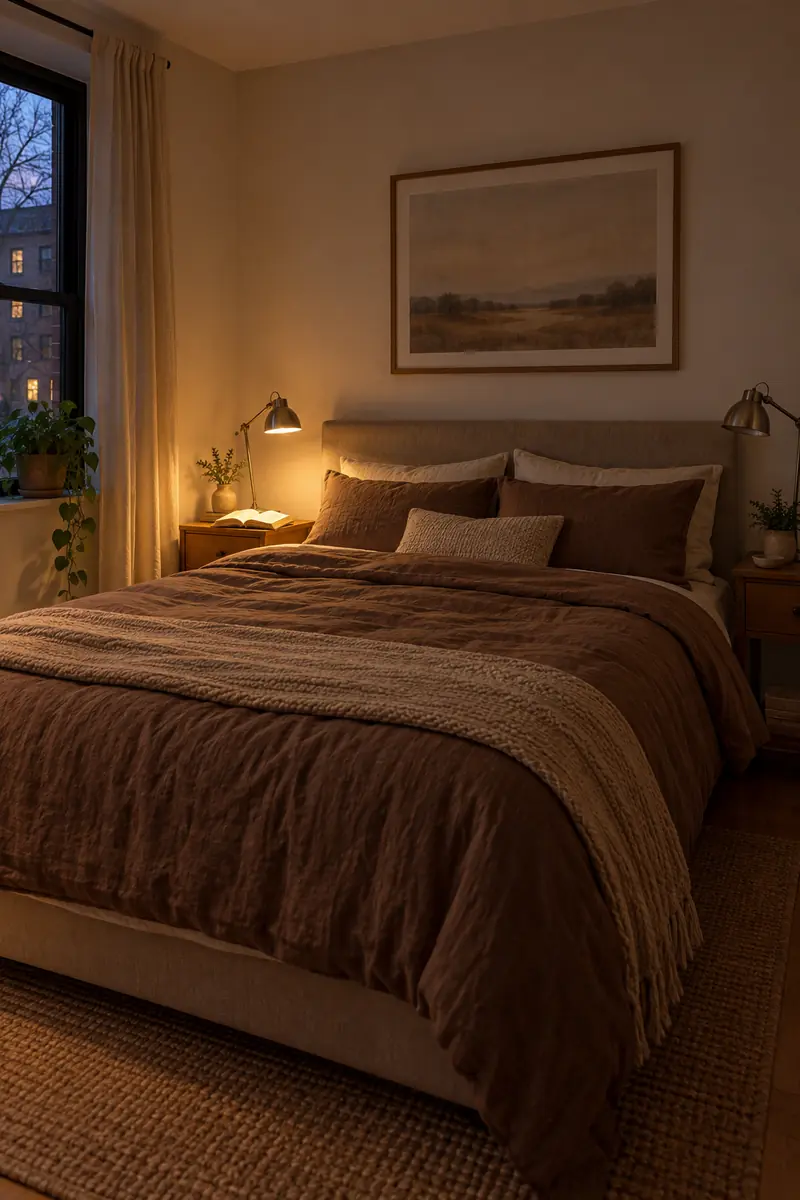
- Let the night reader light a page without lighting the entire bed.
- Choose a stable adjustable lamp with its own reachable switch for each bedside.
- Aim the shade downward and away from the other pillow; test the angle while both people are lying down.
- Follow the fixture’s bulb limits and keep cords behind furniture, outside walking routes and away from bedding.
The useful detail is control. Each person can switch off without crossing the mattress or negotiating the ceiling light. A warm, shielded beam may feel more comfortable than an exposed bulb, but the right setting is the one you both find pleasant during an ordinary evening together.
3. A Shared Color Bridge
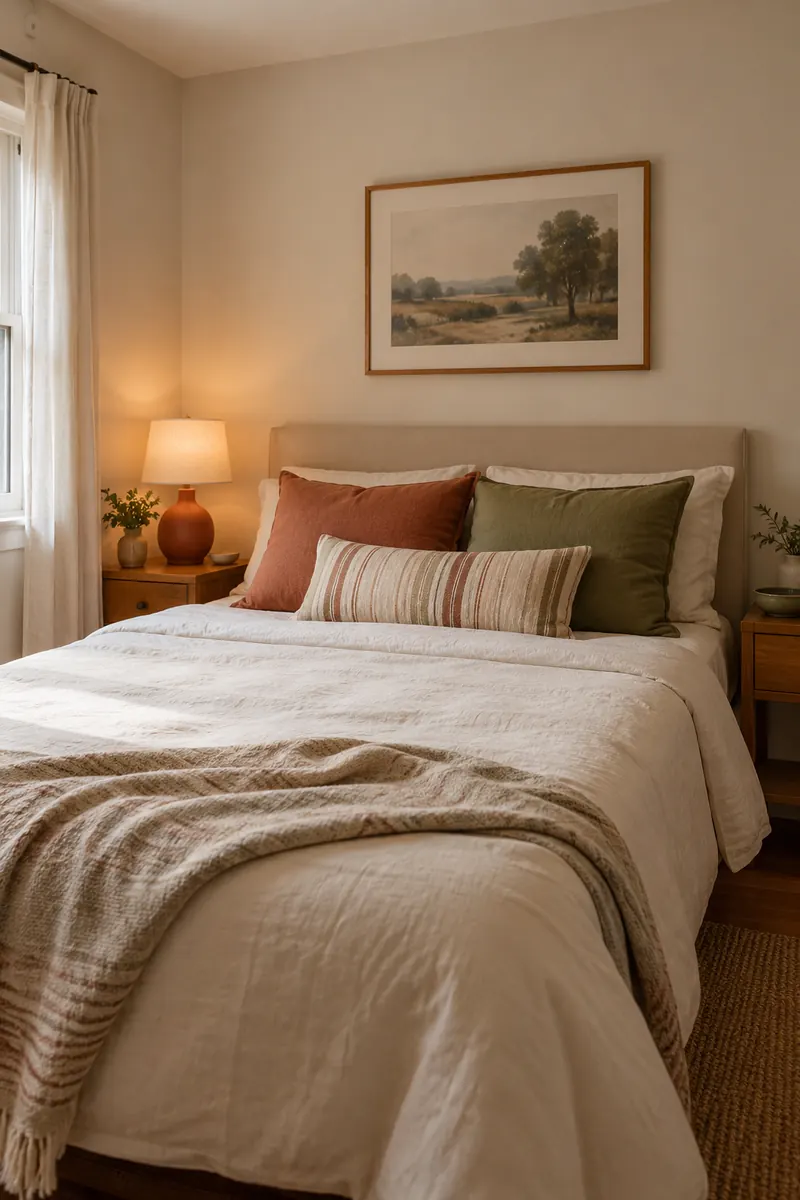
Quick Tip:
Give each person a favorite muted accent, then connect the two with one small textile. An olive cushion and a clay lampshade can meet in a softly striped lumbar cover that includes both colors.
Keep the biggest surfaces quiet so the accents can talk to each other. Plain sheets, a simple headboard, and an unpatterned wall leave room for individual taste. Lay your existing fabrics together in daylight before shopping; an overlooked scarf or cushion cover may already supply the connecting colors.
4. An Easy Wakeup Route
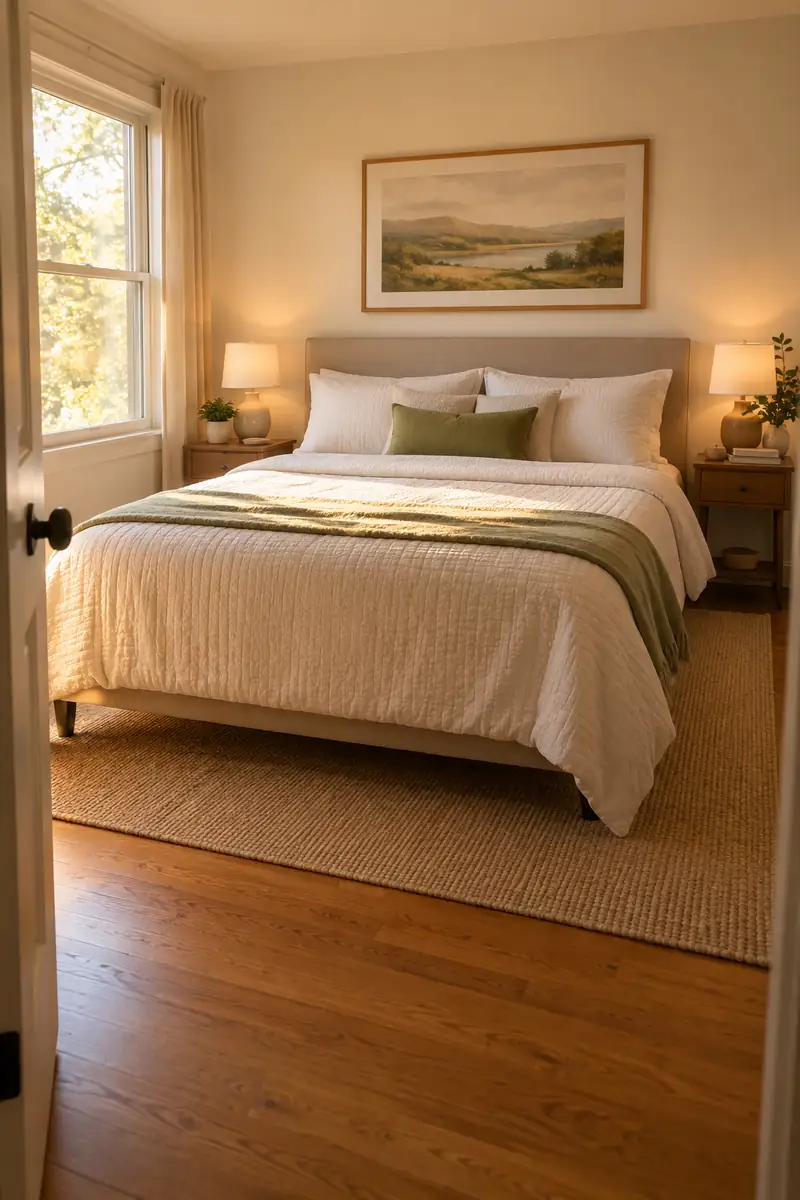
BEFORE: The first person awake squeezes past a bench and moves yesterday’s clothes. Every obstacle turns a quiet exit into a small disturbance.
AFTER: The route around the bed stays open, and both bedside surfaces are reachable. Slippers and bags have a home outside that walking lane.
Walk the route with the room arranged for sleep, including curtains drawn and closet doors closed. Open the bedroom door fully and check that nothing catches. Skip a decorative bench if it steals needed room; the clear floor itself contributes to a calmer, more generous looking bedroom.
5. Pillow Preferences Welcome
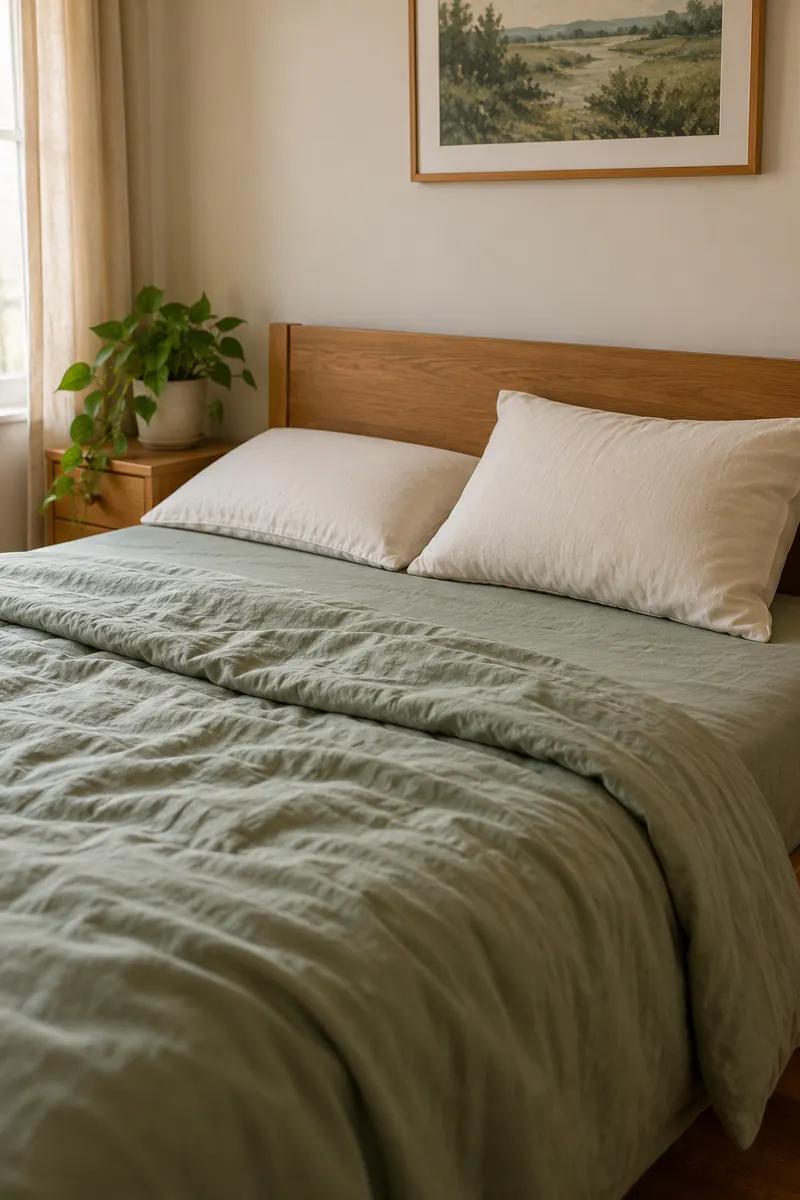
- Keep each person’s preferred sleeping pillow rather than replacing both for visual symmetry.
- Use matching or closely related pillowcases to connect different sizes and thicknesses.
- Stand the pillows against the headboard during the day, without hiding them behind a cushion pile.
- Reserve a drawer or existing shelf for any spare pillow so it never lands in the walkway.
Comfort is allowed to look slightly uneven. A flatter pillow beside a fuller one can still belong to the same tidy bed when the fabric relates. Before adding decoration, make the everyday pillows easy to reach and easy to wash. That is the arrangement you will actually use nightly.
6. Bedside Heights That Fit
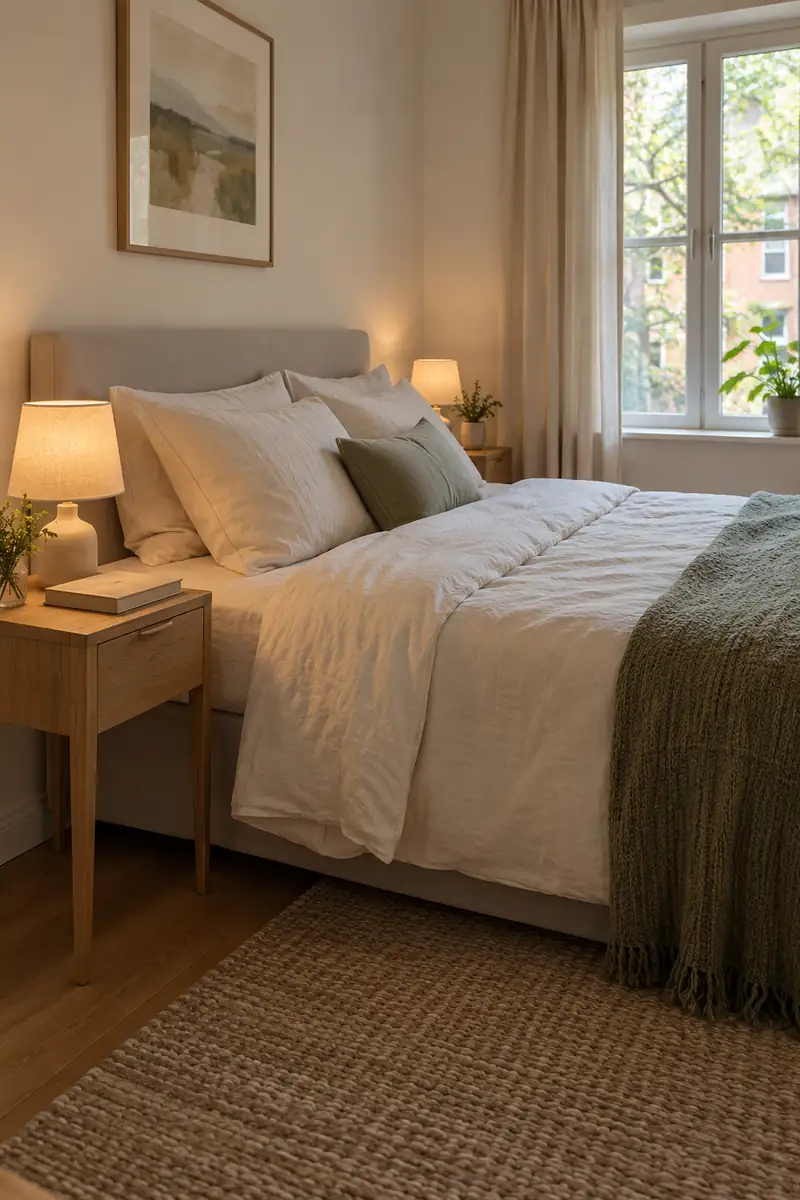
| Detail | Near mattress height | Noticeably lower table |
|---|---|---|
| Reaching a book | Usually a short sideways movement | May require leaning downward |
| Visual effect | Connects closely to the bed | Creates a lower, lighter outline |
| Best check | Test reach from your usual position | Check reach and lamp height carefully |
Measure from the floor to the top of the mattress, then compare that with tables you already own. Try reaching for a book before committing. The goal is a relaxed movement, with no sharp corner pressing into the mattress and enough clearance to walk beside each table comfortably.
7. Gentler Morning Curtains
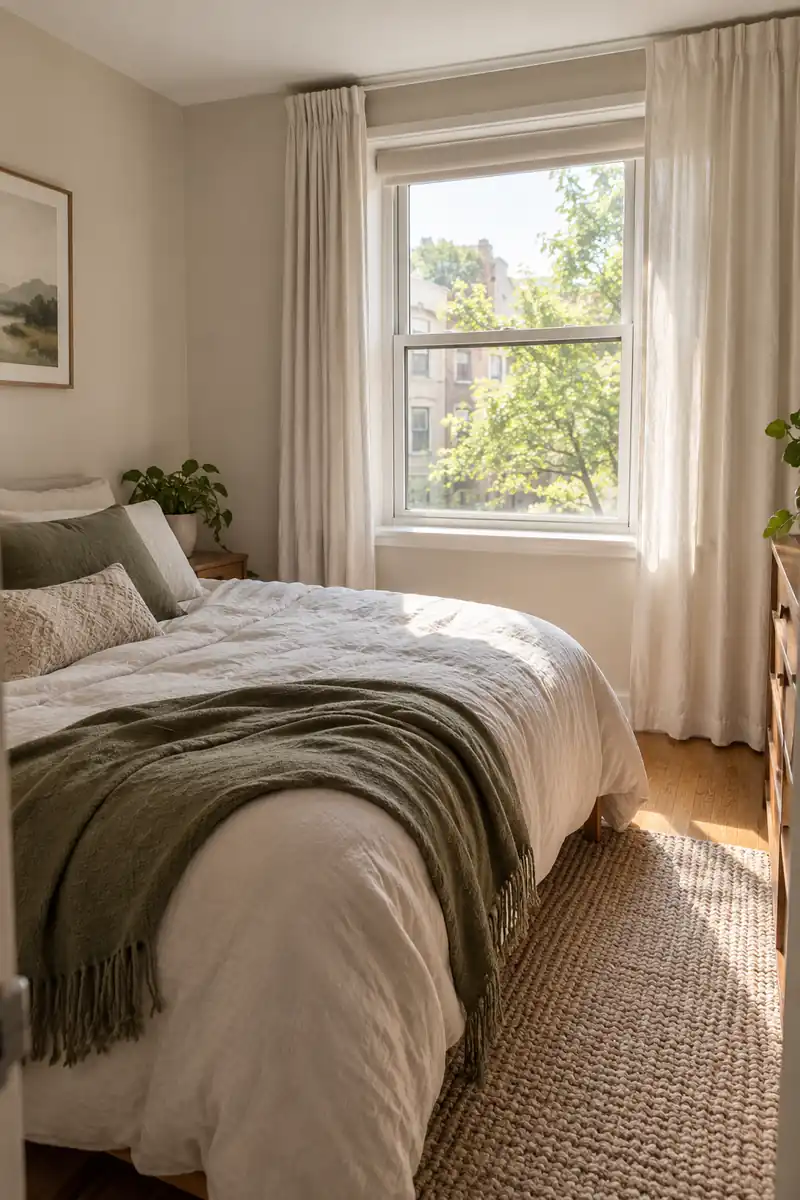
DO
- Choose coverings both people can operate easily.
- Keep the window and its opening hardware accessible.
- Agree on how much morning light feels comfortable.
DON’T
- Let curtain hems drag across the route to the bed.
- Drape fabric over radiators or heating equipment.
- Assume a darker curtain will suit both routines.
A layered window gives you more than one setting: privacy with filtered daylight, or a dimmer room when wanted. Use properly supported hardware and get rental permission for new fixings. If choosing blinds, consider cordless options, especially when young children may visit your apartment or stay overnight.
8. Two Evening Landing Spots

Left side: Keep one small dish within reach for the items used there.
Right side: Give the second person an equally convenient place, even if the objects differ.
Shared rule: Leave the front edge of each table free for a hand or book.
Morning reset: Return anything unrelated to sleeping to its usual home.
Choose dishes that fit the available surfaces instead of buying a matching set first. One can hold glasses while another catches a watch. Similar materials connect the room, but identical contents are unnecessary. Two modest landing places prevent one crowded tabletop from becoming the default destination for everything overnight.
9. A Quiet Outfit Spot
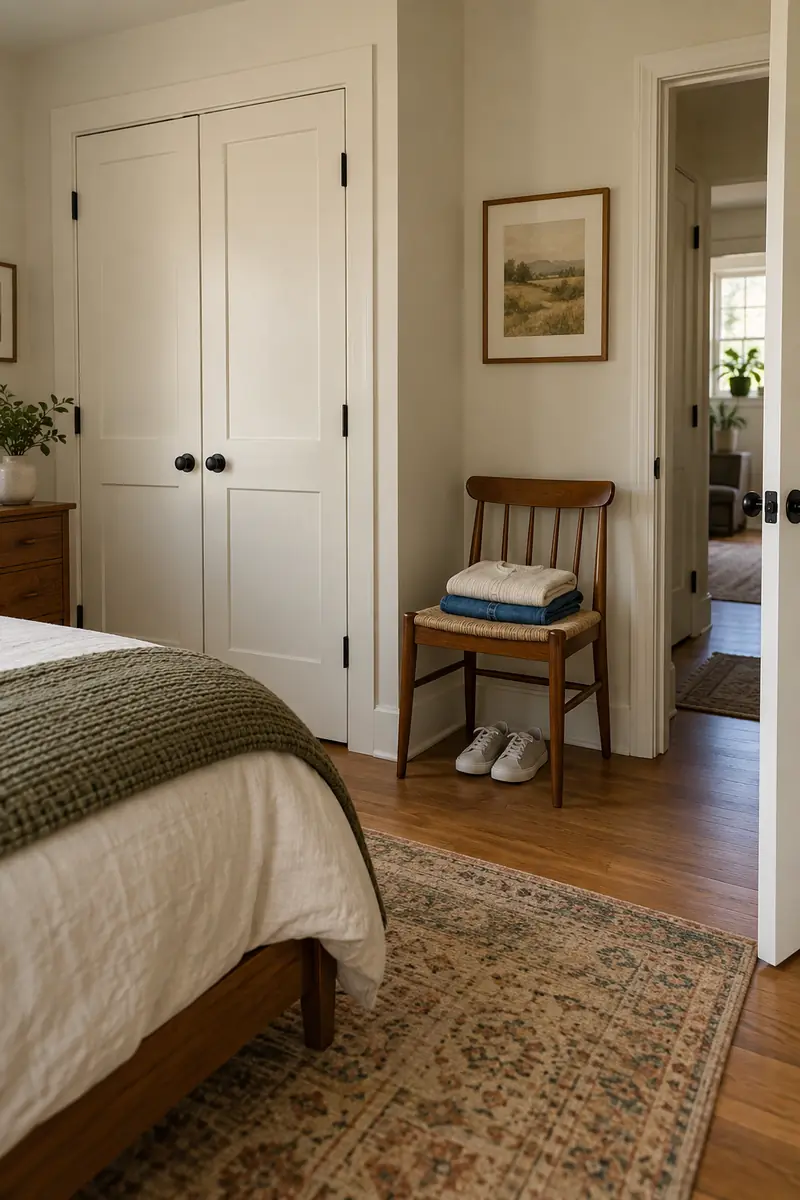
The early alarm feels less disruptive when tomorrow’s clothing is already gathered. Use an existing chair near the closet for one folded outfit, with shoes tucked fully underneath. Position the chair where its back and legs do not crowd the door or either person’s route out of bed.
Set a small limit: one outfit each, or take turns using the spot when schedules differ. Clothes for later in the week belong in the closet. If a chair would be in the way, dedicate an easy drawer instead and set the outfit there before winding down together.
10. A Sitting Up Zone
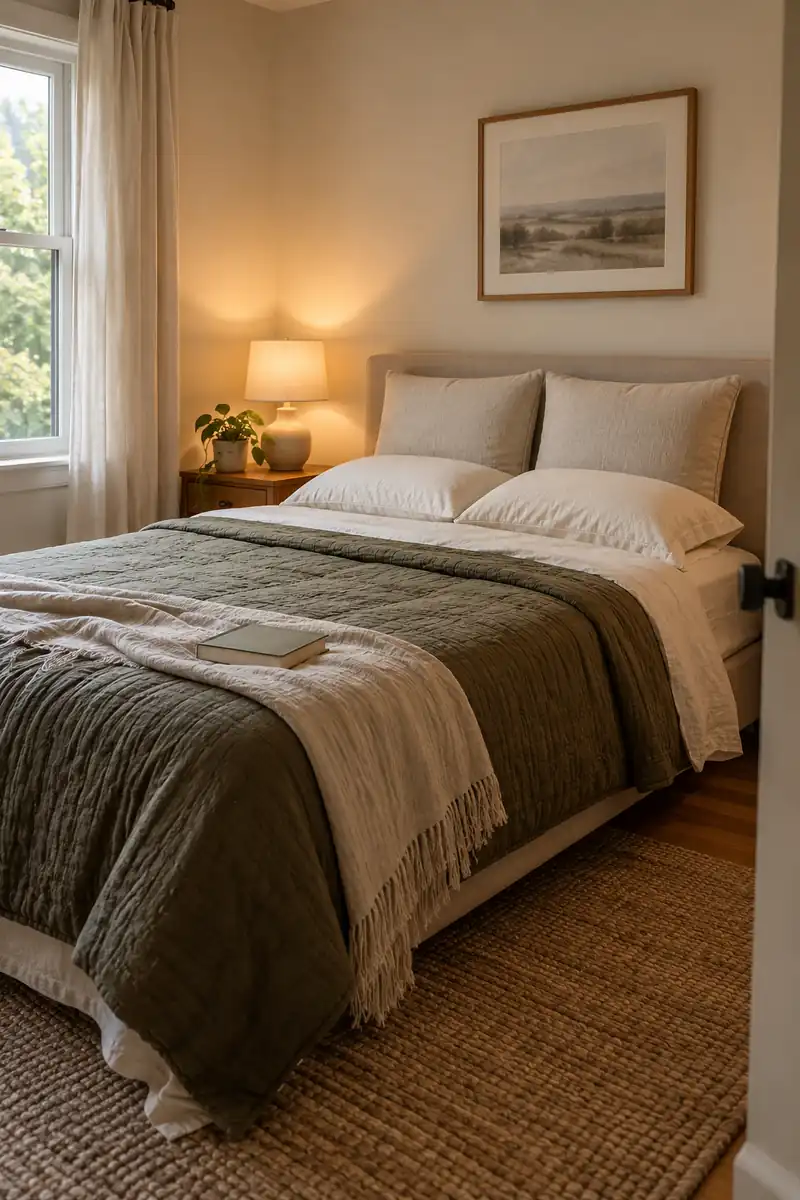
- Make the bed comfortable for a short conversation or a few pages before sleep.
- A low upholstered headboard adds a soft surface without using the footprint of another chair.
- Keep only the support cushions you genuinely use, and decide where they go when you lie down.
- Fit the headboard to the bed frame as directed; check permissions and the correct fixing method for a wall mounted version.
Both people should be able to sit comfortably without balancing against a shifting stack of pillows. Try your existing cushions first, then add only what is missing. A washable cover in a quiet woven fabric brings texture close to the bed while keeping the rest of the room simple.
11. Personal Pattern Pairing
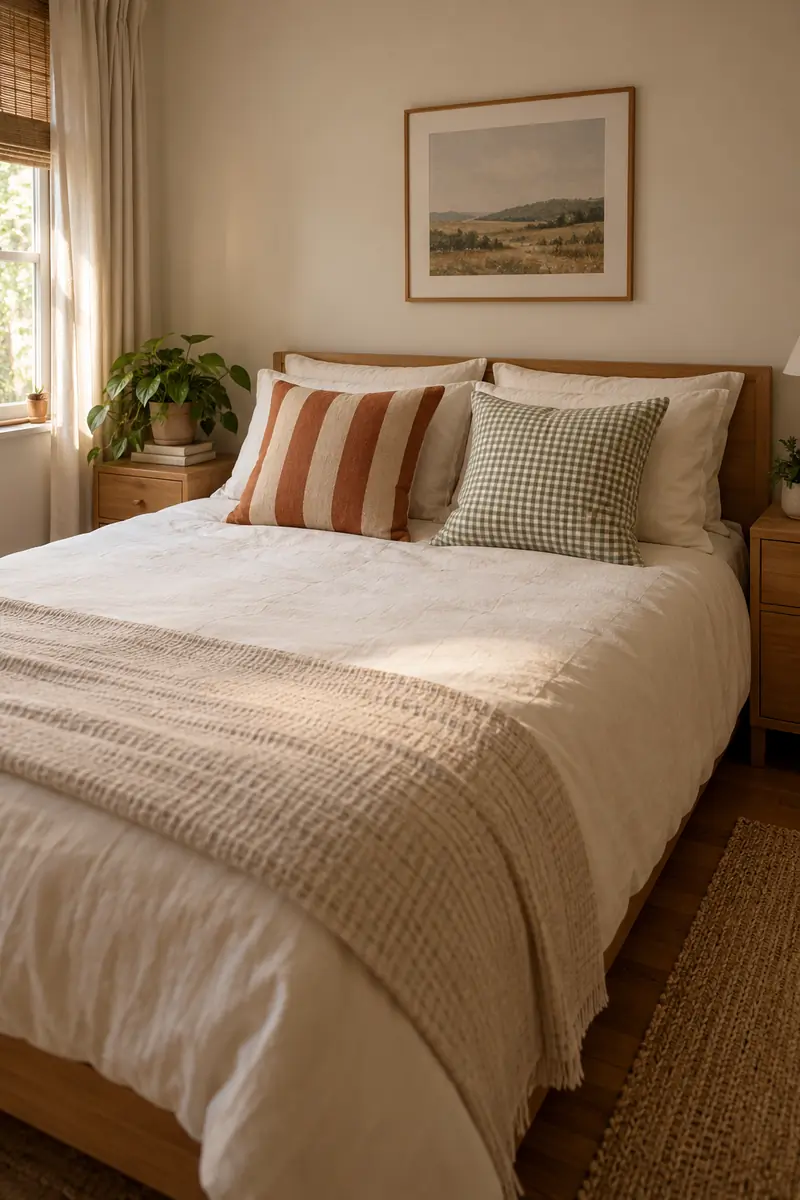
Quick Tip:
Pair one broad stripe with one small check rather than asking two equally busy patterns to compete. Keep both within the room’s main colors and place one on each side of a plain bedcover.
This gives individual choices a little structure while keeping the bed restful to look at. If one person prefers plain fabric, use a textured solid in its place. Two different covers are enough to show both tastes; there is no need to repeat the patterns across curtains and walls.
12. Bedside Slipper Parking
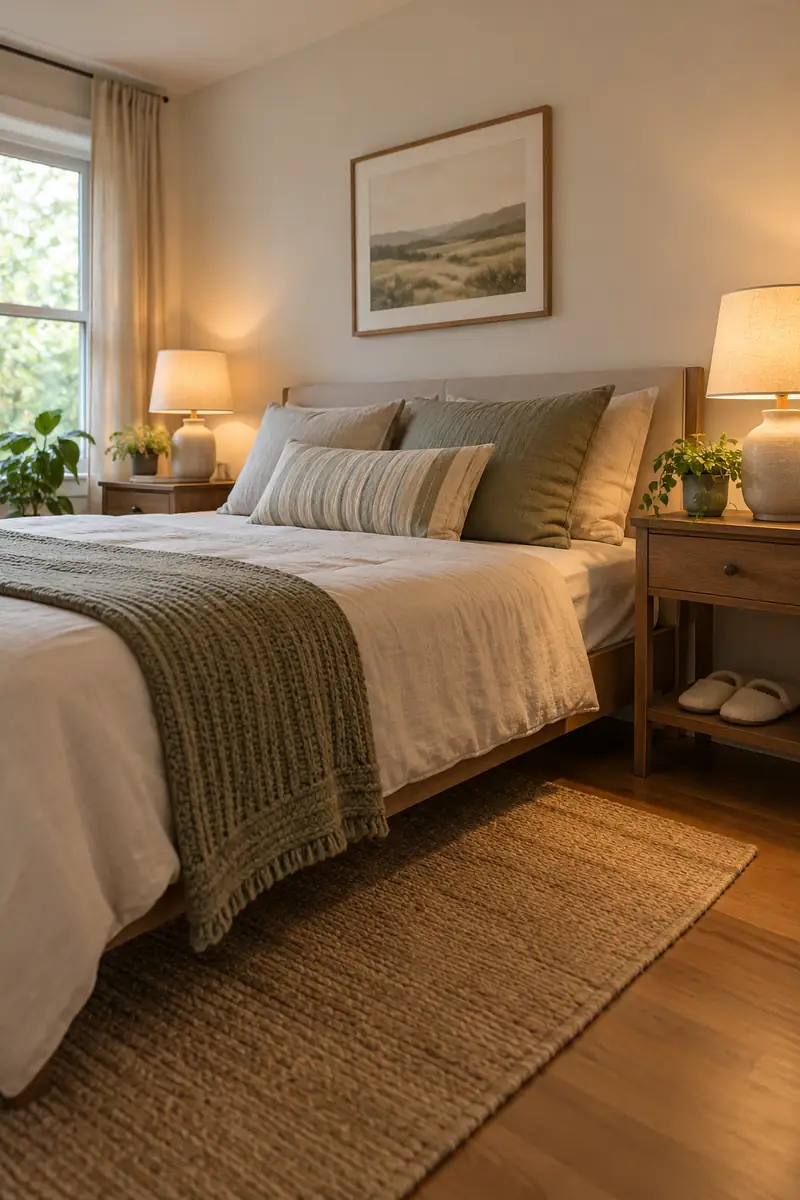
BEFORE: Slippers drift beside the bed and disappear beneath the hanging cover. Finding them means feeling around where someone else needs to walk.
AFTER: Each pair rests on a reachable low bedside shelf or completely beneath its table. The floor beside the mattress remains clear.
Use a parking place that works with the furniture you have. A shelf should support the items without pushing them into the walkway; an open space beneath a table should be easy to reach. Shake out slippers and wipe the shelf regularly so the cozy detail stays pleasantly practical.
13. One Shared Reading Seat
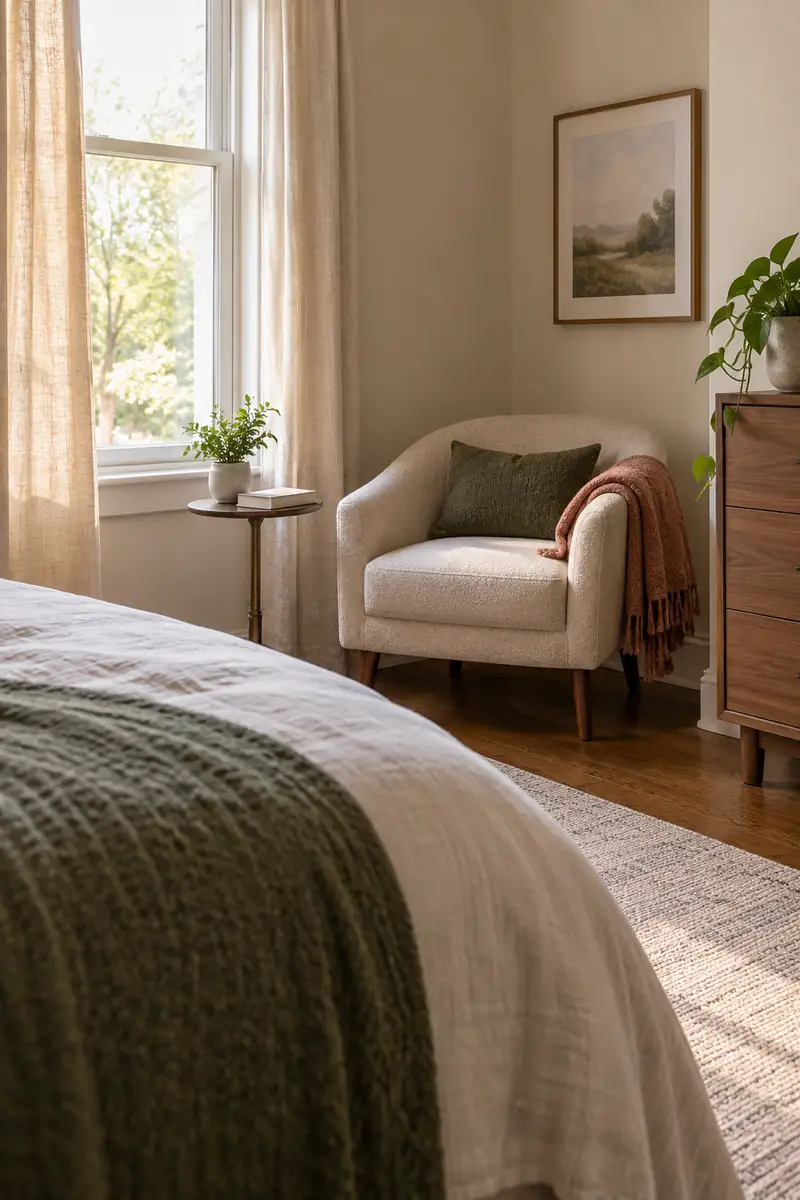
- Check whether a single compact chair fits outside the routes to the bed, closet, door, and window.
- Try the chair with someone sitting in it, since knees need room too.
- Add one folded lap throw over the arm and a reachable place for the current book.
- Leave out the footstool if it would need moving every time someone crosses the room.
A shared seat works best when it supports a real habit, such as getting dressed or reading while the other person rests. It does not need to serve both people simultaneously. If your room cannot spare the footprint, keep the comfortable sitting zone on the bed and enjoy that instead.
14. Screen Free Bed View
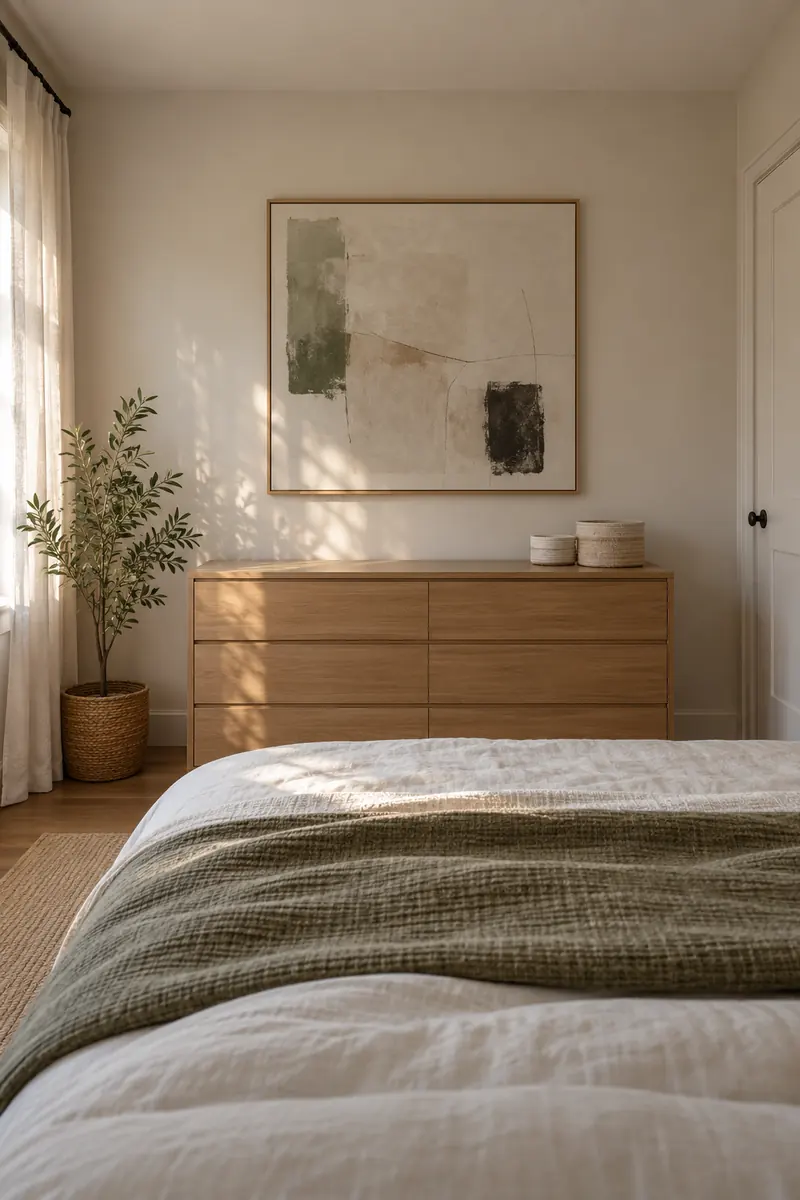
| Choice | Small art grouping | Mostly clear wall |
|---|---|---|
| Visual focus | A few shared colors or subjects | The shape and light of the room |
| Floor space | None with suitable wall fixings | None |
| Rental consideration | Confirm approved hanging method | No new fixings needed |
Look at the room from your actual sleeping position before moving anything. Choose a view you both enjoy, and keep necessary devices accessible elsewhere. If you use a dresser, follow its anchoring instructions and the CPSC’s furniture anchoring guidance. Decoration should never take priority over a stable setup.
15. A Simple Nightly Reset
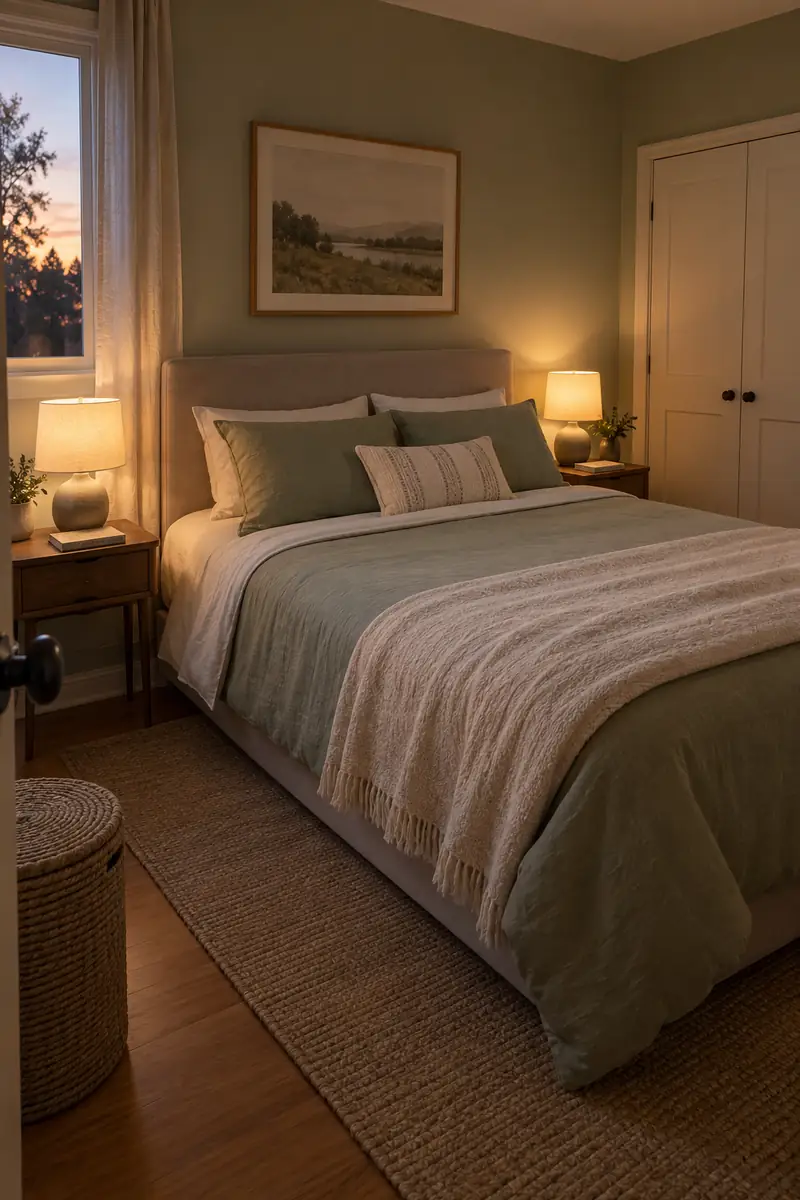
DO
- Return clothing to the closet or hamper.
- Clear enough bedside space for the evening essentials.
- Put tomorrow’s first items where they are easy to reach.
DON’T
- Aim for a photograph perfect room every night.
- Leave bags where feet land in the morning.
- Make one person responsible for both sides.
Choose a tiny routine you can finish together without turning bedtime into a chore. Smooth the cover, clear the floor, and reset your own bedside. For more ideas using existing belongings, explore making a studio cozy with what you own. A repeatable habit keeps these changes useful after the first week.
Conclusion
A shared bedroom feels welcoming when everyday comfort belongs to both people. If “cozy bedroom ideas for couples apartment” brought you here, start with a small conversation: which light bothers you, where would your book be easier to reach, and what makes the morning less rushed? Try one change that helps each person before adding another decorative layer. Separate bedding weights, an open route, or a reliable landing spot can make a noticeable difference without a larger room. Save your favorite ideas to Pinterest, try one together this weekend, and share the arrangement that makes your bedroom feel most like home.



Community
Join the conversation
Add a useful idea, ask a specific question, or share what worked in your space. Every comment is reviewed before it appears.