Introduction
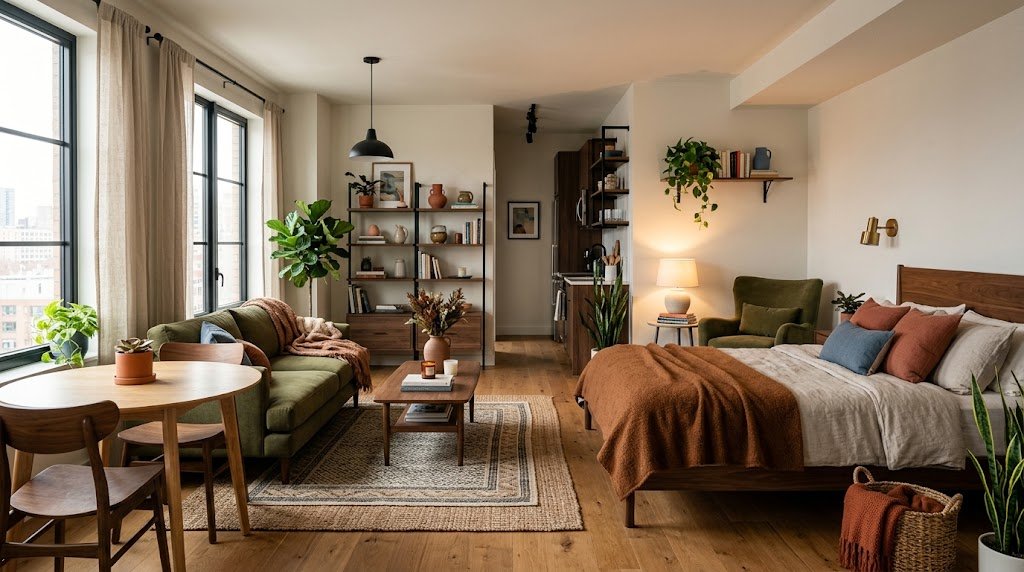
A small studio can feel warm, stylish, and deeply personal without becoming crowded. If you love a cozy studio apartment aesthetic, the right mix of lighting, texture, color, and thoughtful furniture can completely change the mood of your space. This article brings together simple ideas that help one-room living feel softer, more layered, and more intentional. In my experience, the coziest studios are not the ones filled with the most decor—they are the ones where every detail works together. From warm lighting and natural wood to soft textiles, rugs, greenery, and curated storage, these ideas will help you create a home that feels inviting, functional, and beautifully put together.
1. Layered Warm Lighting
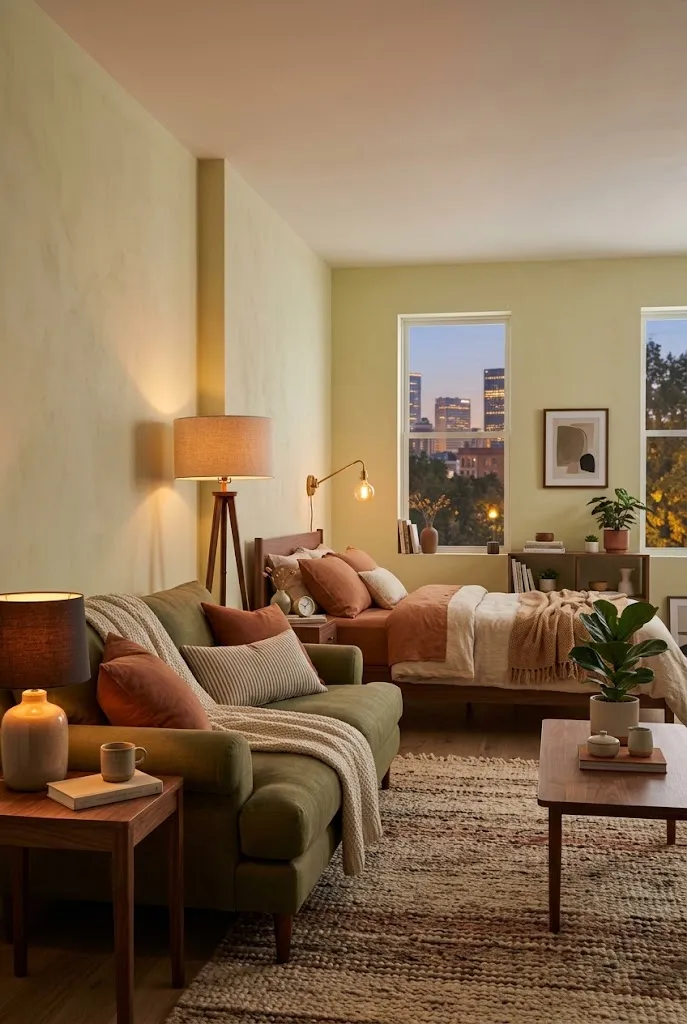
- Multiple light sources make the room feel softer and more dimensional.
- Warm bulbs flatter wood, textiles, and earthy colors.
- Smaller lamps help different zones feel more intentional.
- Layered lighting creates a cozier evening atmosphere without adding clutter.
Warm layered lighting can make even the smallest studio feel instantly softer and more inviting. Instead of relying on one bright ceiling fixture, combine a floor lamp, a table lamp, and a small bedside light to create gentle pools of illumination. This approach adds depth, reduces harsh shadows, and gives each part of the room its own mood. For a cozy studio apartment aesthetic, choose warm bulbs that flatter wood, textiles, and neutral walls. The result feels calmer at night and more visually interesting without adding extra furniture or clutter.
I’ve noticed that lighting works best when it appears at different heights rather than all from one level. A low lamp beside the sofa, a mid-height lamp near a desk, and a small glow near the bed make the room feel layered and intentional. Keep cords tidy and choose simple shades so the fixtures do not overwhelm the space. Warm white bulbs are usually more relaxing than cool light in compact interiors. You will notice the studio feels less flat, more intimate, and easier to enjoy during quiet evenings at home.
2. Layered Soft Textiles
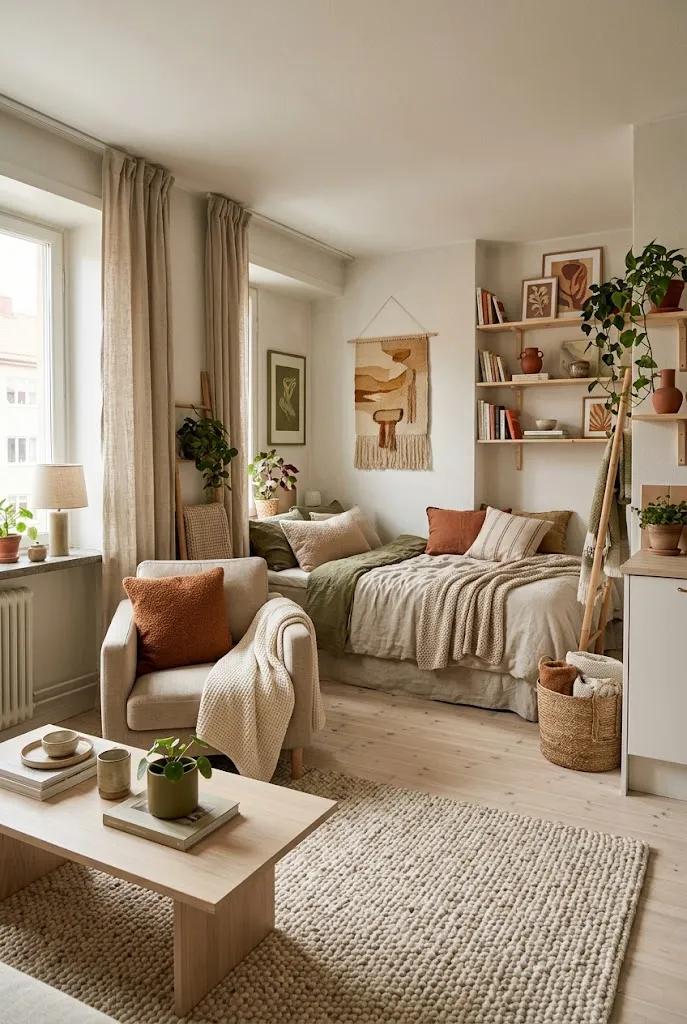
- Rugs and throws instantly soften hard surfaces.
- Mixing several textures creates depth without needing more furniture.
- Linen curtains make windows feel warmer and more finished.
- Repeating materials across the room helps the studio feel cohesive.
Soft textiles are one of the fastest ways to make a studio feel warmer without changing the layout. Layer a textured rug, a chunky throw, linen curtains, and a few cushions in complementary tones to soften hard floors and plain walls. The mix of fabric adds visual comfort and makes seating and sleeping areas feel more inviting. Choose materials with noticeable texture, such as boucle, wool, cotton, or woven linen, but keep the palette controlled. This creates richness without making a compact room look busy or overloaded with decorative details.
The key is layering with purpose instead of adding fabric everywhere. In my experience, repeating two or three textures across the room creates a more polished result than using many unrelated materials. For example, pair a wool rug with linen curtains and a boucle cushion, then repeat one texture near the bed. Keep patterns subtle if the apartment already has several furniture pieces in view. This approach gives the room softness, warmth, and a finished look while preserving the open feel that makes studio living comfortable and visually balanced overall.
3. Natural Wood Layers
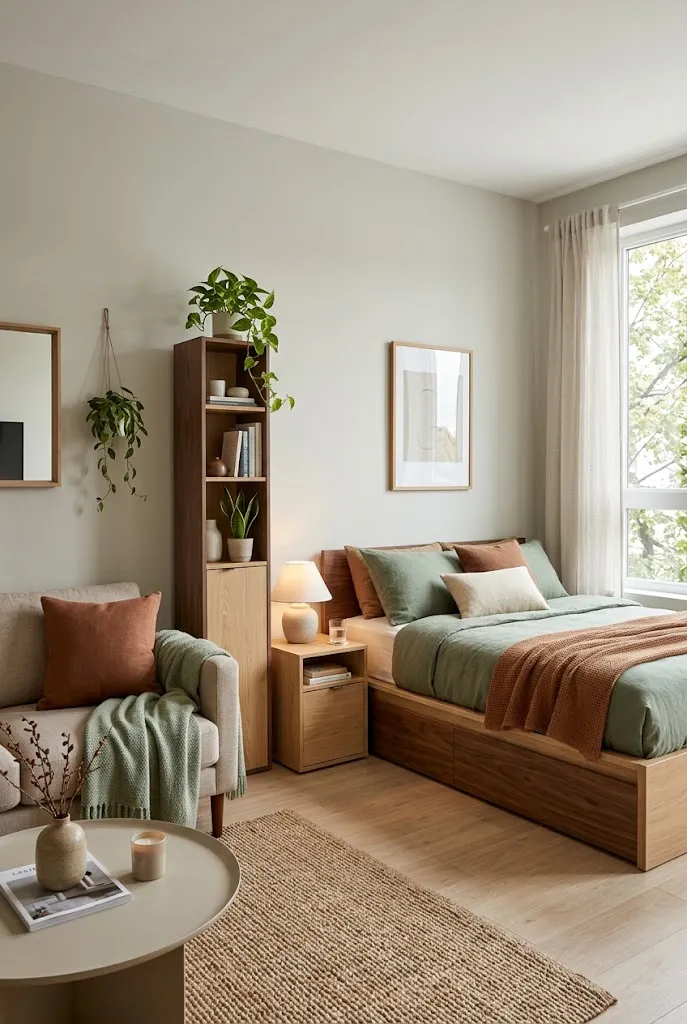
- Natural wood brings warmth without making the room feel dark.
- Repeated wood tones visually connect separate studio zones.
- Slim furniture shapes keep the layout light and open.
- Walnut, oak, and earthy textiles create a relaxed organic look.
Natural wood tones bring warmth into a studio without making the room feel dark or heavy. Light oak, walnut, and warm ash work especially well on coffee tables, shelving, bed frames, and small storage pieces because they add texture while remaining visually calm. Pair wood with soft neutrals, muted green, or rust accents to create an earthy palette that feels grounded. This combination also connects different zones, helping the living and sleeping areas feel related even when they serve completely different purposes within one open, compact studio apartment every day.
That’s why many designers repeat the same wood tone in several small places instead of introducing a different finish on every piece. A matching nightstand, shelf, and coffee table can quietly pull the entire apartment together. If the flooring is already wood, choose furniture one shade lighter or darker for gentle contrast. Avoid filling every corner with bulky timber furniture; slim legs and open shapes keep the look airy. You will notice the studio feels warmer, more cohesive, and more intentionally styled without needing a large amount of extra decor.
4. Earthy Neutral Palette
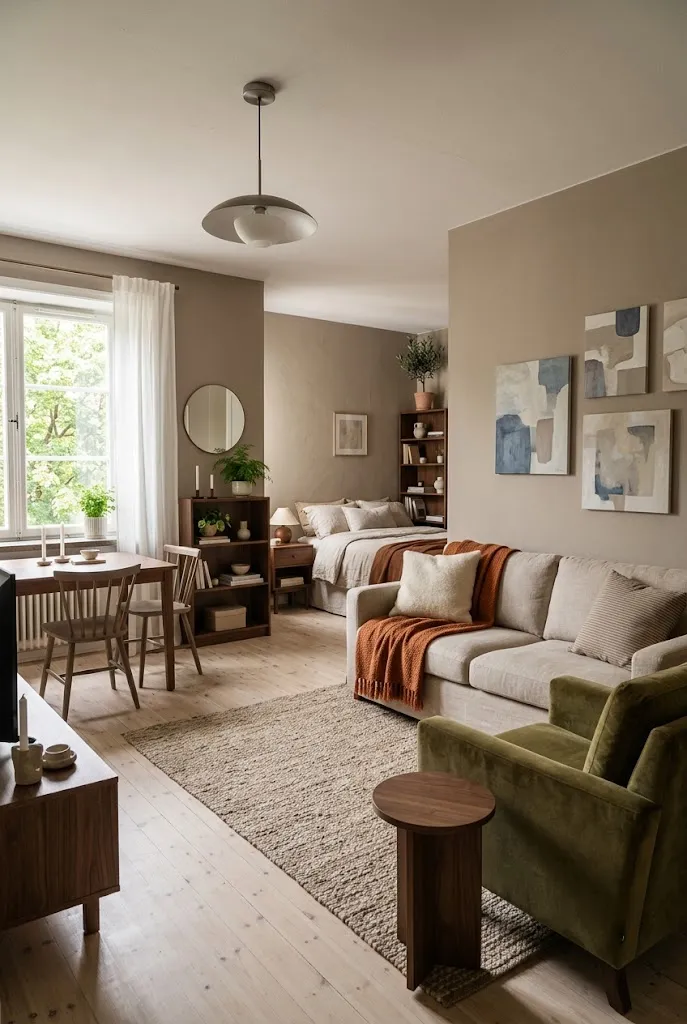
- Warm neutrals make a small room feel calm rather than bland.
- Rust, olive, and muted blue add depth without overwhelming the space.
- Repeating accent colors helps different areas feel connected.
- Natural textures prevent a neutral palette from looking flat.
A warm neutral palette can make a small studio feel restful while still giving it plenty of visual character. Start with beige, taupe, oatmeal, or soft gray on the largest surfaces, then add richer accents through rust, olive, muted blue, or terracotta. These deeper shades keep the space from looking flat while allowing the main palette to stay calm. Because every part of a studio is visible at once, a limited color scheme also helps separate areas gently without making the room feel fragmented or overly busy or decorated overall.
The best neutral rooms usually include contrast, not just pale colors from wall to wall. I’ve seen this work well when one darker chair, throw, rug, or piece of artwork gives the eye a place to land. Repeat that accent once or twice elsewhere so the room feels connected. Natural materials such as wood, rattan, linen, and ceramic add another layer without introducing unnecessary color. The finished studio feels warm, coordinated, and easy to live in, while still having enough depth to look beautiful in photos and everyday life too.
5. Low-Profile Bed
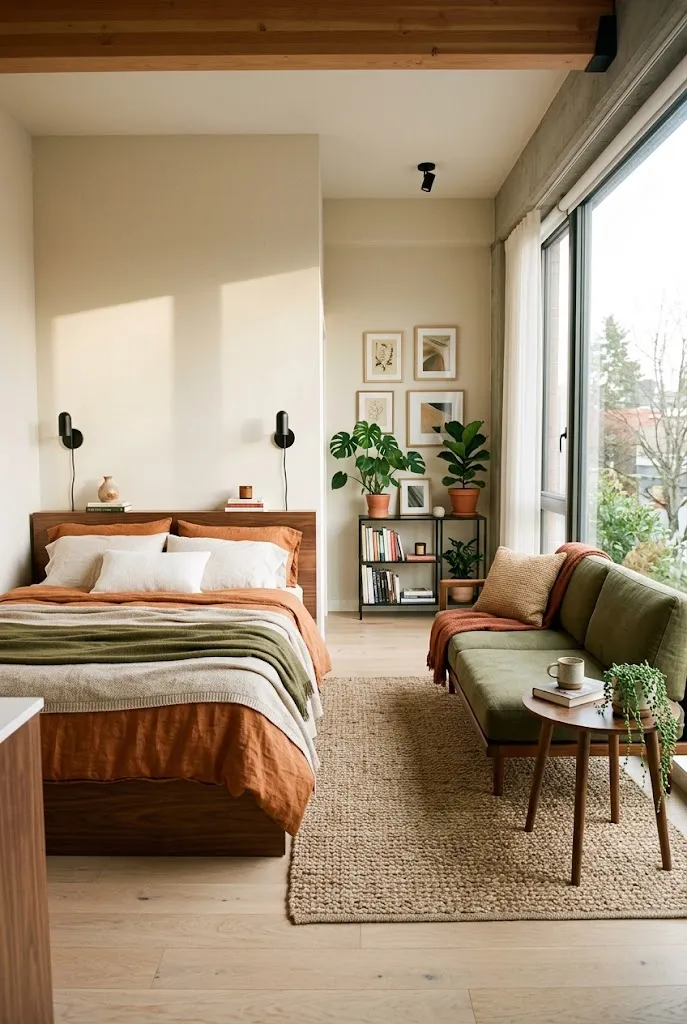
- A low bed keeps sightlines open across the room.
- Simple bedding makes the sleeping area feel calm and uncluttered.
- A rug adds warmth without needing a bulky divider.
- Slim furniture helps preserve an airy studio layout.
A low-profile bed can make a studio feel calmer by keeping the sleeping area visually light. Choose a frame with a simple silhouette and pair it with soft bedding, a narrow nightstand, and one small lamp. Because the bed sits lower, sightlines stay open across the room and the space feels less crowded. This works especially well when the sleeping area shares a wall with the living zone. The result is a softer, more relaxed layout that feels intentional without introducing bulky furniture or a heavy visual barrier every day.
In my experience, the best low-bed setups use texture instead of height to create presence. Layer a quilt, one throw, and a few cushions in earthy colors, then keep the surrounding furniture slim and understated. A rug beneath the bed can add definition without making the corner feel boxed in. Avoid oversized headboards if the room already has limited wall space. You will notice that the bed feels cozy and grounded while the rest of the studio remains open, balanced, and easier to move through during everyday routines at home.
6. Window Reading Nook
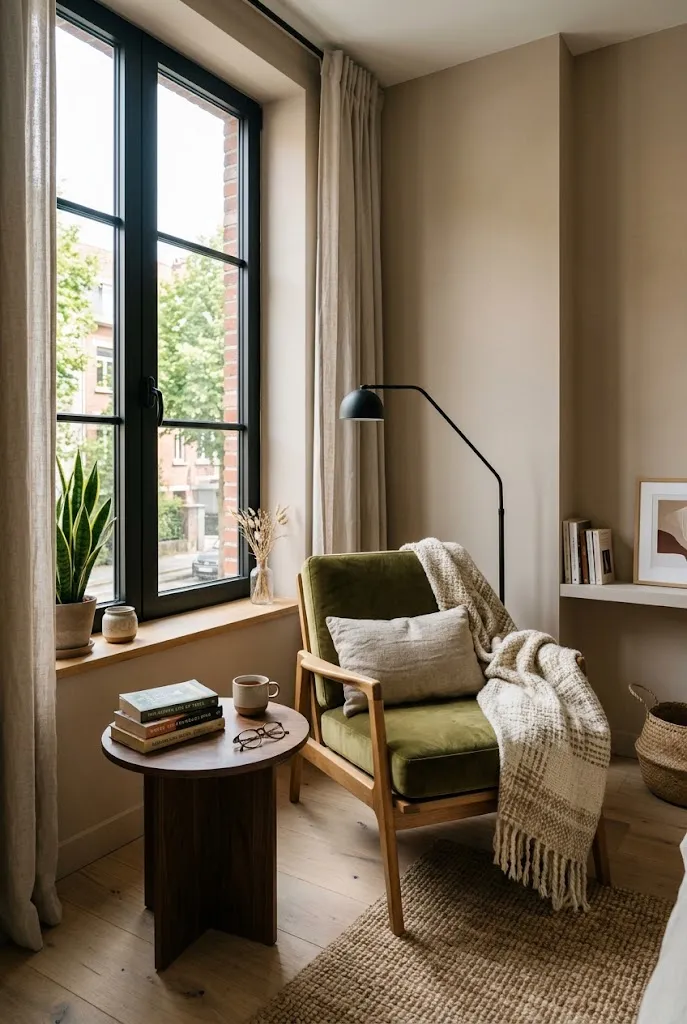
- A reading chair gives an unused corner a clear purpose.
- Window light makes the nook feel naturally inviting.
- One small side table adds function without crowding the room.
- A throw and focused lamp bring softness and warmth.
A small reading corner can make a studio feel more complete by giving one overlooked area a clear purpose. Place a compact chair beside a window or near the bed, then add a slim floor lamp and a tiny side table. This creates a warm transition between sleeping and living zones without adding much furniture. Choose upholstery in olive, rust, or muted blue to introduce depth while keeping the surrounding palette calm. The corner becomes a practical place to read, relax, or unwind without making the apartment feel cluttered each day.
I’ve noticed that a reading nook works best when it feels visually connected to the rest of the room. Repeat one material, such as walnut, black metal, or woven fabric, so the chair area looks intentional rather than added later. Keep the side table small enough to preserve circulation, and use a focused lamp instead of another large overhead fixture. A single cushion or throw is usually enough for softness. The finished corner gives the studio more personality and function while helping the entire layout feel layered, comfortable, and thoughtfully planned.
7. Curated Gallery Wall
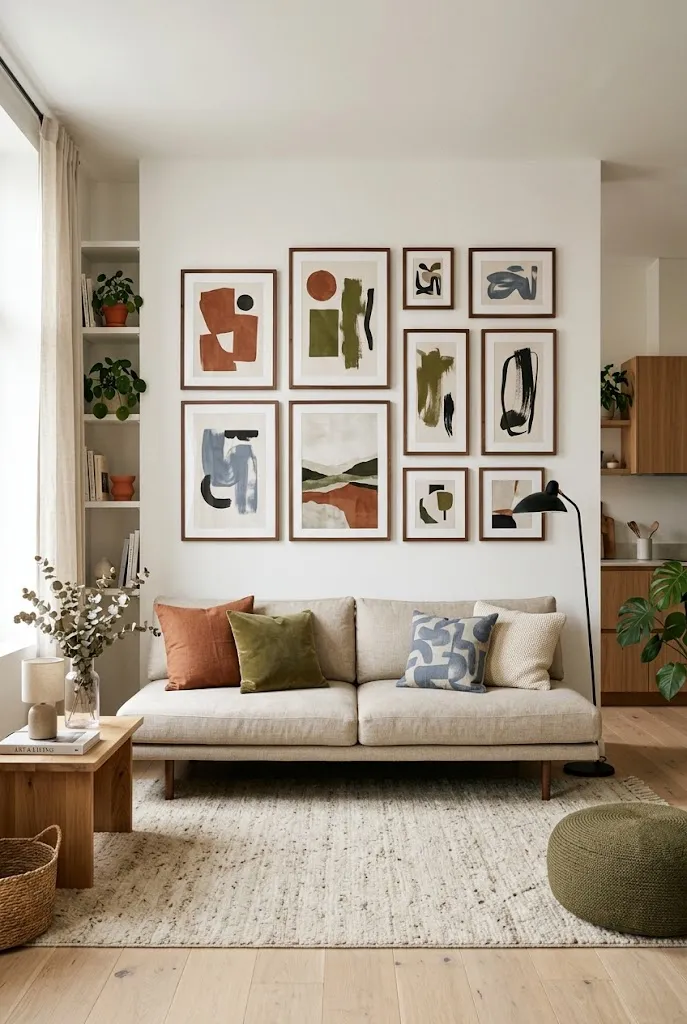
- A focused art display adds personality without using floor space.
- Repeating colors helps the room feel visually connected.
- Consistent frames keep the wall polished and intentional.
- One gallery area creates more impact than scattered artwork.
A compact gallery wall can add personality without using any valuable floor space. Choose three to five framed pieces with a shared palette, then arrange them above the sofa, bed, or small dining area. Keeping the collection focused makes the wall feel intentional rather than busy. Abstract prints, botanical art, or simple photography work especially well in small homes because they add character without overwhelming the room. This approach also gives one zone a stronger identity, making the studio feel more curated and visually finished from almost every angle in view.
The strongest gallery walls usually repeat colors already used elsewhere in the room. In my experience, pulling one rust, olive, or muted blue tone from the bedding or rug creates a much more cohesive result. Keep frame finishes consistent and leave enough empty wall around the arrangement so the space can breathe. If the apartment is narrow, avoid spreading artwork across every wall. One concentrated display creates more impact and keeps the room calm. You will notice greater personality, stronger visual balance, and a more polished overall aesthetic at home.
8. Soft Linen Curtains
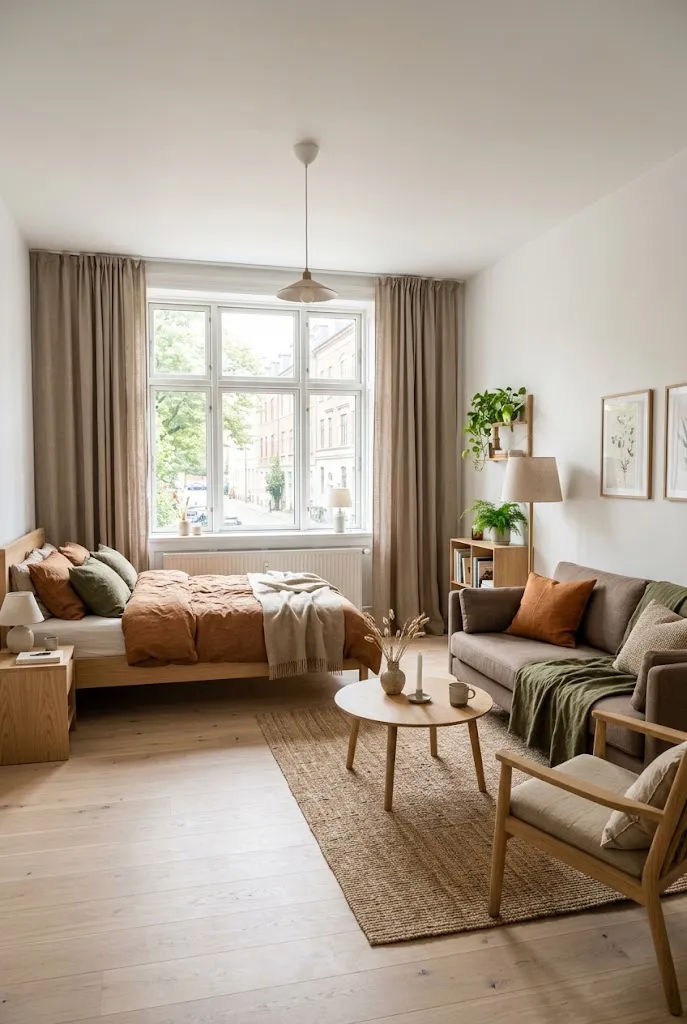
- Linen curtains soften hard window edges instantly.
- Floor-length panels make the room feel taller.
- Diffused daylight creates a warmer, calmer atmosphere.
- A muted curtain color helps connect nearby textiles and furniture.
Soft window treatments can instantly make a studio feel warmer and more finished. Replace harsh blinds or bare windows with lightweight linen curtains that filter daylight and add movement. Hang them high and wide to make the window appear larger, then choose a warm neutral, muted olive, or dusty taupe that complements the room. This simple change softens hard edges and reduces the stark feeling that small apartments sometimes have. The result is brighter, calmer natural light and a more inviting atmosphere throughout both the living and sleeping areas all day.
That’s why many designers use curtains as a styling tool rather than only for privacy. A panel that reaches close to the floor visually lengthens the room, while soft folds add texture without requiring extra decor. Keep the fabric light enough to glow during the day, and avoid heavy patterns if the studio already has several focal points. Matching the curtain tone to one rug or cushion can create subtle continuity. You will notice that the windows feel more intentional, the daylight looks softer, and the apartment gains an effortless sense of warmth.
9. Compact Dining Nook
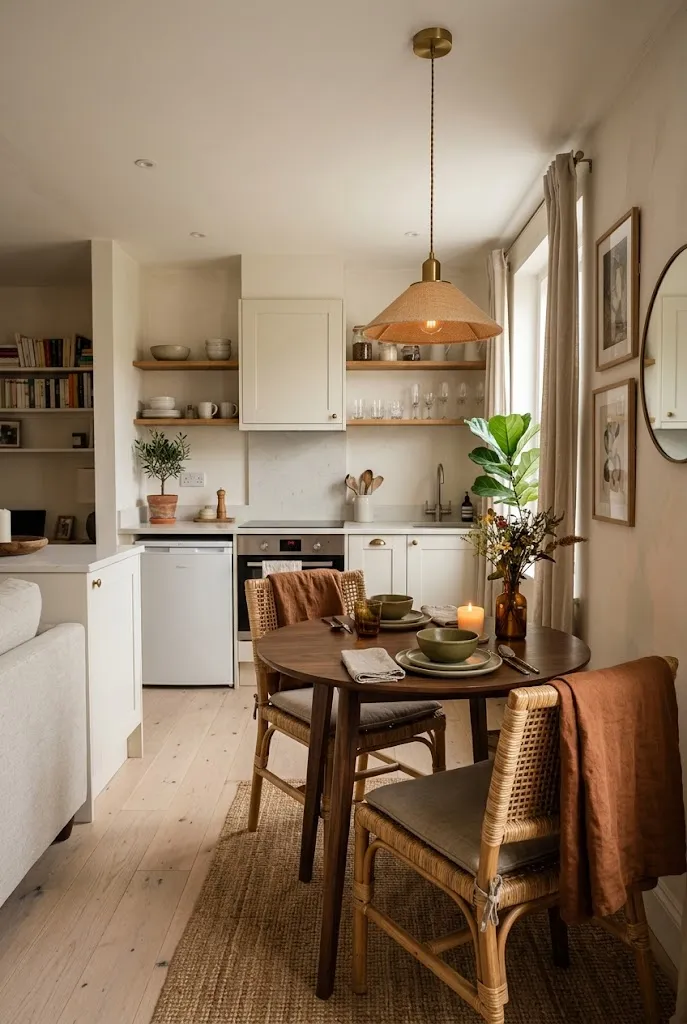
- A small dining area makes the studio feel more complete.
- Round tables improve movement in tighter layouts.
- One pendant light gives the zone its own identity.
- Matching materials help the dining space blend with the rest of the room.
A compact dining nook can make a studio feel more welcoming without demanding much square footage. Choose a small round table with two lightweight chairs, then place it near a wall, window, or kitchen edge where circulation stays clear. Round shapes soften tight layouts and make it easier to move around the furniture. Add one pendant light or small centerpiece to give the area its own identity. The dining zone feels intentional, functional, and visually balanced while the rest of the apartment keeps an open, relaxed flow throughout busy everyday routines.
I’ve noticed that dining areas work best when they echo materials already used elsewhere in the room. A walnut tabletop, woven chair seats, or black metal legs can connect naturally with shelving, lighting, or the bed frame. Keep the tabletop mostly clear so the zone feels calm rather than crowded, and use a small rug only if it will not interrupt walkways. You will gain a practical place for meals, work, or coffee while adding another cozy layer that makes the studio feel more complete and thoughtfully arranged each day.
10. Layered Indoor Greenery
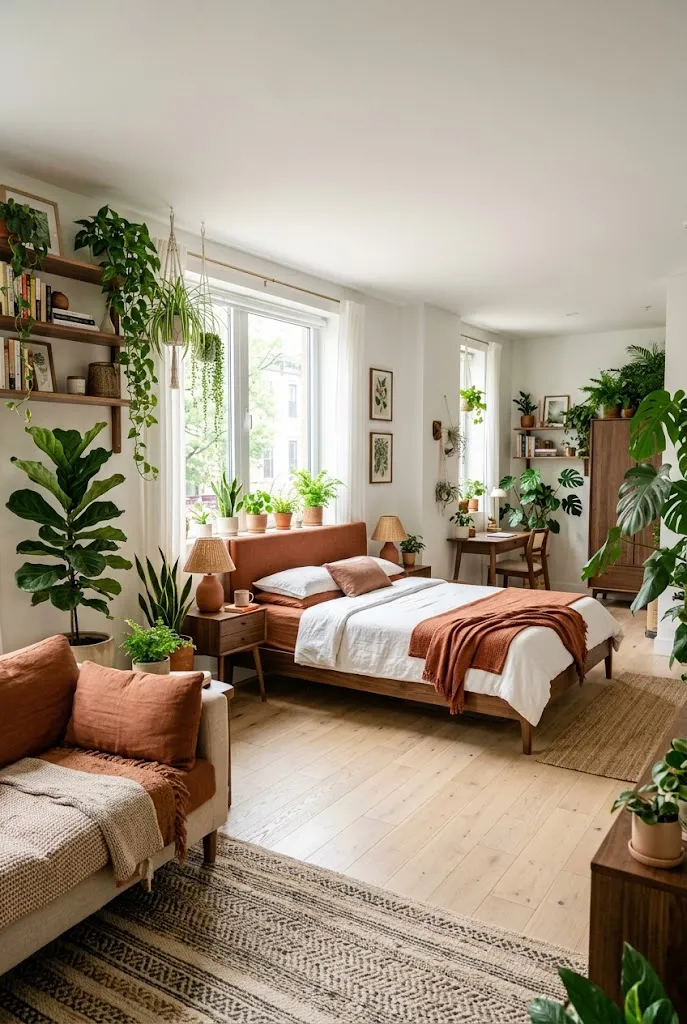
- Greenery softens straight furniture lines and hard surfaces.
- Different plant heights create natural visual movement.
- Woven or terracotta planters add another warm texture.
- A few strategic plants create more impact than filling every corner.
A few well-placed plants can make a studio feel warmer, fresher, and more lived-in without adding visual clutter. Use one taller plant near a window or sofa, then add a trailing plant on shelving and a smaller pot near the bed or desk. Varying heights creates movement and helps soften hard furniture lines. Choose planters in terracotta, matte black, or woven finishes to support the room’s palette. The greenery adds natural texture and color while making the apartment feel calmer, softer, and more inviting throughout the day at home daily.
The secret is using greenery as a design layer rather than filling every empty corner with pots. In my experience, three strategically placed plants usually create more impact than a large collection in a small room. Put the largest plant where it can benefit from natural light, then repeat smaller leaves at different heights for balance. If floor space is tight, use a hanging planter or narrow shelf. You will notice that the room feels more connected to nature, while wood, textiles, and neutral colors appear richer and more dimensional beside fresh green leaves.
11. Textured Area Rug
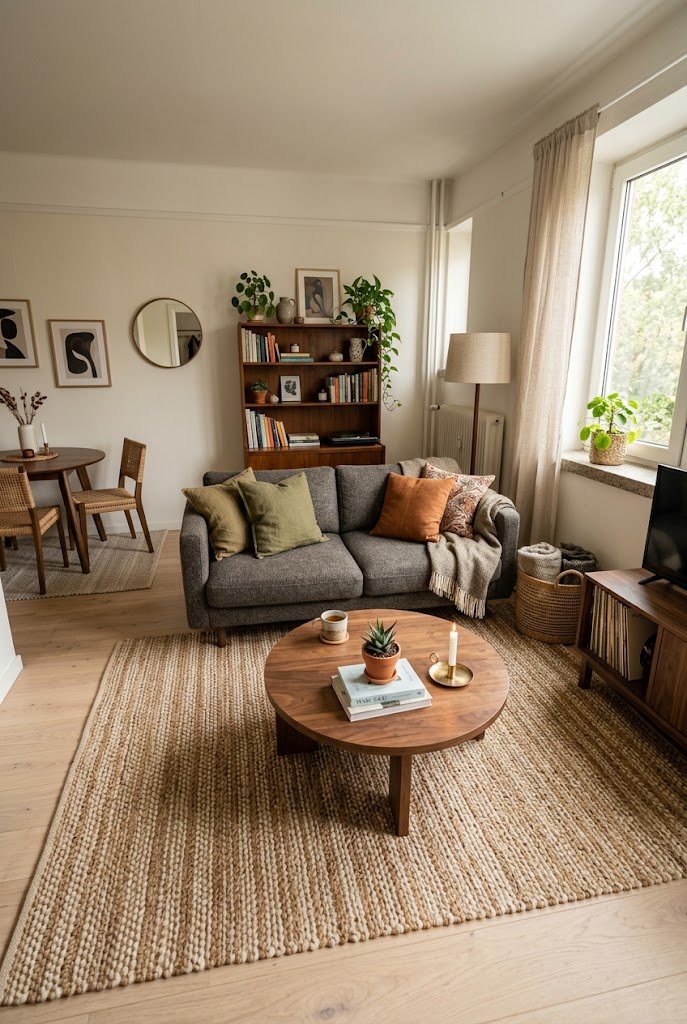
- A large rug visually anchors the main seating area.
- Natural fibers make hard flooring feel instantly softer.
- Subtle color helps connect nearby furniture and textiles.
- Defined floor zones make an open studio easier to read.
A textured rug can instantly make a studio feel softer and more grounded, especially when several functions share one open room. Choose a rug large enough to anchor the sofa and coffee table, then select a weave or pattern that adds interest without overwhelming the space. Wool, jute, and low-pile designs work especially well because they bring warmth underfoot while keeping furniture easy to move. The rug creates a clear visual center, softens hard flooring, and makes the living area feel cozier without adding another piece of bulky furniture indoors.
That’s why many designers use rugs to define zones before adding dividers or extra storage. A warm neutral base with subtle rust, olive, or muted blue accents can connect the living area to nearby bedding or artwork. Keep some flooring visible around the rug so the room still feels open and spacious. If the studio is narrow, avoid oversized patterns that dominate the entire floor. You will notice that seating feels more anchored, the layout becomes easier to read, and the apartment gains a layered, finished quality that photographs beautifully.
12. Curated Open Shelving
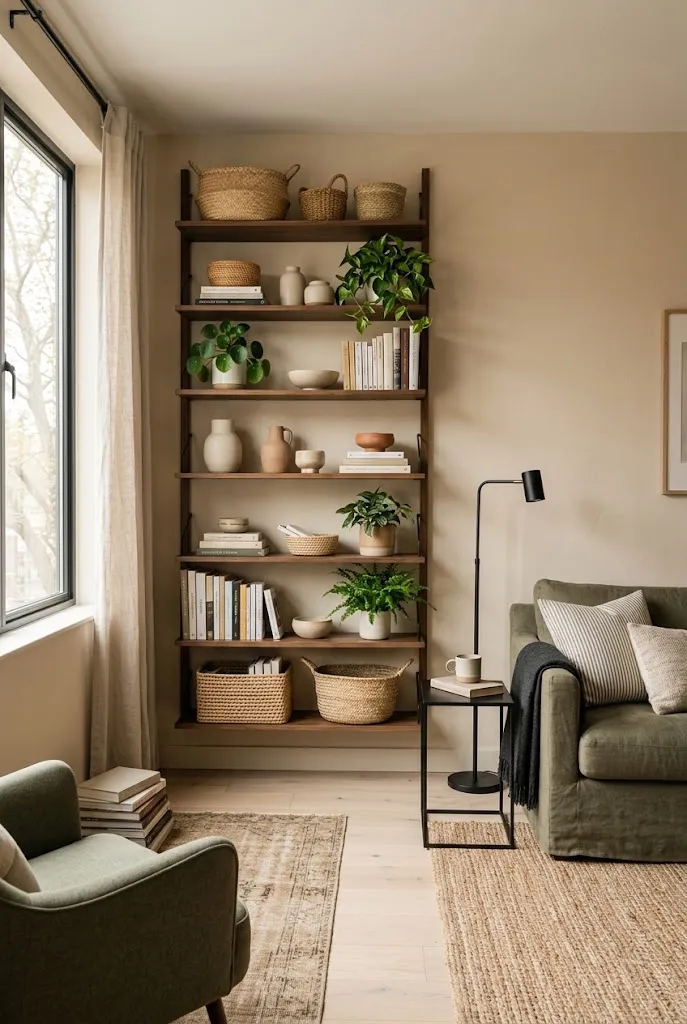
- Open shelving adds storage without the weight of bulky cabinets.
- Baskets keep practical items hidden and visually tidy.
- Empty spaces prevent the display from looking overcrowded.
- Repeating room colors makes the shelving feel intentionally styled.
Open shelving can make a small studio feel more personal while adding useful storage without the visual weight of closed cabinets. Choose a slim unit with warm wood or black metal framing, then style it with a balanced mix of books, ceramics, baskets, and one or two plants. Leave some shelves partially empty so light can move through the display. This prevents the storage from feeling heavy or cluttered. The result is practical organization that also adds texture, personality, and a curated look to an otherwise simple corner of the apartment.
In my experience, the most attractive shelves mix everyday function with a few decorative pieces rather than treating every level like a display case. Keep baskets or boxes on lower shelves for items you want hidden, then place lighter objects higher up. Repeat colors already used in the room so the shelving feels connected to the overall palette. Avoid filling every gap, especially in a small studio. You will gain storage without sacrificing openness, and the room will feel more polished, intentional, and visually interesting from multiple angles throughout the space.
13. Layered Cozy Bedding
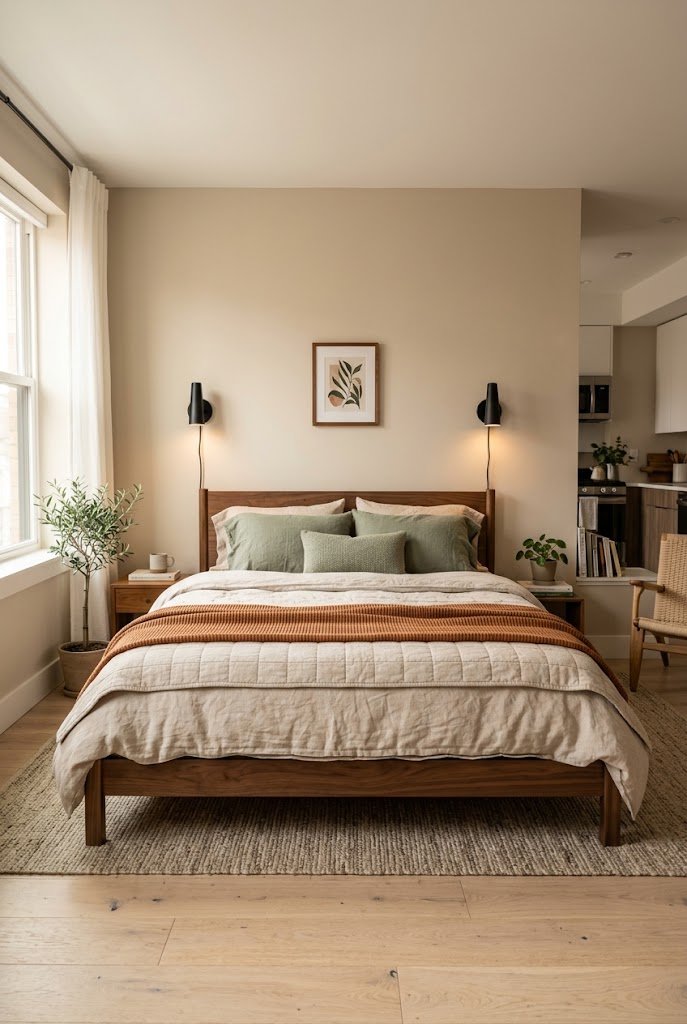
- Layered bedding makes the sleeping zone feel softer and more inviting.
- Mixing textures adds depth without introducing more furniture.
- Earthy colors keep the bed connected to the rest of the studio.
- A simple bed setup is easier to maintain in a compact home.
A softly styled bed can become the emotional center of a studio without needing an oversized frame or elaborate headboard. Start with breathable linen or cotton bedding, then layer one textured blanket and a small mix of cushions in earthy tones. Keeping the palette controlled helps the sleeping area feel restful rather than crowded. This approach adds comfort and visual depth while still allowing the bed to blend naturally with nearby living furniture. The result is a warm, inviting sleep zone that feels intentional and easy to maintain every day.
I’ve noticed that bedding looks most polished when the layers vary in texture but stay close in color. Pair smooth sheets with a ribbed throw, soft quilt, or lightweight wool blanket, then add just two or three cushions instead of covering the entire bed. Choose rust, sage, oatmeal, or muted blue to add personality without overwhelming the room. Keep the bed neatly made and leave a little negative space around it. You will notice that the whole studio feels calmer, more cohesive, and visually richer with very little extra effort.
14. Welcoming Entry Corner
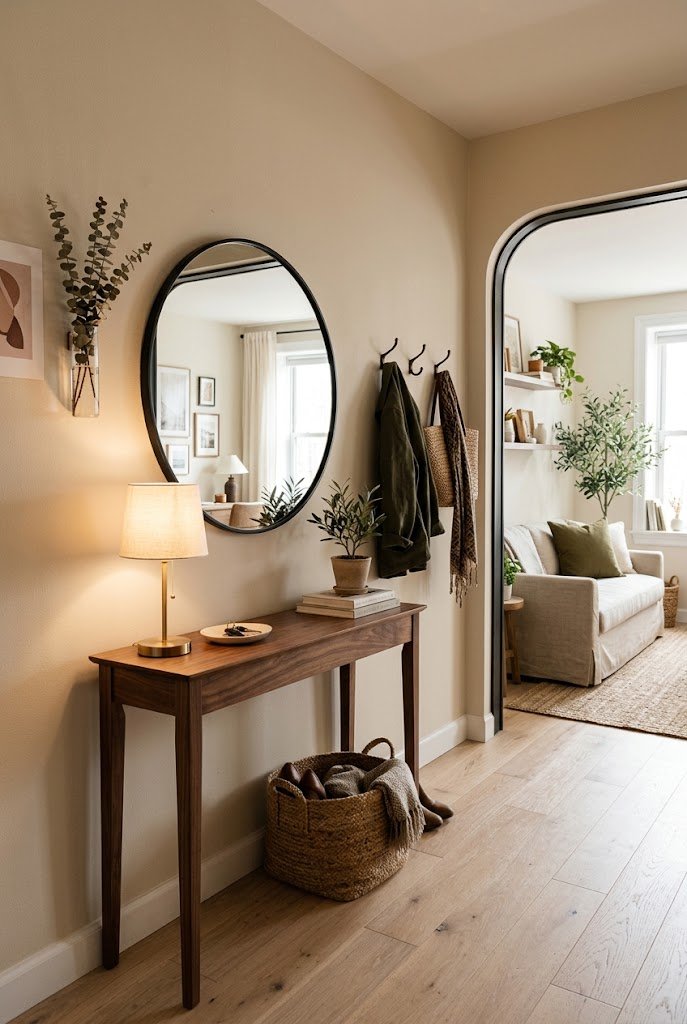
- A defined entry makes the apartment feel more complete.
- Wall hooks keep bags and coats off furniture.
- A mirror reflects light and visually opens a small entrance.
- Hidden basket storage prevents everyday clutter from spreading.
A warm entry moment can make a studio feel cozy before you even reach the main living area. Use a narrow console, wall hooks, small mirror, and one compact lamp to create a welcoming landing zone near the door. This gives everyday items like keys, bags, and shoes a clear place while preventing clutter from spreading across the apartment. Choose finishes that repeat materials used elsewhere, such as walnut, black metal, or woven baskets. The entry feels purposeful, and the entire studio immediately looks more organized and thoughtfully styled overall.
The best entry setups stay slim and practical so they never interrupt circulation. In my experience, one shallow console or wall-mounted shelf is usually enough to create a sense of arrival without sacrificing valuable floor space. Add a small tray for essentials, a mirror to reflect light, and a basket underneath for items you want hidden. Avoid filling the surface with decor; one lamp, vase, or framed piece is plenty. You will notice that coming home feels calmer, while the studio gains another polished layer that supports everyday living beautifully.
Conclusion
Creating a cozy studio apartment aesthetic is less about adding more and more about choosing the right details. Warm lighting, layered textiles, natural wood, thoughtful color, greenery, and smart zoning can make even a small room feel calm, welcoming, and complete. I’ve seen how a few simple changes can transform the atmosphere without requiring a full makeover. Start with one idea that fits your space, then build slowly until the room feels like you. Save this post on Pinterest for future inspiration, try your favorite ideas at home, and share it with someone who wants a warmer, more inviting studio.
Read More:
21 Mini Studio Apartment Ideas That Make Small Spaces Shine
Room Dividers With Storage for Studio Apartments That Make One Room Feel Like Two
Community
Join the conversation
Add a useful idea, ask a specific question, or share what worked in your space. Every comment is reviewed before it appears.