Introduction
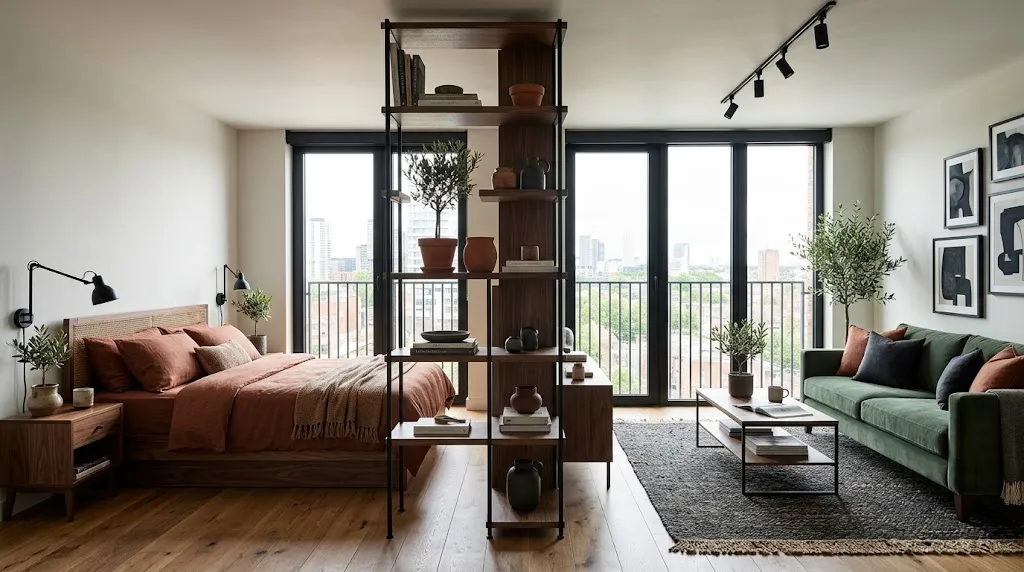
A studio can feel beautifully open without making every part of your life visible at once. These studio apartment layout ideas with room dividers show how to create privacy, define zones, and add storage without making a small space feel cramped. From open shelving and slated screens to curtains, glass partitions, and multifunctional dividers, each idea is designed to make one-room living feel more organized and intentional. In my experience, the best dividers do more than separate a bed from a sofa they help the whole layout work better. With the right placement, materials, and styling, you can create distinct sleeping, living, dining, or work areas while still keeping light and movement flowing through the apartment.
1. Color Accent Cube Shelf
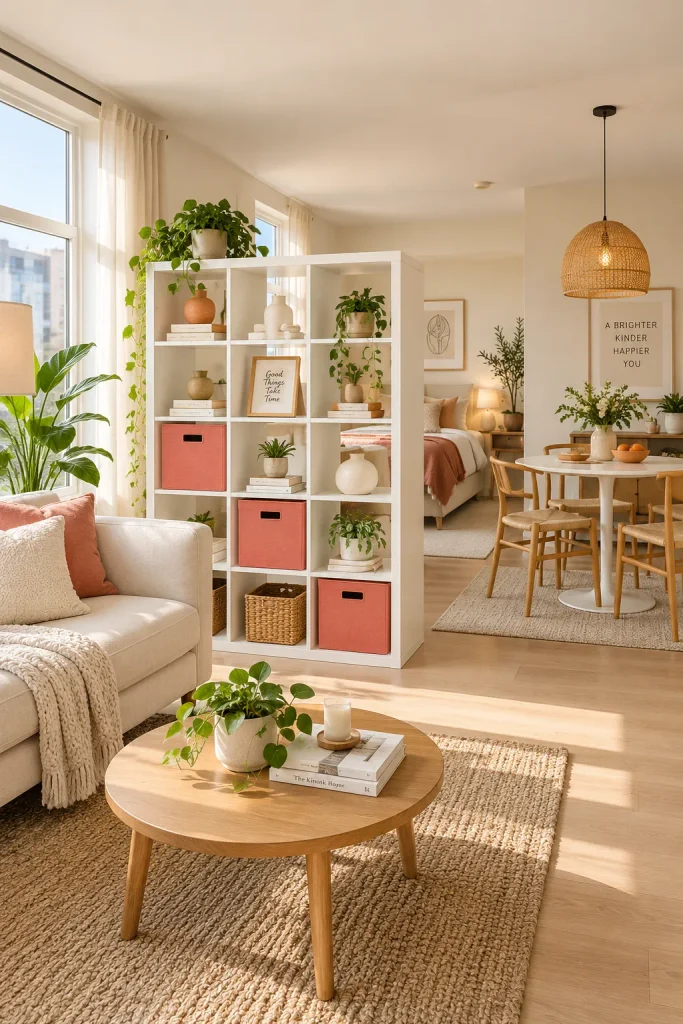
- Open cubes divide the room without blocking natural light.
- Colorful storage bins add personality while hiding everyday clutter.
- The shelving creates useful storage without needing another cabinet.
- Leaving some compartments open keeps the divider visually light.
A cube shelf can instantly make an open studio feel more organized without closing it in. Place a low or medium-height unit between the living and dining zones so each area gains a clearer purpose while daylight still moves through the room. For studio apartment layout ideas with room dividers, this setup is especially practical because the shelf provides separation and storage at the same time. Add a few colorful fabric bins among neutral books and ceramics, and the divider becomes a cheerful focal point rather than a bulky barrier in the middle of the apartment.
The most successful version feels styled, not stuffed. In my experience, leaving several cubes open makes the whole divider look lighter and helps a small room breathe. Use closed bins for chargers, paperwork, or everyday clutter, then balance them with a plant, framed print, or small vase. Keep the brightest accent color limited to two or three storage boxes so it connects the zones without overwhelming them. You will notice that the studio feels more intentional, the floor plan reads more clearly, and useful storage becomes part of the decor instead of an afterthought.
2. Bedroom Bookshelf Divider
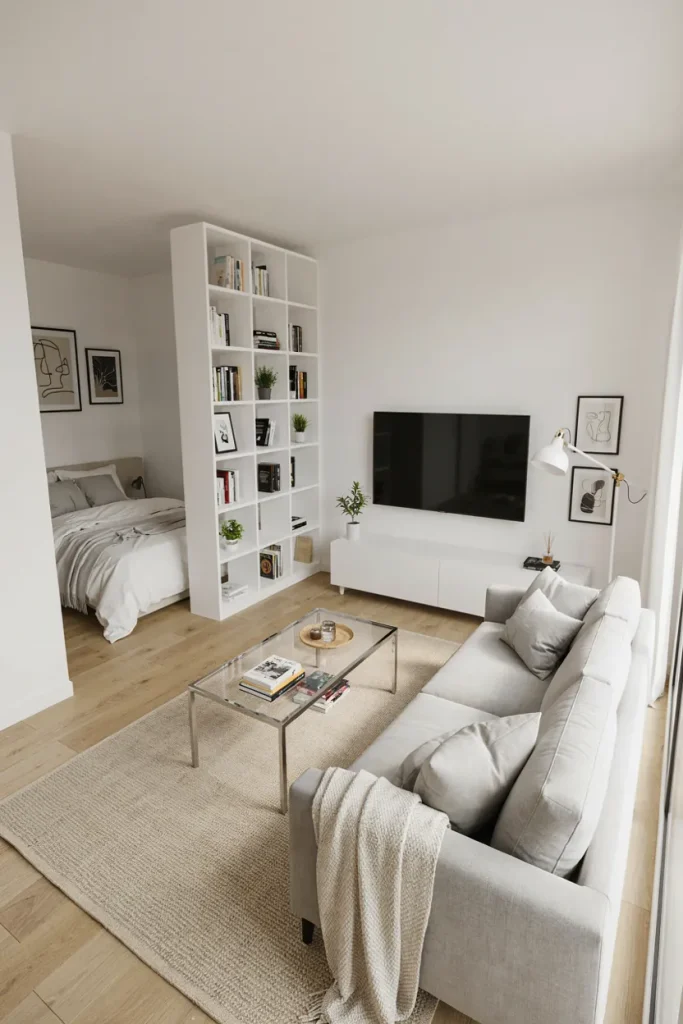
- A tall bookshelf gives the bed more visual privacy.
- Open shelving keeps the apartment from feeling boxed in.
- Both sides can be styled so the divider looks finished everywhere.
- Books, baskets, and plants make the separation useful as well as decorative.
Nothing changes the feeling of a studio faster than giving the bed a little visual privacy. A tall open bookshelf placed between the sleeping area and the main living space creates a convincing bedroom boundary without requiring construction. Position it so the bed is partly screened from the entrance, then keep enough open shelves for light to pass through. Books, small plants, woven baskets, and framed art can make both sides attractive. The result is a sleeping zone that feels calmer and more private while the apartment still keeps the openness that makes a studio comfortable.
A double-sided approach is what makes this divider feel finished from every angle. Style the living-room side with objects you want guests to see, while the bedroom side can hold softer pieces such as books, a small lamp, or personal photos. I’ve seen this work especially well when the shelving matches another wood or metal finish already used in the apartment. Avoid completely filling the upper shelves, because open gaps prevent the unit from becoming a visual wall. With thoughtful styling, you gain storage, privacy, and a much stronger sense that the bed belongs in its own room.
3. Slim Vertical Bookcase
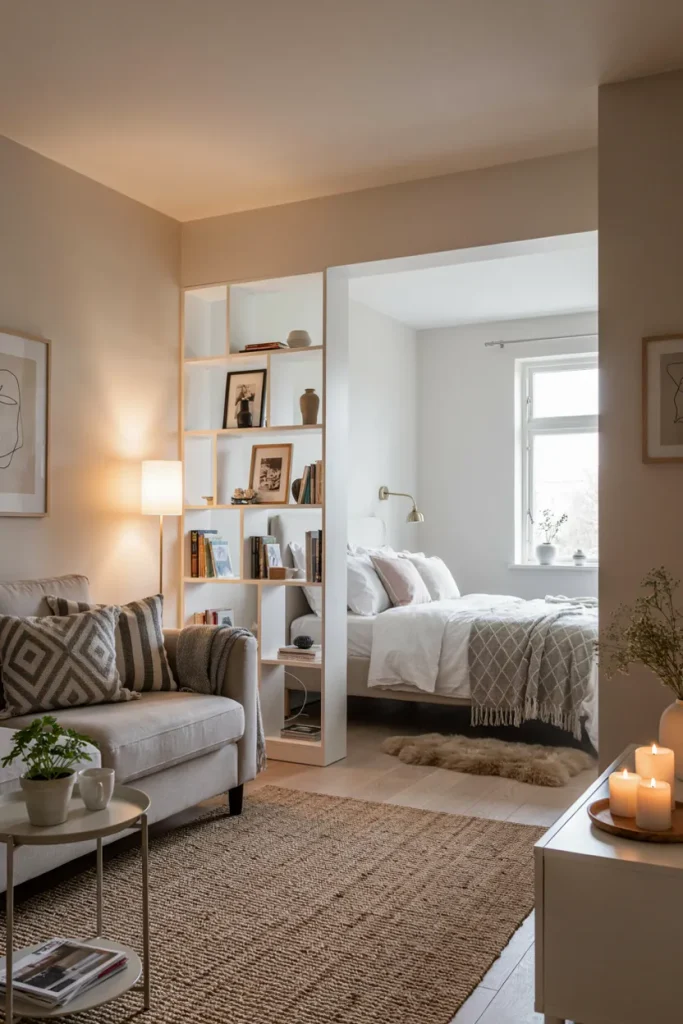
- A narrow bookcase works well where floor space is limited.
- Vertical storage uses height instead of valuable square footage.
- Warm lighting makes the divider feel softer and more intentional.
- The slim profile preserves an easy walkway between zones.
Even a narrow studio can gain structure without sacrificing valuable walking space. A slim vertical bookcase tucked between the sofa and bed creates just enough separation to suggest two different zones while using very little floor area. Choose a tall design with a shallow footprint, then add a warm floor lamp nearby to soften the transition between spaces. Cream walls, light wood, and a few simple accessories keep the divider from feeling heavy. This arrangement is especially helpful when a larger shelving unit would interrupt circulation or make the apartment feel crowded from the moment you enter.
Lighting is what turns this practical divider into a cozy design feature. Warm lamps placed beside or within the shelf create a gentle evening glow and make the separation feel intentional rather than improvised. Use the lower shelves for heavier books or baskets, then keep the upper levels lighter with candles, ceramics, or one trailing plant. In my experience, this balance helps a tall narrow unit feel stable without looking dense. The room gains a more comfortable sleeping corner, a defined living zone, and extra vertical storage while preserving the open sightlines that make compact apartments feel larger.
4. Sculptural Open Cubes
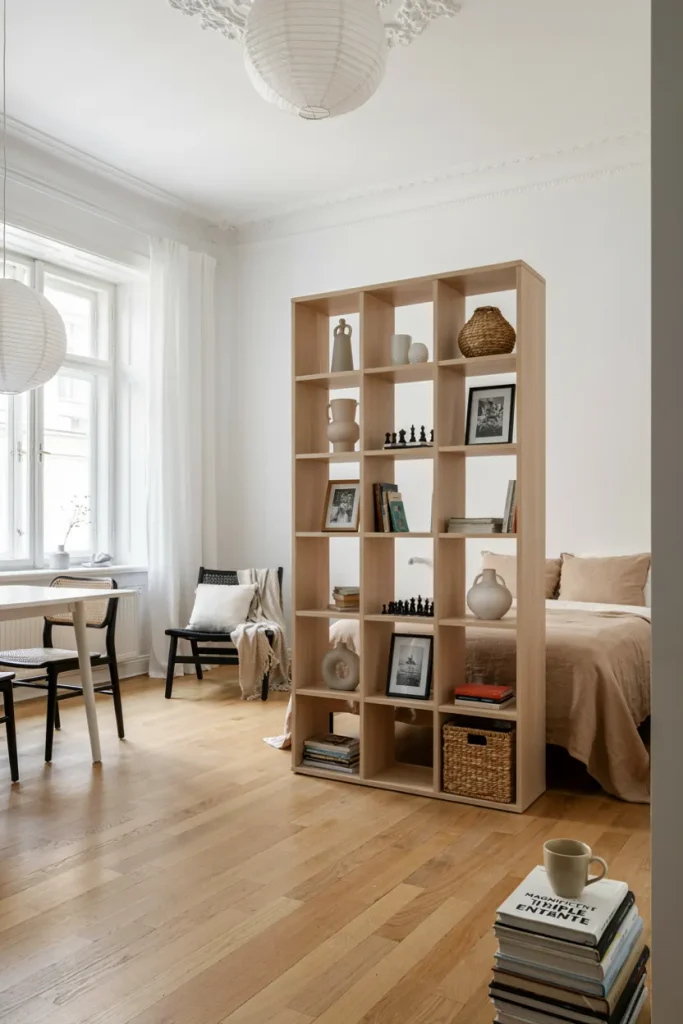
- Empty cubes help the divider feel decorative instead of bulky.
- A few statement objects create a clean, curated appearance.
- Open sections allow daylight and sightlines to continue through the room.
- This approach works especially well in bright, minimal studios.
Open cube shelving can work as decor even when storage is not the main goal. Instead of filling every compartment, treat the divider like a small gallery and give individual objects room to stand out. A sculptural vase, framed print, stack of books, or simple ceramic bowl can occupy selected cubes while others remain completely empty. This creates separation around the bed or sofa without producing a solid visual block. The negative space allows natural light and long sightlines to continue through the studio, making the divider feel architectural, airy, and deliberately integrated into the overall layout.
This approach looks especially polished in studios with good natural light or taller ceilings. That’s why many designers use restraint when an open shelving unit is already large enough to command attention. Repeat two or three materials, such as pale wood, matte black metal, and neutral ceramics, so the display feels cohesive instead of random. Keep practical clutter hidden elsewhere and reserve these shelves for objects with strong shapes or textures. The finished divider subtly defines separate zones while adding personality, and the apartment feels curated rather than crowded because the eye can still travel through the furniture.
5. Creative Pegboard Divider
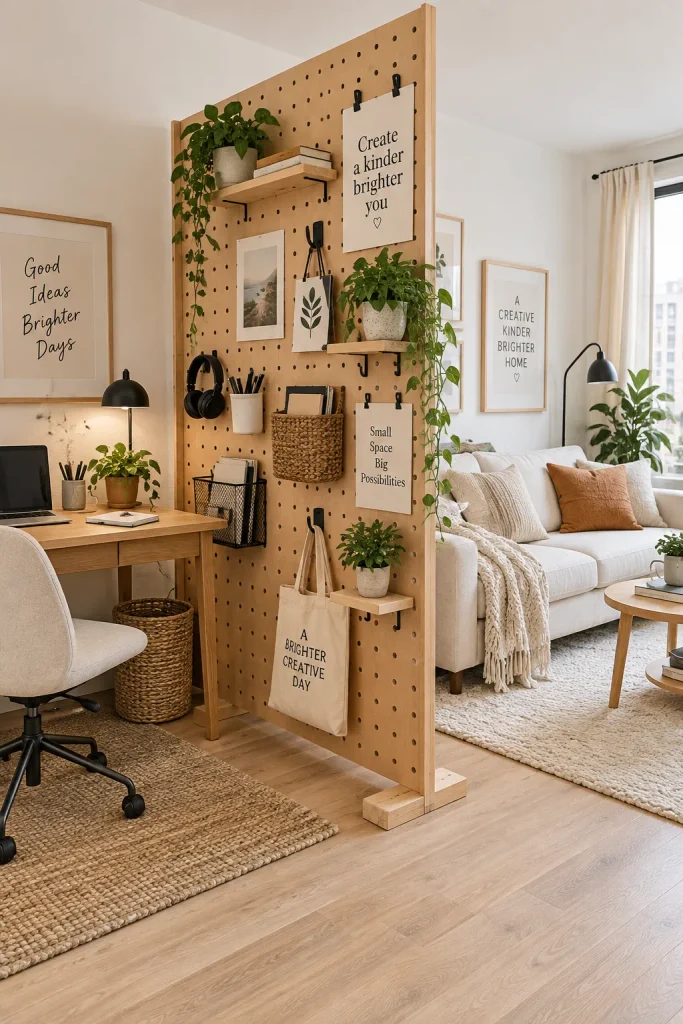
- A freestanding pegboard creates separation without permanent construction.
- Hooks and shelves turn the divider into useful vertical storage.
- Art, plants, and photos make the partition feel decorative and personal.
- The layout works especially well beside a small home office.
A pegboard divider turns an awkward open studio into a flexible space that can change with your routine. Place a freestanding wooden panel between the desk and sofa, then use hooks, shelves, and small baskets to organize supplies without adding another cabinet. Because the surface stays visually open, the room still feels connected while each zone gains a clear purpose. This works especially well for renters, creatives, and anyone working from home who needs separation without permanent construction. The divider becomes storage, display space, and a practical boundary in one compact footprint.
The beauty of pegboard is how easily you can update it as your needs change. I’ve seen this work well in small apartments where one side holds work tools and the other displays plants, prints, or lightweight decor. Keep heavier items lower for stability, and leave some open space so the panel never looks cluttered. A natural wood finish adds warmth, while black hooks or slim shelves create definition. You will notice that the apartment feels more organized and personal, yet the layout remains flexible enough to rearrange whenever your schedule or decorating style changes.
6. Chandelier Bedroom Divider
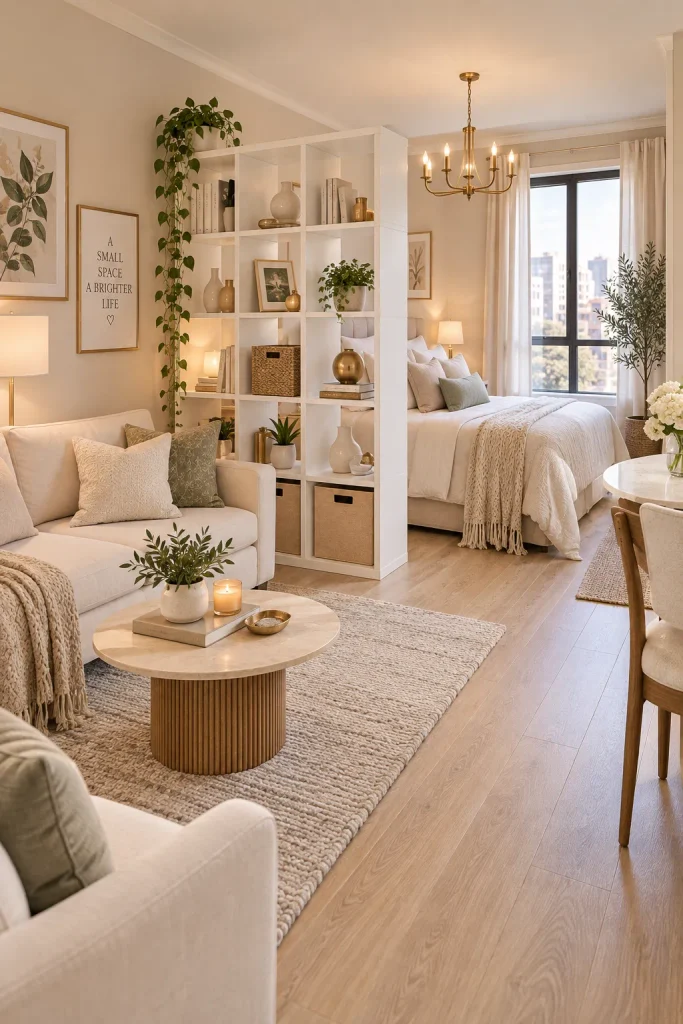
- A chandelier gives the sleeping zone a stronger visual identity.
- Light-colored shelving maintains an open, airy feeling.
- Cream and ivory textiles make the layout feel calm and cohesive.
- One statement fixture adds character without taking up floor space.
A small chandelier can make a divided studio feel surprisingly polished without using any extra floor space. Pair a light open cube divider with creamy furniture, pale textiles, and one elegant ceiling fixture above the sleeping area. The divider establishes a boundary, while the chandelier gives the bedroom zone its own visual identity and draws attention upward. This combination is especially effective in studios with higher ceilings because it adds character without crowding the layout. The overall effect feels refined, calm, and intentional rather than temporary, even when the actual divider is simple and budget friendly.
The trick is letting the lighting provide the drama while everything else stays quiet. Choose a compact chandelier with a simple silhouette so it feels special without overpowering the bed or shelving. In my experience, warm bulbs and ivory, beige, or soft taupe textiles create the most cohesive result. Keep the divider lightly styled with a few books, ceramics, and small baskets instead of filling every cube. You will notice that the sleeping area feels more like a real room, while the rest of the studio remains bright, open, and visually connected through a consistent neutral palette.
7. TV Storage Divider
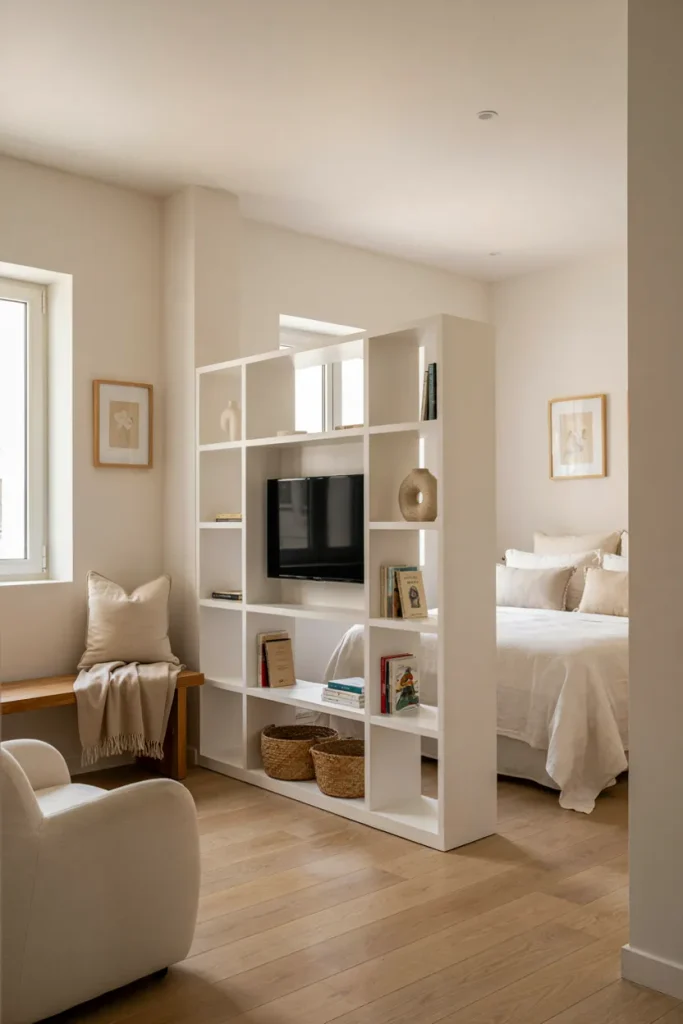
- The television becomes part of the divider instead of using another wall.
- The bed stays visually calmer because the screen faces the sofa.
- Surrounding shelves provide storage for books, baskets, and decor.
- Hidden cables help the divider look cleaner from both sides.
Building the television into a room divider solves two common studio problems at once: zoning and screen placement. Position a sturdy shelving unit between the sofa and bed, then place or mount the TV on the living-room side so it naturally faces the seating area. The bedroom side stays calmer because the screen and cables are mostly hidden from view. Among studio apartment layout ideas with room dividers, this setup stands out for making a large everyday object feel integrated rather than randomly placed. Surrounding shelves also provide useful space for books, baskets, and decor.
A thoughtful TV divider can make the entire apartment feel more purposeful from both directions. Use closed baskets or boxes for cables, remotes, and electronics, then keep the upper shelves lighter with plants or framed pieces. Make sure the unit is stable and appropriately rated before mounting any screen to it, especially in a rental. I’ve noticed that the best layouts leave open sections around the television so the divider does not become a heavy wall. The living area gains a clear focal point, the bed feels more private, and valuable wall space remains available elsewhere.
8. Perpendicular Cube Divider
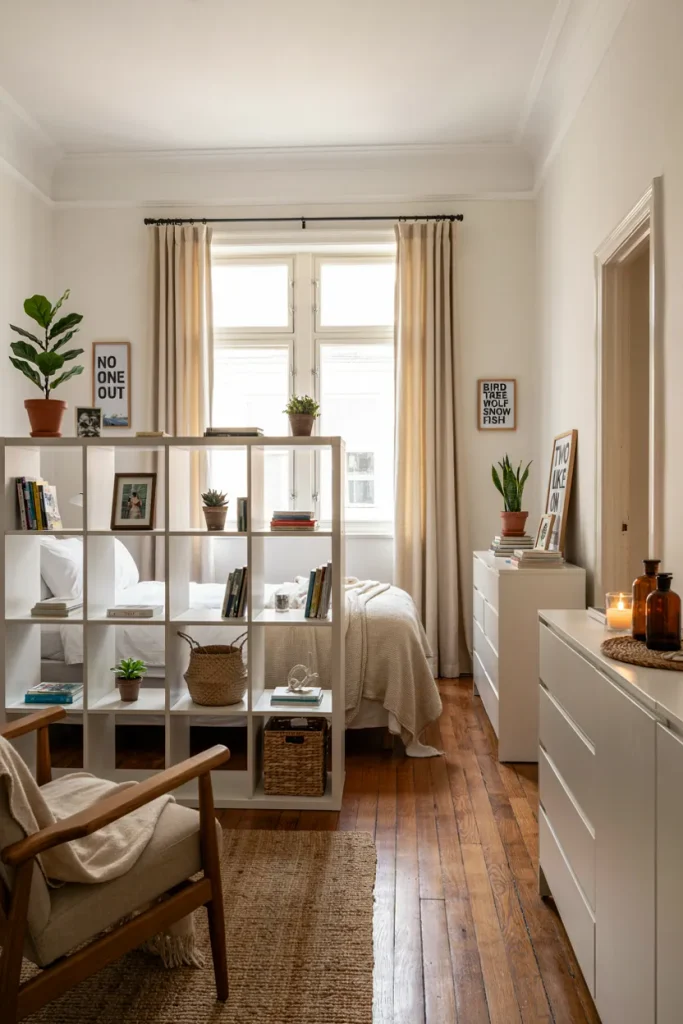
- A perpendicular shelf interrupts the hallway effect of a narrow studio.
- Lower baskets add practical concealed storage.
- Open upper cubes keep light traveling between both zones.
- The layout creates clearer rooms without requiring permanent walls.
Long, narrow studios often feel like hallways until one piece of furniture interrupts that straight visual line. Place an open cube shelf perpendicular to the longest wall to create two distinct zones without blocking the path from one end of the apartment to the other. The shelf can separate the bed from the living area or divide dining from lounging, depending on your routine. Because it crosses the room rather than following the wall, it changes how the floor plan reads instantly. The studio begins to feel wider, more structured, and much less corridor-like.
Storage placement makes this layout work even better in everyday life. Keep woven baskets, heavier books, and less decorative items in the bottom cubes, then reserve the upper sections for framed photos, ceramics, and small plants. That visual weight at the base makes the unit feel grounded while the lighter top preserves openness. In my experience, leaving a few upper cubes empty also helps daylight pass through a long apartment. You gain practical storage and stronger zoning, but the room still feels easy to move through, which is essential when every inch of a narrow studio matters.
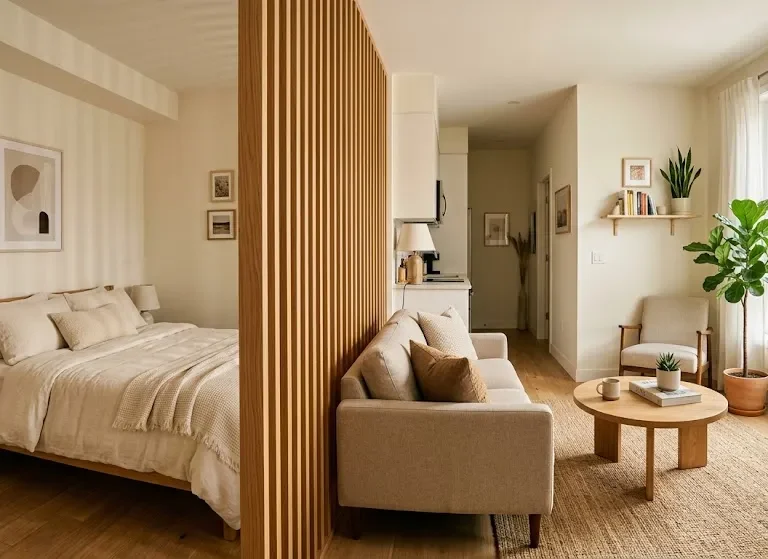
9. Vertical Wooden Slat Screen
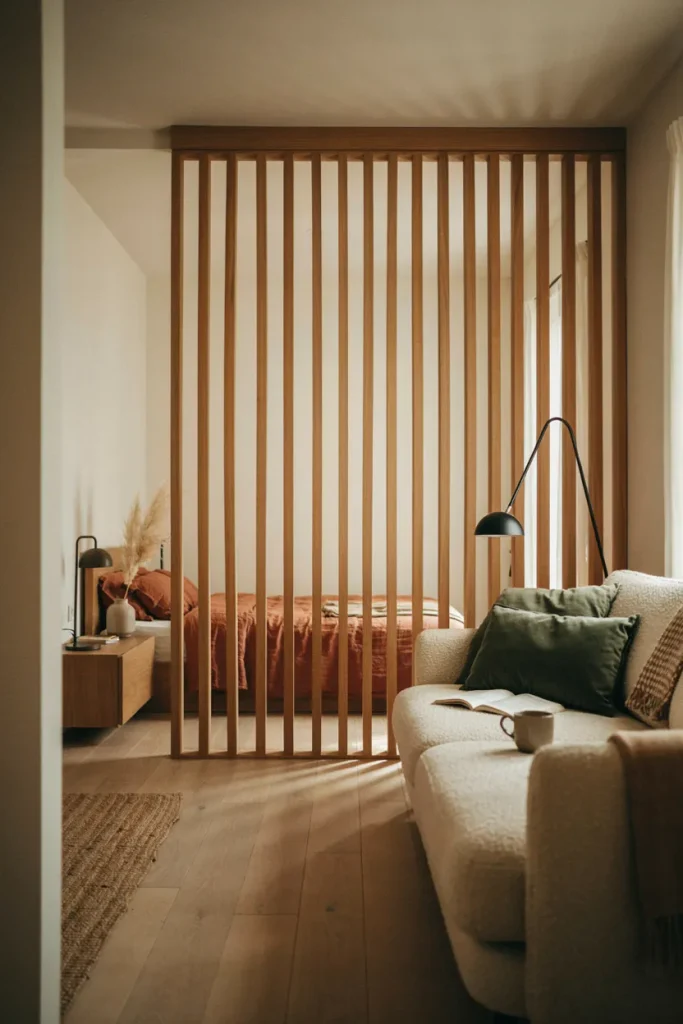
- Vertical slats create separation without making the room feel enclosed.
- Warm wood adds texture and an architectural focal point.
- Open gaps allow daylight to move between both zones.
- Rich bedding colors look especially striking beside natural walnut tones.
A wooden slat screen gives a studio clear structure without stealing the openness that makes a small space feel comfortable. Vertical slats create a visual boundary between the bed and living area while allowing daylight, air, and sightlines to continue through. Warm walnut or oak tones also add architectural character, especially beside neutral furniture and soft textiles. Pair the divider with terracotta, rust, or deep green accents to create a richer palette. The result feels custom and polished, yet the apartment still reads as one bright, connected space rather than two cramped rooms.
The spacing between the slats matters more than most people realize. In my experience, evenly spaced narrow gaps give enough privacy to define the sleeping zone without making the divider feel heavy. Position the screen where it hides the bed from the main entrance or sofa, but avoid blocking the strongest source of natural light. A simple bench, plant, or slim console nearby can help the partition feel integrated with the rest of the decor. You will notice stronger zoning, warmer texture, and a more intentional layout without losing valuable floor space or visual breathing room.
10. Glass Curtain Partition
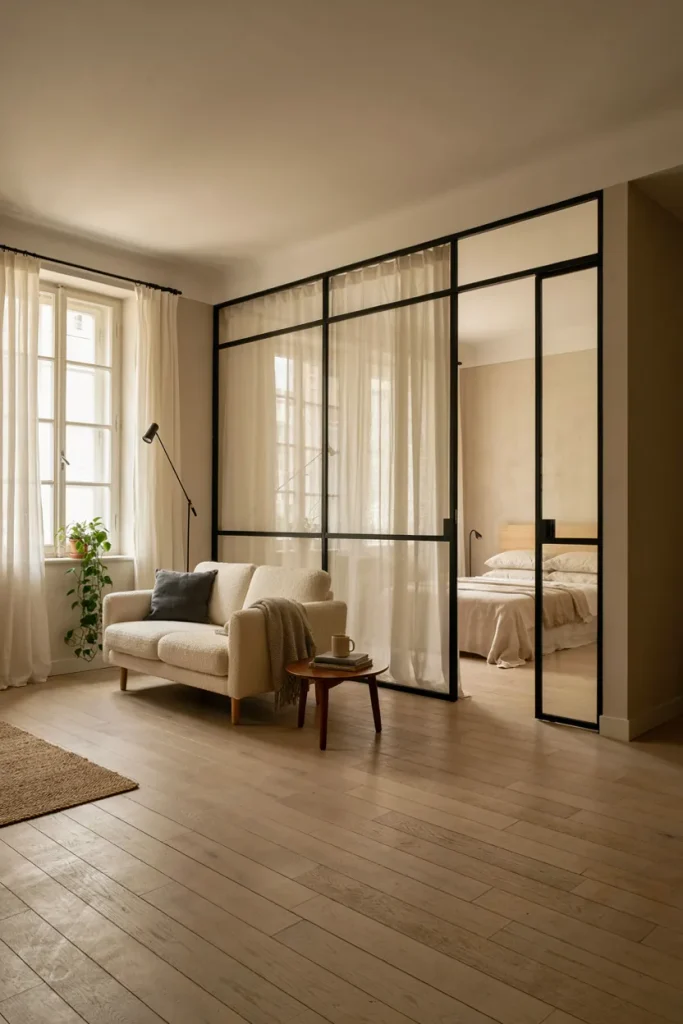
- Glass defines the bedroom while keeping natural light flowing.
- Sheer curtains offer privacy only when it is actually needed.
- Black framing adds a refined architectural detail.
- Matching black accents elsewhere help the divider feel intentional.
A black-framed glass partition creates one of the most polished ways to separate a bedroom without sacrificing brightness. The transparent panels establish a true visual boundary while allowing daylight to move from one side of the studio to the other. Add sheer curtains inside the glass so the sleeping area can shift from open and airy during the day to softly private at night. This setup works especially well with pale walls, warm wood floors, and minimal furniture. The finished layout feels sophisticated, architectural, and surprisingly spacious even when the apartment itself is compact.
This is a stronger commitment than a freestanding shelf, so it makes the most sense for an owned apartment or a long-term home. I’ve seen this work especially well when the curtain fabric is light enough to glow rather than completely darken the sleeping zone. Keep the frame slim and repeat its black finish in lighting, hardware, or furniture legs for continuity. When the curtains are open, the entire studio feels connected; when closed, the bed gains real privacy. That flexibility gives the room a refined, hotel-like quality while preserving the natural light small spaces depend on.
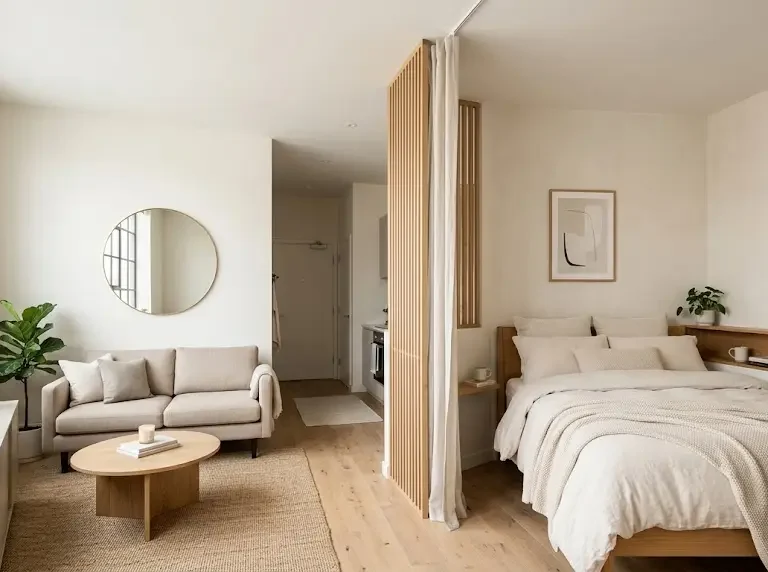
11. Ceiling Sheer Curtains
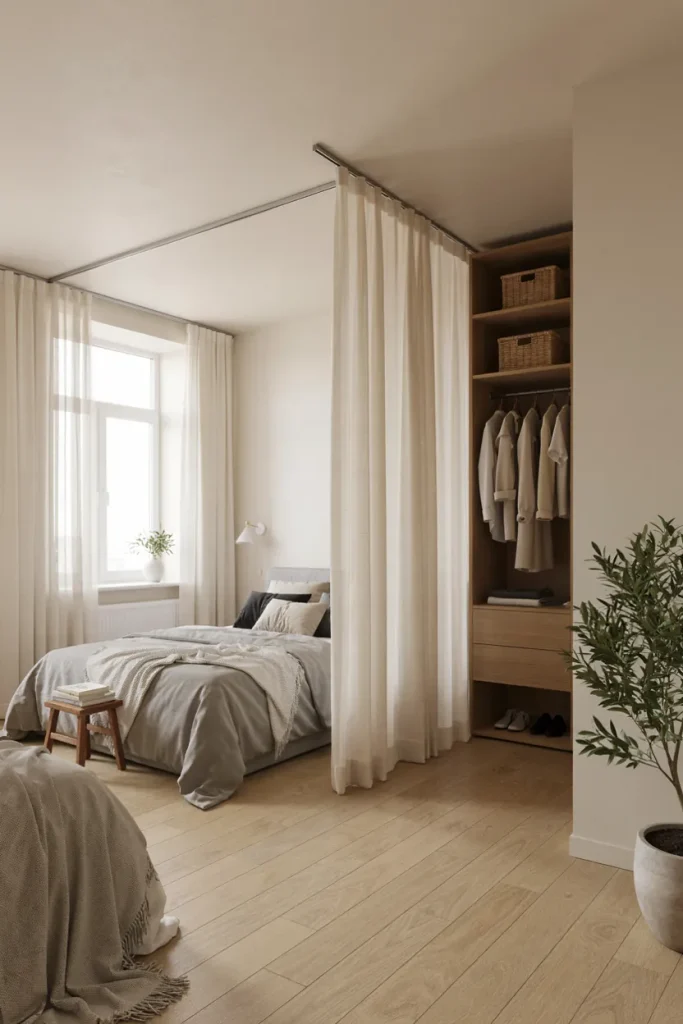
- Soft curtains create privacy without adding bulky furniture.
- Translucent fabric keeps the sleeping zone bright during the day.
- Sliding panels can disappear whenever an open layout is preferred.
- Neutral linen tones add softness and movement to a compact studio.
Ceiling-mounted sheer curtains can transform a studio with surprisingly little visual weight. Hang a linen or voile panel around the bed, workspace, or storage zone, then pull it closed only when you want extra separation. Because the fabric is soft and translucent, it filters rather than blocks daylight, helping the apartment stay bright even when the divider is in use. This is one of the most flexible studio apartment layout ideas with room dividers for renters because the fabric can be changed easily as your style, color palette, or privacy needs evolve.
What makes curtains especially useful is their ability to disappear when you do not need them. Slide the panels fully to one side during the day, and the studio returns to an open layout within seconds. For a more finished look, choose a ceiling track close to the ceiling color and let the fabric fall almost to the floor. I’ve noticed that soft ivory, oatmeal, and warm white fabrics look calmer than bright optic white. The result adds movement, softness, and privacy while taking up almost no usable floor area, making it practical for compact everyday living.
12. Moody Dark Wood Divider
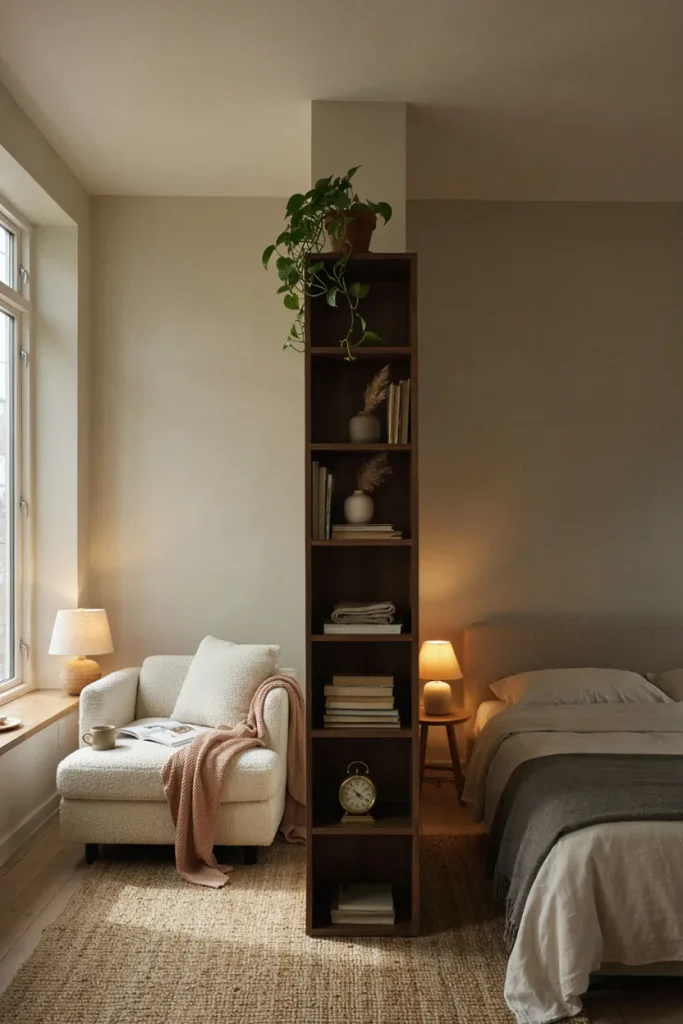
- Dark walnut adds warmth and stronger visual definition.
- Cream upholstery prevents the divider from feeling too heavy.
- Soft textiles balance the harder lines of cube shelving.
- A darker finish can make inexpensive shelving look more elevated.
Dark wood brings instant depth to a studio that feels too pale or unfinished. A walnut or espresso shelving divider creates a strong visual anchor between the bed and living area while adding warmth against cream walls and soft upholstery. Because the tone is richer, you can keep the surrounding palette simple with beige, ivory, and muted peach accents. The contrast makes the divider feel intentional rather than purely functional. It also gives open-plan spaces a cozier mood, especially when natural light keeps the darker finish from making the room feel closed in.
Balance is what keeps a dark divider from overpowering a compact apartment. I’ve noticed that styling only a few shelves with books, pottery, and small plants lets the wood grain remain part of the design. Use softer textures nearby, such as a boucle cushion, woven rug, or lightweight throw, to offset the heavier tone. If you already own a basic cube shelf, a dark wood finish can also refresh it without replacing the entire piece. The finished layout feels grounded, sophisticated, and warmer while still providing the storage and separation a studio needs.
13. Airy Light Oak Divider
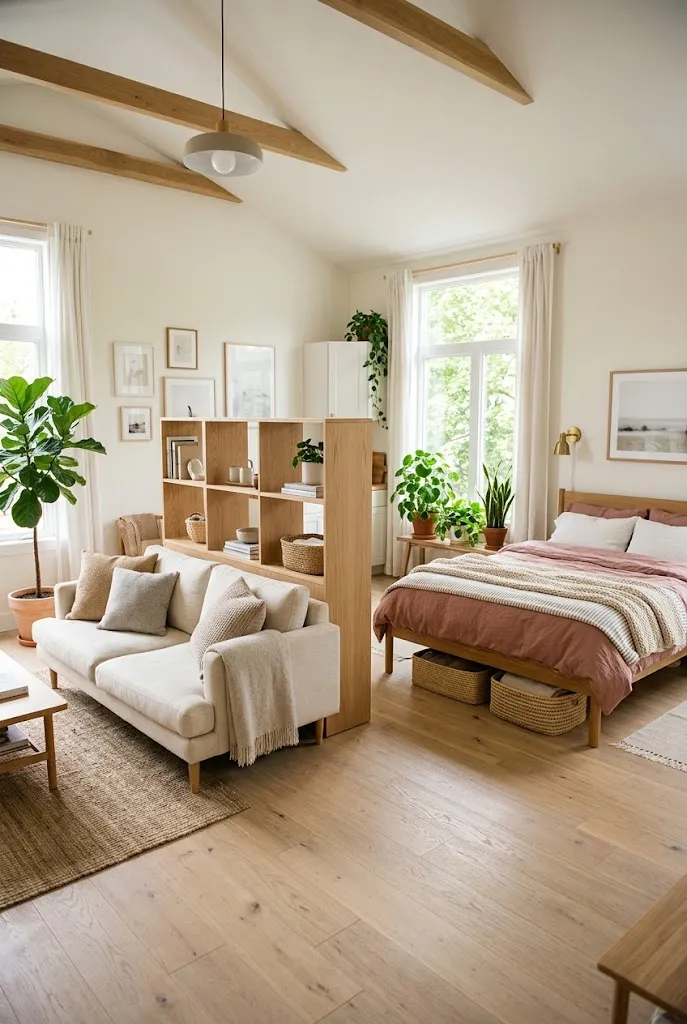
- Light oak separates zones without making the apartment look darker.
- Dusty rose or sage adds gentle contrast to the neutral wood.
- Plants soften the divider and visually connect both sides.
- Open shelves help preserve natural light and long sightlines.
Light oak is an easy choice when you want separation without adding visual heaviness. A pale wood shelving divider blends naturally with cream walls, soft beige upholstery, and light flooring, so the studio stays bright even when the bed is partly screened. Add one muted color, such as dusty rose, sage, or terracotta, to give the sleeping zone personality without breaking the calm palette. Because oak reflects more light than espresso finishes, it works especially well in smaller studios where every design choice needs to preserve a sense of openness and airiness.
Plants make this lighter divider feel even more natural and connected to the room. Place one taller plant beside the shelving, then add a trailing vine or small potted plant on an upper shelf to soften the straight lines. In my experience, greenery helps blur the boundary just enough so the apartment feels zoned rather than chopped into separate boxes. Keep baskets and heavier objects toward the bottom, and leave some shelves open. You will get a brighter sleeping area, useful storage, and a divider that feels decorative without making the floor plan look crowded.
14. Cozy String Light Divider
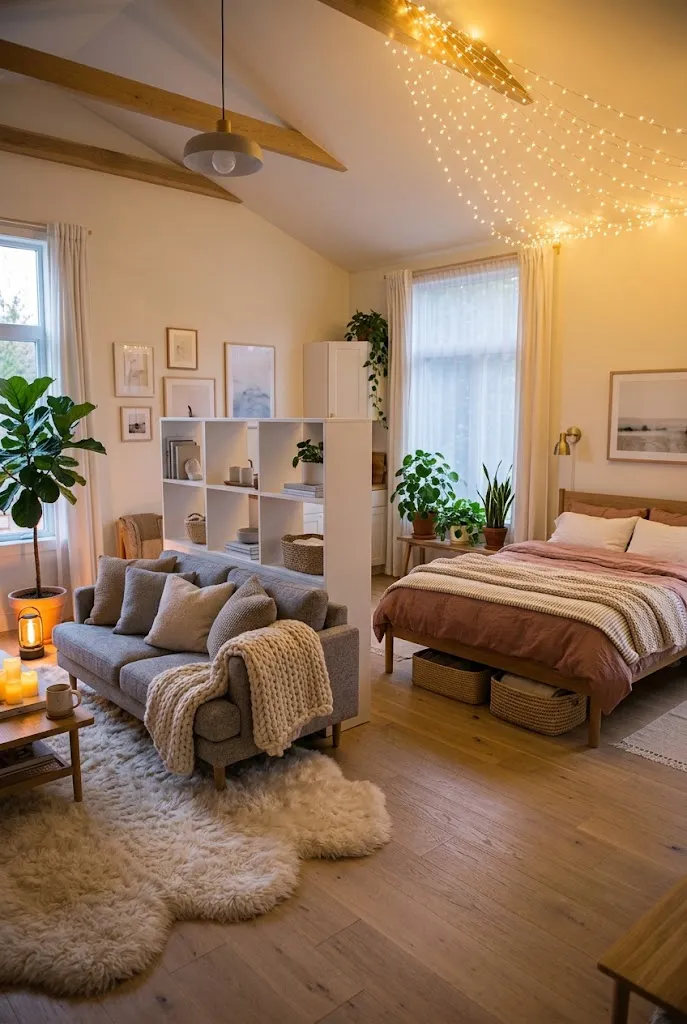
- Warm string lights make the sleeping zone feel more intimate.
- A white divider keeps the layout visually light.
- Layered blankets and rugs add softness without taking much space.
- Overhead lighting creates atmosphere without using valuable floor area.
String lights can turn a simple divider into the coziest feature in the apartment after dark. Use a white open shelf or another light partition beside the bed, then drape warm white lights above the sleeping zone rather than covering the shelving itself. Add a soft gray sofa, chunky knit throw, fluffy rug, and layered pillows to build texture without needing much extra furniture. The glow creates a clear mood shift between the living and sleeping areas, making the bed feel tucked away even though the studio remains completely open and connected.
The color temperature matters more than the number of lights you use. Warm white bulbs create a soft amber effect that complements cream, gray, wood, and neutral bedding, while cooler bulbs can make the same space feel harsh. I’ve seen this work especially well when the string lights are paired with one bedside lamp, because the layered lighting gives the sleeping corner more depth. Keep cords neat and avoid excessive strands across the entire ceiling. The result feels intimate, relaxed, and visually distinct without taking away floor space or requiring a permanent divider.
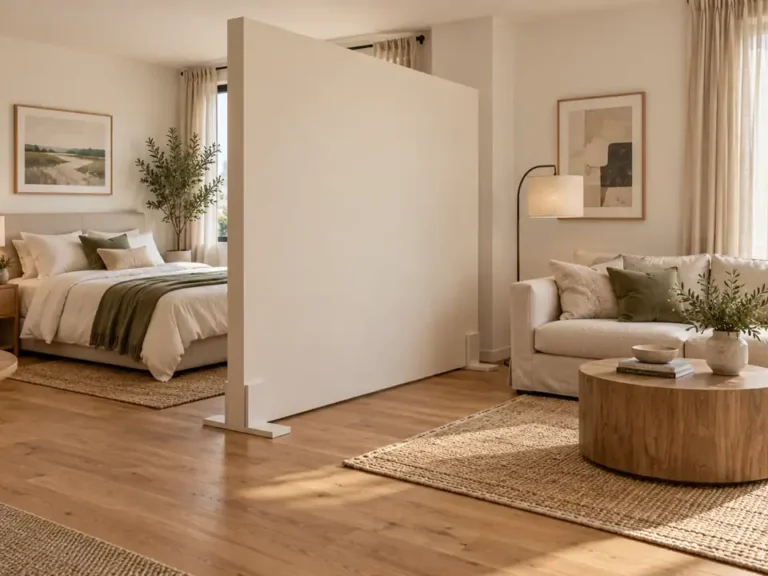
15. Full-Height Bedroom Partition
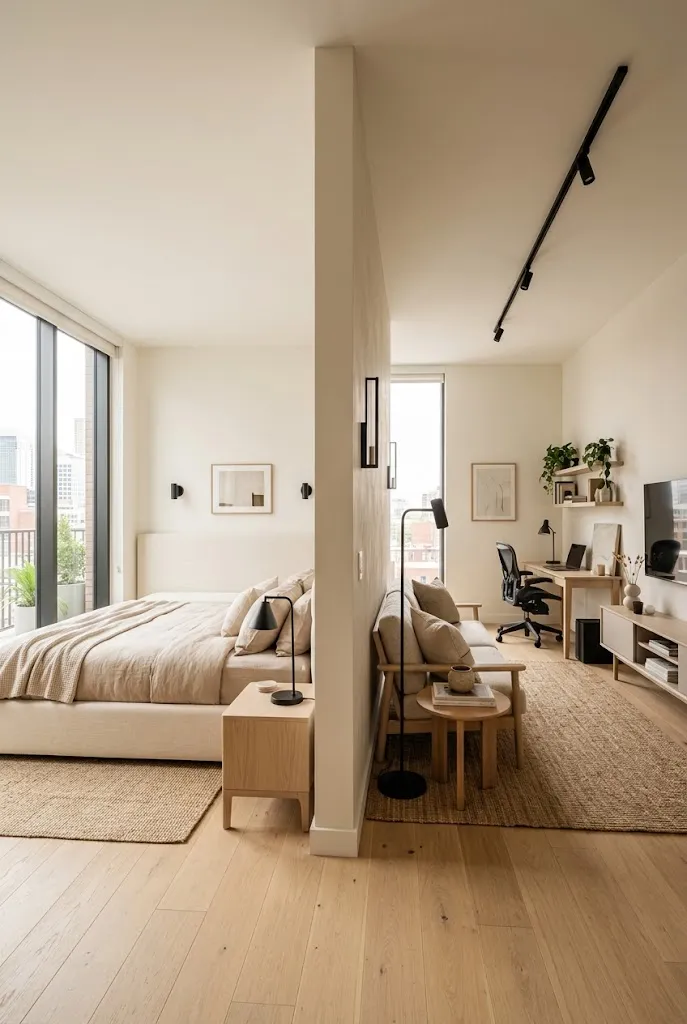
- A solid partition gives the sleeping area much stronger privacy.
- Light wall colors prevent the divider from feeling visually heavy.
- The setup works especially well for work-from-home studio layouts.
- Careful placement helps preserve natural light and comfortable circulation.
A full-height partition can make a studio feel dramatically more private by turning the sleeping area into a clearly defined room. Unlike open shelving or curtains, a solid divider blocks direct views of the bed and creates stronger separation between work, living, and rest zones. This setup works best in owned apartments or long-term homes where a more permanent solution makes sense. Keep the partition simple, use a light wall color, and leave enough open circulation around it. The result feels structured, calm, and much closer to a true one-bedroom layout.
Because this option is more permanent, planning matters before anything is built. I’ve seen this work best when the partition stops short of blocking windows, airflow, or the room’s main walking path. If natural light is limited, consider adding a high interior opening, transom, or glass section near the top to prevent the bedroom from feeling enclosed. Keep furniture on both sides compact and visually simple. You will gain stronger privacy, a cleaner work-from-home setup, and a layout that feels more intentional without making the entire studio seem smaller.
Conclusion
A thoughtful divider can completely change how a small studio looks, feels, and functions. These studio apartment layout ideas with room dividers prove that you do not need permanent walls to create privacy, storage, and clearly defined zones. Whether you prefer open shelving, soft curtains, wood slats, or a more architectural partition, start with the option that solves your biggest layout challenge. I’ve seen how one well-placed divider can make a studio feel calmer and more intentional. Save this post on Pinterest, try your favorite idea at home, and share it with someone who wants to make small-space living work beautifully.
Read More:
13 Studio Apartment Ideas with Brick Walls That Feel Cozy Instantly
How to Plan a Studio Apartment Layout Before You Buy a Single Piece of Furniture
Community
Join the conversation
Add a useful idea, ask a specific question, or share what worked in your space. Every comment is reviewed before it appears.