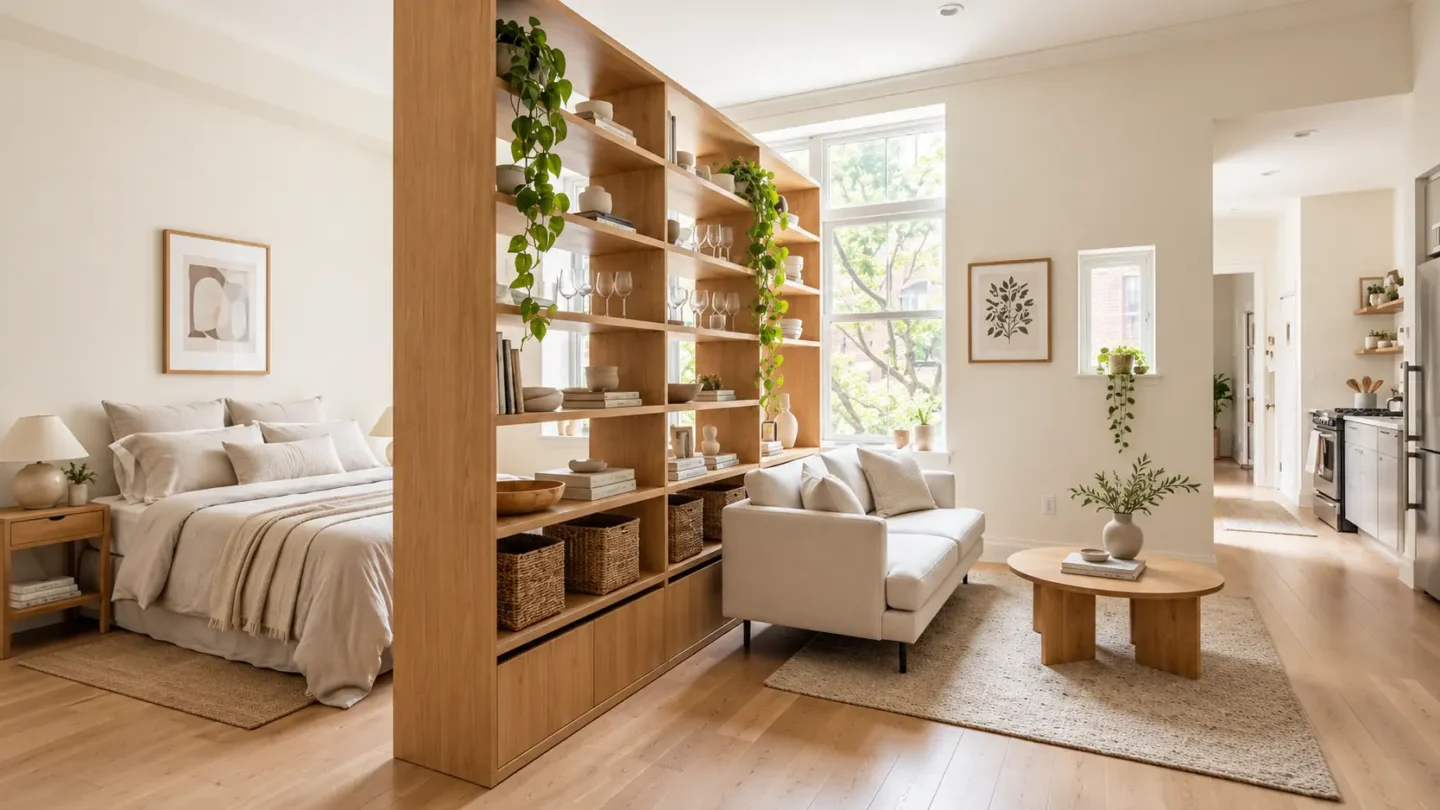
A studio apartment can look beautiful and still feel unfinished when your bed, sofa, desk, and dining space all sit in one open room.
You may want privacy around the bed, a clearer living area, or simply somewhere to put books, baskets, clothes, and everyday clutter.
The good news is that you do not need to build a wall.
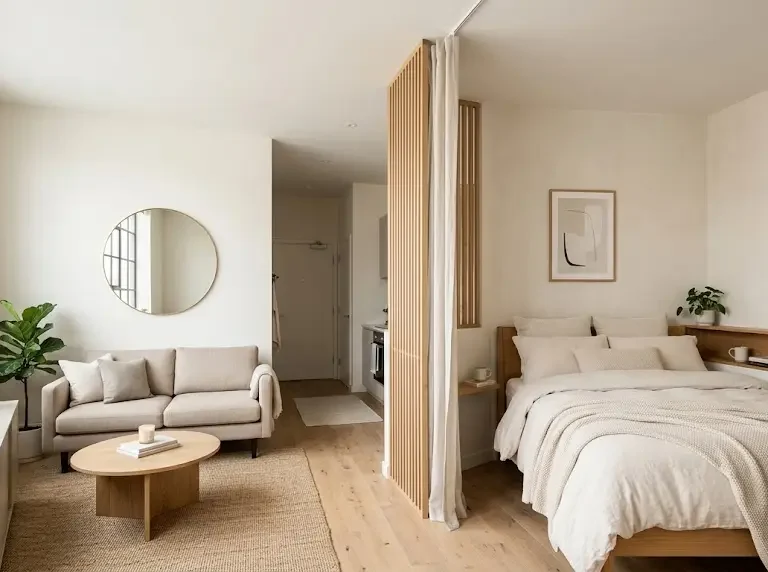
Room dividers with storage for studio apartments can create visual separation while giving valuable floor space a second purpose.
Instead of adding a partition that simply takes up room, you can use shelving, cabinets, wardrobes, bookcases, or modular storage to divide one space into two useful zones.
I have noticed that the best dividers do not make a studio feel smaller. They create just enough separation to help your brain read the apartment as several distinct areas while allowing light and movement to continue through the room.
Here are stylish and practical ideas that can help one open studio feel much more like a complete home.
1. Place an Open Bookcase Between the Bed and Sofa
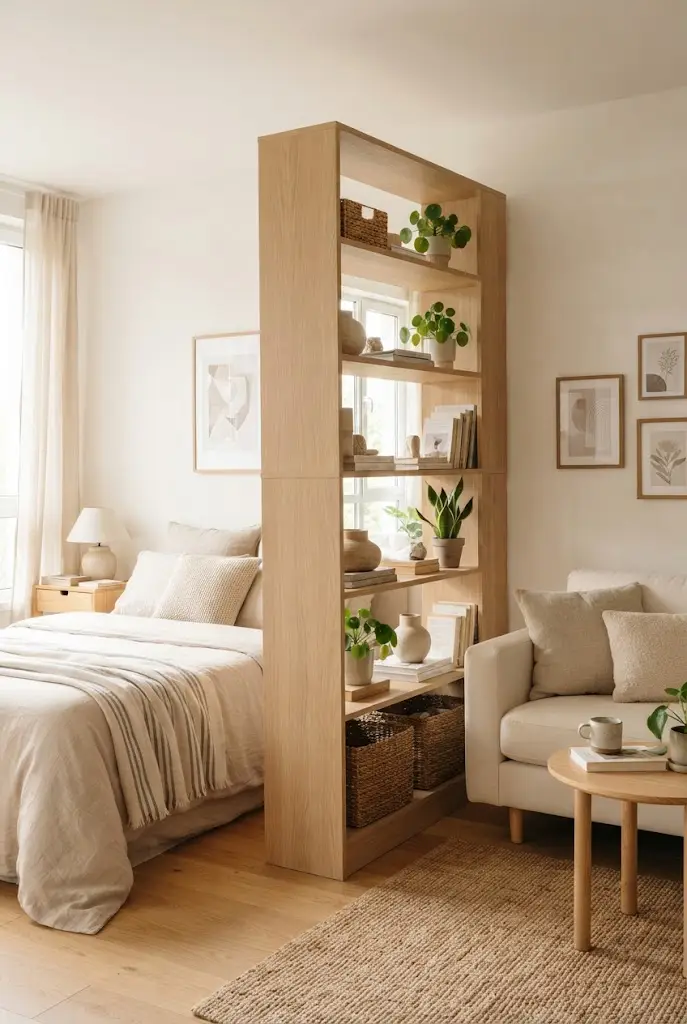
An open bookcase is one of the simplest ways to separate a sleeping area from a living room.
Position it between the bed and sofa so the shelving becomes a visual boundary.
The open sections allow light to travel through, which is especially important when your studio has only one main window.
Use the lower shelves for baskets, folded linens, or practical storage.
Keep the upper shelves lighter with books, plants, ceramics, and a few favorite objects.
I have seen this work best when some compartments remain empty. Those open spaces prevent the shelving from feeling like a solid wall.
2. Use Cube Storage for Privacy and Hidden Clutter
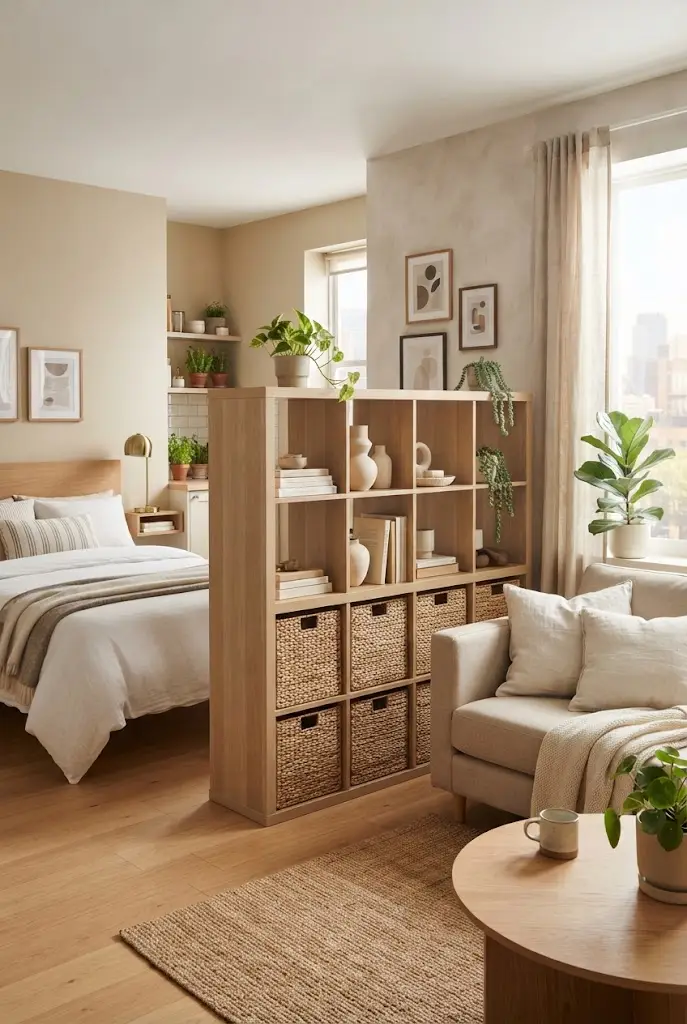
Cube shelving gives you plenty of freedom because every compartment can serve a different purpose.
Place baskets or fabric bins in the lower cubes to hide items you do not want on display.
Use the upper cubes for books, plants, lamps, or decorative objects.
This combination creates more privacy around the bed while still keeping the room visually open.
Choose matching baskets if you want a calmer appearance.
Too many unrelated colors and containers can make a small studio look busier than it actually is.
3. Turn a Wardrobe Into a Bedroom Wall
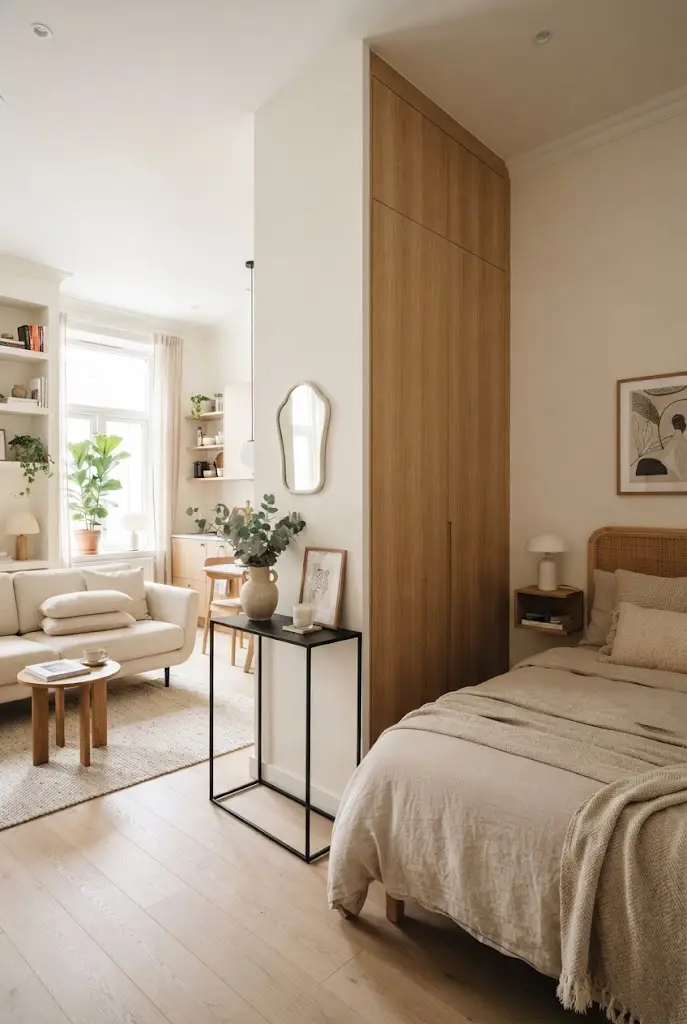
If clothing storage is one of your biggest problems, let your wardrobe become the divider.
Position a tall wardrobe beside the bed so its side creates a visual boundary between sleeping and living areas.
The front can face the bedroom zone, giving you easy access to clothing.
On the opposite side, you can place a slim console, small shelf, artwork, or another shallow storage piece.
This idea can provide stronger privacy than open shelving while solving a major storage problem at the same time.
Just make sure the wardrobe does not block your main source of natural light.
4. Create a Storage Wall Behind the Sofa
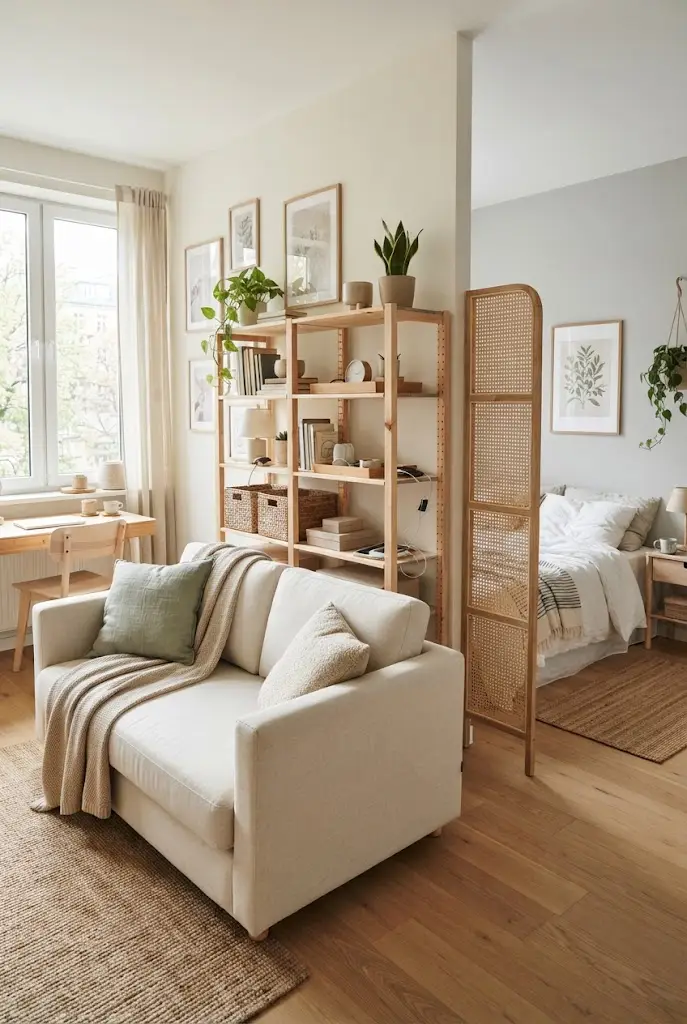
Your sofa can help define the living room when paired with storage behind it.
Place a narrow bookcase or shelving unit along the back of the sofa.
This creates a natural edge between the living area and whatever sits behind it, such as your bed, dining space, or work zone.
Use the shelves for baskets, books, plants, chargers, and everyday essentials.
A lower divider works especially well in very small studios because it separates zones without interrupting sightlines.
5. Choose Floor to Ceiling Shelving for Stronger Separation
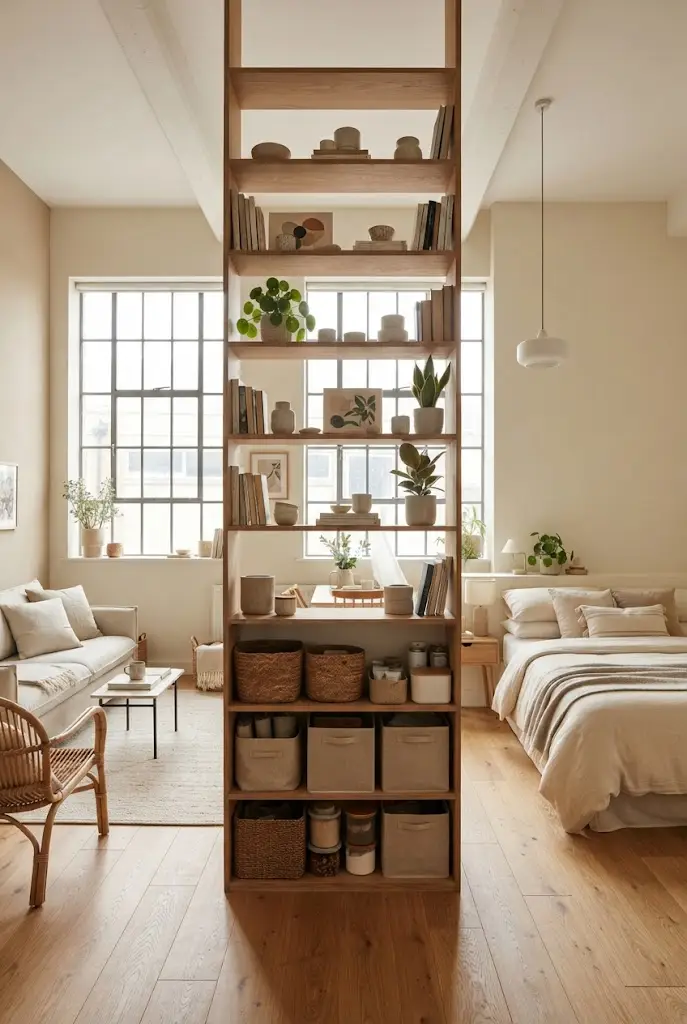
Tall shelving can make a studio feel more architectural.
A slim unit that reaches close to the ceiling creates a stronger sense of separation between two areas while using vertical space efficiently.
Choose a design with plenty of open sections so daylight can still pass through.
You can store heavier items and baskets closer to the floor.
Keep eye level shelves lighter.
This arrangement gives you privacy without creating a dark wall in the middle of the apartment.
It can also draw attention upward, making the room feel taller.
6. Add a Divider With Closed Storage at the Bottom
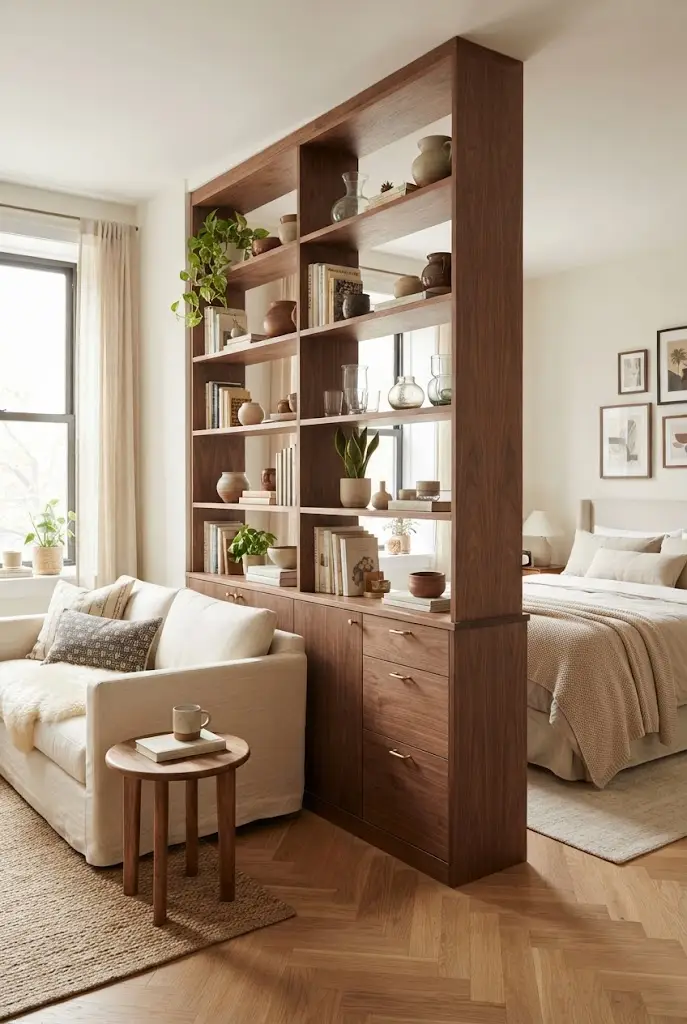
You do not have to choose between open and closed storage.
A divider with cabinets or drawers at the bottom and open shelves above can give you the best of both.
Use the closed section for clothing, paperwork, extra linens, electronics, cleaning supplies, or anything else that creates visual clutter.
Then style the open shelves with the items you actually enjoy looking at.
This is one of my favorite combinations for a small space because it provides practical storage without making the entire divider feel heavy.
7. Use a Low Bookcase to Separate the Bed
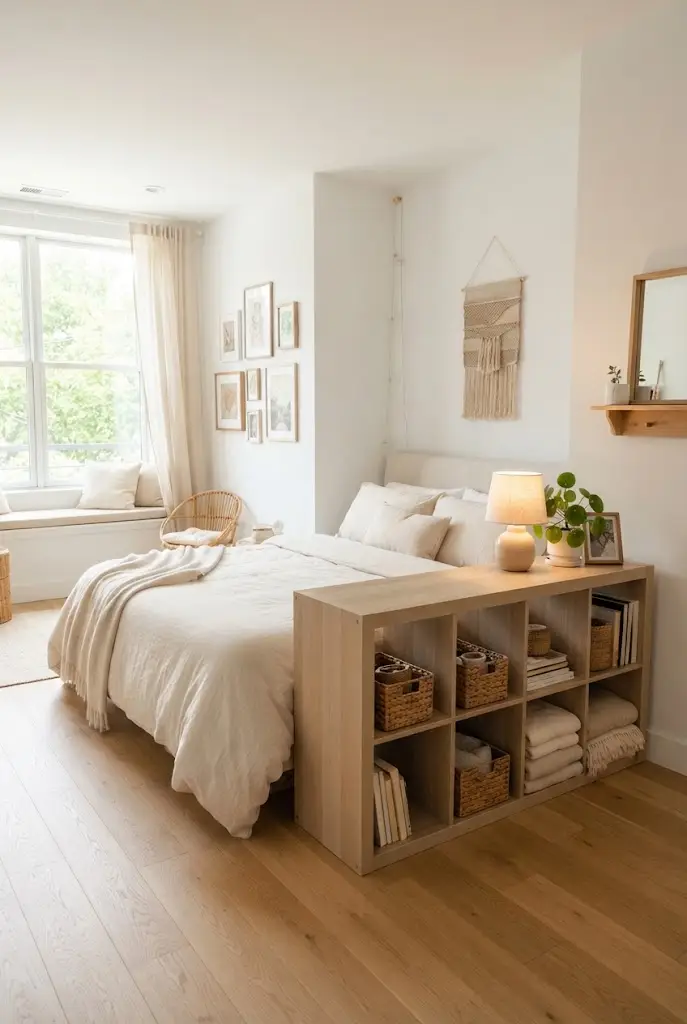
Sometimes a tall divider is unnecessary.
A low bookcase placed beside or at the foot of the bed can create enough separation to make the sleeping area feel distinct.
The top can function as an extra surface for a lamp, books, plants, or a decorative tray.
Inside the shelves, store baskets, shoes, folded blankets, or everyday essentials.
Because the divider stays below eye level, you can still see across the apartment.
That helps preserve the open feeling of the studio.
8. Build a Mini Entryway With Storage
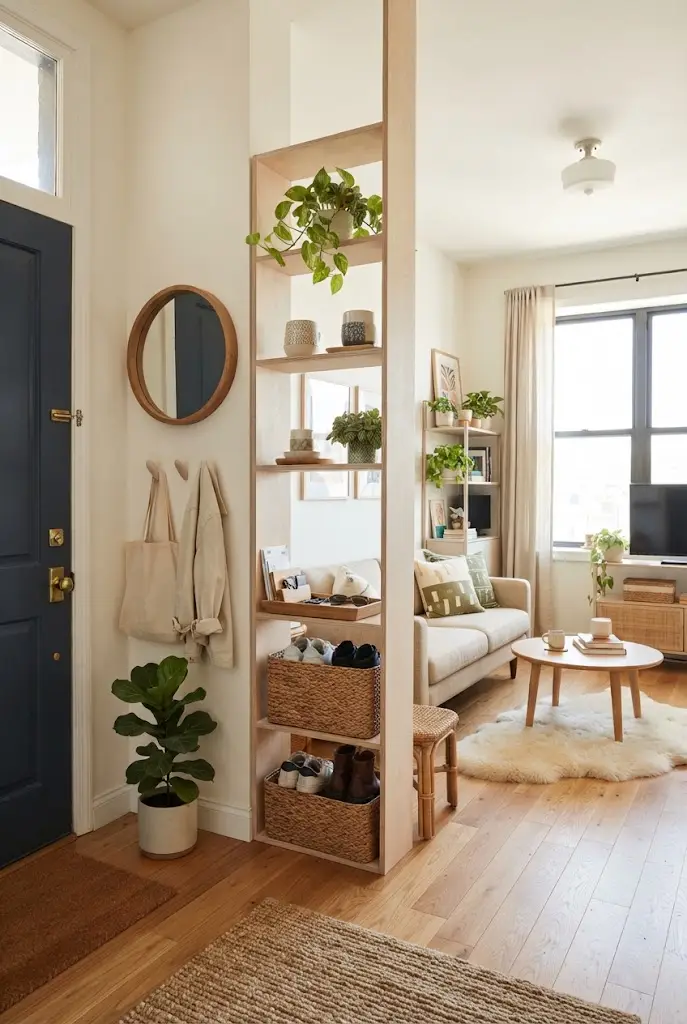
In many studios, the front door opens directly into the main room.
A storage divider can create a small entry zone where none existed before.
Place a narrow shelving unit perpendicular to the wall near the entrance.
Use it to separate the doorway from the living area.
Add baskets for shoes, hooks for bags, a tray for keys, and perhaps a small mirror nearby.
Suddenly, walking through the door feels like entering a home rather than stepping directly into the bedroom.
9. Separate Your Home Office With Shelving
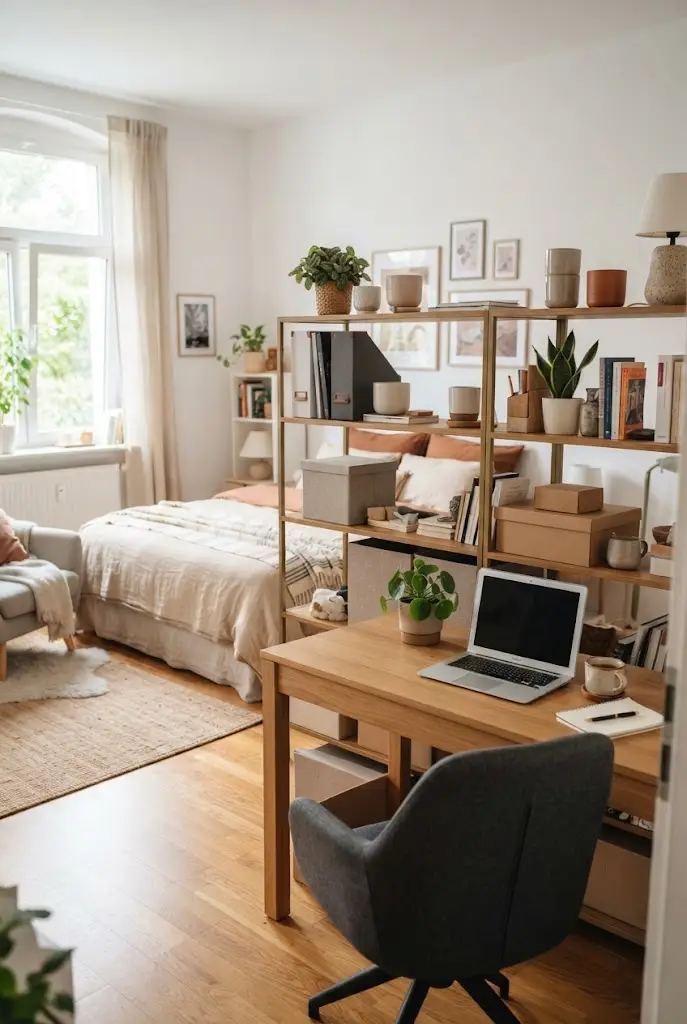
Working beside your bed can make it difficult to feel like the workday has ended.
Use a storage shelf to create a small boundary around your desk.
Place the unit beside or behind the workspace.
Fill it with notebooks, files, storage boxes, reference books, and a few decorative pieces.
From the living side, the shelf looks like part of the room.
From the desk, it creates a sense of enclosure and focus.
That small visual separation can make a surprisingly big difference in a studio where work and relaxation happen only a few feet apart.
10. Use a Double Sided Bookcase
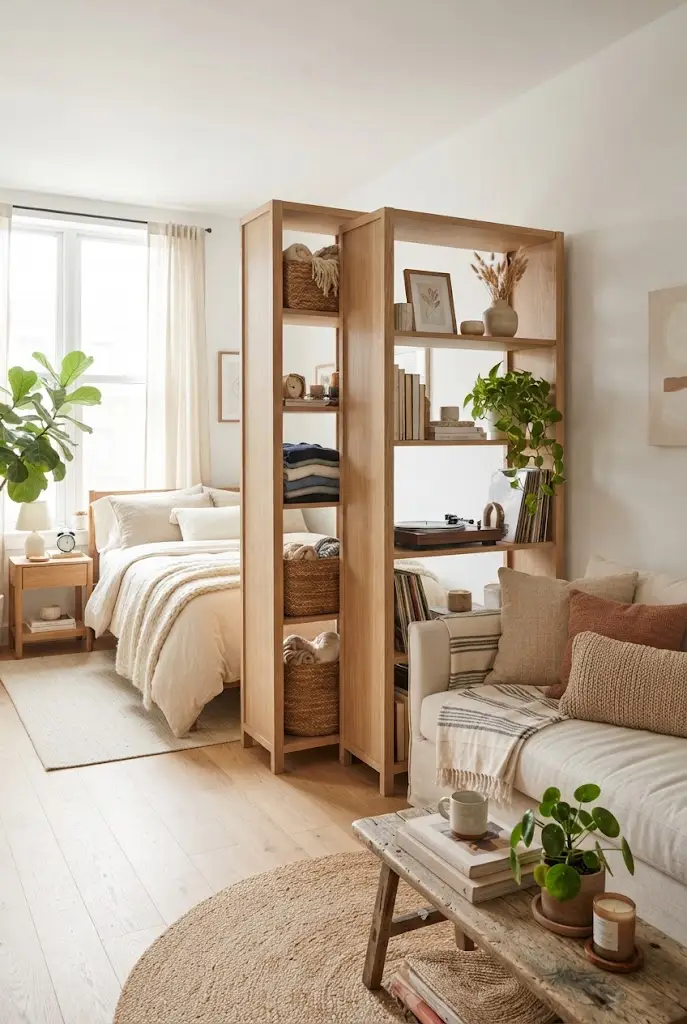
A divider becomes much more useful when both sides work.
Choose open shelving that can be accessed from either direction.
On the living room side, keep books, decor, plants, and entertainment accessories.
On the bedroom side, store bedtime essentials, baskets, folded clothing, or personal items.
I have noticed that double sided storage works particularly well in studios because there is no wasted backside.
Every surface contributes something to the room.
11. Combine Shelving With a TV Zone
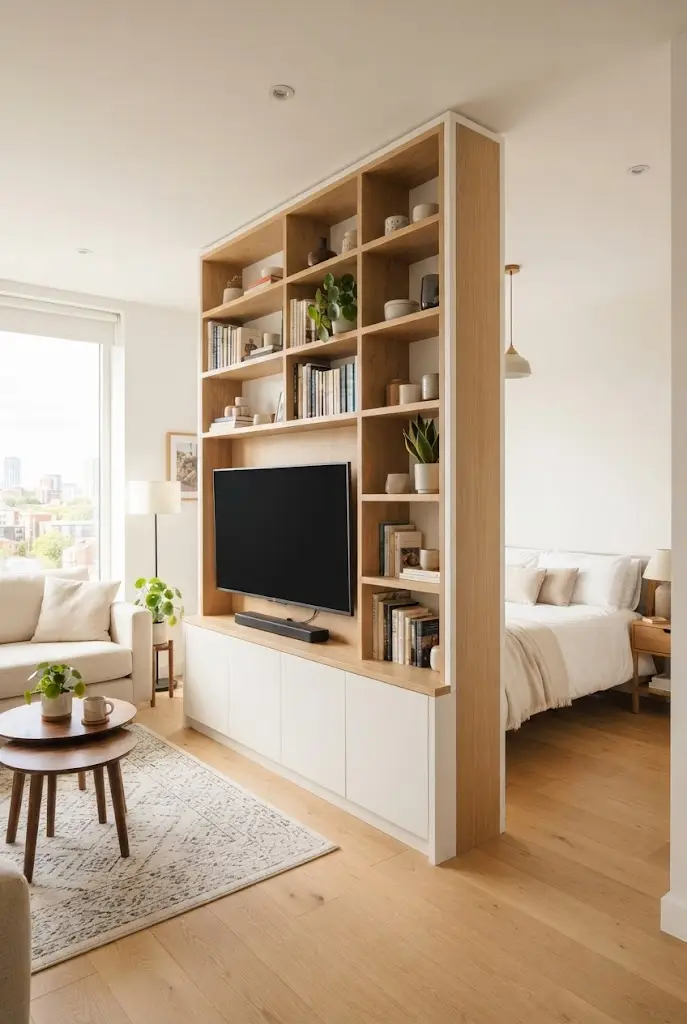
If your living room needs a television, your divider can handle that too.
Use a sturdy storage unit that allows the television to sit or mount safely on the living room side.
Add shelves or cabinets beneath it for media equipment, books, games, and cables.
Behind the unit, create your sleeping zone.
This gives the living room a clear focal point while visually shielding the bed.
Keep the unit appropriately sized for your room.
An oversized entertainment wall can quickly overpower a small studio.
12. Create a Plant Filled Storage Divider
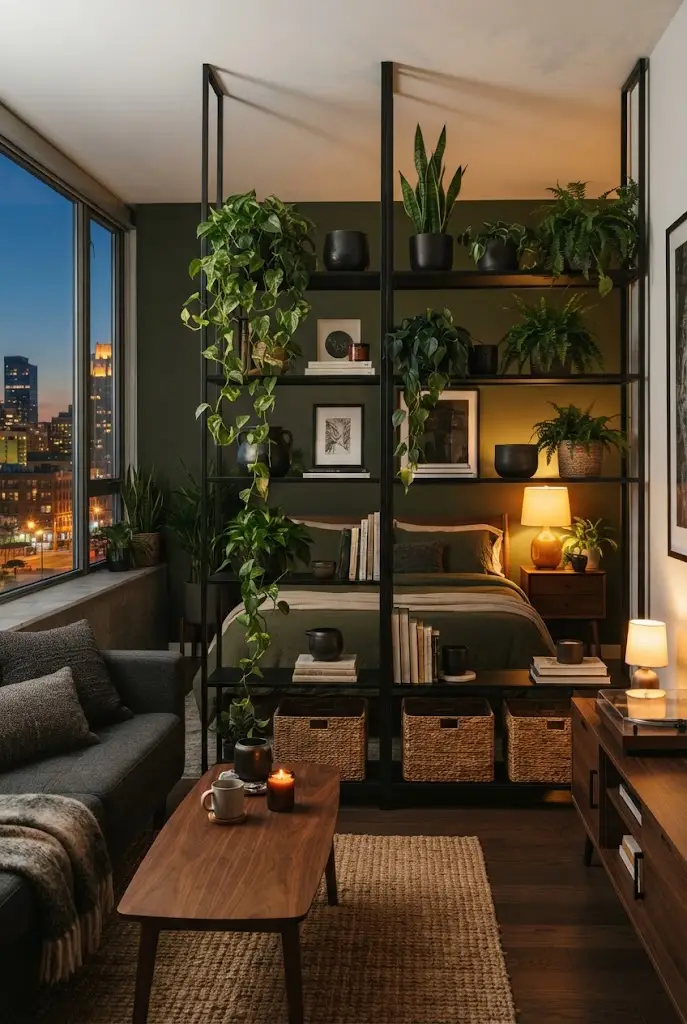
Plants can make a functional divider feel much softer.
Use an open shelving unit and mix storage baskets with trailing and upright plants.
The greenery creates a gentle privacy screen while still letting light filter between the leaves.
Add books, ceramics, and small storage containers to keep the unit useful.
Choose plants according to the actual light conditions in your apartment.
A divider positioned far from the window may need varieties that tolerate lower light.
The finished result can feel more like a living feature than a piece of storage furniture.
13. Use Matching Baskets to Hide Everyday Mess
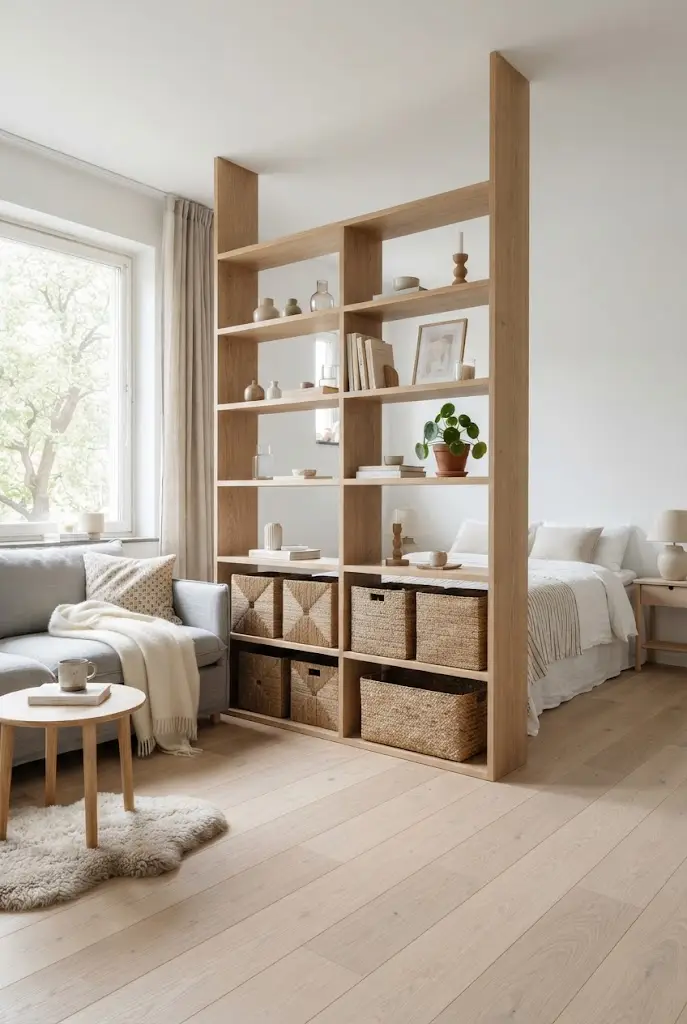
Open shelves are useful, but they can easily become another source of clutter.
Matching baskets solve that problem.
Use them to hide chargers, paperwork, workout equipment, extra linens, accessories, snacks, or personal items.
Keep baskets on the lower half of the divider and allow more open space higher up.
This creates a grounded look while keeping the room from feeling visually blocked.
Natural woven baskets work beautifully in warm neutral interiors, while simple fabric bins can suit a more minimal look.
14. Divide the Kitchen With a Storage Console
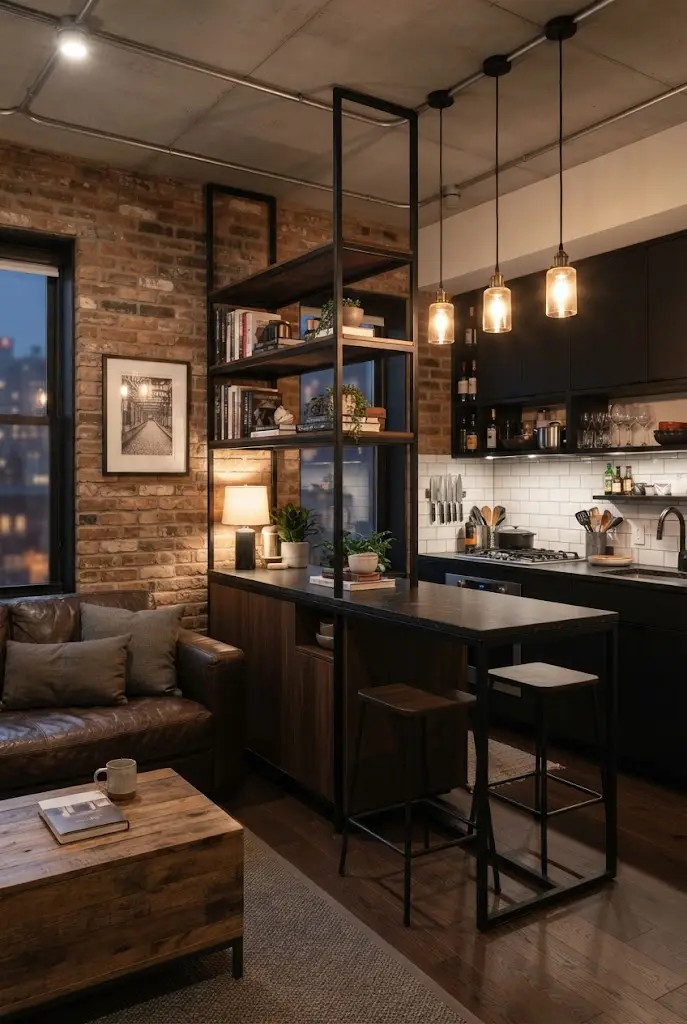
If your kitchenette blends directly into the living area, use a slim storage console to create a boundary.
Position it between the kitchen and the rest of the studio.
Use the interior for dishes, pantry items, linens, or kitchen equipment.
The top can function as extra preparation space, a coffee station, or even a casual eating surface.
Add stools if there is enough room.
One piece of furniture can then become storage, a kitchen extension, a dining spot, and a room divider at the same time.
15. Create a Dining Zone With Back to Back Storage
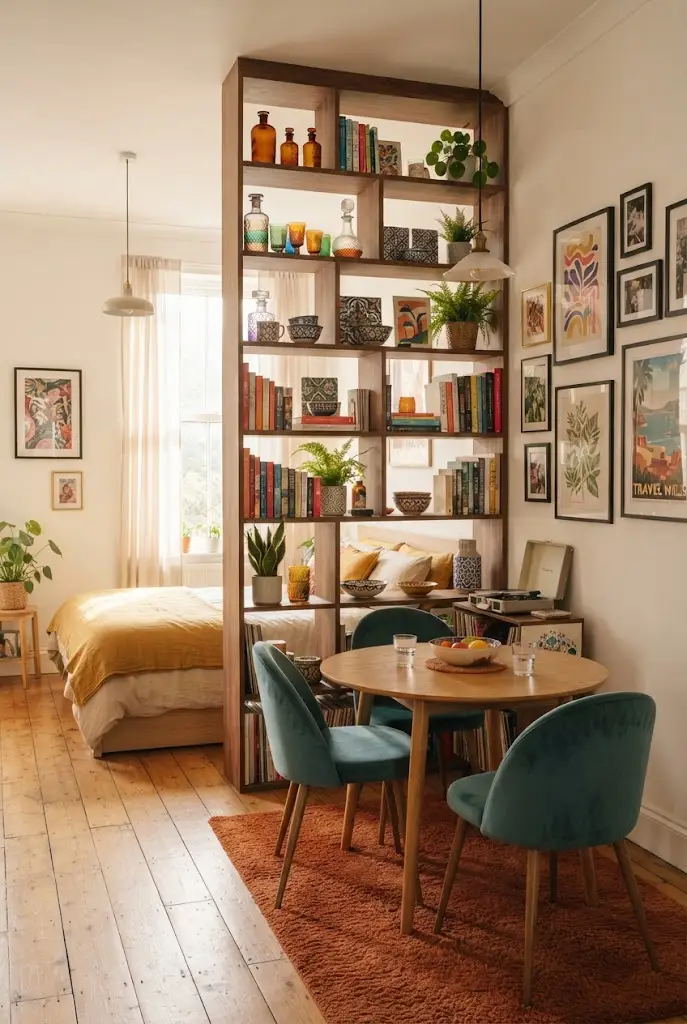
A tiny dining area feels more intentional when it has a clear boundary.
Place a narrow shelving unit behind a bench or dining table.
Use the shelves to store dishes, glasses, table linens, cookbooks, and serving pieces.
The storage visually separates the dining zone from your sleeping or living area.
This can be especially useful when the dining table also doubles as a workspace.
Instead of having a table floating randomly in the room, it becomes part of a clearly defined zone.
16. Try Asymmetrical Shelving for a Designer Look
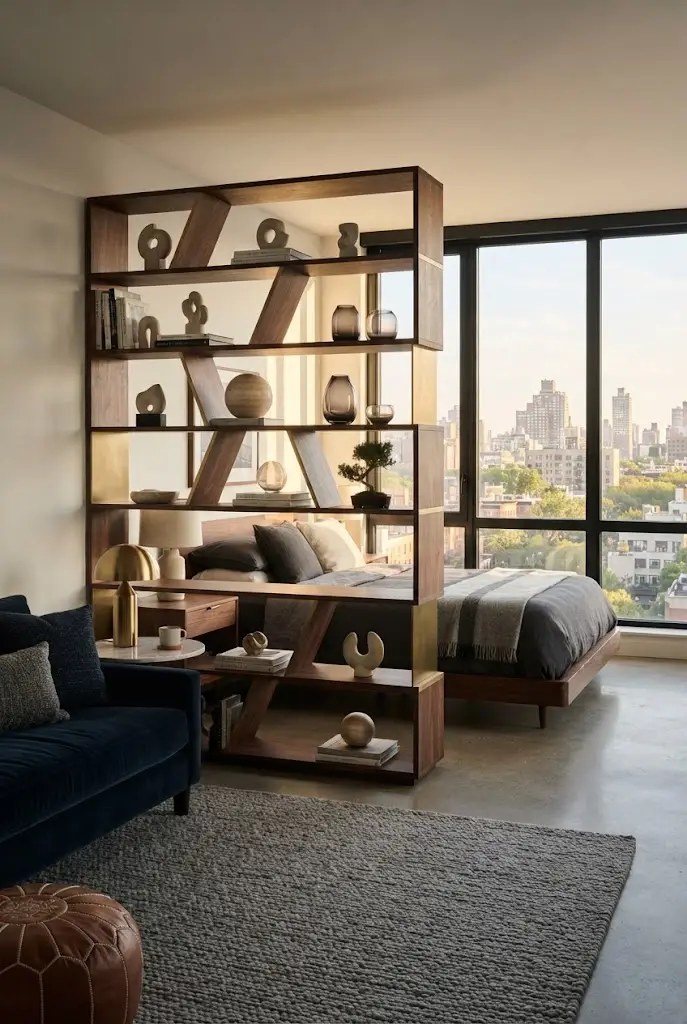
A storage divider does not need to look like a basic bookcase.
Asymmetrical shelving with compartments in different sizes can become a major design feature.
Use larger openings for plants, artwork, baskets, or sculptural decor.
Place books and smaller objects in narrower sections.
The changing shapes create visual interest while maintaining openness.
Keep the styling restrained.
The shelf itself already has plenty of personality, so filling every compartment can make the room feel too busy.
17. Use a Modular Divider That Can Change With Your Layout
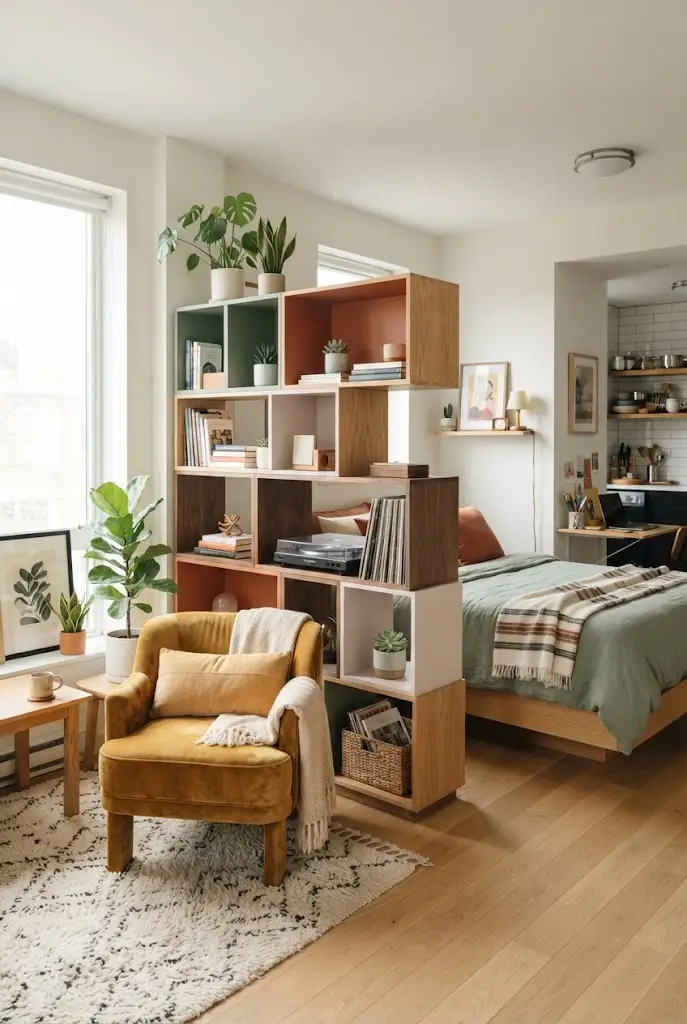
Studio apartments often need to change throughout the day.
A modular storage system gives you more flexibility.
You might start with several cubes separating the bed from the living room, then rearrange the pieces later if you create a work area or move furniture.
Some modular systems can be expanded vertically or horizontally as your needs change.
This is helpful if you rent and do not want to commit to permanent changes.
Flexible furniture can make a small apartment much easier to adapt over time.
18. Create a Partial Bedroom Wall With Shelves and Cabinets
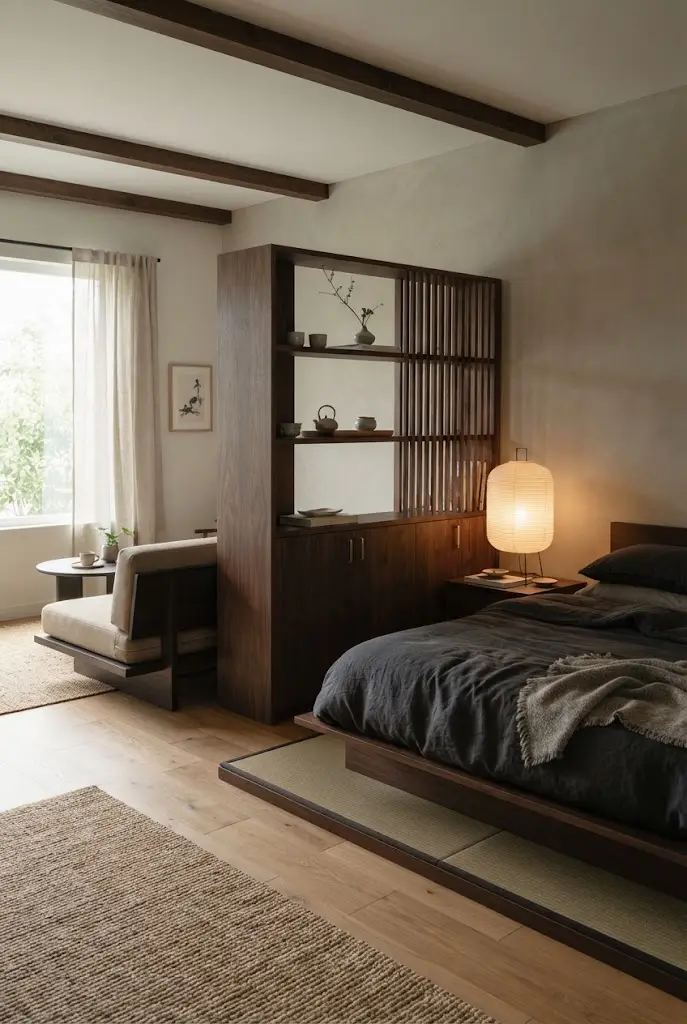
If you want stronger privacy around your bed, combine several storage elements.
Use closed cabinets on the lower half and open shelving higher up.
The solid base hides clutter and creates a stronger visual boundary.
The open upper section allows light to continue through the apartment.
This can make the bedroom feel almost like a separate room without completely closing it off.
Use similar colors to the surrounding walls if you want the structure to blend into the apartment.
19. Put Storage at the Foot of the Bed
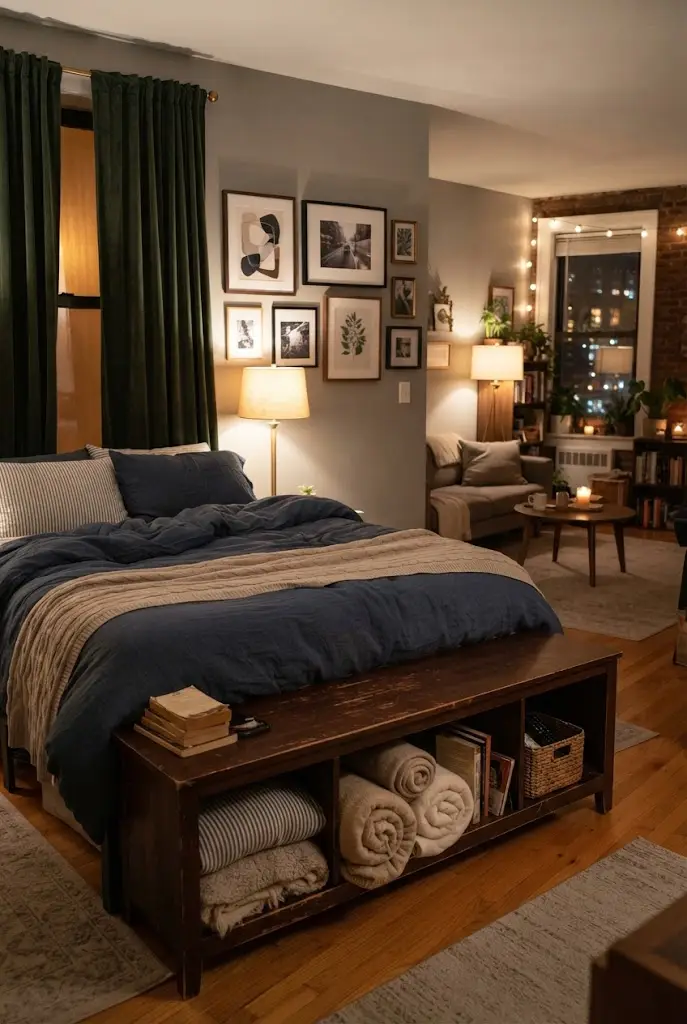
The foot of the bed is often an ideal place for a low divider.
Use a wide bookcase, storage bench, or cube unit.
From the bedroom side, it can hold extra bedding, shoes, clothing, or books.
From the living side, style it as part of your decor.
A lamp, plant, or a few carefully chosen objects on top can make the piece feel intentional.
This works especially well when your bed faces the main living zone.
20. Use a Narrow Shelf in an Extra Small Studio
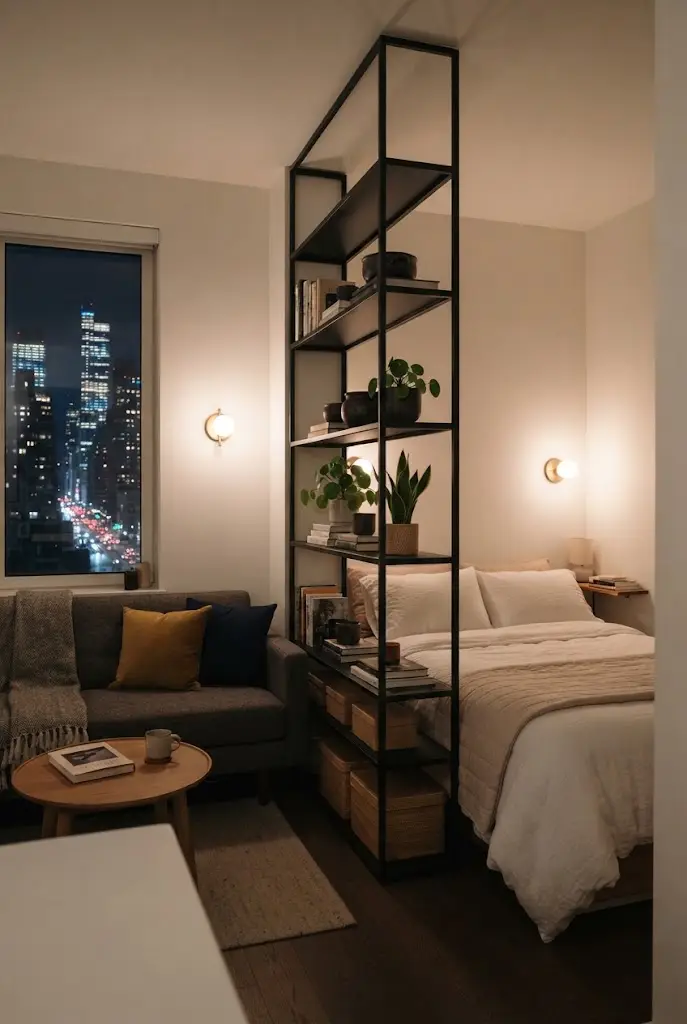
If your apartment is extremely compact, avoid a deep divider.
A narrow shelf can still create a visual boundary while preserving precious walking space.
Look for something slim enough to hold books, plants, small baskets, or decorative objects without projecting too far into the room.
Measure the walkway before you buy anything.
I have seen beautiful storage units become frustrating simply because they leave too little space to move around comfortably.
A few saved inches can matter every single day.
21. Style the Divider Like Part of the Room
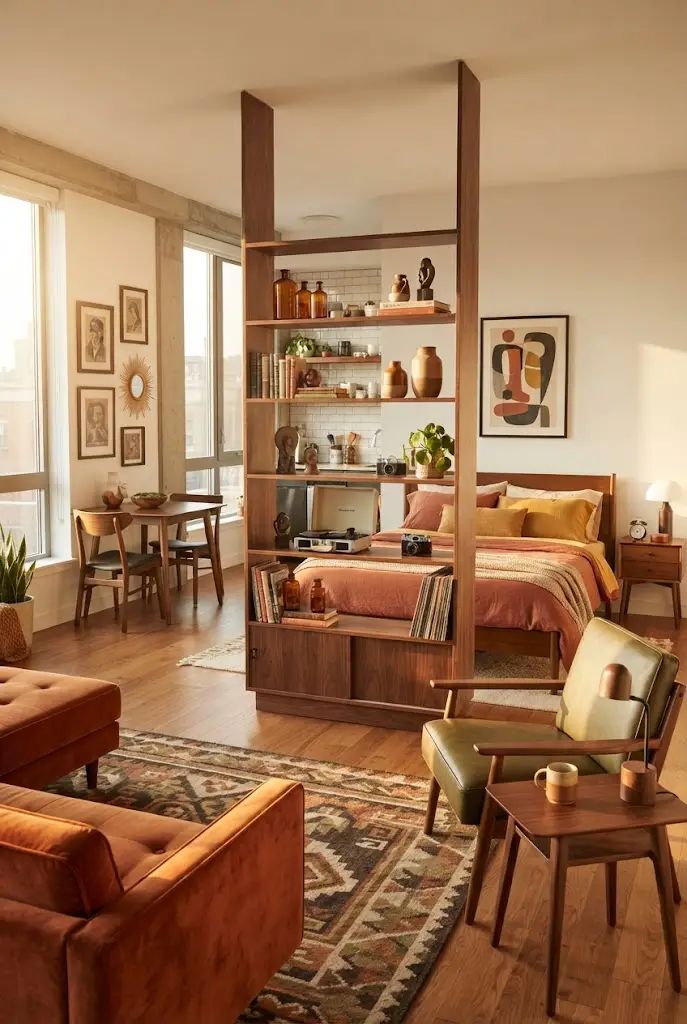
Your storage divider should feel connected to the rest of your apartment.
Repeat colors and materials already used elsewhere.
If your coffee table is pale wood, choose similar shelving.
If your sofa has warm beige textiles, repeat those tones in baskets or storage boxes.
Add a few plants or ceramic pieces that relate to the rest of your decor.
This visual repetition makes the divider feel intentional rather than like a large piece of furniture placed in the middle of the room.
How to Choose the Right Divider for a Studio Apartment
Start with the problem you need to solve most.
If you need privacy, choose something taller or more solid.
If storage is the priority, look for cabinets, drawers, or cube compartments.
If natural light is limited, choose open shelving with generous gaps.
If floor space is extremely tight, use a shallow unit rather than a deep bookcase.
Measure the area carefully before buying anything.
Check the width of nearby walkways and make sure drawers, cabinet doors, and closets can still open.
You should also think about how light moves through your apartment.
A divider that looks perfect in one corner may make another part of the room much darker.
How Tall Should a Studio Divider Be?
There is no single correct height.
A low divider works well when you simply want to define zones while keeping the room completely open.
A medium height bookcase creates more noticeable separation while preserving sightlines.
A tall unit offers the most privacy.
Your ceiling height matters too.
In a room with a lower ceiling, a large dark divider can feel heavy.
In a taller studio, vertical shelving can help use space that might otherwise be wasted.
I usually prefer a divider that leaves some visual connection between the two areas unless privacy is the main goal.
How to Style Storage Without Creating Clutter
Think in groups rather than individual objects.
Instead of lining up lots of small decorations, create a few simple arrangements.
Stack several books.
Place a ceramic piece beside them.
Add one plant.
Then leave some space empty.
Use closed baskets or boxes for practical items that are not attractive enough to display.
Keeping similar colors throughout the shelves also helps.
Cream pottery, warm wood, natural baskets, clear glass, and greenery can create a calm look without requiring everything to match perfectly.
What Should You Store in the Lower Shelves?
Lower shelves are ideal for heavier and less decorative items.
Use them for baskets, books, folded blankets, shoes, workout equipment, electronics, or extra household supplies.
Keeping heavier objects low can also help the unit feel visually grounded.
Lighter decorative objects can sit higher.
If children or pets live in the home, consider stability carefully and secure tall furniture according to the manufacturer’s instructions.
How to Keep a Divider From Blocking Light
Light is one of the most valuable things in a studio apartment.
Avoid placing a completely solid unit directly between your main window and the rest of the room unless privacy is more important than brightness.
Open shelving usually works better.
Leave some compartments empty.
Use glass, pale wood, light colored storage boxes, and smaller decorative objects where possible.
You can also place taller solid storage closer to a wall and use more open sections toward the center of the apartment.
That allows daylight to travel farther into the room.
Common Divider Mistakes That Make a Studio Feel Smaller
The first mistake is choosing something too deep.
A shelf may provide lots of storage, but if it narrows your walkway, daily life becomes uncomfortable.
Another common mistake is filling every shelf.
Too much visible storage can become visual clutter.
Blocking the only window can also make the apartment feel smaller and darker.
Finally, avoid choosing a divider simply because it looks good on its own.
Think about what it needs to store, which areas it should separate, how people will move around it, and what it will look like from both sides.
The best divider works with the entire apartment.
Make One Room Feel Like Two Without Adding a Wall
A studio does not need permanent walls to feel organized and comfortable.
The right storage divider can give your bed more privacy, create a real living room, define a workspace, organize an entryway, or separate your kitchen from the rest of the apartment.
More importantly, it gives the floor space it occupies a useful purpose.
Instead of losing several feet to a decorative partition, you gain shelves, baskets, cabinets, drawers, and surfaces that help keep everyday life organized.
The smartest approach is to choose room dividers with storage for studio apartments based on the problem you actually need to solve.
Protect your natural light.
Keep walkways comfortable.
Use hidden storage for visual clutter.
Leave enough open space for the room to breathe.
When the divider adds both function and separation, one open room can begin to feel like two distinct spaces without sacrificing the bright, spacious feeling that makes studio living work.
Read More:
21 Mini Studio Apartment Ideas That Make Small Spaces Shine
17 Studio Apartment Organization Ideas to Maximize Small Spaces
Community
Join the conversation
Add a useful idea, ask a specific question, or share what worked in your space. Every comment is reviewed before it appears.