Introduction
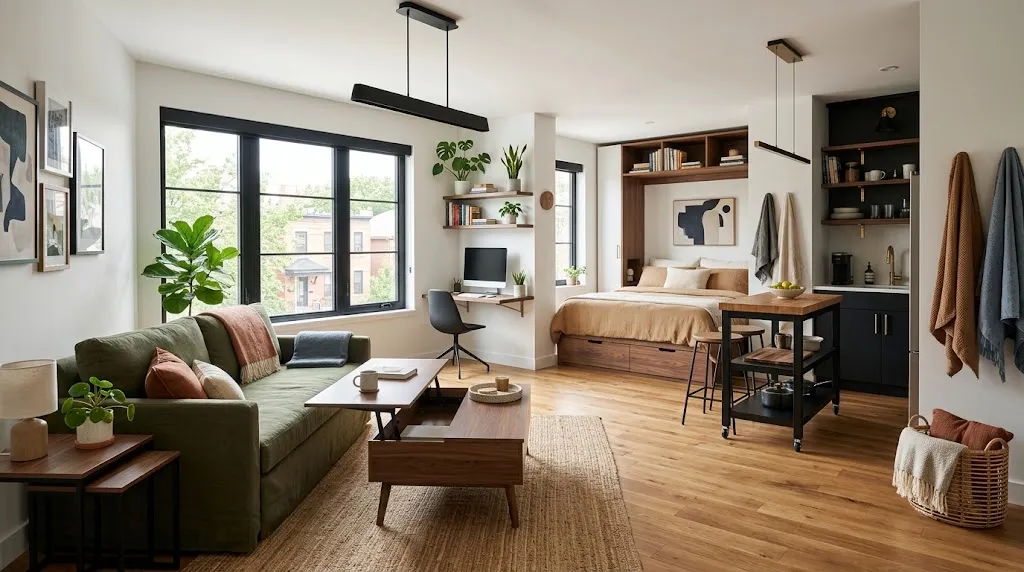
A small studio can feel spacious, stylish, and easy to live in when every piece of furniture earns its place. If you are shopping for furniture for a small studio apartment, a one room apartment, or a studio condo, small studio furniture that does two jobs will always win. These studio apartment furniture ideas focus on smart choices that save room, add storage, and make daily routines feel less cluttered. From sofa beds and lift-top tables to floating desks, nesting tables, storage benches, and rolling islands, each idea helps one compact home do more without feeling crowded. In my experience, multifunctional furniture makes the biggest difference when it fits the way you actually live. The goal is not to fill every corner, but to choose flexible pieces that keep walkways open, reduce visual clutter, and make your studio feel more comfortable, organized, and intentional.
1. Storage Ottoman Table
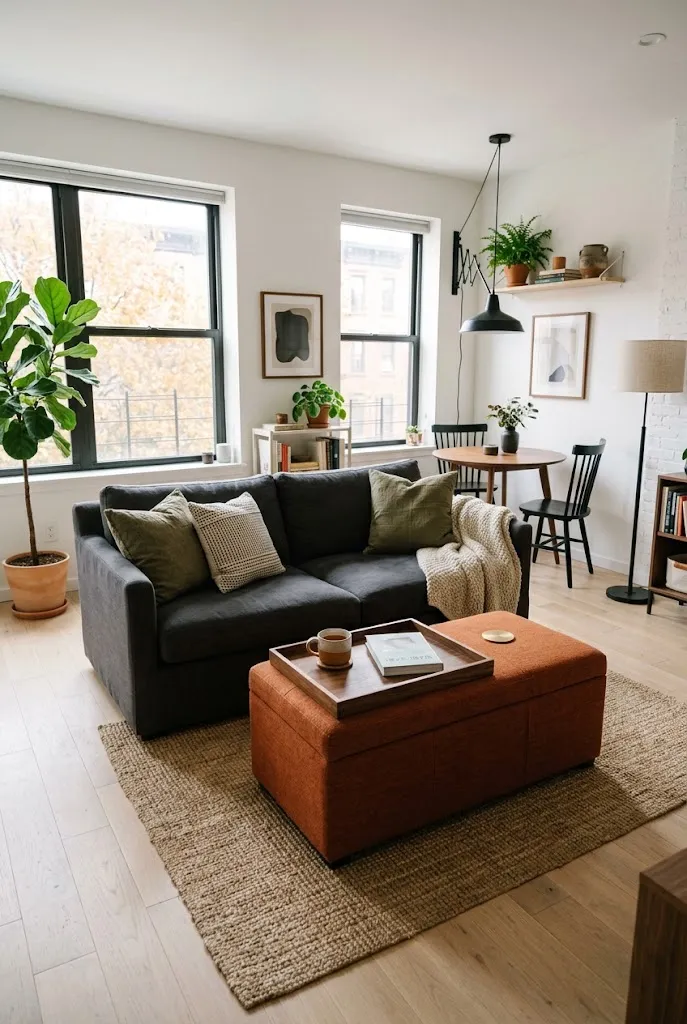
- Hidden storage keeps everyday clutter out of sight.
- The ottoman can work as a coffee table and extra seat.
- A sturdy tray creates a practical surface for drinks or decor.
- One multifunctional piece replaces several separate items.
A storage ottoman can solve several small-space problems without making the room feel crowded. Choose one that works as a coffee table, extra seat, and hidden storage compartment for throws, books, chargers, or seasonal items. It is especially practical because it replaces multiple pieces with a single compact design. Position it in front of the sofa, add a sturdy tray on top, and keep the interior organized with smaller bins. The room immediately feels cleaner, more flexible, and easier to use every day.
In my experience, the best storage ottomans have firm tops, lightweight construction, and upholstery that complements the sofa rather than matching it exactly. A muted olive, rust, charcoal, or warm taupe finish can add subtle contrast while still fitting a calm palette. Measure the walking space before buying, and leave enough clearance to open the lid comfortably. You will notice that clutter disappears faster, seating becomes more adaptable, and the living zone feels less packed because one thoughtful piece is quietly doing the work of several separate furniture items today.
2. Drop-Leaf Dining Table
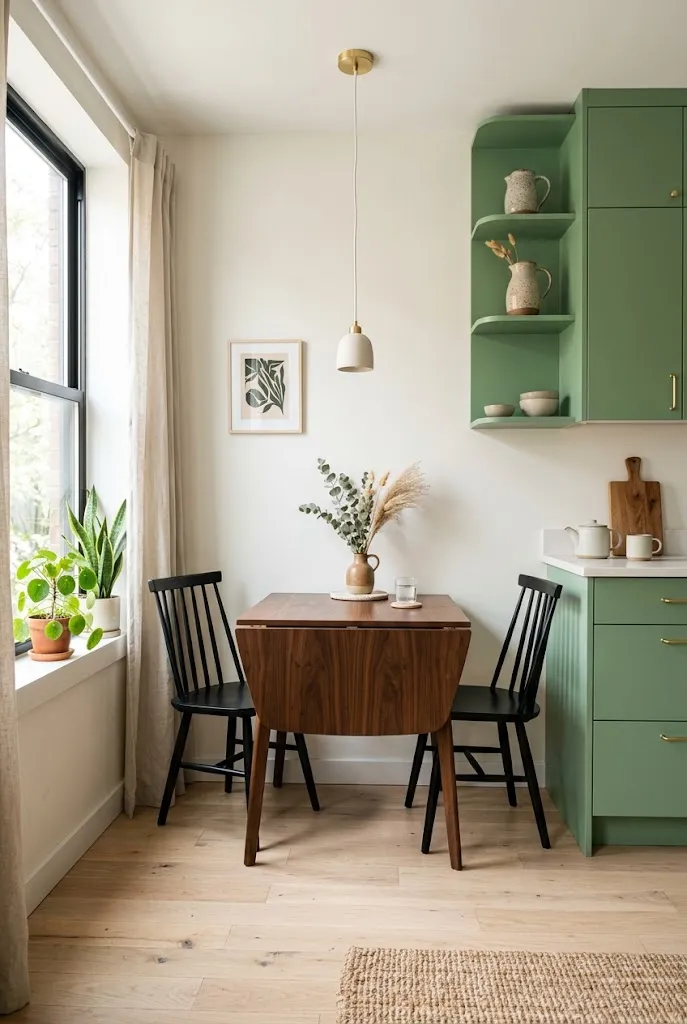
- Folding leaves free up floor space between meals.
- The table can double as a desk or console.
- Slim chairs tuck underneath when they are not needed.
- A wall-side position keeps the main walkway open.
A drop-leaf dining table gives you a real place to eat without permanently sacrificing precious floor space. Keep both leaves folded for everyday use, then open one or both sides when you need room for dinner, laptop work, or guests. A slim rectangular or round design can sit against a wall and function like a console between meals. Pair it with lightweight chairs that tuck completely underneath. The setup makes a studio feel more functional while preserving open circulation, and it prevents the dining area from dominating the apartment when it is not being used. If you need a small table for a studio apartment, a drop-leaf design is one of the easiest choices.
I’ve seen this work especially well in studios where the kitchen opens directly into the living area. A wall-hugging table can visually mark the dining zone without adding a permanent barrier, while folding leaves let the space expand only when necessary. Choose a wood tone that repeats your shelving or bed frame for continuity, and avoid oversized chairs with wide arms. You will gain a flexible surface for meals, work, crafts, or entertaining, yet the room can return to a spacious layout within seconds once everything is folded back into place.
3. Streamlined Sofa Bed
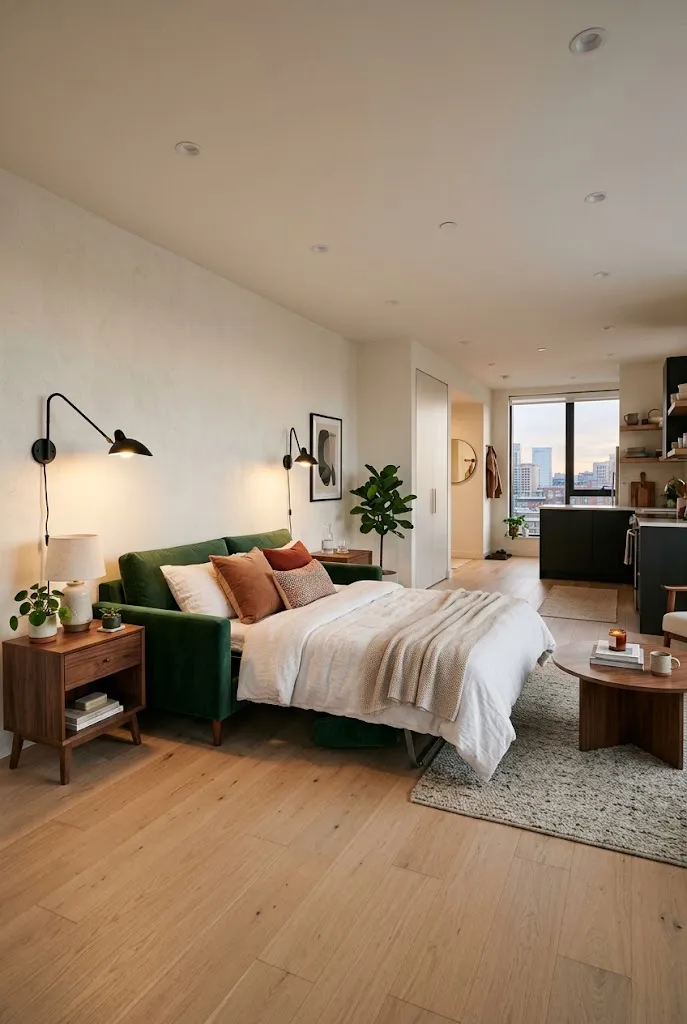
- One piece handles both seating and sleeping.
- A streamlined frame prevents the room from looking bulky.
- Fold-away bedding keeps the daytime layout polished.
- The setup is ideal when a separate bed takes too much space.
A sofa bed is one of the hardest-working pieces you can choose for a compact studio. During the day, it creates a comfortable living area; at night, it becomes a full sleeping surface without requiring a separate bed footprint. Look for a streamlined frame, supportive mattress, and an opening mechanism that is easy to use daily. Keep nearby furniture lightweight so you can clear the floor quickly when the bed unfolds. The result is a more adaptable apartment that can shift between lounging, entertaining, and sleeping without looking permanently arranged around one function.
The smartest sofa-bed layouts depend on accurate measurements before purchase. In my experience, people often check the sofa width but forget to measure the full depth once the mattress is extended. Mark that footprint on the floor with painter’s tape and make sure doors, drawers, and walkways remain usable. Choose simple bedding that stores easily in an ottoman or basket during the day. You will notice that the studio feels larger and more polished because the sleeping area can disappear visually, leaving more open floor space for everyday movement and activities.
4. Floating Wall Desk
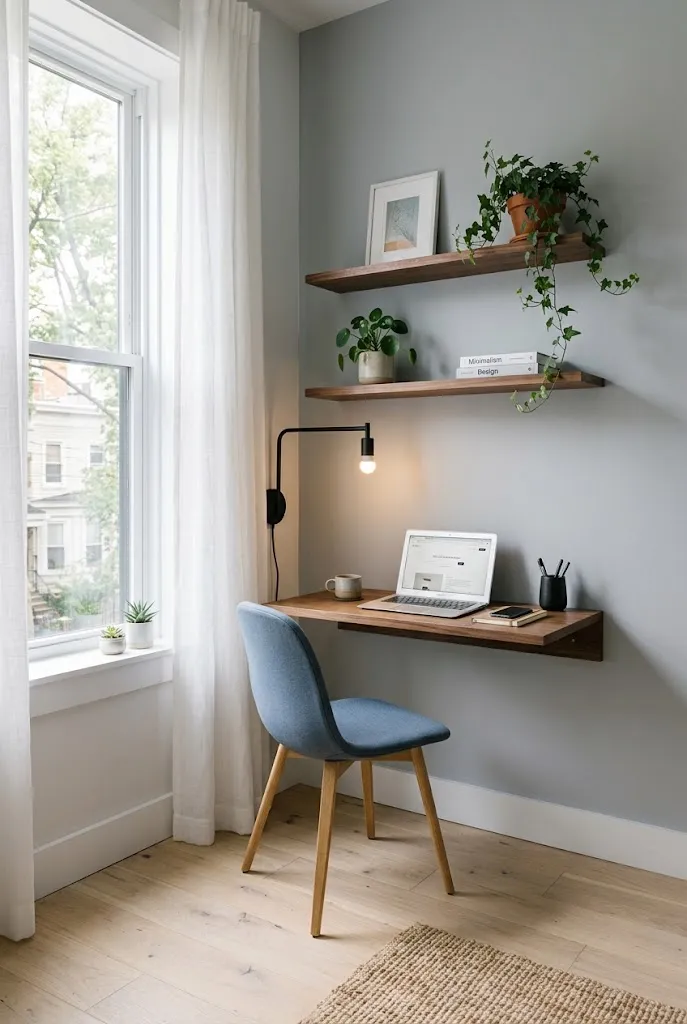
- A floating desk keeps valuable floor area visible.
- A slim chair can tuck underneath after work.
- Wall shelves add storage without another cabinet.
- The setup creates a dedicated work zone in a tight corner.
A wall-mounted desk creates a useful workspace while leaving the floor underneath completely open. Choose a floating model with a shallow top, compact drawer, or fold-down surface, then position it near natural light if possible. A slim chair or stool can tuck beneath it when work is finished. This setup works especially well in narrow studios where a traditional desk would interrupt circulation. The visual effect is lighter and cleaner, and you gain a dedicated place for a laptop, notebook, or morning coffee without introducing another bulky piece into the room.
That’s why many designers recommend using wall space before adding more furniture to the floor. A floating desk can share a wall with shelving, artwork, or a small task light, creating a complete work zone within a very small footprint. Keep cables clipped underneath and limit the surface to daily essentials so it never becomes a clutter magnet. If you rent, choose a properly secured removable system where appropriate. The room feels more organized, the walkway stays clear, and the workspace looks intentionally integrated rather than squeezed into whatever corner happened to be available.
5. Lift-Top Coffee Table
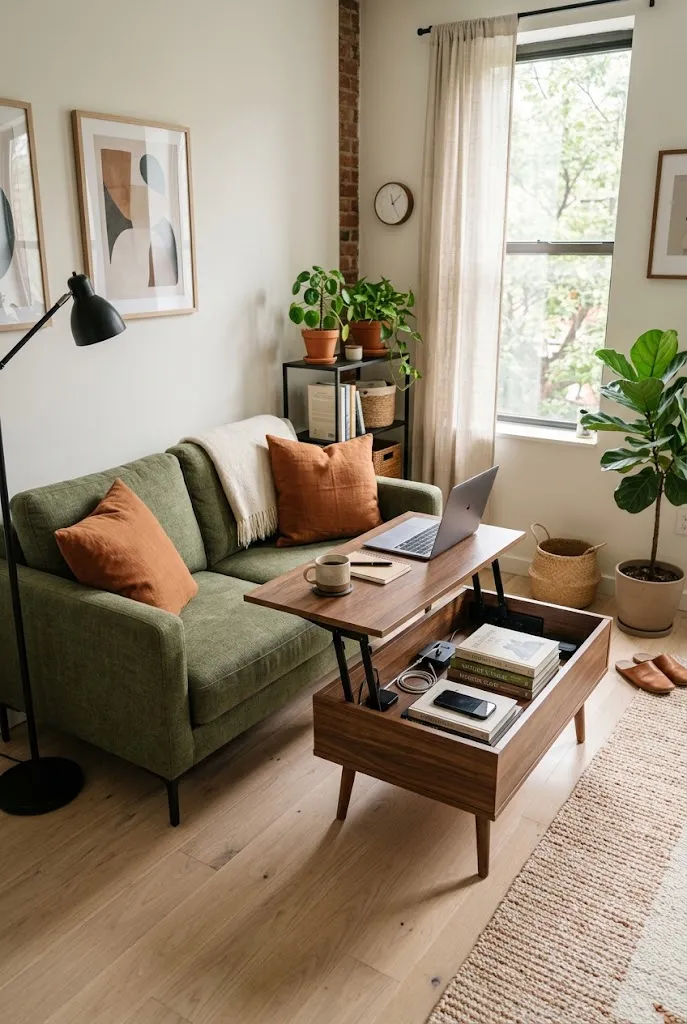
- The raised top works for meals, work, or casual projects.
- Hidden storage keeps small essentials off visible surfaces.
- One table can replace a desk in very tight layouts.
- A slim shape keeps the seating area from feeling crowded.
A lift-top coffee table adds hidden function to the center of a studio without demanding extra floor space. The top raises to a comfortable height for meals, laptop work, or casual projects, while the interior compartment stores remotes, chargers, magazines, and other small essentials. Choose a slim rectangular design with clean lines so it does not overwhelm the seating area. When closed, it looks like a polished coffee table; when opened, it becomes a practical work surface that helps one small living zone handle several daily routines without wasting valuable space.
In my experience, this piece works best when the table is easy to lift with one hand and does not require moving the sofa or rug. Measure the clearance around it before buying, especially if the top extends forward as it rises. Keep frequently used items inside and avoid overfilling the compartment so the mechanism stays smooth. A walnut, oak, or matte black finish can coordinate with nearby furniture. The result is a cleaner living area with fewer loose items and a flexible surface that adapts quickly throughout the day.
6. Nesting Side Tables
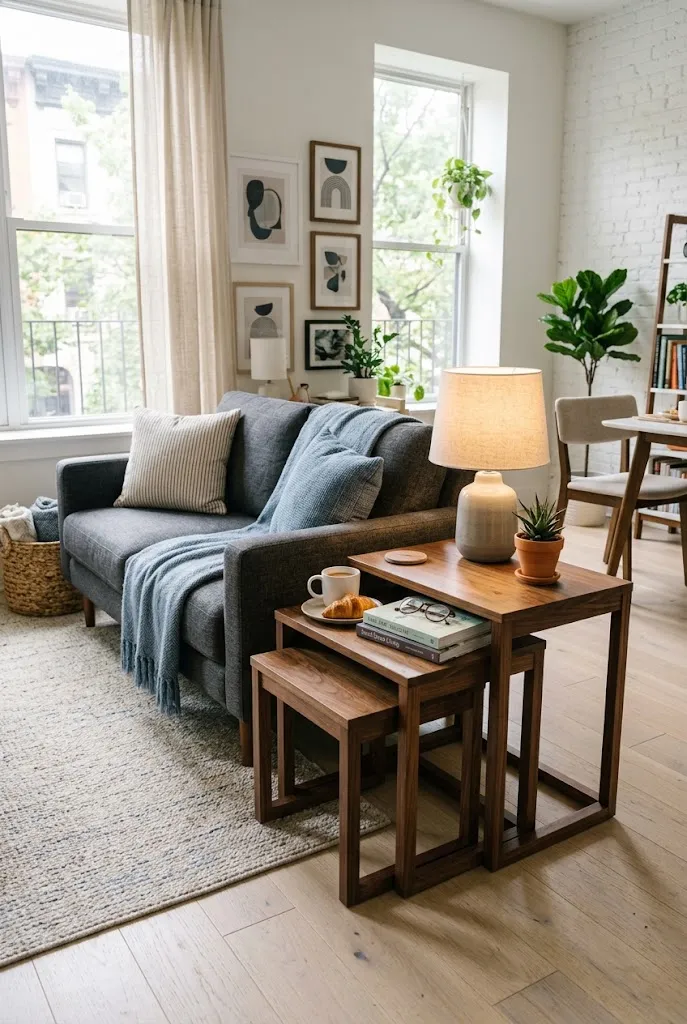
- Extra surfaces appear only when you actually need them.
- Stacked tables take up less room than separate side tables.
- Lightweight pieces can move between the sofa, bed, and dining area.
- Mixed heights add subtle visual interest.
A nesting table set gives you extra surfaces only when you actually need them, which is ideal in a compact studio. Keep the smaller tables tucked neatly beneath the largest one during everyday use, then pull them out for drinks, snacks, plants, or guests. Because the pieces stack together, they take up much less room than several permanent side tables. Choose slim legs and simple tops to keep the look light. This creates a flexible living area that can expand for entertaining and shrink again once the extra surfaces are no longer needed.
I’ve noticed that nesting tables are especially useful beside compact sofas because they can move around the apartment more easily than one heavy coffee table. Use one near the bed as a temporary nightstand, another beside a chair, and return both to the stack afterward. Matching finishes keep the set cohesive, while slightly different heights add visual interest. Avoid oversized designs that become awkward to nest. You will gain adaptable surfaces without cluttering the floor, and the studio feels more responsive to whatever you are doing at the moment daily.
7. Hidden Storage Bench
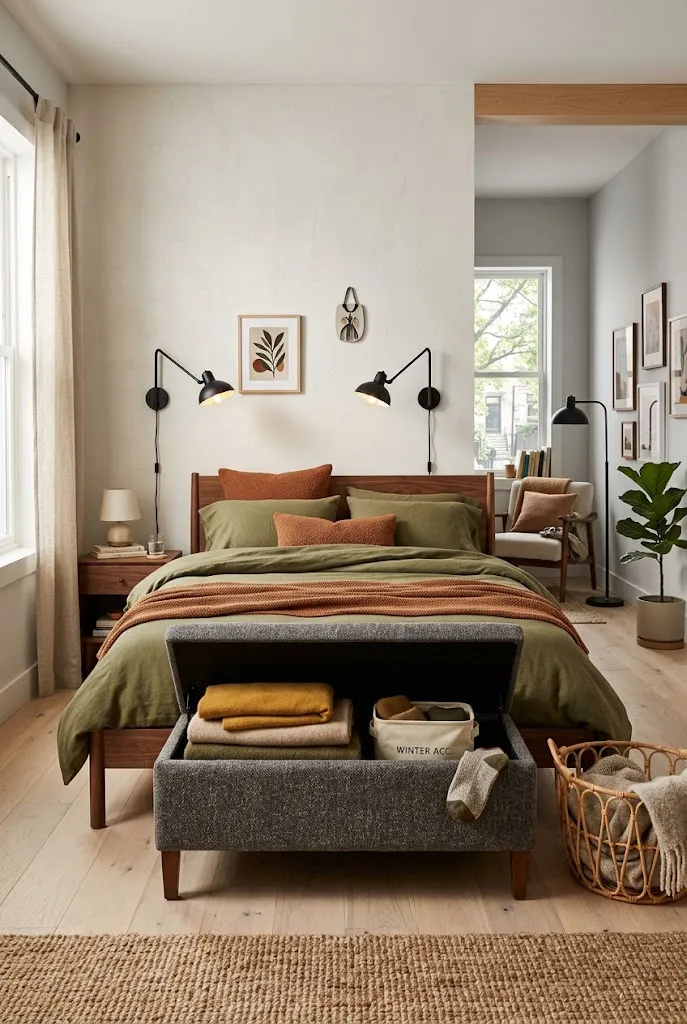
- Hidden storage helps reduce the need for another dresser.
- The bench doubles as useful extra seating.
- Its low profile keeps sightlines open across the studio.
- It works equally well near the bed or entry.
A storage bench can turn the foot of the bed, an empty wall, or an entry corner into useful seating and concealed organization. Choose a narrow upholstered or wood design with a lift-up lid or drawers underneath, then use it for spare bedding, shoes, bags, or seasonal items. Unlike a full dresser, a bench stays low and keeps sightlines open across the room. It also gives guests a place to sit without adding another chair. The apartment feels tidier, more practical, and visually calmer because everyday belongings have a dedicated place to disappear.
The best location depends on how you move through the room each day. In my experience, a bench at the foot of a low bed works well when there is enough clearance to walk around it comfortably, while an entry bench is better for shoes and bags. Choose a finish that connects with your bed frame or shelving, and add only one cushion or throw so it does not become visually busy. You will gain hidden storage and useful seating while keeping the room open, organized, and easy to navigate.
8. Slim Console Table
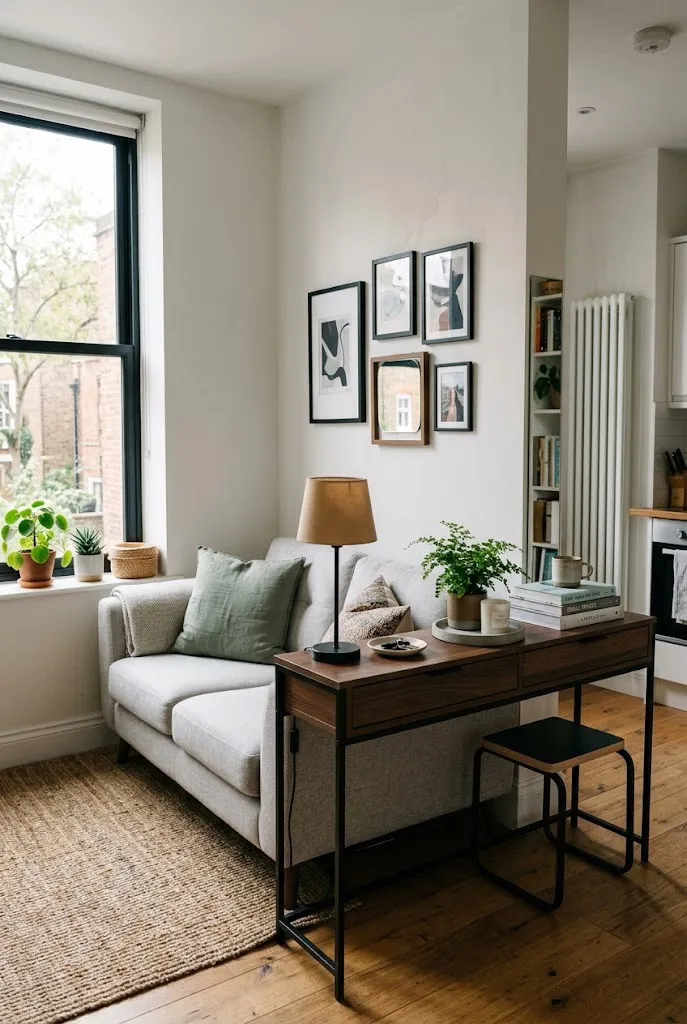
- A shallow console makes use of narrow wall space.
- Drawers keep keys, chargers, and other small clutter hidden.
- A tucked stool can turn it into an occasional workspace.
- Open legs help the room feel lighter.
A narrow console table can make an unused wall useful without creating the bulk of a cabinet or desk. Place one behind the sofa, near the entry, or along a hallway-style section of the studio, then use the surface for a lamp, keys, books, or a small decorative tray. Models with shallow drawers add discreet storage while keeping the footprint slim. Because the table hugs the wall, circulation stays clear. The result is a polished transition zone that adds function exactly where deeper furniture would make the apartment feel cramped.
That’s why many designers choose consoles with open legs or wall-mounted versions in especially tight spaces. The visible floor underneath makes the piece feel lighter, while one or two drawers keep small clutter hidden. If you need occasional workspace, pair the console with a stool that slides completely underneath and pull it out only when needed. Keep the styling simple so the top remains useful. You will notice that an awkward wall suddenly has purpose, while the studio gains storage, display space, and flexibility without losing precious walking room overall.
9. Wall-Mounted Folding Table
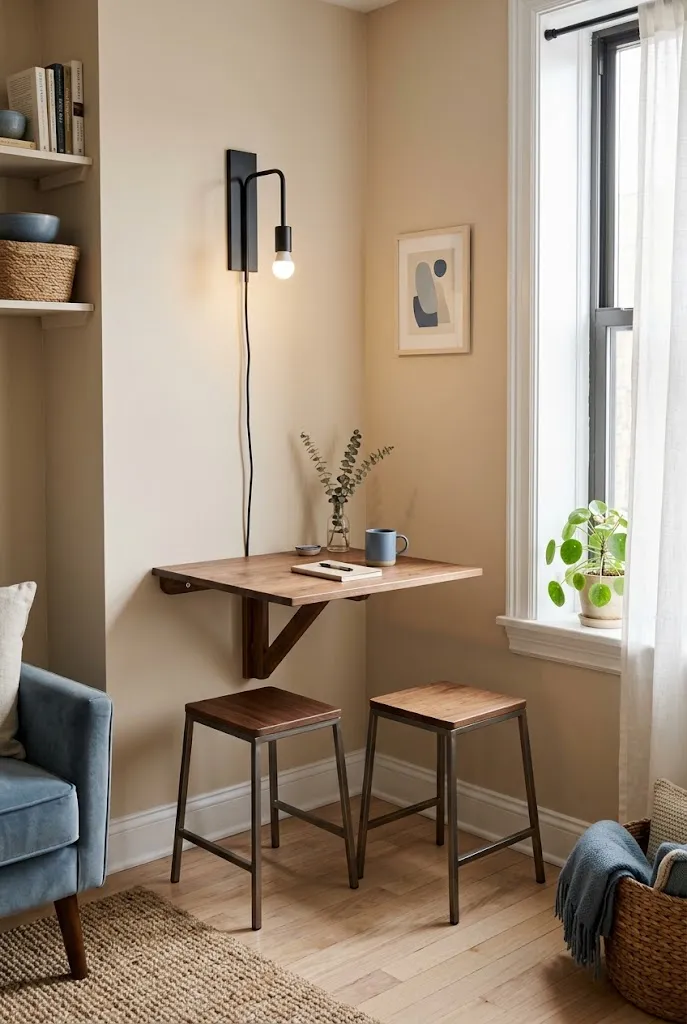
- The table folds away when you need more open floor space.
- One surface can handle dining, working, or meal prep.
- Stackable stools are easy to move and store.
- A wall-mounted design keeps the layout visually lighter.
A wall-mounted folding table can give a studio a dining surface, work zone, or prep area without permanently occupying the floor. When closed, it sits nearly flush against the wall; when opened, it creates a useful tabletop within seconds. Choose a model with built-in brackets or shallow storage so every inch earns its place. This piece works especially well near kitchens, windows, or entry walls where a standard table would feel bulky. The room stays open most of the day while still offering a practical surface whenever you need it.
In my experience, folding wall tables work best when paired with lightweight stools that tuck away easily. Measure both the open depth and the clearance needed for chairs before installing anything, then place the table where doors and walkways stay unobstructed. A wood finish can add warmth, while a painted surface can blend into the wall and visually disappear. Keep only daily essentials nearby so the setup remains tidy. You will gain a flexible workstation or dining spot that can vanish when the room needs to feel larger and calmer again.
10. Hidden Storage Armchair
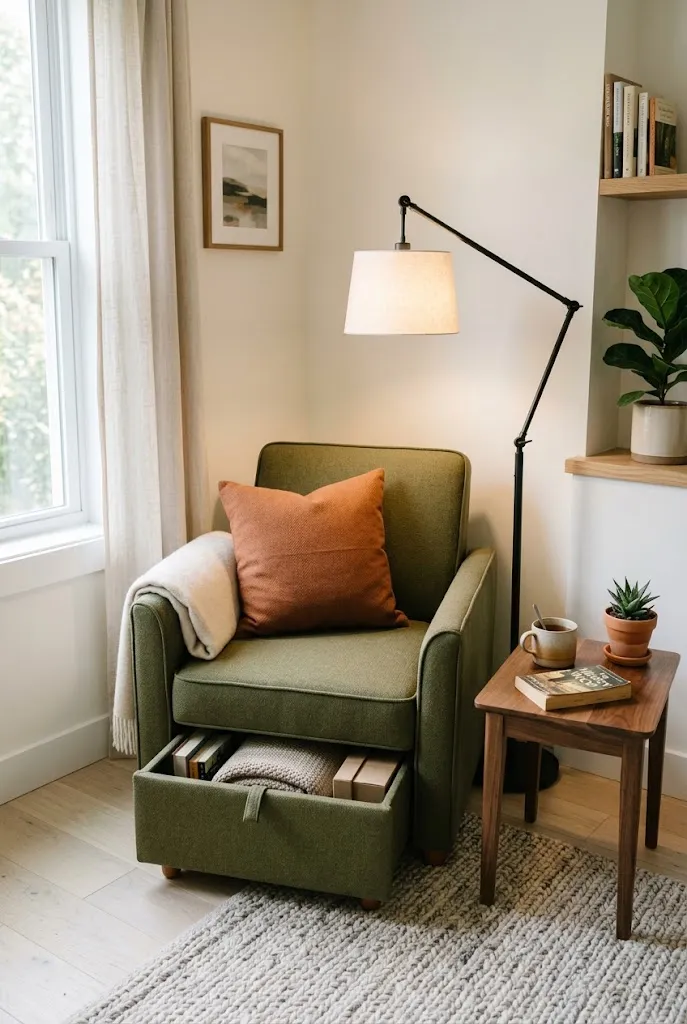
- Hidden storage gives the chair a second useful purpose.
- A compact frame adds seating without overwhelming the layout.
- Raised legs help more flooring stay visible.
- The compartment is ideal for blankets, books, or spare cushions.
A compact armchair with hidden storage can add comfort without becoming another single-purpose object in a small studio. Look for designs with a lift-up seat, concealed compartment, or matching storage ottoman where you can keep blankets, books, or extra pillows. A slim silhouette with raised legs helps the chair feel lighter and preserves visible floor space. Place it beside a window, near the sofa, or in a reading corner. The result is a more inviting seating area that also quietly handles clutter without demanding an extra cabinet, basket, or bin.
The smartest version is comfortable enough for daily use but compact enough to move when the layout changes. I’ve noticed that chairs in olive, rust, muted blue, or textured neutral fabric add visual interest without overwhelming a studio. Avoid oversized arms and deep recliner-style frames if circulation is tight. If the storage compartment opens upward, leave enough room around the chair to access it easily. You will gain another place to sit, a hidden home for soft goods, and a richer layered look without making the room feel crowded or heavy.
11. Slim Ladder Shelf
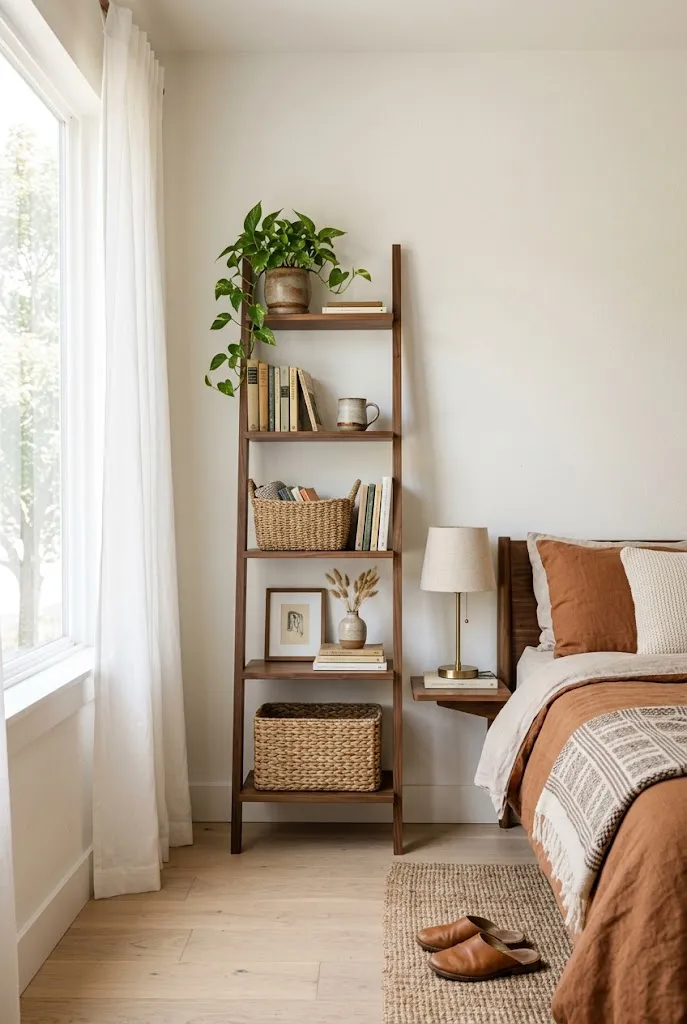
- The narrow footprint works well in tight corners.
- Vertical shelves make better use of empty wall space.
- Open sides keep the furniture from feeling bulky.
- Baskets and plants combine practical storage with soft styling.
A ladder shelf makes use of vertical space while keeping the floor footprint surprisingly small. Its open structure is ideal for books, baskets, plants, towels, or decorative pieces, and the narrower upper shelves prevent the unit from feeling heavy. Lean it against an empty wall near the bed, desk, or entry to create storage where a full bookcase would be too deep. Because more of the wall remains visible, the room feels open and airy. The shelf adds height, organization, and personality without visually closing in the apartment overall.
That’s why many designers use ladder shelving in corners that need function but cannot handle bulky furniture. Keep heavier baskets or books on the lower levels, then use lighter decor, framed art, or trailing greenery toward the top. Repeating one wood or metal finish from elsewhere in the room helps the shelf feel intentional. Avoid filling every level from edge to edge, because open space is part of what makes the design work. You will gain practical vertical storage while preserving light, movement, and a clean visual rhythm throughout the studio.
12. Rolling Utility Cart
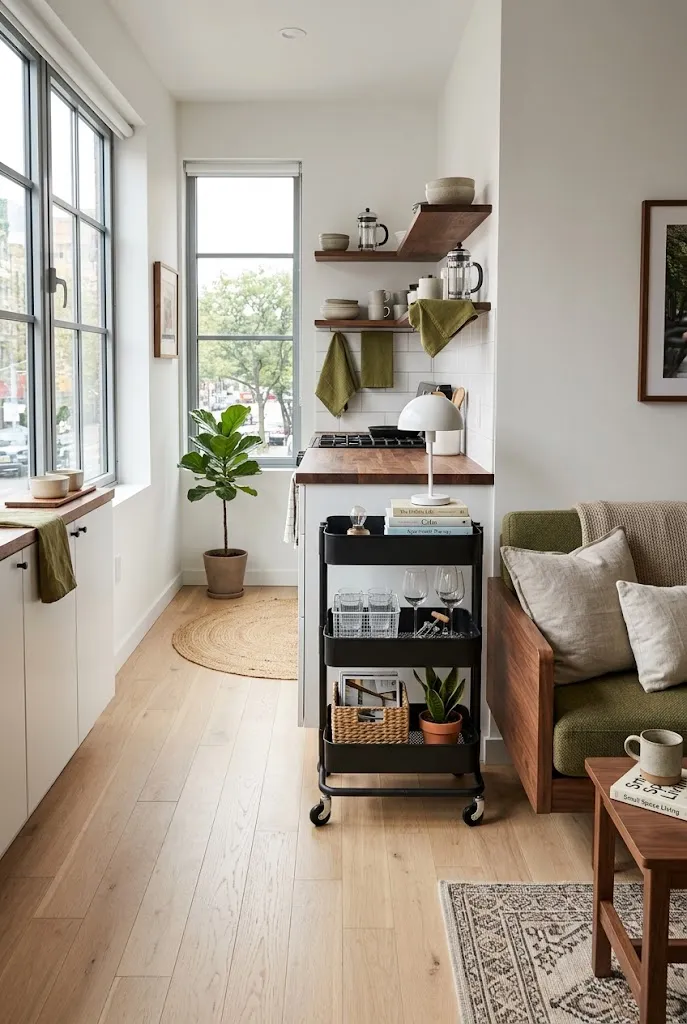
- A rolling cart can move between several zones as needed.
- Multiple tiers provide storage without taking much floor space.
- Baskets keep small items grouped and visually tidy.
- Locking wheels make the surface more stable when parked.
A narrow rolling cart can serve as a movable side table, bar cart, nightstand, pantry, or bathroom organizer depending on what the day requires. Choose a slim metal or wood design with two or three tiers and smooth casters, then keep the contents grouped in baskets or trays. Because it moves easily, the cart can shift between zones instead of forcing you to buy separate furniture for each area. This makes it especially useful in studios where the same square footage needs to support several routines without becoming cluttered or cramped.
I’ve seen rolling carts work best when each one has a clear purpose rather than becoming a catchall for random items. A kitchen cart might hold oils and utensils, while a bedside version can store books, chargers, and a lamp. Locking casters are helpful if the surface will hold drinks or electronics. Choose a finish that blends with the rest of the room so it feels like furniture, not utility storage. You will gain flexible organization that moves exactly where you need it and tucks away when the floor should stay open.
13. Built-In Storage Bed
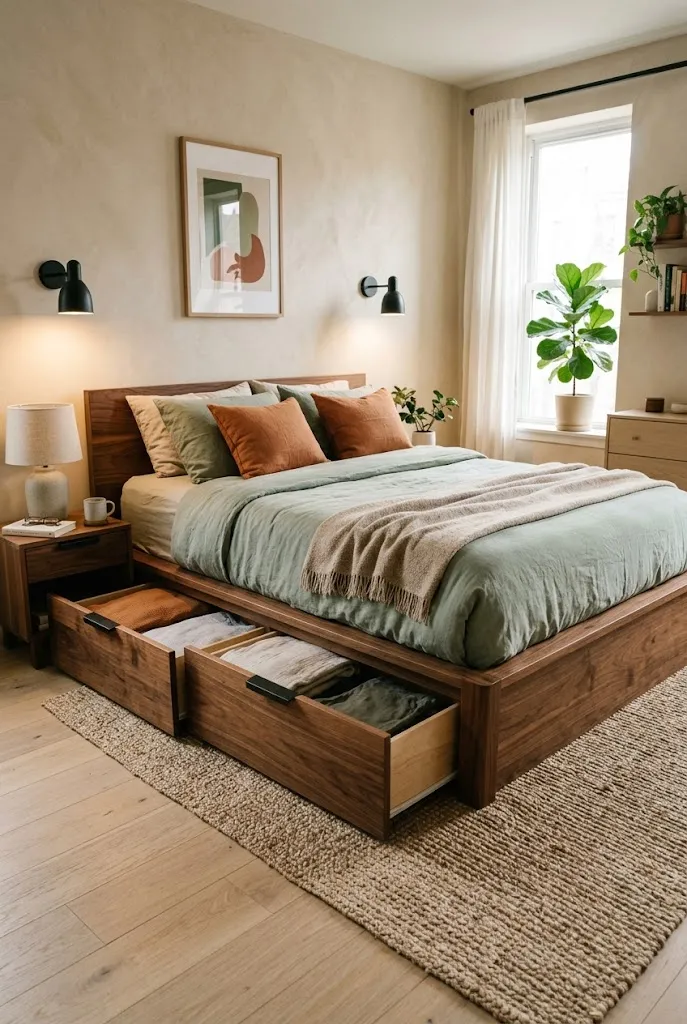
- Built-in drawers replace the need for extra storage furniture.
- Hidden compartments keep bedding and seasonal items out of sight.
- A low platform maintains a clean, streamlined look.
- The design works especially well in small sleeping zones.
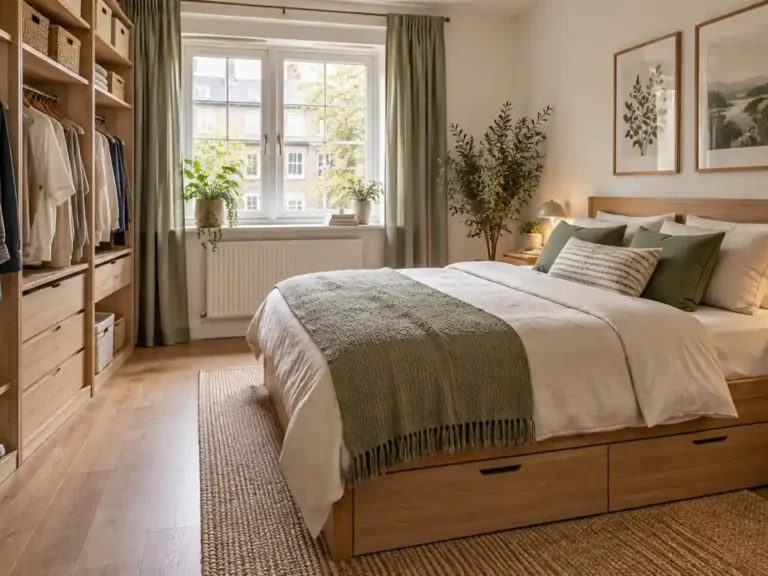
A narrow storage bed can reclaim floor space that would otherwise be lost to a separate dresser or bins. Choose a platform with deep drawers or lift-up storage underneath, then reserve the compartments for bedding, shoes, off-season clothes, or bulky items. Keeping storage built into the bed reduces visual clutter and leaves walls free for lighter furniture. This works especially well in studios where the sleeping area already takes up a large footprint. The room feels cleaner, calmer, and more functional without adding another cabinet or chest in daily life.
In my experience, under-bed storage works best when the compartments are easy to access from the side you use most. Measure drawer clearance carefully so nearby walls, nightstands, or rugs do not block them. If you choose a lift-up frame, make sure the mechanism feels sturdy and smooth enough for regular use. Keep frequently used items near the front and seasonal pieces farther back. You will gain meaningful hidden storage while keeping the bedroom area visually simple, which helps the entire studio feel more open and organized over the long term.
14. Floating Media Console
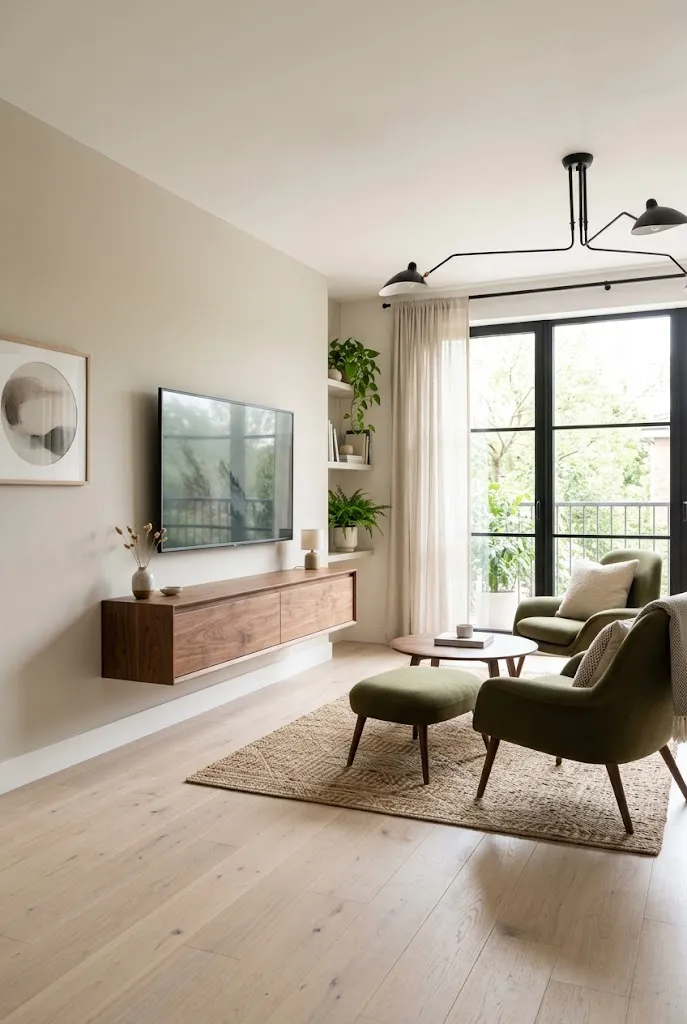
- Floating storage keeps more of the floor visible.
- Closed drawers hide cords, remotes, and electronics.
- A slim profile works well in narrow living areas.
- Wall-mounted furniture makes the room feel lighter.
A wall-mounted media console keeps entertainment essentials organized without filling valuable floor space with a bulky cabinet. Choose a slim floating unit beneath the television and use closed drawers for remotes, cables, game controllers, or small electronics. The open floor below makes the wall feel lighter and gives the studio a cleaner visual line. This setup is especially helpful when the living area is narrow or shares space with the bed. The result is a polished media zone that feels intentional while preserving more room for everyday movement at home.
The best floating consoles stay shallow enough to avoid becoming an obstacle in tight layouts. I’ve noticed that matching the console to the wall or choosing a warm wood tone creates a smoother, more built-in appearance. Keep the top mostly clear and mount cables neatly so the area does not become visually busy. If extra storage is needed, choose drawers instead of open cubbies for small items. You will free up floor space, simplify the entertainment zone, and make the room look wider because more flooring remains visible from across the apartment.
15. Stackable Stool Set
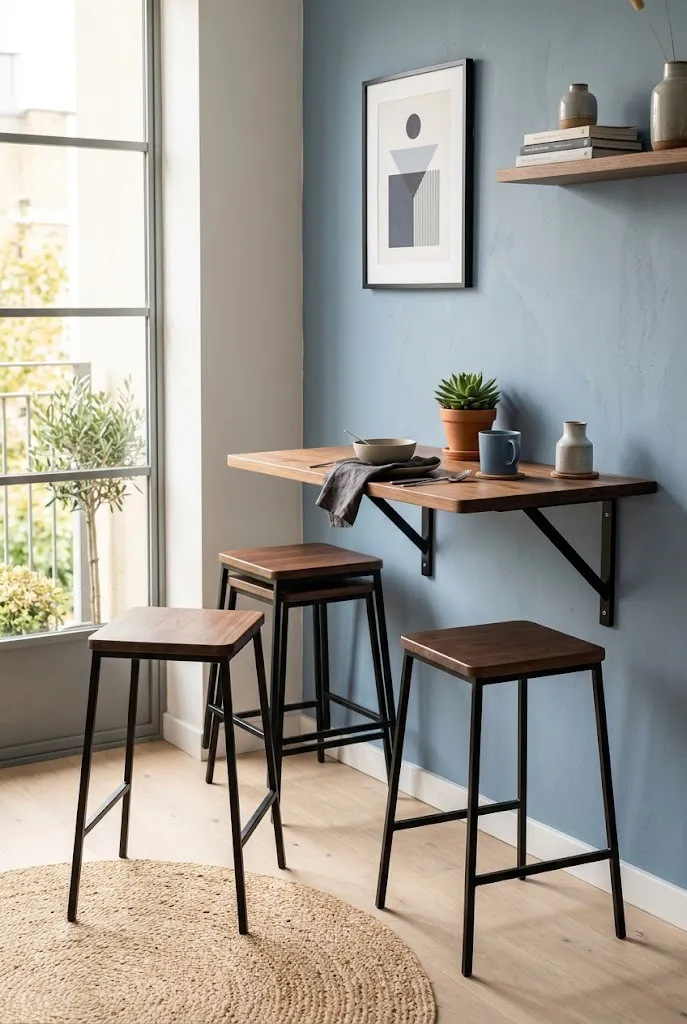
- Stackable stools provide extra seating without permanent bulk.
- The pieces can double as side tables or plant stands.
- Lightweight designs move easily between different zones.
- Stacking keeps the floor clear when guests leave.
A stackable stool set gives you extra seating without forcing the studio to accommodate chairs you rarely use. Keep two or three stools nested in a corner, beneath a console, or beside the dining table, then separate them when friends visit or you need an extra surface. Simple wood or metal designs can also double as plant stands or side tables. This makes the pieces useful even when no one is sitting on them. The room stays flexible and uncluttered while still being ready for guests, meals, or casual work.
In my experience, lightweight stools are far more useful in a studio than heavy occasional chairs because they can move between zones in seconds. Look for stable frames, comfortable seat heights, and shapes that truly stack without wobbling. A shared finish with the dining table or shelving helps them blend into the decor rather than look temporary. Keep only the number you realistically need. You will gain flexible seating, small surfaces, and easier entertaining while using only a fraction of the floor space required by several separate chairs every day.
16. Corner Storage Shelf
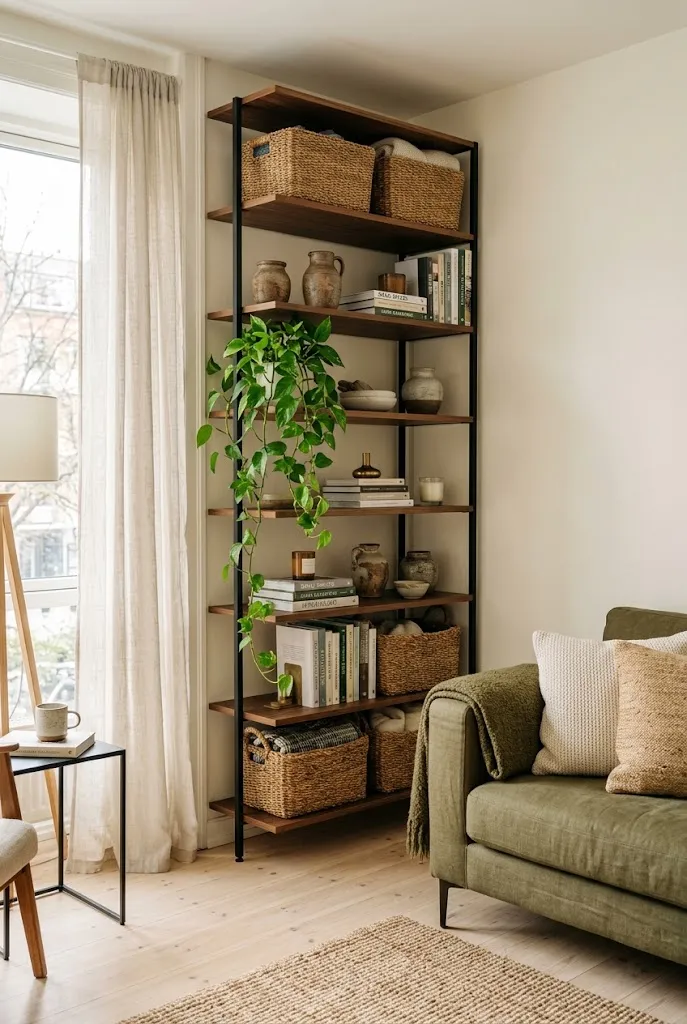
- Corner shelving makes use of often-wasted space.
- Vertical storage frees up the main walls and floor.
- Open frames feel lighter than bulky closed cabinets.
- Baskets keep practical items tidy and out of sight.
A corner shelving unit can turn an awkward, unused angle into practical storage without interrupting the main walking path. Choose a tall, narrow design that fits snugly into the corner and use it for books, baskets, plants, or everyday essentials. Because the shelf follows the shape of the room, it feels less intrusive than a wide cabinet placed along a wall. This works especially well beside a sofa, near the bed, or by the entry. The neglected corner becomes functional while the center of the studio stays open and spacious.
The most effective corner shelves feel visually light, so avoid filling every level with heavy objects. Keep baskets or larger items toward the bottom and reserve upper shelves for smaller decor, books, or greenery. That’s why many designers favor open frames with slim legs in compact interiors. They provide storage without creating a solid block of furniture. Match the finish to another piece nearby for continuity. You will gain useful vertical storage in an area that often goes wasted, while keeping the apartment balanced, organized, and easy to move through.
17. Murphy Bed Cabinet
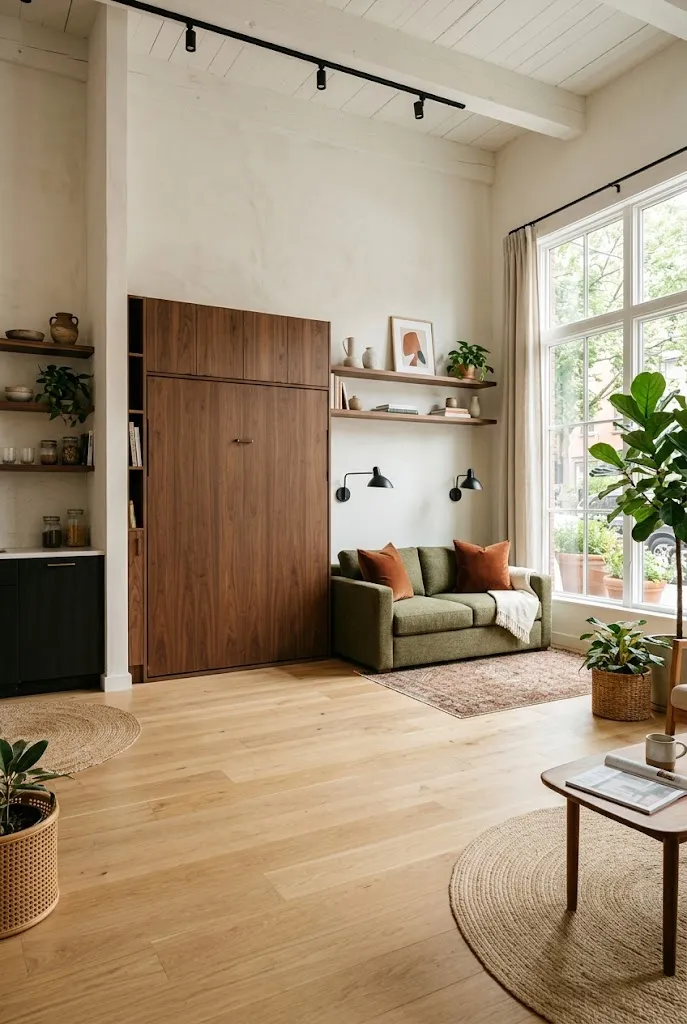
- The bed disappears completely when it is not being used.
- Built-in cabinetry keeps the sleeping area visually tidy.
- Open daytime floor space makes entertaining and exercising easier.
- Integrated shelves can replace separate bedside furniture.
A Murphy bed can completely change how much usable floor space a studio offers during the day. Folded into a wall cabinet, the mattress disappears and leaves valuable room for exercising, entertaining, working, or simply moving around more comfortably. Modern designs often include shelves, lighting, or storage around the bed, allowing one wall to handle several functions. Choose a cabinet finish that coordinates with existing furniture so the unit feels intentional. Once closed, the apartment looks more like a living space than a bedroom, creating an impressive sense of openness.
Before choosing a wall bed, carefully measure ceiling height, mattress depth, and the clearance required when the frame is fully open. In my experience, models with simple handles and smooth assisted mechanisms are far easier to use every night than complicated designs. Keep the area directly in front of the cabinet free from heavy furniture, or choose lightweight pieces that move easily. You will gain a genuine sleeping surface without dedicating permanent floor space to it, making the studio feel dramatically more adaptable from morning through bedtime.
18. Expandable Console Table
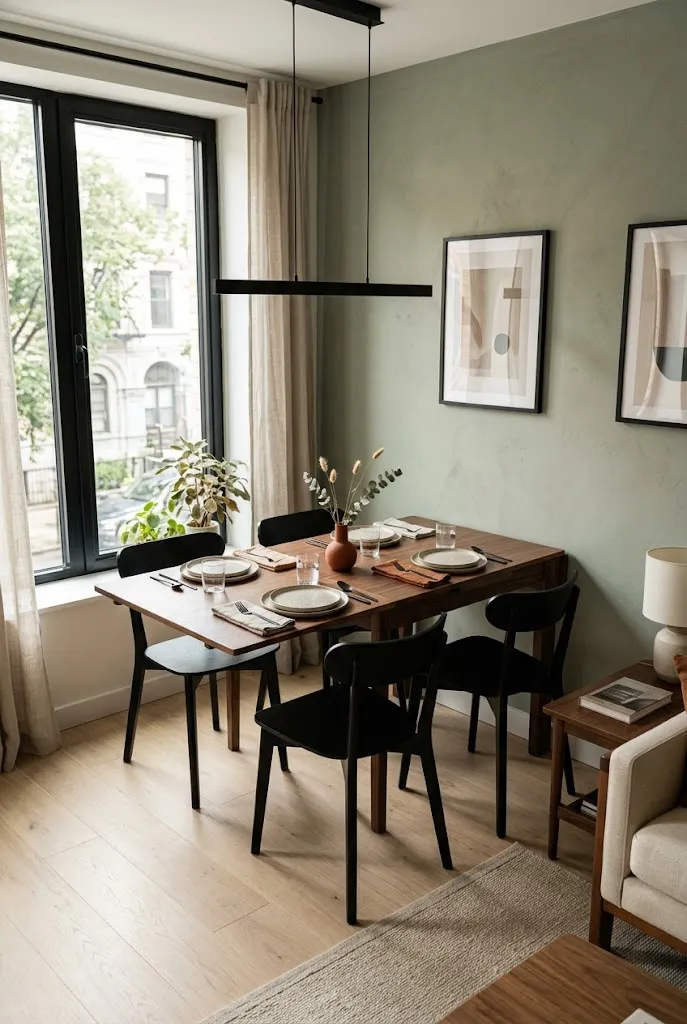
- The compact console becomes a larger dining table when needed.
- Its narrow everyday footprint keeps walkways open.
- Extra chairs can be folded or stacked elsewhere.
- One piece works for dining, display, and occasional projects.
An expandable console offers a clever solution when you want proper dining space but cannot justify keeping a large table open every day. In its smallest form, it can sit neatly against a wall holding a lamp, tray, or artwork. When guests arrive, extend the top and transform it into a dining surface for several people. This makes the furniture useful throughout the week instead of reserving valuable square footage for occasional meals. The studio remains airy during normal routines while still feeling ready for entertaining when extra surface area matters.
The best expandable tables are straightforward to open and have a secure support system once extended. I’ve seen this work particularly well when extra chairs are stackable or folding, because the entire dining setup can disappear after guests leave. Store extension leaves inside the table if the design allows, rather than finding another place for them. A streamlined walnut, oak, or painted finish can blend with surrounding furniture. You will gain the flexibility of a larger dining room without permanently giving up the open floor area that makes studio living comfortable.
19. Slim Rolling Kitchen Island
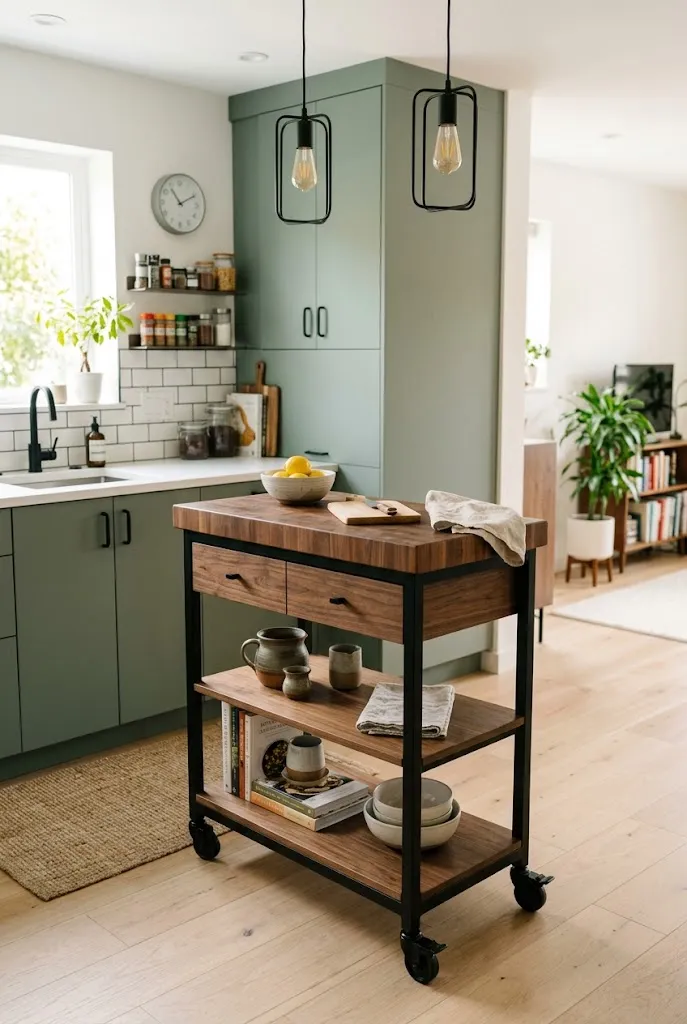
- A rolling island adds prep space without becoming permanent.
- Shelves and drawers reduce pressure on limited kitchen cabinets.
- Locking wheels keep the surface stable during use.
- The island can move aside when more floor space is needed.
A slim rolling island gives a tiny studio kitchen extra prep space and storage without committing to a permanent fixture. Choose a narrow model with drawers, shelves, or towel rails, then roll it beside the counter when cooking and move it away when you need more circulation. A butcher-block or durable stone-look top can also serve as a casual breakfast surface. This is particularly helpful in one-wall kitchens where counter space disappears quickly. The island adds function exactly when needed while letting the room return to an open layout afterward.
In my experience, mobility is most useful when the island is genuinely narrow enough to pass through the apartment easily. Measure doorways, cabinet clearance, and the main walkway before choosing a model, and look for locking casters so it stays stable during food preparation. Store heavier items on the lower shelves to keep the cart balanced, while frequently used utensils can go in shallow drawers. You will gain extra countertop space, accessible storage, and greater flexibility without making the kitchen feel permanently crowded by another fixed piece of furniture.
Conclusion
The right furniture can make a small studio feel larger, calmer, and far more functional without sacrificing style. These studio apartment furniture ideas show how hidden storage, folding surfaces, slim profiles, and multifunctional pieces can help you use every inch more wisely. I’ve seen how one smart swap, such as a storage bed or drop-leaf table, can completely improve the flow of a room. Start with the piece that solves your biggest space problem, then build from there. The best furniture for studio apartments is multipurpose furniture that fits how you actually live. Save this post on Pinterest, try your favorite ideas at home, and share it with someone who wants a smarter, more beautiful studio.
Read More:
21 Studio Apartment Bedroom Divider Ideas That Add Privacy Without Walls
17 Studio Apartment Organization Ideas to Maximize Small Spaces
Community
Join the conversation
Add a useful idea, ask a specific question, or share what worked in your space. Every comment is reviewed before it appears.