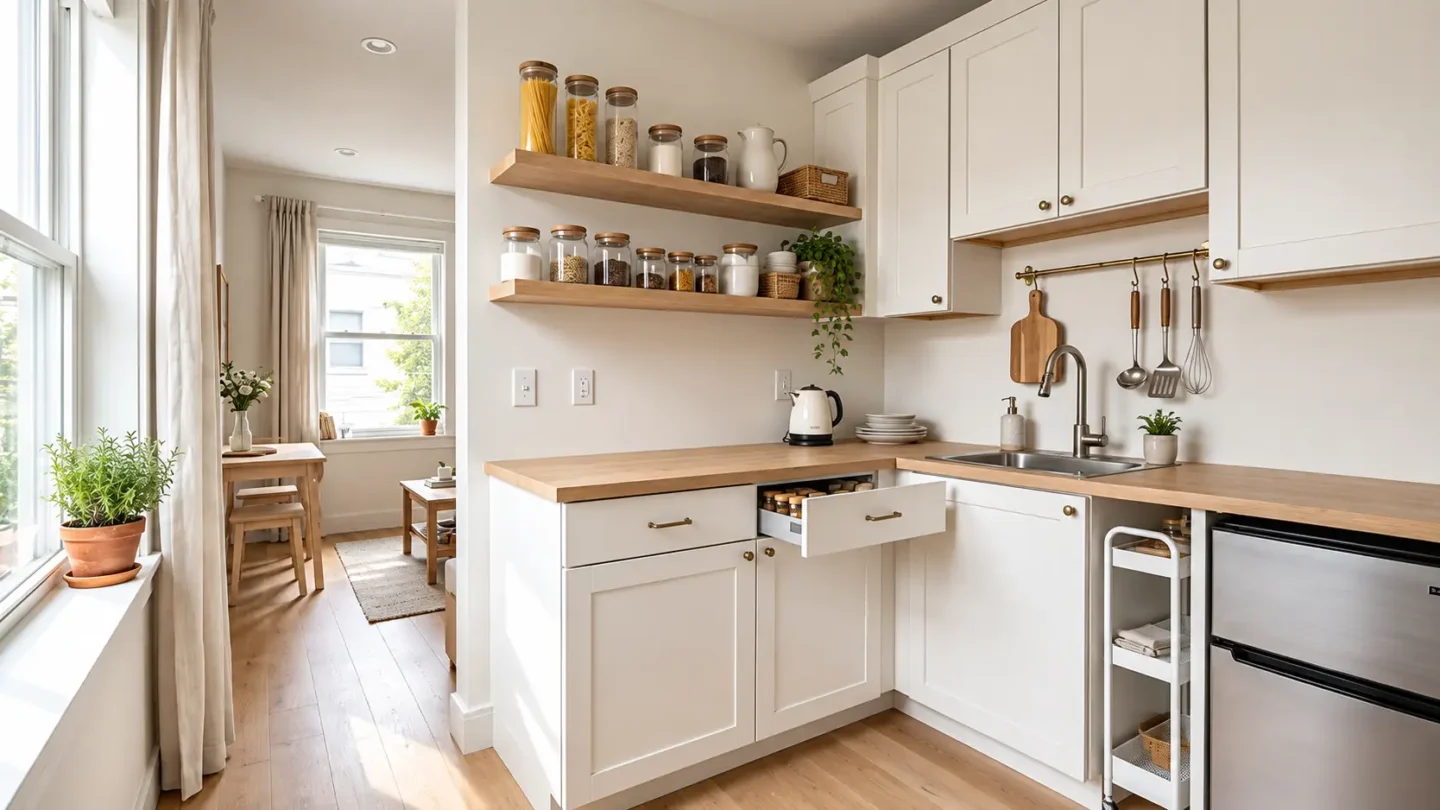
A tiny kitchen can feel crowded long before you actually run out of storage.
A stack of dishes on the counter, a few appliances beside the sink, and food packages sitting on open shelves can quickly make the whole space look cluttered.
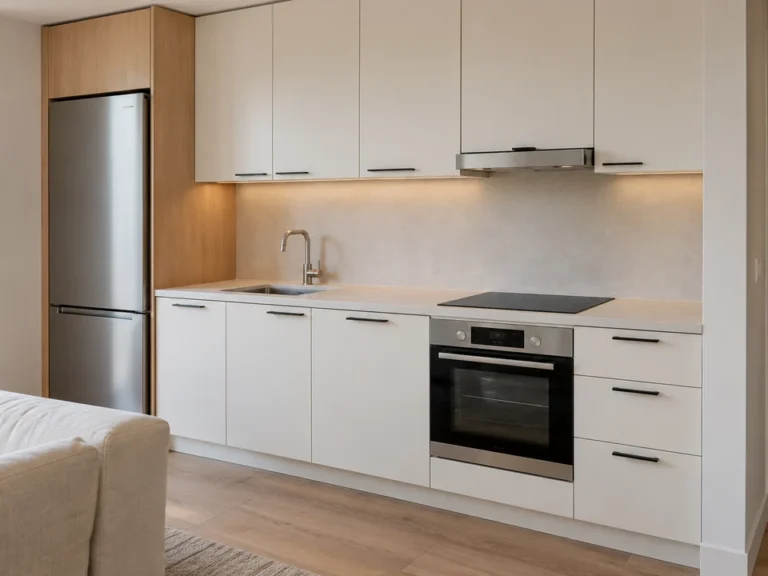
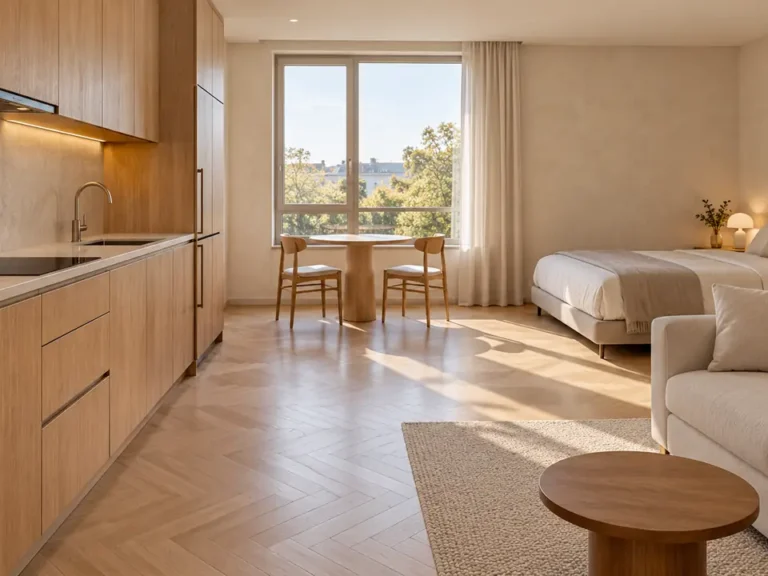
This is even more noticeable in a Small Kitchen Studio Apartment, where the kitchen is often visible from almost every part of the room.
The good news is that you do not always need more cabinets or a bigger kitchen. The right Small Kitchen Studio Apartment Ideas can help you use overlooked spaces, keep everyday essentials within easy reach, and hide the items that create visual clutter.
The key is to make better use of the space you already have.
From vertical storage to clever countertop solutions, these ideas can help you fit more into your kitchen while keeping it clean, open, and easy to use.
Here are practical Small Kitchen Studio Apartment Ideas that make every inch count without making your kitchen feel packed.
1. Clear the Counters Before Adding Storage
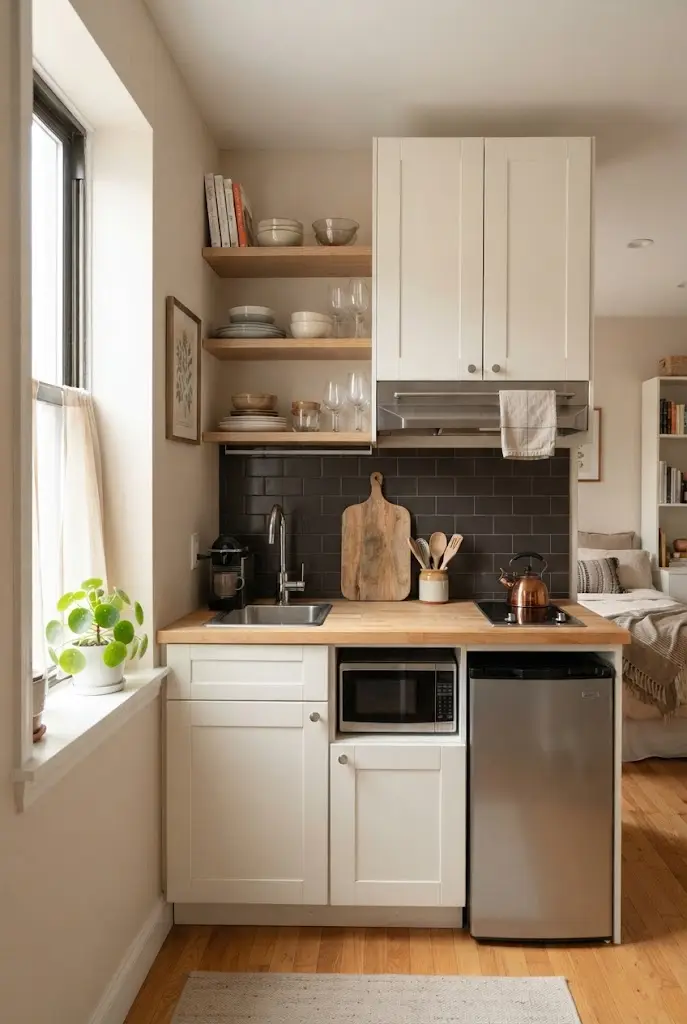
Before buying organizers, remove everything from your counters.
Then put back only the items you genuinely use every day.
Your coffee maker may deserve a permanent spot.
The blender you use once a month probably does not.
Open counter space is valuable in a small kitchen because it gives you room to prepare food and creates visual breathing space.
I have found that even one completely clear section of counter can make a tiny kitchen look noticeably larger.
2. Store Appliances You Rarely Use
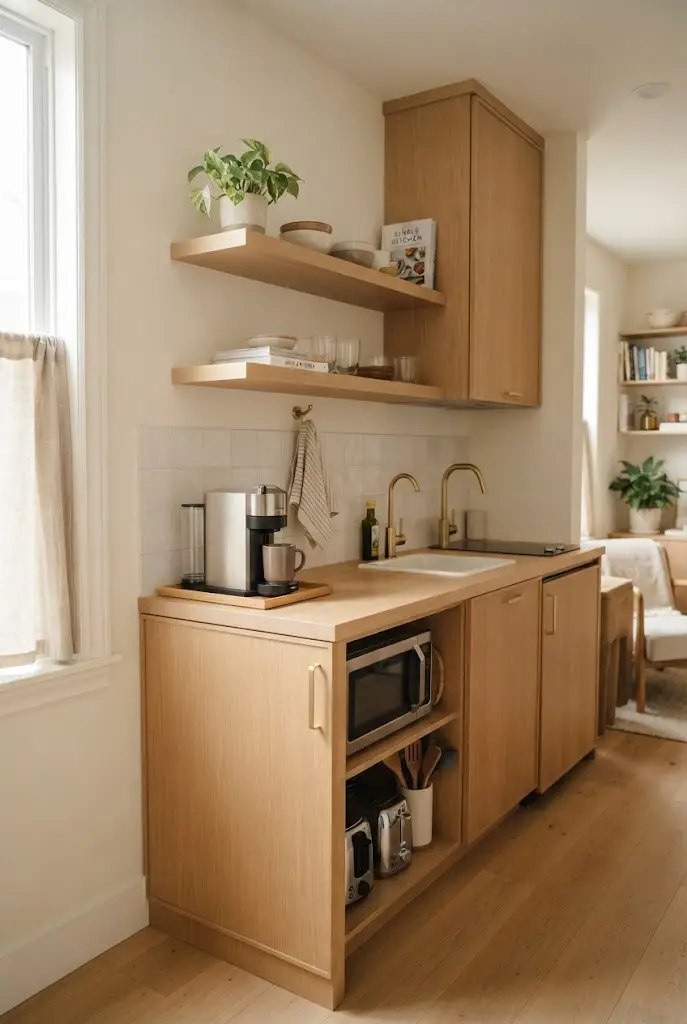
Small appliances are some of the biggest counter space stealers.
Toasters, blenders, mixers, rice cookers, and air fryers can quickly fill every available surface.
Keep your most frequently used appliance accessible.
Move occasional appliances into a lower cabinet, high shelf, or nearby storage closet.
You still own everything you need, but you are not looking at all of it every day.
That makes the kitchen feel calmer almost instantly.
3. Use the Inside of Cabinet Doors
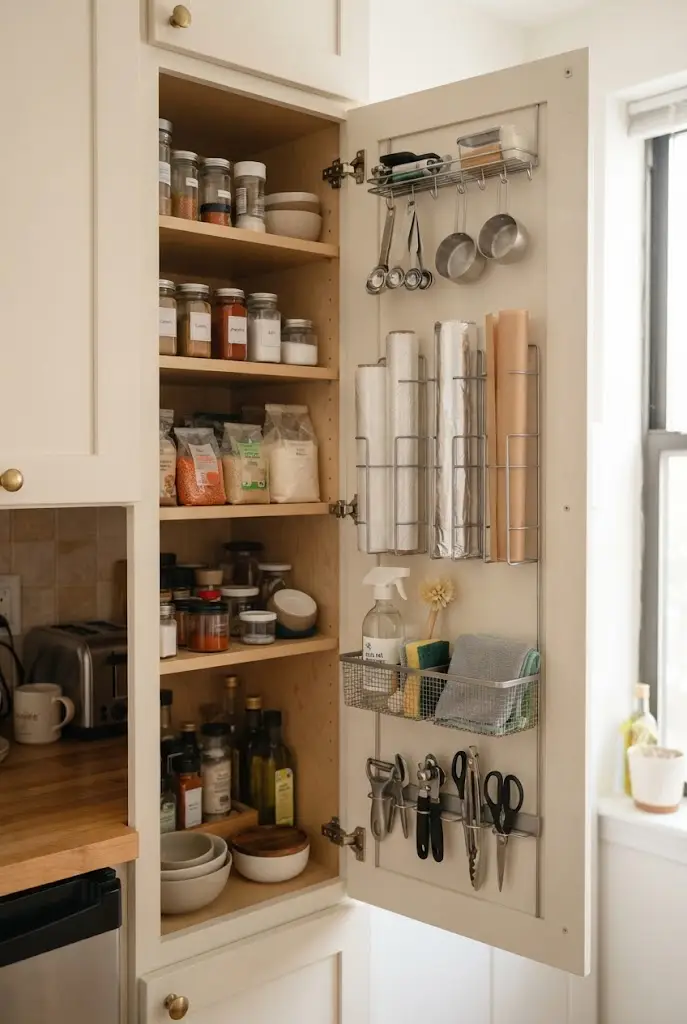
Cabinet doors offer useful storage space that is easy to forget.
Add slim organizers inside doors for measuring spoons, food wrap, cleaning supplies, pot lids, or small pantry items.
This works especially well beneath the sink.
Keep organizers shallow enough that the cabinet can still close comfortably.
You gain extra storage without adding anything visible to the room.
4. Add Shelf Risers Inside Cabinets
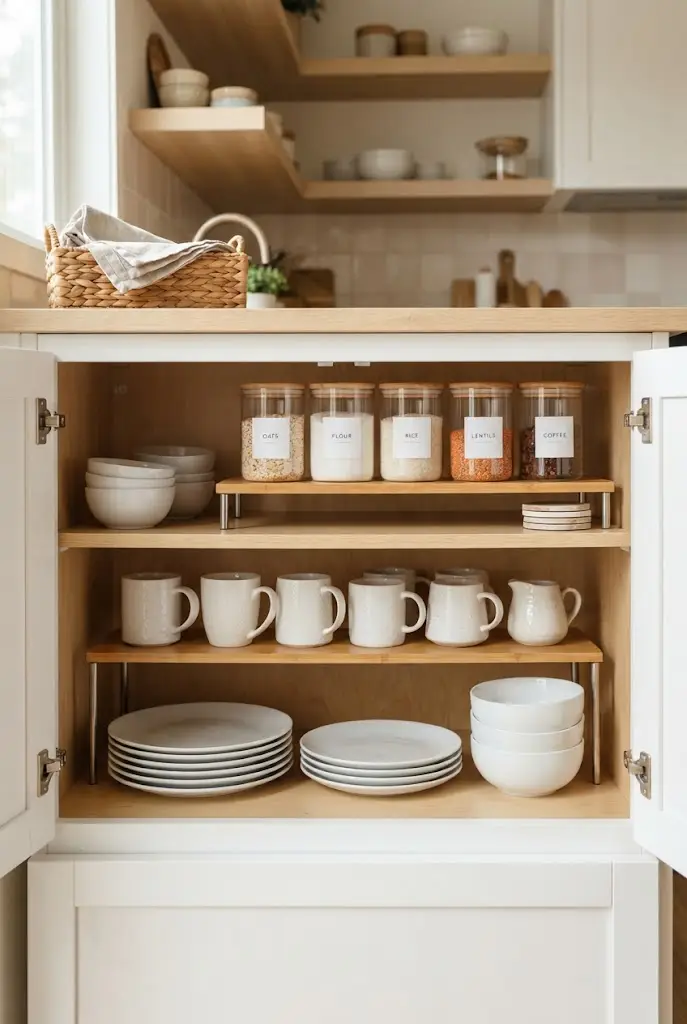
Tall cabinet shelves often waste vertical space.
A shelf riser lets you create another level.
Use one for mugs, bowls, plates, canned foods, or pantry containers.
Instead of stacking everything into tall piles, you can see and reach each item more easily.
This is especially helpful when your cabinets are narrow but tall.
5. Use Clear Containers for Dry Foods
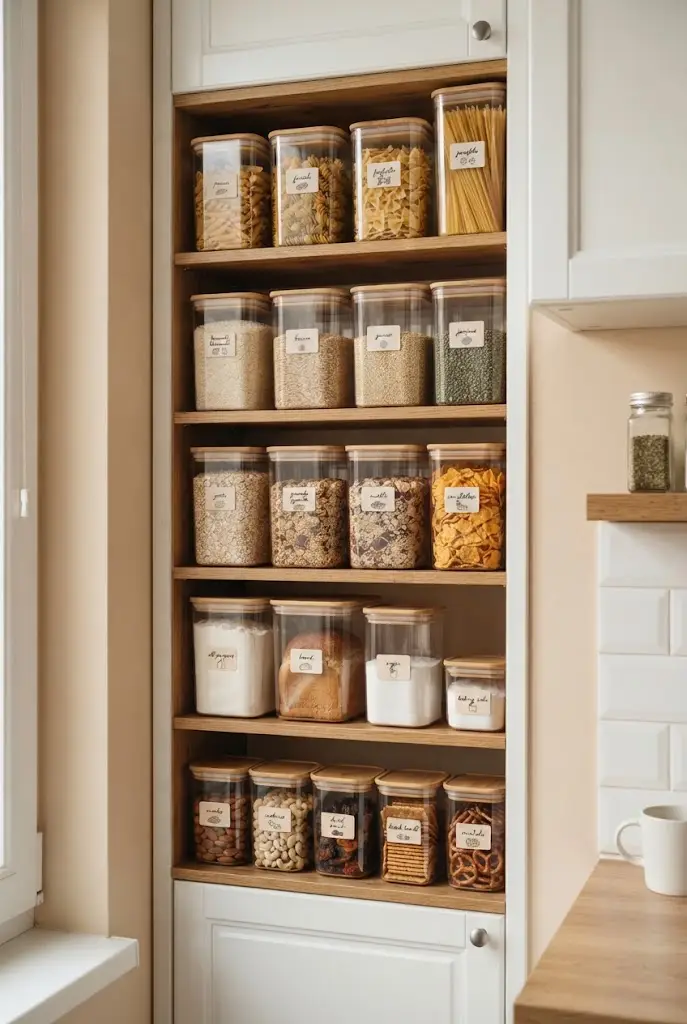
Packaging can make a tiny pantry look much more chaotic than it really is.
Transfer frequently used dry foods into matching clear containers.
Rice, pasta, cereal, oats, flour, and snacks can all look neater when stored in similar shapes.
Choose containers that stack well.
The goal is not to create a picture perfect pantry.
It is to make better use of shelf space while quickly seeing what you already have.
6. Group Similar Foods Together
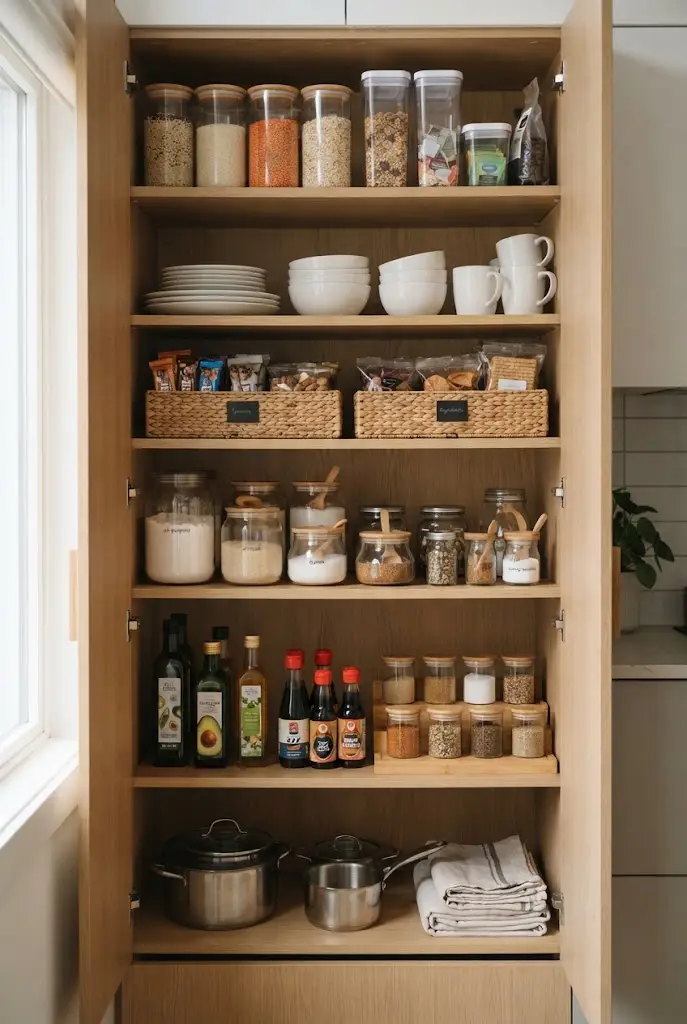
Instead of placing groceries wherever there is an empty spot, create simple categories.
Keep breakfast foods together.
Place cooking ingredients together.
Store snacks in one basket.
Group baking supplies in another.
This makes a small cabinet feel easier to use because you know exactly where to look.
It can also prevent you from buying duplicates because forgotten items are less likely to disappear behind unrelated products.
7. Use Baskets to Hide Visual Clutter
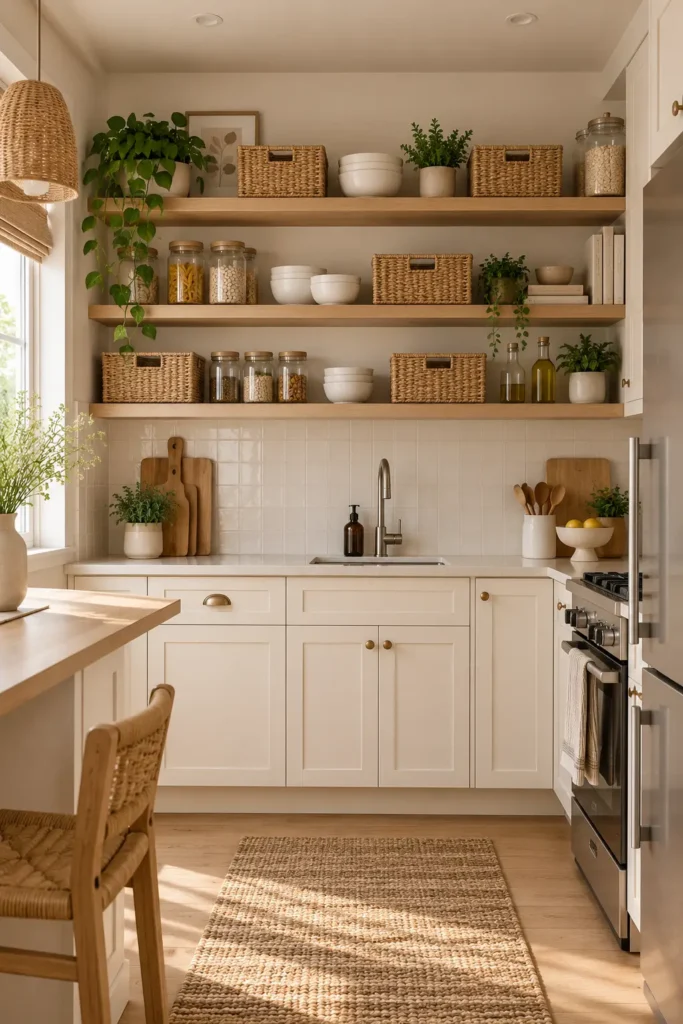
Open shelving can be helpful in a tiny kitchen, but too many small packages can make it look messy.
Baskets solve this beautifully.
Use one basket for snacks, another for tea and coffee, and another for less attractive pantry items.
Choose baskets in similar colors or materials.
They create a cleaner visual rhythm while keeping everything accessible.
8. Take Storage Up the Wall
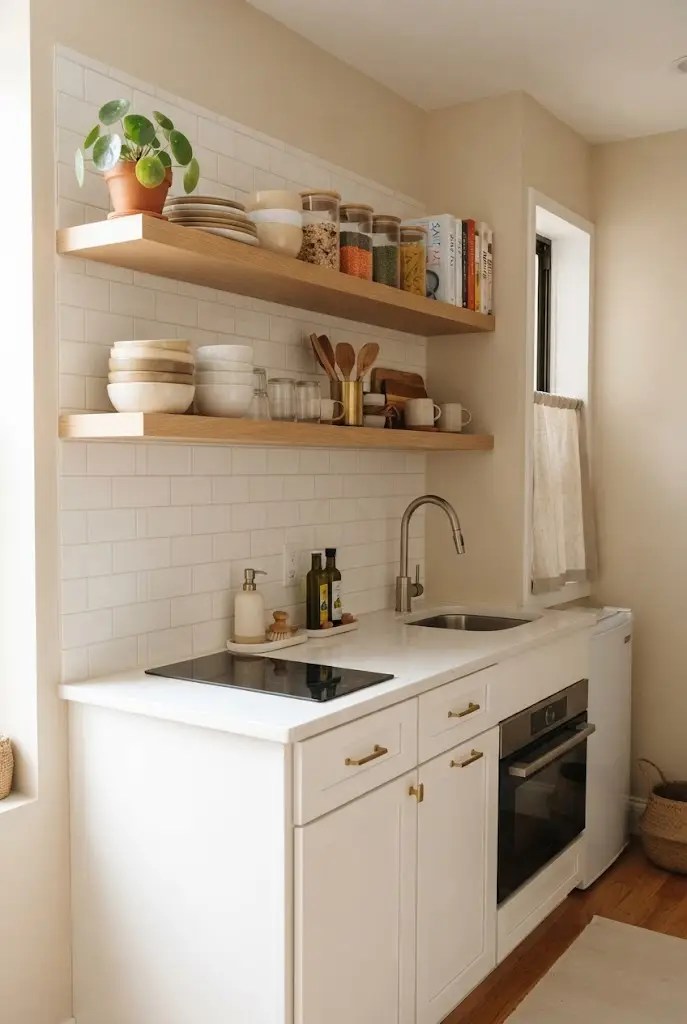
When cabinet space ends, look upward.
Wall shelves can hold dishes, glasses, jars, cookbooks, or attractive kitchen essentials.
Keep the styling simple.
Too many tiny objects on open shelves will make the wall feel busy.
I have seen this work best when practical items are mixed with a few visually calm pieces such as matching jars, stacked bowls, or one small plant.
9. Add Hooks Below Shelves
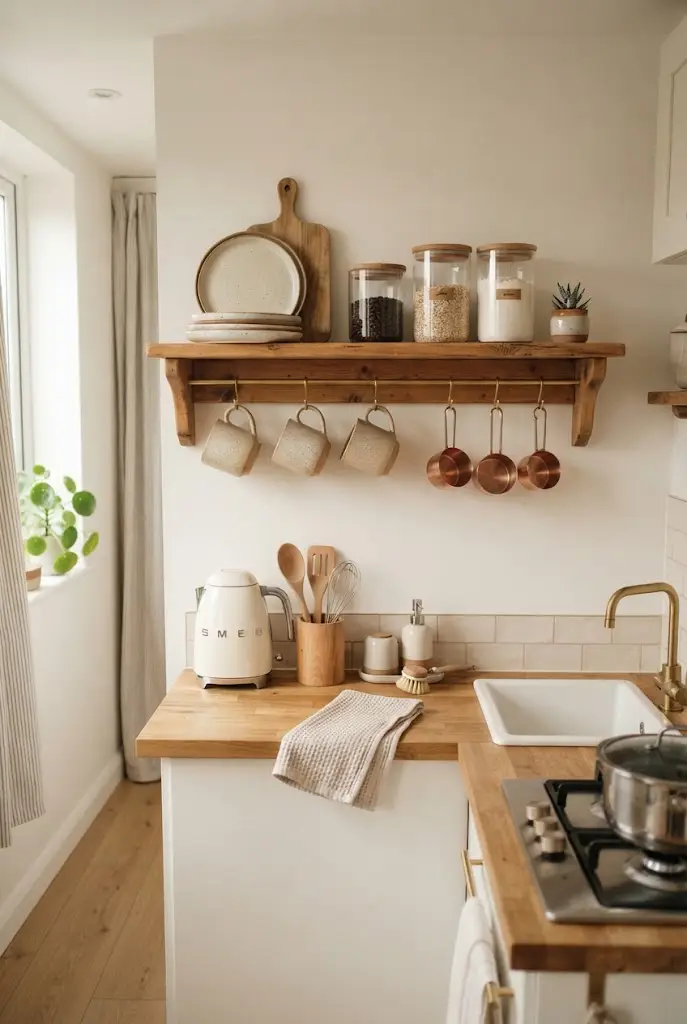
The underside of a shelf can become useful storage too.
Install hooks for mugs, measuring cups, lightweight utensils, or small kitchen tools.
This keeps frequently used items accessible without taking up shelf or counter space.
Try to keep the hanging items consistent.
A row of matching mugs will usually look calmer than a collection of unrelated objects.
10. Use a Magnetic Knife Strip
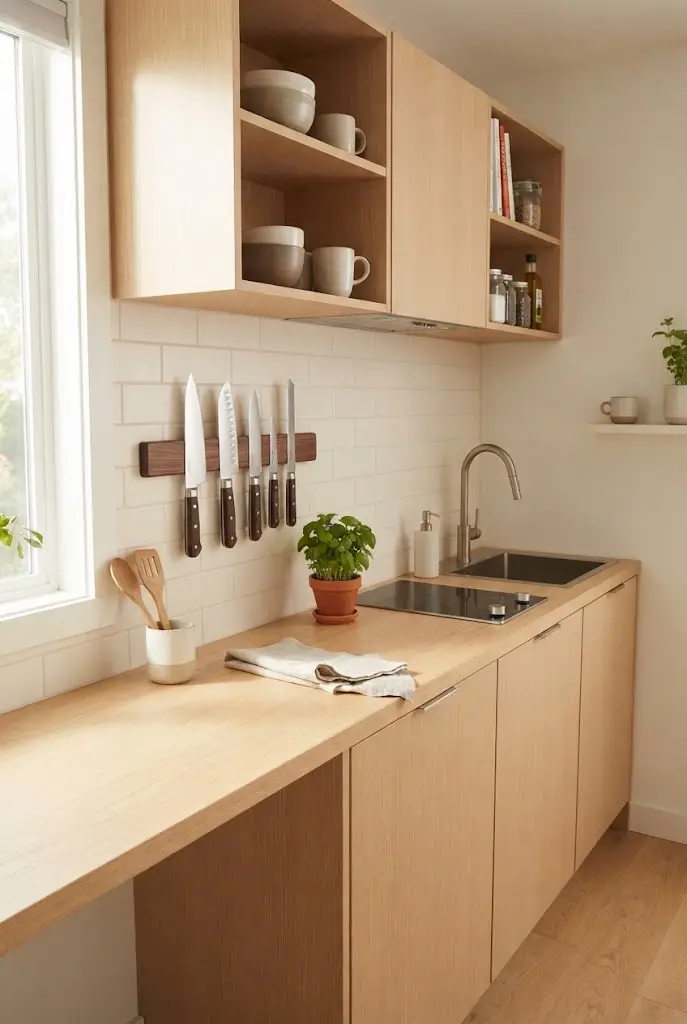
A countertop knife block can take up valuable preparation space.
A magnetic wall strip moves knives onto the wall while keeping them within easy reach.
Position it somewhere practical but safely away from children and busy walkways.
The same idea can work for certain metal kitchen tools if the product is designed for them.
It is a simple way to free a surprising amount of counter space.
11. Hang Cooking Tools Instead of Using a Crock
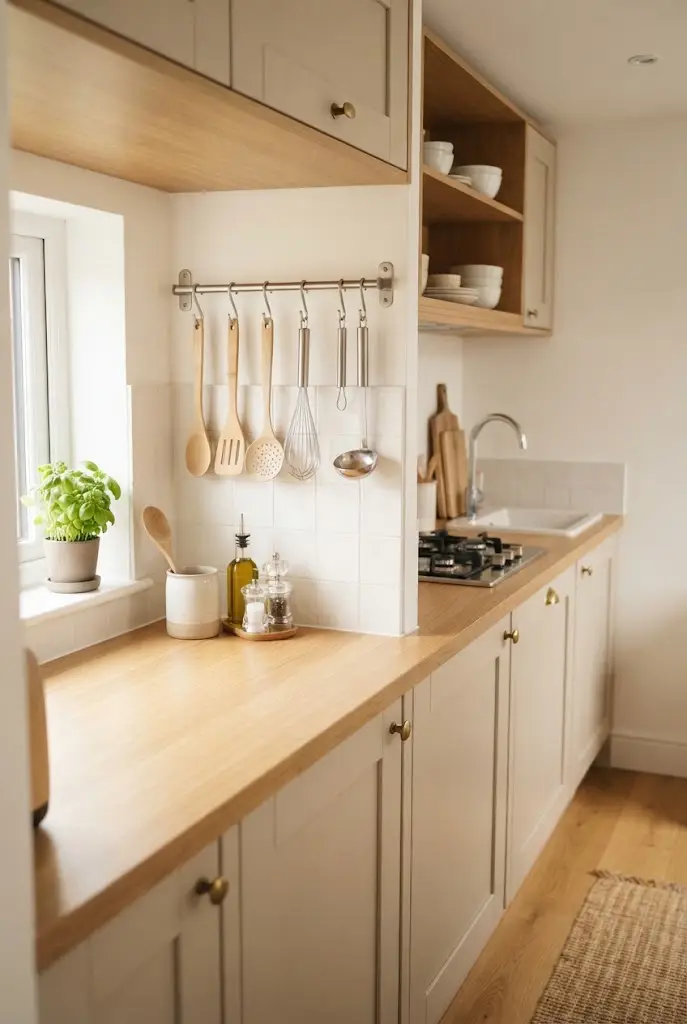
A large utensil container may look convenient, but it occupies valuable counter space.
Move frequently used tools to a wall rail with hooks.
Hang spatulas, ladles, whisks, and other lightweight utensils.
Keep the number limited.
You want easy access, not a wall covered with every tool you own.
12. Put the Side of a Cabinet to Work
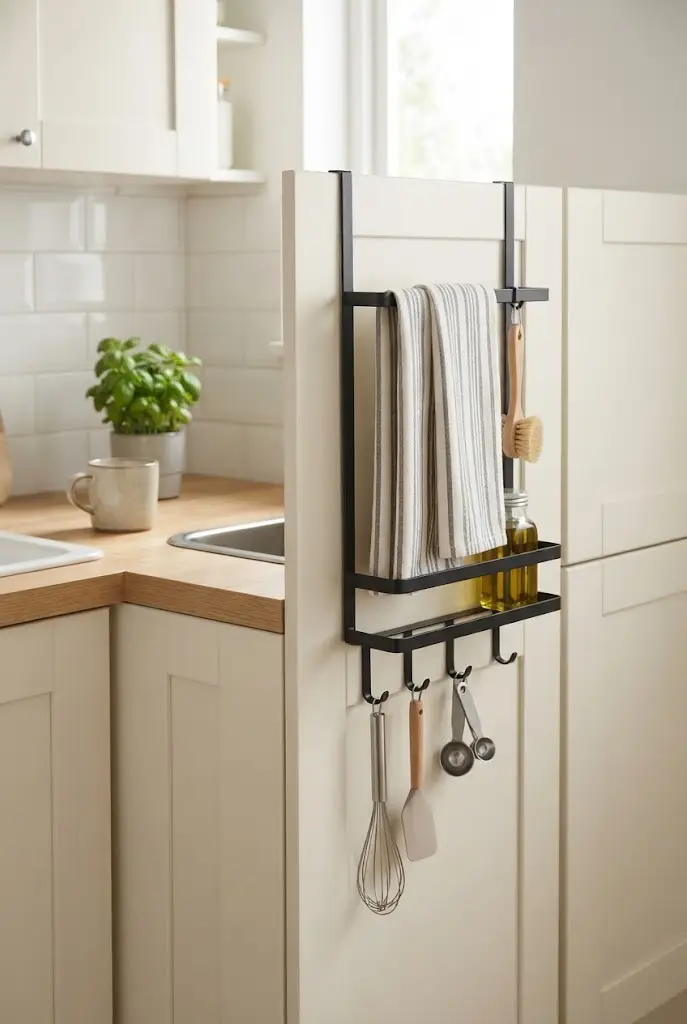
The exposed side of a cabinet or refrigerator can provide useful vertical storage.
Add a slim rack, hooks, or an organizer for kitchen towels, small utensils, or frequently used supplies.
This can be especially helpful in narrow studio kitchens where there is no room for another cabinet.
It uses space that would otherwise sit empty.
13. Use the Top of Cabinets Carefully
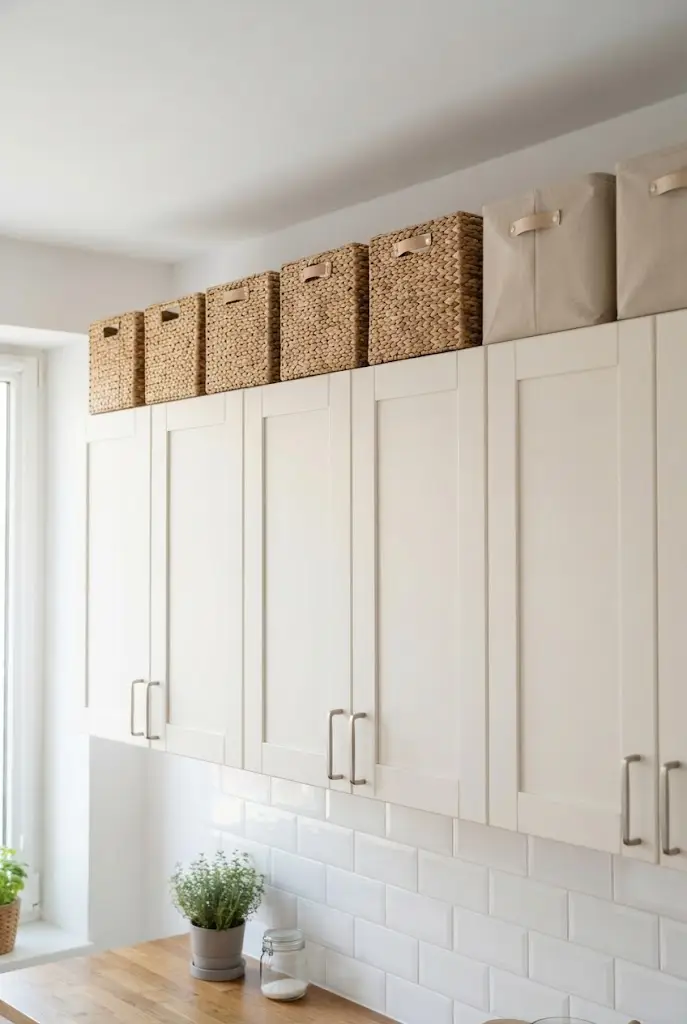
If your kitchen cabinets do not reach the ceiling, the space above them can hold less frequently used items.
Store serving dishes, seasonal pieces, or extra supplies in matching boxes or baskets.
Avoid filling the entire area with random objects.
A few coordinated containers will look intentional.
A collection of loose packages can make the kitchen feel more cluttered.
14. Choose Stackable Cookware
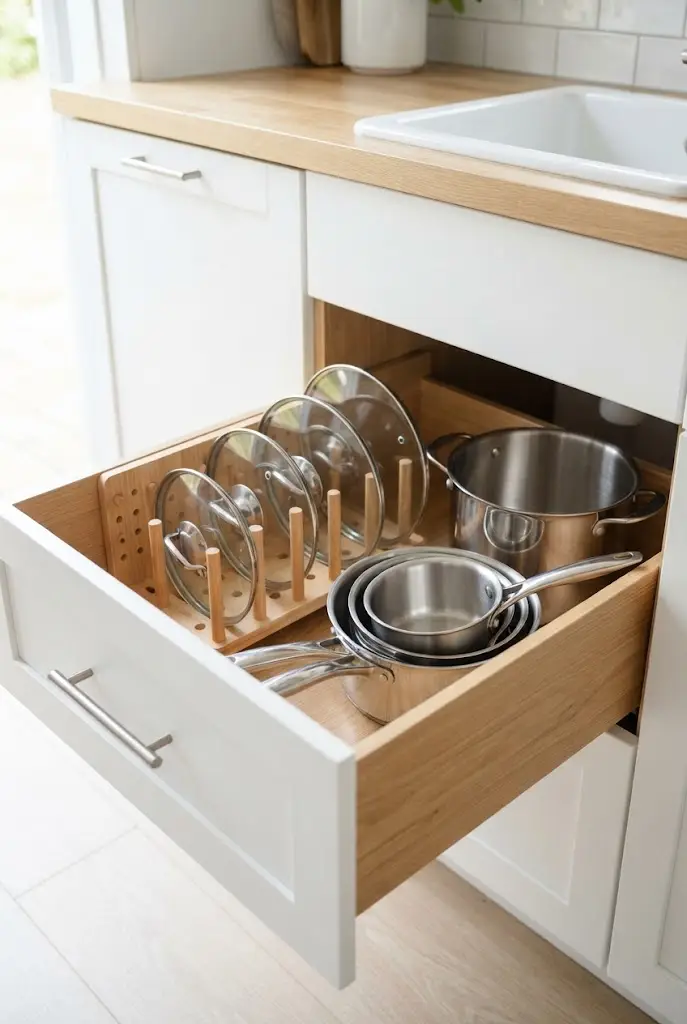
Pots and pans can consume an entire cabinet.
Look for cookware that nests together neatly.
Store lids vertically in a divider rather than stacking them randomly on top.
This creates more usable cabinet space and prevents the frustrating process of pulling everything out just to reach one pan.
In a micro kitchen, easy access matters almost as much as storage capacity.
15. Store Cutting Boards Vertically
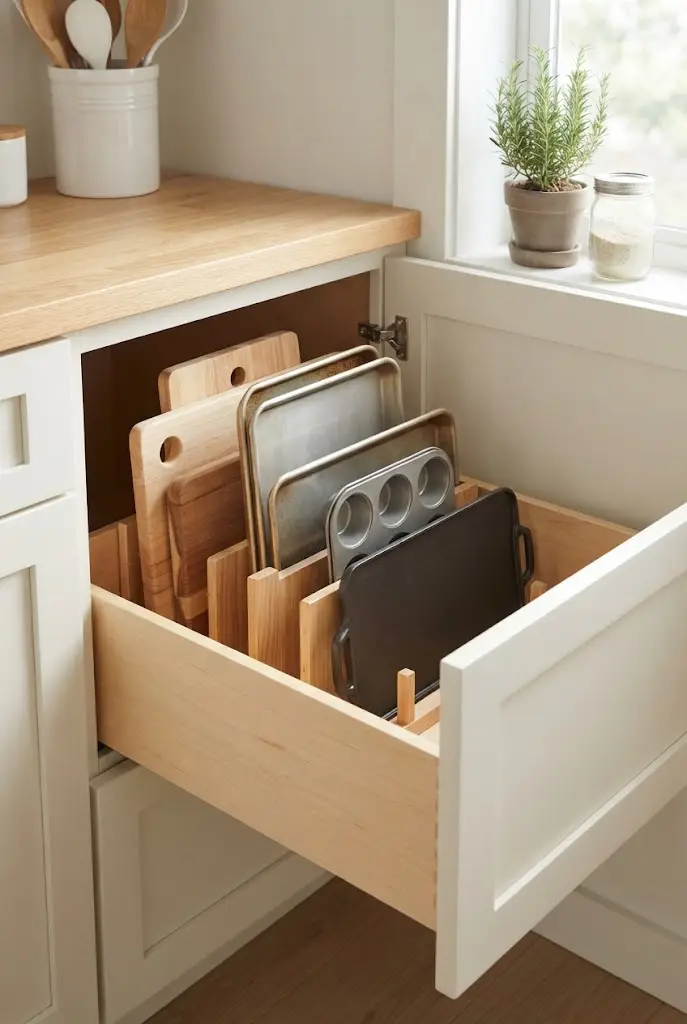
Cutting boards and baking sheets are much easier to manage when stored upright.
Use a simple divider inside a cabinet.
Slide each board into its own section.
This prevents them from becoming one heavy stack that you have to lift every time you need the bottom piece.
Vertical storage also uses narrow cabinet areas effectively.
16. Add a Slim Rolling Cart
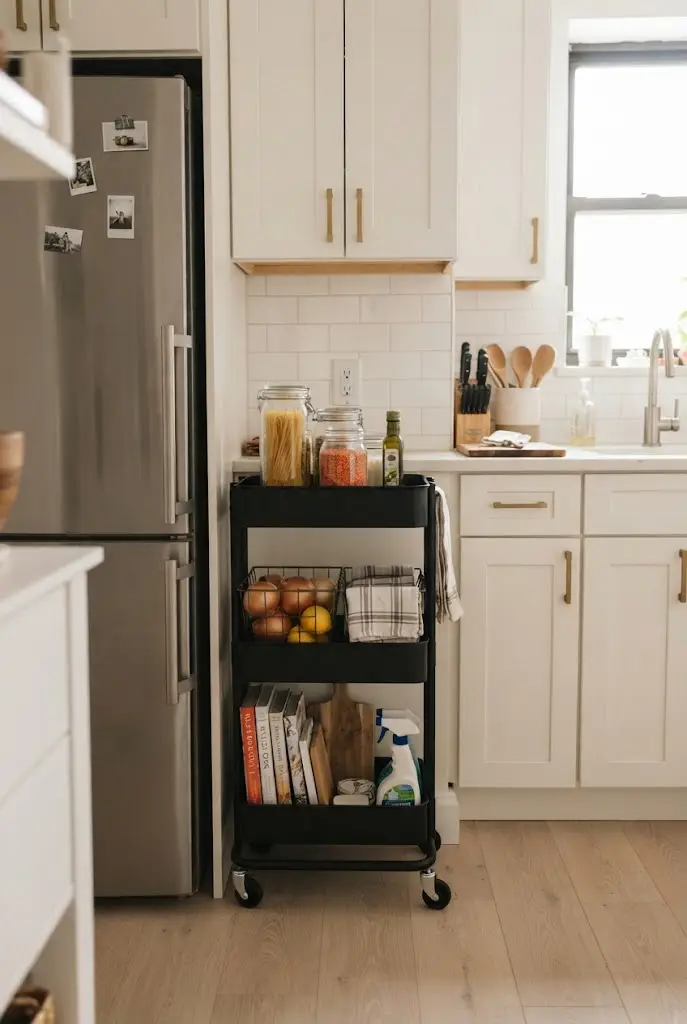
A narrow rolling cart can fit into gaps that would otherwise remain unused.
Slide one beside the refrigerator, next to a cabinet, or near the kitchen entrance.
Use it for pantry goods, bottles, produce, or cleaning supplies.
Choose a cart that can be moved easily.
When you need more floor space, roll it somewhere else.
This flexibility is especially useful in a micro studio.
17. Use Drawer Dividers
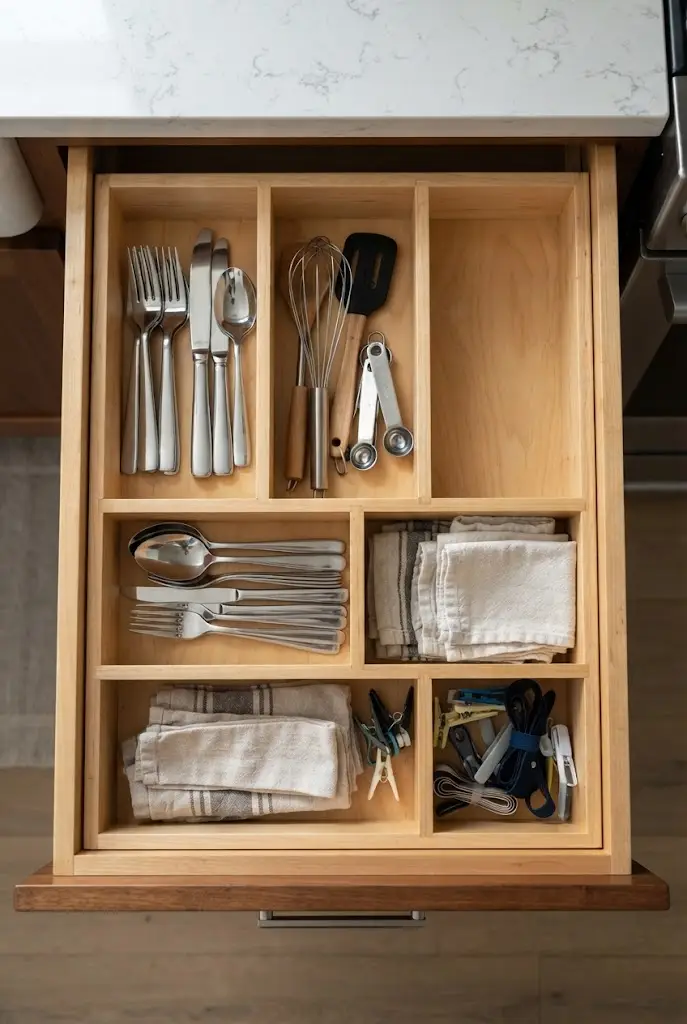
Tiny drawers become messy quickly when everything floats around inside.
Dividers create clear sections for cutlery, tools, clips, towels, and other small items.
Do not create more sections than you need.
Simple categories work better than overly complicated systems.
The easier your storage is to maintain, the more likely it is to stay organized.
18. Store Items Close to Where You Use Them
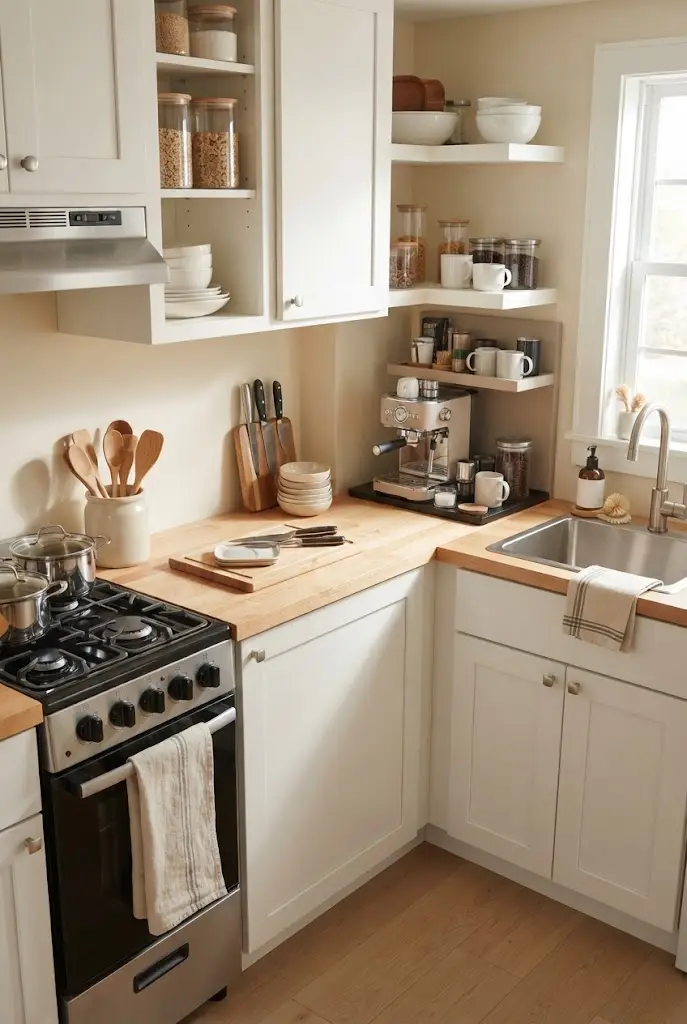
Place your kitchen tools according to function.
Keep cooking utensils near the stove.
Store dishes near the area where you plate food.
Place coffee supplies beside the coffee maker.
Keep cleaning products near the sink.
This reduces unnecessary movement and makes a small kitchen feel more efficient.
You do not need more square footage when everything is already where your hand naturally reaches for it.
19. Keep Your Most Attractive Items Visible
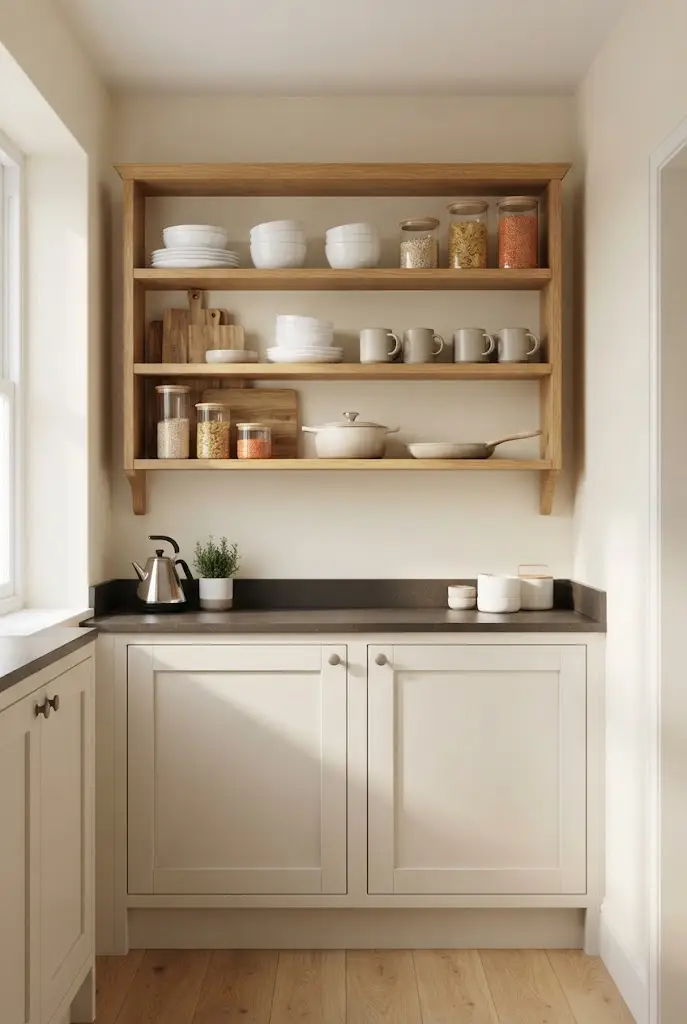
Open storage works best when you are selective.
Display things that already look good.
White dishes, glass jars, wooden boards, neutral mugs, and matching cookware can become part of the decor.
Hide bright packaging, cleaning products, plastic bags, and miscellaneous supplies inside cabinets or baskets.
This balance lets you use visible storage without creating visual clutter.
20. Use One Consistent Color Palette
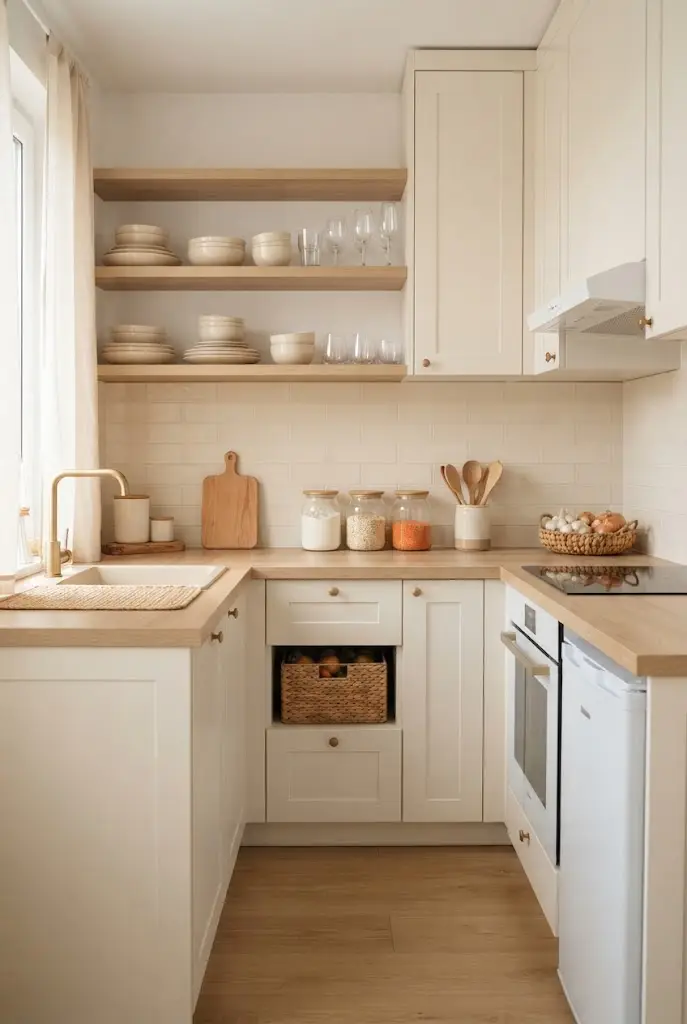
Storage can look chaotic when every container is a different color.
Choose one simple palette.
Clear containers, white dishes, warm wood, glass, and natural baskets work well together.
You do not need everything to match perfectly.
Repeating a few colors and materials is enough to make the kitchen feel more connected.
21. Keep the Refrigerator Exterior Simple
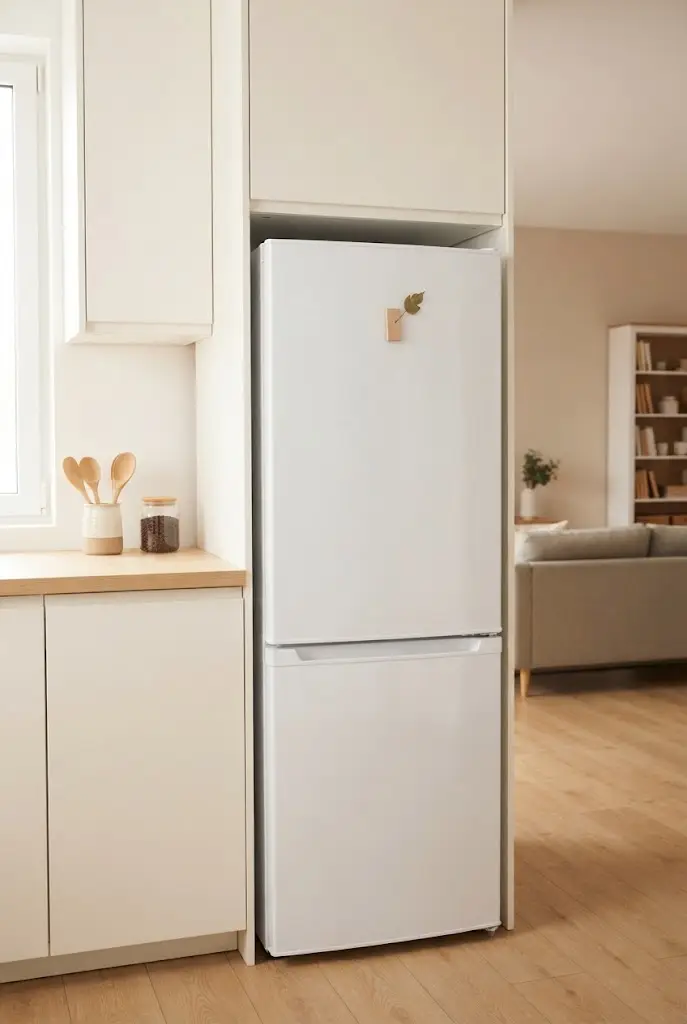
The refrigerator can quickly become one of the busiest surfaces in a studio apartment.
Magnets, notes, receipts, menus, photos, and reminders can make the entire kitchen look cluttered.
Keep only what you actually need.
Move important paperwork into a drawer, folder, or wall organizer.
A cleaner refrigerator front can make a surprisingly big difference because it is often one of the largest surfaces in the kitchen.
22. Create a Hidden Cleaning Zone
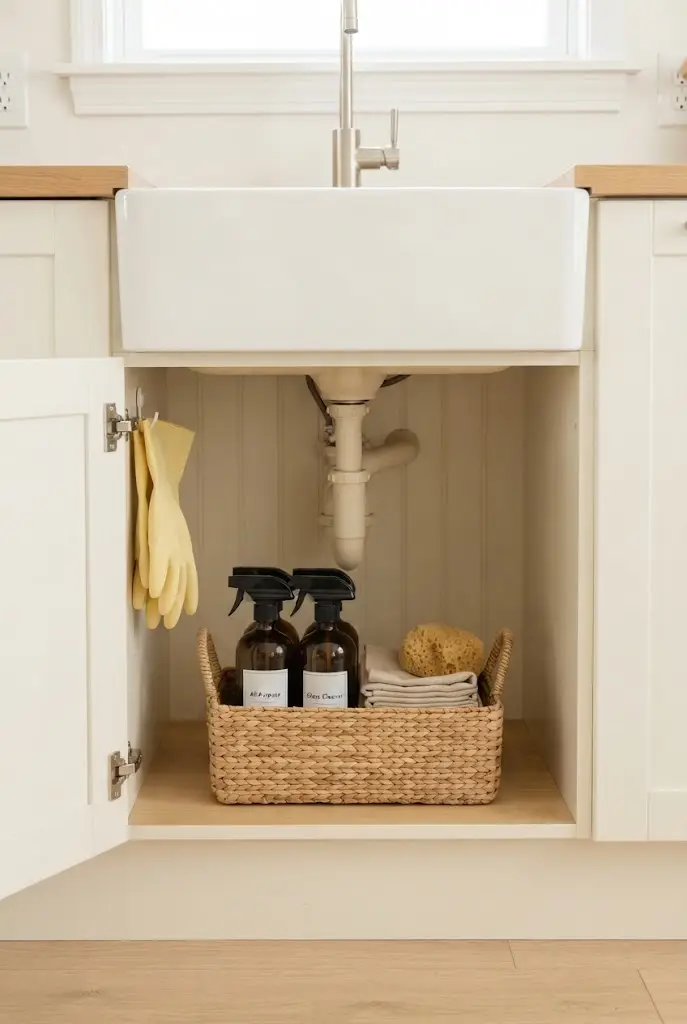
Cleaning products rarely improve the look of a kitchen.
Keep them together under the sink or inside one cabinet.
Use a small basket to hold sprays, cloths, sponges, and gloves.
When everything is grouped together, cleaning becomes easier and your visible surfaces stay clear.
23. Avoid Filling Every Open Shelf
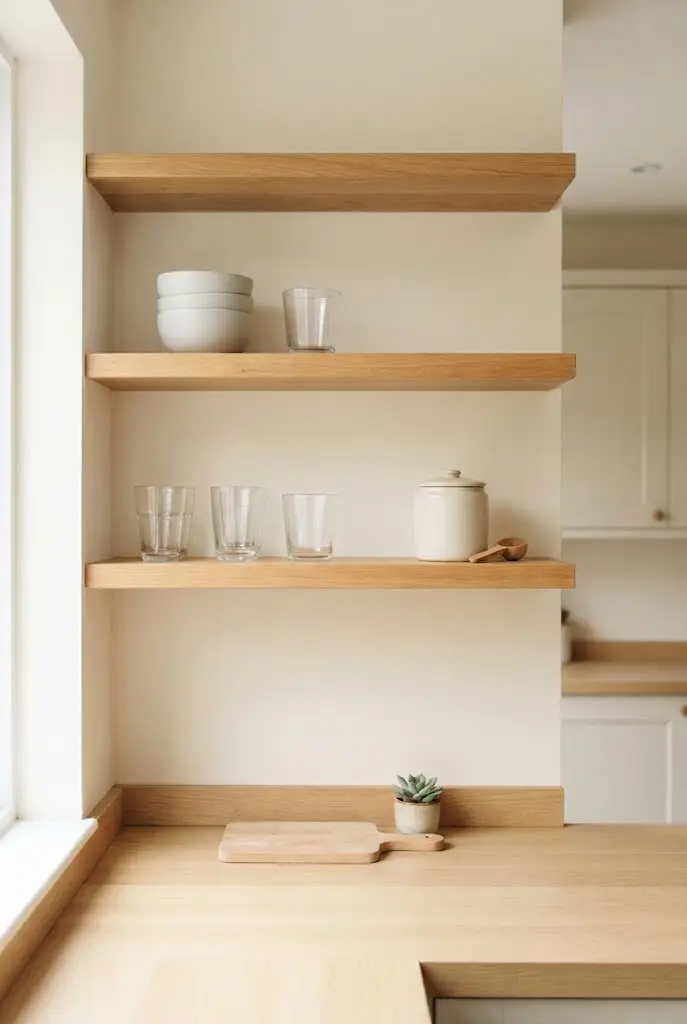
An empty section of shelf is not wasted space.
It gives the kitchen breathing room.
Instead of filling every inch, create small groups.
Stack several bowls.
Add a few glasses.
Place one jar beside them.
Then leave some open space before the next group.
This simple styling trick makes open shelving feel intentional instead of overloaded.
24. Keep Everyday Items at Eye Level
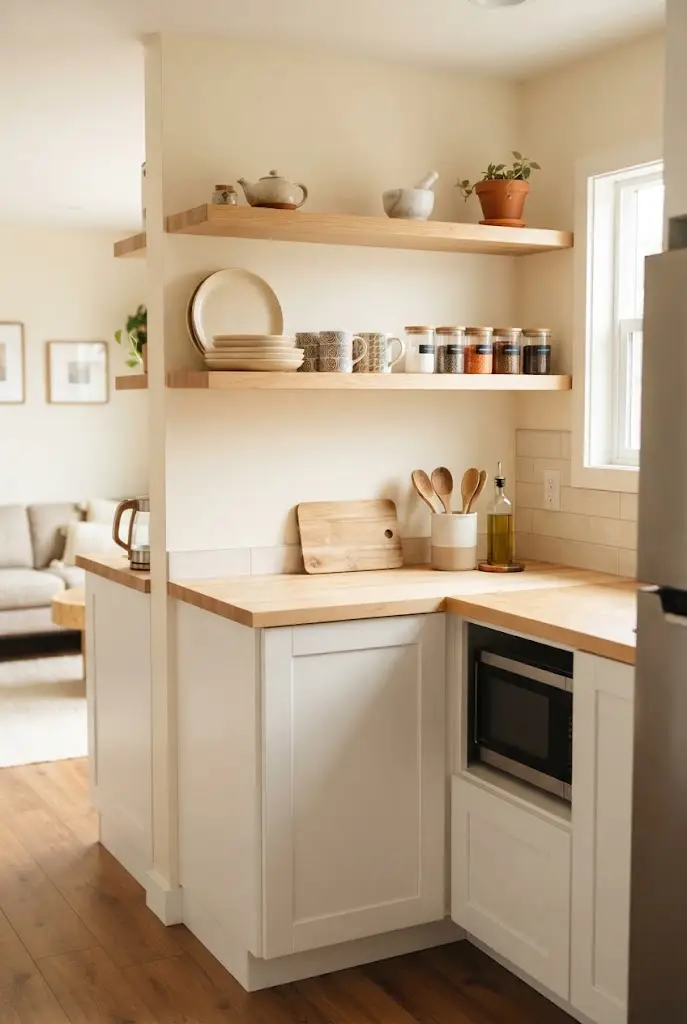
Frequently used items should be easy to reach.
Put them on your most accessible shelves.
Move occasional items higher or lower.
This prevents you from constantly moving things around to reach what you need.
The result is a storage system that works with your routine rather than against it.
25. Use the Space Above the Refrigerator
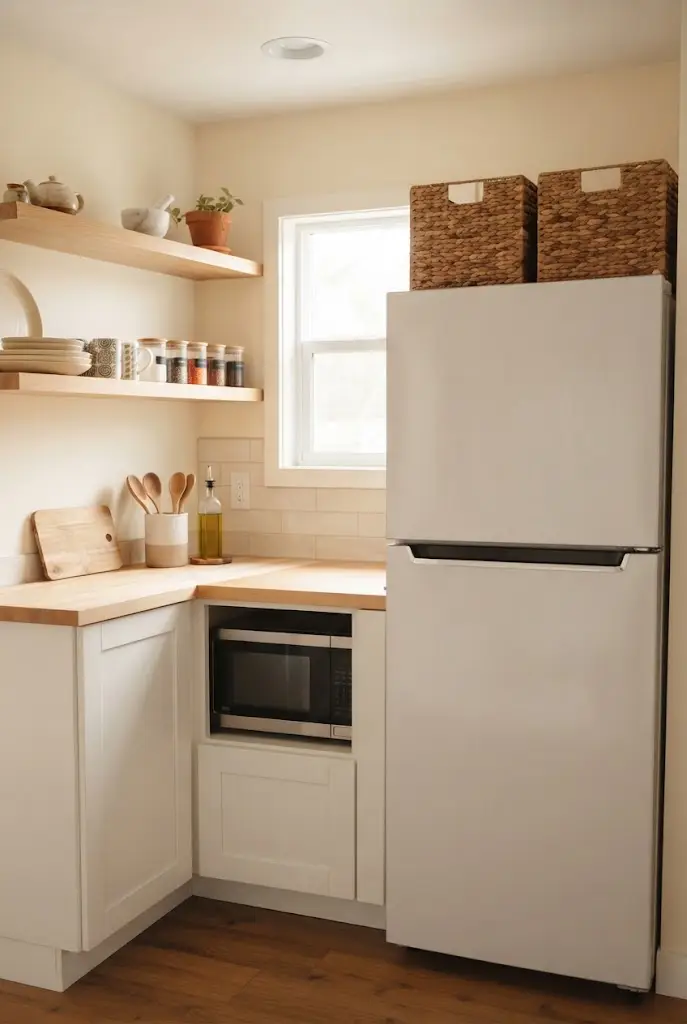
The area above the refrigerator is often overlooked.
A basket or attractive storage box can hold kitchen linens, backup supplies, serving pieces, or foods you rarely use.
If the area is open, keep the storage visually simple.
One or two matching containers will look much cleaner than several loose items.
26. Create a Tiny Pantry Zone
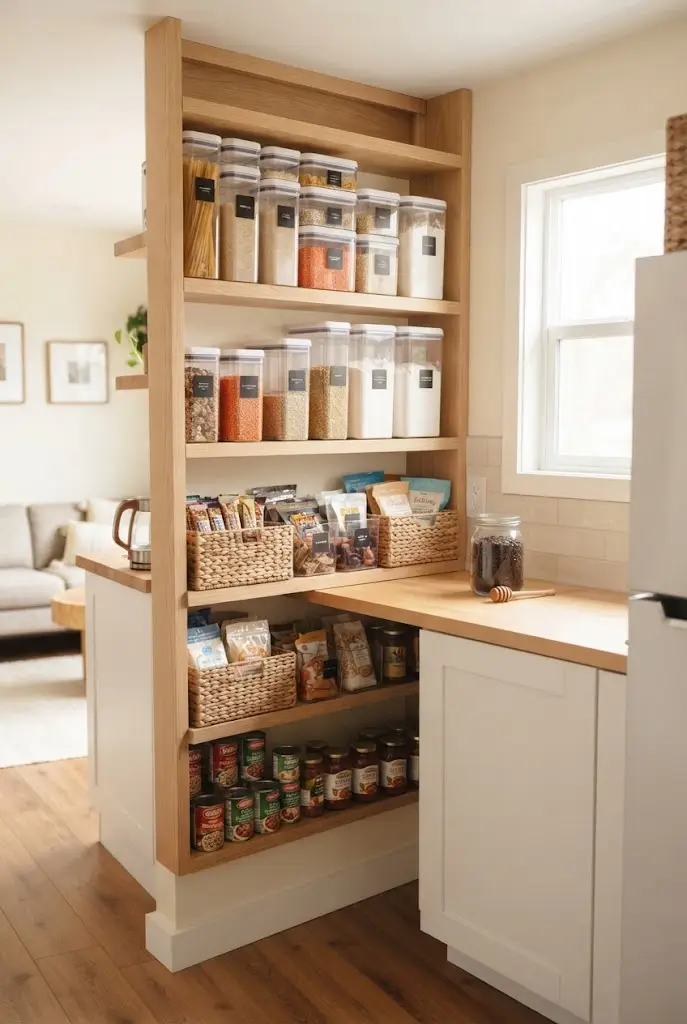
Even if you do not have a pantry, you can create one.
Choose one cabinet, shelf unit, or rolling cart and make it the dedicated food storage area.
Keeping pantry items together prevents groceries from spreading throughout the kitchen.
Use simple categories so you can quickly see what you have.
A defined pantry zone can make even a tiny kitchenette feel much more organized.
27. Store Less on the Floor
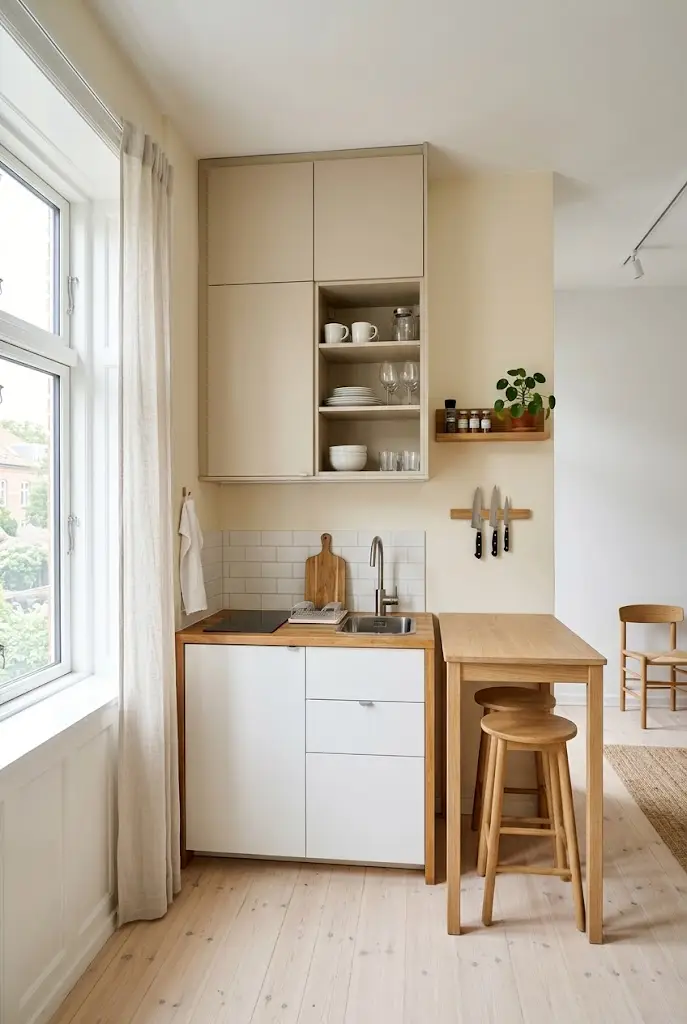
Floor space matters enormously in a micro studio.
Avoid filling it with trash cans, storage boxes, extra stools, and baskets if those items could live somewhere else.
Use wall storage and cabinetry first.
The more visible floor you preserve, the more spacious the entire apartment will feel.
28. Choose a Smaller Trash Bin
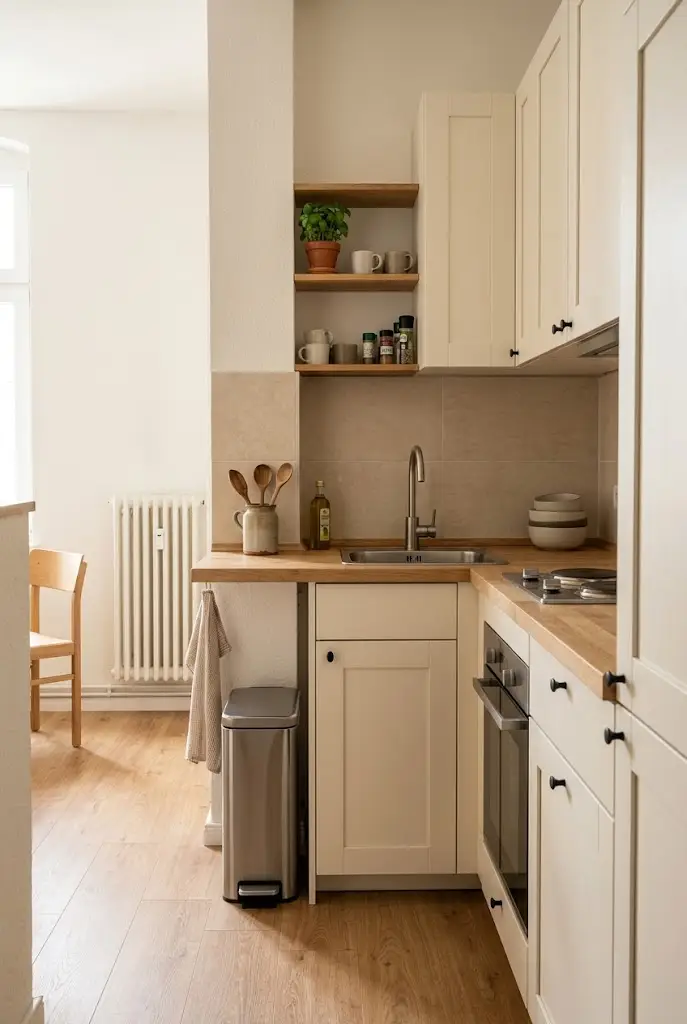
A large trash can can dominate a tiny kitchen.
Choose a slim model that fits beside a cabinet or inside one.
If your household allows it, a smaller bin emptied more frequently can save valuable space.
Look for a shape that fits your layout instead of simply buying the standard size.
29. Keep Only the Dishes You Actually Need
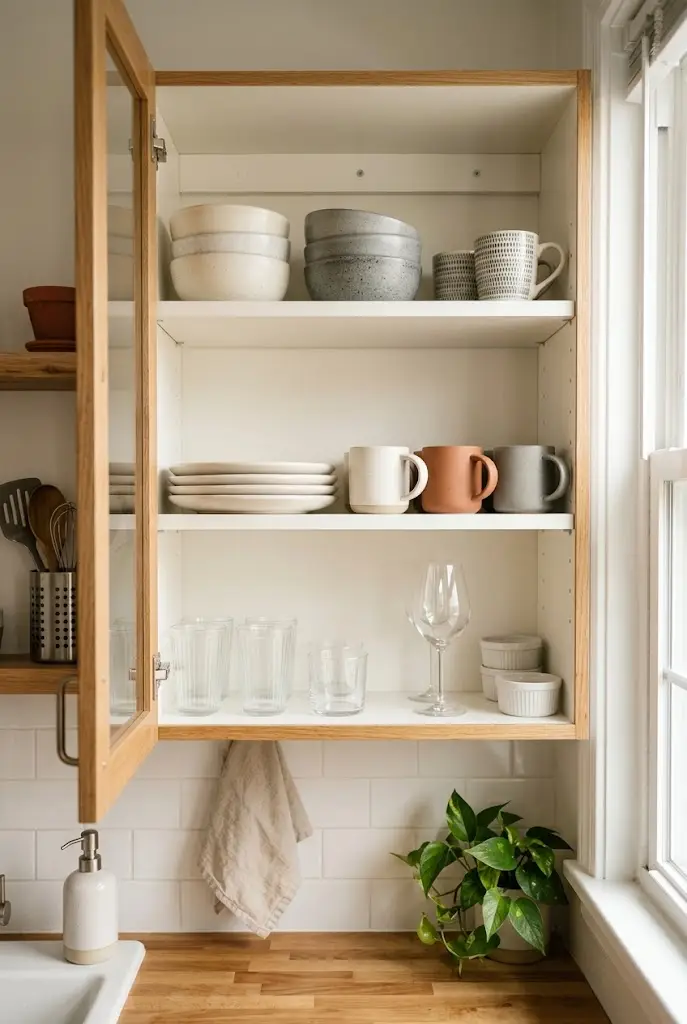
You may not need twelve plates when you live alone in a 200 square foot apartment.
Keep enough dishes for your real routine plus a few extras for guests.
Donate or store the rest.
The same applies to mugs, glasses, bowls, and cutlery.
Reducing duplicates can free an entire cabinet shelf.
30. Edit Your Kitchen Tools Regularly
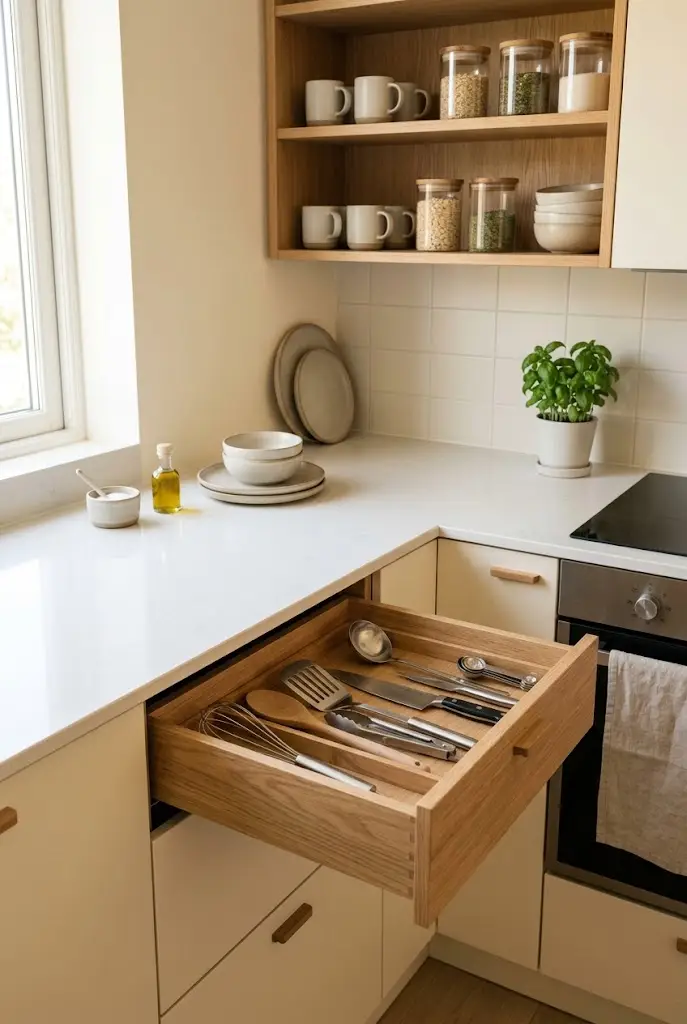
Tiny kitchens have very little room for tools you never use.
Look through your drawers every few months.
Remove duplicate utensils, broken gadgets, unused appliances, and containers without matching lids.
In my experience, decluttering kitchen tools often creates more useful storage than buying another organizer.
You cannot organize unlimited belongings into a limited space.
Sometimes the best storage solution is simply keeping less.
How to Organize a Small Studio Kitchen
Start with function instead of appearance.
Think about what you use every morning, then consider what you reach for when cooking dinner.
Keep those everyday items within easy reach. Move occasional items higher, lower, or farther into cabinets where they will not take up valuable space.
Next, clear your counters and decide what truly needs to stay visible.
Then look for overlooked areas, such as cabinet doors, wall space, and the tops of cabinets, where you can add extra storage.
The best Small Kitchen Studio Apartment Ideas should make your daily routine easier without creating a complicated system that takes constant effort to maintain.
What Should Stay on a Tiny Kitchen Counter?
Ideally, keep only the things you use regularly.
Leave out appliances you use every day, along with a small container of cooking utensils or a cutting board if they are part of your routine.
Everything else should have a designated place.
This does not mean your kitchen needs to look completely empty.
The goal is simply to keep your counters useful and easy to clean.
A Small Kitchen Studio Apartment feels more spacious when the work surfaces are clear enough to actually prepare meals.
How to Add Storage Without Making It Look Smaller
Start with hidden and vertical storage.
Add shelf risers inside cabinets to create another level for dishes and containers. Use the backs of cabinet doors for small tools, take advantage of wall space, and store less frequently used items higher up.
Matching baskets and simple containers can also make open storage look more organized.
At the same time, avoid filling every available space with organizers.
Too many small bins and containers can make a tiny kitchen look even busier. A few larger storage zones often create a cleaner and more spacious appearance.
Make Storage Less Visible
A Small Kitchen Studio Apartment does not always need fewer things.
It simply needs fewer things on display.
Keep everyday essentials convenient, group similar items together, and make use of overlooked walls, cabinets, and drawers.
Move rarely used appliances away from the counter and hide unattractive food packaging whenever possible.
Most importantly, leave a little open space wherever you can.
When your counters stay clear and your storage has a purpose, even a tiny studio kitchen can hold much more without looking crowded.
Community
Join the conversation
Add a useful idea, ask a specific question, or share what worked in your space. Every comment is reviewed before it appears.