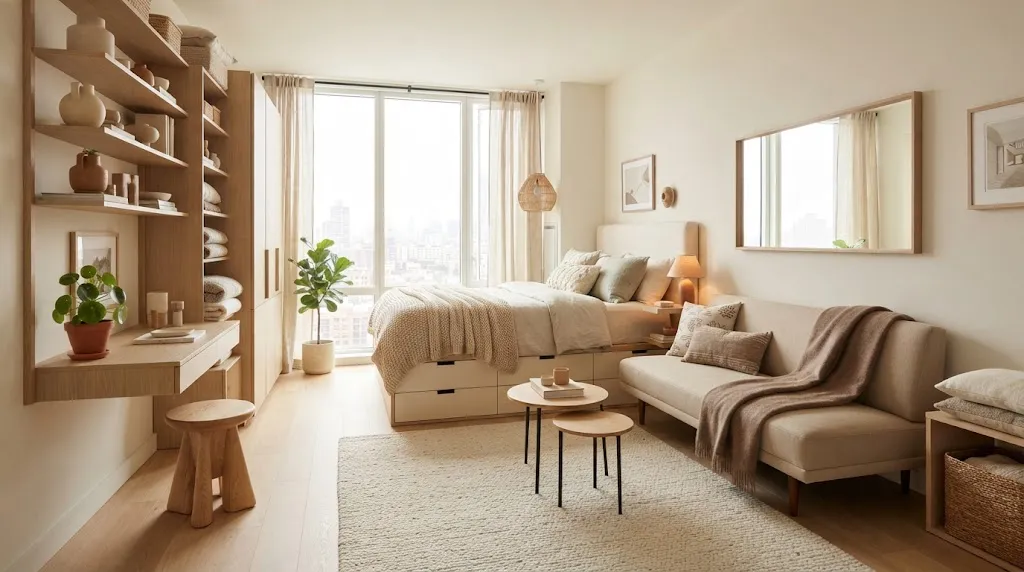
Living in a micro studio apartment means making a lot happen in a very small amount of space. Your bedroom, living room, kitchen, dining area, and workspace may all share the same few hundred square feet. Without a smart layout, even a beautiful apartment can quickly feel crowded.
The good news is that a tiny home does not have to feel uncomfortable. The right furniture, storage solutions, room arrangement, and decorating choices can make a micro studio feel surprisingly open and functional.
These 16 micro studio apartment ideas focus on the biggest problems that come with small space living. You will find clever ways to create separate zones, add storage without taking over the floor, choose furniture that works harder, and make your apartment feel more spacious without adding a single square foot.
1. Use Vertical Space
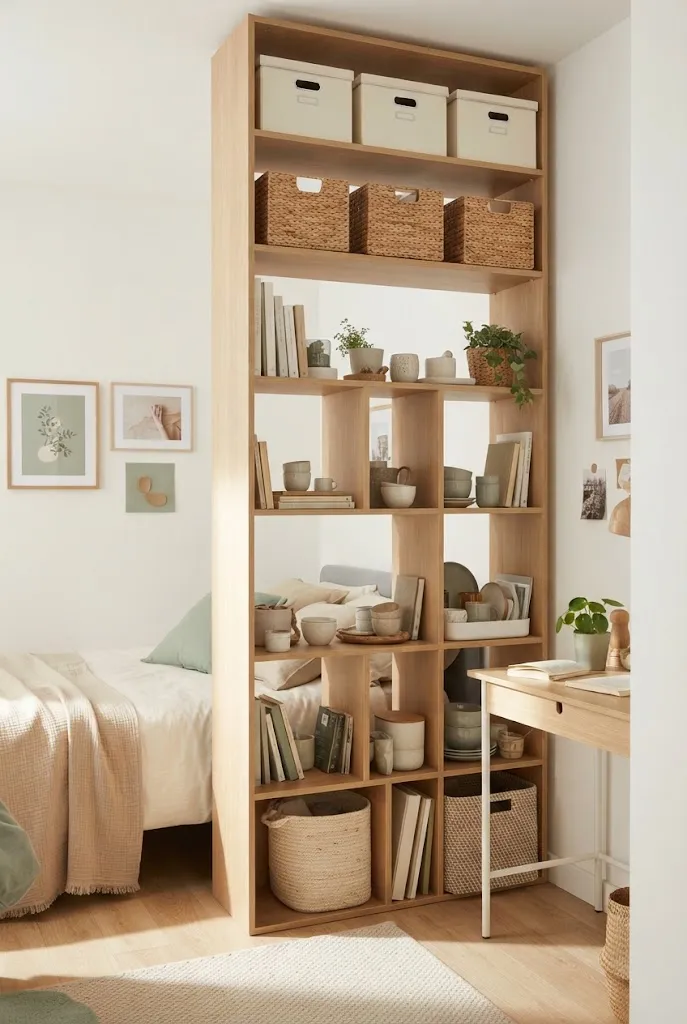
When you run out of floor space, your walls become valuable real estate.
Tall bookcases, floating shelves, wall mounted cabinets, pegboards, and narrow storage towers can give you plenty of storage without taking up much floor area.
A tall shelving unit beside your desk can hold books, baskets, office supplies, and decorative items. In the kitchen, shelves above the counter can store dishes and frequently used ingredients.
You can also use the space above your bed. A narrow shelf can hold books, artwork, or small baskets while keeping the floor completely clear.
The key is to use vertical storage without making the walls look overloaded. Leave some open areas between objects so the room still feels light.
2. Choose a Storage Bed
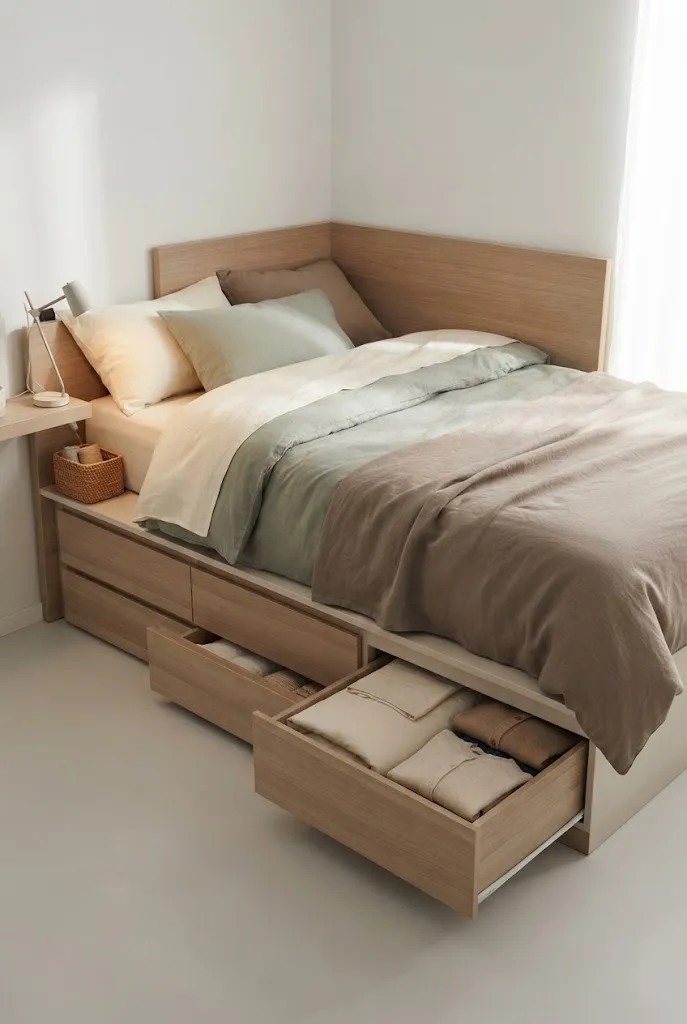
The bed usually takes up more floor space than almost any other piece of furniture in a micro studio. That makes the area underneath it too useful to ignore.
A storage bed with built in drawers can give you a place for clothing, extra bedding, shoes, towels, or seasonal belongings.
If you already have a regular bed, use low storage containers underneath it. Choose matching containers that slide easily underneath and label them so you can find things without pulling everything out.
For an especially tiny studio, consider a bed that can serve another purpose during the day. A raised platform can create storage underneath, while a sofa bed can combine your living and sleeping functions.
3. Try Foldable Furniture
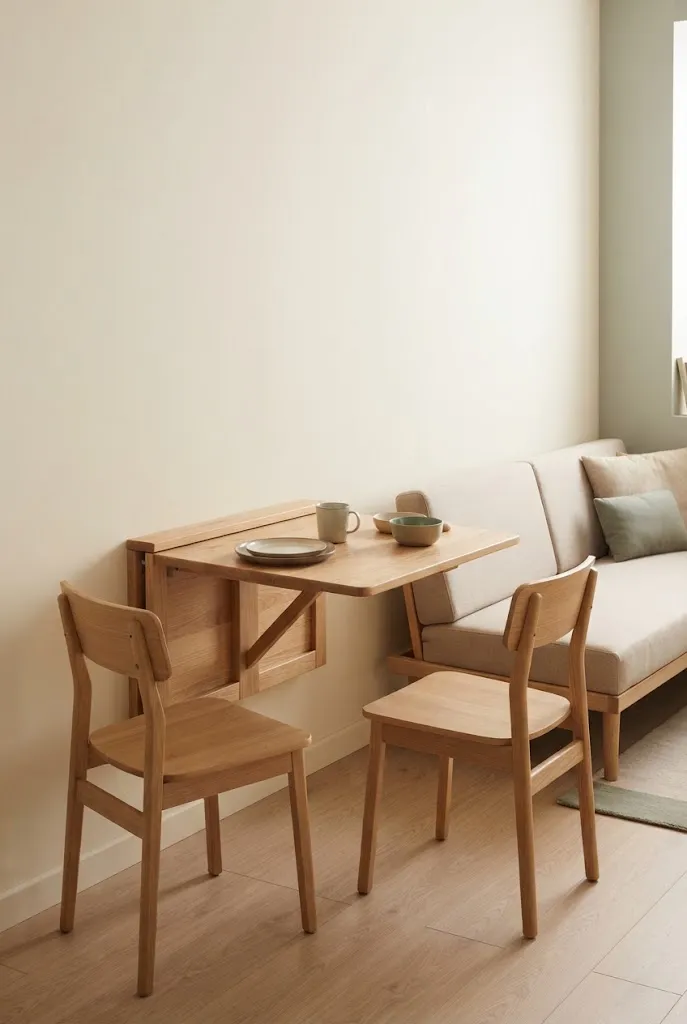
Furniture that disappears when you do not need it can make a huge difference in a micro apartment.
A wall mounted dining table can fold down when you need a place to eat or work and fold away afterward. Folding chairs can be stored against a wall, inside a closet, or behind a door.
You can also use a folding desk if you work from home but do not need a permanent office.
The goal is not to make every piece of furniture foldable. Choose this approach for items that take up valuable floor space but are only used for a few hours each day.
This gives you more flexibility without forcing you to live in an empty room.
4. Add Open Shelves
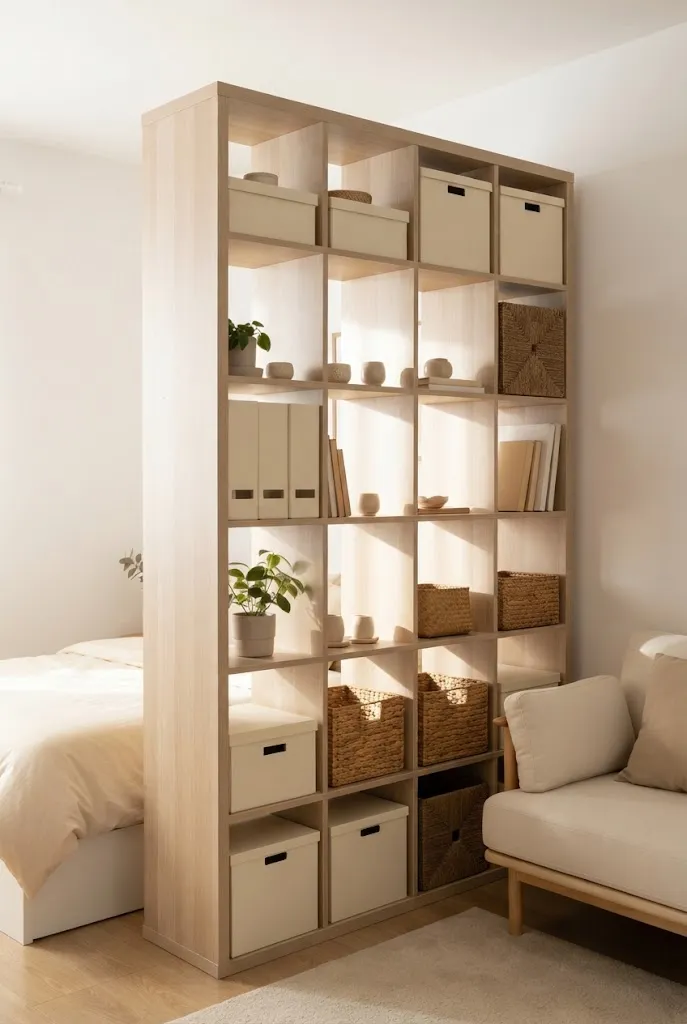
Open shelving can be useful when you need storage and separation at the same time.
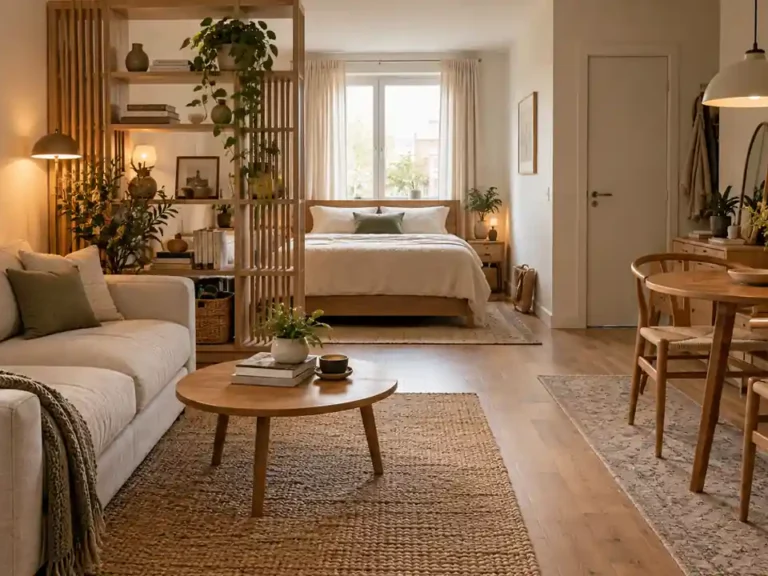
For example, an open shelf placed between the bed and sofa can create a visual boundary without completely blocking light. You can use the shelves for books, baskets, plants, and decorative objects.
Unlike a solid cabinet, an open shelf keeps the apartment visually connected. That can be especially helpful when natural light is limited.
Use baskets or boxes for smaller belongings so the shelves do not become cluttered. Keep some sections open to create breathing room.
5. Create a Dedicated Sleeping Area
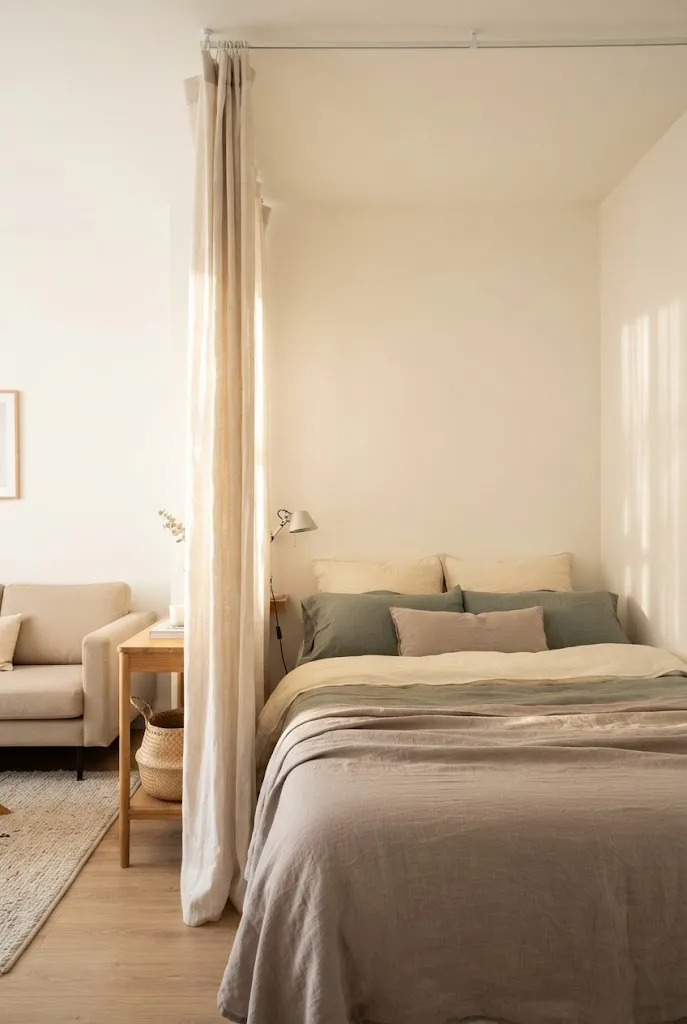
A bed sitting directly beside your sofa can make a micro studio feel like a bedroom and living room were simply pushed into the same space.
Creating even a small sleeping zone can make the apartment feel much more intentional.
You can use a curtain, open shelf, folding screen, low bookcase, or change in flooring to define the sleeping area.
Another simple option is to position the bed in the farthest corner from the entrance. This naturally gives the sleeping area some separation while leaving the main part of the apartment available for living and working.
Keep the bedroom area simple. A small bedside shelf mounted to the wall can replace a bulky nightstand.
6. Choose Slim Furniture
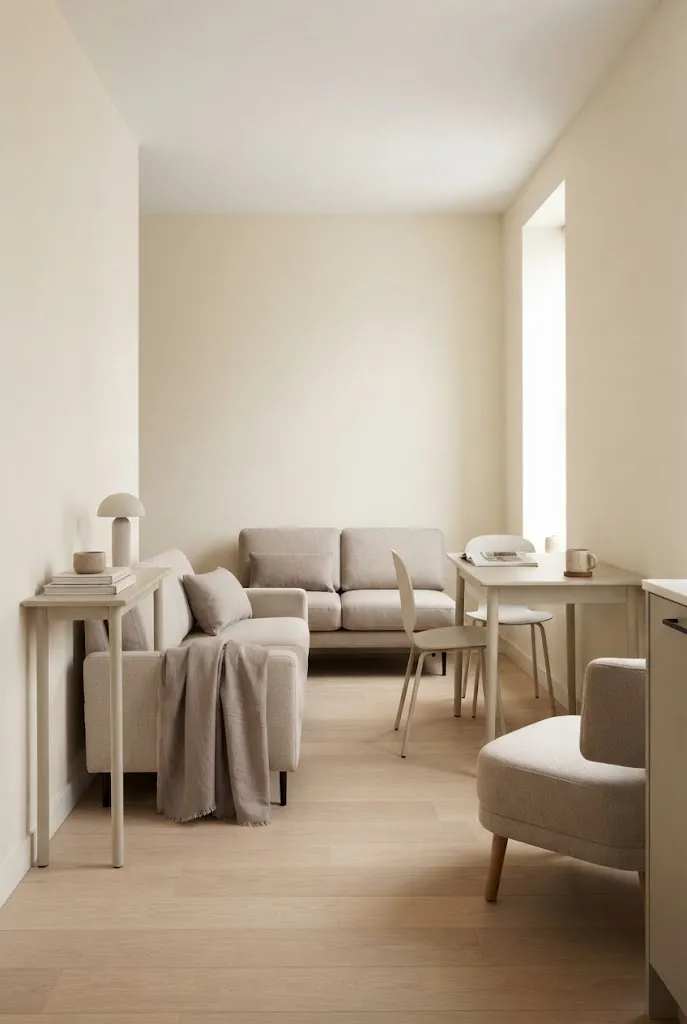
Large furniture can overwhelm a micro studio very quickly.
Instead of choosing the biggest sofa or widest dining table that fits, look for pieces with a slim profile. A narrow sofa can provide comfortable seating while leaving more room for movement.
A small console can work as an entryway surface, desk, dining table, or storage area depending on your needs.
Furniture with exposed legs can also help the room feel lighter because you can see more of the floor underneath it.
Before buying anything, measure the available space and the furniture itself. A piece that looks compact in a showroom can feel surprisingly large once it is inside a tiny apartment.
7. Install Wall Hooks
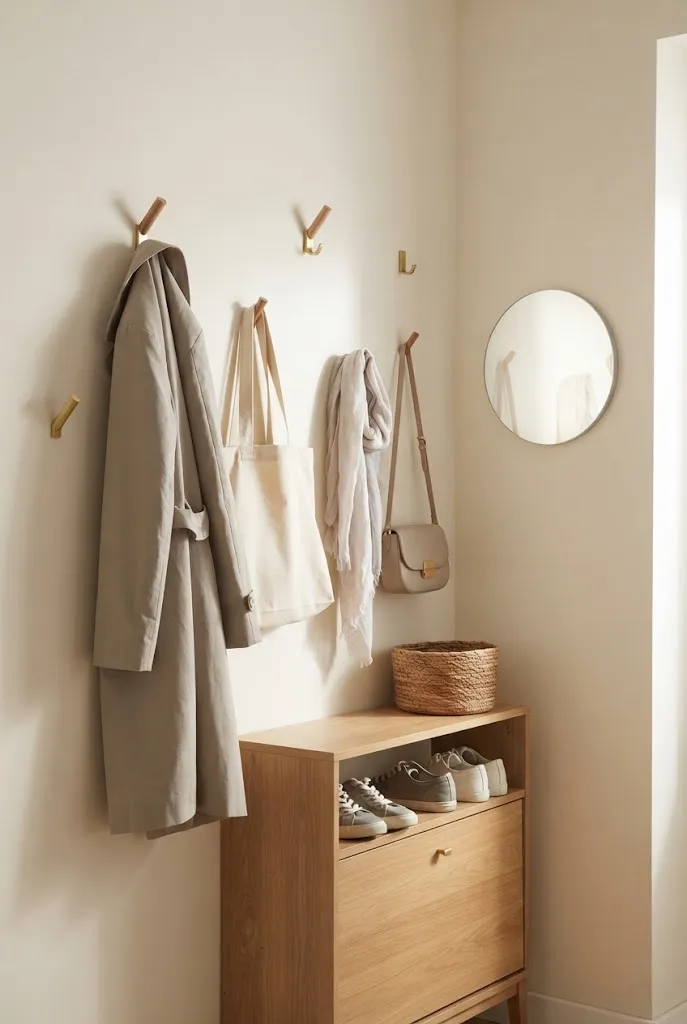
Hooks are one of the simplest ways to add storage without sacrificing floor space.
Install a row of hooks near the entrance for coats, bags, hats, and everyday accessories. You can also place hooks inside a closet or behind a door.
In the kitchen, hooks can hold towels, utensils, or mugs. Near your desk, they can hold headphones or a small bag.
The trick is to give every frequently used item a home. When belongings have a designated place, it becomes much easier to keep a micro apartment looking tidy.
Choose hooks that complement your decor so they feel like part of the room rather than an afterthought.
8. Choose Nesting Tables
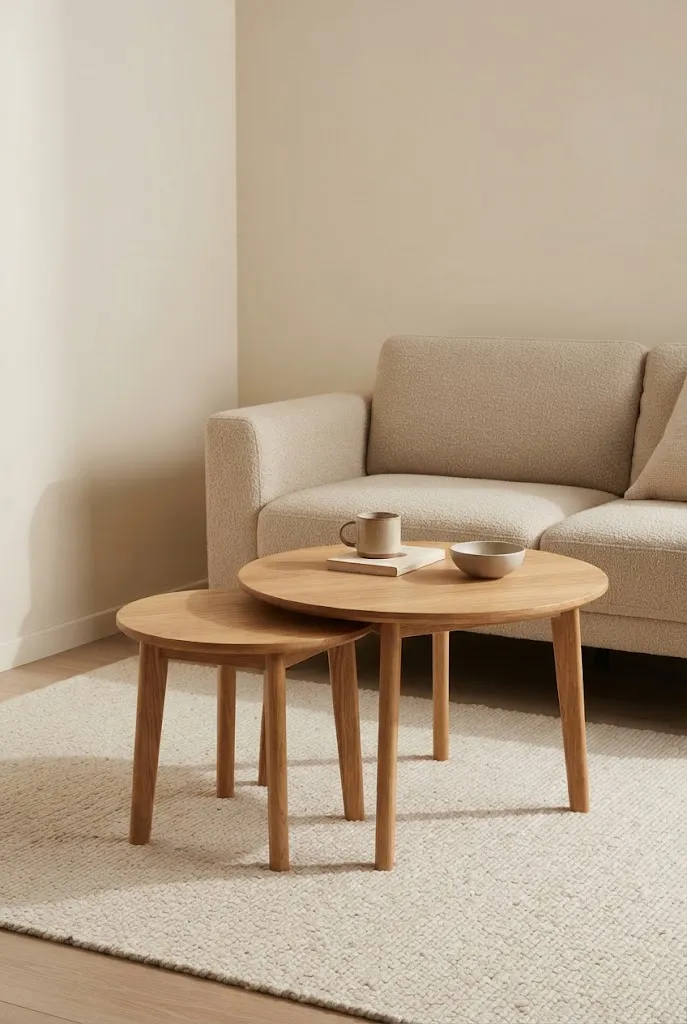
A set of nesting tables gives you multiple surfaces without permanently taking up the space of several tables.
Keep the smaller tables tucked beneath the largest one when you need more open floor space. Pull them apart when you are eating, working, or entertaining.
This works particularly well beside a small sofa. You can use the largest table for everyday needs and bring out the smaller ones when guests arrive.
Look for lightweight designs that are easy to move. Flexibility is more valuable than having a large permanent coffee table in a micro studio.
9. Use a Room Divider
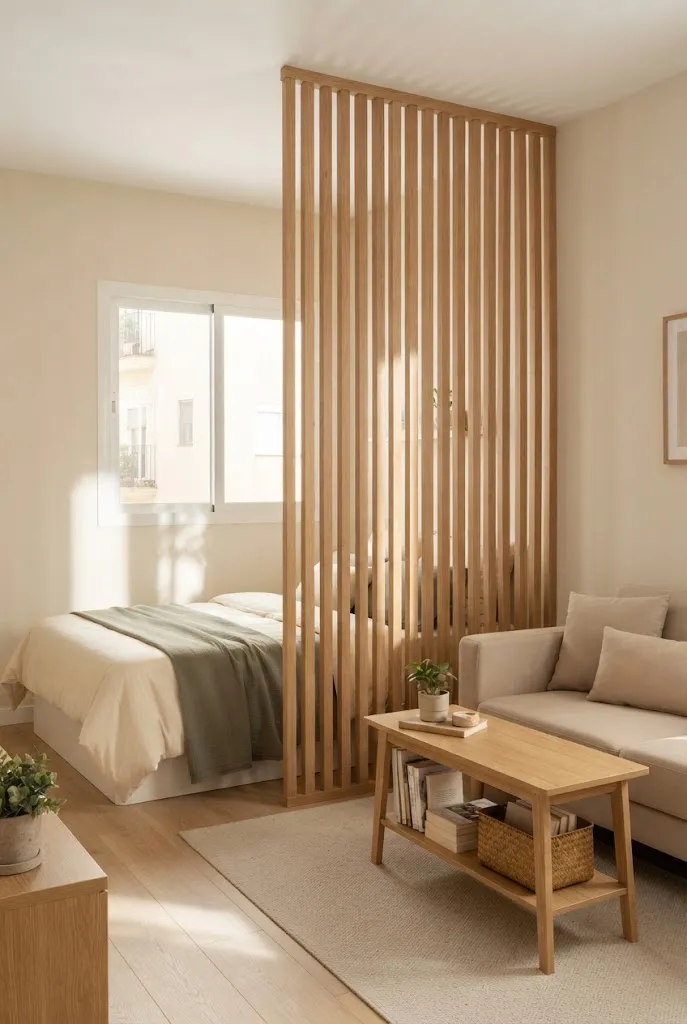
A room divider can solve one of the biggest problems in a studio apartment: the lack of visual separation.
You can use an open bookcase, curtain, folding screen, wooden slats, or even a tall plant arrangement.
If you use a solid divider, make sure it does not block too much natural light. An open shelf is often a better choice because it creates separation while allowing light to pass through.
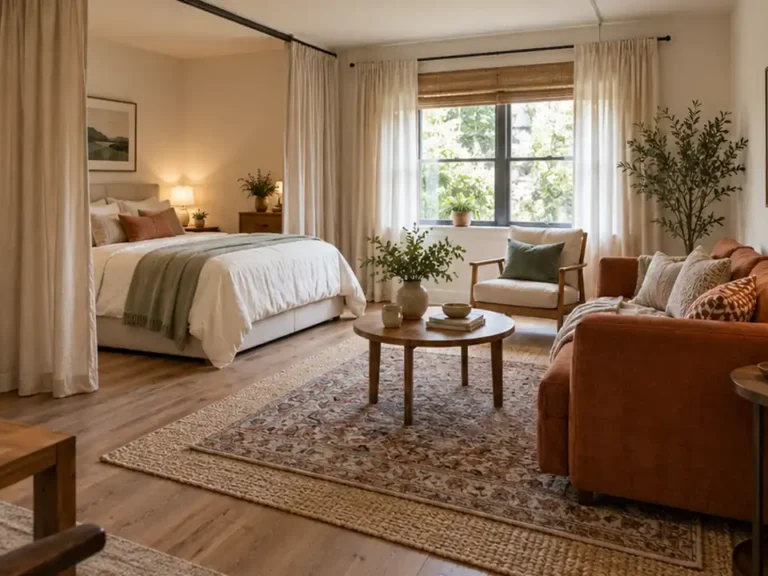
Curtains are another excellent option because they can completely hide the sleeping area when you want privacy and disappear when you want the apartment to feel more open.
Choose a divider based on how much privacy you actually need. A simple visual boundary may be enough for many people.
10. Make Corners Useful
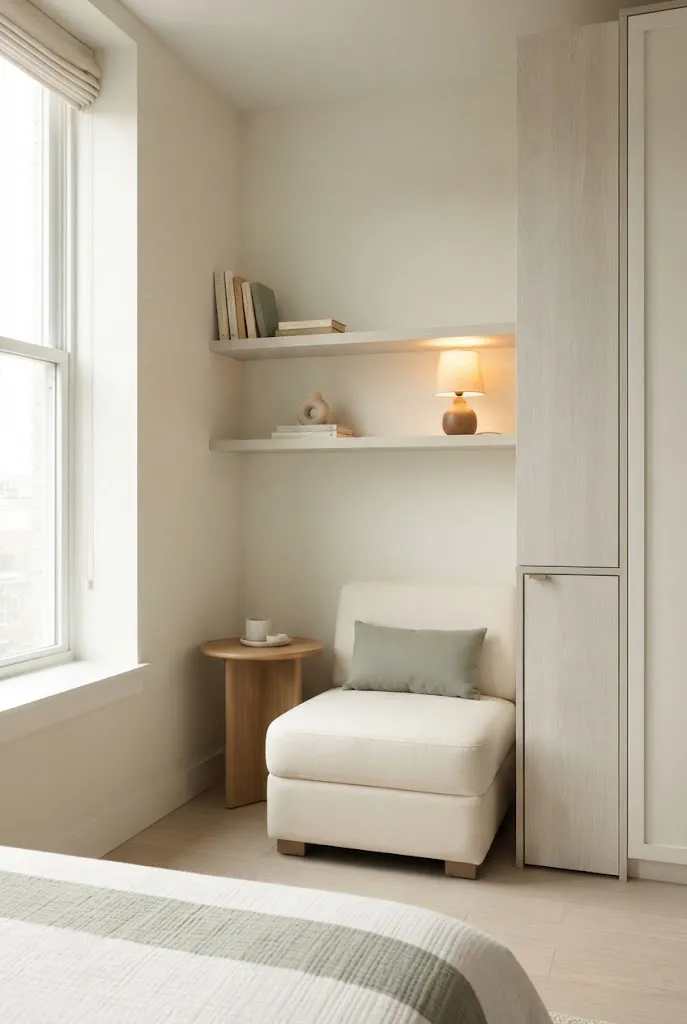
Tiny corners are easy to ignore, but they can become some of the most valuable areas in a micro studio.
A narrow corner beside a window can become a small workspace. An empty corner near the entrance can hold a slim shoe cabinet. A corner beside the kitchen can accommodate a tall storage unit.
You can also use corner shelves for books, plants, or decorative items.
Before deciding that a corner is too small to use, measure it carefully. A custom sized shelf or narrow piece of furniture can turn an awkward gap into useful storage.
The important thing is to avoid filling every corner simply because it is available. Choose pieces that solve a specific problem.
11. Use Under Sofa Storage
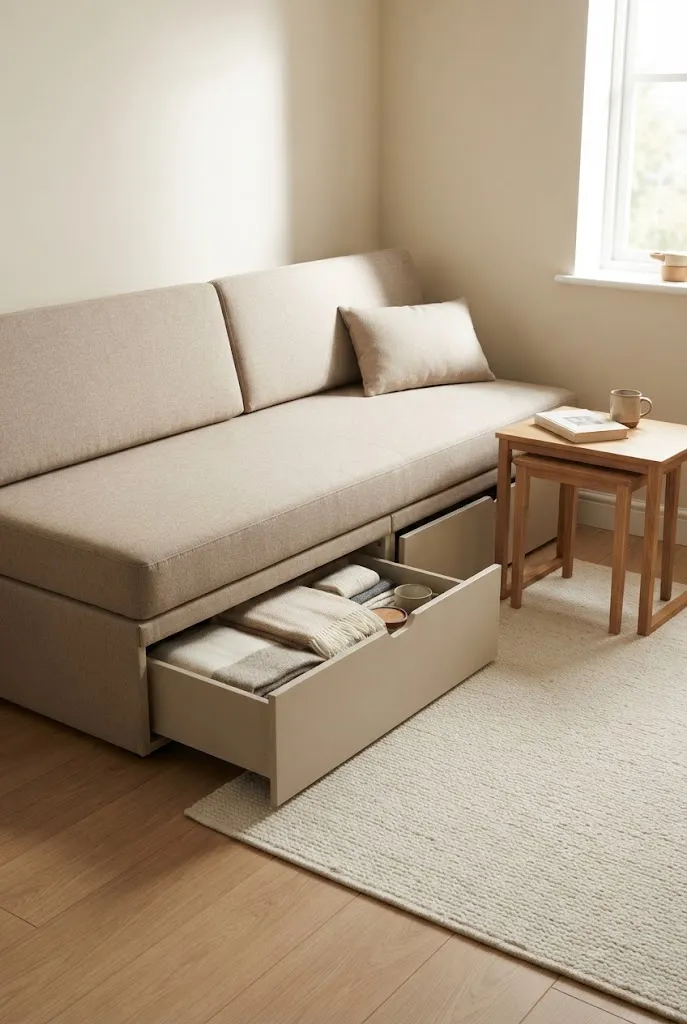
The area beneath your sofa can provide extra storage without requiring another cabinet.
If you are buying a new sofa, consider one with built in storage. If you already own one, low storage boxes may fit underneath it.
Use this hidden space for blankets, extra cushions, seasonal clothing, books, or other belongings you do not need every day.
Keep the containers organized so the space does not become a forgotten pile. Clear boxes or labeled baskets can make it much easier to find what you need.
In a micro apartment, hidden storage is especially valuable because it keeps everyday surfaces clear.
12. Hang Kitchen Rails
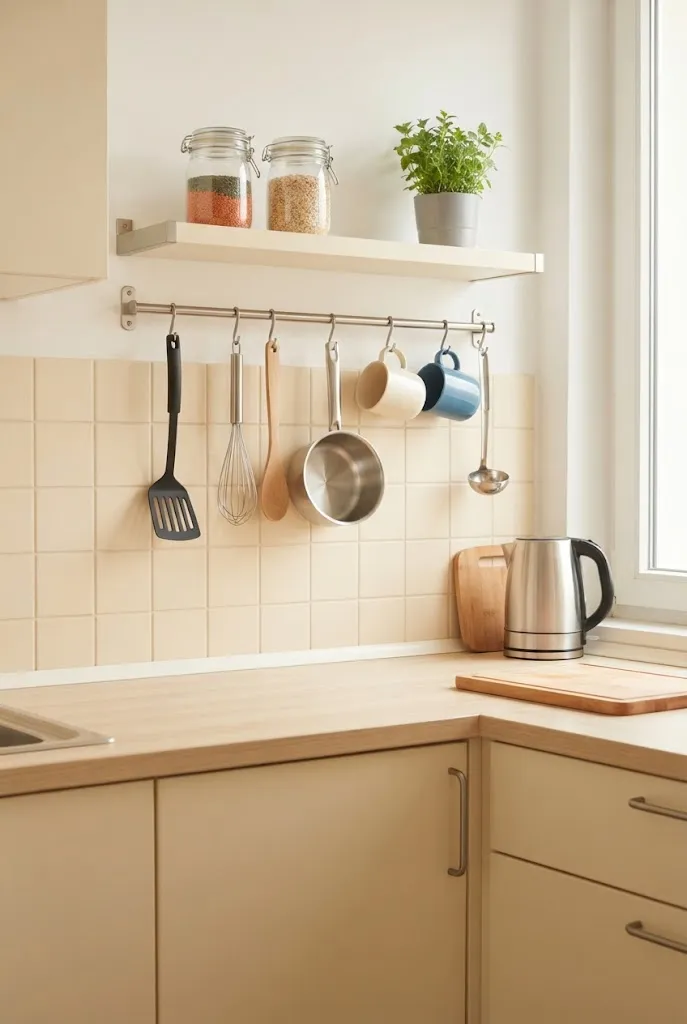
Kitchen counters become cluttered quickly when there is almost no extra cabinet space.
A wall rail can move frequently used items off the counter while keeping them within easy reach.
Use one for cooking utensils, mugs, small baskets, or kitchen towels. You can also install a narrow shelf above the counter for spices and other small items.
Be selective about what you display. Keeping only frequently used items on the rail will make the kitchen look organized rather than crowded.
If your kitchen has an unused wall beside the refrigerator or above a small counter, that area may be perfect for additional storage.
13. Add a Wall Desk
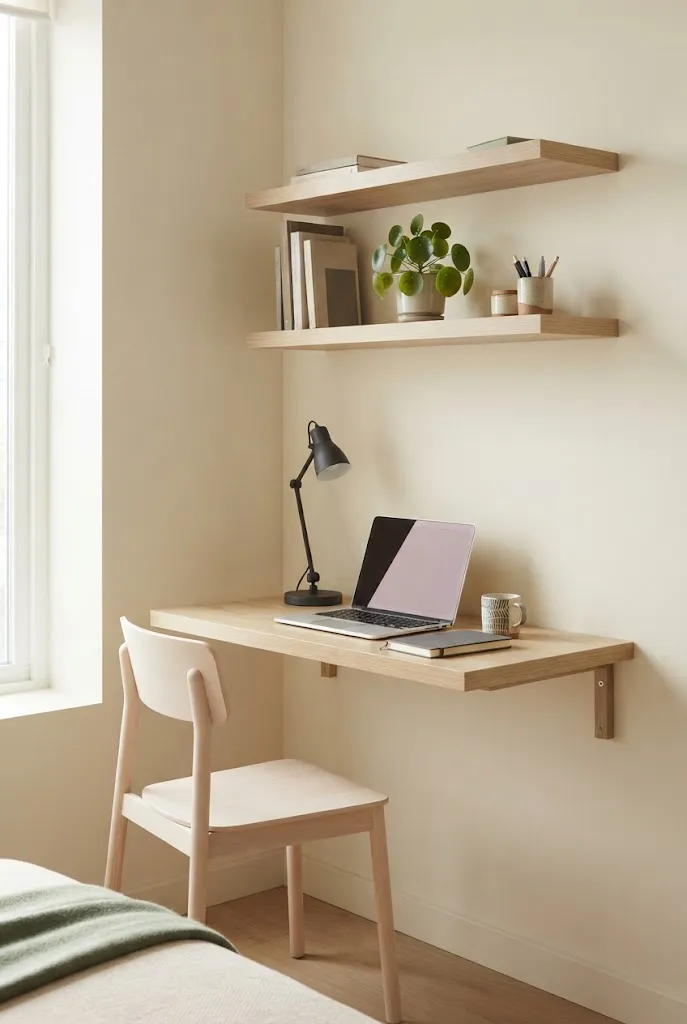
A traditional desk can take up a surprising amount of floor space in a tiny apartment.
A wall mounted desk offers a simpler alternative. It can create a dedicated workspace while using an area that might otherwise remain empty.
Place it near a window when possible so you can benefit from natural light. Add a small wall shelf above it for notebooks, chargers, and office supplies.
When choosing a chair, look for one that can slide completely underneath the desk when you are finished working.
If you only work occasionally, a fold down wall desk can be even more useful. It can disappear when you need the floor for another activity.
14. Use Mirrors Wisely
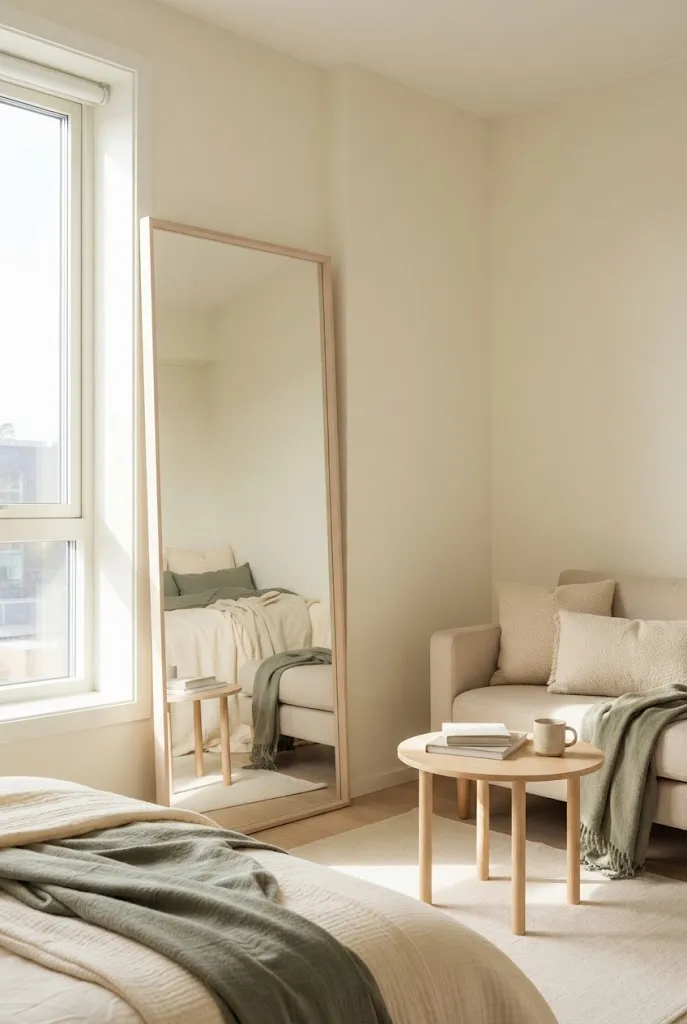
Mirrors can make a small apartment feel brighter and visually more spacious.
A large mirror placed near a window can reflect natural light throughout the room. A full length mirror near the entrance can also serve a practical purpose without requiring additional furniture.
You do not need mirrors on every wall. One strategically placed mirror can have more impact than several small ones.
Consider what the mirror will reflect before installing it. A mirror facing an attractive window, light colored wall, or well decorated part of the room can make the space feel more open.
15. Pick Multifunctional Pieces
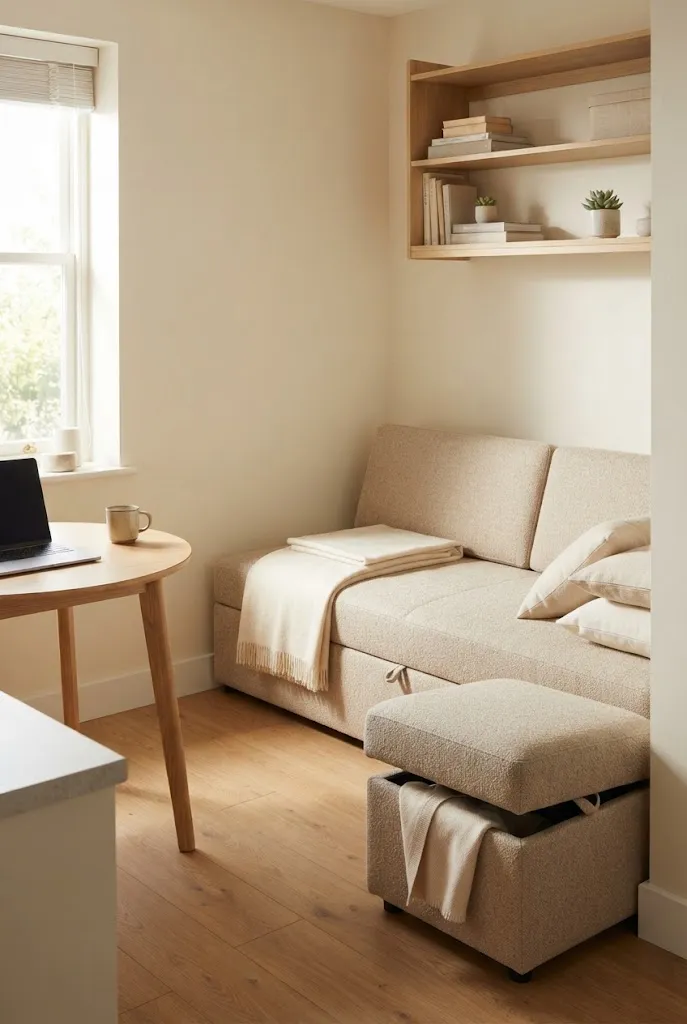
In a micro studio apartment, furniture needs to work harder.
An ottoman can provide seating, act as a footrest, and offer hidden storage. A sofa bed can become a sleeping area at night. A dining table can double as a workspace during the day.
Even a simple bench can provide seating while giving you storage underneath.
Before buying a piece, ask yourself whether it can solve more than one problem. This does not mean every object needs multiple functions, but your largest furniture pieces should earn the floor space they occupy.
Multifunctional furniture is especially useful when you regularly switch between working, relaxing, eating, and sleeping in the same room.
16. Keep the Layout Open
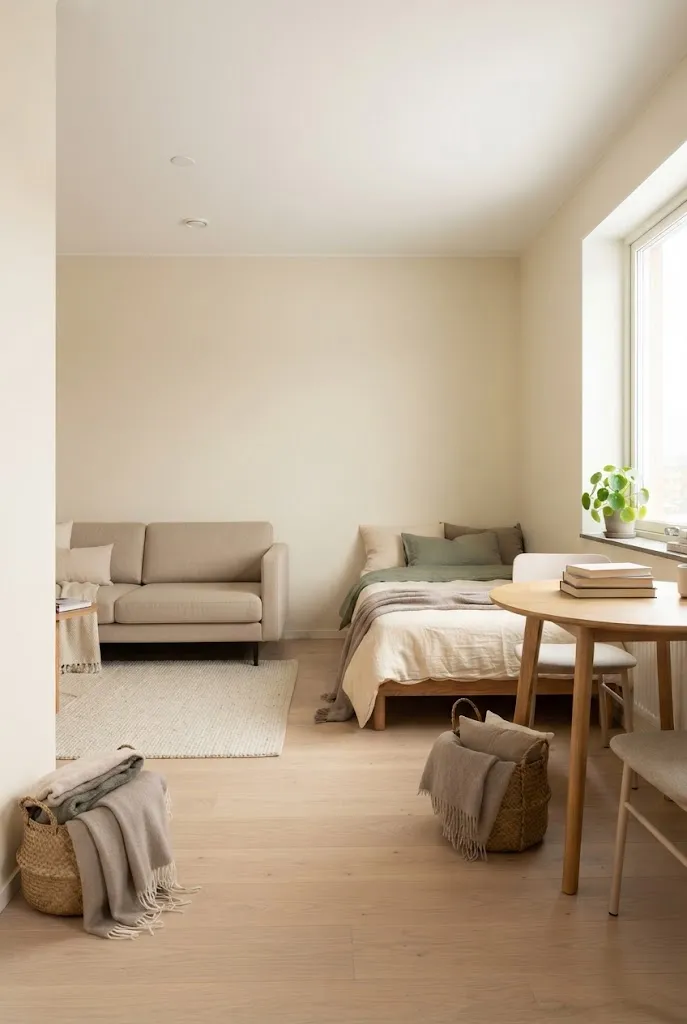
One of the easiest ways to make a micro studio feel larger is to avoid blocking the natural movement through the apartment.
Leave enough space between the entrance, kitchen, sofa, bed, and bathroom. Avoid placing large furniture directly in the middle of the room unless it has a clear purpose.
Try arranging your largest pieces around the edges of the apartment and keep the central area as open as possible.
This does not mean pushing everything against the walls. The goal is to create a comfortable path and enough visual breathing room.
A few inches can make a surprising difference in a tiny space, so experiment with different arrangements before settling on one.
Make Every Inch Count
A micro apartment works best when you stop thinking only about floor space.
Look at the areas that usually go unused:
- Above doors
- Under beds
- Under sofas
- Behind doors
- Inside cabinets
- Along narrow walls
- Inside corners
- Above kitchen counters
- Beside appliances
- Above desks
These areas can provide valuable storage without adding bulky furniture.
At the same time, avoid the temptation to fill every available gap. A tiny apartment needs some empty space to feel comfortable.
The goal is not to own more storage. It is to make the storage you already have work better.
Choose a Light Visual Palette
Color can influence how spacious a micro studio feels.
Light walls, soft neutrals, warm whites, pale wood, and gentle earthy tones can help create an airy appearance. This does not mean your apartment needs to be completely white.
You can add personality through bedding, rugs, artwork, cushions, plants, and smaller decorative pieces.
If you love darker colors, consider using them as accents rather than covering every surface. A dark sofa or feature wall can look beautiful when balanced with lighter surrounding elements.
Keeping a consistent color palette throughout the apartment can also make the different zones feel connected rather than visually fragmented.
Mistakes to Avoid in a Micro Studio
Even the best small space ideas can fail when the overall layout becomes too crowded.
Buying Oversized Furniture
Always measure before buying. A large sofa or bed can consume most of your available floor space.
Using Too Many Small Pieces
Several small cabinets and tables can sometimes make a room feel more cluttered than one well designed storage unit.
Blocking Natural Light
Avoid placing tall furniture directly in front of windows unless necessary. Natural light can make a tiny apartment feel much more open.
Ignoring Vertical Storage
If the floor is full, look at the walls. Shelves, hooks, rails, and tall cabinets can provide storage without taking away valuable walking space.
Filling Every Empty Area
Empty space is not wasted space. It helps your apartment feel calmer and easier to move around.
Creating Too Many Visual Barriers
Dividers can help define zones, but too many can make a small apartment feel chopped up. Use them selectively.
FAQs
How do you make a micro studio apartment feel bigger?
Keep the layout open, use multifunctional furniture, take advantage of vertical storage, and avoid oversized pieces. Mirrors and a consistent light color palette can also make the apartment feel brighter and more spacious.
What furniture works best in a micro studio apartment?
Look for furniture that is compact, flexible, and useful for more than one purpose. Storage beds, sofa beds, nesting tables, folding desks, storage ottomans, and slim shelving can all be useful.
How do you separate a bedroom in a micro studio?
You can create a bedroom zone with an open shelf, curtain, folding screen, wooden divider, or careful furniture placement. The best option depends on how much privacy you need and how much natural light the apartment receives.
How do you add storage to a very small studio?
Start with unused areas such as walls, corners, space under the bed, space beneath the sofa, and the backs of doors. Wall shelves, hooks, tall cabinets, storage beds, and hidden containers can add capacity without taking over the room.
What should you avoid in a micro studio apartment?
Avoid oversized furniture, excessive decoration, blocked windows, unnecessary storage units, and layouts that make it difficult to move around. Every major item should have a clear purpose.
Final Thoughts
A micro studio apartment may be small, but it does not have to feel limited. The best setup comes from using the space you already have more thoughtfully.
Start with the biggest problem in your apartment. If storage is the issue, look up and use hidden areas. If the room feels chaotic, create clear zones. If your furniture takes over the floor, replace a few large pieces with slimmer or multifunctional alternatives.
You do not need to use all 16 ideas at once. Choose the ones that fit your floor plan and lifestyle, then build from there.
With smart storage, flexible furniture, clear zones, and a little visual restraint, even a very small studio can become a comfortable home that feels organized, personal, and much more spacious than its actual size.
Community
Join the conversation
Add a useful idea, ask a specific question, or share what worked in your space. Every comment is reviewed before it appears.