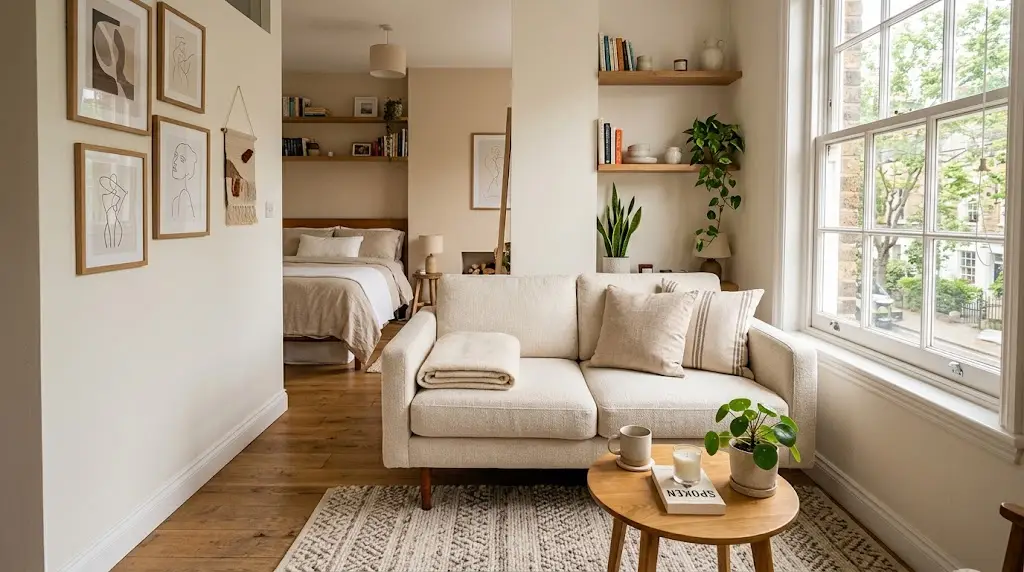
You find a gorgeous couch online. It looks soft, cozy, and perfect in the photos.
Then it arrives.
Suddenly, your studio feels like it has been swallowed by one giant piece of furniture.
The walkway is tighter. The coffee table barely fits. Your living area feels crowded, and somehow the whole apartment looks smaller than it did before.
The problem is not always that the couch is too big.
The real mistake is choosing a couch based on how it looks by itself instead of how it affects the space around it.
In a studio apartment, every piece of furniture becomes part of the bigger picture. Your sofa needs to give you a comfortable place to relax without visually taking over the room.
If you are searching for the right couch for studio apartment living, these ideas will help you create a space that feels cozy, stylish, and surprisingly open.
The Biggest Couch Mistake in a Tiny Living Space
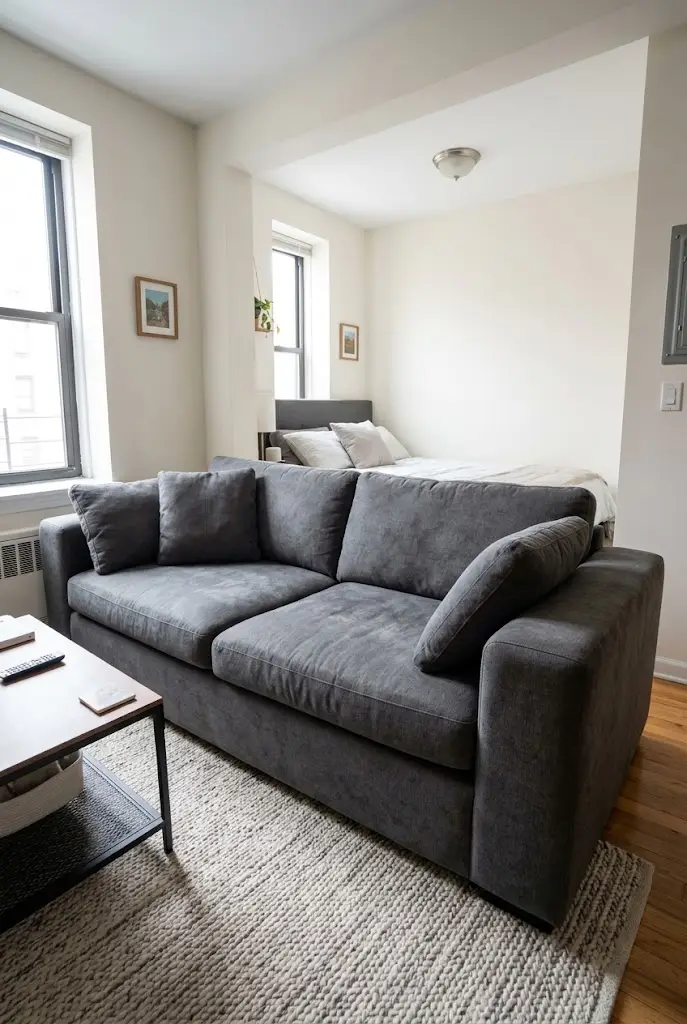
A common instinct is to push the largest sofa you can fit against the longest wall.
It sounds practical.
More seating should mean a better living room, right?
Not necessarily.
A bulky sofa can dominate a studio even when it technically fits. Deep seats, oversized arms, a tall back, and a heavy base all add visual weight.
You may still have enough floor space to walk around, but the room can feel crowded.
I’ve noticed that proportions matter just as much as measurements in small rooms. Two sofas with similar widths can look completely different when one has chunky arms and a solid base while the other has slim arms and visible legs.
That visual difference can change the entire apartment.
Choose a Sofa That Lets You See More Floor
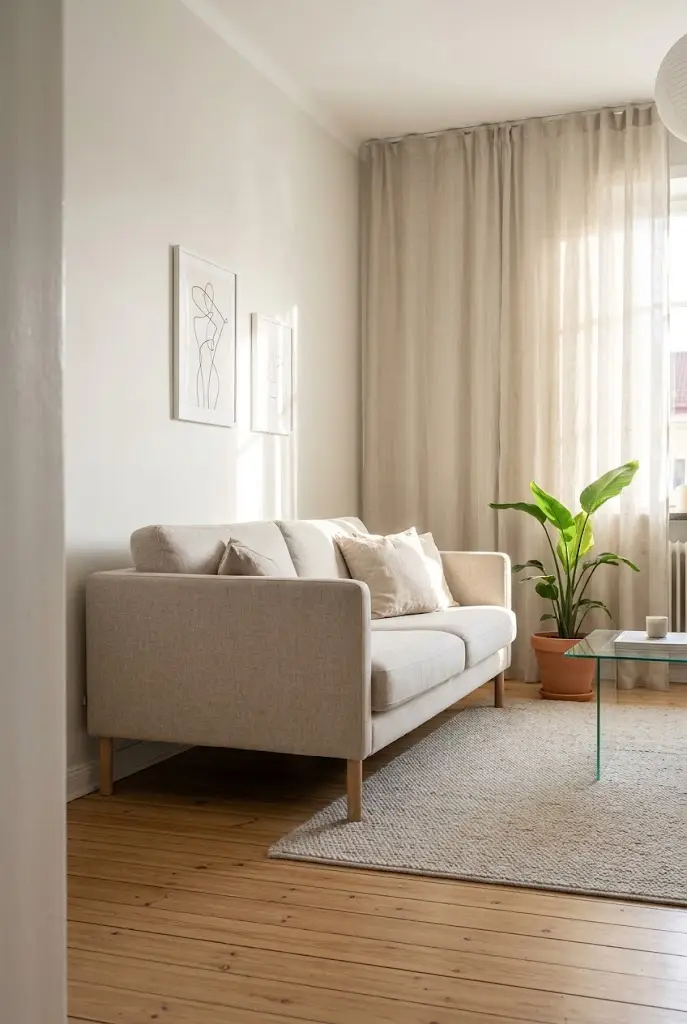
One of the simplest ways to make a small living area feel lighter is to choose furniture with raised legs.
Look for a sofa with slim wooden or metal legs and some visible space underneath.
That little strip of flooring matters.
When your eye can continue underneath furniture instead of stopping at a heavy base, the room often feels more open.
This works especially well in studios where the living room, bedroom, and dining area are visible at the same time.
Pair the sofa with a leggy side table or an airy coffee table and the effect becomes even stronger.
The goal is not to fill every available inch.
It is to let the apartment breathe.
Skip Those Huge Rolled Arms
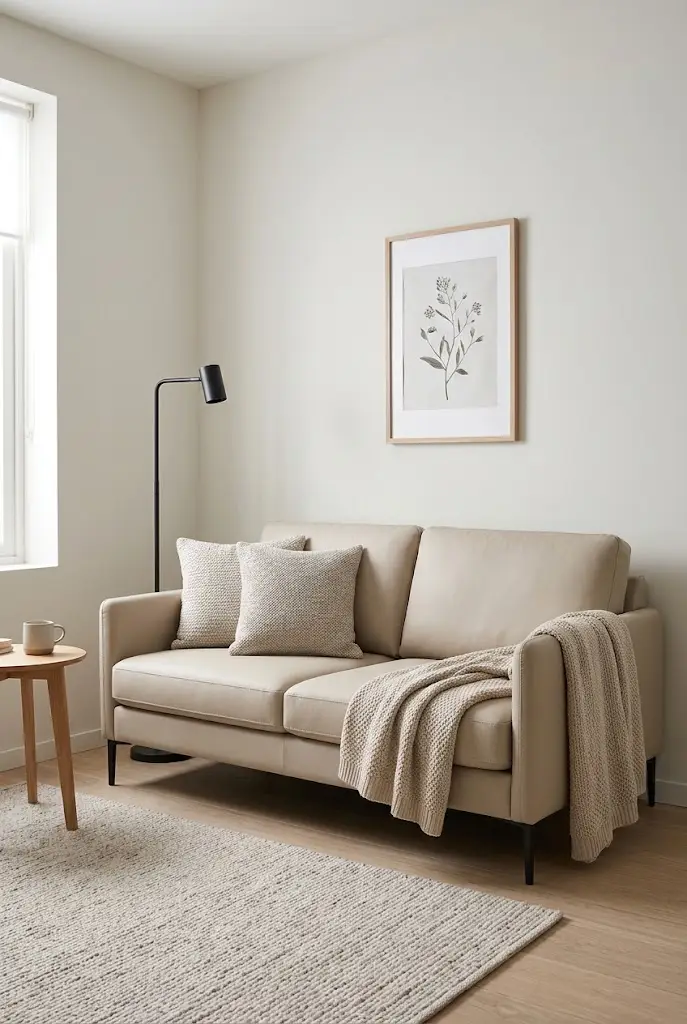
Those deep, oversized arms may look luxurious in a large living room, but they can waste valuable width in a studio.
Think about a 72 inch sofa.
If each arm takes up several inches, a surprising amount of its total width is doing nothing for your seating space.
Slim arms give you more usable cushion without demanding a larger footprint.
They also create a cleaner silhouette.
This is one of those details that is easy to overlook when shopping online. People naturally focus on fabric and color first, but arm shape can have a huge impact in a small room.
If two sofas offer similar seating, I would usually choose the visually lighter design for a compact studio.
A Loveseat Can Look Better Than a Full Size Sofa
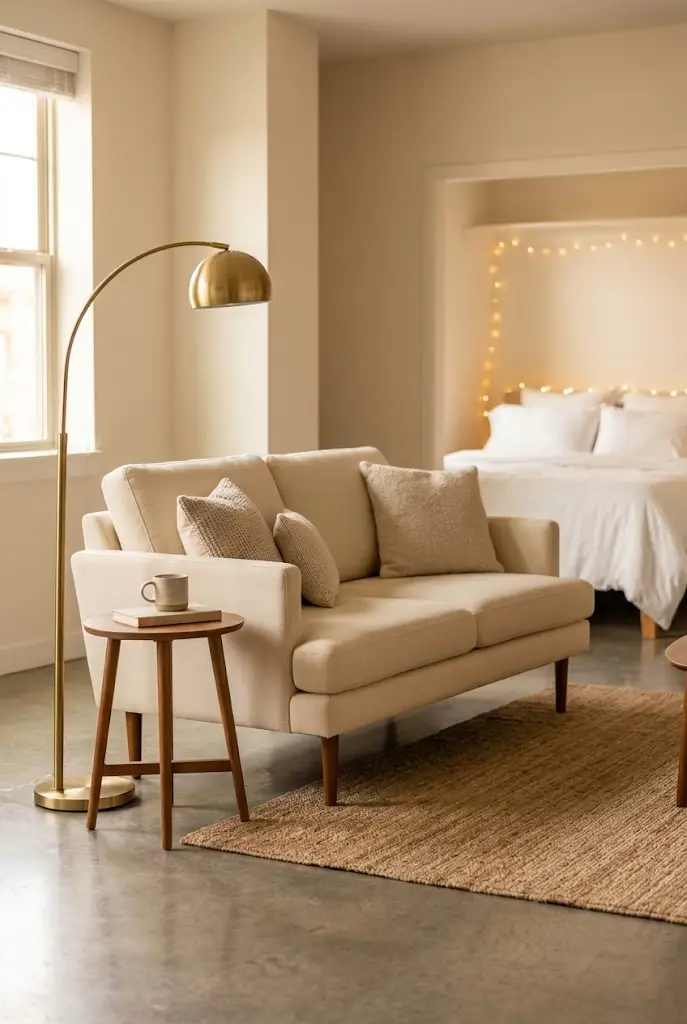
You do not automatically need a traditional three seat sofa.
A beautiful loveseat may be all your studio needs.
This can be especially effective if you live alone or rarely need seating for several guests.
A compact loveseat creates breathing room beside the furniture. That extra space could hold a slim floor lamp, small side table, plant, or nothing at all.
And sometimes nothing is exactly what a small room needs.
Empty space gives your eyes somewhere to rest.
Instead of asking, “What is the biggest sofa I can fit here?” try asking, “What is the smallest sofa that will still make me comfortable?”
That question usually leads to a much better layout.
Use Your Couch to Create a Living Room Without Walls
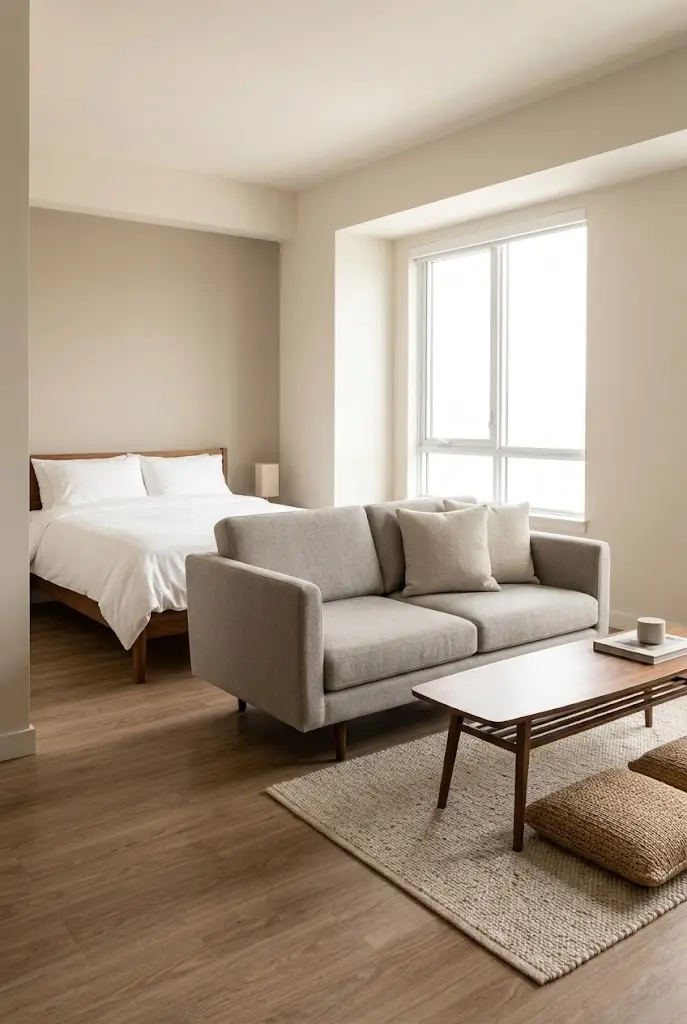
A studio apartment has to perform several jobs inside one open room.
Your sofa can actually help organize those zones.
Instead of automatically placing it against a wall, consider whether the back of the sofa could subtly separate your sleeping and living spaces.
For example, a compact sofa facing a media console can create a clear lounge area while its back forms a visual boundary before the bed.
This works best when you still have comfortable walking space around it.
I’ve seen this work especially well with low back sofas. They define the living zone without creating a tall visual barrier across the apartment.
You get separation without making the room feel boxed in.
Pay Attention to Seat Depth
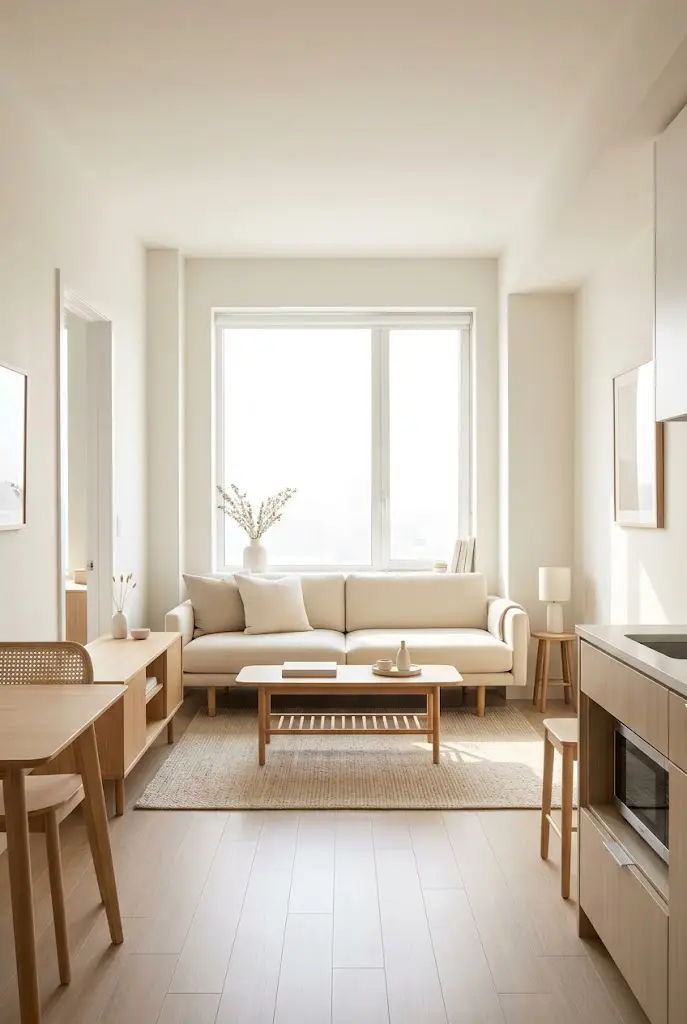
Width gets most of the attention when people measure for a sofa.
Depth deserves just as much attention.
An extra deep couch can project far into the center of a narrow studio, reducing the space available for walking, tables, and other furniture.
Before buying, mark the sofa dimensions on your floor.
Painter’s tape works well for this.
Outline the full width and depth, then live with that outline for a little while.
Walk from the entrance to the kitchen.
Move between your bed and living area.
Pretend you are carrying groceries.
Pull out a dining chair if one sits nearby.
A sofa that looked perfectly reasonable on a product page may suddenly feel enormous once you see its actual footprint.
This simple test can save you from an expensive mistake.
Choose a Color That Works With the Whole Apartment
In a separate living room, you can decorate around the sofa.
A studio is different because nearly everything is visible at once.
Your sofa color needs to work with your bedding, rug, curtains, walls, and nearby furniture.
Soft neutrals are popular for this reason.
Cream, oatmeal, warm beige, soft gray, taupe, and muted earthy shades can create a calm visual flow.
That does not mean your apartment has to be boring.
You can bring personality through pillows, art, throws, lamps, plants, and smaller decor pieces.
If you love color, a muted green, dusty blue, warm rust, or soft terracotta sofa can also become a beautiful focal point without overwhelming the room.
The important part is making the color feel intentional within the entire studio.
Keep the Back Low When Sightlines Matter
Stand at the entrance of your studio and look across the room.
How much can you see?
In a small apartment, long sightlines can make the interior feel more spacious.
A very tall sofa back placed in the middle of the room can interrupt that view.
A lower profile design allows your eye to travel farther across the apartment.
This is particularly helpful when your studio has a beautiful window.
Keeping bulky furniture below the main window line can help the natural light remain visually connected to the rest of the space.
Your room feels brighter, and the furniture feels less dominant.
Let the Sofa Do More Than One Job
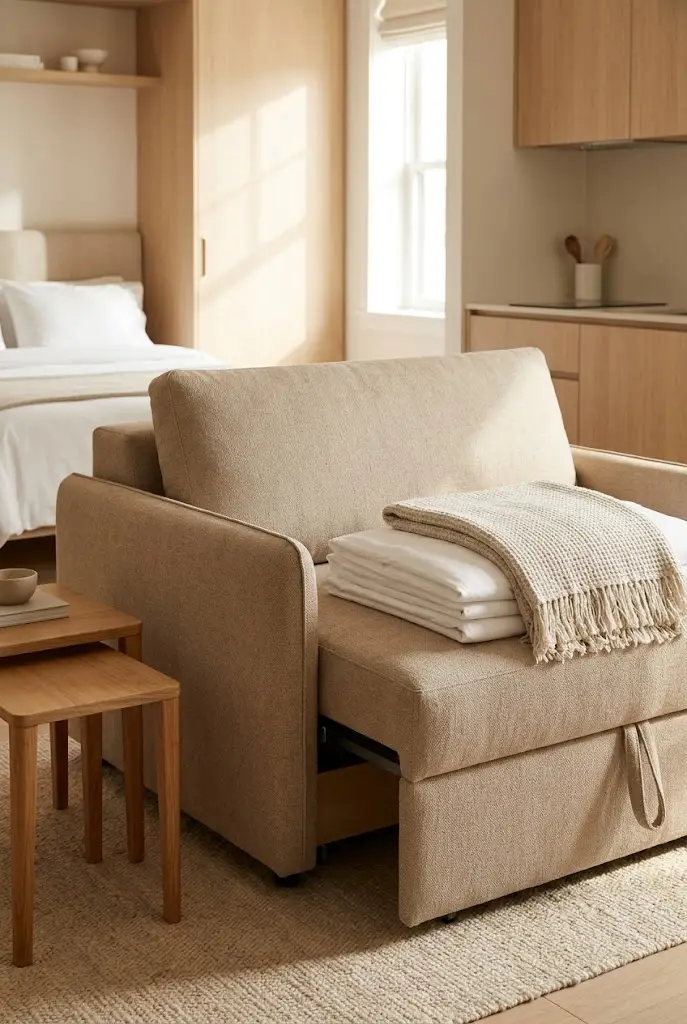
When space is limited, multifunctional furniture becomes much more valuable.
A sleeper sofa can turn your living area into guest accommodation.
A sofa with hidden storage can hold extra blankets, seasonal linens, or pillows.
A modular design can give you flexibility when your layout changes.
But multifunctional does not automatically mean better.
A sofa bed that is uncomfortable to sit on every day is not a smart purchase simply because it folds out.
Choose the function you will actually use.
If guests stay twice a year but you sit on your couch every evening, everyday comfort should come first.
Do Not Buy Before Measuring Your Walking Paths
The couch itself is only part of the measurement.
You also need to think about the empty space around it.
Where will you walk?
Can cabinet doors still open?
Can you comfortably reach your bed?
Will the sofa block a heater, window, closet, or outlet?
Can you move around the coffee table without turning sideways?
These little frustrations become much more noticeable when you experience them every day.
Before buying a couch for studio apartment use, measure the room and the routes you naturally take through it.
A slightly smaller sofa that preserves comfortable movement can make the entire apartment feel more functional.
Try a Small Sectional Only When the Layout Supports It
A sectional in a studio sounds like a terrible idea.
Sometimes it is.
But not always.
A compact sectional can work beautifully when the shape follows the room and replaces the need for several separate chairs.
The key word is compact.
Avoid assuming that an L shaped sofa automatically saves space. Measure both sections carefully, especially the chaise.
If the chaise cuts across your main walking path, the room can become frustrating very quickly.
But when it runs along an unused wall or naturally frames the living zone, it can create a surprisingly cozy setup.
The room should determine the furniture shape, not the other way around.
Keep the Area Around Your Sofa Visually Quiet
Sometimes the sofa is not actually the problem.
Everything around it is.
A couch surrounded by a large coffee table, two heavy side tables, a floor lamp, multiple baskets, several pillows, and piles of decor can quickly make a studio feel overloaded.
Give your main furniture a little breathing room.
Try one slim side table instead of two.
Use a wall mounted light when floor space is tight.
Choose a smaller coffee table or nesting tables that can be moved when needed.
Keep enough pillows for comfort without covering every inch of the seat.
When fewer objects compete for attention, the sofa can feel smaller even though its dimensions have not changed.
Match the Scale of Your Other Furniture
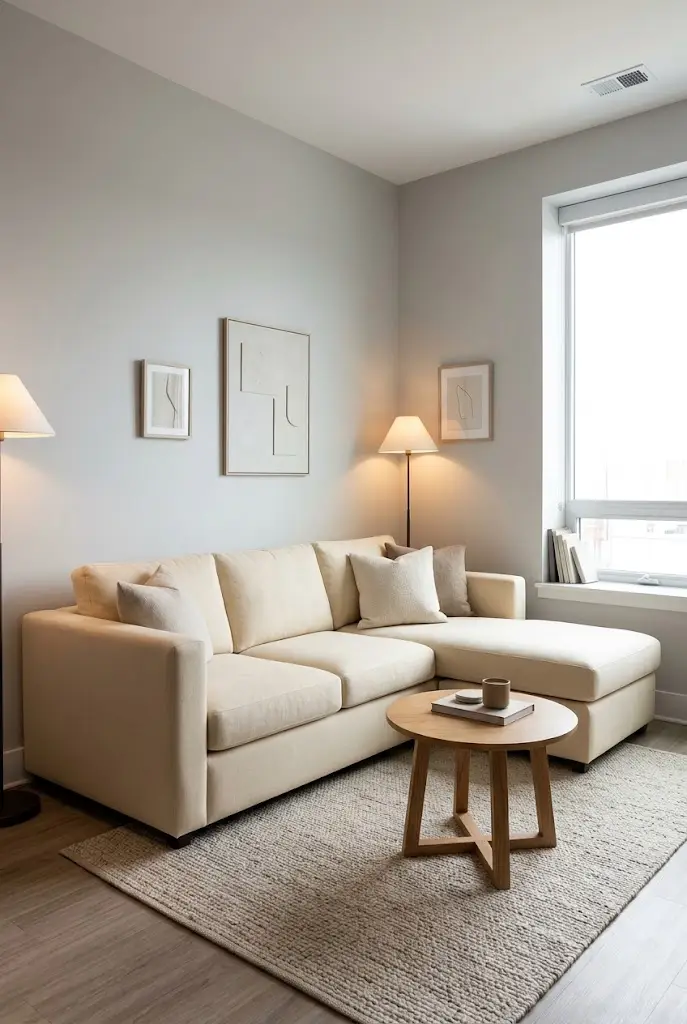
A compact sofa next to an enormous coffee table still creates a crowded room.
Think of your furniture as a group.
If the sofa has a light profile, continue that feeling with other pieces.
A slim console, small round table, open shelving, and narrow side table can all support the same visual language.
This does not mean everything needs to match.
It means the pieces should feel like they belong in the same size room.
In my experience, one of the easiest ways to spot a layout problem is to photograph the room from the doorway.
A photo often makes scale issues more obvious than they feel when you are standing inside the space.
If one piece immediately dominates the image, it may be visually too heavy.
Make the Couch Feel Cozy Without Making It Look Heavy
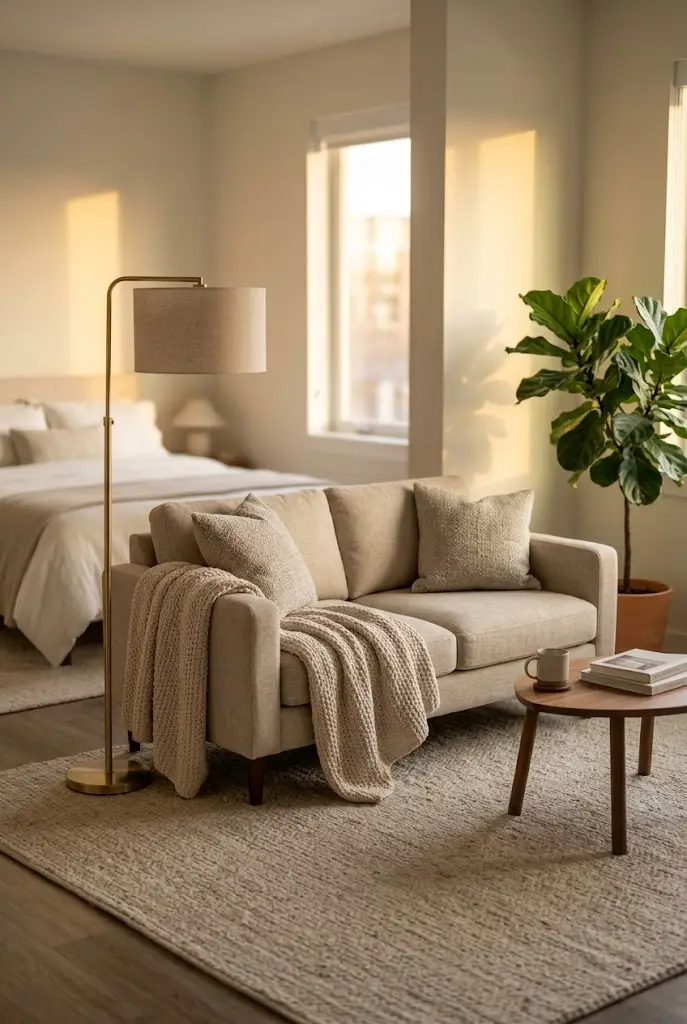
Small does not have to mean cold or uncomfortable.
You can still create the kind of sofa that makes you want to curl up with coffee and stay there all Sunday morning.
Add one soft throw.
Use two or three pillows with different textures.
Place a warm lamp nearby.
Ground the seating area with a rug that connects the furniture rather than floating awkwardly beneath only the coffee table.
Texture gives you coziness without requiring more furniture.
Think linen, boucle, cotton, soft knits, natural wood, and woven details.
The result can feel warm and layered while still looking calm.
The Right Couch Should Make the Rest of the Studio Feel Better
A good small space sofa is not simply one that fits between two walls.
It should improve the way the entire apartment works.
You should be able to move comfortably.
The room should still receive plenty of light.
Your sleeping area should not feel swallowed by your living area.
And when you walk through the door, your eye should notice a beautiful room rather than one enormous couch.
So before falling in love with a sofa because of a perfectly styled product photo, look at the dimensions.
Look at the arms.
Look underneath it.
Check the depth.
Think about your walking paths.
Then picture everything else that has to share the room with it.
The best couch is rarely the biggest one you can squeeze into a studio.
It is the one that gives you somewhere wonderful to sit while leaving enough visual and physical space for the rest of your life.
Community
Join the conversation
Add a useful idea, ask a specific question, or share what worked in your space. Every comment is reviewed before it appears.