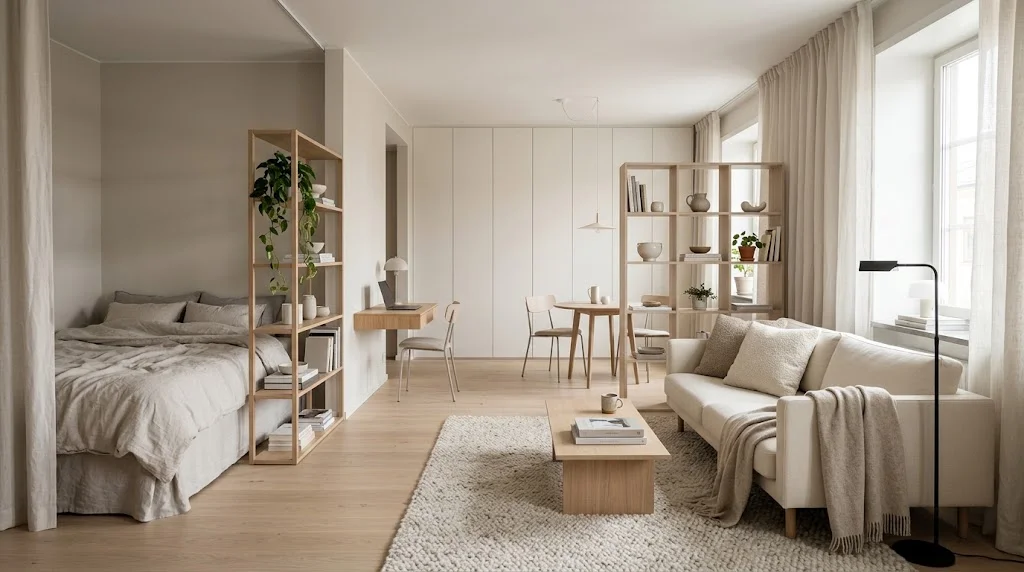
Small spaces can feel calm, cozy, and beautifully put together without sacrificing the way you actually live. A Scandinavian studio apartment is especially well suited to this balance, combining light colors, practical layouts, natural textures, and simple details that make one room feel more spacious and intentional. Scandinavian studio apartment design, often called Nordic design, is built on light, simplicity, and warmth, which is exactly what a small apartment needs.
This article brings together 15 approachable ideas for creating a brighter, warmer, and better organized studio, from layered textiles and light wood furniture to smart storage, cozy lighting, and flexible zoning. In my experience, the biggest difference often comes from a few thoughtful changes rather than a complete redesign. Whether your space feels cramped, cluttered, or unfinished, these ideas will help you create a home that feels peaceful, and functional while still reflecting your everyday needs and personal style.
1. Soft Neutral Palette
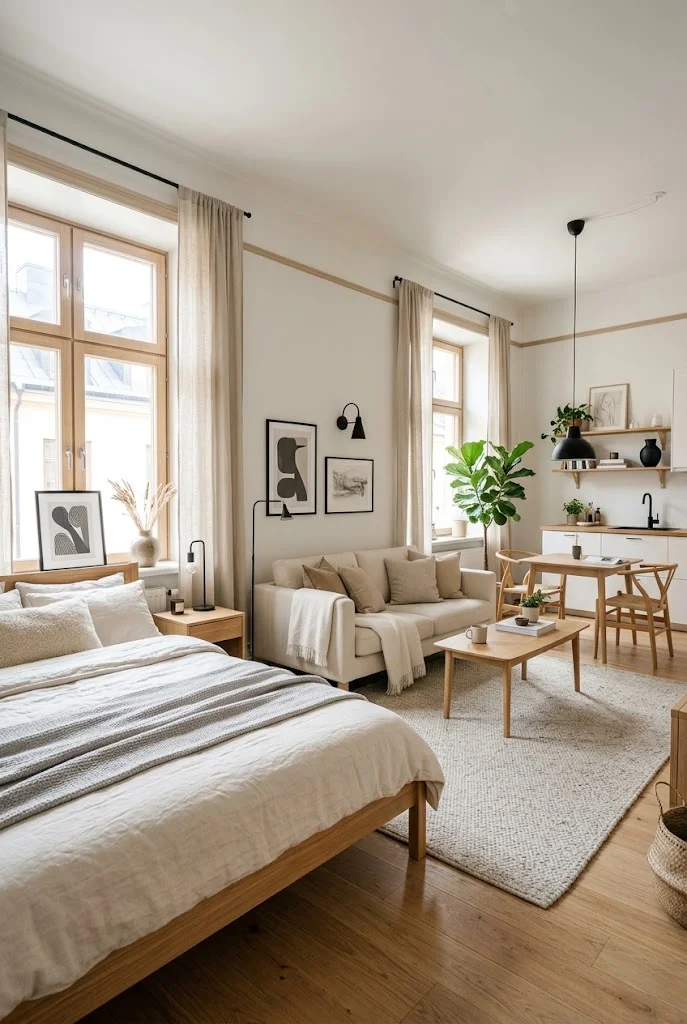
- Makes a compact studio appear brighter and visually larger.
- Creates a seamless connection between sleeping and living zones.
- Adds depth through layered fabrics instead of strong colors.
- Makes seasonal decor changes easier without redesigning the room.
- Works beautifully with pale woods and understated black accents.
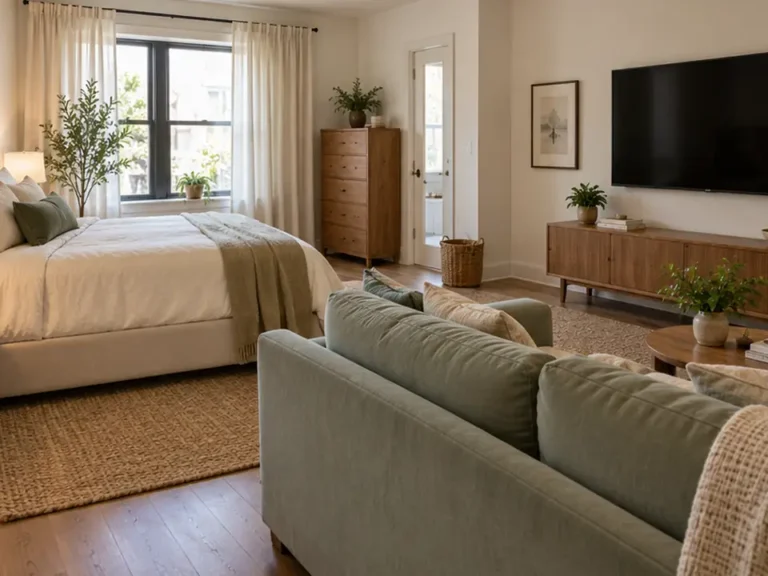
A calm color palette can make even the smallest studio feel noticeably larger and more polished. In a Scandinavian studio apartment, soft whites, warm beige, pale gray, and muted taupe create a light-reflective backdrop that keeps the room visually open. These tones also help separate furniture and decor without creating harsh contrasts. Choose one dominant neutral for walls, then layer slightly warmer shades through rugs, curtains, cushions, and bedding. The result feels cohesive rather than flat, especially when natural wood and subtle black accents are added for depth and definition.
The real strength of a neutral scheme is how easily it connects every zone in one open room. A cream sofa can sit beside an oatmeal rug, light oak table, and ivory bedding without making the apartment look overly matched. I’ve noticed that small spaces feel more expensive when the palette stays restrained but textures vary. Linen, boucle, woven wool, and unfinished wood provide visual interest while preserving calm. Keep stronger colors limited to small artwork, books, or ceramics so the room remains airy, balanced, and easy to update through different seasons.
2. Light Wood Layers
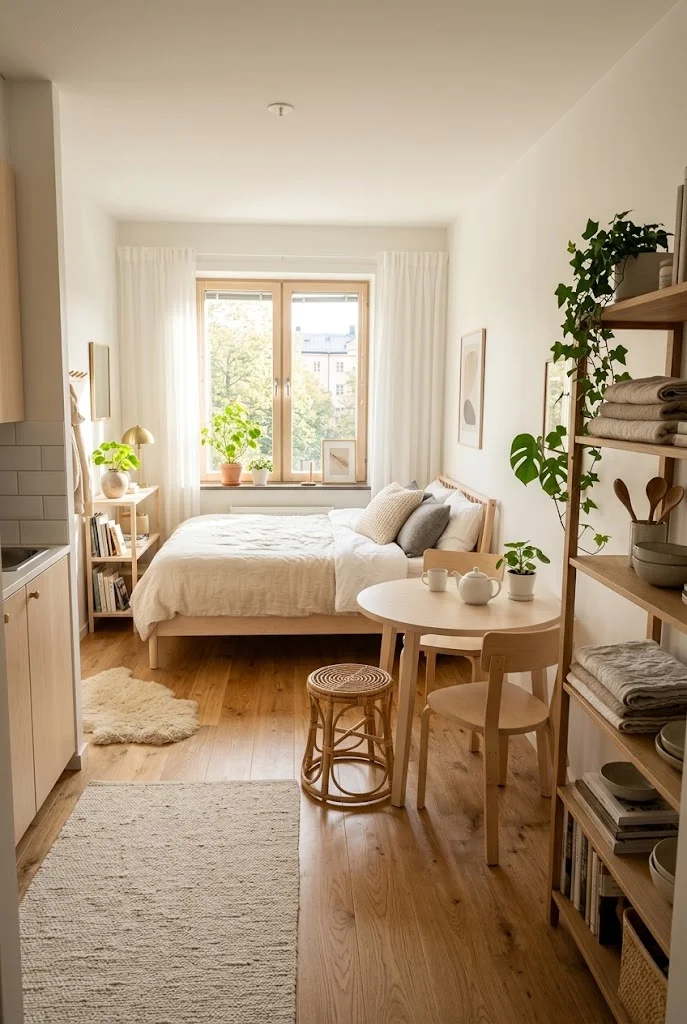
- Brings natural warmth into an otherwise minimal interior.
- Keeps furniture visually lighter than dark wood alternatives.
- Creates consistency when one wood family appears throughout the room.
- Adds organic grain and texture without introducing visual clutter.
- Pairs easily with white, cream, beige, and muted gray furnishings.
Natural wood instantly adds warmth to the clean simplicity that defines Nordic interiors. Light oak, ash, birch, and pine work especially well in compact studios because their pale tones brighten the room instead of visually weighing it down. Use wood on practical pieces such as a dining table, open shelving, bed frame, side table, or slim desk. Repeating the same wood family across several areas helps the apartment feel intentional. Pair these surfaces with white walls and soft textiles to create a balanced look that feels modern, relaxed, and comfortably lived in.
A little variation keeps wooden furniture from making the space feel like a showroom. Mix smooth oak cabinetry with a woven stool, slatted bench, or simple unfinished shelf to introduce different grains and textures. In my experience, choosing fewer well-proportioned wooden pieces works better than filling a studio with many small items. Leave some floor visible around furniture so the room can breathe. Black metal hardware, ceramic lamps, and linen upholstery create enough contrast to sharpen the look without losing the soft Scandinavian character that makes compact interiors feel welcoming and uncluttered.
3. Open Zone Dividers
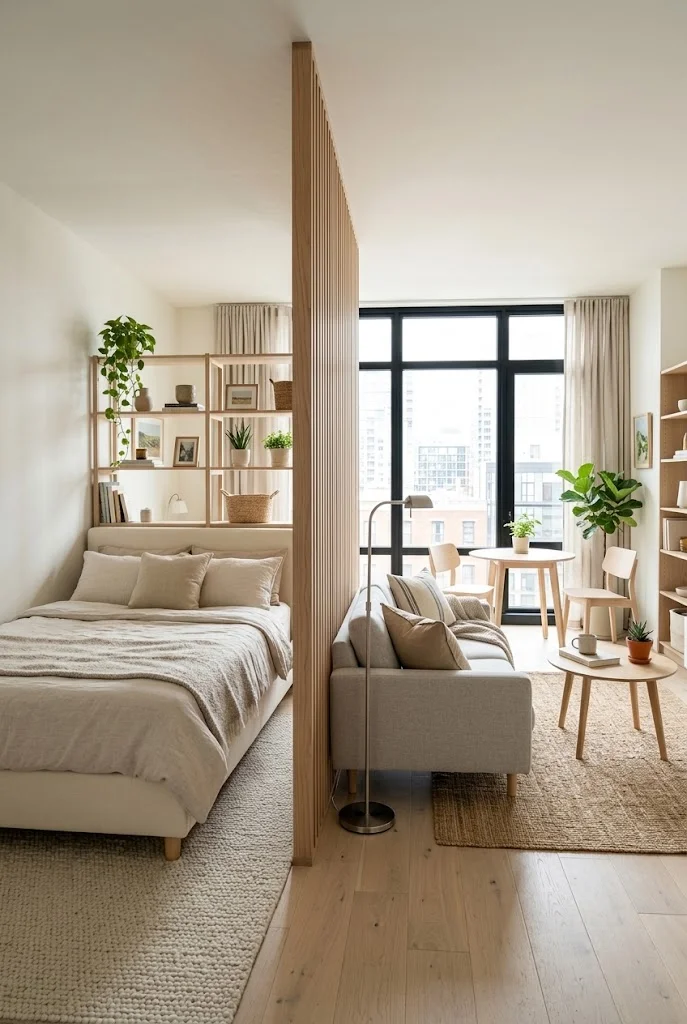
- Gives sleeping, working, and living spaces clearer boundaries.
- Preserves daylight better than a solid wall or bulky partition.
- Adds useful storage when open shelving is used as the divider.
- Makes a one-room layout feel organized without feeling cramped.
- Allows the setup to change as daily needs evolve.
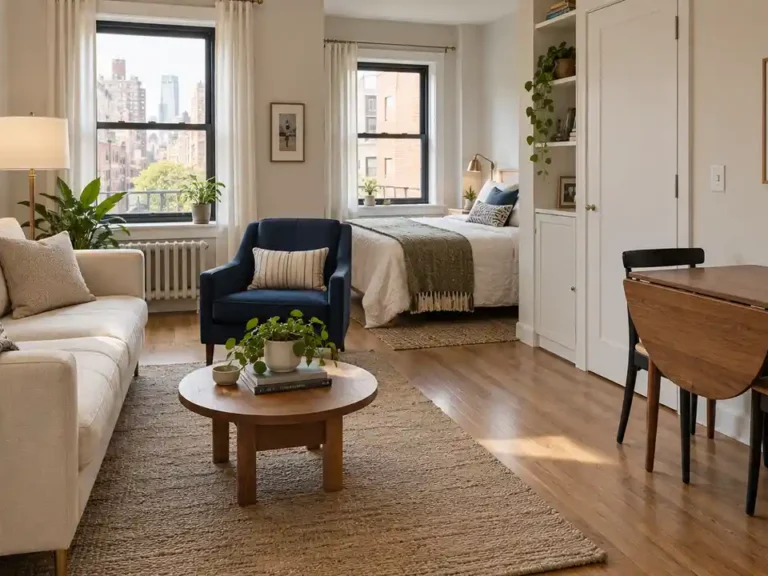
One open room becomes easier to live in when each area has a clear visual purpose. Instead of building solid walls, use lightweight zoning elements such as a narrow rug, open bookshelf, curtain, or slim wooden slat divider to define sleeping, living, and working spaces. These solutions preserve natural light while adding structure. Position the bed in the quietest corner, keep the sofa facing away from it when possible, and place a desk close to a window. The layout feels more organized without sacrificing the spacious effect that small Nordic homes do so well.
The best room dividers create separation without making the apartment feel chopped into tiny boxes. Open shelving is especially useful because it can store books, baskets, plants, and lighting while allowing sightlines to continue through the room. A ceiling-mounted curtain offers more privacy around the bed and can disappear completely during the day. I’ve seen this work well in compact homes where flexibility matters more than permanent construction. Keep dividers light in color and visually slim, then repeat nearby materials so each zone feels connected to the same overall design language.
4. Layered Cozy Textiles
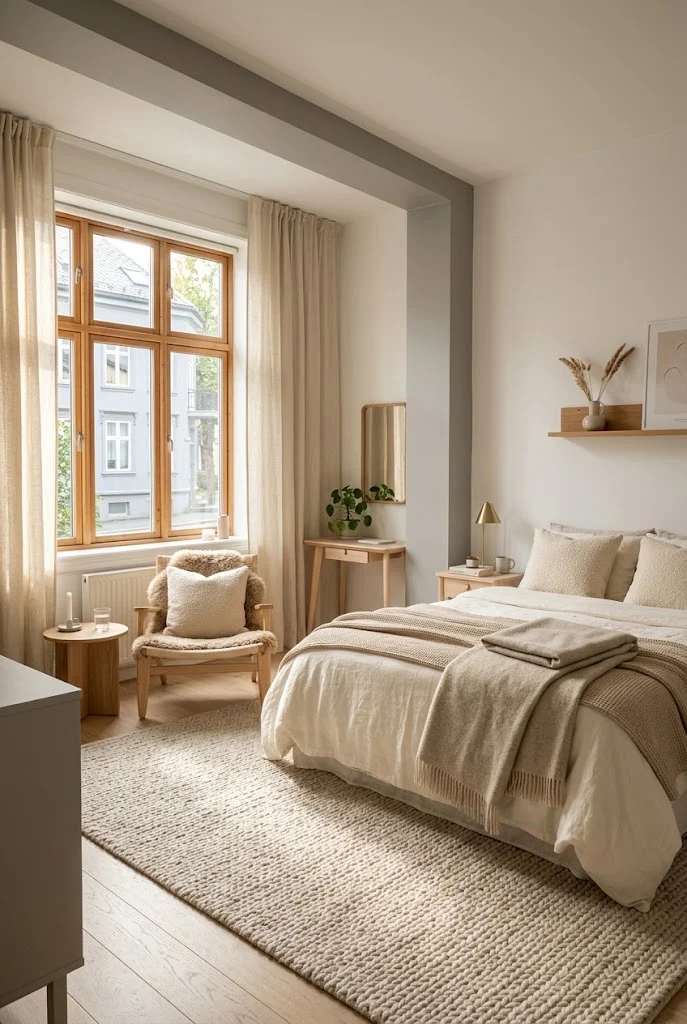
- Softens hard surfaces without adding unnecessary decor.
- Makes neutral interiors feel warmer and more dimensional.
- Helps visually define sleeping and living zones.
- Adds comfort through linen, wool, cotton, and boucle textures.
- Keeps the room cozy while maintaining a clean, uncluttered look.
A small studio feels instantly more inviting when textiles introduce softness without adding visual clutter. Layer a low-pile rug, linen curtains, cotton bedding, and one or two textured throws in cream, oatmeal, or muted gray. These materials soften hard surfaces while keeping the room light and cohesive. In compact Nordic interiors, texture often does the decorative work that bold color would normally provide. Choose breathable fabrics and simple patterns, then repeat similar tones across the bed and seating area. The result is warmer, calmer, and visually richer without making the apartment feel crowded.
Texture also helps define different zones while preserving the open character of the room. A woven rug can anchor the sofa, while a slightly different bedcover signals the sleeping area without introducing another strong color. I’ve noticed that studios look more polished when fabrics vary in weave but stay within one restrained palette. Avoid piling on too many cushions or blankets, since excess layers can quickly overwhelm a small layout. Instead, choose a few tactile pieces with clear purpose. This keeps the space cozy, practical, and easy to maintain while still delivering the soft Scandinavian look.
5. Bright Window Styling
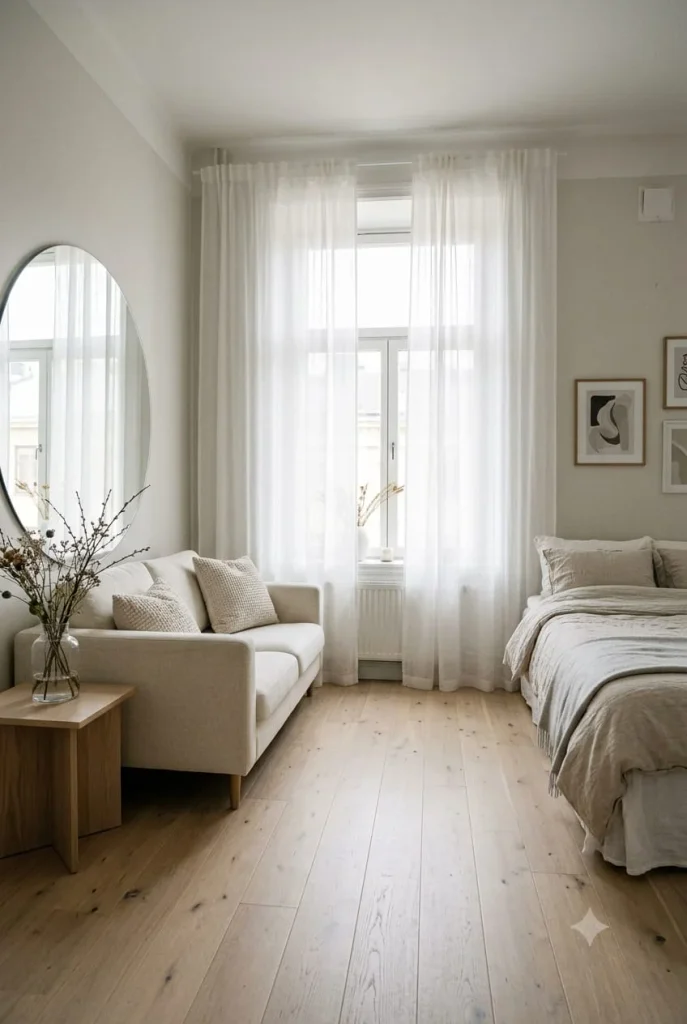
- Maximizes daylight and makes a small room feel more spacious.
- Prevents heavy curtains from visually closing off the window.
- Enhances pale woods and warm neutral furnishings.
- Uses mirrors to reflect light into darker corners.
- Creates a brighter atmosphere without adding more furniture or decor.
Natural light is one of the easiest ways to make a compact home feel larger, fresher, and more relaxed. Keep window treatments light with sheer linen curtains, simple roller shades, or uncovered glass where privacy allows. Place taller furniture away from windows so daylight can travel deeper into the room. Mirrors positioned across from or beside the window can help bounce brightness into darker corners. This approach supports the clean, airy character of the design while also making neutral colors, pale wood, and soft textiles appear warmer and more dimensional throughout the day.
Artificial lighting should support the daylight rather than compete with it after sunset. Use a simple ceiling fixture for general brightness, then add a floor lamp beside the sofa and a compact task lamp near the desk or bed. Warm bulbs create a softer atmosphere than harsh cool light, especially against white walls. In my experience, several smaller light sources make a studio feel more comfortable than one bright overhead fixture. Keep lamp shapes simple and finishes understated so they blend into the room. This layered setup creates a cozy evening mood while preserving the clean Nordic aesthetic.
6. Hidden Storage Walls
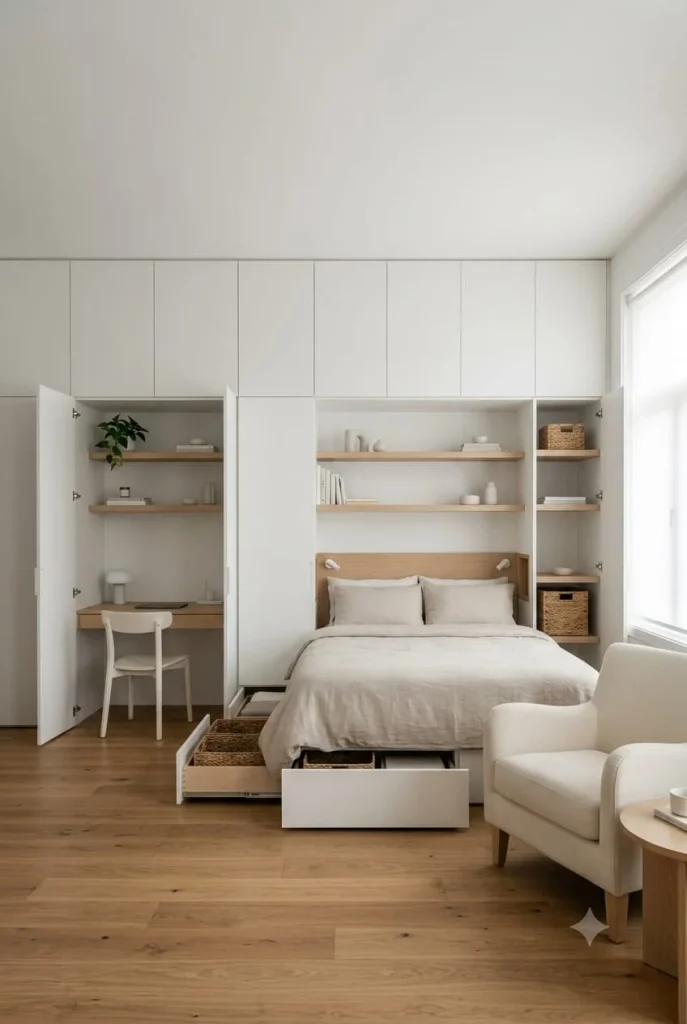
- Uses vertical wall space instead of valuable floor area.
- Hides everyday clutter behind clean cabinet fronts.
- Makes a studio feel calmer because fewer items remain visible.
- Combines open shelving with practical closed storage.
- Reduces the need for multiple freestanding cabinets and organizers.
Storage works best in a small studio when it disappears into the architecture instead of dominating the room. Choose tall wardrobes, wall-mounted cabinets, floating shelves, and under-bed drawers that use vertical and hidden space efficiently. Furniture with built-in storage, such as an ottoman or lift-up bed, can reduce the need for extra cabinets. Keep frequently used items easy to reach while placing seasonal belongings higher up. Matching storage finishes to the wall or nearby furniture helps everything blend together. The room stays functional, open, and visually calm rather than feeling filled with containers and miscellaneous objects.
Good concealed storage also makes daily tidying faster, which is especially valuable when every zone is visible at once. Baskets inside cabinets can group cables, paperwork, linens, or cleaning supplies, while closed doors hide visual noise. That’s why many small-space designers recommend combining open display areas with more closed storage than you might expect. Reserve shelves for a few attractive objects and keep practical clutter behind doors or inside drawers. When storage follows this balance, the apartment feels more spacious without requiring extreme minimalism, and the clean Scandinavian look becomes much easier to maintain over time.
7. Minimal Dining Corner
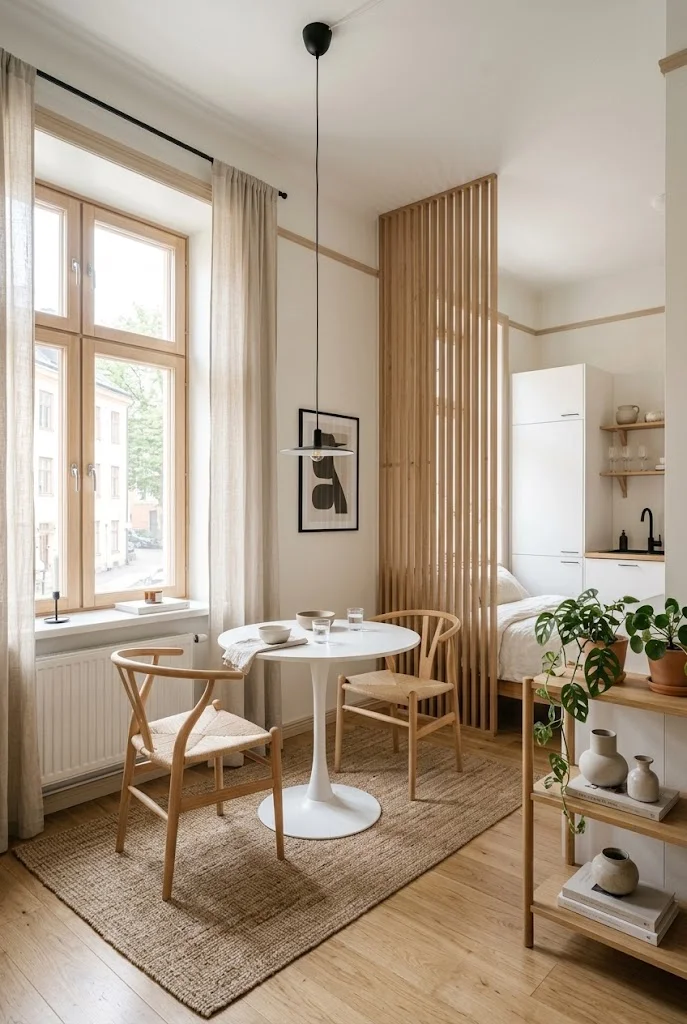
- Adds a clear eating zone without crowding the room.
- Gives the studio a more complete, lived-in feel.
- Works well as a flexible space for meals, reading, or laptop time.
- Softens the layout when a round table is used.
- Helps organize daily routines in a one-room home.
A compact dining spot can add daily function without making a studio feel crowded. A small round table, two light chairs, and a simple pendant lamp create a clear eating zone that also works for reading or laptop tasks. Round tables are especially useful because they improve movement and soften the straight lines found in many modern interiors. Place the setup near a window or beside the kitchen edge so it feels intentional. Keeping the furniture slim and light in color helps the area blend smoothly into the rest of the room rather than looking like an extra add-on.
This idea works best when every piece earns its place. Choose stackable or tuck-under chairs, a pedestal base, or a drop-leaf design if floor space is limited. I’ve noticed that dining corners feel calmer when the tabletop stays mostly clear, with only a small vase, candle, or tray left out. A wall shelf or nearby cabinet can hold placemats and tableware without adding bulk. By giving meals, coffee breaks, and quick work sessions a dedicated spot, the apartment feels more structured and comfortable, even though the overall layout remains simple, airy, and easy to move through.
8. Floating Shelf Display
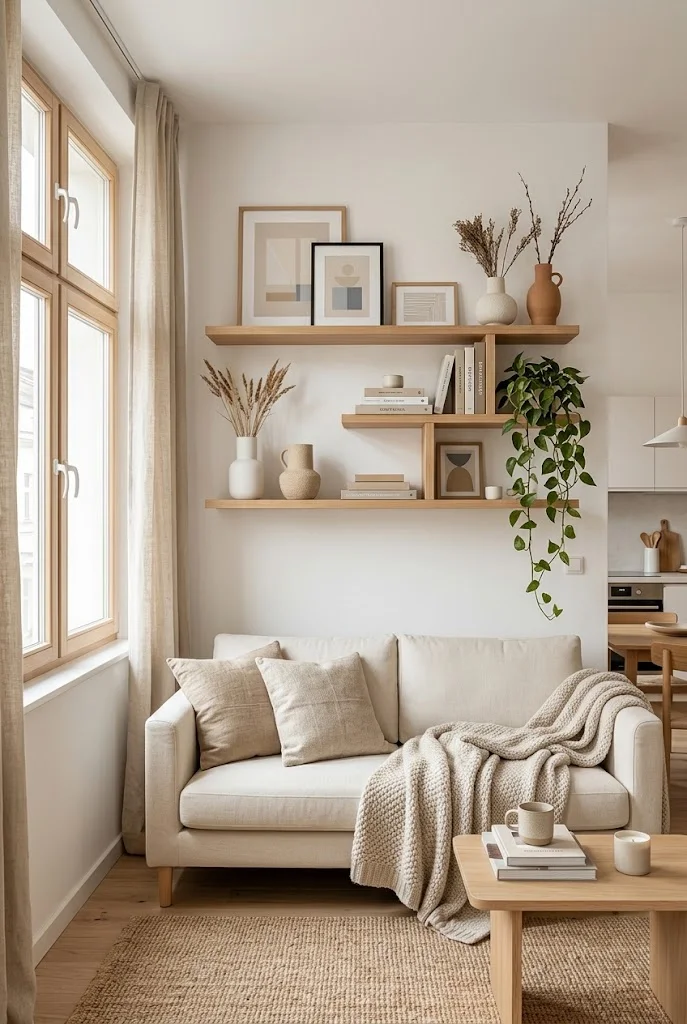
- Uses vertical space instead of taking up more floor area.
- Adds personality without making the room feel busy.
- Keeps surfaces cleaner and more organized.
- Creates a styled look with only a few carefully chosen items.
- Draws the eye upward, helping the room feel taller.
Decor can stay minimal yet still feel personal when wall space carries some of the styling. Floating shelves above a desk, sofa, or bed let you display framed art, books, ceramics, and a few plants without using floor area. This keeps surfaces cleaner while giving the room character and rhythm. Stick to two or three shelf levels and leave open gaps so the arrangement does not look heavy. Light wood or white shelves blend beautifully with Nordic interiors, especially when the objects repeat soft neutral tones and a few darker accents for balance.
The key is editing what goes on the shelves so they enhance the room instead of becoming storage overflow. Mix practical and decorative items, but keep similar spacing, colors, and heights for a cleaner look. In my experience, one trailing plant, one stack of books, and one framed print often do more than filling every inch. Use concealed baskets elsewhere for the things that are less attractive or less often used. When shelves are styled with restraint, they draw the eye upward, add personality, and make a compact apartment feel thoughtfully designed rather than sparsely furnished.
9. Warm Accent Lighting
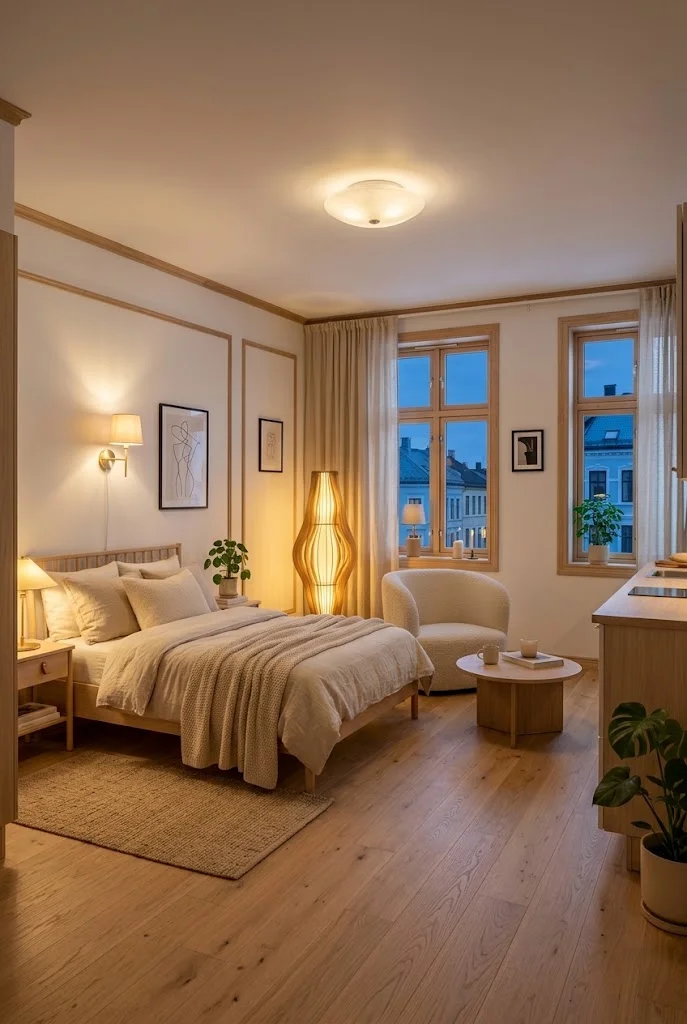
- Makes the apartment feel softer and more comfortable at night.
- Helps each zone feel defined after daylight fades.
- Improves both mood and function in a small space.
- Supports the clean design style without adding clutter.
- Creates a more polished, finished look overall.
Soft lighting can completely change how a studio feels once daylight fades. Instead of relying only on one ceiling fixture, layer a floor lamp, bedside light, wall sconce, or small table lamp across different zones. This creates warmth, improves function, and helps each area feel intentional after dark. Warm white bulbs are usually the best choice because they flatter pale woods and soft neutrals. Place brighter light near task areas and gentler light near the bed or sofa. The overall effect is quieter, cozier, and much more inviting than a single bright overhead source.
Lighting also adds style when the fixtures echo the rest of the apartment. Choose simple silhouettes in matte black, brushed brass, ceramic, or light wood so they support the clean Nordic look. I’ve seen small spaces feel more layered when one lamp is slightly sculptural while the others stay understated. Dimmers are especially helpful because they let the room shift from work mode to evening comfort in seconds. Keep cords tidy and fixture sizes proportional to the furniture nearby. With the right lighting mix, the entire studio feels softer, more functional, and beautifully finished.
10. Compact Entry Zone
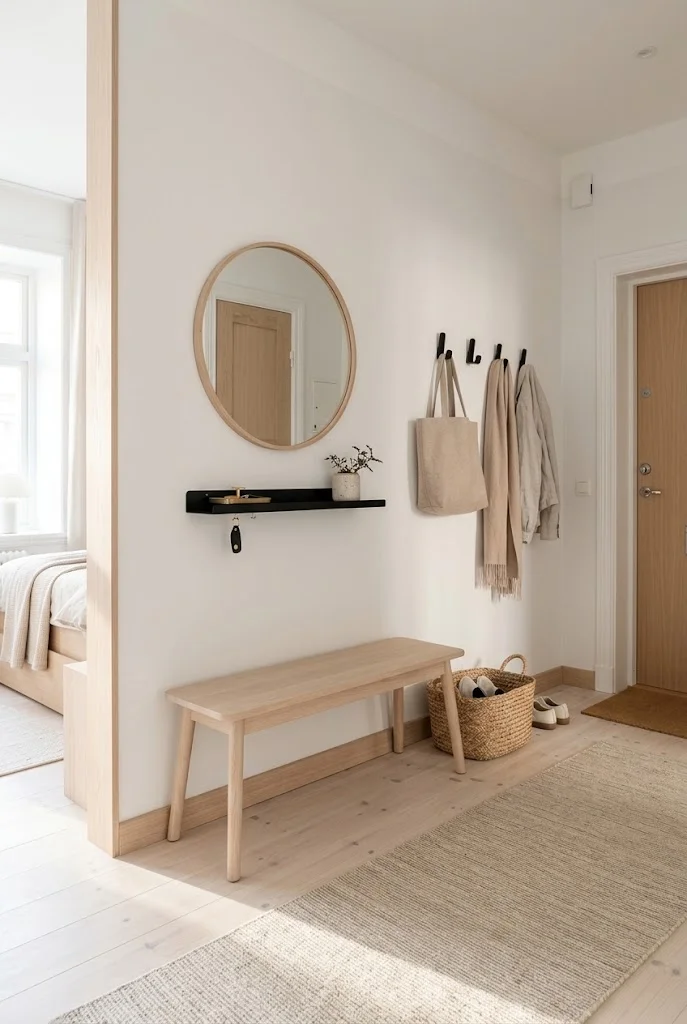
- Prevents shoes, bags, and coats from spreading into the main room.
- Makes even a tiny entrance feel purposeful and organized.
- Uses vertical storage without sacrificing valuable floor space.
- Creates a clean first impression as soon as you enter.
- Works especially well with slim furniture and woven storage.
A slim entry zone can make a studio feel more organized from the moment you walk in. Use a narrow bench, wall hooks, a small mirror, and one basket for shoes or everyday essentials. Keeping this area compact prevents bags, coats, and keys from drifting into the living space. Light wood, woven storage, and soft neutral tones help the setup blend with the rest of the apartment. Even a tiny strip beside the door can become functional when every piece is chosen for scale, simplicity, storage, and easy daily access.
The best entry setups create order without introducing bulky furniture. A floating shelf can hold keys and mail, while vertical hooks take care of jackets and reusable bags. I’ve noticed that studios feel calmer when the first visible area stays tidy, because clutter near the entrance can make the whole room seem smaller. Add a round mirror to reflect light and visually open the corner. Keep the floor mostly clear, and use one coordinated basket rather than several small containers. This gives the entry a practical purpose while preserving the clean Scandinavian character.
11. Cozy Bed Nook
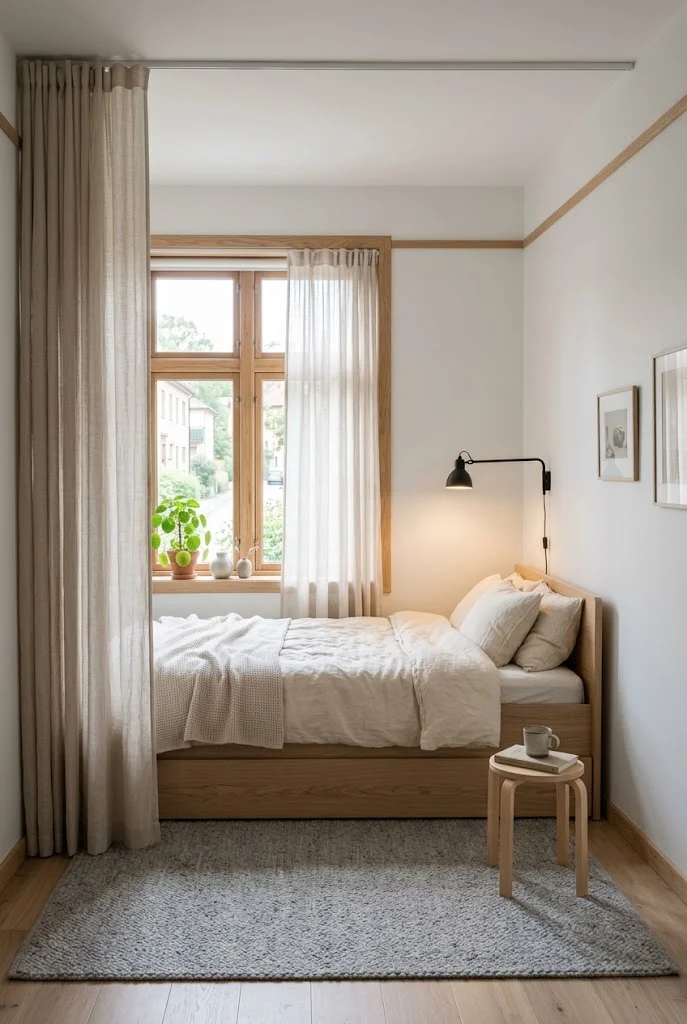
- Gives the sleeping area a stronger sense of privacy.
- Helps the bed feel like a dedicated zone rather than exposed furniture.
- Keeps the layout open when low-profile pieces are used.
- Adds comfort through soft textiles and gentle lighting.
- Makes a one-room apartment feel more thoughtfully divided.
A compact bed nook makes the sleeping area feel more private without closing off the apartment. Position the bed against a quiet wall or into a corner, then use linen bedding, a small wall lamp, and a narrow bedside shelf to create a defined retreat. Soft cream, beige, and muted gray tones keep the zone visually connected to the rest of the studio. A low-profile bed frame works especially well because it maintains open sightlines. The goal is to make the sleeping space feel intentional, restful, and distinct while still fitting naturally into one open room.
Small details can strengthen the sense of separation around the bed without adding a full divider. A curtain track, slim canopy frame, textured rug, or painted wall section can subtly mark the sleeping zone. In my experience, keeping bedside furniture minimal prevents this area from feeling cramped, especially when the bed already occupies a large portion of the floor plan. Choose wall-mounted lighting instead of a table lamp to free up surface space. With simple zoning and soft materials, the bed becomes a calm focal point rather than something that makes the entire apartment feel like a bedroom.
12. Window Reading Corner
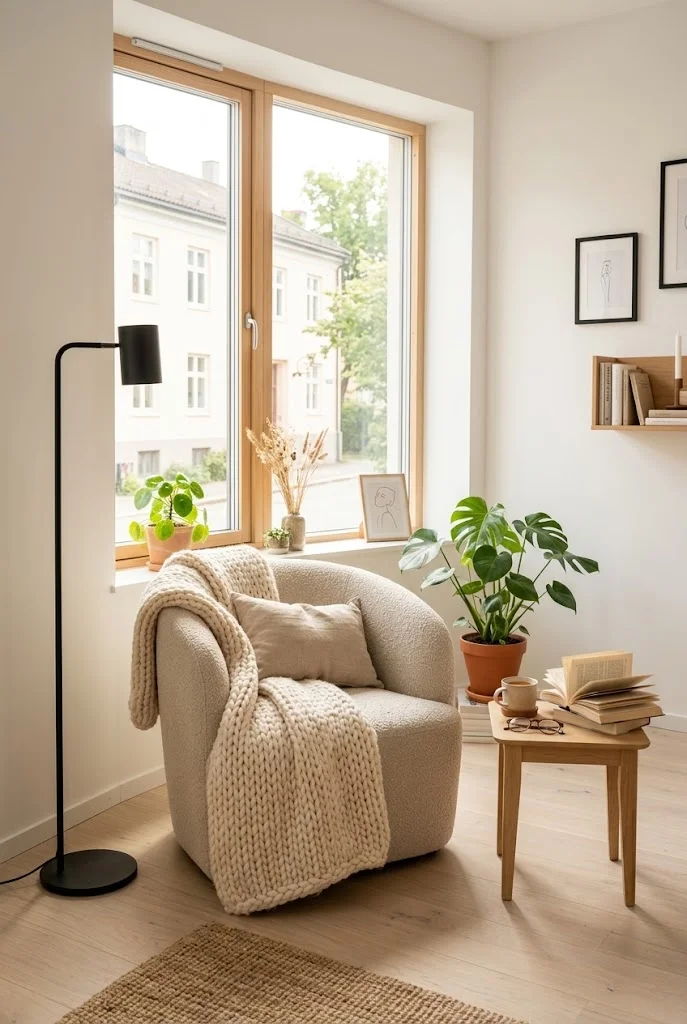
- Turns an awkward unused corner into functional living space.
- Creates a cozy spot without requiring much furniture.
- Takes advantage of natural light near a window.
- Adds another purpose to a small one-room layout.
- Introduces comfort while keeping the overall style minimal.
A compact reading chair can turn an unused corner into one of the most inviting spots in the studio. Choose a small upholstered chair in cream, oatmeal, or soft gray, then pair it with a slim floor lamp and a tiny side table. Position the setup near a window if possible so natural light supports daytime reading. A textured cushion or lightweight throw adds comfort without creating clutter. This arrangement gives the room another function beyond sleeping and dining, while the restrained palette keeps the corner visually connected to the wider Scandinavian-inspired interior.
This idea works especially well in awkward corners that are too small for larger furniture but too useful to leave empty. A single chair, lamp, and side table can create a complete zone with almost no visual weight. I’ve seen this work well in compact homes where every corner needs a clear purpose. Keep the chair legs exposed and the table narrow so more flooring remains visible. One framed print or small plant nearby is enough decoration. The finished corner feels cozy and personal while still supporting the uncluttered simplicity that makes small Nordic spaces so appealing.
13. Natural Greenery
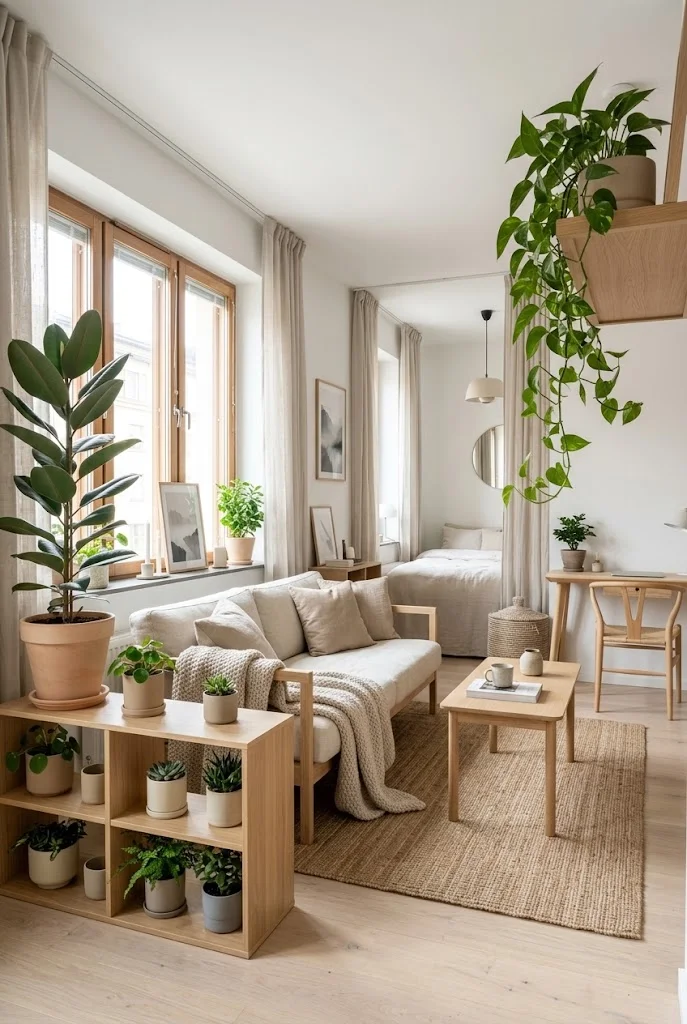
- Softens clean lines and makes the room feel more welcoming.
- Adds natural color without disrupting a neutral palette.
- Fills empty corners without requiring bulky furniture.
- Works especially well on shelves, windowsills, and side tables.
- Brings an organic element into minimalist Nordic styling.
A few carefully chosen plants can soften clean Nordic lines and make a studio feel more alive without adding clutter. Choose compact greenery such as pothos, snake plants, or small rubber plants that fit easily on shelves, side tables, or window ledges. Use simple ceramic or textured neutral planters so the leaves become the main visual feature. Grouping two or three plants at different heights creates more impact than scattering many tiny pots around the room. The result feels fresh, natural, and relaxed while still respecting the calm simplicity that defines Scandinavian interiors.
Plant placement matters just as much as plant choice in a compact apartment. Keep larger pots near windows or empty corners where they can fill awkward space without blocking movement. Trailing greenery works beautifully on floating shelves because it introduces softness while keeping the floor clear. I’ve noticed that one healthy statement plant often looks more intentional than several mismatched varieties. Choose species that suit the available light, and avoid overcrowding surfaces. With a restrained approach, greenery adds color, texture, and warmth while helping the entire studio feel more balanced and connected to nature.
14. Floating Work Desk
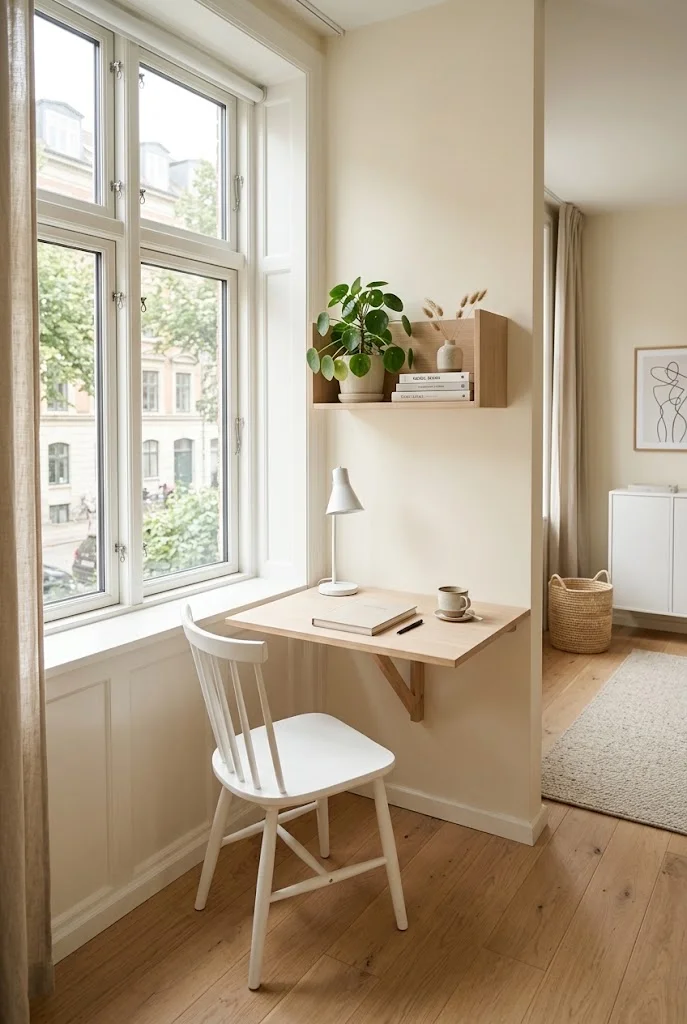
- Creates a dedicated workspace without using much floor area.
- Keeps more flooring visible, making the room feel larger.
- Fits easily into an unused wall or window-side corner.
- Can double as a vanity or small display surface.
- Reduces visual bulk compared with a traditional desk.
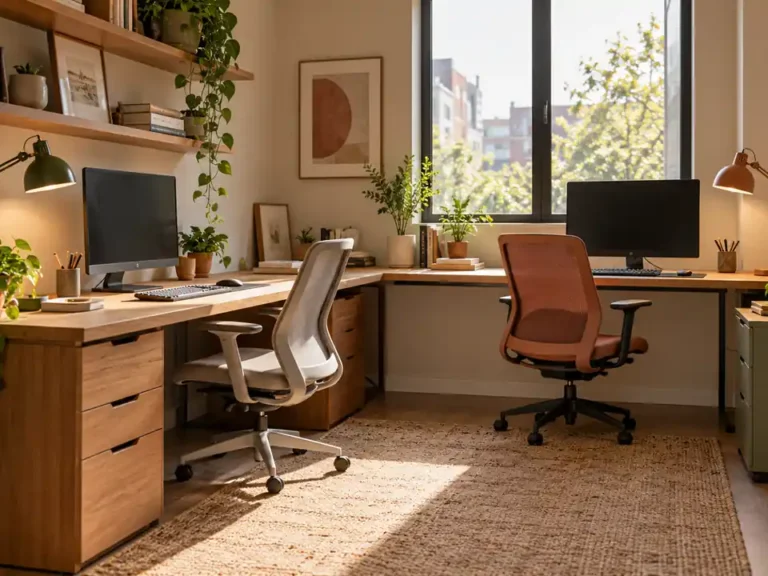
A wall-mounted desk can create a functional workspace without permanently taking over precious floor area. Choose a slim floating surface in pale wood or white, then pair it with a lightweight chair that can tuck completely underneath. Position the setup near a window when possible so daylight makes the area feel brighter and more comfortable. One small shelf above the desk can hold notebooks, a plant, or a task light without creating clutter. This compact arrangement gives work a clear home while preserving the open, flexible feeling that makes a one-room layout easier to enjoy.
The biggest advantage of a floating desk is how visually light it feels compared with a traditional workstation. With no bulky legs or deep drawers, more flooring stays visible, which can make the entire room appear larger. In my experience, keeping only daily essentials on the desktop helps the workspace blend naturally into the living area after work hours. Add a cable channel underneath and use one closed box for chargers or paperwork. A simple wall light or small lamp finishes the setup, creating a practical work zone that remains clean, discreet, and easy to maintain.
15. Black Accent Details
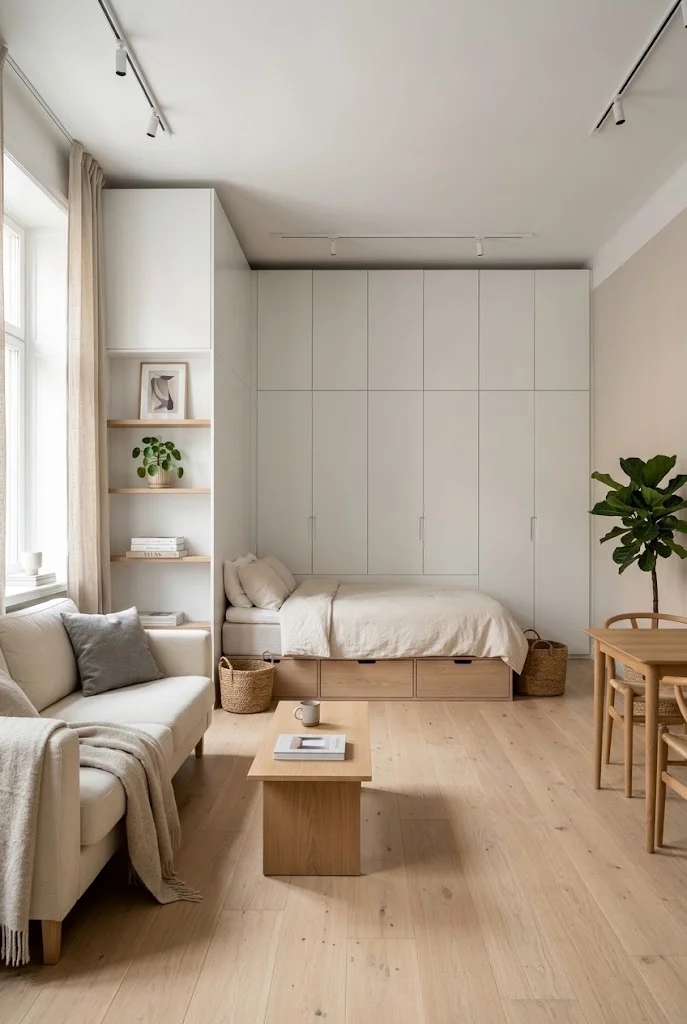
- Adds definition to pale neutral interiors.
- Makes simple furniture and decor look more polished.
- Creates contrast without requiring bold colors.
- Connects different areas when accents repeat throughout the room.
- Gives the studio a subtle modern edge.
A few black accents can give a pale Nordic interior the definition it needs without disturbing its softness. Introduce the color through slim lamp frames, picture borders, chair legs, cabinet handles, or one small side table. Against white walls, warm beige textiles, and light wood, these darker details create crisp visual structure and keep the room from feeling washed out. The key is repetition rather than quantity. Three or four small black elements placed across the studio can connect separate zones and make the entire design feel more intentional, polished, and visually balanced.
Strong contrast works best when it supports the room instead of becoming the main attraction. Keep large furniture and surfaces light, then use matte black in smaller doses to outline shapes and add depth. I’ve seen this work especially well around mirrors, lighting, and artwork because these pieces naturally draw the eye without adding physical bulk. Avoid concentrating every dark accent in one corner; spread them evenly so the visual weight feels balanced. Combined with warm wood and soft fabrics, restrained black details create a modern finish while preserving the relaxed, cozy character of Scandinavian-inspired living.
Conclusion
A cozy and functional studio does not need a large budget or a full renovation. Thoughtful colors, natural textures, smart storage, flexible zones, and warm lighting can help a small Scandinavian studio apartment feel open, polished, and comfortable. Even a few simple changes can make a compact room feel more organized and intentional.
Start with one or two ideas that suit your space, then build from there as your needs and style develop. Share the article with anyone who enjoys small space design, and use these ideas to create a home that feels lighter, calmer, and beautifully personal.
Read More:
Studio Apartment Layout Ideas With Bookshelf Dividers You’ll Wish You Tried Sooner
15 Studio Apartment Home Office Ideas Without Sacrificing Living Space
Community
Join the conversation
Add a useful idea, ask a specific question, or share what worked in your space. Every comment is reviewed before it appears.