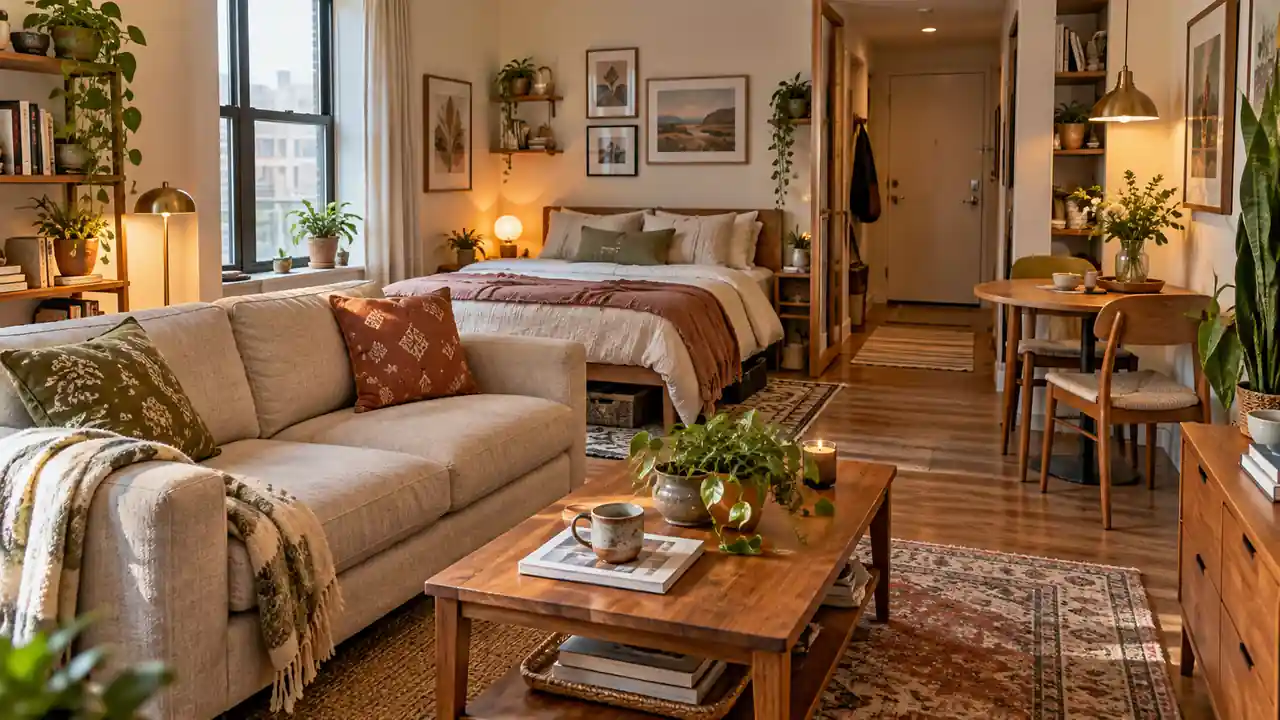
The most helpful studio apartment decorating ideas make daily life feel a little more like you. A favorite print, a comfortable place to read, and somewhere sensible to leave your keys can matter more than an entirely new furniture set. Because nearly everything shares one room, small choices show up throughout the day, from your first cup of coffee to the moment you turn out the bedside lamp.
Start with the belongings and routines you already enjoy. Notice what feels unfinished, what gets in the way, and which corner could use a little warmth. These twenty-five ideas offer approachable ways to add character while keeping the room easy to use. Choose a few that suit your actual home, then give yourself time to live with them.
1. Color From Artwork
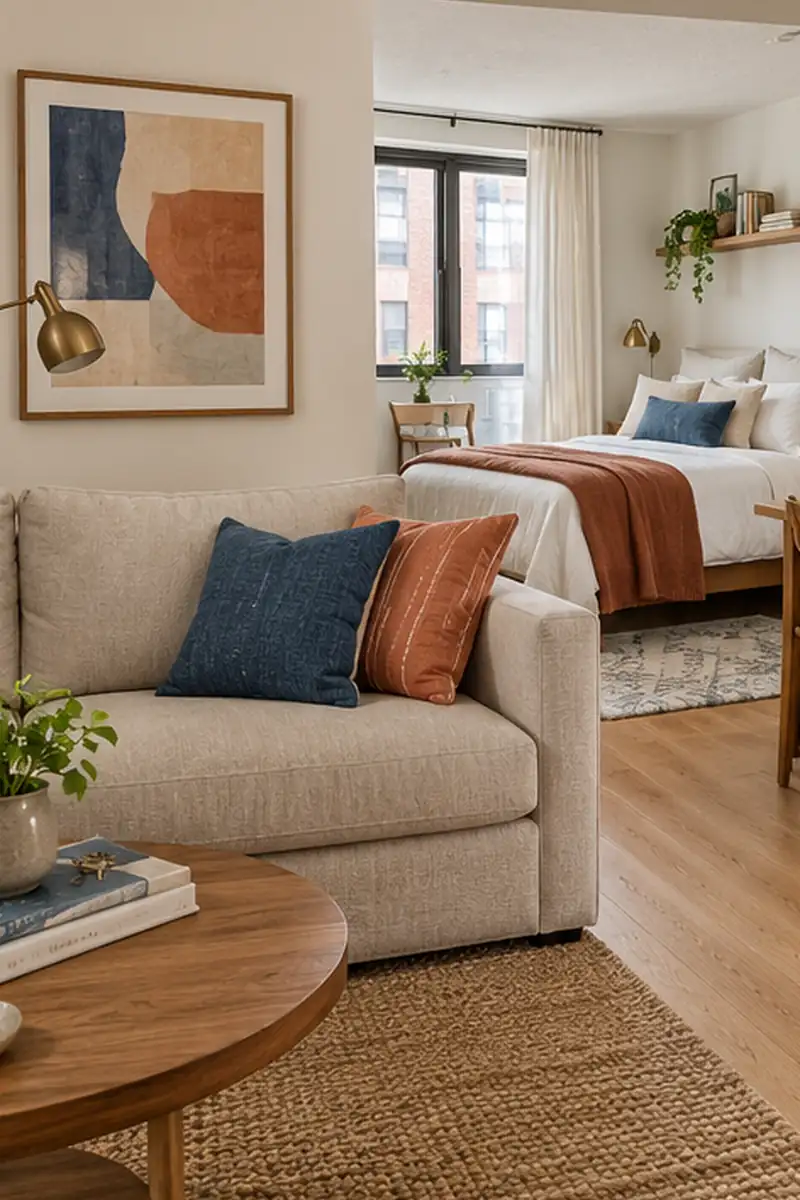
A favorite print can settle the color question before you buy another cushion. Look closely at the picture and choose two shades you would enjoy seeing across the room. Use the quieter shade for a larger textile, then repeat the brighter one in something small beside the sofa.
The connection should feel relaxed rather than perfectly matched. A rust cushion can pick up a warm detail in a landscape, while a faded blue mug echoes the sky. Keep the rest of the room simple enough that the artwork still feels like something you chose for yourself.
2. Welcoming Entry Tray
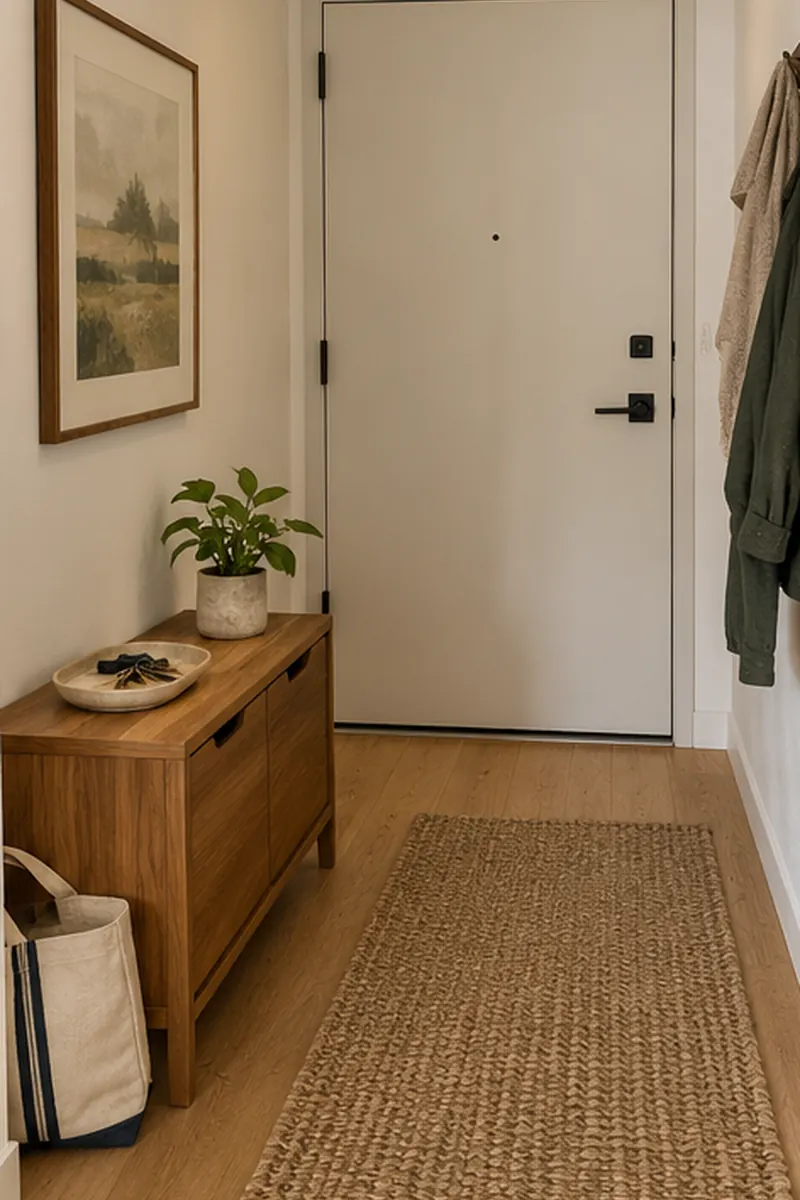
- Choose one small dish for the keys you use daily.
- Place it on a surface you naturally pass when entering, clear of the door swing.
- Give shoes a separate home below or inside a low cabinet.
- Add one personal detail, such as a little photograph or a ceramic bowl you already own.
Coming home feels easier when the first surface has a clear purpose. Keep the tray small enough that it cannot become a general dumping ground. If mail starts piling up beside it, move paperwork to a separate folder and leave this spot ready for the next time you walk in.
3. Everyday Throw Blanket
Quick Tip:
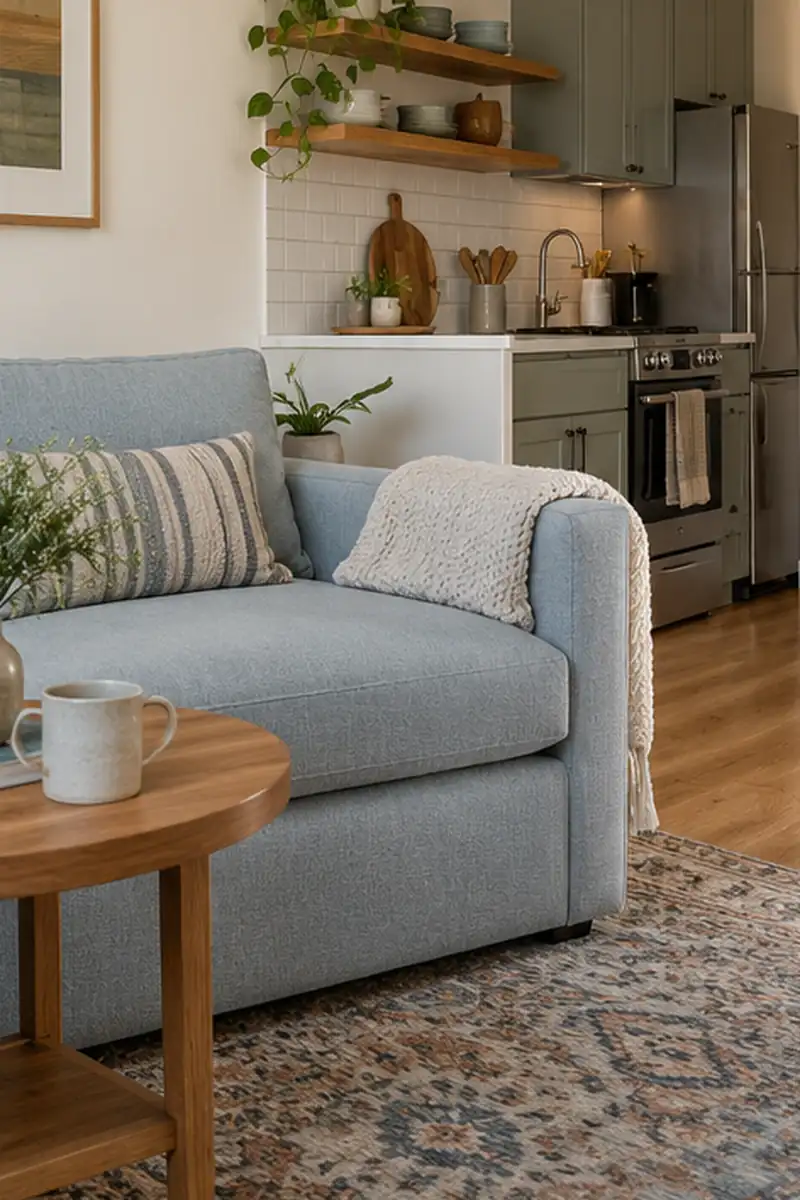
Choose a blanket you genuinely like touching, then put it where you actually sit. Fold it over a sofa arm rather than spreading it across the entire seat. That keeps both the fabric and the sofa easy to use.
A single throw adds texture without creating a nightly pile to move. Check its washing instructions and pick a color that works with your existing upholstery. During warmer months, fold it into a nearby basket so the sofa stays comfortable and the blanket is still easy to find.
4. Reading Chair Corner
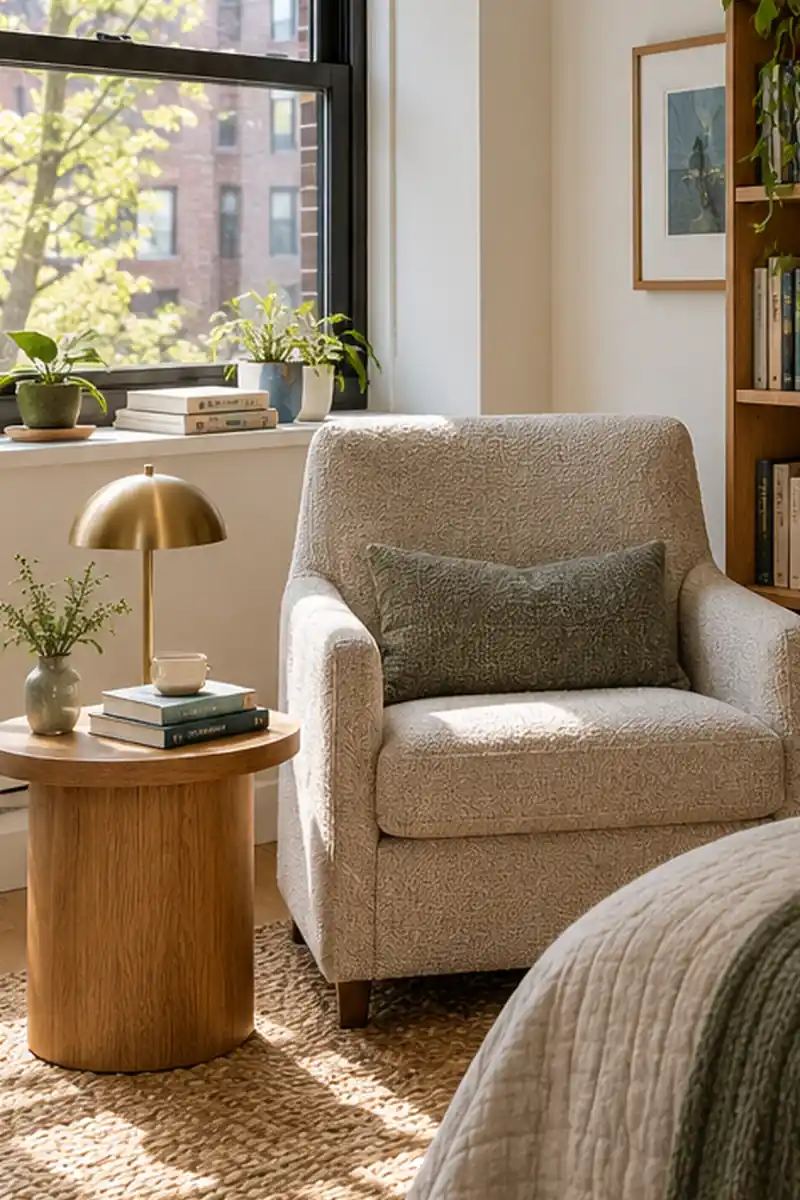
BEFORE: The spare chair holds laundry because it has no other clear role. Books migrate between the bed and the kitchen counter.
AFTER: The chair faces a pleasant view and sits beside a small table. A current book and reachable light make it somewhere worth sitting.
Try using the corner for a few evenings before adding more furniture. You may discover that the existing chair only needs a better cushion or a table within reach. Keep the route around it open, and choose a place where reading does not interrupt access to your everyday storage.
5. Bedside Landing Spot
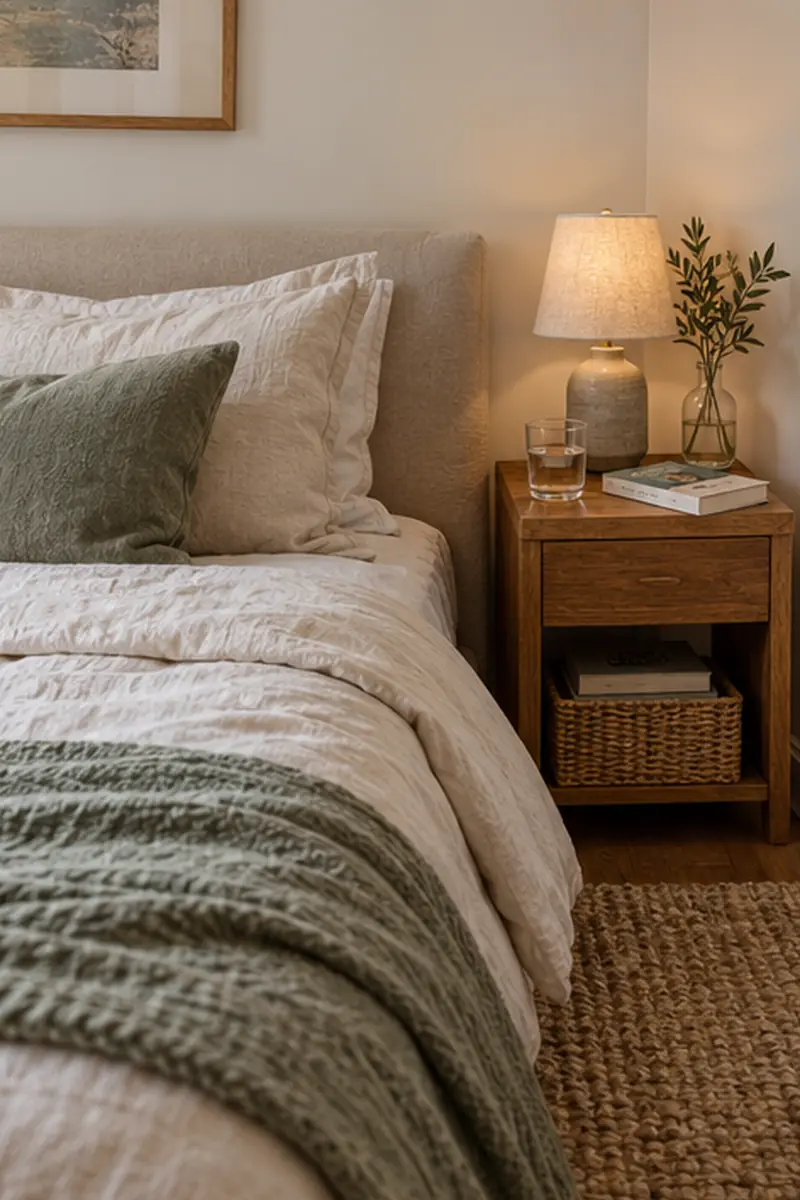
- List the things you reach for before sleep, such as water, glasses, and a book.
- Choose a stable bedside surface that holds those items without crowding the route past the bed.
- Place the lamp so you can use its switch comfortably.
- Put occasional items inside a drawer or elsewhere, leaving the top ready for tonight.
A useful bedside setup makes the sleeping area feel intentional even when the bed is always visible. The surface does not need to match the rest of your furniture. A simple wood table can work beautifully, provided its height, stability, and usable space suit your own evening routine.
6. Dining Surface Choice
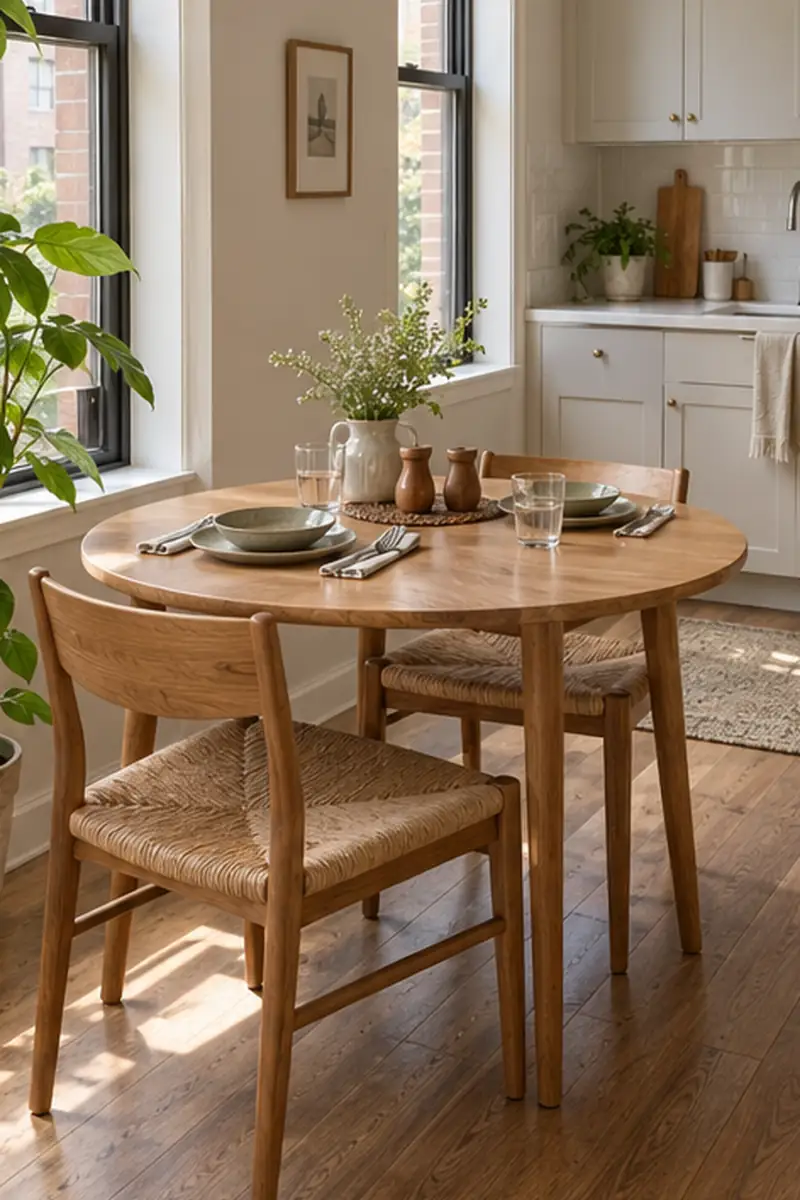
| Detail | Small Round Table | Compact Rectangular Table |
|---|---|---|
| Everyday meals | Comfortable for a close conversation | Useful for side by side tasks |
| Placement | Often sits away from the wall | Can sit against a suitable wall |
| Styling | One small central object | A short runner or paired place settings |
Choose your table around the meals you actually eat at home. Set out plates and pull out chairs before deciding whether the footprint works. A table with room for everyday use looks more welcoming than an oversized one that forces you to squeeze past it throughout the day.
7. Personal Photo Cluster
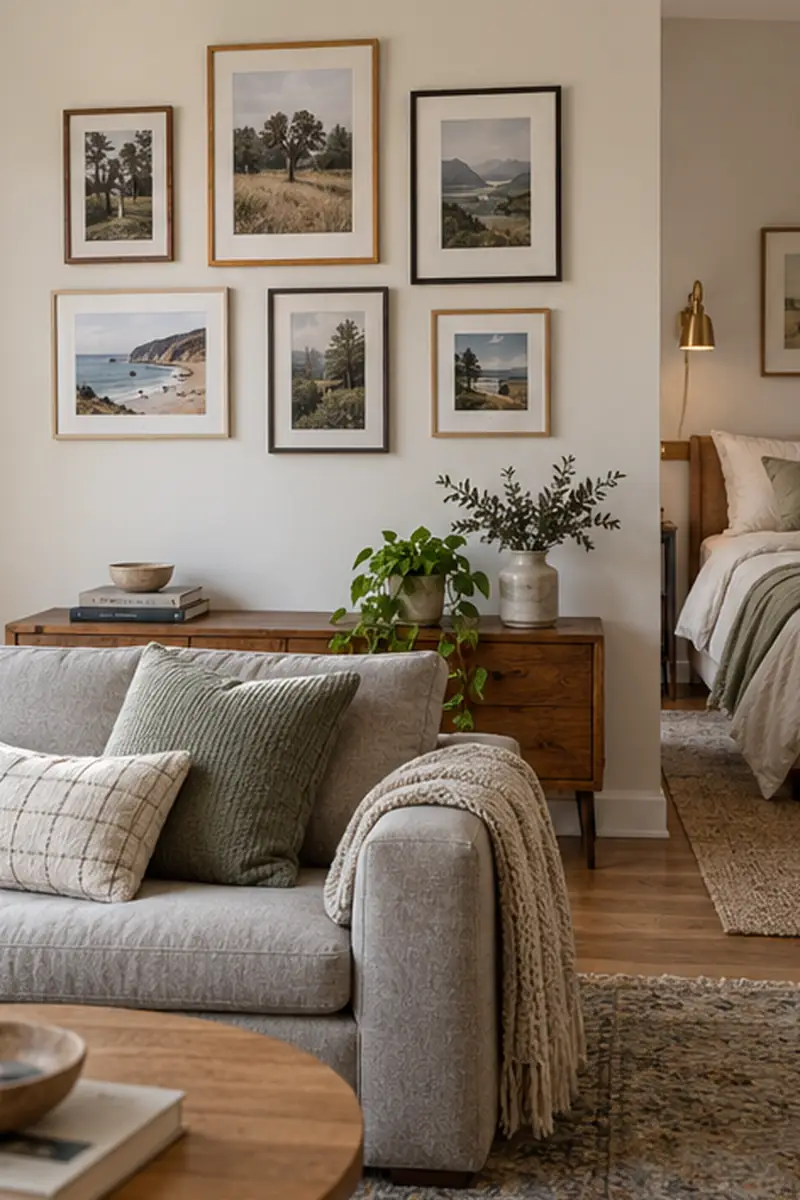
DO
- Choose photographs you enjoy seeing every day.
- Repeat one frame finish to link different picture sizes.
- Leave a little empty wall around the group.
DON’T
- Fill every gap simply because another frame fits.
- Mix so many frame styles that the photographs disappear.
- Hang heavy frames above the sleeping area.
Begin with three or four pictures and lay the arrangement on the floor first. The strongest grouping often includes a mix of places and small moments rather than matching portraits. Follow mounting instructions and rental rules, then live with the cluster before deciding whether it needs another frame.
8. Kitchen Counter Still Life
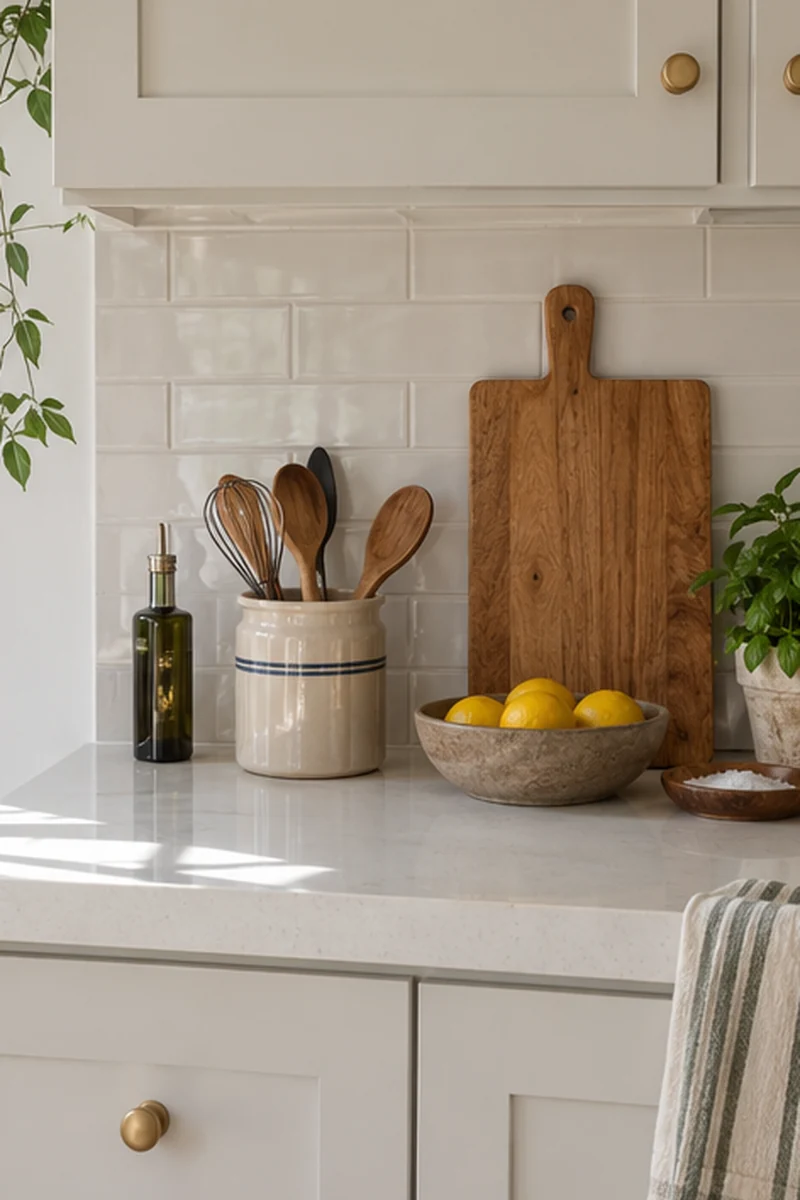
Useful Anchor: A chopping board you reach for regularly.
Small Container: A crock holding your most used utensils.
Fresh Detail: A modest bowl of fruit.
Empty Space: Enough clear counter for your normal preparation routine.
The kitchenette is part of the room, so everyday tools can contribute to its appearance. Group only things that belong there and wipe the area as part of your usual cleanup. Keep decorative pieces away from cooking heat, and avoid borrowing the counter space you need to prepare meals.
9. Mixed Wood Finishes
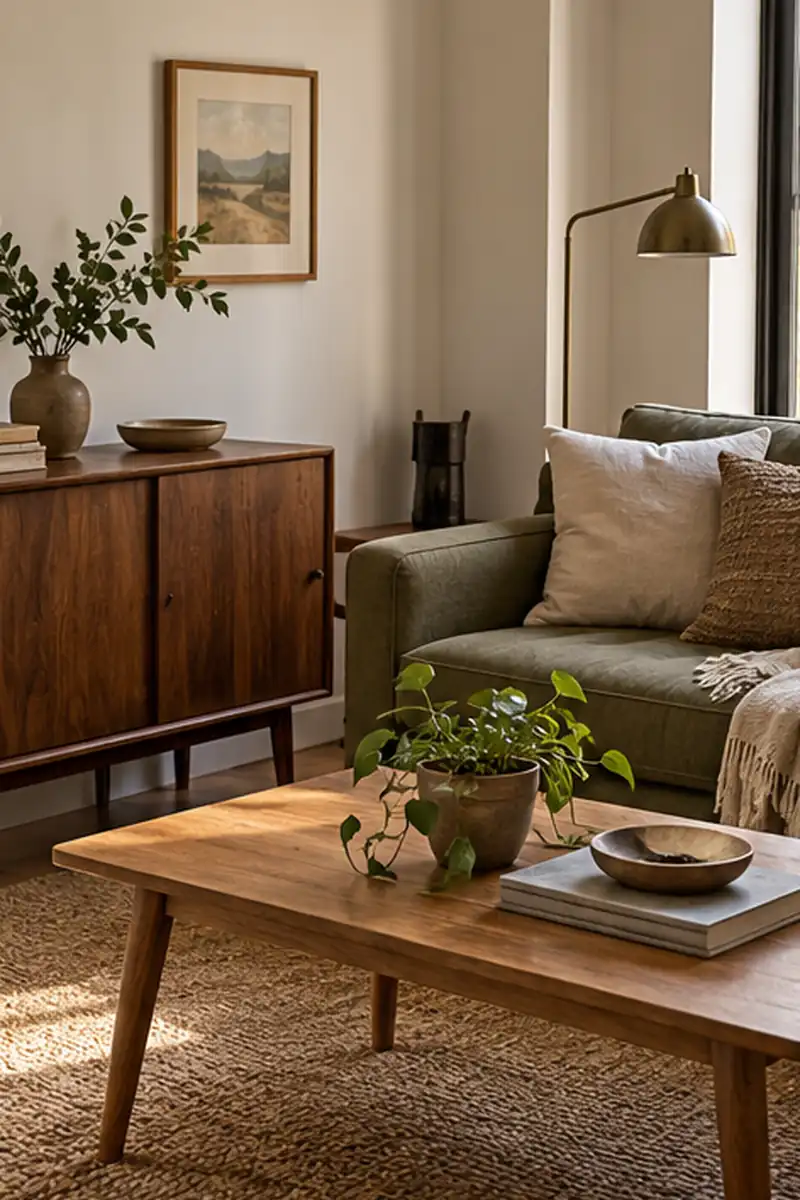
Furniture collected over time rarely arrives in one matching wood finish. That can make a studio feel more personal when the pieces share a little visual warmth. Start with the largest item, then add a second tone that looks comfortable beside it in both daylight and evening light.
You might pair a medium walnut cabinet with a lighter oak table and repeat each color in a small frame. Give the finishes some breathing room through plain fabric or a quiet rug. The goal is a friendly relationship between useful pieces, with room for their individual character.
10. Patterned Cushion Pair
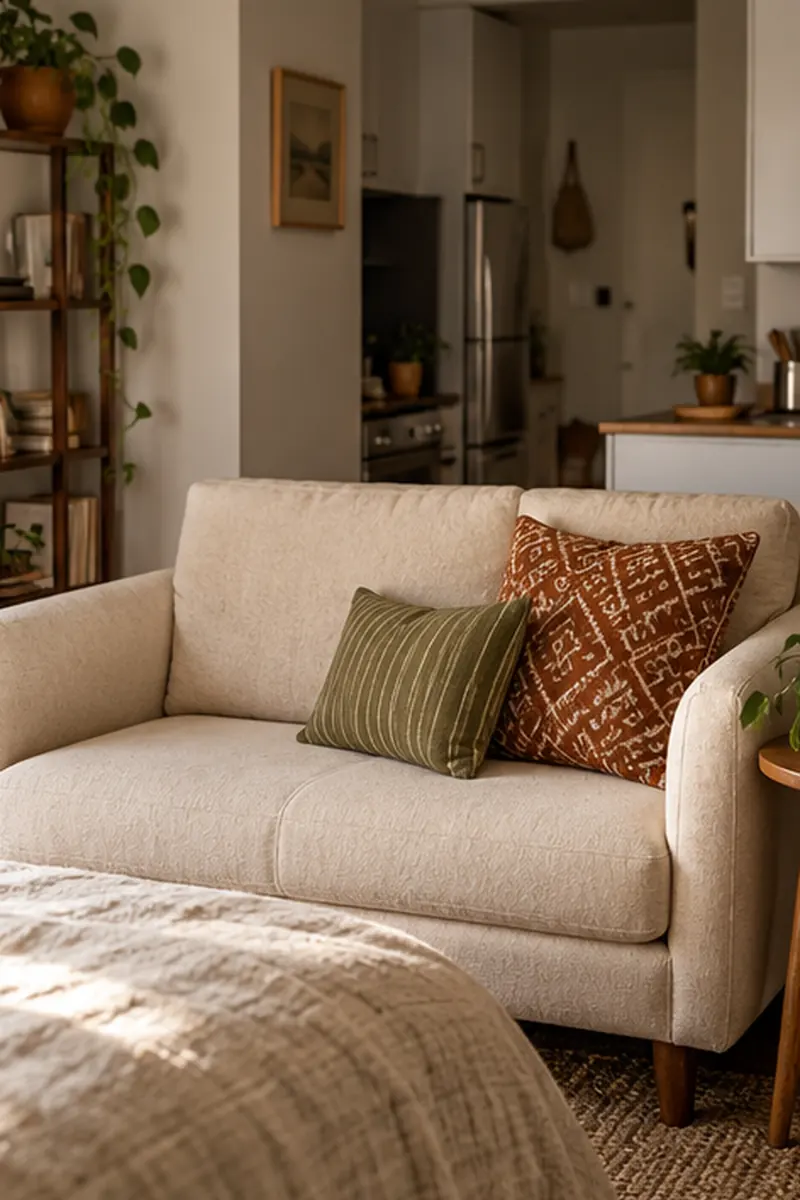
- Choose a shared background color to connect the two cushions.
- Mix a smaller pattern with a larger one so they remain easy to distinguish.
- Place the busier print against plain upholstery.
- Check that the inserts feel comfortable when you sit, rather than judging the covers alone.
Two thoughtfully chosen cushions can give a plain sofa enough detail for the whole studio. Try a narrow stripe beside a loose geometric print, both with a little cream in the background. Leave enough clear seat space that guests can settle in without first moving your decorations elsewhere.
11. Textured Window Panels
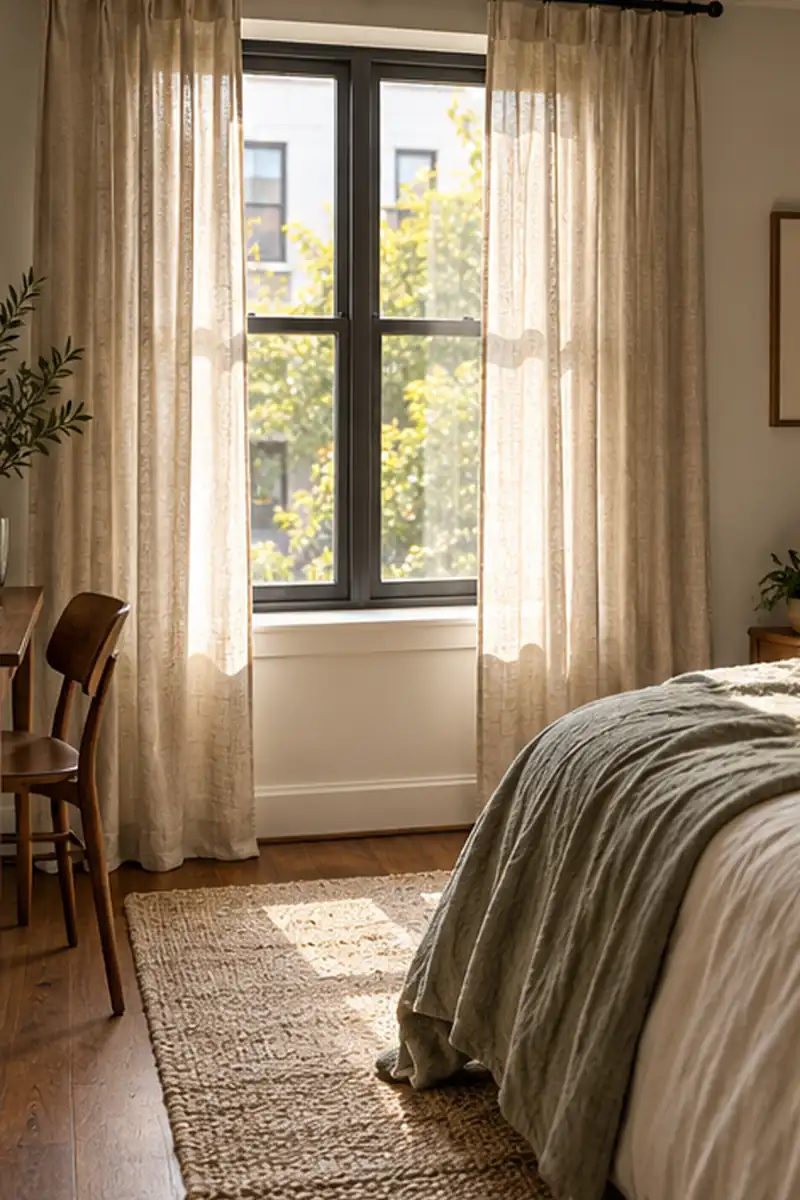
Quick Tip:
Look for texture before adding a strong curtain pattern. An oatmeal weave or softly slubbed fabric can give a bare window a gentler outline. Hold a sample against the wall and check it with daylight behind it.
Use suitable existing hardware where possible, and confirm permission before changing the installation. Choose a length that stays out of the walking route. Keep curtains clear of heaters and vents, and make sure the window remains accessible. Simple panels should support daily comfort as well as soften the view.
12. Beloved Object Display
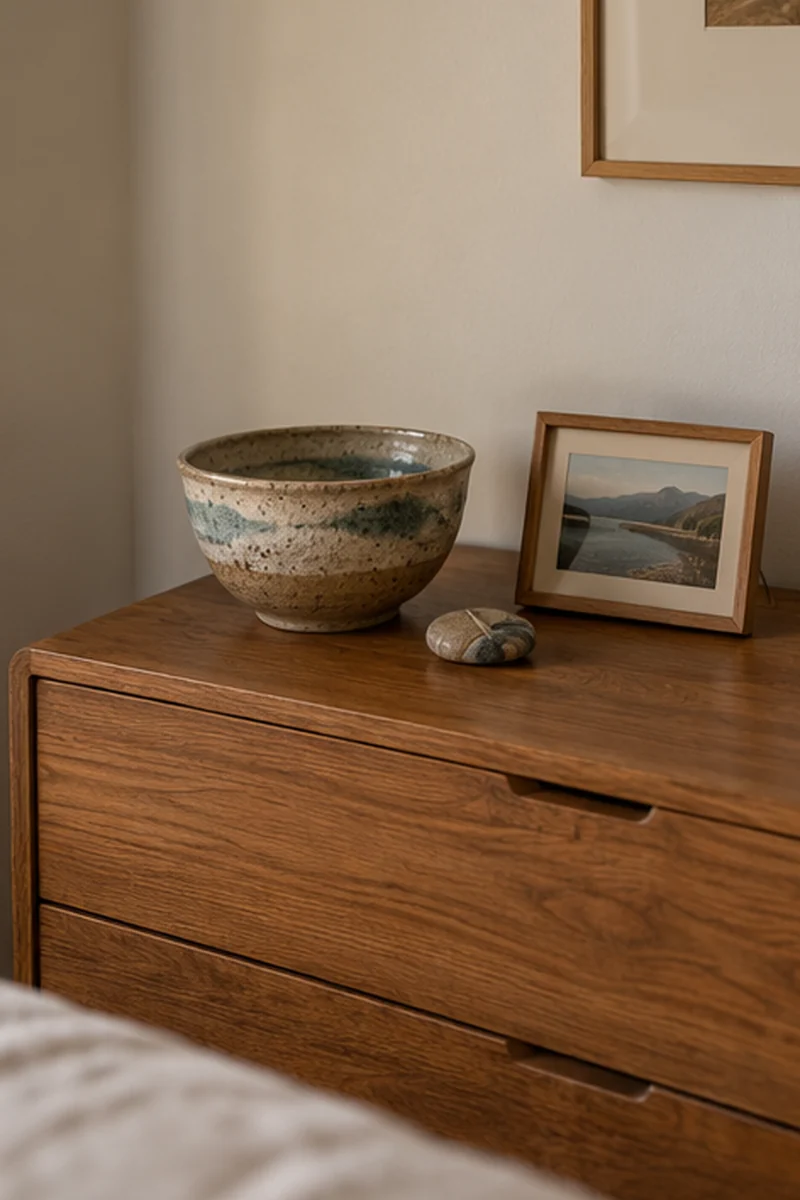
BEFORE: Keepsakes sit in a box while the visible shelves hold generic decorations. The room looks tidy but could belong to almost anyone.
AFTER: A handmade bowl and a small travel memento share a low cabinet. Empty space around them makes their shapes easier to appreciate.
Choose objects because you like their story or appearance, then give each enough space to be noticed. Rotate fragile or numerous keepsakes rather than displaying everything at once. A practical surface still needs room for daily use, so stop adding pieces before the arrangement becomes awkward to clean around.
13. Weekend Flower Vase
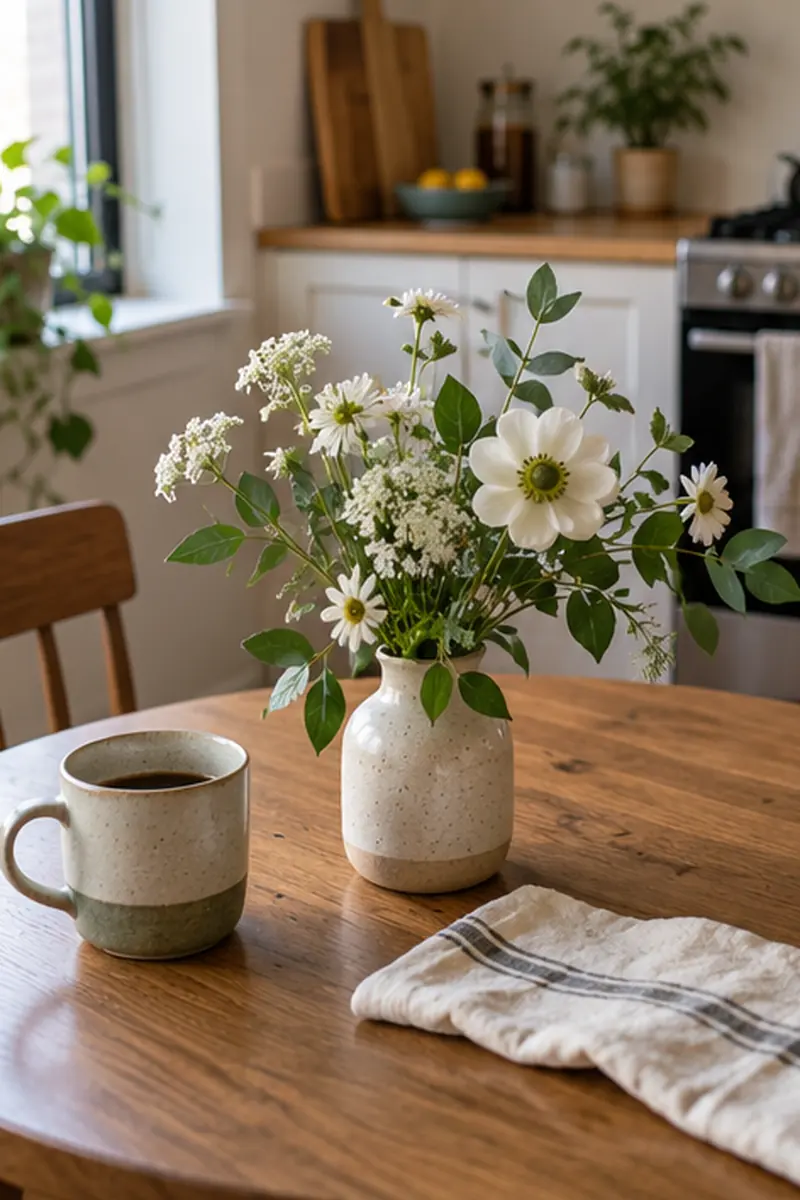
- Pick a modest vase that fits your available tabletop.
- Choose a small bunch with stems that look good together, rather than trying to fill a large arrangement.
- Trim and arrange the stems according to their care needs.
- Place the vase on a stable surface where it will not interrupt meals or brush against your arm.
Fresh flowers can mark the weekend without requiring a permanent decorating purchase. A few stems are often enough for a small table. Consider everyone who shares the home, including pets, when choosing flowers, and keep the arrangement away from electronics. An empty vase can look lovely between bunches too.
14. Covered Storage Choice
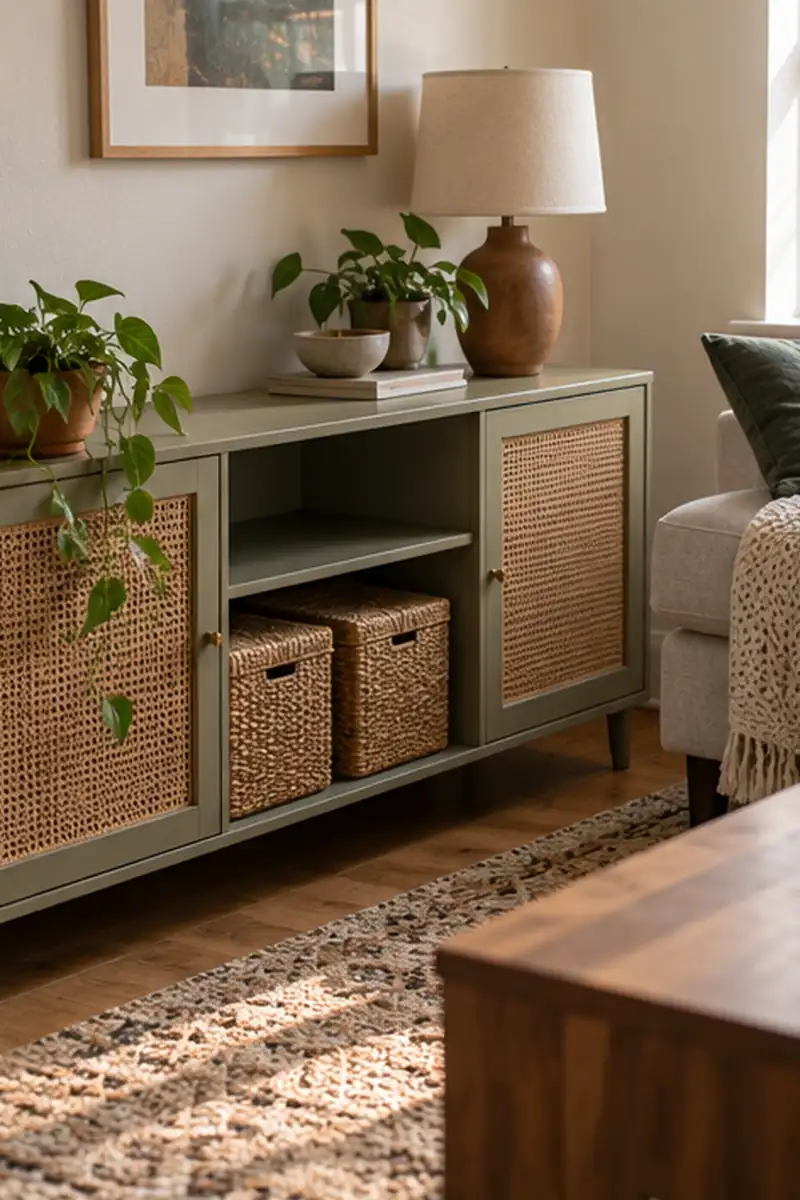
| Detail | Lidded Basket | Closed Cabinet |
|---|---|---|
| Best contents | A blanket or soft accessories | Mixed everyday belongings |
| Appearance | Adds a woven texture | Offers a quieter front |
| Access | Lift the lid to reach inside | Open the door or drawer |
Choose storage around the things you want to put away, then measure those things before shopping. A basket that is too small quickly becomes an overflowing display. Follow the furniture maker’s stability and anchoring instructions for cabinets, and leave enough room for doors or lids to open comfortably.
15. Practical Coffee Table
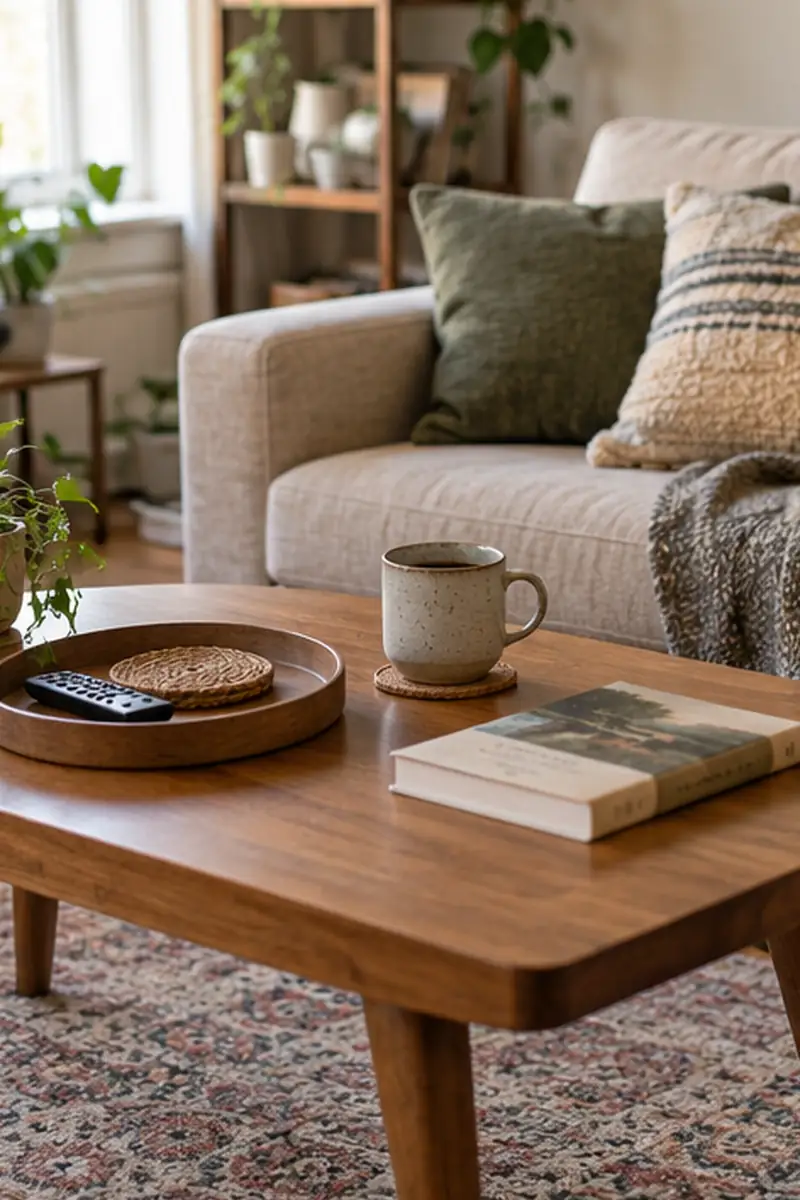
DO
- Leave a clear place for a drink and a book.
- Use one shallow tray to gather smaller items.
- Choose objects you can lift easily when cleaning.
DON’T
- Cover the entire surface with decorations.
- Balance tall fragile objects beside your usual seat.
- Choose a table that obstructs the route through the room.
A coffee table looks lived in when its styling grows from real use. One coaster, a current book, and a small tray can be plenty. Sit on the sofa and check your reach before settling the arrangement, then remove anything that makes an ordinary quiet evening feel unnecessarily fussy.
16. Record Listening Nook

Anchor: A sturdy low cabinet suited to the equipment.
Collection: A manageable selection of favorite records.
Comfort: A nearby seat you already enjoy.
Finishing Touch: One meaningful album cover or small artwork.
Let a genuine interest become part of the decorating rather than adding a display you never use. Keep equipment on a stable surface and follow its ventilation instructions. Store records where you can browse them easily, while keeping the top of the cabinet useful for playing and changing music.
17. Soft Bed Layers
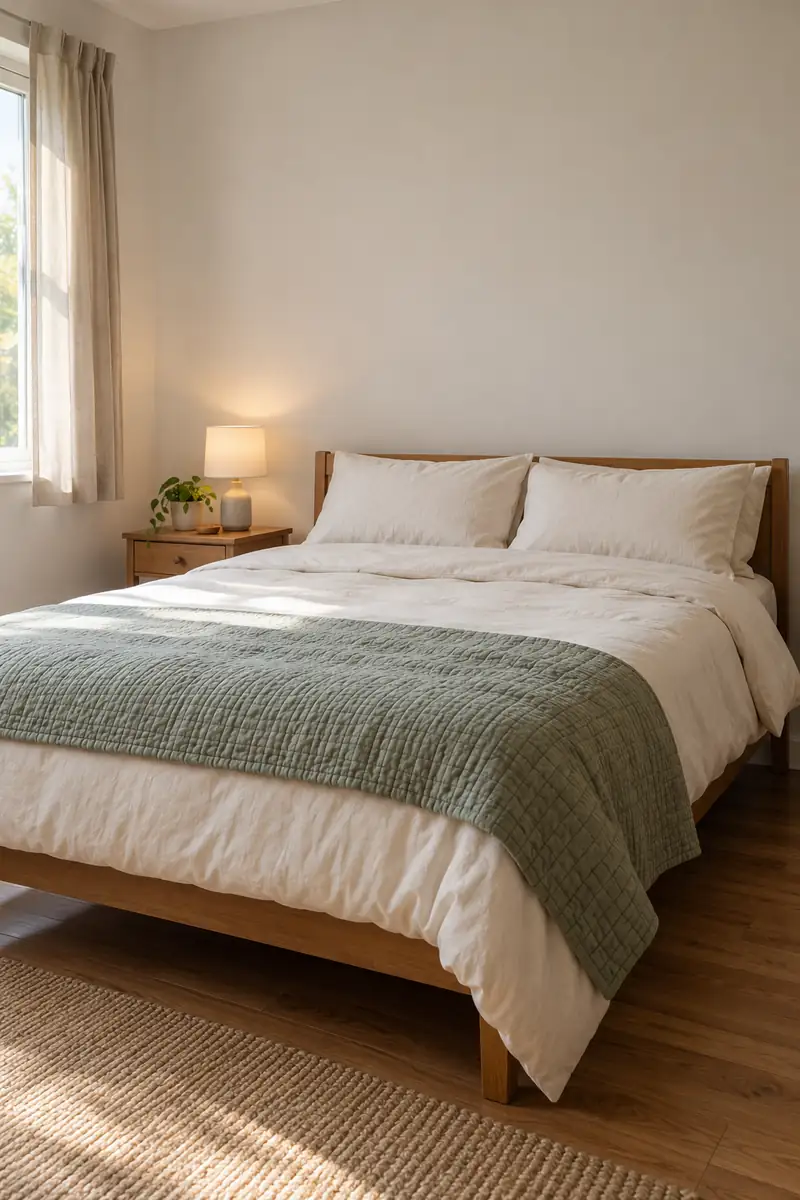
A studio bed contributes to the whole room even on a busy weekday. Choose a simple duvet or coverlet that is easy to straighten, then fold one softer layer across the foot. Cream with muted green or warm brown feels relaxed without demanding a perfectly coordinated set of bedding.
Keep the arrangement quick enough to reset before breakfast. Two sleeping pillows and a useful quilt can provide all the softness you need, especially when storage is limited. Check how the colors look from the sofa too, since the bed and living area often share the same view.
18. Wall Art Pairing
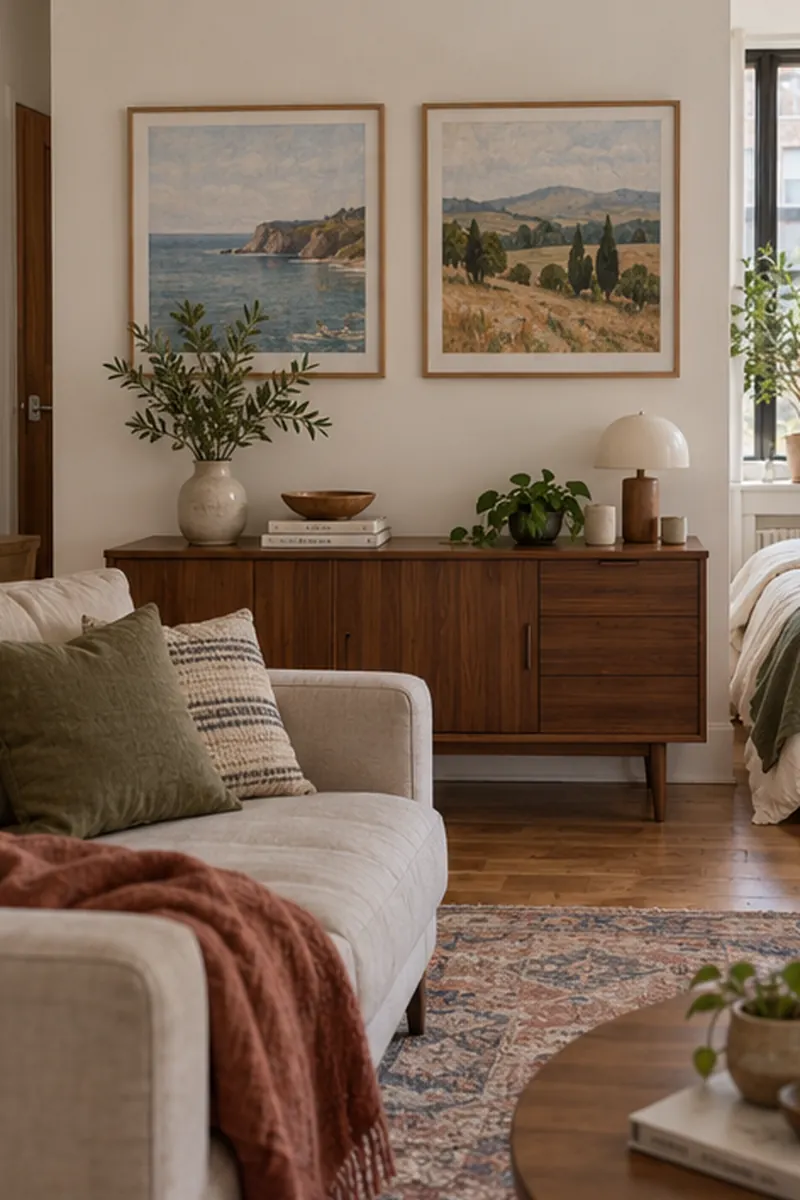
- Choose two pictures with a shared color, subject, or frame finish.
- Keep their combined size in proportion to the furniture beneath them.
- Test the spacing with paper templates before mounting.
- Check rental rules and use hardware suitable for the wall and the weight of each piece.
A pair of pictures can give an ordinary wall a clear point of interest without filling it. Try a landscape beside a quieter abstract image in related colors. Keep the arrangement comfortably visible from your usual seat, and resist adding a third piece simply to use the remaining space.
19. Everyday Dining Textiles
Quick Tip:
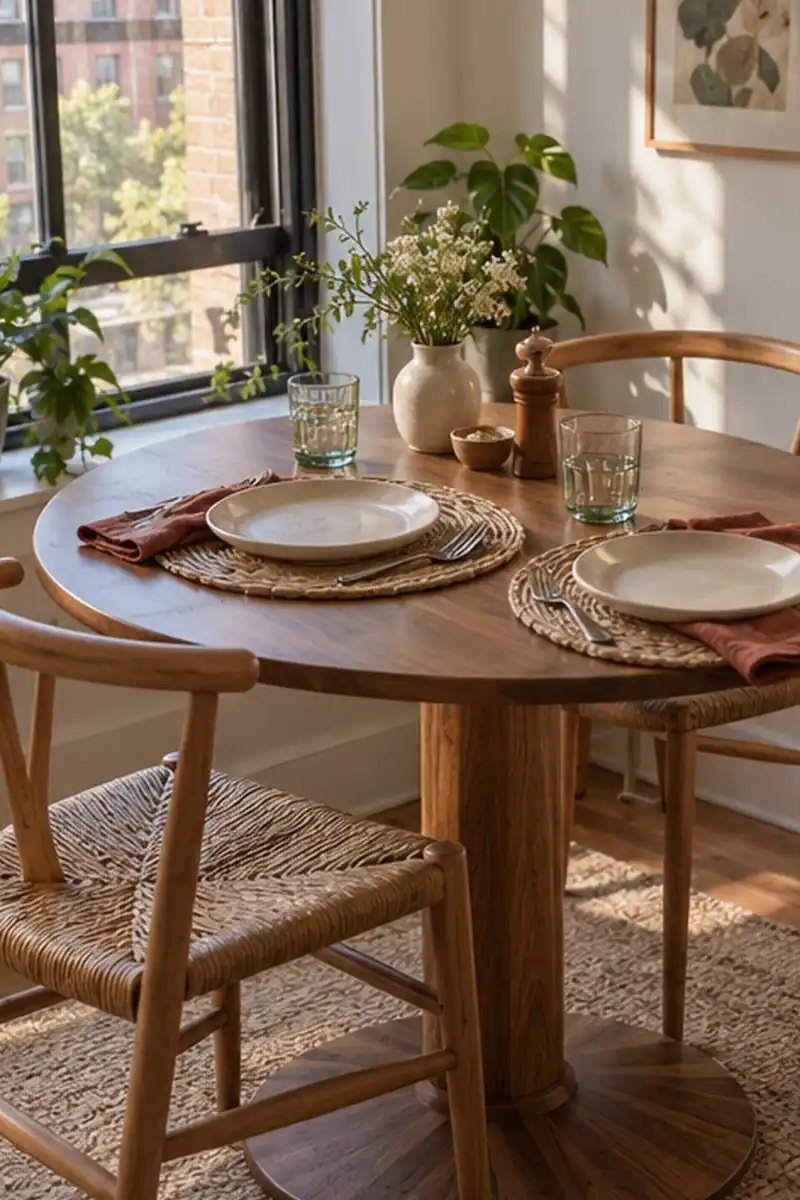
Put the nice napkins into regular rotation instead of saving them for guests. Choose washable fabric that you do not mind using on an ordinary Tuesday. A pair of placemats can provide enough color for a tiny table.
Dining textiles make everyday meals feel considered without taking up permanent room. Keep just the number you regularly use, plus a small spare set if needed. After eating, clear and wipe the table so it can support its other jobs, then store clean textiles together in an accessible drawer.
20. Tidy Work Finish
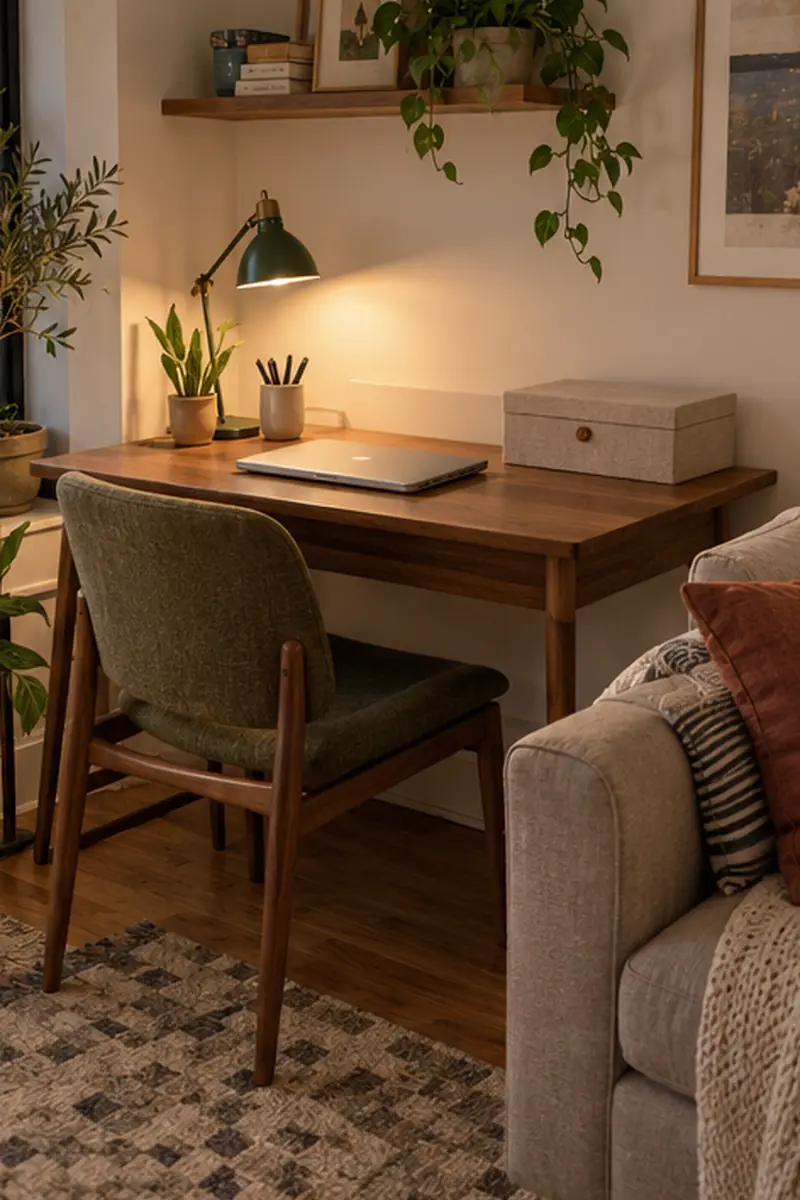
BEFORE: Open notebooks and a laptop cover the desk long after work ends. The sofa faces a visual reminder of unfinished tasks.
AFTER: The laptop closes, loose papers go into a document box, and the chair slides in. A useful desk becomes a quieter part of the room.
Build the end of work around a short reset you can repeat. Give active paperwork one container and put frequently used supplies within easy reach for tomorrow. Once the surface is clear, a small lamp or personal photograph can remain without competing with the tools of your working day.
21. Favorite Book Stack
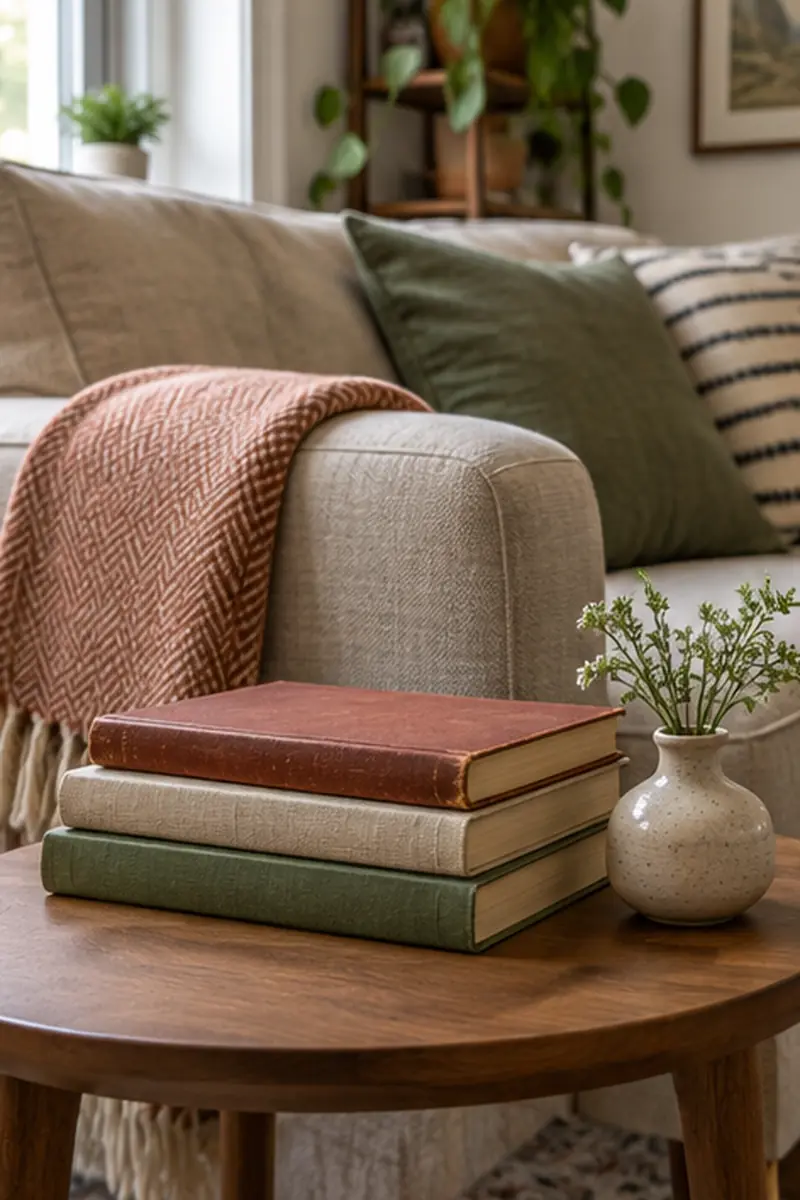
- Choose a few books you genuinely read or enjoy browsing.
- Check that the supporting surface has room for their full footprint.
- Make a low, stable stack with the largest book underneath.
- Keep any nearby decorative object separate so taking a book does not dismantle the arrangement.
Books add personal color and texture, but they work best when you can still use them. Rotate the stack as your interests change rather than building a permanent tower. Leave room for a drink or your glasses, and put the rest of the collection where you can find it.
22. Useful Catchall Choice
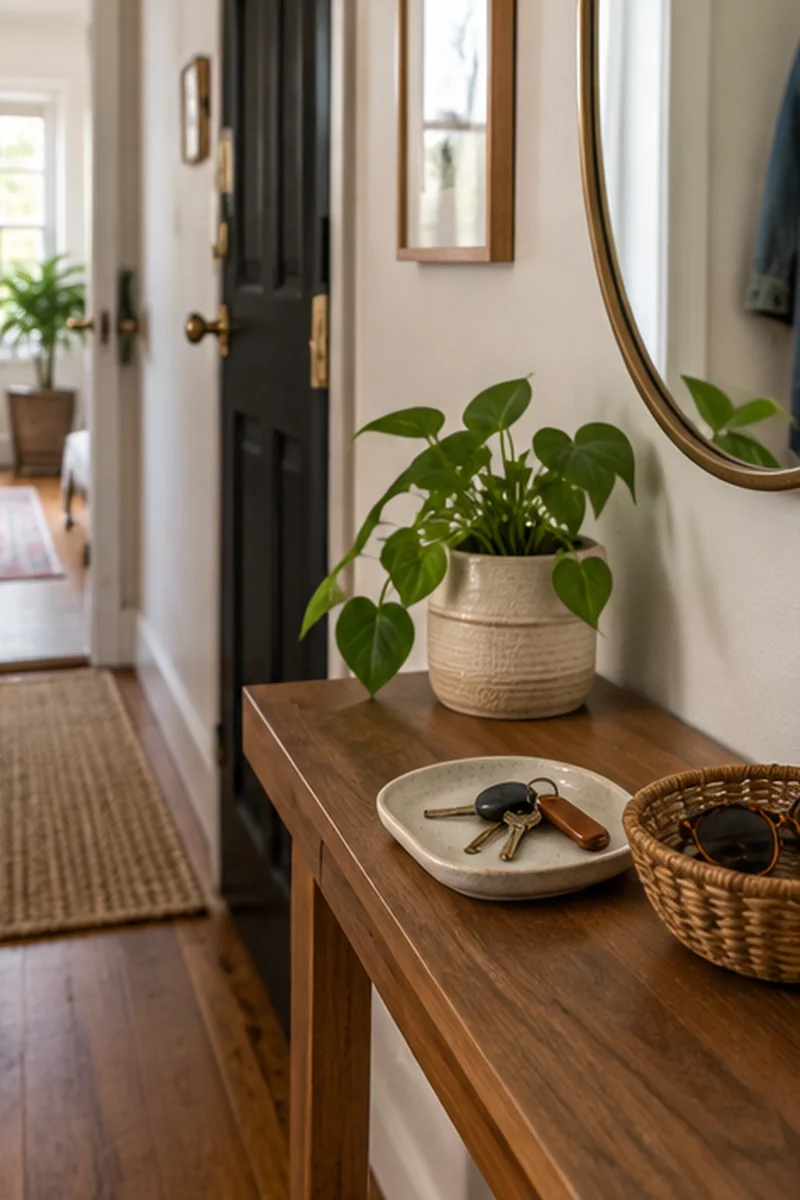
| Detail | Shallow Ceramic Dish | Small Woven Bowl |
|---|---|---|
| Good for | Keys and a watch | Sunglasses and small accessories |
| Visual effect | A clean outline and solid color | A softer texture and natural tone |
| Daily care | Wipe according to the finish | Empty regularly and remove dust |
The best catchall is only as large as the job it needs to do. Try a dish you already own before buying another organizer. Put it close to the moment you set things down, then remove unrelated items so the container keeps making the routine simpler rather than hiding clutter.
23. Bathroom Color Echo
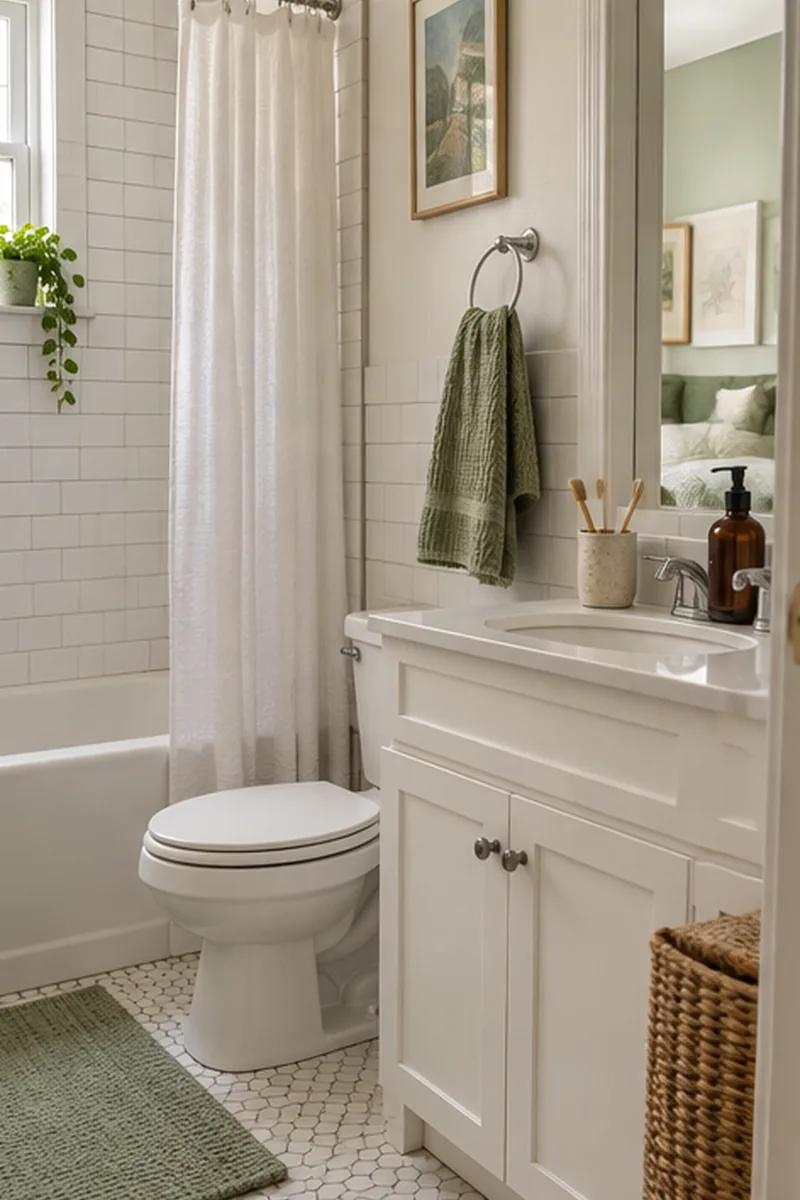
DO
- Repeat one existing room color in a hand towel.
- Choose a washable bath mat suitable for the floor.
- Keep the sink area clear enough for everyday use.
DON’T
- Add multiple accessories just to complete a matching set.
- Let damp textiles pile up in a closed basket.
- Crowd the doorway with storage or decorative objects.
A small color connection can make the bathroom feel like part of the same home. You might repeat the sofa’s sage cushion in a towel or echo a blue print with a ceramic cup. Focus on a few useful pieces and allow towels to dry properly between uses.
24. Seasonal Textile Swap
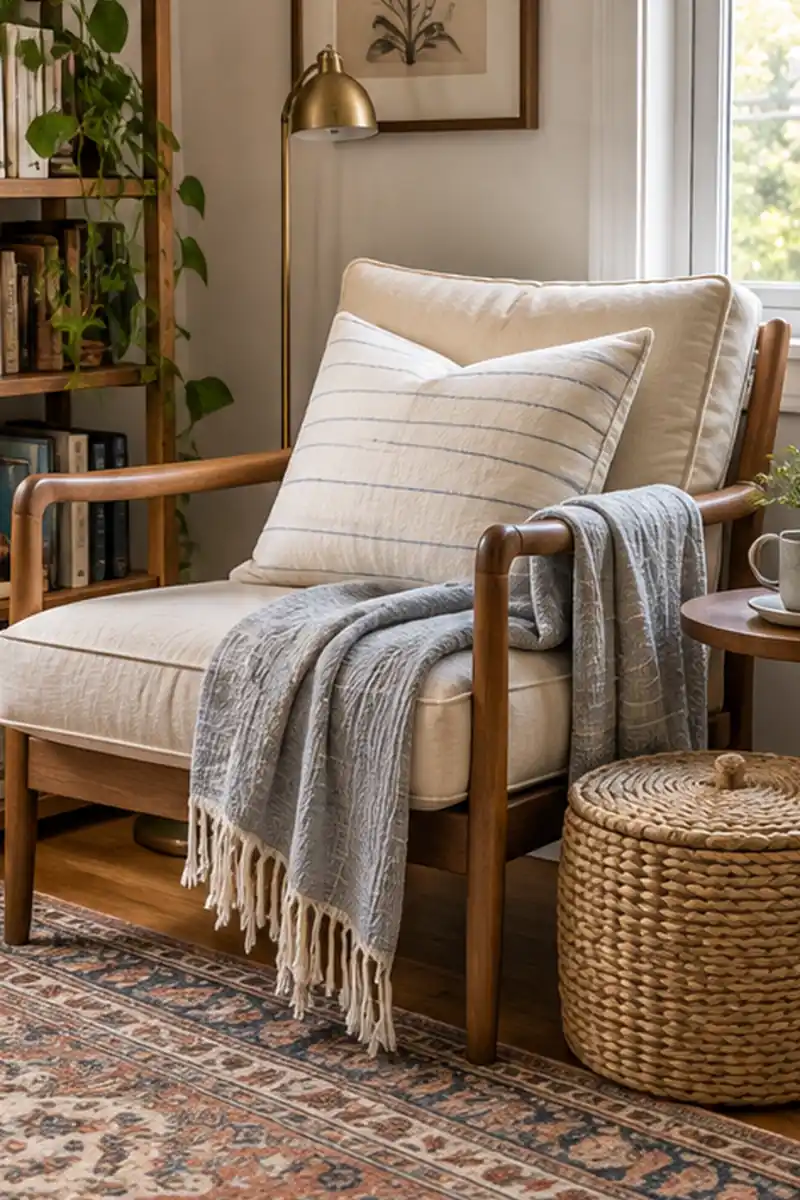
Small Change: Exchange one cushion cover.
Comfort Check: Use a throw that suits the season.
Storage Plan: Fold the unused textile into existing storage.
Color Link: Keep at least one familiar shade in the room.
Seasonal decorating can be as simple as changing what touches your skin. A lighter cotton cover may suit warm weather, while a more textured fabric feels inviting later in the year. Work with pieces you already have and avoid creating a second collection that your studio cannot comfortably store.
25. Room For Hobbies
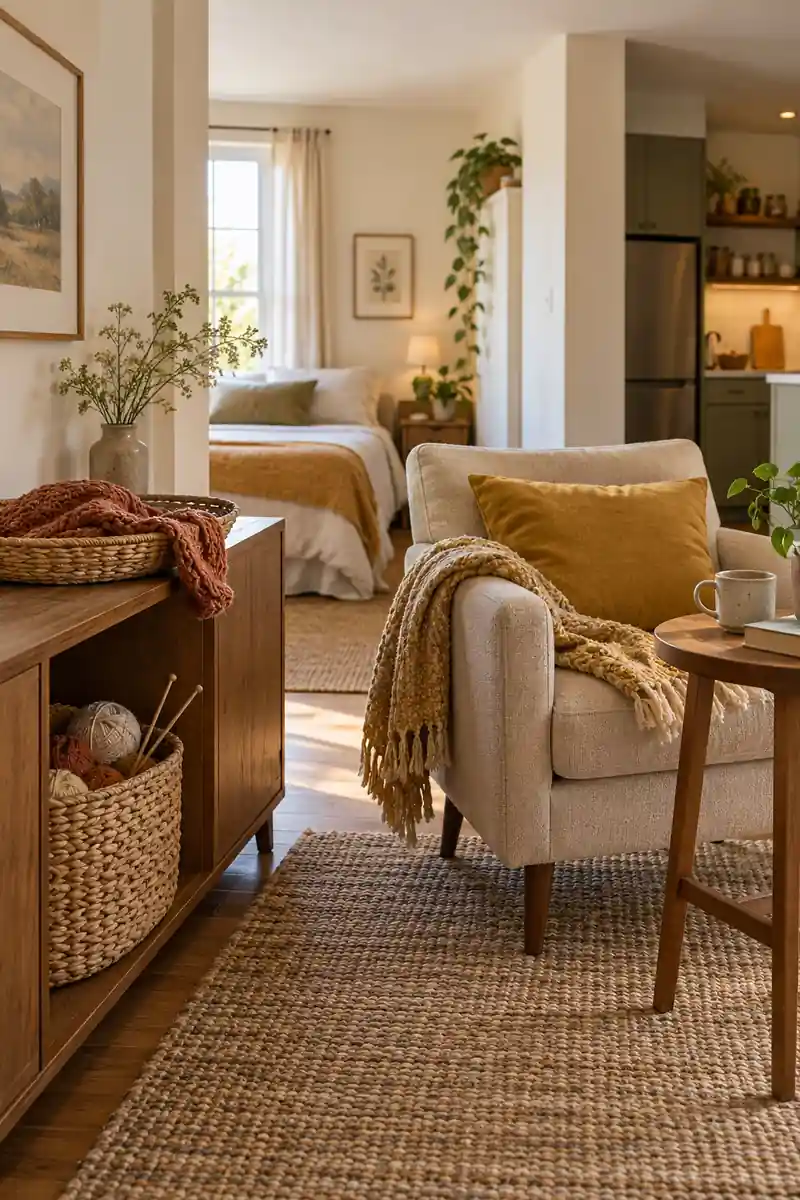
The details that make a studio feel like home often come from what you enjoy doing there. Give knitting, sketching, puzzles, or another regular interest a small accessible place. A basket inside an existing cabinet can make starting easier while keeping the materials together when you finish each session.
Let one attractive part of the hobby remain visible if you like seeing it. A handmade piece or a useful bowl of supplies can add more character than another decorative purchase. Keep tools stored safely and return the work to its home before it spreads onto surfaces needed for meals.
Make It Your Own
Good studio apartment decorating ideas leave room for your habits, interests, and everyday belongings. You do not need to complete every corner at once. Start with one useful change, such as a better bedside surface or a welcoming entry tray, and pair it with a detail that makes you smile. Over time, the room can reflect how you really live rather than a list of things to buy. Save your favorite ideas to Pinterest so you can return to them later, try one this weekend, and share the result with someone who understands the pleasure of making a small place your own.
Community
Join the conversation
Add a useful idea, ask a specific question, or share what worked in your space. Every comment is reviewed before it appears.