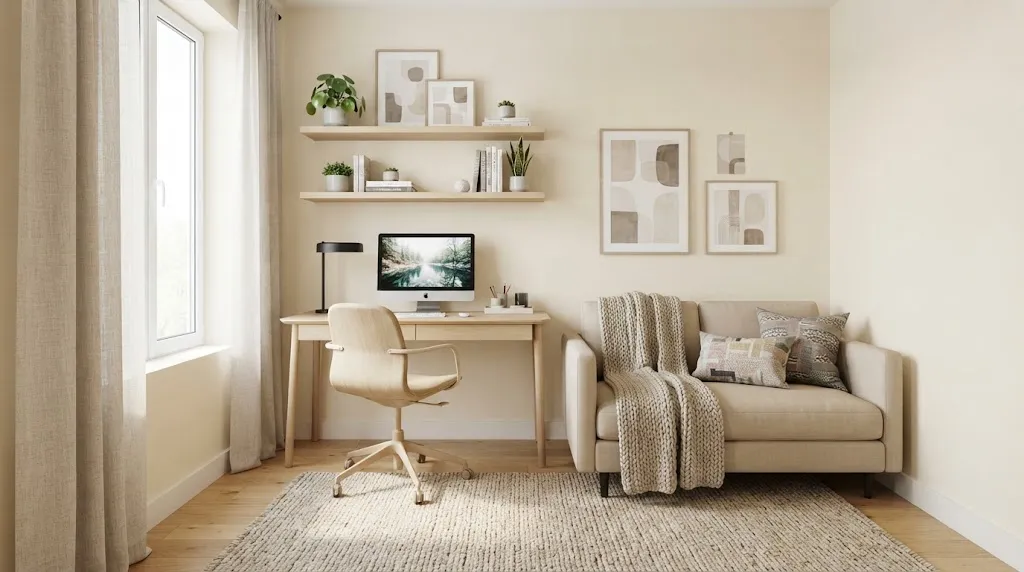
A small room can be both a productive office and a comfortable place to relax. The right layout makes all the difference. These small room office ideas with couch show how to combine work and seating without making your space feel cramped. If you have been looking for small office with couch ideas, these setups show how a desk and a sofa can share even a tiny room.
Whether you’re working from a studio apartment, spare bedroom, or compact multipurpose room, smart furniture placement can help every corner serve a purpose. A slim desk, compact sofa, floating storage, or flexible workstation can create clear zones while keeping the room open and inviting.
In my experience, the best small spaces are not necessarily the ones with the least furniture. They are the ones where every piece earns its place. The ideas ahead will help you choose practical layouts, colors, storage solutions, and furniture combinations that make working from home feel more comfortable and organized.
1. Compact Desk Sofa Pair
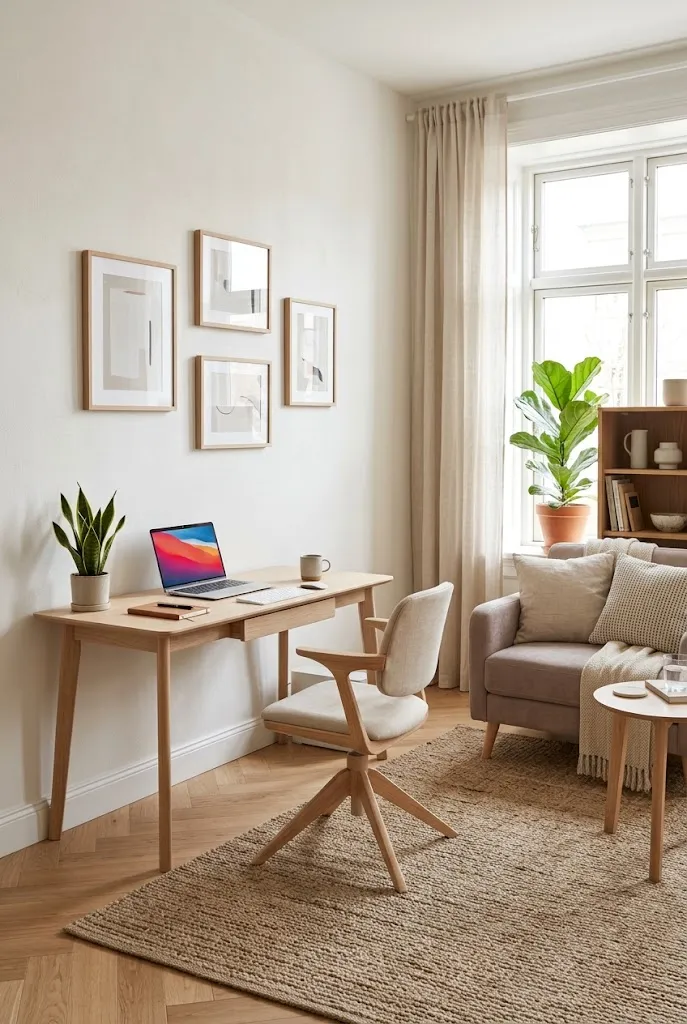
A compact desk and sofa can share one wall without making a small room feel crowded. Choose a narrow desk with open legs and place a petite sofa directly beside it. Keeping both pieces visually light leaves more floor visible and creates a comfortable work zone.
I’ve noticed that matching the desk and sofa through similar wood tones or fabric colors helps the arrangement feel intentional. Add a slim floor lamp behind the sofa and keep accessories limited to a few useful pieces. The result feels organized enough for focused work and relaxed enough for breaks.
2. Corner Couch Workspace
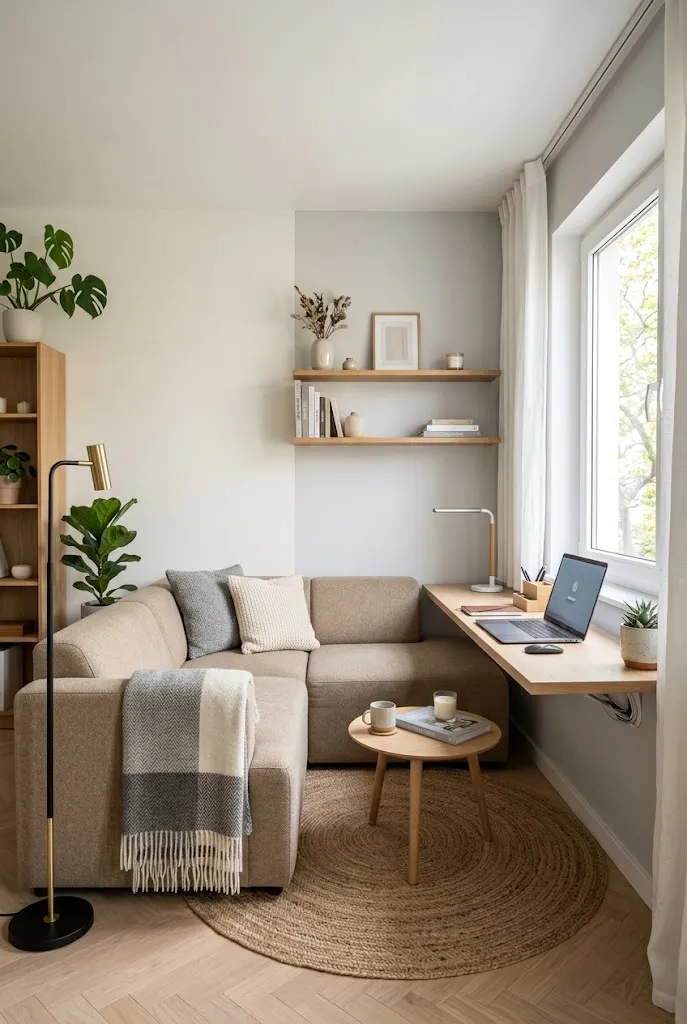
- Position the sofa against the longest wall to preserve walking space.
- Place a compact desk perpendicular to the sofa for a defined work corner.
- Choose furniture with raised legs so more flooring remains visible.
- Keep the corner palette light with cream, beige, oak, or soft gray.
- Add one vertical lamp to brighten the area without using desk space.
A corner setup works especially well when every square foot matters. The sofa creates a relaxed seating area while the nearby desk handles daily work without needing separate rooms. For extra storage, mount one or two shelves above the desk and keep the floor completely clear.
3. Window Side Office
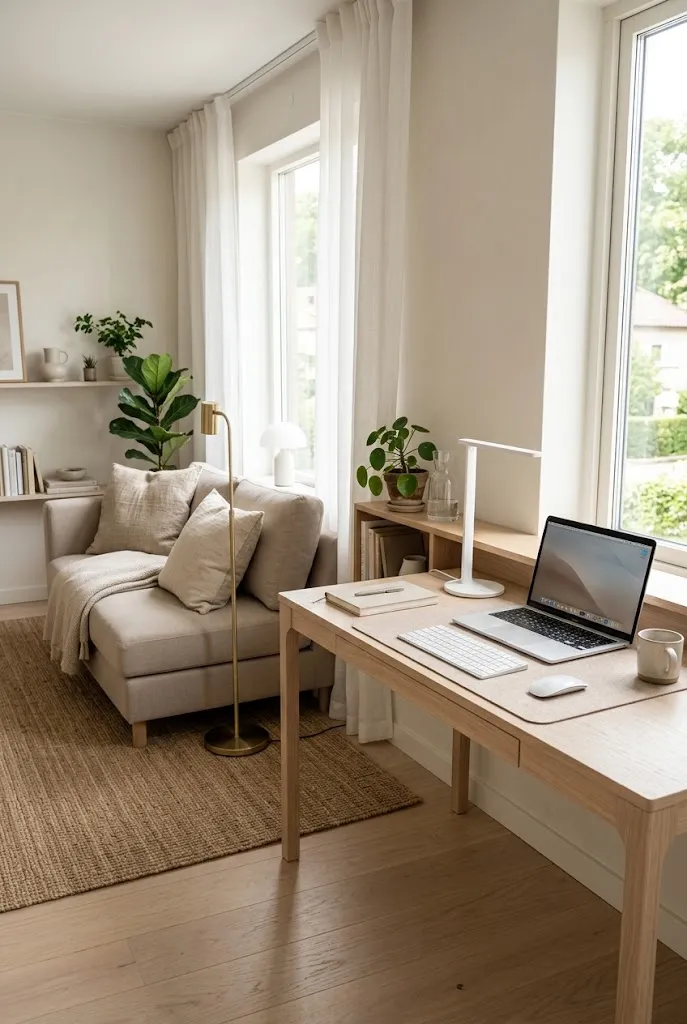
Quick Tip: Keep the desk slightly away from the window rather than blocking the entire light source. Use sheer curtains to soften glare while maintaining brightness. A sofa positioned along the adjacent wall can enjoy the same natural light without competing with the main work surface.
Natural light can make a compact workspace feel noticeably more open. Place the monitor perpendicular to the window to reduce distracting reflections, then use a small table lamp for cloudy afternoons. A light-colored couch keeps the seating area visually quiet while the window becomes the room’s main decorative feature.
4. Sofa Back Workstation
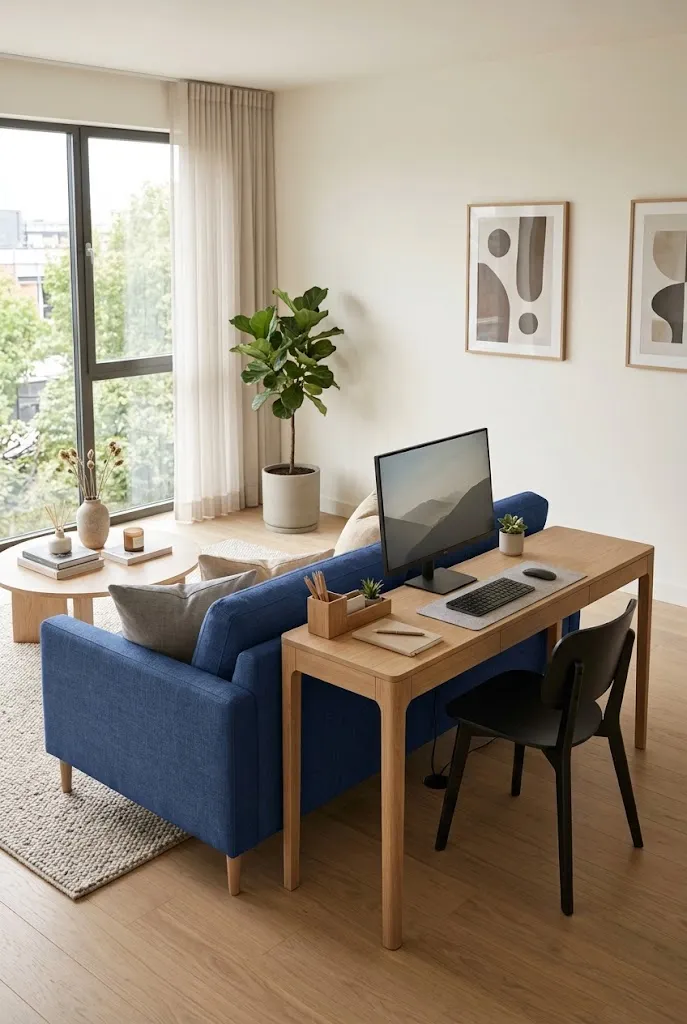
BEFORE: The sofa takes up most of the useful floor area, leaving no obvious place for a proper workstation. A separate desk feels bulky and makes the room look crowded.
AFTER: A narrow desk fits directly behind the sofa, turning unused space into a practical work zone. The sofa now creates a natural boundary between relaxing and working without adding another wall.
This arrangement works especially well in studio apartments or shared living rooms where furniture needs to serve multiple purposes. Keep the desk shallow and match its finish to nearby furniture so it feels like part of the room. I’ve seen this layout work beautifully when the desk doubles as a console after work hours.
5. Floating Sofa Desk
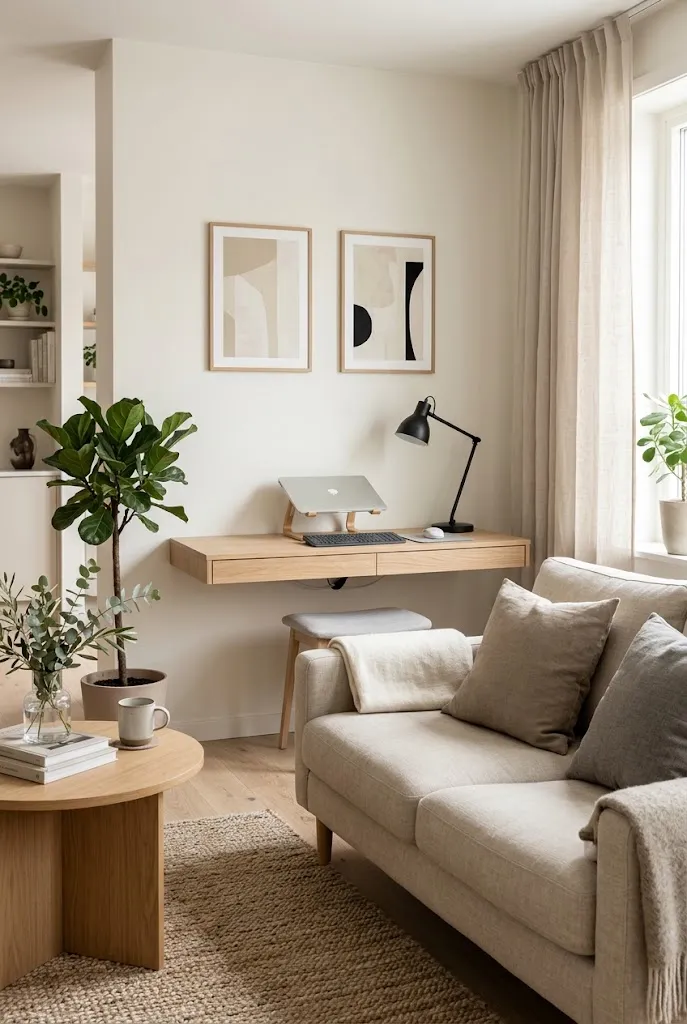
- Measure the wall: Choose a section that leaves enough clearance for the sofa and desk chair to move comfortably.
- Mount the worktop: Install a sturdy floating surface at a comfortable working height, checking the wall structure first.
- Add vertical storage: Place one or two slim shelves above the desk for notebooks, small decor, and everyday supplies.
- Keep the floor open: Skip bulky cabinets underneath and use a lightweight chair that can slide away.
A floating desk gives a compact office a lighter visual footprint because there are no bulky legs or storage units underneath. Pair it with a small couch nearby, then repeat the same wood or metal finish in both areas. The open floor also makes cleaning much easier in a busy apartment.
6. Desk And Loveseat
| Comparison Point | Option A: Full Sofa | Option B: Compact Loveseat |
|---|---|---|
| Floor Space | Uses more room | Leaves more open floor |
| Seating | More capacity | Comfortable for one or two |
| Desk Clearance | Harder to maintain | Easier to arrange |
| Small-Room Fit | Can feel bulky | Better suited to tight layouts |
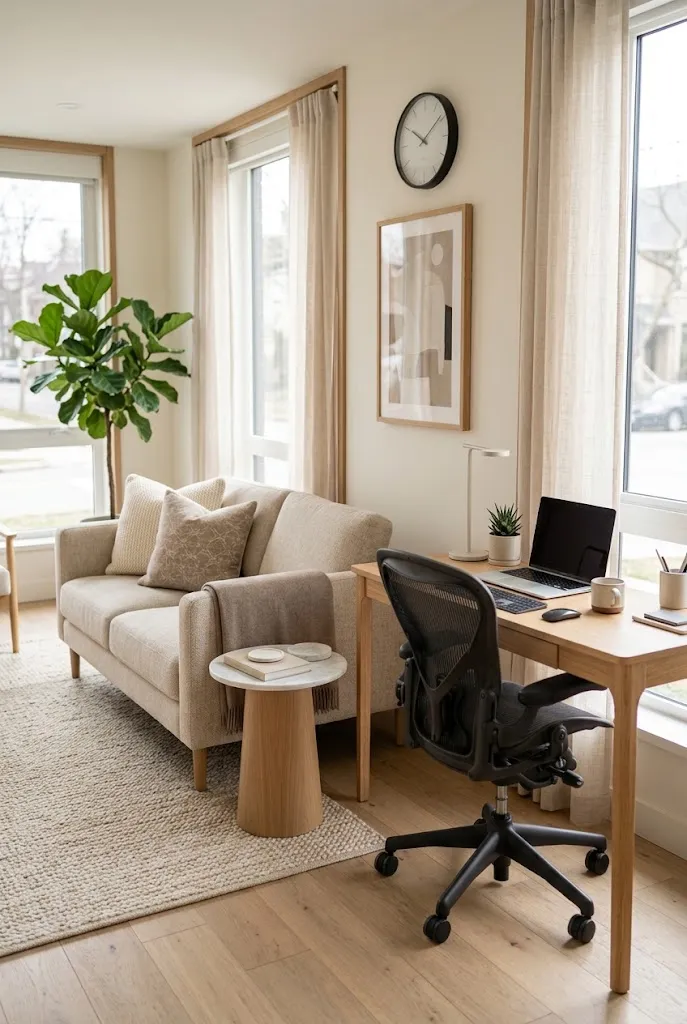
A loveseat can give you the comfort of a couch without consuming the footprint of a full-size sofa. Place it along the longest wall and keep the desk on a neighboring wall to create separate zones. This combination leaves the center open, which helps the room feel calmer and easier to move through.
7. Storage Sofa Office
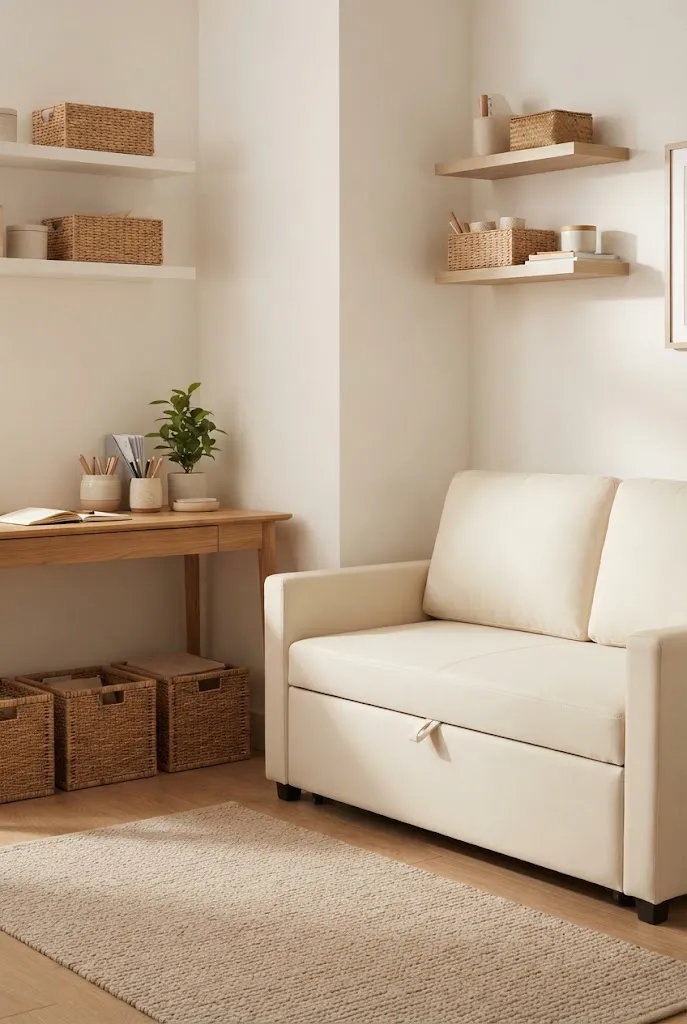
DO:
- Choose a sofa with hidden storage beneath the seat.
- Keep everyday office supplies inside labeled boxes or baskets.
- Pair the couch with a narrow desk to preserve walking space.
- Use matching neutral containers for a cleaner visual effect.
DON’T:
- Overfill the sofa storage with rarely used items.
- Place bulky cabinets beside the couch.
- Leave chargers and paperwork scattered across the seating area.
- Choose a deep sofa that blocks the main walkway.
Hidden storage makes a small office easier to maintain because the couch performs two jobs. Store notebooks, cables, extra stationery, or work files beneath the seat and keep the desktop reserved for current tasks. In my experience, accessible storage works best when frequently used items stay within arm’s reach.
8. Neutral Work Lounge
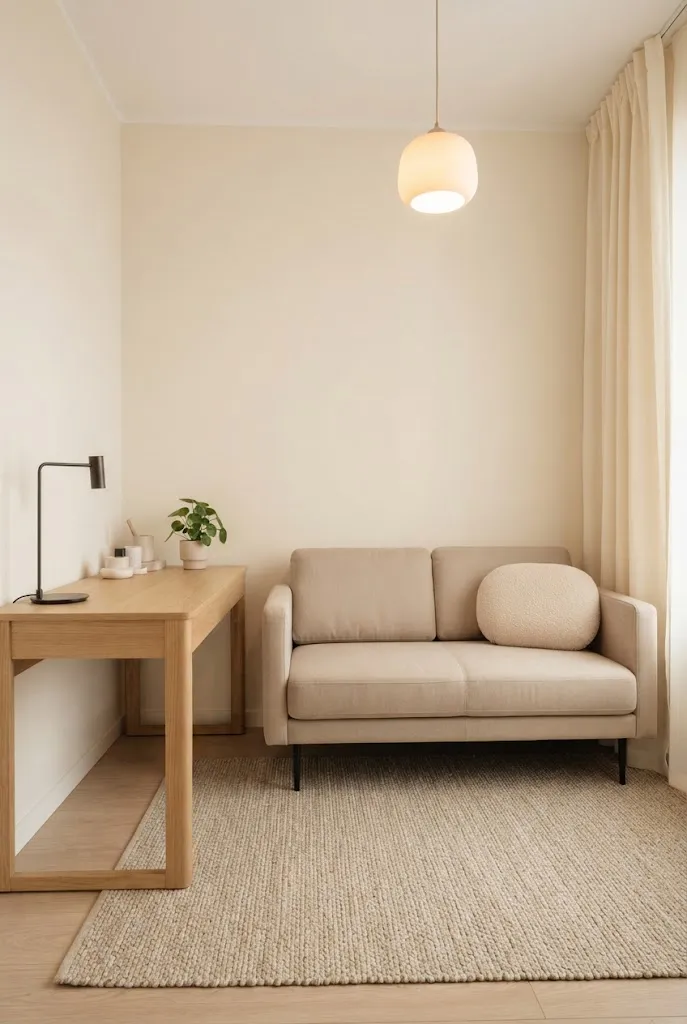
Cost: Low to moderate | Time: One afternoon | Skill Level: Beginner
Best For: Neutral apartment interiors | Works In: Bedrooms, studios, multipurpose rooms
Result: Softer visual flow with a coordinated work and lounge area
A neutral palette can make several pieces of furniture feel like one cohesive arrangement. Start with cream or beige upholstery, then introduce light wood through the desk and shelving. Add texture with a woven rug and one soft cushion. Keeping contrast subtle helps a small room appear more spacious.
9. Built-In Desk Nook
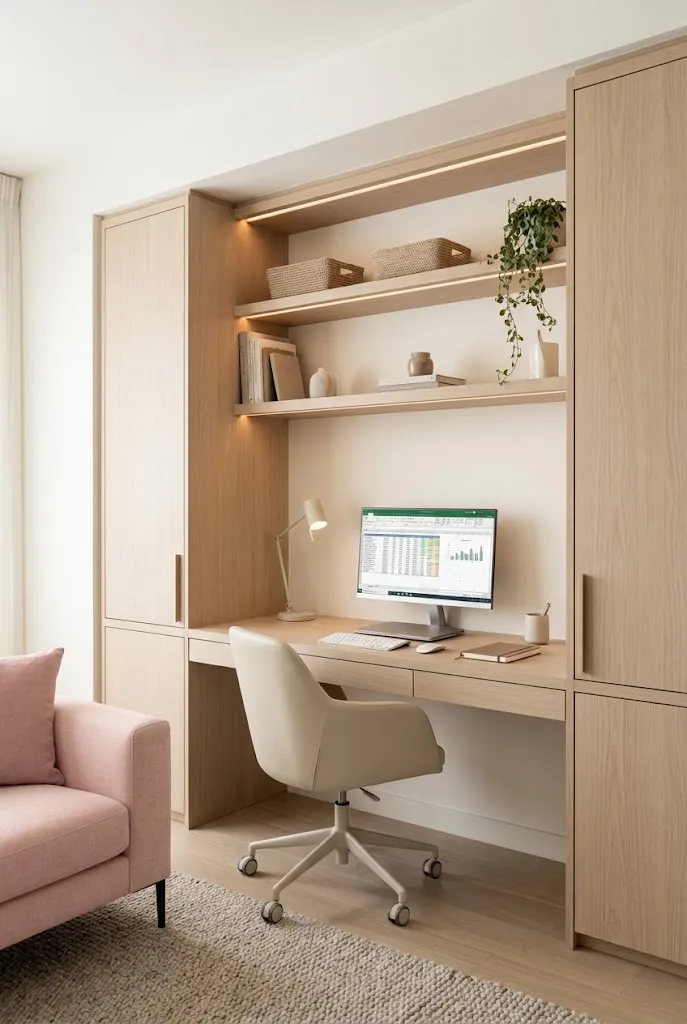
A built-in nook can turn an awkward wall into a dedicated workspace while keeping the surrounding floor open. Before installation, measure the sofa depth, desk height, and chair clearance together so everything works as one layout.
Place drawers directly beneath the worktop for supplies that need quick access. Above the desk, use shallow shelving instead of deep cabinets to avoid visual heaviness. I’ve noticed that built-in storage feels especially useful in small rooms because it uses vertical and wall space without taking over the walking area.
10. Folding Desk Sofa
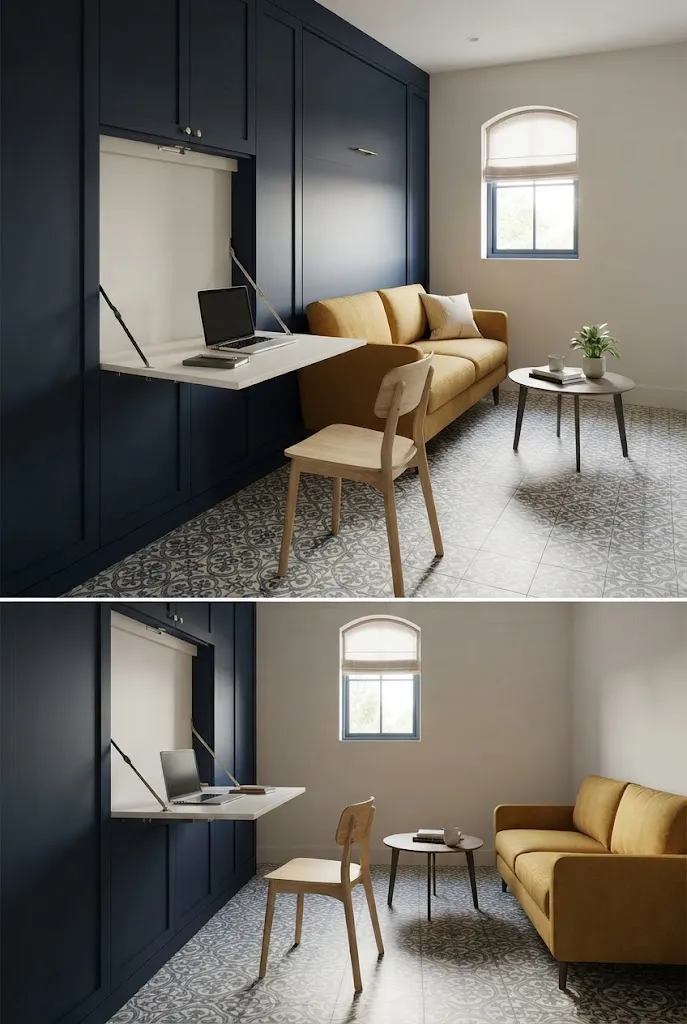
- Mount a folding desk on a wall beside or behind the sofa.
- Choose a model with enough depth for a laptop and notebook.
- Keep a lightweight chair nearby that can be moved when the desk closes.
- Store office supplies in a slim wall-mounted organizer.
- Use the closed desk as a clean decorative surface when work is finished.
A folding workstation gives you a practical place to work without permanently sacrificing valuable floor space. Once the laptop is closed, the desk can disappear into the wall and leave the couch area open. This setup suits rooms that need to switch between work, relaxing, reading, and entertaining throughout the day.
11. L-Shaped Lounge Office
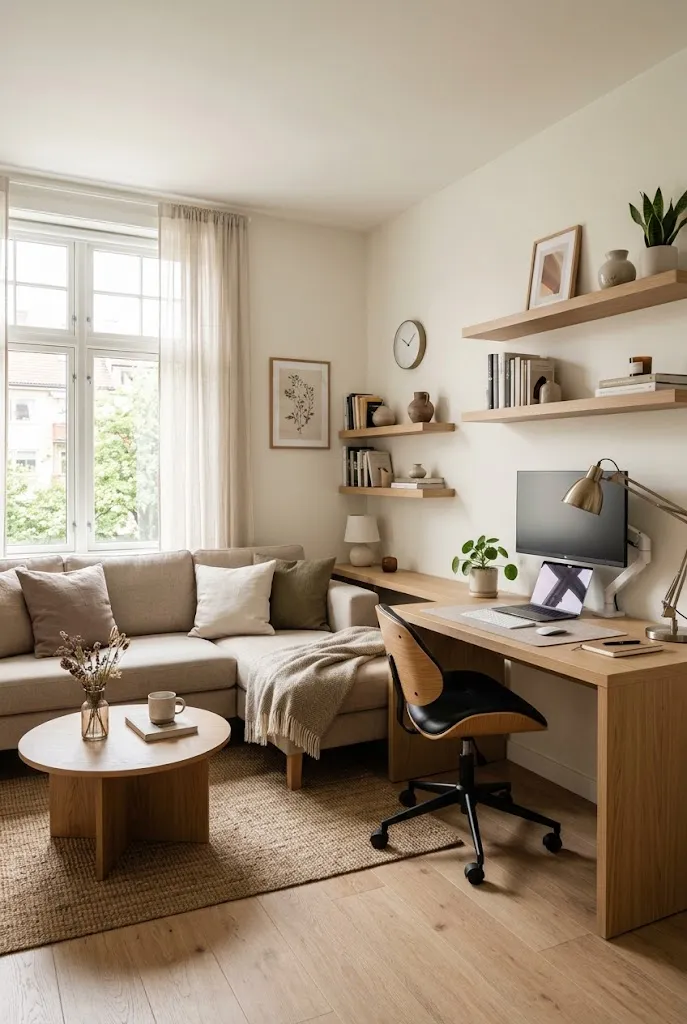
Quick Tip: Keep the longer side of the desk against the wall and reserve the shorter section for occasional tasks. Avoid placing the sofa directly in front of the desk chair. Maintaining a clear turning area makes the corner feel much more comfortable.
An L-shaped arrangement makes use of two connected walls instead of pushing everything toward the center. The desk provides generous working space while the sofa occupies the remaining wall. Choose furniture with similar finishes, then use one contrasting accent such as a cushion or lamp to add personality.
12. Under-Shelf Sofa Desk
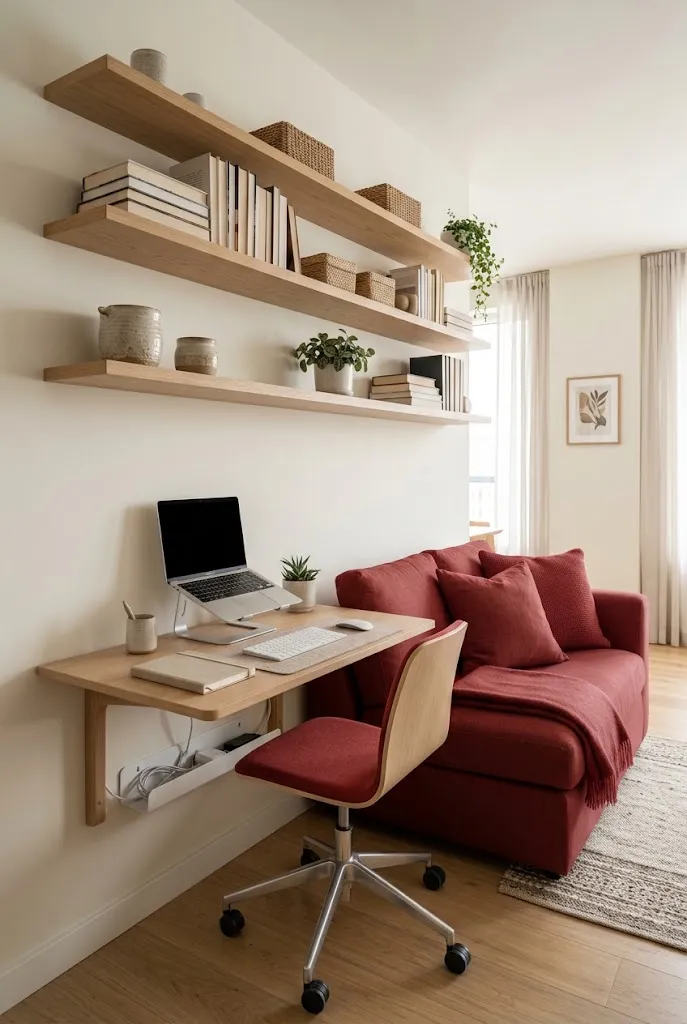
BEFORE: The wall above the sofa sits unused while books, stationery, and decorative pieces collect on the desk. Storage cabinets would add depth and make the already-small room feel tighter.
AFTER: Floating shelves above the sofa and desk provide vertical storage without taking floor space. The work surface stays clear, while books, plants, and small accessories become part of the room’s decor.
A shallow shelving system is particularly useful for renters or anyone avoiding bulky furniture. Keep heavier items on the lowest shelf and lighter decor higher up. Leave some shelf space empty rather than filling every section. That breathing room helps the entire office feel organized instead of visually crowded.
13. Rolling Desk Setup
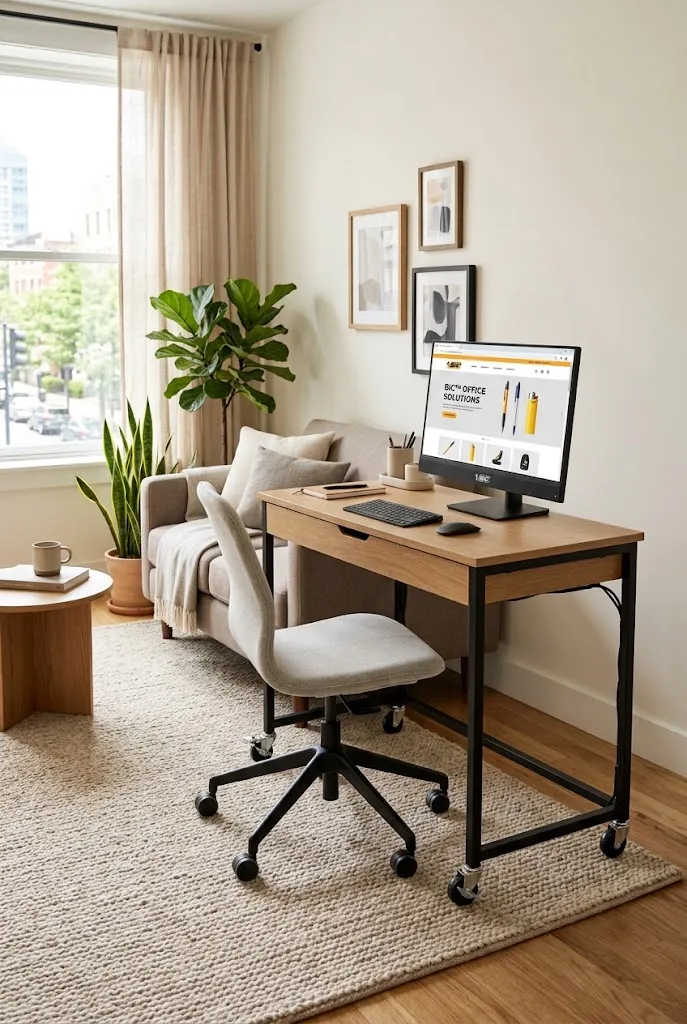
- Pick a narrow desk: Choose a rolling model with enough surface area for your laptop and daily essentials.
- Create a parking spot: Keep one clear area where the desk can rest when you’re working.
- Add locking wheels: Lock the casters while working so the desk stays stable.
- Move it after work: Roll the desk toward a wall or under a shelf when you want more lounge space.
A mobile desk is useful when one room needs to support several activities. It can sit beside the couch during working hours and move aside when you need extra floor space. Choose a lightweight design with smooth casters, then keep cables secured so moving the workstation stays quick and safe.
14. Two-Tone Office Corner
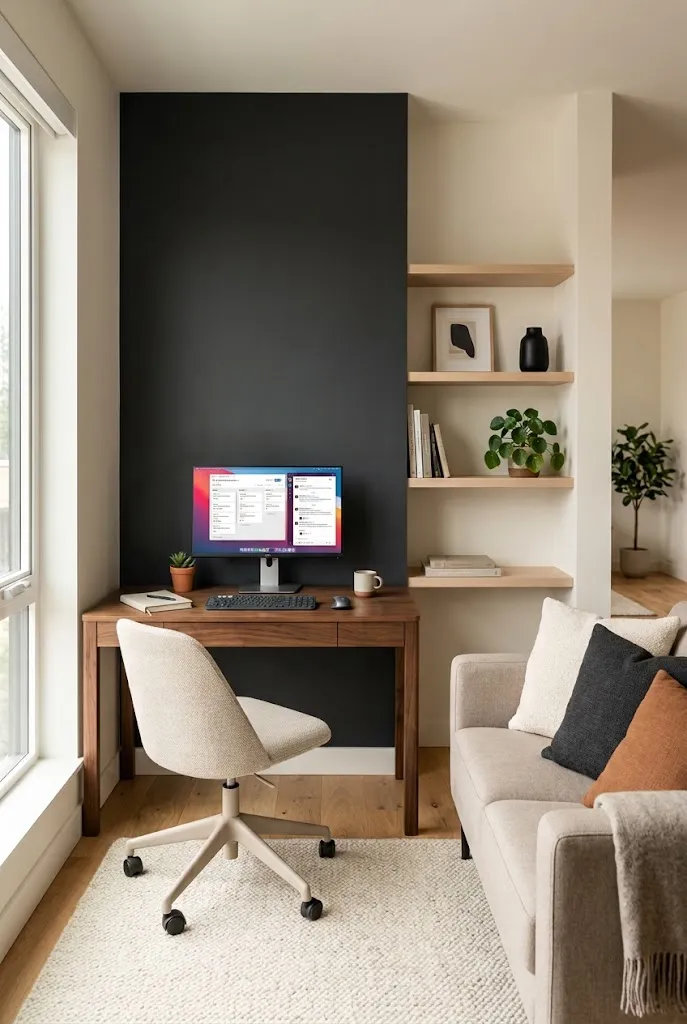
| Feature | Option A: Light Palette | Option B: Two-Tone Palette |
|---|---|---|
| Visual Effect | Airy and subtle | More defined |
| Furniture Focus | Blends together | Creates clear zones |
| Accent Color | Minimal | One stronger shade |
| Styling | Soft and simple | More dimensional |
A two-tone palette can separate the work and lounge areas without needing a physical divider. Keep the desk in a lighter neutral shade, then give the couch a deeper color such as olive, charcoal, or muted blue. Repeat that accent in one small accessory for visual balance without overwhelming the room.
15. Minimal Couch Office
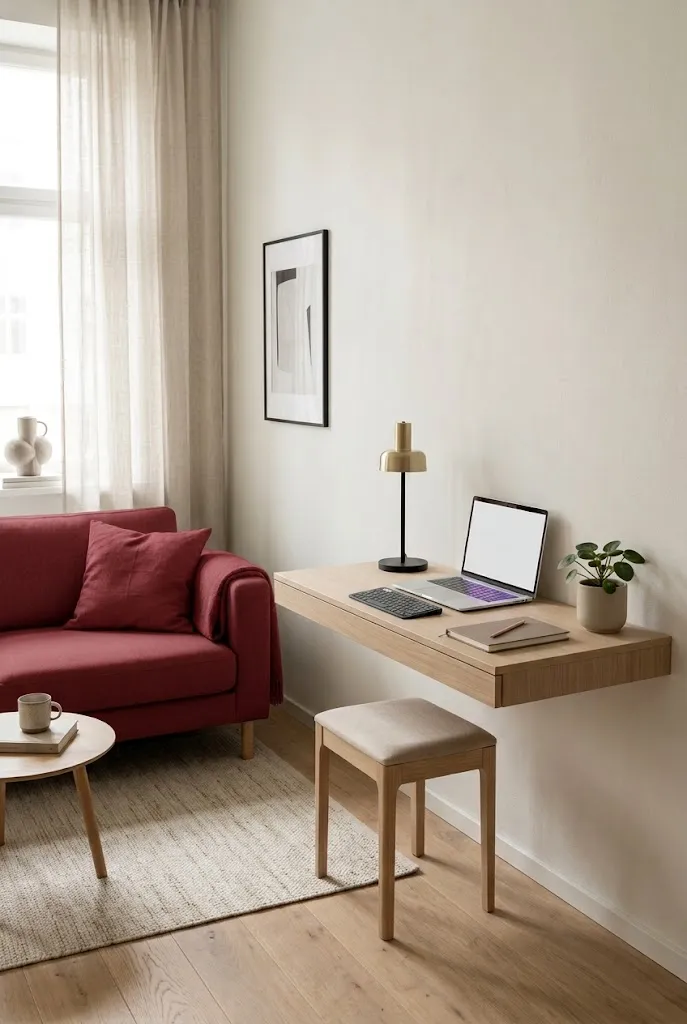
DO:
- Choose a compact sofa with clean, simple lines.
- Keep the desk surface limited to daily essentials.
- Use vertical storage instead of bulky floor cabinets.
- Leave a visible strip of flooring around major furniture pieces.
DON’T:
- Mix too many furniture styles in one small room.
- Block windows with oversized seating.
- Fill every wall with shelves and artwork.
- Use oversized decor that competes with the workspace.
Minimal styling helps a small office with seating feel calmer and more functional. Start with the largest pieces, then add only what serves a purpose. A comfortable couch, slim desk, useful lighting, and a few carefully chosen accessories are often enough to create a welcoming setup without visual clutter.
Conclusion
Creating a comfortable workspace does not require a large room or an expensive makeover. These small room office ideas with couch show how thoughtful furniture choices, smart storage, and simple layouts can give you both productivity and comfort.
Start with one idea that fits your room, then adjust it to your daily routine. I’ve seen how small changes in furniture placement can completely shift the way a space feels. Save this post on Pinterest for your next decorating project, try your favorite setup, and share the article with someone who could use more function in a small space.
Community
Join the conversation
Add a useful idea, ask a specific question, or share what worked in your space. Every comment is reviewed before it appears.