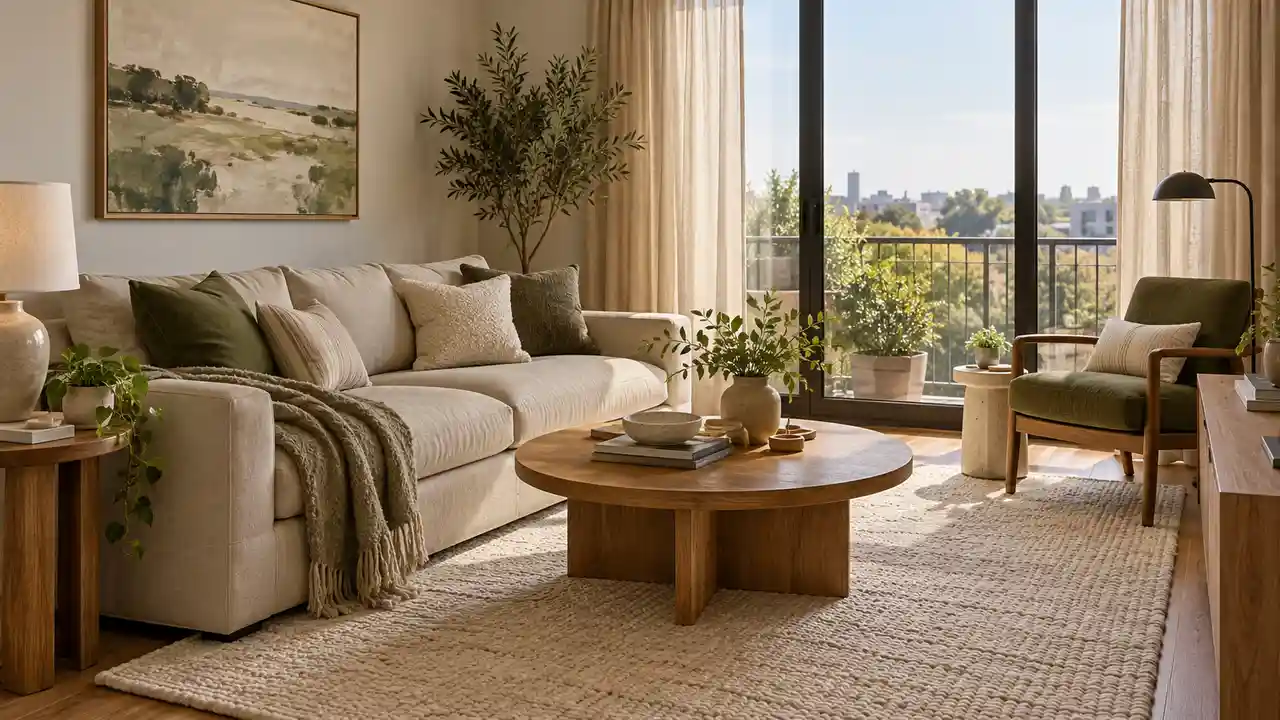
Wondering how to decorate a guy’s apartment without making it feel staged? Start with the things that help you enjoy being home: a comfortable seat, a bed that feels finished, and a few objects that mean something to you. There is no required color scheme or furniture style. Your routines and taste are better guides than any label. These room-by-room ideas focus on the foundations that make an apartment feel welcoming and pulled together. Use the pieces you already like, work through the rooms gradually, and spend time living with each change before deciding what the space still needs.
1. Start With the Sofa
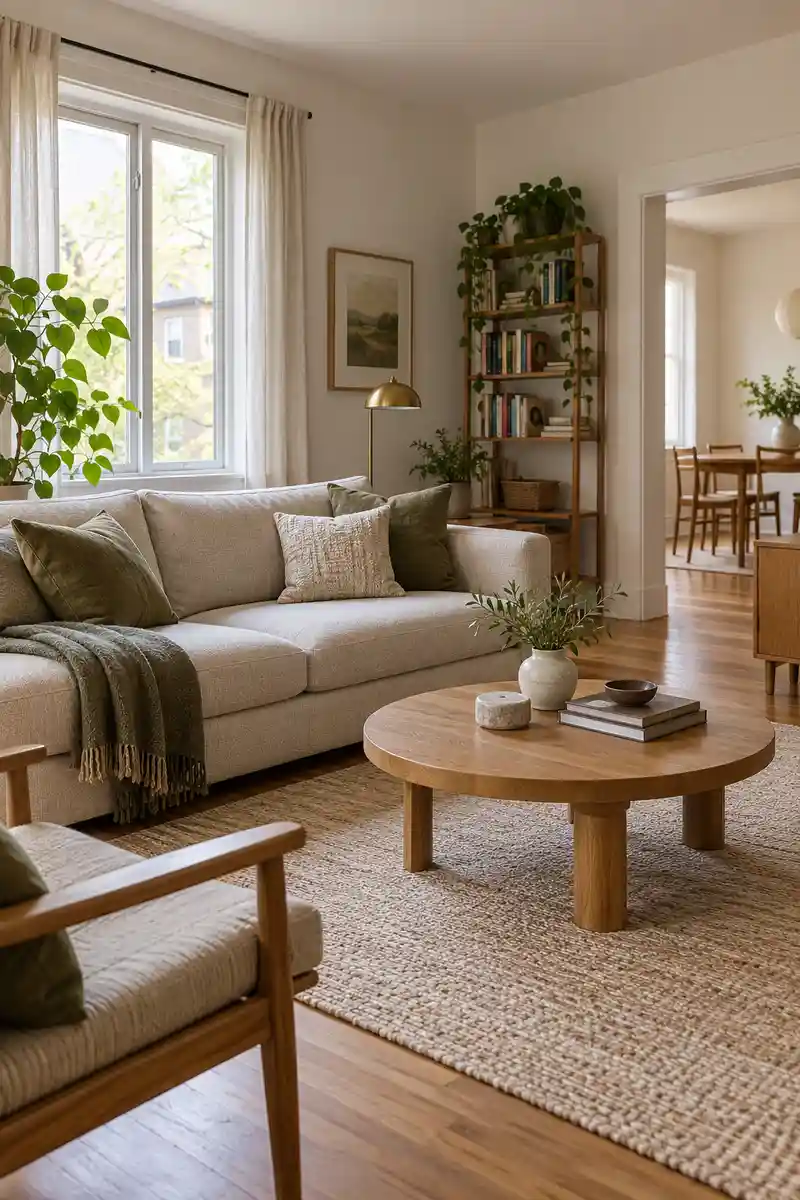
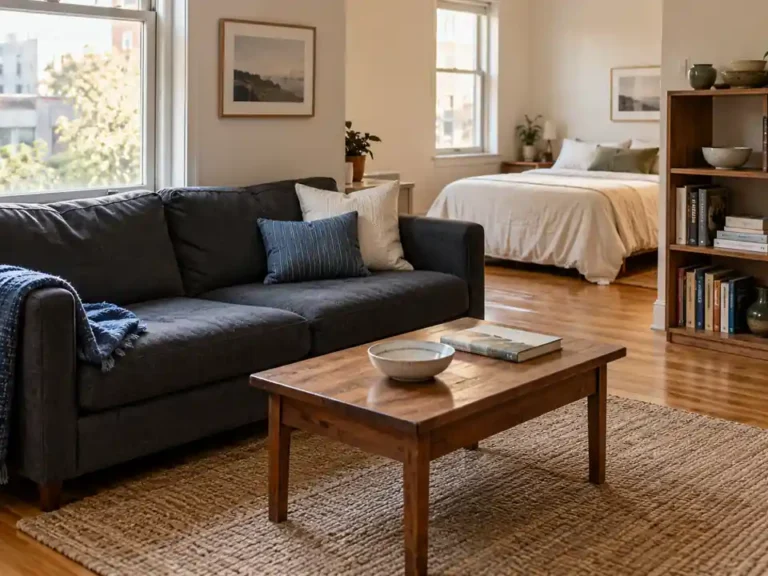
Choose the main seat for how you actually relax: upright with a book, stretched out for a film, or talking with friends. Sit in possible options when you can. Check the arm height, back support, and seat depth before letting a fabric color decide the purchase.
Let the sofa set the scale for the rest of the living room. A coffee table and chair should fit around it without making the route awkward. If your current sofa feels good, start with cleaning, cushion covers, or a better arrangement rather than assuming you need a replacement.
2. Repeat a Favorite Color
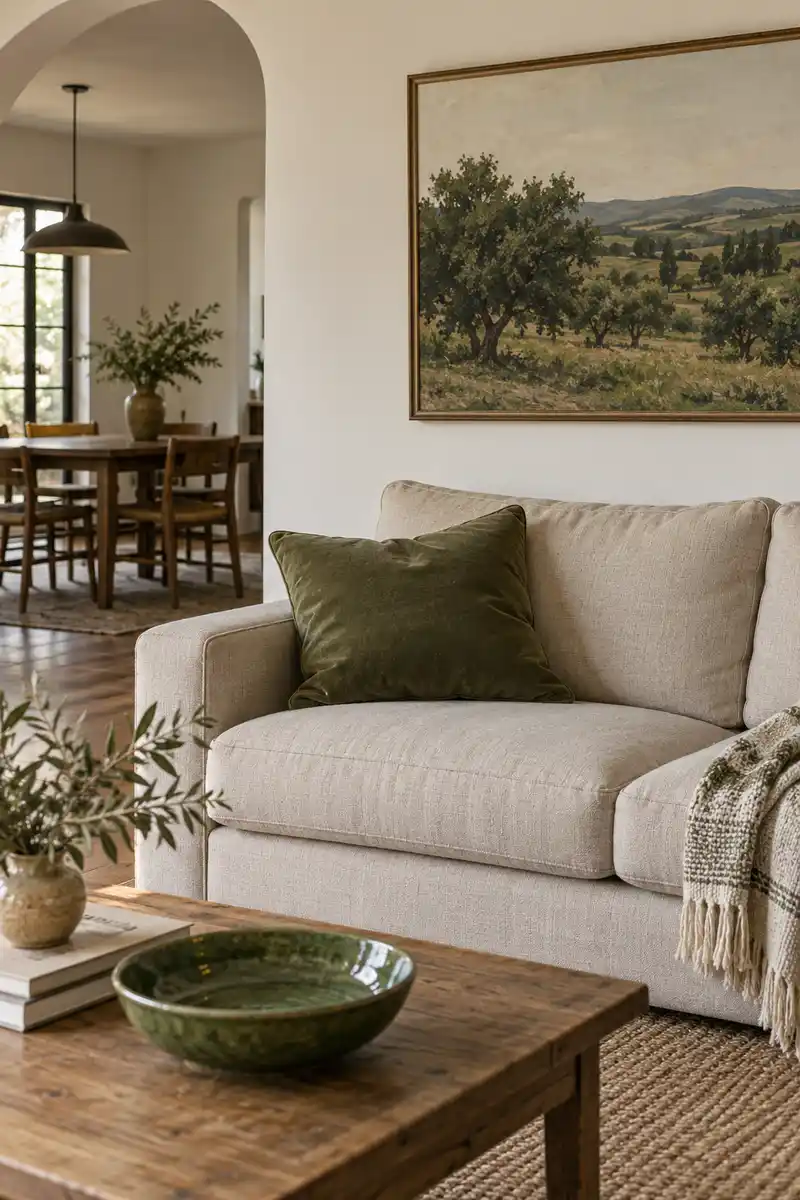
- Choose a color from an object you love.
- Use it once in a larger textile.
- Repeat it in a smaller picture detail.
- Let neutral surfaces provide breathing room.
A limited palette makes separate purchases feel related without turning the apartment into a matching set. Try olive in a cushion, a landscape print, and a ceramic bowl. The shades can vary slightly. Keep the biggest pieces flexible if you enjoy changing smaller details through the year.
3. Frame the Seating Area
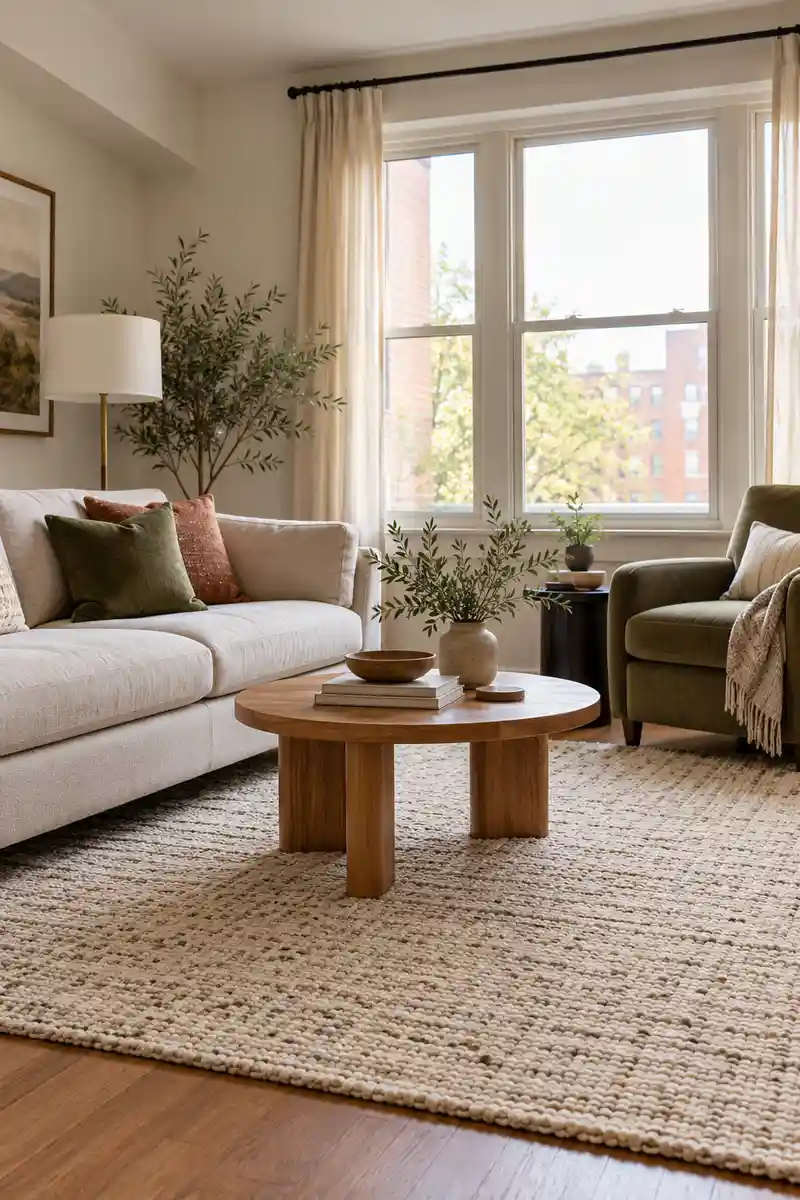
Quick tip: Place the front legs of the sofa and nearby chair on the rug where the layout allows. Check that its edge does not catch a door or narrow the walking route.
A rug gives a group of furniture a clear home, especially when the living room shares space with dining. Choose the size by measuring the seating arrangement first. These studio rug ideas offer more ways to compare placement before deciding on a color or pattern.
4. Hang Proper Curtains
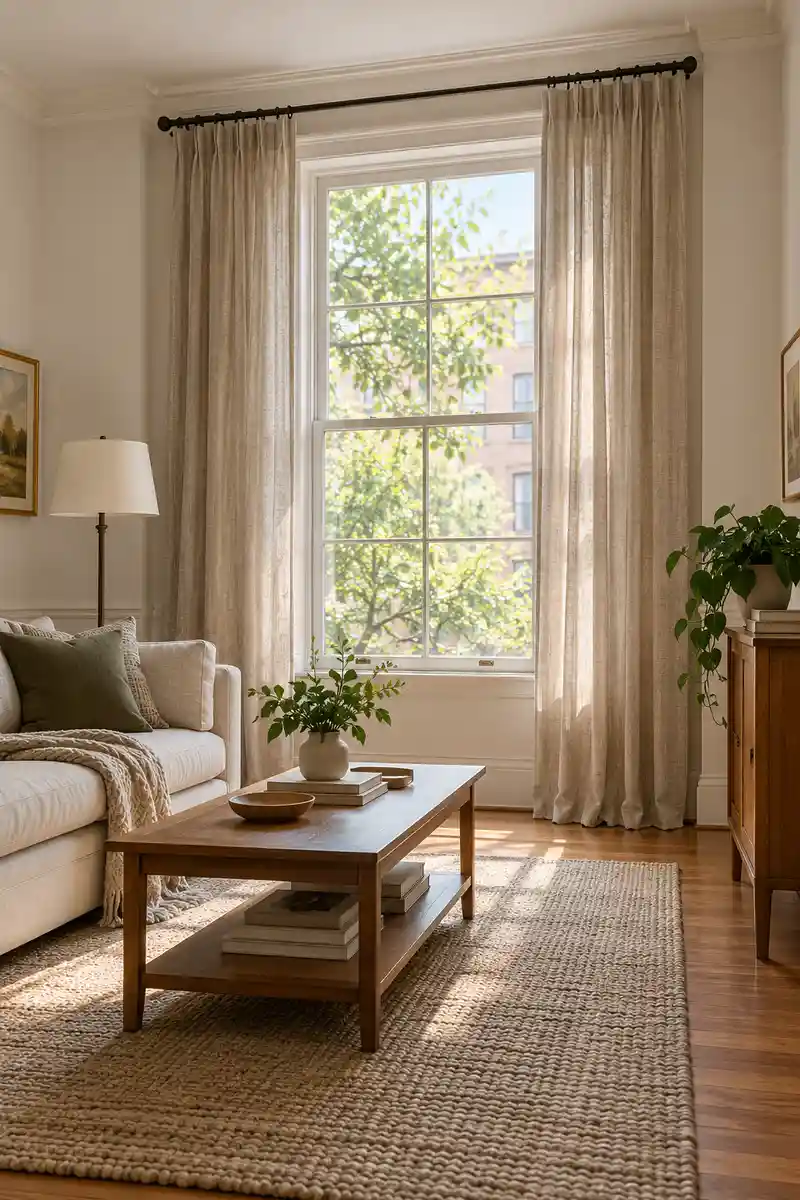
Before: Short curtains stop awkwardly above the floor. The window feels separate from the furniture below it.
After: Simple full-length panels frame the window. The fabric adds softness without covering useful daylight.
Measure the installed rod and the drop before buying panels. Keep fabric clear of heaters and moving doors, and follow the fixture instructions for installation. A plain woven fabric usually works with more furniture changes than a strong print, making this a useful place to keep the choice quiet.
5. Build a Reading Corner
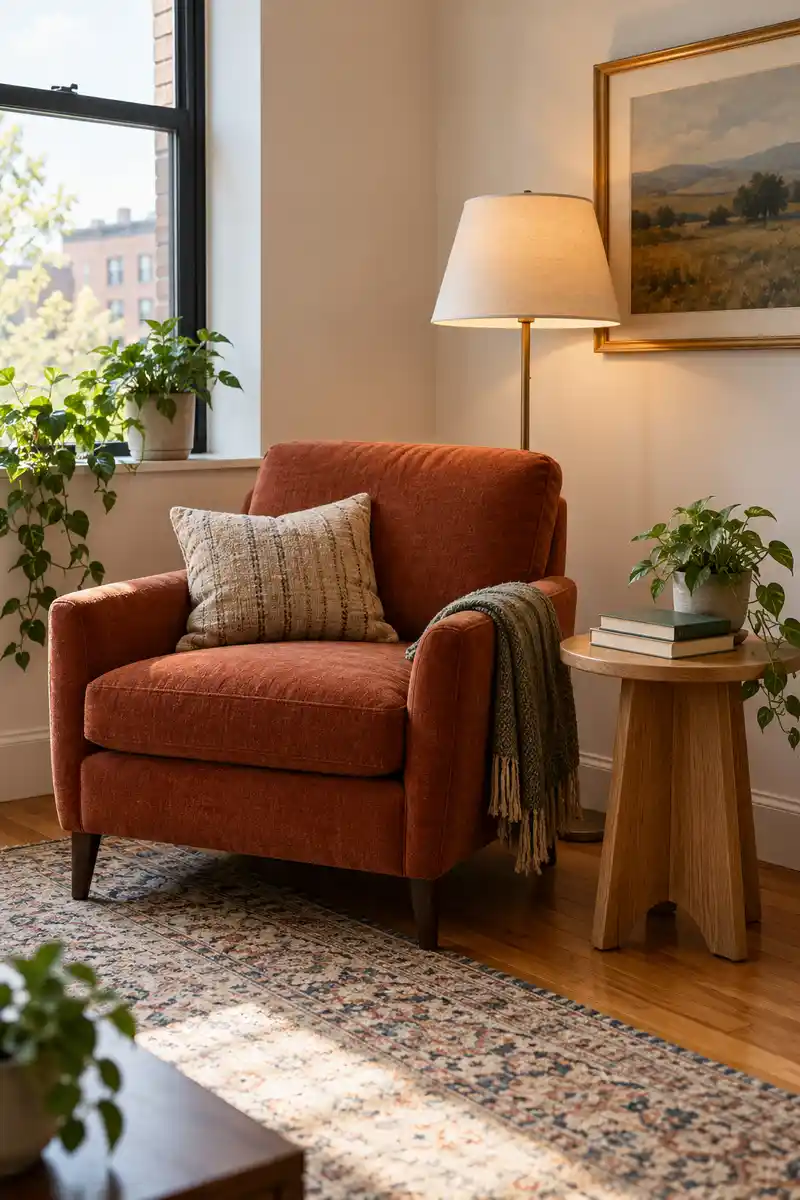
- Choose a chair that supports your usual posture.
- Place a small table within easy reach.
- Add a reading light beside the chair.
- Keep a small stack of current books nearby.
The corner feels complete when you can settle in without borrowing a table from across the room. Leave enough space to pull your feet back and stand comfortably. A chair you already own may work well here once it has a useful light and somewhere to put a drink.
6. Choose a Dining Anchor
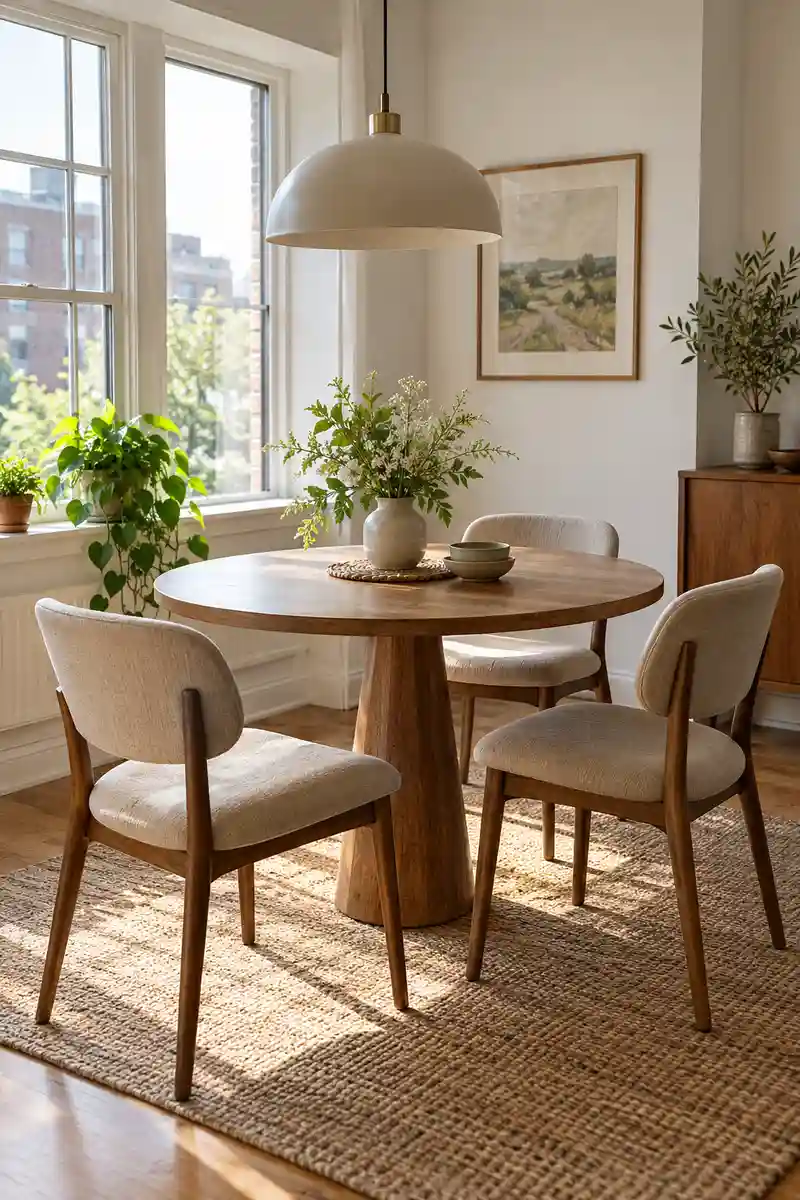
Round table
Room shape: Works in a squarer nook
Seating: Encourages conversation around center
Placement: Usually needs space around it
Rectangular table
Room shape: Suits a longer dining zone
Seating: Offers defined sides for chairs
Placement: Can sit with one side near a wall
Choose the table shape by pulling out imaginary chairs, not just measuring the tabletop. Mark the footprint on the floor and walk around it with a laundry basket. A dining area should feel inviting between meals too, so avoid using every empty chair as a permanent storage shelf.
7. Make the Bed Complete
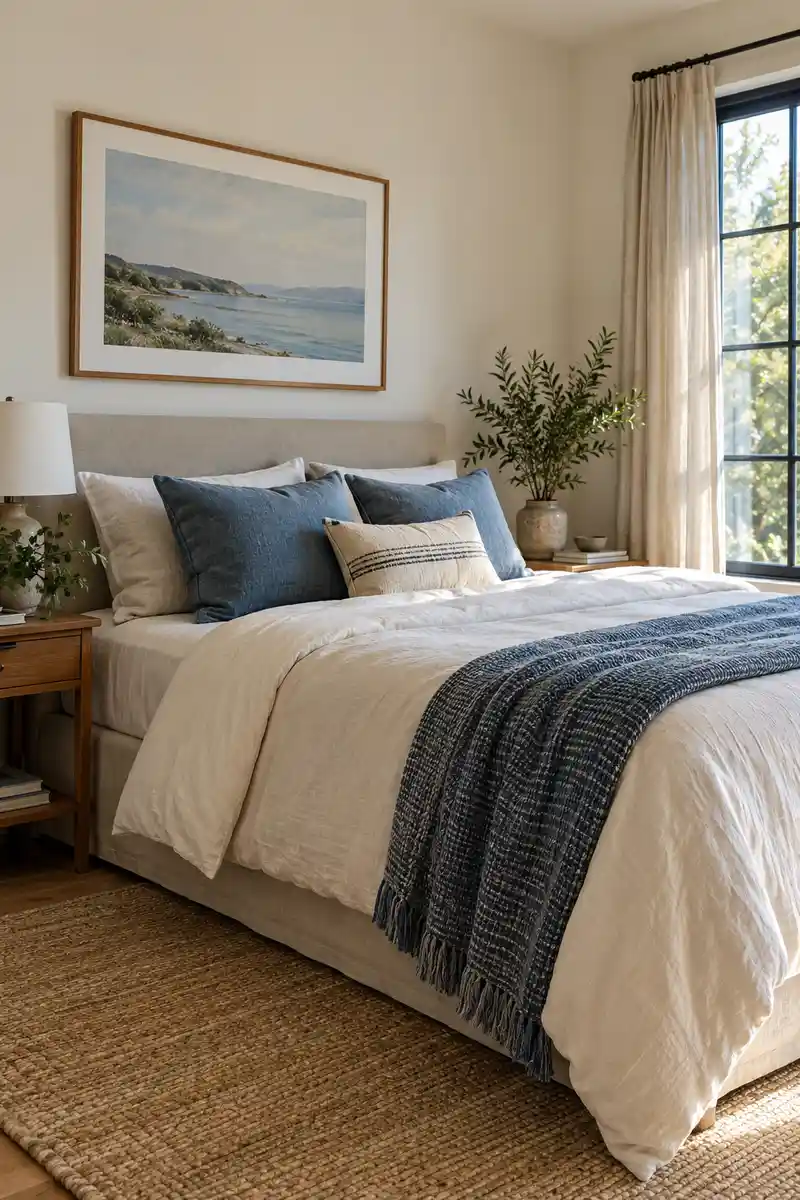
- Do: Choose bedding that feels good.
- Do: Use a cover that fits the mattress.
- Do: Add one useful extra layer.
- Don’t: Fill the bed with display pillows.
- Don’t: Let bedding block a drawer.
- Don’t: Buy a set solely for its photograph.
A made bed changes the bedroom more than a collection of small accessories. Start with comfortable sheets and a cover you can wash as directed. Fold a blanket at the foot if you use it. Keep the colors related, but let different textures give the bed a relaxed feel.
8. Balance the Bedside
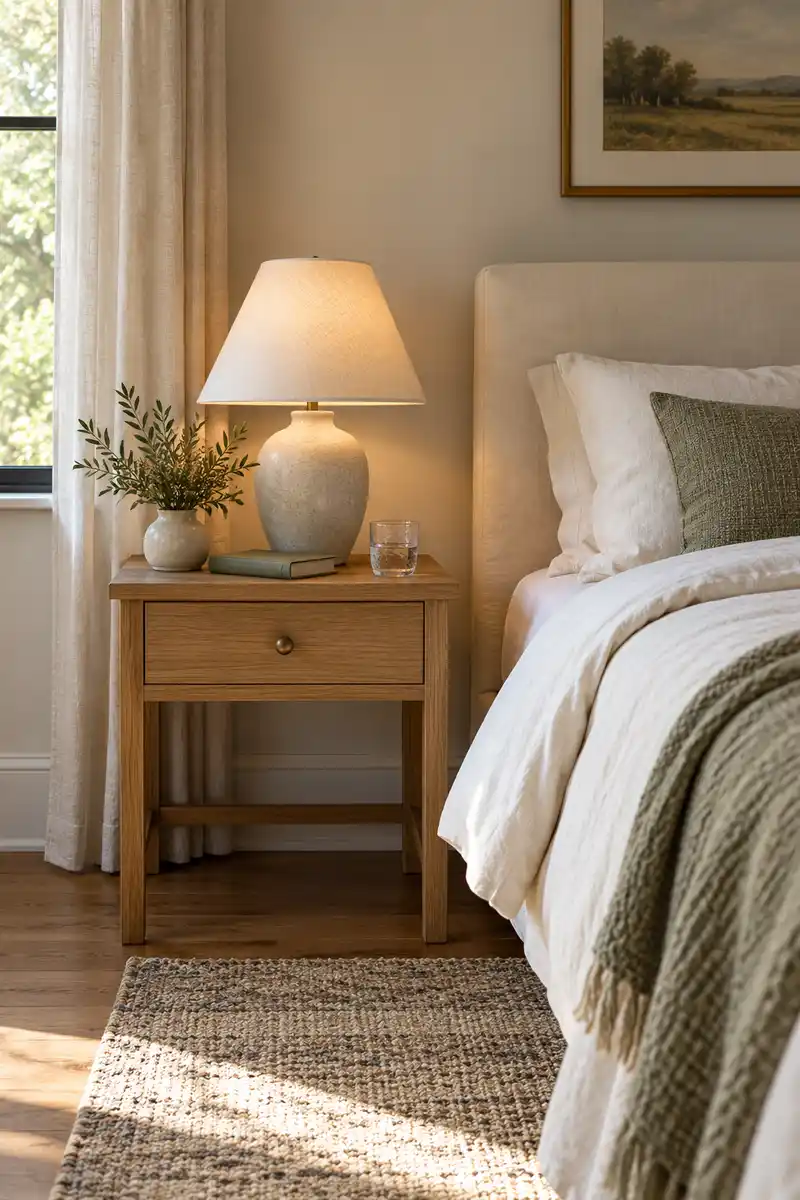
- Surface: Enough room for a glass and book.
- Height: Comfortable to reach from bed.
- Storage: One drawer for ordinary small things.
- Light: A shaded lamp for winding down.
A bedside table does not need to match the bed frame. It does need to make sense from the pillow. Lie down and test the reach before styling it. Put the objects you use nightly at the front, and leave a small clear space rather than arranging everything edge to edge.
9. Give Art Some Presence
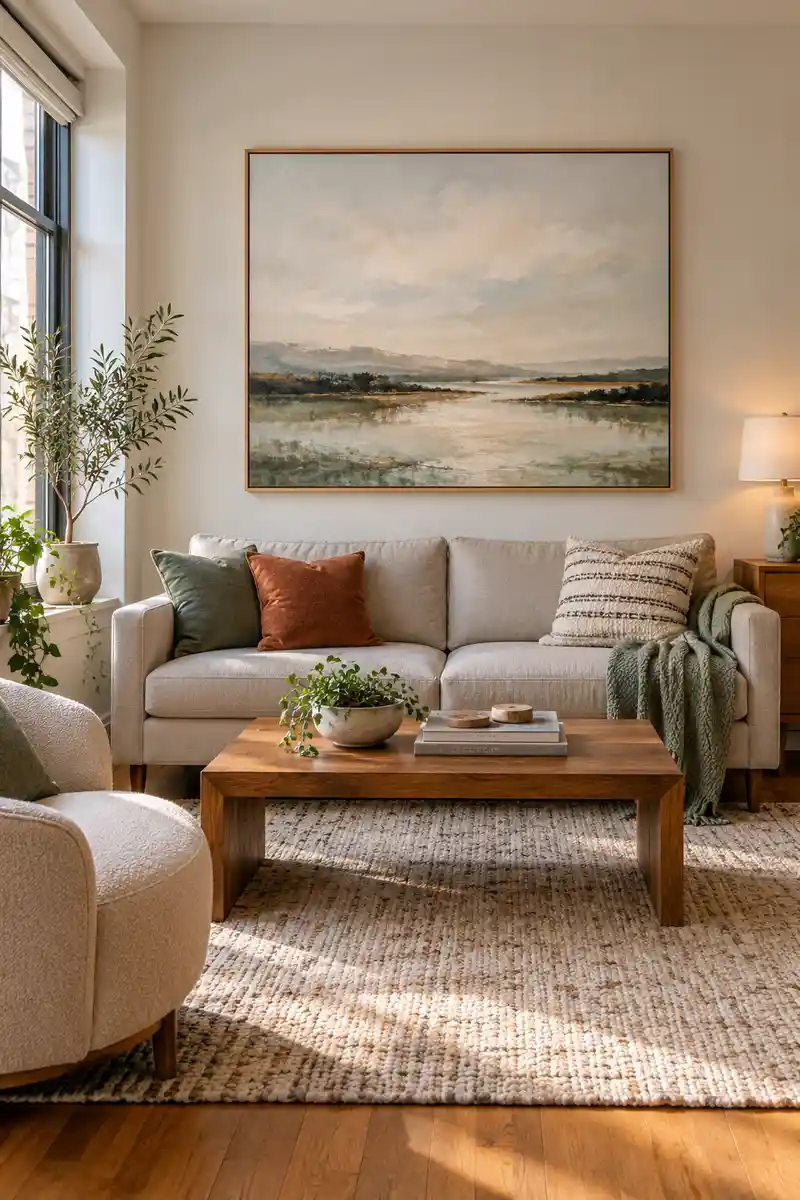
Choose one piece you genuinely want to look at rather than filling a wall just because it is empty. A photograph, abstract print, or drawing can set a clear mood. Lay possible frames beside the furniture first to compare their width and the colors they bring into the room.
Hang the piece where it relates to the furniture and your usual view, using hardware suitable for the wall and frame. Leave room around it so the image has presence. A single generous frame often feels more settled than several unrelated small pictures scattered high across the wall.
10. Add a Welcoming Entry
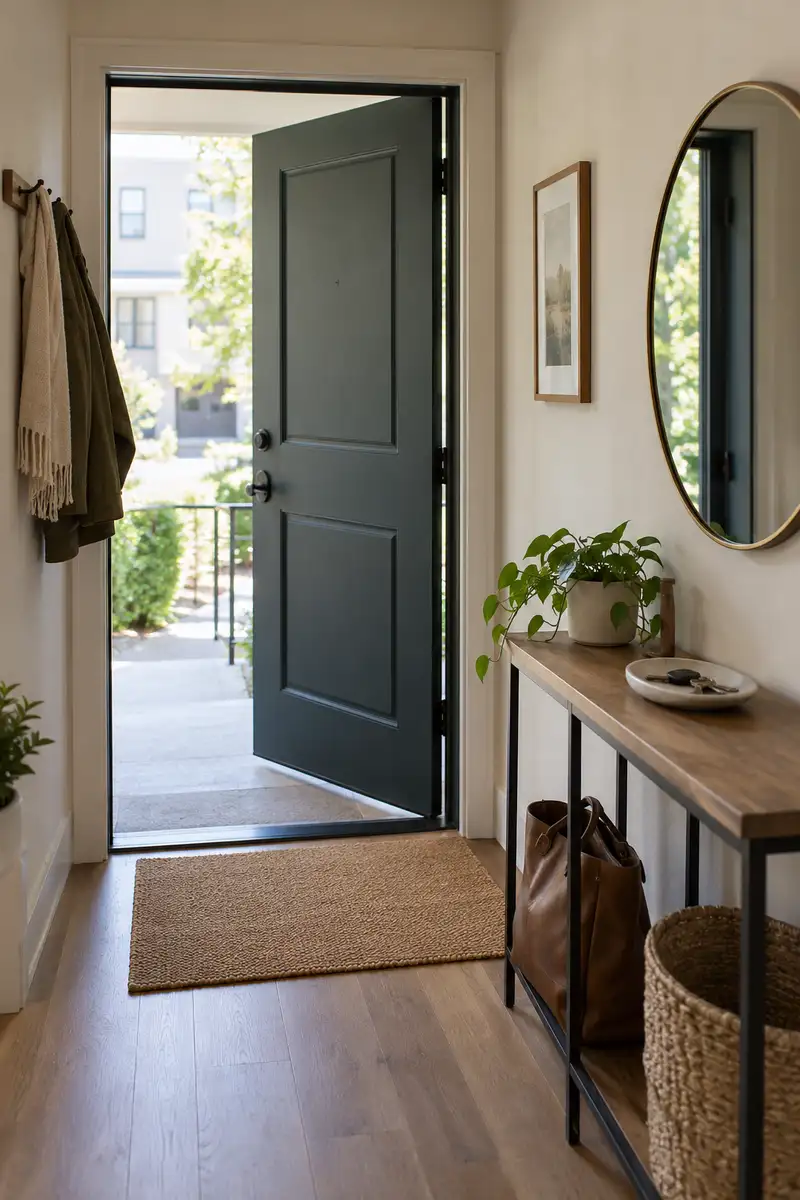
- Place a small mat inside the door.
- Give keys a shallow dish.
- Choose one spot for the bag you use.
- Keep the door swing fully clear.
An entry can be tiny and still help the apartment feel considered. Focus on the first few movements after you come home. If you drop everything on a chair, move a useful landing spot closer to the door. Keep decorative objects behind the part of the surface you actually need.
11. Soften the Bathroom
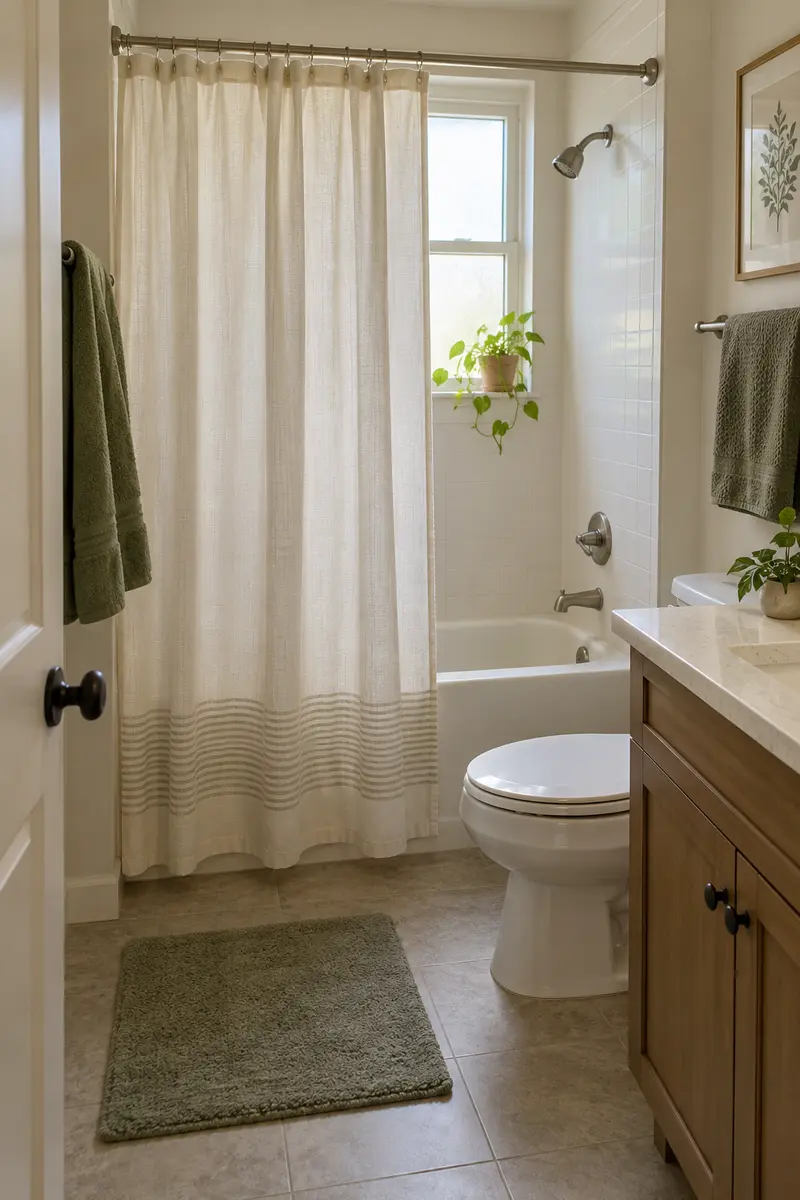
Quick tip: Choose a shower curtain with a quiet woven look if the bathroom needs one. Pair it with towels you enjoy using. You do not need to match every accessory exactly.
Soft surfaces can make a plain bathroom feel more finished without changing its fixtures. Keep bath textiles where they can dry between uses, and choose a mat that fits the available floor. One simple color family creates a calmer view when the bathroom door opens into the main room.
12. Warm the Kitchen View
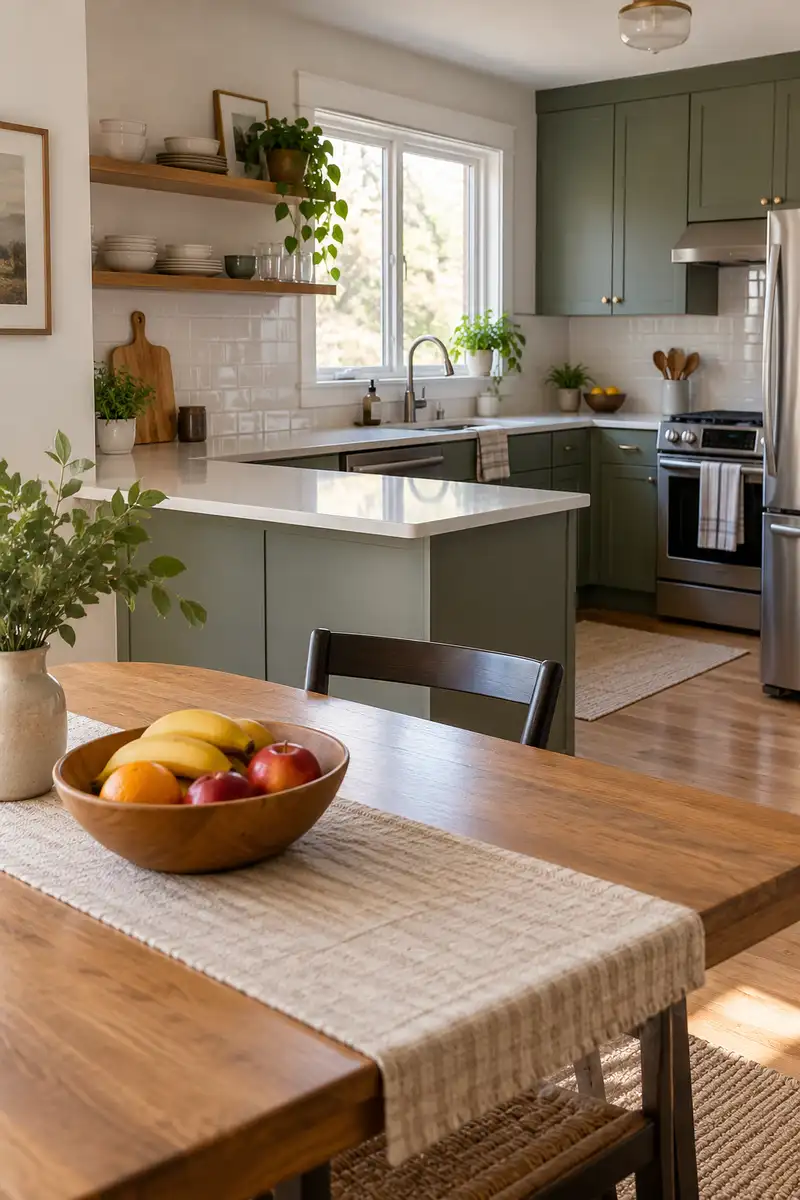
Before: Every counter holds a different decorative object. The kitchen looks busy even when the dishes are done.
After: The preparation area stays clear. One useful wooden bowl adds warmth on a separate dining ledge.
Look at the kitchen from the living room to choose the spot that needs attention. A fruit bowl or a favorite serving piece can add character without requiring a decorative collection. Keep display items away from cooking heat, splashes, and the surfaces you need for cutting or setting down food.
13. Set Up Guest Seating
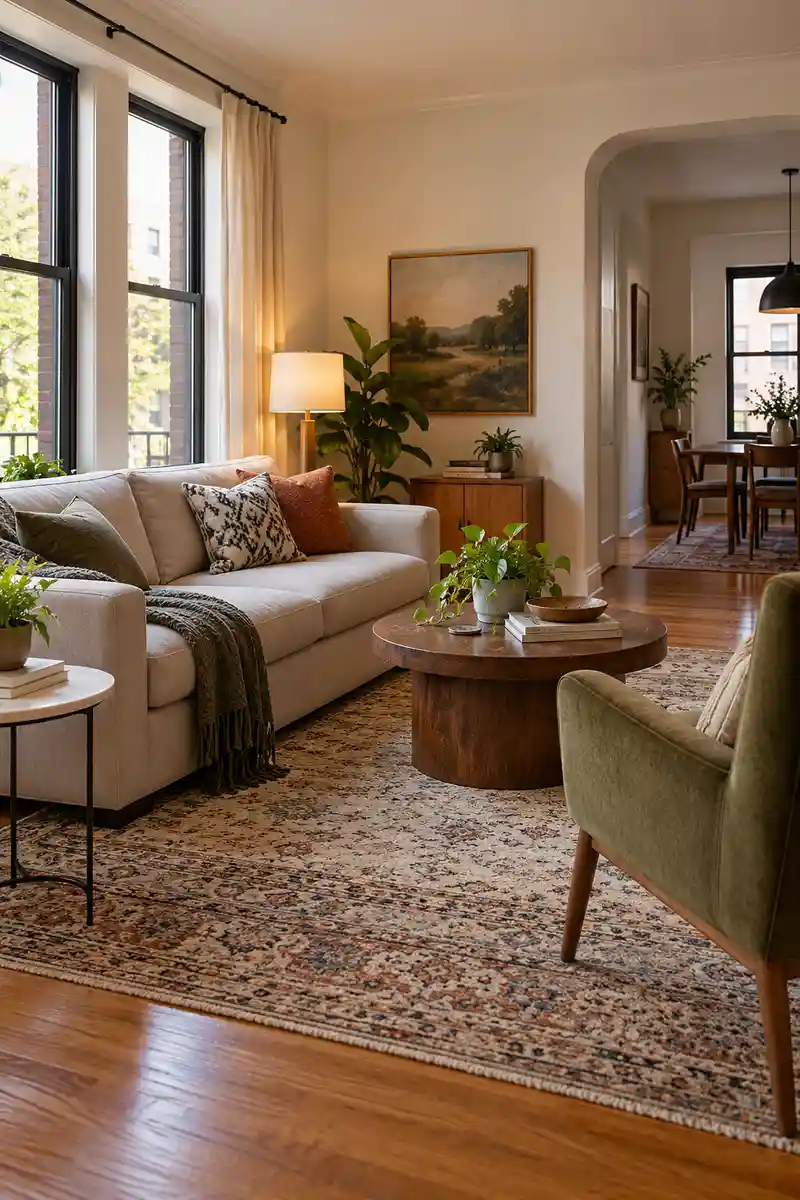
- Count the seats you use regularly.
- Keep your most comfortable seat in the main group.
- Choose one extra chair that also works at a desk.
- Test the arrangement before friends arrive.
A room feels welcoming when conversation does not require everyone to face the television. Angle an extra chair toward the sofa and give each person a place for a drink. You can return a desk chair afterward, but avoid planning around furniture that is awkward to move or uncomfortable to use.
14. Pick Personal Display Pieces
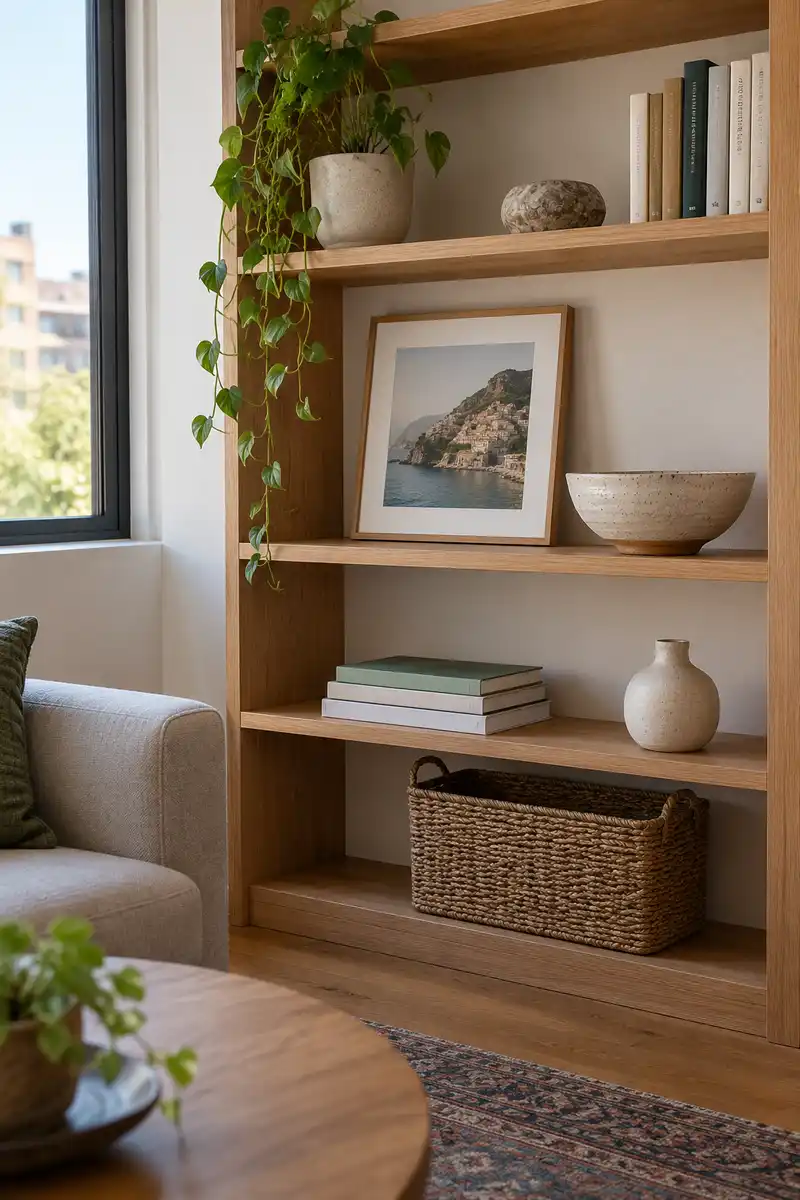
Open shelf display
Best objects: Ceramics and small collected objects
Upkeep: Needs occasional dusting
Visual effect: Adds depth and varied shapes
Framed wall display
Best objects: Photos, prints and paper keepsakes
Upkeep: Usually leaves furniture clear
Visual effect: Creates a flatter focal point
Display a small selection connected to your interests, such as a handmade bowl or a photograph from a favorite place. Give each piece enough room to be seen. The goal is recognition when you walk in, rather than a room that follows someone else’s idea of what you should like.
15. Layer Different Textures
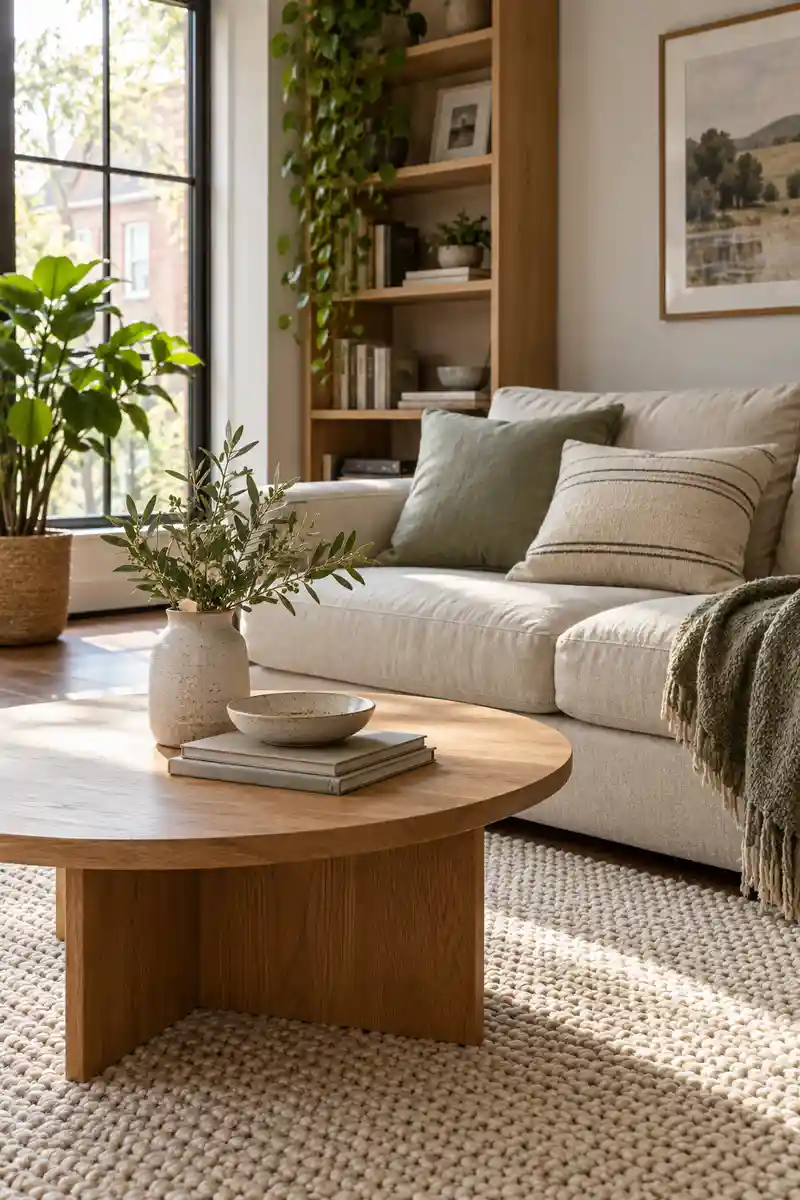
- Do: Mix smooth and woven finishes.
- Do: Repeat a material elsewhere.
- Do: Keep fabrics comfortable to touch.
- Don’t: Add texture to every surface.
- Don’t: Choose scratchy throws for looks.
- Don’t: Ignore cleaning instructions.
Texture gives a quiet palette depth. Try a smooth wood table beside a woven rug, or a cotton cushion against a linen sofa cover. Notice how the materials feel during use. Two or three clear contrasts are usually easier to enjoy than a pile of competing fringes, patterns, and finishes.
16. Place One Living Accent
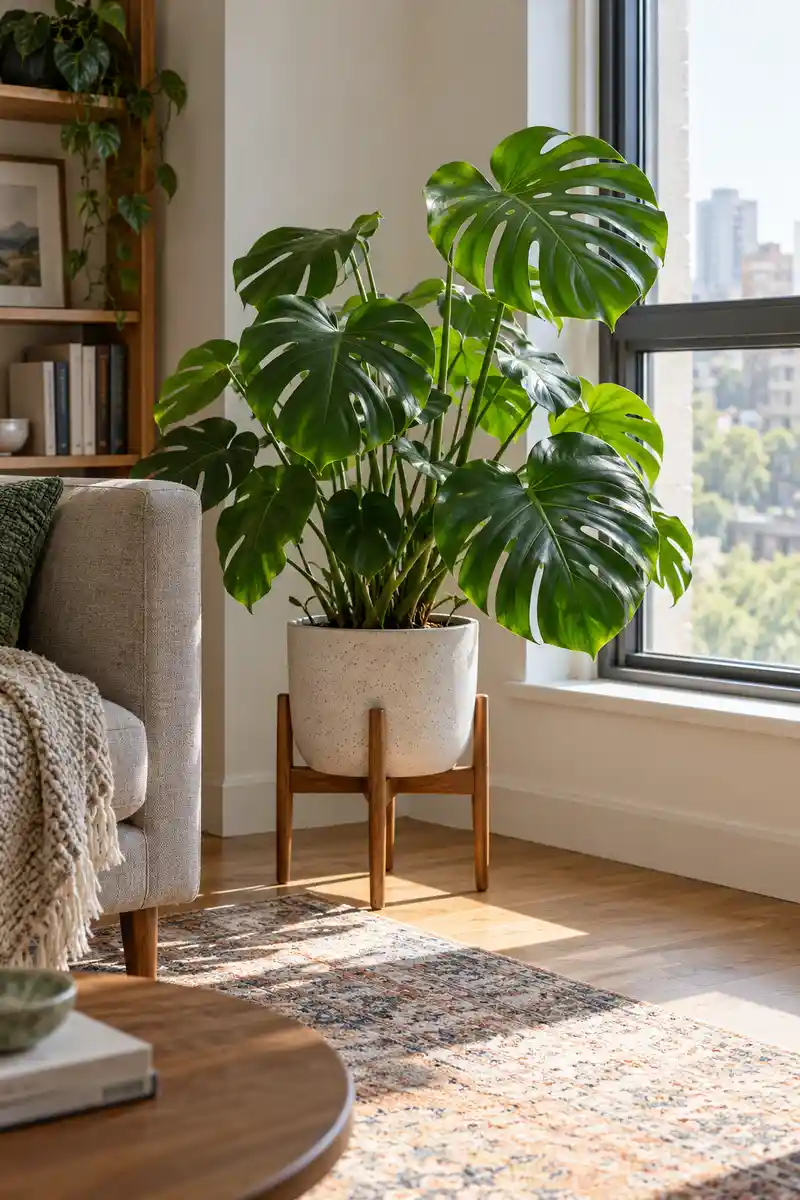
- Location: A spot that suits the plant’s light needs.
- Container: A stable pot with suitable drainage arrangements.
- Scale: Large enough to see without crowding furniture.
- Care: A routine you can realistically maintain.
Greenery works best when the plant suits the room and your habits. Check its care requirements before choosing the spot, and protect the furniture below it from moisture. If plant care is not for you, a single sculptural vase can bring a similar upright shape without pretending to be greenery.
17. Ground the Television Area
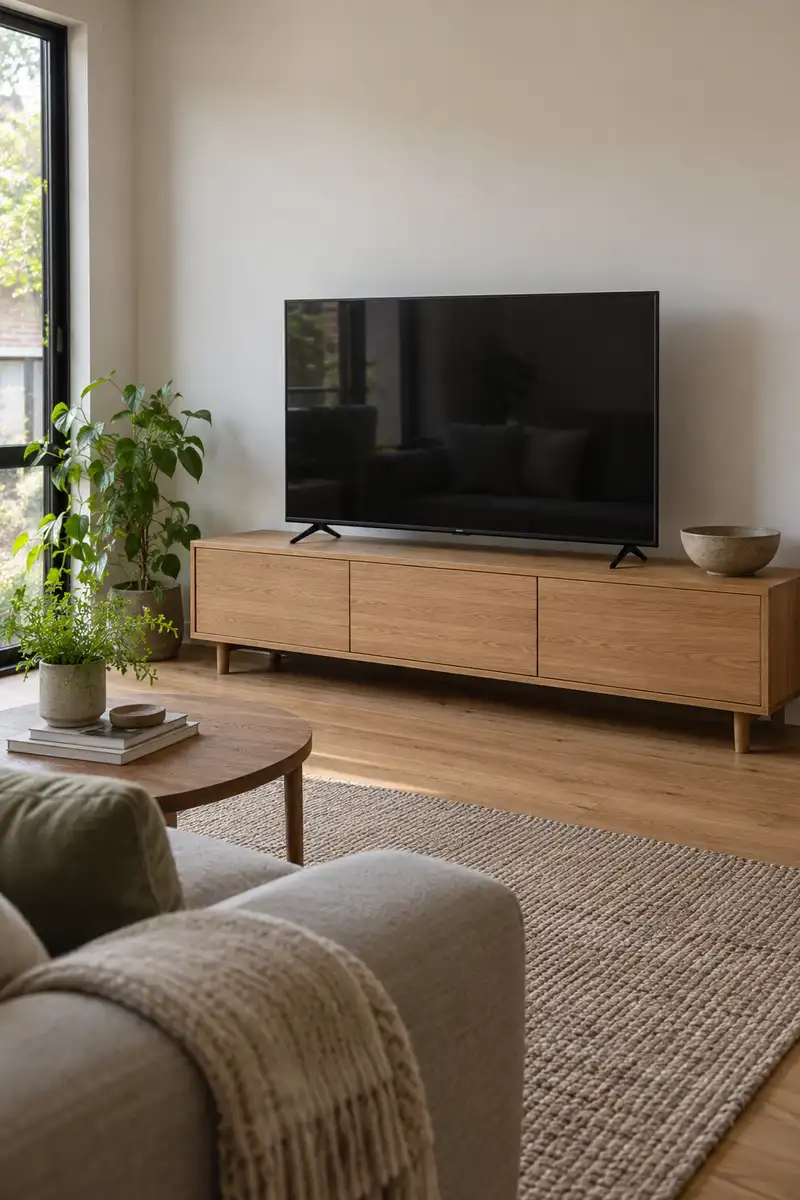
Treat the screen as part of a furniture arrangement instead of the only object on a large wall. A low cabinet can give it a visual base and keep ordinary equipment together. Choose the cabinet size from the screen, the room, and what needs to fit inside it.
Keep the top simple so you can use the controls and clean around the equipment. A low bowl at one end may be enough. Check the view from your normal seat before adding artwork nearby; a busy cluster around the screen can make this resting zone feel harder to settle into.
18. Make a Quiet Work Spot
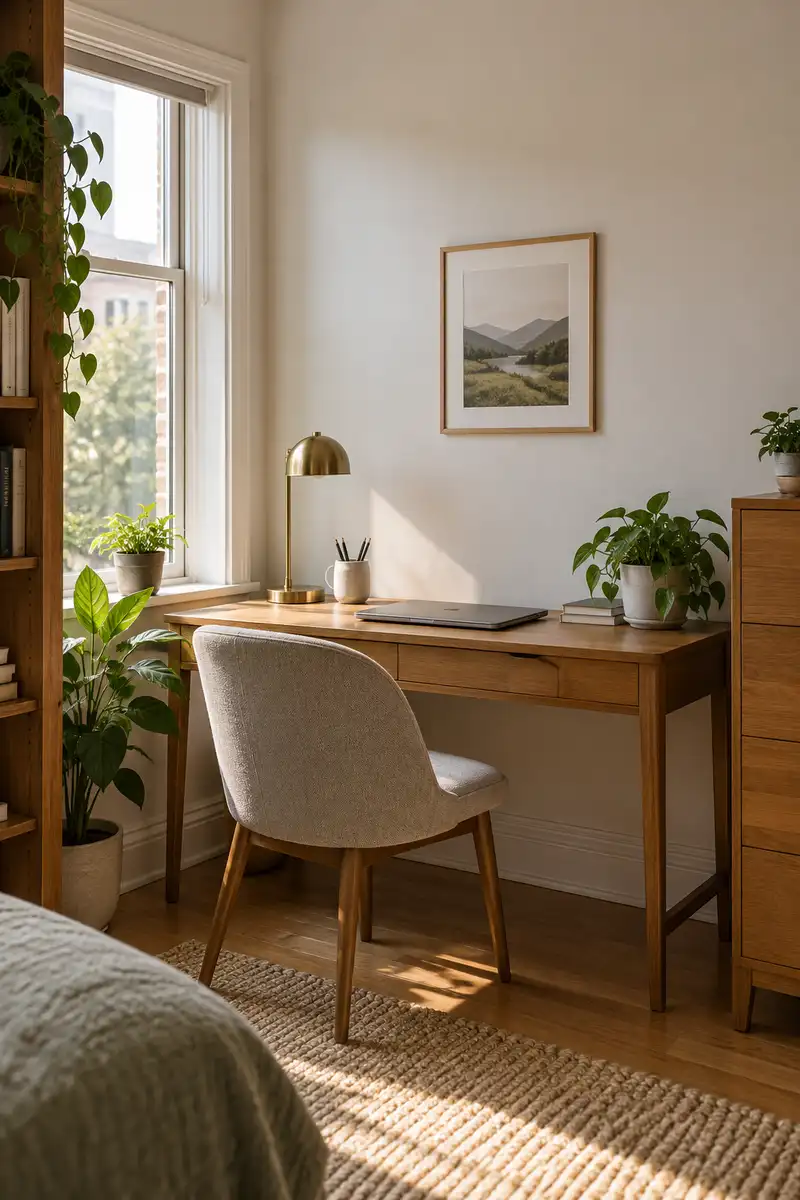
- Choose a desk position you can sit at comfortably.
- Use a chair suited to the work.
- Keep one personal object in view.
- Close the laptop when work ends.
A work area can belong to the room without looking like borrowed office furniture. Echo one wood tone or color from nearby pieces, then stop decorating before you lose elbow room. A small framed print is enough to make the desk feel personal while leaving the surface available for actual tasks.
19. Finish With Hardware Details
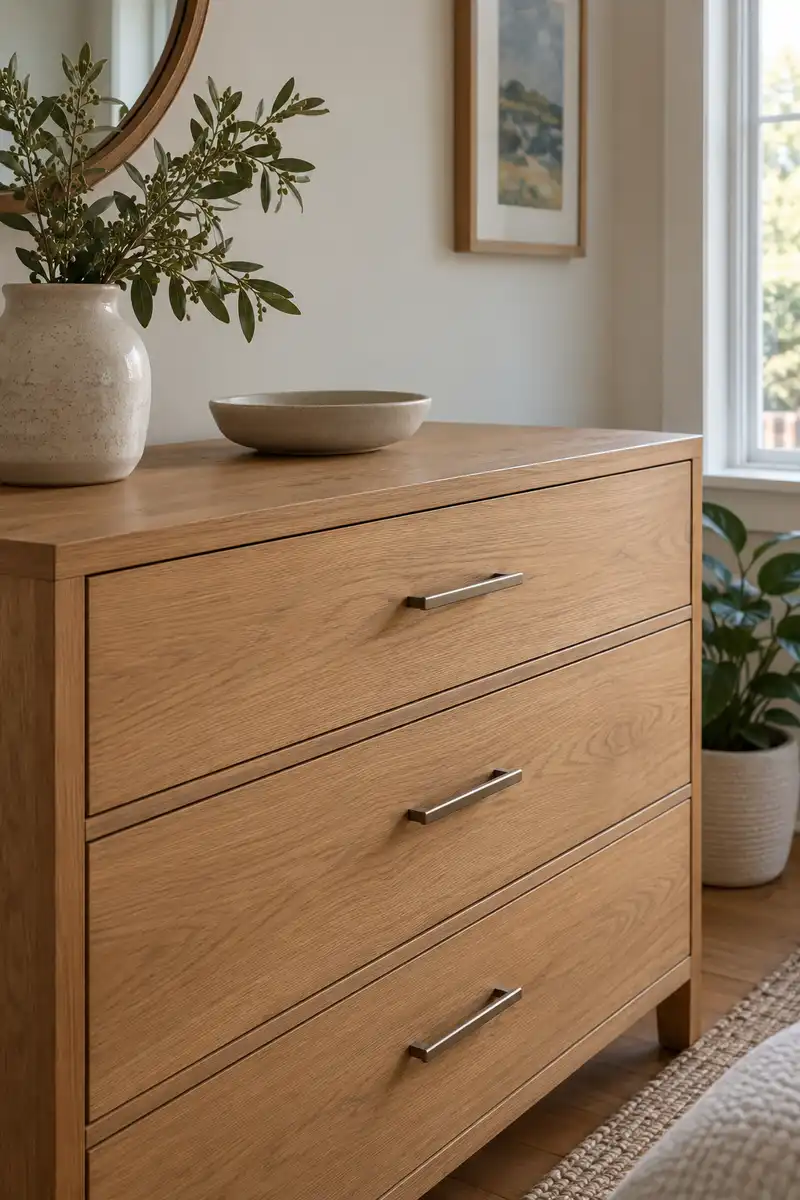
Quick tip: Notice the small pieces you touch each day. A drawer pull or a lamp switch is a good starting point. Clean or repair the existing piece first before deciding it needs replacing.
Small details help a room feel cared for, but they do not all need the same finish. A few repeated metal tones are enough. If you replace removable handles in a rental, check permission, measure the existing holes, and keep the original parts together so the change is easy to reverse.
20. Give Corners Breathing Room
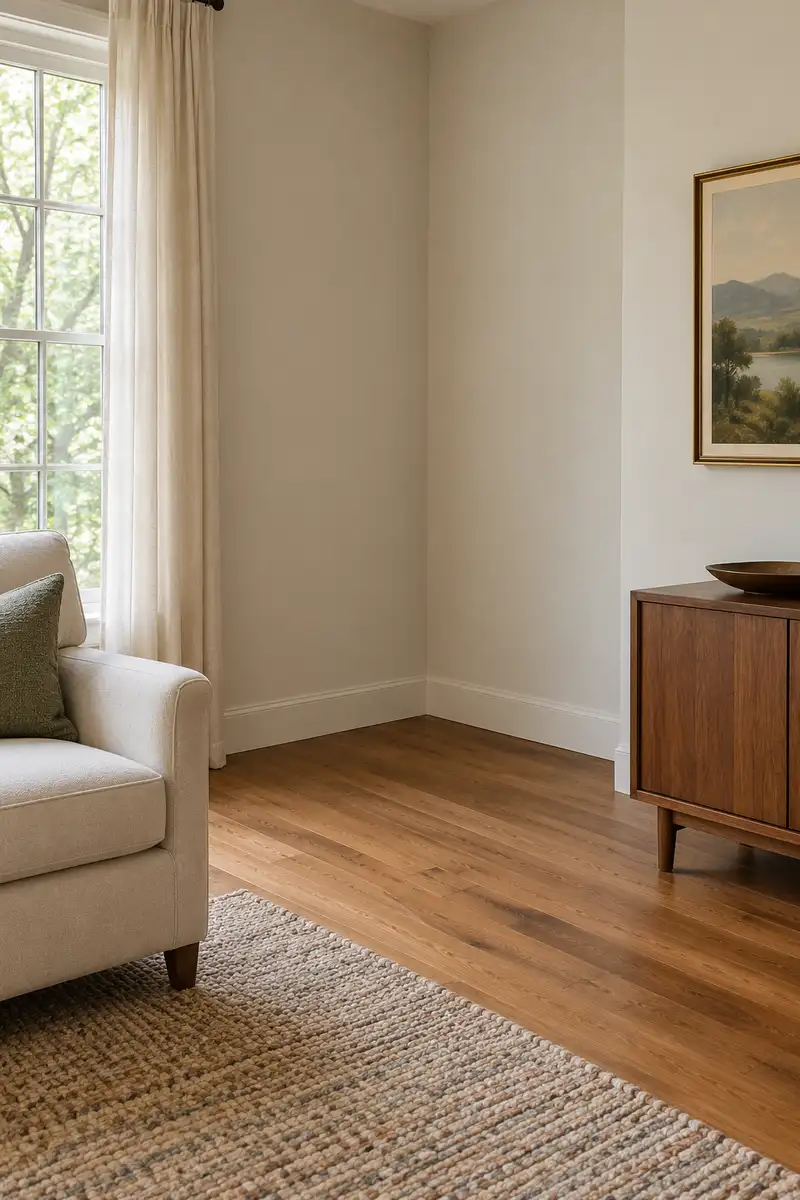
Before: Every empty corner gets a basket or occasional table. The room feels full without becoming more useful.
After: One corner remains open. The reading chair and art become easier to notice.
Empty floor can be part of a finished room. Look for objects that have drifted into corners without a clear purpose, then remove them for a few days. You may find the apartment feels more comfortable immediately. Bring something back only when you miss its function or truly enjoy seeing it.
21. Check the Whole Home
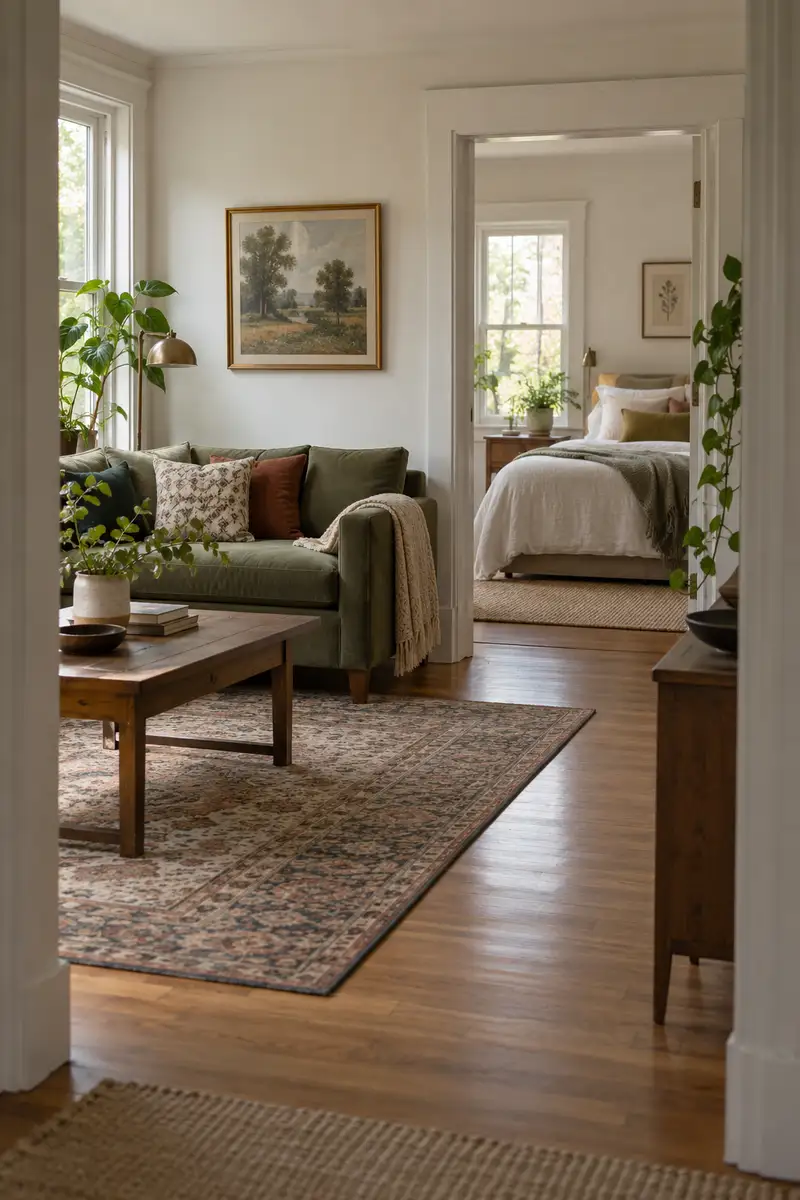
- Walk through from the front door.
- Sit in the places you use most.
- Note one uncomfortable or unfinished spot.
- Fix that spot before buying more decoration.
A put-together apartment grows from repeated small decisions that make daily life easier. Check how the rooms connect through color, scale, and comfort, then let each one have its own character. You do not need to finish everything at once. Start with the change you will notice every day.
Frequently Asked Questions
Where should I start decorating an apartment?
Start with the room where you spend the most time. Make the main seat comfortable, check the furniture arrangement, and add one useful textile or light before buying smaller accessories.
Does a guy’s apartment need dark colors?
No. Light, bright, muted, and deep colors can all work. Choose a palette you enjoy and consider the room’s daylight, existing finishes, and the furniture you want to keep.
How can I decorate when I rent?
Begin with movable pieces such as rugs, curtains, lamps, bedding, and art. Check your lease or landlord’s requirements before drilling or changing fixtures, and keep any original parts you replace.
How do I keep a room from looking like a showroom?
Use a few things connected to your own interests and history. Mix older and newer pieces, leave space around your favorites, and choose comfort over a perfectly coordinated furniture set.
Make It Feel Like Home
Decorating a guy’s apartment is mostly about making the place feel like a comfortable home for the person who lives there. Begin with the furniture you use most, then add softness, useful light, and a few personal details. Let the rooms relate without forcing them to match. If you are unsure about a purchase, ask what it will improve in an ordinary day. A better seat, calmer bedroom, or easier entry is a meaningful result. Keep the changes that work, let the unnecessary extras go, and give the apartment time to develop its own familiar character.
Community
Join the conversation
Add a useful idea, ask a specific question, or share what worked in your space. Every comment is reviewed before it appears.