
A studio can have a cozy sleeping area and a festive living area without making them look like separate homes. These studio apartment Christmas decor ideas focus on the small links between those two zones. A shared ribbon, related fabric, or repeated wood tone can connect the view while each area keeps its own purpose. You do not need identical bedding and cushions, or lights around every edge. Start with what you can see from the sofa and from the bed. Then choose a few quiet details that relate across the room without interrupting rest, reading, or the route between them.
1. Share One Accent

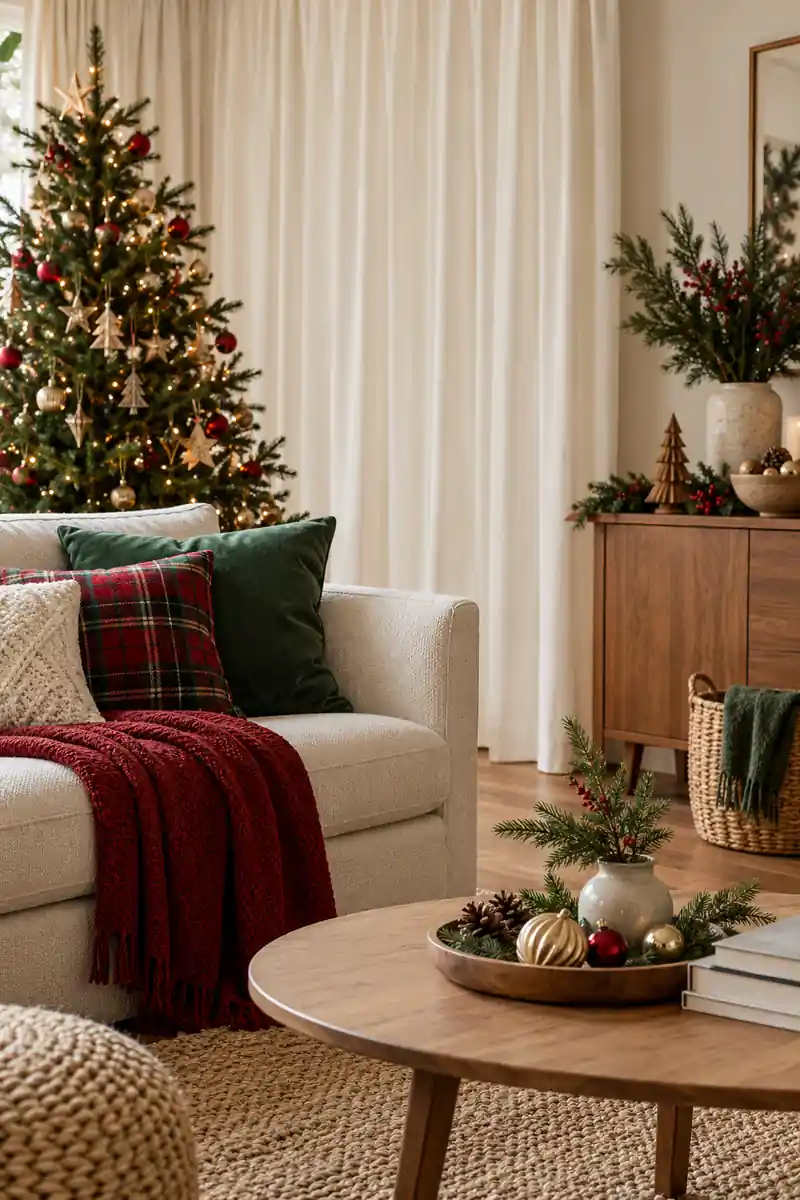
Choose one Christmas accent color to appear in both the living and sleeping areas. A red cushion on the sofa can relate to a folded red throw at the foot of the bed. Keep the quantities different so the two areas feel connected without looking like matching furniture displays.
Start with fabric you own, then choose the smaller accent to work with that shade. Check both pieces together in the room’s daylight before deciding they belong in the same plan. A slight difference in texture can make the shared color feel more natural. Keep the bedding itself comfortable and simple.
2. Echo the Tree
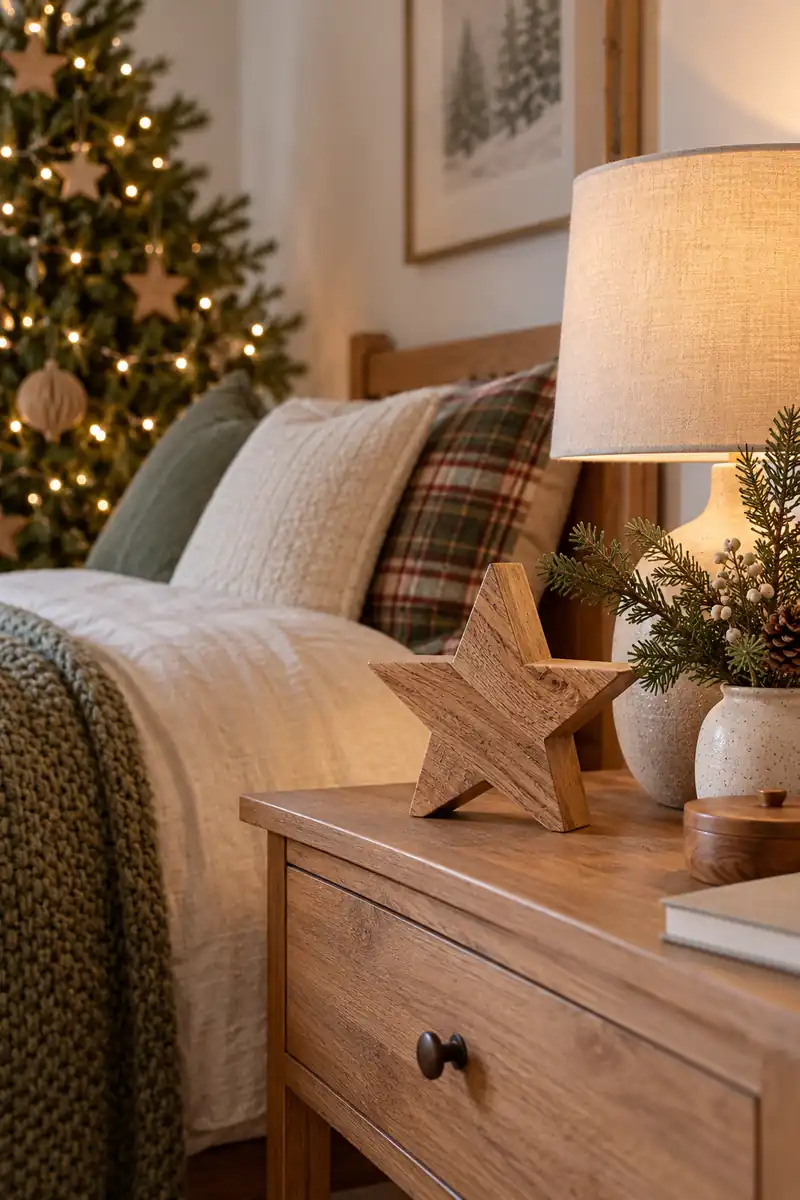
- Pick one tree detail.
- Choose a small bedside version.
- Keep the nightstand useful.
- Leave the pillow area clear.
Let a small bedside accent borrow one detail from the main Christmas tree. A wooden star or a ceramic piece in the same color is enough. Avoid a second busy display near your pillow; the connection should be clear from across the room without making the sleeping area feel crowded.
3. Use Related Throws

Quick tip: Check the shared color in daylight. Choose fabrics comfortable for their actual use.
Two throws do not need the same pattern to connect the zones. Try a plain cream blanket on the bed and a cream plaid throw on the sofa. The shared color ties them together, while the different patterns let each area feel suited to its own use and level of activity.
4. Quiet the Divider

Before: Decorations fill every divider cubby. Daylight struggles to pass between the sofa and bed.
After: Two small seasonal groups occupy separate openings. The central cubbies stay open for light and useful storage.
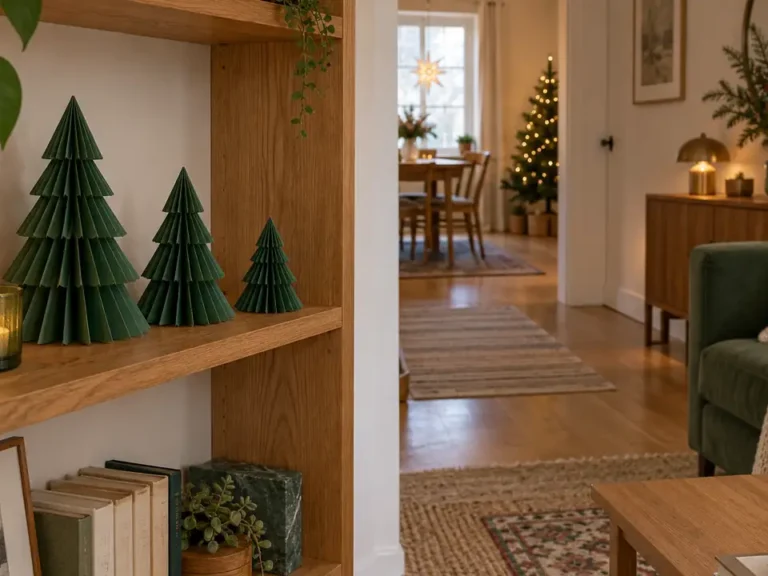
If a shelf divides your room, decorate only a few openings so it remains a light boundary. Small pieces visible from both sides can relate the zones without closing them off. Keep the unit safely secured, and leave enough open space for daylight and sightlines to pass between the bed and sofa.
5. Repeat a Ribbon

- Choose a ribbon width.
- Tie the larger bow first.
- Make a smaller bedside bow.
- Trim trailing ends safely.
One ribbon can connect several different objects without requiring a matching set. Tie a simple bow on the tree and a smaller one around a bedside vase. Keep the ribbon away from reading lights and avoid trailing ends near your pillow, so the decorative link stays neat and comfortable.
6. Compare Zone Intensity

Living display
Placement: Beside sofa
Visual effect: Fuller festive detail
Everyday use: Suits gathering and relaxing
Bedside accent
Placement: On existing nightstand
Visual effect: Quiet repeated color
Everyday use: Leaves sleep essentials clear
The living area can carry the strongest Christmas detail while the sleeping area stays calmer. That difference gives the room a useful rhythm rather than making it feel uneven. Repeat a color or material between the zones, but reduce the number of objects near the bed where you want a quieter view.
7. Keep the Path Clear
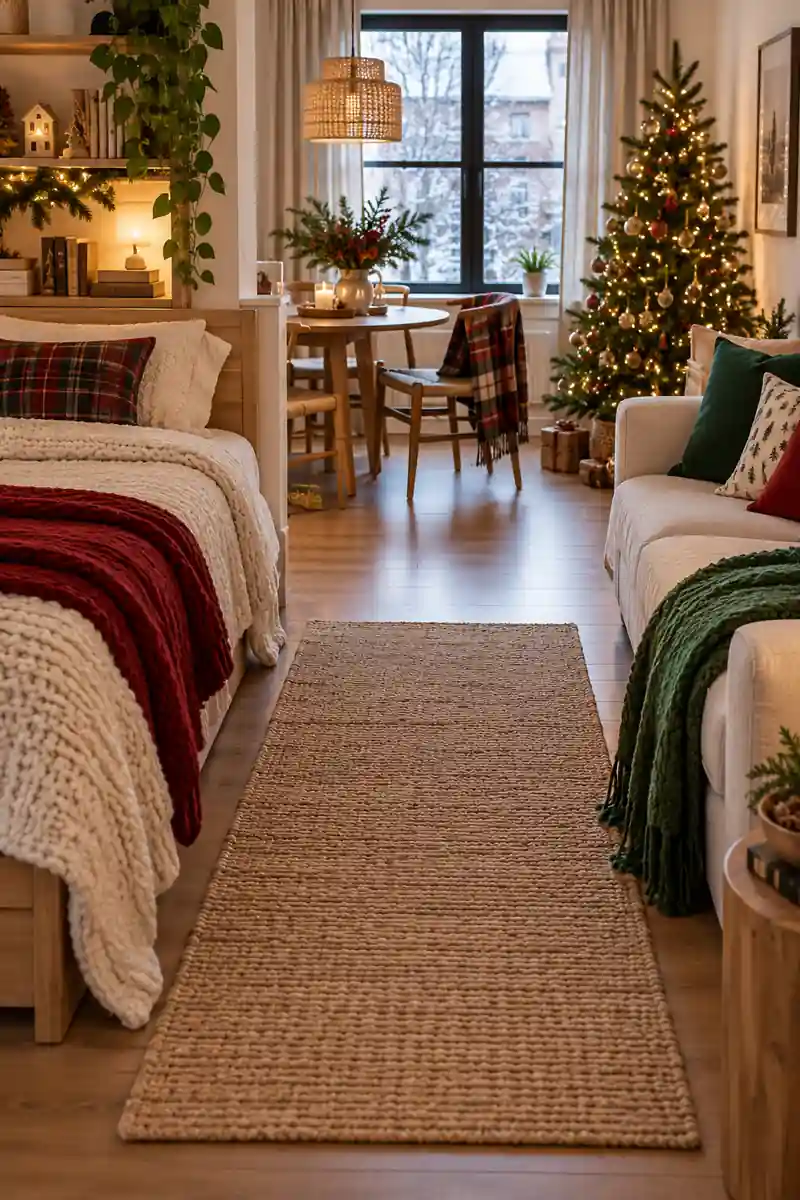
Do:
- Keep the walking route open.
- Check loose blanket edges.
- Use existing surfaces.
Don’t:
- Place gift stacks in the path.
- Run cords across the floor.
- Let branches brush the bed.
The route between bed and sofa is part of the connection, so it should remain easy to use. Avoid placing baskets, gift boxes, or a second tree along it. Put the linking details on furniture and textiles instead, and check the path with bedding hanging as it normally does at night.
8. Use Matching Materials
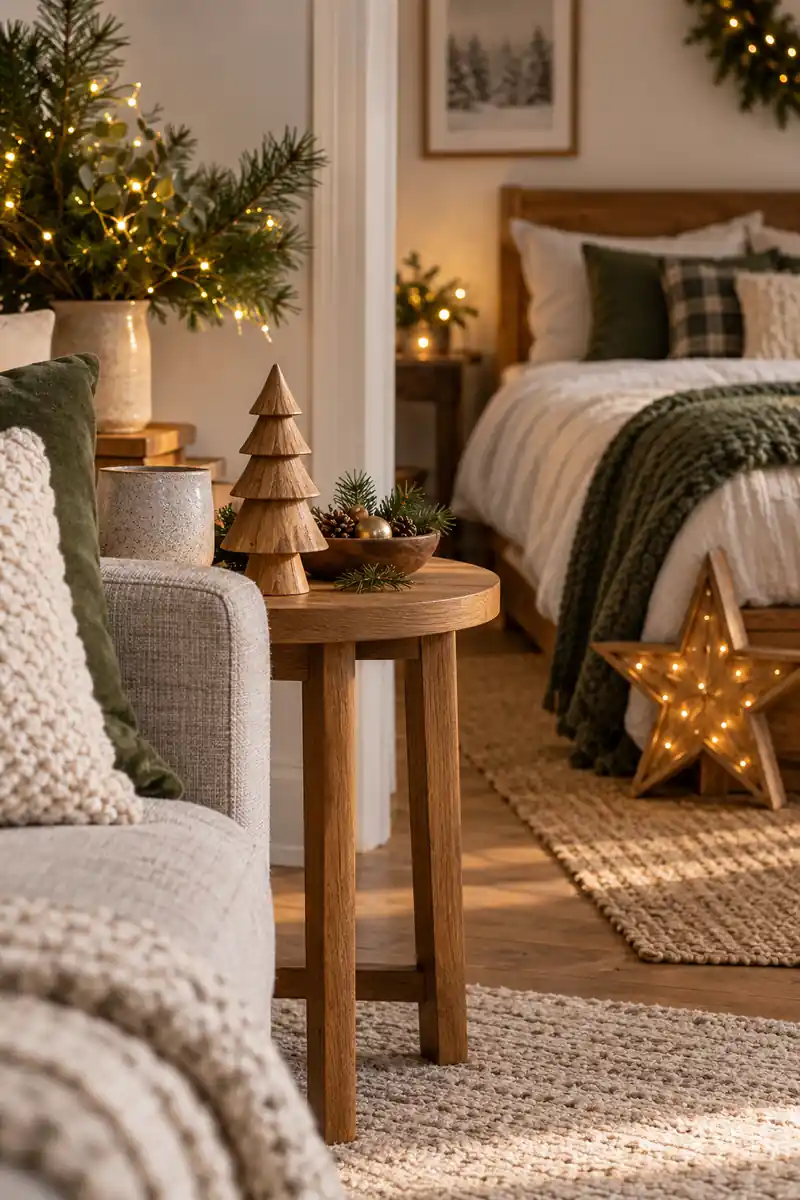
Placement: One existing surface in each zone.
Materials: Small wooden seasonal objects.
Scale: A modest pair rather than many copies.
Care: Dust and store with everyday accessories.
Repeated materials can connect the zones even when their colors differ. A wooden ornament near the sofa can relate to a wooden star on the nightstand. Keep the finish reasonably similar and let other surfaces remain plain, so the connection feels subtle rather than turning every object into part of a theme.
9. Link the Rug Colors

You do not need a holiday rug to tie the zones together. Borrow one color from the rug you already own and repeat it in a Christmas cushion or a small ornament group. This lets an everyday part of the room support the seasonal plan without creating another bulky item to store.
Look at the quieter rug colors rather than only its strongest shade. Test a cushion or ornament against it before buying anything new for the room. Keep the floor covering in its safe position instead of shifting it for a display. A small repeated color can be enough.
10. Keep Bedside Light Separate
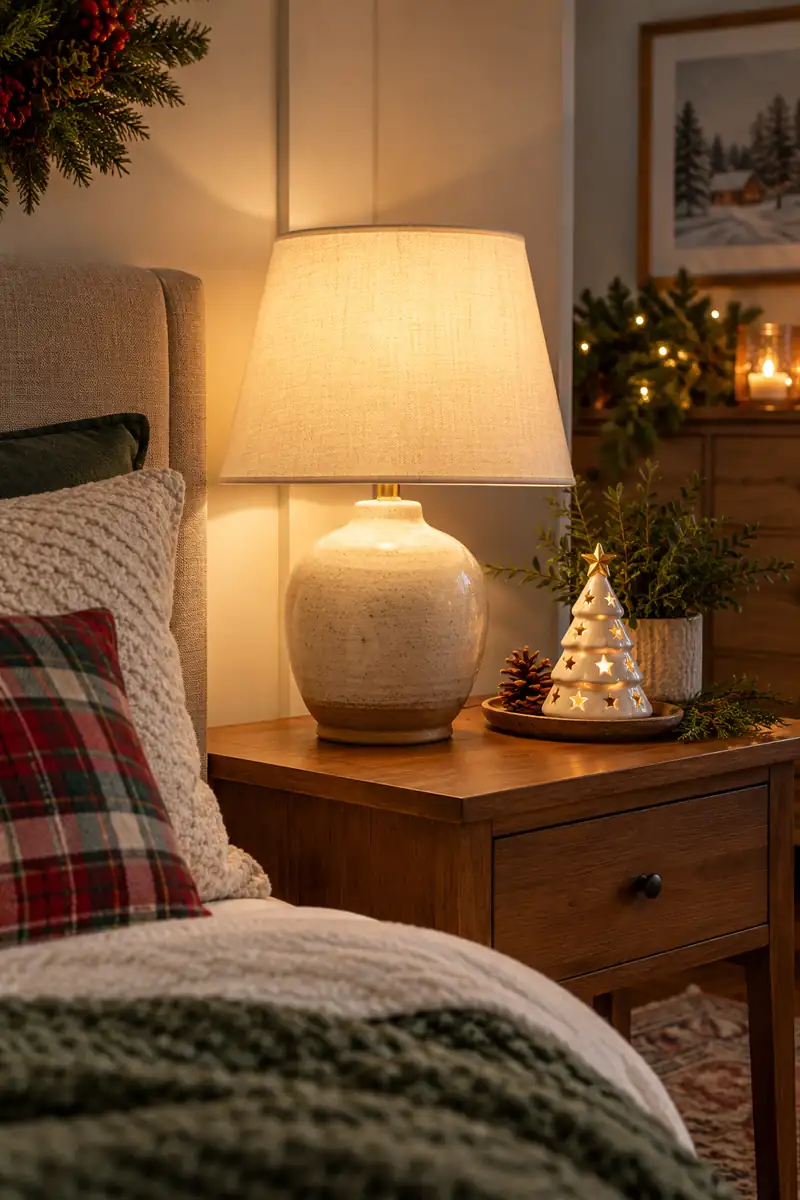
- Leave the switch accessible.
- Keep fabric away from the lamp.
- Choose a small stable accent.
- Check the view while lying down.
Your reading light should remain useful even when the living area has a festive glow. Keep Christmas decorations away from its shade, switch, and ventilation openings. A small nearby accent can relate to the tree, but the task light needs to do its everyday job without glare or an awkward reach from bed.
11. Repeat a Small Shape

Quick tip: Choose one easy-to-recognize shape. Vary the size between the two zones.
A star, bell, or simple tree shape can appear in both zones without repeating the same object. Use a larger version near the sofa and a small version by the bed. Keeping the shapes related helps the eye move across the room while giving each area its own scale and character.
12. Simplify the Footboard

Before: Loose ornaments cover the footboard. They catch on blankets when you make the bed.
After: A folded seasonal throw adds color at the foot. The sleeping surface remains clear of fragile objects.
The foot of the bed is often visible from the living area, making it a useful place for a folded seasonal throw. Avoid hanging ornaments from the bed frame or placing fragile decor on the mattress. A textile gives the visible edge a festive finish while remaining easy to move at bedtime.
13. Create a Shared Shelf

- Choose a shelf visible from both areas.
- Use two or three sturdy pieces.
- Check the view from the bed.
- Check the view from the sofa.
A shelf seen from both zones can carry one small display that belongs to the whole room. Keep the arrangement simple enough to read from different angles, and avoid placing all the attractive detail against one hidden side. Leave useful storage intact and follow the shelf’s load and mounting requirements.
14. Compare Curtains and Screens
Existing curtain
Placement: Between zones
Visual effect: Broad fabric color
Everyday use: Keep its track and movement clear
Stable screen
Placement: At zone boundary
Visual effect: Defined surface
Everyday use: Avoid added weight or unstable attachments
Existing dividers offer different ways to carry a seasonal accent. A curtain may already provide a large area of color, so it needs little added decoration. A solid screen may suit one lightweight accent if its instructions allow it, but neither should gain weight that interferes with its safe movement or stability.
15. Use Paired Containers
Do:
- Repeat a ceramic finish.
- Use different container shapes.
- Keep each surface useful.
Don’t:
- Fill containers with unstable objects.
- Crowd the bedside lamp.
- Use greenery near heat.
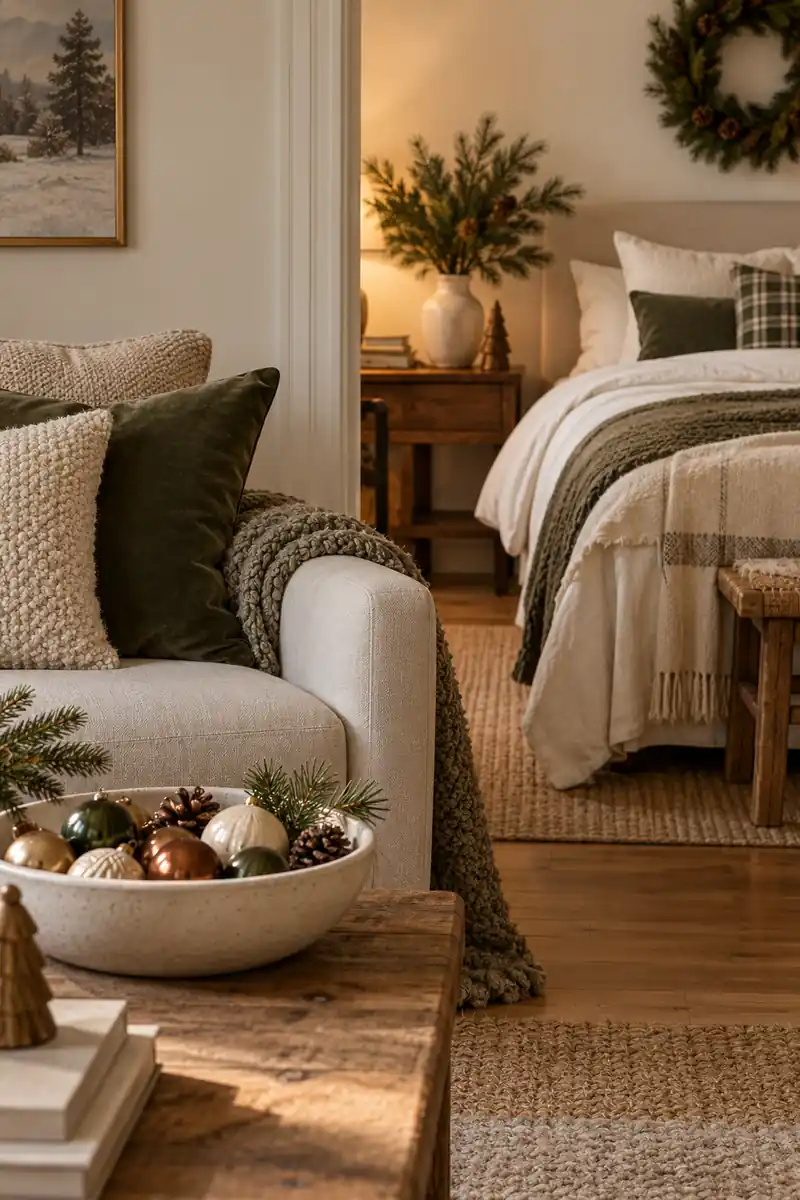
Two related containers can link the zones without holding the same contents. Place ornaments in a bowl near the sofa and a small faux sprig in a matching bedside vase. The finish creates the connection, while the different shapes and uses keep the arrangement from feeling overly coordinated or repetitive.
16. Let Greenery Travel

Placement: An existing bedside surface.
Materials: A small faux sprig or ceramic tree.
Scale: Much smaller than the main tree.
Care: Keep away from lights and bedding.
A small amount of greenery near the bed can echo the main tree without becoming another focal point. Use one stable vase or a tiny ceramic tree rather than loose branches across the headboard. Keep natural material and artificial foliage away from heat, and choose a placement that will not disturb sleep.
17. Match the Quiet Details

Small details such as a matte finish or a soft fabric can connect the room more gently than matching patterns. If the sofa area has matte red ornaments, a plain red cotton cushion on the bed may be enough. Look for a shared feeling rather than trying to repeat every visible feature exactly.
Choose a recognizable detail that does not require another large object. Keep the second version smaller or softer so the sleeping area still feels calm. Try the pairing with the lights both on and off before deciding it works. Remove anything that feels too busy.
18. Keep Storage Shared
- Use one planned storage area.
- Wrap fragile pieces separately.
- Keep paired items together.
- Leave the floor route clear.
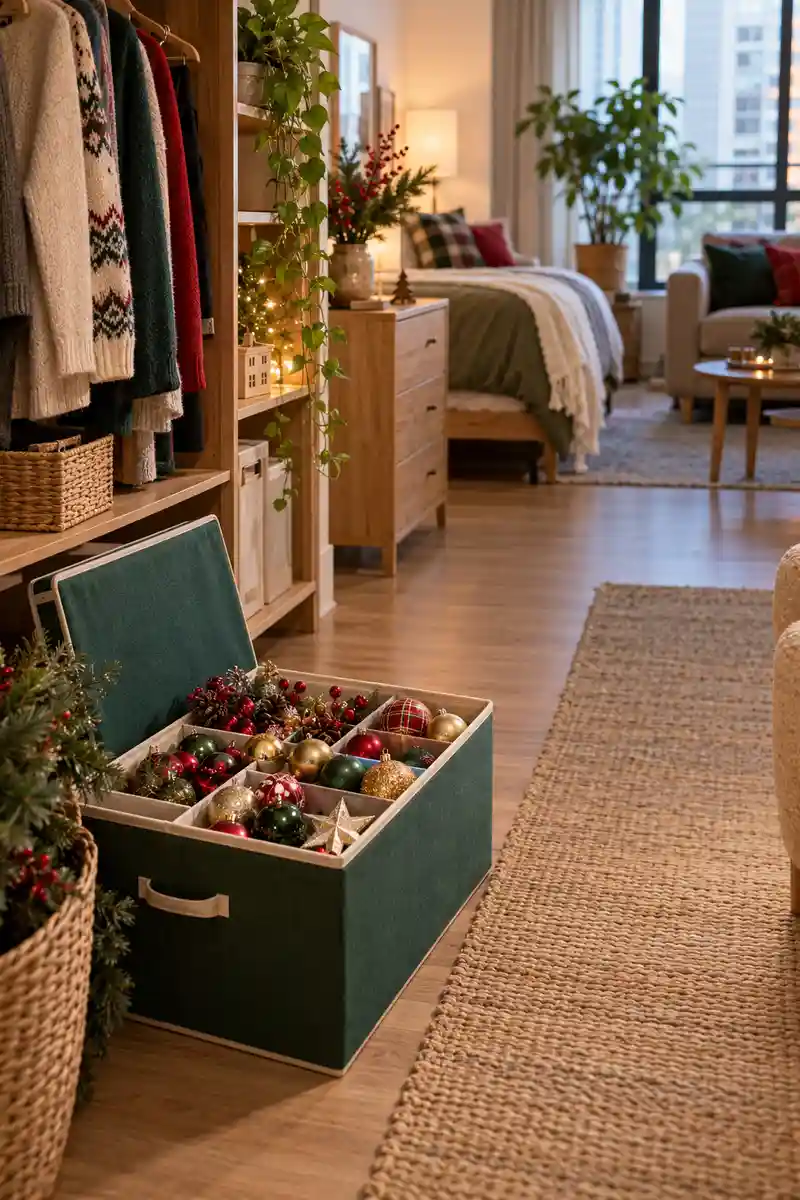
Store the seasonal pieces for both zones together so the room is easier to reset after Christmas. Use dividers or soft wrapping for fragile objects, and label your storage in a way you can recognize next year. Keep the container out of everyday routes while the decorations are in use.
19. Check Both Views

Quick tip: Sit on the sofa to inspect the display. Repeat the check from your normal sleeping position.
A decoration that looks good from the sofa may show a messy back or an exposed cord from the bed. Check each shared display from both positions before finishing. Choose arrangements that work from several angles, and keep necessary electrical connections accessible rather than hiding them under fabric or inside unsuitable containers.
Frequently Asked Questions
Do both zones need a Christmas tree?
No. One main tree and a small related accent near the bed usually create a clearer connection with less clutter.
How can I connect different bedding and sofa colors?
Choose one accent that works with both, or repeat a material such as wood or cream ceramic. The main fabrics do not need to match.
Can I put Christmas lights around the bed?
Follow the product instructions and keep lights, cords, and battery packs clear of bedding. A suitable separate decorative light on a stable surface is often easier to manage.
What should stay undecorated?
Keep sleeping surfaces, walking routes, light switches, and useful storage access clear. Those spaces help the room remain comfortable throughout the season.
Conclusion
Connecting two zones is mostly about repetition in small doses. Choose a color, texture, or shape you enjoy, then use a lighter version of it across the room. Keep the bed comfortable, the sofa useful, and the path between them clear. A stronger display in the living area can pair with a much quieter bedside accent. These bedroom zone ideas can help if the boundary itself needs attention before you decorate. Try one connection at a time and view it from both sides. The finished studio should feel related without asking every corner to do the same thing.

Community
Join the conversation
Add a useful idea, ask a specific question, or share what worked in your space. Every comment is reviewed before it appears.