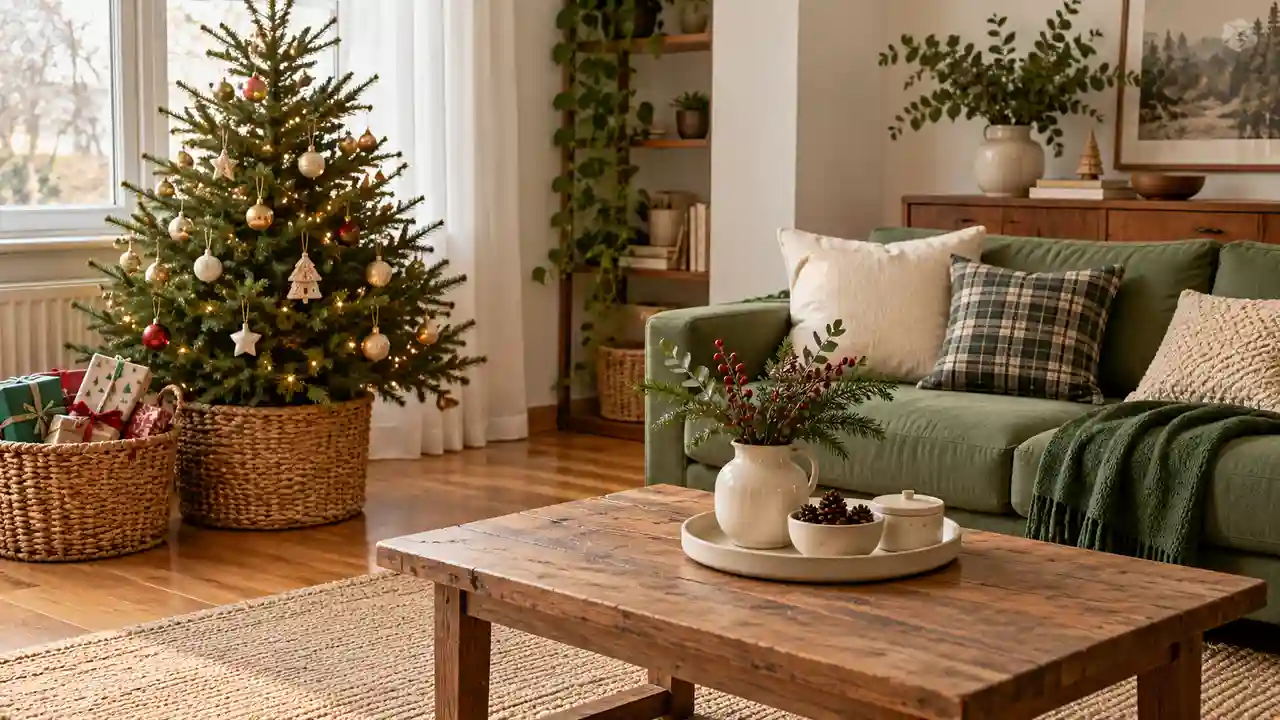
Budget-friendly apartment Christmas decor starts with deciding what deserves a place in the room. Before adding more, look at the bowls, textiles, baskets, and favorite ornaments you already own. A clearer palette or a better arrangement may give you the change you want without another purchase. These ideas focus on thoughtful reuse, useful choices, and decorations that can earn their storage space year after year. You can spend where it makes a real difference and skip the extras that only fill a gap. The result should feel considered and personal, with enough room left for everyday life throughout the holiday season.
For a year-round base, these cozy studio apartment ideas explore comfortable layers and compact living areas.
1. Shop Your Cupboards
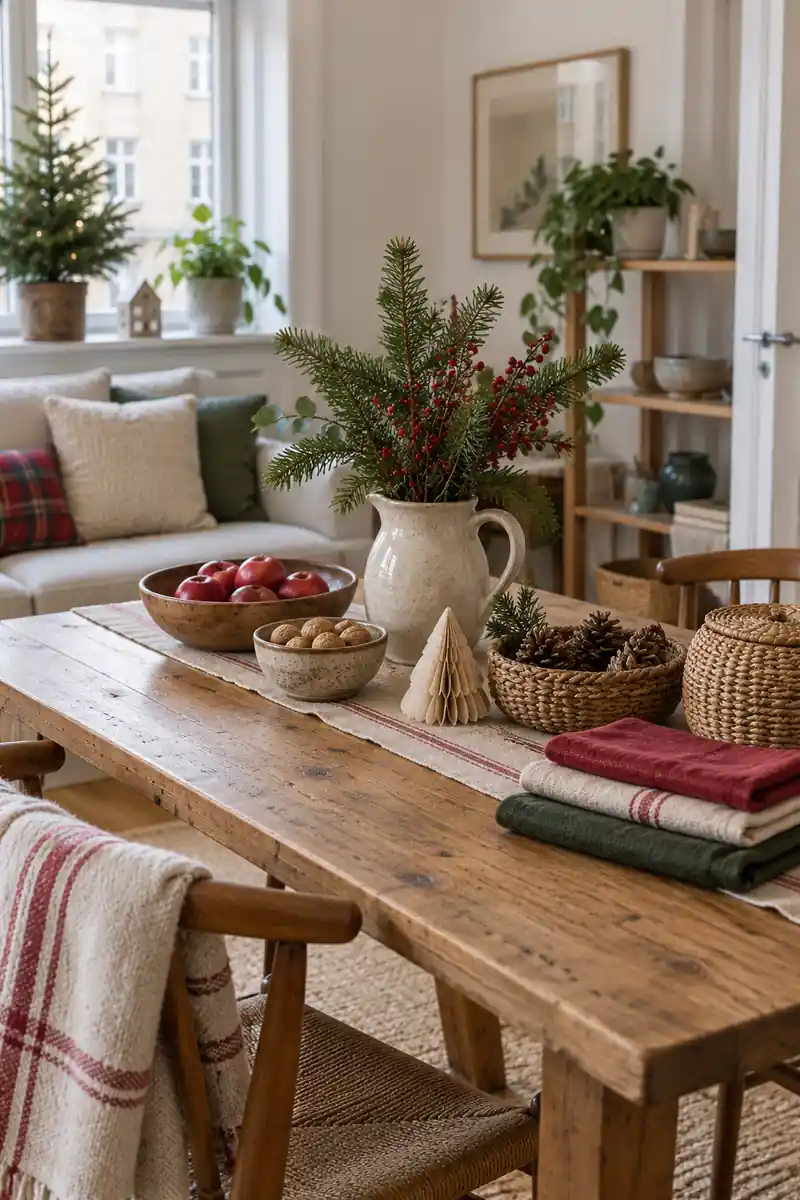
Gather the bowls, baskets, vases, and textiles you already own before planning any purchases. Put the pieces together on a table so you can see which colors and materials repeat. Keep the nearby surfaces simple so the texture remains easy to appreciate.
This first look often reveals the beginning of a holiday scheme without a shopping list. A plain bowl can hold ornaments, and a favorite pitcher can become a greenery vase. Choose a few useful candidates, return the rest to their normal places, and build the display around what genuinely fits.
2. Repeat One Ribbon
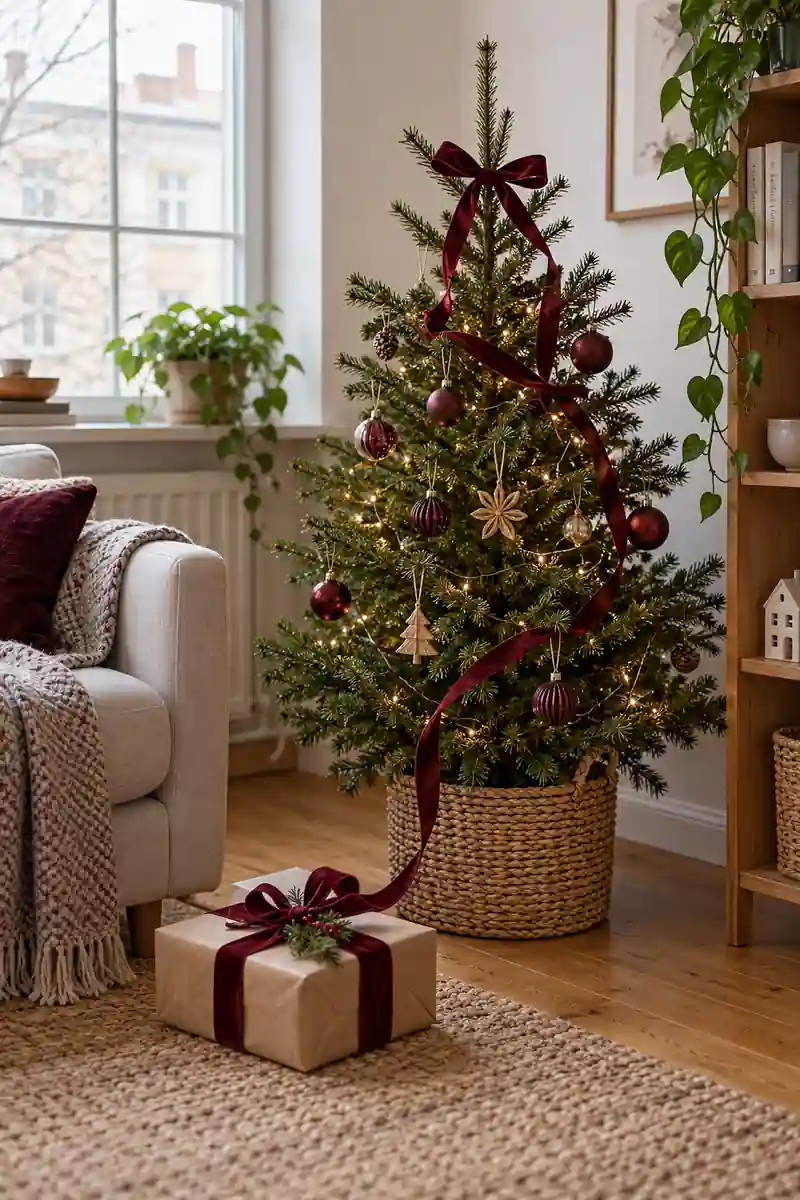
- Look at existing ornament colors first.
- Choose one ribbon that connects them.
- Cut only the lengths needed.
- Keep usable offcuts together.
Choose the ribbon after looking at your existing ornaments so it works with more than one piece. Cut only the lengths you need, and keep usable offcuts together for smaller packages. The repeat creates a finished feeling without requiring a matching collection of new decorations for every room zone.
3. Borrow A Serving Bowl
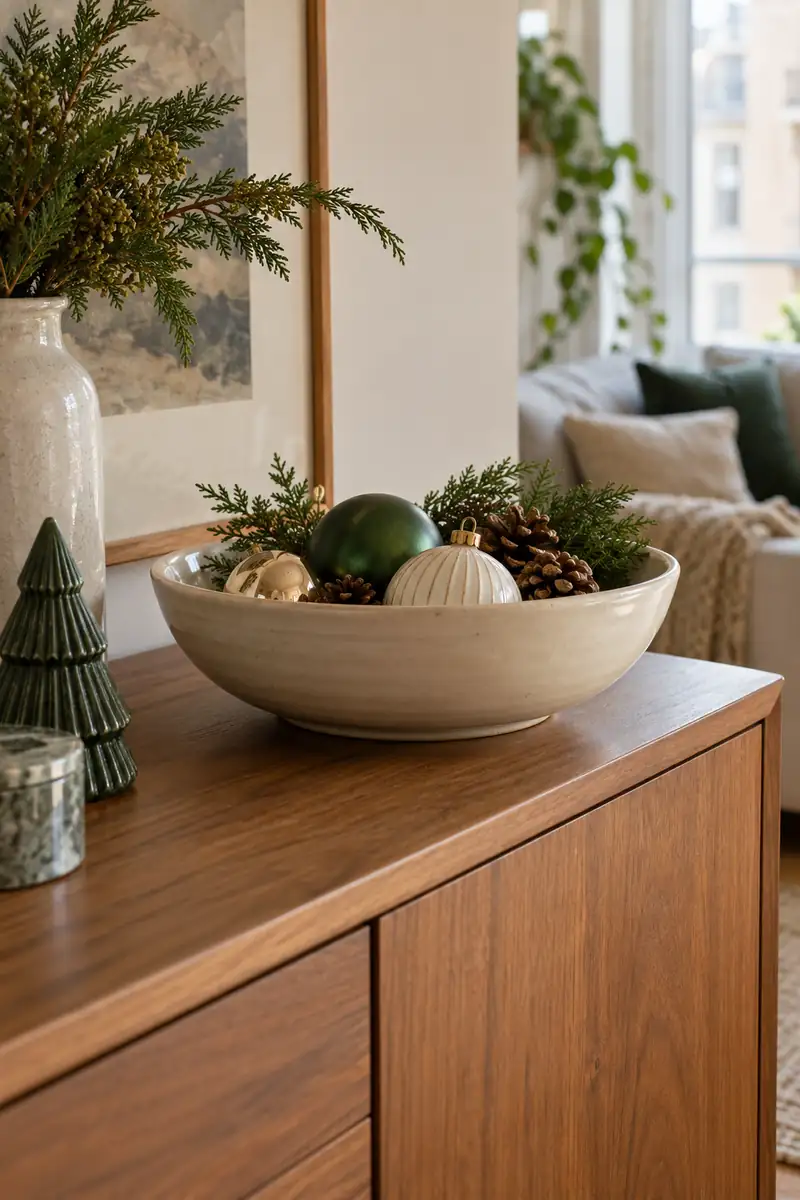
Quick tip: Turn an everyday serving bowl into an ornament display between meals. Use a few pieces with related colors and leave enough space that their shapes remain easy to see.
There is no need for a special seasonal container when a familiar bowl already suits the room. Choose a stable place where the display will not interrupt daily tasks. If you need the bowl for dinner, lift the ornaments into a storage box and return the bowl to its ordinary job.
4. Edit Before Buying
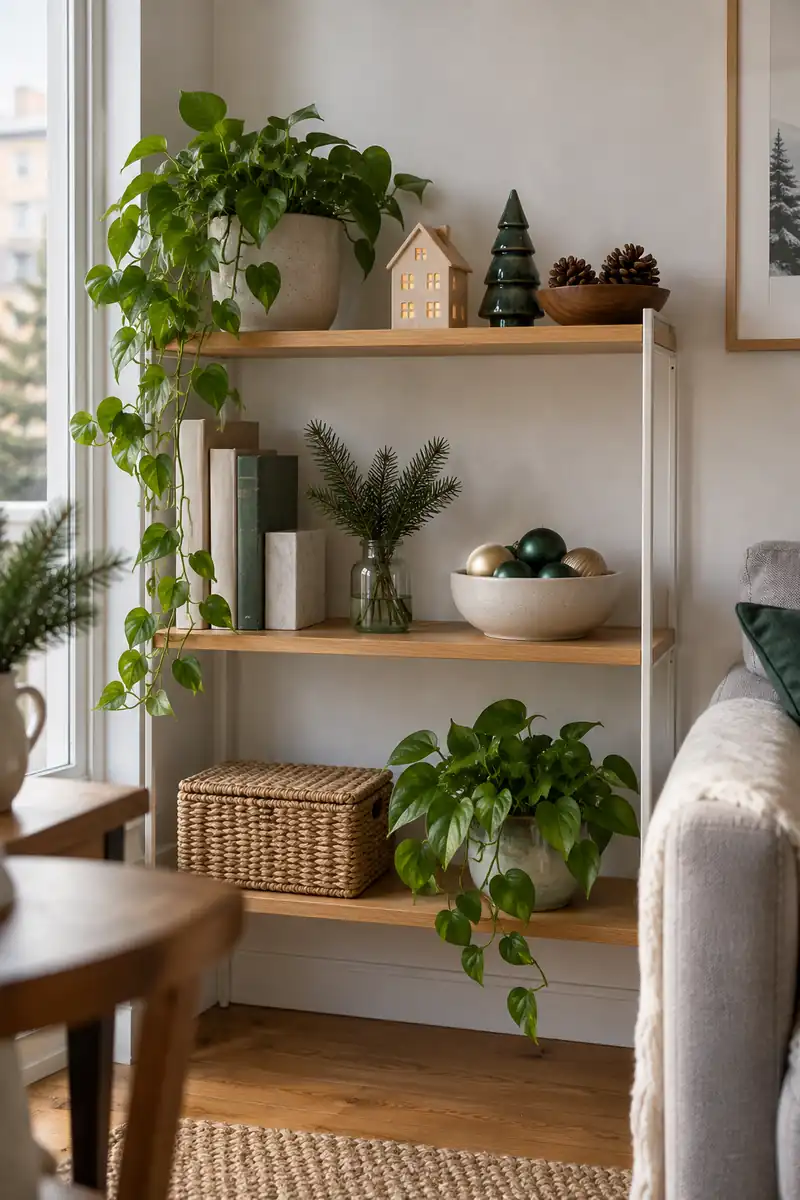
Before: The shelf feels crowded but unfinished. Another decoration seems like the easiest solution.
After: Unrelated pieces are removed and a favorite moves forward. The clearer arrangement reveals whether anything is actually missing.
Try moving one existing piece to a better position before replacing it. A favorite ornament may simply need a quieter background, and an old vase may look different beside a new fabric color. Give the edited arrangement a day in normal use so your shopping decisions respond to an actual gap.
5. Reuse Cushion Inserts
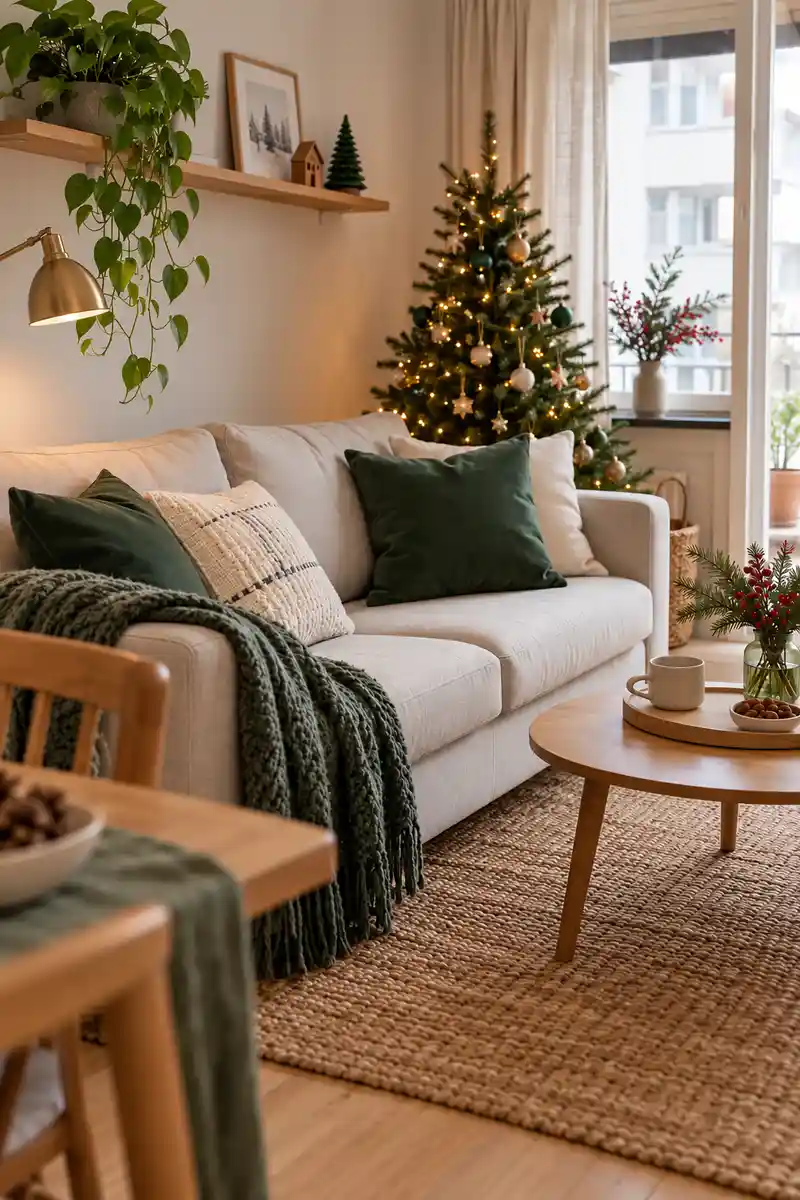
- Measure your existing inserts.
- Check which current covers already work.
- Choose a useful plain color if needed.
- Read dimensions and care instructions.
A plain green, red, or cream cover can support a Christmas palette without being limited to December. Check the dimensions and care instructions before choosing anything new. If your current covers already contain a useful color, keep them and add the seasonal note through a small ornament or ribbon instead.
6. Buy Or Rearrange
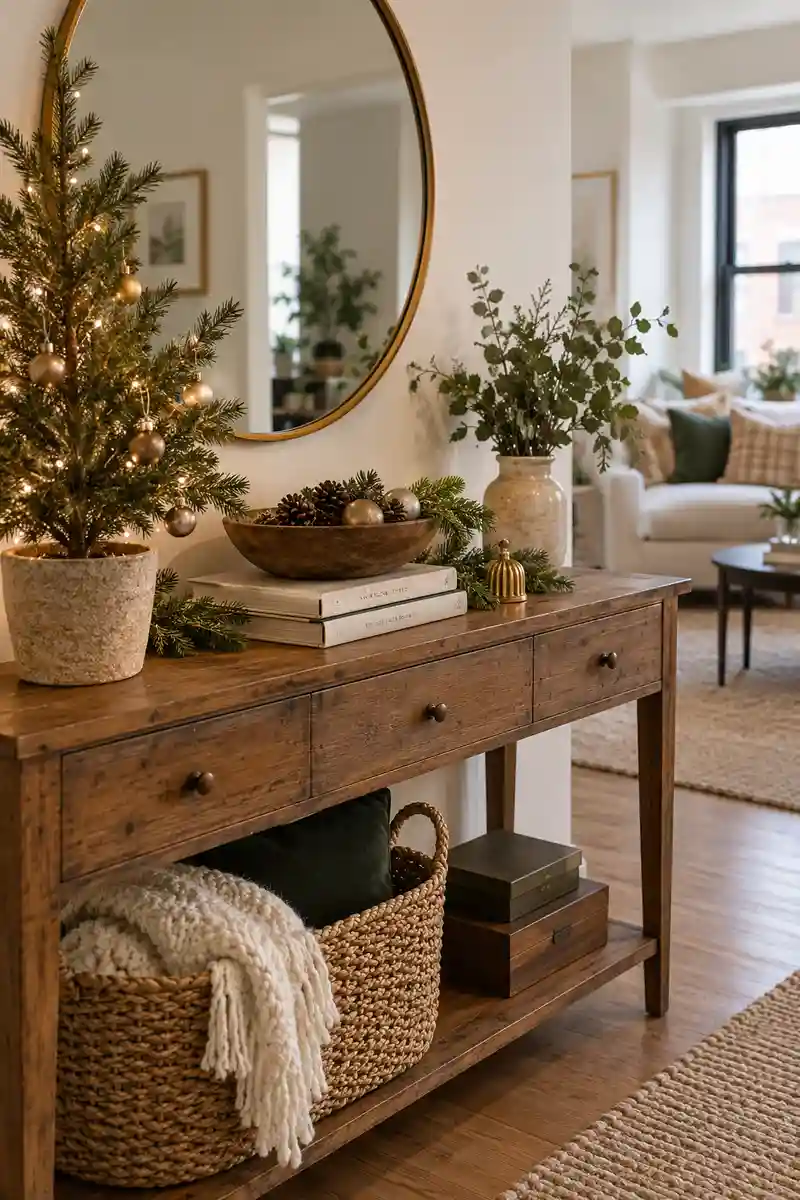
Rearrange existing pieces
Main benefit: Fresh grouping without more storage
First check: What already fits together
Best reason: Current pieces need editing
Buy one new piece
Main benefit: Solves a specific missing role
First check: Size and future use
Best reason: Existing options cannot do the job
A new piece can be worthwhile when it solves a clear problem and you expect to enjoy it again. But a different grouping may supply the same visual change without adding another object to store. Take a photo of both options if possible and choose the one that makes the room feel more coherent.
7. Keep Favorite Ornaments
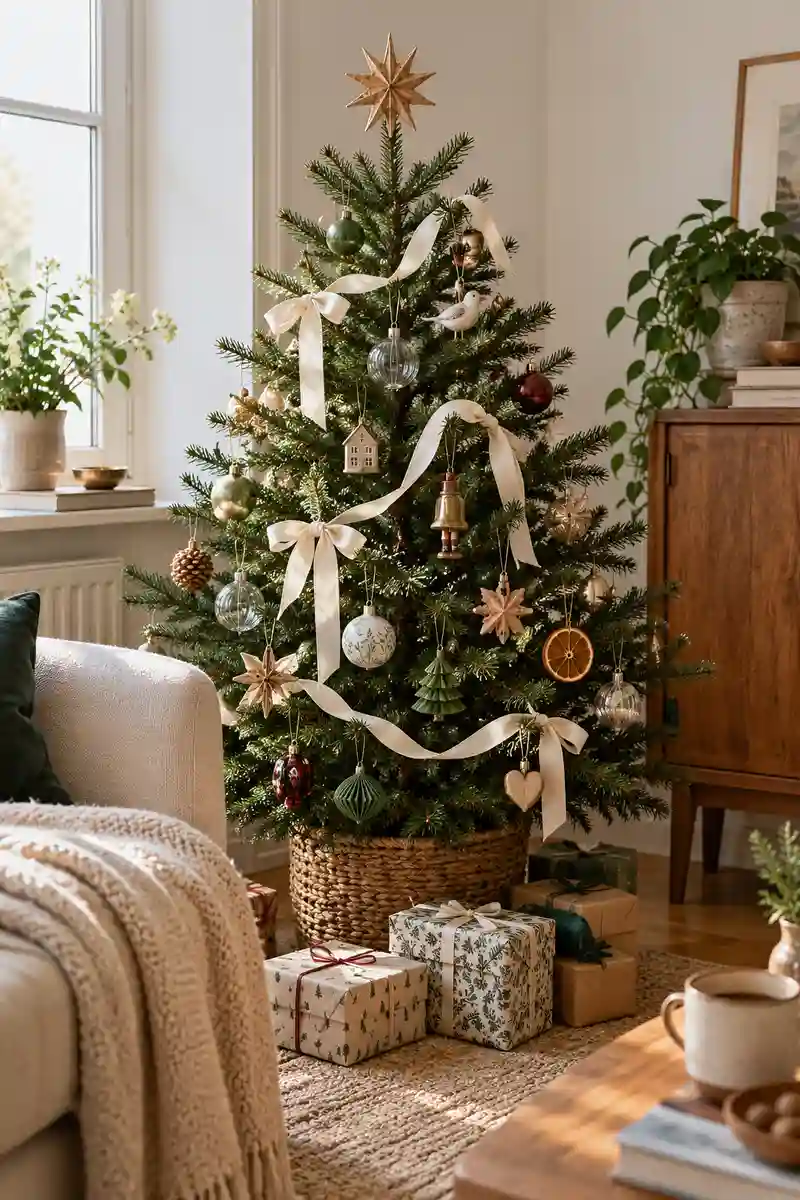
- Do: Start with favorite ornaments.
- Do: Repeat a shared color.
- Do: Give special pieces clear positions.
- Don’t: Replace a collection just to match.
- Don’t: Display every ornament at once.
- Don’t: Hide favorites behind filler.
A thoughtful arrangement does not depend on every piece sharing the same finish. Choose a few colors that recur in the collection and give the most distinctive ornaments clear positions. Store the pieces you are not using this year carefully so you can rotate them into a different arrangement later.
8. Everyday Vase Upgrade
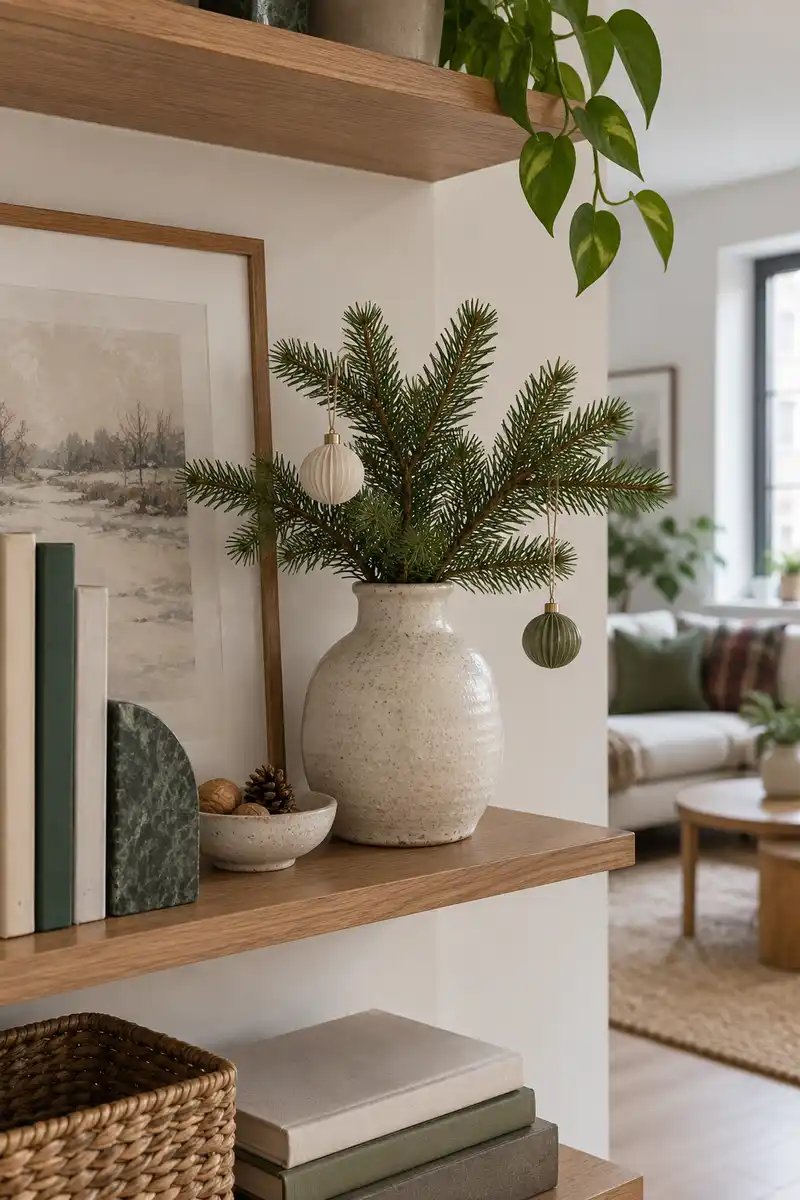
- Container: An everyday vase.
- Seasonal change: One short faux evergreen stem.
- Proportion: Stem suited to the vase.
- Storage: Protect the removed arrangement.
The vase helps the new greenery belong to the room without a separate seasonal accessory. Keep the stem size in proportion to the container, and store the removed arrangement where it will not be crushed. One balanced vase can look more considered than several tiny purchases scattered across the same shelf.
9. One Useful Textile
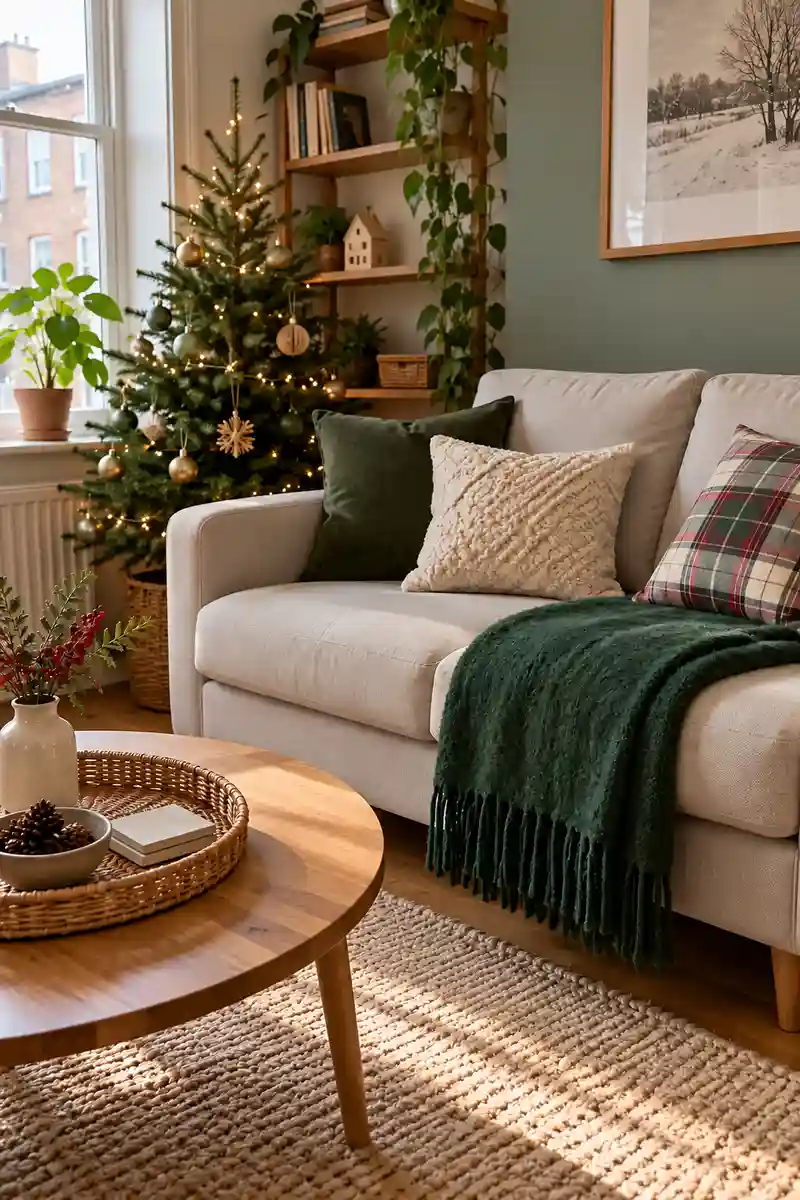
Choose one textile that can change the room’s mood and still earn its place afterward. A plain throw in a seasonal color may be more useful than several small decorative accessories. Keep the nearby surfaces simple so the texture remains easy to appreciate.
Think about how the fabric feels and where you will use it after the holidays. A throw that suits the sofa and your usual evenings has a clearer purpose than a piece bought only for a photograph. Fold it neatly when not in use so its color becomes part of the room.
10. Coordinated Existing Paper

- Sort leftover wrapping paper.
- Choose a simple color group.
- Pair plain and patterned sheets.
- Repeat one ribbon color.
Small scraps can wrap modest gifts or become simple tags if they are clean and sturdy. Keep the presentation tidy rather than trying to disguise every join with more decoration. A consistent color choice makes different papers feel intentional, especially when the gifts are grouped together beneath a small tree.
11. Rotate A Small Display
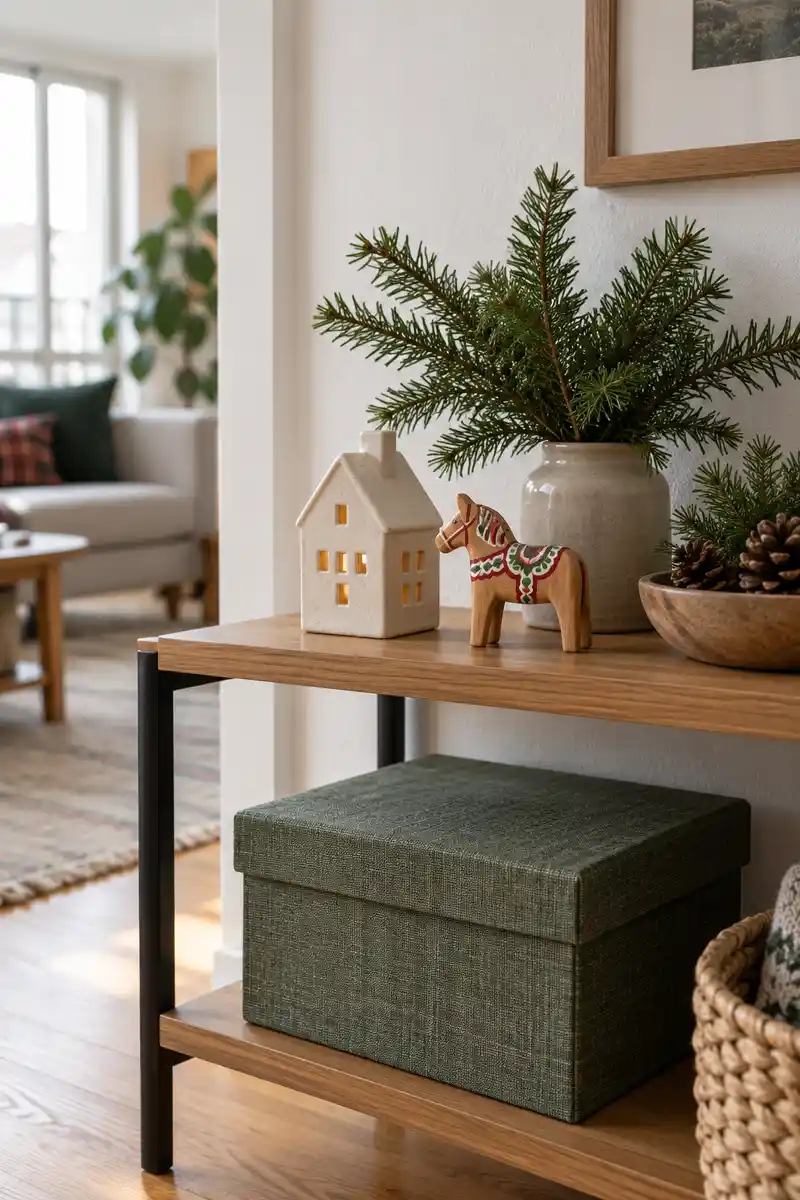
Quick tip: Choose a few decorations for the first part of the season and swap one or two later. A refreshed arrangement can come from rotation instead of a new shopping trip.
Keep the unused pieces in an accessible box so changing the display stays easy. Rotate similar-sized objects where possible, which avoids rearranging the whole shelf each time. You may find that seeing fewer favorites at once makes their details more enjoyable and gives older decorations a little renewed attention.
12. Frame A Card
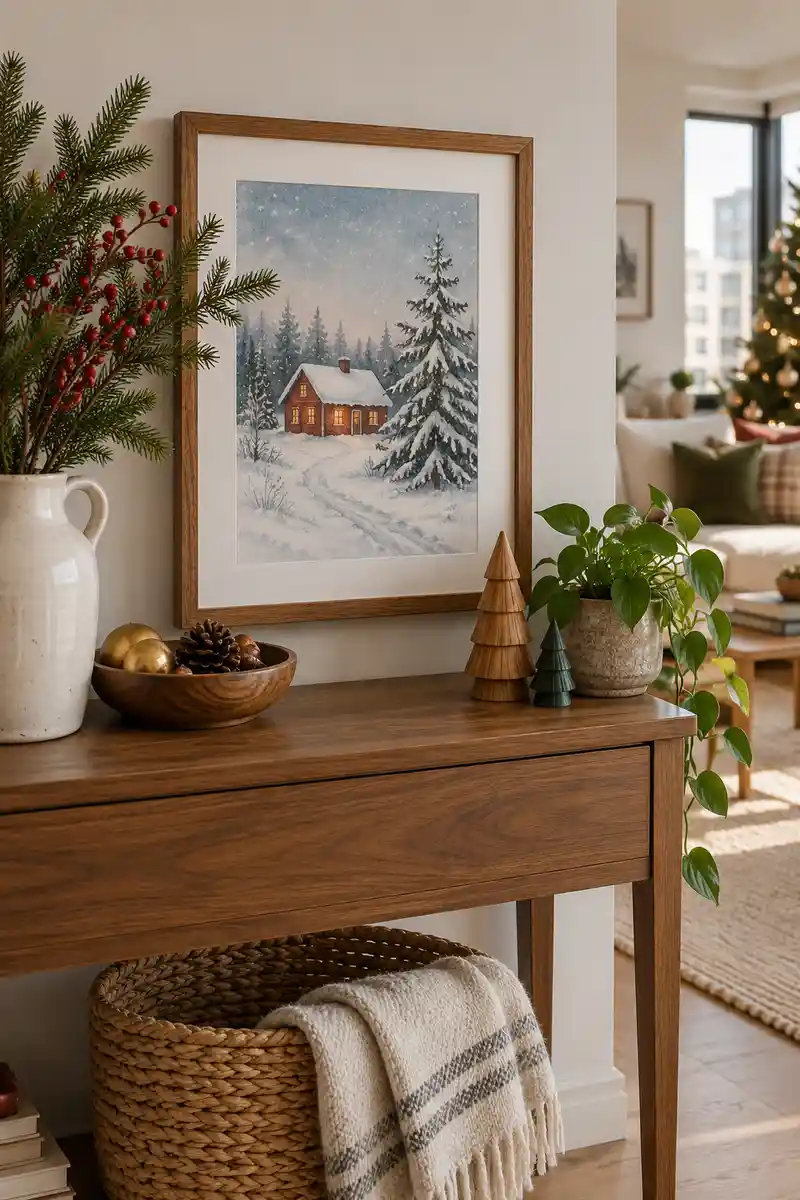
Before: Holiday cards gather in a loose pile. A new seasonal picture seems necessary.
After: One favorite card fits inside an existing frame. The illustration becomes the room’s seasonal artwork.
Check that the frame does not bend or damage a card you want to keep. A simple mat can help a smaller card sit comfortably within a larger opening. Choose a picture that relates to the room’s colors, and save the everyday artwork safely so the change is easy to reverse.
13. Restyle A Basket
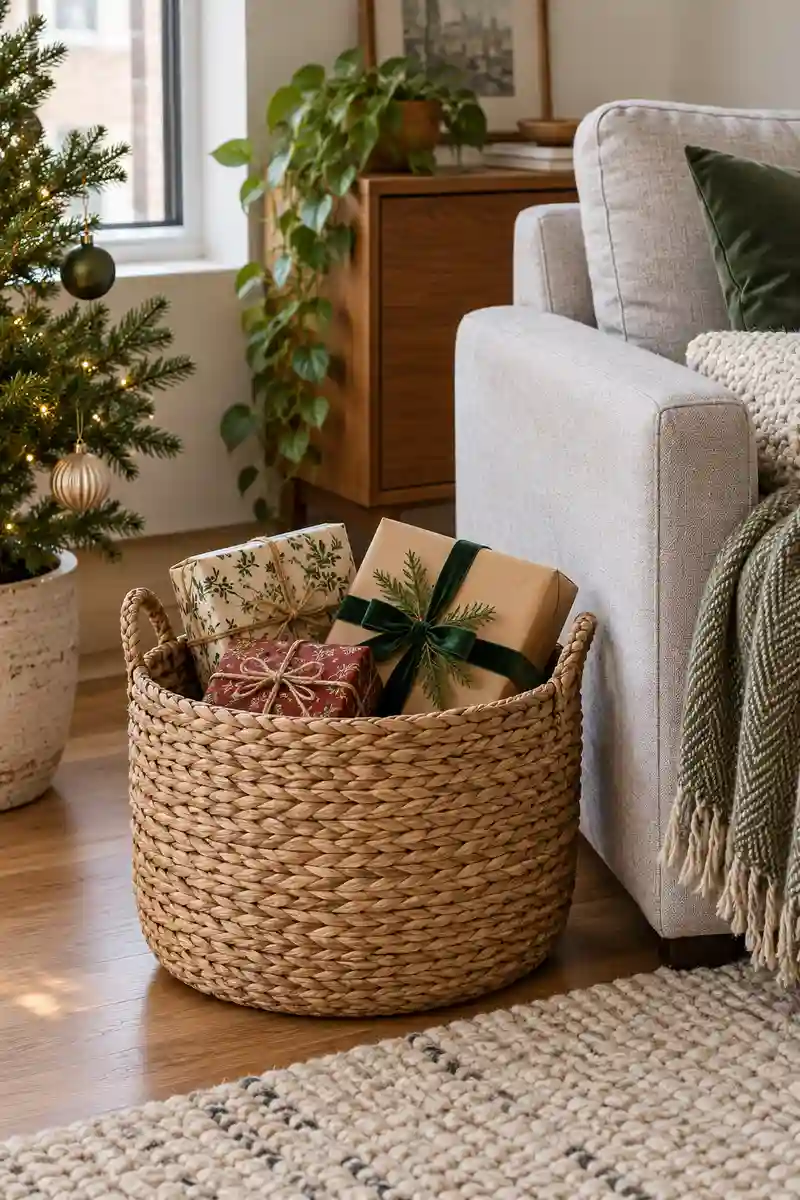
- Choose a basket already available.
- Return its usual contents to proper storage.
- Group gifts or textiles inside.
- Keep the arrangement within its rim.
Reusing a basket works best when it does not simply move clutter somewhere else. Choose a size that fits the available spot, and stop adding pieces when the arrangement reaches the rim. A visible boundary helps everyday objects and holiday packages feel organized rather than spread across the floor.
14. One Purchase Priority

Compact tree
Main role: Clear seasonal focal point
Size check: Measured floor or tabletop space
After the season: Needs suitable storage
Useful textile
Main role: Connects existing room colors
Size check: Sofa, chair, or bed dimensions
After the season: Can remain in everyday use
Write down the job the item needs to do before browsing. Include the size, color, and place it will live after the season. This turns a vague wish for more decorations into a specific decision, and it makes it easier to leave attractive but unnecessary extras out of the basket.
15. Skip Matching Sets
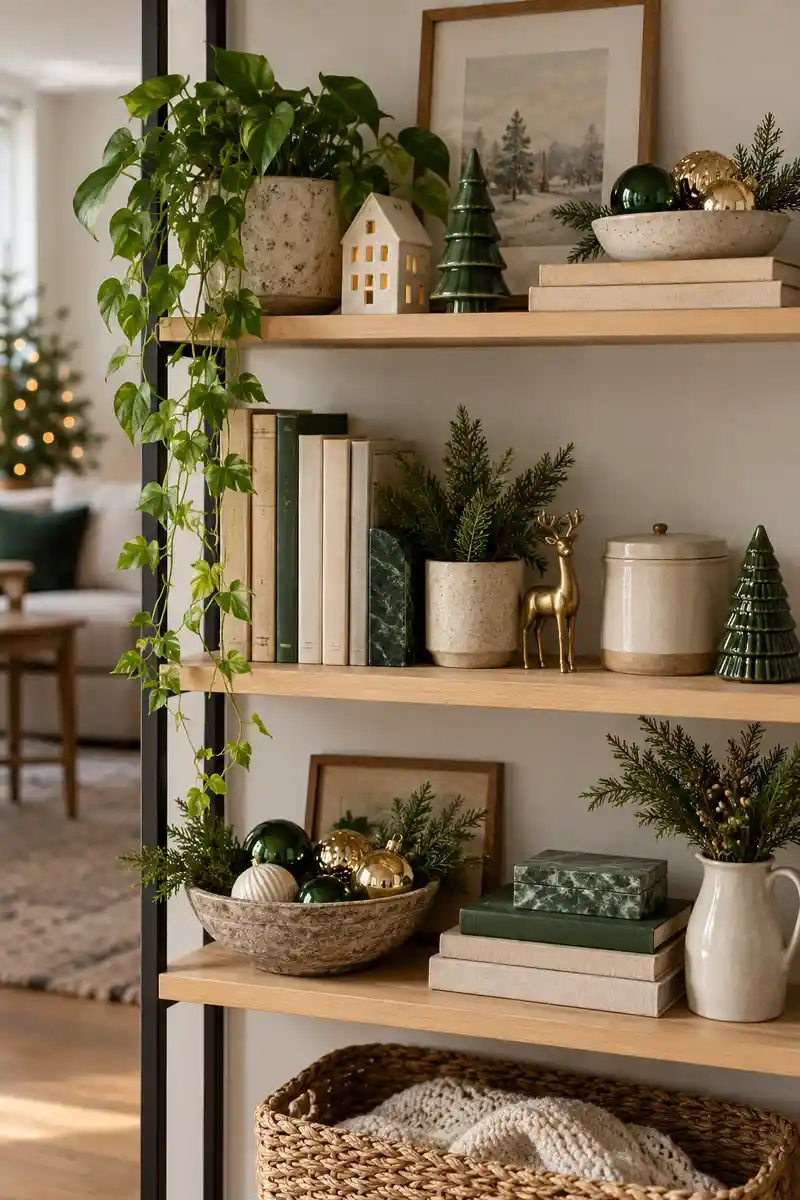
- Do: Connect objects by color.
- Do: Begin with a favorite piece.
- Do: Leave space between shapes.
- Don’t: Buy a full set without a need.
- Don’t: Add an object just to fill a gap.
- Don’t: Hide every inch of shelf.
A matching set can be convenient, but it is not required for a polished arrangement. Similar tones and a little space between objects can create the same sense of order. Start with the piece you like most, add two companions, and check whether another object would actually improve the balance.
16. Plain Cloth Runner
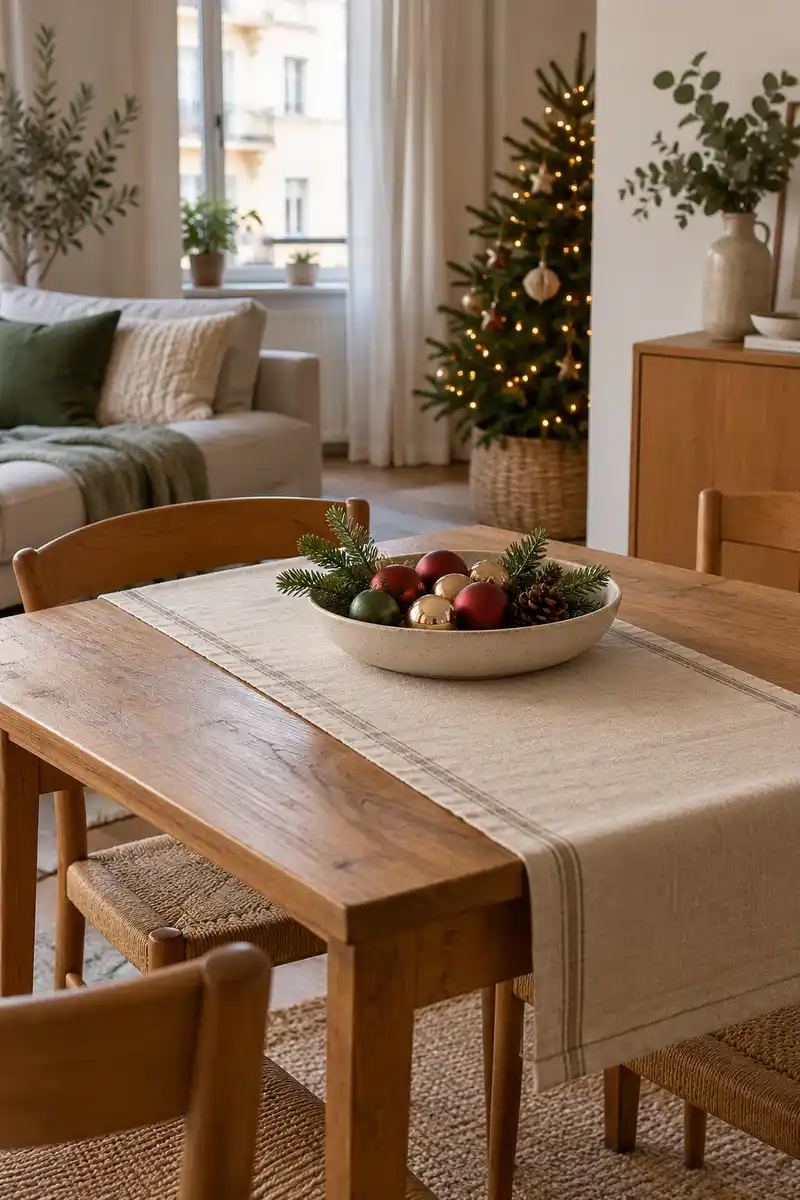
- Base: Clean plain cloth.
- Fold: Short and tidy.
- Centerpiece: One low bowl.
- Space: Leave room for dishes or work.
The cloth should be clean, easy to care for, and practical for the table’s ordinary use. Try a few folds before deciding on the width, leaving room for dishes or work materials. A simple fabric base can make an existing bowl look more considered without needing a dedicated holiday table collection.
17. Group Small Treasures
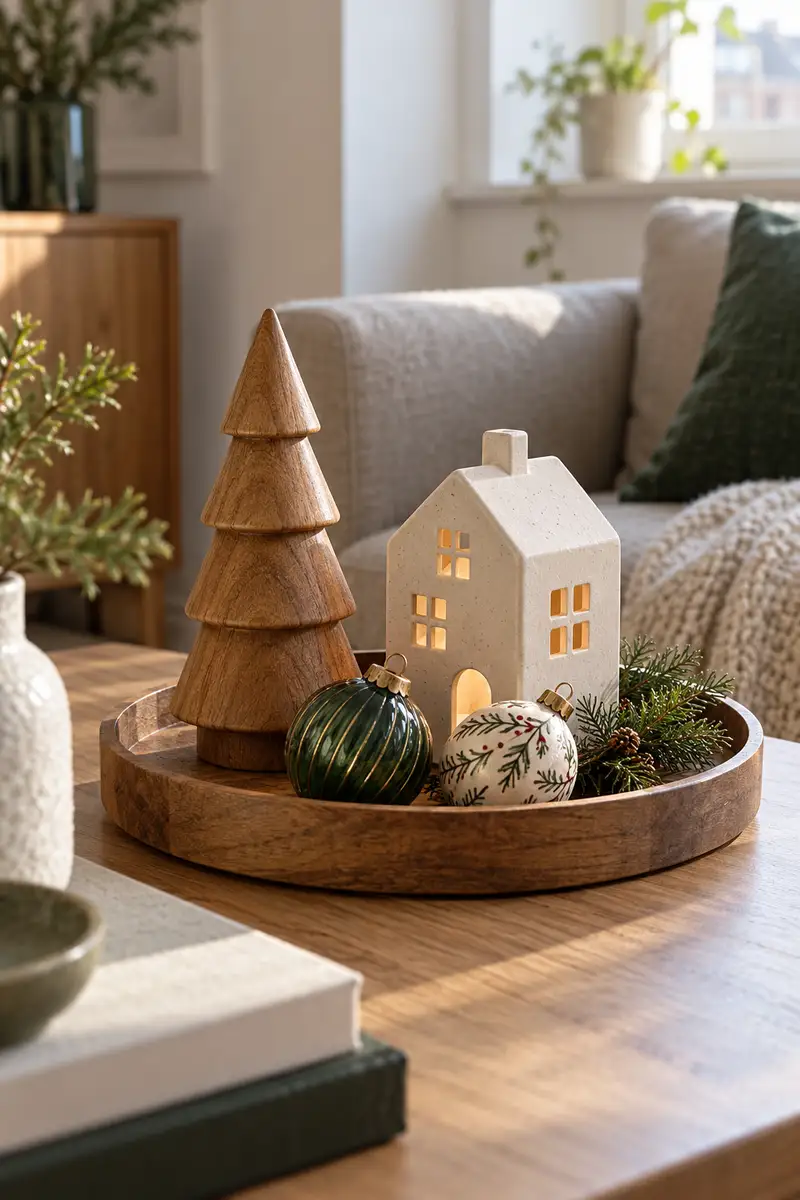
Bring several small decorations together on one existing tray instead of scattering them around the apartment. A shared base gives the collection more presence and makes it easier to move. Keep the nearby surfaces simple so the texture remains easy to appreciate.
Choose pieces with a related color or material, then vary their heights slightly. Leave part of the tray visible so the arrangement does not look overfilled. This can give modest decorations a stronger role in the room without increasing the number of objects you own or the storage they require.
18. Use Both Sides
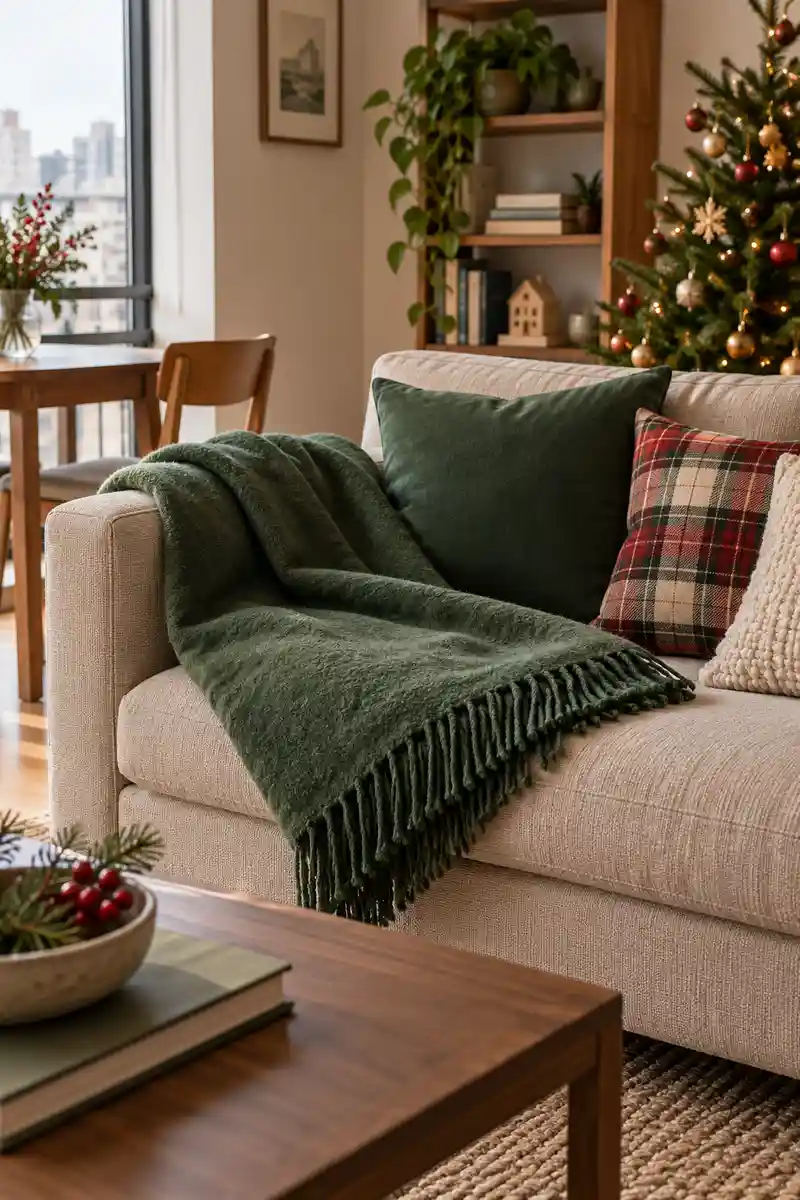
- Check whether the textile is reversible.
- Try the quieter side.
- Look for a finished comfortable surface.
- Test it beside the holiday colors.
The reverse may offer a useful plain color or softer pattern, but check that it looks finished and feels comfortable in use. This is a simple styling test rather than a reason to keep a fabric you dislike. If both sides work, the same piece can support more than one seasonal mood.
19. Save The Good Ribbon
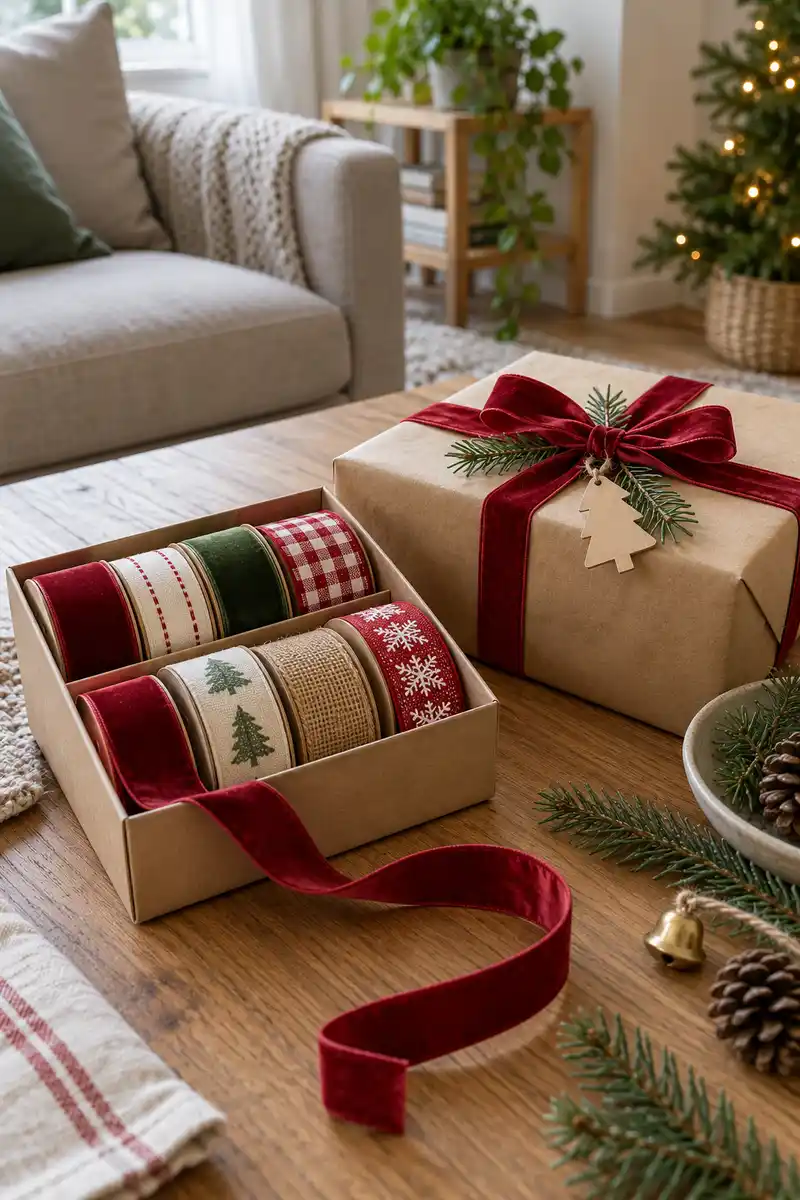
Quick tip: After opening gifts, keep clean reusable ribbon flat or loosely rolled in a small box. Use it later for ornaments, simple bows, or another round of wrapping.
Save only lengths you can realistically use and discard pieces that are badly damaged. Sort by color or material so the next project does not begin with a tangled pile. A small organized supply is more useful than keeping every scrap, especially when storage space in the apartment is limited.
20. Try A New Position
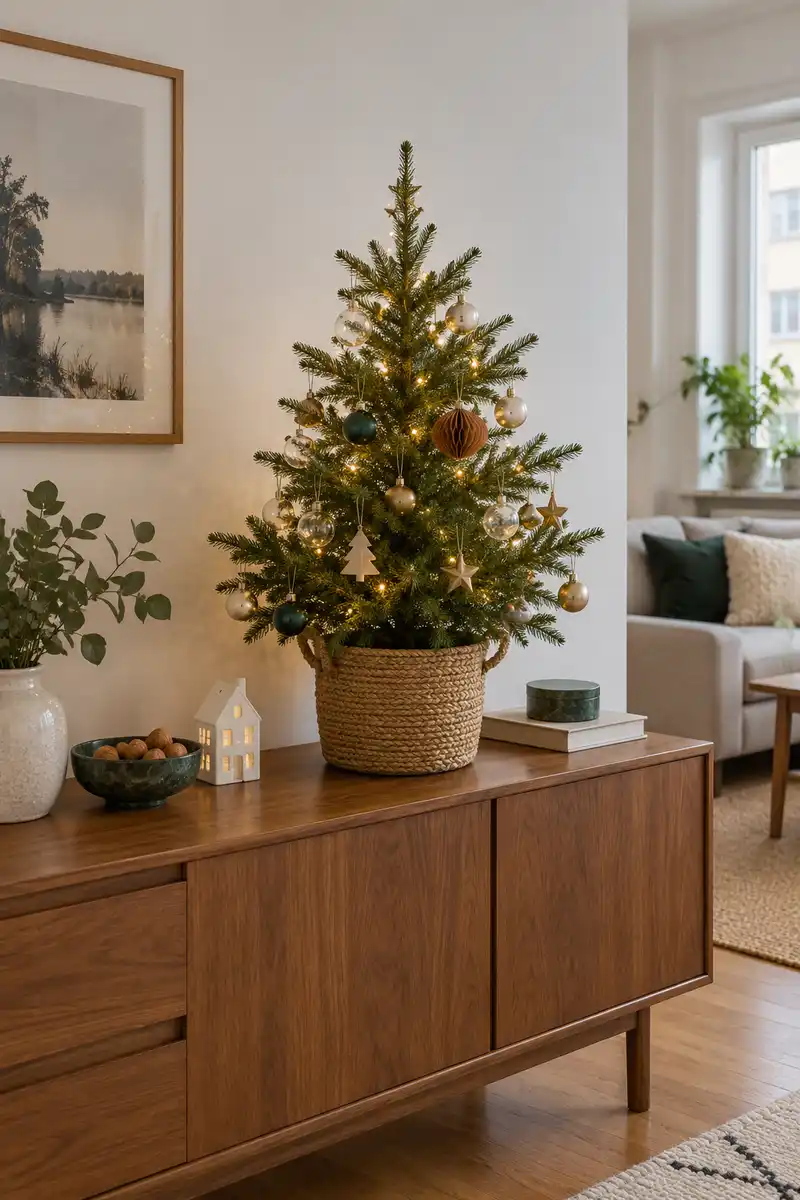
Before: A small tree disappears on a crowded shelf. Replacing it seems tempting.
After: The tree moves to a clear sideboard. Its shape becomes visible without adding another purchase.
Changing the background and viewing distance can make an older object feel fresh. Try one location at a time and remove an accessory if the new spot becomes crowded. Keep the move practical, with useful surfaces and walking routes still available, rather than choosing a position only because it photographs well.
21. Pack Next Year’s Box
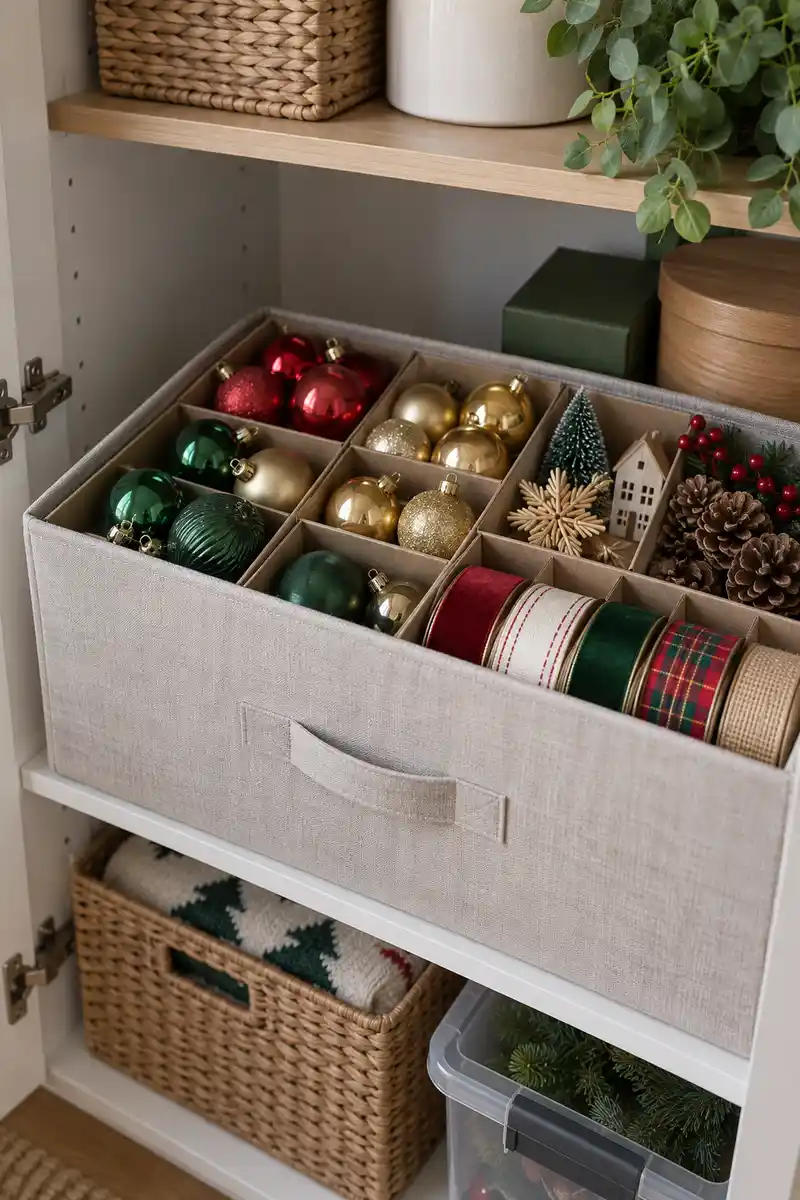
- Group pieces by the displays you repeat.
- Keep matching ribbon nearby.
- Protect fragile ornaments separately.
- Note repairs before closing the box.
A useful storage plan protects the pieces you already own and makes future decorating decisions easier. Avoid filling the box with extras you do not enjoy or expect to use. When the next holiday arrives, you can start from a clear collection instead of buying duplicates because favorite items are hard to find.
Frequently Asked Questions
Where should I start with a small decorating budget?
Start by gathering the pieces you already own and choosing a simple palette. Identify one clear gap before spending, and check whether a different arrangement can solve it first.
What is worth buying for apartment Christmas decor?
Consider pieces that fit a specific role, suit your available space, and are likely to be used again. A useful textile or appropriately sized tree may be more valuable to you than several small extras.
How do mismatched decorations look coordinated?
Repeat a color, ribbon, or material and keep the grouping small. Give favorite pieces clear positions and leave space around them rather than trying to make every object match exactly.
How can I avoid buying duplicate decorations?
Keep the collection organized and check it before shopping. Store related pieces together, note anything missing or damaged, and take a simple photo of the decorations you already have.
Make Each Choice Count
A thoughtful holiday room is built through choices, not the size of a shopping bag. Start with the pieces you enjoy, connect them with a simple palette, and give each arrangement a clear purpose. These budget-friendly apartment Christmas decor ideas can help you reuse more, buy with better reasons, and keep storage manageable after the season. One useful textile or a carefully chosen tree may be worth adding, while another bowl, ribbon, or familiar decoration may already be waiting in your cupboard. Keep the arrangements that work for your daily life and let a smaller, well-used collection carry the holiday feeling.

Community
Join the conversation
Add a useful idea, ask a specific question, or share what worked in your space. Every comment is reviewed before it appears.