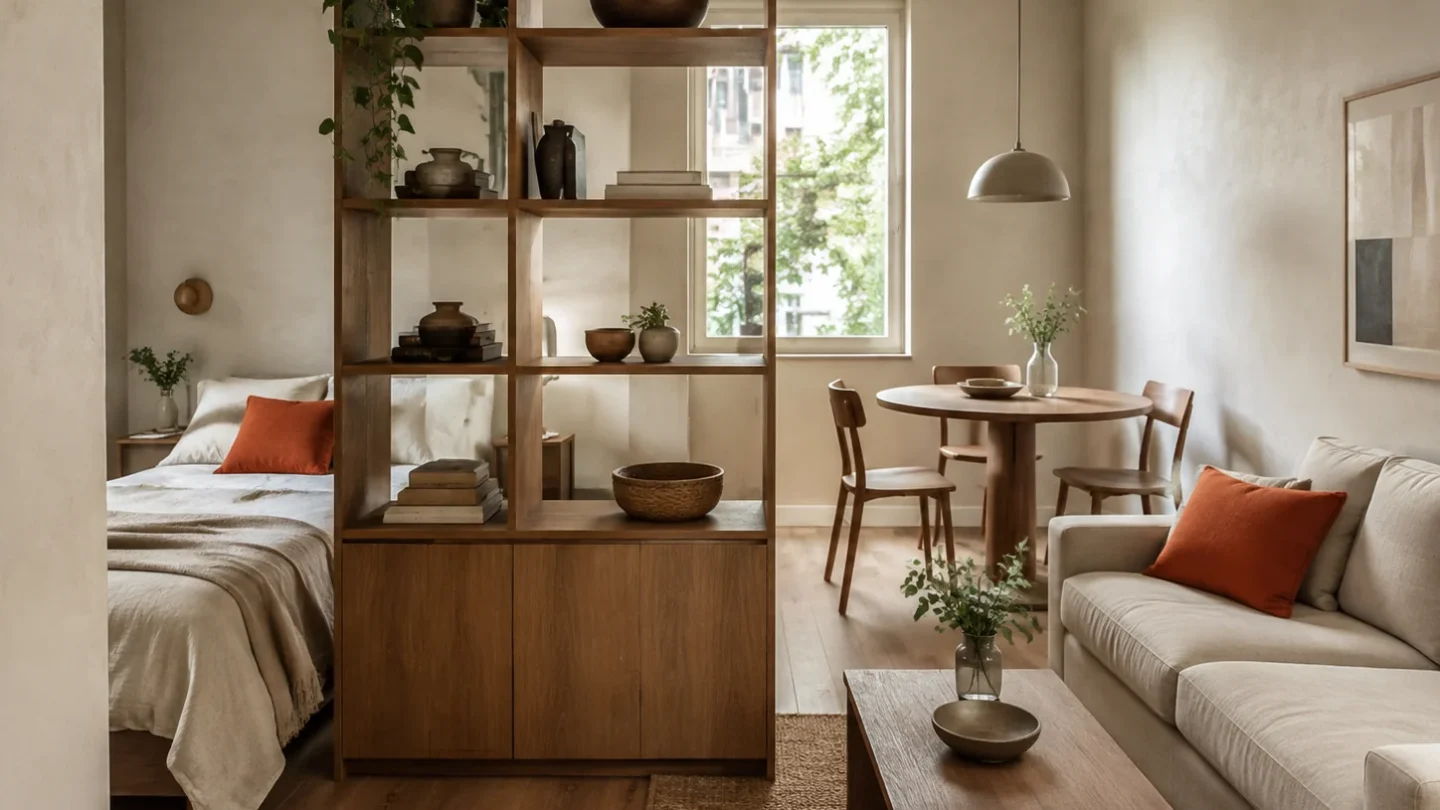
A studio works best when every activity has a clear place, but solid dividers can make one room feel smaller. The goal is to suggest boundaries while preserving long views and daylight.
1. Turn open shelving perpendicular to the wall
A shelf that is open on both sides can mark the edge of a sleeping area without creating a dark box. Keep the upper shelves sparse so light continues through, and use baskets in the lower half for the objects you would rather hide.
2. Let the sofa draw the living-room line
Float the sofa with its back toward the bed instead of pushing every piece against a wall. A narrow console behind it can add storage and make the separation feel intentional.
3. Give each zone its own light
A pendant over the dining table, a reading lamp beside the sofa, and a shaded bedside lamp create rooms after dark. Choose the same warm color temperature so the apartment still feels connected.
4. Use rugs to set invisible edges
Place the front legs of the sofa and chair on one rug, then leave a strip of visible floor before the bed. That quiet gap is enough to tell the eye that one activity has ended and another begins.
5. Keep the tallest pieces near existing walls
Wardrobes and solid bookcases belong at the perimeter. Lower or more transparent elements should do the dividing in the middle of the room.
In a compact home, a boundary should explain the plan without interrupting the room.
Before buying a divider, tape its footprint on the floor and live with it for a day. If circulation feels pinched, try a lower piece, a ceiling curtain, or simply a change in furniture direction.
Community
Join the conversation
Add a useful idea, ask a specific question, or share what worked in your space. Every comment is reviewed before it appears.