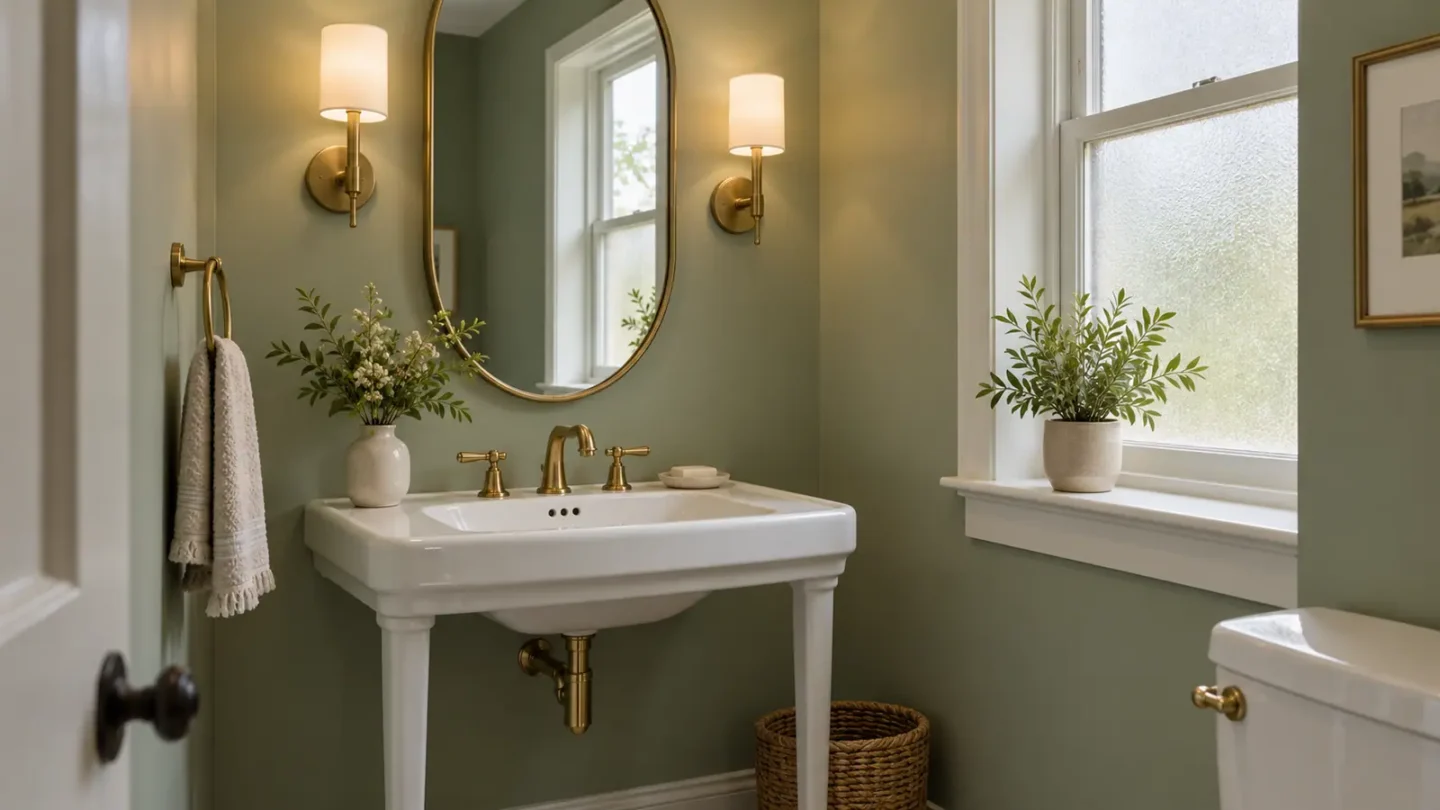
A dark corner or a poorly placed mirror can make a compact room feel smaller than it is. If you are exploring how to make a small powder room look bigger, start with the way light moves across its surfaces.
Mirrors, paint colors, and fixtures work together. A reflective surface can repeat a pleasant view, a related palette can soften busy edges, and balanced lighting can make the sink area more comfortable. The aim is not to chase a single magic shade or cover every wall with glass. These ideas help you notice what your room already does well and adjust what feels awkward. Test simple changes first, respect rental permissions, and leave electrical work to someone qualified for the job.
1. Window-Facing Reflection
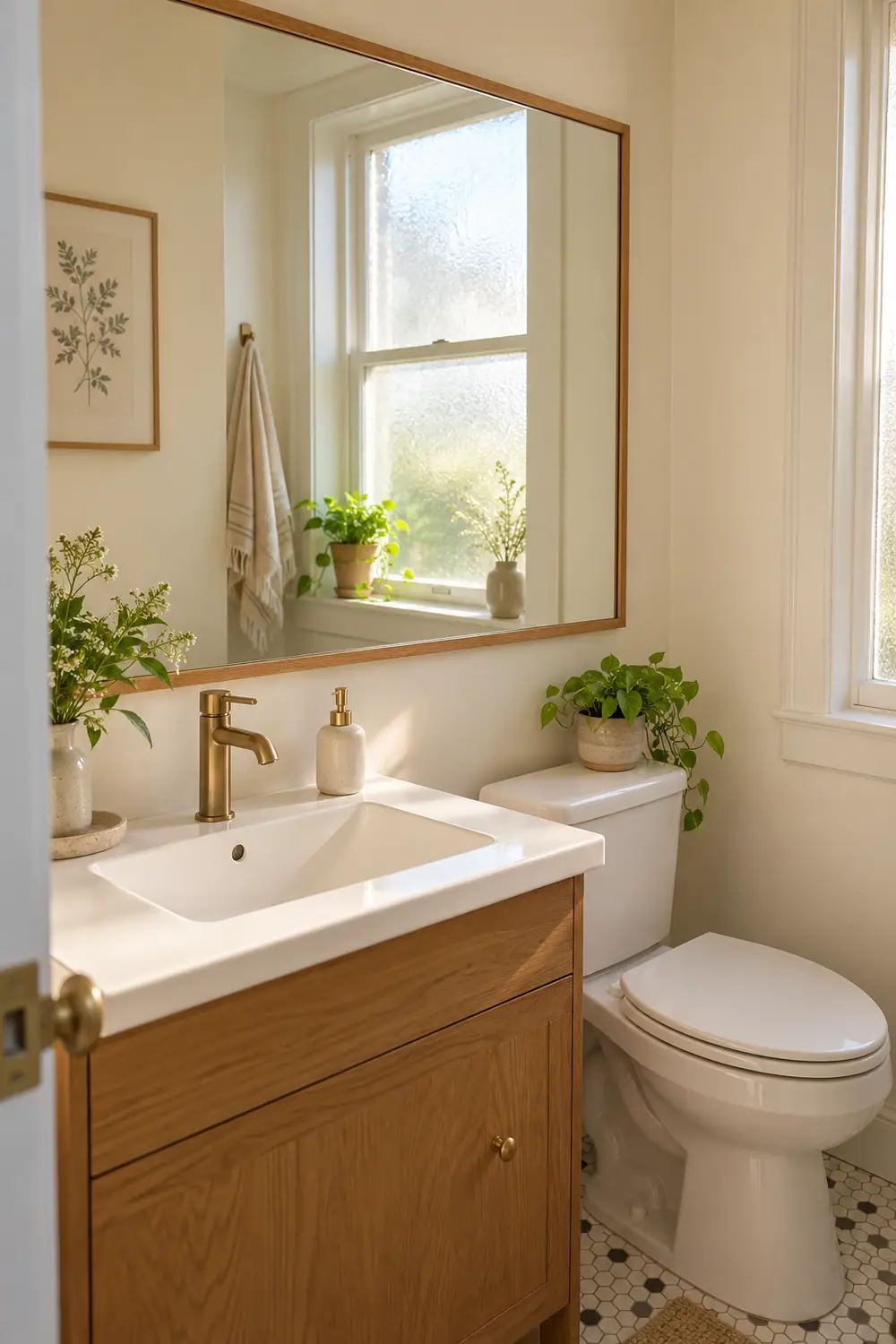
A mirror can borrow a brighter view when it faces a window rather than a crowded shelf. Check the reflection from the doorway and from the sink before choosing its position. Keep privacy in mind, especially if the mirror could reveal a view through an otherwise discreet window.
The goal is useful reflected light, not a glare spot in your eyes. Watch how sunlight moves through the room before mounting anything, and avoid a position that creates uncomfortable brightness. If the existing mirror cannot move, simplify the surface it reflects and improve the light around it instead.
2. Low-Contrast Wall Palette
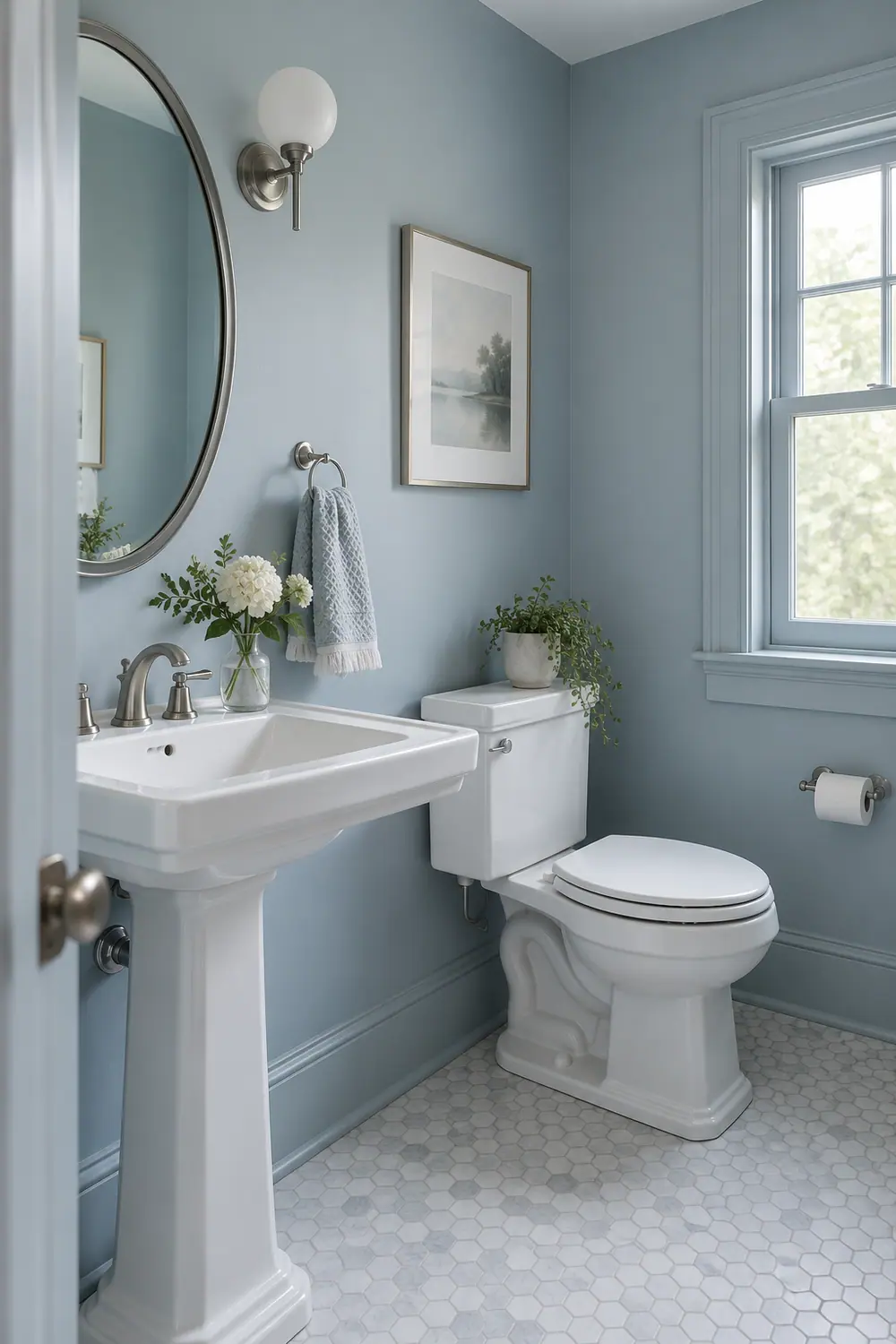
- Keep adjacent wall colors close in depth so the corners feel less sharply divided.
- Compare paint samples beside the fixed sink and flooring.
- Choose one main shade and a slightly lighter companion if needed.
- Test both under daytime and evening lighting.
Low contrast does not have to mean beige. Soft green, misty blue, or muted pink can create a quiet background when nearby finishes share a similar lightness. Keep the strongest color for a small movable accent, and avoid choosing wall paint from a phone screen alone without testing it.
3. Balanced Mirror Lighting
Quick Tip:
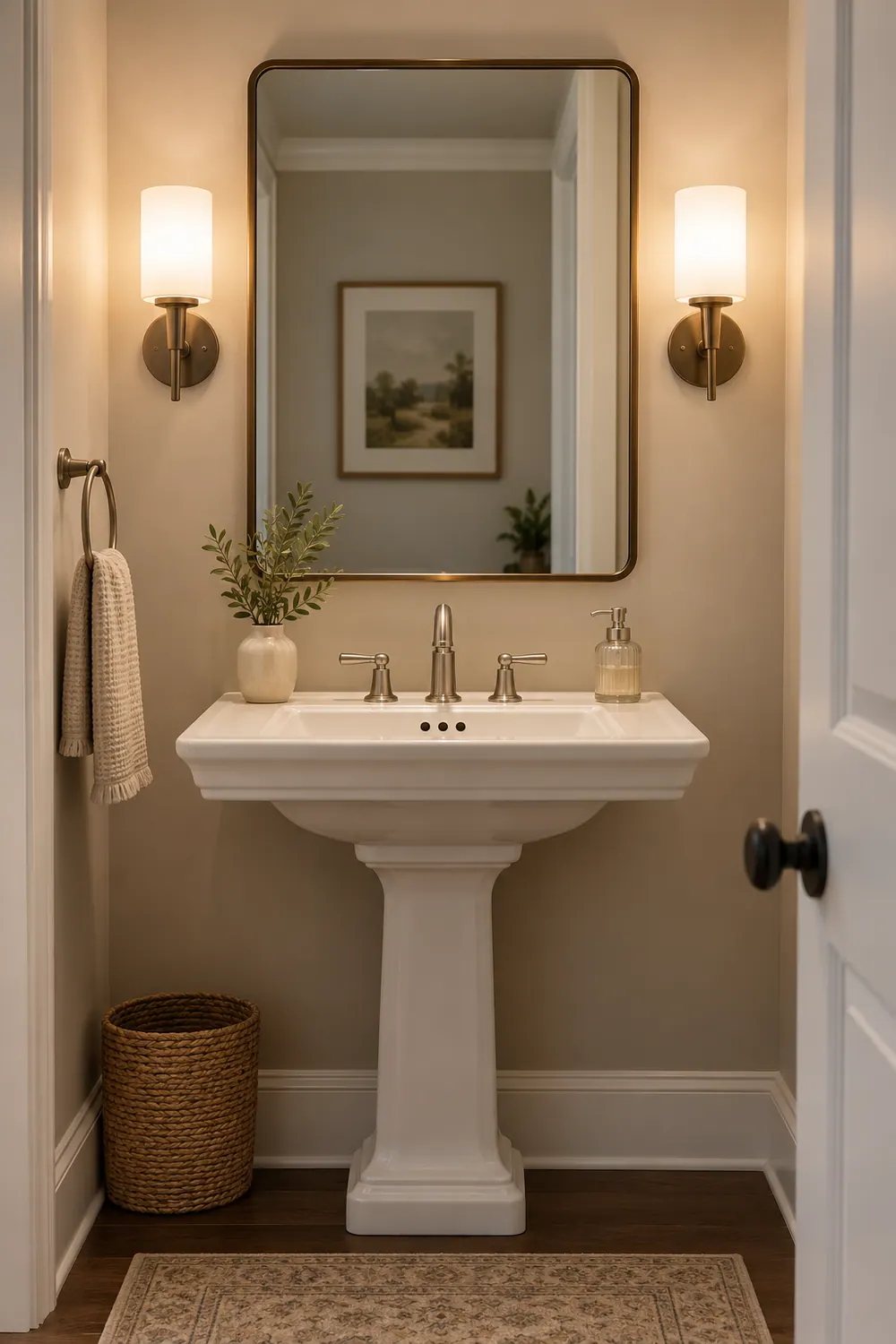
Light the face and mirror area evenly rather than relying on one harsh pool overhead. Choose fixtures suitable for the location and have electrical changes handled by a qualified professional.
Balanced light can make a compact sink area feel clearer and more comfortable. Before buying new fixtures, check whether cleaning the existing shades and using compatible bulbs improves the result. Keep wattage and fixture ratings within their stated limits, and do not install a light where it creates glare.
4. Softly Lit Corners
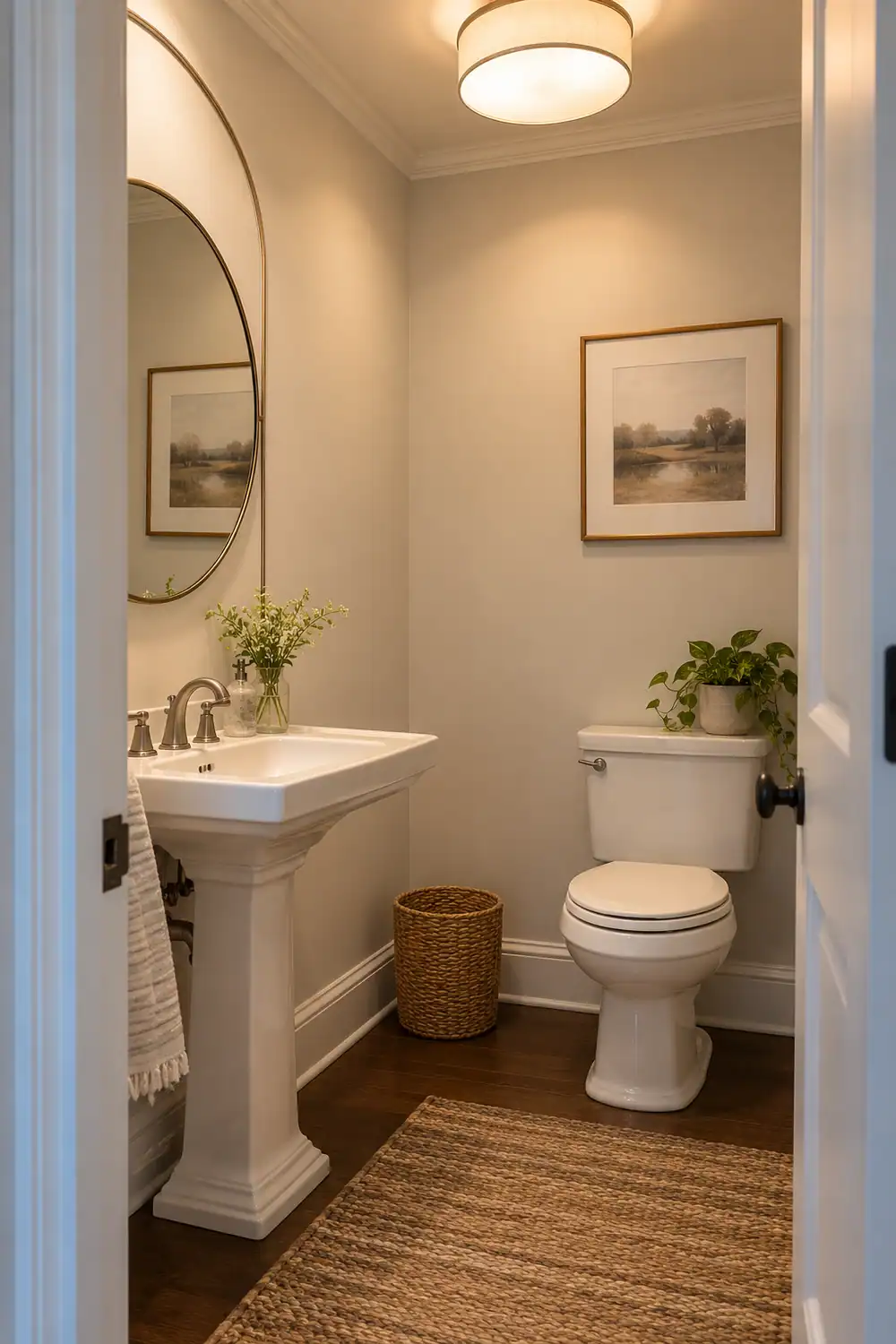
BEFORE: A bright ceiling fixture can leave the edges of a tiny room surprisingly dark. The contrast makes the center feel isolated from its surroundings.
AFTER: A better-distributed lighting plan lets the wall surfaces remain visible. The room reads as a connected space instead of a bright spot surrounded by shadow.
Start by identifying the actual dark areas with the room’s normal lights on. A different compatible shade or bulb distribution may help without adding another fixture. Any new electrical work needs suitable professional installation. Avoid improvised cords near the sink or loose lamps placed where they can be knocked over.
5. Paint Sample Test
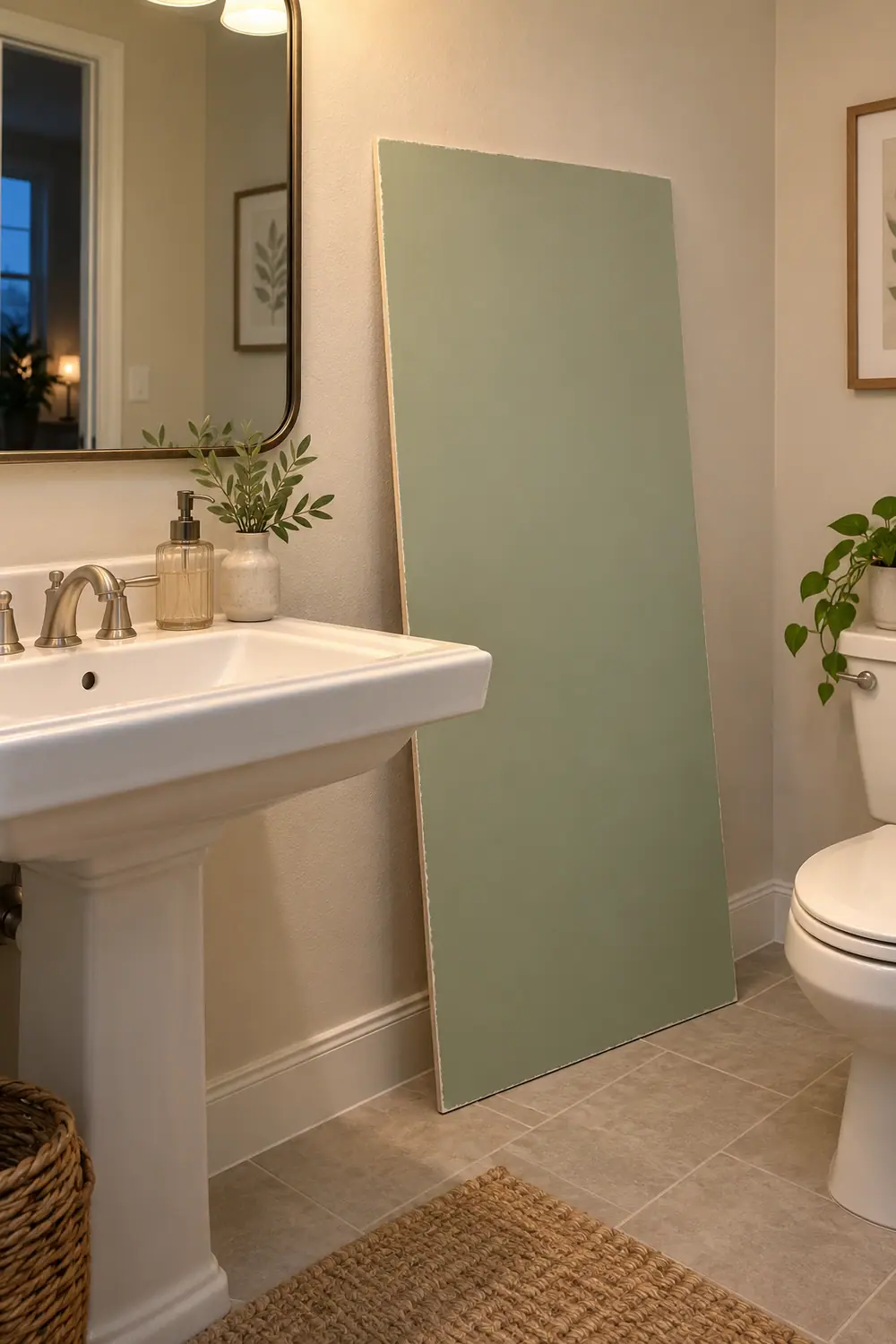
- Paint a movable sample board in the proposed color.
- Place it beside the vanity and then on the opposite wall.
- Check it with the lights on during the evening.
- Compare it with the ceiling and trim before committing.
A color that looks creamy in a shop may look yellow beside your sink or dull under a different bulb. A larger sample makes those relationships easier to judge. Keep the board upright like a wall, and live with it through ordinary routines before buying enough paint for the room.
6. Slim Mirror Frames
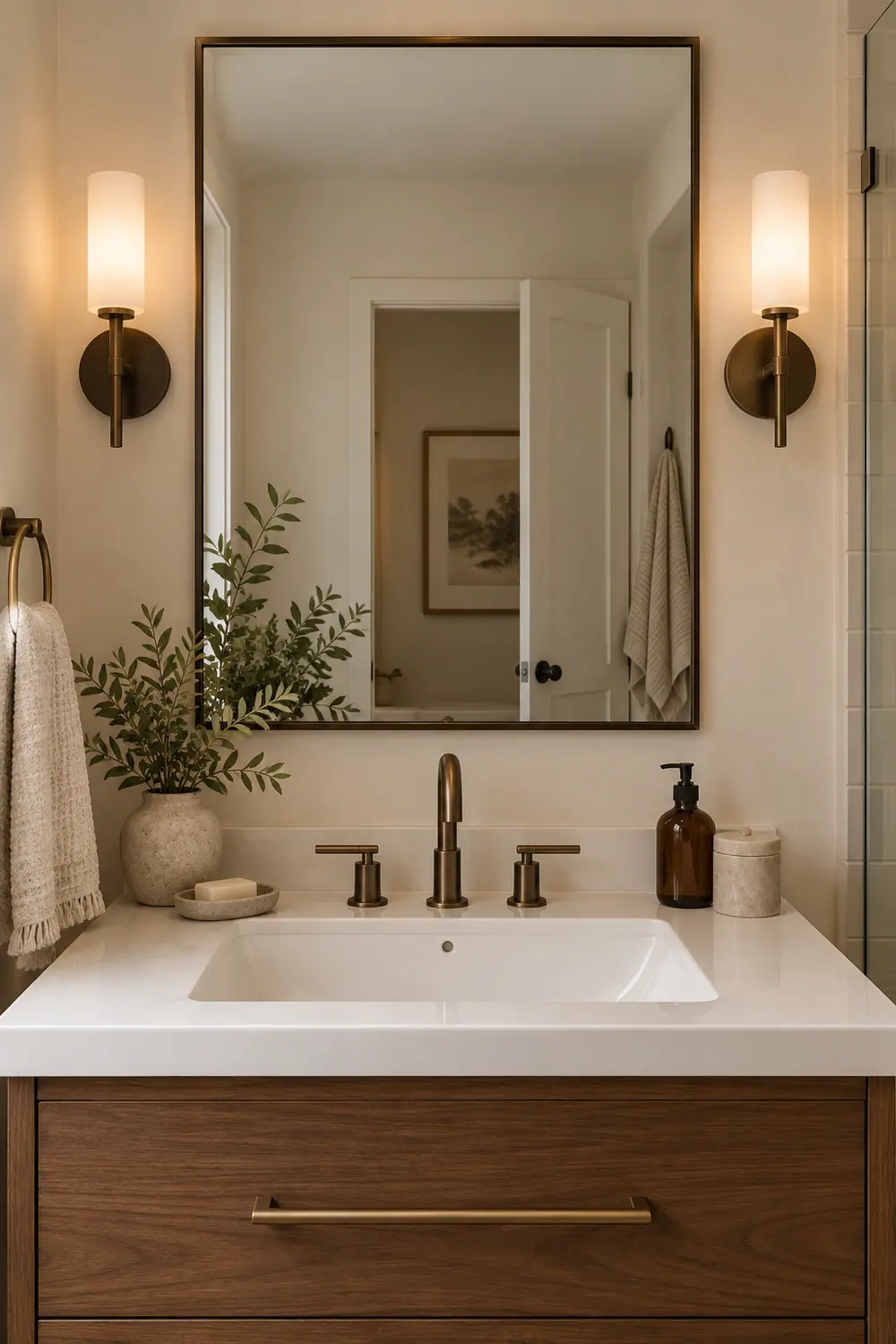
| Detail | Heavy decorative frame | Slim simple frame |
|---|---|---|
| Visible glass | Less within same outer size | More within same outer size |
| Visual role | Strong focal point | Quieter outline |
| Best Fit | A wall with breathing room | A narrow sink wall |
The frame should support the room’s scale without swallowing the reflective surface. A slim profile often leaves more mirror visible in a narrow space, while a heavier frame can work as a deliberate focal point. Compare outside dimensions, not just glass size, before deciding which version fits your wall.
7. Consistent Bulb Color
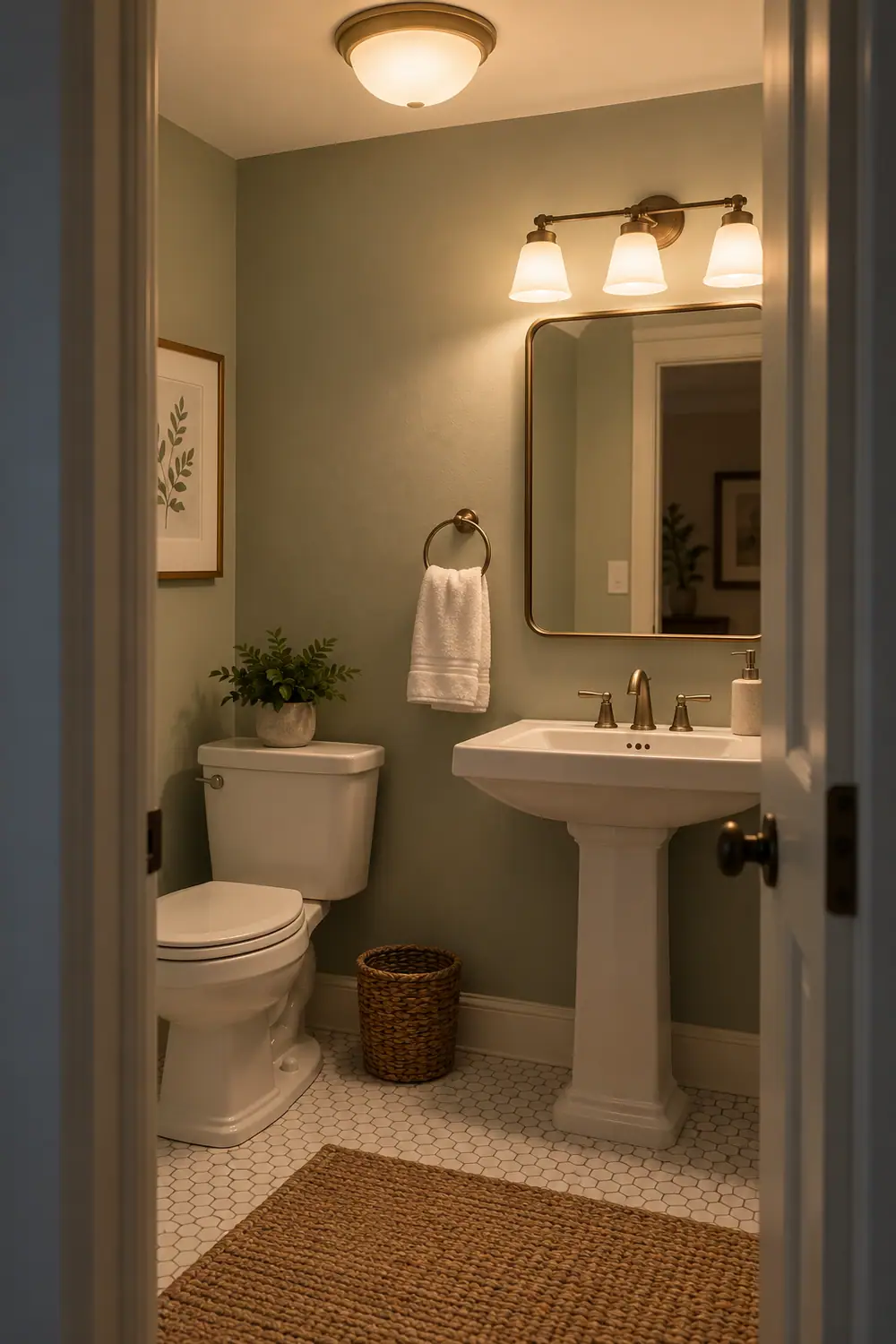
DO
- Check the color temperature of bulbs used in the same room.
- Choose compatible replacements with a consistent appearance.
- Read fixture limits before changing bulb types.
- Judge the result beside white towels and the sink.
DON’T
- Do not exceed a fixture’s maximum rating.
- Do not mix incompatible bulbs with a dimmer.
- Do not judge paint while one bulb is failing or flickering.
Mixed yellow and blue light can make a small room’s surfaces look disconnected. A consistent bulb color gives you a more reliable view of paint and textiles. Brightness is a separate choice, so select enough light for comfortable use rather than assuming a warmer-looking bulb must be dim.
8. Light-Reflecting Backsplash
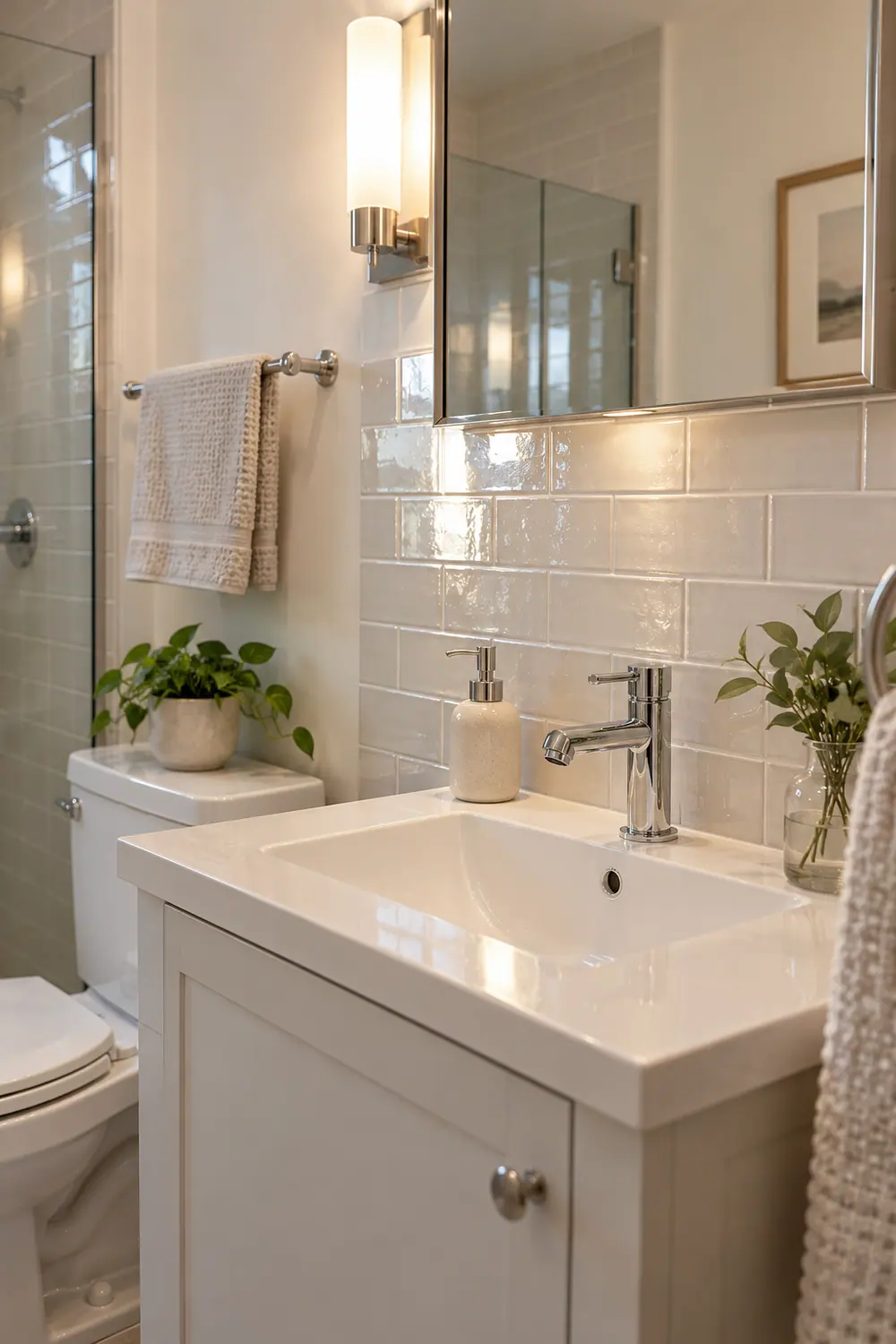
Visual Effect: Small reflected highlights
Best Starting Point: Existing glazed tile or a washable finish
Caution: Check glare from the doorway
Rental Option: Clean and style existing surfaces first
A lightly reflective surface can spread small highlights around the sink, but too much shine may produce glare. Work with existing glazed tile before considering a change. Clean it with a suitable product and keep the surrounding counter simple. Permanent alterations require permission and proper preparation for the substrate.
9. Wall-Toned Trim
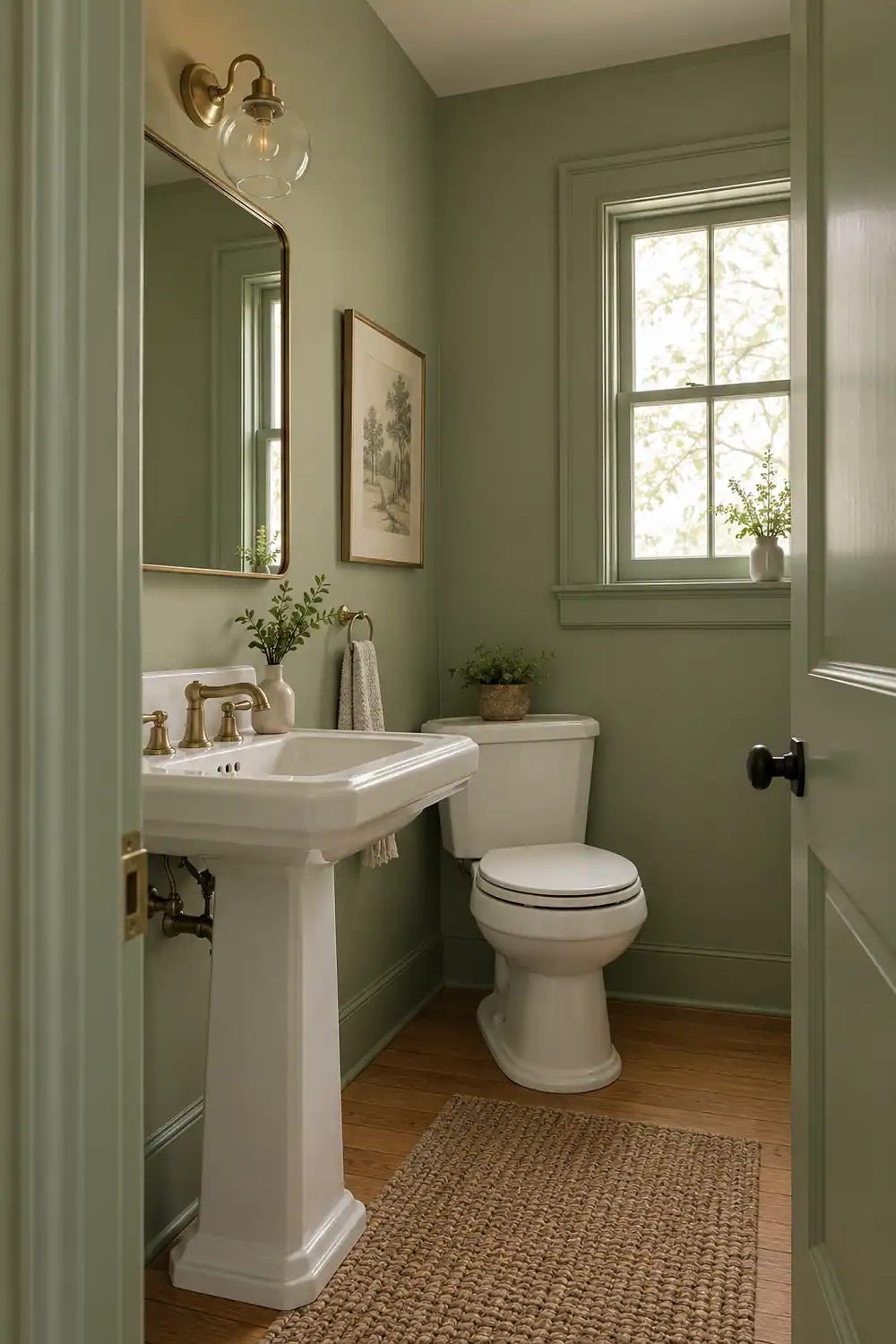
High-contrast trim outlines every edge in a small room. Painting permitted trim in a color close to the walls can soften that outline and let the surfaces feel more continuous. Keep the appropriate finish for each material, and test how the combination looks beside the door and ceiling.
This approach works especially well when several narrow wall sections surround the sink. It is optional, not a reason to paint attractive original woodwork or ignore a lease restriction. If the trim must remain unchanged, repeat its color in a towel or small accessory to make it feel intentional.
10. Clear Mirror Edges
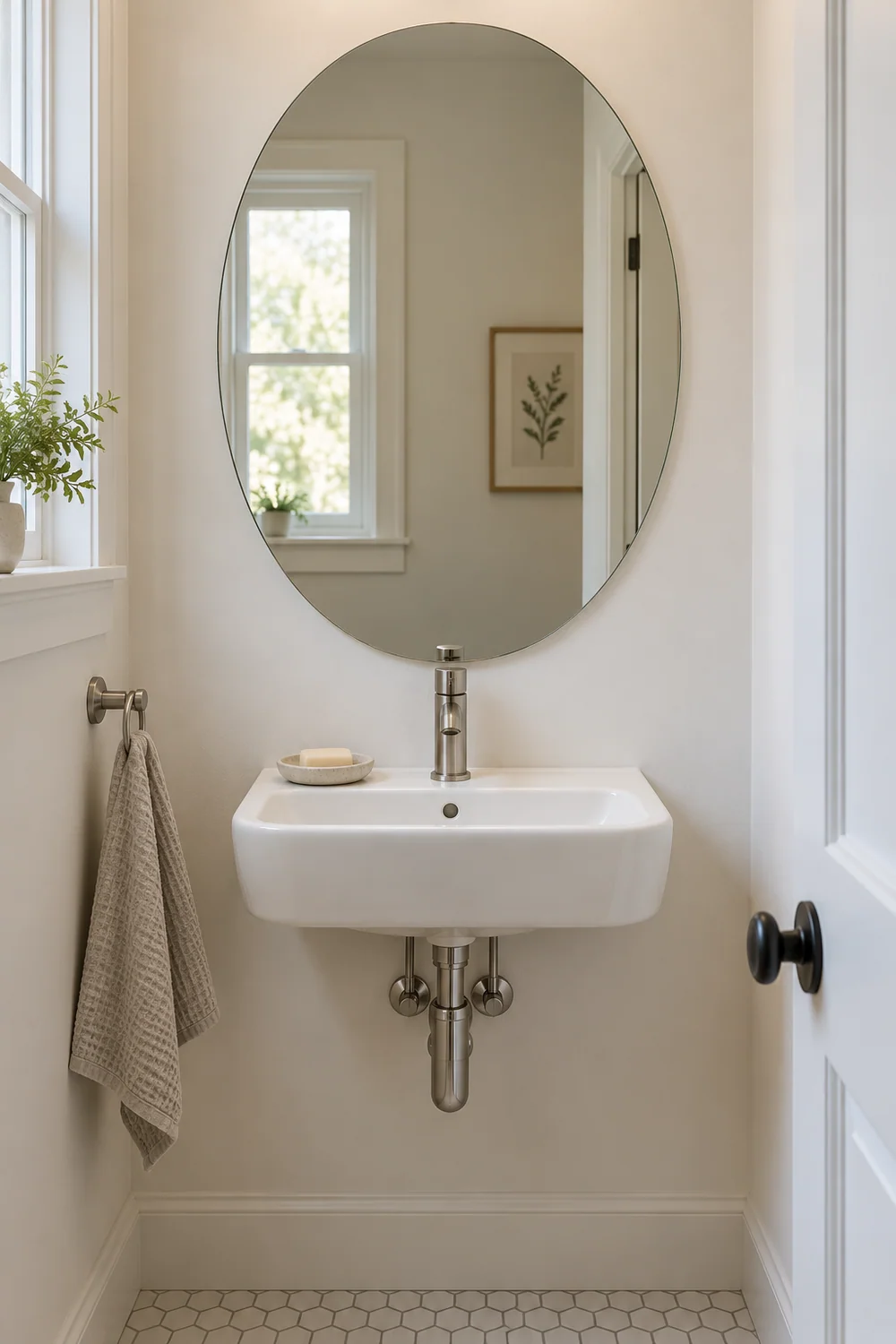
- Leave a small visual margin around the mirror instead of crowding its frame with objects.
- Move tall bottles away from the lower edge.
- Keep hanging decorations clear of the reflective area.
- Clean the glass with a method suitable for its finish.
The mirror works best when its shape is easy to read. A trailing garland or clustered bottles can break the reflection into small busy fragments. Keep any decorative detail outside the glass, and choose one accent near the sink rather than attaching several objects directly to the mirror itself.
11. Pale Ceiling Continuity
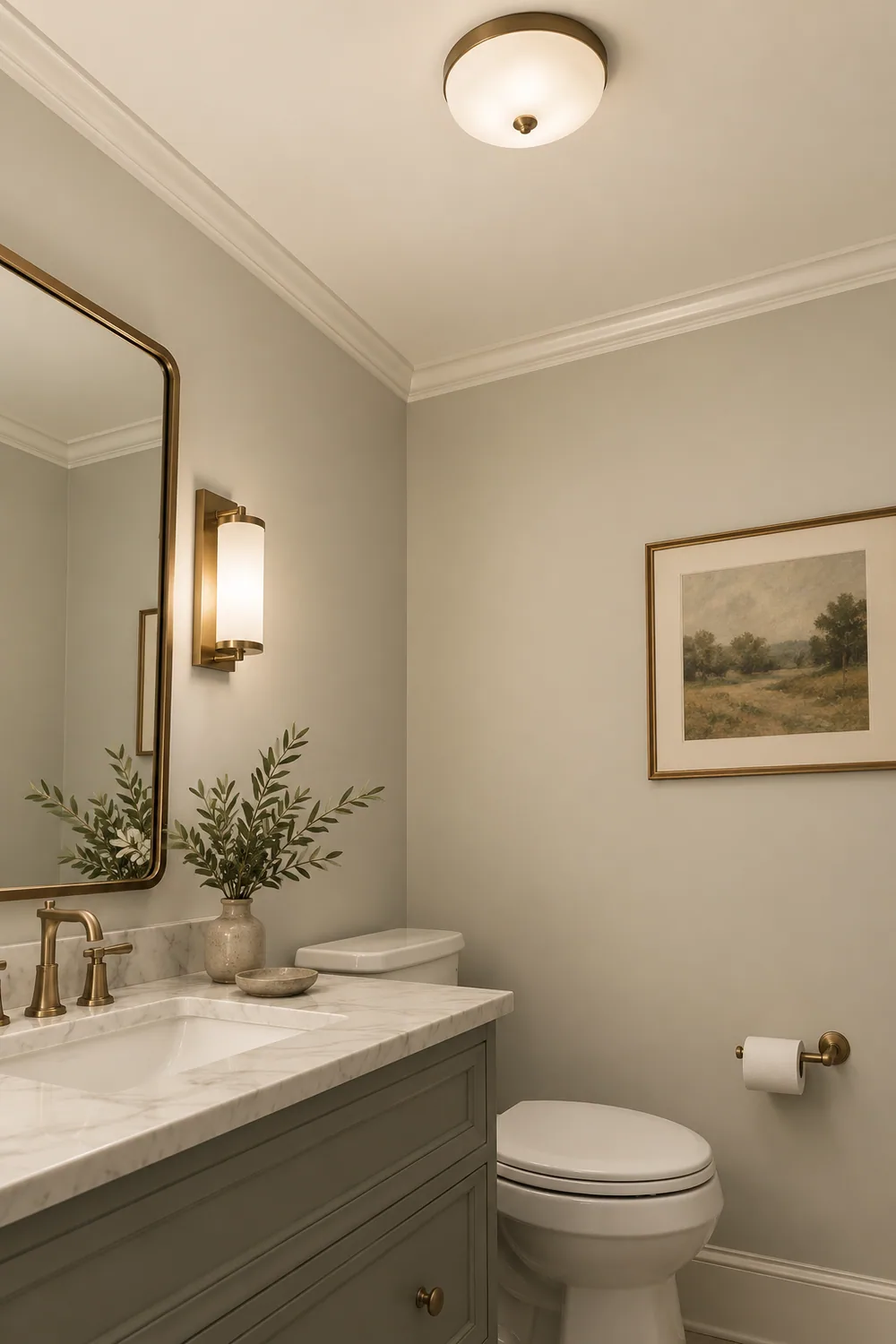
Quick Tip:
Compare the ceiling color with the upper walls before choosing a bright white by default. A close tonal relationship can soften the visible boundary overhead.
The ceiling still needs a finish suitable for its surface and condition. Address stains or moisture causes before repainting rather than treating paint as a repair. If the room has decorative trim worth highlighting, a gentle contrast may be more appealing than making every plane identical in color.
12. One Reflective Accent
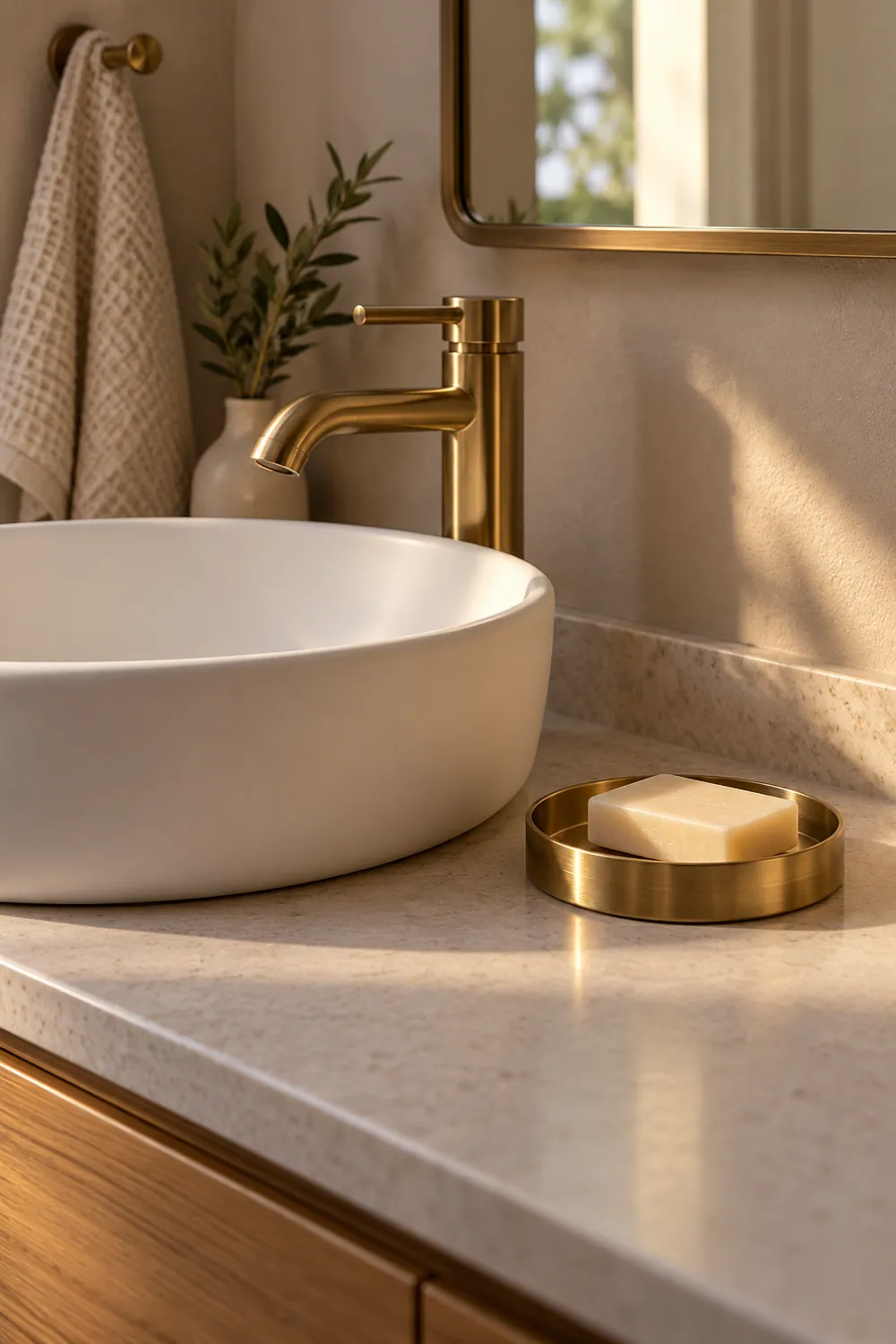
BEFORE: Several metallic ornaments can scatter bright points across a tiny counter. The resulting sparkle competes with the mirror and faucet.
AFTER: One small reflective accessory creates a controlled highlight. Matte objects around it keep the composition quieter.
A metal soap dish or simple tray is enough to repeat the faucet’s finish. Avoid adding shine purely because it is supposed to make a room larger. Look at the reflection under the brightest light you use, and remove any object that sends an uncomfortable glare toward your eyes.
13. Frosted Window Privacy
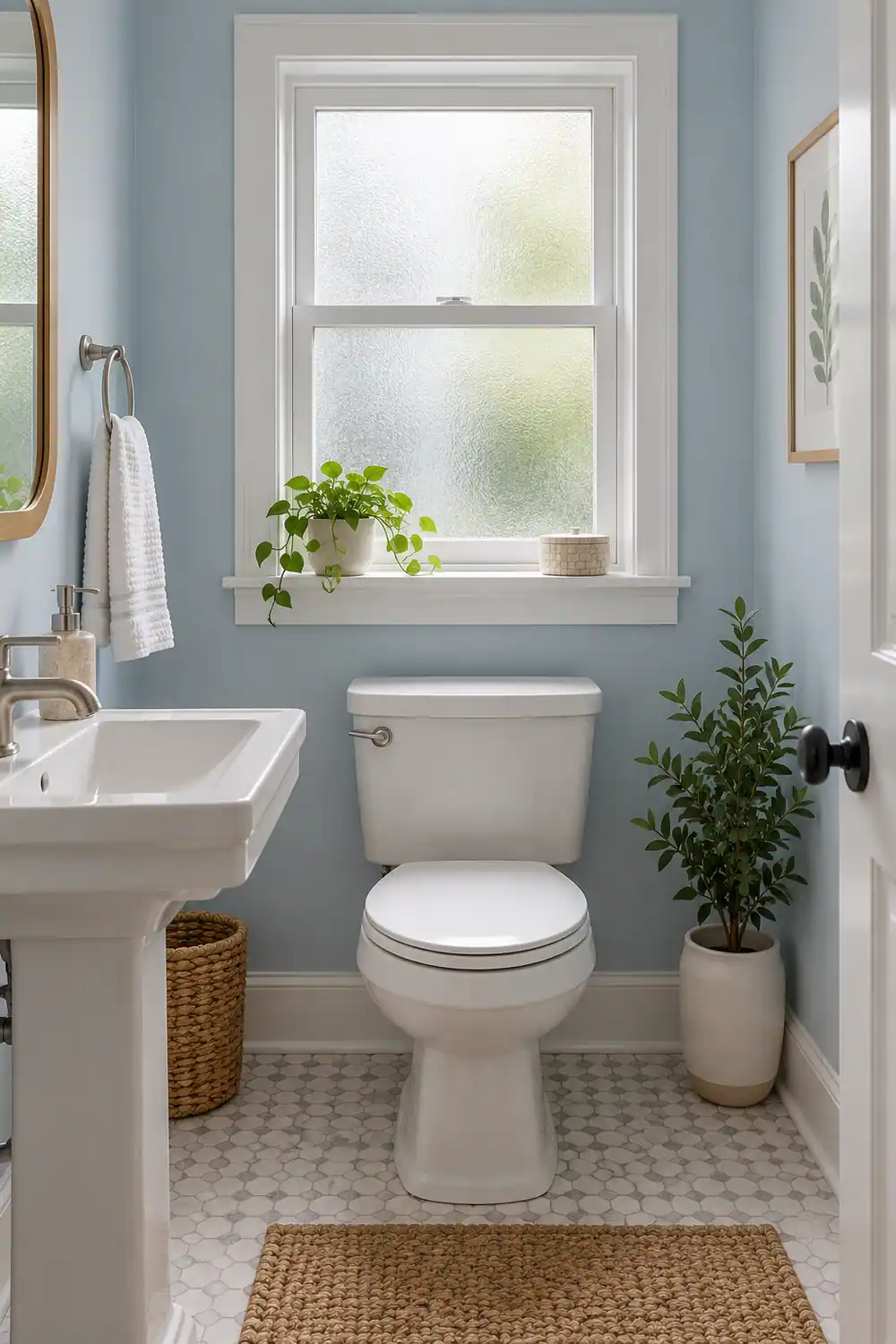
- Identify the window’s privacy needs from outside as well as inside.
- Check whether the existing glass or treatment already provides adequate coverage.
- Choose any new treatment for its stated surface and moisture compatibility.
- Test it after dark with the bathroom lights on.
A privacy treatment can preserve useful daylight without a heavy fabric layer, but products differ in how much they obscure. Do not assume a decorative film is suitable for every glass type or guarantees nighttime privacy. Follow installation directions, seek permission where required, and leave the window fully operable.
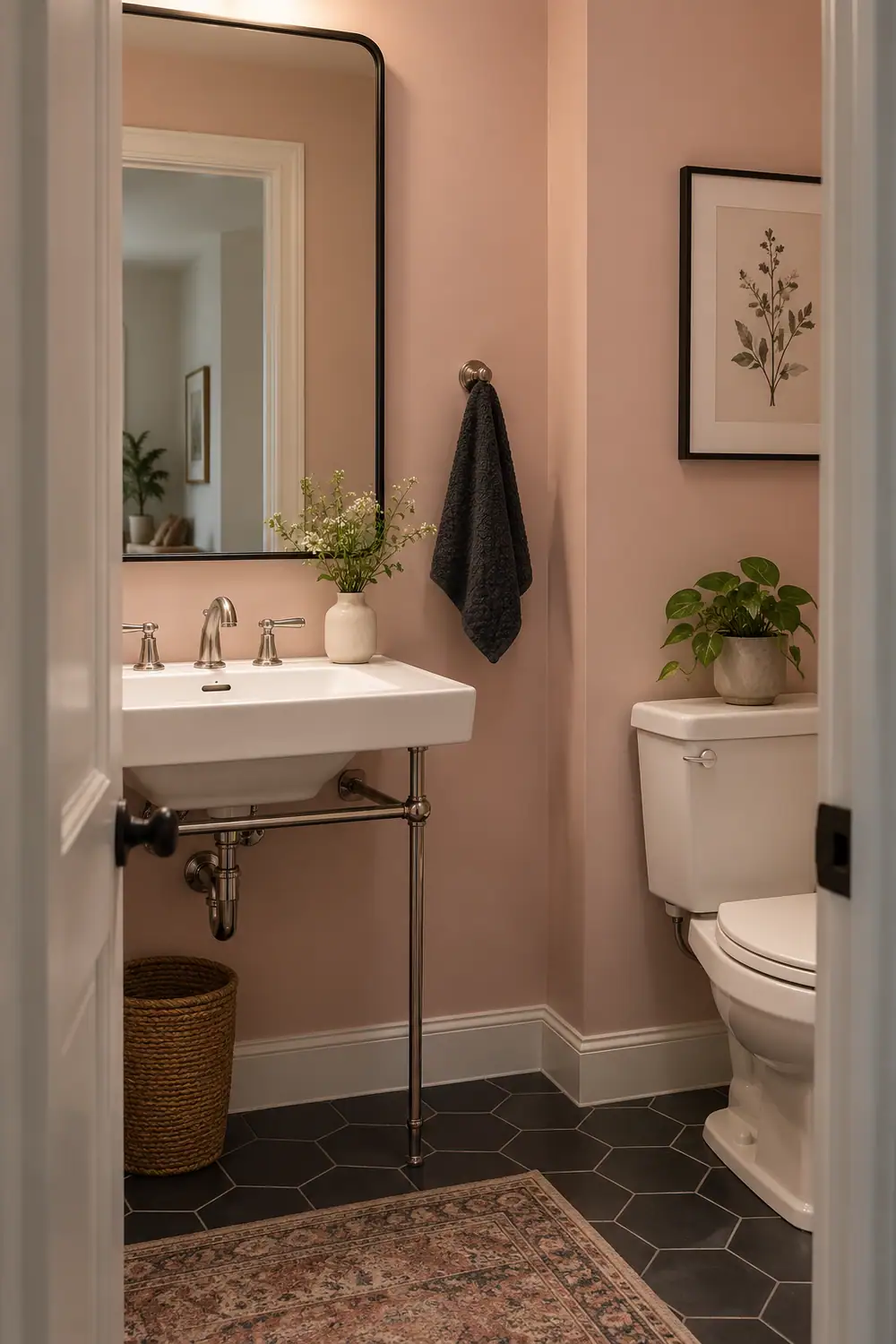
14. Gentle Color Contrast
| Detail | Contrast on every surface | Contrast in small accents |
|---|---|---|
| Wall Read | Many separate planes | More continuous background |
| Focus | Several competing features | A few clear outlines |
| Easy Update | May require repainting | Often possible with accessories |
A dark accent can add definition without enclosing the whole room. Keep it to a slim frame, a small towel, or a low tray while letting broad surfaces stay related. If you prefer deeper walls, test the complete palette under good lighting rather than assuming dark paint always feels cramped.
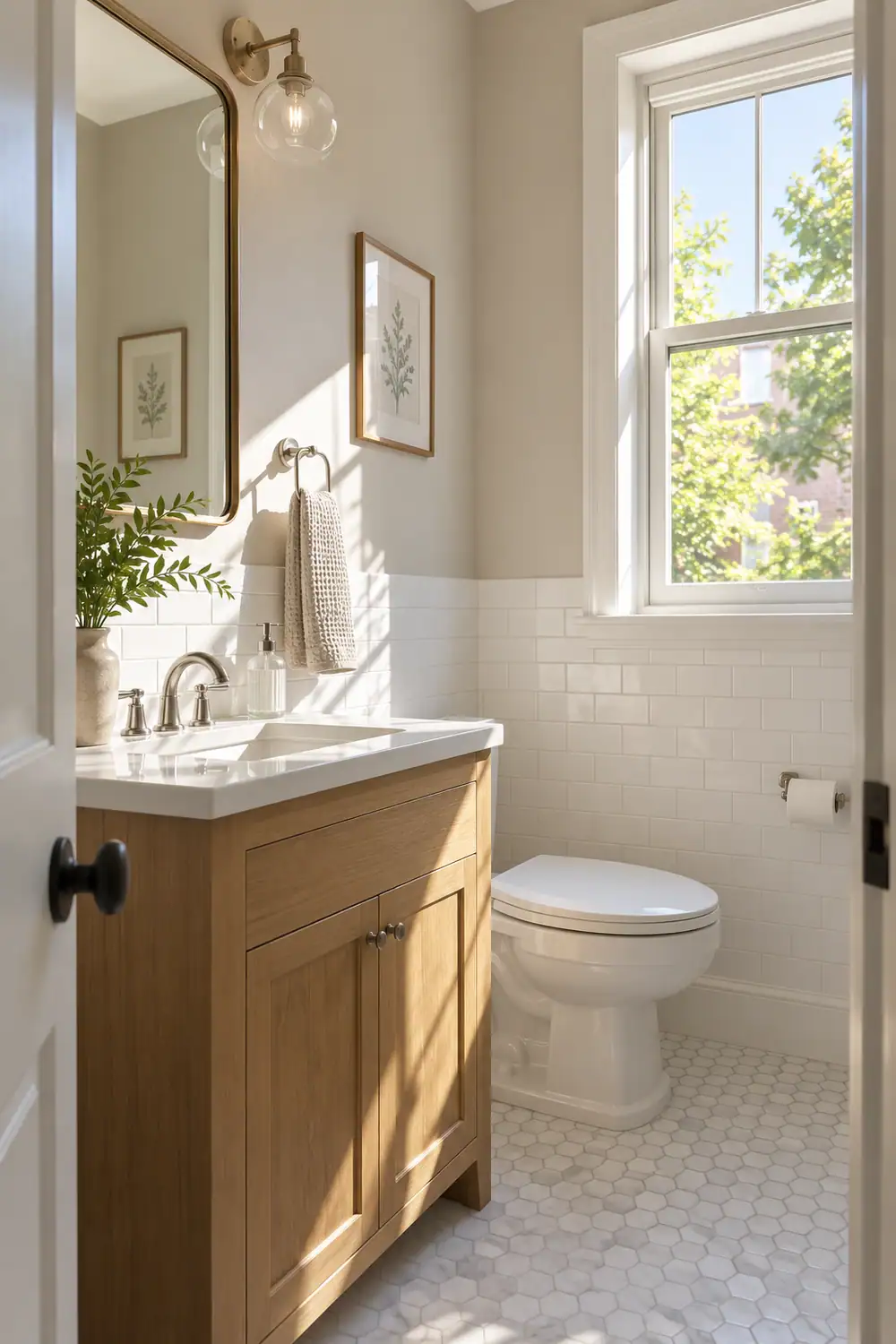
15. Unobstructed Light Paths
DO
- Keep tall storage away from a small window.
- Trim decorative arrangements so they do not shade the mirror.
- Choose a window treatment that opens fully when privacy allows.
- Clean accessible light covers according to their instructions.
DON’T
- Do not remove required privacy for the sake of brightness.
- Do not place supplies against a light fixture.
- Do not cover ventilation openings with decorative fabric.
Sometimes the room already has enough light, but everyday objects interrupt it. Check the area between the window and sink before buying more fixtures. Move a tall vase or basket, then compare the view at the same time the next day. Small adjustments are easier to reverse than installations.
16. Adjustable Evening Light
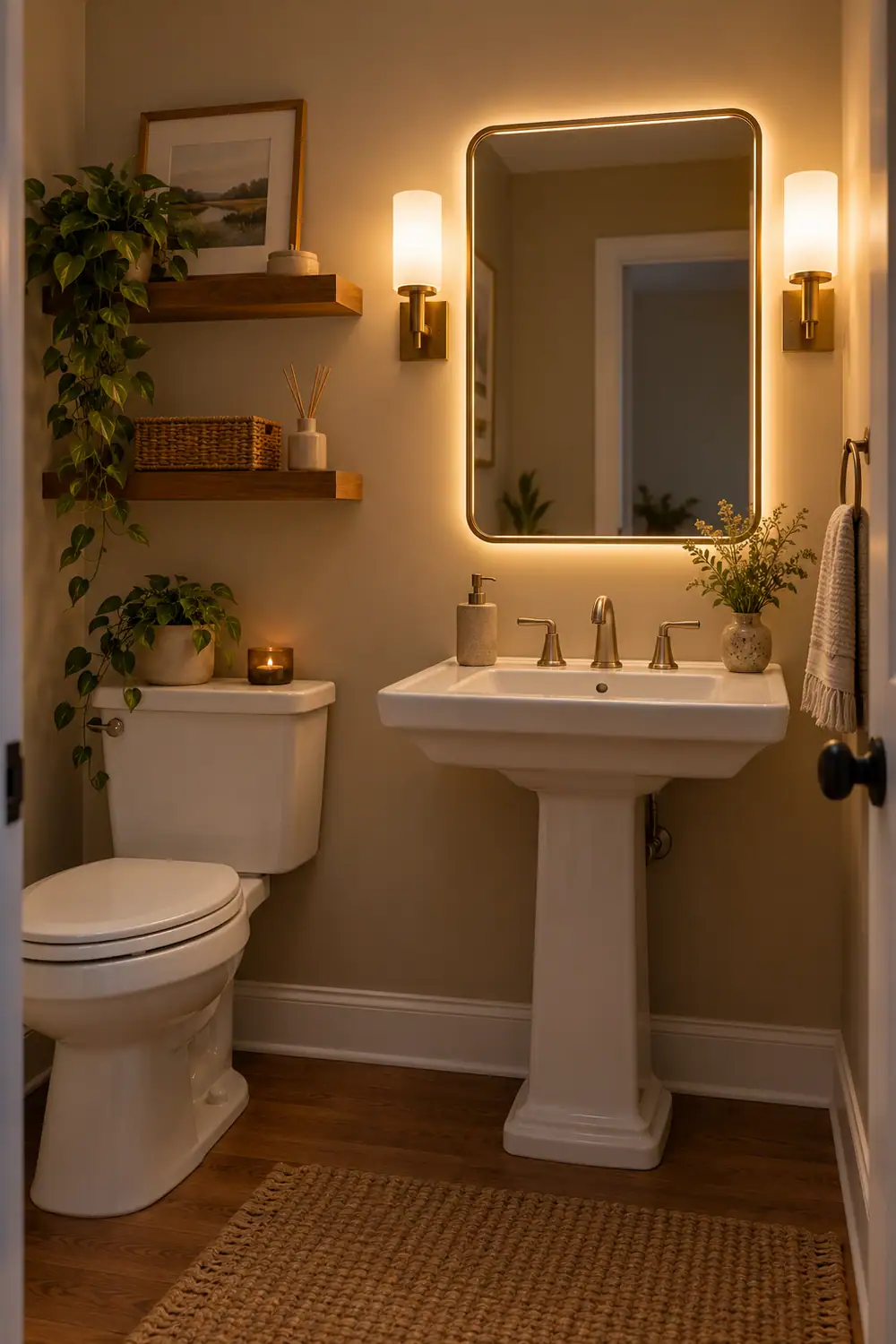
Best For: Rooms that feel harsh at night
Key Check: Bulb and dimmer compatibility
Installation: Professional help for electrical changes
Goal: Comfortable light without sacrificing visibility
A softer evening setting can keep a bright powder room comfortable after sunset. Use only dimmable bulbs and controls that are compatible with one another. If the existing setup cannot dim safely, ask a qualified professional about options rather than modifying wiring or using an improvised adapter.
17. Reflection Editing
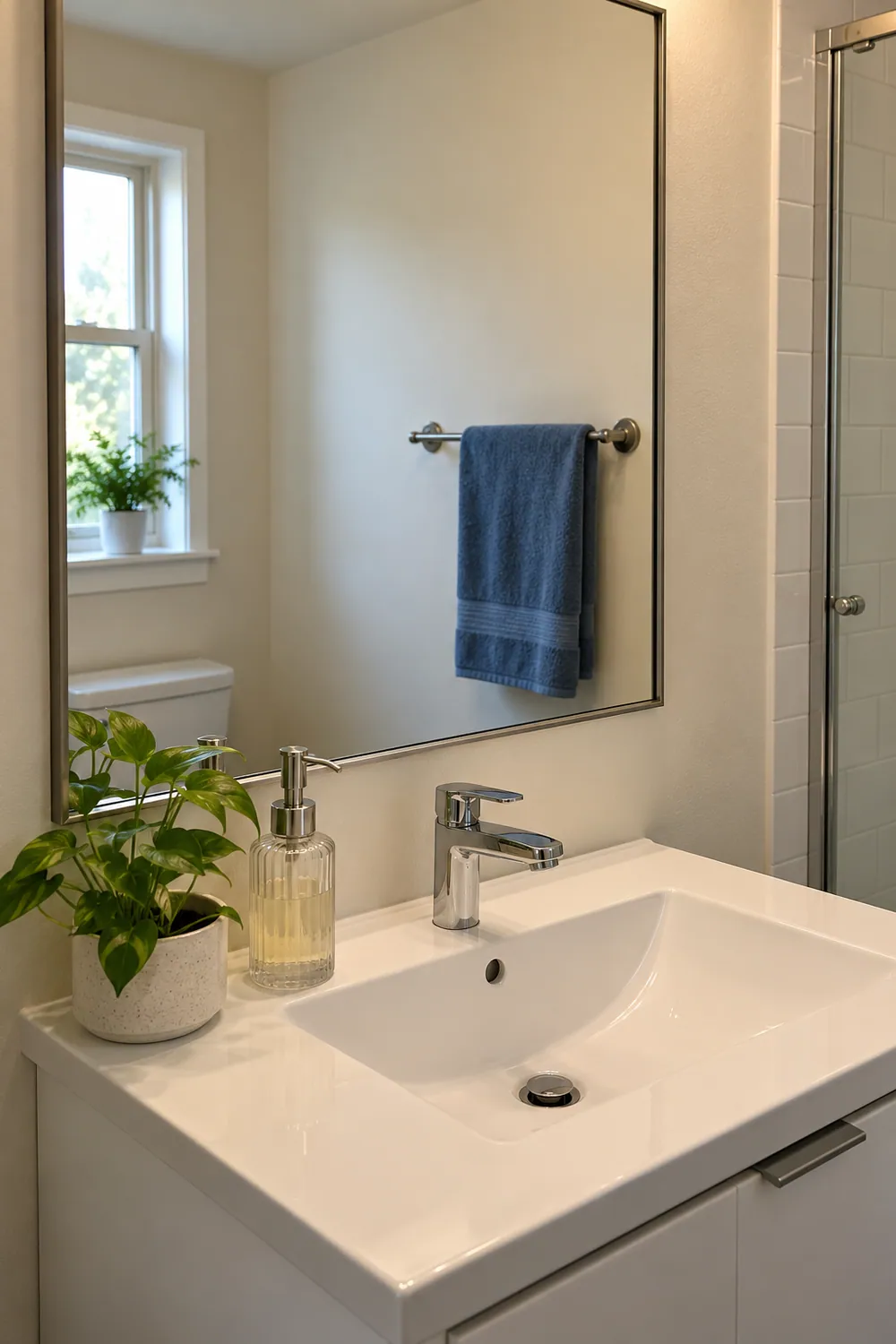
Stand at the door and look only at what appears in the mirror. A pile of spare products or a crowded towel hook may be doubled in the reflection, making the room feel busier. Reposition those objects before changing the mirror, then compare the room from the same angle.
Mirrors repeat whatever is present, including the clutter you have learned to overlook. A clean wall, an intentional print, or a neatly folded towel creates a calmer reflected scene. Keep the result practical for guests and daily use; the best arrangement should work outside a carefully chosen photograph too.
Frequently Asked Questions
Should the mirror cover the entire wall?
Not necessarily. Choose a size that fits safely around fixtures, switches, and trim. A clear reflection and suitable mounting are more important than covering every inch.
Which paint color makes a windowless powder room look bigger?
There is no universal shade. Test a few colors under the actual bulbs, alongside the sink and flooring. A related palette and good light distribution can matter more than a particular color name.
Is brighter lighting always better?
No. Comfortable, evenly distributed light is preferable to glare. Use compatible bulbs within fixture ratings and ask a qualified professional about changes to wiring or controls.
Conclusion
A room feels more open when its surfaces work together rather than compete. Let the mirror reflect a calm view, test colors under real lighting, and give dim corners thoughtful attention. Knowing how to make a small powder room look bigger does not mean buying everything at once. Start with a reflection check or a paint sample, then judge the result during ordinary use. Try one change that suits your layout first, and add the next only if the room still feels closed in.
Community
Join the conversation
Add a useful idea, ask a specific question, or share what worked in your space. Every comment is reviewed before it appears.