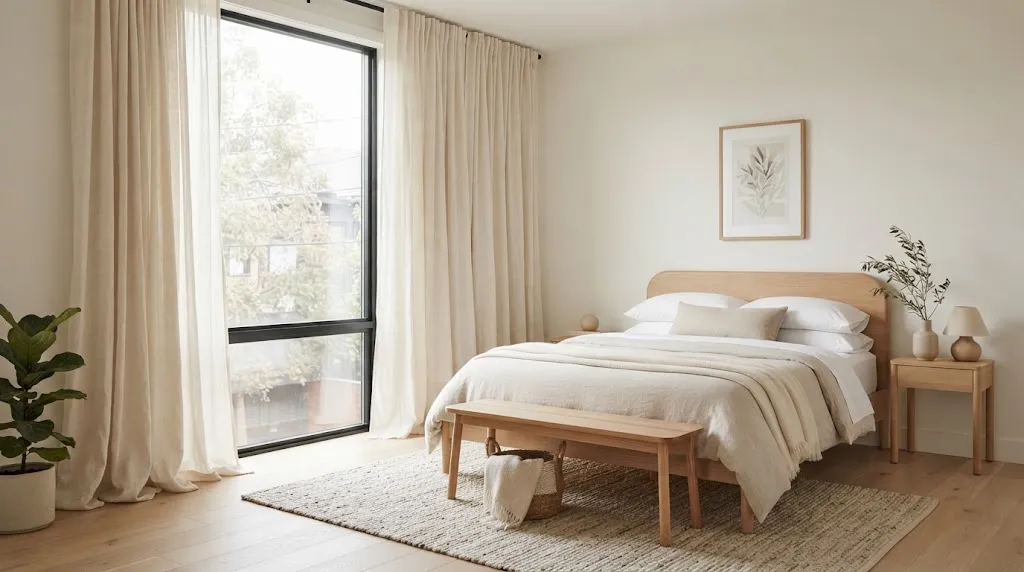
The right curtains can make a small bedroom feel noticeably brighter, taller, and more comfortable. Minimalist bedroom curtain ideas can help you create that effect without adding visual clutter.
Choosing curtains for a compact room is not only about color. Fabric, length, light control, texture, and installation height all affect how spacious the bedroom feels. A heavy curtain can make a small window feel crowded, while lightweight panels can spread natural light and create a cleaner appearance.
This collection brings together simple curtain styles that work well with small apartments, bedrooms, and multipurpose spaces. You’ll find ideas ranging from sheer linen panels and soft neutrals to blackout curtains and subtle patterns. In my experience, even a small change in curtain length or fabric can noticeably improve the balance of a room. Use these ideas to find a look that fits your space, lifestyle, and daily light needs.
1. Floor-Length White Curtains
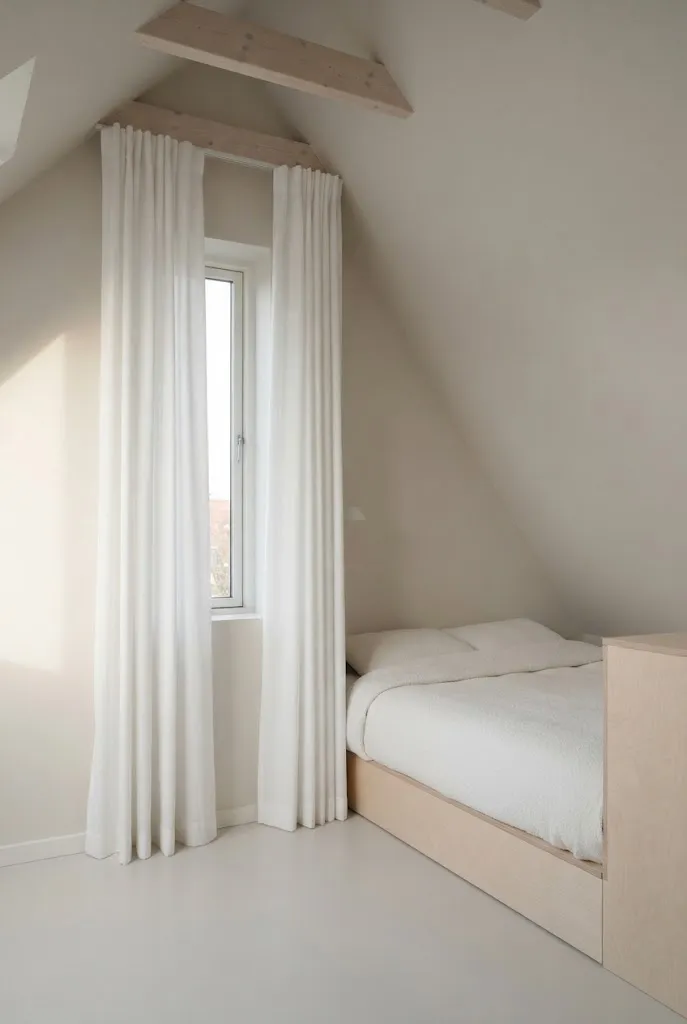
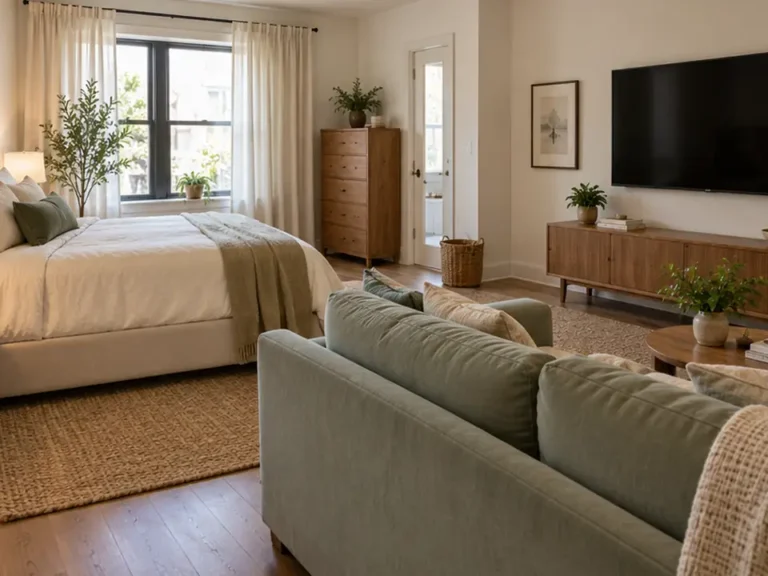
Long curtains can make a compact bedroom feel taller without adding visual clutter. Choose lightweight white or ivory fabric that reaches from near the ceiling to the floor. The uninterrupted vertical line draws the eye upward while keeping the window area bright and simple.
I’ve noticed that linen-look fabrics work especially well in small rooms because their subtle texture adds warmth without making the window feel heavy. Keep the rest of the room restrained with pale bedding, simple furniture, and a few natural materials. The result is a calm backdrop that lets daylight remain the main feature.
2. Sheer Linen Panels
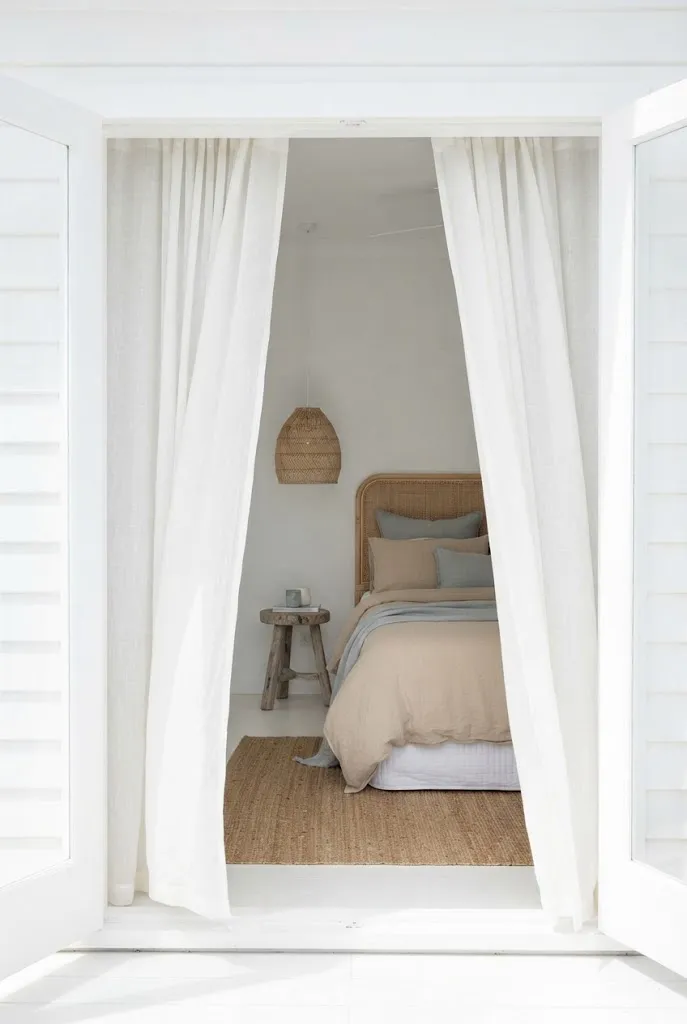
- Choose warm white or natural ivory for a softer appearance.
- Hang the panels slightly wider than the window to create fuller folds.
- Let the fabric reach the floor rather than stopping at the sill.
- Pair sheer panels with simple neutral bedding for visual consistency.
- Use a slim rod that blends with the surrounding wall.
Sheer linen panels allow daylight to spread gently across the room while giving the window a finished appearance. For a small bedroom, they provide softness without the bulk of thick drapes. In my experience, a slightly textured sheer fabric also hides minor wrinkles better than very smooth synthetic materials.
3. Beige Blackout Curtains
Quick Tip:
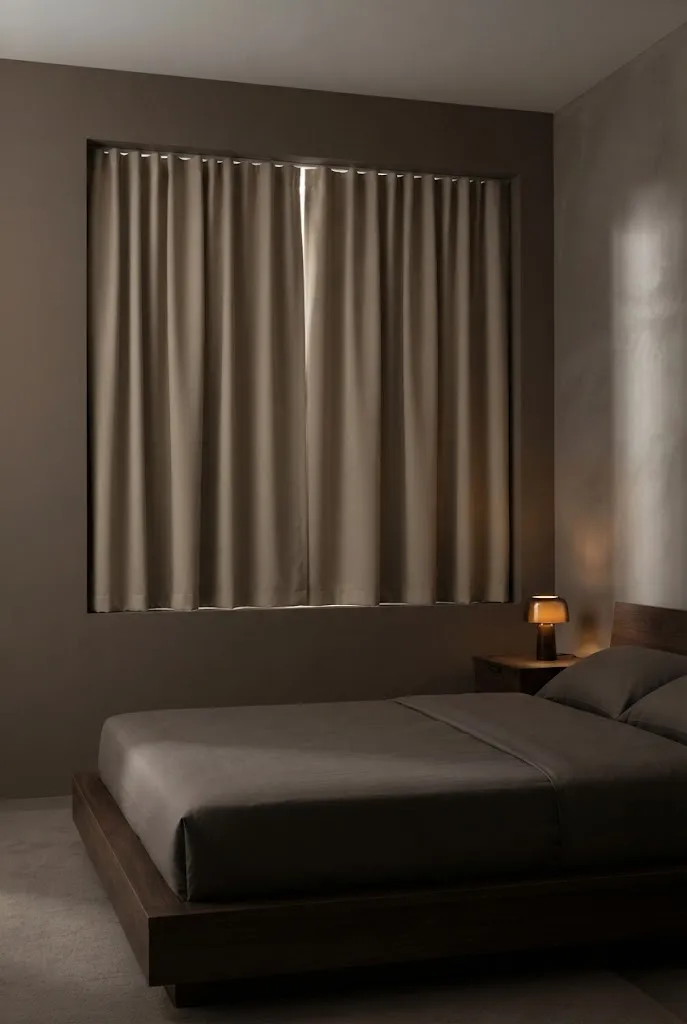
Choose blackout curtains in a light beige, taupe, or oatmeal shade instead of a stark dark color. Mount the rod several inches above the window frame and extend it beyond both sides to make the opening feel wider when the curtains are open.
For bedrooms that need better sleep conditions, blackout fabric offers practical value without sacrificing a minimalist look. Look for curtains with a matte finish and a soft neutral tone. These pair easily with pale walls and natural wood, keeping the room visually quiet while blocking unwanted morning or street light.
4. Soft Gray Drapes
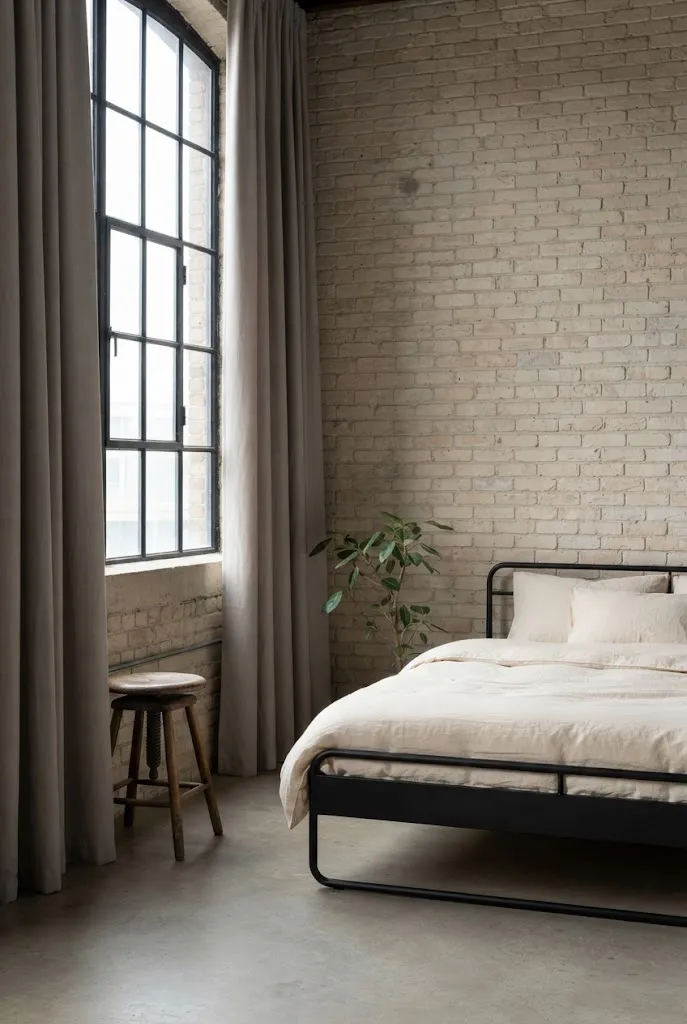
BEFORE: A bedroom with plain white walls and basic furniture can sometimes feel flat and unfinished. Dark or heavily patterned curtains may also draw too much attention to a small window.
AFTER: Soft gray drapes introduce gentle contrast while keeping the room light and balanced. Their subtle color adds depth without competing with the bedding or furniture.
Choose a warm gray with beige undertones if your bedroom has wooden furniture or cream accents. Hang the panels close to the ceiling to create a taller appearance, and let them fall just above the floor. This combination works particularly well in small apartments where a calm, coordinated palette helps reduce visual clutter.
5. Natural Cotton Curtains
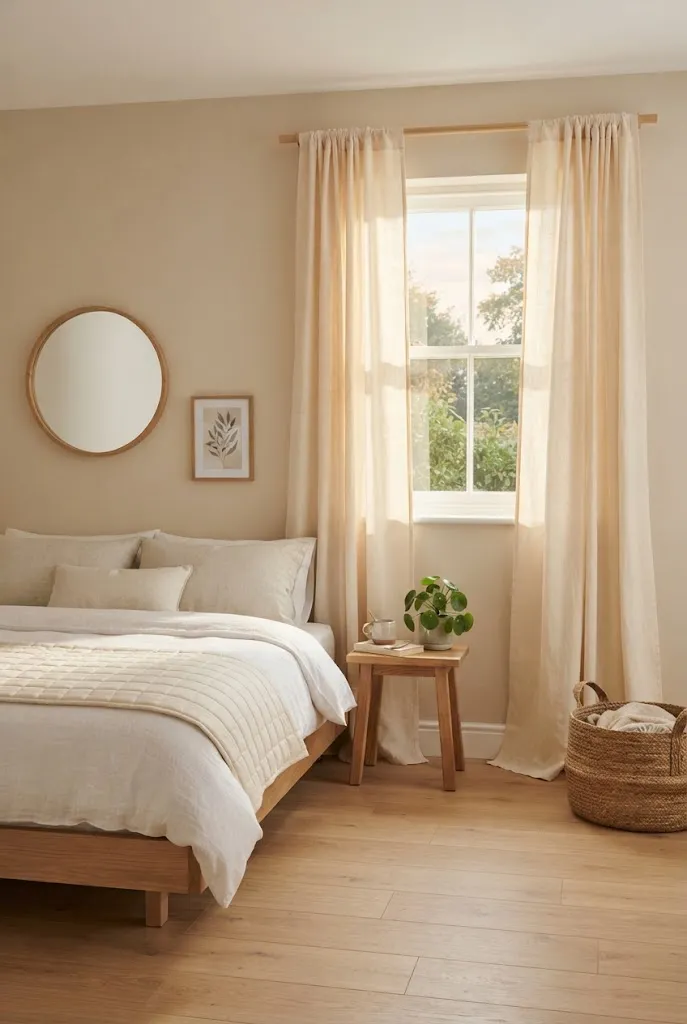
- Select breathable fabric: Choose lightweight cotton curtains in cream, ivory, or natural white to create a soft, relaxed appearance.
- Measure the window: Allow enough fabric width for gentle folds rather than flat, stretched panels.
- Choose simple hardware: Install a slim wooden or white curtain rod that complements the bedroom furniture.
- Set the curtain length: Opt for floor-length panels to create a continuous vertical line.
Natural cotton curtains bring a relaxed quality to minimalist bedrooms without introducing unnecessary decoration. Their soft texture complements wooden furniture, woven baskets, and simple bedding. For a small bedroom that also serves as a home office, these panels provide a comfortable visual backdrop that feels neat during work hours and restful at night.
6. Layered Sheer Curtains
| Feature | Option A: Single Sheers | Option B: Layered Curtains |
|---|---|---|
| Light control | Soft daylight filtering | Adjustable light and shade |
| Privacy | Limited, depending on fabric | Greater flexibility |
| Appearance | Simple and airy | Soft and dimensional |
| Best for | Bright, private rooms | Bedrooms needing varied coverage |
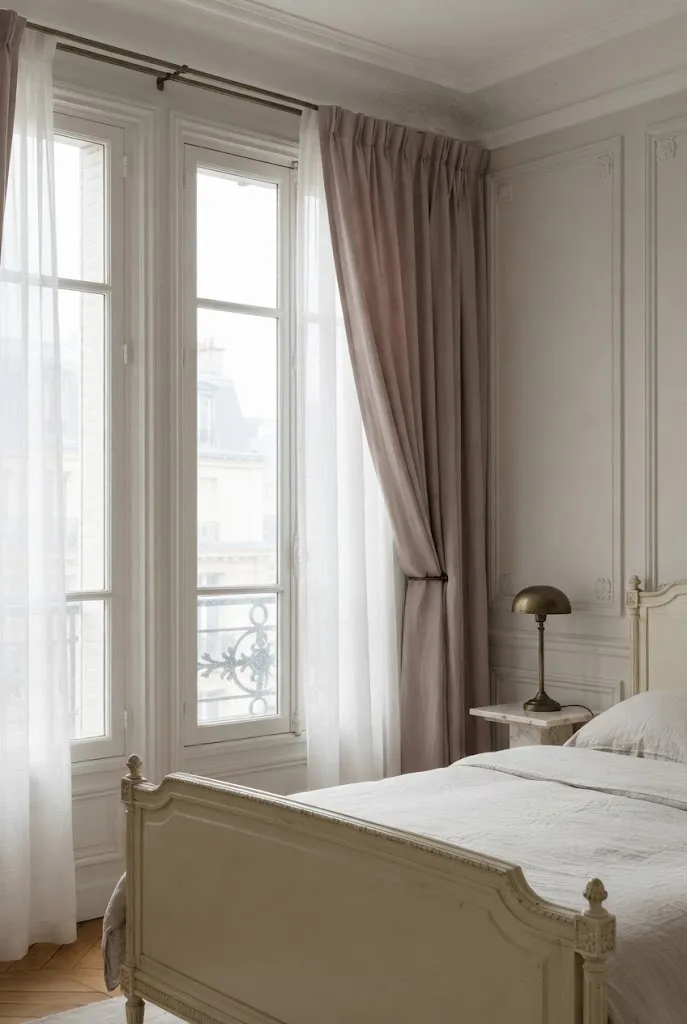
Layered curtains give you more control over the atmosphere of your bedroom throughout the day. Keep the sheer layer closest to the window and use a slightly heavier neutral panel as the outer layer. A double curtain rod allows each fabric to move independently, so you can enjoy filtered daylight or greater privacy as needed.
7. Warm Oatmeal Curtains
DO:
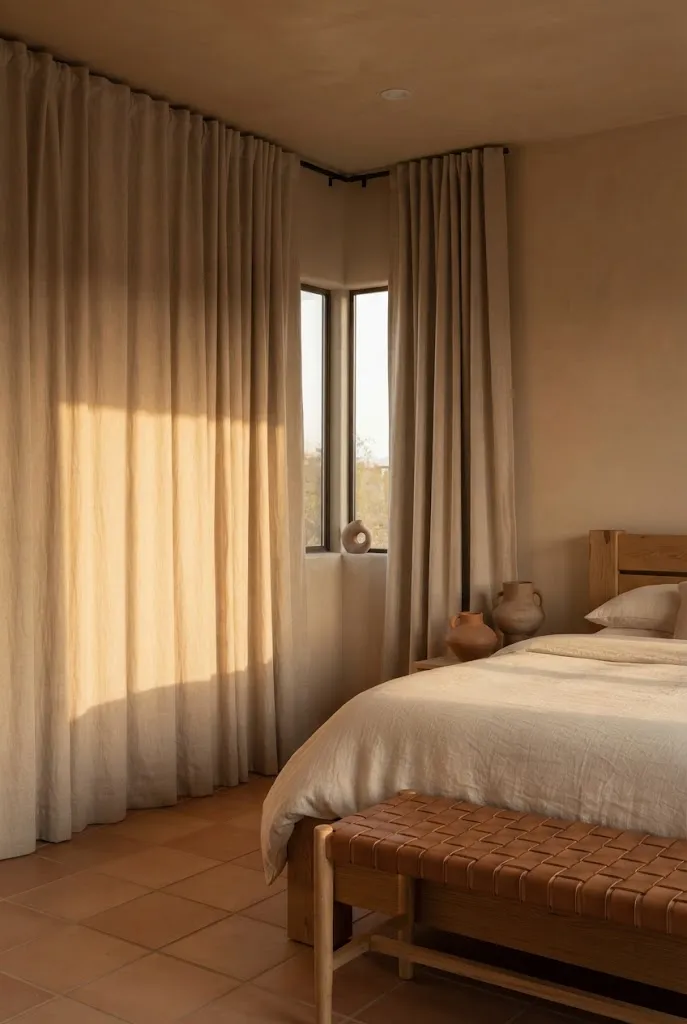
- Choose oatmeal fabric with a matte, lightly textured finish.
- Match the curtains with beige, cream, or natural wood accents.
- Mount the rod higher than the window frame.
- Keep nearby decor simple so the warm tone remains subtle.
DON’T:
- Choose a yellow-heavy beige that clashes with cool white walls.
- Use short curtains that stop above the floor.
- Combine several competing warm shades around the window.
- Add bold patterns if the bedroom already has textured furnishings.
Warm oatmeal curtains bring gentle contrast to a pale bedroom while keeping the overall palette restrained. I’ve seen this shade work particularly well with light oak furniture because both materials share an earthy quality. Add crisp white bedding to keep the room fresh, especially when the available floor area is limited.
8. Ceiling-Mounted Curtains
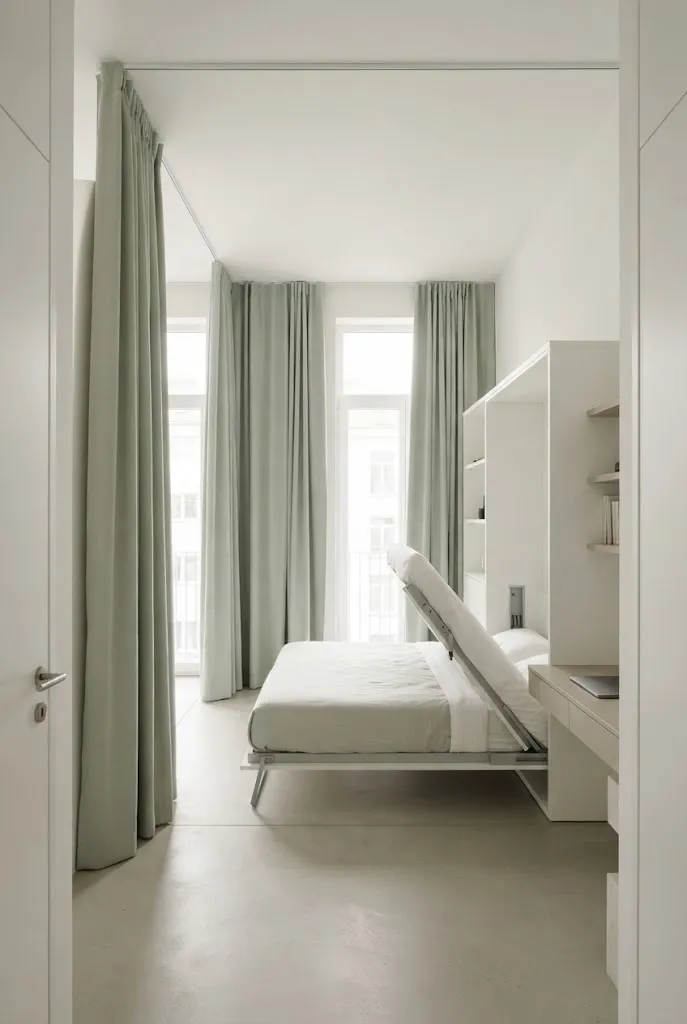
Cost: Moderate | Time: One afternoon | Skill Level: Beginner to intermediate
Best For: Low ceilings or compact rooms | Result: Taller-looking windows and cleaner lines
Mounting curtains directly from the ceiling creates an uninterrupted vertical line from top to bottom. This can make a small bedroom feel more spacious without adding furniture or decorative accessories. Keep the track discreet and choose lightweight fabric so the installation remains visually clean. It works especially well beside tall wardrobes or compact storage units.
9. White-on-White Panels
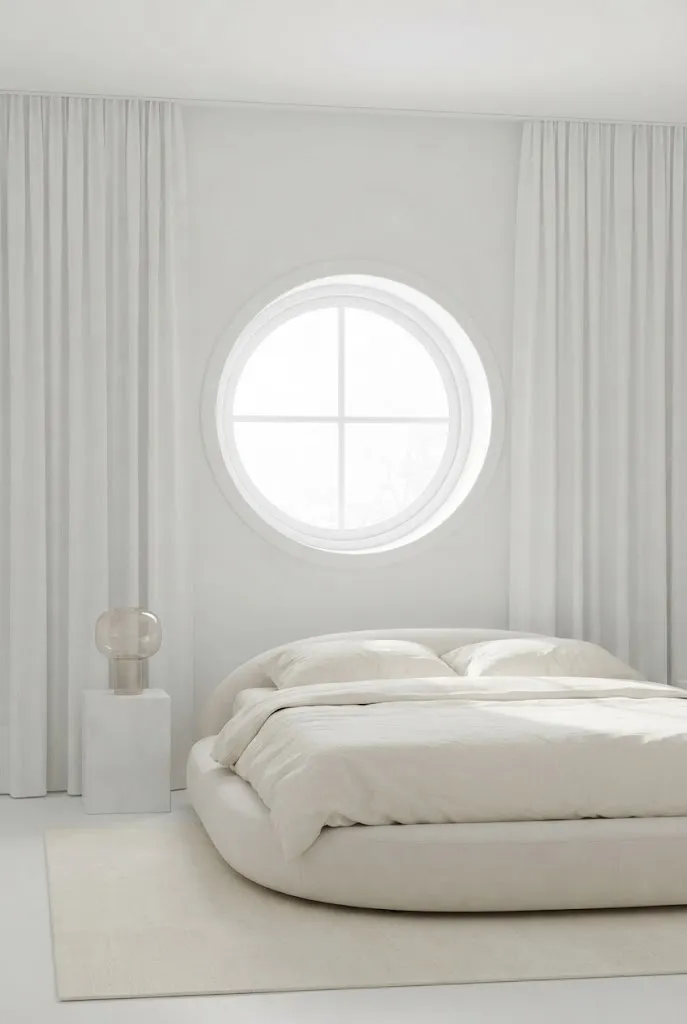
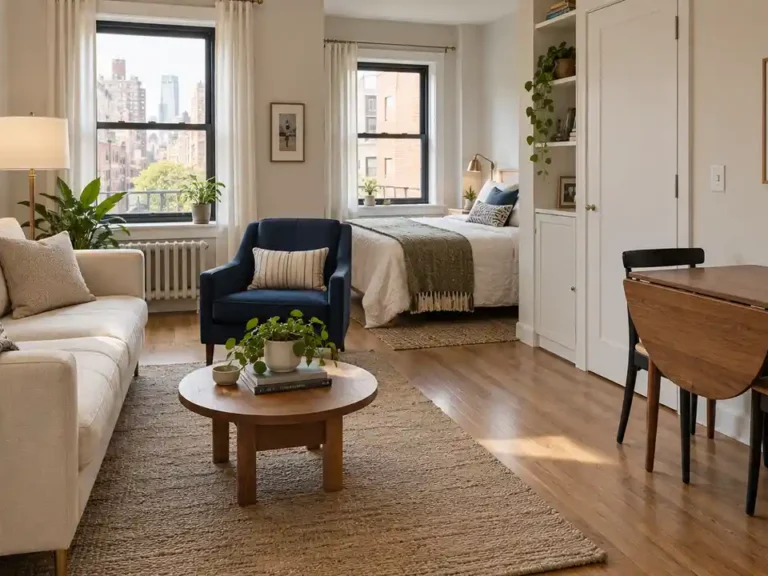
White curtains can disappear beautifully into a white bedroom, leaving the window area visually uncluttered. The key is to introduce texture rather than strong color. Choose linen, cotton, or a lightly woven fabric so the panels create subtle shadows while maintaining the monochromatic palette.
For a small apartment bedroom, this approach helps preserve every bit of visual openness. Keep the curtain rod white or ivory and avoid heavy decorative hardware. I’ve noticed that slightly warm whites usually feel more inviting than bright blue-toned whites, particularly when natural wood or beige accessories are nearby.
10. Light Taupe Curtains
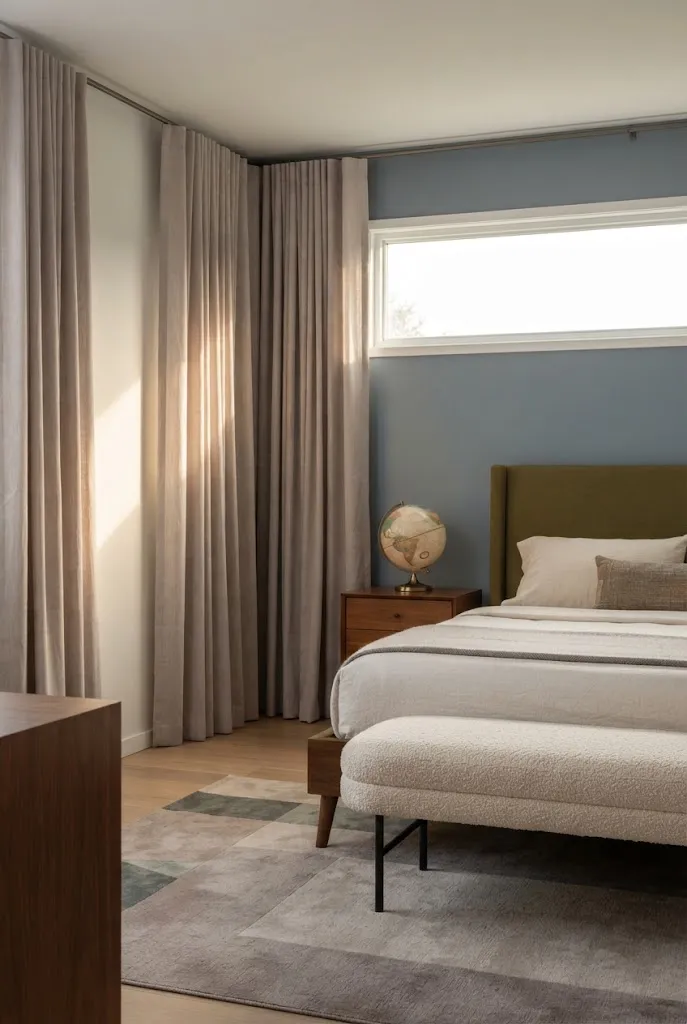
- Choose a light taupe shade with warm beige undertones.
- Pair the curtains with cream bedding and pale wood furniture.
- Use full-length panels to create a continuous vertical line.
- Keep curtain hardware slim and visually understated.
Light taupe sits between beige and gray, making it useful when you want subtle contrast without introducing a strong color. It works particularly well in bedrooms where white walls feel slightly too stark. Keep surrounding textiles within a similar neutral range, but vary their textures to prevent the room from looking flat.
11. Soft Green Curtains
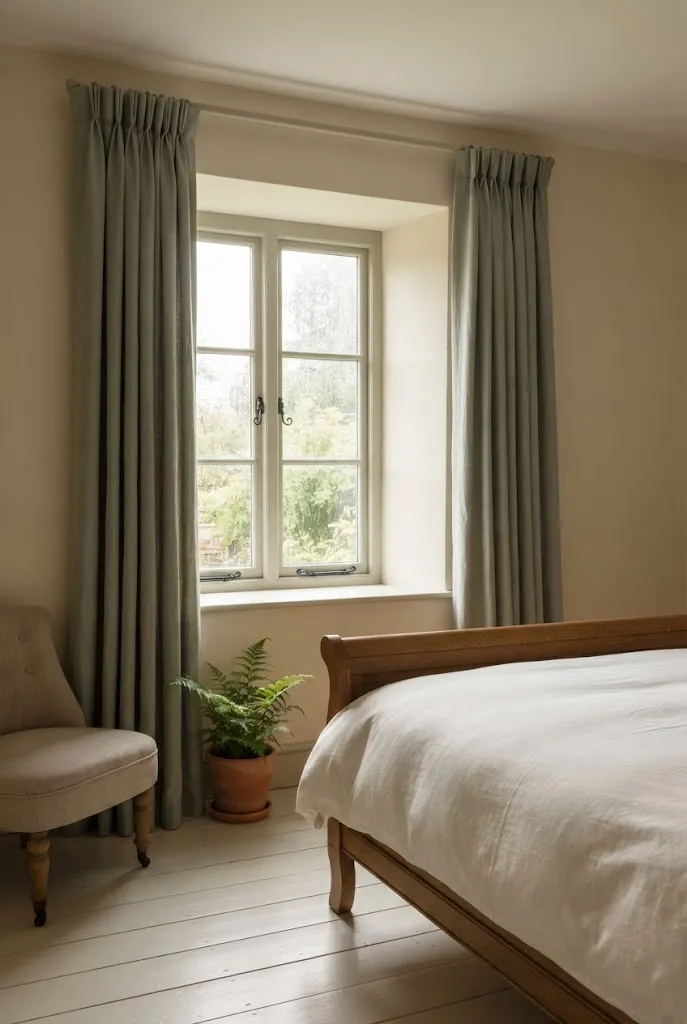
Quick Tip:
Use muted sage, eucalyptus, or dusty olive rather than saturated green. Keep the rest of the room neutral so the curtains provide a controlled hint of color without overwhelming the compact space.
Soft green panels can introduce a natural accent while maintaining a restrained bedroom palette. Pair them with warm white walls, light wood, and cream textiles for a balanced look. If the room receives limited daylight, choose a lighter green with a soft finish rather than a deep shade that may visually reduce the brightness of the space.
12. Subtle Stripe Panels
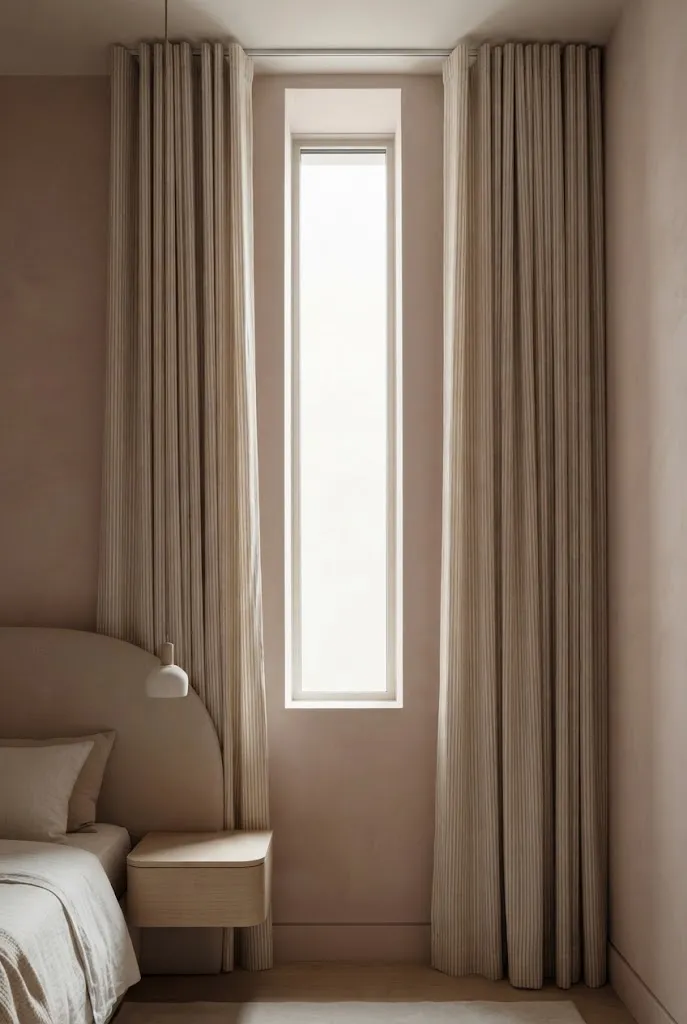
BEFORE: Plain curtains can leave a compact bedroom feeling visually unfinished, while bold patterns may make the window compete with the rest of the room.
AFTER: Fine vertical stripes add gentle detail and guide the eye upward without creating a busy focal point. The pattern remains subtle enough to complement neutral furniture and bedding.
Choose narrow stripes in beige, taupe, or soft gray on an ivory background. Keep other patterns minimal so the curtains remain the main visual detail. For a particularly small bedroom, vertical lines can also reinforce the sense of height created by floor-length panels and a higher curtain rod.
13. Rod-Pocket Linen Panels
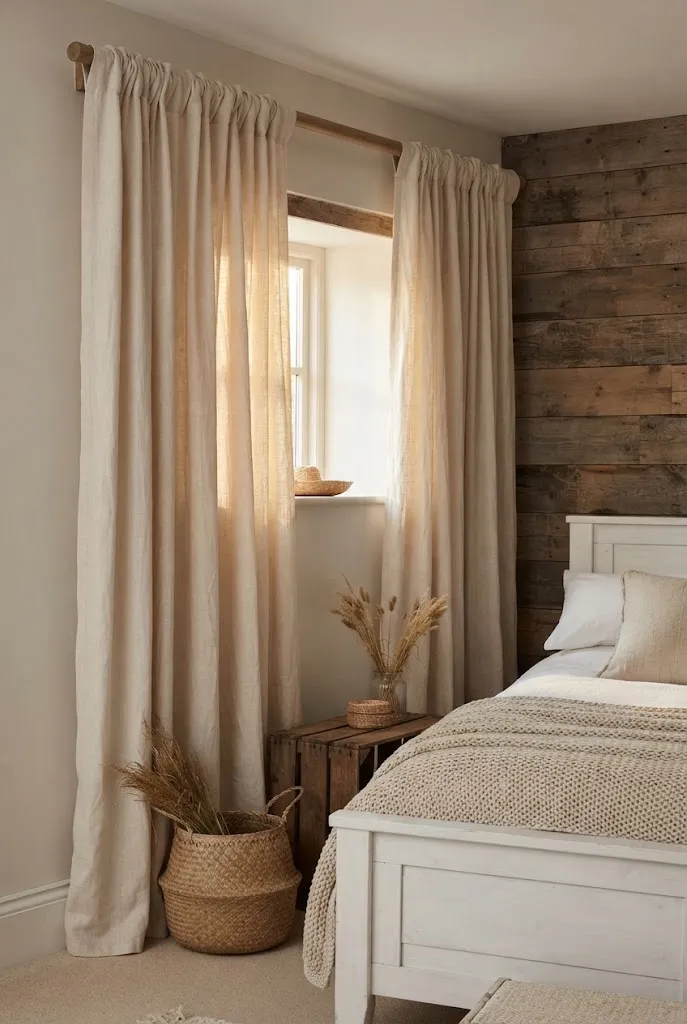
- Choose lightweight linen: Pick ivory, cream, or natural beige fabric with enough body to create soft folds.
- Measure carefully: Allow extra width for relaxed gathers rather than a flat appearance.
- Install a simple rod: Use a slim wooden or matte metal rod that complements the room.
- Set the length: Let the panels reach the floor for a clean, uninterrupted vertical effect.
Rod-pocket panels create a softer, more relaxed window treatment than structured pleated curtains. They suit bedrooms where the goal is a natural, understated appearance. Keep the fabric slightly gathered rather than tightly packed, and avoid heavy lining if maintaining an airy feel is more important than complete light blocking.
14. Matte Neutral Drapes
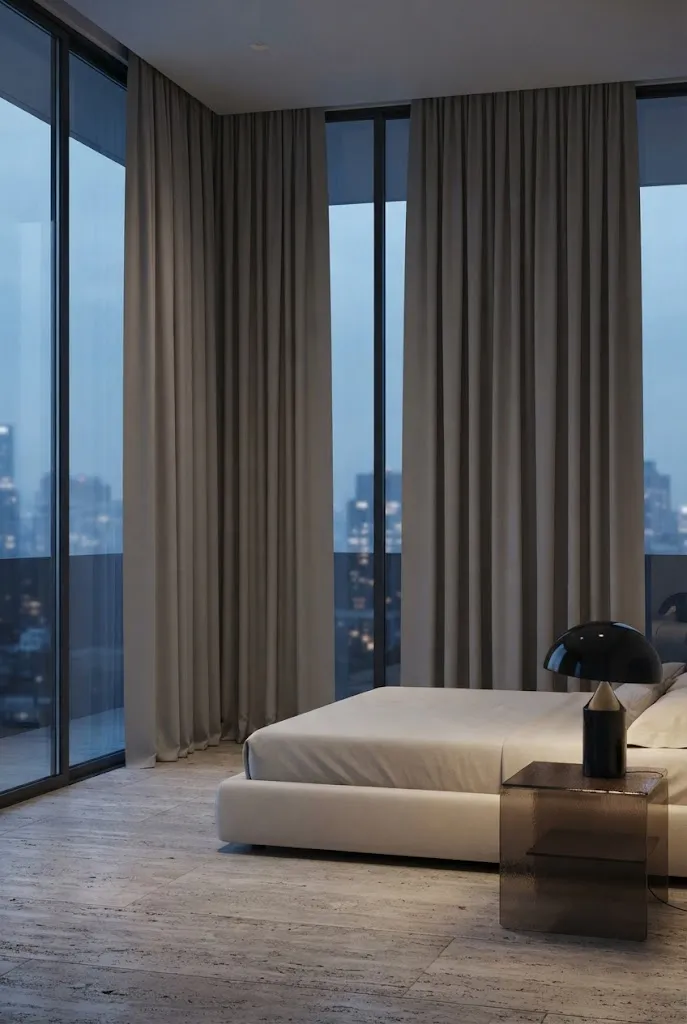
| Feature | Option A: Shiny Fabric | Option B: Matte Fabric |
|---|---|---|
| Light reflection | More noticeable | Soft and controlled |
| Visual style | More decorative | Calm and understated |
| Small-room effect | Can feel busier | Keeps the window quieter |
| Best pairing | Glamorous accents | Minimalist furnishings |
Matte fabrics help keep a compact bedroom visually calm because they absorb rather than strongly reflect incoming light. Look for linen blends, cotton, or brushed woven materials in cream, greige, or soft taupe. In my experience, these finishes are easier to coordinate with wood, wool, and woven accessories than highly reflective fabrics.
15. Floor-Skimming Curtains
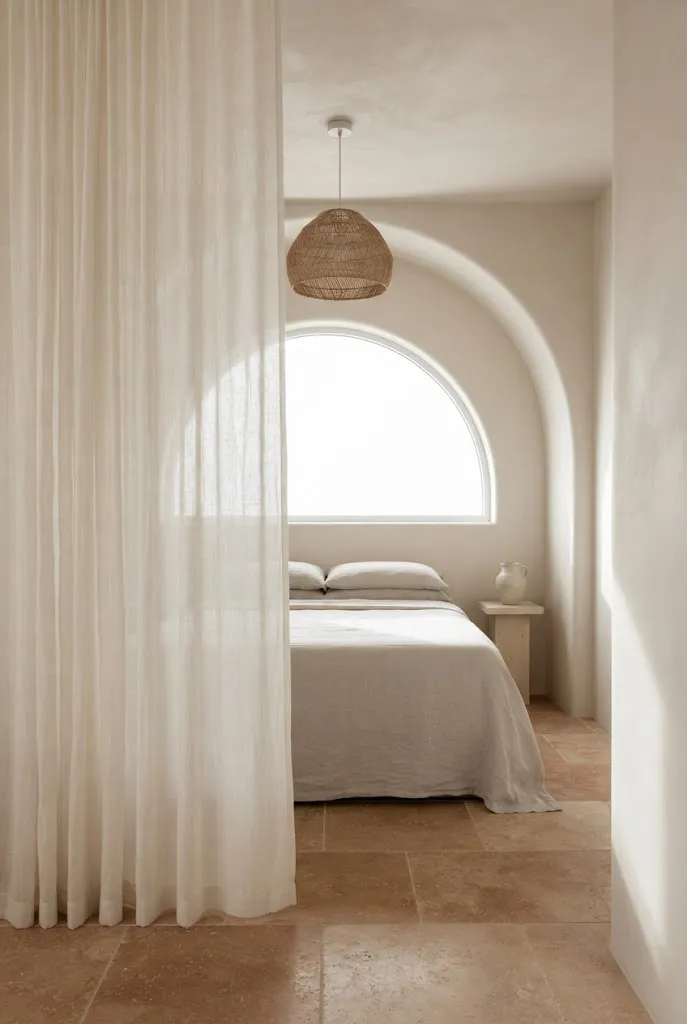
DO:
- Measure from the curtain rod to the finished floor before ordering.
- Leave the fabric just slightly above the flooring.
- Choose lightweight material for a crisp, controlled fall.
- Keep the surrounding window area free from unnecessary decor.
DON’T:
- Let fabric drag heavily across the floor.
- Stop the panels several inches above the flooring.
- Use bulky tiebacks that interrupt the clean vertical line.
- Place large furniture directly against the curtain fabric.
Floor-skimming panels give a bedroom a tailored finish while avoiding the extra fabric that can collect dust or visually crowd a small floor area. This detail works especially well with minimalist furnishings because the clean curtain line supports the room’s simple proportions. Use it when you want a polished look without decorative extras.
Conclusion
A small bedroom does not need complicated window treatments to feel polished and inviting. The right fabric, color, length, and placement can add softness while keeping the room open and uncluttered. These minimalist bedroom curtain ideas offer practical inspiration for creating a calmer, brighter space without overwhelming limited square footage.
I’ve seen how small changes like these can completely shift the way a room feels. Choose one idea that suits your bedroom and give it a try. Save this post on Pinterest for your next decorating project, and share it with someone looking for simple small-bedroom inspiration.
Community
Join the conversation
Add a useful idea, ask a specific question, or share what worked in your space. Every comment is reviewed before it appears.