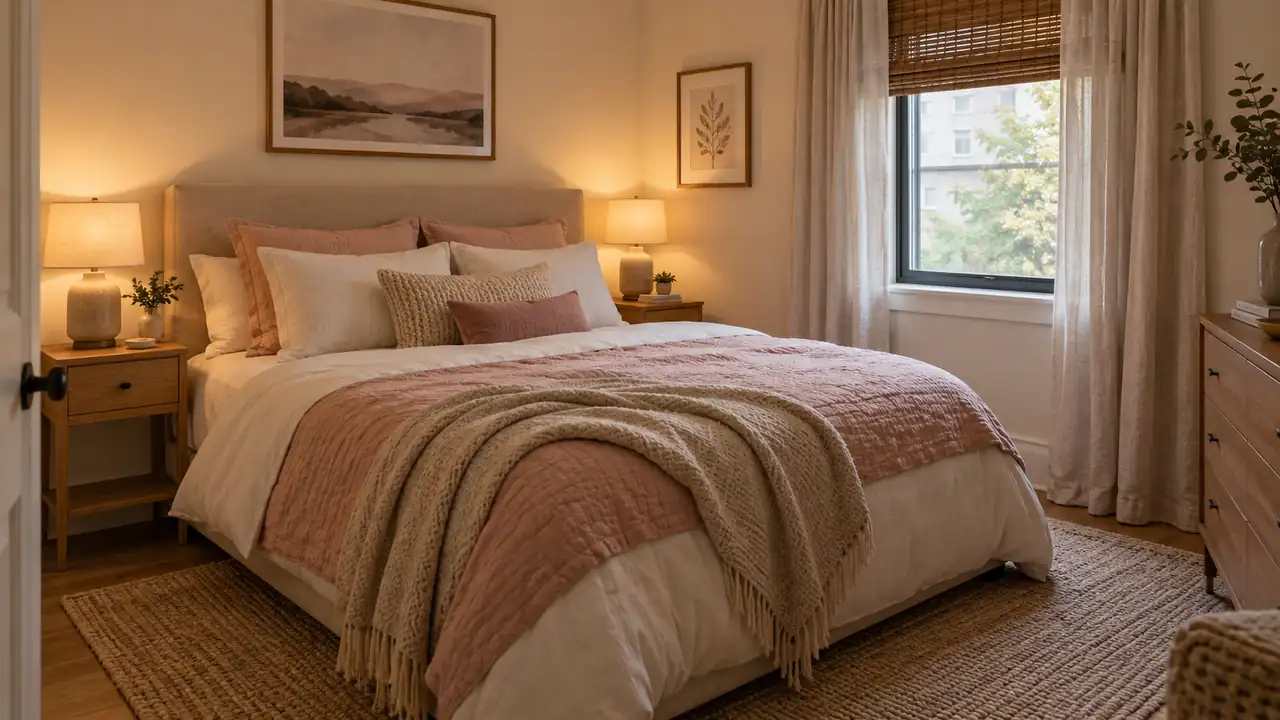
Sharing a tiny bedroom can make even a quiet evening feel crowded. These ideas for small apartment bedrooms for couples bring warmth, privacy, and breathing room to the place where you both wind down. You do not need an oversized bed, an expensive makeover, or a room full of decorations to make the space feel special.
Start with what interrupts your comfort: a glaring ceiling light, nowhere to put a book, or a narrow route past the bed. Then choose a few changes that solve those everyday frustrations while adding softness and personality. These nineteen ideas balance romantic details with practical layouts, so your bedroom can support two routines and still feel peaceful at the end of the day.
1. Soft Layered Bedding
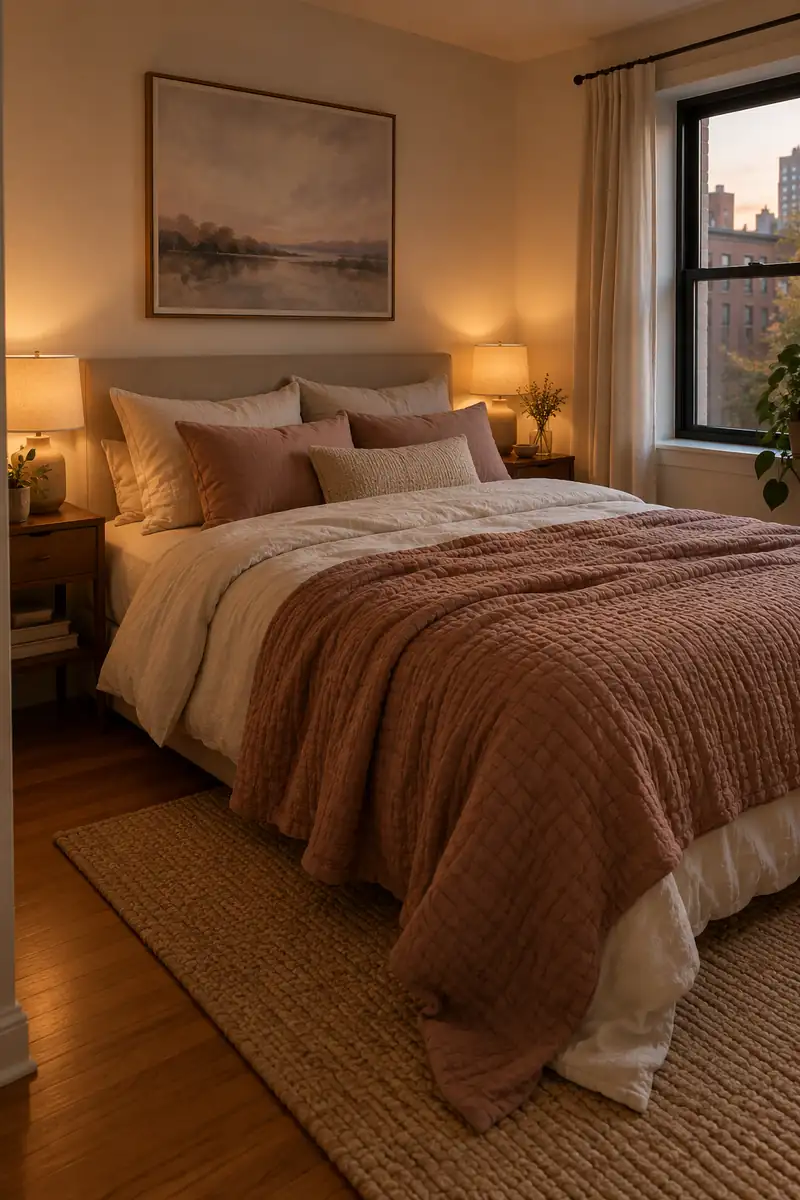
A bed that looks inviting starts with layers you actually enjoy sleeping beneath. Choose breathable sheets, a simple duvet, and one folded throw for the foot of the bed. Cream and dusty rose work gently together, but your favorite muted colors can create the same relaxed feeling without matching everything.
Limit decorative cushions to a pair you can move easily at bedtime. A mountain of pillows becomes floor clutter in a compact room. Let a textured cover or quilt provide the detail instead, and agree on bedding weight together so the finished setup feels comfortable for both sleepers every night.
2. Paired Bedside Lamps
- Harsh overhead light can make bedtime feel like the middle of the workday.
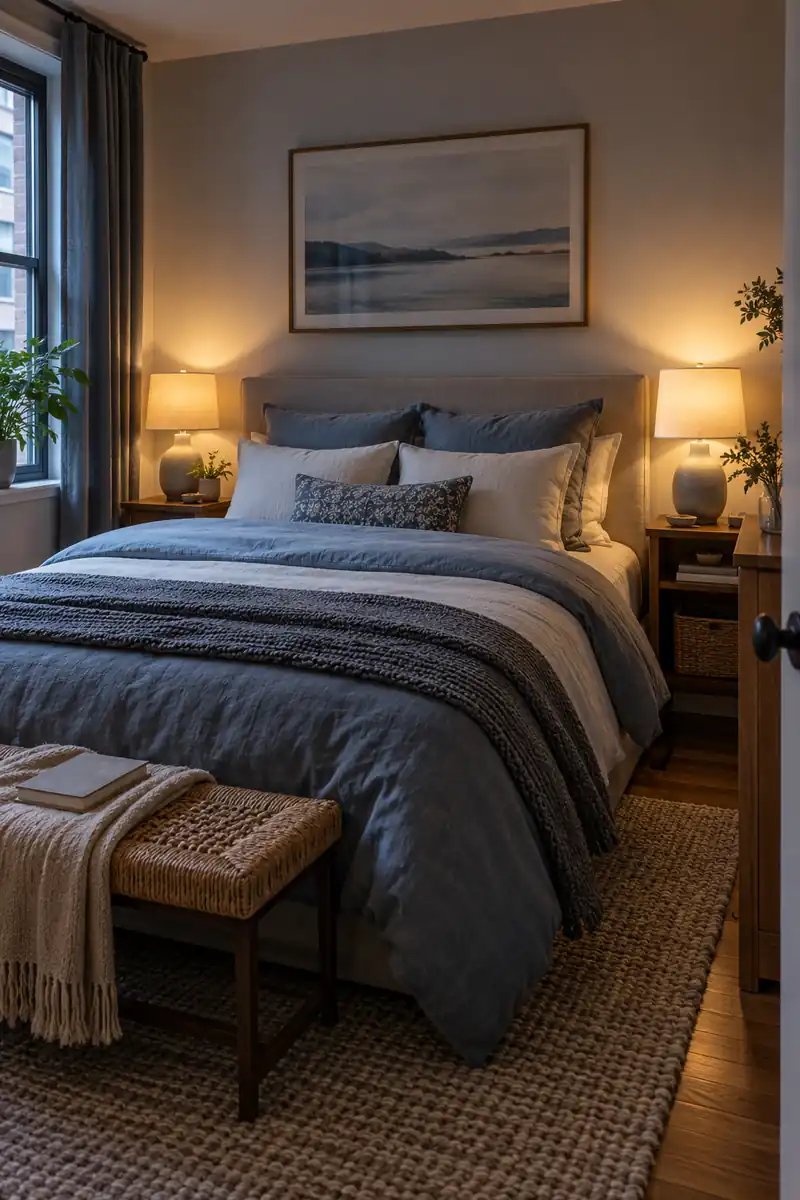
- Place a small shaded lamp within reach of each person so reading does not require lighting the entire room.
- Choose warm white bulbs and check that any dimmer is compatible with the bulb and fixture.
- Keep lamp bases stable and route cords behind the furniture, away from the walking path.
Matching light levels matter more than buying identical lamps. Similar shade heights help the two sides feel balanced, while separate switches let each person settle down at a different time. Choose shades that hide the bright bulb from someone lying in bed, especially if one partner enjoys late reading.
3. Slim Bedside Tables
Quick Tip:
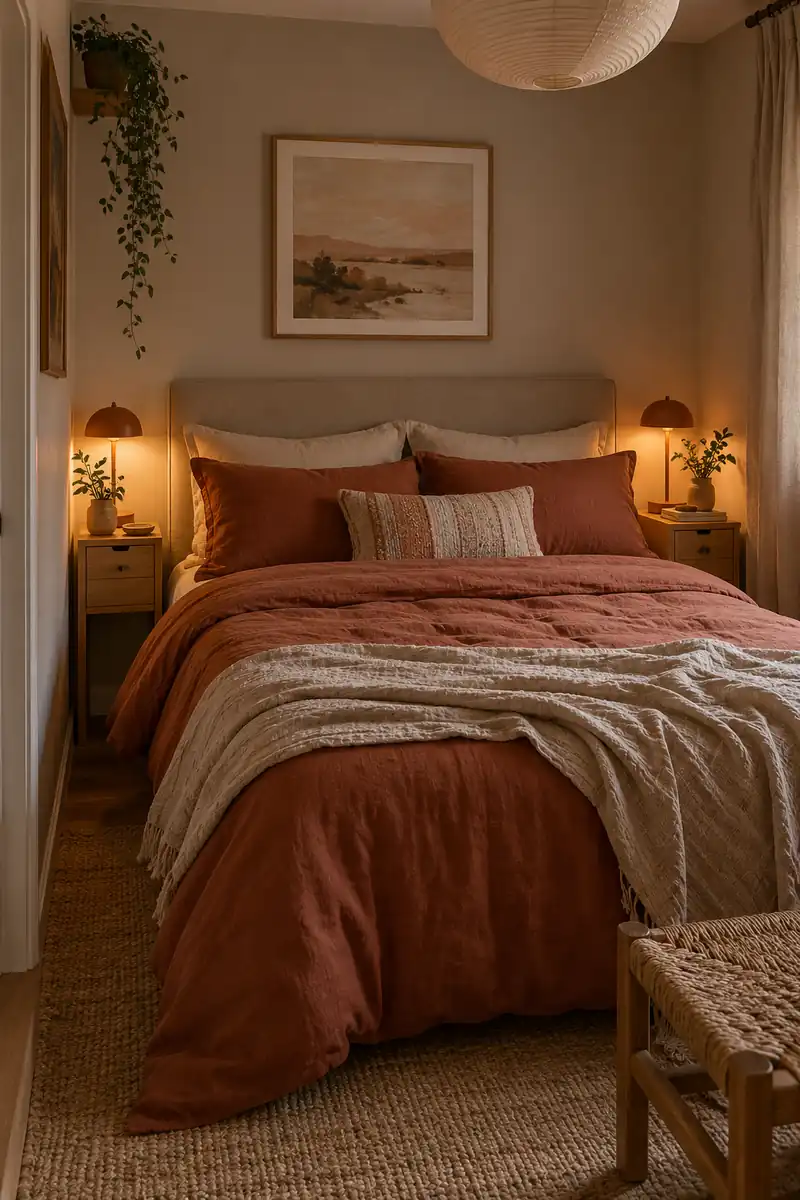
A narrow bedside surface can make a shared bedroom feel far more considerate. Measure both gaps beside the bed before shopping. Choose slim tables that leave room to stand and reach the bedding comfortably.
Give each person enough surface for water, a phone, and a small lamp rather than squeezing in oversized cabinets. A shallow drawer can hide chargers and sleep accessories. Check the drawer opening as well as the cabinet width, because a drawer that hits the bed will soon become frustrating.
4. Blush Accent Wall
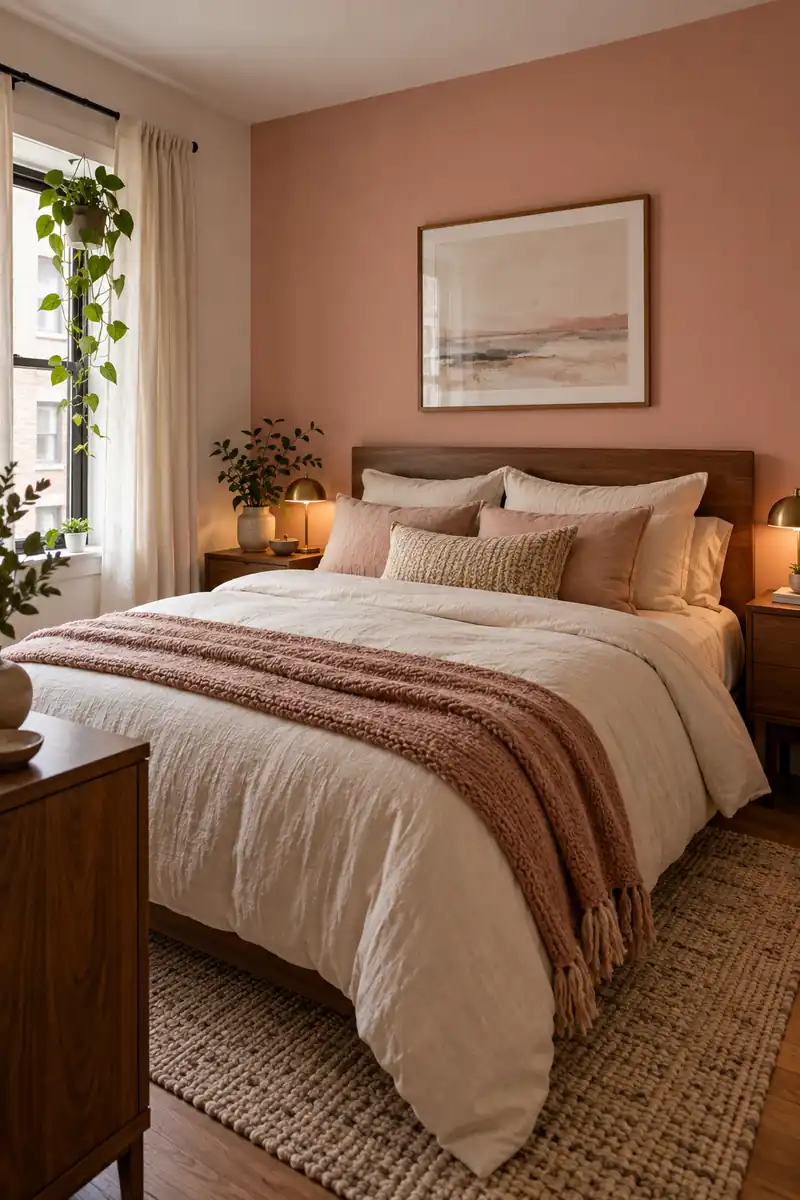
BEFORE: Every wall feels equally blank, so the bed has little visual presence. Adding more furniture only makes the room harder to move through.
AFTER: A muted blush headboard wall gives the bed a gentle focal point. Cream bedding and simple wood furniture keep the color from overwhelming the room.
Test a paint sample in daylight and beside your evening lamps before committing. Pink undertones can look different against existing floors and curtains. Renters should obtain permission before painting and confirm any restoration requirements. A blush duvet provides a smaller, removable alternative if changing the wall is not an option.
5. Layered Window Curtains
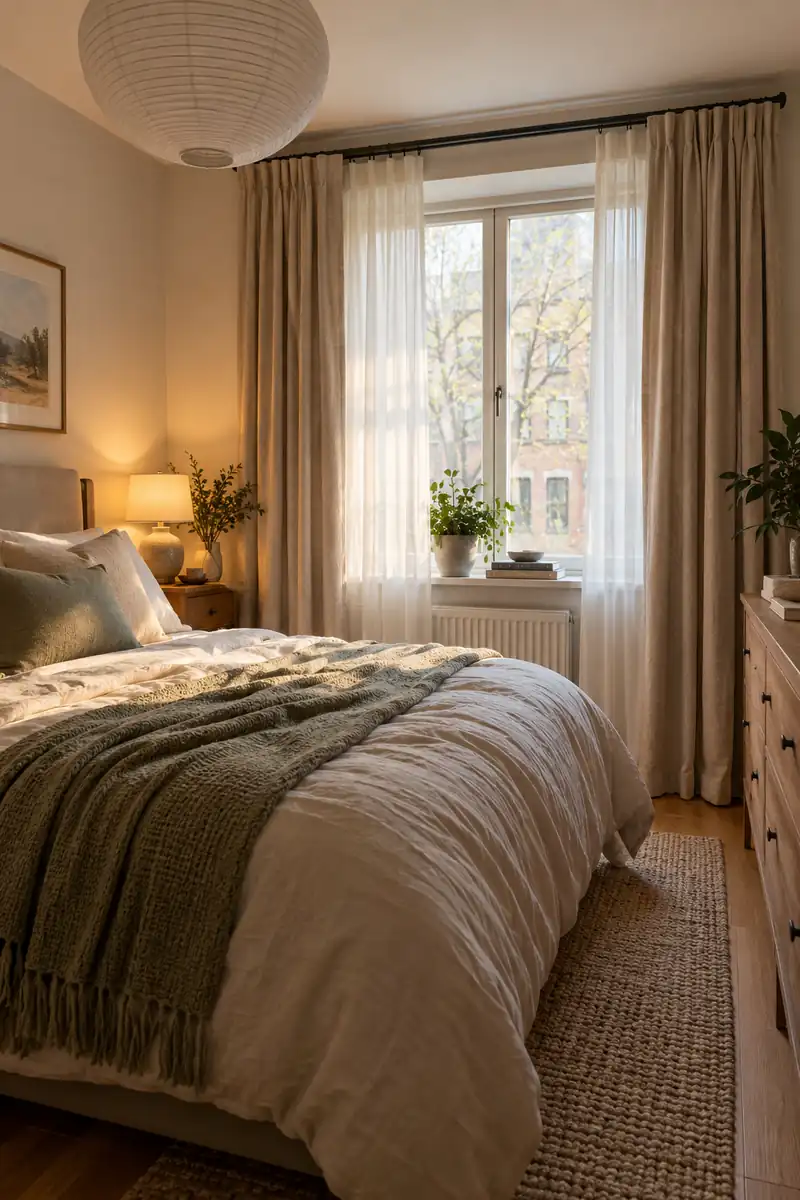
- Let the window soften the room without giving up privacy.
- Measure the window and choose a curtain setup compatible with the existing hardware or an approved installation.
- Pair a light sheer with a heavier panel if you need separate daytime and nighttime coverage.
- Keep panels clear of radiators, vents, and the window opening, then test how easily both layers move.
Sheers soften daylight, but they usually do not provide reliable privacy after dark when indoor lights are on. Close the heavier layer in the evening. Choose a length that avoids pooling in a tight walkway, and leave the window easy to reach for ventilation and any required emergency access.
6. Shared Reading Corner
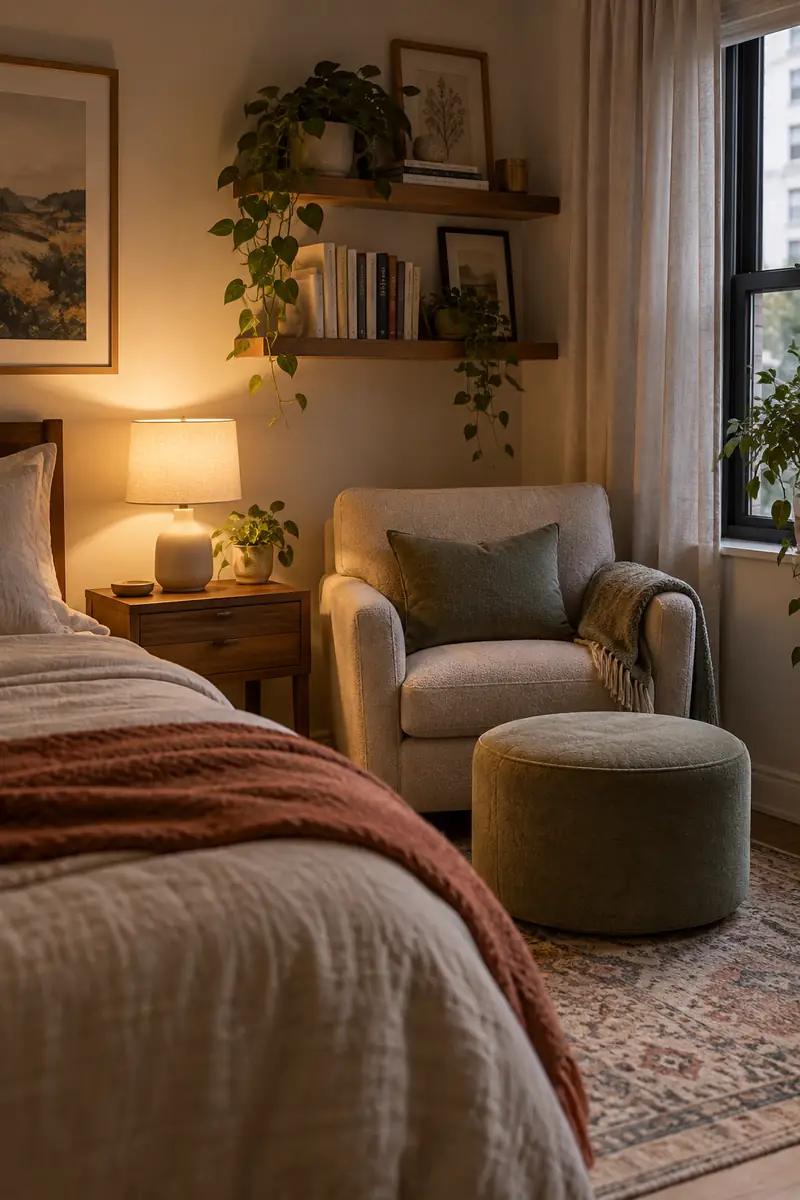
| Detail | Bulky Seating Pair | Chair And Ottoman |
|---|---|---|
| Floor space | Two permanent chair footprints | One chair with a movable footrest |
| Daily use | Separate seats for both people | Take turns or use beside the bed |
| Flexibility | Harder to rearrange | Ottoman can move when needed |
A reading corner only earns its space if it stays comfortable to reach. Place a compact chair near an existing light source and use a small ottoman that can move aside. Skip the extra seating altogether if it narrows the route to the bed, closet, or bedroom door.
7. Warm Neutral Palette
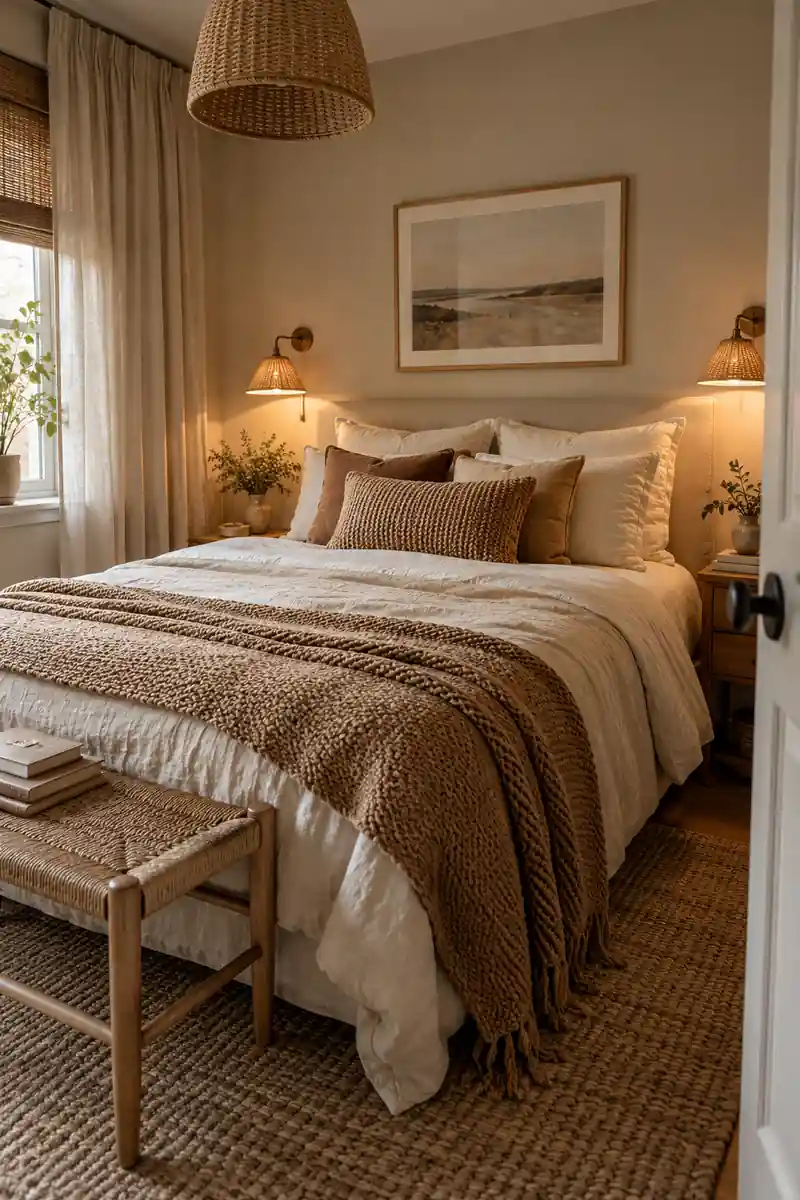
DO
- Choose one warm base color for the largest textiles.
- Repeat a wood tone in two small details.
- Add texture through linen, cotton, or a woven throw.
DON’T
- Buy every item in an identical shade.
- Use so many accent colors that the bed loses focus.
- Assume beige will look the same under every bulb.
Cream, oatmeal, and caramel make an approachable starting point for a restful shared room. Bring home fabric samples before choosing large pieces, especially when the flooring has strong undertones. Keep the palette flexible enough for both people to add a favorite object without making the room feel visually disconnected.
8. Framed Couple Memories
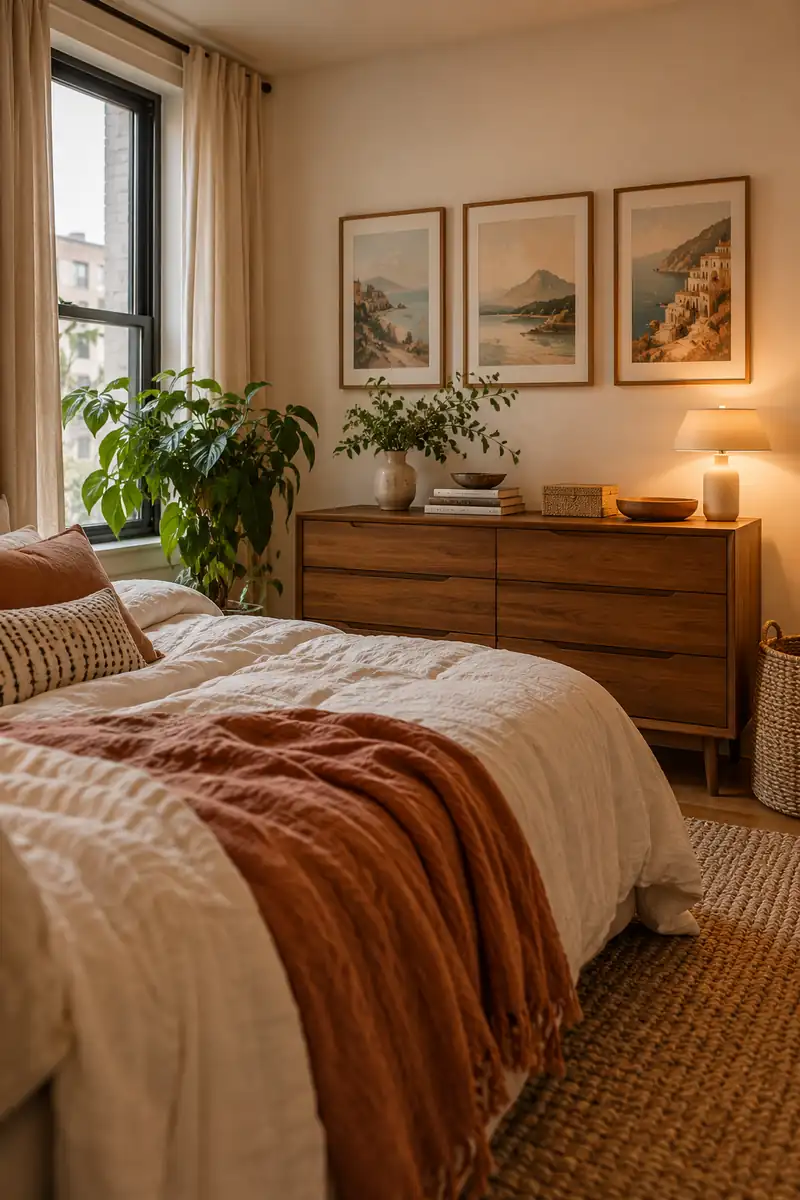
Best For: Making a shared room feel personal.
Scale: Two or three modest frames above a dresser.
Placement: A visible wall outside the main walking route.
Styling: Repeat frame colors while varying the pictures.
A few meaningful images can say more than a crowded gallery. Choose a favorite place, a shared trip, or artwork you both enjoy, then leave breathing room between frames. Follow the mounting product instructions and rental rules. Avoid placing heavy framed pieces where they could fall onto sleeping occupants.
9. Low Upholstered Headboard
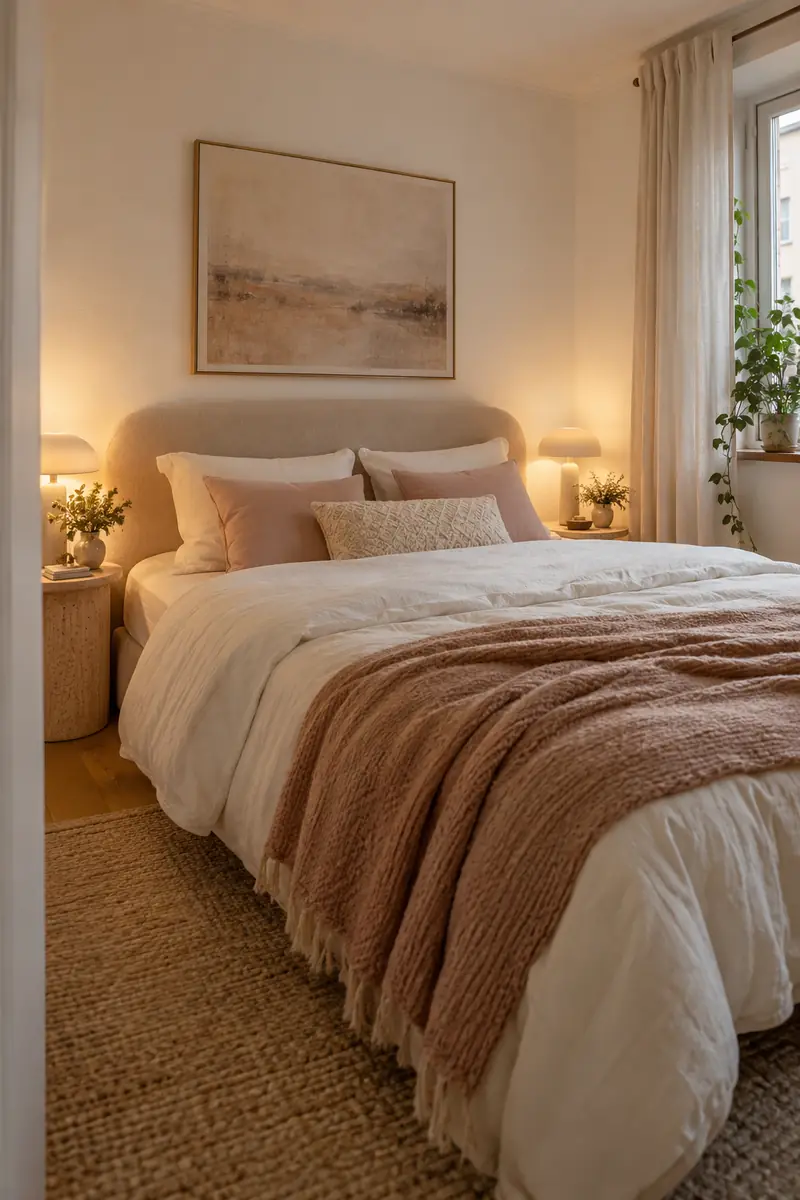
A soft headboard gives the bed a comfortable backdrop without demanding a large piece of furniture. Look for a low profile that suits the mattress and wall height. A rounded outline can soften the room visually, while a plain fabric keeps the design calm beside patterned bedding or artwork.
Measure the complete bed frame rather than the mattress alone before choosing a model. Some padded frames add surprising width around the edges. Check the attachment requirements, cleaning instructions, and clearance for bedside drawers. A well fitted headboard should make sitting up more comfortable without stealing the space needed to walk.
10. Bedside Pendant Pair
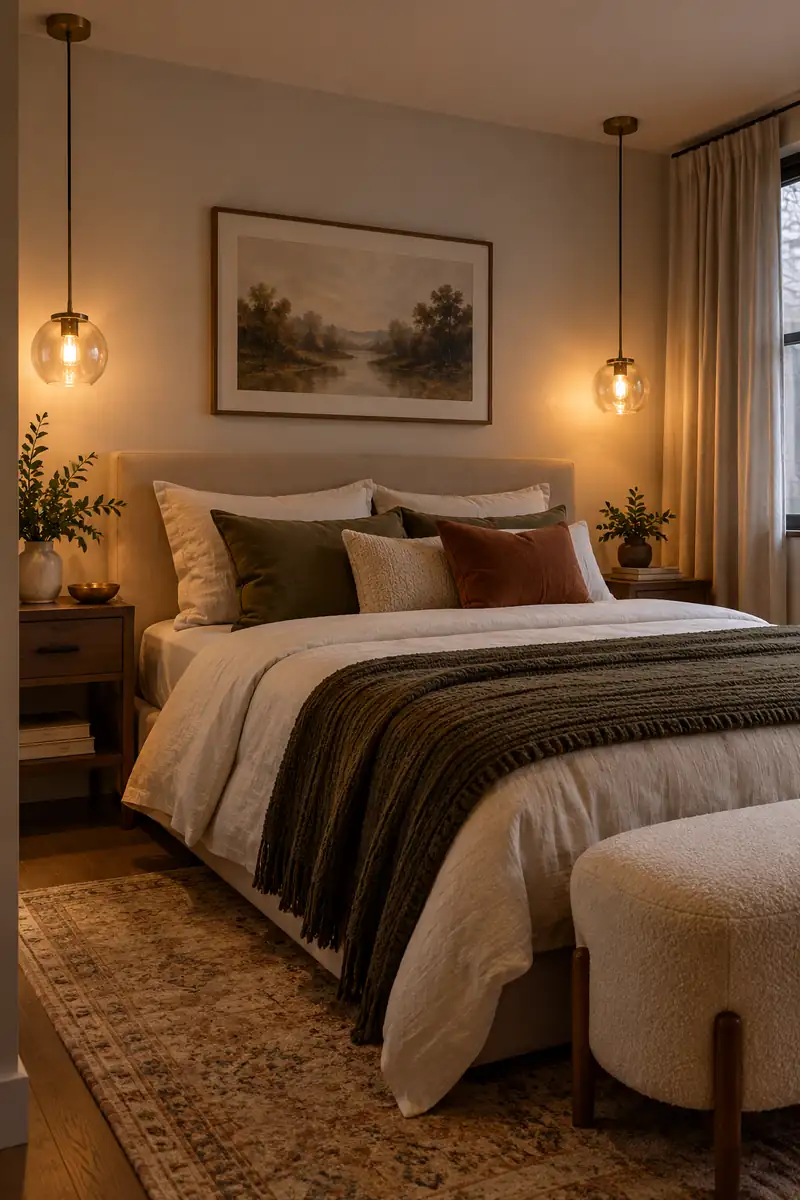
- Freeing the bedside tabletop can change how useful a tiny bedroom feels.
- Consider pendants only where approved installation and suitable electrical connections are available.
- Position shades to illuminate each bedside without creating a head-level obstacle when standing.
- Use suitable bulbs and controls so each person can adjust their light independently.
- Have a qualified installer handle electrical work rather than adapting cords or wiring yourself.
This approach suits a room where the bed position is unlikely to change. Before installation, check the height from a seated and standing position and consider how you make the bed. Renters can keep the same uncluttered feeling with smaller table lamps if permanent fittings are not allowed.
11. Foot-of-Bed Storage Bench
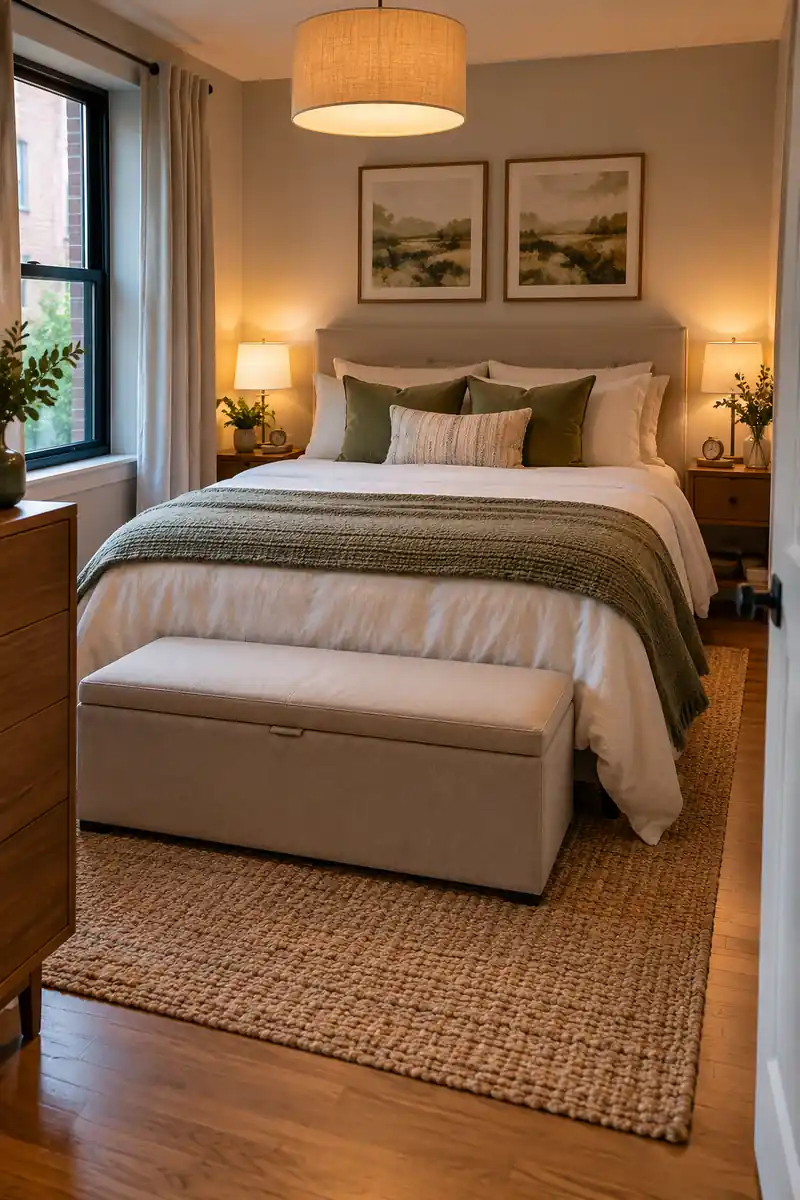
Quick Tip:
A bench should give you somewhere to sit, not another obstacle to squeeze around. Mark its footprint on the floor before buying. Check that the lid or drawers can open while the route past the bed stays usable.
Choose a shallow upholstered bench only if the room has spare clearance at the foot of the bed. Store a spare blanket or the decorative cushions inside to keep bedtime tidy. In a shorter room, an underbed container offers storage without adding another piece along the main walking route.
12. Soft Area Rug
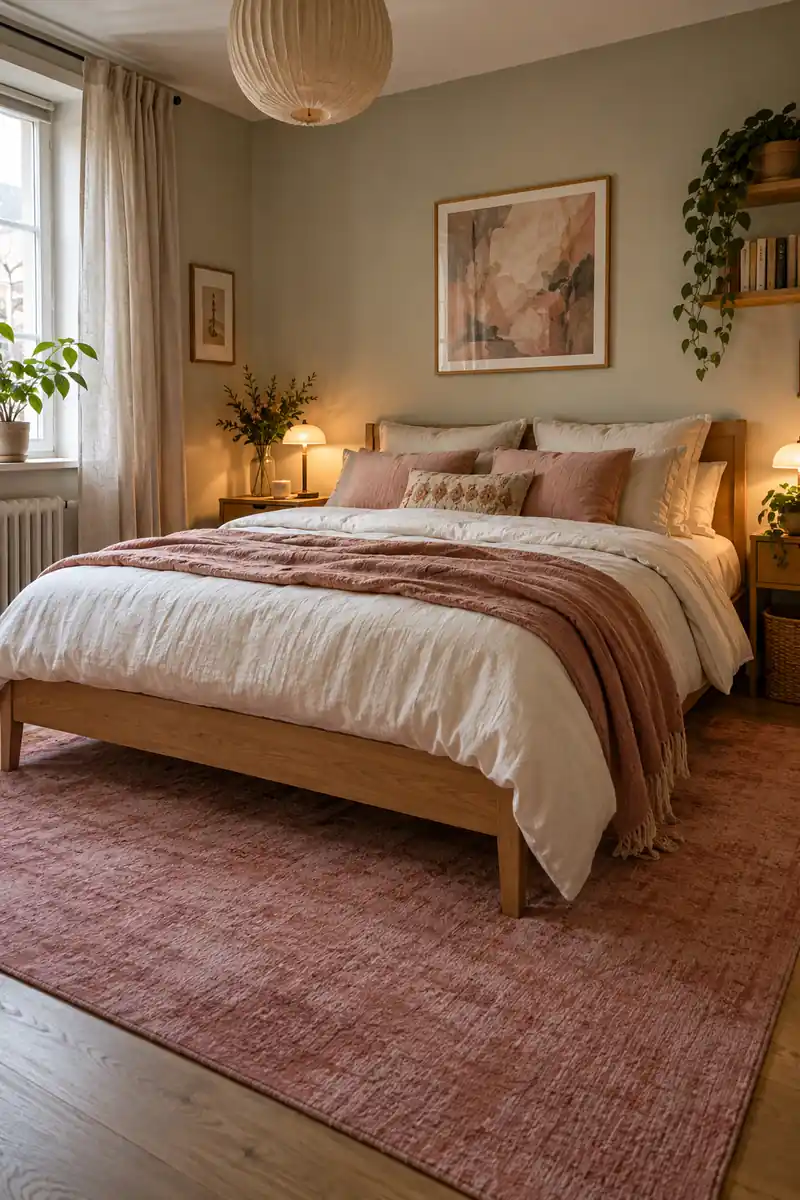
BEFORE: Bare floor beside the bed feels chilly underfoot. Several little mats slide around and break the floor into awkward patches.
AFTER: One appropriately sized rug links the bed and bedside area. A muted color and low pile create a softer landing without a busy pattern.
Measure the exposed floor around the bed before deciding on rug size. You want useful softness where feet land, while doors and drawers still open freely. Choose a compatible nonslip pad and smooth the edges flat. A rug that curls or catches a door needs a different placement or size.
13. Balanced Personal Corners
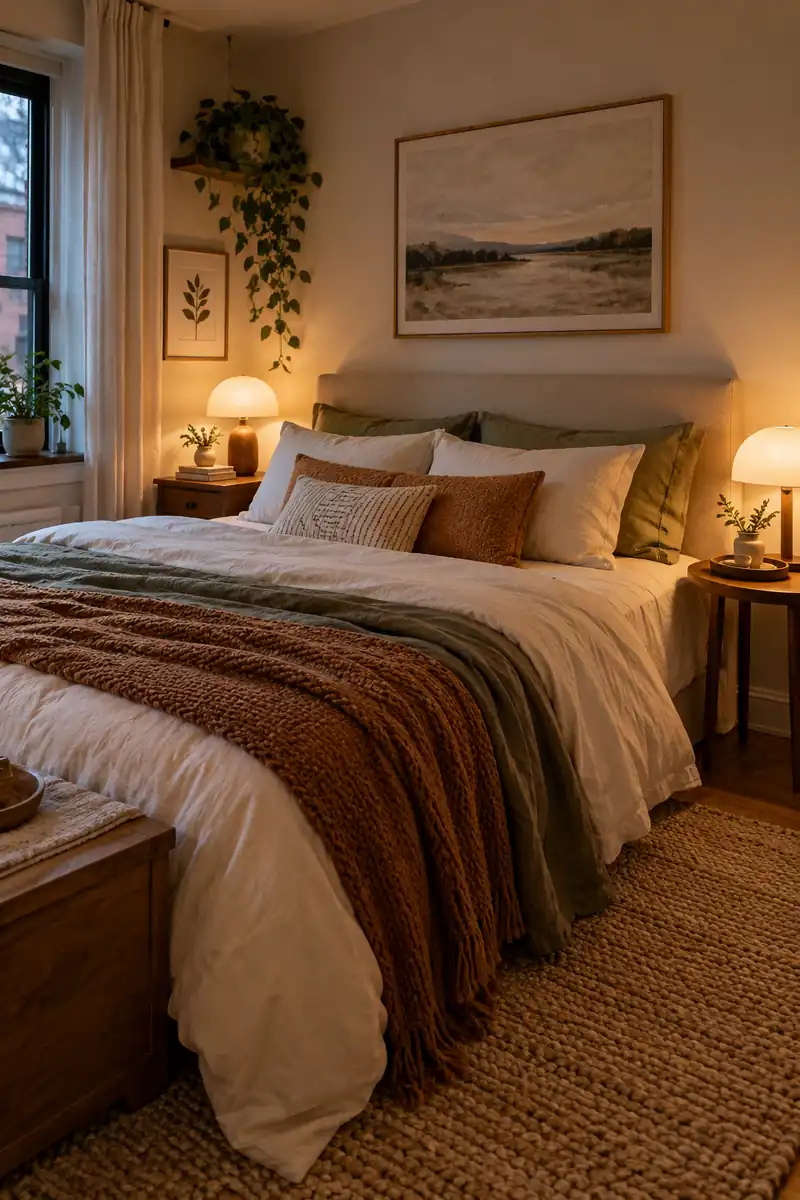
- Two people can share a bedroom without sharing every styling choice.
- Give each partner a reachable bedside area, even if the surfaces have different shapes.
- Repeat one element, such as lamp color or wood finish, to connect the two sides.
- Choose one personal object for each surface and store the smaller everyday items inside a drawer.
Balance comes from comparable usefulness rather than exact symmetry. One partner might need a book stack while the other prefers a tray for glasses and jewelry. Discuss those routines before choosing furniture. The bedroom feels more welcoming when both people have a place that supports how they actually use it.
14. Amber Evening Lighting
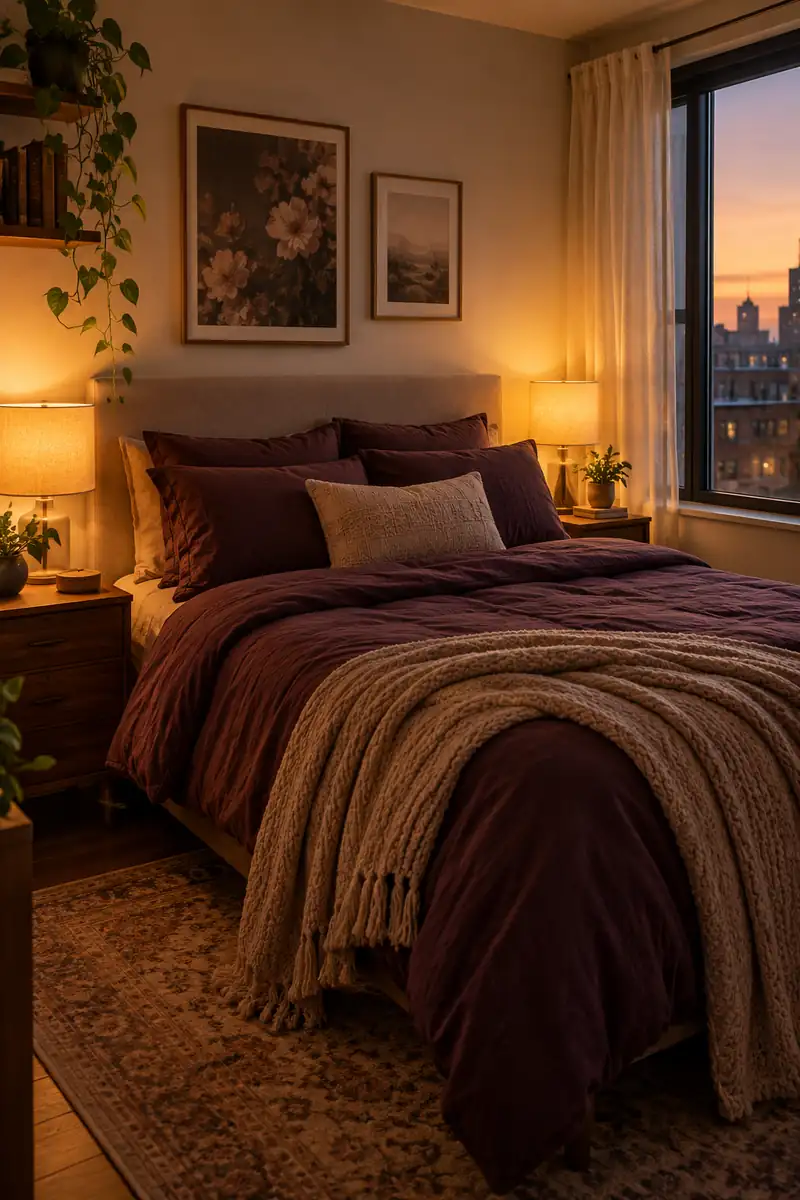
| Detail | Bright Overhead Only | Warm Bedside Lighting |
|---|---|---|
| Mood | Illuminates the entire room | Creates smaller pools of light |
| Control | Often one shared switch | Separate control for each side |
| Bedtime routine | Can disturb a resting partner | Can light just the active bedside |
Lower the lighting level gradually as you finish the day, using lamps with suitable warm bulbs. Keep enough illumination to move safely around the bed and find the door. Battery powered LED candles can add a decorative glow, but they should complement useful lighting rather than replace it entirely.
15. Curtained Sleep Nook
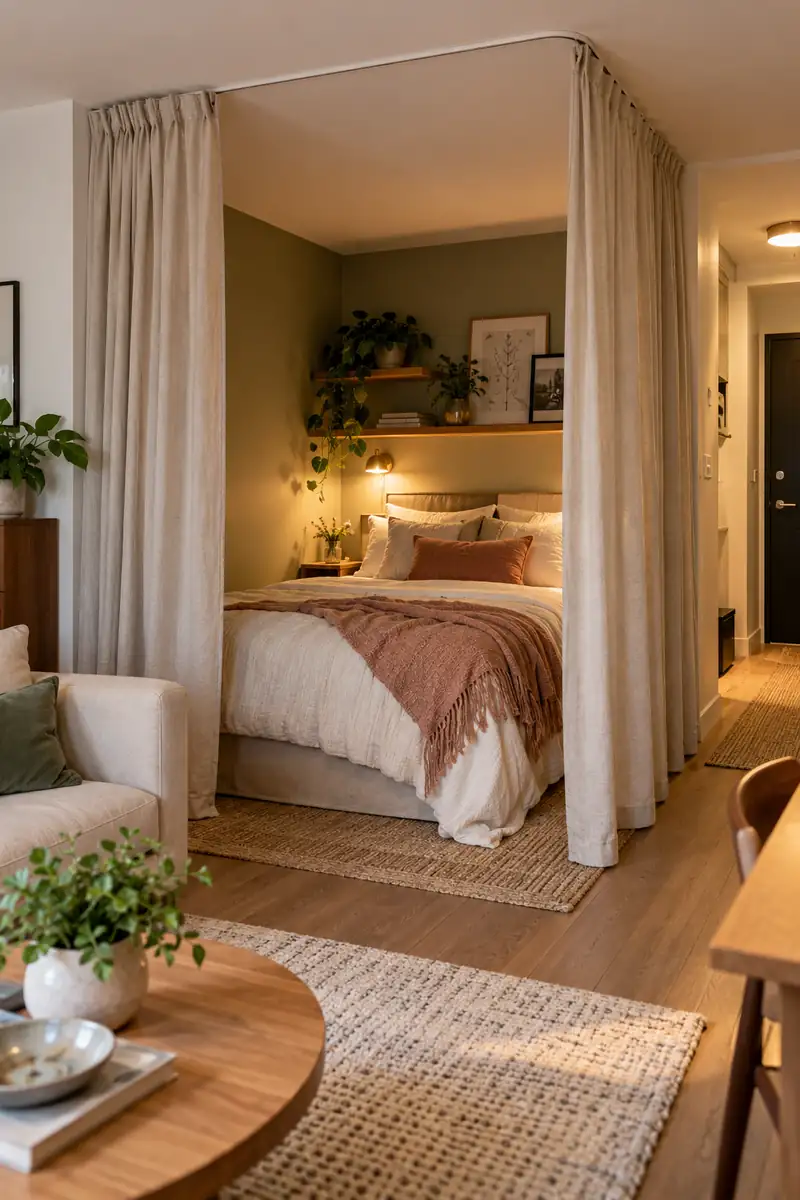
DO
- Use an approved track or a supported freestanding system.
- Choose washable fabric with enough space to move aside.
- Keep ventilation, heaters, and the exit route clear.
DON’T
- Drape fabric over electrical fittings.
- Describe a curtain as soundproof.
- Block a required window or door with the divider.
A curtain can give a studio sleeping area a softer boundary at night. During the day, drawing it back lets the room share its light again. Confirm mounting permission and fire safety requirements before installation. This adds visual privacy, but conversation and household noise will still travel through the fabric.
16. Coordinated Bedside Trays
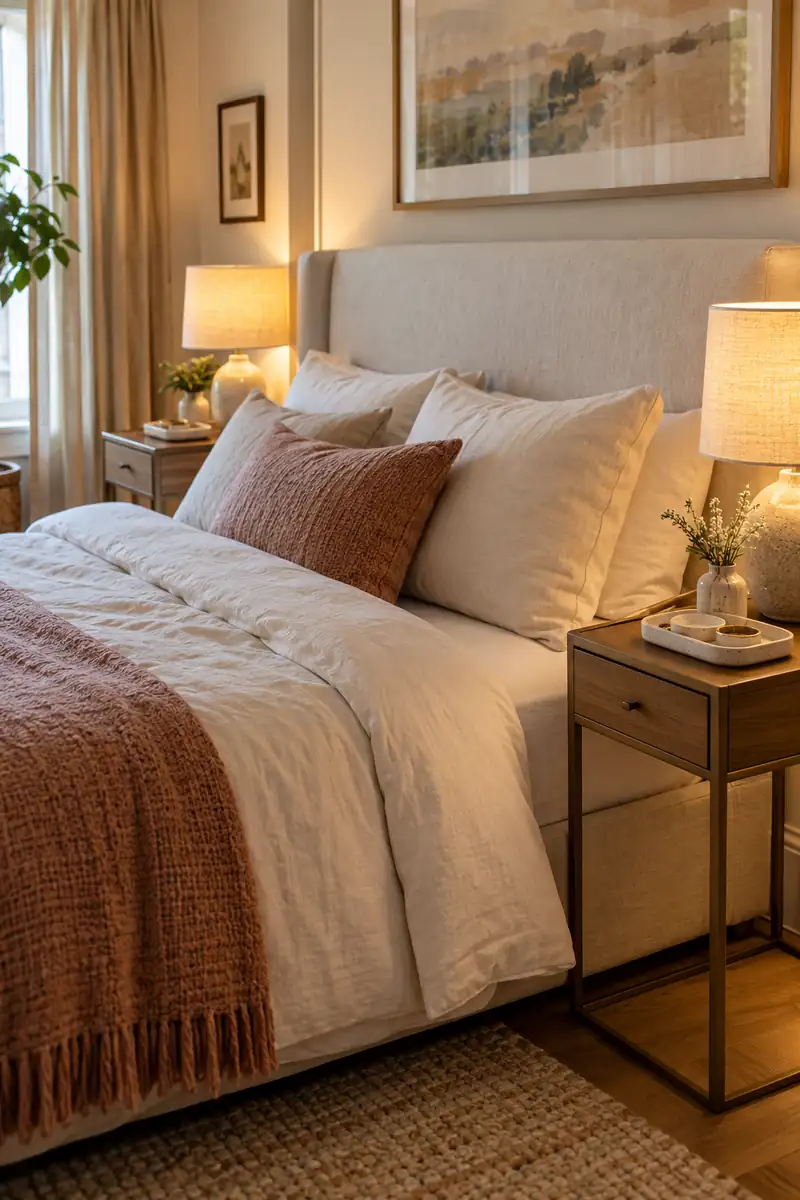
Best For: Containing small daily belongings.
Size: Small enough to leave space for a glass of water.
Materials: Wipeable ceramic, sealed wood, or a stable lined tray.
Routine: Empty unnecessary items during your weekly tidy.
Small surfaces become crowded quickly when every item has its own spot. Give each person a tray for glasses, a watch, or lip balm, then move less frequently used belongings into a drawer. Keep charging devices ventilated and away from bedding. A tray should simplify the surface, not fill it.
17. Botanical Bedside Accent
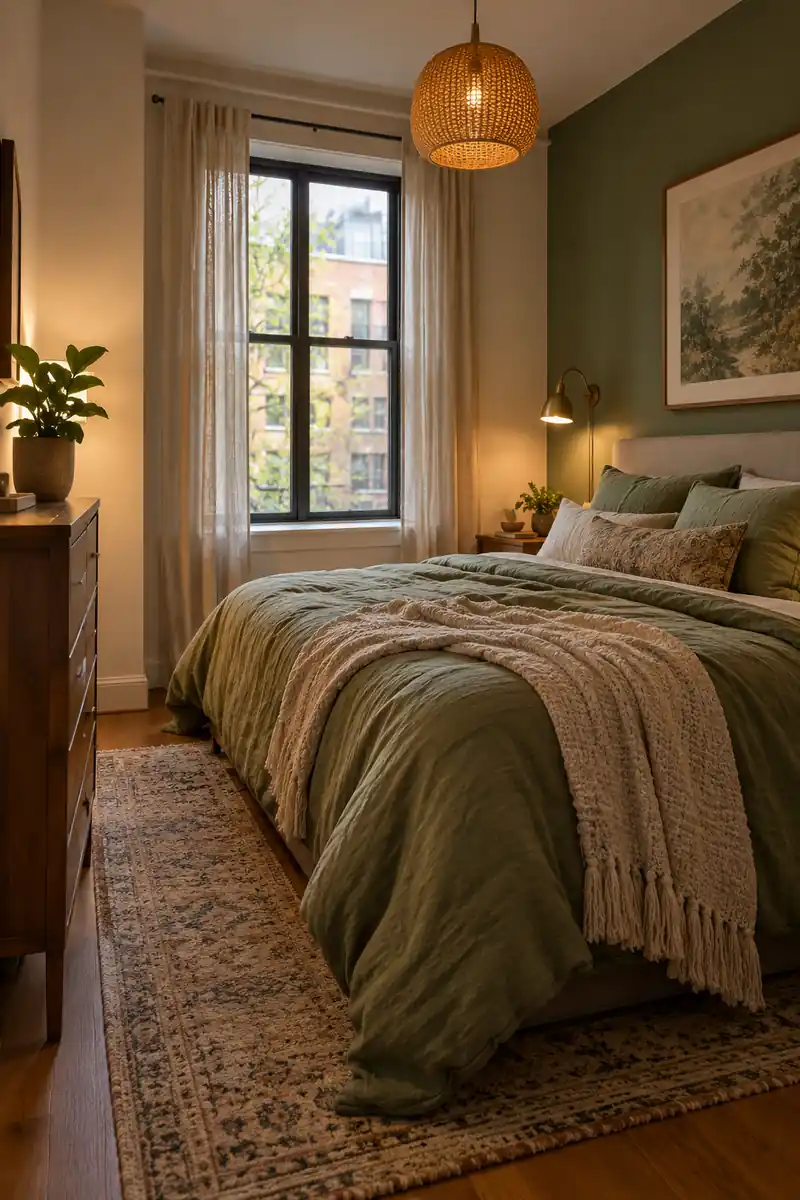
A little greenery can bring life to a bedroom without turning every surface into a plant shelf. Choose one manageable plant for a dresser or bright corner, and match it to the light the room actually receives. A compact pot leaves the bedside free for items you need each night.
Check plant suitability if pets share the apartment, and protect furniture with a watertight saucer. Keep leaves away from lamps and avoid placing pots where you might knock them over in the dark. If the room cannot support a healthy plant, a botanical print adds a similar visual note instead.
18. Layered Throw Textures
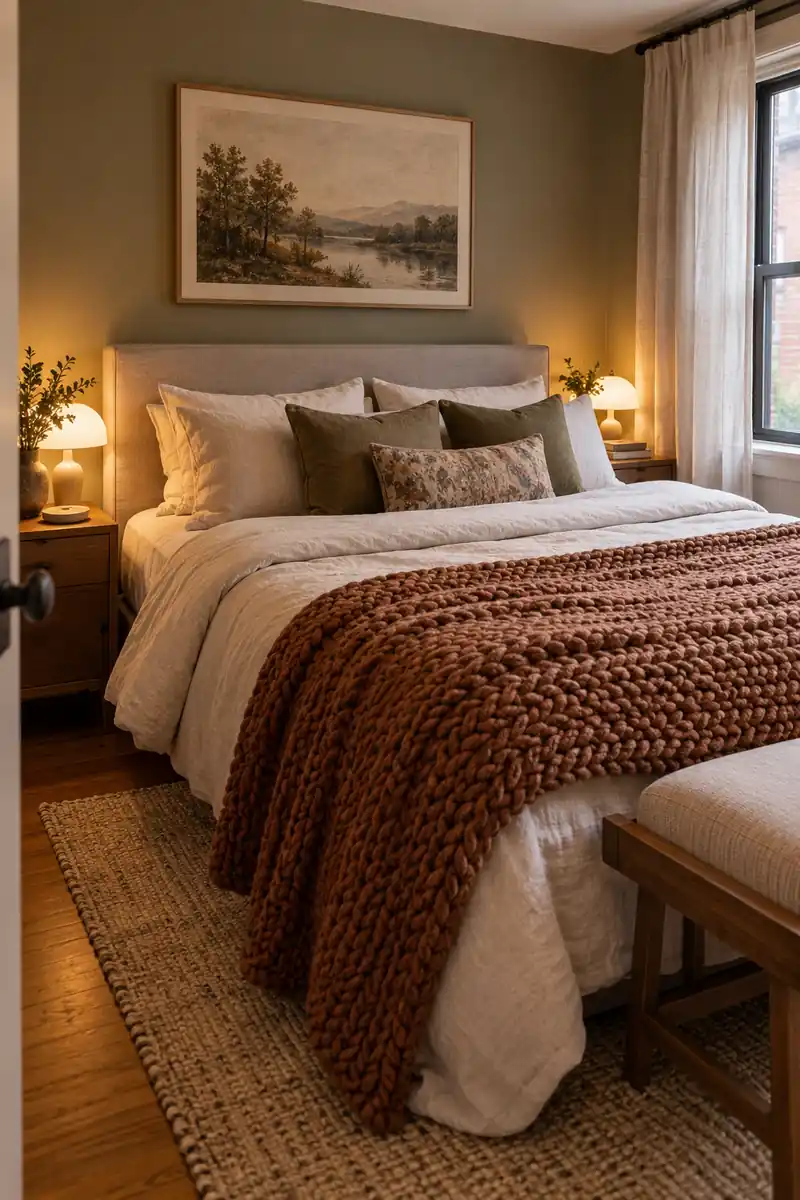
- A single tactile layer can make plain bedding feel much more inviting.
- Fold a knitted throw across the lower part of the bed so the pillows remain easy to use.
- Mix a textured throw with smooth bedding rather than stacking several heavy blankets.
- Choose a fabric both people find comfortable and check the washing instructions before buying.
Texture works best when it serves a practical purpose as well as the photograph. Keep a throw you can reach during a cool evening, and give it a storage spot when the weather warms. Limit the extra layers if either sleeper overheats, so the bedroom remains comfortable after the styling is done.
19. Clear Morning Pathways
Quick Tip:
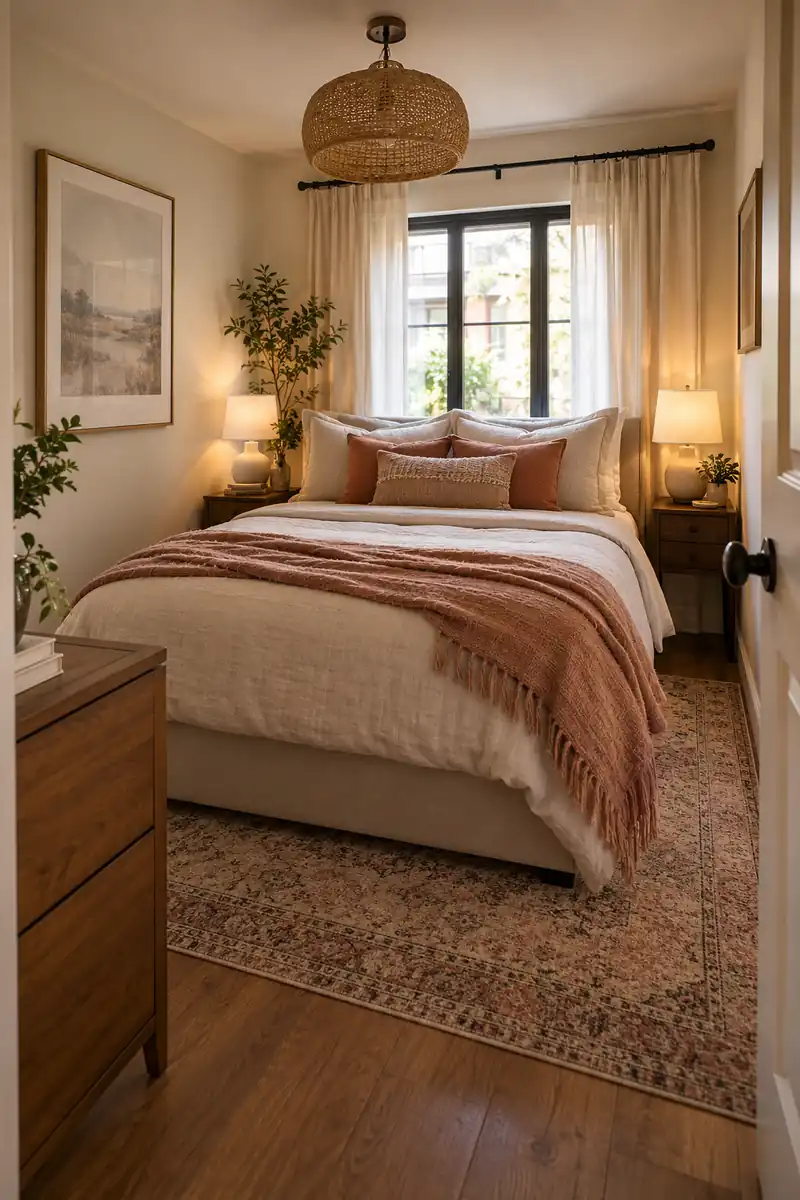
The most romantic room still needs to work when both people are getting ready. Walk through your usual morning routine together. Move anything that catches a foot, blocks a drawer, or makes one person climb across the bed.
Prioritize access to both sleeping sides where the room allows, then keep the route to the door and closet clear. Test furniture placement with doors fully open before adding decorations. A calmer shared room comes from fewer daily collisions, especially when your schedules overlap and both people need the same space.
Conclusion
The best small apartment bedrooms for couples make room for two people in every sense. Comfortable bedding, reachable lighting, and clear pathways matter just as much as a romantic color palette. Start with the detail that causes the most daily friction, then add one softer touch that you both enjoy. You can build a thoughtful room gradually without buying everything at once. Save this post on Pinterest before your next bedroom refresh, try one idea together this week, and share the article with someone working around a small space. A welcoming bedroom begins with choices that make everyday life feel easier.

Community
Join the conversation
Add a useful idea, ask a specific question, or share what worked in your space. Every comment is reviewed before it appears.