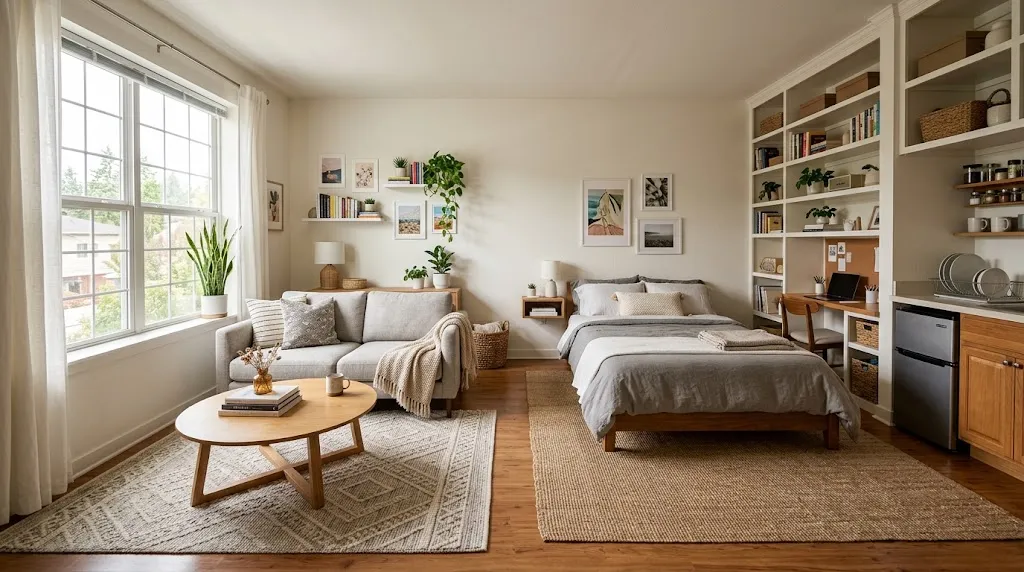
Why Rug Shopping Feels Impossible in a Tiny Space
Rug shopping in a mini studio apartment turns confusing fast, mostly because most rug advice online assumes a living room, a bedroom, and a hallway that keep those spaces separate. A studio has none of that. Every rug decision doubles as a zoning decision, a color decision, and a durability decision all at once, since the same square foot of floor might sit under a bed, a desk, and a dinner table depending on the hour. That’s why the same six mistakes show up again and again in small apartments. None of them are really about taste. They’re about not accounting for how much weight one rug has to carry in a room this size. Before you shop for rugs for a studio apartment, check these six mistakes first.
1. Rug Too Small
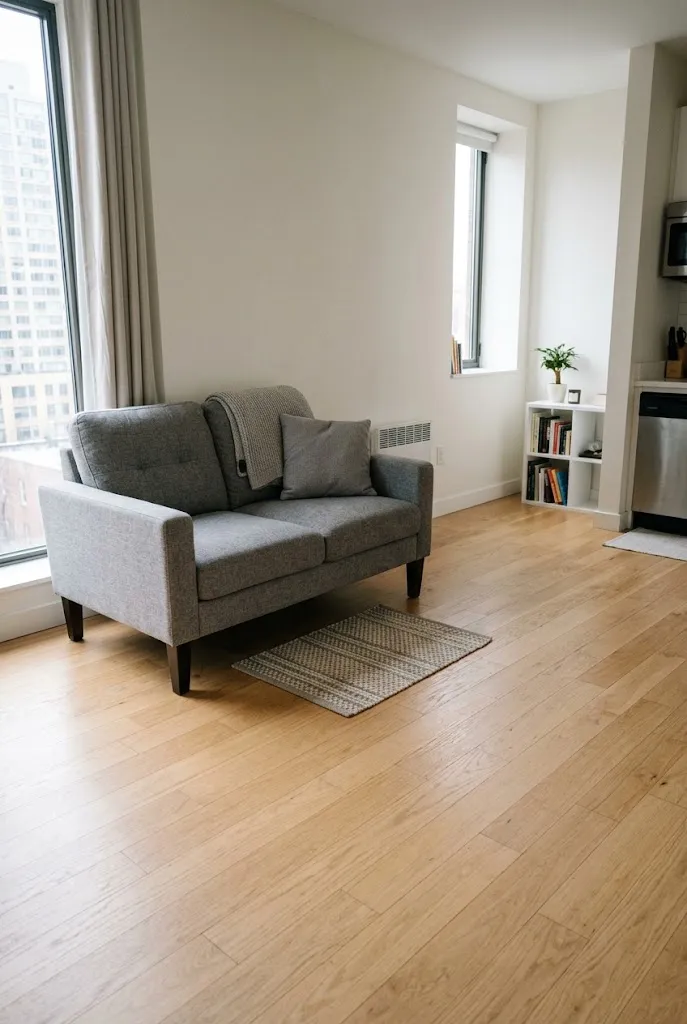
A rug that only fits under the front legs of a sofa or loveseat is the single most common mistake in small-space decorating, and it happens because people buy based on what looks affordable rather than what actually fits the furniture. In a mini studio apartment, this mistake stands out even more since there’s no separate room to distract from it. The whole seating area ends up looking like it’s floating on bare floor, which visually shrinks the room instead of grounding it.
The fix is simple: measure the full footprint of the seating area, including the space in front of it where feet naturally rest, before shopping. At minimum, the front legs of every piece of furniture in that zone should sit on the rug. Going slightly bigger than feels necessary almost always looks better in photos and in person. It’s one of the few times where sizing up is the safer bet in a small apartment.
2. One Rug Everywhere
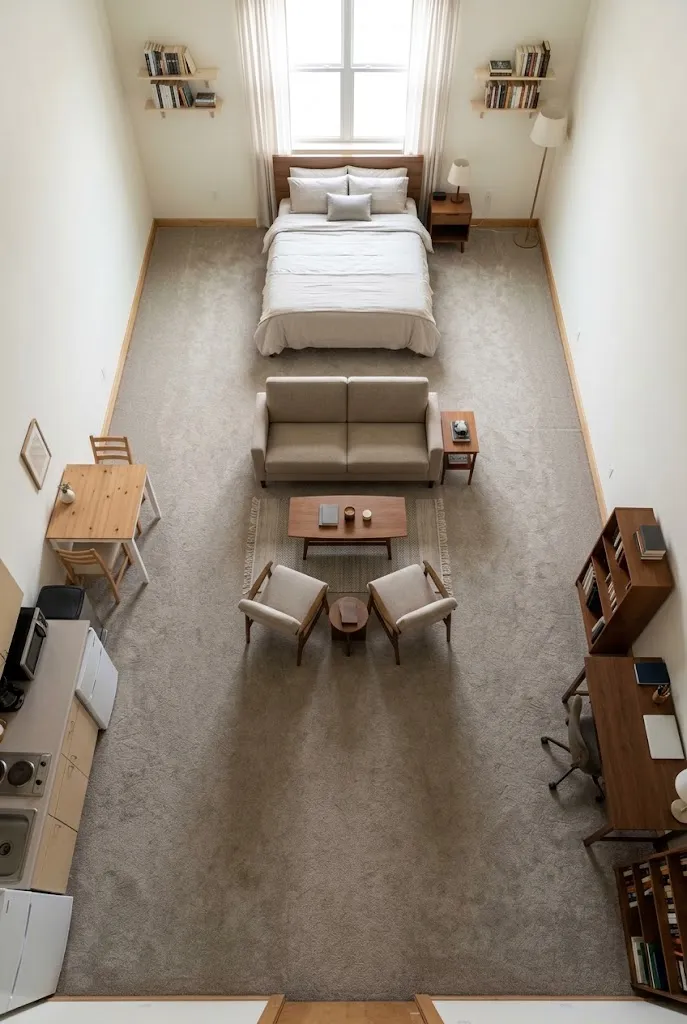
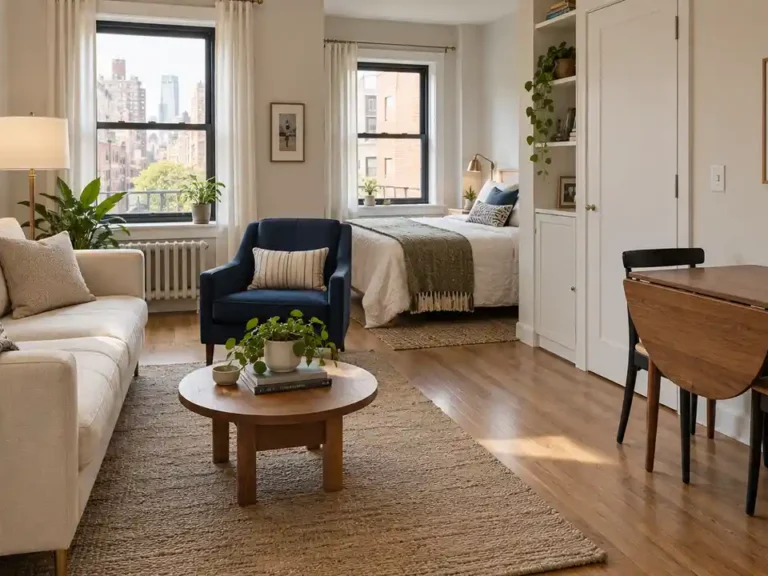
Covering the entire studio floor in one identical rug feels like the simple choice, but it removes the only real tool a studio apartment has for separating zones. Without walls, the floor is doing the job a hallway or a doorway would do in a bigger home. One continuous rug erases that distinction completely, and the apartment ends up reading as one undivided room instead of a home with a living area and a sleeping area.
Fixing this doesn’t require buying a second rug. Sometimes rotating the existing rug ninety degrees under just one zone, and leaving bare floor as a visual gap between it and the bed, does the job. If a second piece does get added, it doesn’t need to match. A different texture in a similar color family creates enough of a break without looking mismatched.
3. Skipping a Rug Pad
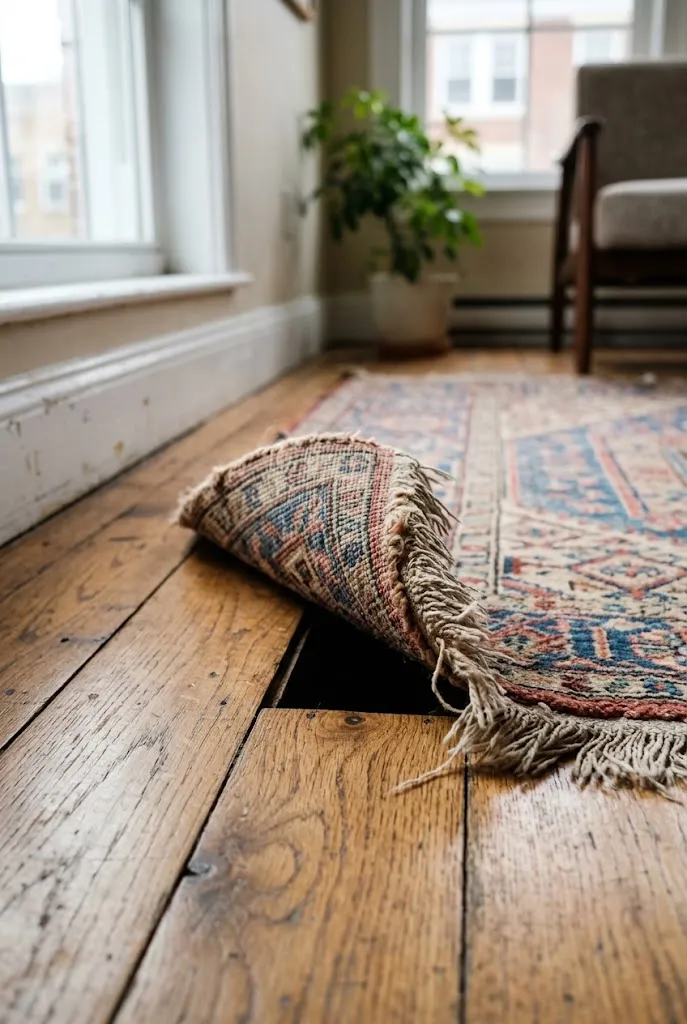
A rug pad is the least exciting purchase on this whole list, and it’s also the one most people skip first when trying to save money. Without one, a rug on hardwood or laminate slides every time someone walks across it, curls at the corners, and wears through faster than it should. In a small apartment where the same few feet of floor get crossed dozens of times a day, that wear shows up fast.
A basic non-slip pad, cut to the rug’s exact size, solves nearly all of this. It also adds a bit of cushioning underfoot, which makes even a thin, budget rug feel noticeably nicer to stand on. If a studio has hardwood or laminate throughout, treat the pad as part of the rug purchase, not an optional add-on to get to later.
4. Wrong Color Choice
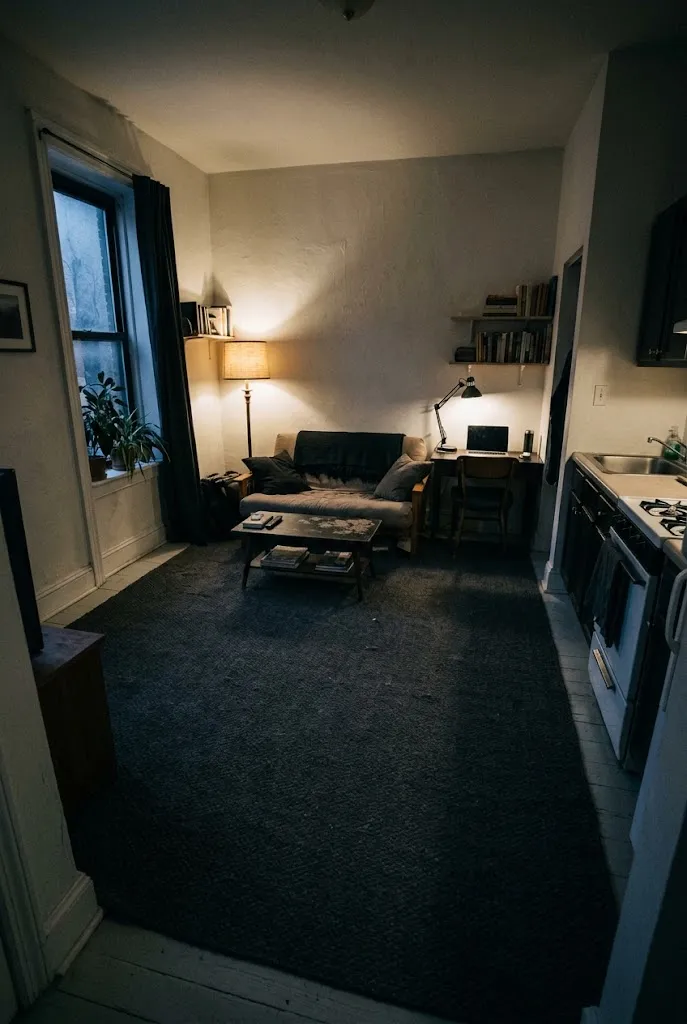
A rug color that looks rich and cozy in a photo of a large living room can read as heavy and closing-in inside a mini studio apartment. Dark, saturated colors absorb light instead of reflecting it, and in a room already working with limited square footage, that difference is noticeable the moment someone walks in. This mistake usually happens because the inspiration photo came from a much bigger space than the one it’s being applied to.
Leaning lighter is the safer default in most small studios, especially for a rug covering a large portion of the floor. That doesn’t mean avoiding bold color entirely. A smaller, saturated rug used specifically to divide two zones still works well. The mistake is using a heavy, dark tone across the whole floor plan rather than in one intentional spot.
5. Ignoring Washability
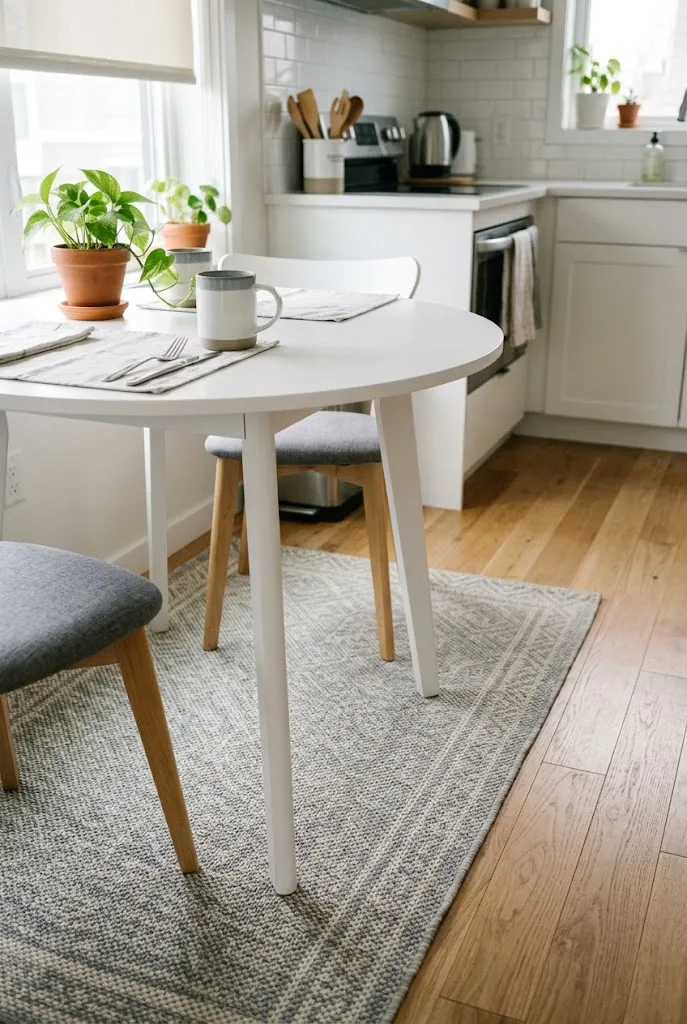
A studio apartment rarely has a separate dining room, which means a rug near a small table or kitchenette deals with spills far more often than a rug in a house would. Choosing a rug on looks alone, without checking whether it’s washable, is an easy mistake to make and an expensive one to live with once the first spill happens.
Machine-washable rugs have improved enough that this no longer means sacrificing style. Many now come in patterns and textures that look identical to non-washable versions. Reserve this feature specifically for any rug near a kitchen, entry, or dining spot, since those are the zones doing double duty in a small floor plan and taking the most daily wear.
6. Guessing the Size
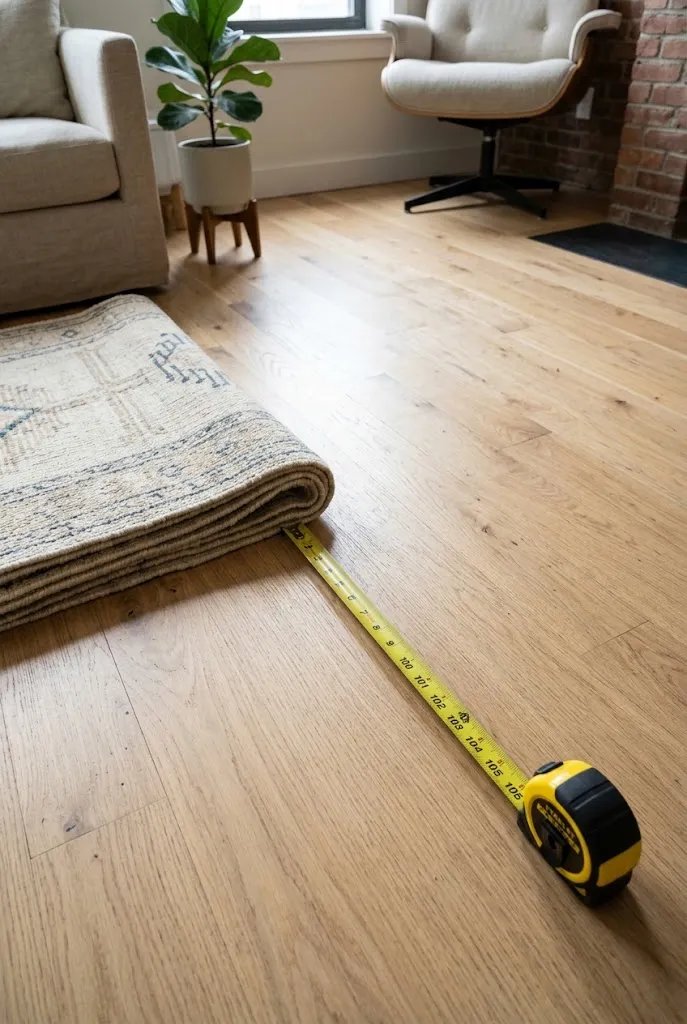
Every mistake on this list gets worse when paired with a rug bought without measuring the space first. Online product photos almost never convey true scale, and a rug that looks appropriately sized on a shopping site can turn out too small, too large, or the wrong shape entirely once it’s on the actual floor.
Measuring takes five minutes and prevents most of the return shipping headaches that come with rug shopping. Tape off the exact footprint being covered, whether that’s a seating zone, the space between bed and sofa, or a runner’s path to the door, before adding anything to a cart. It’s the one step that makes every other idea in this article actually work in a specific apartment.
Start With These Two Fixes First
If none of this feels manageable at once, start with the rug pad and the measuring tape. Both take less than fifteen minutes combined, cost almost nothing compared to the rug itself, and quietly fix problems that would otherwise undo any style choice made afterward. Once those two things are handled, move on to color and zoning based on the specific layout, whether that means going lighter to open up the room or adding one bold rug to mark where the bed ends and the living space begins. Most studio apartment rug mistakes come from skipping the boring steps, not from picking the wrong style.
Read More:
21 Mini Studio Apartment Rug Ideas to Make Rooms Look Bigger
19 Mini Studio Apartment Plant Ideas That Look Expensive
Community
Join the conversation
Add a useful idea, ask a specific question, or share what worked in your space. Every comment is reviewed before it appears.