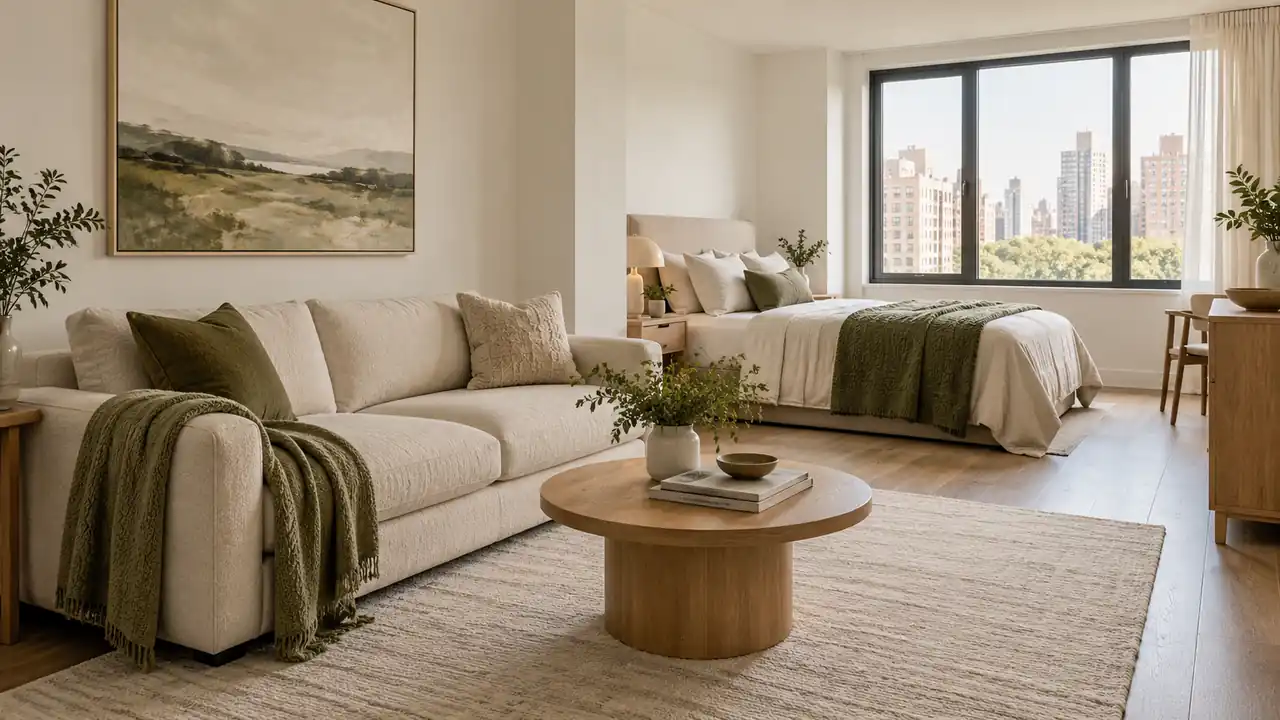
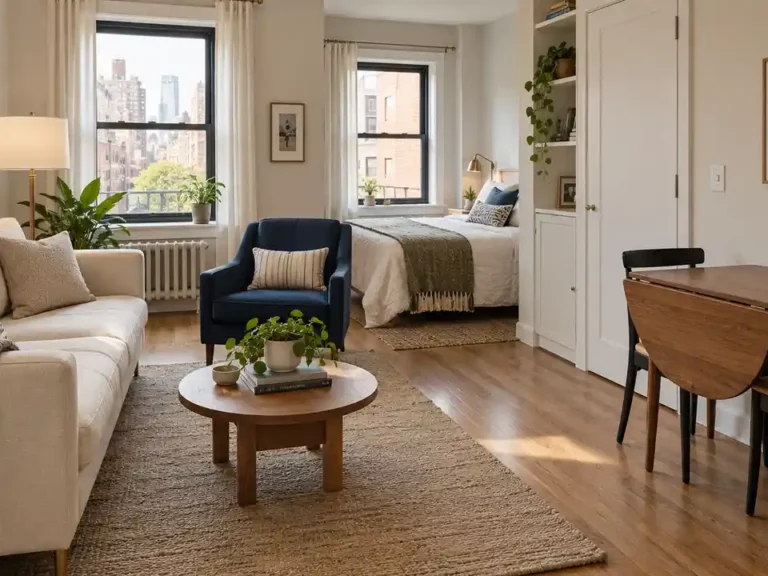
If you are wondering how to style a small bachelor apartment, adding more decor is rarely the best first step. A compact room may already have everything it needs, but the useful pieces are competing with scattered accents, crowded surfaces, or heavy-looking layers. These seventeen ideas focus on editing what you see and keeping the room comfortable to use. You can bring out personality through one favorite painting, a quiet fabric choice, or a well-placed everyday object. Start with the area that feels most crowded, make one change, and give yourself time to notice how the space works before adding anything else.
1. Protect The First View
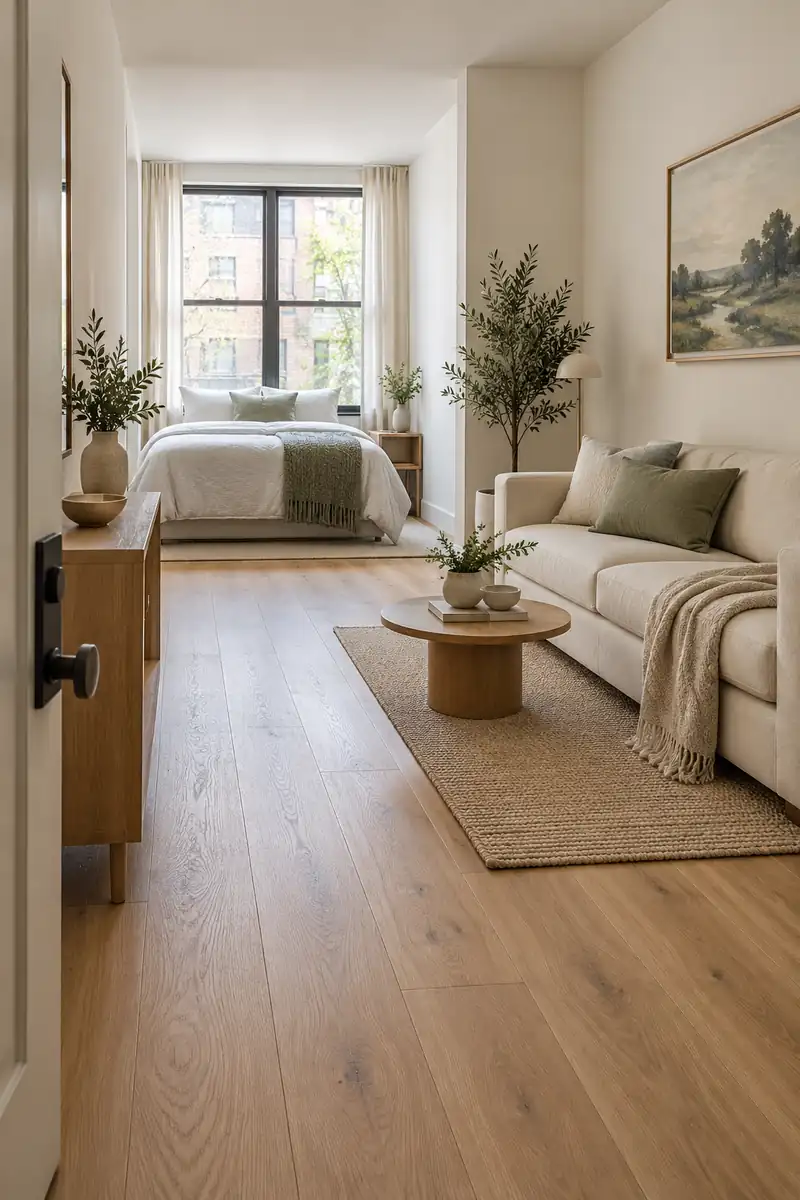
Stand at the entrance and notice what interrupts your view into the apartment. A chair corner, a tall pile of shoes, or several small objects can make the room feel crowded at first. Start by moving the avoidable interruptions, while keeping the furniture you genuinely use in position.
The aim is a clearer first impression, not an empty home. Let the eye travel toward a window, a calm wall, or the main seating area. Keep the actual walking route comfortable too. A sightline that looks open in a photograph is not helpful if you still have to squeeze through it.
2. Choose One Focal Point
- Choose the object you want noticed first.
- Give it a clear surrounding area.
- Reduce competing accents nearby.
- Check the view from your usual seat.
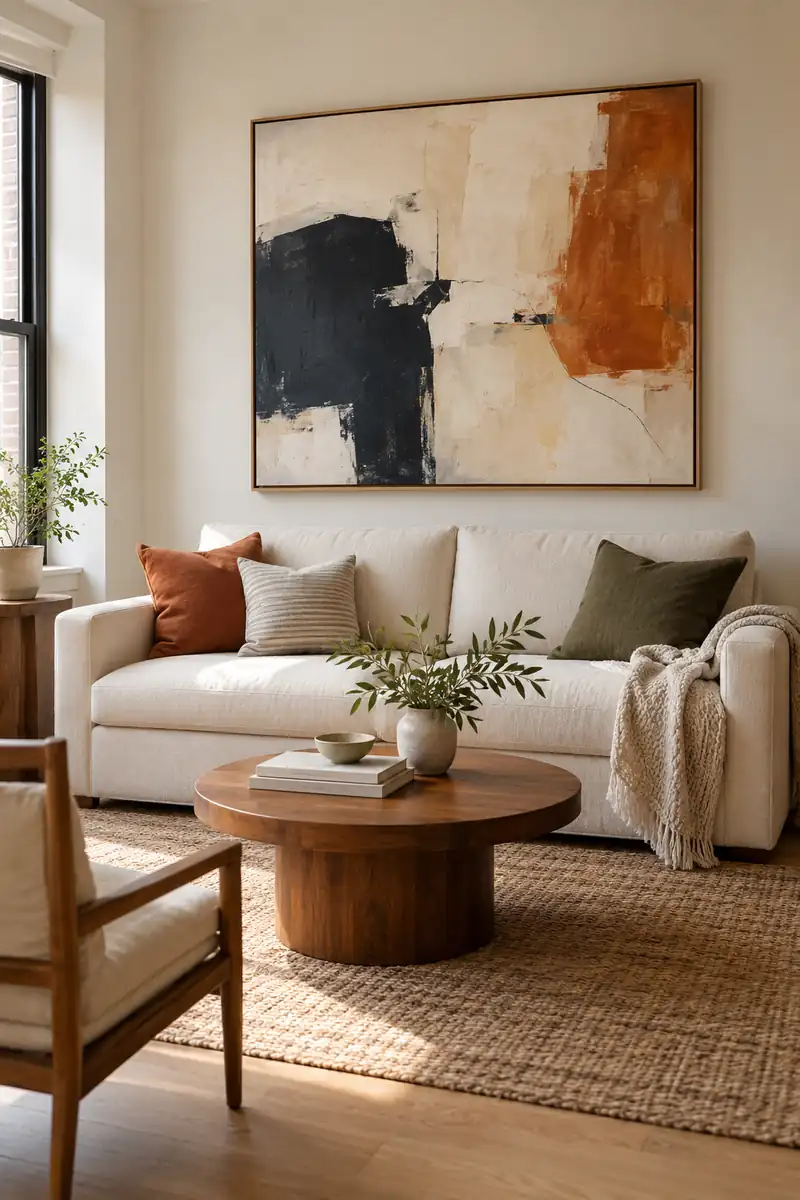
A small room can feel busy when every wall and surface asks for attention. One main painting, distinctive chair, or strong fabric color gives the eye a clear place to land. Keep the surrounding choices quieter so your favorite feature can carry the room without needing extra decoration around it.
3. Clear Your Table Center
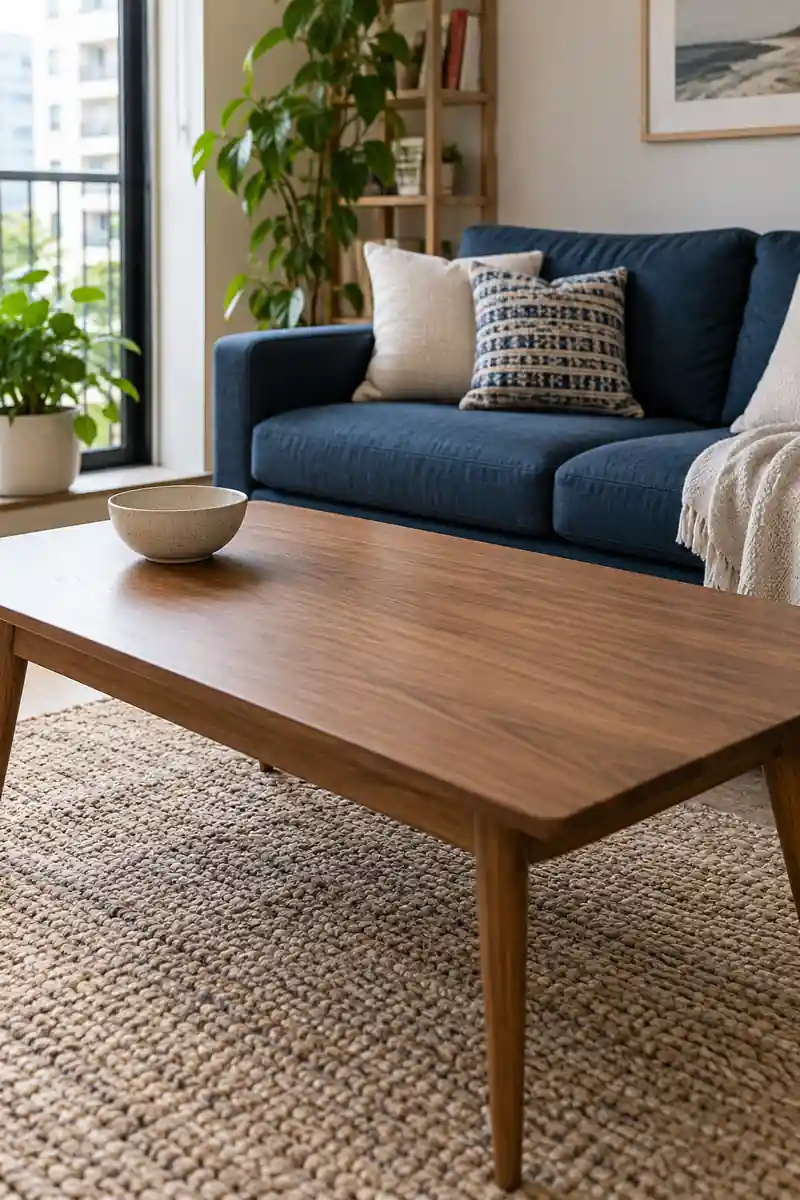
Quick tip: Remove everything from the center of the coffee table, then put back only what you use or genuinely enjoy. Try placing that small group toward one end instead of spreading objects evenly.
Open tabletop is practical visual space. It makes room for a mug, a book, or a temporary project without clearing a decorative arrangement first. If you like a display, keep it low and compact. The surface should still look and feel available when you sit down beside it each day.
4. Quiet The Sofa Outline
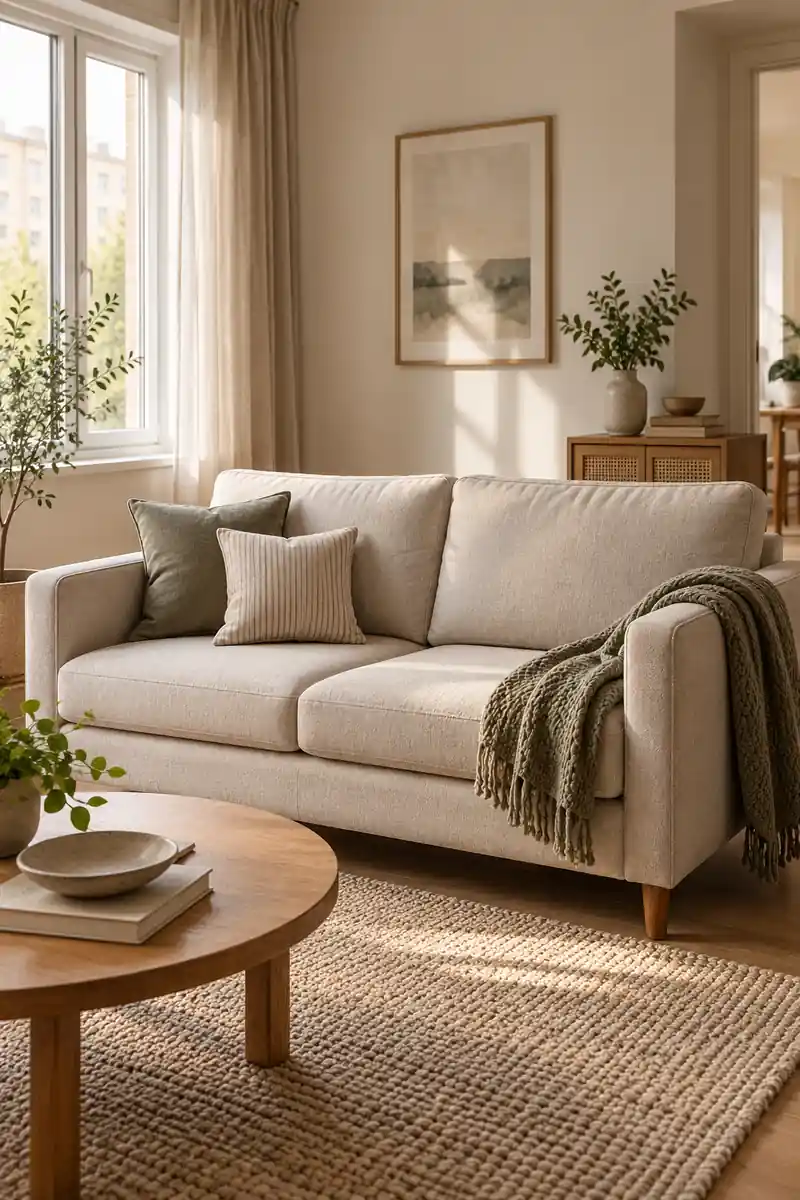
Before: Cushions cover most of the sofa, while a loose blanket hangs over both arms. The seat looks bulky and requires clearing before use.
After: A smaller cushion pair and a neatly folded blanket reveal the sofa’s shape. The same furniture feels calmer because its outline is easier to see.
Look at the sofa as one large shape before focusing on individual fabrics. Clear arms and visible seat space can make a compact arrangement feel less crowded. Keep the cushions that help you sit comfortably, then store spare layers elsewhere. Avoid adding accessories simply to fill every corner of the upholstery.
5. Limit Visible Color Changes
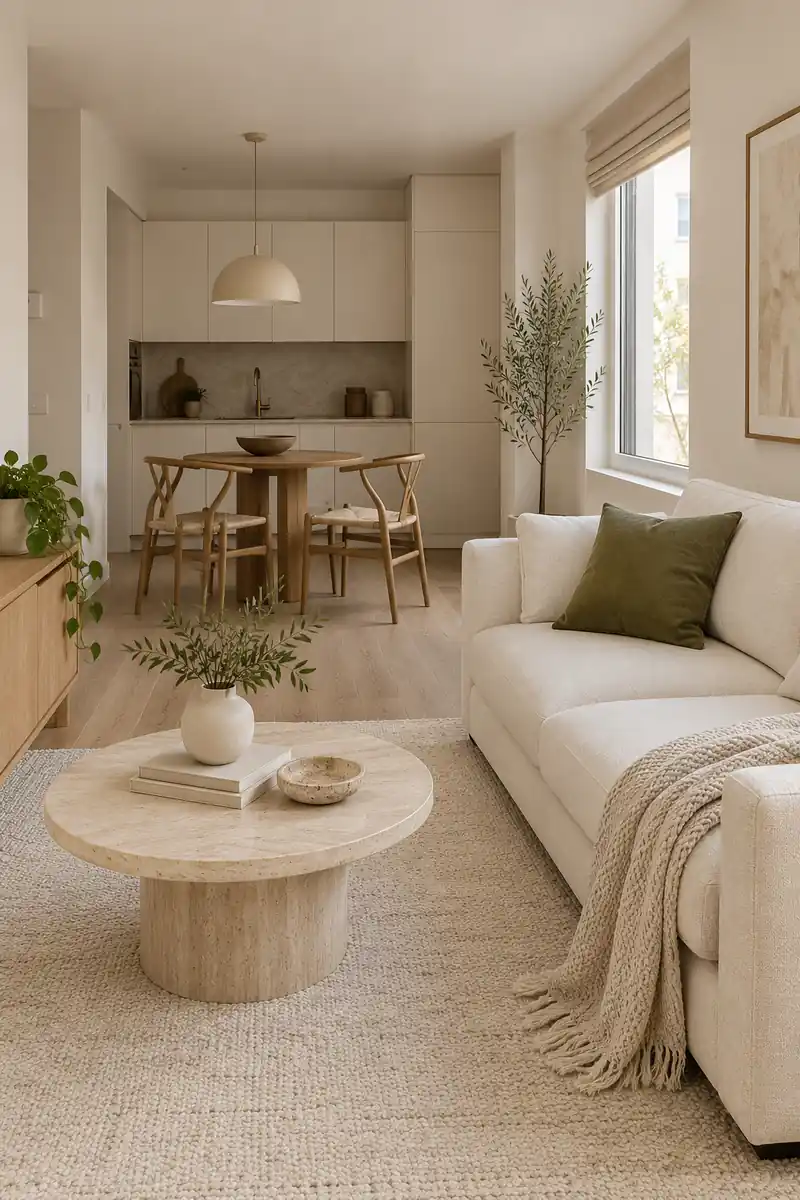
- Notice the largest existing color blocks.
- Choose similar tones for nearby soft layers.
- Keep one smaller contrast you enjoy.
- Avoid adding a new color to every zone.
Closely related colors can make adjacent surfaces feel less fragmented. This does not mean painting everything white or removing personality. A cream sofa beside an oatmeal rug may create a quieter background for one olive cushion. Work with the colors already taking up space before deciding that the room needs another accent.
6. Choose One Art Group
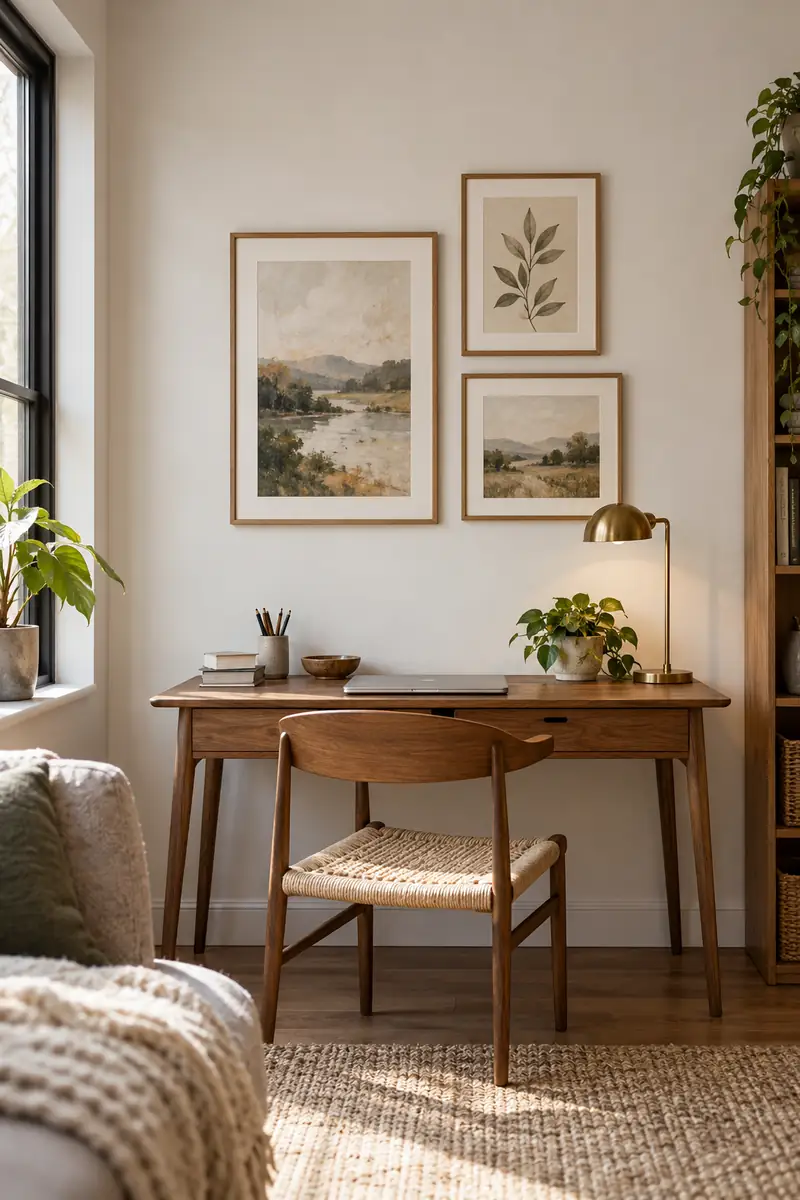
One larger piece
Visual effect: A single clear shape on the wall.
Placement: Centered on the furniture group beneath it.
Best use: A room with several small objects already visible.
One compact group
Visual effect: Several pieces read as one arrangement.
Placement: Related frames gathered with consistent spacing.
Best use: A few meaningful prints you want to keep together.
Gathering art into one intentional area can calm the rest of the wall. Avoid scattering small frames across every available gap. The grouping should relate to the furniture below without stretching across the entire room. Try the arrangement on the floor first, especially if you want to reuse existing frames.
7. Use A Lighter Silhouette
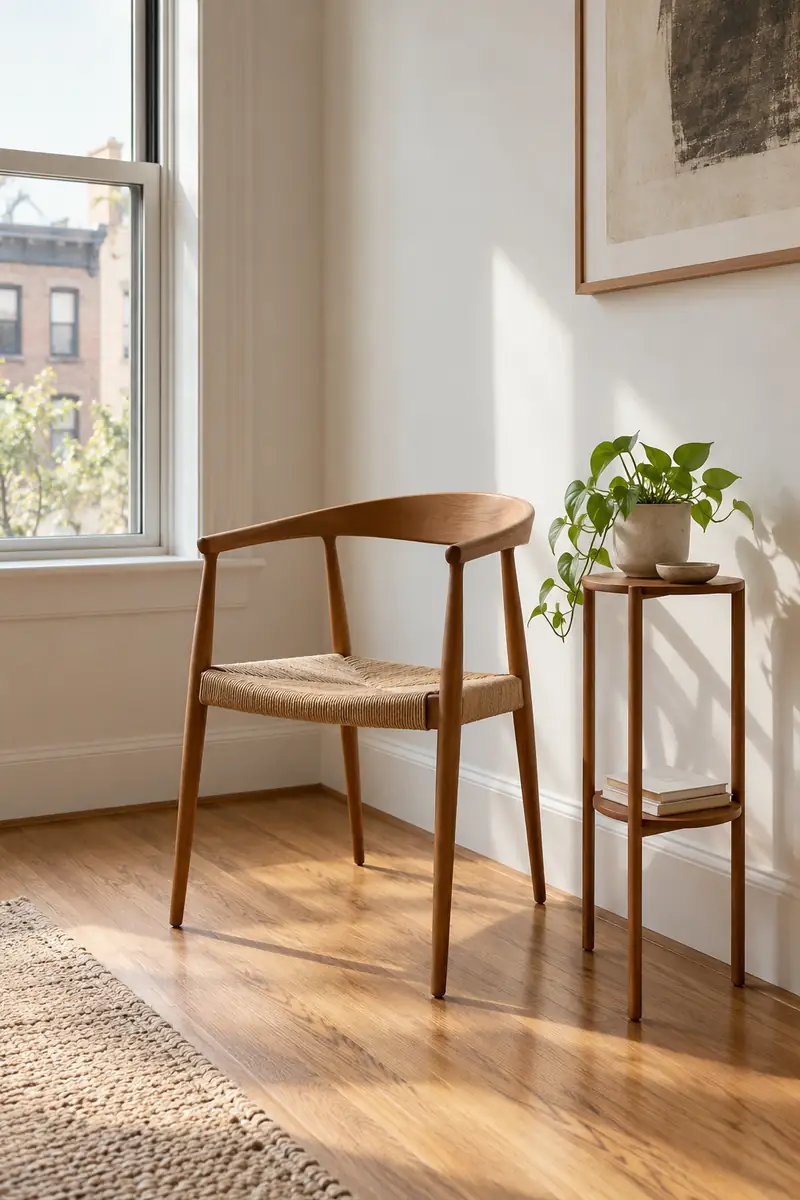
Do
- Keep useful floor space visible.
- Choose furniture proportions that suit the room.
- Leave enough space to use each piece.
Don’t
- Replace comfortable furniture just for thin legs.
- Add transparent furniture to an already full layout.
- Confuse a light outline with a small footprint.
A piece with a visible base can look less solid than a floor-length form, but appearance is only part of the decision. Check its actual size and purpose. If your existing furniture works well, try clearing the space beneath and around it before considering any change to the piece itself.
8. Keep Window Edges Clear
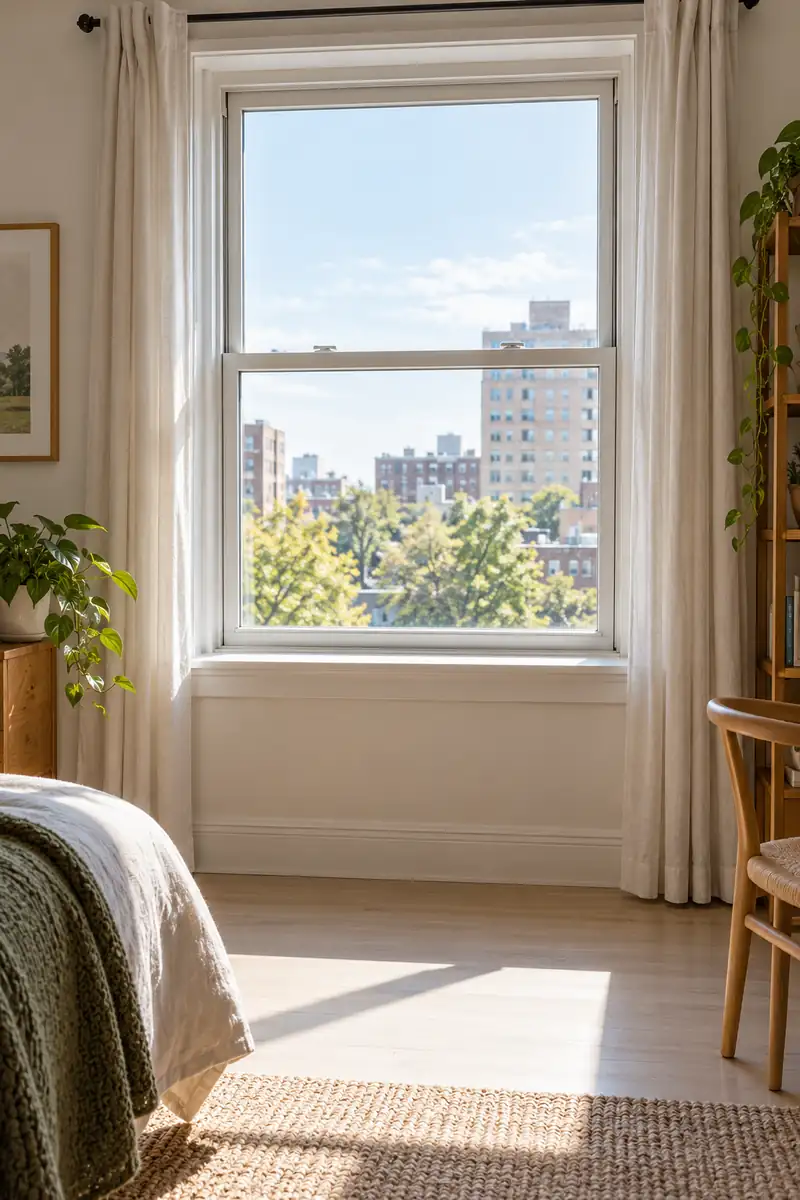
- Daylight: Keep ordinary window coverings easy to open.
- Sill: Remove objects that crowd the view.
- Access: Leave the window and controls reachable.
- Edges: Keep nearby furniture from pressing into curtains.
A clear window edge gives the room a natural stopping point beyond the furniture. Move small displays elsewhere if they block the view or make curtains awkward to use. Keep the treatment you need for privacy and comfort. The goal is to use the available light well, not to remove necessary coverage.
9. Let One Shelf Breathe
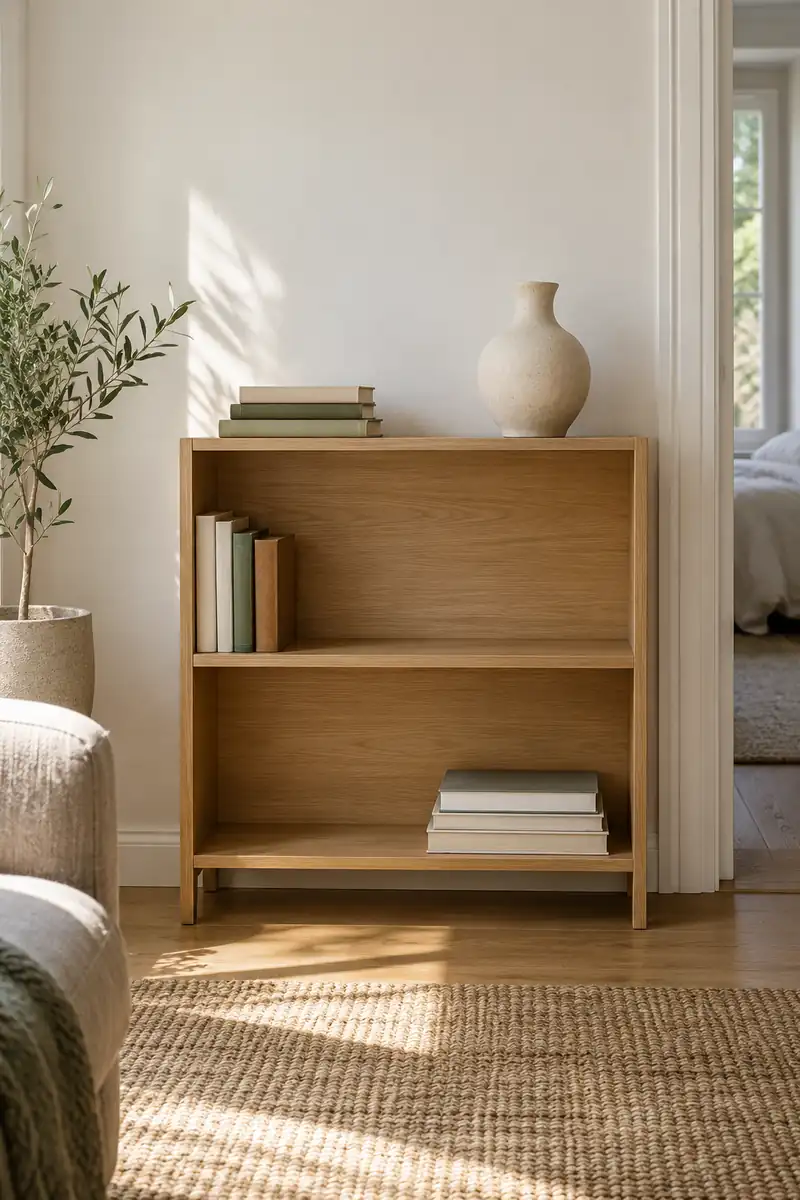
A shelf can become visually heavy long before it runs out of storage capacity. Remove the decorative pieces for a moment and look at the useful contents. Group related books or objects together, then leave a pause between groups. This makes the remaining arrangement easier to understand at a distance.
You need not leave half the shelf empty or follow a formula. Work with what you own and what needs to stay accessible. If every gap must hold something, a closed cupboard may suit those contents better. Open shelving looks calmer when it shows a selection rather than every possession.
10. Contain Small Essentials
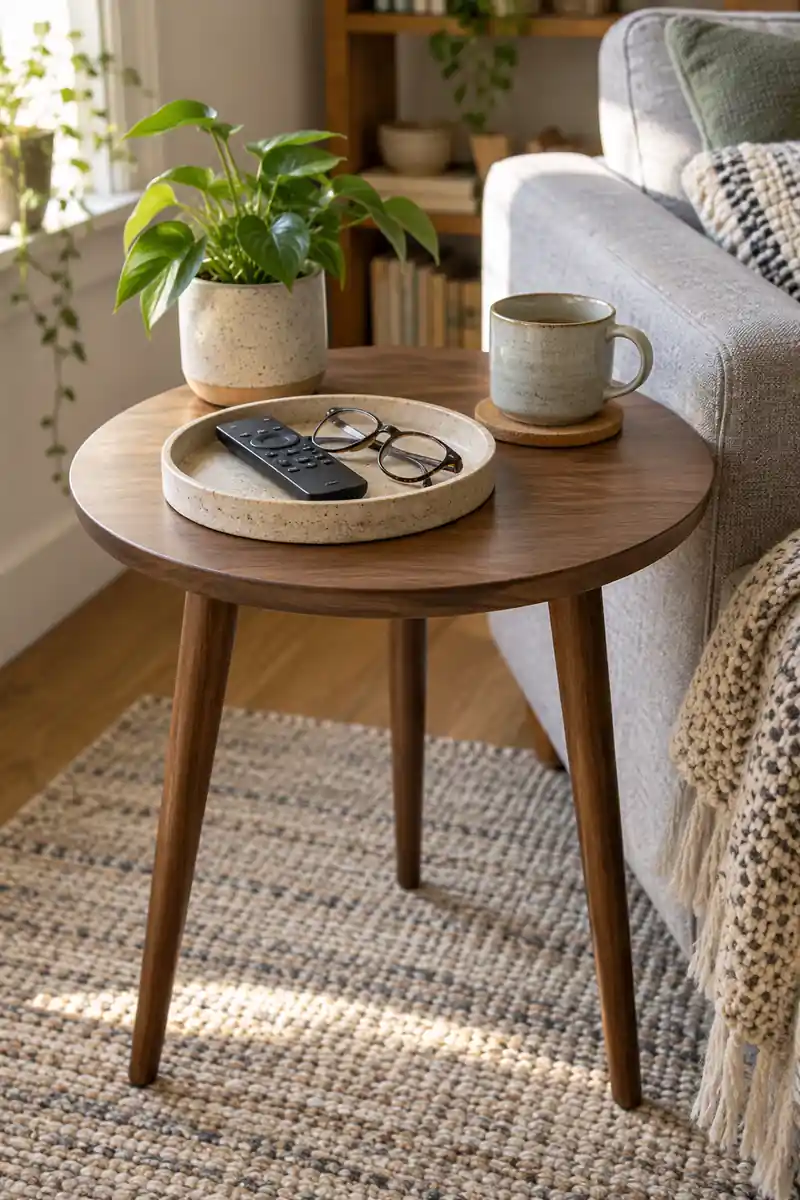
- Collect the small items used in one place.
- Choose one existing shallow container.
- Keep the contents below its rim where possible.
- Return unrelated items to their own homes.
A tray or bowl can make several tiny objects read as one group, but it should not become a place for everything. Give it a specific job, such as holding glasses and the remote beside your seat. Empty it regularly so the container stays useful instead of disguising a growing pile.
11. Use Vertical Art Carefully
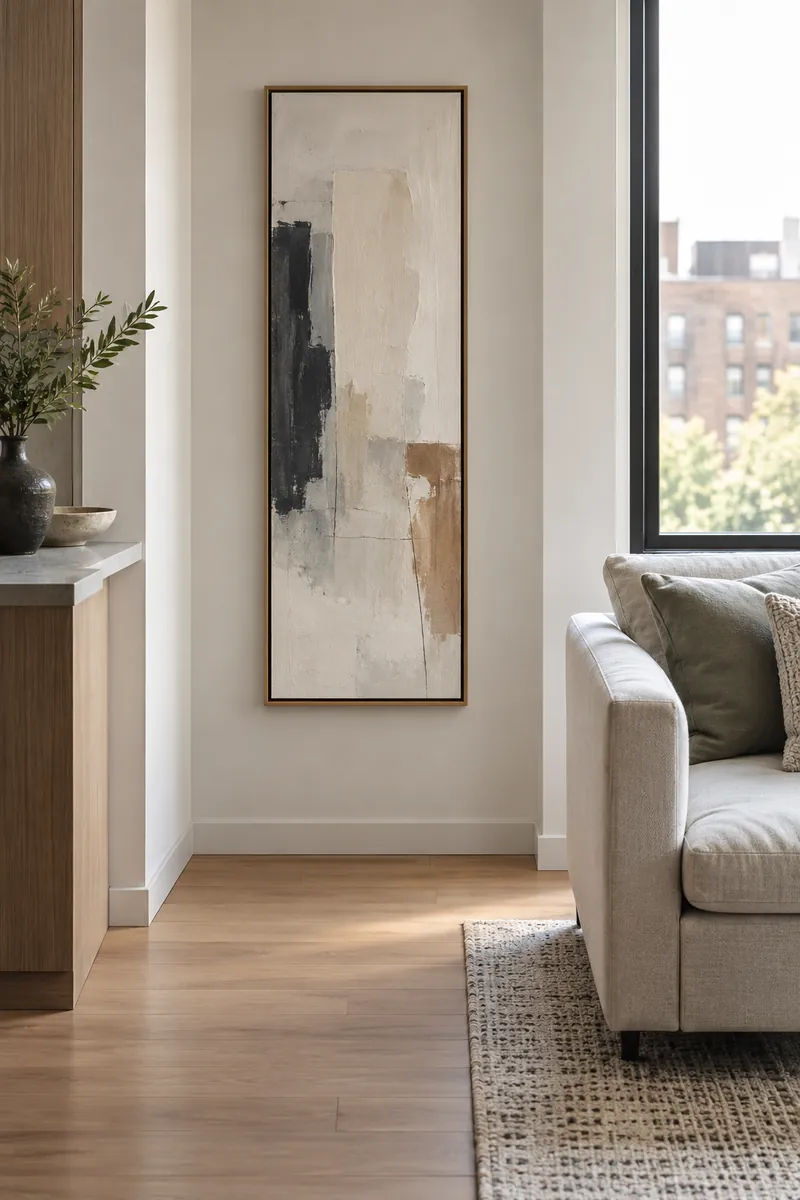
Quick tip: A narrow wall can support one tall piece of art without needing furniture below it. Check the shape against the actual wall space rather than assuming every empty strip needs a display.
Vertical art can draw attention along an underused part of the wall while leaving floor space open. Keep the piece in proportion to the room and follow the appropriate hanging instructions. If the surrounding area already has frames, leave this strip quiet instead. Restraint is sometimes the stronger choice here.
12. Simplify Bed Layers
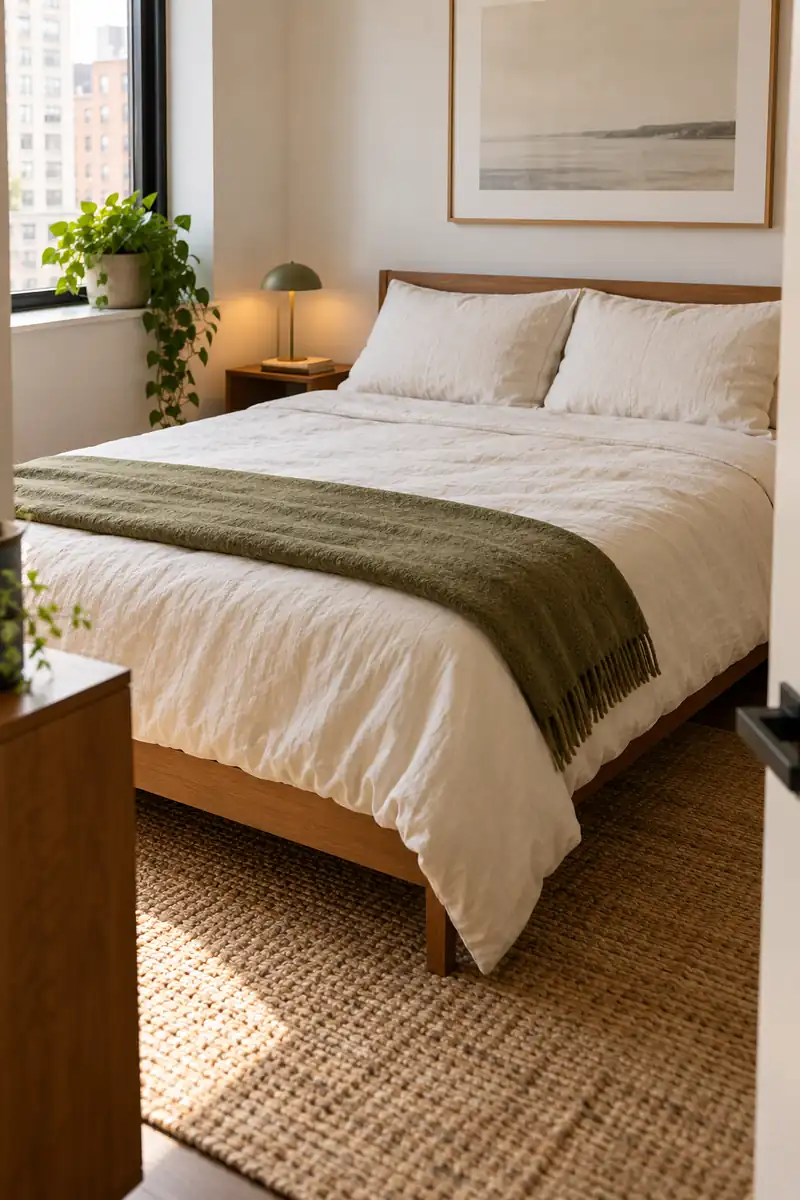
Before: A thick throw, several spare cushions, and loose bedding make the bed occupy more visual space than its frame. The sleeping corner looks permanently unsettled.
After: The duvet sits neatly, the sleeping pillows have a clear place, and one folded layer adds color. The bed remains comfortable while its edges look simpler.
In a small apartment, a tidy bed can change the whole room because it covers such a large area. Keep the layers you actually need for sleep and warmth. Store occasional extras elsewhere when possible. You can add interest through fabric texture without building a display that must be dismantled nightly.
13. Show More Rug
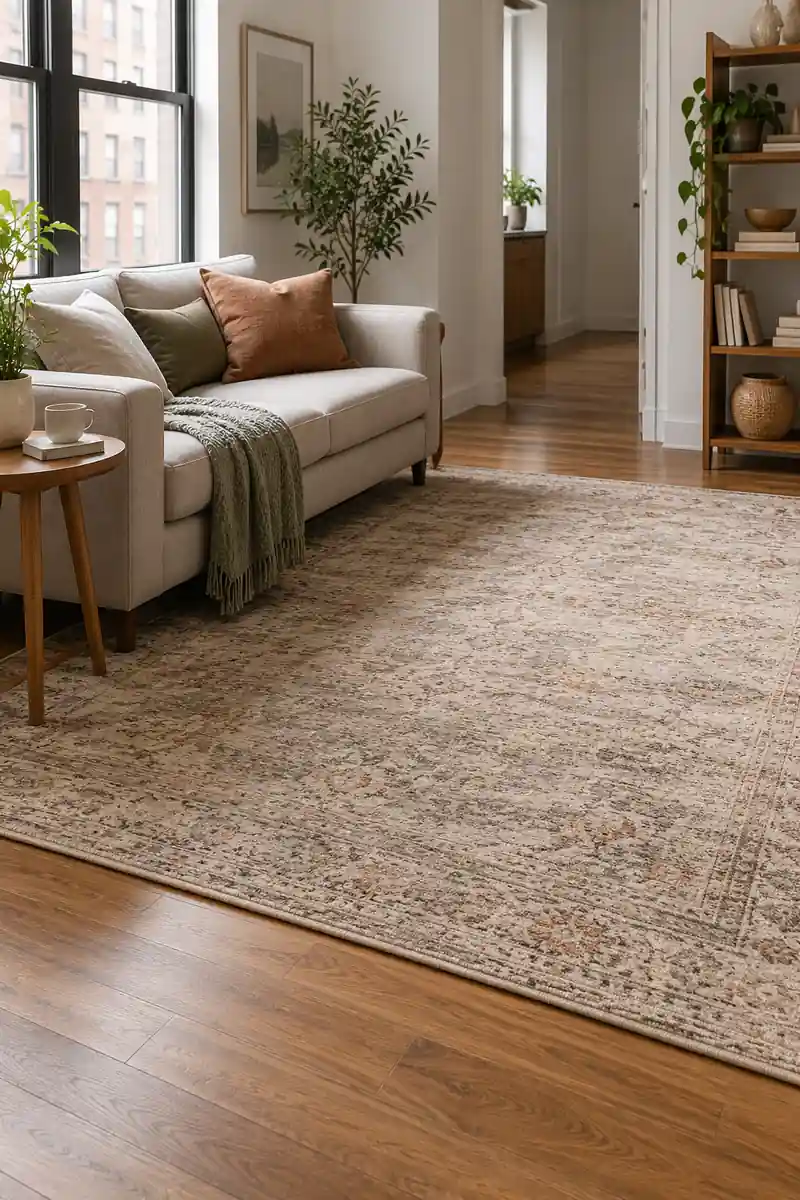
- Look at the floor around the main seat.
- Remove an unused small table or stool.
- Keep a reachable surface where you need one.
- Check that the remaining layout works comfortably.
Several little pieces can hide the rug and make the living area feel more crowded than one useful larger item. If a coffee table is rarely used, a side table may do the job while leaving more floor visible. Test the change for daily comfort before deciding the extra piece is unnecessary.
14. Choose A Quiet Pattern
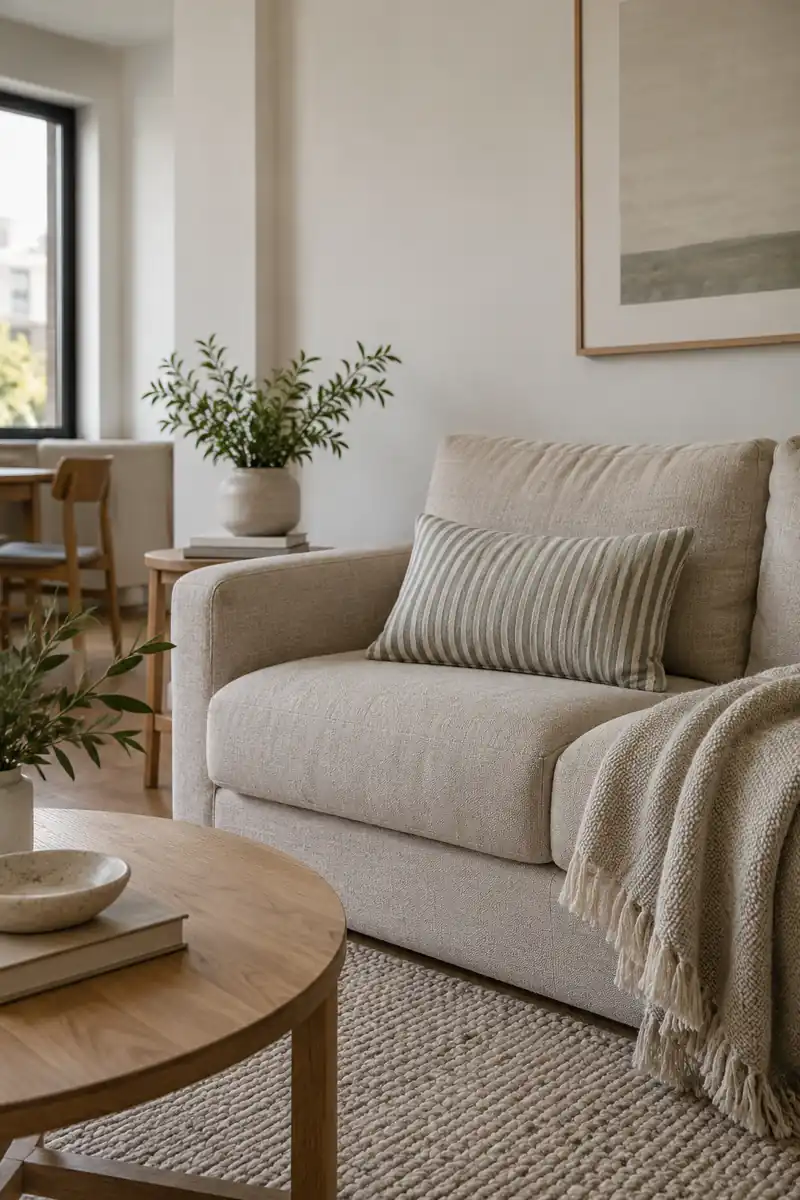
Subtle repeating pattern
Contrast: Similar colors with a quiet difference.
Placement: One cushion or another small textile.
Effect: Adds detail without a strong visual break.
Plain textured fabric
Contrast: Variation comes from weave rather than print.
Placement: A throw, cushion, or larger soft surface.
Effect: Keeps the room calmer from a distance.
Choose the amount of pattern by what is already happening in the room. Open shelves, book spines, and visible kitchen items all add visual detail. If those areas are busy, a plain textile may offer enough interest. If the background is quiet, one restrained pattern can keep it from feeling flat.
15. Make Storage Visually Calm
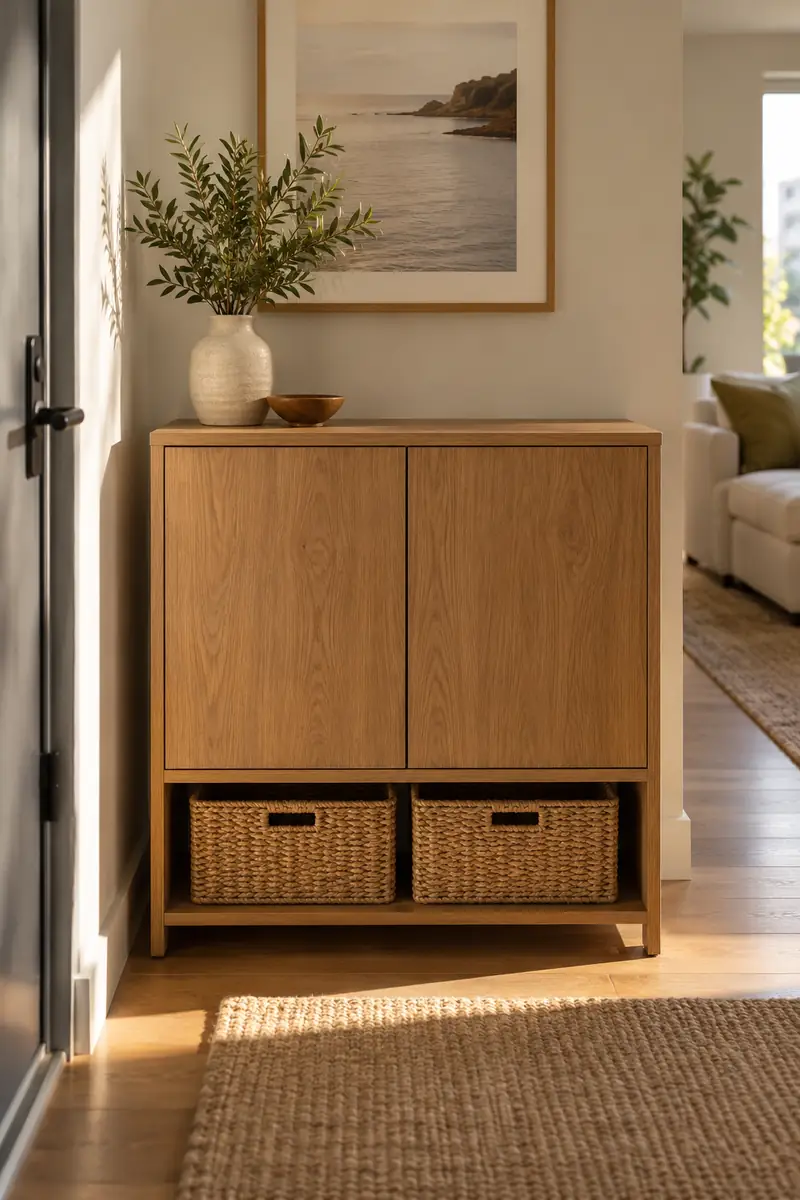
Do
- Group similar loose items together.
- Keep frequently used contents easy to reach.
- Choose container sizes around the actual contents.
Don’t
- Add a basket to every empty corner.
- Leave labels and packaging scattered on top.
- Store more than the furniture can comfortably hold.
Closed storage can quiet the view, while a few coordinated containers can organize an open shelf. Use whichever fits your existing furniture and habits. These open shelf divider ideas show how storage can define an area, but keep the display lighter when the room already feels full.
16. Use Reflection Selectively
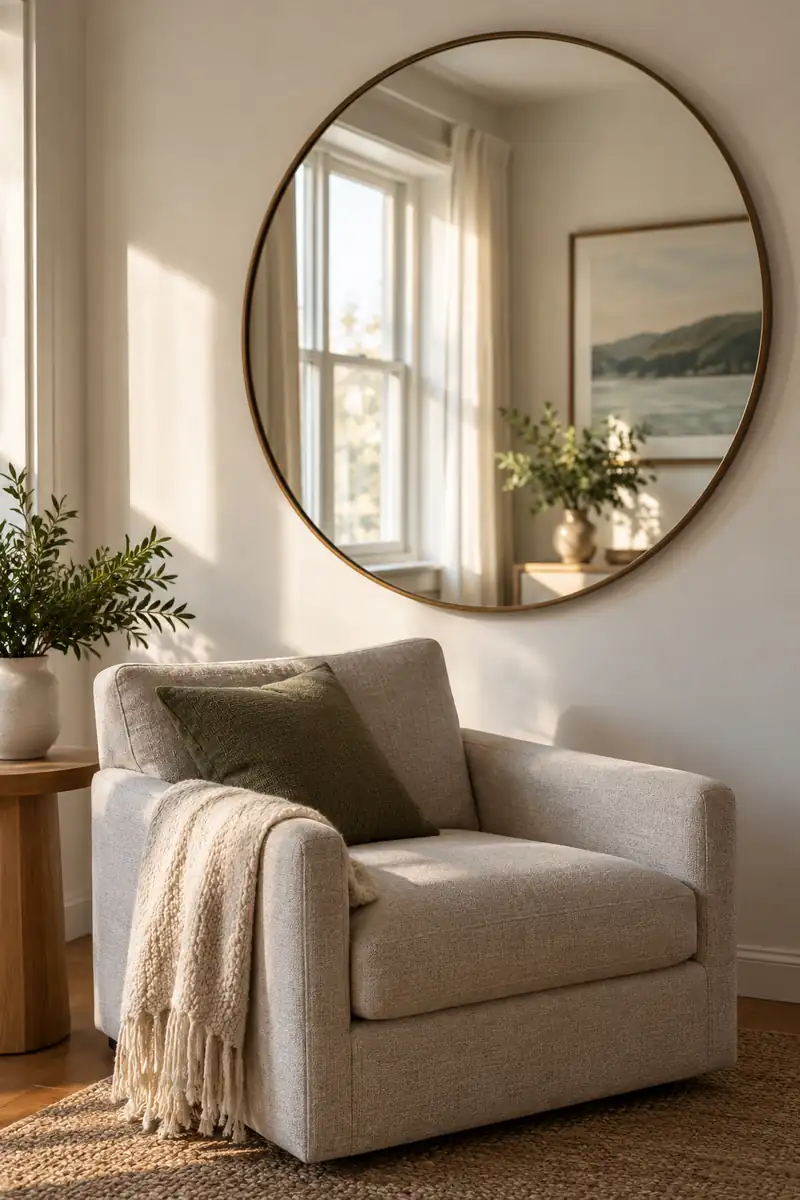
- Reflection: A window, quiet wall, or pleasing view.
- Position: Checked from the seat and entrance.
- Surroundings: Enough clear wall to show the mirror’s shape.
- Mounting: Installed according to its hardware and wall requirements.
A mirror repeats whatever faces it, so check the reflection before deciding it makes the room feel better. If it doubles a crowded shelf, another position may be more useful. Avoid using several mirrors just to add brightness. One well-placed reflection can be enough in a compact room with limited wall space.
17. Leave One Surface Empty
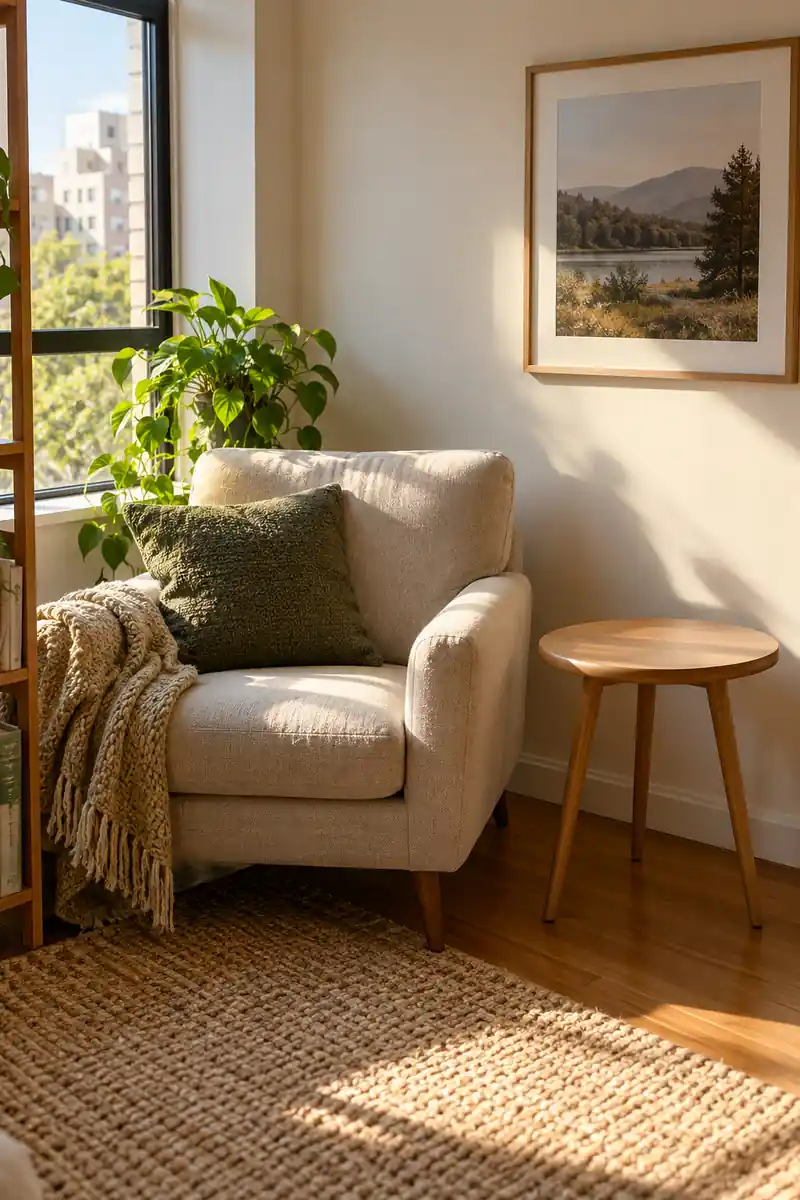
Choose one surface that can remain completely available, such as the small table beside your chair or the end of a desk. Resist giving it a decorative assignment. An empty place gives everyday items somewhere to land without making the room feel disorganized, and it provides a visual pause.
This is especially helpful if you enjoy displaying books, plants, or art elsewhere. The contrast lets those fuller areas feel intentional. Keep using the surface, then clear it when the task is finished. A room can look lived in and personal while still offering a little space for whatever happens next.
Frequently Asked Questions
Will a neutral palette make my apartment boring?
It does not have to. Different textures, meaningful art, and one accent color can add character within a quiet palette. Use the colors you like, but consider how many strong changes appear together in one view.
Should I remove all small decor?
No. Keep the pieces you value and group a few related items rather than scattering them across every surface. Leave useful space around the groups so individual objects remain easy to see and furniture stays practical.
Do mirrors always make a room look bigger?
No. Their effect depends on placement and what they reflect. A mirror facing a bright window or calm view may feel helpful, while one facing clutter simply repeats it. Check from several normal positions before choosing a spot.
How can I tell when I have edited enough?
You can move comfortably, use surfaces without clearing them first, and notice the pieces you care about. The room does not need to look empty. Stop when the arrangement supports your habits and feels calm enough for you.
Conclusion
The most useful answer to how to style a small bachelor apartment is to make each visible choice count. Clear the first view, simplify the largest shapes, and give your favorite objects enough space to be noticed. Keep furniture and surfaces available for real use rather than filling every gap. You can still enjoy color, art, texture, and personal collections; they simply work better when the room has quieter areas around them. Try one edit at a time and judge it by daily comfort. A smaller apartment feels more settled when you can use what is there without constantly moving something else.
Community
Join the conversation
Add a useful idea, ask a specific question, or share what worked in your space. Every comment is reviewed before it appears.