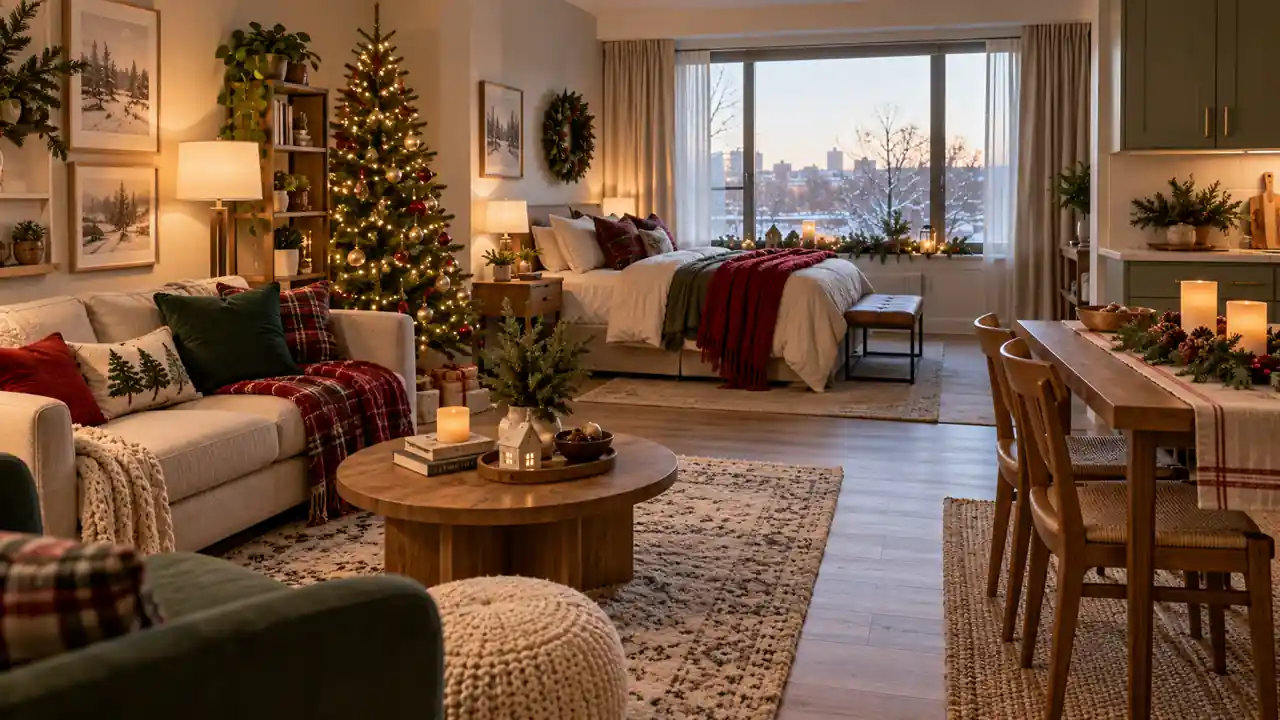
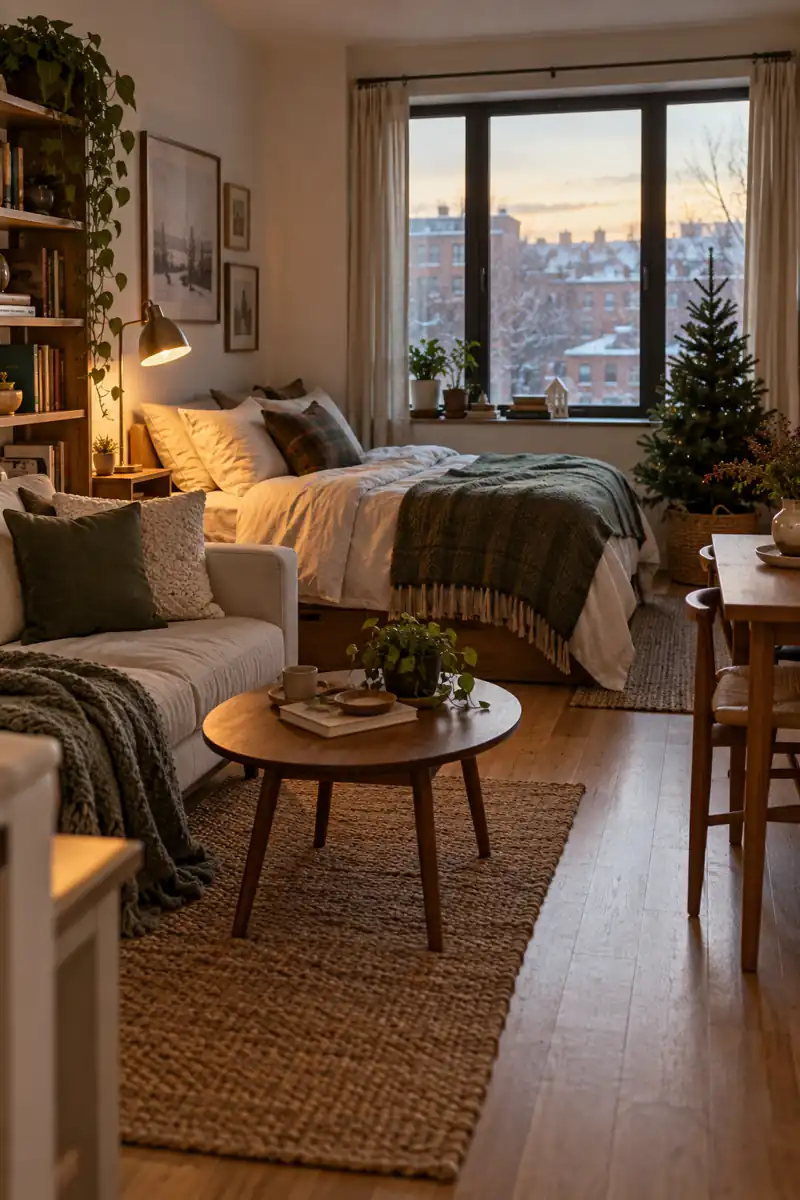
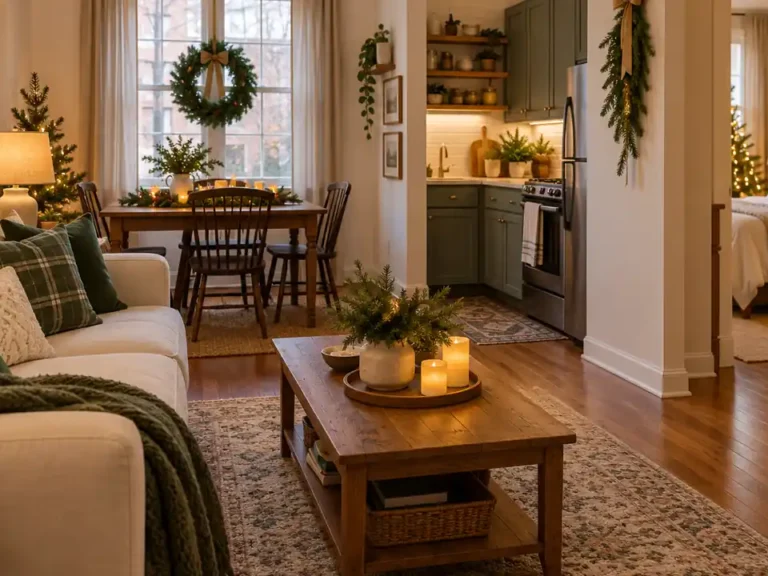
A studio can go from dim to dazzling with just one extra strand of Christmas lights. That is why a little planning helps. Your sleeping area, desk, and sofa all share the glow, even when you only meant to decorate a tree. These studio apartment Christmas lights ideas focus on balancing the whole room. Start with the lamps you use each day, then add decorative light where it brings something useful to the evening. You do not need to outline every surface. A few steady, well placed accents can make the room feel festive while leaving it comfortable for reading, cooking, and winding down.
1. Map the Evening Zones

Think about where you spend your evenings before choosing lights. You might read on the sofa, eat at a small table, and finish a few tasks at the desk. Each spot needs a different amount of light. Your bed may need less brightness than any of those places once you are ready to rest.
Sketch a simple room outline and mark your lamps and outlets. Add holiday accents only after those everyday needs are covered. This helps you avoid buying a long strand with nowhere sensible to plug it in. Keep all routes between the zones clear.
2. Start With Warm White
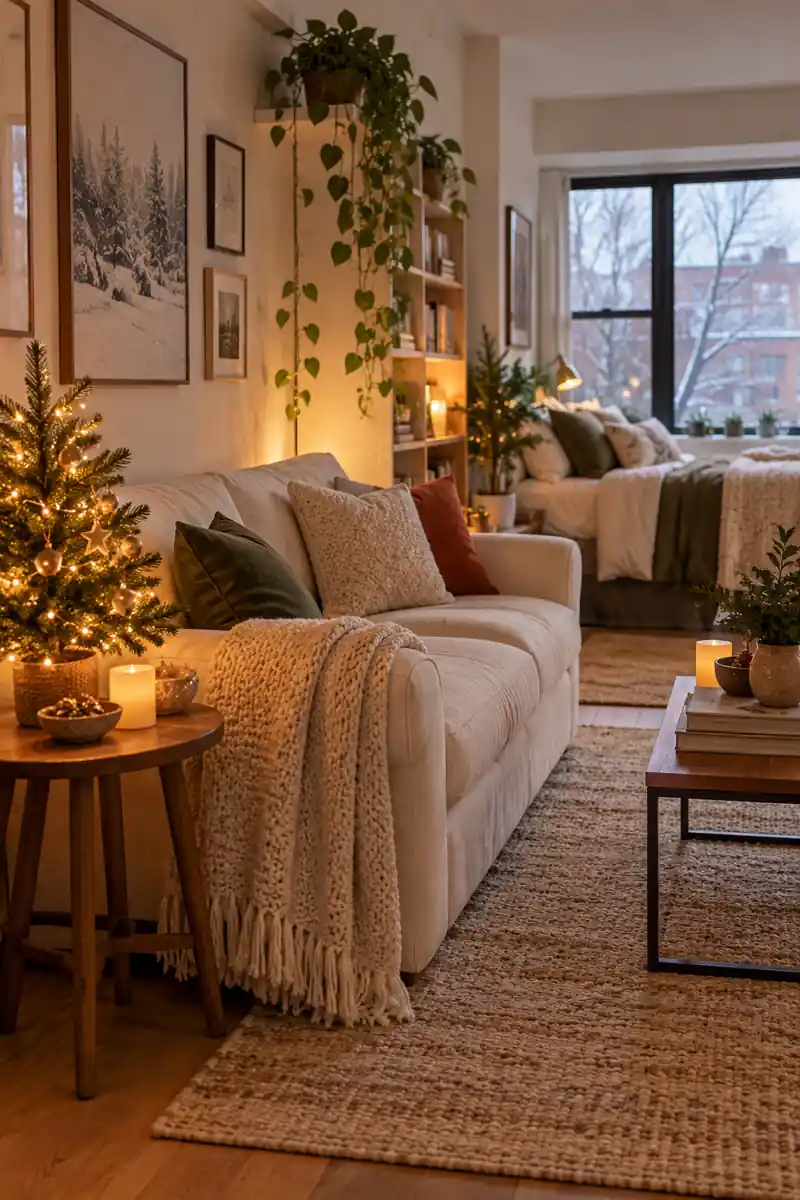
- Try one small strand first.
- View it beside your usual lamps.
- Check the color after sunset.
- Keep the packaging until you decide.
Warm white lights often sit comfortably beside wood and cream fabrics, but the name alone does not tell you how they will look. Compare the actual light in your room. Some strands appear more amber than others. Buy matching sets together when possible, and avoid mixing products just because their boxes use similar words.
3. Keep Lamps in Play
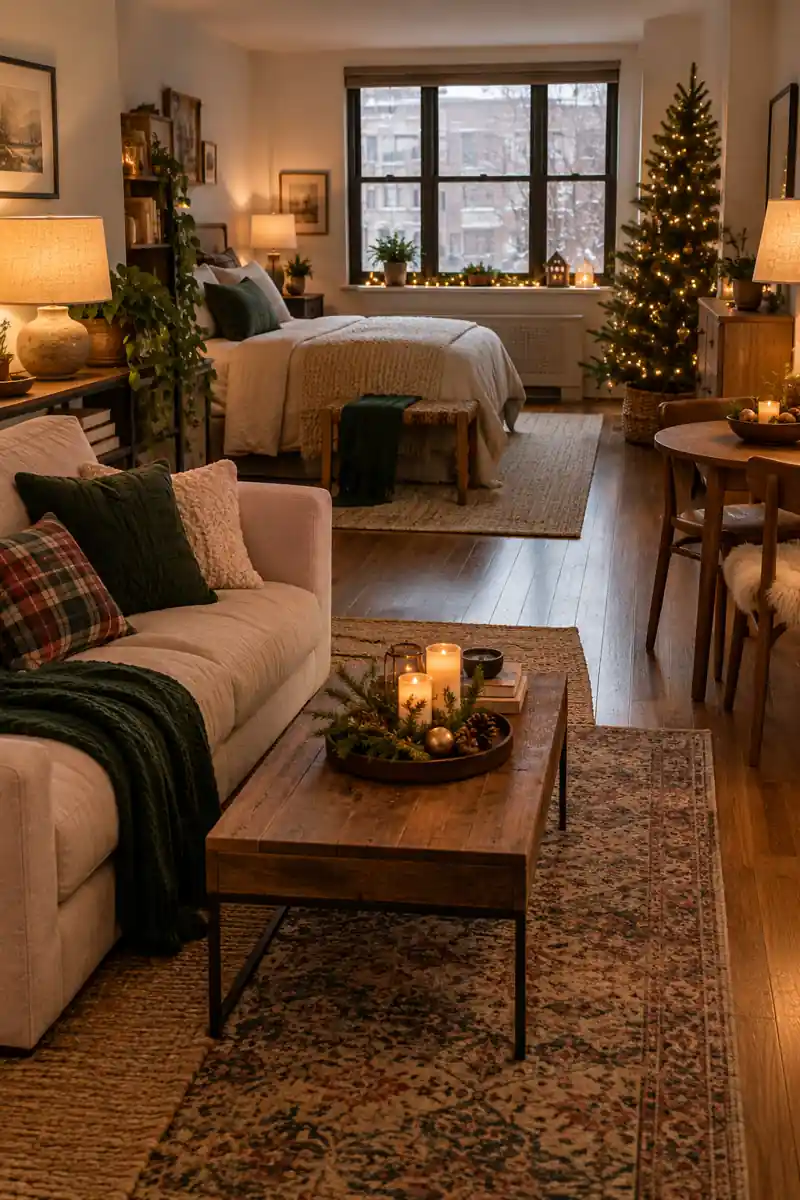
Quick tip: Switch on your usual lamps before testing Christmas lights. Decorative sparkle should not be the only light available for an evening task.
A tree can look lovely while still leaving your book or dinner in shadow. Keep practical lamps where they work best, then use holiday lights as accents around them. You may need fewer decorative strands once the basic room lighting feels balanced. This also makes the studio easier to use on ordinary weeknights.
4. Choose One Light Temperature
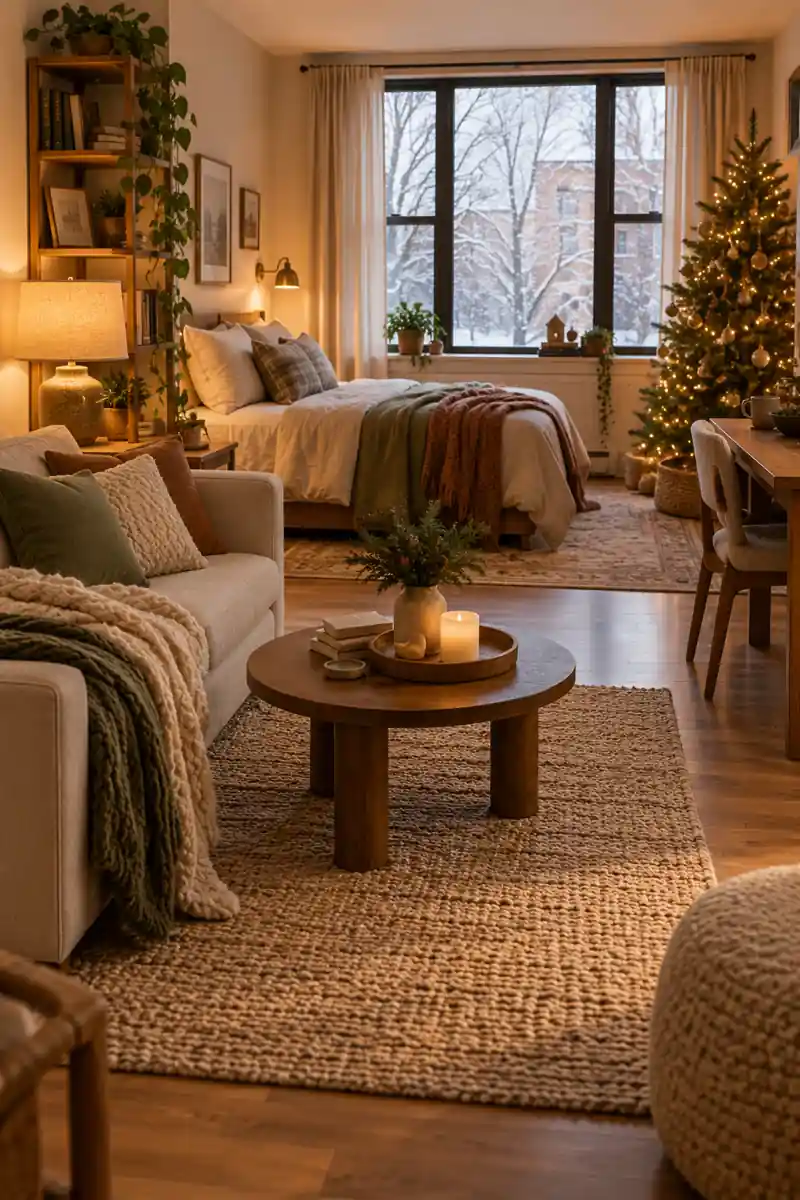
Before: A blue looking tree strand sits beside an amber table lamp. The two corners feel unrelated.
After: The decorative lights look similar in warmth to the room’s lamps. The bed and seating area feel part of one space.
You do not need every bulb to be identical, but avoid a strong clash in a small room. Compare products in use rather than relying only on photos. If you prefer cooler lights, repeat that choice deliberately. Keep the strongest contrast for a small focal point rather than spreading it everywhere.
5. Check the Bedside View
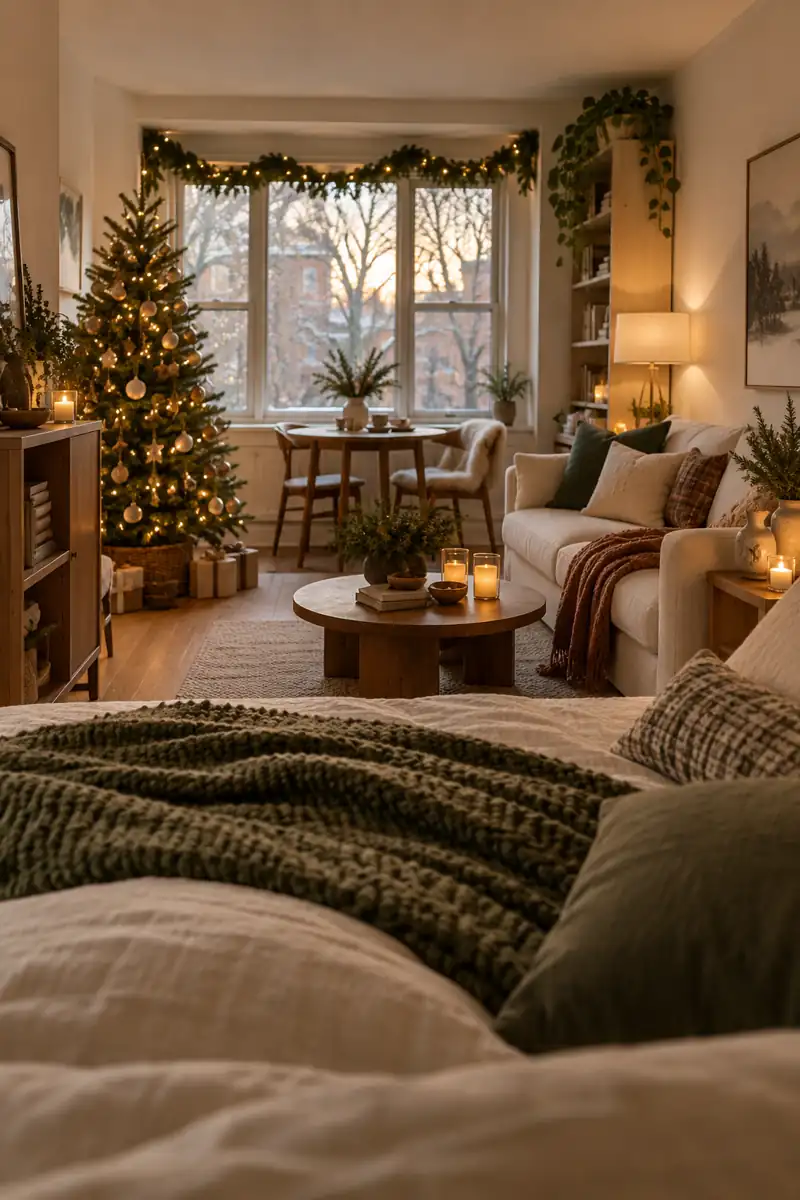
- Sit or lie in your usual sleeping position.
- Turn on the proposed holiday display.
- Notice any bulb shining directly at your eyes.
- Move or reduce the display before fixing it in place.
A light that looks gentle from the door may feel harsh from your pillow. This matters in a studio because there is no separate bedroom door to close. Keep the brighter accents on surfaces you enjoy while awake. Switch decorative lights off before sleep, and follow the product’s placement and operating instructions.
6. Lower the Brightest Point

High exposed bulbs
View: Visible across the room
Effect: Strong visual emphasis
Check: Eye level glare
Low contained glow
View: Focused on one surface
Effect: Quieter evening accent
Check: Stable base and clear access
A low arrangement on a cabinet can feel calmer than bright lights stretched across the ceiling. Use a product intended for the way you display it, and leave ventilation clear. Do not hide a power supply under fabric. Test the arrangement from your sofa as well as from the entrance before settling on it.
7. Use a Gentle Dimmer

Do:
- Check that the lights support dimming.
- Use a compatible control.
- Follow the manufacturer’s instructions.
Don’t:
- Connect an unsupported strand to a dimmer.
- Assume every LED product behaves alike.
- Cover controls to hide them.
Dimming can help a bright display suit a quiet evening, but only when the product is designed for it. A simple low brightness strand may be easier than adding a separate control. Choose the setup you can use correctly every day. A complicated lighting arrangement is not worth keeping if it becomes a nuisance.
8. Spread Small Light Pools
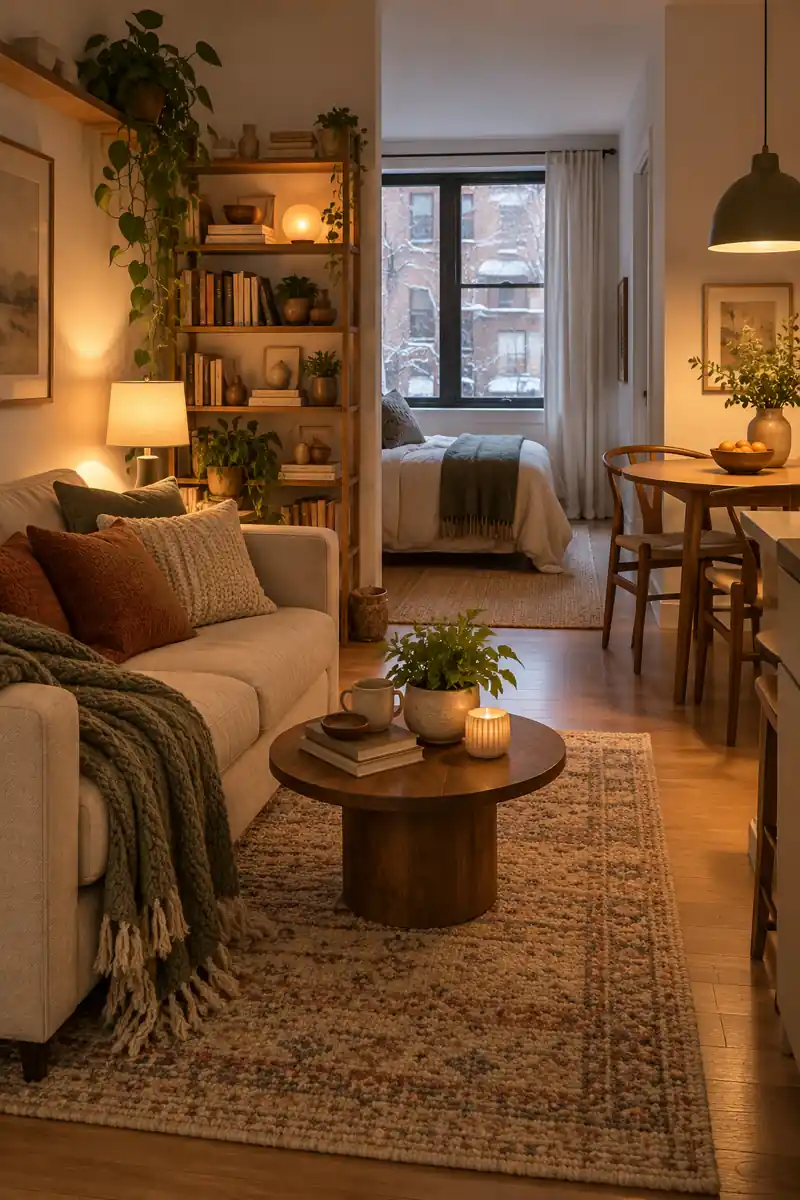
Main light: Your useful everyday lamp. Accent: One nearby holiday display. Balance: A softer glow across the room. Limit: Enough darkness to rest your eyes.
Three gentle points can feel more balanced than one very bright corner. Start with the sofa and a distant shelf, then decide whether the dining spot needs anything extra. Keep the bed area quiet. The idea is to guide your eye through the room without making every object equally bright or equally important.
9. Balance Dark Corners
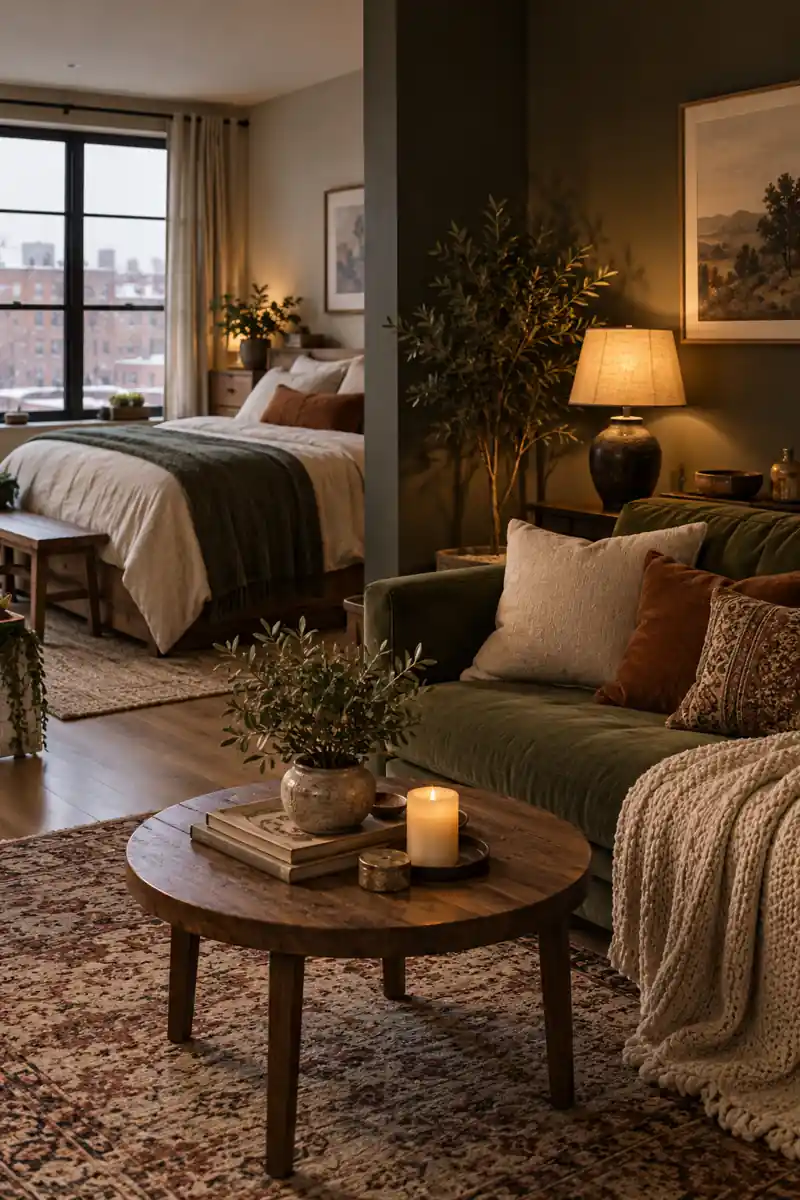
A dark corner does not always need a string of lights. Sometimes a shaded lamp on an existing table is enough to bring it into the room. Add a small evergreen or a wooden ornament beside it, and that everyday light becomes part of the Christmas setting without another cable.
Look for the corner that feels disconnected when you sit down at night. Brighten it gently rather than trying to match the tree bulb for bulb. Leave some shadow around furniture so the room still has depth. Balanced lighting should feel comfortable, not perfectly even from wall to wall.
10. Mind Reflective Surfaces
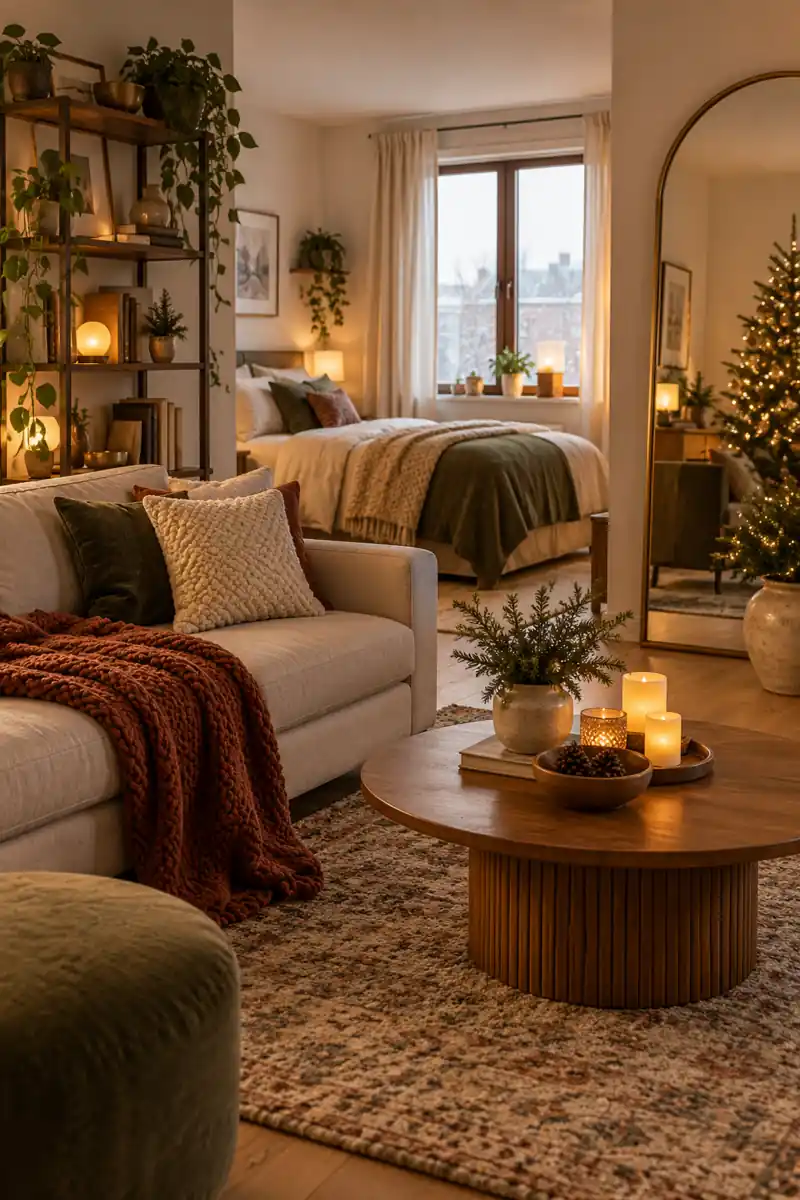
- Check mirrors from seated positions.
- Notice reflections in a dark television.
- Move exposed bulbs away from eye level.
- Keep shiny ornaments away from the brightest lamp.
A mirror can repeat a lovely glow, but it can also double a distracting bulb. Walk through the room with the lights on before attaching anything permanently. A small change in angle may solve the problem. Do not move a heavy mirror casually; keep its secure mounting and adjust the lighter decoration instead.
11. Leave a Dark Rest Zone
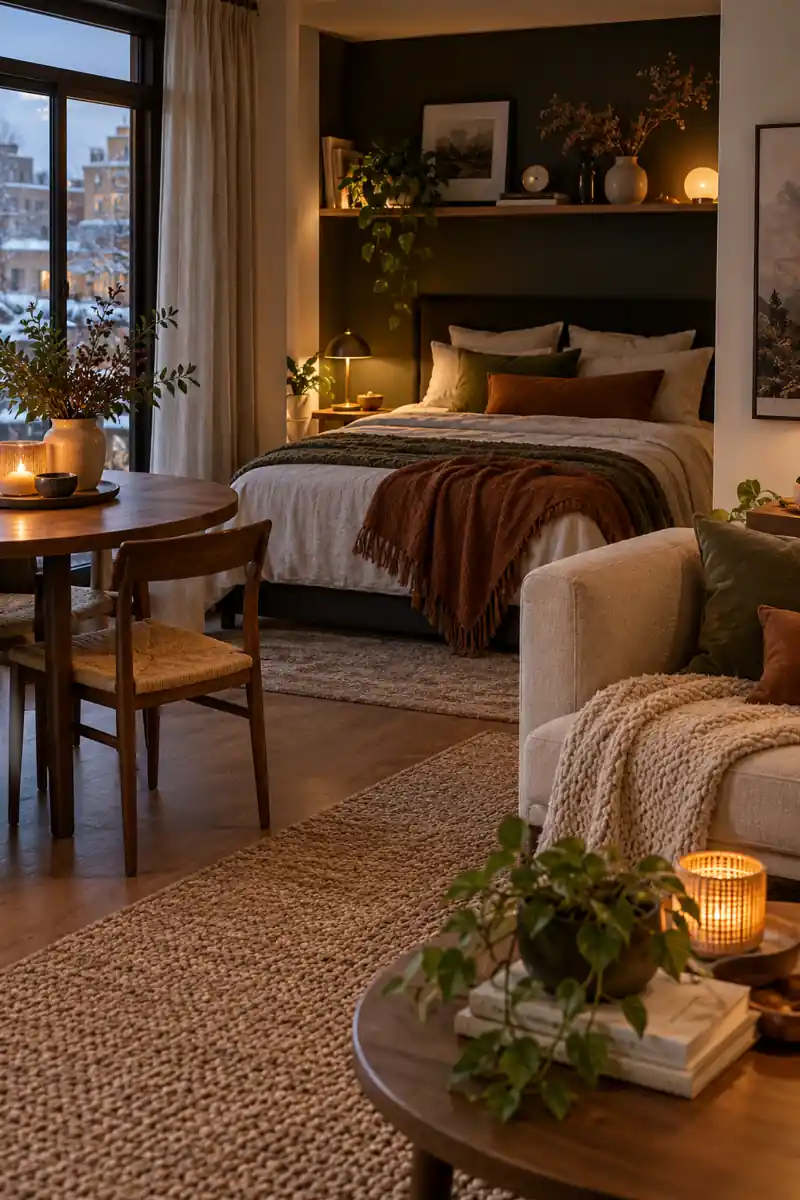
Quick tip: Give the area around your pillow fewer light sources than the living corner. Keep a useful bedside lamp available for reading.
You can enjoy a festive studio without wrapping lights around the headboard. Place the decorative glow farther away, where it frames the living area instead. That makes the bed feel like a quieter part of the same room. When the evening ends, turn off the holiday lights rather than relying on them overnight.
12. Choose Diffused Shades

Before: A bare bulb competes with the Christmas tree. The room feels bright but not especially comfortable.
After: A suitable shade softens the lamp’s appearance. The holiday lights remain visible without becoming the room’s only source of light.
Use the correct shade and bulb for your lamp, following its instructions and wattage limits. Never improvise a cover with paper or fabric. A ready made lamp designed to diffuse light gives a softer effect safely. Pair it with a modest holiday accent rather than increasing the number of exposed points.
13. Check Cable Routes
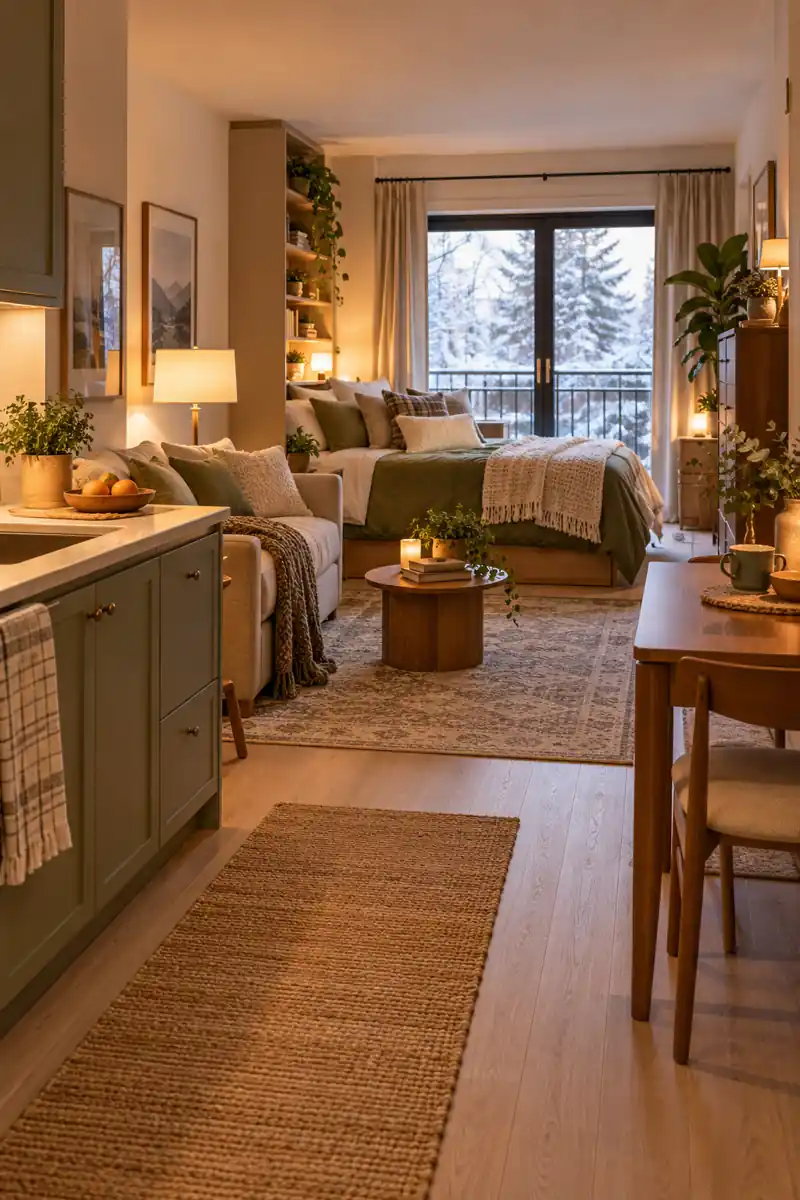
- Locate a suitable outlet near the display.
- Check cords and plugs for damage.
- Follow the product’s connection limits.
- Keep cables out of walkways and door gaps.
Plan power before you plan the prettiest position. A display is not a good fit if its cable crosses the route to the bathroom. Avoid pinching cords beneath furniture or running them under rugs. If a location needs an awkward connection, choose another surface or an appropriate battery powered accent instead.
14. Group Compatible Timers
Built in timer
Setup: Usually fewer pieces
Control: Product specific cycle
Check: Instructions and battery access
Separate compatible timer
Setup: Requires a suitable connection
Control: Schedule varies by model
Check: Load rating and compatibility
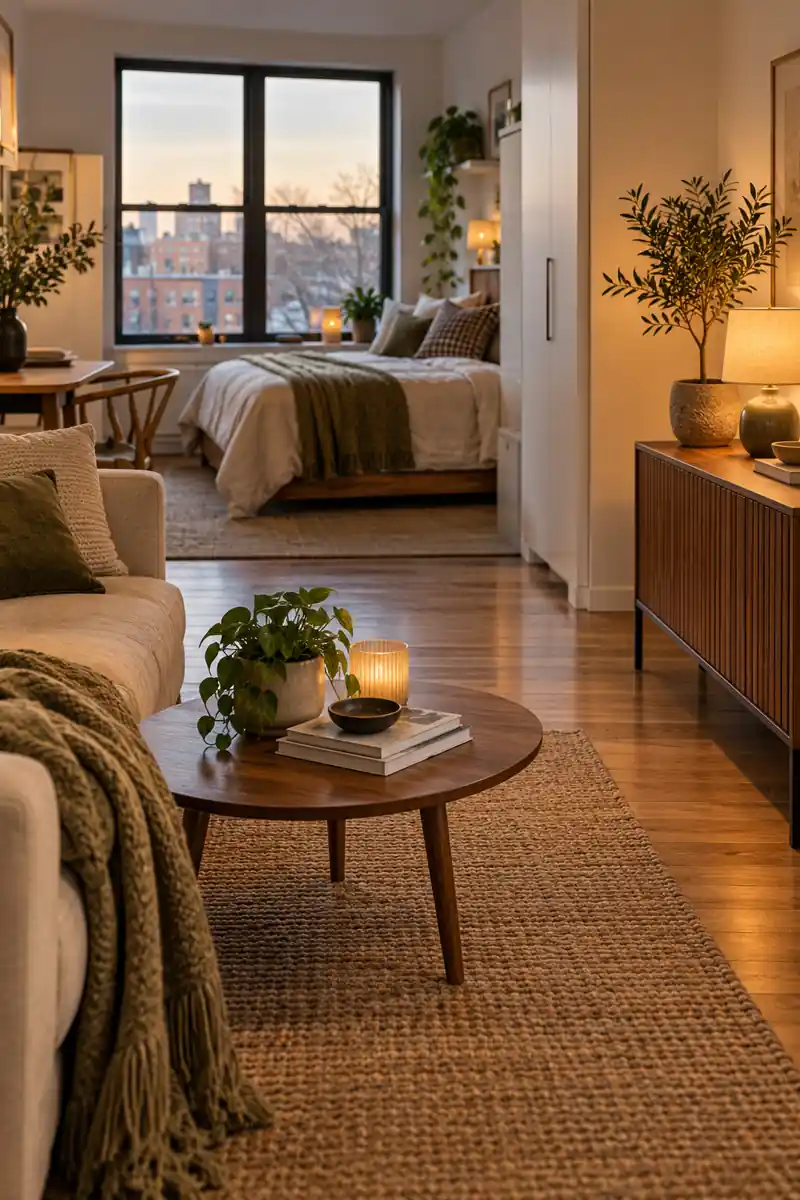
A timer can make your evening routine easier, especially when a plug is hard to reach. Check its instructions and confirm that it works with your lights. Do not use it to justify leaving an unsuitable display unattended. Keep a clear way to turn everything off, and review the schedule after setting it.
15. Use Battery Accents Sparingly

Do:
- Keep battery boxes accessible.
- Secure compartments as directed.
- Replace batteries according to instructions.
Don’t:
- Leave loose batteries within reach of children.
- Mix battery types or ages unless allowed.
- Hide damaged products inside decor.
A battery lantern can brighten a shelf that has no nearby outlet. Use it where a small contained glow is enough, rather than filling the room with many separate boxes to manage. Check the light regularly. A few well chosen accents are easier to maintain and pack away when the season finishes.
16. Try Static Light Modes

Mode: A steady glow. Location: The main holiday focal point. Benefit: Less visual movement. Check: Whether the setting stays after switching off.
Flashing modes can dominate a one room home, especially beside a television or work area. Try a steady setting before deciding you need a new strand. Some products return to a default mode when powered on again, so check that behavior. Choose the setting that feels comfortable during an evening, not just a quick glance.
17. View the Room at Dusk
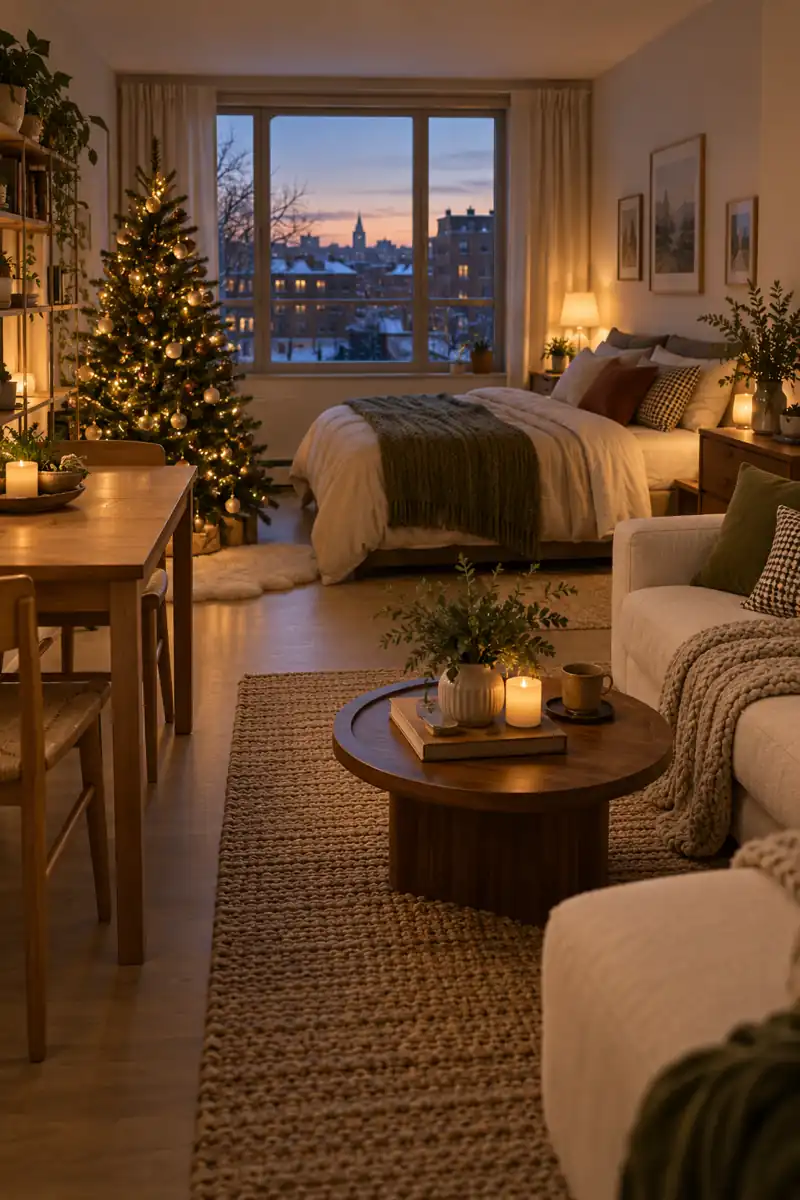
Holiday lights change as daylight fades. A strand that seems faint at lunchtime may look quite bright once the window turns dark. Test your arrangement at the time you will actually enjoy it. Keep your usual curtains and lamps in their normal positions so the test reflects an ordinary evening at home.
Take a seat in each main area and adjust only one thing at a time. Move a bright accent, switch off a strand, or add a useful lamp where needed. The room does not have to look dramatic in a photograph to feel pleasant in person.
18. Keep Task Light Useful

- Keep the desk lamp aimed at your work.
- Place holiday accents outside the main work surface.
- Check screen reflections.
- Leave outlets and switches accessible.
Your desk still needs to function during the holidays. A small shelf glow can make the corner festive without replacing the light you need for reading or writing. If a strand reflects in your screen, move it rather than turning down useful task light. Let the decoration support the room’s daily purpose.
19. Plan Your Nightly Shutdown
Quick tip: Decide how you will switch off every decorative light before you finish the display. Avoid a setup that requires climbing over furniture.
A simple end of evening routine is part of a good lighting plan. Keep plugs or controls reachable, and follow each product’s guidance about use and supervision. Check that the room still has the light you need after the decorations are off. Your Christmas setup should make daily life easier to manage.
Frequently Asked Questions
How many Christmas light strands does a studio need?
There is no fixed number. Start with one focal display and assess it after sunset with your everyday lamps on. Add another only if it improves a specific corner. A small room can feel festive with very little decorative light.
Should all my Christmas lights be the same color?
Similar warmth usually makes a studio feel more connected. You can mix colors deliberately, but compare them in the actual room. Packaging terms such as warm white do not guarantee an identical appearance across products.
Can Christmas lights replace my room lamps?
They generally work better as accents. Keep appropriate task lighting for reading, cooking, and working. A decorative strand may look bright while still leaving the surface you need to see poorly lit.
Can I leave decorative lights on overnight?
Turn them off before sleeping or leaving home, and follow the product instructions. Check cords, connections, and placement before use. Timers help with routines but do not replace suitable equipment and safe setup.
Conclusion
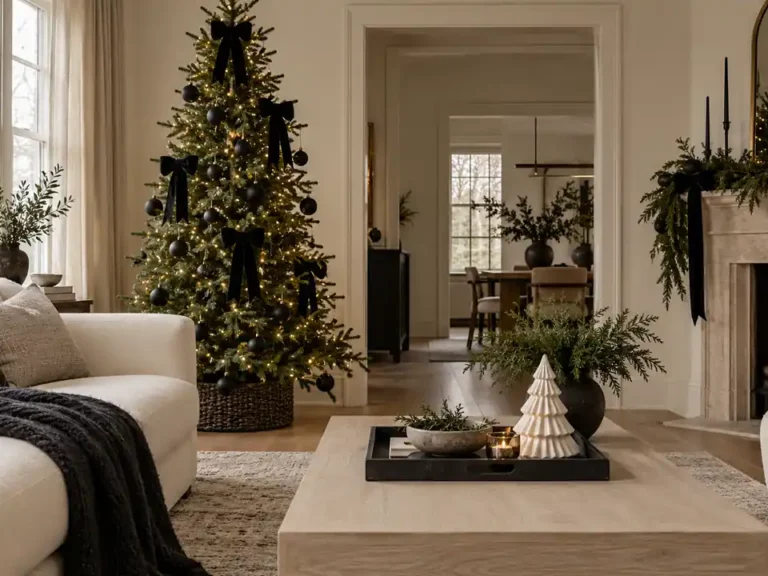
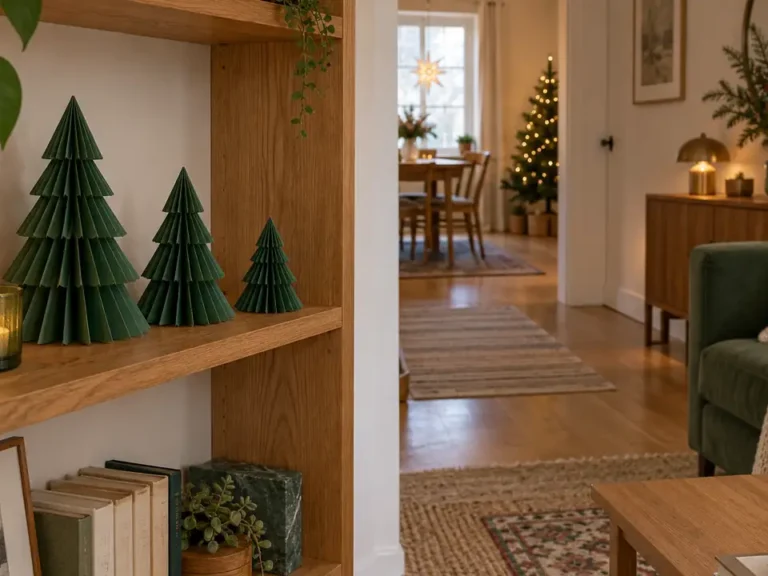
The most comfortable holiday lighting plan starts with the room you already use. Keep good light at the desk and sofa, soften bright reflections, and let the bed remain a quieter corner. Add small festive accents only where they improve the evening. These studio apartment inspiration ideas can help connect lighting with your furniture and textiles. If cooking shares your living space, these studio apartment kitchens also show why clear working surfaces matter. Test your lights after sunset, make one adjustment, and stop when the whole room feels easy to spend time in.
Community
Join the conversation
Add a useful idea, ask a specific question, or share what worked in your space. Every comment is reviewed before it appears.