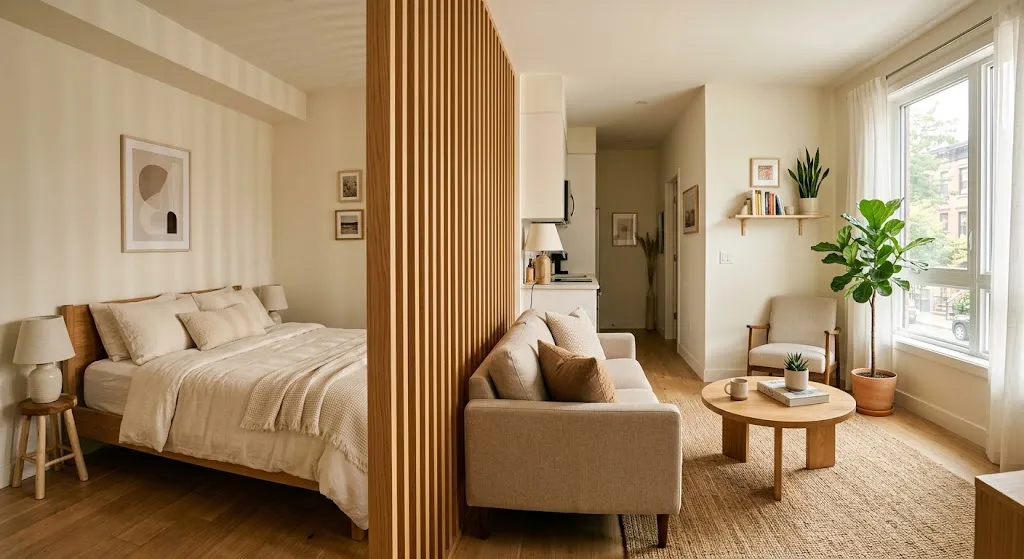
A studio apartment can feel much more comfortable when you give each area its own purpose. A wood divider is a simple way to separate your bed, living area, dining space, or home office without making the room feel closed off.
Unlike a solid wall, wood dividers can let light move through the apartment while creating a clear visual boundary. From warm slatted screens to open shelving and simple wood panels, these ideas can add privacy while keeping your studio feeling open.
1. Try Wood Slats
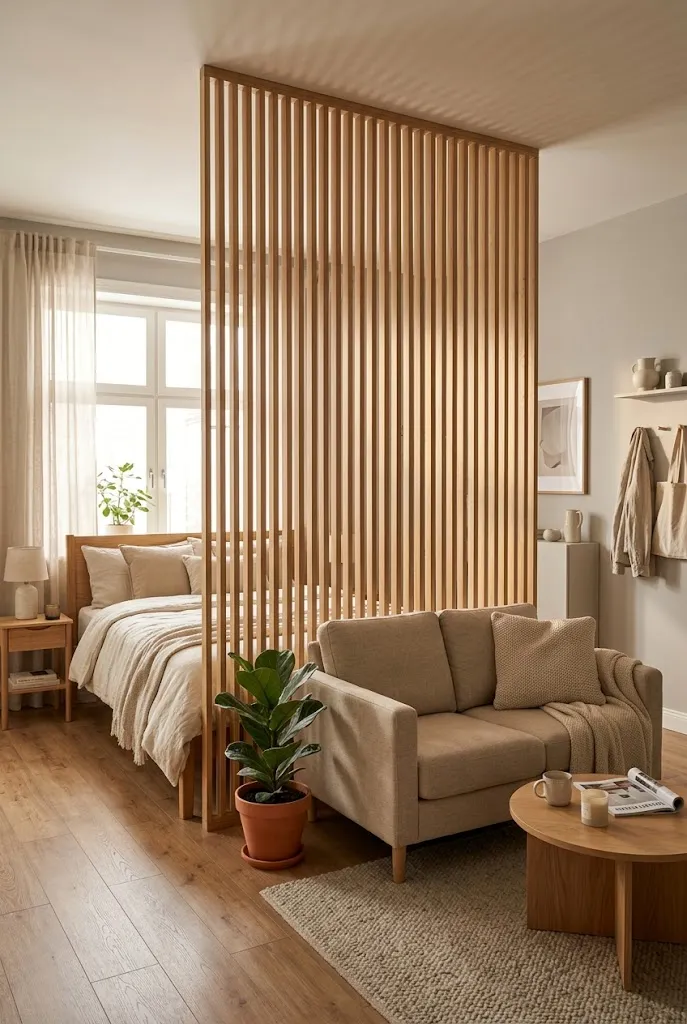
Vertical wood slats create a clear division between areas without blocking the entire view. The spaces between the slats allow natural light to pass through, which is especially helpful in a small studio.
Place the slatted divider beside the bed to create a more private sleeping area. Choose a natural wood finish for warmth or a lighter finish if you want the apartment to feel brighter.
2. Add Open Shelves
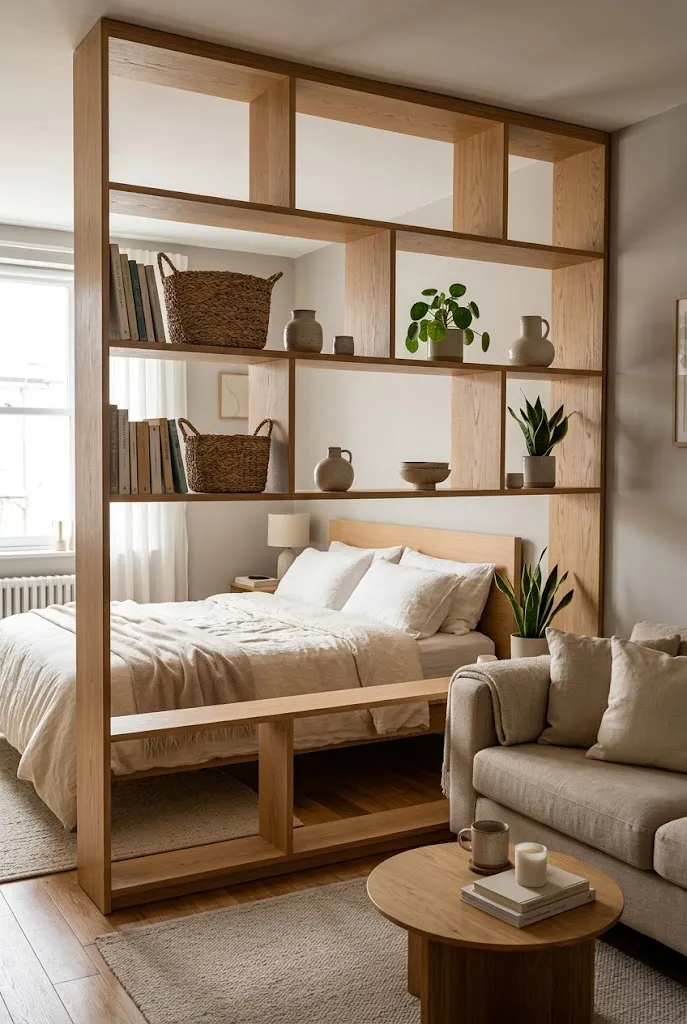
An open wood shelf can work as both a divider and storage.
Place a tall shelving unit between your bed and sofa. Use some sections for books, baskets, plants, or decorative objects while leaving other sections open.
This gives you a useful storage solution without adding another bulky piece of furniture.
3. Frame the Bed
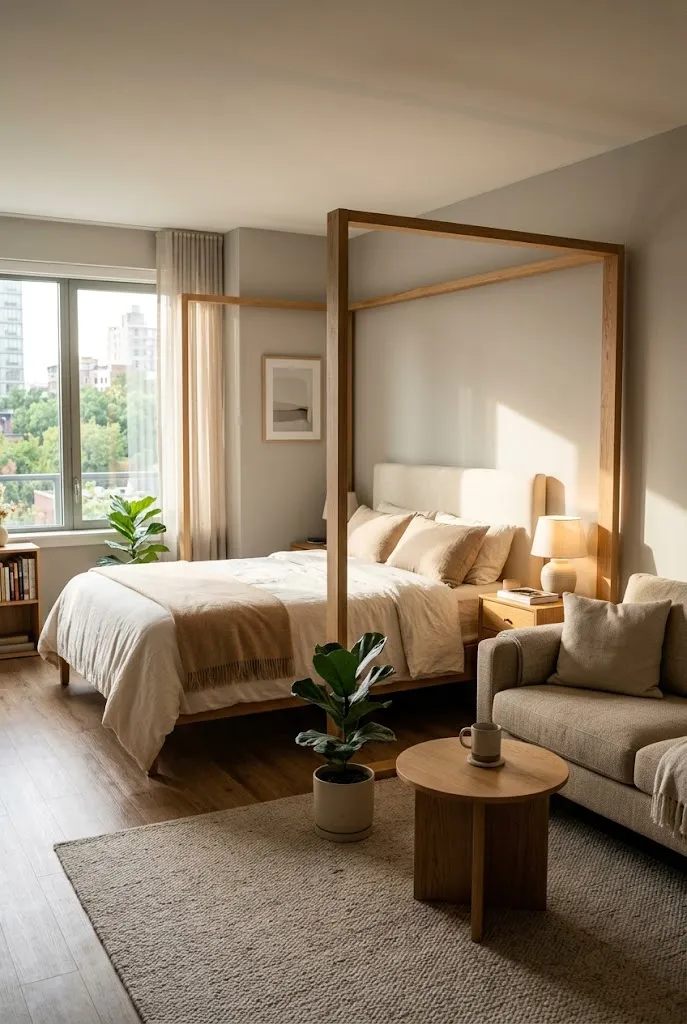
A simple wood frame around the sleeping area can make the bed feel like its own zone.
You don’t need to completely enclose the bed. A partial frame behind or beside the headboard can provide enough separation to make the sleeping area feel more intentional.
Keep the design simple so it doesn’t overpower the rest of the room.
4. Use a Half Wall
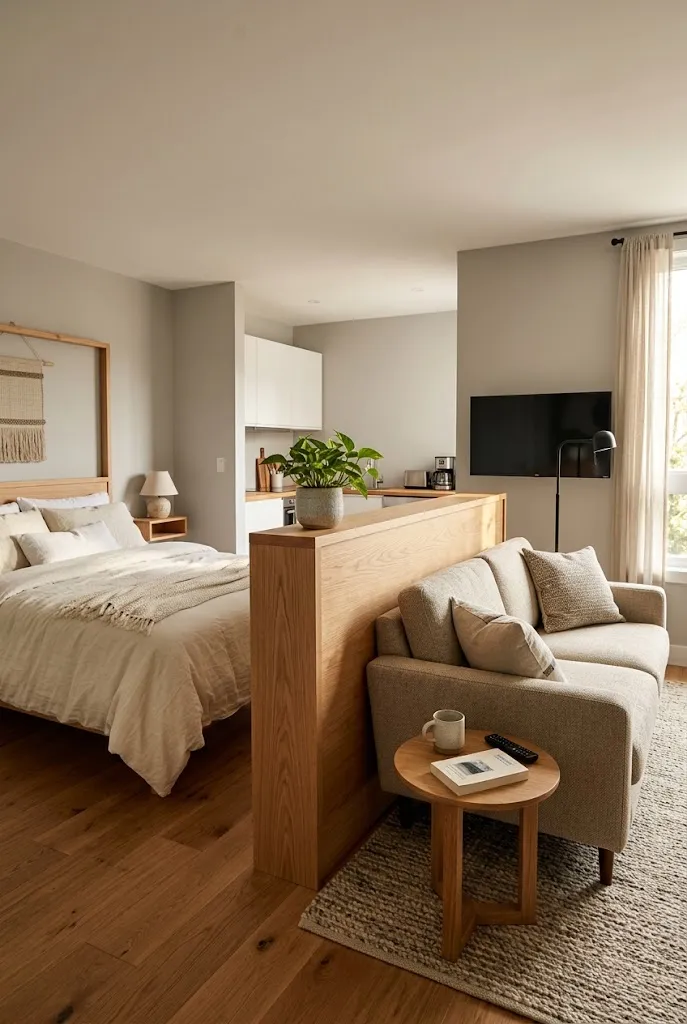
A half height wood divider can separate the bedroom from the living area while keeping the upper part of the room open.
This works particularly well when the bed sits near a main walkway. The lower section creates a sense of privacy while light can still travel throughout the studio.
Add a narrow shelf to the top for small plants or decorations.
5. Choose Warm Oak
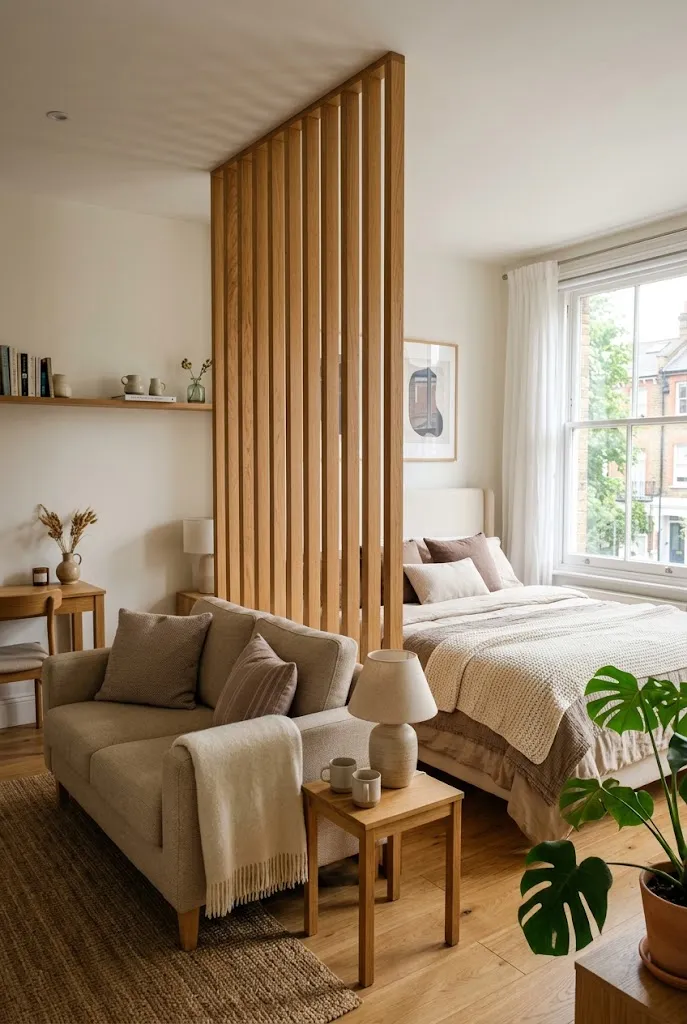
Warm oak tones can make a small apartment feel comfortable and inviting.
Use oak colored wood for a slatted divider, shelving unit, or simple panel. Pair it with cream, beige, white, or soft brown furniture for a relaxed look.
This approach works especially well if the rest of your studio has neutral colors.
6. Install a Sliding Panel
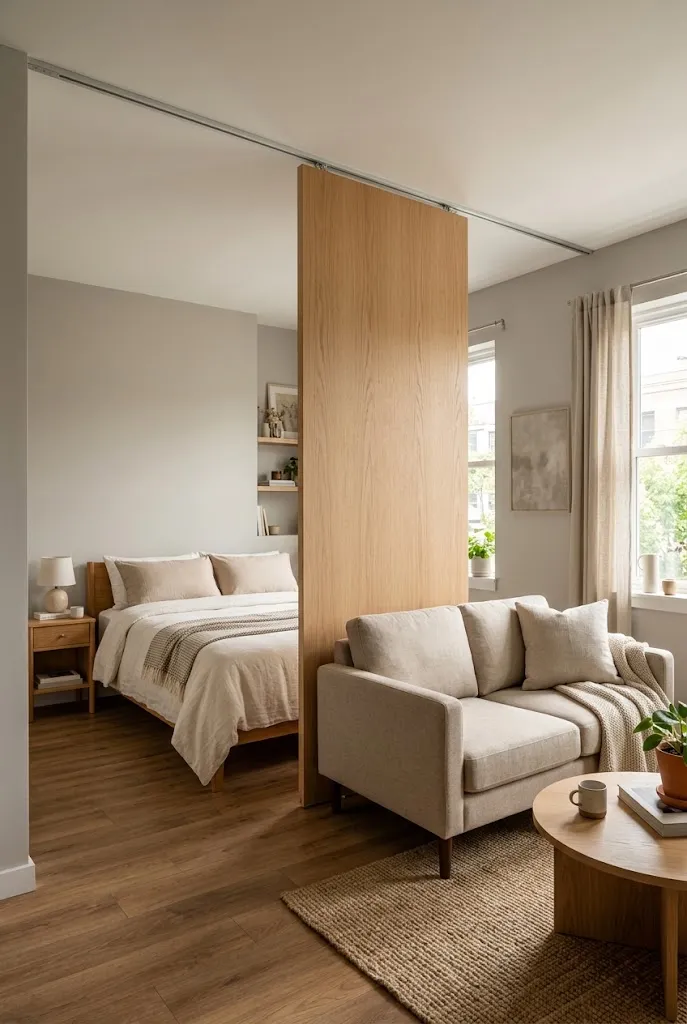
A sliding wood panel gives you more control over privacy.
Keep the panel open when you want the apartment to feel connected. Slide it closed when you want to hide the bed or create a quieter sleeping area.
Choose a panel with a simple track system that doesn’t take up valuable floor space.
7. Build a Wood Screen
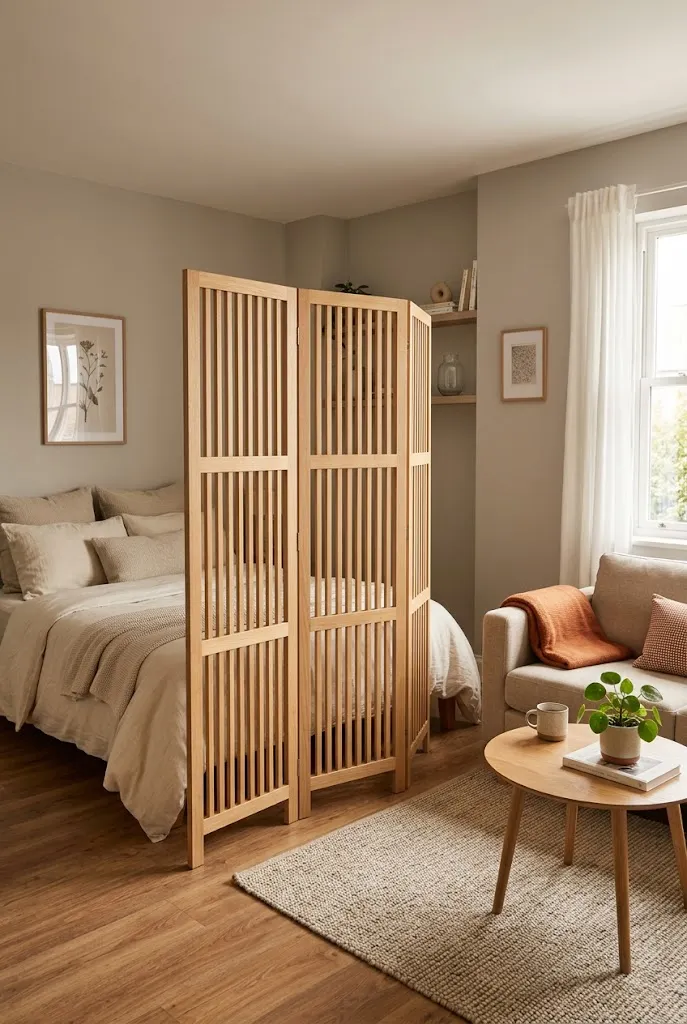
A freestanding wood screen is useful if you don’t want to make permanent changes to your apartment.
Choose a folding screen with several connected panels and position it wherever you need more separation. You can move it when you want to change your layout.
This is a practical choice for renters.
8. Separate the Home Office
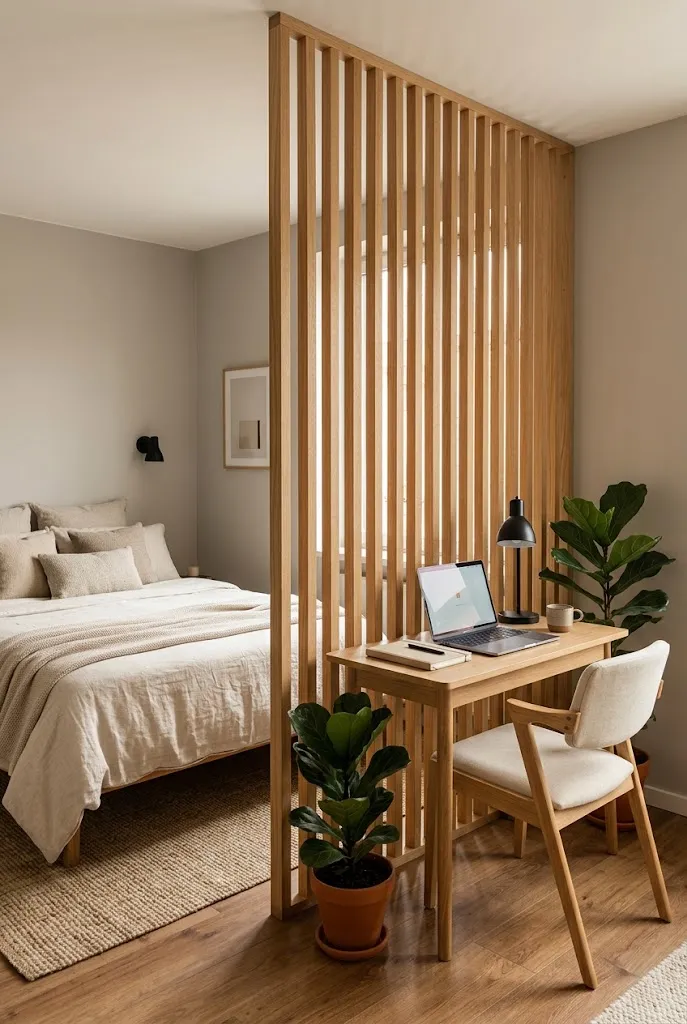
If you work from home, a wood divider can give your desk its own visual zone.
Place a narrow wood screen behind or beside the desk to separate it from your sleeping or living area.
A slatted design can provide separation without making the workspace feel boxed in.
9. Create a Wood Nook
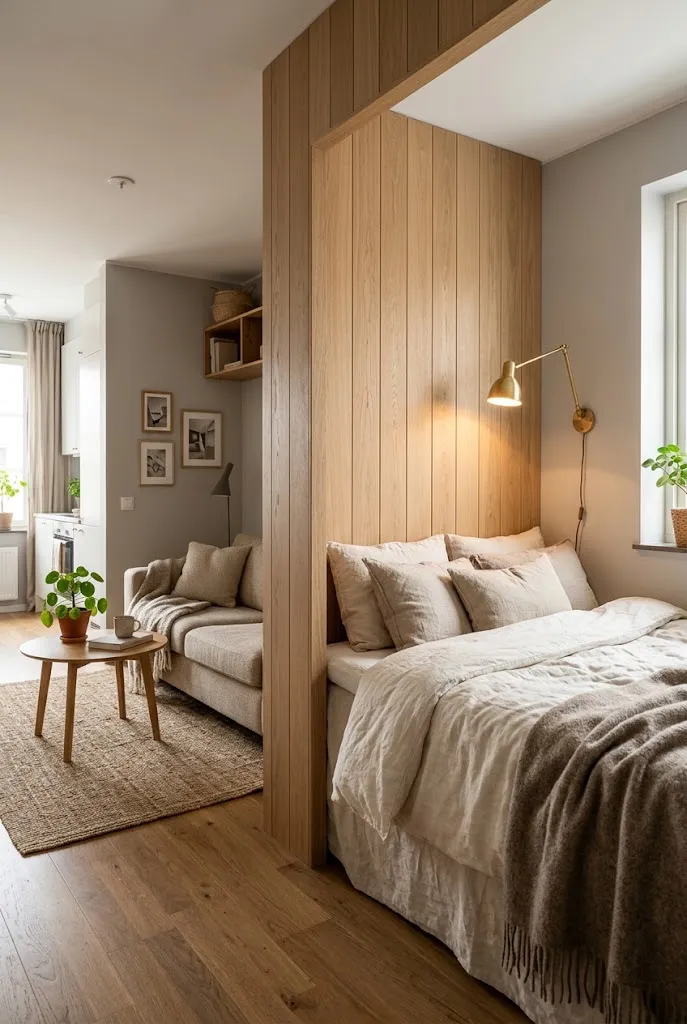
Use wood panels to create a small nook around your bed or desk.
You only need to cover one or two sides to make the area feel distinct. Add warm lighting, soft bedding, and a small rug to make the nook feel comfortable.
This works well when you want separate zones without adding a full partition.
10. Mix Wood and Glass
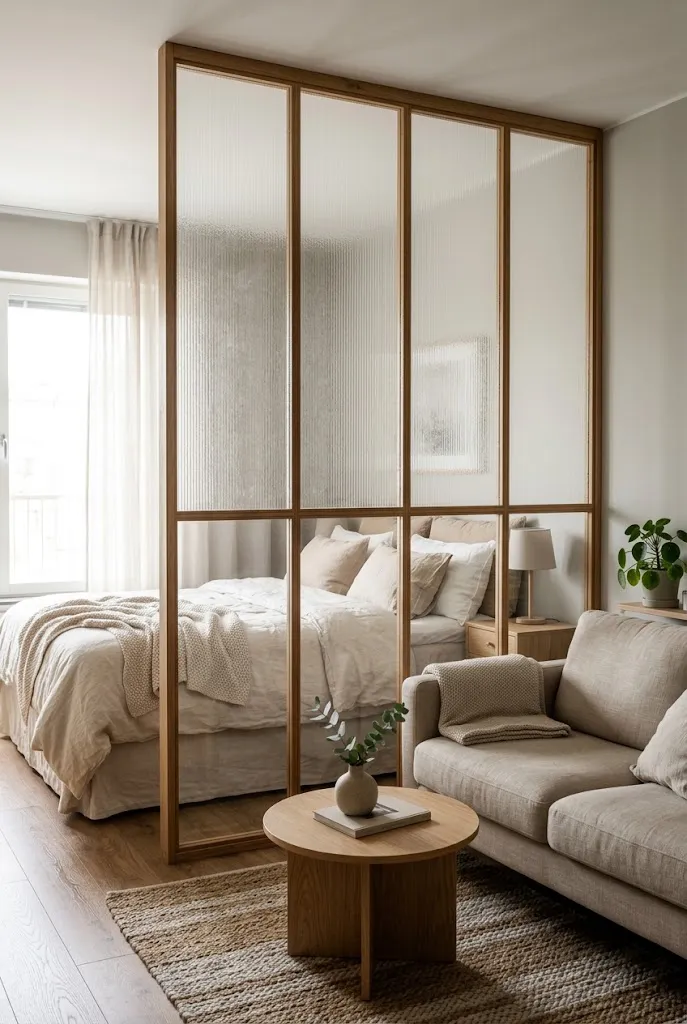
Wood and glass can create a divider that feels lighter than a solid wall.
Use a wood frame with clear or textured glass panels to separate the sleeping area while allowing light to pass through.
For extra privacy, choose textured or frosted glass instead of completely clear glass.
11. Add Built In Shelving
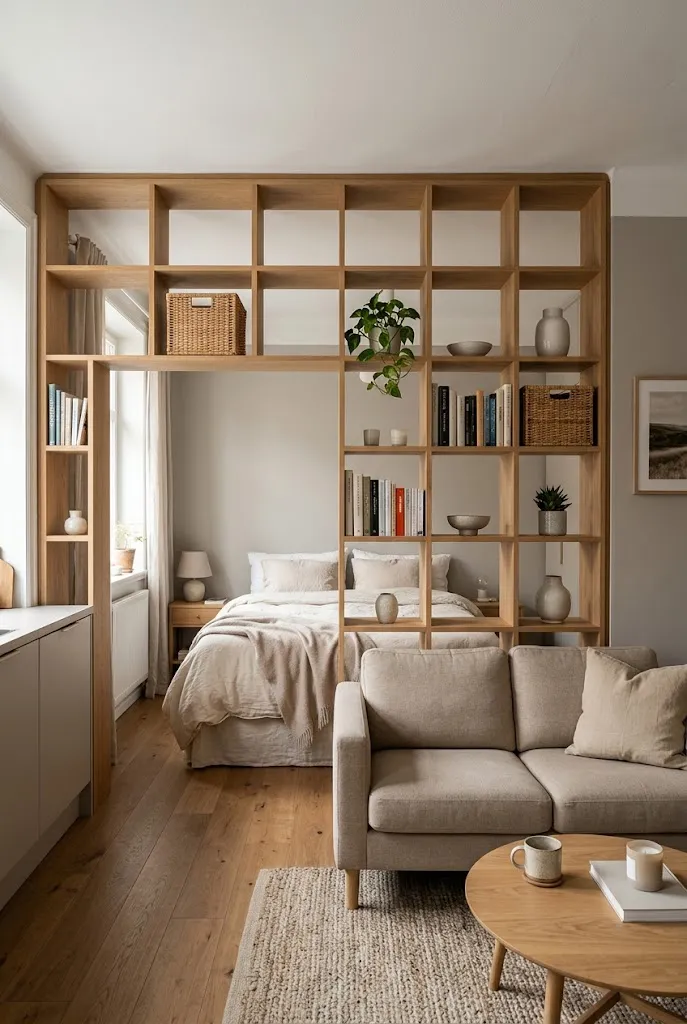
If you have enough wall space, consider a built in wood shelving divider.
A floor to ceiling unit can separate two areas while giving you plenty of room for books, baskets, plants, and personal items.
Keep some compartments open so the divider doesn’t become visually heavy.
12. Use a Curved Divider
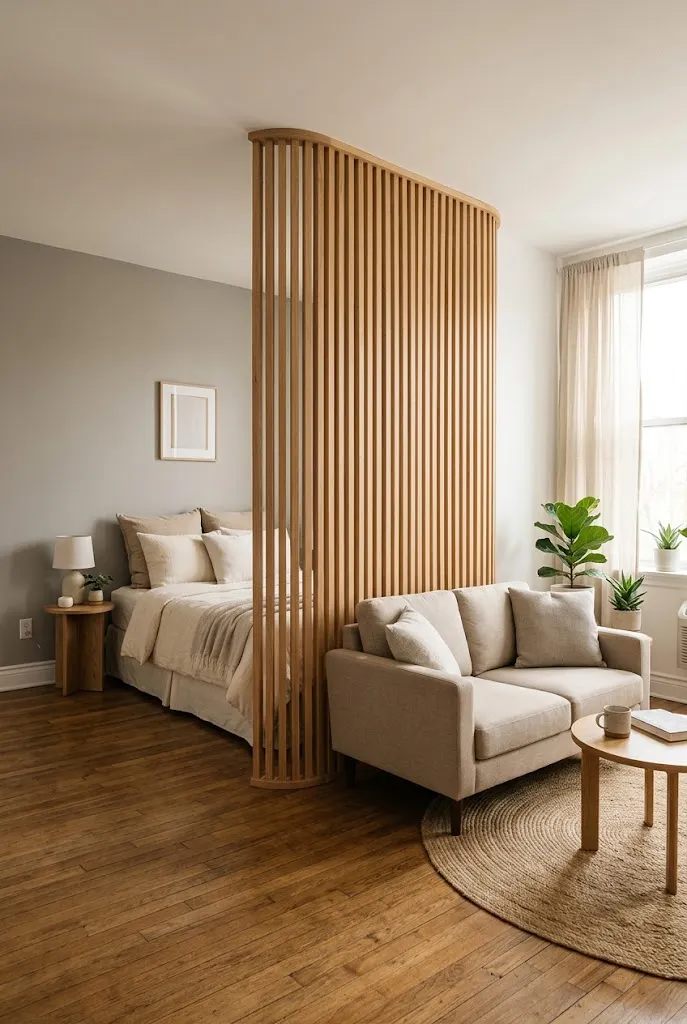
A curved wood divider can soften the look of a small studio.
Instead of creating a straight boundary, use curved panels or a rounded wood screen to guide the eye between different areas.
Pair the curved shape with rounded furniture or a circular rug for a cohesive look.
13. Try a Low Divider
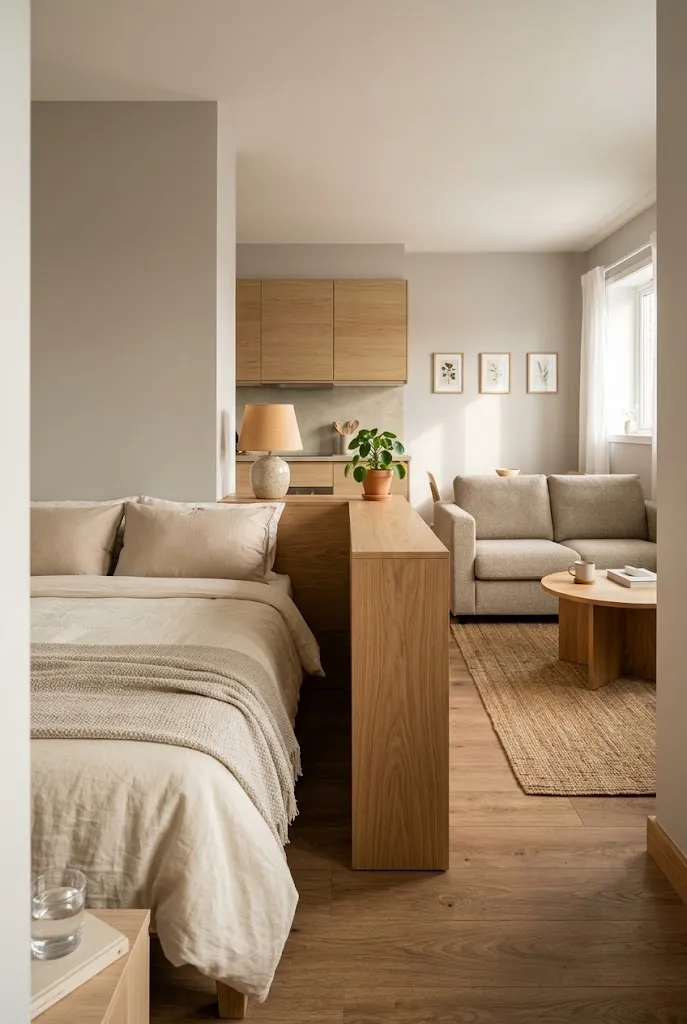
A low wood divider can separate the bed from the rest of the studio without blocking your view across the room.
This option works well when you want a visual boundary rather than complete privacy.
Use the top surface for books, small plants, lamps, or other lightweight decorations.
14. Add Vertical Panels
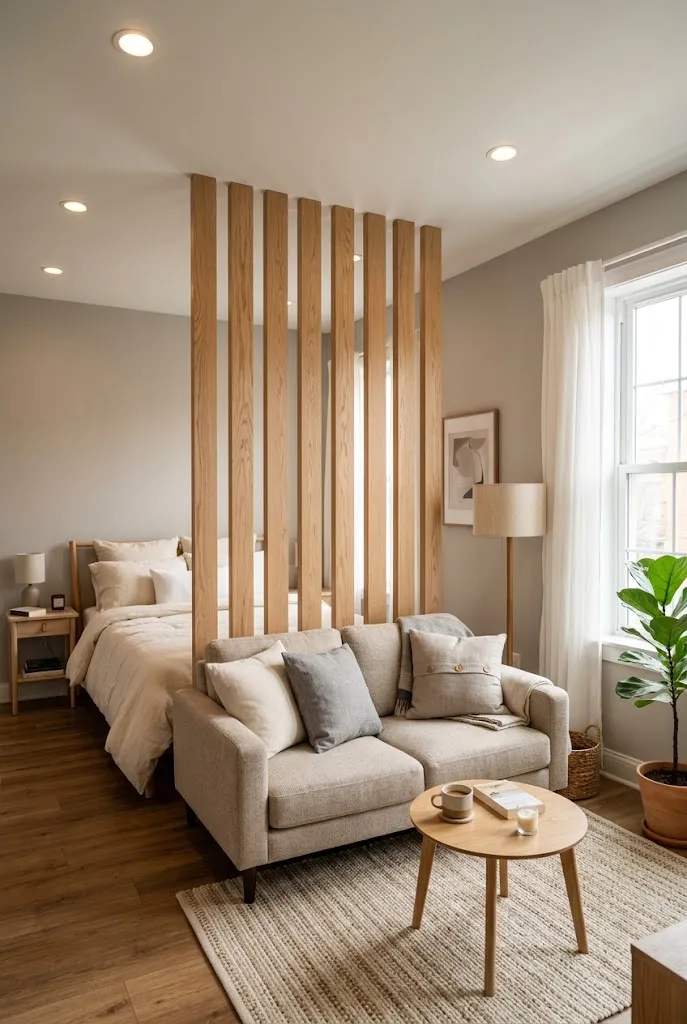
Tall wood panels can make the ceiling appear higher while creating a strong separation between spaces.
Place several narrow panels behind the sofa or beside the bed. Keep a small gap between each panel to maintain an open feeling.
This design works particularly well in studios with high ceilings.
15. Use a Pegboard Wall
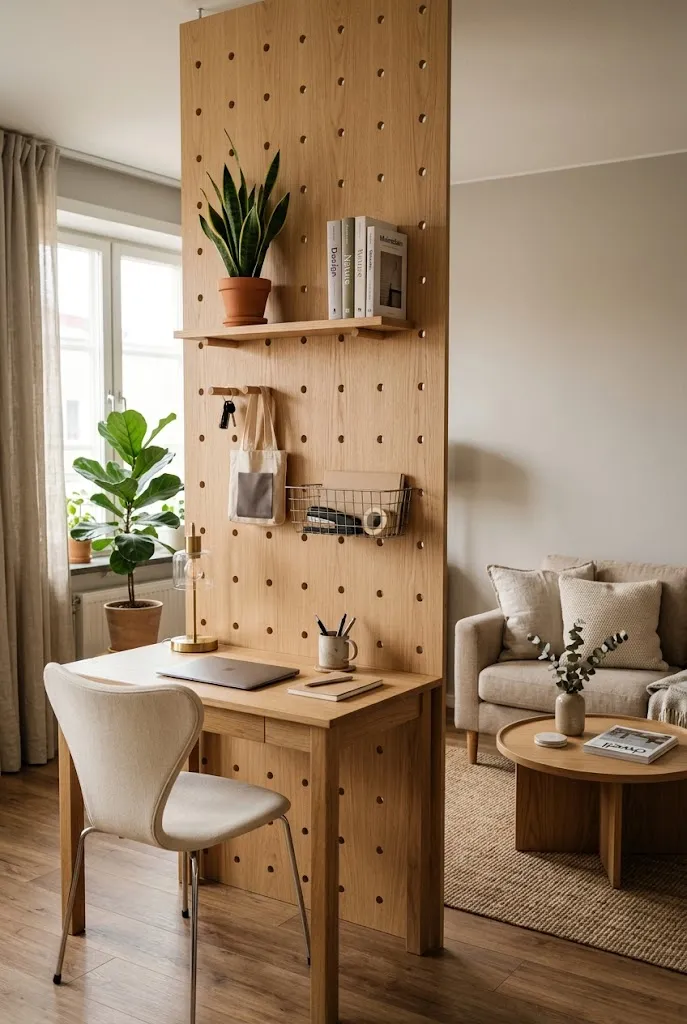
A wood pegboard can divide a workspace while adding flexible storage.
Attach hooks, small shelves, and organizers to the pegboard and use it between your desk and living area.
It gives you a practical divider while keeping frequently used items within easy reach.
16. Combine Wood and Plants
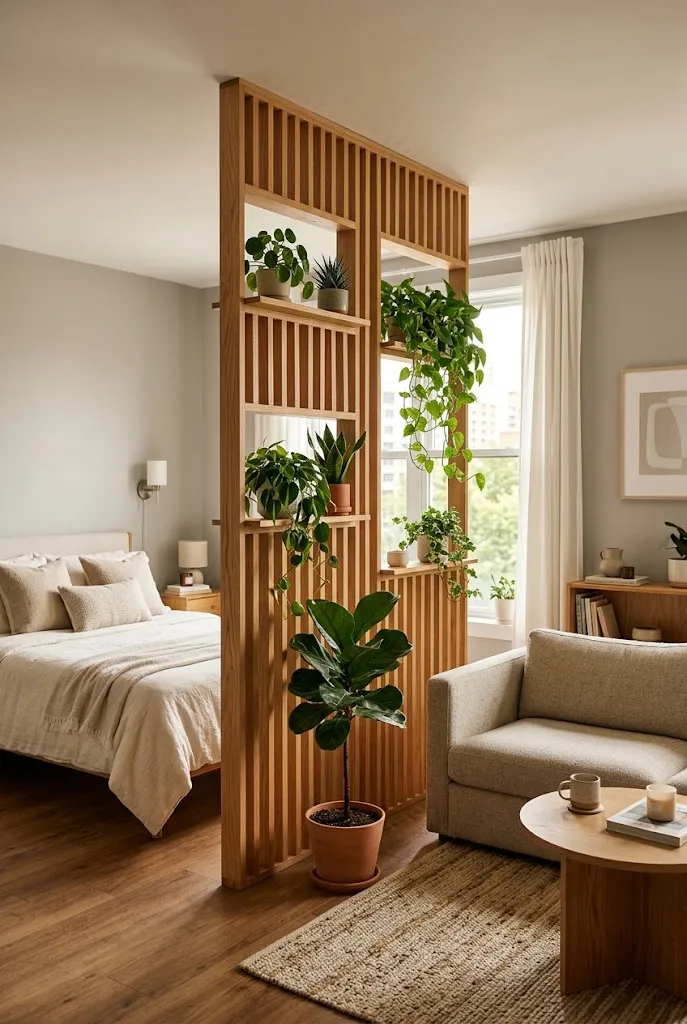
Wood and greenery are a natural combination for a studio apartment.
Use a wood screen or open shelf as the divider and place small plants throughout the openings. The greenery softens the structure and adds color without taking up much floor space.
Choose plants that suit the amount of natural light in your apartment.
17. Keep It Minimal
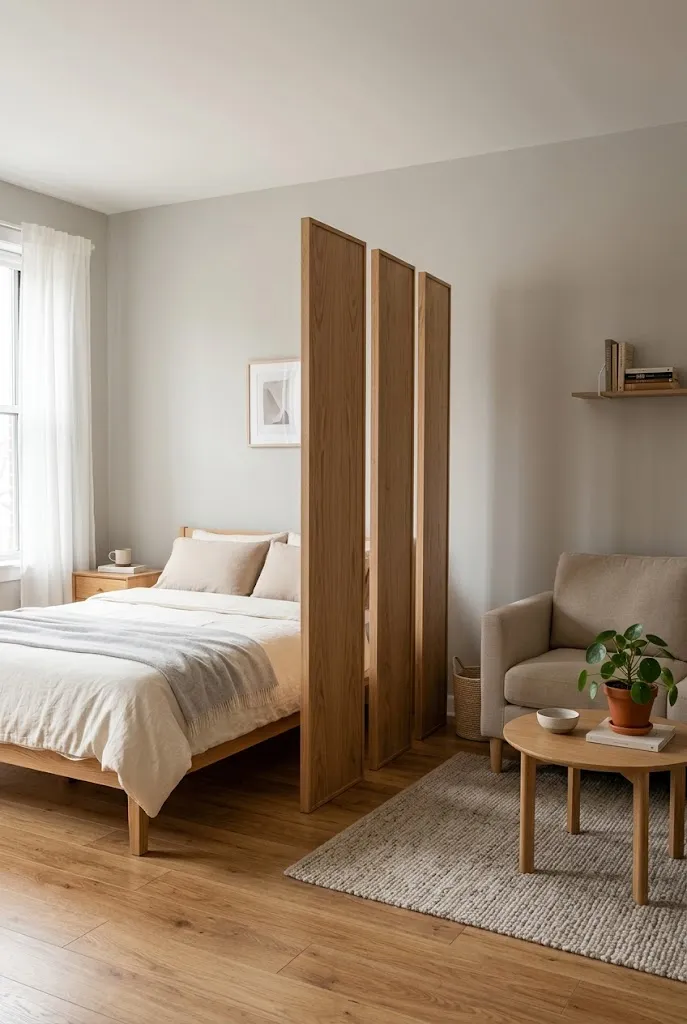
Sometimes the simplest wood divider works best.
A few vertical boards, a slim wood frame, or a narrow open shelf can create enough separation without making the studio feel crowded.
Keep the surrounding furniture simple and leave enough walking space around the divider. In a small apartment, an open layout usually feels better when every piece has a clear purpose.
Choose the Right Divider
The best wood divider depends on what you want from the space.
If privacy is your main concern, consider a sliding panel, tall screen, or partial wall. If you need storage, an open shelving unit can do two jobs at once.
For renters, a folding screen or freestanding shelf is easier to change later. If you want a permanent solution, built in shelving or a custom slatted divider can create a more integrated look.
Also consider the amount of natural light in your studio. Solid wood panels can make a darker apartment feel smaller, while slats, open shelving, and partial dividers allow more light to pass through.
Common Mistakes
A wood divider should help your studio feel organized, not crowded.
Avoid choosing a divider that is much wider or heavier than the furniture around it. Leave enough space for comfortable movement between zones.
It is also better to avoid filling every shelf or opening with decorations. A little empty space helps the divider feel lighter.
Finally, think about what you need the divider to accomplish before choosing its design. A beautiful screen may not be useful if you actually need storage or stronger privacy.
Final Thoughts
Wood dividers can make a studio apartment feel more organized without the permanence of a traditional wall. Slatted screens, open shelves, sliding panels, half walls, and simple wood frames can separate different zones while keeping the room connected.
Choose a design based on your space, privacy needs, storage requirements, and natural light. With the right placement, a wood divider can become both a practical feature and a beautiful part of your studio apartment decor.
FAQs
Are wood dividers good for studio apartments?
Yes. Wood dividers can separate sleeping, living, dining, and work areas without completely closing off the room. Open and slatted designs are especially useful when you want to maintain natural light.
What is the best wood divider for a small studio?
Open shelving and vertical slat dividers are practical choices because they create separation without feeling as heavy as a solid wall. Shelving also provides useful storage.
Can a wood divider provide privacy?
Yes. Tall wood panels, sliding screens, and closely spaced slats can provide more privacy around a bed or workspace. For greater privacy, choose a less open design.
Are wood dividers suitable for renters?
Freestanding screens, folding panels, and movable shelving are usually easier choices for renters because they don’t require permanent construction.
How do you make a wood divider look less bulky?
Choose an open or slatted design, keep the surrounding furniture simple, and avoid overcrowding the divider with decorations. Leaving gaps between panels can also make the room feel more open.
Community
Join the conversation
Add a useful idea, ask a specific question, or share what worked in your space. Every comment is reviewed before it appears.