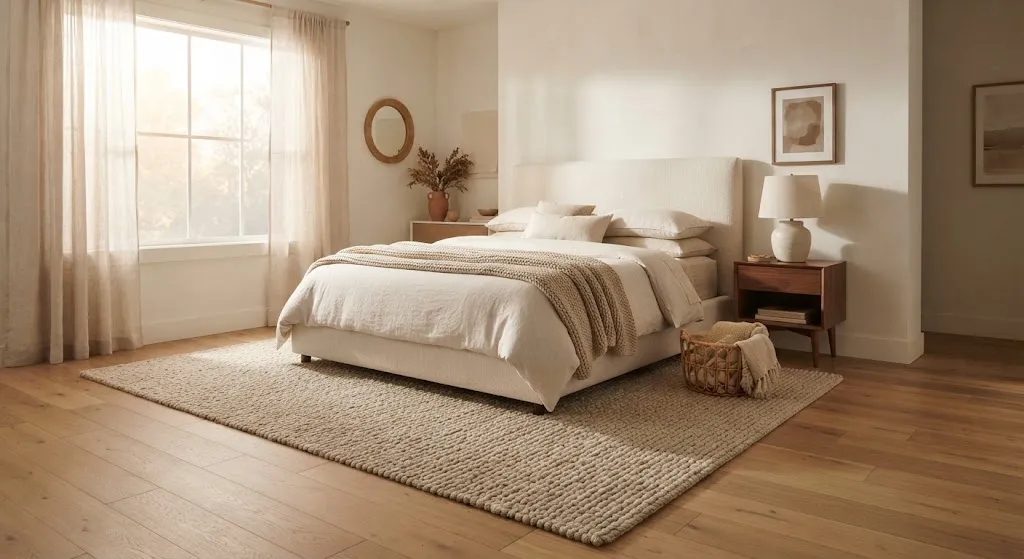
A cold, bare bedroom floor can make an otherwise cozy room feel unfinished. The right rug can change that feeling with softness, warmth, and a simple layer of texture. These cozy bedroom rug ideas are designed to help you create a bedroom that feels more comfortable without making a small space look crowded.
From plush shag styles and warm wool rugs to natural jute, vintage patterns, and simple bedside runners, there are plenty of ways to make a rug work with your existing decor. You will also find practical placement ideas for compact bedrooms where every inch matters. I’ve noticed that even a small rug placed where your feet land each morning can make the whole room feel more inviting. Use these ideas to find a style, size, and texture that fits your space and your everyday routine.
1. Layered Neutral Rugs
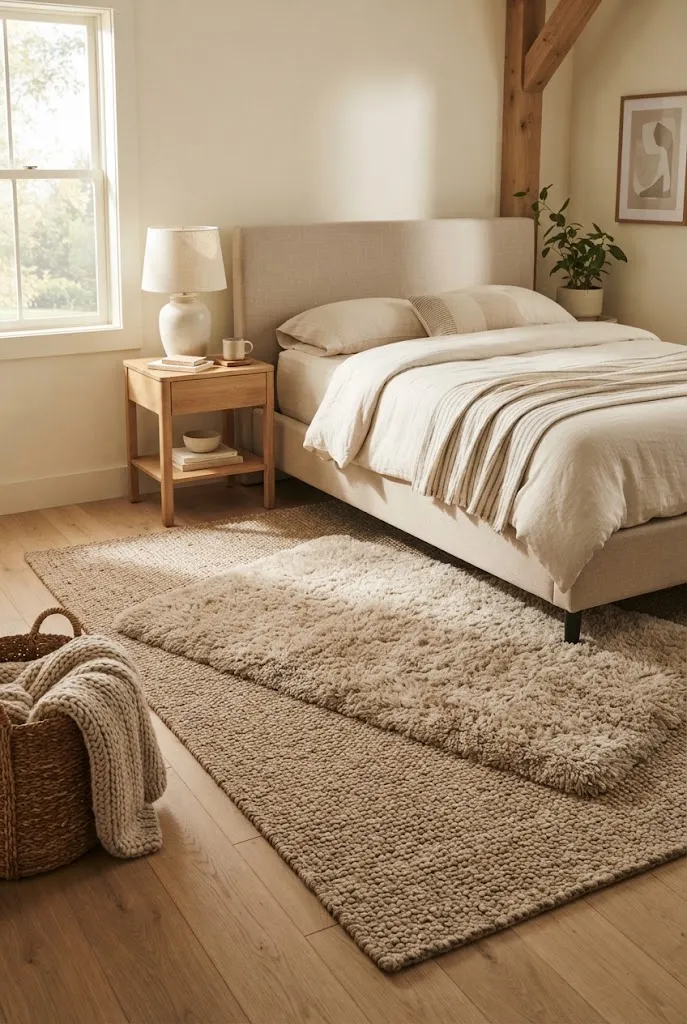
Layering rugs brings instant depth to a bedroom without requiring bold colors or bulky furniture. Start with a larger jute or flatweave rug underneath, then place a smaller plush rug beside the bed. The contrast between natural fibers and softness makes the floor feel warmer and more inviting.
Keep the upper rug slightly smaller so both textures remain visible. In my experience, this works especially well in compact bedrooms because the layered look adds visual interest without filling the room with extra decor. Choose oatmeal, cream, tan, or muted brown shades for a relaxed palette.
2. Plush Shag Rug
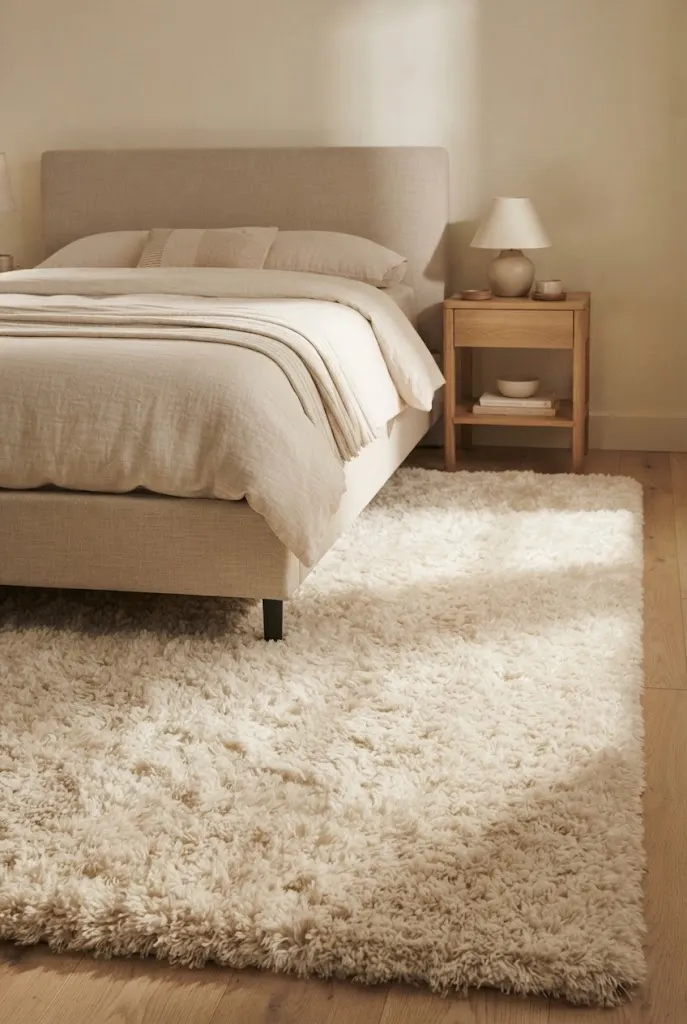
Few things make a bedroom feel softer underfoot than a thick shag rug. Look for a low-to-medium pile in ivory, oatmeal, or warm beige to create that plush feeling without overwhelming a small room.
- Place the rug where your feet land when getting out of bed.
- Choose a washable style if the bedroom gets frequent foot traffic.
- Keep nearby furniture simple so the fluffy texture remains the focal point.
- Vacuum regularly with the appropriate setting for the rug pile.
- Use a rug pad underneath to prevent sliding.
A shag rug works particularly well beside a bed with simple bedding and smooth furniture. The soft texture balances harder surfaces such as wood floors, metal frames, or minimalist nightstands.
3. Vintage Patterned Rug
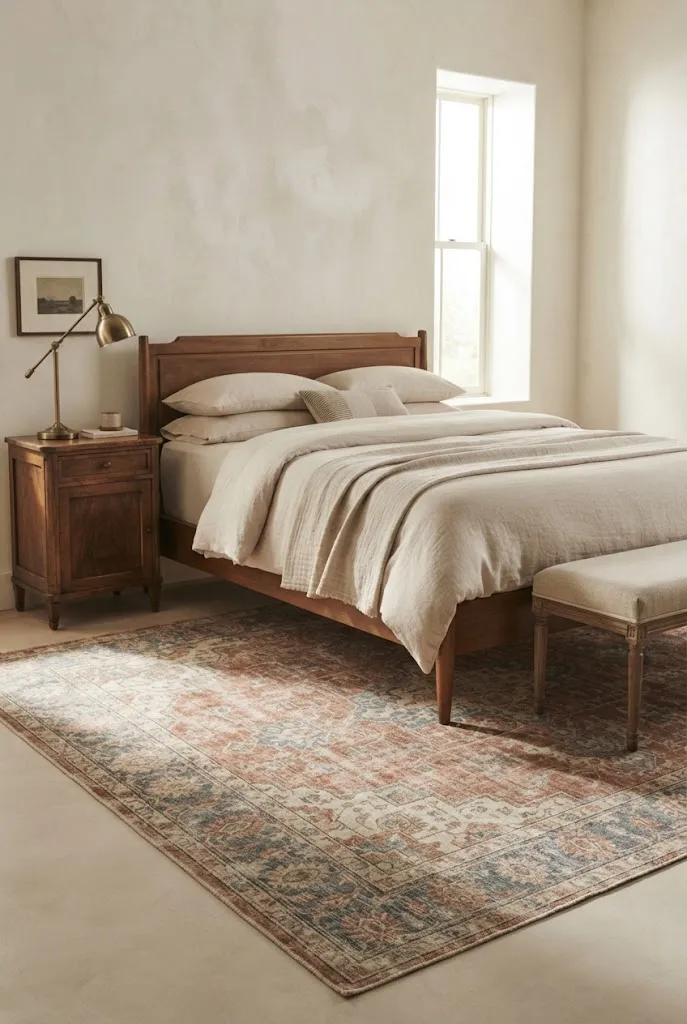
A faded patterned rug can give a simple bedroom personality without adding lots of accessories. Look for traditional motifs with softened colors rather than sharp, high-contrast patterns. Terracotta, dusty blue, cream, and muted olive can all add warmth while keeping the room calm.
Quick Tip: Choose a rug where the pattern looks slightly worn or washed out. A strong geometric design can compete with bedding and artwork, while vintage-inspired patterns tend to blend more naturally with existing decor.
I’ve noticed that vintage rugs are especially useful when a small bedroom feels too plain. The pattern adds character across a large floor area, helping the room feel intentionally decorated without needing several smaller decorative pieces.
4. Soft Bedside Runners
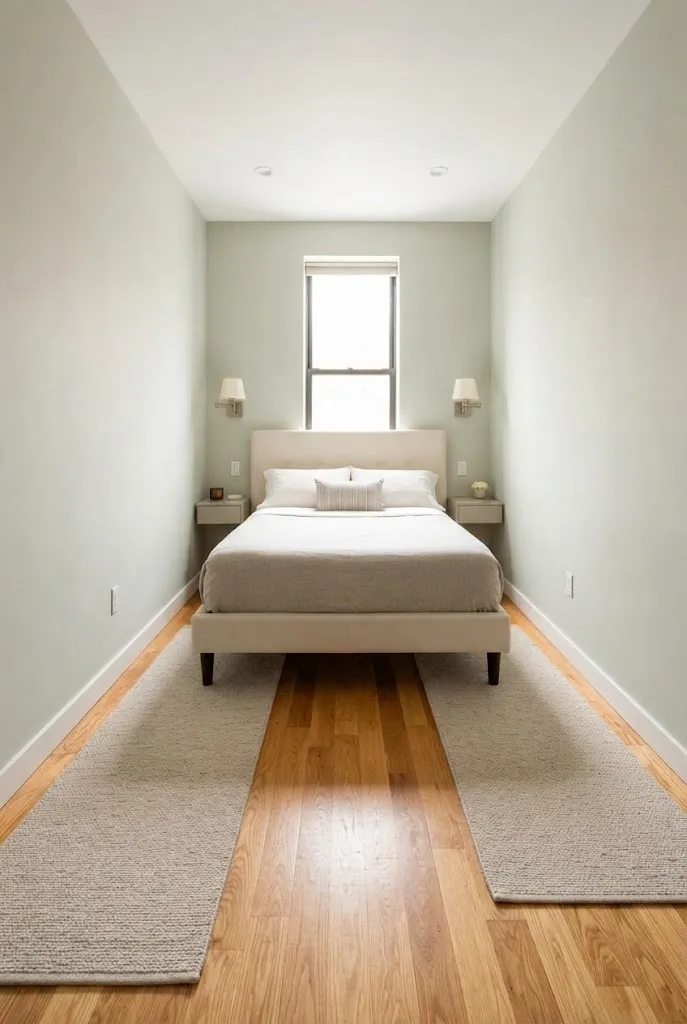
BEFORE: A full-size area rug may leave too little walking space beside the bed in a compact bedroom. The rug can also interfere with doors, drawers, or narrow pathways.
AFTER: Two slim runners create soft landing zones exactly where your feet need them. The bed stays visually grounded while more of the original floor remains visible, helping the room feel open.
For narrow bedrooms, runners can be more practical than forcing an oversized rug underneath the bed. Choose matching styles for symmetry, or use coordinating textures in similar neutral shades. Leave enough clearance around doors and drawers so the rug remains useful rather than becoming an obstacle.
5. Lower Bed Placement
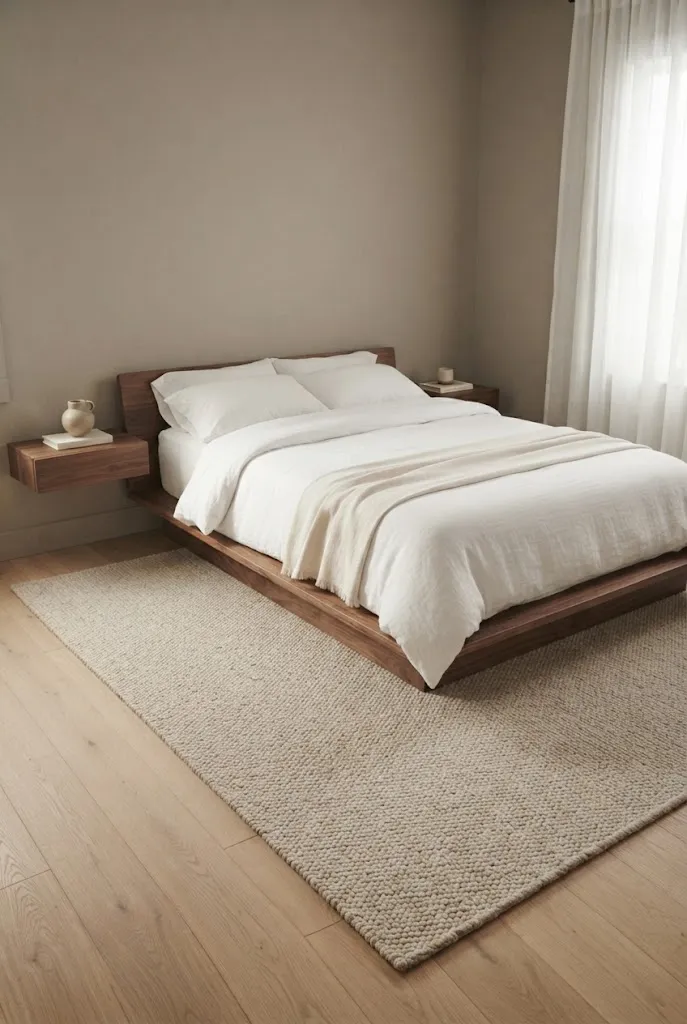
- Slide the rug underneath: Position the rug beneath the lower portion of the bed so it extends beyond the sides and foot.
- Center the rug: Check both sides carefully to keep the visible rug area balanced.
- Check the clearance: Make sure the rug does not interfere with doors, drawers, or walking paths.
- Test the layout: Walk around the bed before settling on the final position.
This placement gives you the softness of an area rug while keeping much of the original floor visible. It is especially useful in smaller rooms where a larger rug could crowd the layout. A visible border of rug around the bed also helps establish the sleeping zone without filling the entire floor.
6. Bedside Texture Contrast
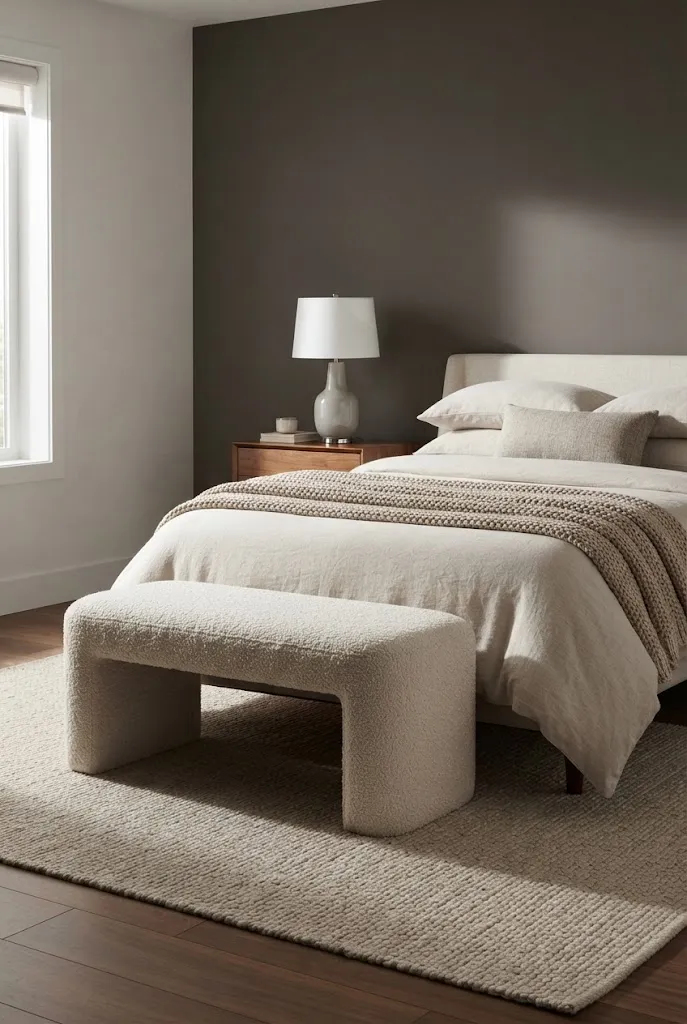
| Feature | Option A | Option B |
|---|---|---|
| Rug texture | Flatwoven | Plush pile |
| Visual effect | Clean and structured | Soft and relaxed |
| Best pairing | Boucle or linen bedding | Smooth cotton or wood furniture |
| Maintenance | Easier to vacuum | Needs more frequent care |
Texture contrast can make a simple bedroom feel layered without adding more colors. Pair a flatter rug with plush bedding, boucle furniture, or chunky knits, or reverse the combination with a soft rug and smoother furniture. The contrast gives the room depth while keeping the overall palette controlled. Choose textures based on both comfort and cleaning needs.
7. Round Bedside Rug
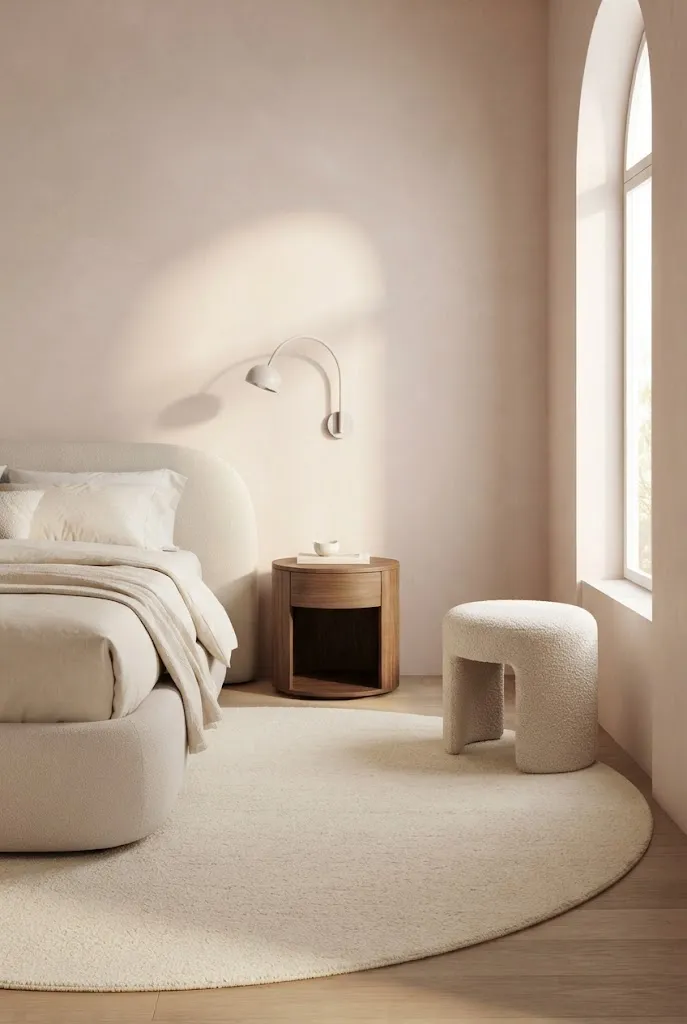
DO:
- Place the round rug beside the bed where your feet naturally land.
- Keep at least part of the rug visible around the nightstand.
- Choose a soft neutral shade to connect with the bedding.
- Use a rug pad underneath on smooth flooring.
DON’T:
- Hide most of the rug underneath the bed.
- Choose an oversized circle that blocks the walking path.
- Mix several competing patterns in the same small area.
- Let the rug overlap doors or drawers.
A round rug breaks up the straight lines common in compact bedrooms and creates a softer visual rhythm. It works especially well beside a bed with curved furniture or rounded lighting. For a subtle effect, choose oatmeal, beige, or ivory and let the unusual shape provide the visual interest.
8. Warm Wool Rug
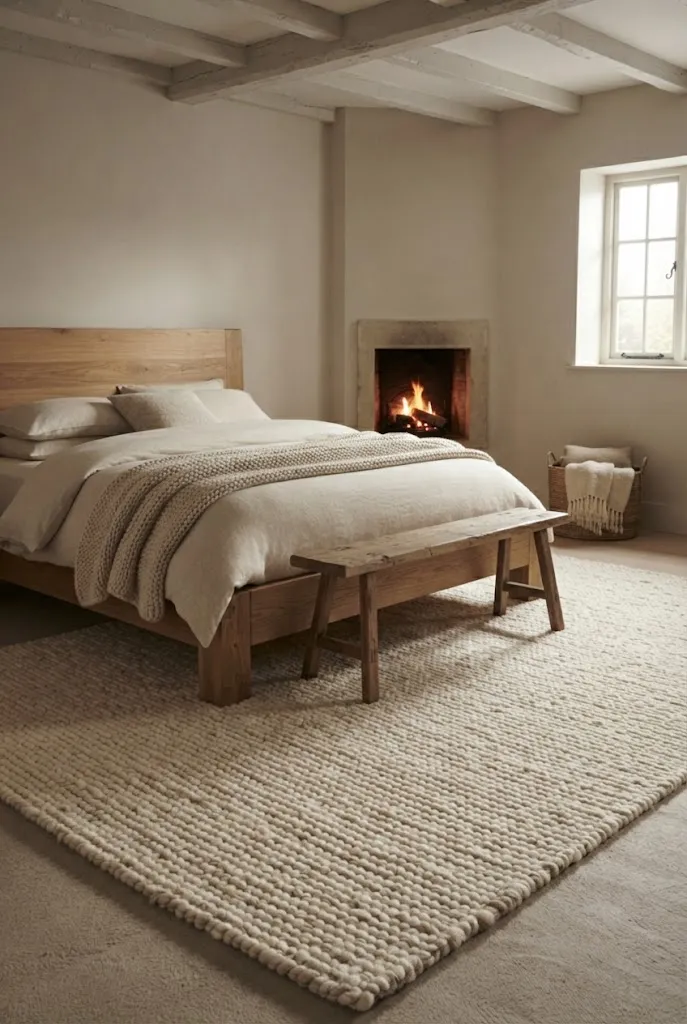
Cost: Medium to high | Time: Quick placement | Skill Level: Beginner
Best For: Cold floors and cozy bedrooms | Works In: Bedrooms with wood or laminate flooring
Result: Softer underfoot feel and added visual warmth
Wool brings natural texture and a comfortable feel to bedrooms, making it especially useful when the floor feels cold or visually hard. A warm ivory or oatmeal shade keeps the space light while adding subtle depth. I’ve noticed that wool works beautifully with linen, wood, and woven accessories because the materials feel naturally connected.
9. Colorful Accent Rug
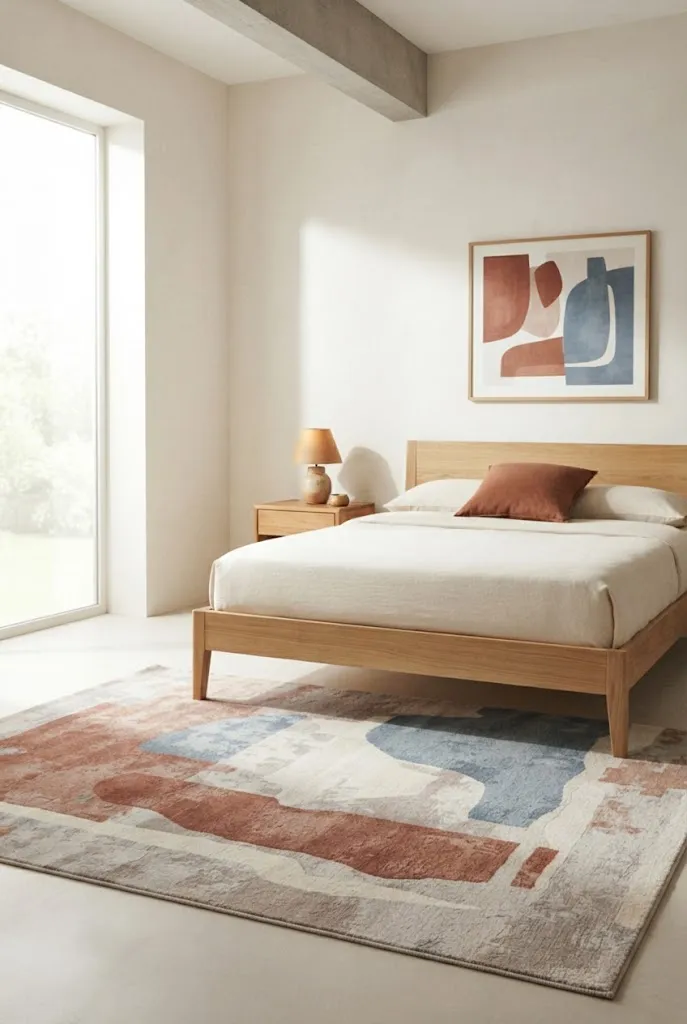
A little color underfoot can change the character of a neutral bedroom without requiring a complete makeover. Start with one muted shade already present in the room, such as rust from a throw pillow or dusty blue from artwork, then choose a rug that repeats it subtly.
Keep the remaining colors restrained so the rug has room to stand out. In a small bedroom, a patterned accent rug can also replace the need for several decorative accessories. Look for softened colors rather than highly saturated tones if you want warmth without making the room feel visually busy.
10. Jute Bedroom Rug
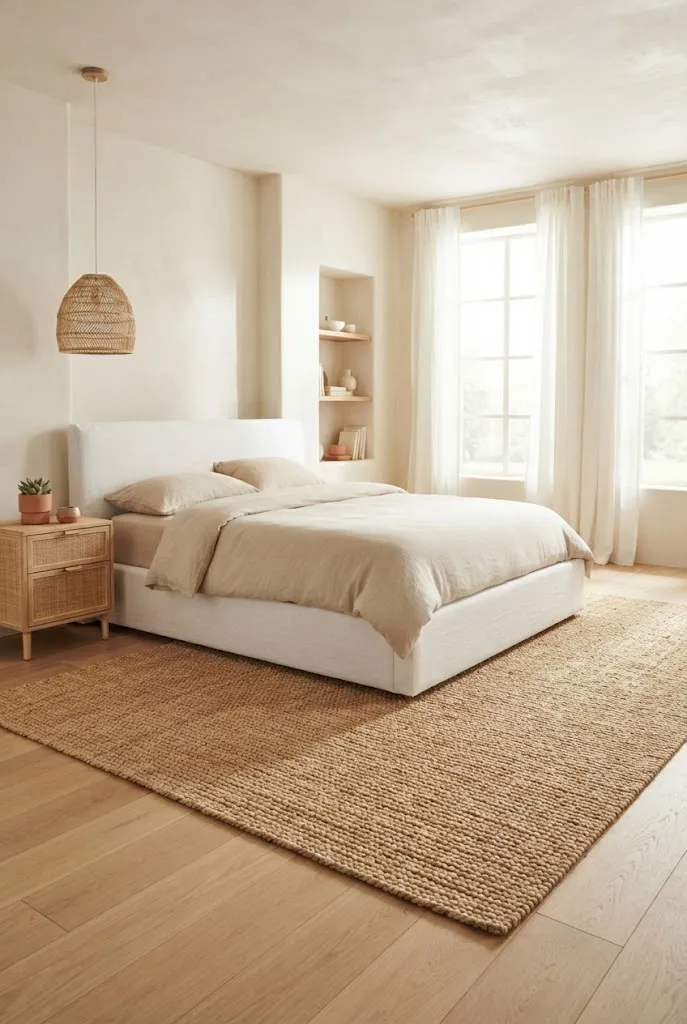
- Choose a tightly woven jute rug for a cleaner, more refined bedroom look.
- Keep bedding soft with cotton, linen, or lightweight quilts.
- Add one or two woven accessories to connect the natural textures.
- Leave enough floor around the rug to prevent the room from feeling crowded.
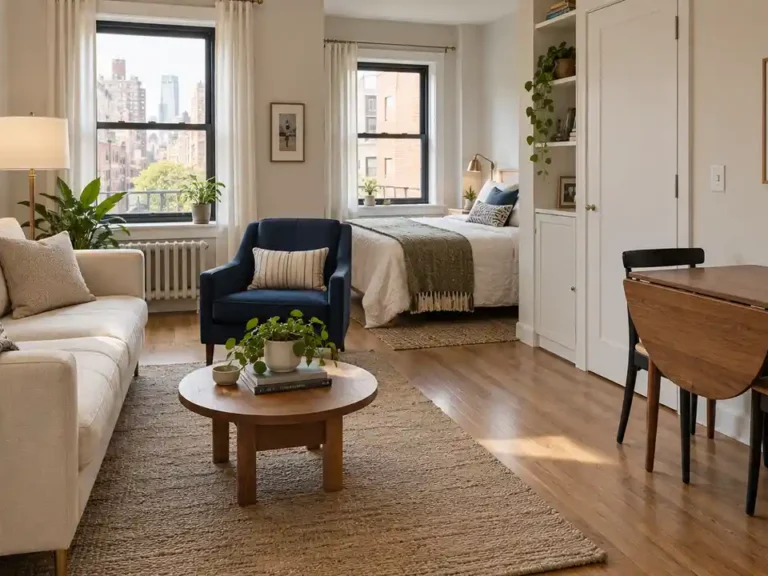
Natural fiber rugs add warmth through texture rather than bright color. Jute pairs especially well with light wood, cream bedding, rattan, and earthy accents. For a small apartment bedroom, a neutral jute rug can make the floor feel intentional while keeping the overall palette light and visually calm.
11. Cream Textured Rug
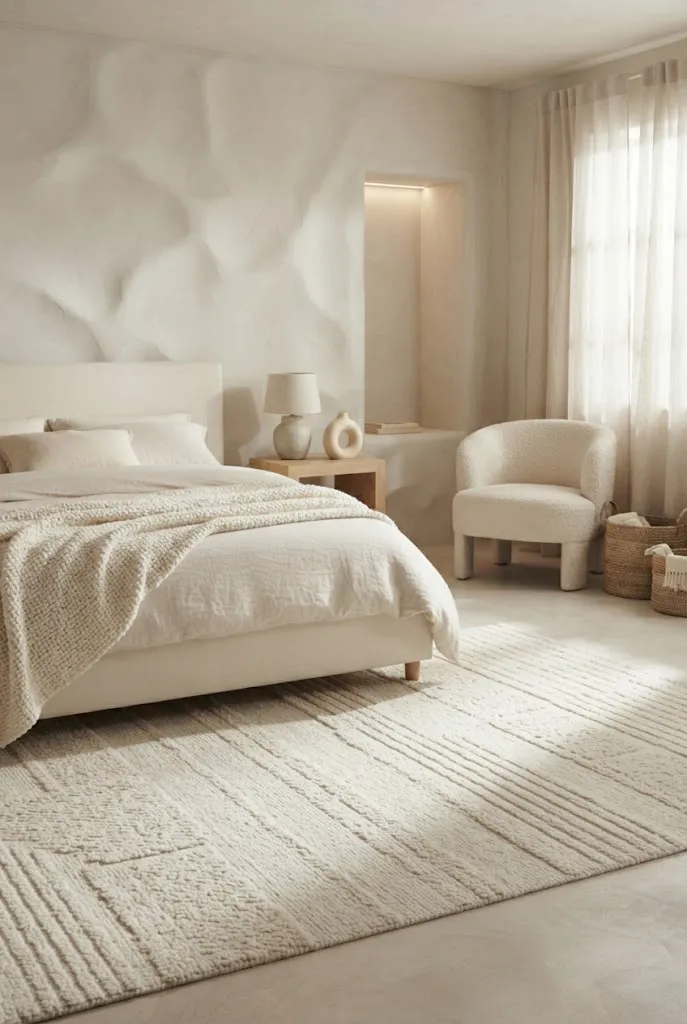
Quick Tip: Choose a cream rug with visible texture rather than a completely flat surface. A subtle loop, ribbed weave, or raised pattern adds dimension while keeping the color quiet. If the bedroom receives heavy foot traffic, select a material that is easy to clean and maintain.
Cream-on-cream layering works beautifully when different textures carry the visual interest. Pair the rug with linen bedding, boucle upholstery, woven baskets, or a knitted throw rather than introducing many new colors. The result feels warm and layered while maintaining the airy quality that smaller bedrooms often need.
12. Rug Under Bed
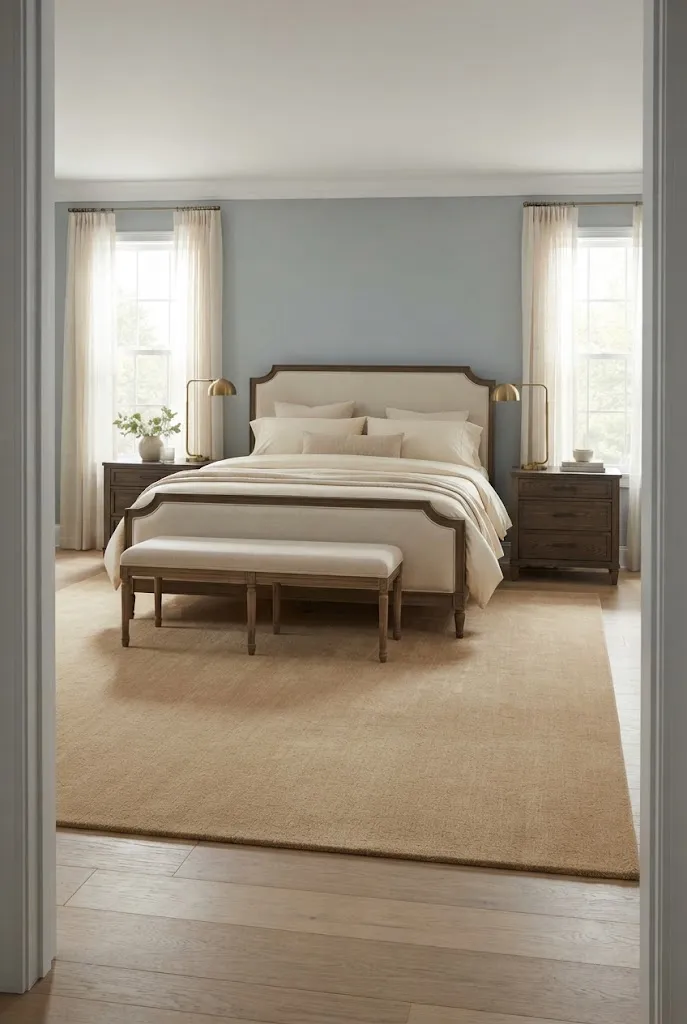
BEFORE: A bed sitting directly on a hard floor can leave the sleeping area feeling visually disconnected. Bare flooring may also feel cold when you step out of bed in the morning.
AFTER: Positioning an appropriately sized rug beneath the bed visually anchors the entire sleeping zone. The rug creates a softer transition between the bed, nightstands, and surrounding floor.
Measure the available floor area before buying so the rug does not interfere with doors or drawers. Ideally, it should extend beyond the sides and foot of the bed enough to create useful stepping space. For smaller bedrooms, choose a size that defines the sleeping area without covering nearly every visible section of flooring.
13. Soft Geometric Rug
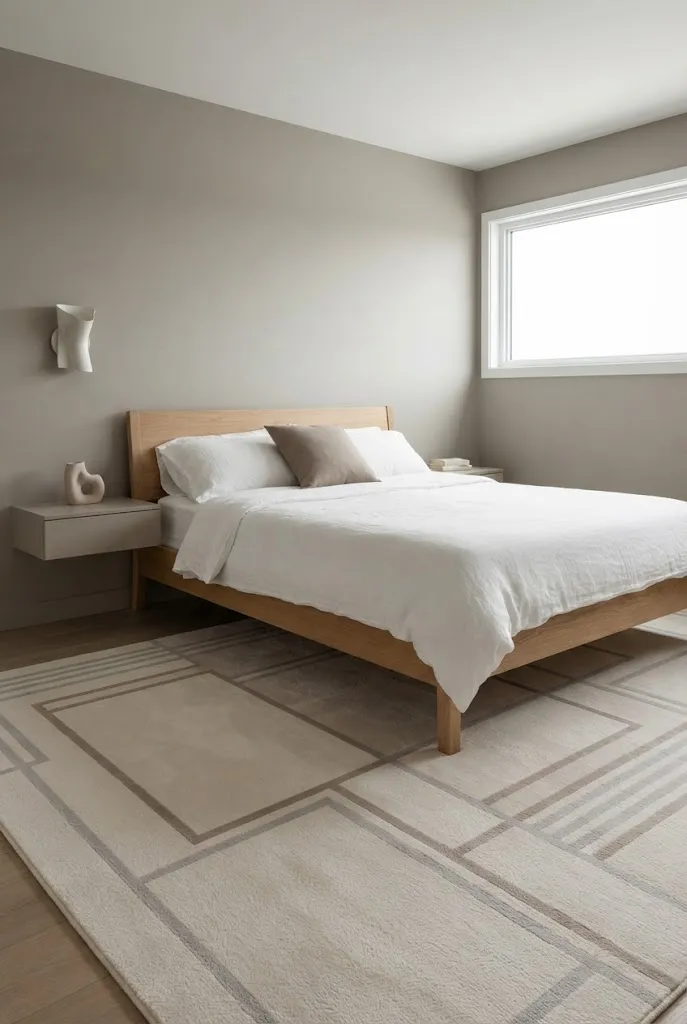
- Choose muted colors: Look for geometric patterns in cream, beige, taupe, or soft gray so
- the design adds interest without overpowering the bedroom.
- Match one accent: Repeat one rug color in a pillow, throw, artwork, or small decorative object for a connected look.
- Keep furniture simple: Use clean-lined pieces around the rug so the pattern remains easy to see.
- Check the scale: Smaller bedrooms usually benefit from medium or subtle geometric shapes rather than very large, bold designs.
Geometric patterns can give a cozy bedroom a more structured appearance while still feeling warm. The key is choosing softened colors and a pattern that does not compete with the bedding. I’ve found that repeating one rug color elsewhere in the room helps the design feel intentional rather than overly decorated.
Conclusion
The right bedroom rug can add much more than softness underfoot. It can define the sleeping area, introduce texture, warm up hard flooring, and make a small room feel more finished. Whether you prefer natural jute, plush shag, vintage patterns, or simple neutral textures, these cozy bedroom rug ideas give you plenty of inspiration to start with.
I’ve seen how small changes like a thoughtfully placed rug can completely shift the way a space feels. Pick one idea that fits your room, make a simple update, and enjoy the difference. Save this post on Pinterest for later, and share it with anyone planning a cozy bedroom refresh.
Community
Join the conversation
Add a useful idea, ask a specific question, or share what worked in your space. Every comment is reviewed before it appears.