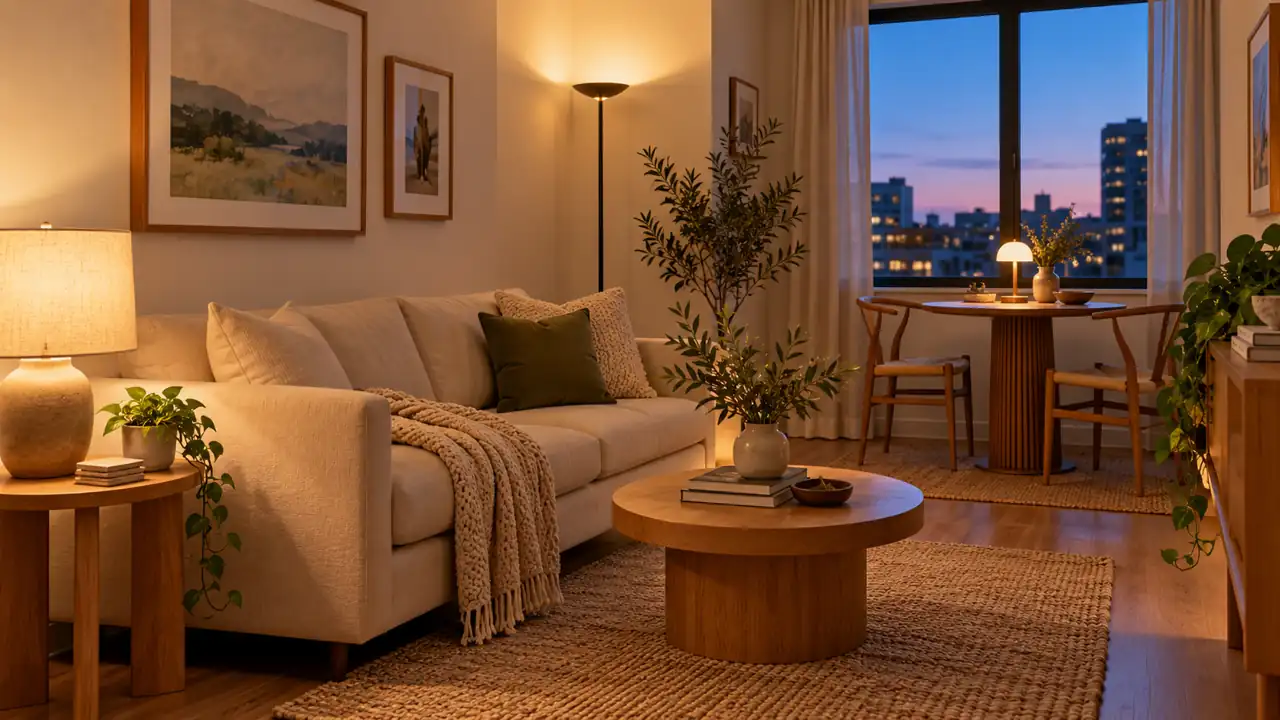
A dark apartment can feel smaller before you even put the furniture down. These renter friendly lighting ideas help you brighten the corners you actually use, without making permanent changes to the wiring. Start with the spot that frustrates you most: a shadowy kitchen counter, a reading chair, or a bedside table that disappears after sunset. A few carefully placed light sources can make those everyday moments more comfortable. The ideas below combine portable lamps, suitable battery fixtures, and simple daylight improvements. Check your lease before mounting anything, follow each product’s installation instructions, and keep cords out of walking routes. You can build a warmer lighting setup gradually, one useful corner at a time.
1. Floor Lamp Uplighting
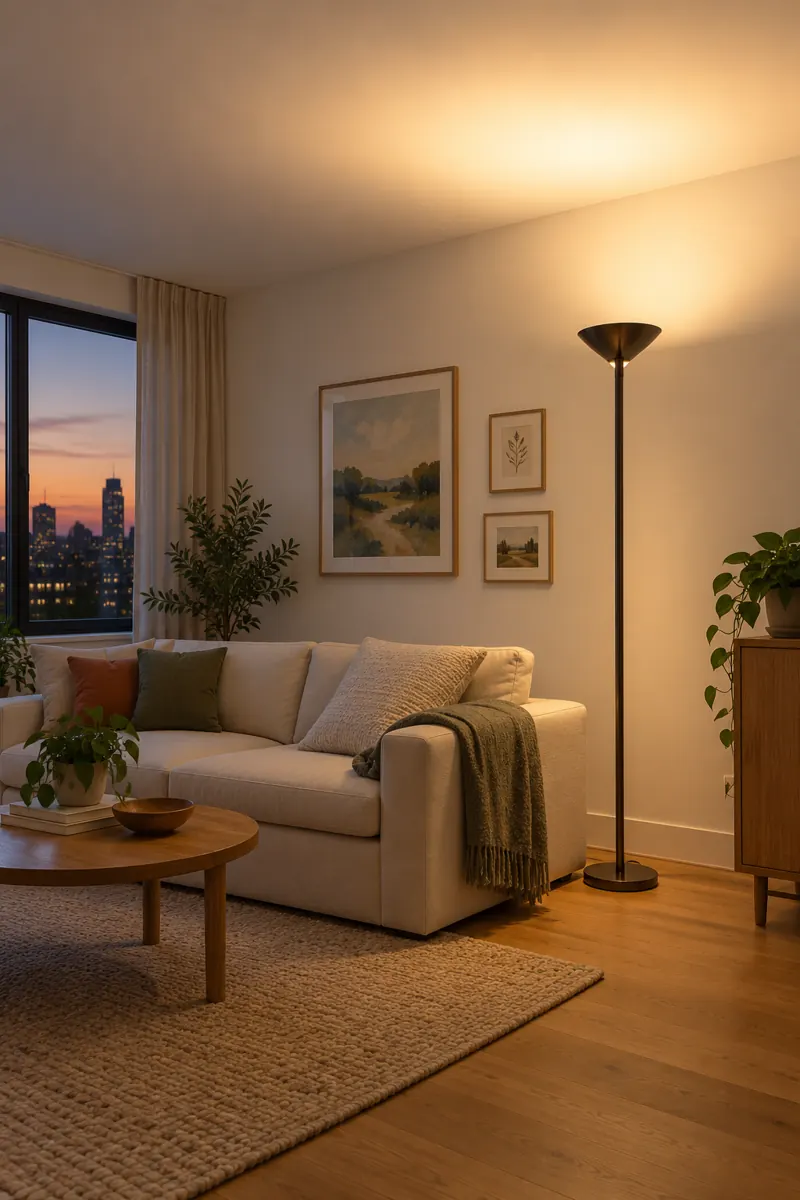
A gloomy ceiling can make an otherwise lovely room feel heavy. Place an LED uplighter beside the sofa and aim its light toward a pale, bare ceiling. The reflected glow spreads beyond the lamp itself, softening the contrast between a bright seating area and the surrounding room.
Choose a stable base that fits behind your side table without blocking a doorway. Keep the shade and bulb clear of curtains, following the fixture’s clearance instructions. Switch it on alongside your usual overhead light, then compare the room with the overhead off to find your preferred balance.
2. Linen Shade Lamps
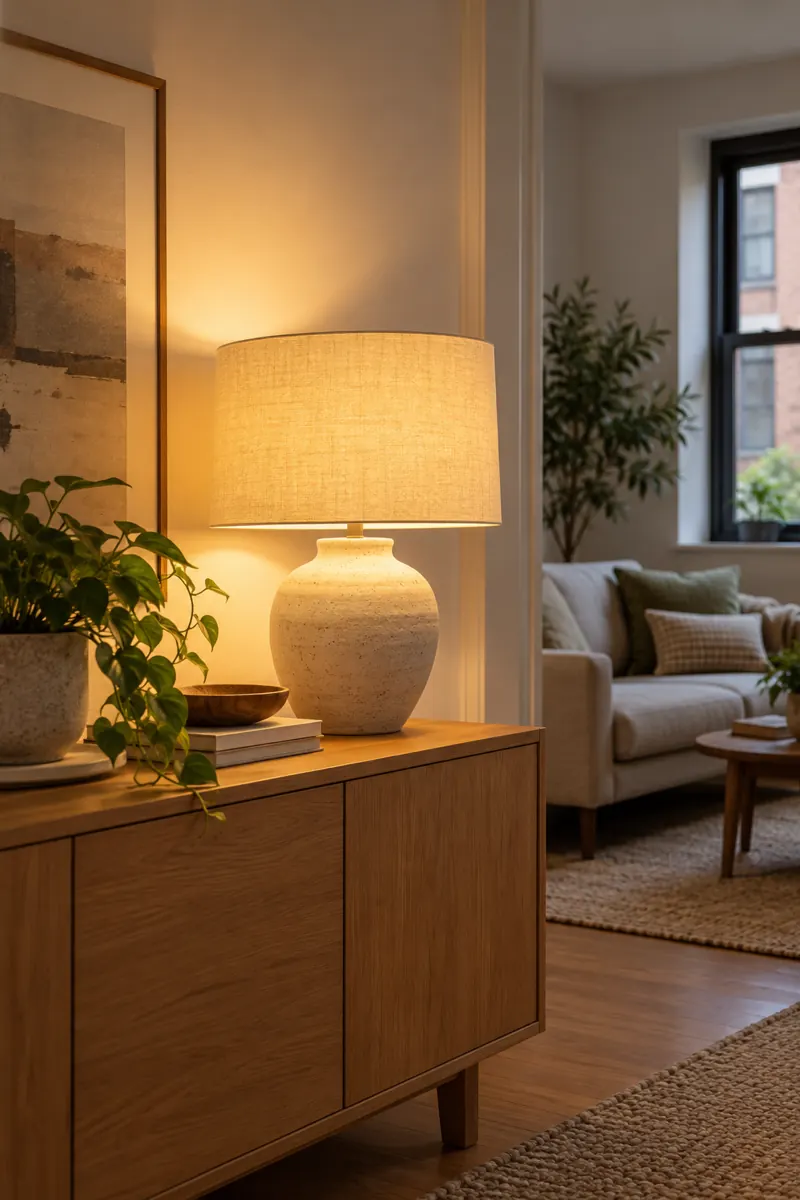
- Choose a broad, light-colored shade that allows light through its sides.
- Set the lamp on a stable table close to a wall outlet.
- Check the shade hides the bulb from your usual seated position.
- Use an LED bulb within the fixture rating and specified bulb type.
Bare corners look gentler when the light itself has a soft edge. A linen-style shade diffuses the bulb’s brightness across nearby surfaces, which helps a small sitting area feel comfortable after dark. Test the lamp from the sofa before deciding whether a taller or wider shade suits the room.
3. Plug-In Reading Lamps
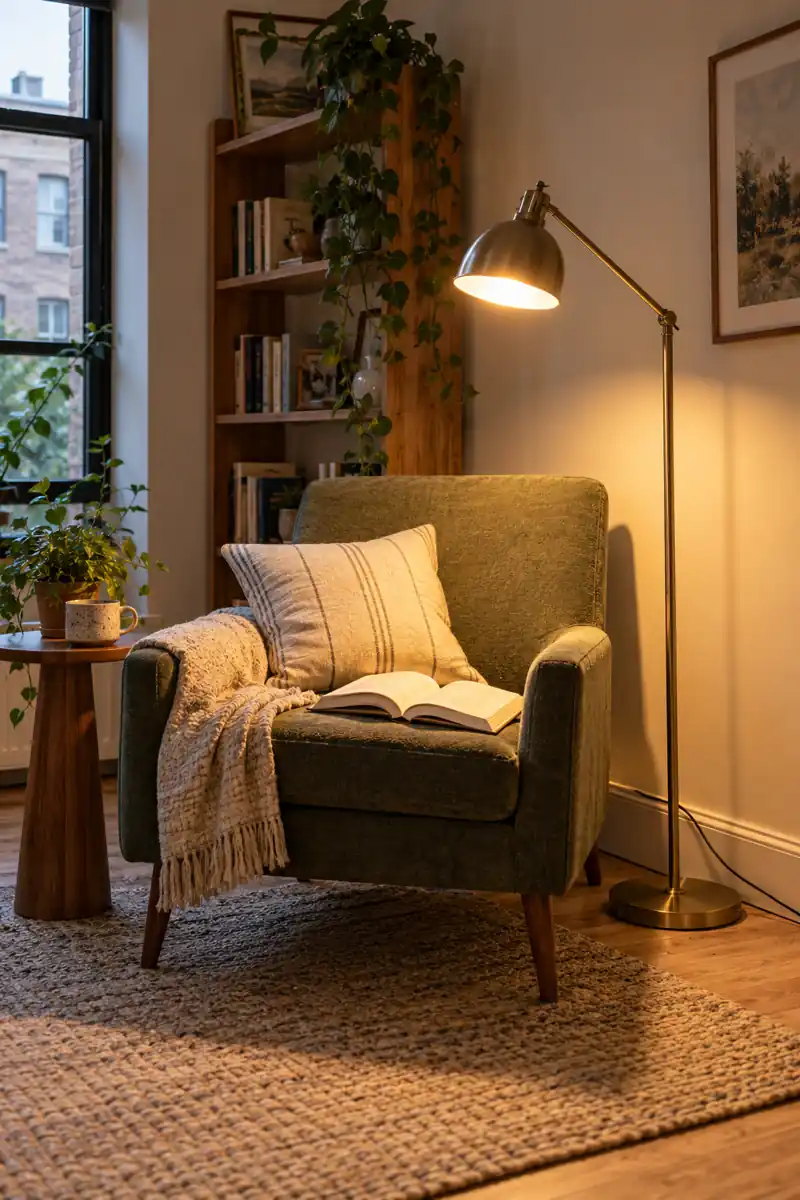
Quick Tip:
A good reading spot needs light on the page. Position an adjustable lamp slightly beside and behind your shoulder. Move the shade until your hand no longer casts a distracting shadow.
An adjustable floor lamp makes a reading corner possible without adding wall wiring. Choose a model with a weighted base and enough reach for your chair. Run its cord along the wall rather than across the floor, and keep the bulb hidden from your direct line of sight.
4. Rechargeable Bedside Lamps
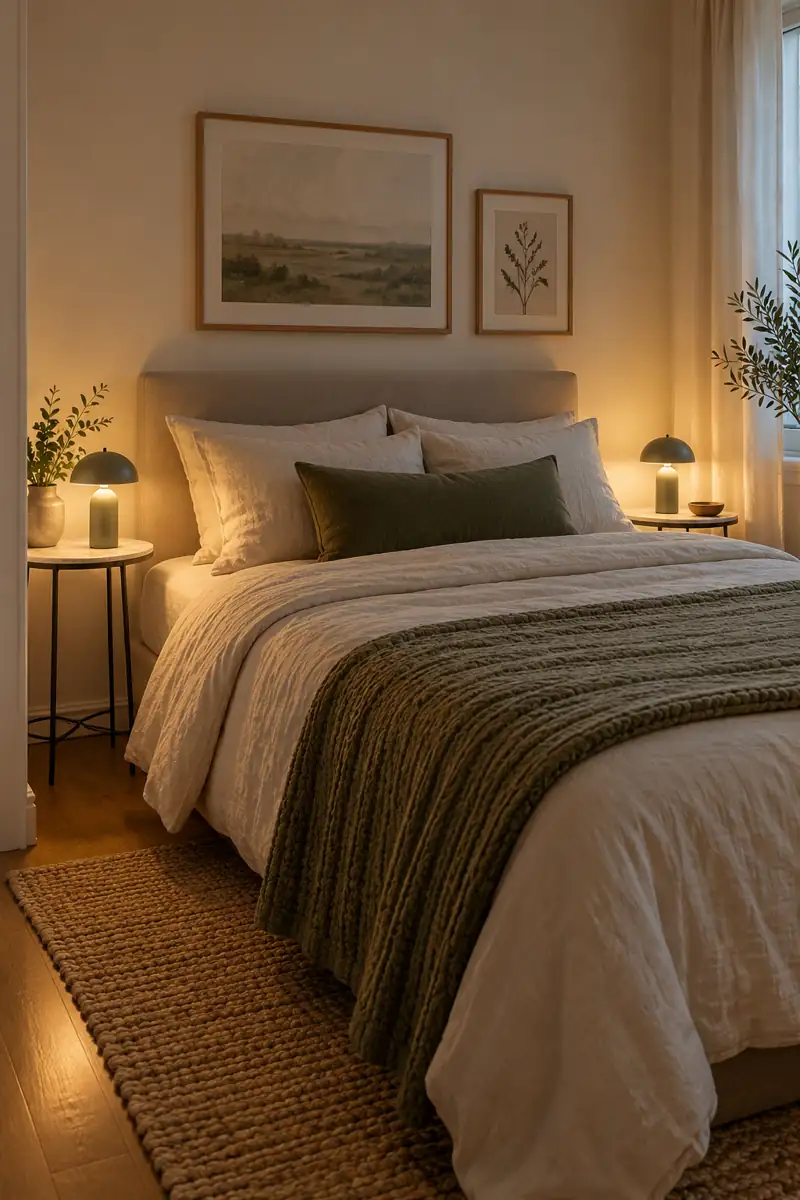
BEFORE:
Your bedside outlet sits behind the bed, and the overhead light feels harsh at night. A charging cable already occupies the easiest socket.
AFTER:
A cordless rechargeable lamp rests on each bedside table. You can light one side for a quiet evening without illuminating the whole room.
Bedside surfaces feel calmer when lighting does not compete with trailing cables. Compare runtime at the brightness you will actually use, because maximum settings drain batteries sooner. Charge the lamps according to their instructions, on a suitable surface, and choose a simple control you can find in the dark.
5. Clamp-On Desk Lights
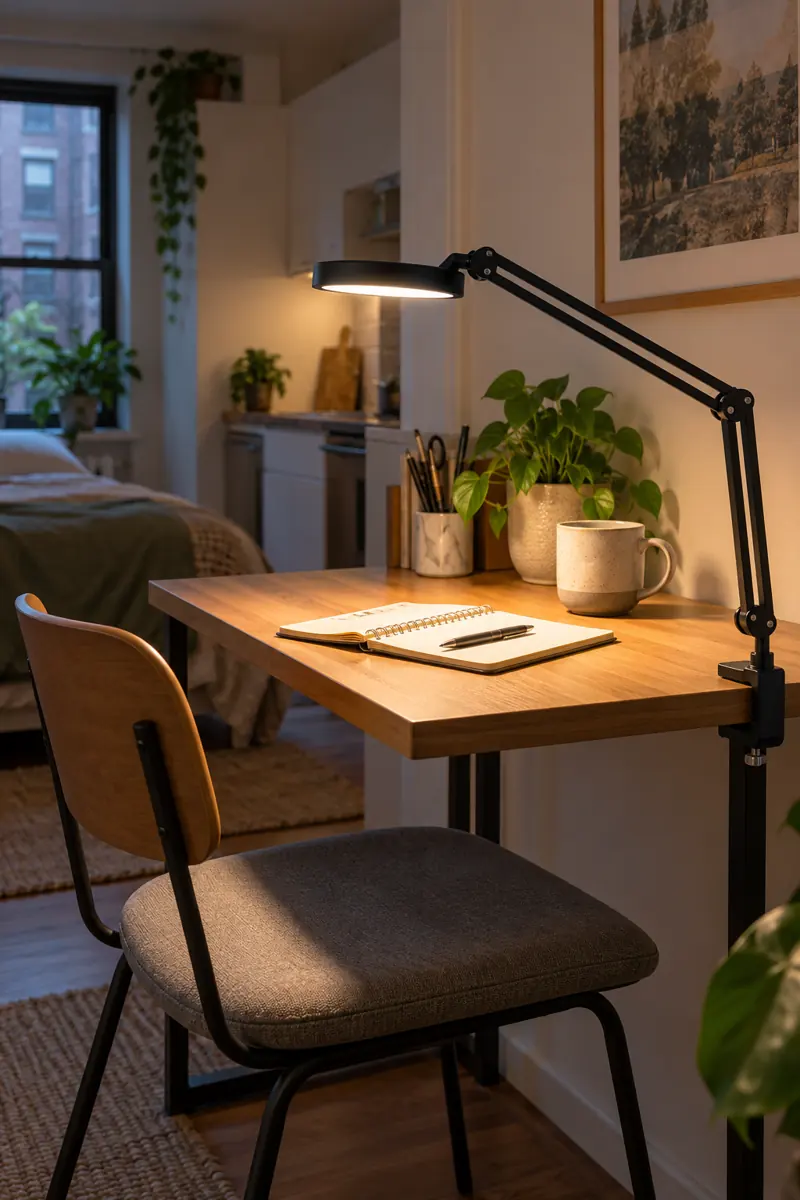
- Check that your desk edge is sturdy and compatible with the clamp.
- Secure the lamp using the supplied protective pads and instructions.
- Aim the beam across your work surface, away from the screen.
- Move the arm until writing shadows and screen reflections are reduced.
A crowded desktop needs useful light more than another bulky base. A clamp lamp frees space for your notebook while keeping the beam adjustable. Avoid clamping onto delicate glass, unstable shelves, or furniture edges the manufacturer excludes. Release the clamp before moving the desk to prevent accidental strain.
6. Under-Cabinet Light Bars
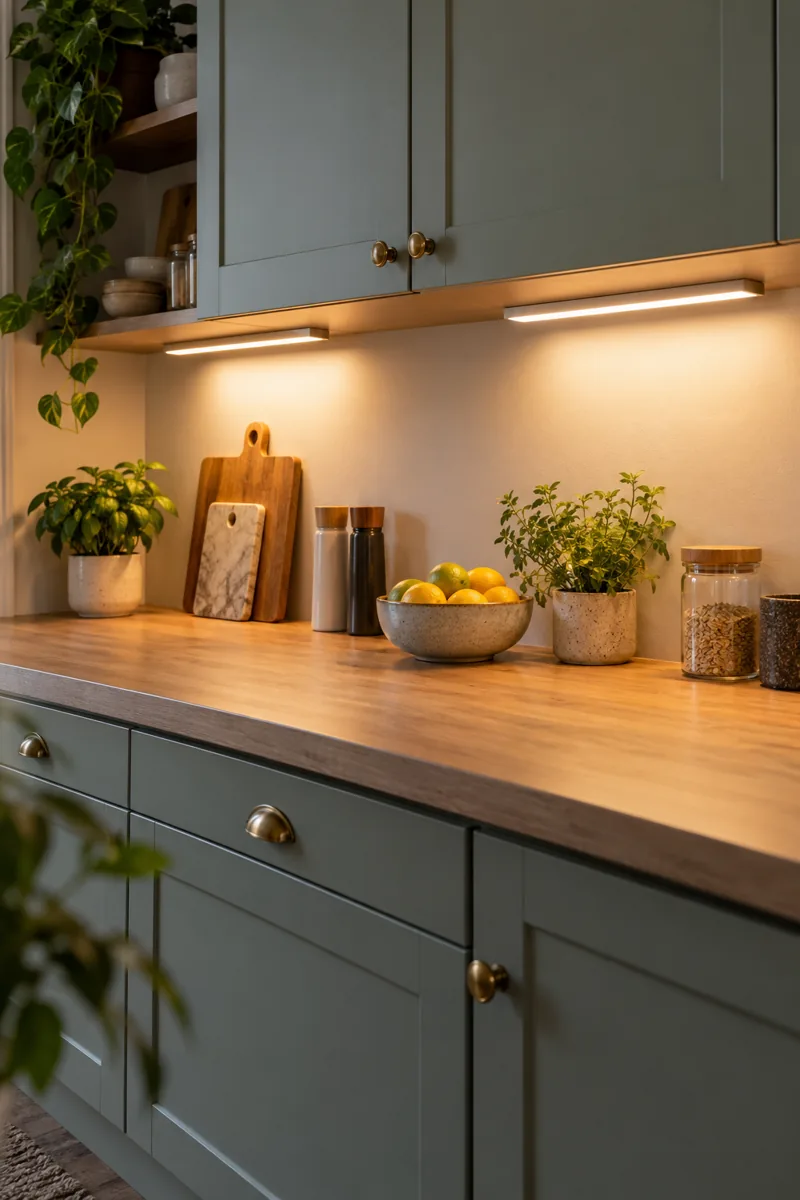
| Detail | Rechargeable Bar | Plug-In Bar |
|---|---|---|
| Power | Periodic charging | Nearby suitable outlet |
| Cable visibility | No operating cable | Needs safe routing |
| Best use | Occasional tasks | Longer task sessions |
Kitchen shadows often come from standing between the ceiling light and your counter. A light bar beneath a cabinet directs illumination onto the work surface instead. Select a product suitable for the location and its mounting surface, keep it away from heat and splashes, and follow its attachment instructions.
7. Open-Shelf Accent Lights
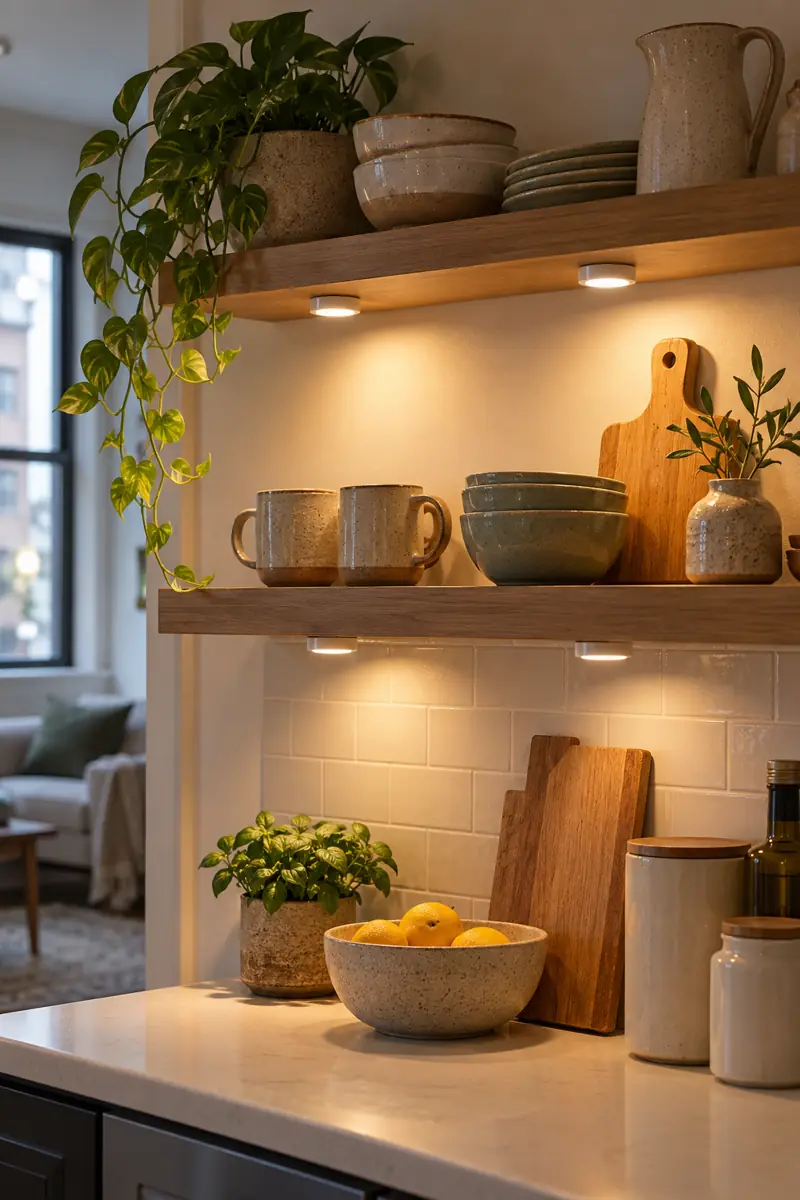
DO:
- Choose low-heat LED products designed for shelf installation.
- Leave charging controls or battery compartments accessible.
- Test approved adhesive on an inconspicuous surface first.
DON’T:
- Do not assume every painted finish tolerates removable adhesive.
- Do not cover ventilation openings with books.
- Do not place loose fixtures where they can fall.
A shelf can contribute more than storage after sunset. Small accent lights draw attention to a few objects and add depth to a dark wall. Keep the display sparse so light reaches the surrounding surface, and use only a secure mounting method approved for both fixture and shelf.
8. Freestanding Light Columns
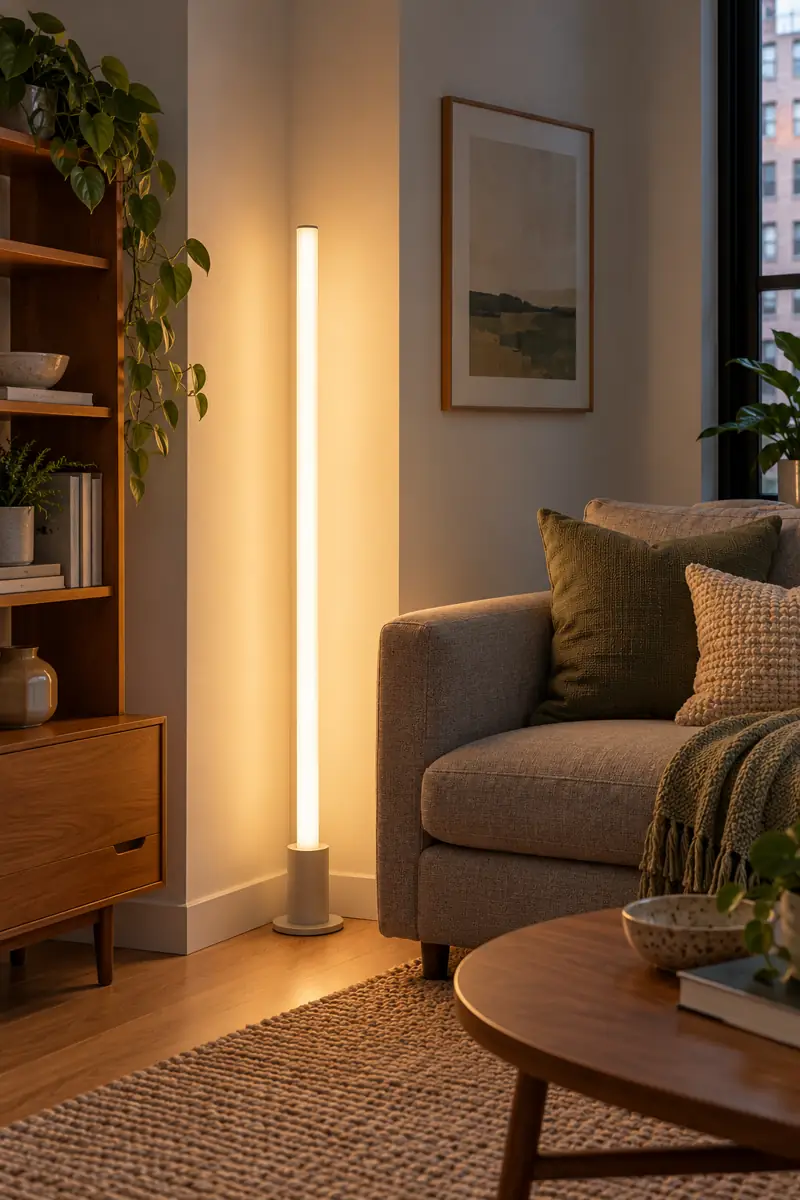
Footprint: Usually narrow; check base dimensions.
Best For: Empty corners beside seating.
Power: Typically a nearby outlet.
Look: Soft wall wash rather than a visible bulb.
An unused sliver of floor can hold a surprising amount of light. A diffused LED column creates a vertical glow that helps a dark corner feel connected to the rest of the room. Check stability, choose comfortable brightness, and keep the base clear of doors and walking routes.
9. Mirror-Side Table Lamps
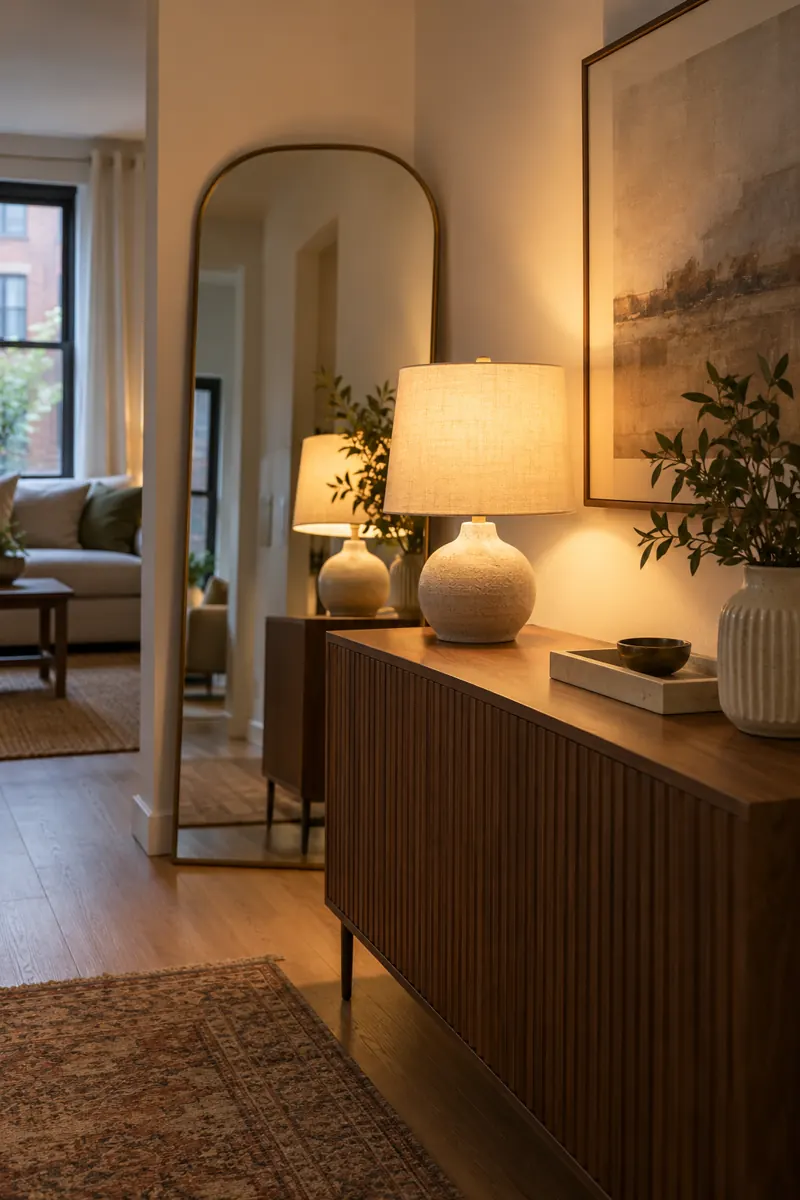
One lamp can feel more present when a mirror catches its glow. Put a shaded table lamp beside a securely supported mirror on a console, then check the reflection from your sofa. Aim for reflected light on the room rather than a bright bulb shining into your eyes.
The mirror redistributes existing light; it does not create extra daylight. A pale wall nearby makes the arrangement especially useful in a narrow entry or dining corner. Secure larger mirrors using an approved method with landlord permission where necessary, and keep the lamp base away from the console edge.
10. Portable Dining Lamps
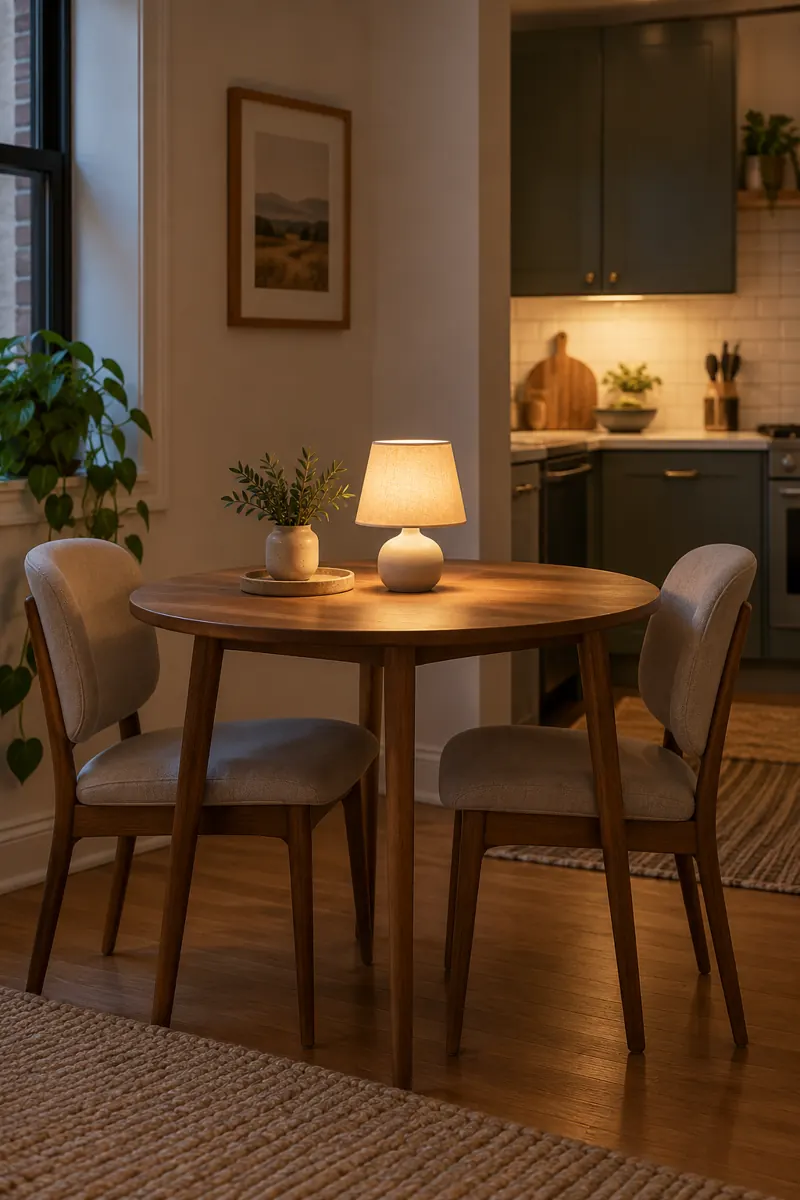
- Choose a compact base that leaves room for plates.
- Select a diffused shade rather than an exposed bright LED.
- Check runtime before a long evening meal.
- Move the lamp onto a sideboard when serving shared dishes.
Dinner feels more inviting when the table has its own gentle pool of light. A rechargeable dining lamp works particularly well on a small two-person table where a large centerpiece would crowd the place settings. Keep it away from spills, and follow the product’s charging and cleaning instructions.
11. Bookcase Light Layers
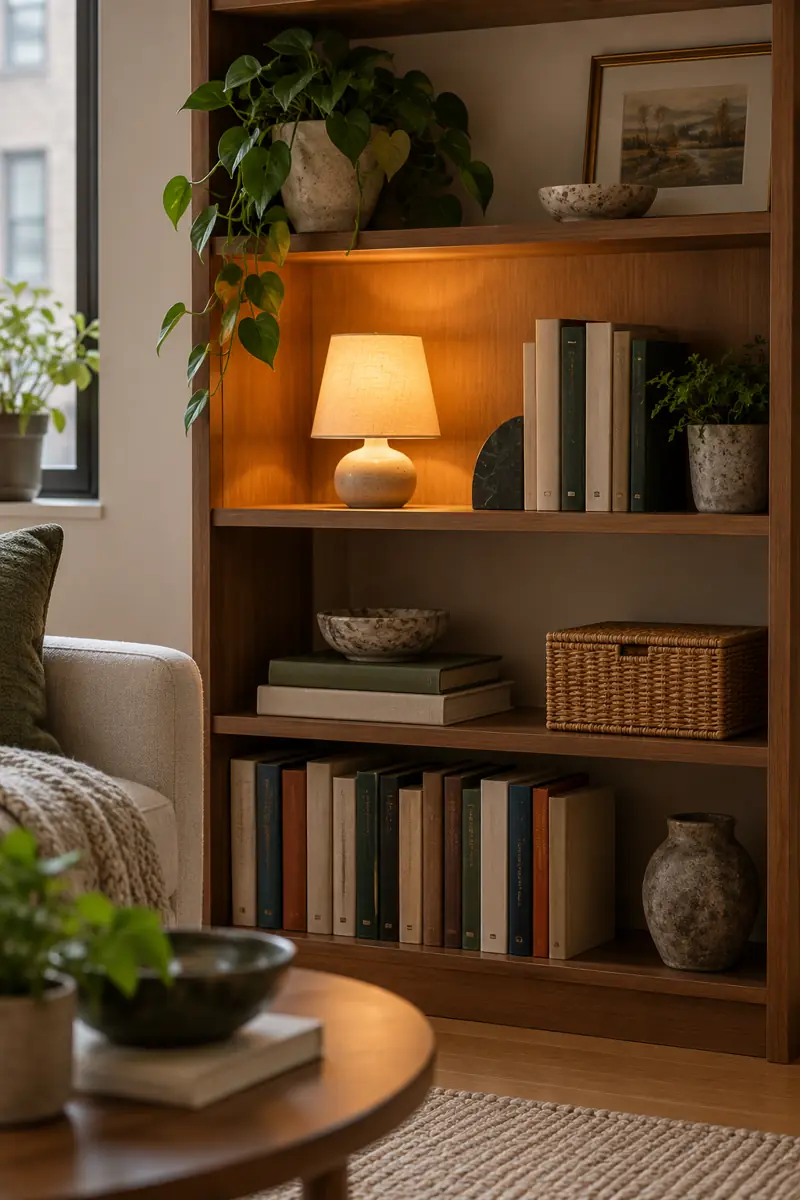
Quick Tip:
Give your bookcase a useful evening role. Place a small shaded lamp on a sturdy shelf with ample clearance. Check the fixture instructions before choosing an enclosed shelf position.
Books and pottery gain depth when light falls across them from the side. Keep this arrangement simple: one lamp, a few objects, and a clear route for the cord behind the shelf. Choose a stable fixture that fits fully on the surface without resting against books or fabric.
12. Low-Glare TV Backlighting
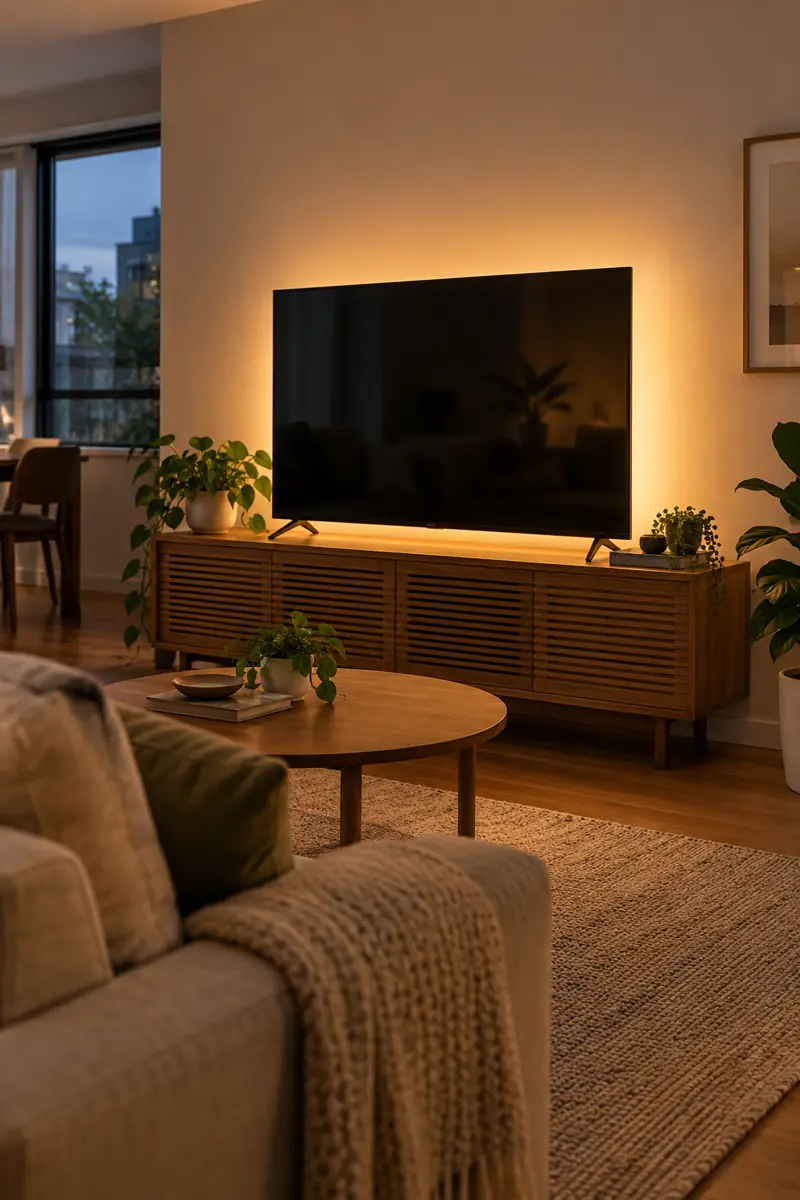
BEFORE:
The television becomes the brightest object in a completely dark room. Everything around the screen disappears into shadow.
AFTER:
A gentle light behind the screen makes the surrounding wall visible. The room feels less stark while the television stays easy to see.
Screen time does not require a pitch-black living room. Use a compatible low-brightness LED backlight and attach it only where the television manufacturer allows, leaving ventilation clear. Keep the glow subdued and steady. If reflections appear on the screen, adjust placement or brightness rather than adding more lights.
13. Battery Picture Lights
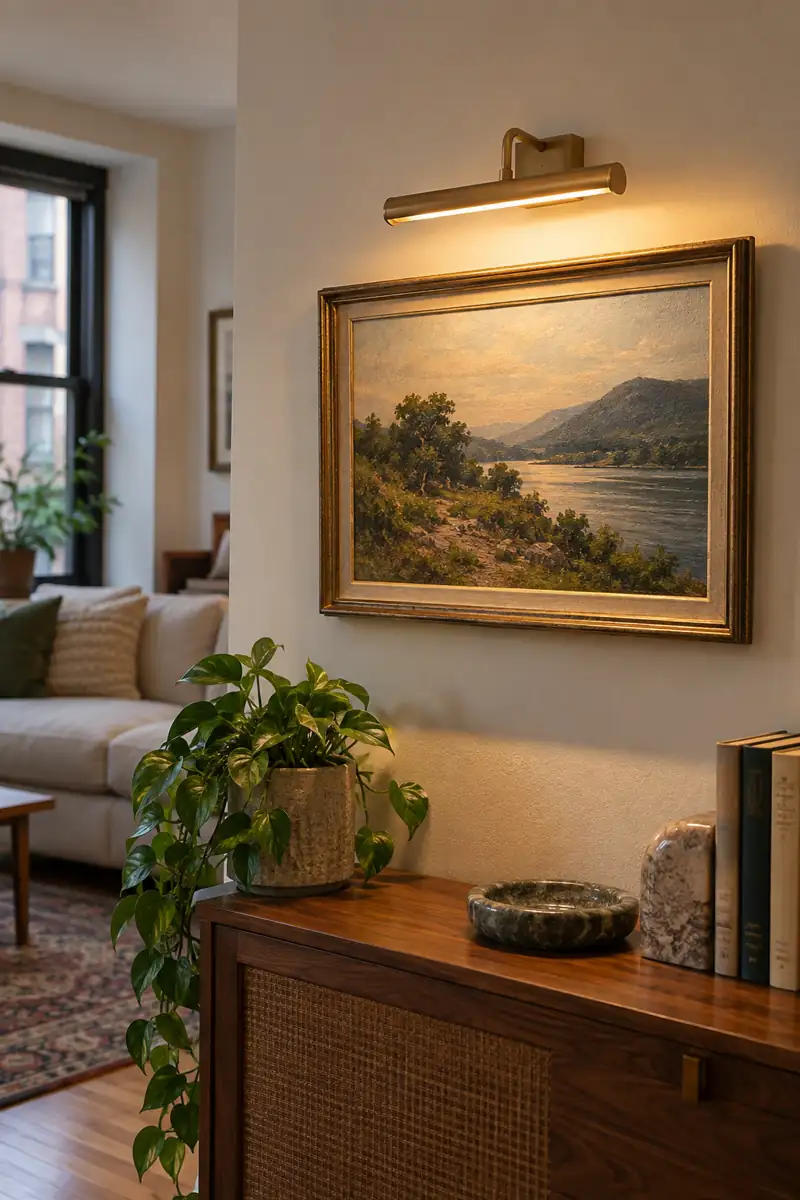
- Choose a lightweight light sized for the artwork.
- Check its mounting requirements against your wall finish and lease.
- Use an existing suitable fixing only if it supports the specified load.
- Aim the light across the picture without creating glare.
Art can become an evening focal point even without a wired wall fixture. A battery picture light highlights a favorite print and adds a small layer of illumination. It is an accent, rather than a room-lighting replacement. Avoid adhesive-only mounting unless the product explicitly supports that installation method.
14. Motion-Sensor Night Lights
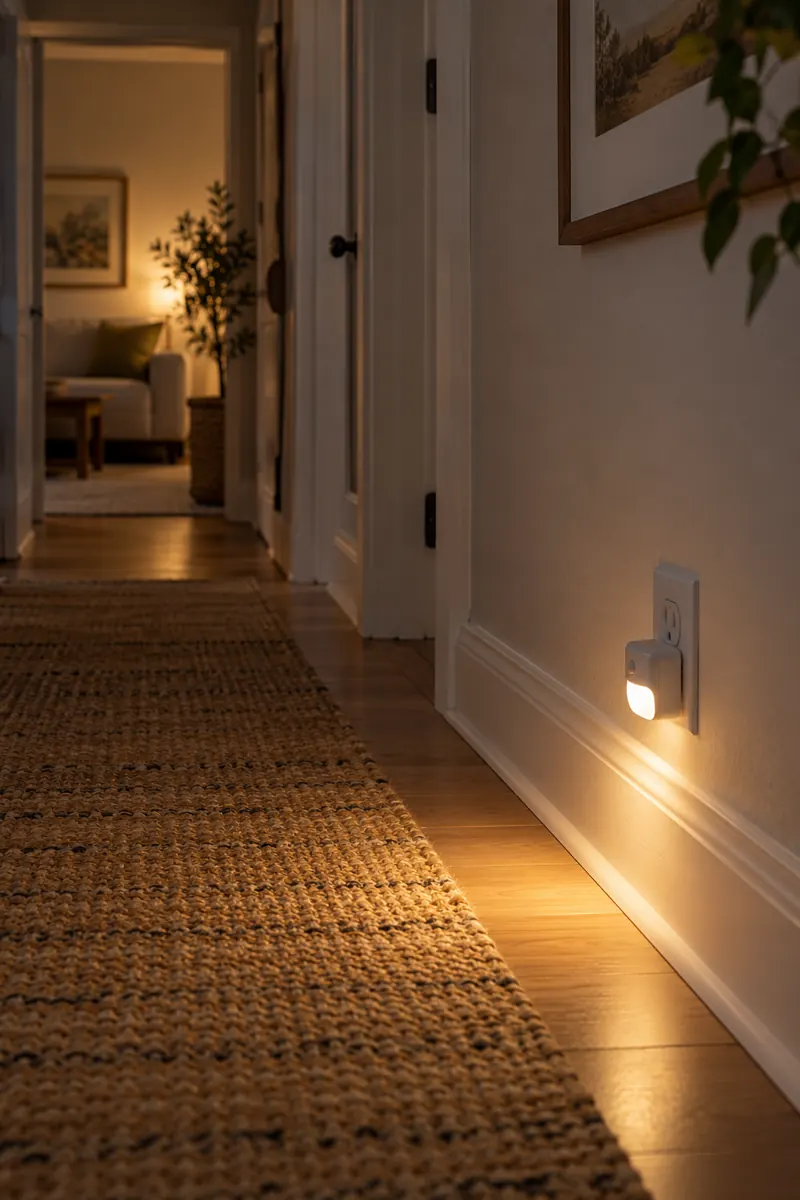
| Detail | Plug-In Light | Battery Light |
|---|---|---|
| Placement | At a suitable outlet | At an approved mounting spot |
| Maintenance | No battery changes | Replace or recharge batteries |
| Useful spot | Hallway outlet | Dark cupboard or passage |
Nighttime trips feel simpler when the route is easy to see. A low-level motion light can illuminate a hallway without switching on the brightest ceiling fixture. Position it where furniture will not block the sensor, and choose modest brightness. Keep the device and outlet clear of fabric and clutter.
15. Warm Bulb Swaps
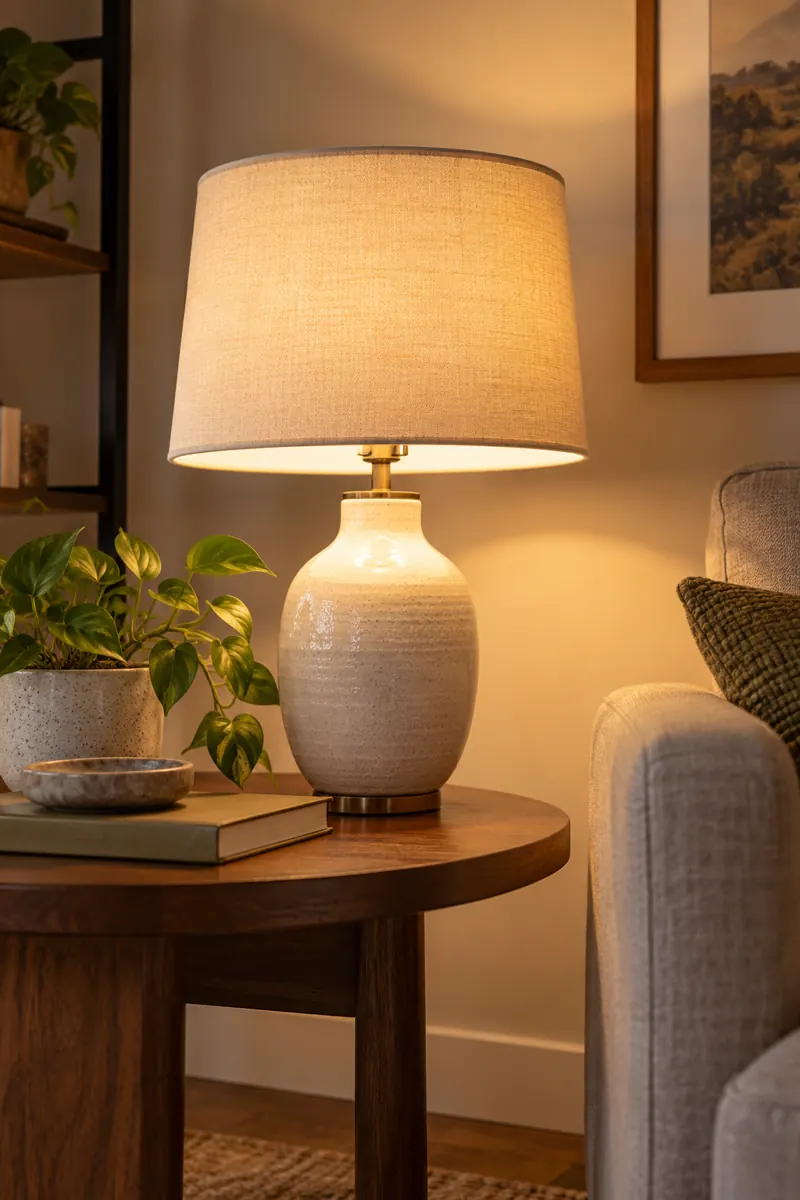
DO:
- Read the fixture label before choosing an LED bulb.
- Match the bulb base and any enclosed-fixture requirements.
- Compare lumen output when choosing brightness.
- Use compatible dimmable bulbs with compatible dimmers.
DON’T:
- Do not exceed the fixture rating.
- Do not assume every LED works with every dimmer.
- Do not handle a hot bulb immediately after switching it off.
A harsh lamp may only need a better bulb choice. Warm-white light often suits evening relaxation, while brightness depends on lumens rather than color temperature alone. Try one compatible bulb before replacing several. Keep bulbs consistent within a seating area if noticeably different colors make the room feel patchy.
16. Sheer Curtain Panels
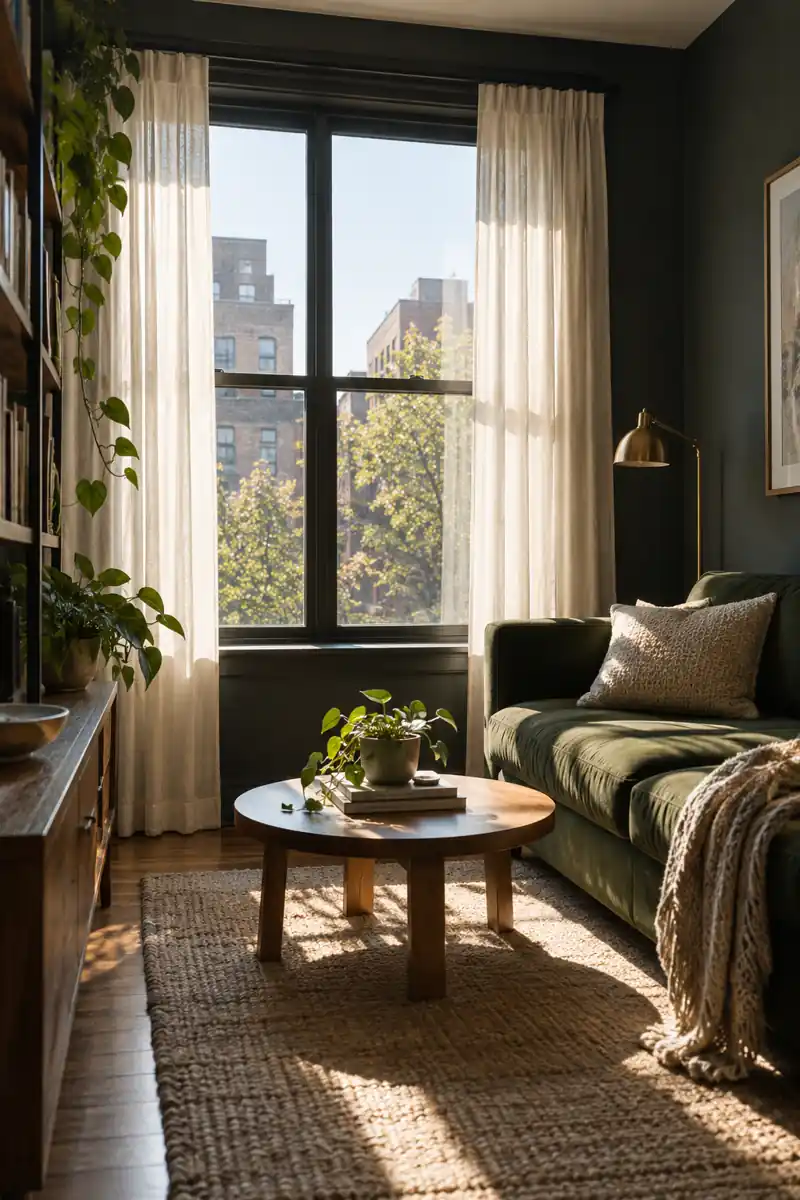
Light Source: Existing daylight.
Best For: Windows covered by heavy curtains.
Privacy: Limited, especially after dark.
Installation: Existing suitable curtain hardware.
Your brightest lighting change might happen before you turn on a switch. Replace daytime coverage with sheer panels where privacy allows, or draw heavier curtains fully away from the glass. Keep nighttime privacy in mind, since sheers become transparent when indoor lights are brighter than the view outside.
17. Pale Reflective Surfaces
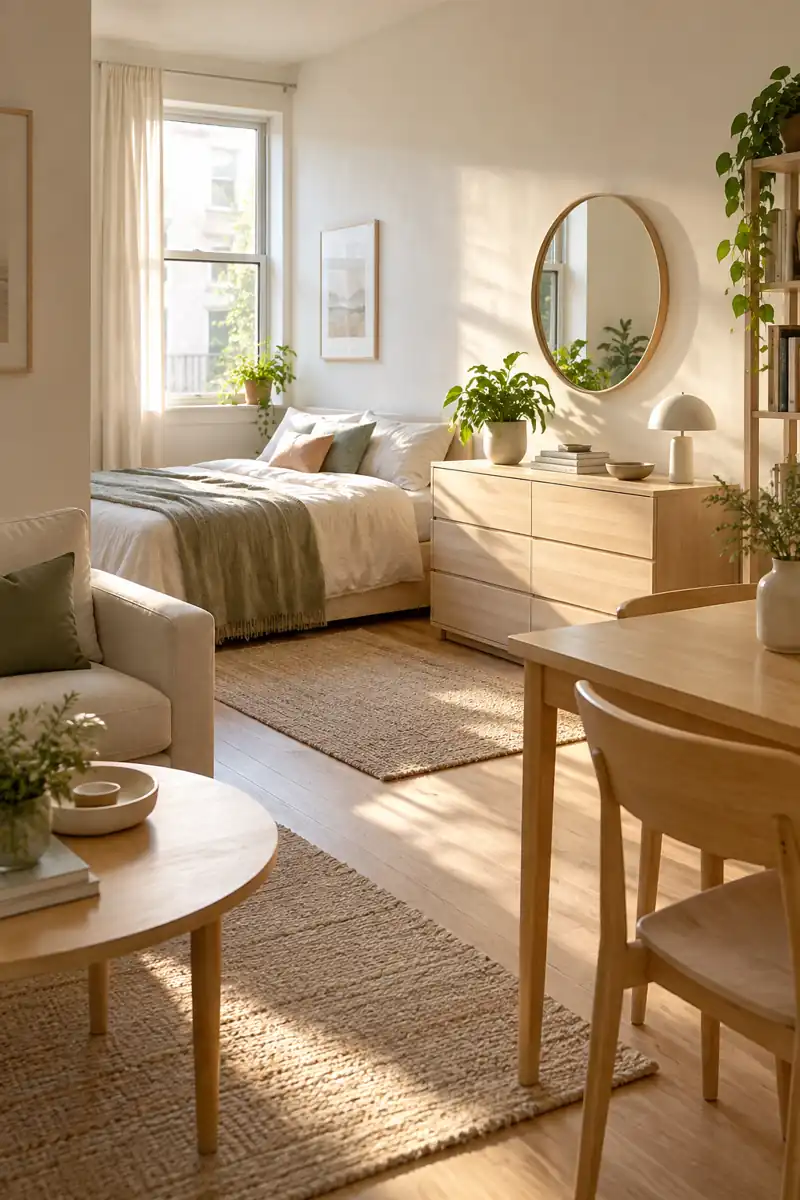
Dark furniture beside a small window can absorb much of the room’s available brightness. Introduce a pale throw, a light rug, or an ivory lampshade near that area. These surfaces reflect more of the existing light and soften the visual weight without requiring a full furniture replacement or repaint.
Keep expectations practical: a cream cushion will not replace a task lamp in a dim workspace. Use lighter finishes where daylight or lamplight already reaches them, then add targeted illumination elsewhere. Compare the room at your usual time of day before deciding which purchase would actually help most.
18. Adjustable Task Lighting
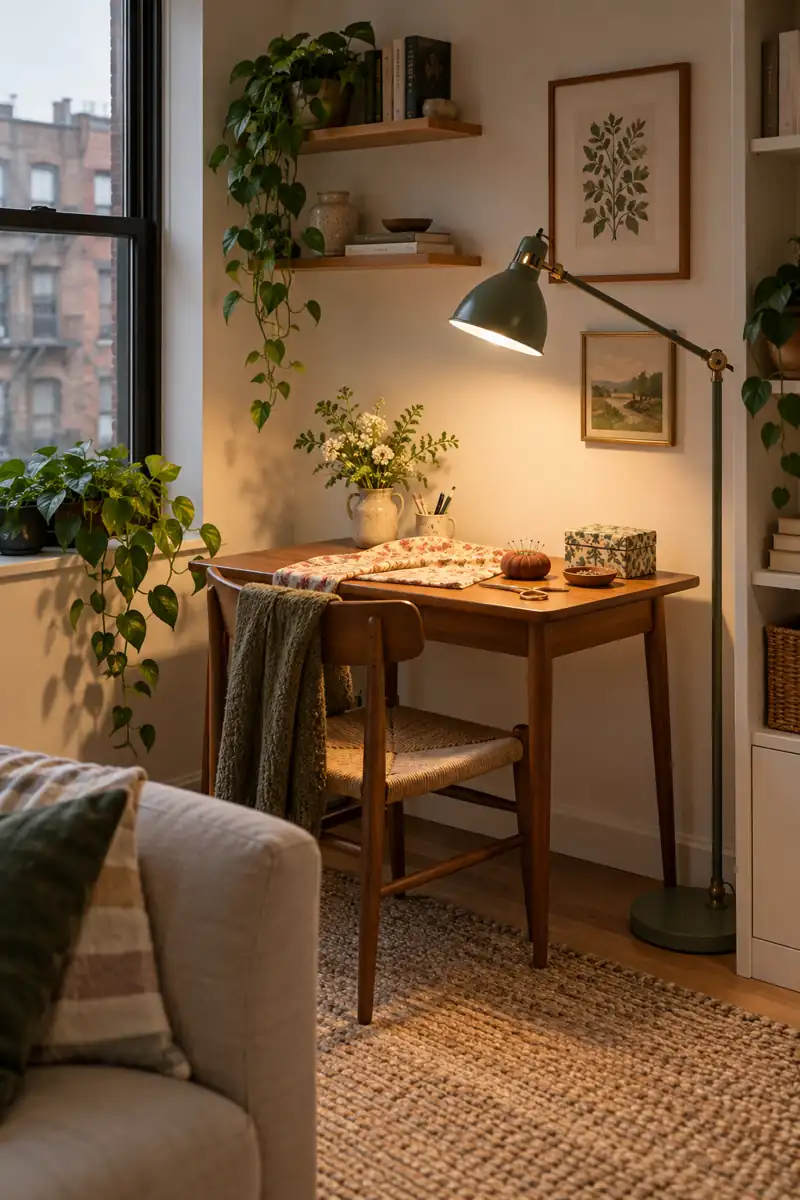
- Identify the activity that feels difficult in the current lighting.
- Place an adjustable lamp close enough to illuminate the work.
- Aim light away from reflective screens and glossy surfaces.
- Keep the base stable and the cord outside your chair movement.
Detailed tasks deserve their own lighting plan. An adjustable lamp helps with sewing, puzzles, or paperwork because you can direct the beam exactly where it is needed. Check the arrangement while doing the activity, not just while standing nearby. A comfortable beam should reveal details without shining into your face.
19. Lantern-Style LED Lamps
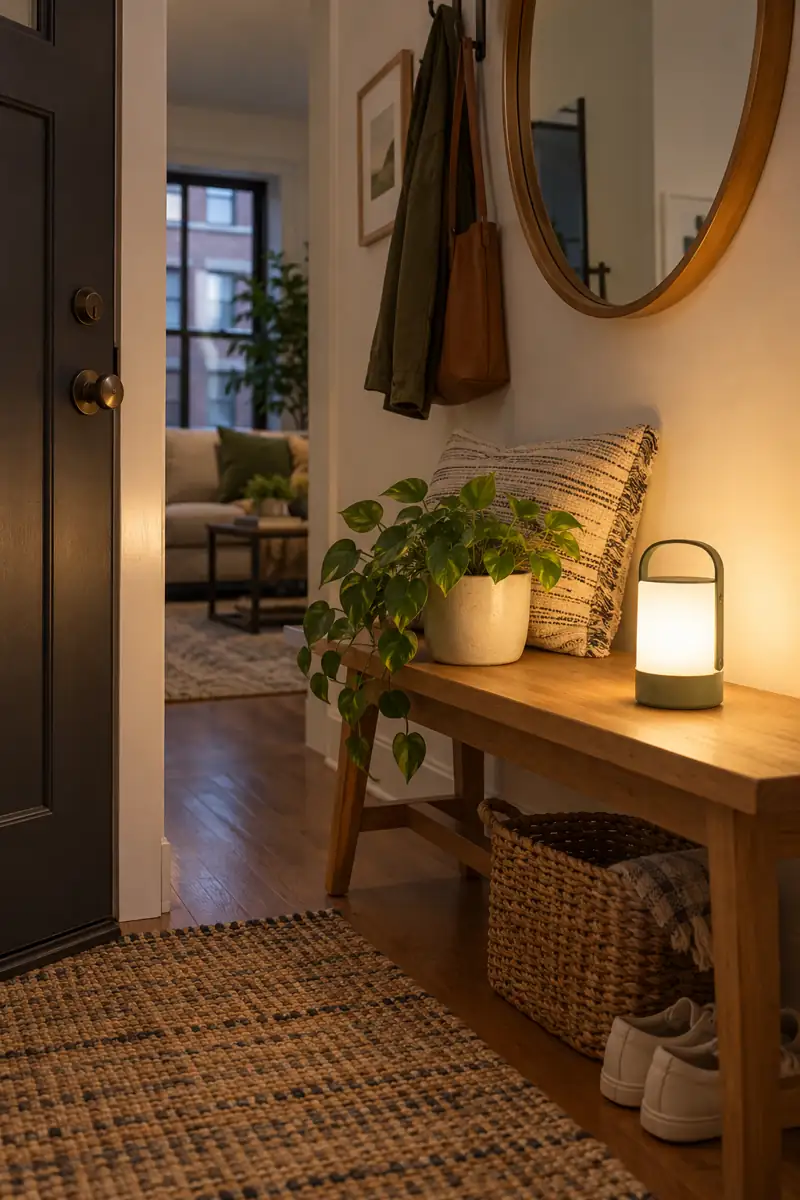
Quick Tip:
A portable glow can follow your evening routine. Choose an electric LED lantern designed for indoor use. Set it on a stable surface, away from edges and anything that could cover its openings.
An entry bench or side table can feel welcoming with a small lantern-style lamp. The handle makes some models easy to relocate, but check the manufacturer’s carrying guidance first. Treat the lantern as gentle accent lighting, and keep enough general light available for shoes, bags, and everyday movement.
20. Layered Corner Lighting
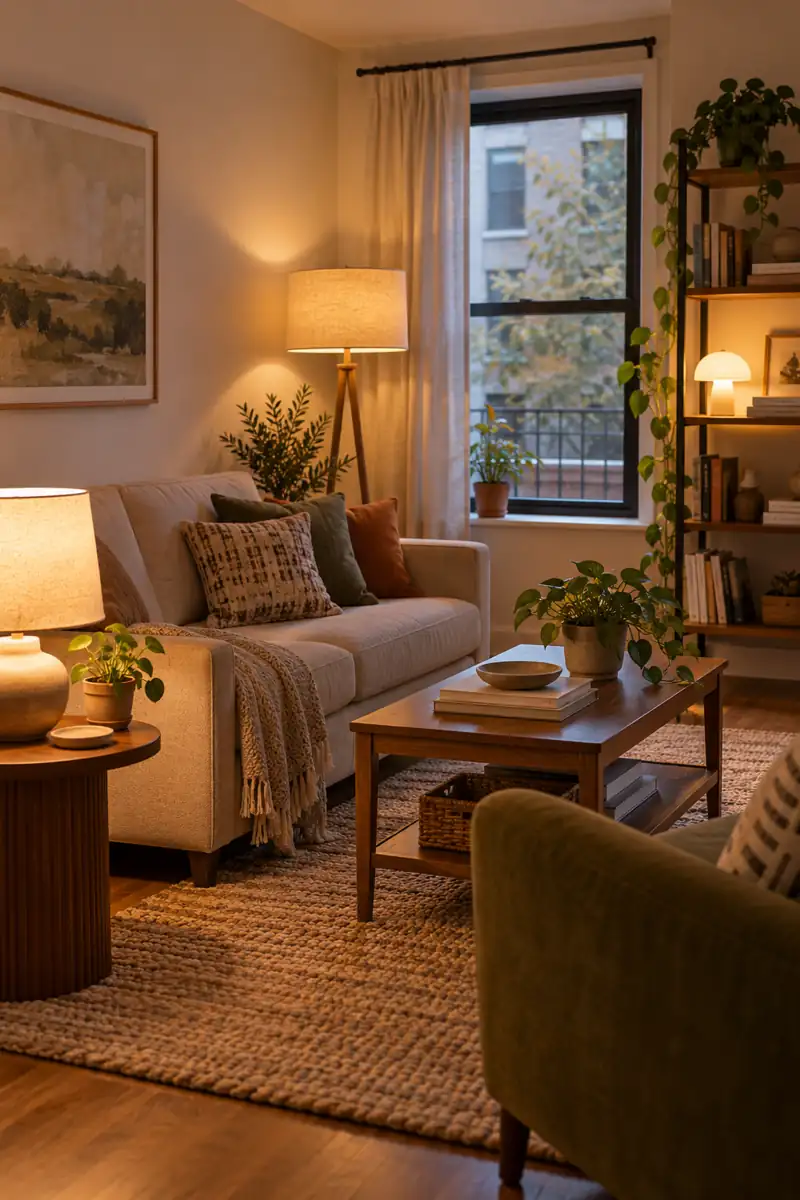
BEFORE:
A single overhead fixture lights the center of the room. The sofa corner stays dull, especially behind a tall chair.
AFTER:
A floor lamp, shaded table lamp, and small shelf light illuminate different heights. The seating corner feels connected instead of isolated.
Comfort comes from distributing light, not simply buying the brightest bulb. Build layers gradually and switch each one on separately to understand its contribution. Use existing suitable outlets without overloading them, and avoid routing cords under rugs. Stop adding fixtures once the corner supports the activities you enjoy there.
21. Balanced Room Lighting
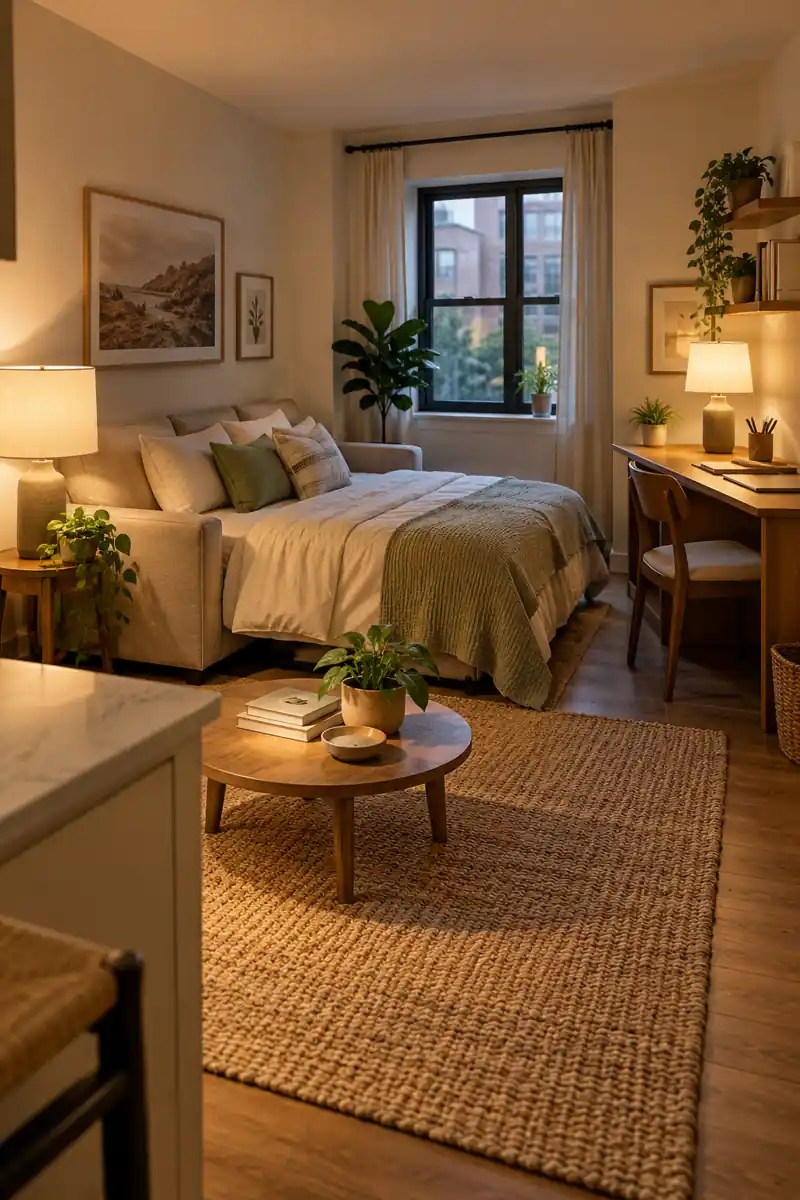
- Walk through the apartment after sunset and note dark activity areas.
- Place portable lamps near suitable outlets in those zones.
- Choose compatible bulbs with a similar color temperature.
- Adjust brightness and shade direction from your normal sitting positions.
A small apartment feels more coherent when its lighting works across the whole room. Give the desk, bed, and seating area enough useful illumination without making every corner equally bright. You can still keep a soft evening mood. The goal is comfortable transitions between activities and fewer distracting pools of glare.
Conclusion
Brighter rooms begin with noticing where light is missing. Choose one useful change, whether that means a reading lamp beside your chair, a softer bedside glow, or clearer daylight around the window. These renter friendly lighting ideas can work together gradually, so there is no need to buy every fixture at once. Keep mounting methods compatible with your surfaces, protect walking routes, and choose bulbs that suit each lamp. Save this post on Pinterest before your next decorating session, try the idea that solves your biggest daily frustration, and share it with another renter. A comfortable evening starts with a well-lit corner.

Community
Join the conversation
Add a useful idea, ask a specific question, or share what worked in your space. Every comment is reviewed before it appears.