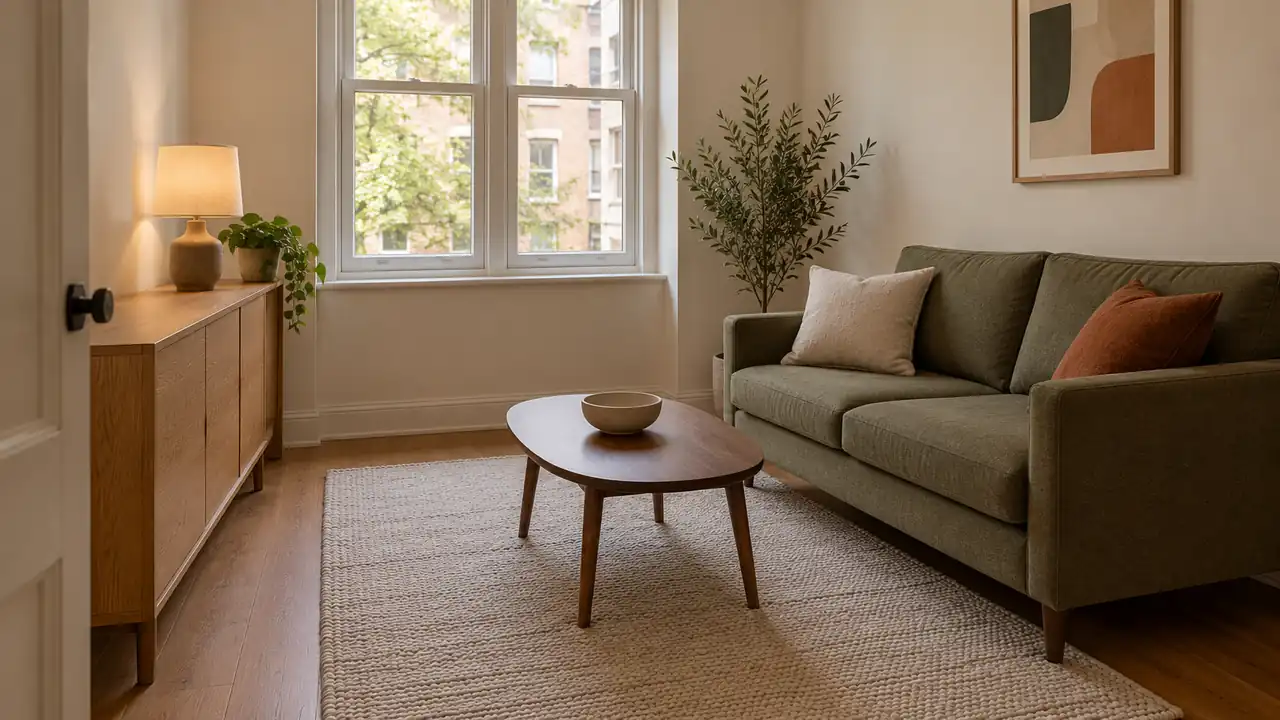
A comfortable seat matters more than a room full of accessories. If you’ve been searching for “cozy apartment living room small spaces,” start with how the room feels during an ordinary evening: somewhere to stretch, set down a drink, and move around without shuffling furniture. Warmth can come from a well-placed lamp or the texture of a familiar blanket, even when the floor plan leaves little room to spare.
These sixteen ideas focus on small decisions with visible, practical results. Start with your existing sofa and the route through the room, then add the details that make daily life easier. You can borrow one idea or combine a few, choosing colors and materials that feel like home rather than following a single decorating style.
1. Trim Sofa Arms
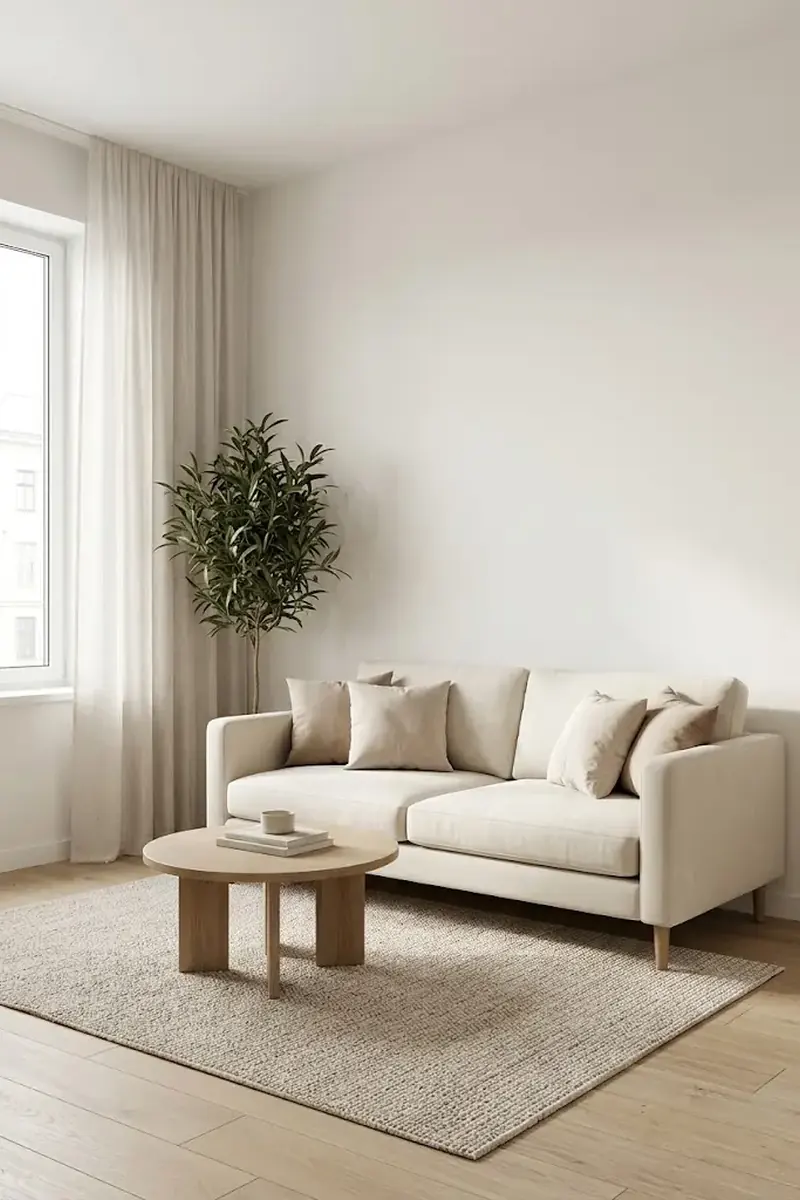
Bulky rolled arms can occupy the very space you want for sitting. A sofa with slimmer sides gives a small living area a neater outline while leaving the cushions as the focus. Compare the overall width with the actual seating width, rather than shopping by seat count alone.
Keep the depth comfortable for your height and preferred lounging position. A compact label does not tell you whether your feet reach the floor. Before replacing anything, mark the proposed footprint and test the route past it, including doors, nearby drawers, and the space needed to stand up.
2. One Accent Pair
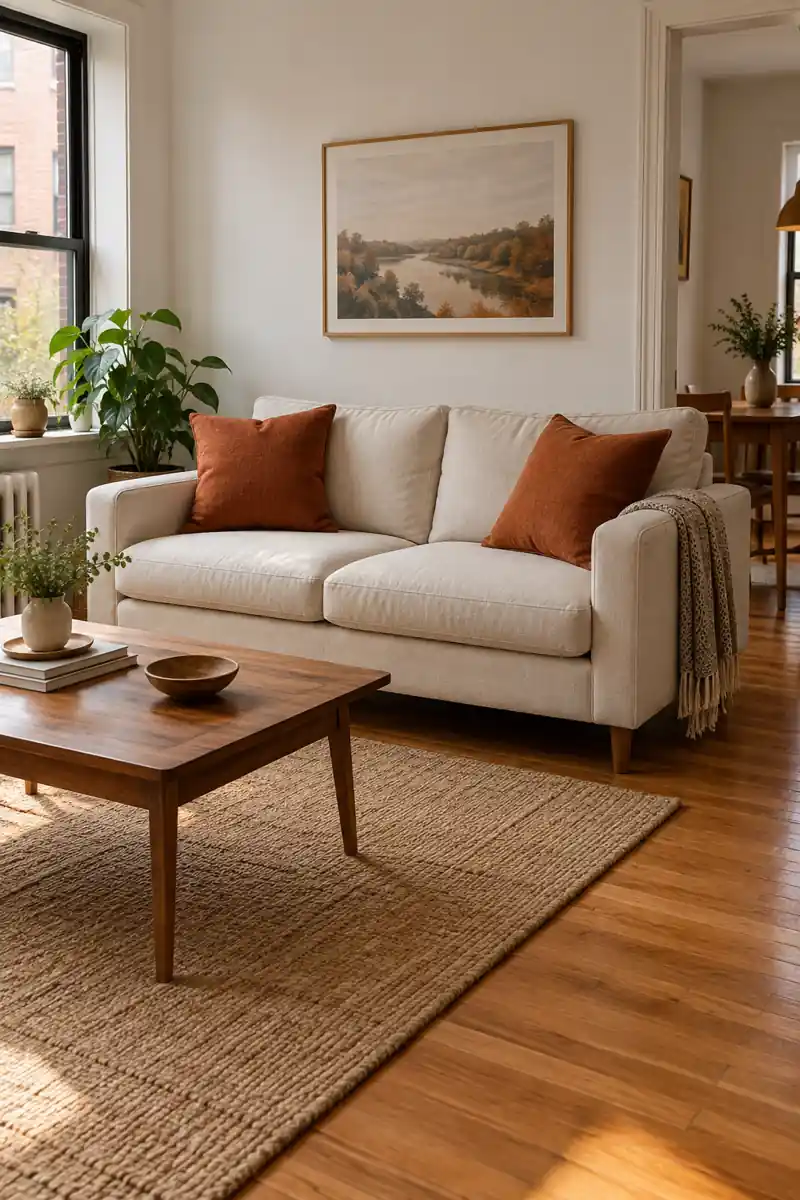
- Two cushions in a favorite color can give a plain sofa a clear point of interest.
- Choose covers that suit the inserts you already own, checking their actual dimensions.
- Place one at each end so the middle remains usable for sitting.
- Repeat a similar shade in a small piece of art, rather than buying another large colored object.
Rust on cream feels warm, while blue on oatmeal can look quieter. Let the sofa fabric provide the contrast if both cushions share one texture. Removable covers are especially practical for frequently used seating; read the care label before washing, and keep a spare cover only if you need one.
3. Light Throw Fold
Quick Tip:
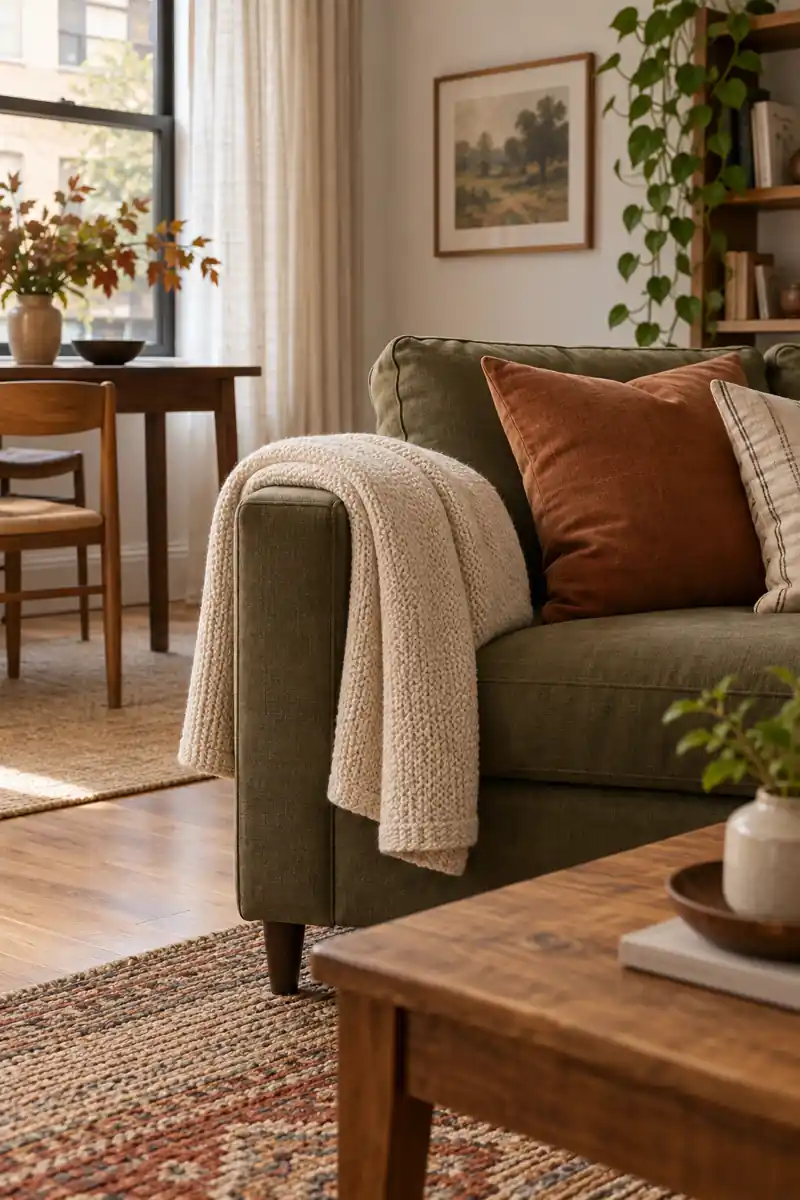
A blanket should be easy to reach without trailing under your feet. Fold a lightweight throw over one arm so most of the seat remains clear. Adjust the fold until the lower edge stays above the floor.
Choose a texture that feels good against your skin, not simply one that looks thick in photographs. A loose knit brings detail to plain upholstery, while smooth cotton suits a busier sofa. Store additional blankets elsewhere so this small comfort does not become a permanent mound at one end.
4. One Small Tray
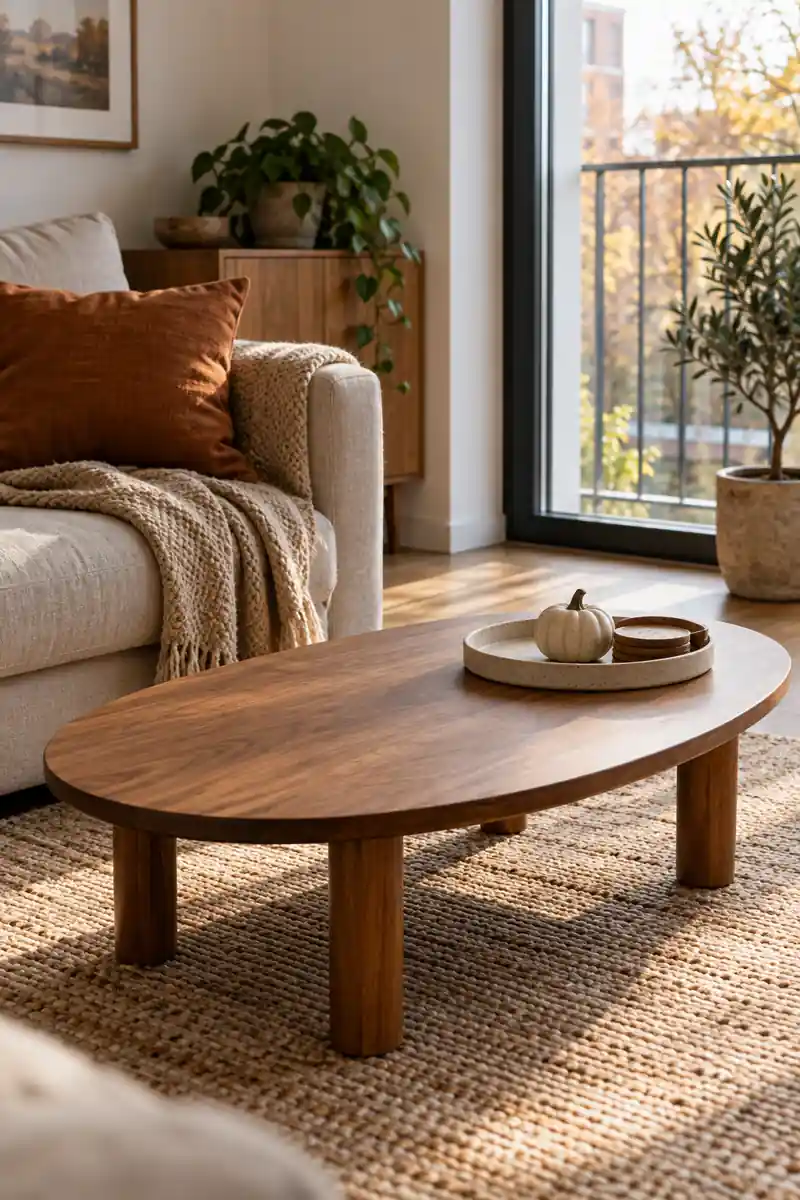
BEFORE: Coasters, a remote, and decorative objects spread across the coffee table. There is nowhere convenient to put down a mug.
AFTER: A shallow tray gathers a few small items at one end. The rest of the tabletop stays available for everyday use.
Leave more empty surface than decorated surface, especially on a compact table. Choose a tray you can lift without balancing loose objects. One small ornament is enough; swap it when your mood changes, and keep drinks on a suitable coaster rather than treating the entire tray as water resistant.
5. Gentle Lamp Pool
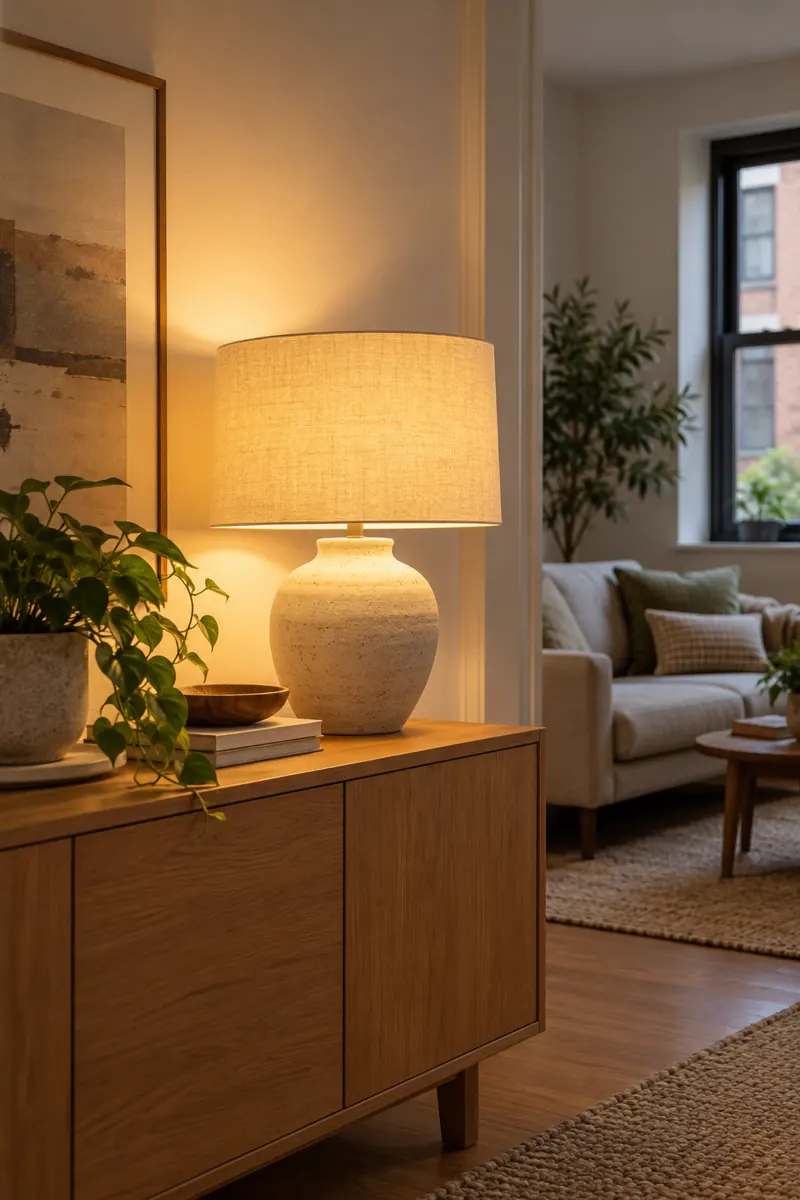
- Choose the spot where a softer light would help most, such as the sofa end or an existing cabinet.
- Check that the lamp base fits fully on its surface, with room to operate the switch.
- Select a compatible bulb within the fixture rating and a shade that hides glare from your usual seat.
- Route the cord along the furniture and wall, keeping it out of walking routes.
A warm pool of light gives a modest room an inviting evening center. Start with one lamp before adding more, then sit in every seat to check the result. Keep fabric, plants, and decorations away from the bulb and shade, following the fixture instructions for placement and safe use.
6. Nesting Table Flexibility
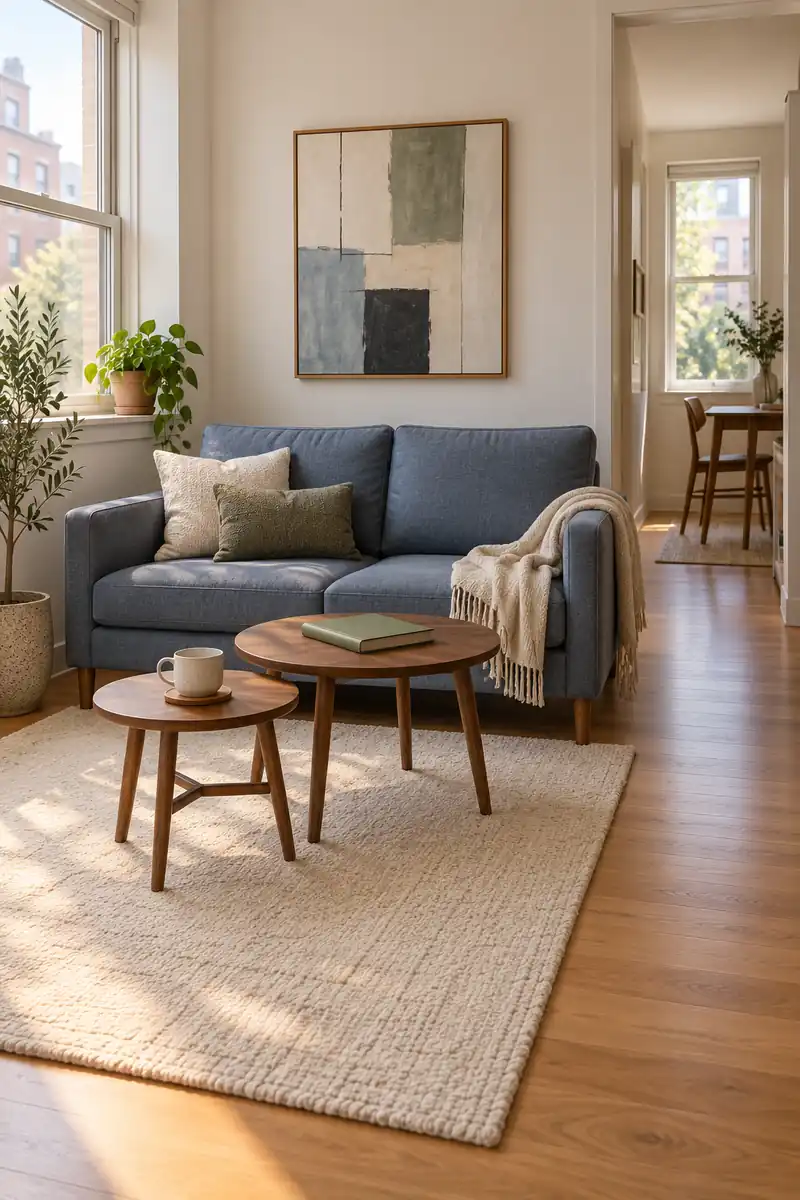
| Detail | Nesting Pair | Single Large Table |
|---|---|---|
| Daily footprint | Smaller table partly tucks beneath | Full top remains in place |
| Guests | Separate surfaces near two seats | One shared central surface |
| Room reset | Slide together when finished | Move the entire piece |
Small tables work best when you have a clear place to return them. Use the larger one for a book and the smaller one beside a guest, then nest them again afterward. Test their stability separately and avoid leaving a table where someone naturally steps when getting off the sofa.
7. Quiet Shelf Spacing
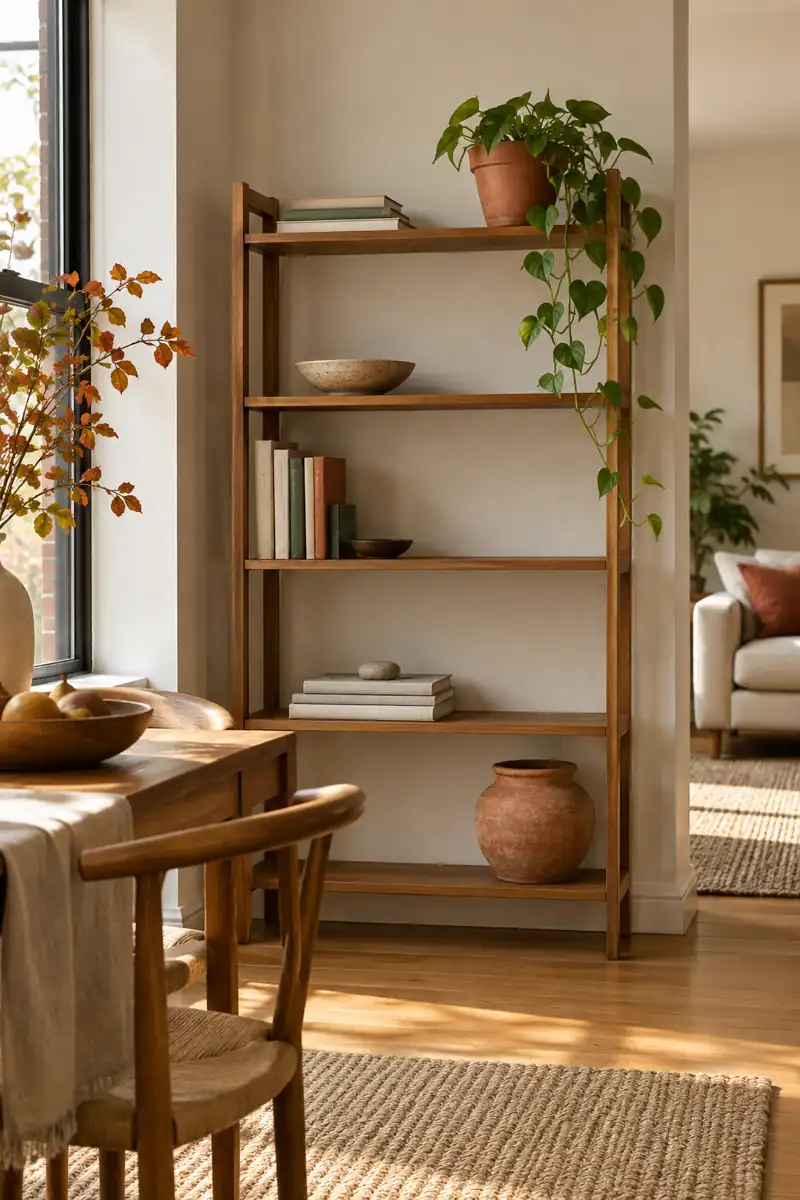
DO
- Group a few books where their spines are easy to reach.
- Leave an empty stretch on at least one shelf.
- Keep heavier belongings on lower shelves.
DON’T
- Fill every gap simply because it is visible.
- Balance pots or frames on narrow edges.
- Rely on adhesive strips to restrain a bookcase.
A shelf can feel personal without becoming a display project. Try one bowl, a small book group, and something meaningful from your own collection. Follow the furniture instructions and CPSC anchoring guidance, with rental permission where needed, before styling a tall unit. Its stability matters more than a perfectly balanced arrangement.
8. Reading Corner Pocket
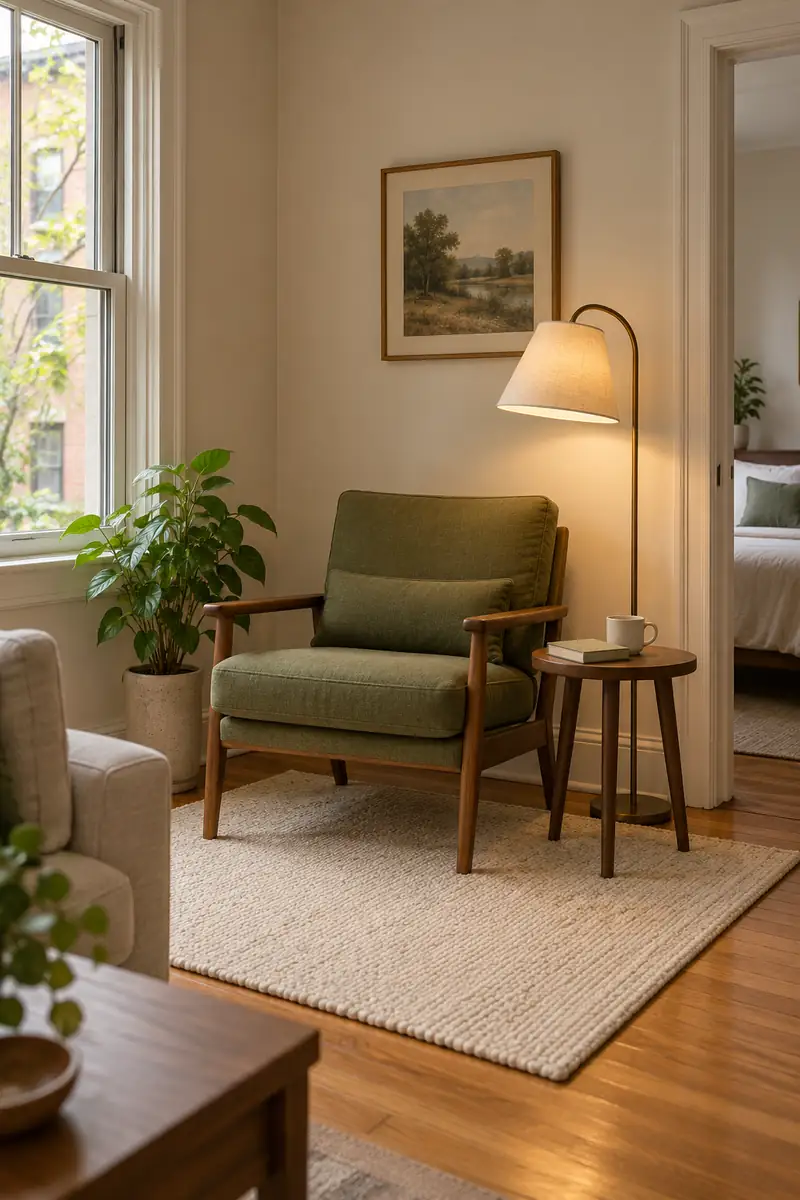
Anchor: One compact chair with a supportive seat.
Light: A shaded lamp positioned for the page.
Surface: A stable table close enough for a drink.
Boundary: A clear passage around the entire setup.
An unused corner only becomes a reading place if sitting there feels easy. Check the chair angle from the doorway, then try reaching the table without leaning across the lamp. Skip an ottoman if it fills the approach. A modest chair that fits your body is more useful than an oversized lounge.
9. Visible Furniture Legs
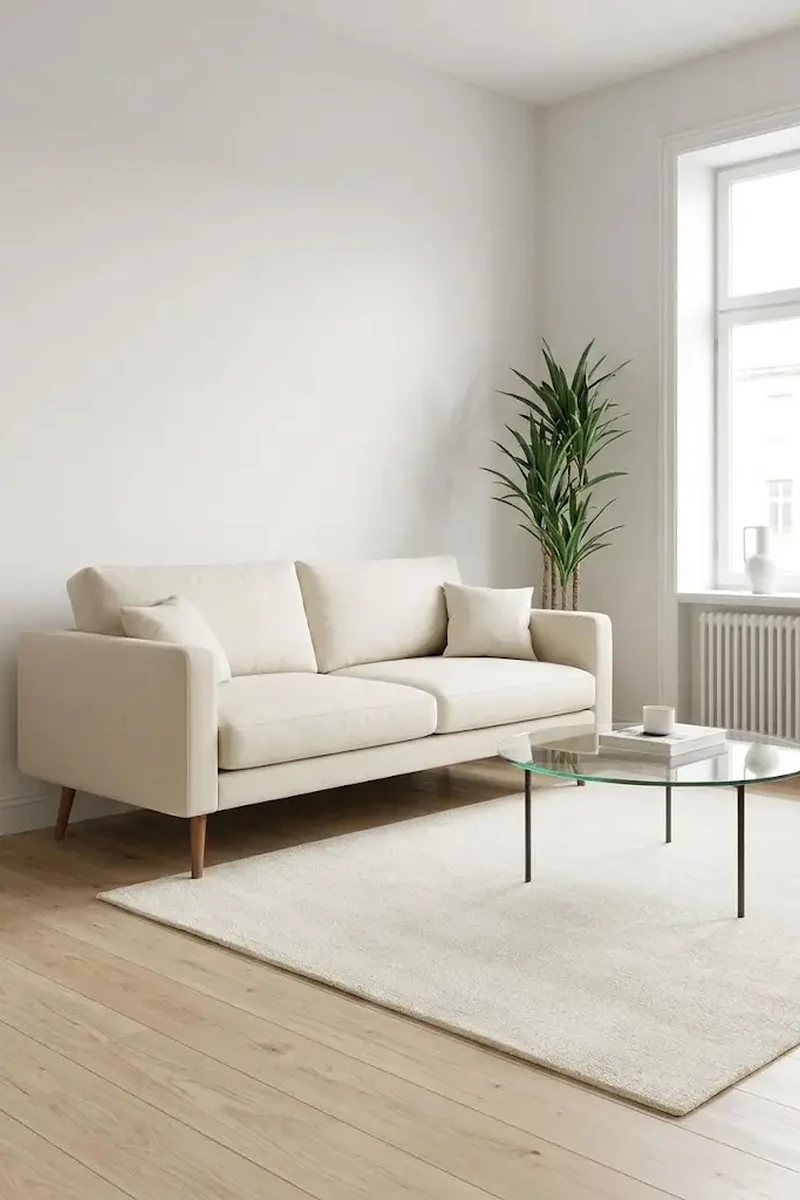
A little visible floor beneath the sofa can make a compact arrangement look less solid. Raised legs also reveal where the rug ends, helping its shape read clearly. Choose this detail when replacing worn furniture, or simply remove stored boxes from beneath the sofa you already have at home.
Keep comfort and stability ahead of appearance. Do not swap in taller legs unless the manufacturer approves that exact change. A sofa with generous cushions can still look light when its base is open, so there is no need to choose a hard or shallow seat for the effect.
10. Soft Curtain Frame
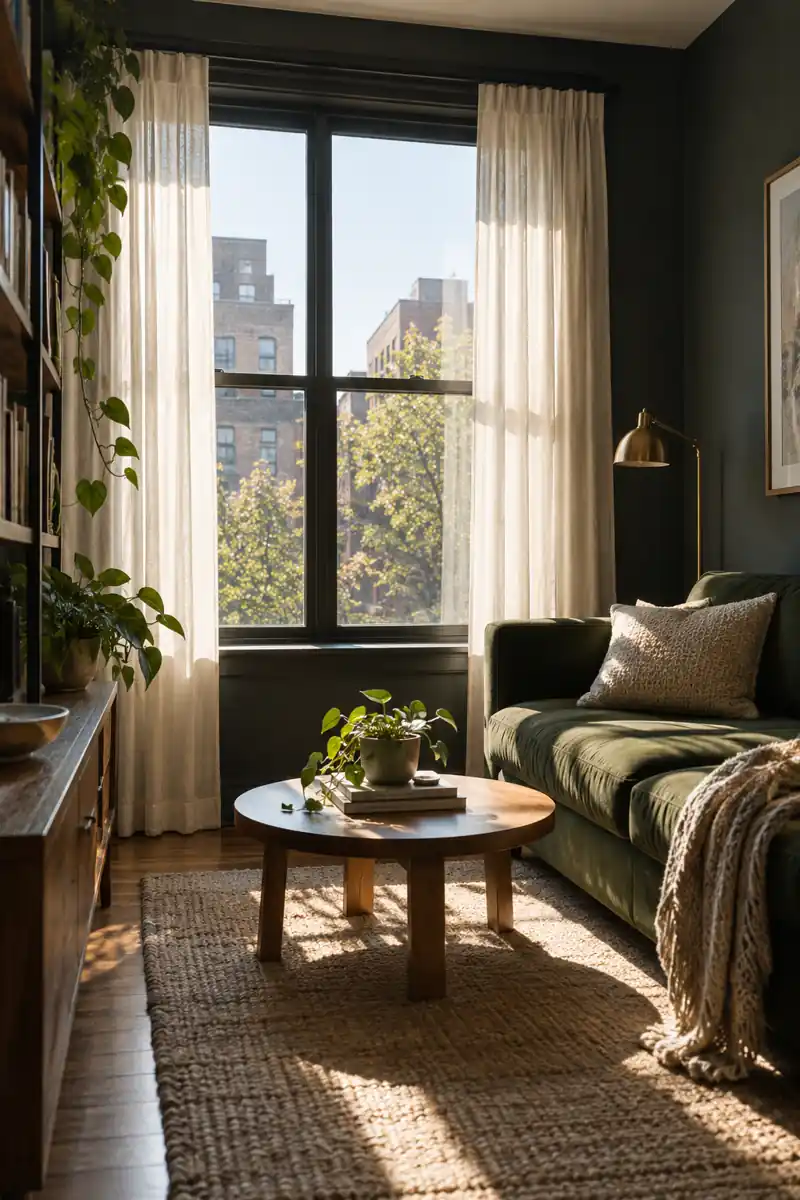
- Plain curtains add a gentle vertical texture without taking up another furniture footprint.
- Use existing suitable hardware where possible, or check permission before installing a new rod.
- Choose a length that clears the floor instead of collecting in a small walkway.
- Keep panels away from heaters and leave the window easy to open and reach.
Sheers soften daylight but usually need a more opaque partner for privacy after dark. Try the room with the lights on from outside where practical, or close an existing blind in the evening. A simple fabric close to the wall color lets the seating remain the main visual focus.
11. Daybed Lounge Corner
Quick Tip:
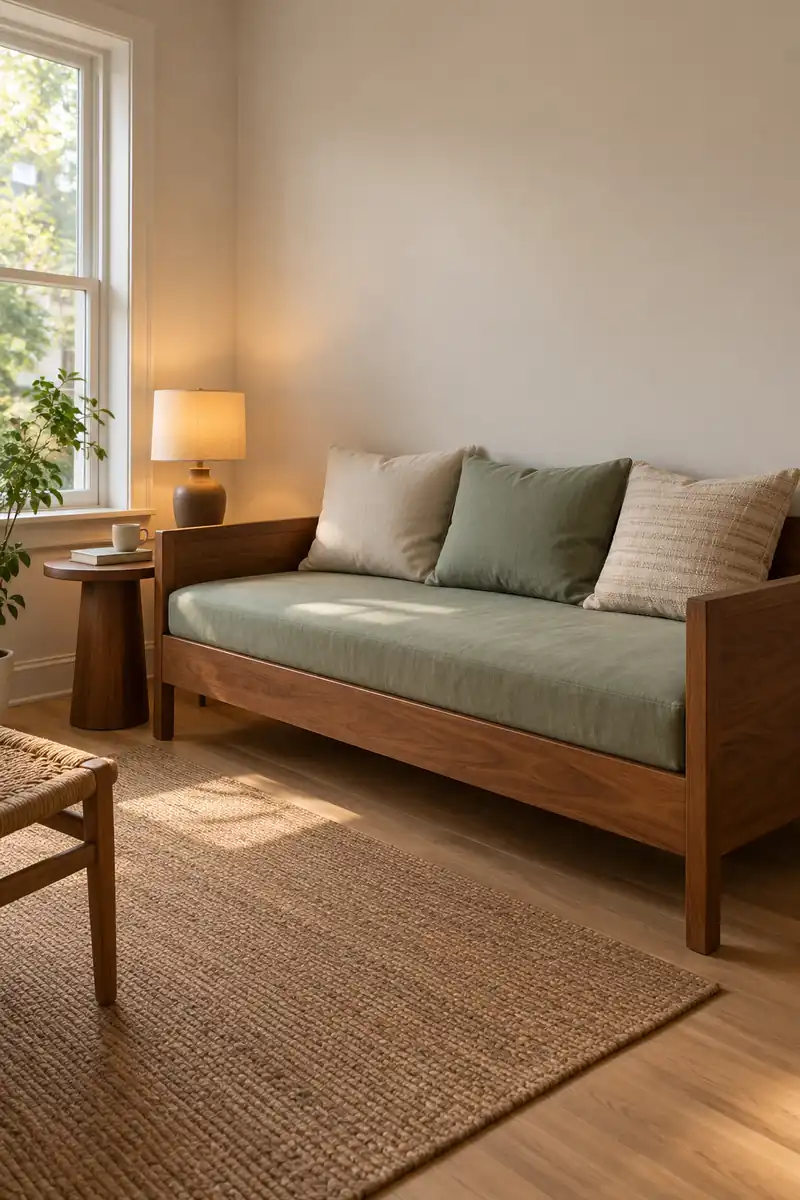
A daybed can provide a generous lounging edge in a narrow room. Set supportive cushions along its back for daytime sitting, and give spare bedding a proper storage place. Check the seat depth before deciding it can replace your main sofa.
This arrangement suits a room that occasionally needs an extra sleeping surface, provided the model is intended for it. Keep access to the door and window clear in both setups. A washable cover and a small nearby table make the daily change easier, without adding another bulky piece of furniture.
12. Warm Glass Accent
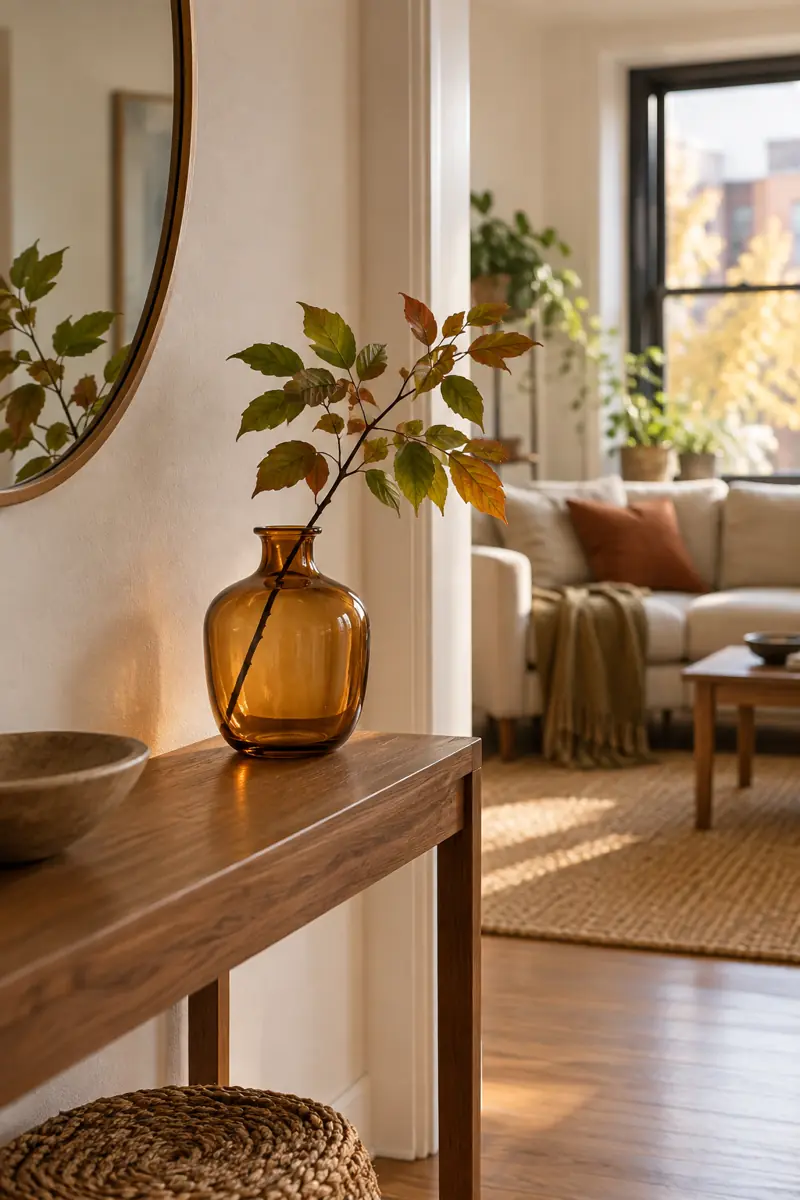
BEFORE: A small side table disappears beside pale upholstery and a plain wall. Adding several ornaments makes the tabletop difficult to use.
AFTER: One amber glass vase gives the corner a warm point of color. An empty section of table remains ready for a cup.
Glass catches changing daylight, so the same small object can feel different throughout the day. Choose a broad, stable base and keep it back from the edge. An empty vase can look complete by itself; use a short stem only if it will not brush the lamp or interrupt the view.
13. Fitted Rug Zone
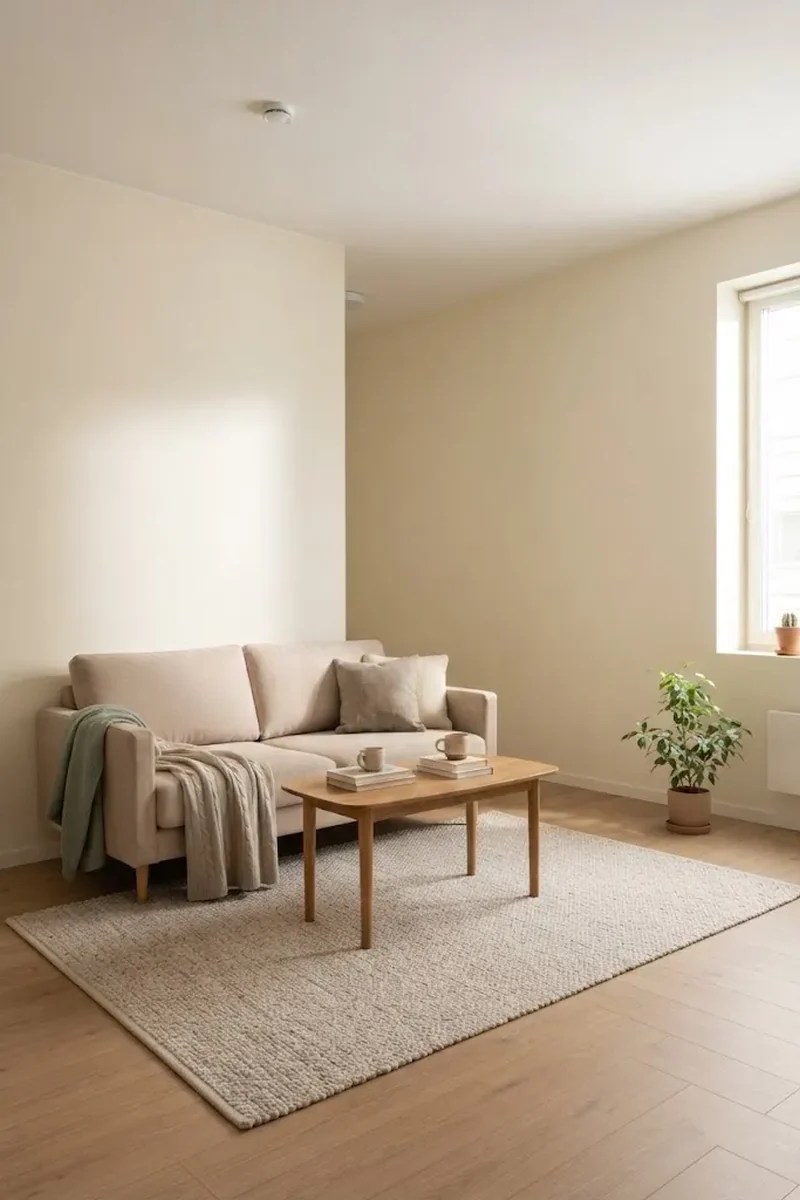
- Mark the seating area on the floor before choosing a rug size.
- Check where the sofa legs, table, and normal walking route will land.
- Choose a rug that lies flat and works with a suitable nonslip backing for your floor.
- Open nearby doors and move any drawers to make sure the rug does not interfere.
A rug gives the seating area a visible boundary, even when the room also holds a desk or bed. Keep the edges deliberate rather than stranded beneath one tiny table. Low pile is often easier to work around in tight rooms; follow the rug and flooring care instructions when choosing backing.
14. Low Screen Console
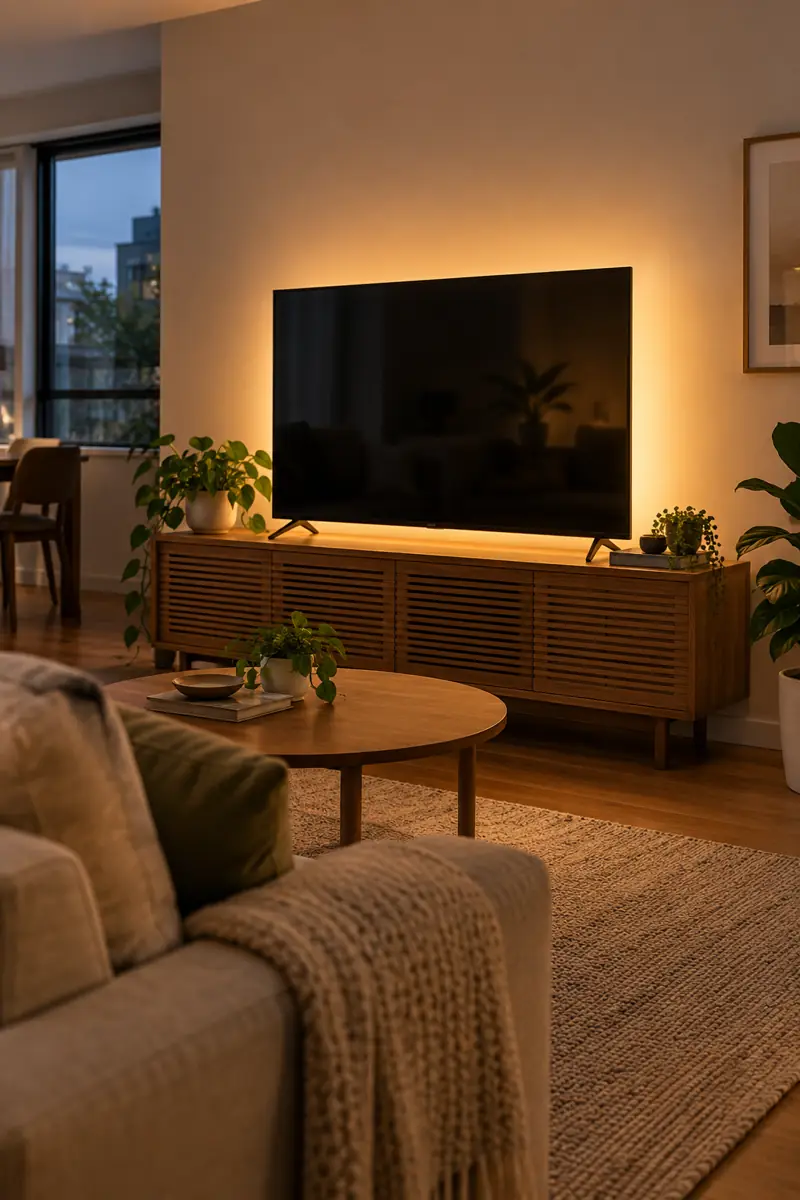
| Detail | Low Closed Console | Open Media Shelf |
|---|---|---|
| Small accessories | Hidden behind doors | Visible unless boxed |
| Daily cleaning | Mostly one outer surface | Several exposed shelves |
| Equipment access | Check ventilation and cable routes | Usually easy to reach |
A screen can sit more calmly in the room when the furniture below it contains the everyday clutter. Match the stand to the television dimensions and load requirements, and secure both as instructed. Keep equipment ventilation unobstructed. A subtle compatible backlight is optional; the tidy cabinet already does useful visual work.
15. Closed Daily Storage
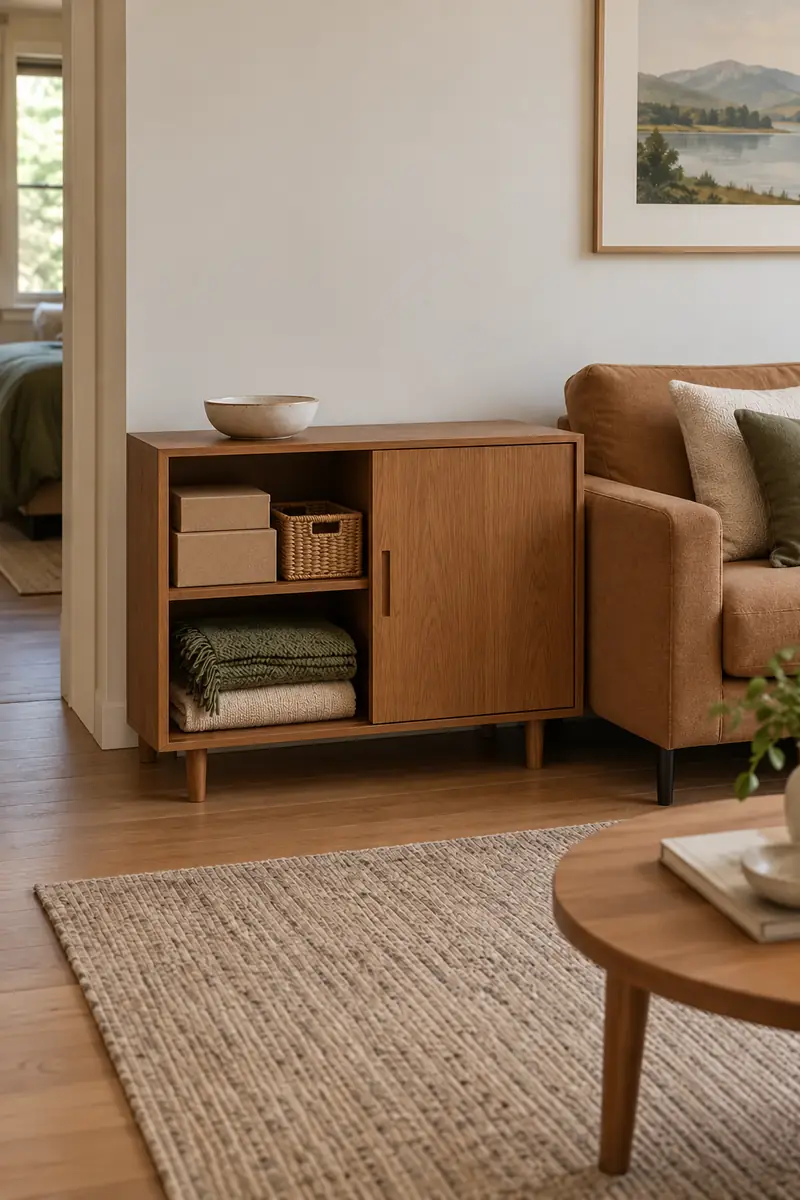
DO
- Give games and spare throws their own reachable shelf.
- Keep frequently used items near the front.
- Close the cabinet after a quick evening reset.
DON’T
- Pack the shelves so tightly that objects fall out.
- Place a cabinet where its doors block the room exit.
- Buy storage before checking what actually needs a home.
A low cabinet can hold the practical things that make a living room enjoyable. Measure its open doors as carefully as its closed footprint, and secure it according to the manufacturer instructions. Leave one small surface object on top, then let the concealed storage do the work instead of adding more baskets.
16. Evening Light Balance
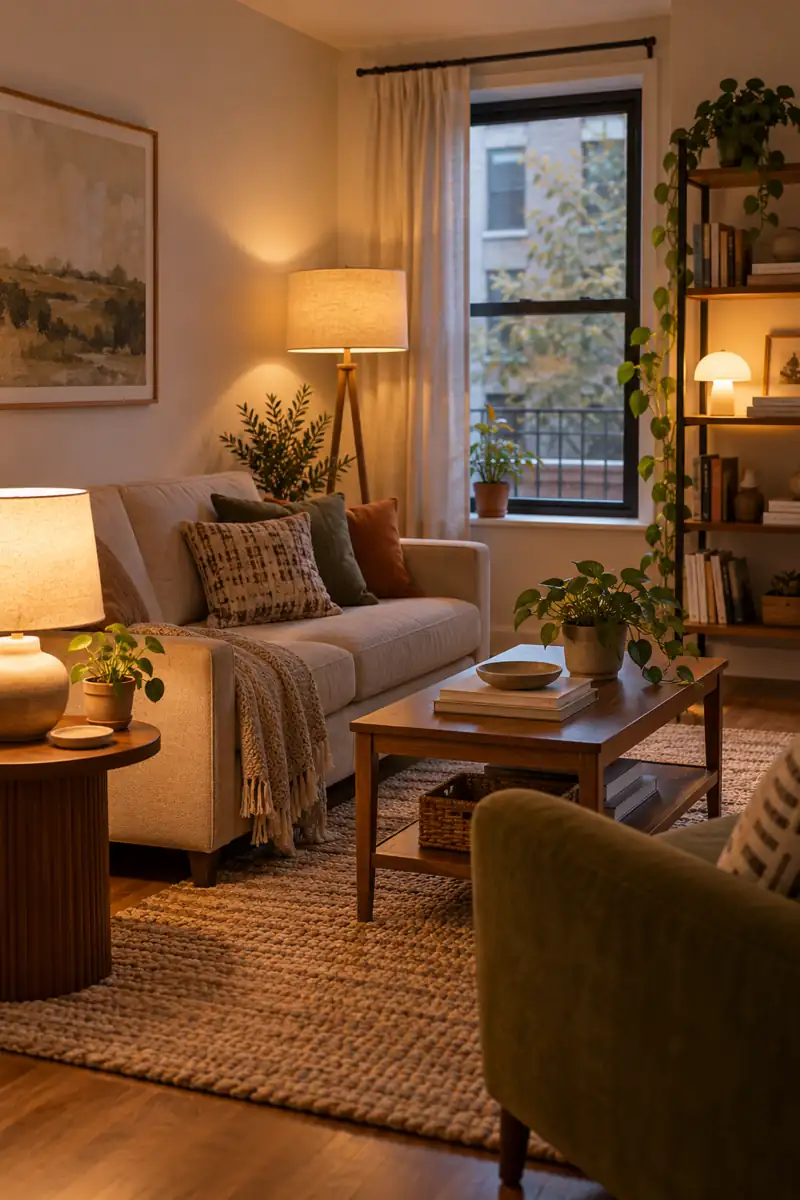
Main Pool: A shaded lamp near the sofa.
Second Pool: A smaller light across the room.
Glare Check: Bulbs hidden from seated eye level.
Last Check: Switches and walking routes easy to reach.
Several gentle light sources can make the edges of a small room feel more considered. They do not all need to be on at once. Try the sofa lamp alone for a quiet evening, then add another when guests arrive. Keep each fitting stable and follow its bulb and placement instructions.
Conclusion
The most welcoming small living rooms make everyday comfort easy to reach. Begin with the detail that bothers you most, whether that is a crowded table, an awkward seat, or harsh evening light. Then turn your search for “cozy apartment living room small spaces” into one useful change at a time. Keep the pieces you enjoy, leave room to move, and let color and texture do some of the decorating work. Save your favorite idea to Pinterest, try it with what you already own this week, and share this guide with someone making a compact apartment feel more like home.
Community
Join the conversation
Add a useful idea, ask a specific question, or share what worked in your space. Every comment is reviewed before it appears.