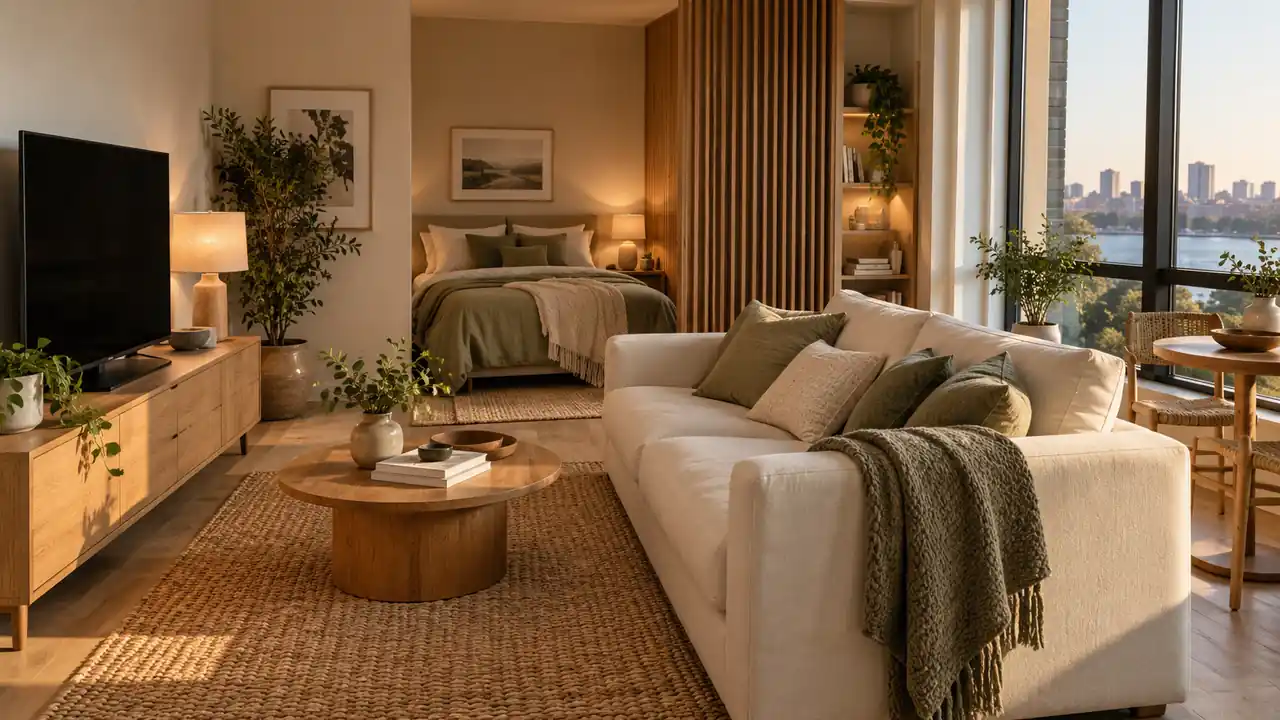
A television can swallow a studio’s best wall before you have even found a place for the sofa. Getting TV placement right in a studio apartment starts with the way you actually use the room, from morning coffee to a movie before bed. The most useful position leaves daylight, walking routes, and everyday storage working together. You do not need a huge screen or a complicated media wall to make that happen. These fifteen ideas show different places and furniture arrangements to consider, with practical checks for glare, viewing comfort, cable routes, and stability. Start with the option that matches your doors and windows, then test the view from your real seat before committing.
1. Long Wall Console
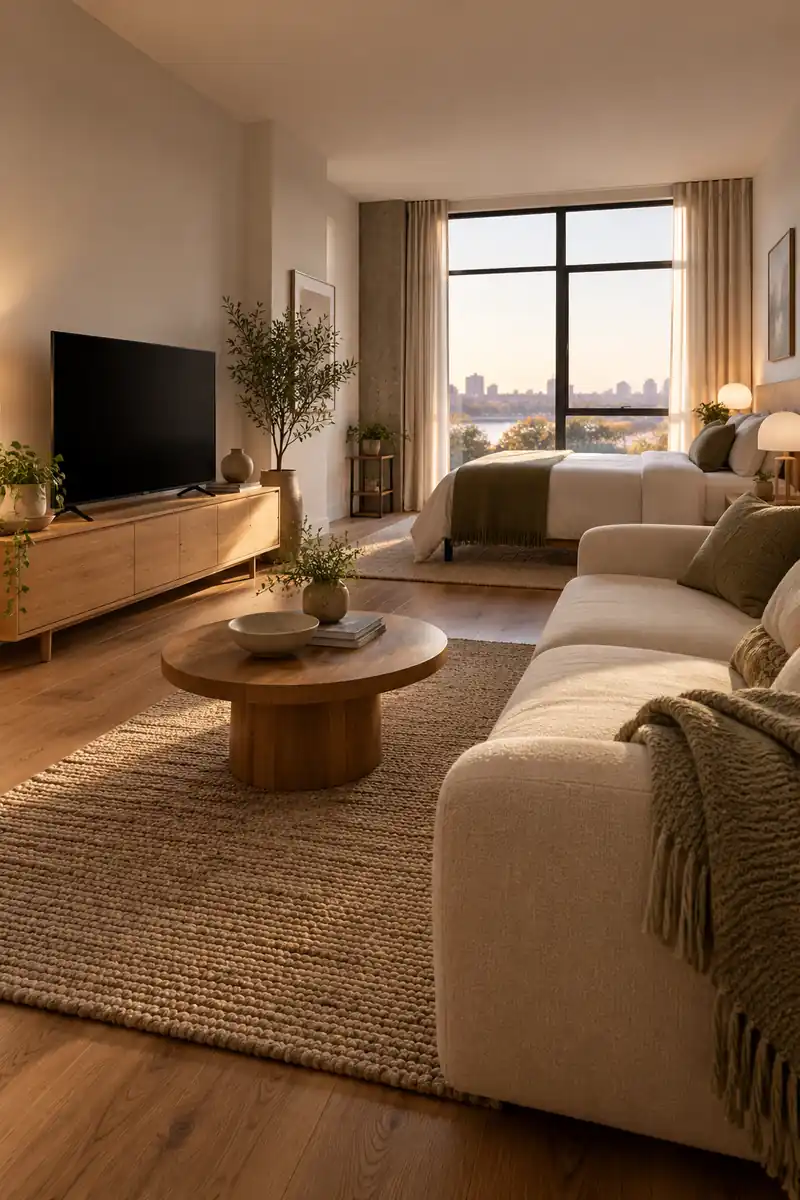
A clear stretch of wall can settle the whole room. Place a low media console along the longest solid wall, then position your sofa opposite it. Choose a cabinet wide enough for the television's feet and leave the ventilation space specified in its manual around the screen and equipment.
Keep the top mostly clear so the television feels like one calm focal point. Closed doors below can hide games, remotes, and spare cables. Before moving furniture, tape the console footprint on the floor and check that the route from your entrance to the kitchen still feels comfortable.
2. Window Side Placement
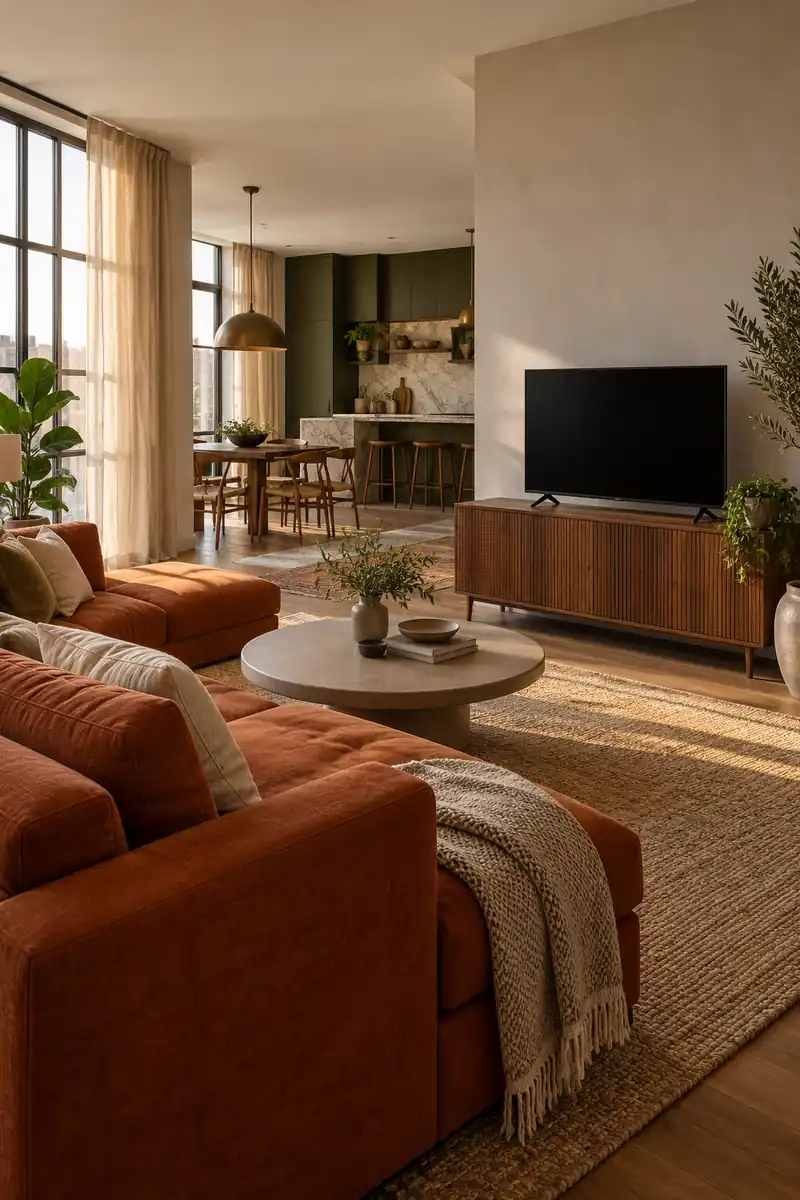
- Glare can spoil an otherwise lovely layout. Start with the television on a wall beside the window rather than directly opposite it.
- Sit in your usual seat during the brightest part of the day. Look for reflections before committing to the position.
- Choose adjustable curtains or blinds so you can soften incoming light without darkening the apartment all day.
- Keep the screen clear of opening windows, radiators, and curtain movement. Follow the television manual for placement limits.
Daylight and movie nights can share the same room with a little planning. Keep curtains easy to reach and use a lamp beside the sofa after sunset. Checking reflections at different times is more useful than judging the arrangement from a single photograph taken on an overcast morning.
3. Angled Corner Stand
Quick Tip:
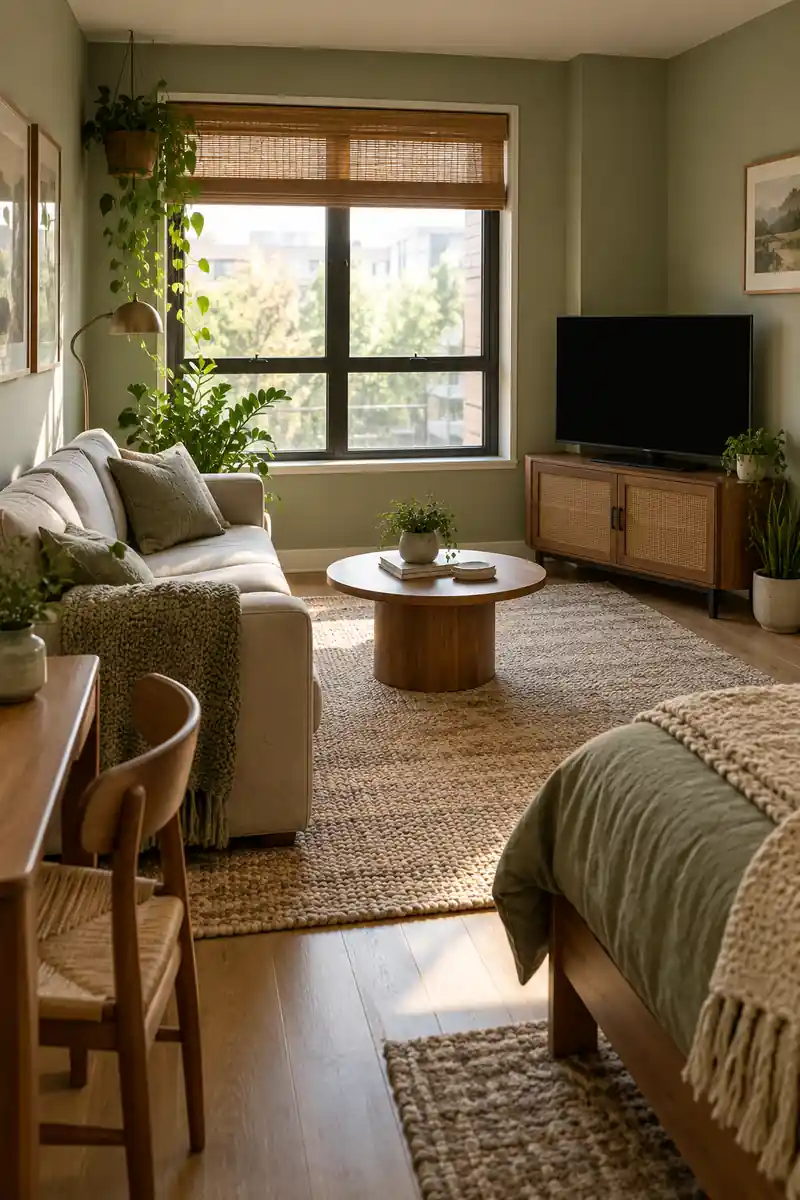
A forgotten corner can become your viewing spot. Use a stand designed for corner placement and confirm that every television foot rests securely on its surface. Test the angle from both ends of the sofa before arranging accessories.
A corner arrangement works especially well when doors interrupt the main walls. Turn the sofa slightly toward the television instead of twisting your neck to watch. Leave enough room behind the stand for connections, and avoid filling the remaining corner with tall plants that brush against the screen.
4. Foot Of Bed Console
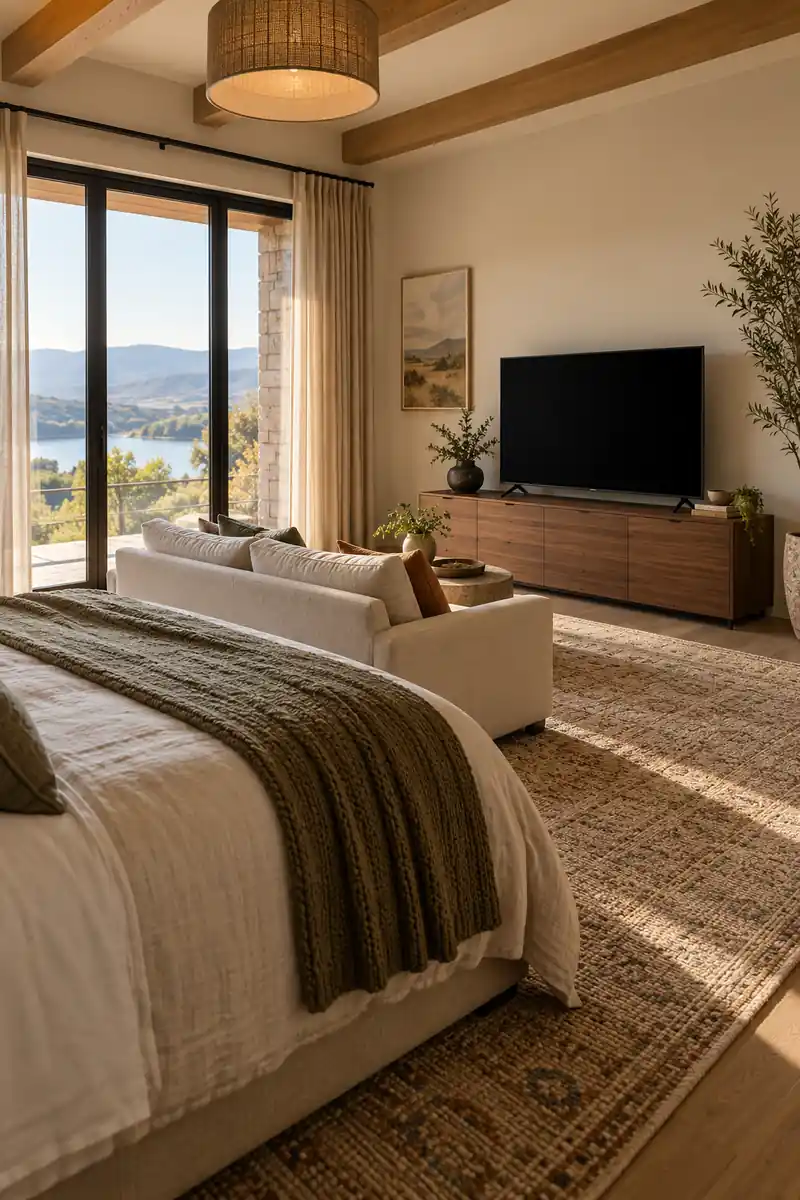
BEFORE: The television sits beside the bed, so watching means turning sideways. A bulky cabinet also narrows the route to the wardrobe.
AFTER: A properly supported screen faces the bed from its foot. The cabinet stays outside the main passage, with a nearby chair angled toward the same view.
Shared sightlines make a small apartment feel less divided. A low cabinet at the foot of the bed can serve the sleeping area and a nearby chair without adding another screen. Measure the walking gap first, then choose furniture that lets drawers open without trapping you between the pieces.
5. Swiveling Tabletop Mount
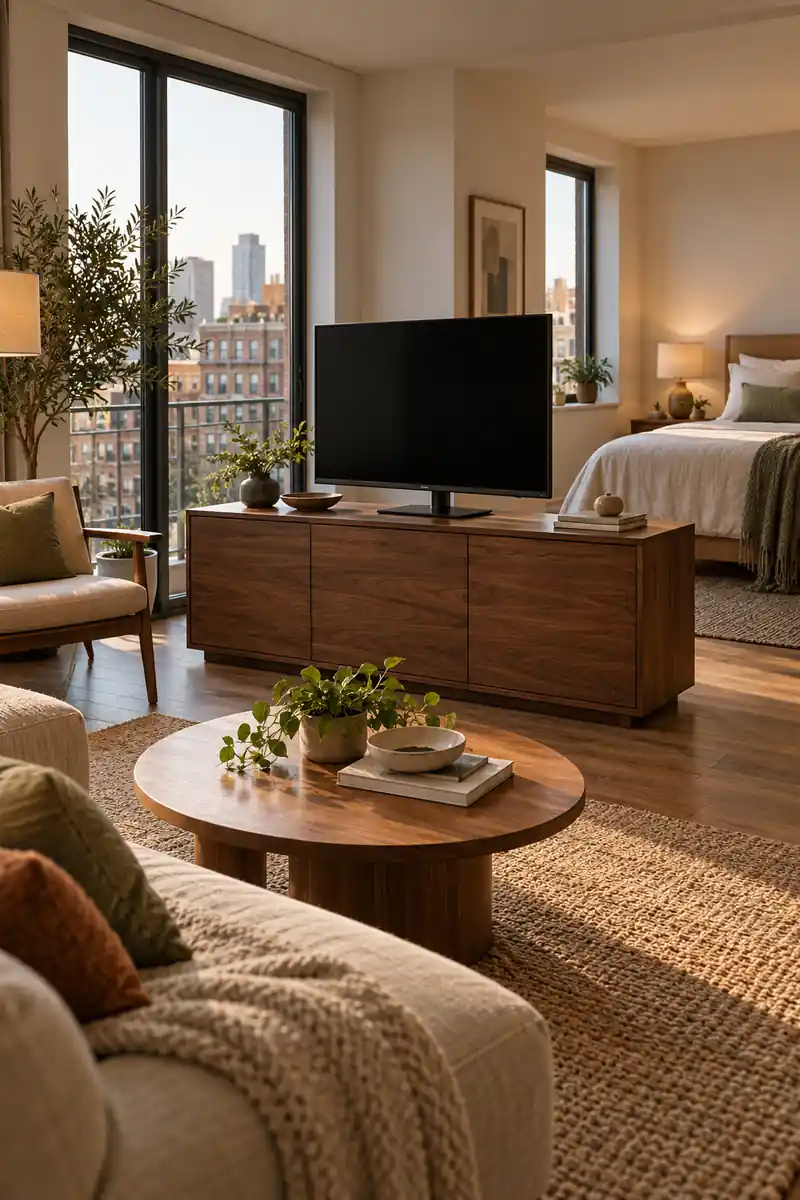
- Give both seating areas a fair view. Mark the sofa and bed sightlines before choosing the cabinet position.
- Check the mount manufacturer's compatibility, weight limits, and assembly instructions for your exact television.
- Install the mount on suitable stable furniture and follow all specified securing requirements.
- Leave enough cable slack for the permitted movement without creating loops across the floor.
- Turn the screen slowly through its allowed range. Stop if any cable pulls or the furniture moves.
One screen can serve two comfortable spots without rearranging the room each evening. A compatible tabletop swivel mount changes the viewing direction while its broad cabinet stays put. This suits studios where the bed and sofa sit at different angles, provided the swivel path remains completely free of nearby objects.
6. Low Storage Divider
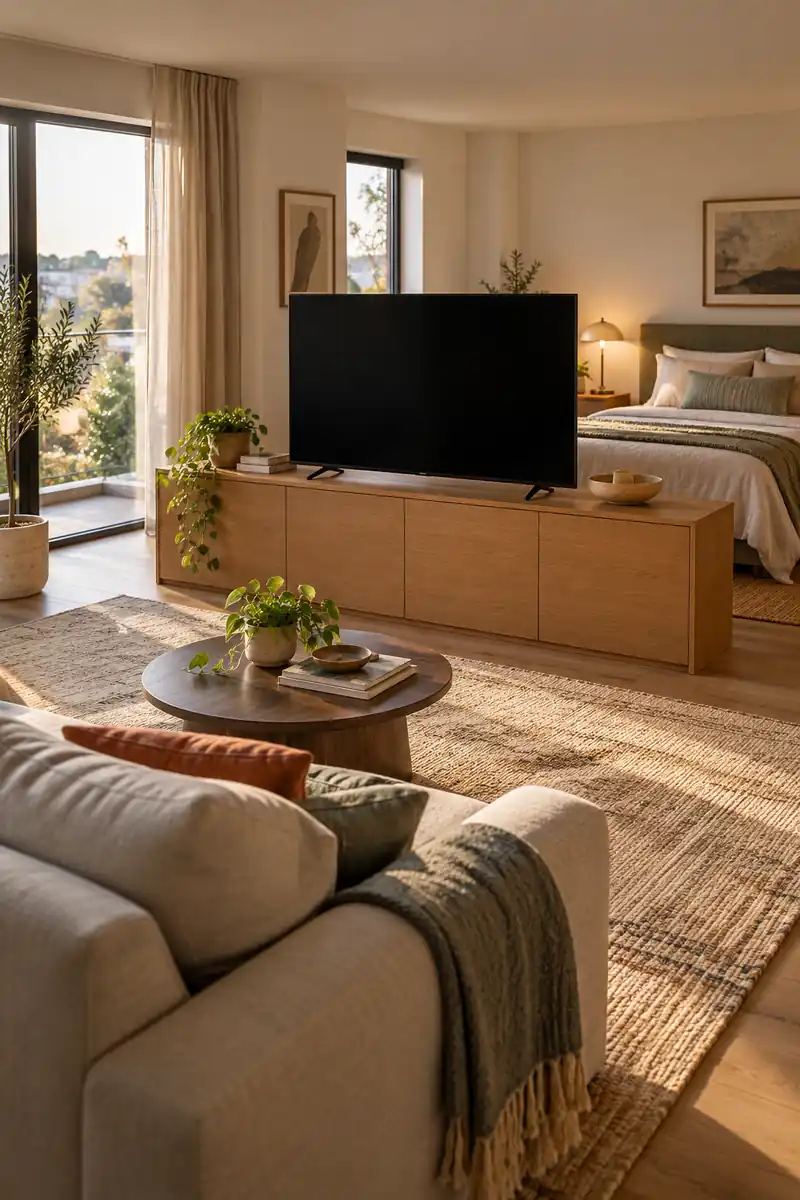
| Detail | Tall partition | Low media divider |
|---|---|---|
| Light | Can shade the bed | Leaves upper room open |
| Viewing | Often limits angles | Creates a clear lounge view |
| Stability | Needs suitable securing | Needs approved TV support |
A low divider can organize the apartment without shutting off the daylight. Keep the television facing the living area and let the back of the cabinet define the sleeping zone. This arrangement suits people who prefer a quieter bed area, rather than trying to watch comfortably from both sides.
7. Under Stair Media Nook
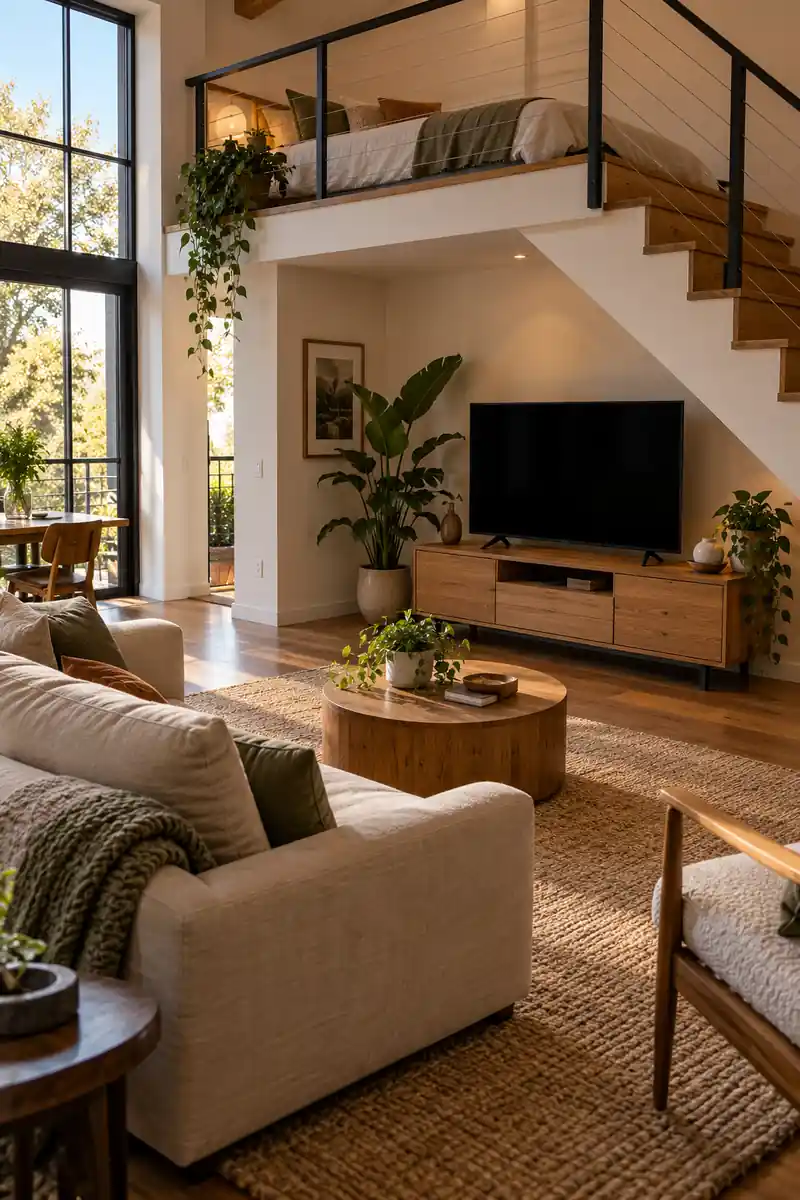
DO:
- Measure the sloping ceiling at the screen position.
- Leave the ventilation clearance specified by the manufacturer.
- Face the sofa toward the usable part of the nook.
DON’T:
- Do not place the television where feet could strike it.
- Do not squeeze equipment into a sealed compartment.
- Do not run cables across the stairs.
That awkward space beneath loft stairs may fit a compact media cabinet better than another storage basket. Check the available height against the actual screen and its stand before buying anything. Leave the stair route untouched, and keep equipment accessible so cleaning or connecting a cable does not require dismantling furniture.
8. Dresser Facing The Bed
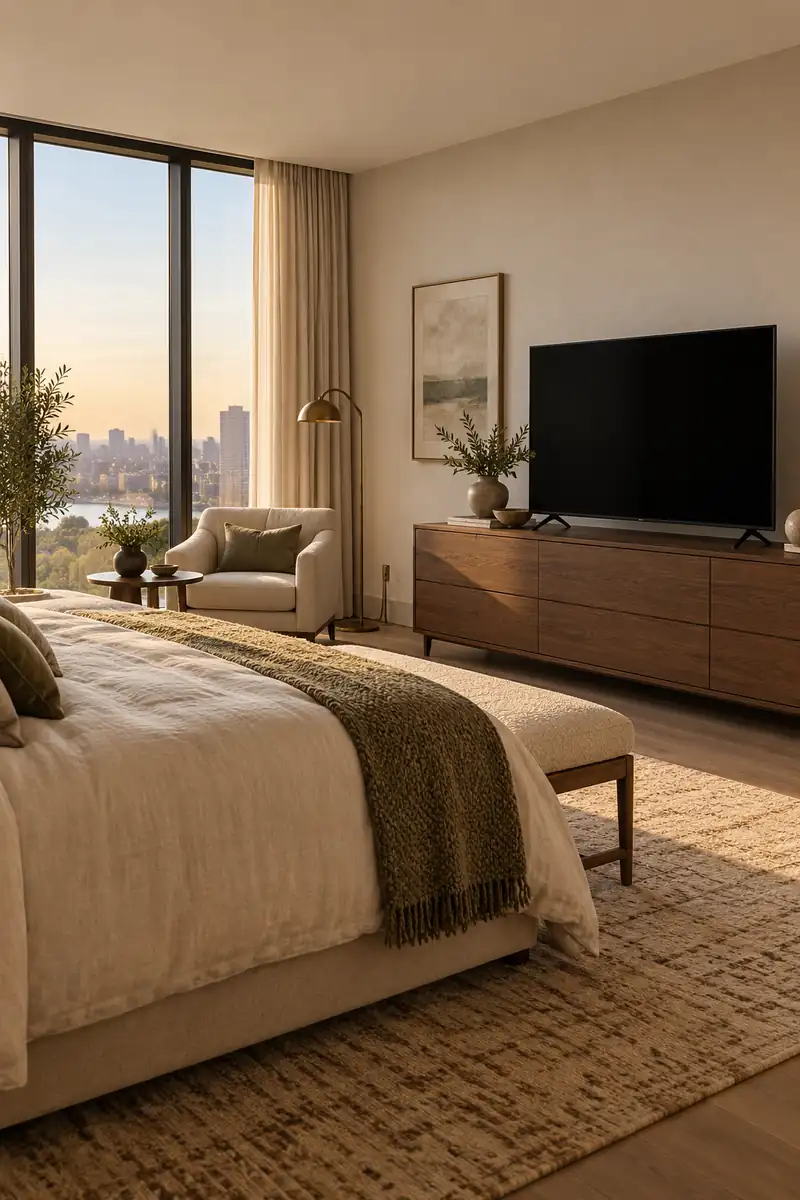
Best for: A sleeping zone that doubles as a viewing area
Furniture: A stable dresser approved for the intended load
Check first: Support dimensions and securing requirements
Layout goal: Clear wardrobe access
Your bedroom storage can sometimes support a television too, but suitability matters more than appearance. Check the dresser and screen instructions before combining them, including any required anchoring. A lower, broader dresser usually creates a more comfortable view than a tall narrow chest, especially when you are sitting rather than reclining.
9. Narrow Room End Wall
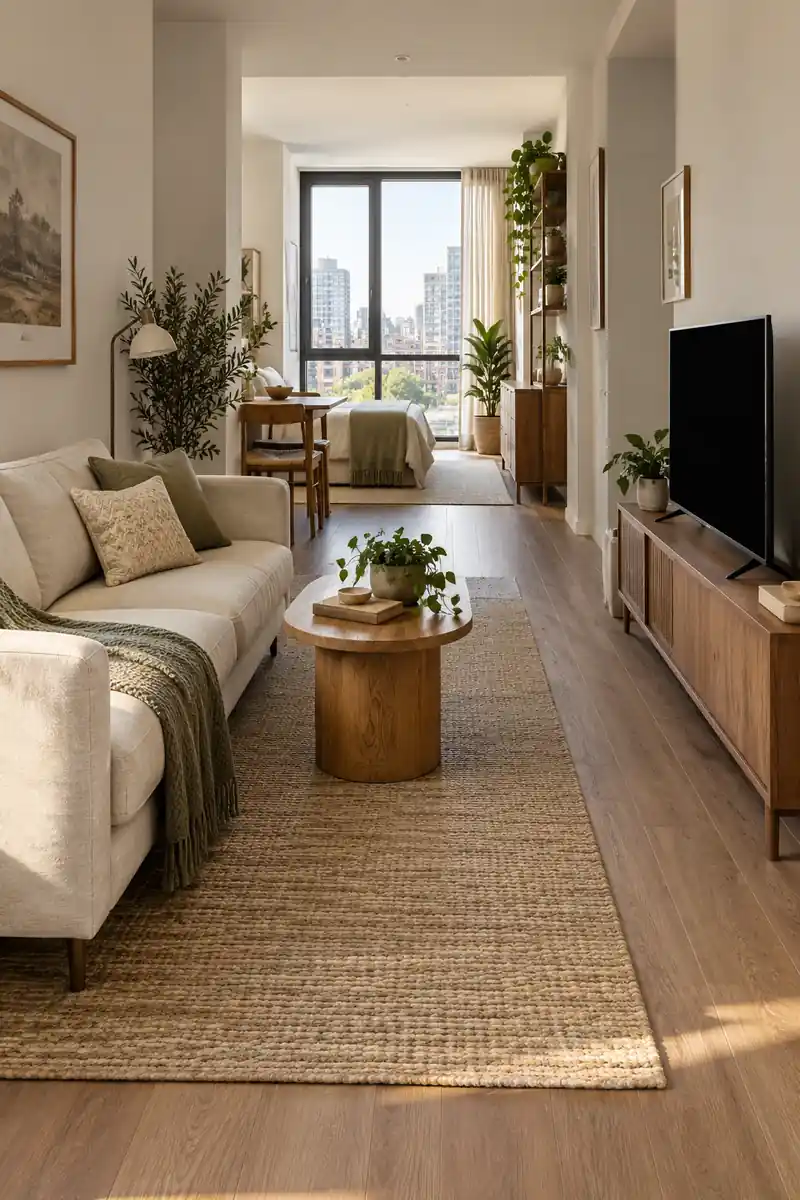
A long studio needs a destination for the eye. Place the television against the short end wall and line up a compact sofa along the room's length. This keeps the viewing direction simple while freeing the side walls for storage, artwork, or a small desk that does not interrupt circulation.
Choose a shallow cabinet only if it safely supports your television and allows the required ventilation. Keep baskets and stools out of the central route. If the sofa feels too far away, move it forward slightly and use the space behind it for a narrow, practical drop zone.
10. Recessed Wall Cabinet
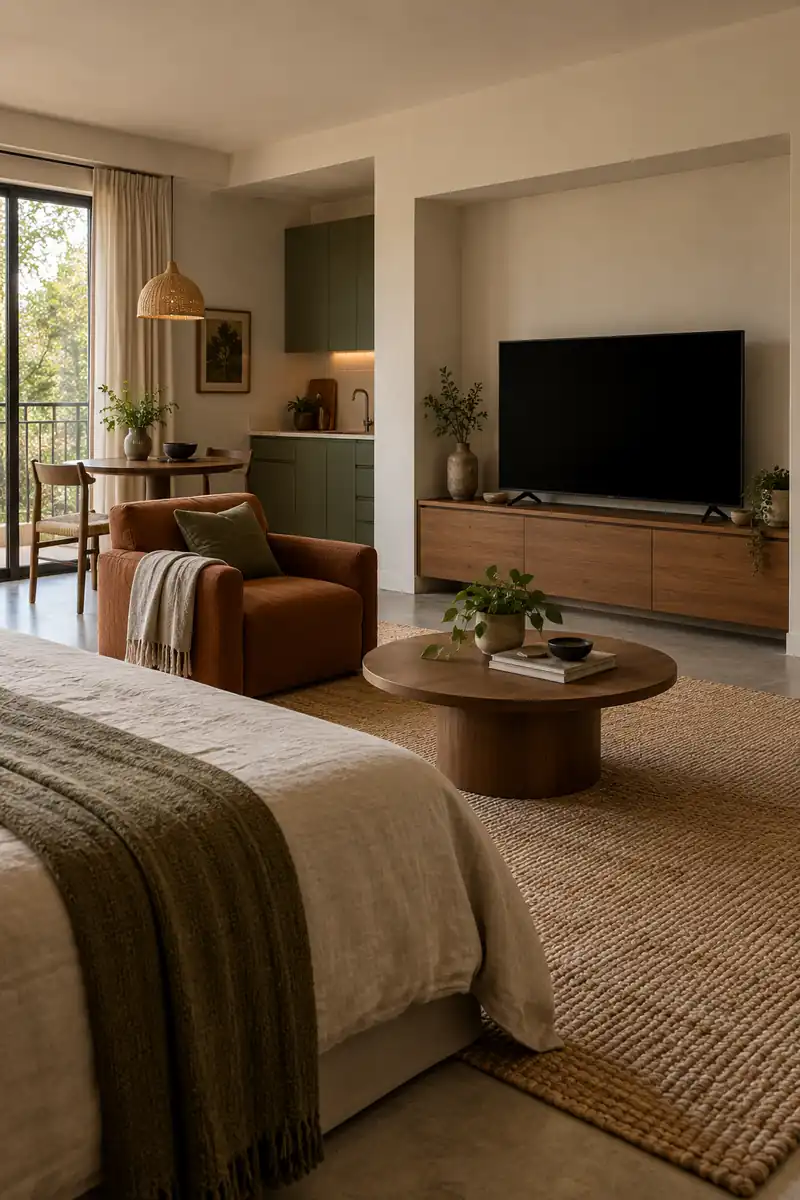
- An empty recess might solve your layout puzzle. Measure its width, depth, and height before choosing equipment.
- Use a stable cabinet that fits inside without forcing the screen against surrounding surfaces.
- Leave every ventilation gap required by the television and connected devices.
- Test the view from the sofa and bed. Deep side walls can hide part of the screen at an angle.
An existing wall recess offers a useful visual boundary for the media area. Paint can help the cabinet blend in, but check rental permission before making changes. Keep the screen comfortably visible from your seat, and leave room to reach the sockets without pulling the whole television out each time.
11. Freestanding Media Easel
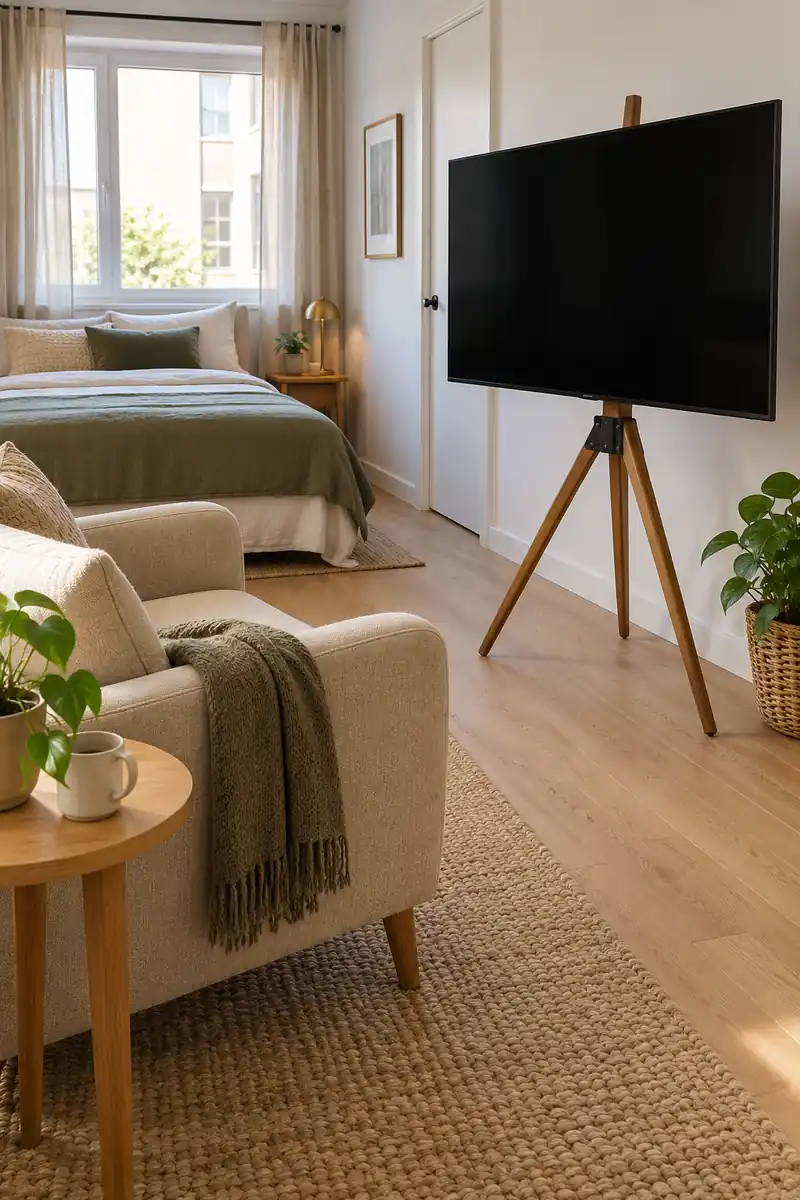
Quick Tip:
A television does not always need another cabinet. Choose a purpose-built media easel with a stable base and confirmed compatibility for your screen. Follow all installation and anti-tip instructions rather than adapting an ordinary art easel.
An easel style stand can make a screen feel lighter in a room with very little wall space. Position it outside the main passage and face it toward a dedicated chair or sofa. Keep the area around its legs clear, particularly where people get out of bed in the dark.
12. Low Wall Mount
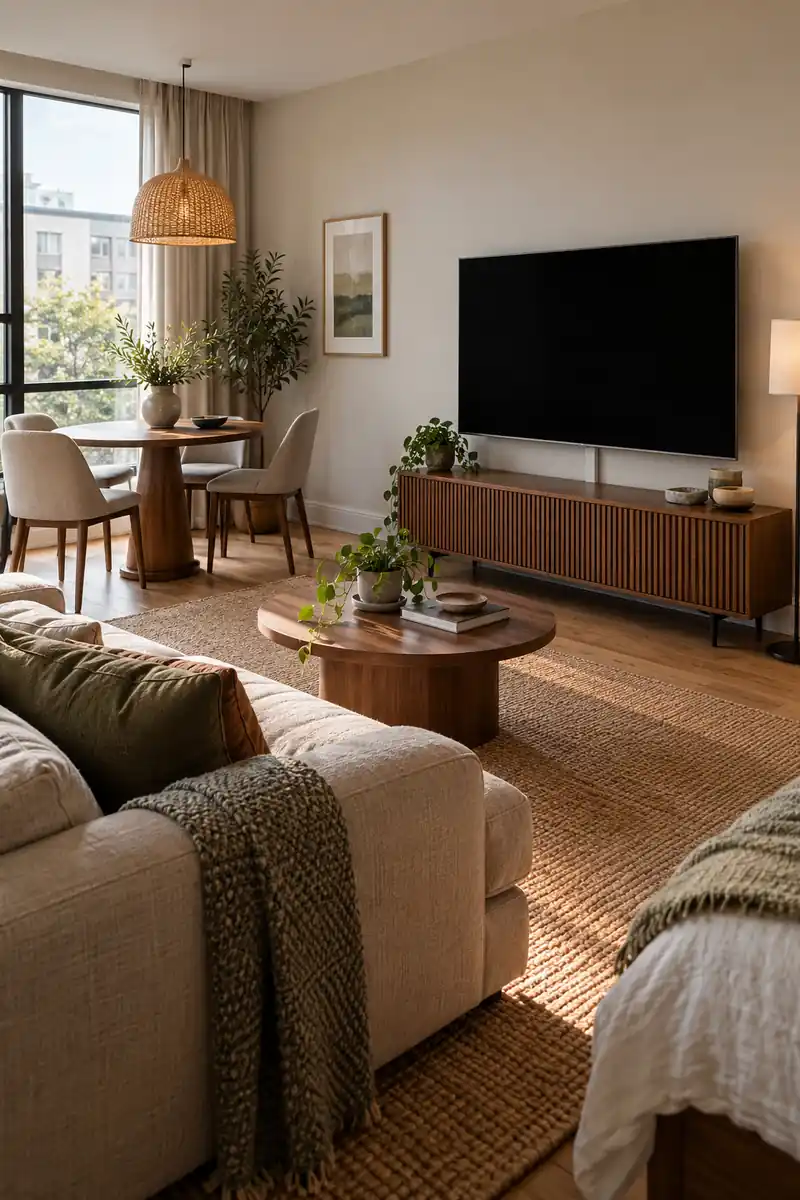
BEFORE: The only available cabinet projects into the dining area. Chairs bump against it, and the screen sits too high for comfortable sofa viewing.
AFTER: A correctly installed mount positions the television near seated eye level. A slim cabinet below holds accessories while the dining area gains useful floor clearance.
Mounting can reduce furniture depth, but it should begin with permission and a suitable wall. Follow the television and mount instructions, and use a qualified installer if the wall construction is uncertain. Keep nearby dining chairs clear of the screen, with cables contained along the wall rather than hanging behind seats.
13. Diagonal Sofa View
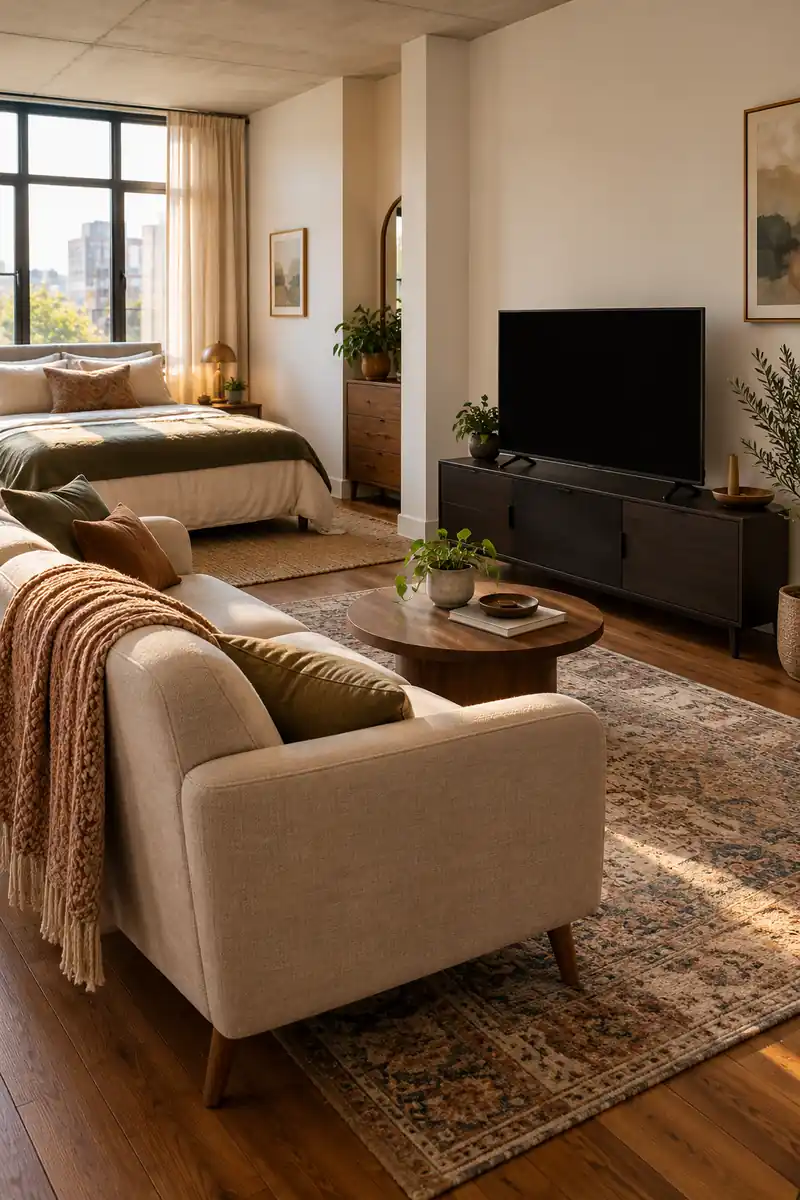
- An off-center screen does not have to dictate an uncomfortable seat. Choose the safest stable cabinet position first.
- Rotate the sofa slightly toward the television while keeping its feet flat and fully supported.
- Walk between the kitchen, bed, and entrance to check the new corners.
- Test the view from each seat. Adjust the furniture again if anyone needs to turn their head for the whole show.
A slightly angled sofa can solve an awkward floor plan without moving the television into a doorway. Keep the angle modest and test it while sitting normally, with your shoulders relaxed. The aim is a comfortable view and a useful walking route, not a dramatic diagonal that wastes precious floor space.
14. Gallery Wall Media Zone
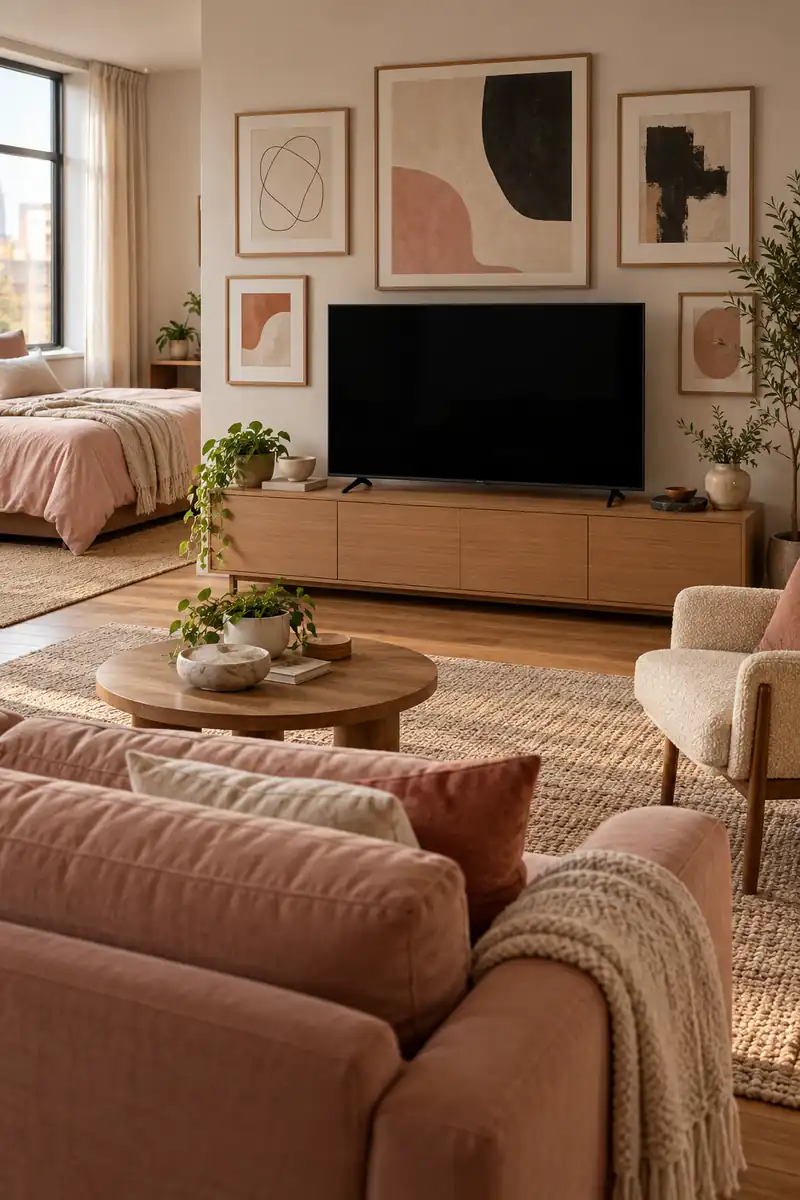
| Detail | Scattered wall decor | Grouped media zone |
|---|---|---|
| Focus | Several competing spots | One intentional area |
| Spacing | Often feels accidental | Consistent gaps between pieces |
| Storage | Accessories spread out | Remotes in the cabinet below |
Artwork can help a television belong in a cozy studio rather than dominate it. Arrange a few pieces around the screen while keeping controls, sensors, and ventilation clear. Choose rental-approved hanging methods, and keep the television itself properly supported. The surrounding frames should soften the view without making the wall feel crowded.
15. Sofa Bed Sightline
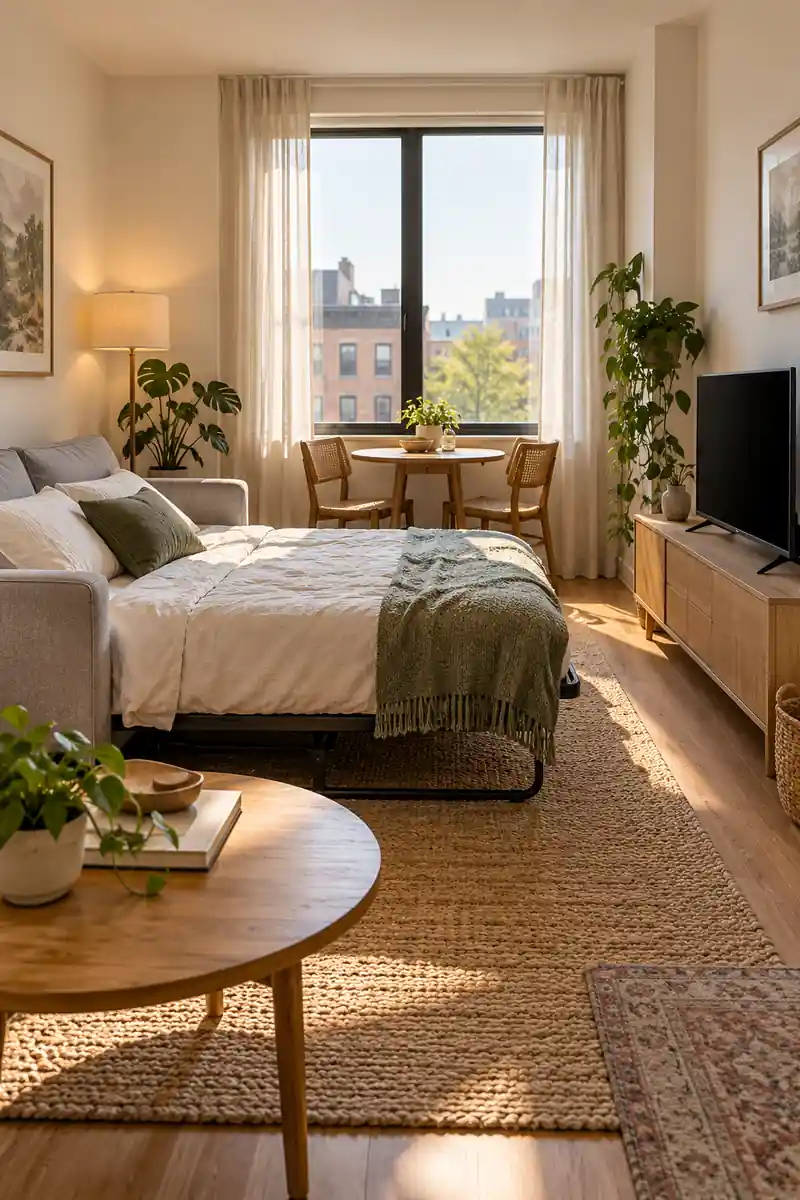
DO:
- Check the view with the sofa upright and the bed open.
- Leave access to the bed mechanism and bedding storage.
- Keep the television on stable suitable furniture.
DON’T:
- Do not let an unfolding mattress strike the cabinet.
- Do not trap cords beneath moving sofa components.
- Do not block the route to the exit.
A sofa bed changes the room twice a day, so plan for both versions before settling the screen. Open the bed fully and check the distance to the cabinet, then fold it back and sit normally. A position that works in both modes saves moving the television and reconnecting cables every night.
Conclusion
Good TV placement starts with a comfortable seat and a clear path through the room. Choose one arrangement that suits your windows, storage, and sleeping area, then test it in daylight and after dark. A stable support, sensible screen height, and tidy cable route matter more than filling the wall with furniture. Follow the equipment instructions and check rental permission before mounting anything. Measure your apartment with these ideas in mind, then try one small layout adjustment this week.
Community
Join the conversation
Add a useful idea, ask a specific question, or share what worked in your space. Every comment is reviewed before it appears.