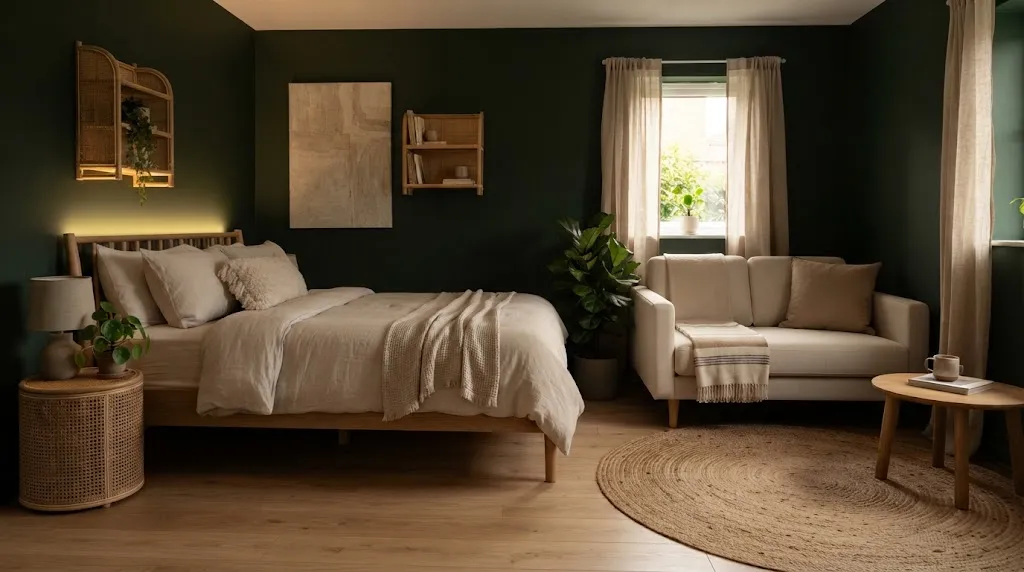
Putting both a bed and a couch in one small room can feel like a furniture puzzle.
You need a comfortable place to sleep, somewhere to sit, and enough open space to move around without constantly bumping into furniture. The trick is not simply choosing smaller pieces. It is about arranging them so each one has a clear purpose and the room still has breathing space. These ideas work for any small room with a couch and bed, including a small bedroom with a sofa bed.
Whether you are furnishing a studio apartment, a small bedroom, a guest room, or a compact multipurpose space, there are plenty of ways to make a bed-and-couch combination work.
The ideas below focus on practical layouts, visual separation, flexible furniture, and simple decorating choices that can make a small room feel considerably more comfortable.
1. Put the Bed Against the Longest Wall
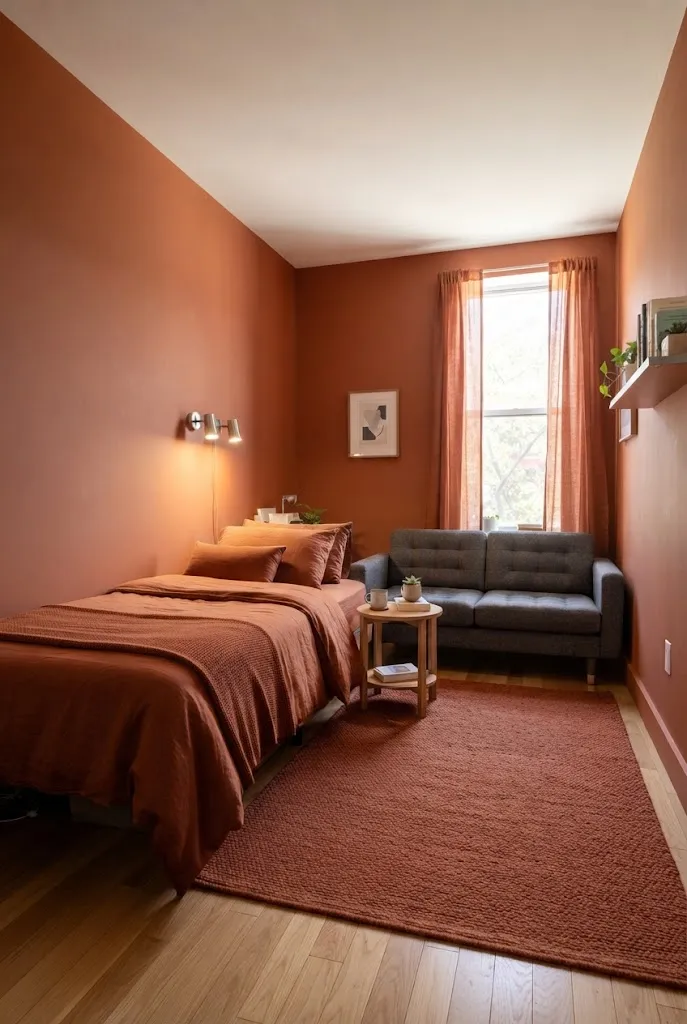
One of the easiest layouts is placing the bed against the longest uninterrupted wall and positioning the couch along an adjacent wall.
This creates two defined zones without requiring a physical room divider.
Leave enough space around the bed to make it easy to get in and out. The couch can face a small coffee table or media unit if the room allows.
Keeping the largest pieces against the perimeter also leaves the center of the room more open.
This arrangement works particularly well in rectangular rooms.
2. Float the Couch at the Foot of the Bed
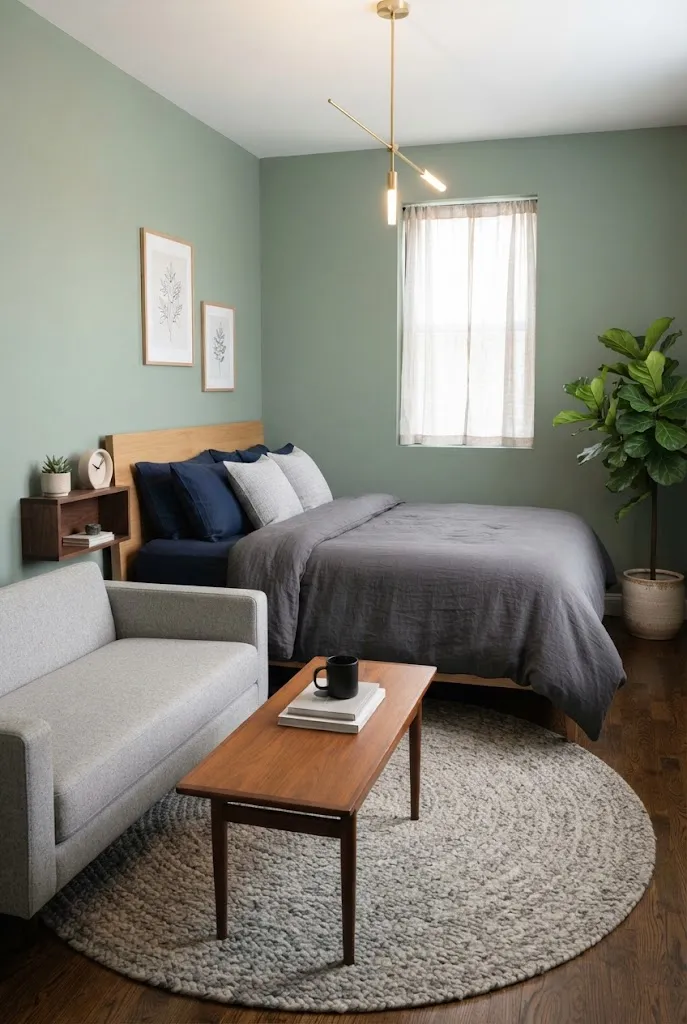
If the room is long enough, place a compact couch at the foot of the bed.
This naturally creates a visual transition between the sleeping and sitting areas.
A loveseat or apartment-size sofa usually works better than a deep sectional because it leaves more walking space around the furniture.
You can add a narrow coffee table between the couch and bed, but avoid filling the entire gap.
An open pathway can make the room feel much larger.
3. Use a Loveseat Instead of a Full Sofa
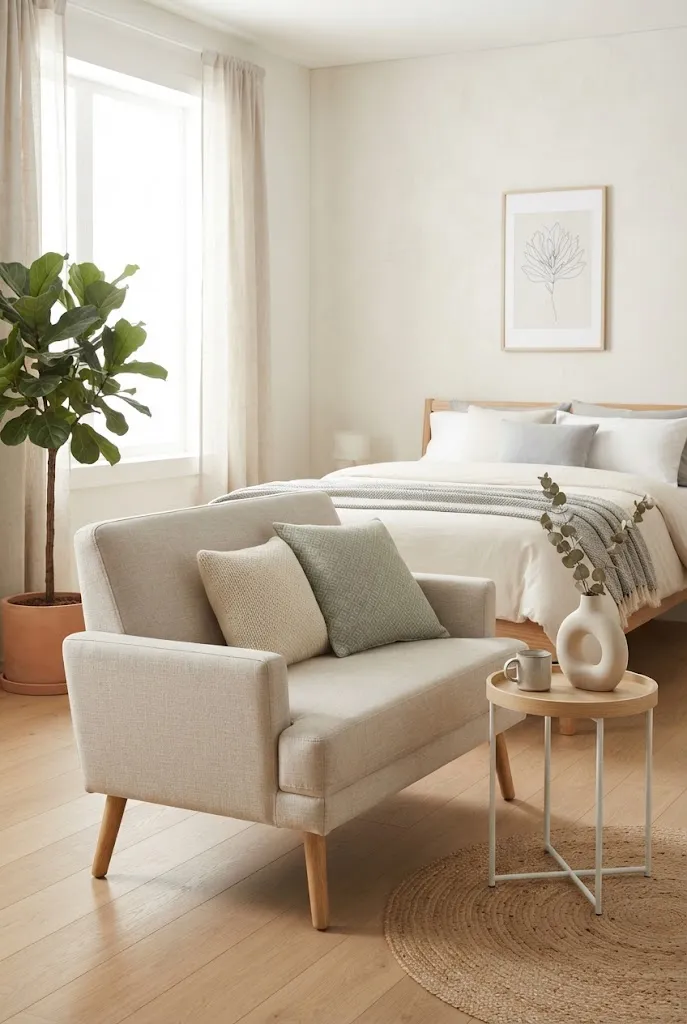
A full-size couch can quickly dominate a small room.
A loveseat gives you seating without consuming as much floor space.
Choose one with slim arms and raised legs if possible. The visible floor underneath can make the room feel less crowded.
Pair it with a small round side table instead of a large coffee table.
This creates a functional seating area while preserving more floor space for movement.
4. Choose a Sofa Bed
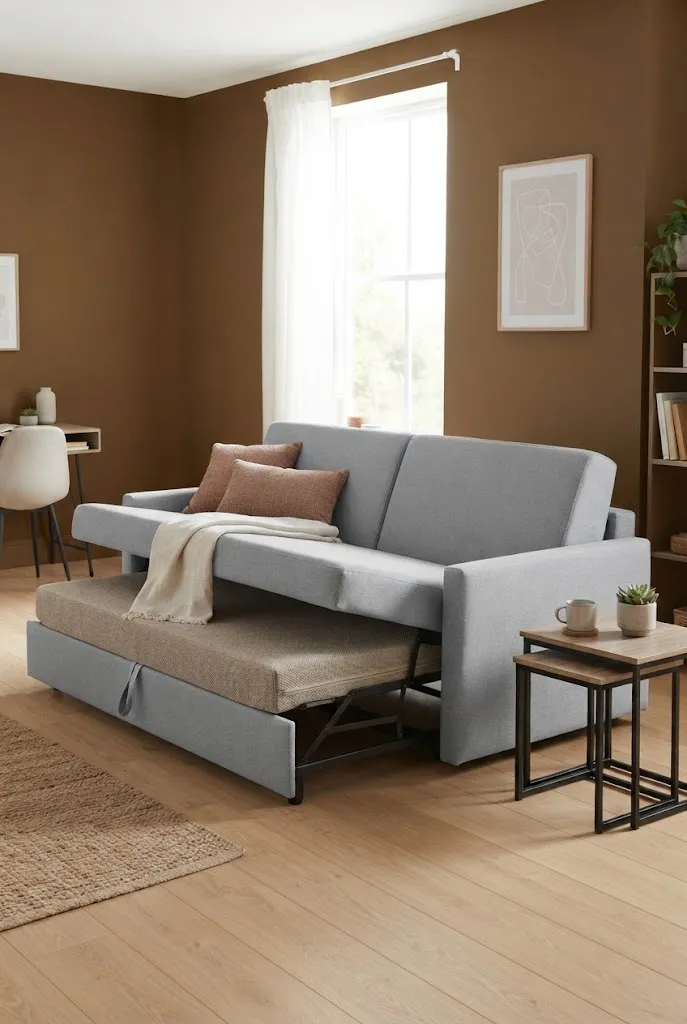
When space is extremely limited, a sofa bed can allow one piece of furniture to serve two purposes.
During the day, it functions as the main seating area.
At night, it becomes the sleeping surface.
This is particularly useful for guest rooms and multipurpose rooms where a permanent bed is not always necessary.
If you use the sofa bed every night, pay close attention to mattress comfort, opening mechanism, and how much clearance is required when it is fully extended.
5. Create a Separate Sleeping Nook
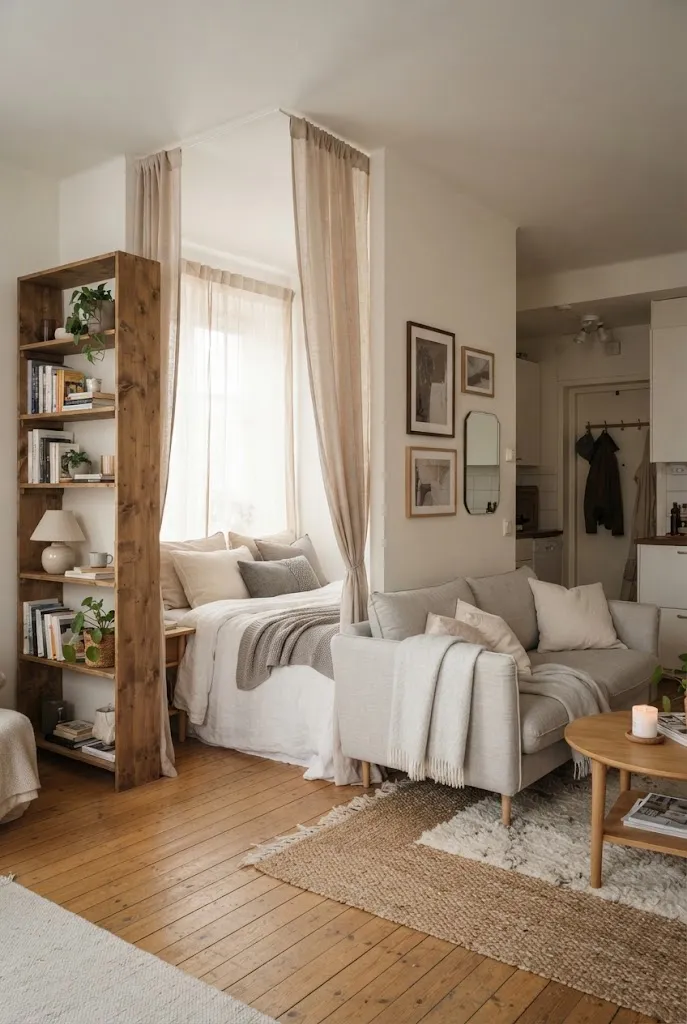
A small room can feel more organized when the bed has its own visual zone.
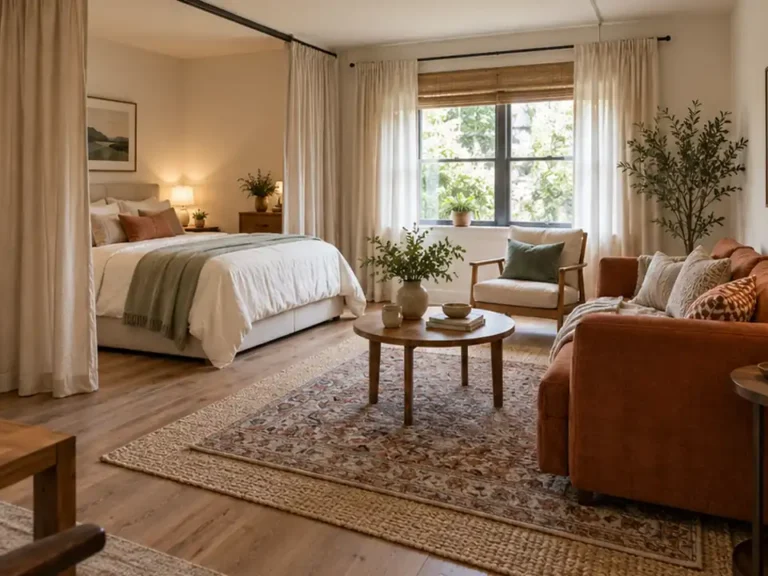
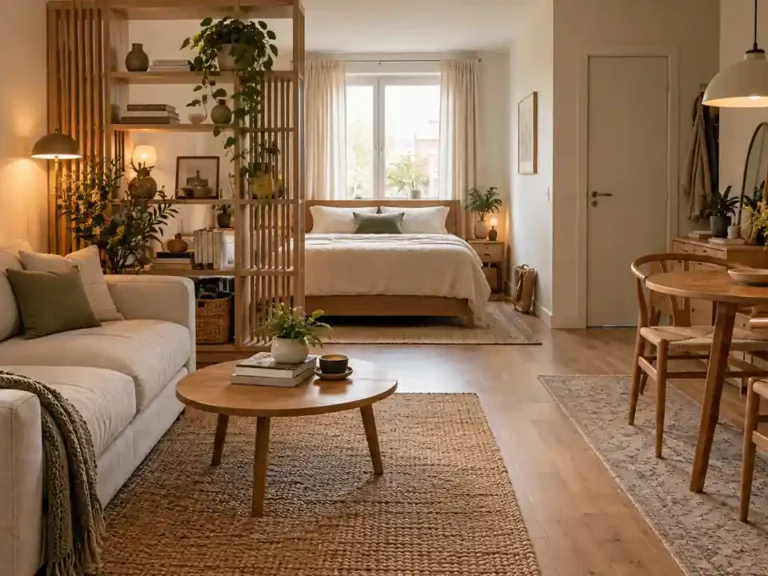
Position the bed in one corner and use a rug, curtain, open bookshelf, or narrow screen to subtly separate it from the couch.
The divider does not need to reach the ceiling.
A partial visual boundary can be enough to make the room feel like it has separate functions while still allowing light to travel through the space.
6. Place the Couch Under a Window
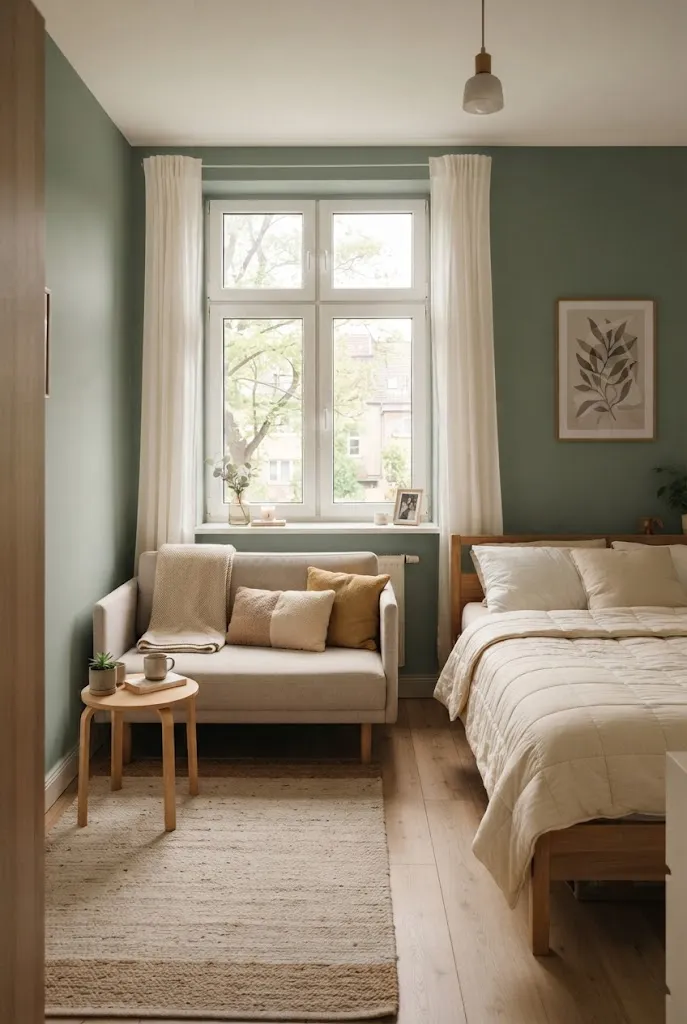
If the window placement allows it, putting the couch beneath or near a window can free up another wall for the bed.
Choose a low-profile couch that does not block too much natural light.
Keep the window treatment simple and lightweight.
Natural daylight can make a small room feel more open, so avoid surrounding the window with bulky furniture.
This layout also creates a pleasant reading or relaxing area.
7. Use a Daybed as the Main Sleeping Piece
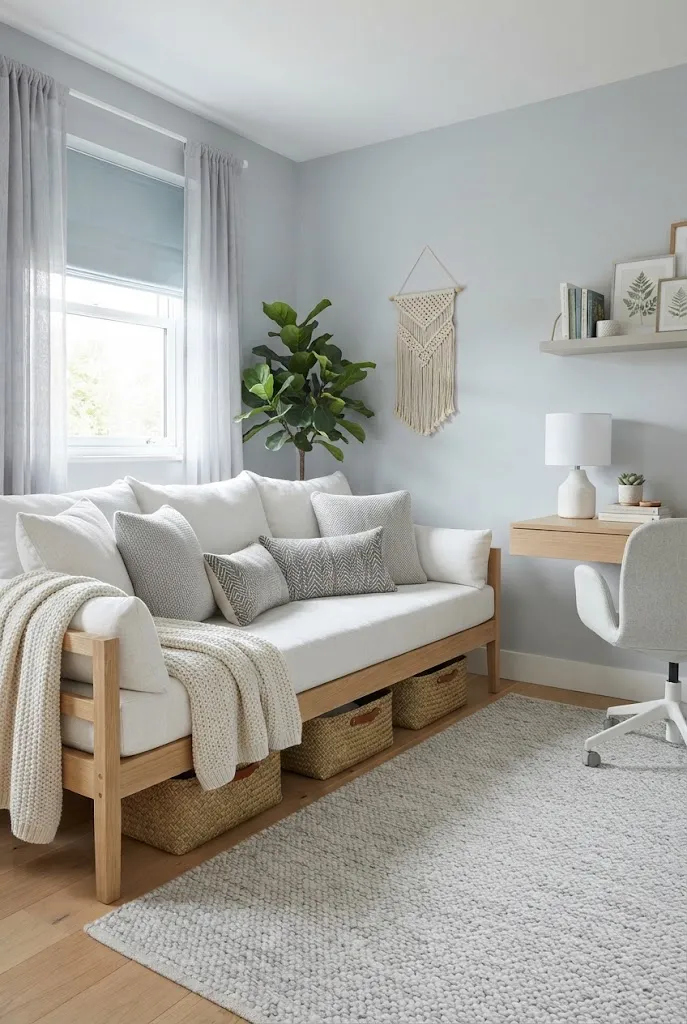
A daybed can blur the line between bed and couch.
During the day, style it with pillows and a throw so it feels more like a sofa.
At night, remove a few decorative cushions and use it as a bed.
This can be especially useful in a compact guest room or home office that occasionally needs sleeping space.
Choose a daybed with useful storage underneath if you need somewhere to keep bedding or other belongings.
8. Try an L-Shaped Arrangement
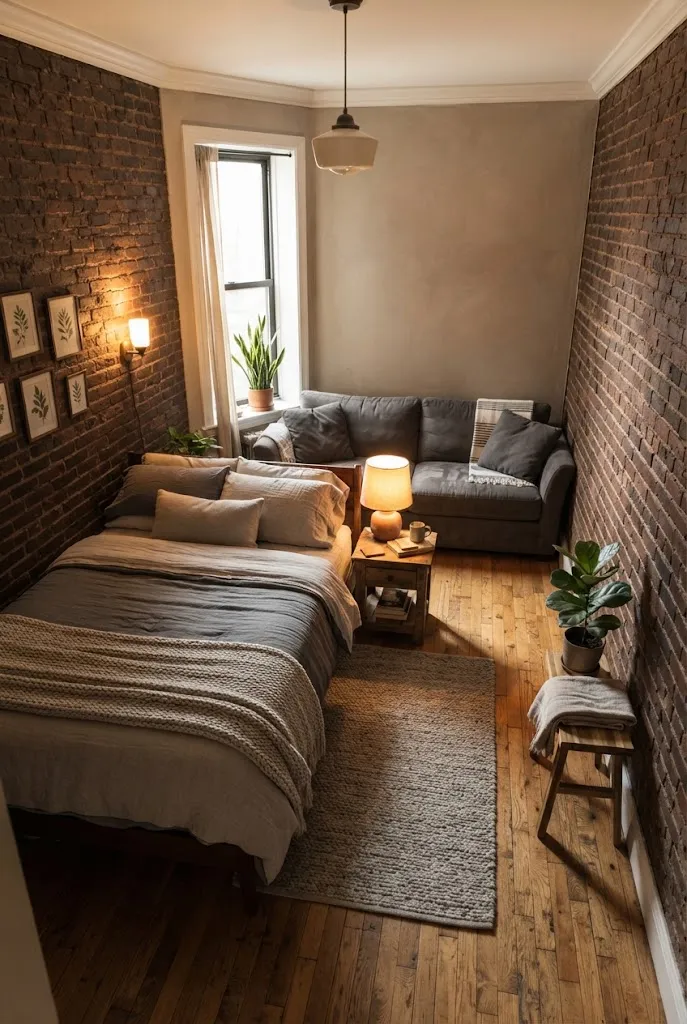
An L-shaped arrangement can use two adjacent walls efficiently.
Place the bed along one wall and the couch along the neighboring wall.
This keeps the middle of the room open while creating two clearly recognizable areas.
Avoid pushing every piece of furniture tightly into the corners.
A little breathing room between furniture and walls can actually make the arrangement look more intentional.
9. Choose Furniture With Visible Legs
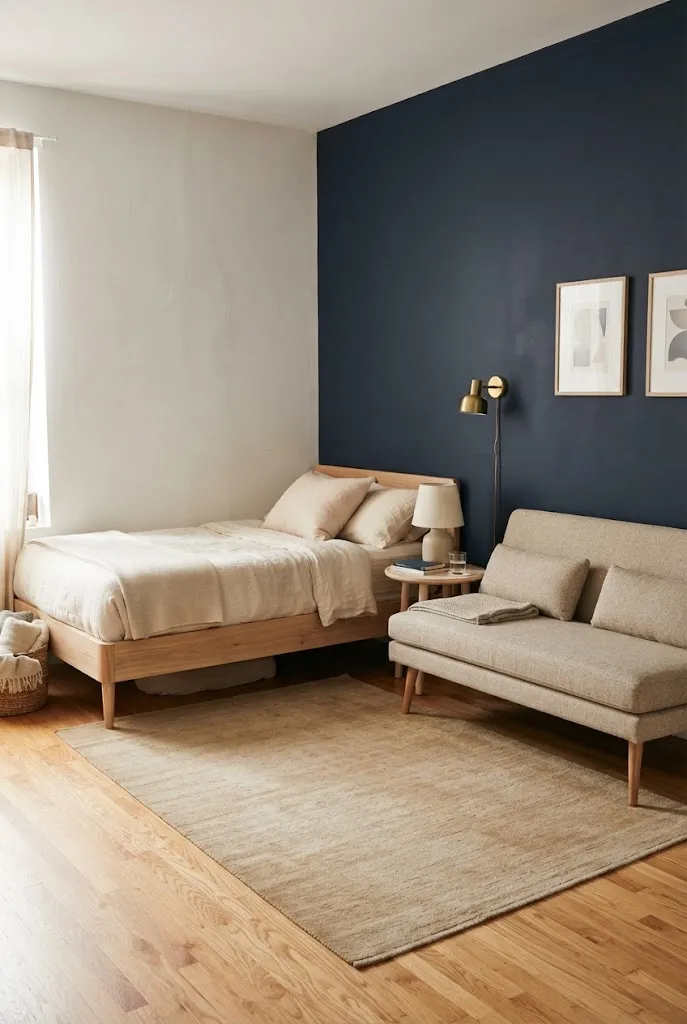
Furniture that sits directly on the floor can appear visually heavy in a small room.
A bed frame and couch with visible legs allow more of the floor to remain visible.
This creates a sense of openness even though the actual amount of floor space has not changed.
Look for simple frames rather than oversized bases.
You can also use the space underneath the bed for discreet storage without adding another bulky cabinet.
10. Use a Narrow Couch
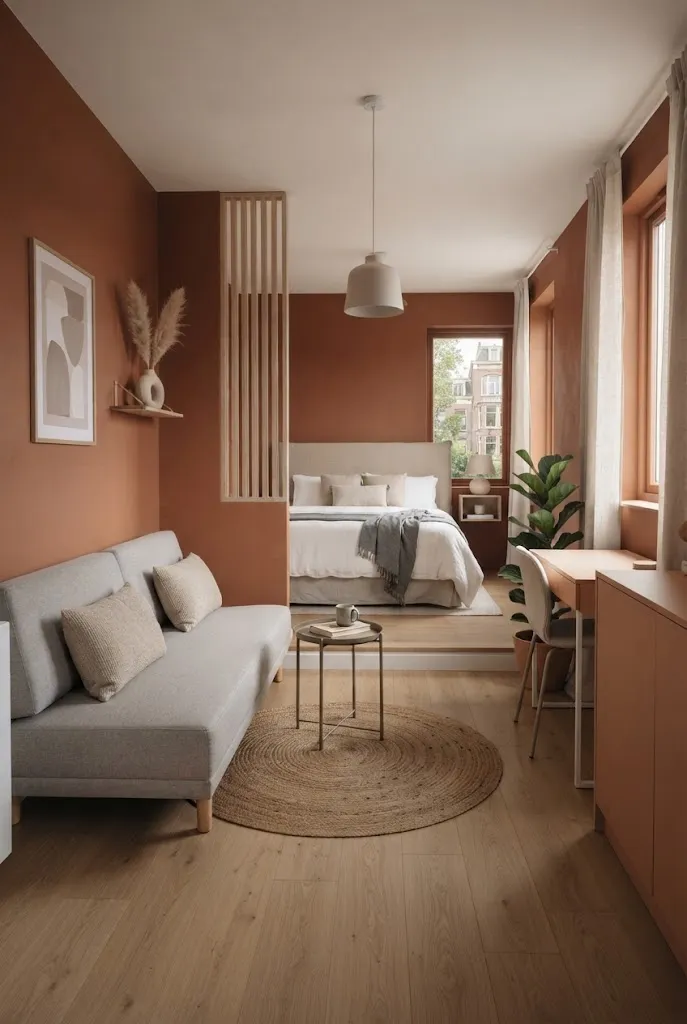
Depth matters just as much as width.
A couch with a shallow seat can provide comfortable seating while taking up considerably less floor space than a deep lounge sofa.
Measure the room before buying and pay attention to the couch’s total depth, including cushions and arms.
Leave enough space for a comfortable walkway.
In a very small room, saving several inches of floor depth can make a noticeable difference.
11. Put the Bed in a Corner
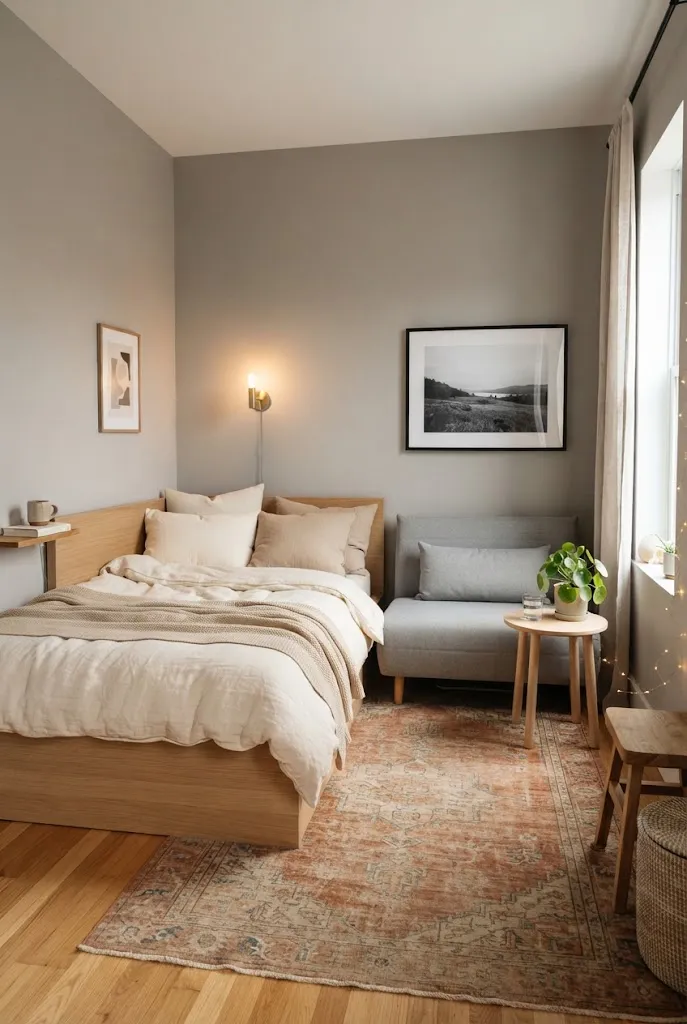
Corner placement can be particularly effective when you need to fit a couch into the same room.
Push the head of the bed into a corner and position the couch along the opposite wall or near the foot of the bed.
This gives the bed a defined footprint and prevents it from cutting through the center of the room.
Use bedding in a light or medium neutral color if you want the sleeping area to feel visually lighter.
12. Use a Storage Bed
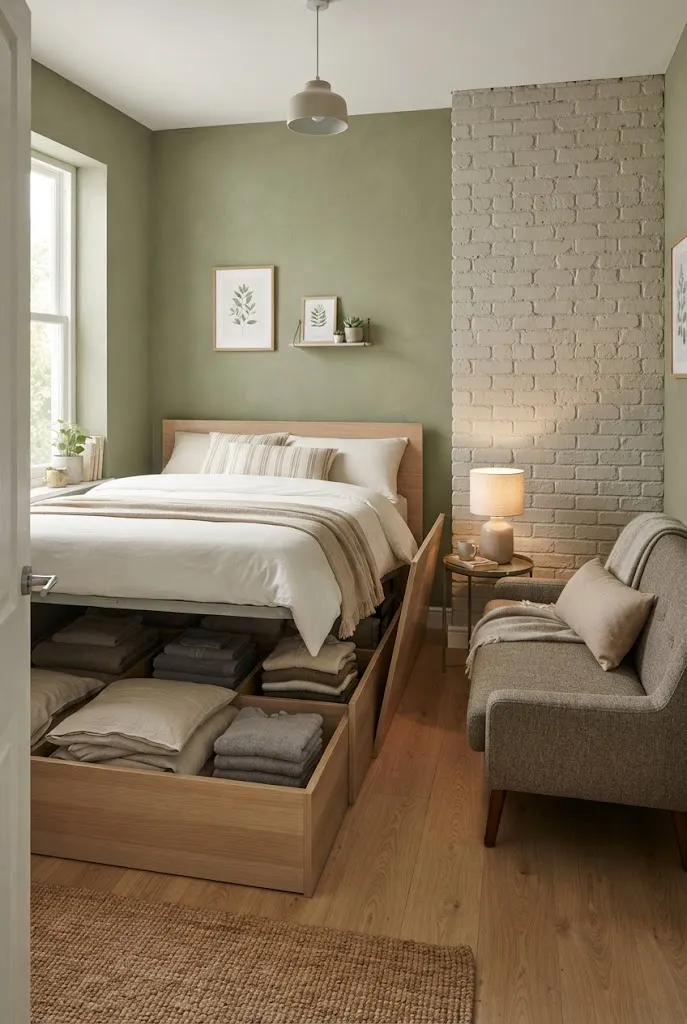
When a bed takes up a large portion of the room, it is useful if that footprint provides additional storage.
A storage bed with drawers underneath or a lift-up base can hold clothing, extra bedding, shoes, or seasonal items.
This can eliminate the need for a separate dresser or storage cabinet.
That freed-up floor area can then be used to create a more comfortable couch zone.
Choose storage that is easy to access so it remains practical rather than becoming a space you never use.
13. Skip the Large Coffee Table
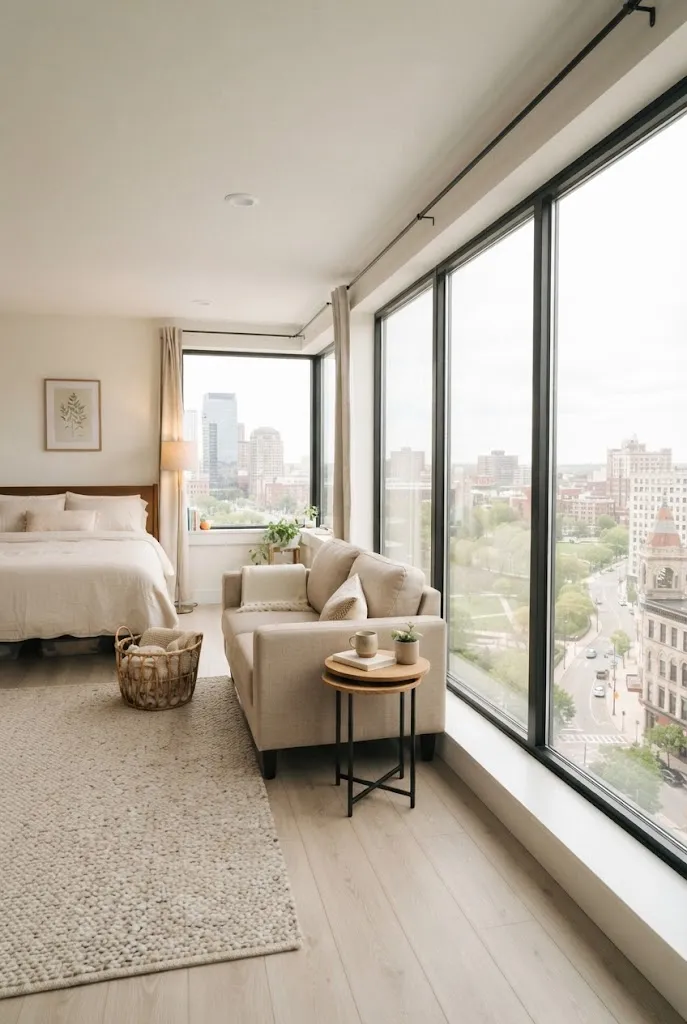
A couch does not automatically require a traditional rectangular coffee table.
In a small room, a compact round table, nesting tables, or even a small movable stool can provide a place for drinks and books without creating a major obstacle.
Keeping the area in front of the couch relatively open can improve circulation.
If you frequently need additional surface space, nesting tables are particularly useful because they can be separated when needed and tucked together afterward.
14. Use a Rug to Define the Couch Area
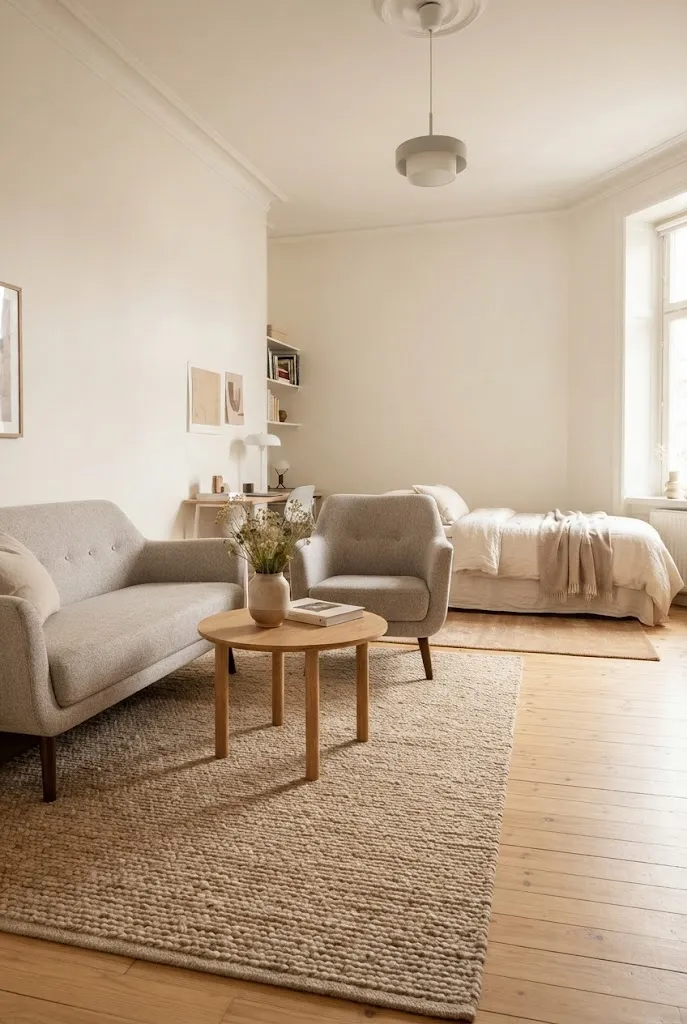
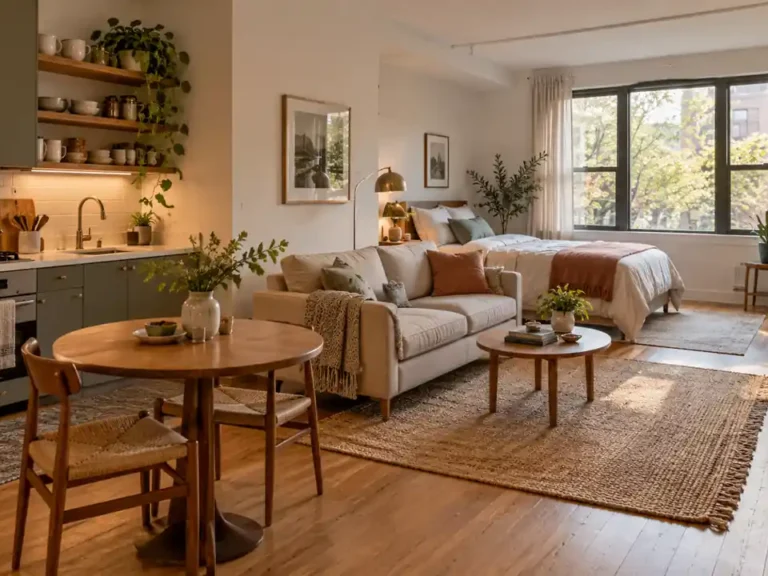
A rug can visually separate the seating area from the bed without taking up vertical space.
Place a properly sized rug underneath the couch’s front legs and coffee table.
The bed can remain on the surrounding floor or have its own smaller textile nearby.
Choose a rug color that relates to the bedding or curtains so the two zones still feel connected.
This is an easy way to create organization without adding another physical divider.
15. Keep the Center of the Room Open
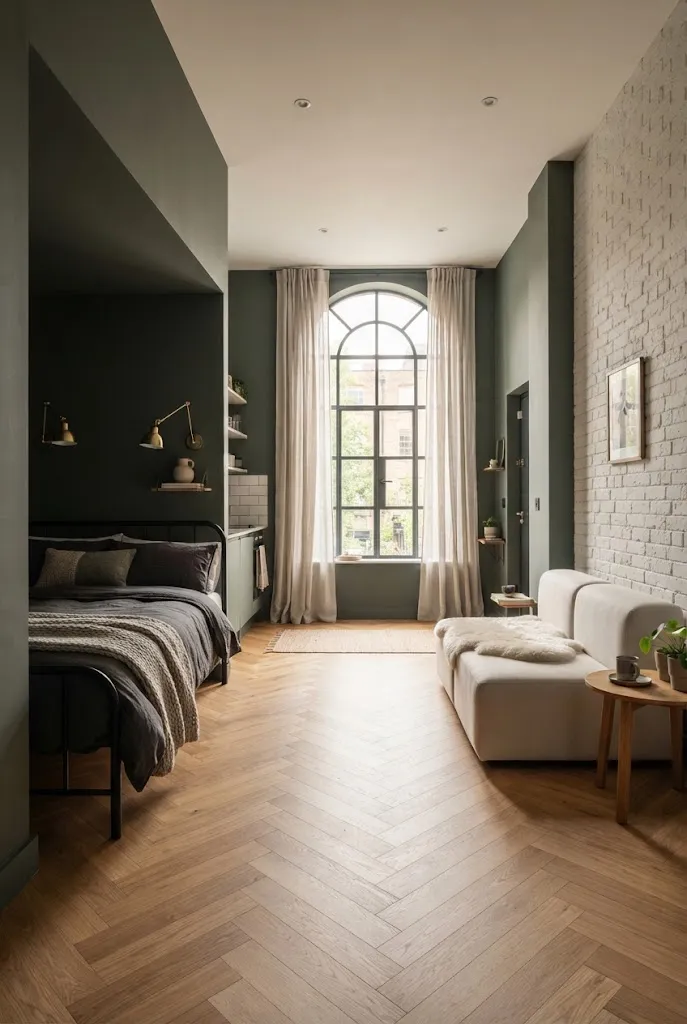
Sometimes the best small-room layout is simply the one that leaves the middle as empty as possible.
Place the bed and couch around the perimeter, use wall-mounted lighting instead of bulky floor pieces where practical, and keep unnecessary furniture to a minimum.
An open center gives you a clear path through the room and makes the available floor feel larger.
You do not need to fill every empty corner.
In a small room, negative space is part of the design.
How to Arrange a Bed and Couch in a Very Small Room
Start by measuring the entire room, including door swings, windows, closets, radiators, and outlets.
Then measure the furniture you already own or plan to buy.
Create a simple floor plan before moving everything around.
Place the bed first because it usually has the largest footprint.
Next, find a position for the couch that provides comfortable seating without blocking the main walking route.
Finally, add smaller pieces such as side tables, lamps, rugs, and storage.
If the arrangement only works when every piece is pushed tightly together, the furniture may simply be too large for the room.
How Much Space Should You Leave Between a Bed and Couch?
There is no single measurement that works for every room, but the space should allow comfortable movement rather than forcing you to squeeze sideways.
Think about the paths you use most often.
You should be able to get into bed, reach the closet, access the door, and sit on the couch without constantly navigating around furniture.
When possible, keep the main circulation path as clear as possible.
A slightly smaller couch with a comfortable walkway is often more useful than a larger couch that blocks movement.
How to Make a Bed and Couch Look Like They Belong Together
They do not need to be identical.
Instead, connect them through color, material, or shape.
For example, a beige sofa can work with cream bedding and natural wood furniture.
A charcoal couch can pair with white bedding, black accents, and a warm neutral rug.
Repeating one or two colors throughout the room creates cohesion without making the space look overly matched.
What Colors Work Best in a Small Room With a Bed and Couch?
Light and medium neutrals are easy starting points.
Cream, beige, oatmeal, light gray, greige, and soft taupe can keep large furniture visually calm.
You can then introduce color through cushions, bedding, artwork, or a rug.
Muted sage, dusty blue, terracotta, and olive can add personality without overwhelming the room.
If the furniture is already dark, consider keeping the walls and larger textiles lighter.
How to Make a Small Room Feel Bigger With a Bed and Couch
Start by reducing visual clutter.
Choose furniture with simple silhouettes, keep pathways clear, and avoid using too many small decorative objects.
Mirrors can reflect light and create the impression of additional depth.
Curtains hung close to the ceiling can make the room feel taller.
Furniture with visible legs can also expose more floor and reduce visual heaviness.
Most importantly, avoid filling every available area.
An intentionally empty section of floor can make the entire room feel more spacious.
Mistakes to Avoid
One common mistake is choosing furniture based only on its width.
Depth matters just as much.
A sofa may technically fit against a wall but still make the room difficult to walk through because it extends too far into the center.
Another mistake is buying too many separate storage pieces.
If the bed has storage underneath or the couch includes hidden storage, you may not need an additional cabinet.
Oversized coffee tables can also create unnecessary obstacles.
Finally, do not ignore the room’s natural circulation.
A beautiful arrangement is not successful if opening the closet or getting into bed becomes difficult.
Frequently Asked Questions
Can you fit a bed and couch in one small room?
Yes. The key is choosing appropriately scaled furniture and creating a clear circulation path. Loveseats, daybeds, storage beds, and shallow sofas can be particularly useful.
Where should the couch go in a room with a bed?
Depending on the room shape, the couch can go along an adjacent wall, at the foot of the bed, beneath a window, or opposite the bed. The best position is the one that preserves comfortable movement.
Should the bed and couch match?
No. They can look coordinated without matching exactly. Repeat similar colors, materials, or accent shades to connect them visually.
Is a loveseat better than a sofa for a small room?
Often, yes, because a loveseat typically takes up less width. However, depth is equally important, so compare the full dimensions before choosing.
How can I separate the bed and couch without a wall?
Use a rug, open bookshelf, curtain, low screen, lighting, or different color accents to create visual zones without permanently dividing the room.
Final Thoughts
A small room with both a bed and couch does not have to feel cramped.
The biggest difference usually comes from choosing furniture that fits the room rather than trying to squeeze full-size pieces into a limited footprint.
Start with the bed, establish a clear walking route, and then position the couch where it provides useful seating without interrupting circulation. From there, use rugs, color, lighting, and smart storage to make each area feel intentional.
You can also make the room work harder by choosing a storage bed, daybed, sofa bed, shallow couch, or furniture with visible legs.
Most importantly, resist the temptation to fill every empty space.
A room with fewer pieces, clear pathways, and a little breathing room can feel much more comfortable than a room packed with furniture, even when both contain the same essential functions.
Community
Join the conversation
Add a useful idea, ask a specific question, or share what worked in your space. Every comment is reviewed before it appears.