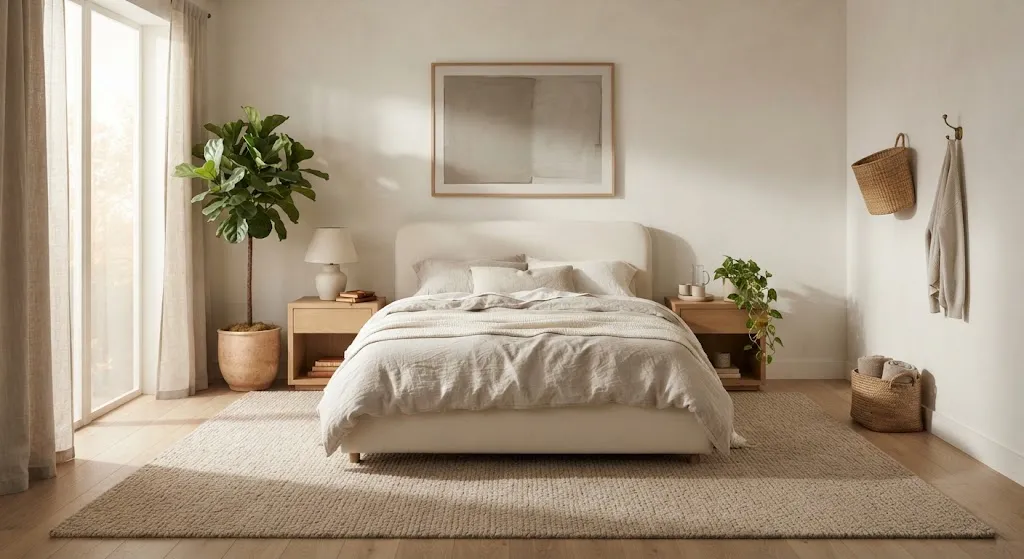
The right rug can make a bedroom feel warmer, softer, and more finished without changing the whole room. Beige rug ideas for bedroom spaces offer an easy way to add comfort while keeping your decor calm and timeless.
Whether you’re working with a compact apartment bedroom, a small guest room, or a cozy sleeping area, the rug you choose can affect how spacious and comfortable the room feels. From plush textures and subtle patterns to natural woven styles and practical bedside runners, these ideas give you plenty of ways to work beige into your existing decor.
I’ve noticed that neutral rugs are especially useful when a room already has cream, white, wood, or warm brown elements. They create a gentle connection between those finishes without making the space feel overly decorated. As you explore these ideas, you’ll find options for different layouts, textures, styles, and everyday needs.
1. Cream Layered Rug
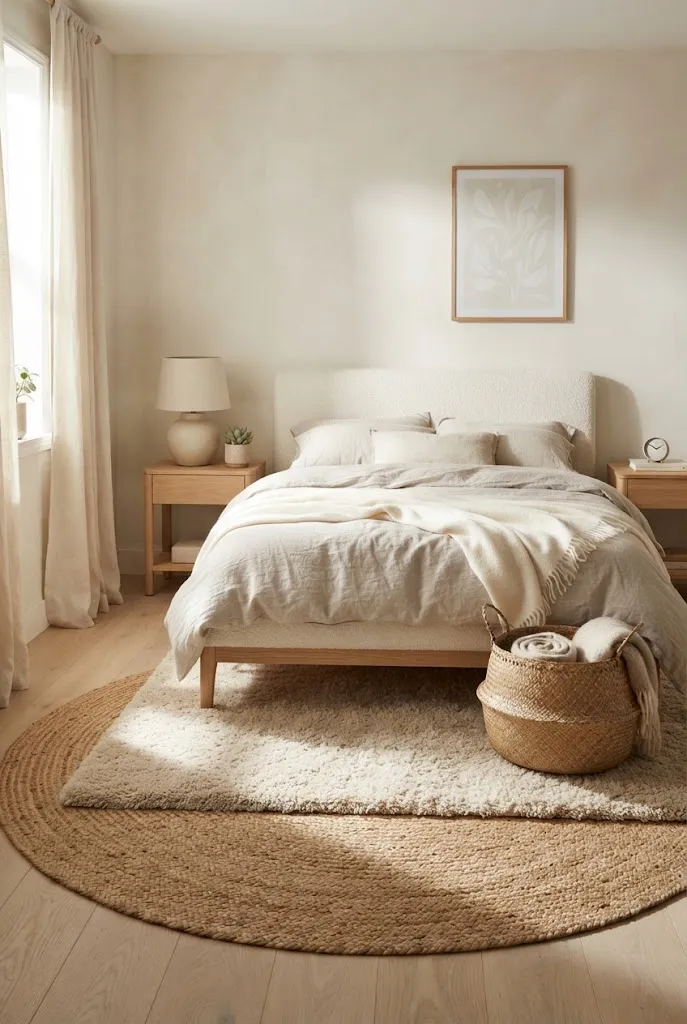
A layered rug setup brings instant softness to a bedroom without making the floor feel visually heavy. Start with a larger natural jute or sisal rug, then place a smaller plush beige rug over it, keeping the edges visible around the bed. The contrast in texture adds depth while staying within a warm neutral palette.
For a small bedroom, keep the bottom rug close to the room’s main floor tone and let the upper layer provide the softness. In my experience, this combination works especially well beside beds because the plush top layer feels comfortable under bare feet while the natural base keeps the arrangement grounded.
2. Beige Underbed Rug
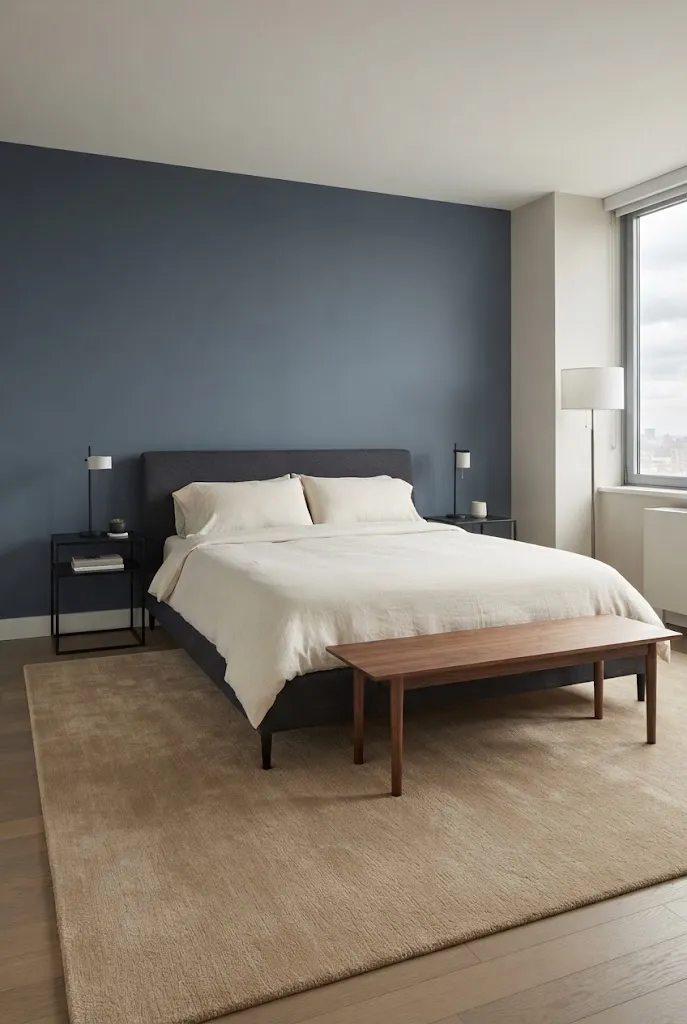
- Choose a rug wide enough to extend beyond both sides of the bed for balanced proportions.
- Leave enough visible rug at the foot so the room feels connected rather than crowded.
- Pick a low-pile design if the bedroom has a door that swings close to the floor.
- Match the beige undertone with nearby bedding, curtains, or upholstery for a cohesive look.
- Place a nonslip pad underneath to keep the rug stable when getting out of bed.
A rug positioned beneath the bed helps visually connect the sleeping area and surrounding furniture. In smaller rooms, extending it only a few feet beyond the bed can provide enough softness without consuming too much floor space. Measure the available area first, especially around nightstands and doorways, before buying.
3. Textured Bouclé Rug
Quick Tip:
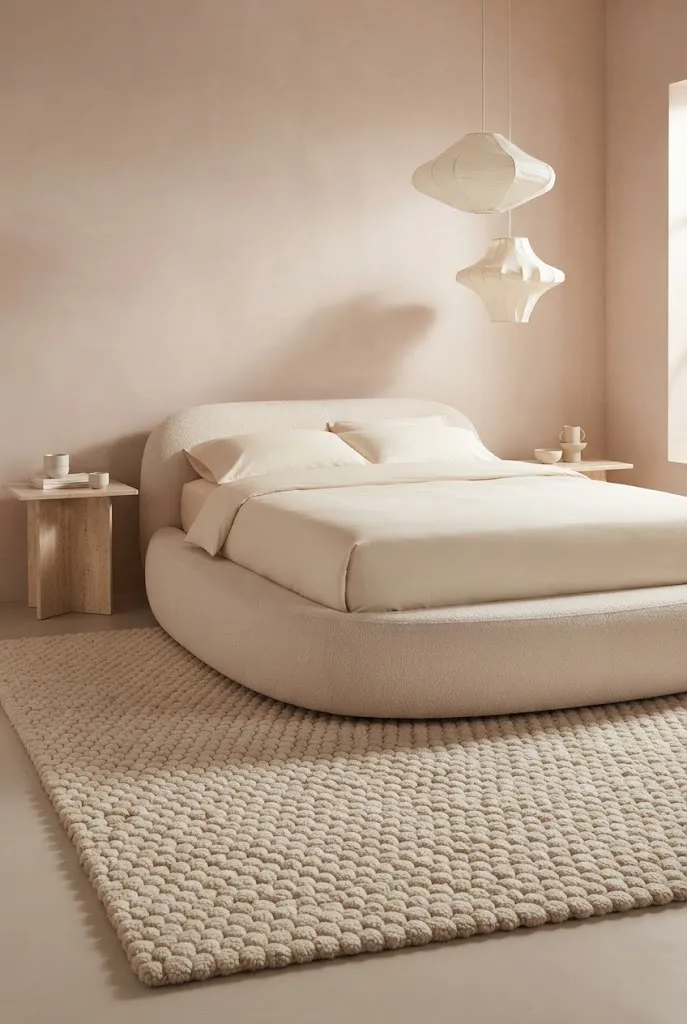
Choose a bouclé rug with a subtle, consistent texture rather than an overly shaggy pile. The smaller visual pattern keeps the bedroom feeling calm while still adding interest to a neutral color scheme. For high-traffic areas, check the care instructions before choosing a delicate woven construction.
Texture becomes especially useful when the bedroom already relies on beige, cream, and white. A bouclé rug prevents the palette from feeling flat by introducing a tactile surface beneath the furniture. I’ve noticed that pairing it with smoother materials, such as cotton bedding and polished wood, creates a balanced mix without adding unnecessary colors.
4. Woven Jute Blend
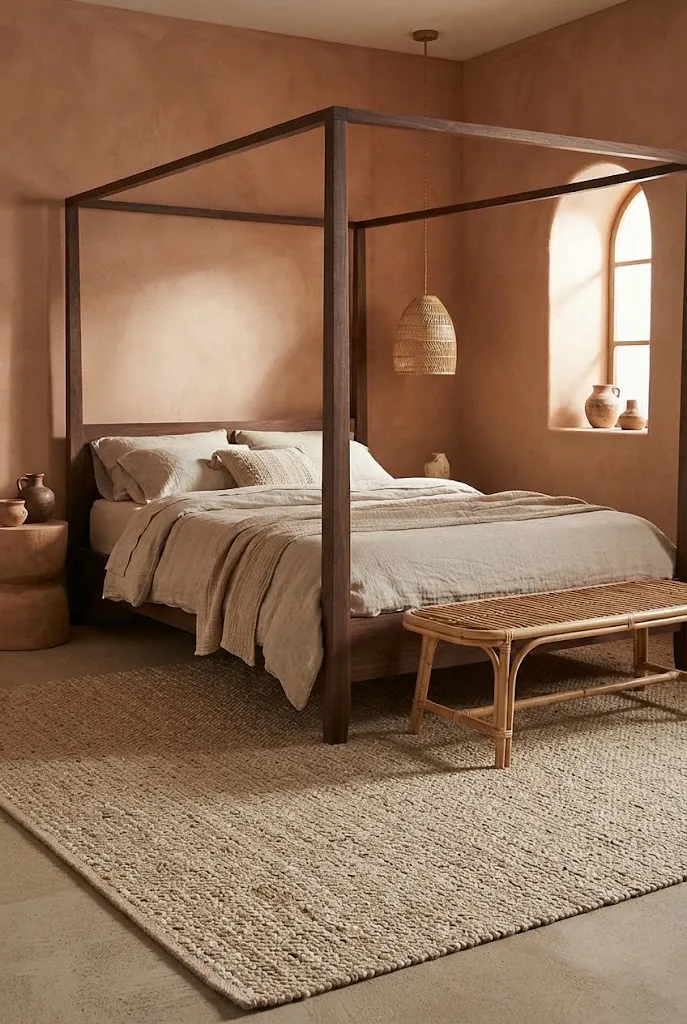
The natural texture of jute brings character to a neutral bedroom without introducing a busy pattern. Choose a beige blend with a softer weave if you want more comfort beside the bed, especially when the rug will be used as a barefoot landing area.
Pair the floor texture with linen, unfinished wood, rattan, or cotton to create a relaxed material mix. Keep the surrounding colors restrained so the woven surface becomes the detail that gives the room dimension. For a compact apartment bedroom, a flat profile also helps preserve a clean walking path.
5. Low-Pile Wool Rug
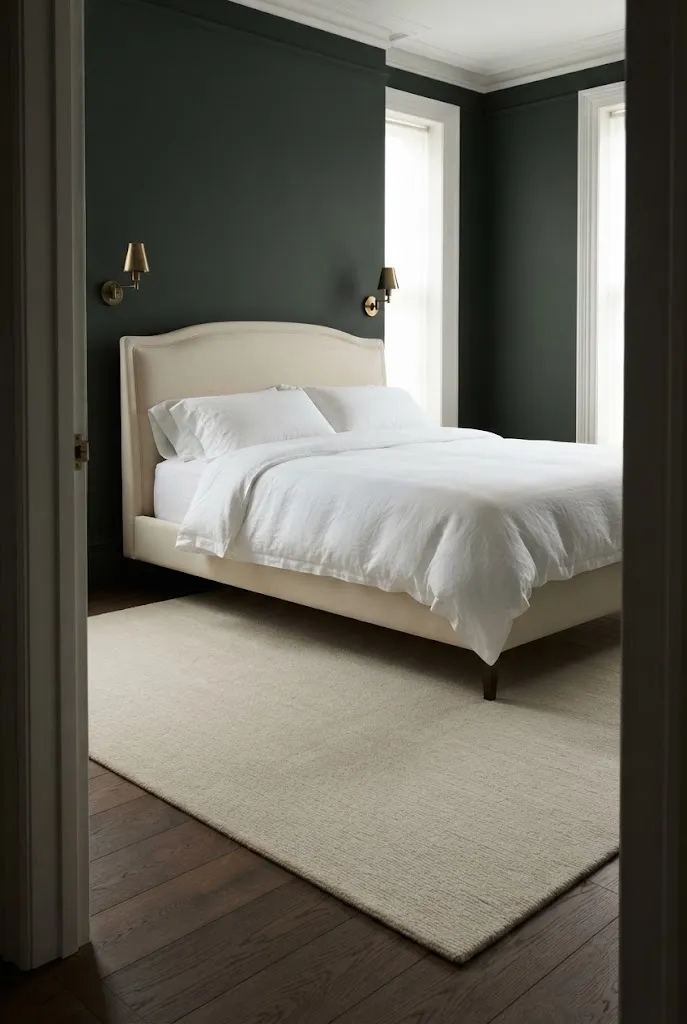
- Measure first. Mark the proposed rug dimensions with painter’s tape before ordering to see how much floor will remain visible.
- Choose a subtle weave. A lightly textured wool surface adds depth without competing with patterned bedding or wall art.
- Check the pile height. Keep it low enough for doors, drawers, and nearby furniture to move freely.
- Add a rug pad. A suitable pad helps reduce shifting and provides extra cushioning beneath the wool.
Low-pile wool works particularly well when comfort matters but a thick shag feels impractical. Its restrained texture can soften hard flooring while keeping the room visually tidy. I’ve seen this approach work especially well in small bedrooms where every piece needs to contribute warmth without making the floor feel crowded.
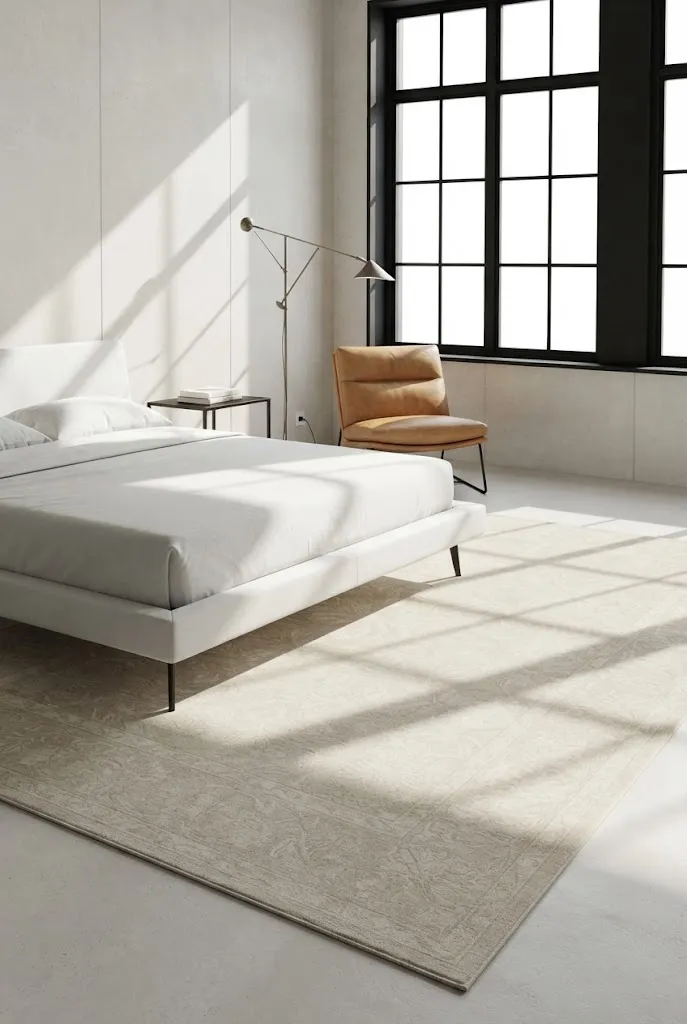
6. Tonal Patterned Rug
| Option A | Option B |
|---|---|
| Solid beige surface | Tonal beige pattern |
| Very quiet backdrop | Adds subtle visual detail |
| Works with busy bedding | Works best with simpler bedding |
| Minimal texture focus | Pattern creates gentle contrast |
A tonal pattern is useful when a plain rug feels too quiet but a bold design would overwhelm the bedroom. Keep the pattern within two or three closely related neutrals, such as beige, ivory, and taupe. The result adds visual interest while preserving the warm, timeless character of the room.
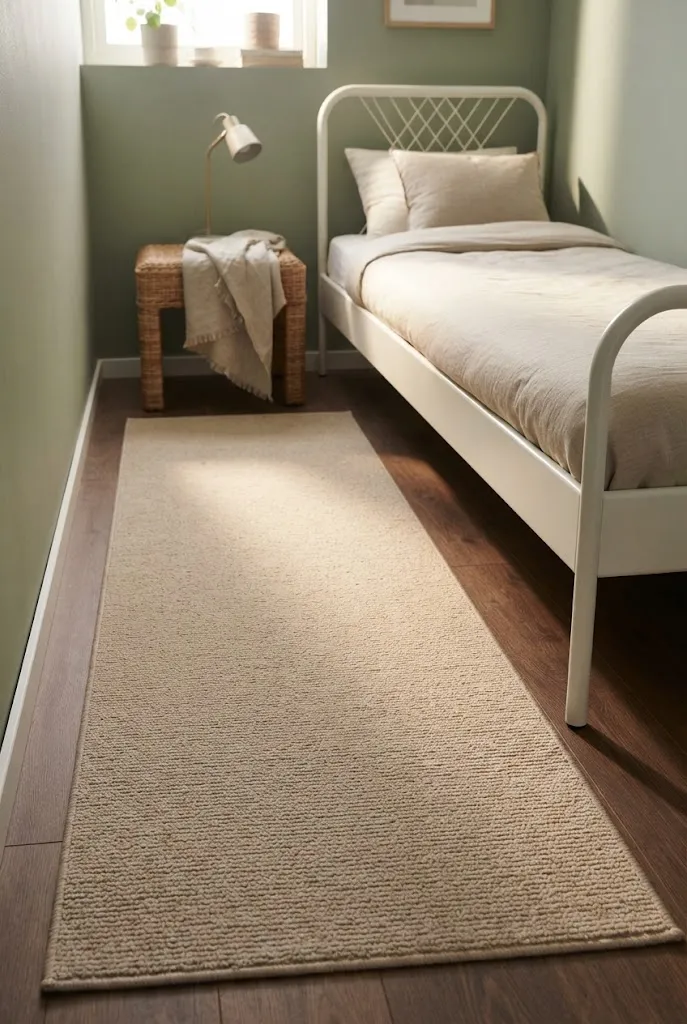
7. Beige Bedside Runner
DO:
- Choose a runner long enough to extend beyond the head and foot of the bed.
- Leave a narrow strip of floor between the rug and wall for visual breathing room.
- Match the runner’s undertone with nearby bedding or curtains.
- Use a rug pad to prevent movement on smooth flooring.
DON’T:
- Choose a runner so narrow that it disappears beside the bed.
- Mix several competing beige undertones in the same area.
- Place thick edges where they could catch on furniture or feet.
- Cover every visible section of flooring in a small bedroom.
A bedside runner gives you softness exactly where your feet land without requiring a large area rug. This makes it especially practical for compact bedrooms or rental spaces. Choose a washable or durable weave if the rug sits beside a frequently used bed, and keep its edges flat for safer daily movement.
8. Fuzzy Shag Rug
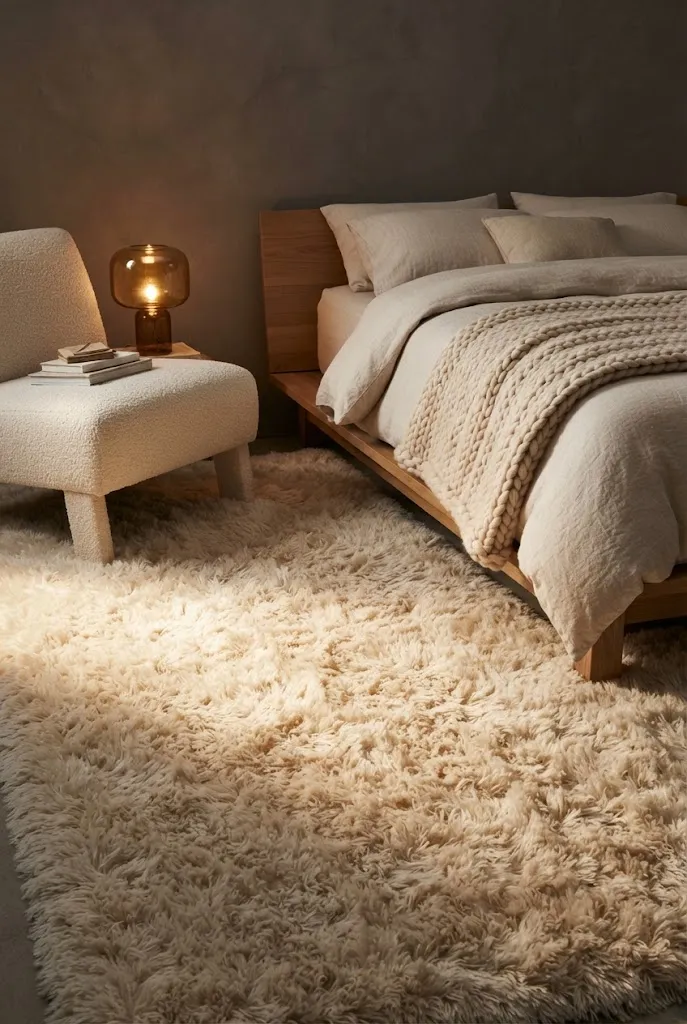
Cost: Moderate | Time: One afternoon | Skill Level: Beginner | Best For: Cozy bedrooms
The deep texture of a shag rug creates a noticeably softer bedroom atmosphere, especially beside a low bed or reading chair. Keep the rest of the room relatively streamlined so the plush surface remains the main tactile feature. A washable construction is worth considering if the bedroom receives frequent foot traffic or has limited cleaning space.
A plush shag rug makes stepping out of bed feel noticeably softer, especially during cooler mornings. Choose a beige shade that works with your bedding and walls, then keep nearby furniture simple so the thick texture does not overwhelm the room. A shorter shag pile is also easier to maintain in a small apartment.
9. Beige Border Rug
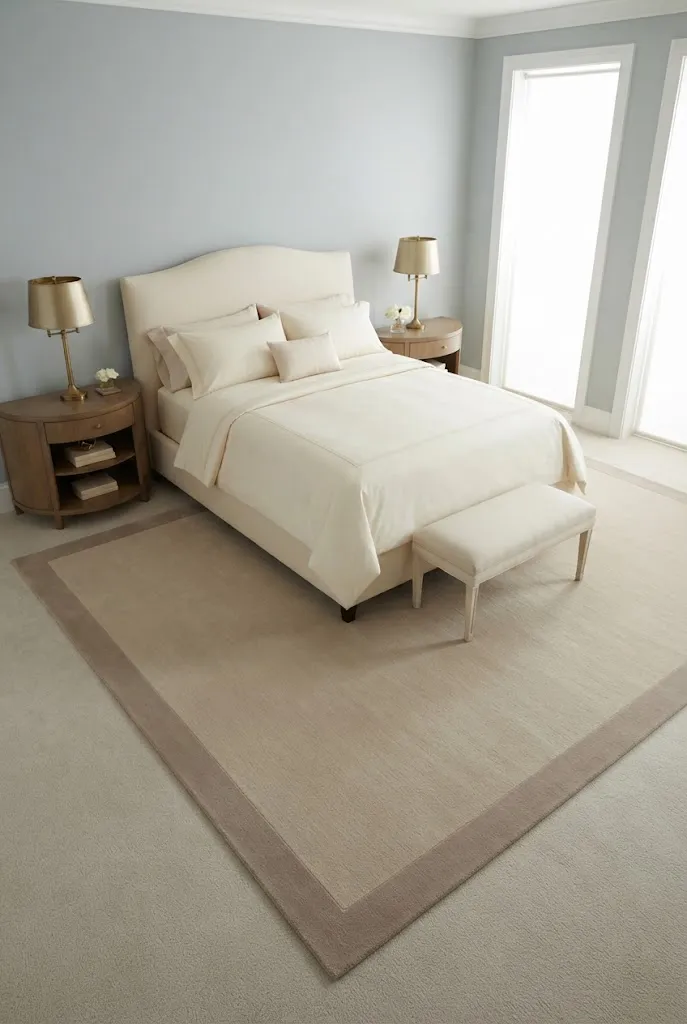
The border detail gives a simple beige rug a defined edge without introducing a strong pattern. It can help visually frame the bed, especially when the surrounding furniture has clean, straight lines. I’ve noticed that a slightly darker border works best when repeated subtly in one nearby element, such as a wood tone, lamp base, or throw.
A bordered beige rug gives the bedroom a defined foundation while keeping the overall palette soft. Choose a border that is only slightly darker than the main rug so the contrast stays subtle. This style works particularly well beneath beds with clean lines, where the crisp edge can visually frame the furniture without making the room feel busy.
10. Beige Geometric Rug
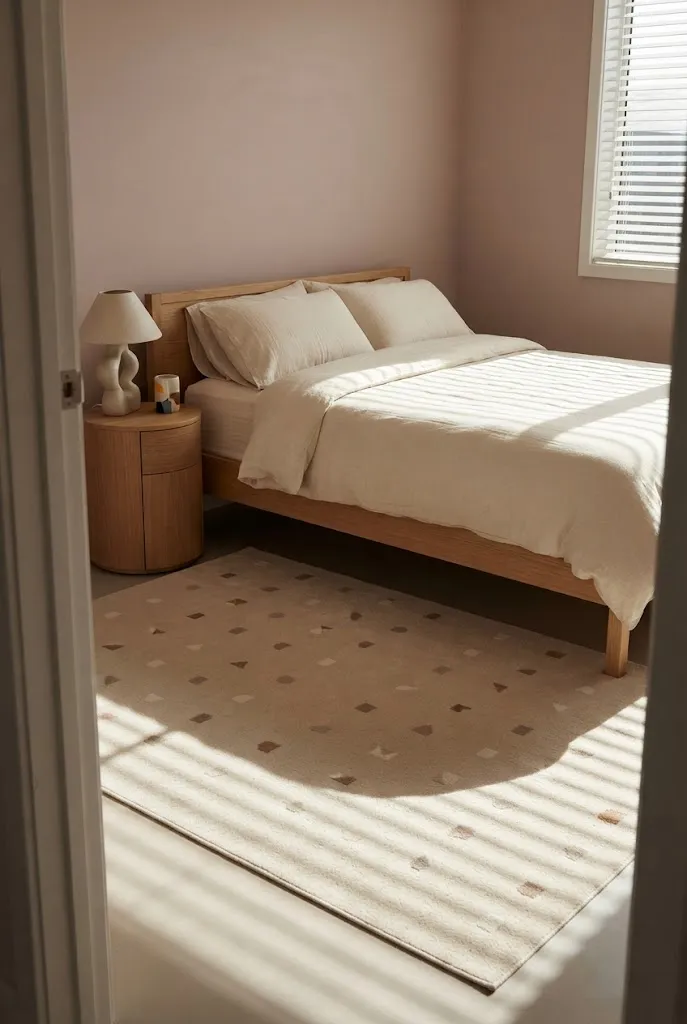
- Choose a small-scale geometric pattern for a compact bedroom.
- Keep the pattern within beige, cream, taupe, or soft brown tones.
- Position the strongest part of the design where it remains visible around the bed.
- Balance the rug with solid-colored bedding and simple furniture.
A subtle geometric design adds structure without making a neutral bedroom feel busy. This works especially well when the furniture has simple silhouettes and the walls are plain. For a small apartment, avoid oversized patterns that can visually shrink the floor area. Let the rug provide the pattern while other surfaces stay relatively quiet.
11. Vintage Beige Rug
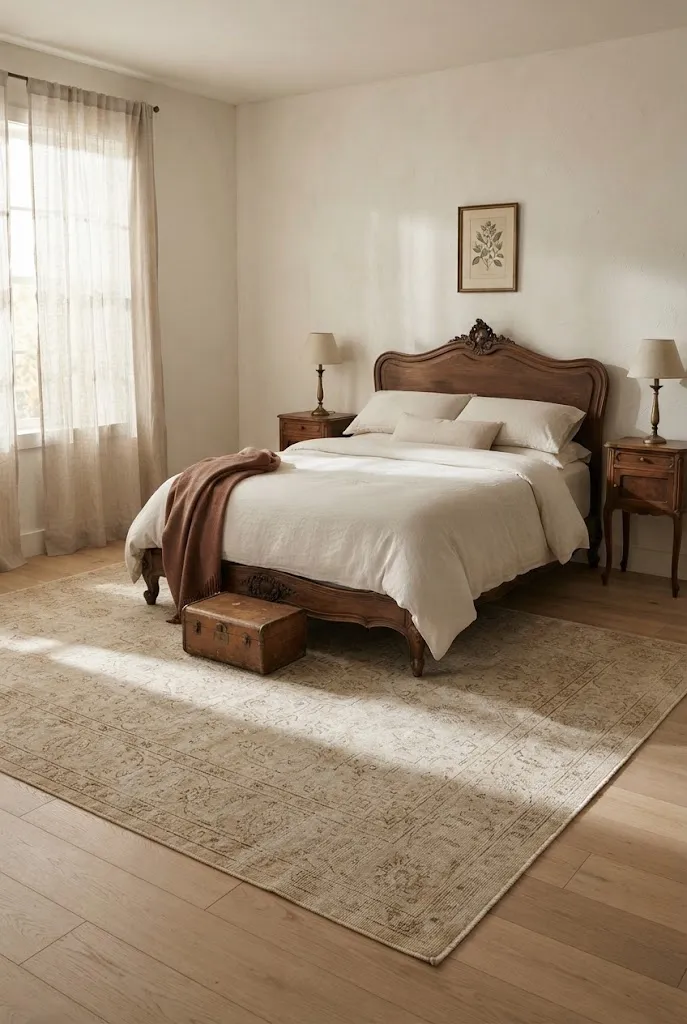
Quick Tip:
Look for faded patterns with beige, ivory, taupe, or muted brown rather than strong contrasting colors. A slightly distressed finish can add character without overpowering the bedroom. Before placing it beneath the bed, check the rug’s backing and edges to make sure they sit flat and securely.
A vintage-inspired rug can make newer furniture feel more established and layered. The key is choosing a restrained color palette so the aged pattern supports the room rather than dominating it. Pair it with natural wood, linen bedding, and simple lighting for a bedroom that feels collected without looking overly decorated.
12. Beige Circle Rug
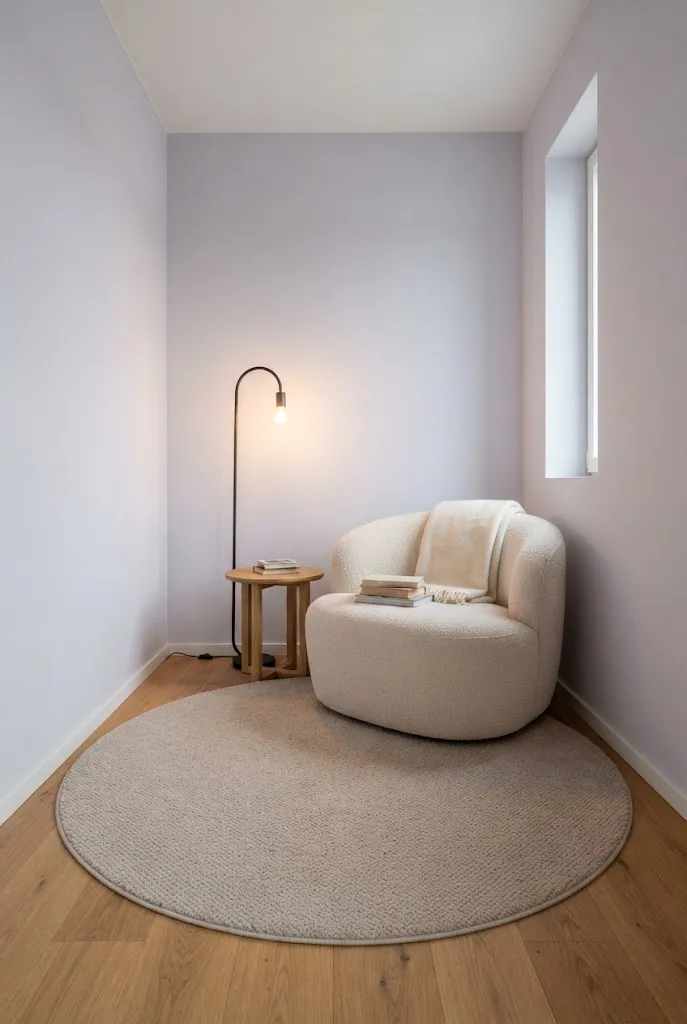
BEFORE: The room has mostly straight furniture lines, making the floor feel rigid and visually predictable. A rectangular rug reinforces those repeated angles.
AFTER: A round beige rug introduces a softer shape beside the bed or under a small reading chair. The curved outline breaks up the straight lines and creates a distinct little zone without requiring much floor space.
A circular rug works particularly well in awkward corners, reading spots, or compact bedrooms where a full-size rectangular rug would interfere with furniture. Keep the diameter proportional to the available floor area. Leaving some flooring visible around the circle helps the shape stand out and prevents the room from feeling cramped.
13. Beige Abstract Rug
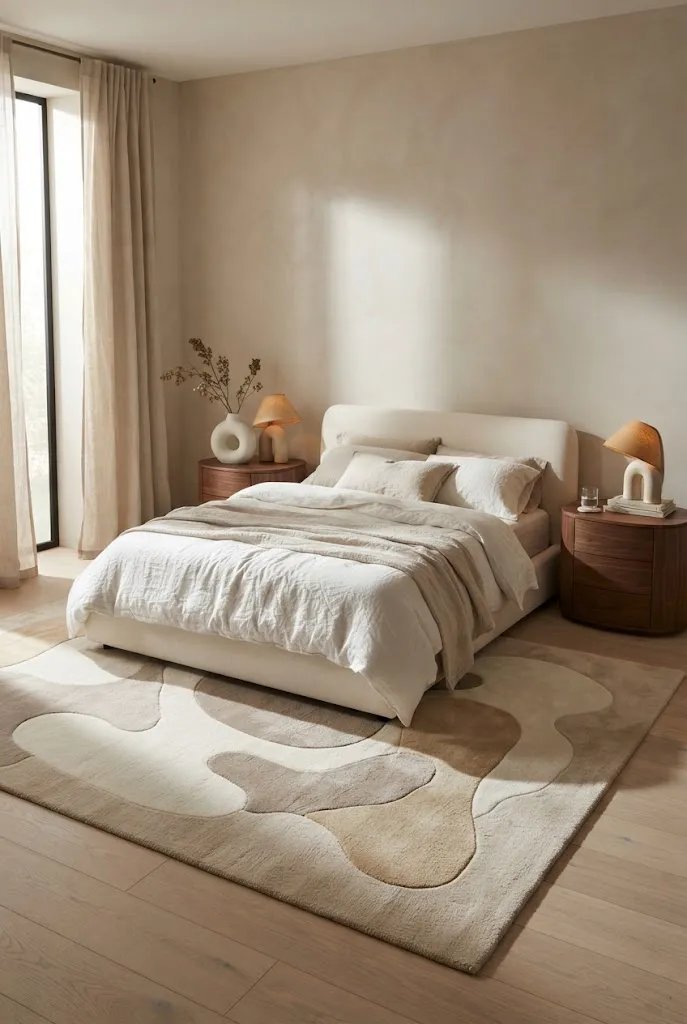
- Choose the right scale. Look for soft abstract shapes that remain visible around the furniture without dominating the room.
- Keep the palette restrained. Beige, ivory, taupe, and warm brown create gentle contrast while keeping the bedroom cohesive.
- Balance the pattern. Pair the rug with solid bedding and simple curtains so the floor remains the main visual detail.
- Repeat one color. Pull a secondary rug shade into a pillow, throw, or small decorative object.
A softly abstract pattern gives a beige rug more personality while keeping the overall palette calm. Look for designs with blurred curves, irregular patches, or flowing lines rather than high-contrast graphics. This approach pairs naturally with rounded furniture, linen fabrics, and light wood, making the bedroom feel layered without adding unnecessary visual noise.
14. Beige Diamond Pattern
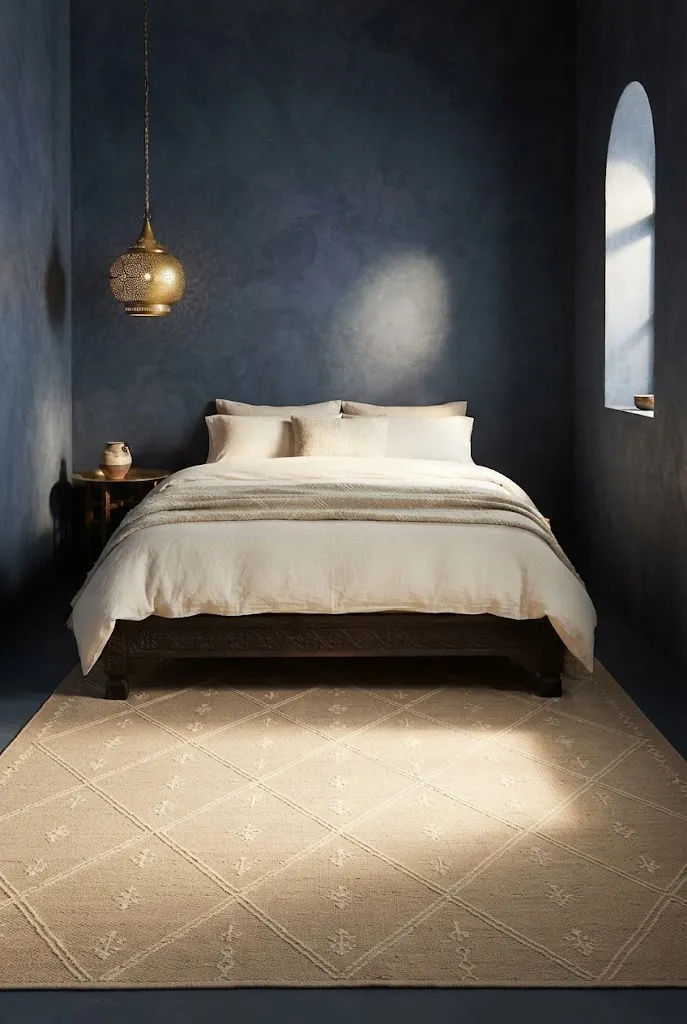
| Option A | Option B |
|---|---|
| Soft diamond lines | Strong geometric lines |
| Subtle visual texture | Bold visual structure |
| Works with patterned bedding | Best with simpler bedding |
| Creates gentle movement | Creates stronger contrast |
A diamond pattern can add structure to a neutral bedroom without requiring bright colors. Choose muted beige and ivory lines when the room already has several decorative details. Centering the pattern beneath the bed creates a balanced foundation, while repeating one of its softer tones in a pillow or throw helps connect the overall palette.
15. Beige Flokati Rug
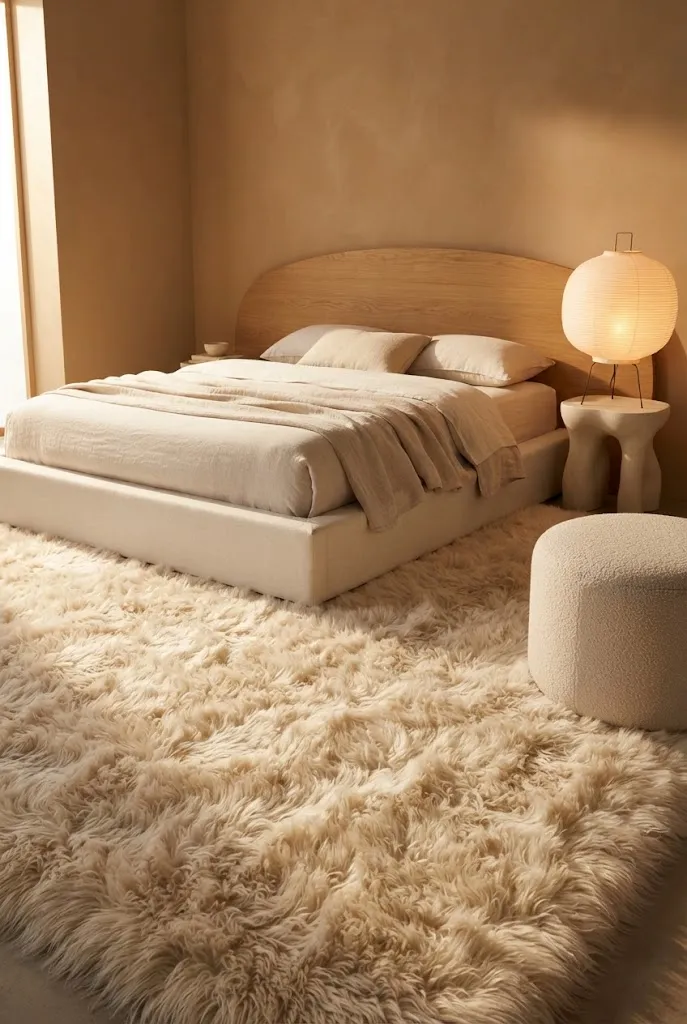
DO:
- Choose a soft cream-beige shade that complements the bedding.
- Place it where bare feet will benefit most from the plush texture.
- Keep surrounding furniture relatively simple.
- Check cleaning requirements before purchasing.
DON’T:
- Use an overly deep pile where doors need to swing freely.
- Pair it with too many competing textures.
- Ignore regular maintenance requirements.
- Choose a size that overwhelms a compact bedroom.
Long, fluffy fibers give a bedroom an instantly softer underfoot feel, especially beside a low-profile bed. A cream-beige flokati style works best when the surrounding furniture stays simple and streamlined. For practical maintenance, check whether the specific construction can handle regular vacuuming and spot cleaning before placing it in a frequently used area.
16. Beige Moroccan Rug
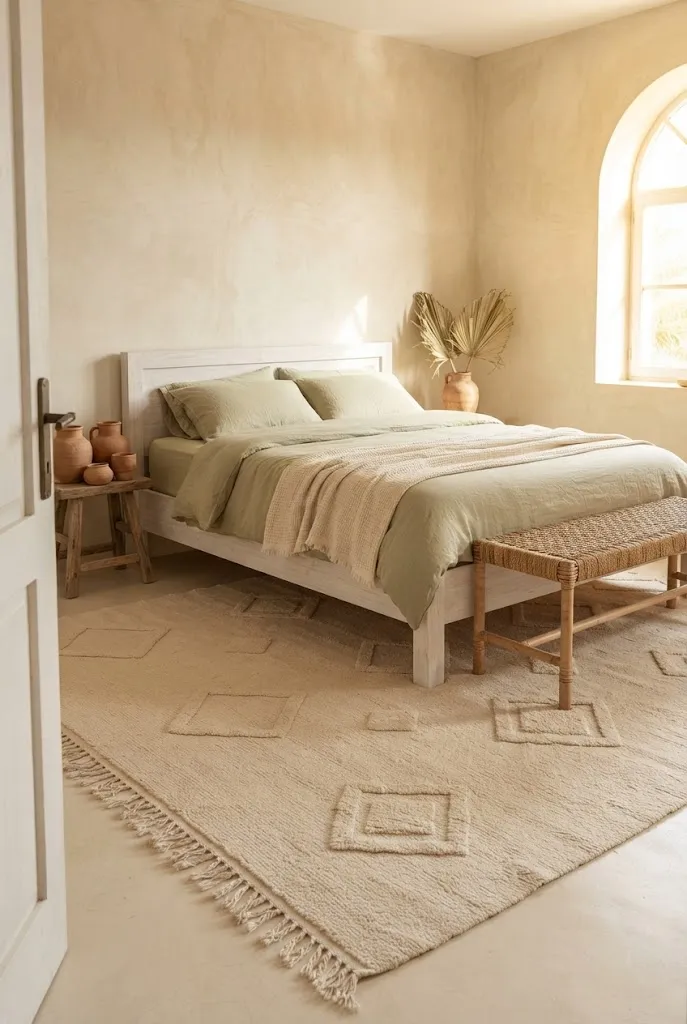
A Moroccan-inspired rug brings texture and subtle pattern into the bedroom while keeping the overall palette warm and neutral. Look for beige designs with understated diamond motifs, ivory accents, or gently raised details rather than strong contrasting colors.
Pair this style with cream linen bedding, light wood furniture, woven accessories, and warm lighting for a relaxed bedroom with plenty of visual texture. In a small apartment, choose a rug with a restrained pattern so it adds character without competing with the limited floor space. The result feels cozy, layered, and timeless.
Conclusion
A beige rug can do much more than soften a bedroom floor. The right texture, size, pattern, and placement can make a small space feel warmer, more balanced, and more inviting without overwhelming the decor. These beige rug ideas for bedroom spaces offer simple inspiration you can adapt to your own furniture, flooring, and personal style.
I’ve seen how small changes like a well-placed rug can completely shift the way a room feels. Save this post on Pinterest for your next decorating project, try the idea that fits your space, and share it with someone looking for cozy bedroom inspiration.
Community
Join the conversation
Add a useful idea, ask a specific question, or share what worked in your space. Every comment is reviewed before it appears.