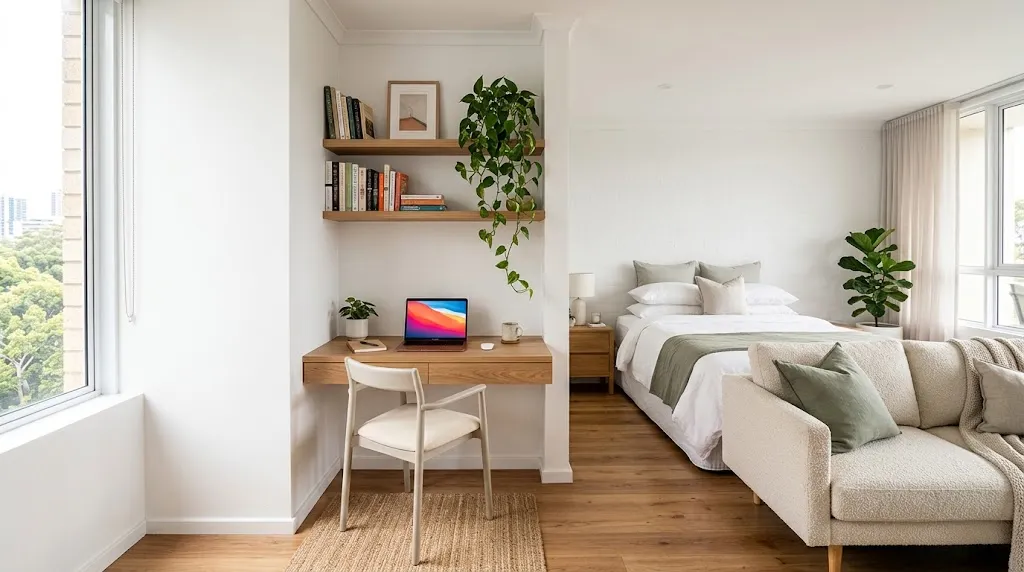
Working from your bed gets old fast. Your back hurts, your sheets fill with crumbs, and work never really ends. A home office in a studio apartment fixes that, and it doesn’t have to swallow your living space.
I’ve noticed most renters assume they need a spare room or a big desk to work well at home. Neither is true. A smart corner, the right desk depth, and a little wall storage go a long way.
This guide walks you through every step: spotting hidden desk spots, choosing space-saving furniture, separating work from rest, and packing it all away at night. By the end, you’ll have a workspace that fits your studio instead of crowding it.
1. Figure Out What Your Workspace Needs
Most studio offices fail before the first piece of furniture arrives. People buy a desk that looks good online, then discover it can’t hold two monitors or a printer. Start with a quick list of what your workday actually involves: screens, paperwork, video calls, and how many hours you sit.
Next, measure your laptop, monitor, and any equipment, then add 6 inches of elbow room on each side. In my experience, most people need far less desk depth than they think. A 20 inch deep surface handles a laptop and one monitor comfortably.
2. Find Hidden Spots for a Desk
Every studio has at least one spot that isn’t pulling its weight. Finding it means your office fits into existing gaps instead of stealing space from your bed or sofa. Grab a tape measure and walk your apartment with fresh eyes.
- Check corners first, since an L-shaped corner desk uses two walls and leaves the floor open.
- Open your closet and measure the width. A 30 inch closet can hold a small desk with shelves above it.
- Look under windows, where a narrow ledge desk gets natural light without blocking walkways.
- Measure the back of your sofa if it floats in the room. A slim console desk fits right behind it.
- Mark each option with painter’s tape on the floor and live with it for a day before deciding.
3. Choose Space-Saving Desk Styles
Quick Tip: Before buying, check how far the desk sticks out from the wall. Anything deeper than 24 inches starts crowding a studio walkway, so look for depths between 16 and 22 inches.
The right desk style matters more than its size. Wall-mounted fold-down desks disappear completely when closed. Ladder desks add shelving above the work surface without widening it. Floating desks keep the floor visible, which makes the room feel bigger. I’ve noticed that people who choose a floating style rarely miss a bigger desk.
4. Pick Furniture That Does Double Duty
Common Mistake: Many renters squeeze a full desk into a studio that already has a dining table. Now two big surfaces compete for the same floor, and both end up covered in clutter.
The Fix: Let one piece do both jobs. A small dining table works as a desk from 9 to 5, and a console table can hold keys by day and a laptop for focused work.
Setting up a home office in a studio apartment works best when every piece earns its spot. Pair your table with a comfortable dining chair that has back support, so you don’t need a bulky office chair. A rolling cart parked beside it holds your supplies and slides away at dinner time.
5. Go Vertical With Storage
What You Need:
- Floating shelves: Two or three above your desk hold books, files, and small baskets.
- Pegboard: It keeps chargers, scissors, and headphones on the wall instead of the desk.
- Wall file organizer: Mail and paperwork stay sorted without a filing cabinet.
- Over-the-desk hooks: Bags, cables, and headphones hang neatly within reach.
- Stackable desk trays: They hold pens and sticky notes in a small footprint.
Floor space is the most valuable thing in a studio, and wall space is usually wasted. Moving storage upward keeps your desk surface clear for actual work. Start shelves about 15 inches above the desk so your monitor still fits underneath. Use command strips or a renter-friendly rail if your lease limits drilling.
6. Separate Work From Living Zones
Before: Your laptop sits a few feet from your bed, and work feels like it never ends. Emails pull you back to the desk at 10 p.m. because it’s always in view.
After: A clear boundary now marks where work happens. You step into your office zone in the morning and step out of it at night. The rest of the studio feels like home again.
Physical cues help your brain switch modes. Place a small rug under your desk and chair to define the zone. An open bookshelf placed sideways works as a divider that still lets light through. I’ve seen a simple tension rod curtain make a bigger difference to focus than any expensive desk upgrade.
7. Light Your Workspace the Right Way
Time Needed: 20 minutes | Cost: $20 to $50 | Best For: Desks away from windows | Pro Tip: Use 4000K bulbs for work hours
Bad lighting causes eye strain and makes a small office feel gloomy. Place your desk sideways to a window, never facing it or with your back to it, to avoid glare on the screen. Add a slim LED desk lamp or a plug-in wall sconce so your desk surface stays free.
8. Hide Your Office After Hours
Seeing your workspace all evening makes it hard to relax in a studio. A quick hide-away routine draws a line under the workday and gives your living space back. It takes about five minutes once everything has a home.
- Close your laptop and slide it into a drawer, basket, or desk cabinet.
- Gather loose papers into one file box or wall organizer.
- Coil cables and tuck them into a cable box or under-desk tray.
- Fold down a wall desk, or draw a curtain across a closet office.
- Switch off the desk lamp and turn on a warm living area light to signal the end of work.
9. Common Mistakes That Waste Space
Do This:
- Measure your floor and walkways before ordering any desk or chair.
- Choose an armless chair that tucks fully under the desk.
- Route cables along the desk leg with clips or a cable sleeve.
- Keep only today’s tasks on the desk surface.
Avoid This:
- Buying an oversized gaming or executive chair for a tiny studio.
- Placing a desk where it blocks the path to your bed or door.
- Letting printers and paper piles live on the desk full time.
- Filling every wall with storage until the room feels closed in.
I’ve noticed that most studio offices feel cramped because of one oversized piece, not the overall layout. Swapping a bulky chair for a slim one often frees up two feet of floor. Before adding anything new, check whether something you already own could be smaller.
10. What a Well-Planned Studio Office Looks Like
A good studio workspace almost disappears into the room. The desk sits in a corner, closet, or behind the sofa. Shelves above hold what you need, the surface stays clear, and a lamp lights the work without crowding it. Nothing blocks the walkway.
The real test comes at the end of the day. You can tidy up in five minutes, the room still feels like home, and you look forward to sitting down again tomorrow. Keep it working with a weekly reset: clear the desk, file papers, and remove anything you didn’t use.
Conclusion
A productive workspace doesn’t depend on square footage. It comes from smart placement, slim furniture, vertical storage, and a quick routine that puts work away each evening. With these steps, creating a home office in a studio apartment feels simple, and your living space stays open and calm. I’ve seen how moving one desk into a forgotten corner can completely change how a studio feels.
Save this guide to your studio apartment board on Pinterest so it’s ready when you need it. Start with one step this week, then share this post with a friend working from a tiny space too. Your focused, clutter-free office is closer than you think.
Community
Join the conversation
Add a useful idea, ask a specific question, or share what worked in your space. Every comment is reviewed before it appears.