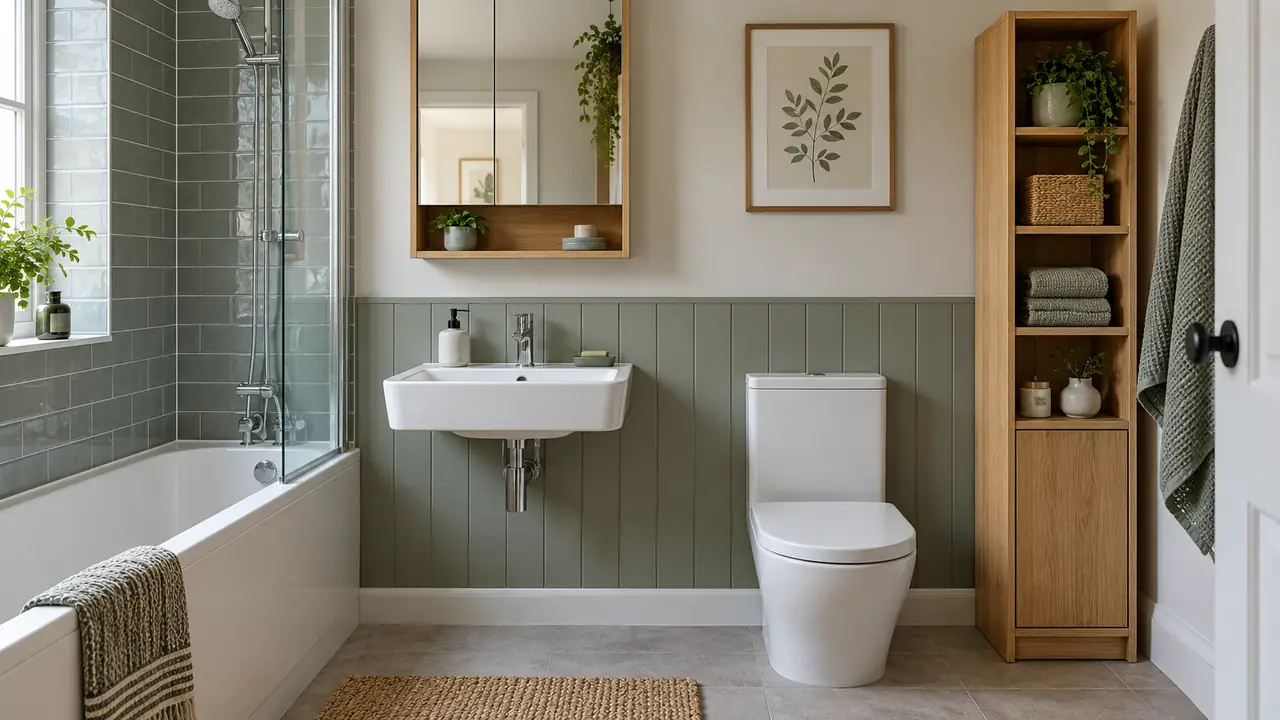
Learning how to add more storage to a small bathroom starts with looking beyond the space under the sink. A dry wall, an unused corner, or a nearby cupboard may offer more useful capacity than another crowded vanity organizer. Measure the room with doors and drawers open before choosing anything. Keep access to plumbing, ventilation, and the walking route clear, and check permissions and installation requirements for fixed pieces. These twenty-one ideas show different places to consider, from modest shelves to slim cabinets. Choose the ones that fit your actual room rather than trying to use every spare inch at once.
1. A Shallow Wall Cabinet
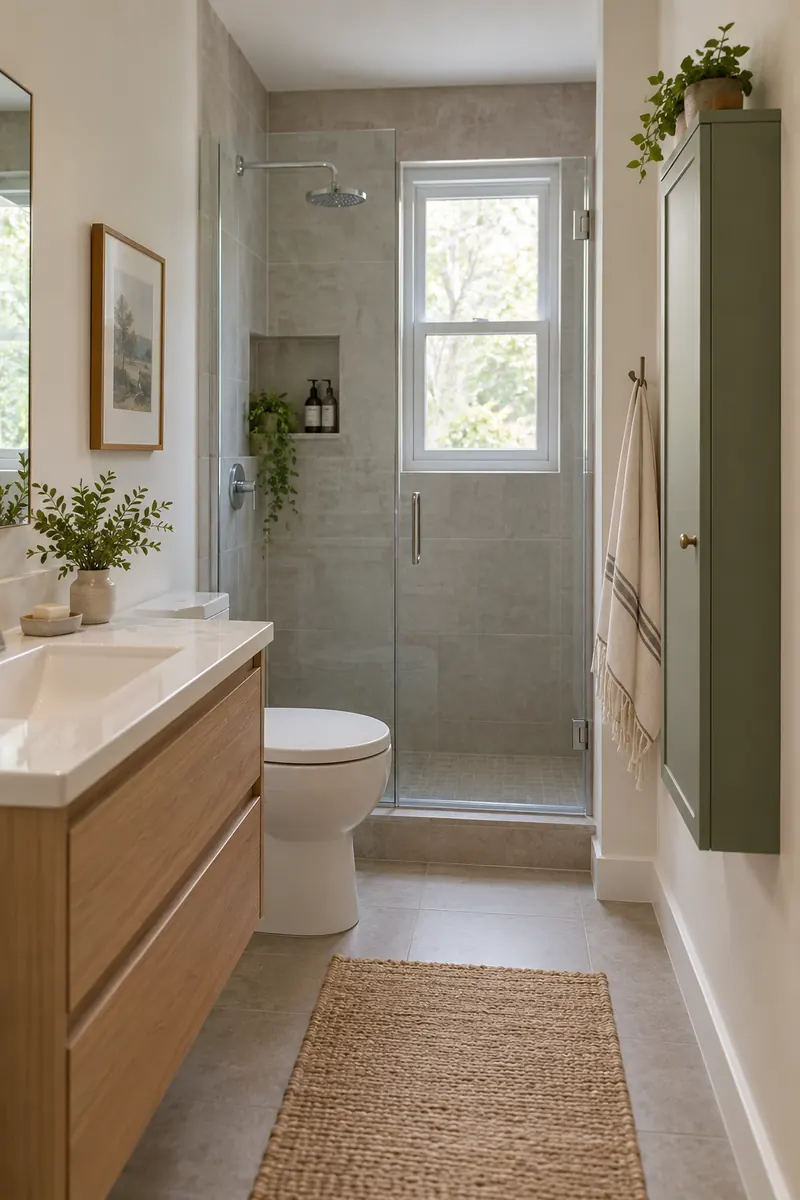
A shallow cabinet can use a dry wall without taking as much room as a deep floor unit. Check the depth with the door open, not just closed, and measure the items you want inside. Small toiletries need less depth than folded bath towels, so plan around the contents.
Treat the cabinet’s mounting as part of the purchase. Wall construction, hidden services, hardware, and the maker’s instructions all matter. Get appropriate help if the installation is uncertain. A cabinet only adds useful storage when you can reach it comfortably and still move around the bathroom without squeezing past.
2. An Above Toilet Shelf
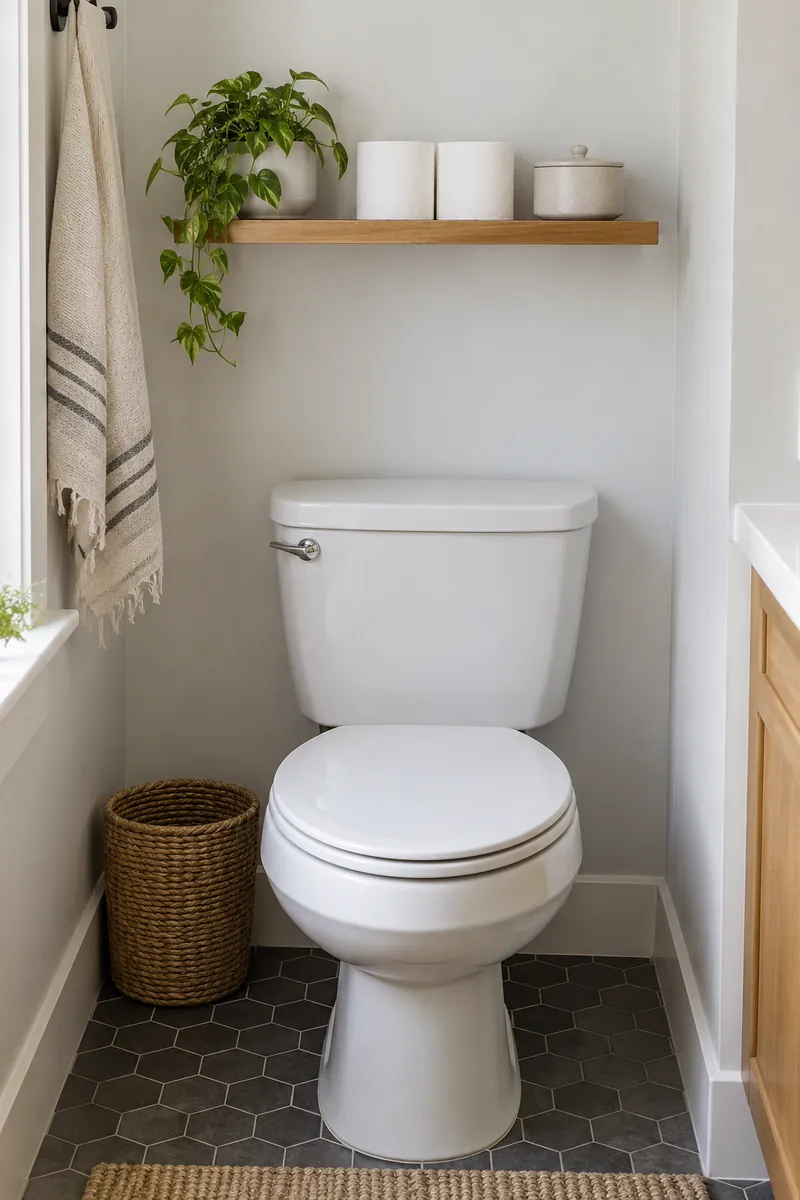
- Measure above the tank lid.
- Keep the shelf relatively shallow.
- Use small contained groups.
- Avoid unstable stacks over the toilet.
The wall above a toilet may have room for a shallow shelf, but keep the tank and its lid accessible. Use the shelf for light, contained supplies rather than heavy objects you must lift overhead. Check the installation requirements and leave enough clearance for ordinary cleaning and maintenance.
3. A Narrow Floor Tower
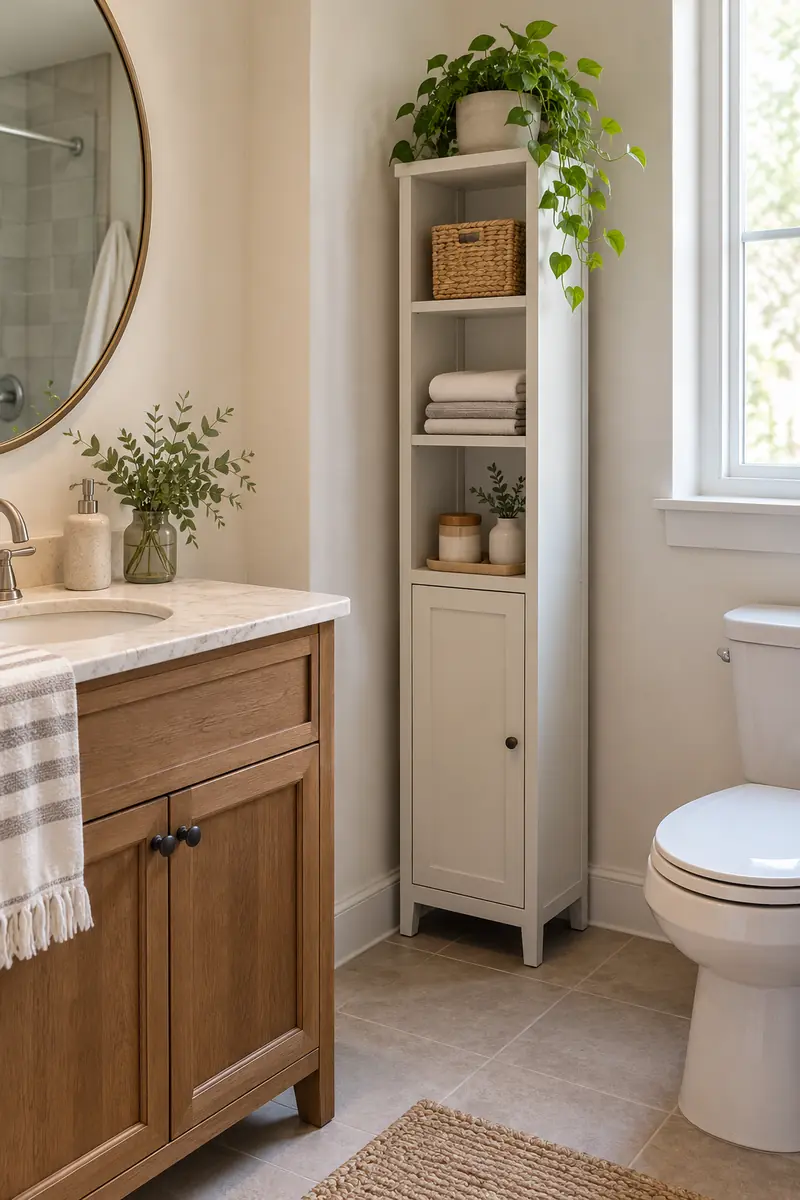
Quick tip: Mark the tower’s footprint on the floor before ordering.
Try your normal bathroom routine around that outline.
A narrow storage tower can turn a genuinely unused dry corner into a place for towels and spare supplies. Check its footprint against the door swing and your standing space. Follow any anchoring requirements, and make sure opening its doors does not turn the bathroom into an obstacle course.
4. Door Back Hooks
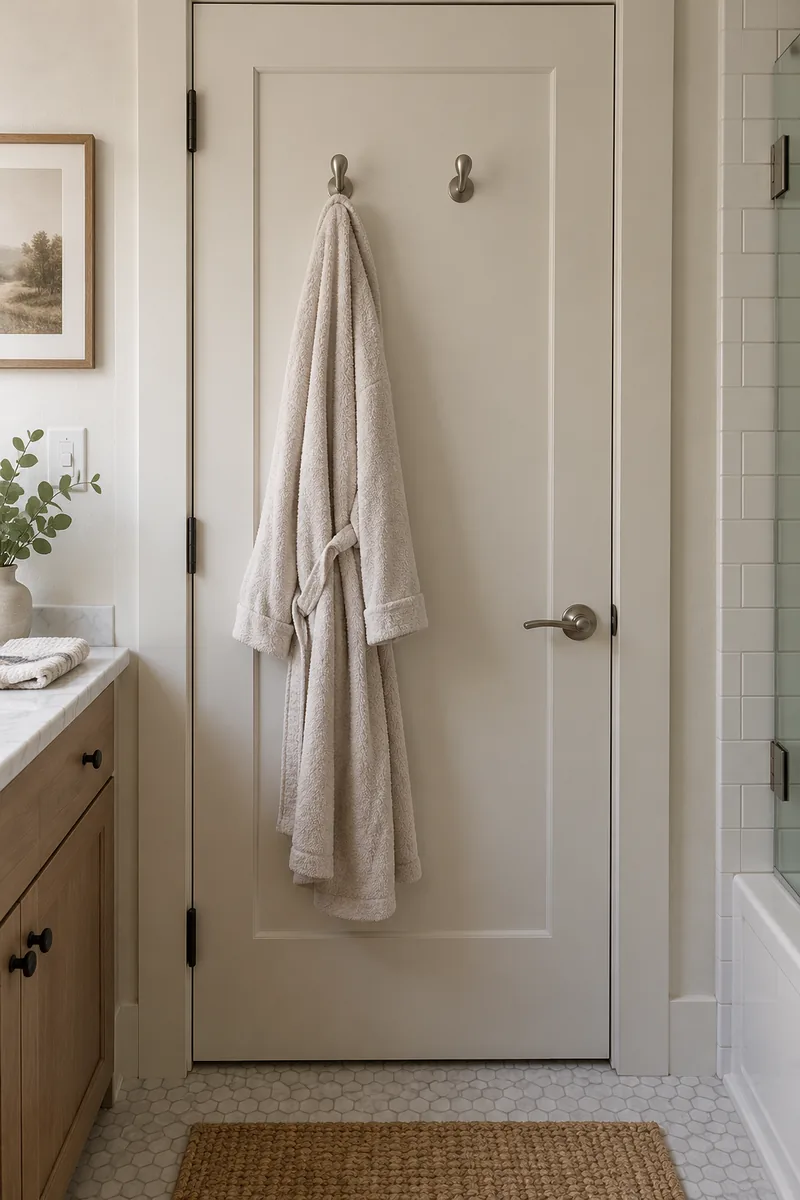
Before: A robe occupies the only spare counter corner. The bathroom has no clear place for it between uses.
After: A suitable hook gives it a defined home. The handle, door opening, and surrounding passage remain clear.
The back of a door can hold a light robe or towel if the chosen fittings suit the door and allow it to close normally. Check hinges, handle clearance, and any rental restrictions. Do not assume an over-door fitting works just because its width appears to match.
5. A Mirror Cabinet
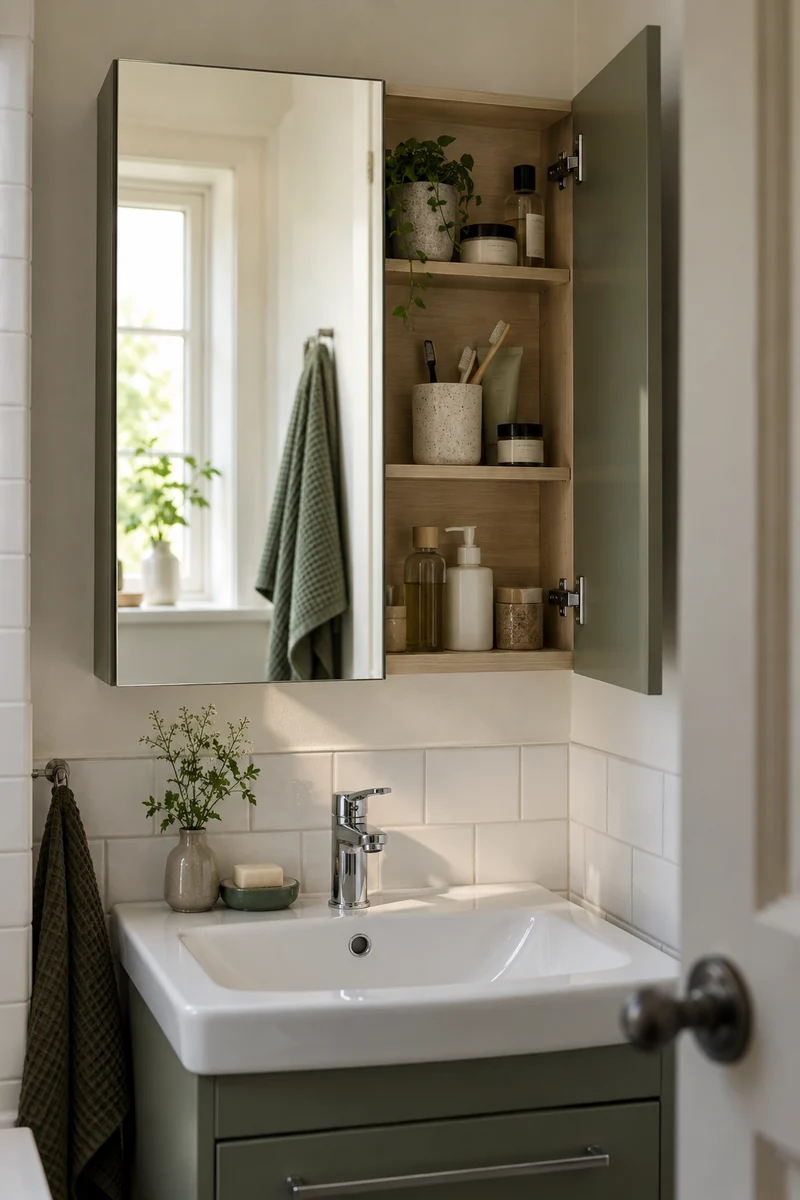
- Measure the available sink-wall area.
- Check the opening direction.
- Compare shelf depth with your products.
- Confirm installation requirements before buying.
A mirror cabinet combines two functions on a wall already used for the sink. Shallow shelves can hold small daily items without expanding the basin footprint. Check the mirror position, door swing, and installation needs carefully, especially if replacing an existing fixture or considering a recessed version.
6. A Dry Corner Shelf
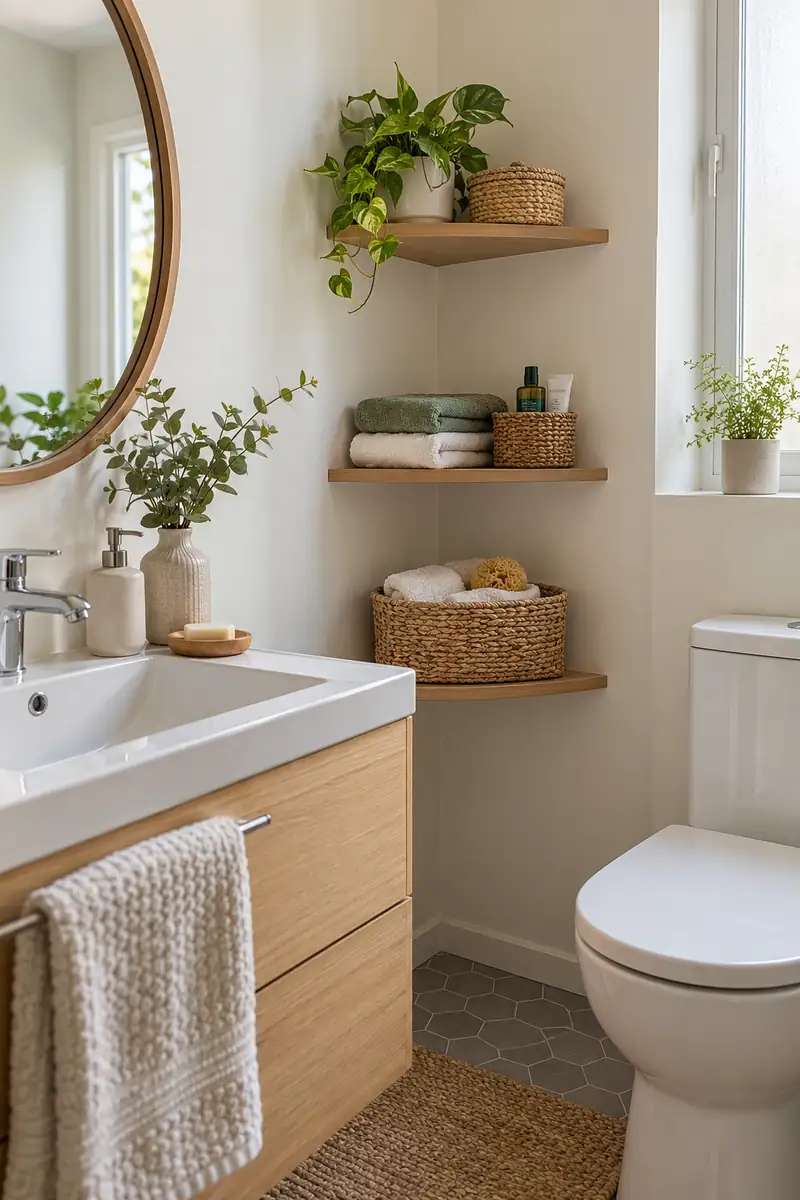
Triangular shelves
Contents: openly visible
Capacity: modest small items
Clearance: shallow front edge
Small corner cabinet
Contents: concealed behind doors
Capacity: depends on usable interior
Clearance: allow for open doors
A dry corner may suit a small shelf that would look awkward in the middle of a wall. Keep the shape and depth proportionate to the space, and avoid projecting into the route to the shower. Corner storage is most useful for modest items you can reach without stretching.
7. A Slim Rolling Cart
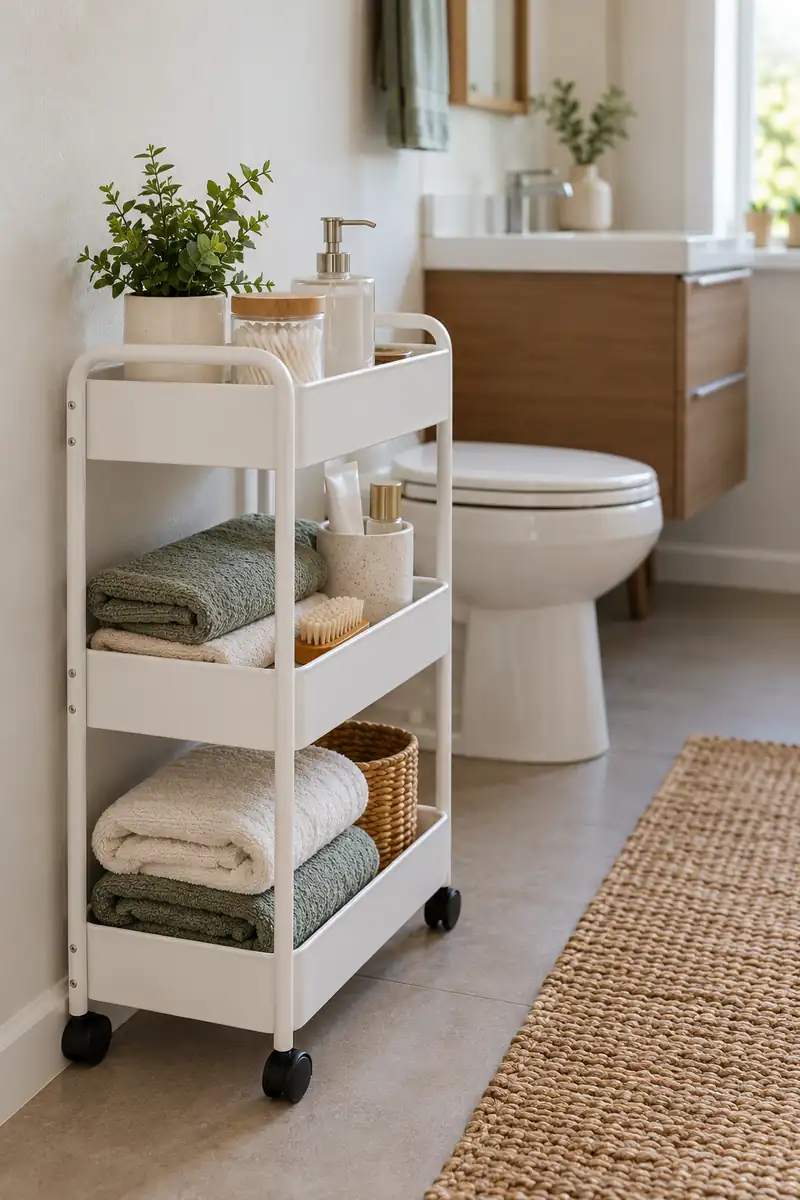
Do:
- Measure the parking space.
- Choose cleanable materials.
- Keep heavier items low.
Don’t:
- block a doorway.
- trail cords from the cart.
- load objects above the shelf rails.
A slim cart offers movable storage where there is enough dry floor space for it to park properly. It should have a defined home rather than living in the walking route. Keep contents within the shelves, follow the maker’s limits, and check that the cart stays steady during use.
8. A Recessed Niche
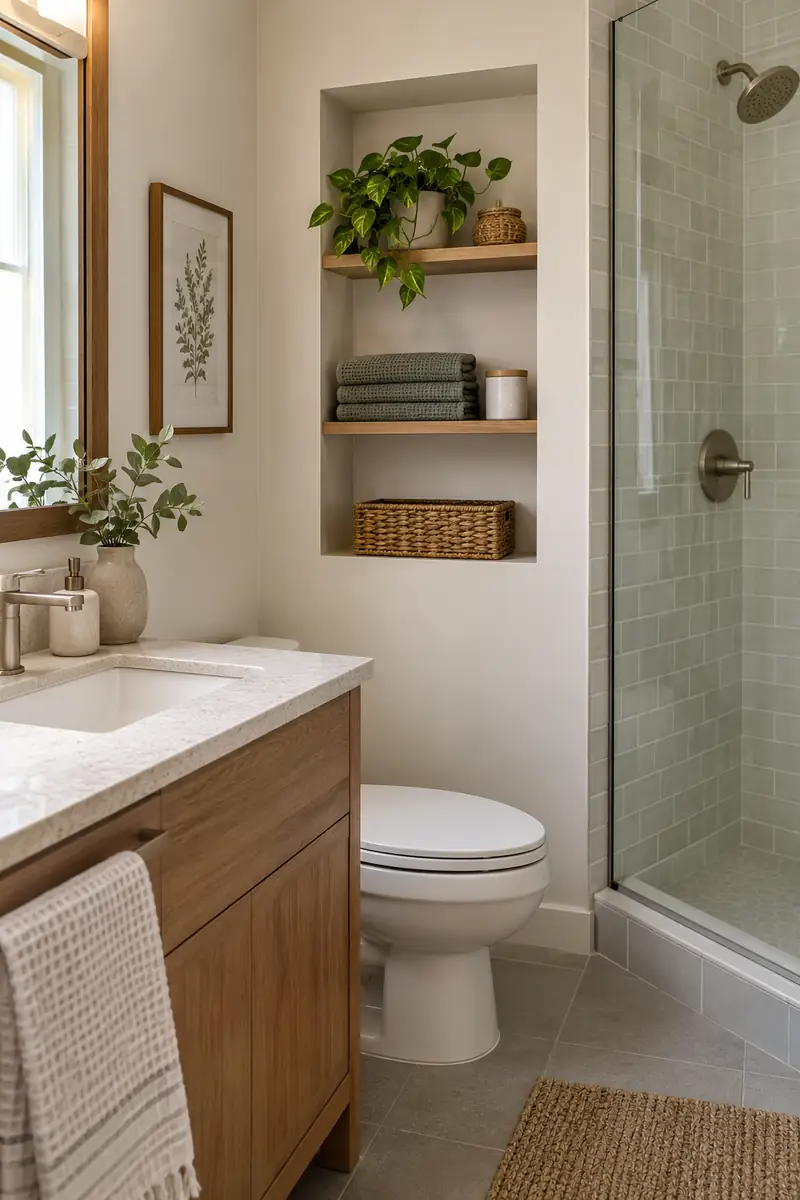
- Location: A suitable dry wall is one option.
- Contents: Plan the niche around specific items.
- Work: Assess the wall before opening it.
- Finish: Choose materials suited to the conditions.
A recessed niche can add capacity without a projecting cabinet, but it is a building project rather than a quick accessory swap. The wall may contain services or structural elements, and wet areas need appropriate detailing. Ask a qualified professional to assess the location before planning around that space.
9. A Freestanding Towel Rack
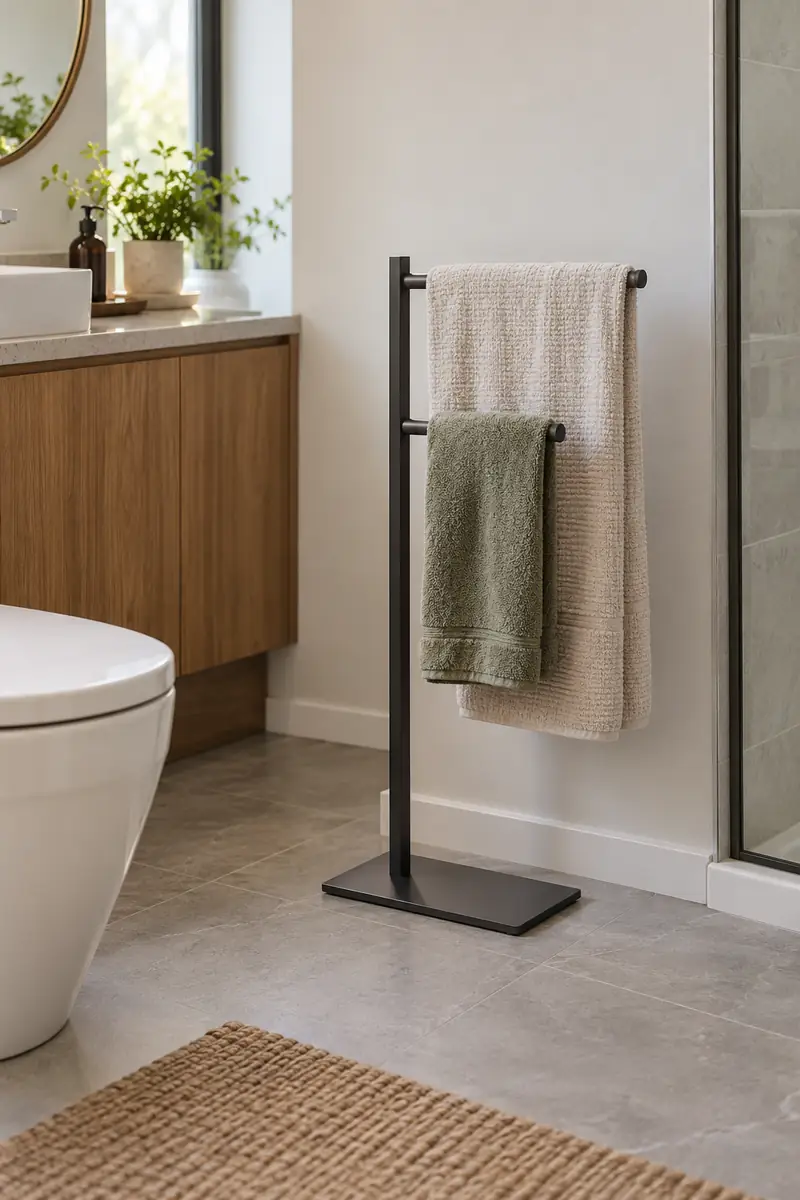
A freestanding towel rack can add hanging space when suitable wall space is limited. It needs a stable position outside the main route and enough room for towels to hang separately. Compare its base, not just the width of the top bar, with the available floor area.
Avoid choosing a rack because it looks narrow in a photograph. Its real footprint includes the towel hanging from it and the space needed to reach that towel. If it crowds the shower entrance or door, a different storage location will serve the room better than squeezing it in.
10. A Shelf Over Door
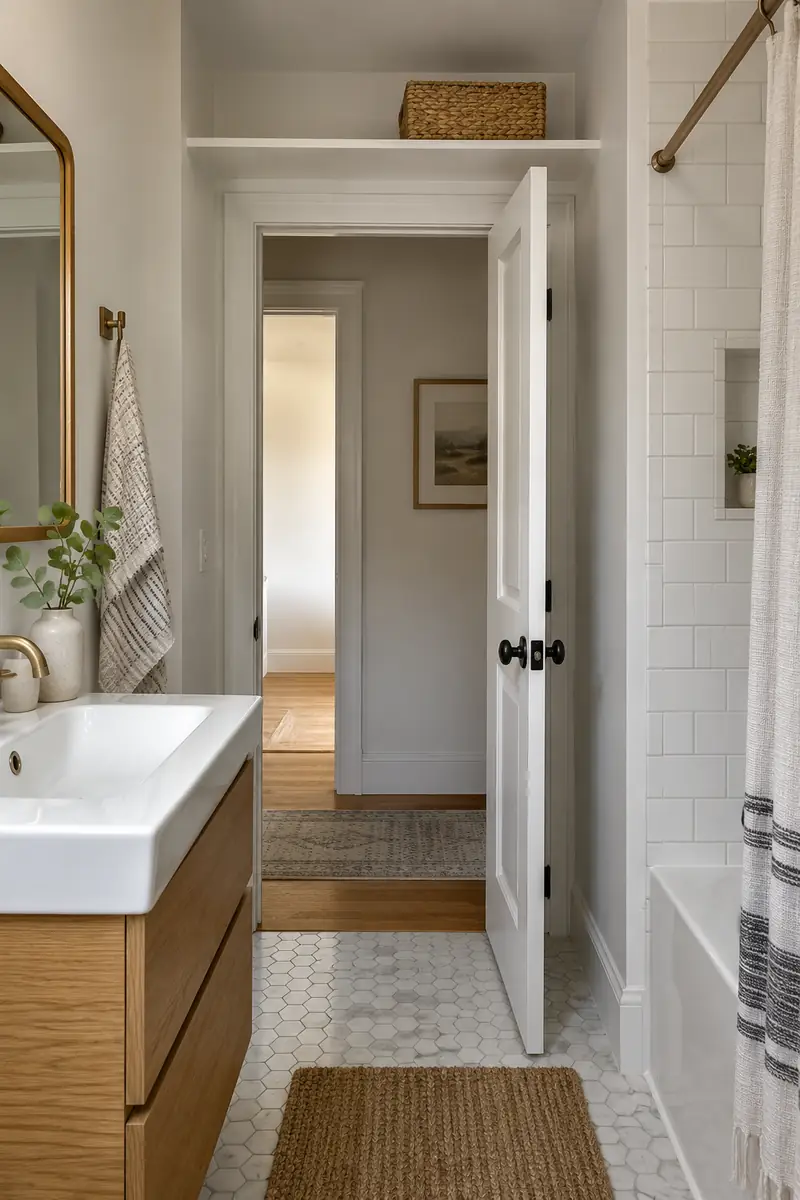
- Check the height and available depth.
- Choose a shallow shelf.
- Limit contents to light occasional supplies.
- Plan safe access before using the space.
An above-door shelf is best treated as occasional storage, not the home for something you reach for every morning. Keep the contents light and contained, and consider how you will access them safely. Leave the door frame and opening clear, and use installation appropriate to the wall.
11. A Bathtub End Cabinet
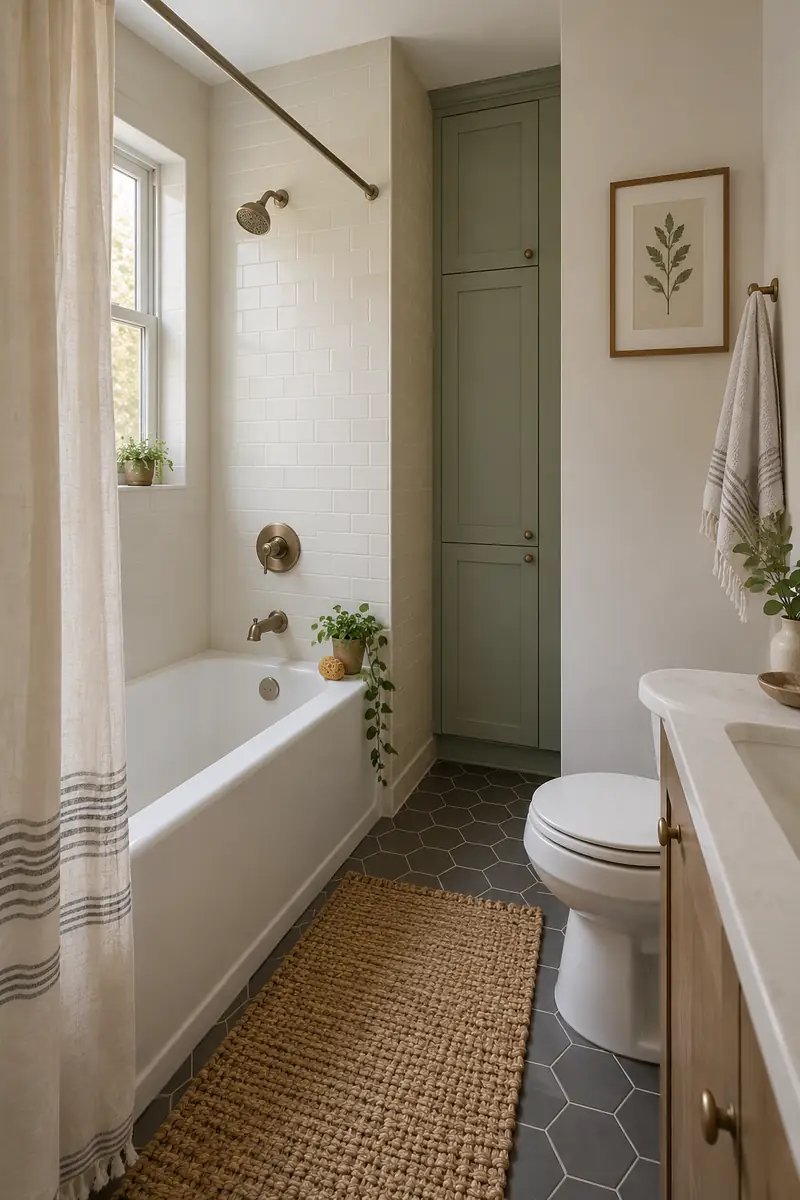
Quick tip: Include handles and open doors in your measurements.
A cabinet body may fit while its everyday use still feels cramped.
A recess beyond the end of a tub can sometimes fit a narrow cabinet without reducing the main walkway. Confirm that the spot stays suitably dry and that the cabinet does not interfere with entering, cleaning, or servicing the tub. Measure every projection before choosing a piece.
12. A Pedestal Sink Wrap
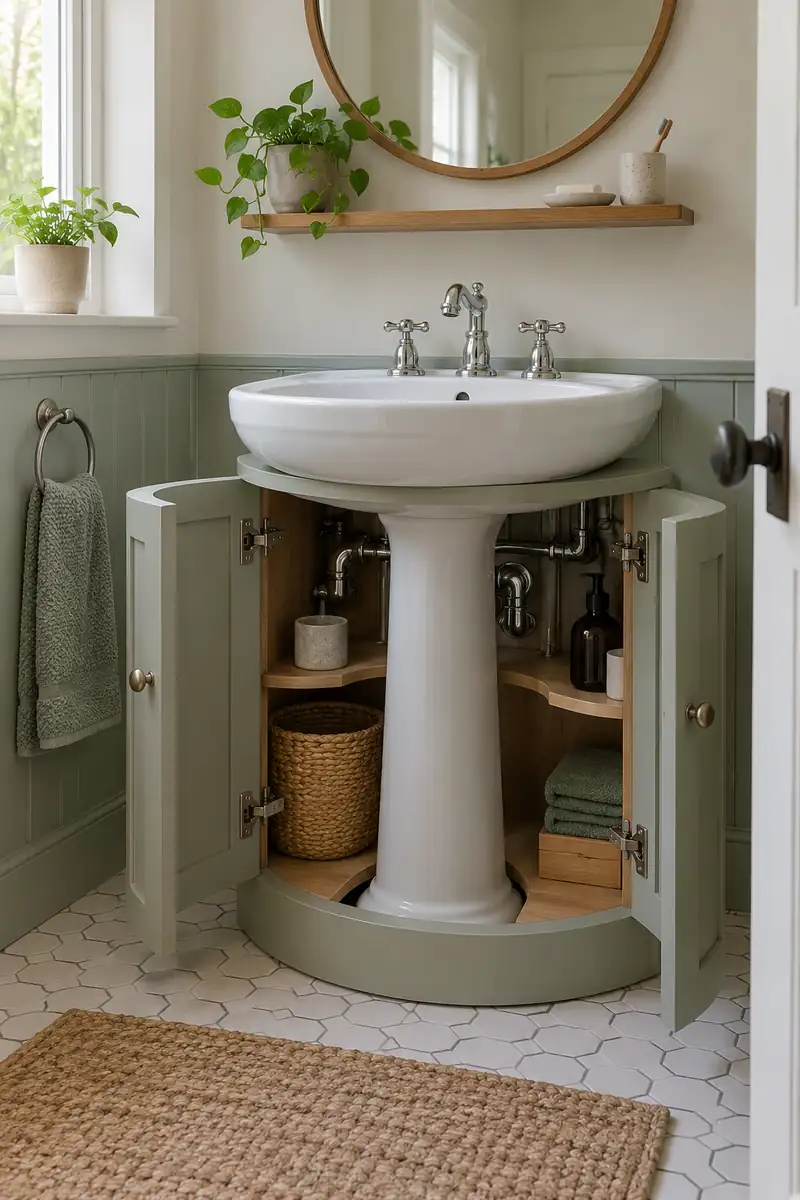
Before: The pedestal leaves an awkward empty area beneath the basin. Loose supplies collect around its base.
After: A fitted freestanding unit contains a modest group of essentials. Its doors still allow access to the plumbing.
A purpose-made unit around a pedestal sink can use space that ordinary rectangular cabinets cannot. Check the basin, pedestal, and pipe shapes against the product dimensions. Keep access to valves and plumbing clear, and choose materials that suit the splashes likely around the sink area.
13. A Wall Towel Shelf
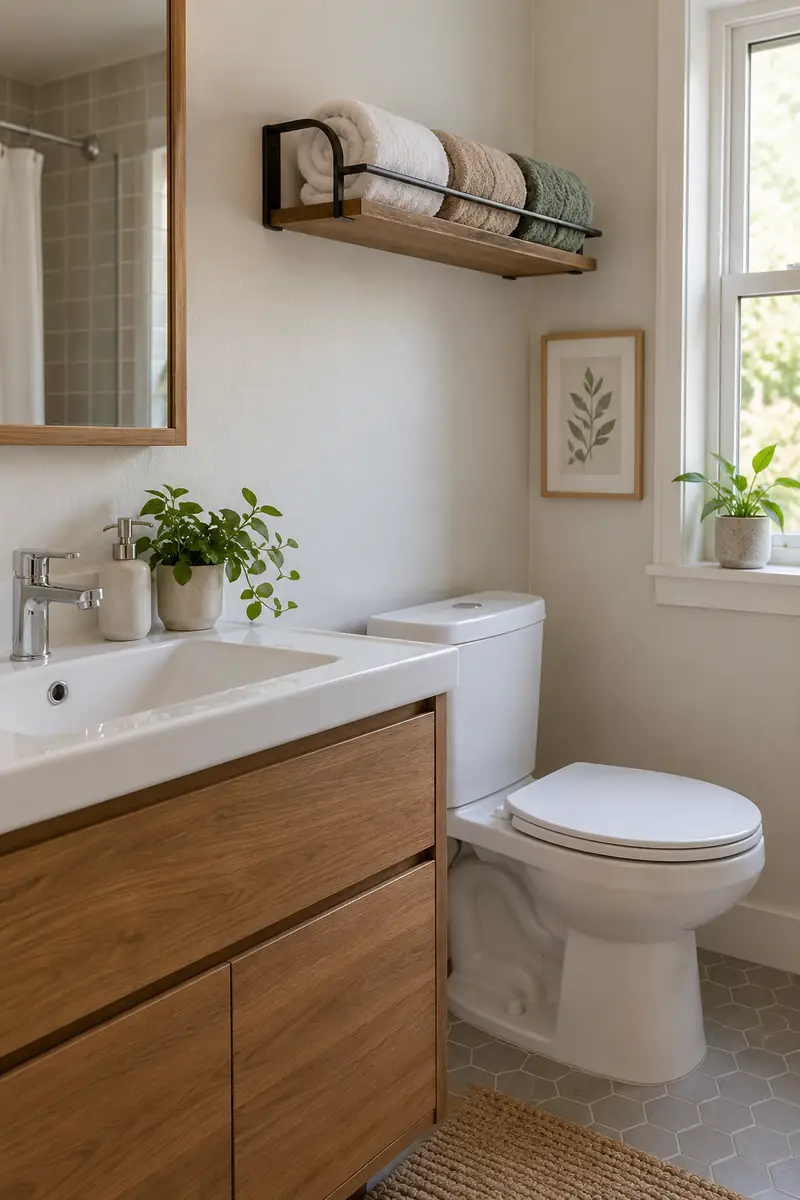
- Choose a dry reachable wall.
- Measure folded or rolled towels first.
- Check the shelf’s usable depth.
- Follow the fitting and load instructions.
A wall towel shelf can free a cupboard for other supplies if you have a suitable dry location. Keep the stack modest and easy to remove without pulling everything down. A retaining rail may help contain the towels, but the shelf still needs correct installation and sensible loading.
14. A Shower Corner Caddy
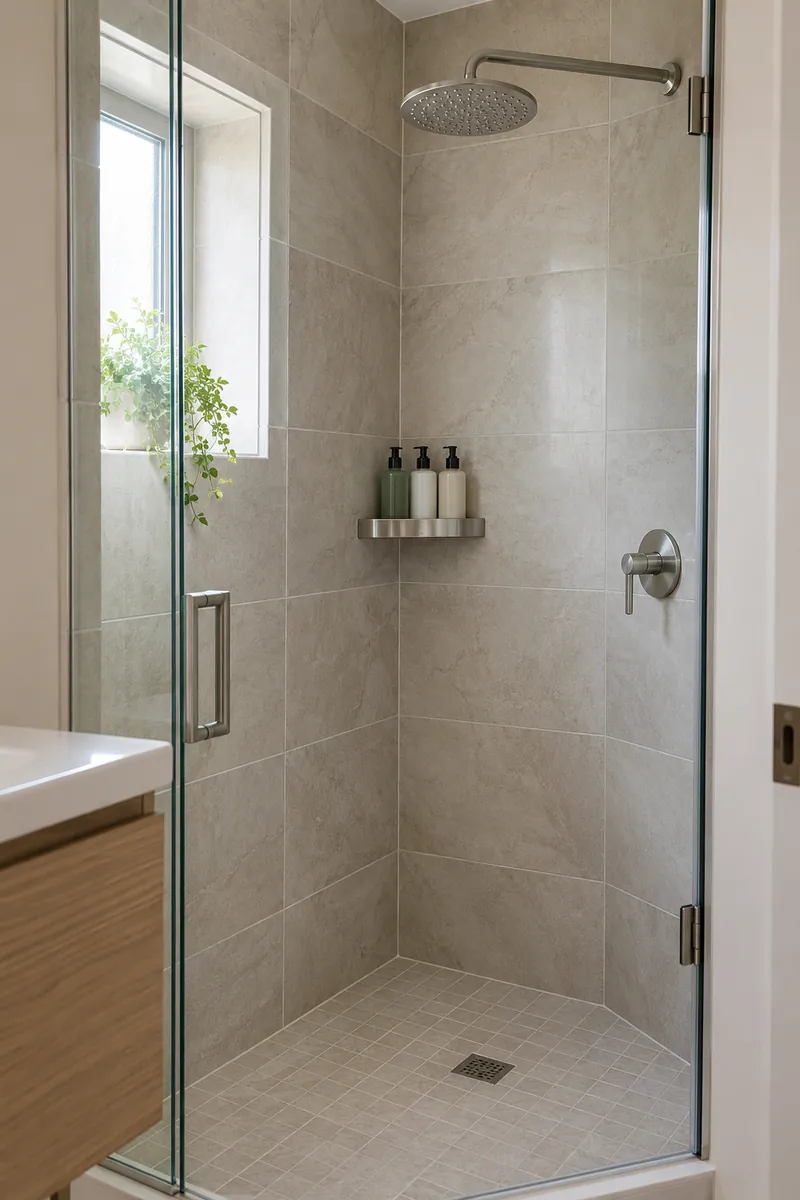
Corner caddy
Position: shower corner
Size check: bottle height
Attachment: follow system instructions
Wall basket
Position: reachable shower wall
Size check: projection into shower
Attachment: confirm surface compatibility
A shower caddy adds useful capacity only when it fits the shower and the products you use. Choose a system intended for that environment and follow its installation instructions. Keep the floor and controls clear, and avoid improvising storage by hanging heavy collections from fittings not designed for them.
15. A Low Storage Bench
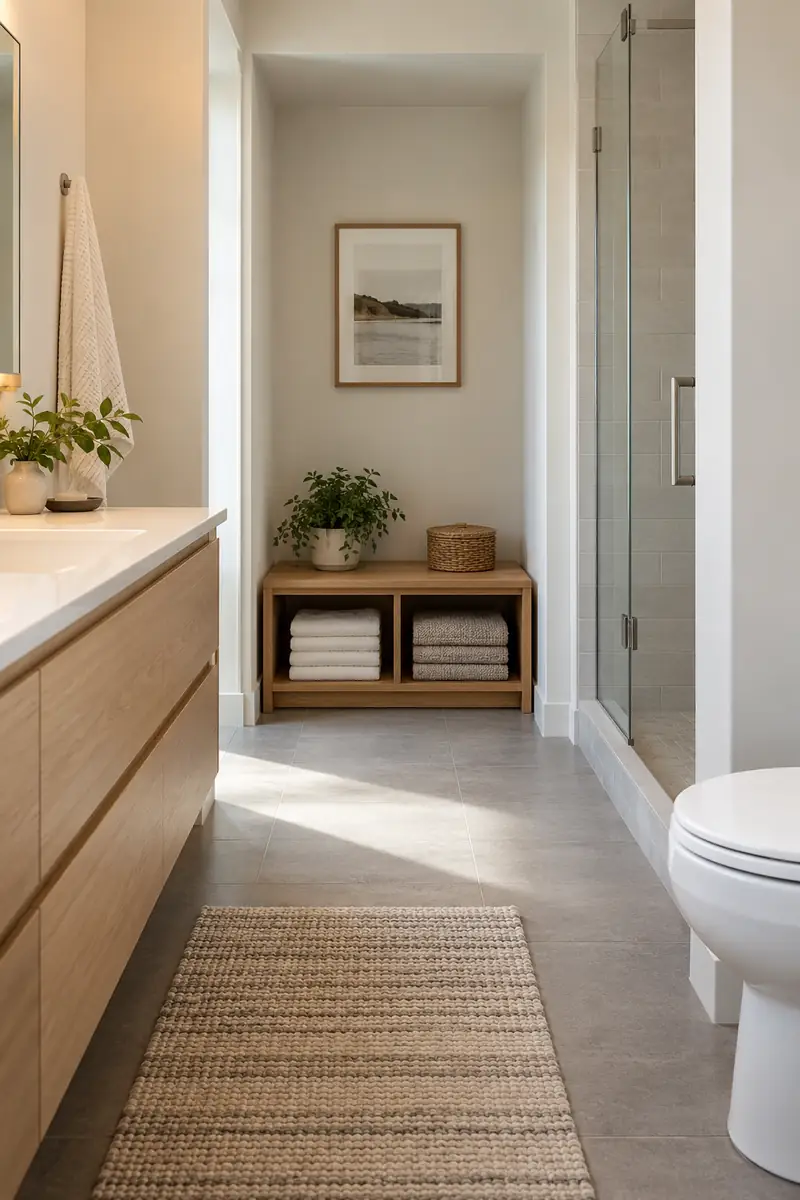
Do:
- Preserve a clear walking route.
- Check the complete footprint.
- Choose suitable materials.
Don’t:
- assume every bathroom has room.
- use an ordinary storage box as a seat.
- obstruct access to fixtures.
A low storage bench can work in a genuinely open dry alcove, but it is rarely the answer for a tight passage. Measure the usable floor space and choose a piece intended for the conditions. Keep towels or supplies inside its storage area rather than piling the top high.
16. Stackable Lidded Boxes
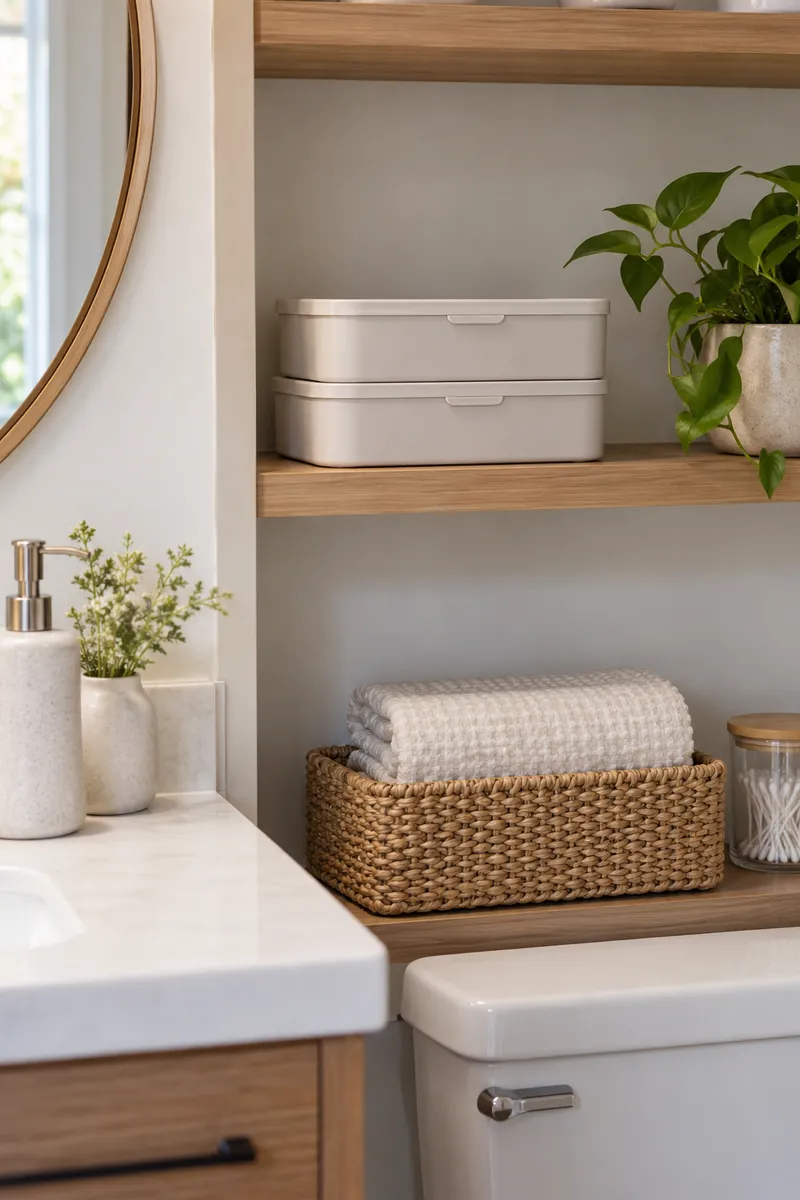
- Material: Choose something easy to clean.
- Size: Match the shelf’s actual depth.
- Stack: Follow the container’s intended design.
- Access: Keep the frequently used box easiest to reach.
Stackable boxes can make better use of an existing shelf’s height without adding another piece of furniture. Choose compatible containers and keep the stack low enough to handle comfortably. Put occasional items underneath and avoid creating a tower you must dismantle every time you need a washcloth.
17. A Wall Mounted Cup
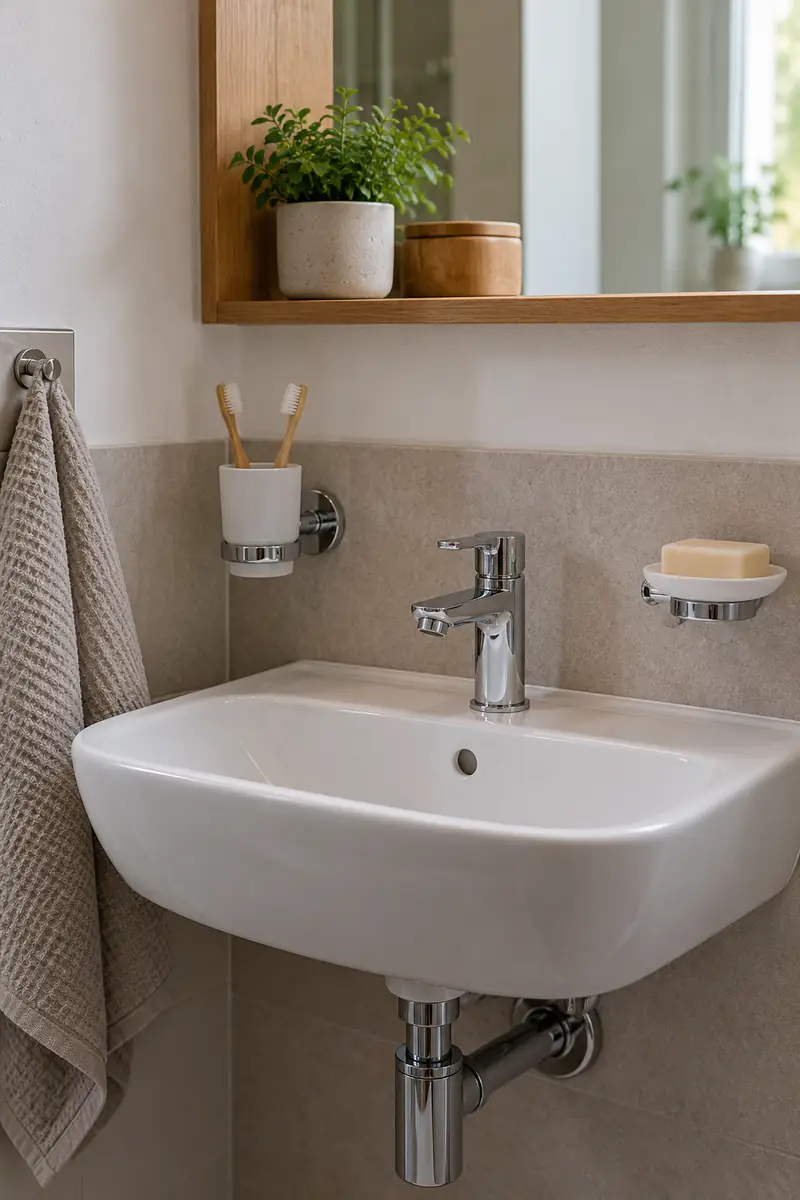
A mounted cup or soap dish can free a narrow basin ledge while keeping one small routine close at hand. Check that the position does not interfere with the faucet, mirror, or cleaning access. Choose fittings suitable for the surface and bathroom conditions rather than assuming any adhesive will hold.
This is a small capacity gain, so use it where it solves a specific problem. A toothbrush cup belongs within comfortable reach, while a bulky wall organizer may make the sink feel crowded. Try the proposed position with a paper outline before committing to a permanent fitting.
18. A Cabinet Side Rail
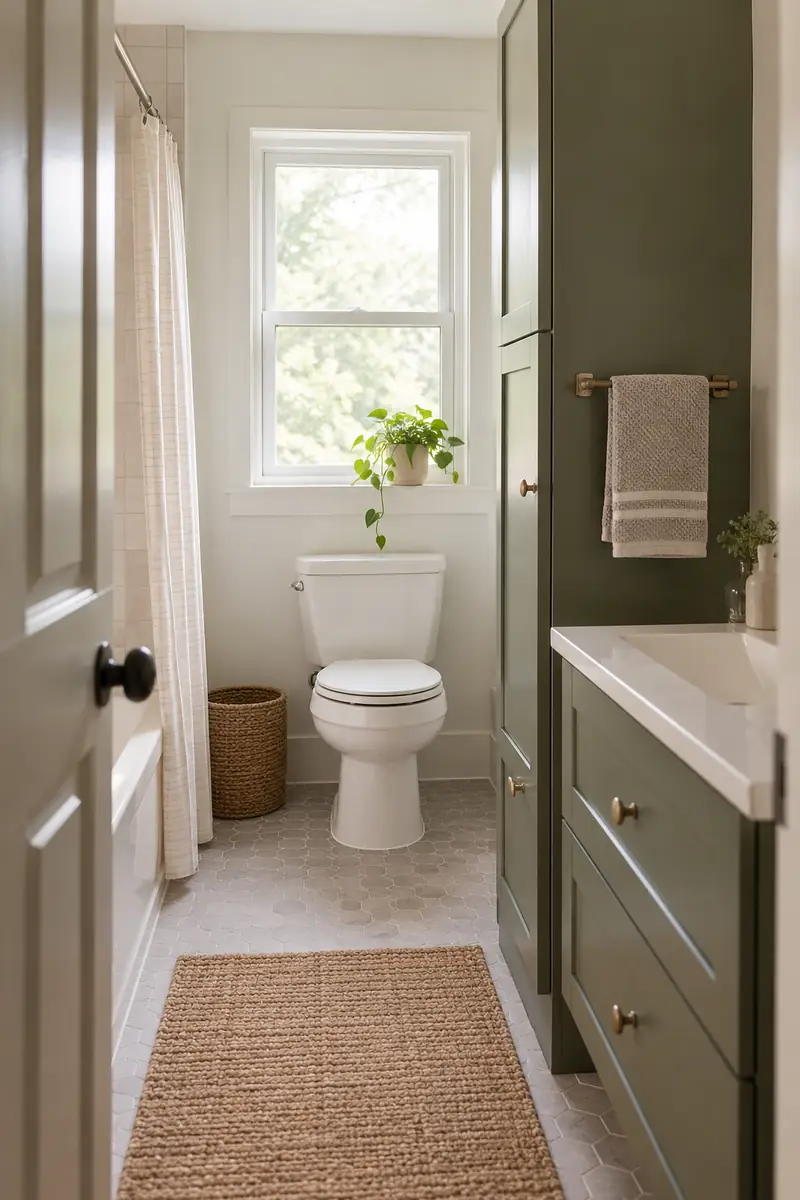
- Check the cabinet material.
- Measure the towel’s hanging width.
- Confirm doors and drawers still open.
- Use appropriate hardware and permissions.
The outside of a cabinet may offer room for a short towel rail if its construction supports the fitting. Check the maker’s guidance before drilling or attaching hardware. Keep the towel clear of neighboring doors, drawers, and the walking route so the added hanging space remains practical.
19. An Adjacent Linen Cupboard
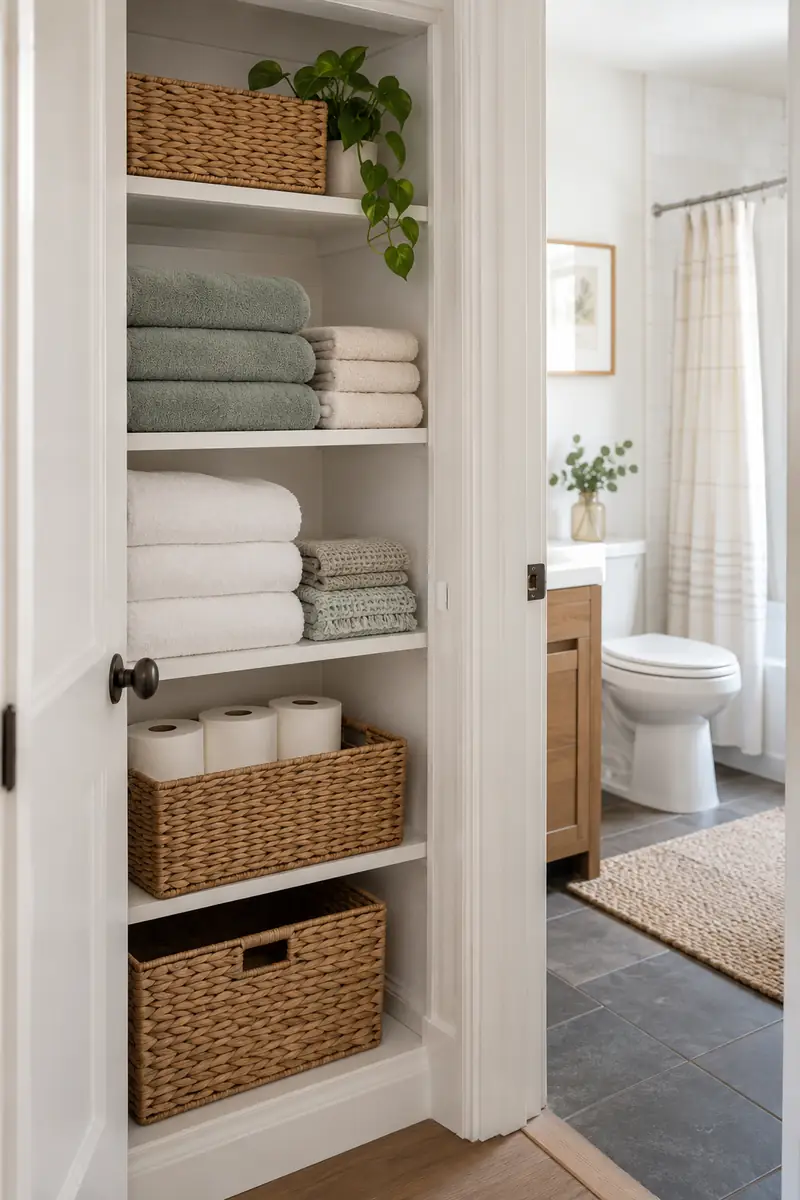
Quick tip: Keep a small working supply in the bathroom.
Use the nearby cupboard for extras that do not need to be within arm’s reach.
Storage just outside the bathroom can be more useful than another object inside it. A nearby linen cupboard can hold dry spare towels and unopened supplies, leaving the bathroom for daily needs. These small-apartment layout ideas show ways to think about nearby zones as part of a larger plan.
20. A Narrow Shelf Column
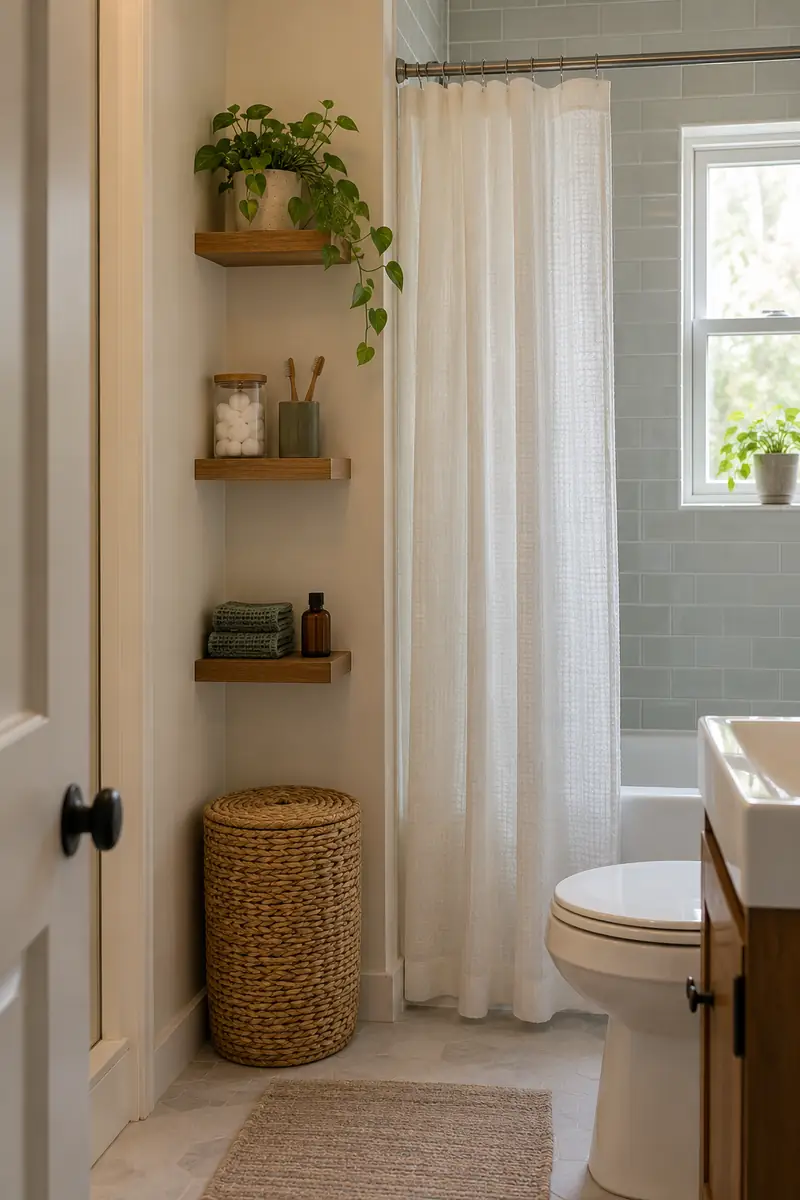
Before: A slim wall strip sits unused while supplies crowd the basin. There is no suitable floor space for another cabinet.
After: A small shelf column holds selected items vertically. The basin and route through the room stay open.
A narrow column of shelves can use a dry wall strip that is too small for a cabinet. Choose depths that do not project into the doorway and space the shelves around their intended contents. Leave some breathing room rather than filling every level with the tallest possible bottle.
21. A Hanging Pocket Panel
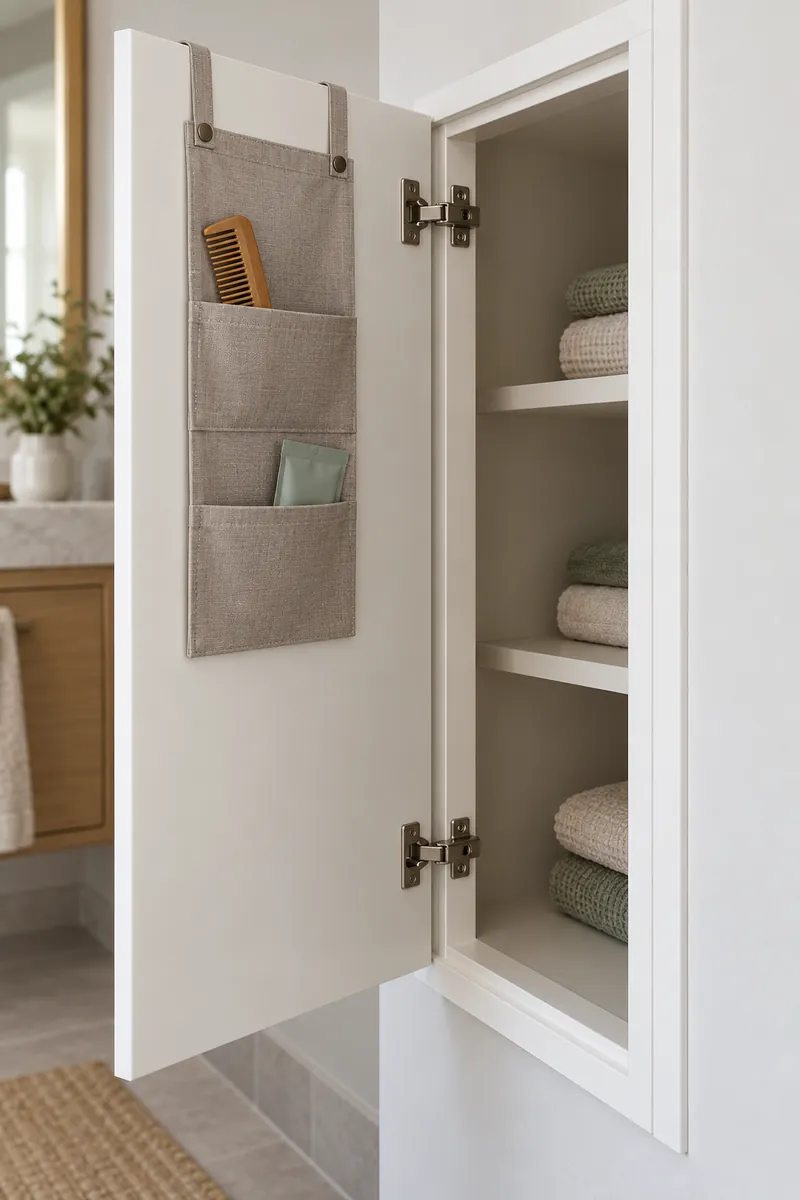
- Measure the clear inside-door area.
- Check shelf clearance with the door closed.
- Choose shallow pockets for small items.
- Confirm the attachment suits the door.
A short pocket panel can add capacity to the inside of a cupboard door for lightweight items. Check the clearance against shelves and hinges before choosing it, and keep the panel within the door’s outline. Use washable materials suited to the location and avoid overloading pockets until they bulge.
Frequently Asked Questions
Where should I look for extra bathroom storage first?
Look for suitable dry wall space, an unused corner, or a nearby cupboard. Measure clearances with doors open. The best location adds useful capacity without making the bathroom harder to enter, clean, or use.
Can I add storage without drilling?
Freestanding cabinets, carts, and boxes on existing shelves may work. Some products use other attachment methods, but compatibility varies by surface and conditions. Follow the product guidance and rental rules rather than assuming a removable fitting is risk-free.
Is storage above a toilet practical?
It can be, provided the shelf is appropriately installed, relatively shallow, and clear of tank access. Keep contents light and contained. Avoid heavy or unstable objects that you would need to handle directly over the toilet.
When should I store supplies outside the bathroom?
Use another suitable location when extra furniture would crowd the room, when supplies are rarely used, or when their storage instructions call for conditions the bathroom cannot provide. Keep only the useful working amount close to the routine.
Conclusion
Knowing how to add more storage to a small bathroom is partly about finding space and partly about deciding which space is worth using. A shallow cabinet, a modest shelf, or a nearby linen cupboard can help more than a large unit squeezed into the wrong corner. Measure the complete footprint, including open doors and hanging towels, and check installation requirements before committing. Choose one solution for a specific group of belongings, then see how the room works with it. The right addition should make supplies easier to reach while leaving the bathroom comfortable to move through, clean, and use every day.

Community
Join the conversation
Add a useful idea, ask a specific question, or share what worked in your space. Every comment is reviewed before it appears.