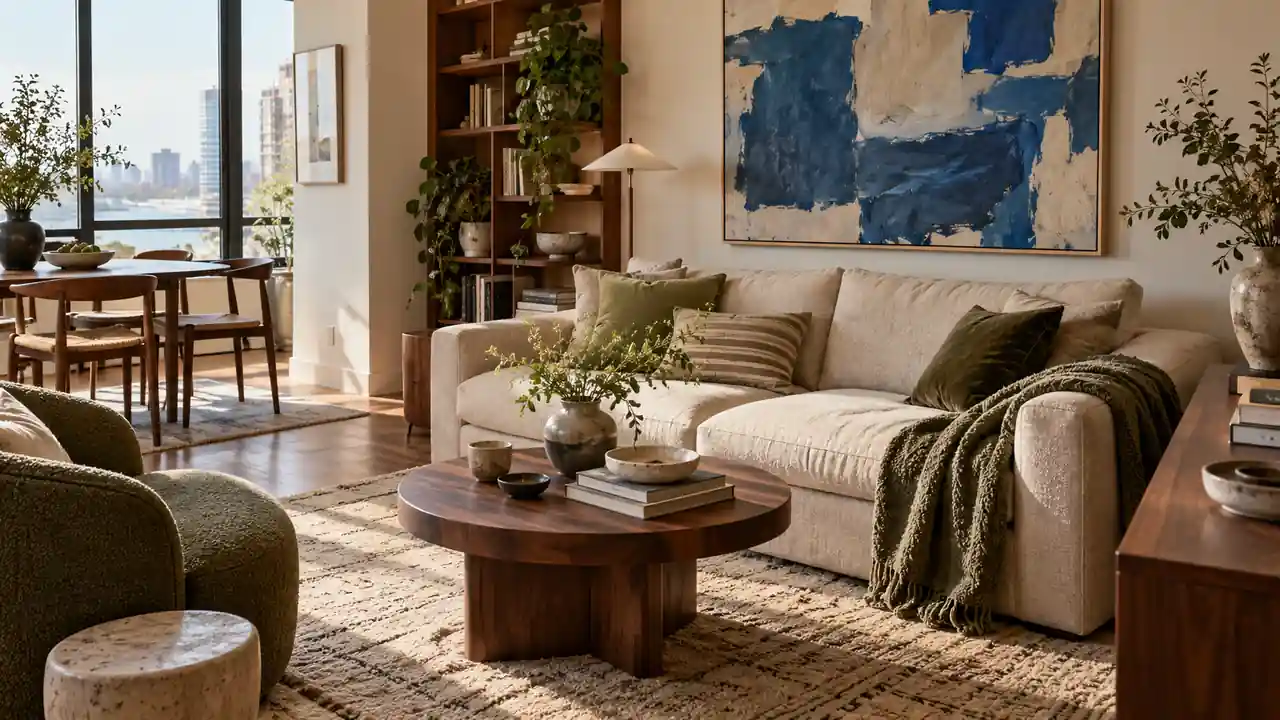
Knowing how to style a bachelor apartment is less about finding a prescribed look and more about making your belongings feel connected. Maybe your sofa, desk, and dining chairs arrived at different times. Maybe you know what you like individually but cannot see how it fits together. Start with a few decisions about color, texture, art, and the things that matter to you. These nineteen ideas help create a cohesive home while leaving room for your personality. There is no required palette or theme here, just practical ways to make the apartment feel comfortable, considered, and recognizably yours every day.
1. Choose A Personal Anchor
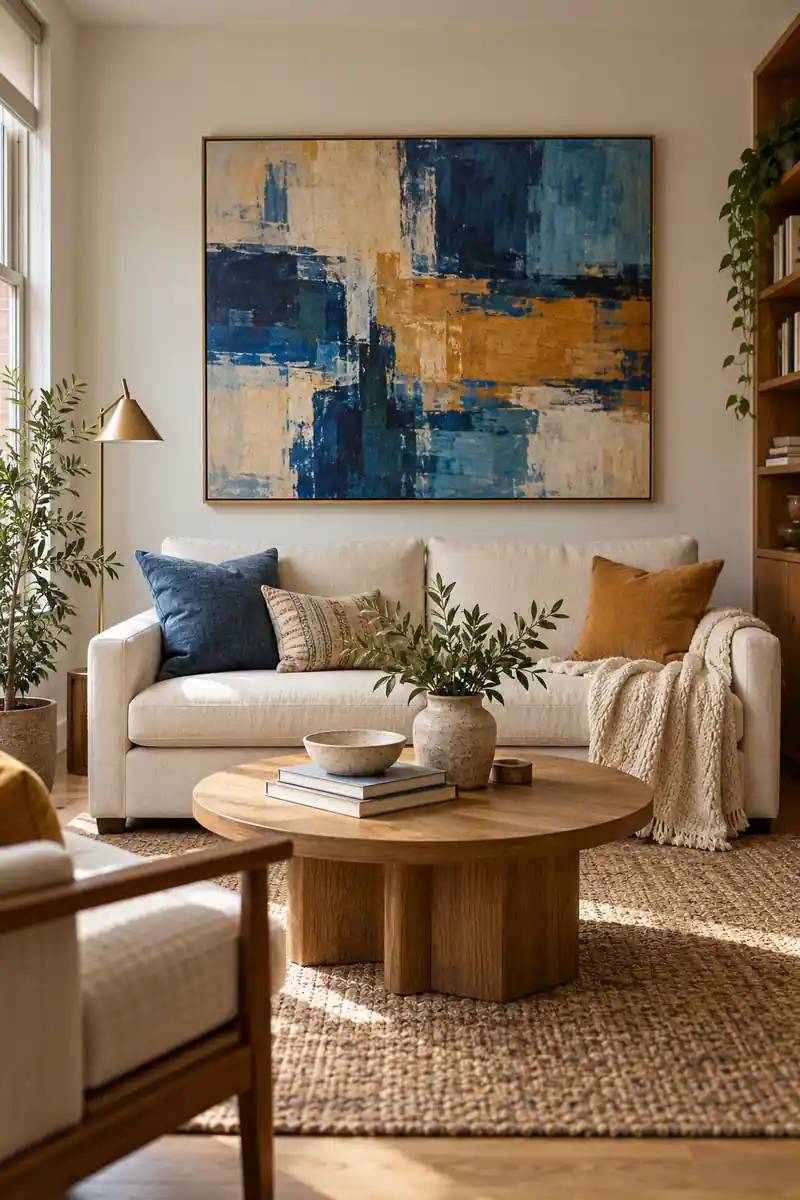
Begin with something you already care about: a painting, a worn wooden chair, a woven rug, or even a favorite album cover. This gives the room a real starting point instead of a collection of unrelated trends. Notice the colors, shapes, and mood that make the piece appealing to you.
Use those details to guide the next choices. A blue painting might suggest one blue cushion, while the warm wood in a chair could connect to a picture frame. The anchor does not need to be expensive or impressive. It simply needs to feel worth building around in your space.
2. Set A Small Palette
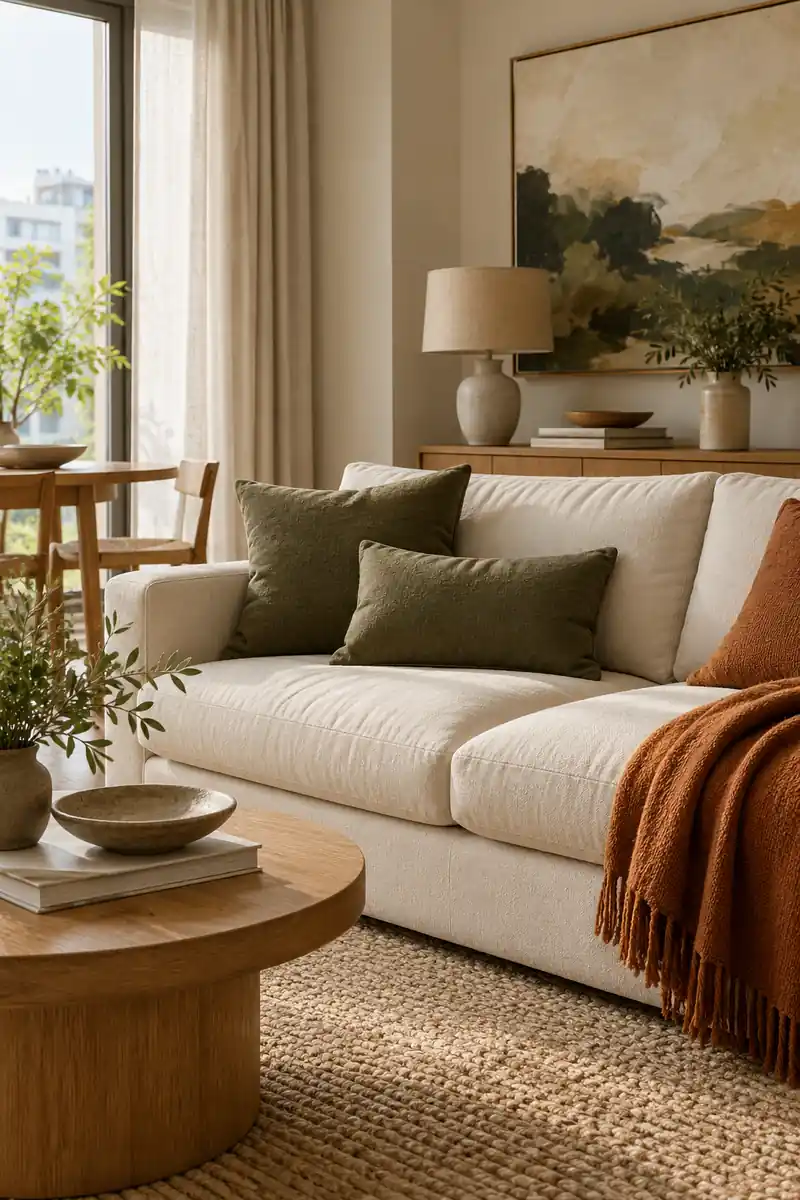
- Choose a main background color.
- Add one supporting shade you enjoy.
- Use a smaller accent for energy.
- Check the colors beside fixed finishes.
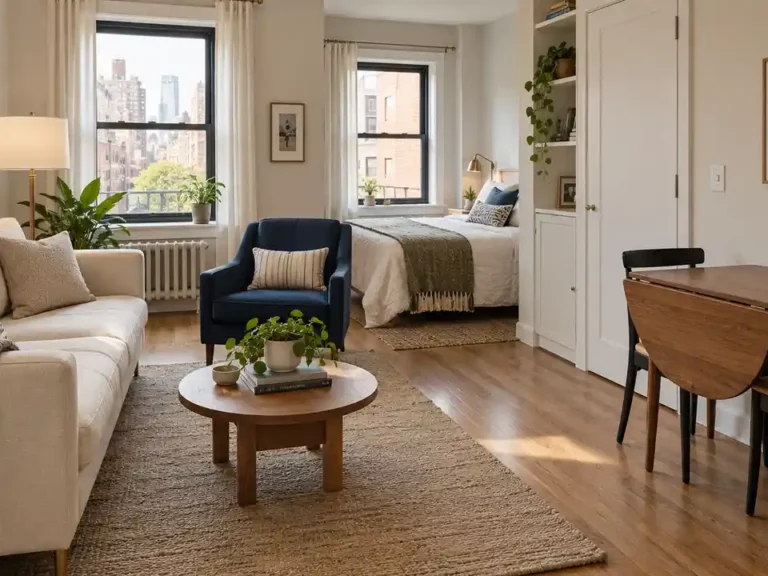
A small palette makes different pieces easier to combine, especially when your furniture came from several places. Include the floor, cabinets, and sofa in your thinking because they already occupy plenty of visual space. Keep a photo of the room handy when considering another object, rather than judging it alone.
3. Repeat Colors Unevenly
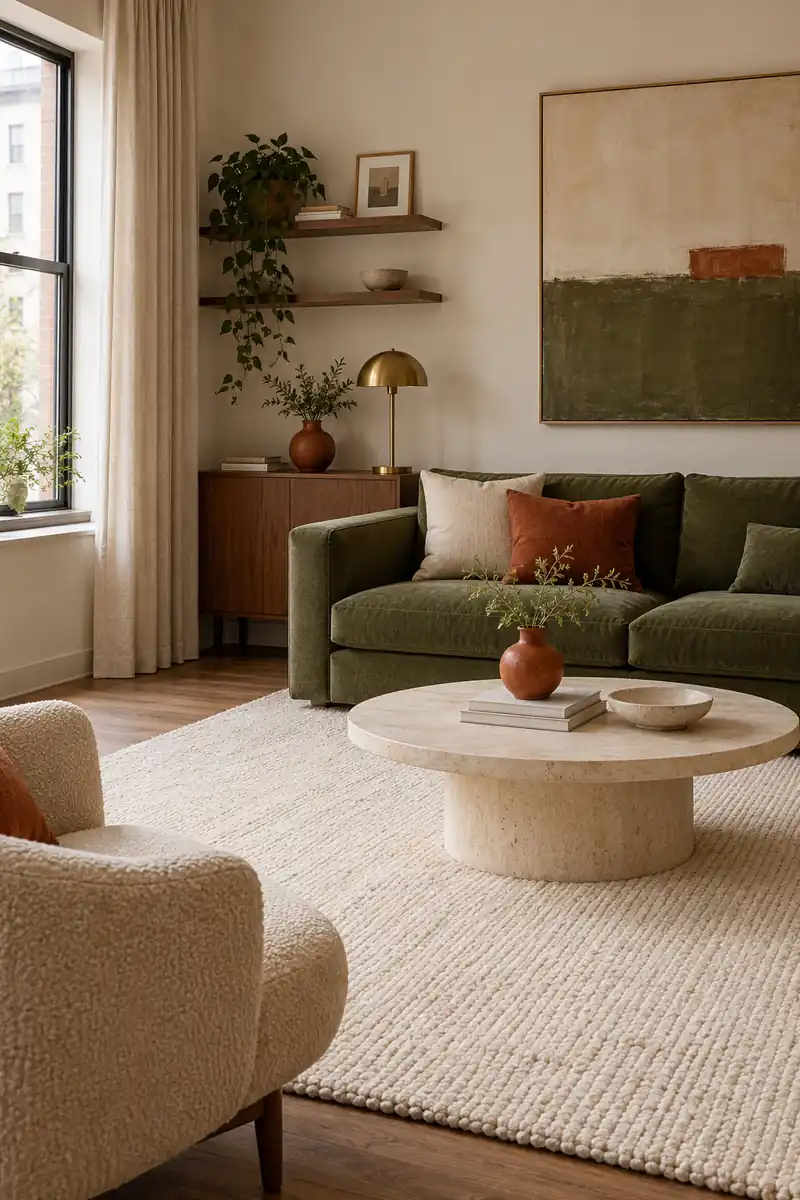
Quick tip: Give your chosen colors different amounts of space. Equal portions can make a room feel more rigid than you intended, especially when every cushion and accessory follows the same formula.
Let a neutral cover the largest areas, a second color appear in a substantial piece, and an accent show up in a few smaller details. These are flexible roles rather than strict percentages. If your favorite color already fills the sofa, let the accessories support it instead of competing loudly.
4. Warm Up Hard Surfaces
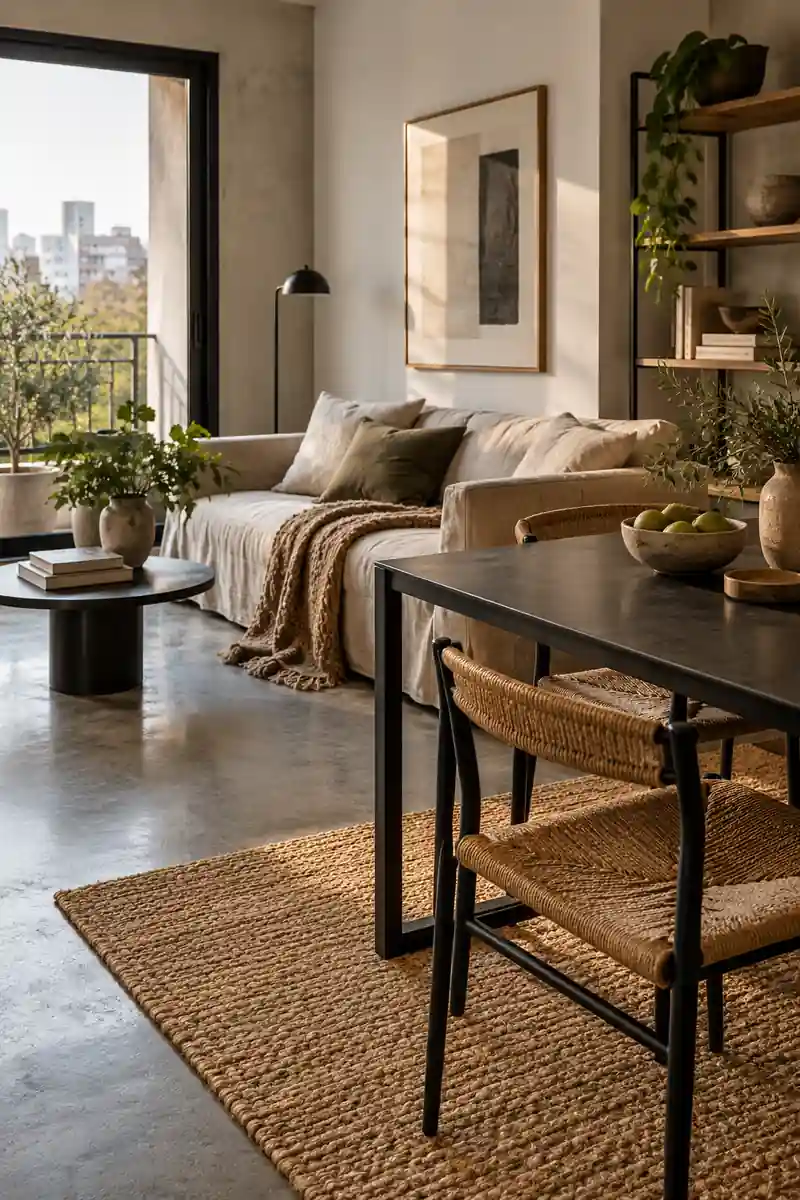
Before: Metal furniture, bare flooring, and smooth cabinets dominate the room. Even useful pieces seem disconnected because every surface feels hard.
After: A woven rug and a relaxed fabric layer introduce softness. The original furniture stays, but the room has a more comfortable balance.
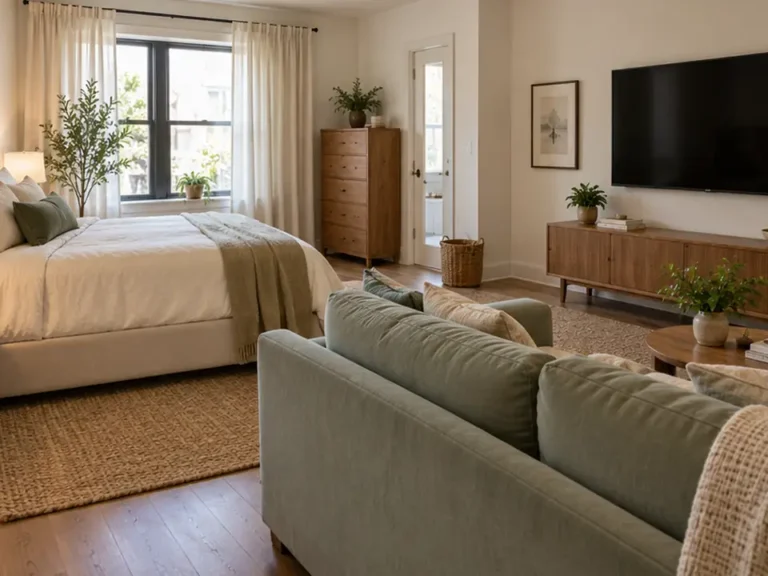
Start with the place where you sit or walk most often. A soft texture makes more sense there than on an unused decorative corner. Choose fabrics that suit your routine and care preferences. Keep the floor layer flat and the seating layer easy to move when you want to relax.
5. Balance Your Wood Tones
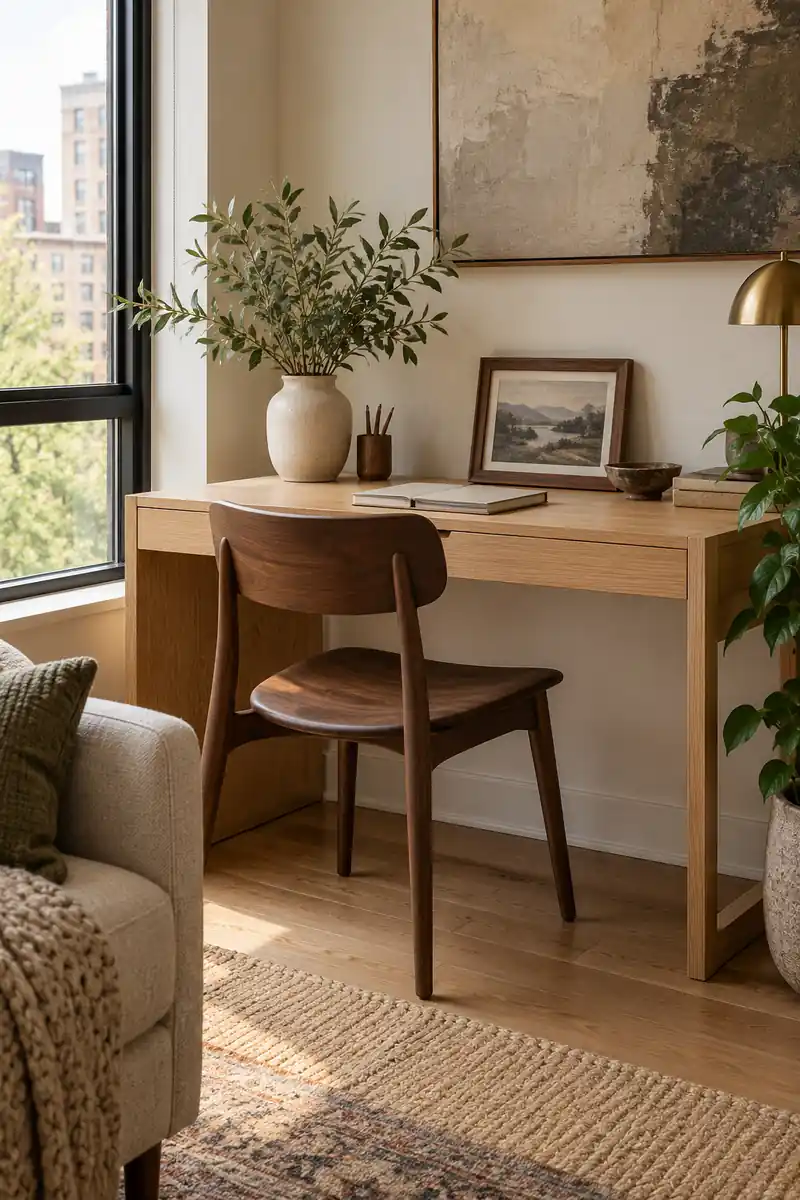
- Identify the wood tone already most visible.
- Keep that finish as the main reference.
- Add a second tone in a smaller amount.
- Repeat the smaller tone somewhere nearby.
Different woods can sit comfortably together without matching exactly. Look for a shared warmth or an intentional contrast, then give each finish enough space to be seen. A dark chair looks more connected beside a pale desk when a smaller dark frame or bowl quietly repeats its depth elsewhere nearby.
6. Choose An Art Direction
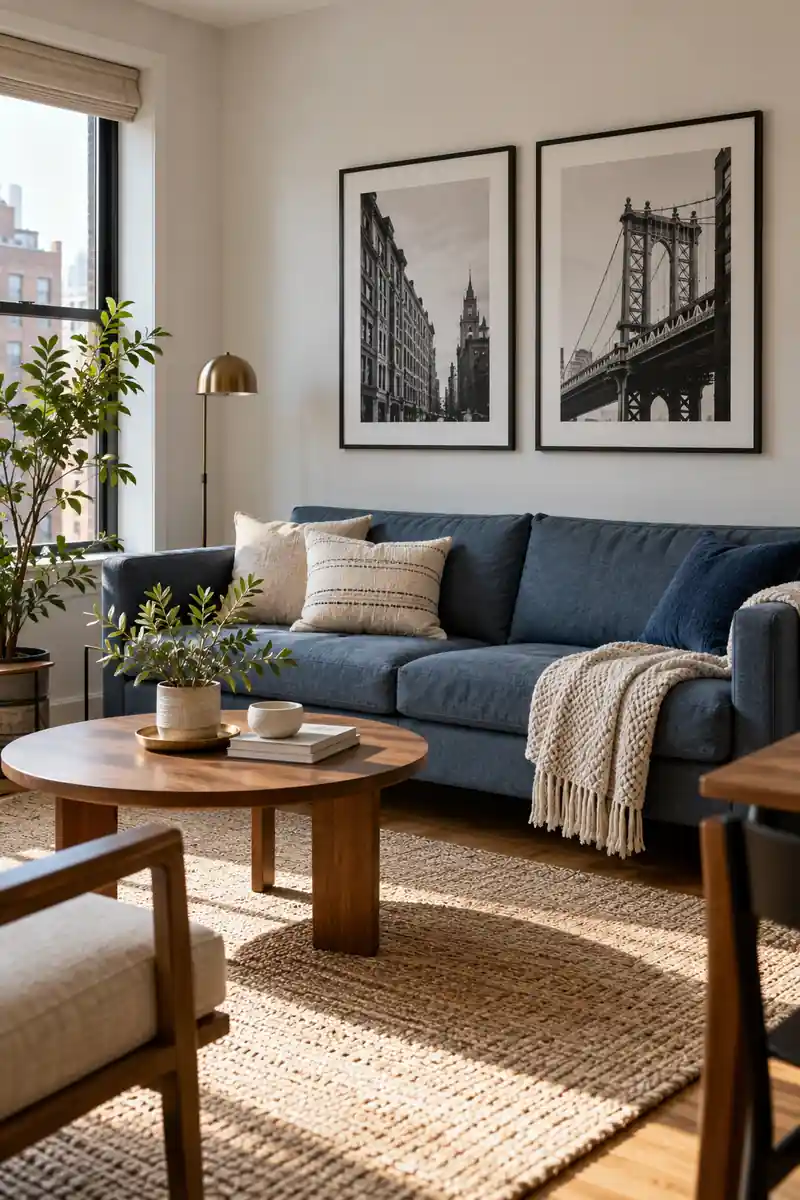
Related subjects
Connection: Architecture, landscapes, or another shared interest.
Variation: Different sizes and artists can work together.
Best for: A collection built gradually over time.
Related treatment
Connection: A repeated palette or similar frame style.
Variation: Subjects can differ while the display feels linked.
Best for: Personal pieces from many sources.
Choose a loose relationship for the art instead of demanding that every picture match. The result should leave room for your taste to develop. These studio apartment wall art ideas offer placement options, but begin with what you want to see each day rather than filling an empty wall quickly.
7. Mix Patterns With Space
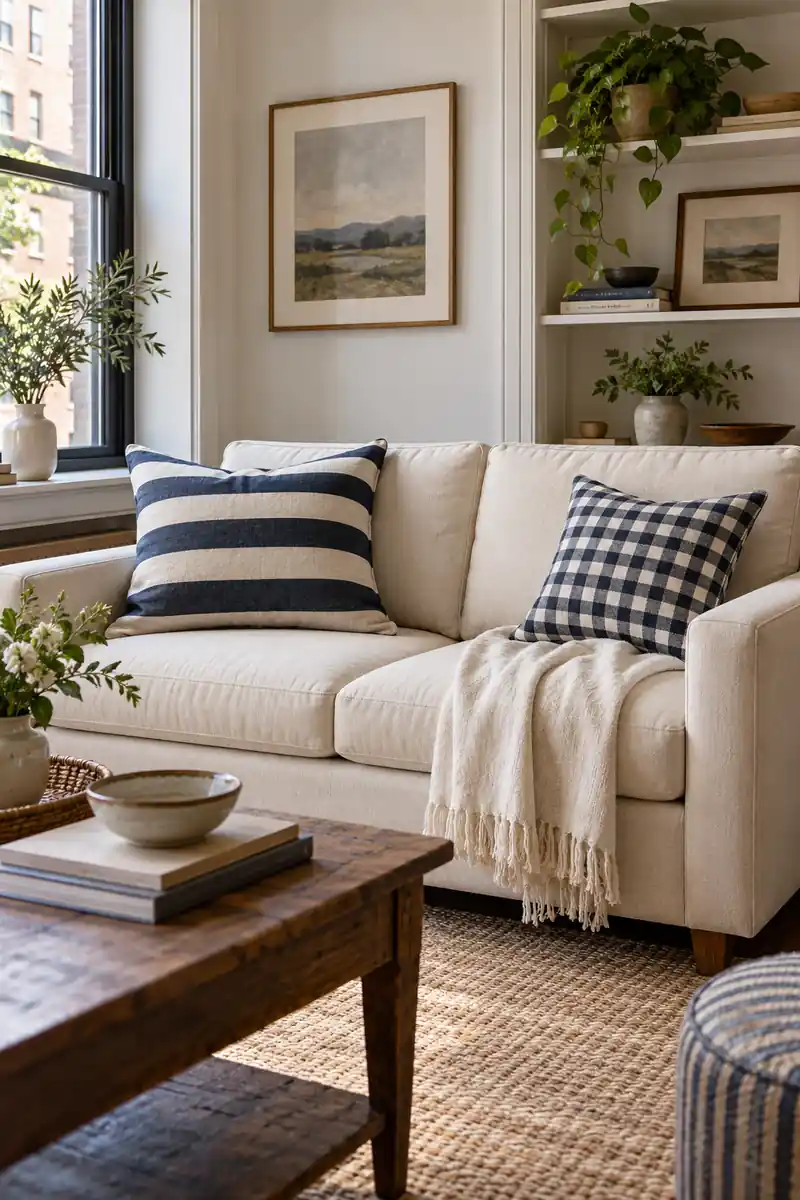
Do
- Repeat at least one color across patterns.
- Vary the scale of the designs.
- Leave plain fabric between busy pieces.
Don’t
- Match every print to the same size.
- Add patterns just to complete a set.
- Cover every visible surface with movement.
Pattern works best when the eye has somewhere quiet to rest. Try a broad stripe beside a smaller check, then use a plain throw to separate them. View the combination from across the room. If the details blur into a busy patch, remove one patterned item before changing the entire arrangement.
8. Give One Object Focus
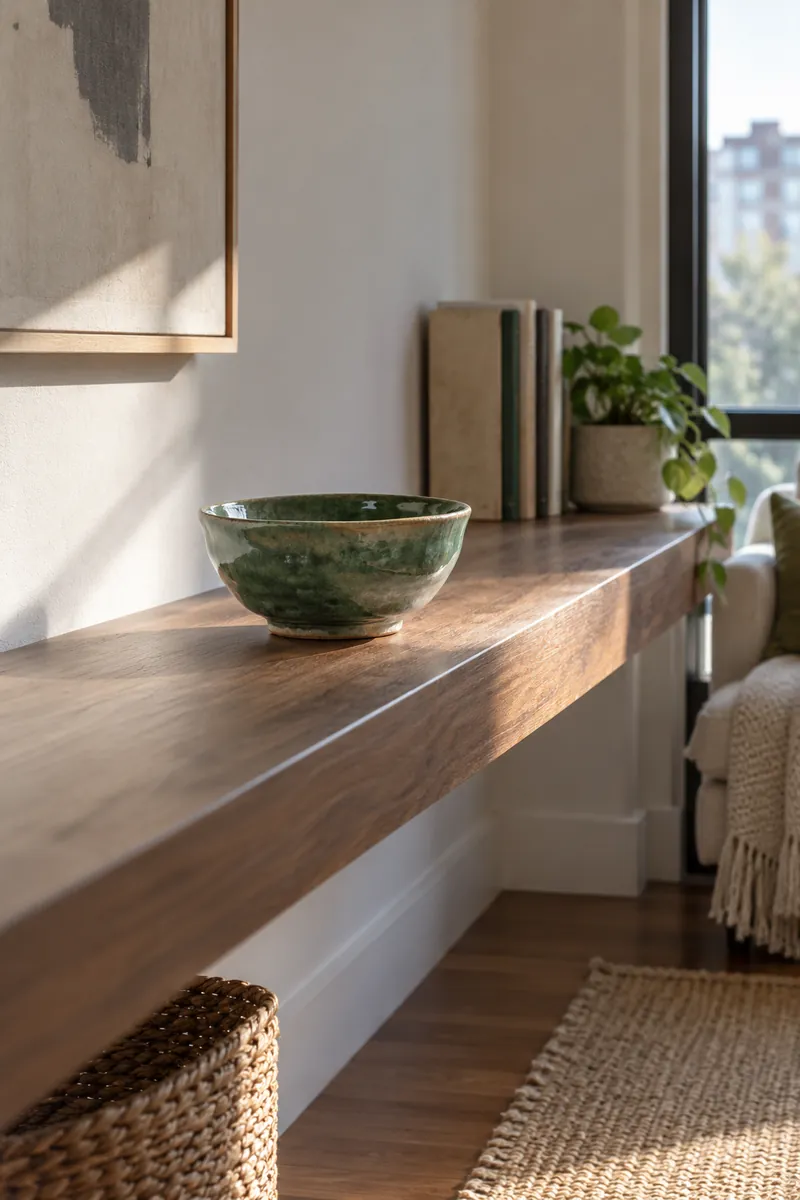
- Focus: One object with a pleasing shape or story.
- Surroundings: A clear area that shows its outline.
- Support: One smaller group placed farther away.
- View: An easy sightline from your usual seat.
A favorite object often looks stronger with less around it. Give a handmade bowl or unusual vase enough empty space to read clearly, then step away. Avoid raising it on unstable stacks to make it more important. Its color, silhouette, and personal meaning can provide the interest without extra props.
9. Style Books You Read
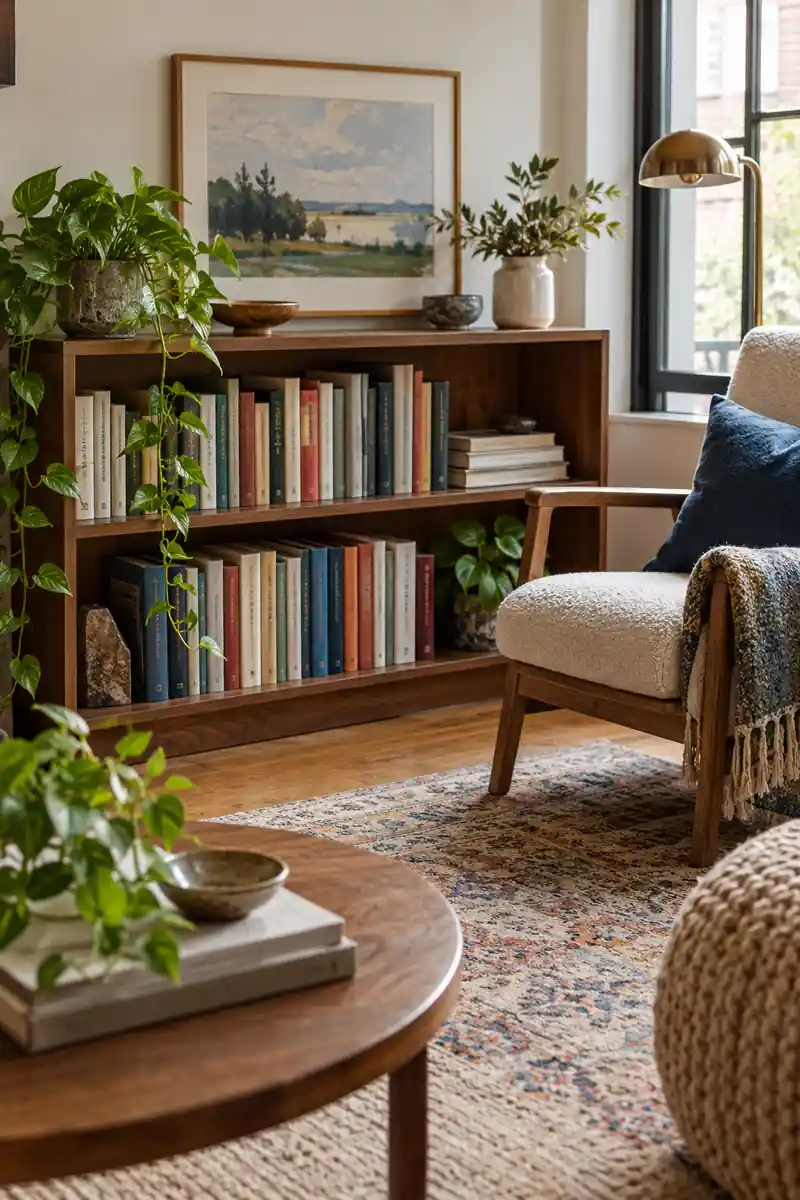
Books add personality when they belong to your reading life. Keep the titles you use within easy reach, and sort them in a way you understand. You might group by subject, author, or the order you hope to read them, rather than rearranging everything purely for color.
Varying a few upright rows with a horizontal stack can make a shelf feel relaxed. Keep the stacks low enough to handle easily, and leave space to remove a book without disturbing the whole display. A room should invite you to pick things up, not make your interests feel like untouchable decoration.
10. Make Hobbies Look At Home
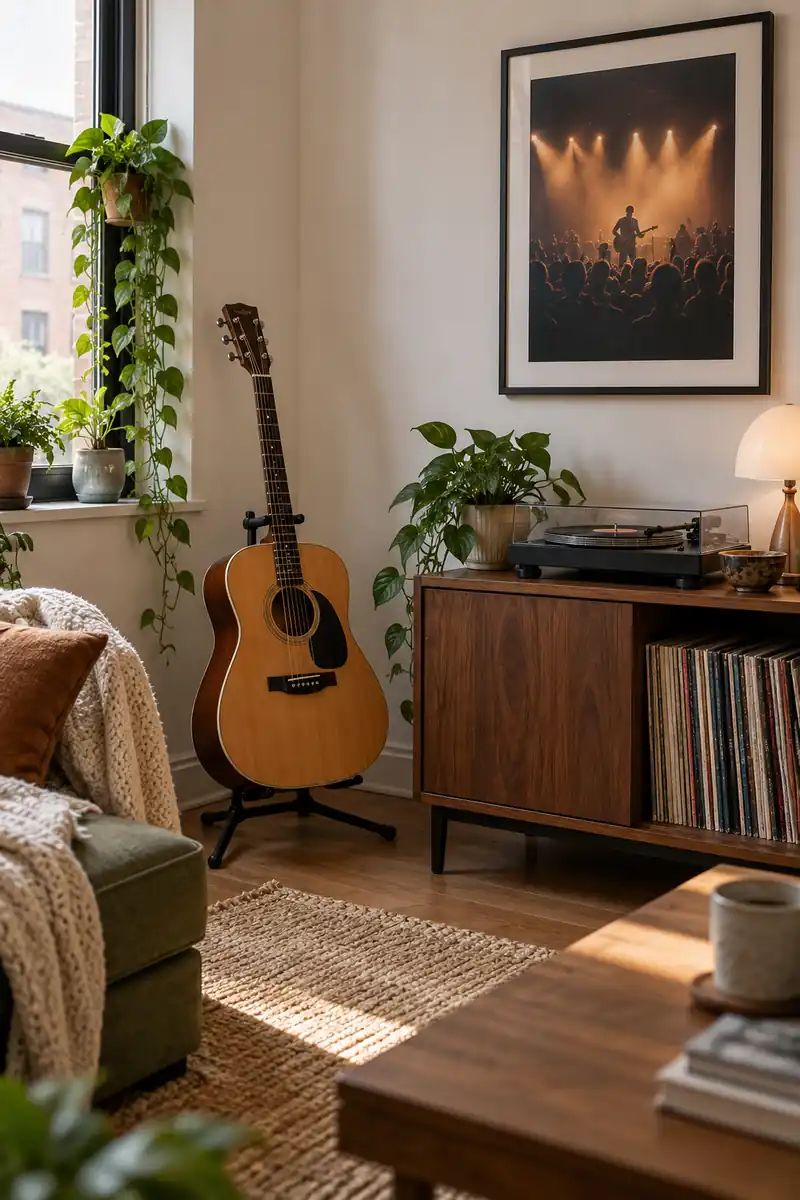
- Choose one hobby to make visible.
- Give its equipment a stable resting place.
- Store the smaller accessories together.
- Keep the activity easy to begin.
A guitar, camera, or sketchbook can tell a more interesting story than a generic decorative object. Show the part you enjoy seeing and store the loose supporting pieces nearby. The arrangement should still suit the equipment. Follow its care guidance, and avoid a display spot that makes regular use awkward.
11. Layer Different Textures
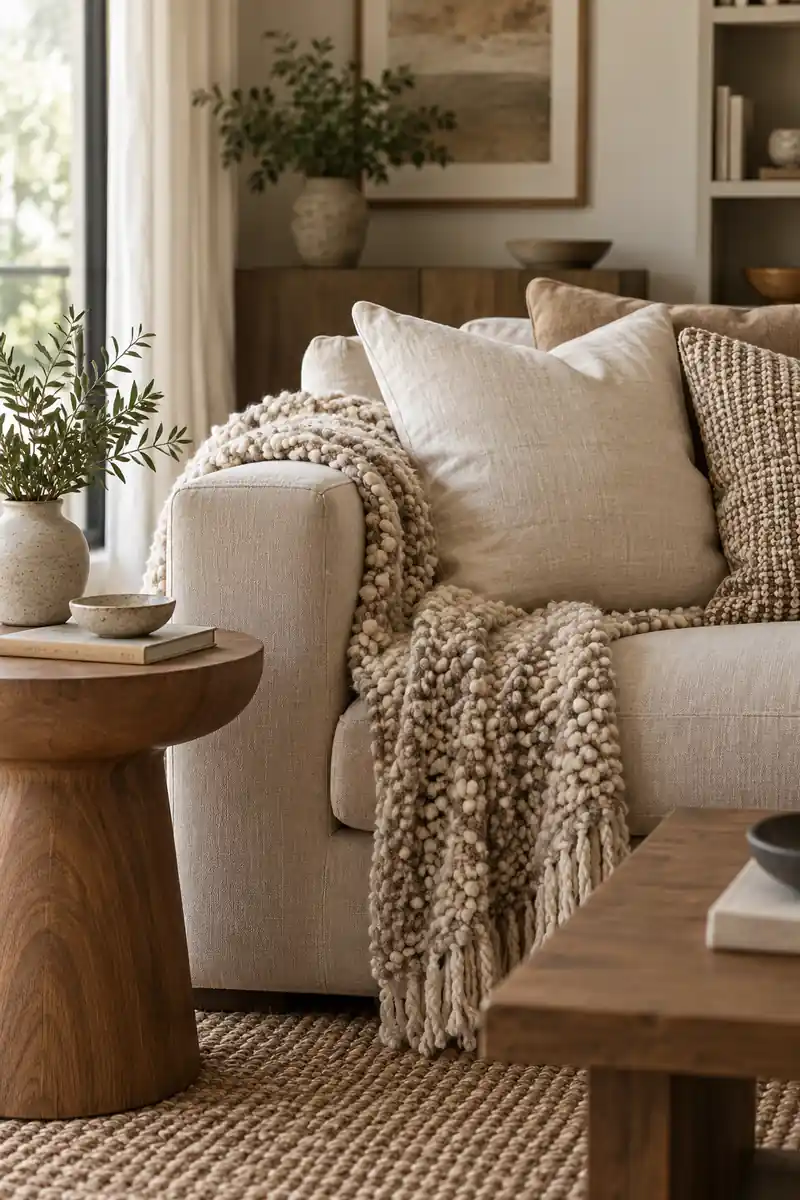
Quick tip: When the colors already work but the room feels flat, change the surface quality before adding another color. A rough weave beside smooth wood can create enough contrast on its own.
Try combining a smooth surface, a soft fabric, and something with a visible weave. You do not need all three on every table or chair. Spread them across the room so each adds a different feeling. Keep the touchable textures where you can actually enjoy them during ordinary daily use.
12. Choose A Metal Lead
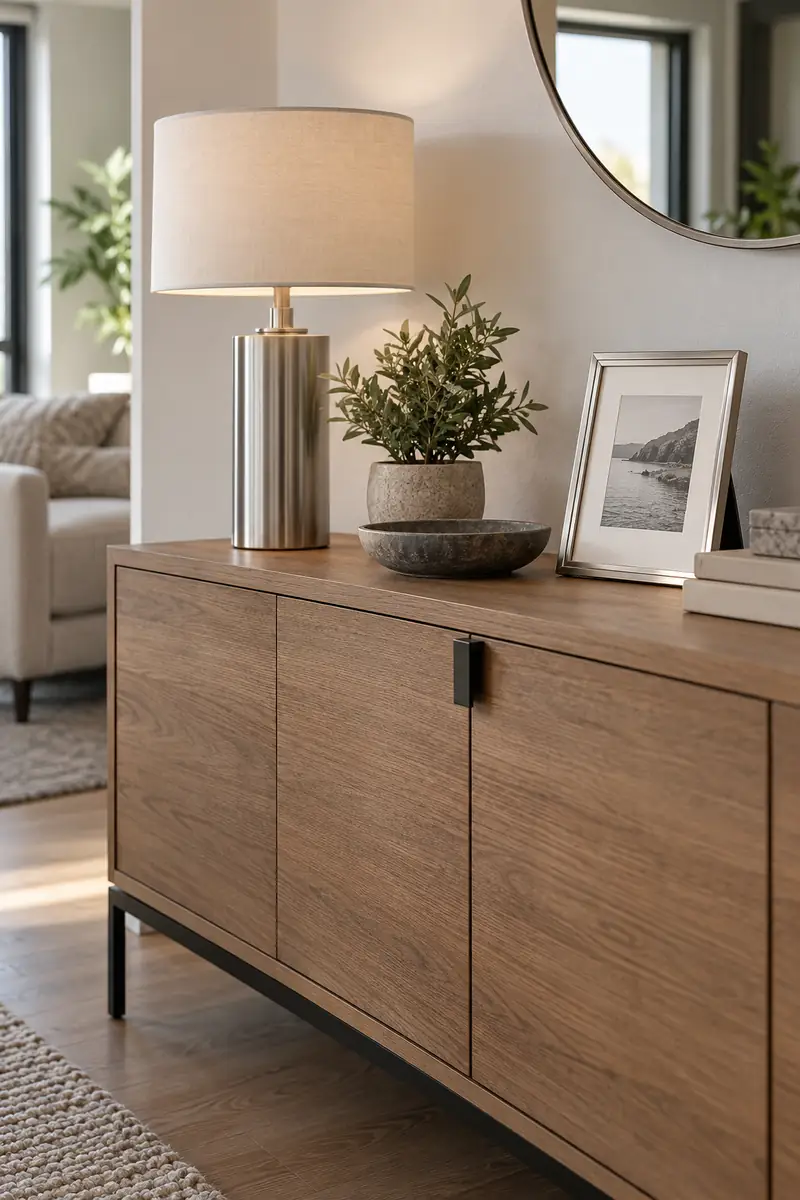
Before: Several metallic finishes appear in equal amounts on lamps, frames, and small objects. Each detail calls for attention without a clear leader.
After: One finish becomes the main thread. A smaller contrasting detail remains, giving the arrangement variety without making every object compete.
Choose the finish that already appears most often in the pieces you plan to keep. Repeat it in a few visible places, then let the other metals play smaller roles. There is no need to replace useful hardware to force agreement. A calm distribution matters more than a perfect match.
13. Keep The Sofa Usable
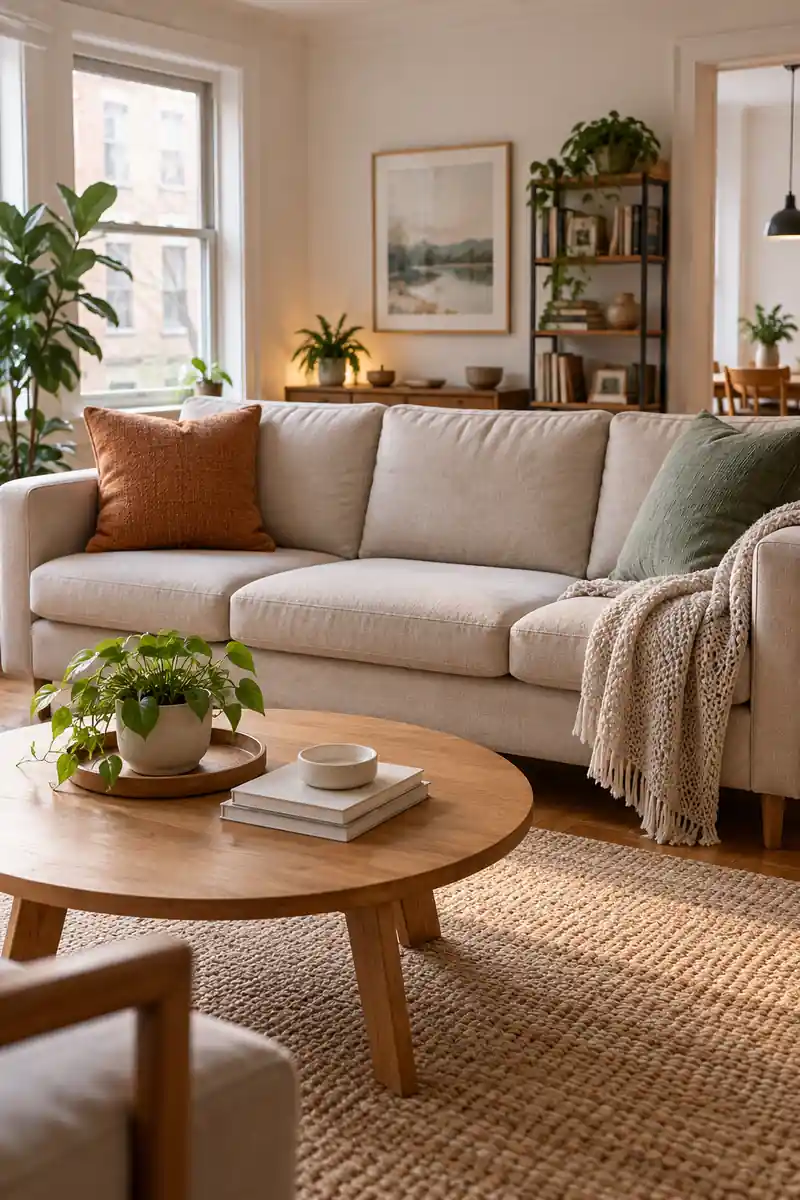
- Sit down before arranging cushions.
- Keep support where your body wants it.
- Fold a useful throw within easy reach.
- Remove anything you always put on the floor.
A styled sofa still needs to be a comfortable place to sit. Two well-chosen cushions may do more than a row that takes up the whole seat. Let the fabric colors connect to the room, then judge the arrangement by everyday use. Constantly moving accessories is a sign to simplify.
14. Compose A Quiet Shelf
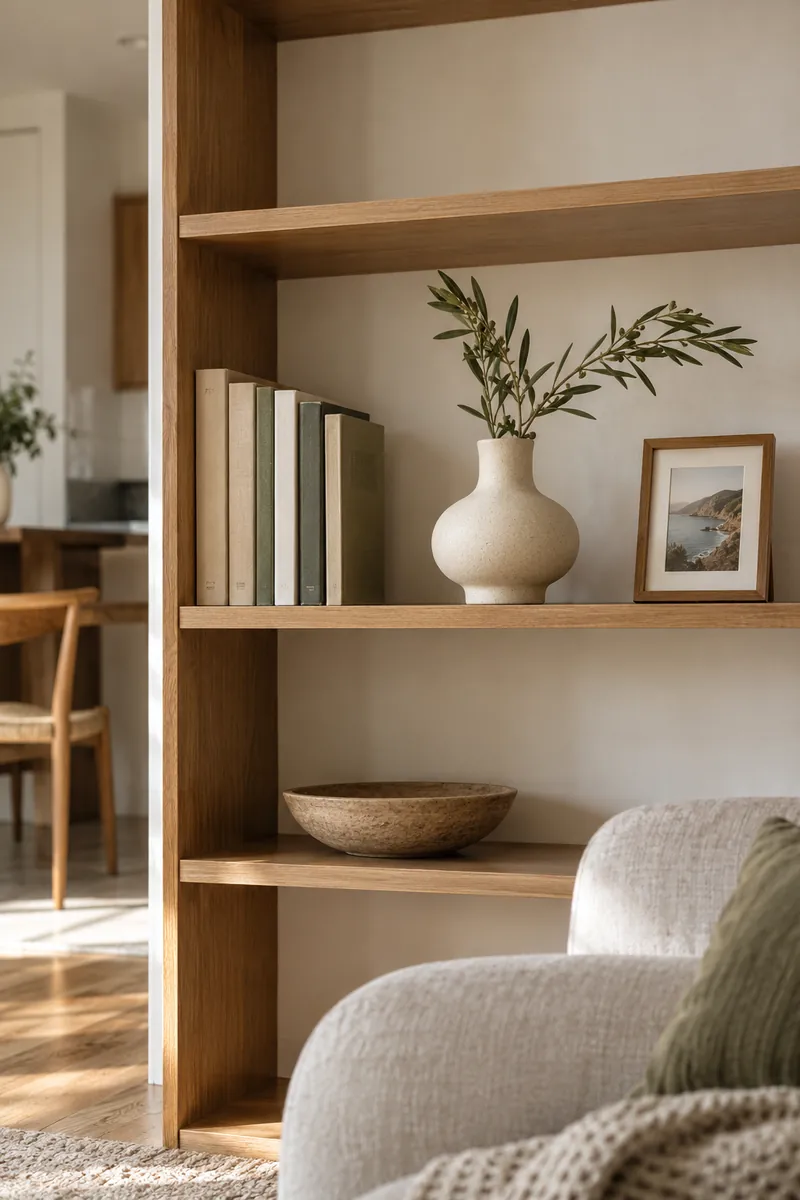
Three small groups
Layout: Separate books, a frame, and one object.
Effect: An easy rhythm with pauses between groups.
Best for: A longer shelf with varied belongings.
One main group
Layout: Gather a few related pieces at one end.
Effect: A quieter display with more open space.
Best for: A short shelf or visually busy wall.
A shelf does not need decoration across its full length. Choose an arrangement that respects the objects you have and the wall around them. Vary height without hiding everything at the back. Then check from your usual seat, because a composition that looks good close up may feel crowded across the room.
15. Echo Shapes Across Rooms
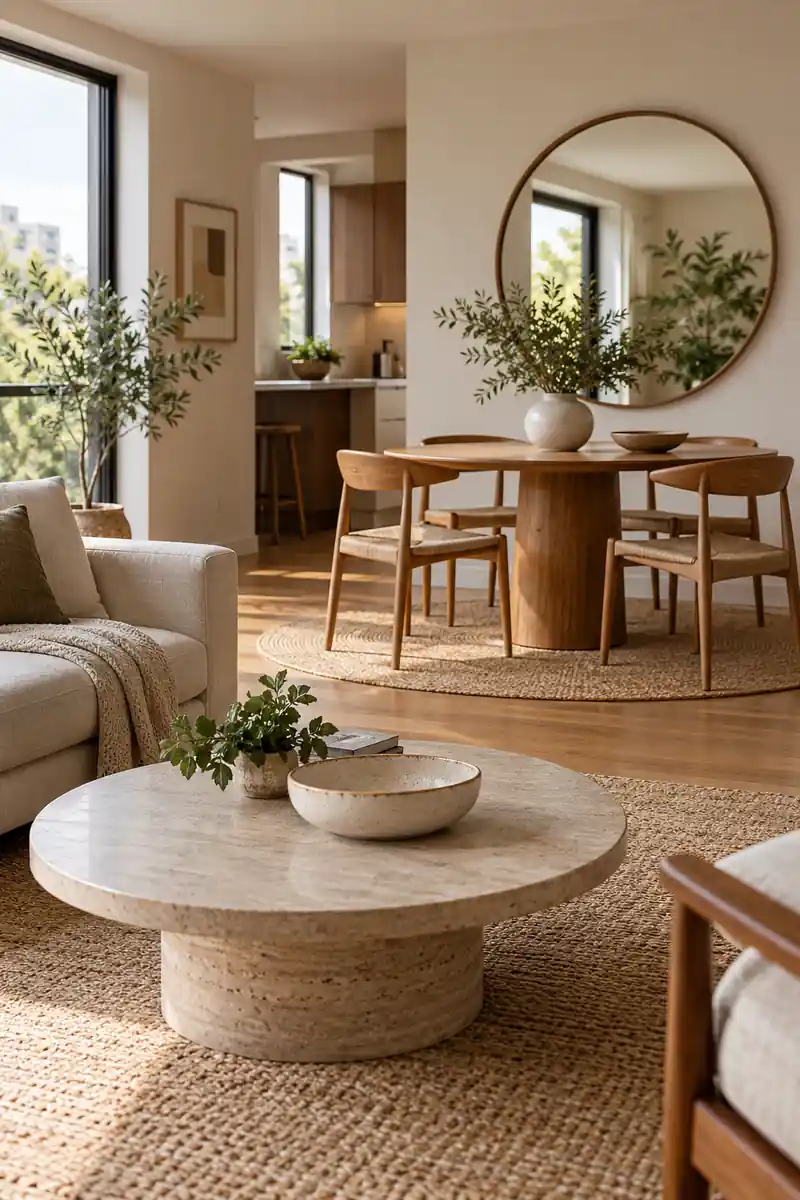
Do
- Repeat a shape at different sizes.
- Let functional furniture lead the choice.
- Keep some contrasting lines for variety.
Don’t
- Buy objects only because they match.
- Repeat the same shape on every surface.
- Force curves into an awkward layout.
A repeated shape can connect pieces with different colors or materials. A round mirror might echo a dining table, while a small bowl provides a quieter third note. Keep the connection loose. The pieces should still earn their places individually, so the room feels collected rather than arranged around a rule.
16. Plan Evening Atmosphere
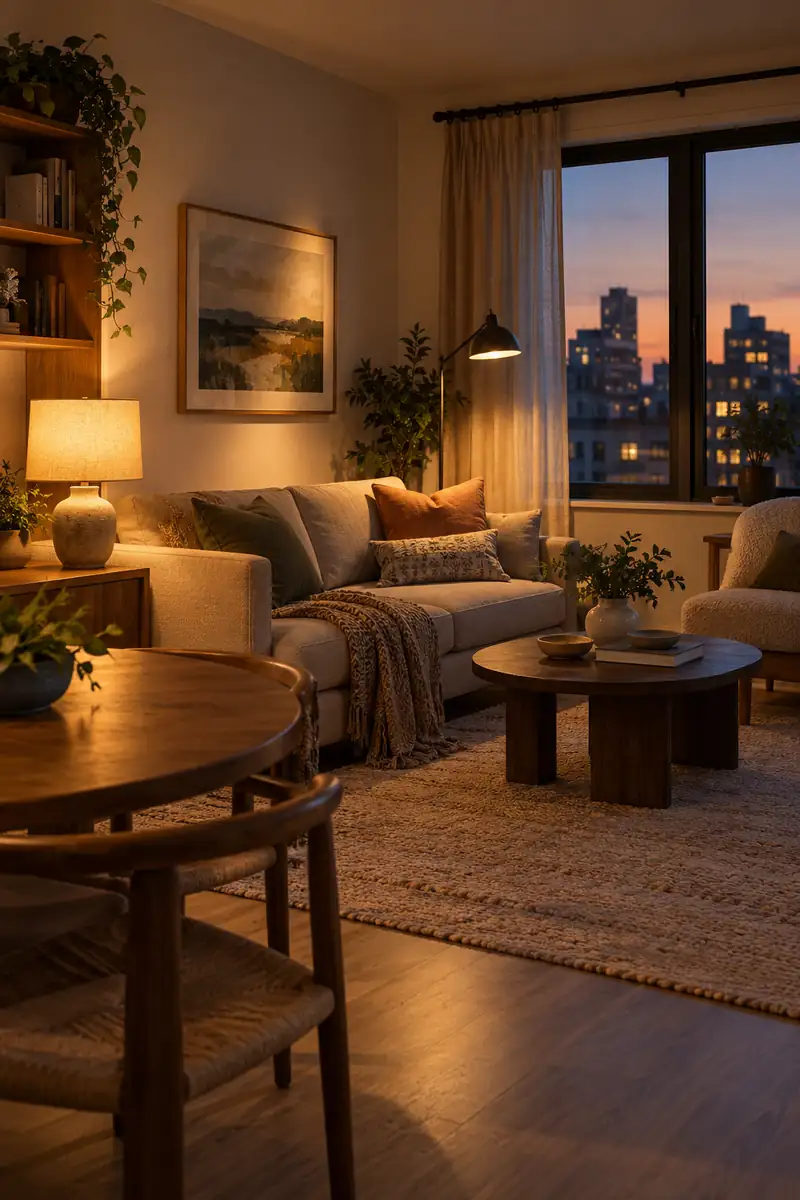
- Main seat: A comfortable pool of light for relaxing.
- Reading spot: Focused light where you need to see detail.
- Background: Enough light to keep nearby areas visible.
- Cables: A planned route close to walls and furniture.
Check the room after sunset before deciding it needs more decoration. Lighting changes which colors and textures you notice. Try the lamps you have in different positions, with cords kept clear of walking routes. A useful balance of light can make an unfinished corner feel settled without adding more small objects.
17. Let Everyday Objects Contribute
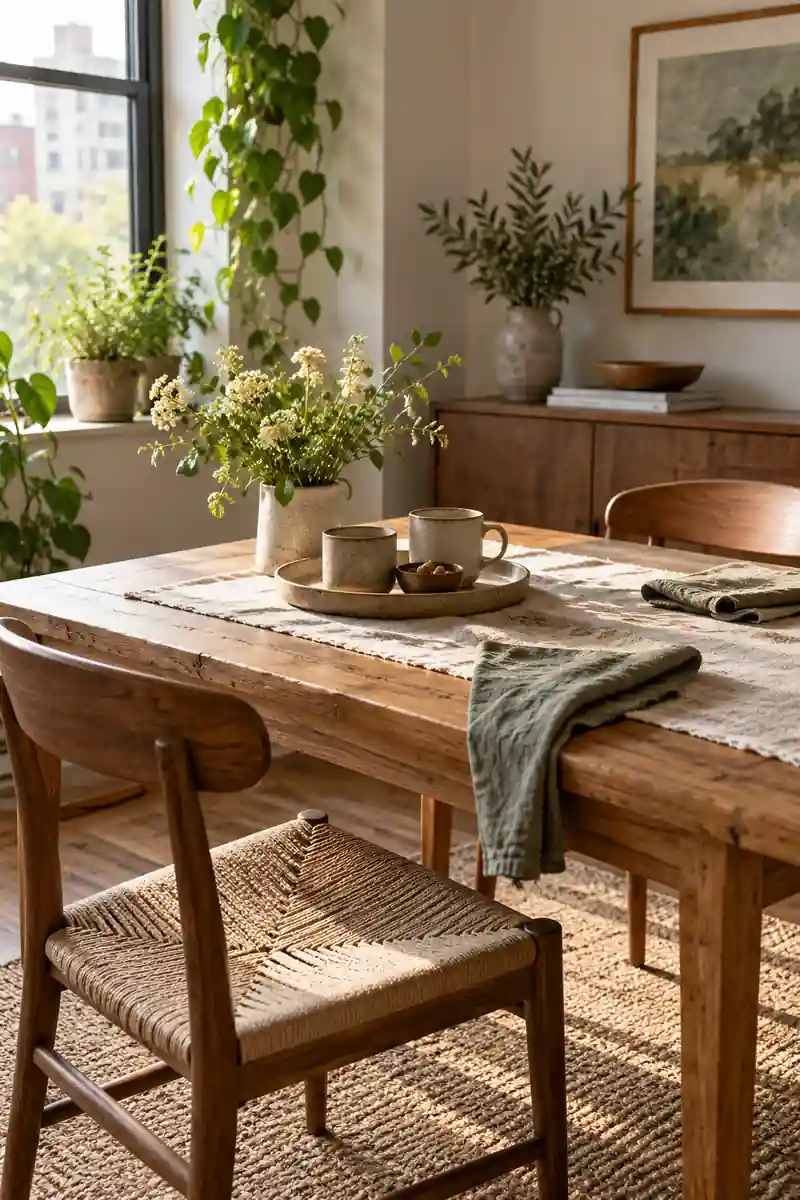
The objects you use every day are part of the room’s appearance. Mugs, napkins, a fruit bowl, or a bedside water glass can contribute color and texture without becoming another layer of decoration. Choose a tidy place for them, then let their purpose be part of the appeal.
Avoid creating arrangements that take time to dismantle. A tray can gather useful items, but it should not make reaching them harder. The most convincing personal spaces show evidence of real life while keeping the surfaces workable. Think about what you enjoy using, as well as what looks good from the doorway.
18. Join Old And New
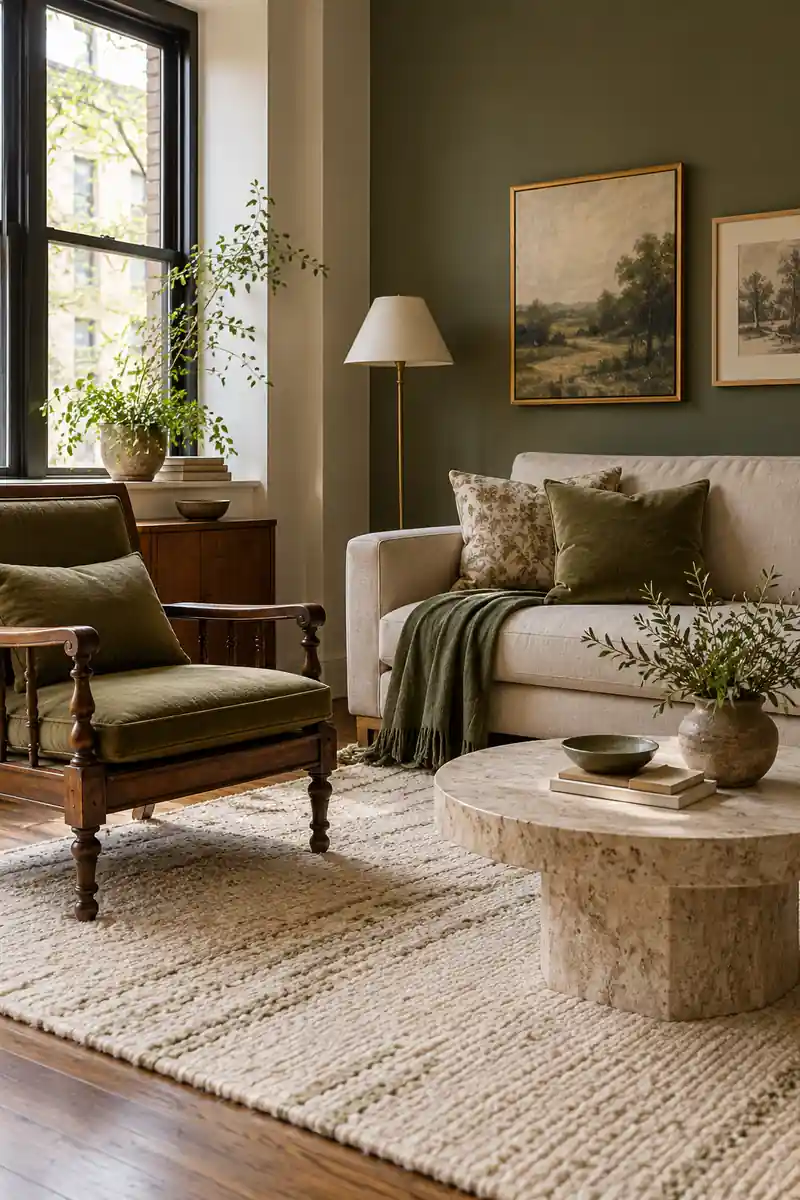
- Keep the older piece you genuinely enjoy.
- Identify its strongest color or material.
- Echo that detail in the newer furniture area.
- Let the different eras remain visible.
A vintage chair and a simple contemporary sofa can belong together when one detail connects them. That link might be an olive fabric or a shared wood undertone. You do not need to disguise the age difference. The contrast can make the room more personal than furniture chosen from one set.
19. Edit From The Doorway
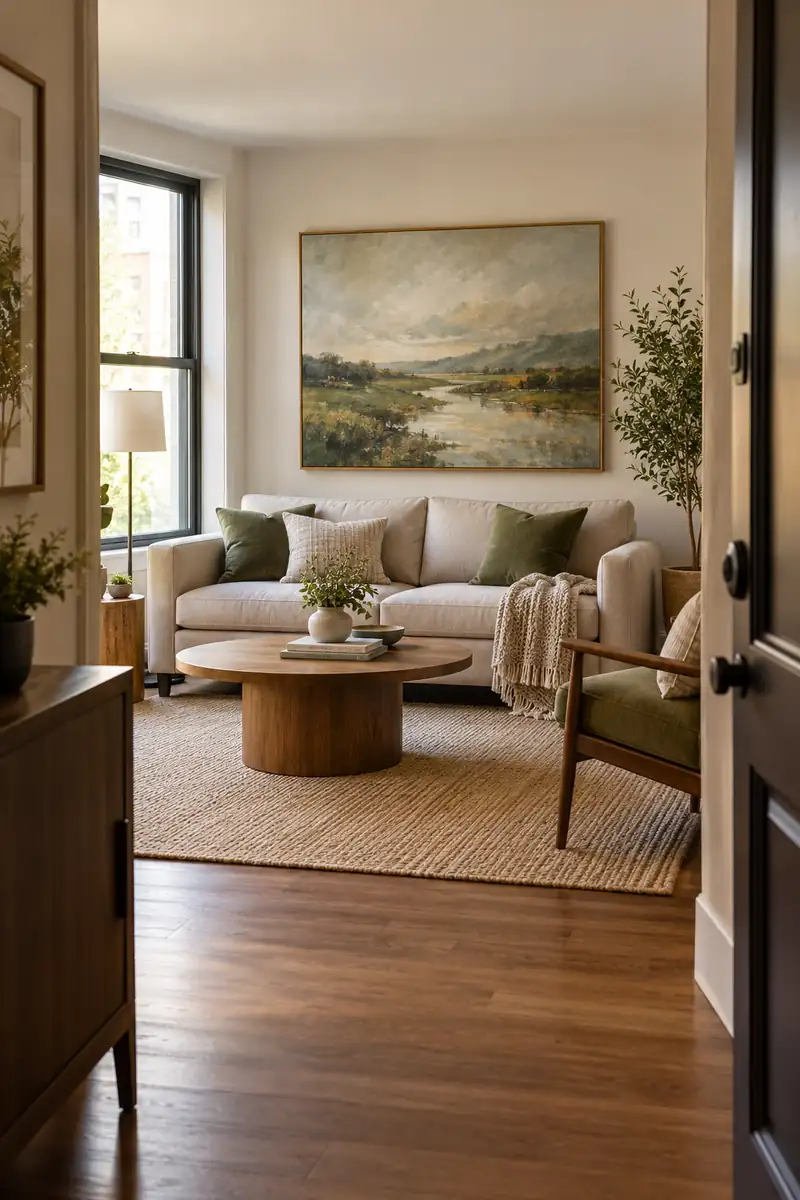
Quick tip: Take a photo from the doorway and look at it small on your phone. This makes the strongest shapes and busiest areas easier to notice without getting distracted by individual objects.
Choose one area to quiet down before adding anything else. You might clear the coffee table, move a competing picture, or gather scattered accessories into one group. Then take another look. This last edit helps your favorite pieces stand out and gives the whole apartment a clearer sense of purpose.
Frequently Asked Questions
Does a bachelor apartment need dark colors?
No. Light, colorful, earthy, and dark rooms can all work. Choose colors you enjoy and account for the existing floor, furniture, and light. The useful goal is a connected palette that feels good to you.
How do I make mismatched furniture work?
Look for a detail you can repeat, such as a wood tone, fabric color, or rounded shape. Give one element a leading role, then repeat it in smaller amounts. Leave enough variation for the pieces to keep their character.
What should I style first?
Start with the room’s most noticeable piece or the area where you spend the most time. A sofa and its surrounding art, rug, and lighting often provide a useful starting point. Build outward once that group feels settled.
How much decor is enough?
Enough to show your taste while leaving furniture and surfaces easy to use. If you regularly move decorative objects to sit, work, or eat, simplify that area. Empty space can help the meaningful pieces look more deliberate.
Conclusion
If you are deciding how to style a bachelor apartment, begin with one piece you love and let it guide a few related choices. Repeat colors loosely, mix textures where you can enjoy them, and make space for the books, art, and hobbies that belong to your life. Then edit the room from the doorway and from the seat you use most. You do not need to finish every corner at once. A cohesive apartment can grow over time as long as new additions support what is already working. The best result feels personal, comfortable, and easy to live with.
Community
Join the conversation
Add a useful idea, ask a specific question, or share what worked in your space. Every comment is reviewed before it appears.