
A studio apartment with no closet needs a few dependable homes for clothing, shoes, and household extras. Start by separating what you hang from what you fold, then give the items you use most the easiest places to reach. This guide creates storage where no built-in closet exists, using furniture, containers, and a little planning. Measure furniture with its doors and drawers open, and preserve access to windows, vents, the kitchen, and the bathroom. Check your lease before attaching anything to the building. Furniture that requires anchoring still needs the manufacturer’s installation, with landlord permission where required. Choose suitable low alternatives when that installation is unavailable. These concept illustrations show possibilities rather than measured plans or promises that an arrangement will fit.
1. Low Clothing Chest
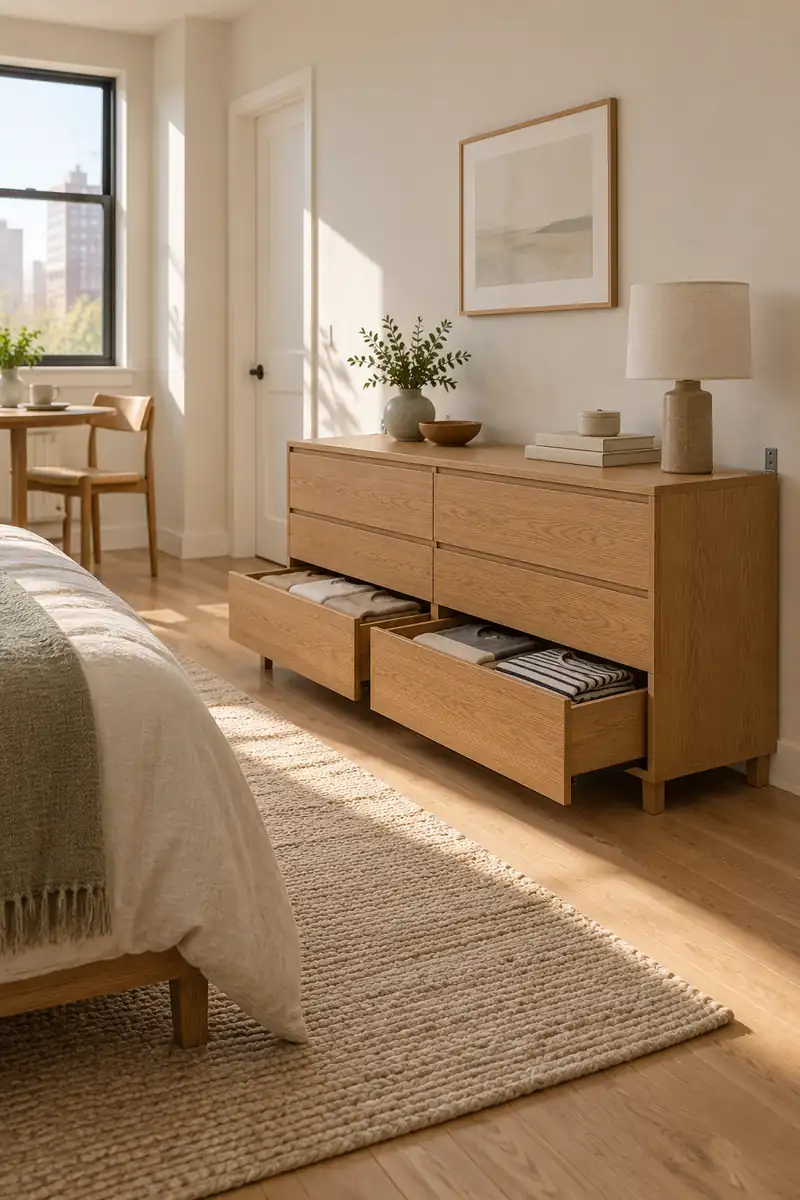
A low clothing chest gives folded pieces a permanent address while leaving the upper wall visually quiet. Sort shirts, trousers, and sleepwear into separate drawers before choosing its size. A broad top can hold a small catchall, but resist turning it into another layer of clothing storage.
Check the drawer extension against your walking route, including the space you need to stand in front. Follow the maker’s anchoring instructions even for a low unit, with required landlord permission. The CPSC furniture anchoring guidance explains why appearance alone cannot tell you whether furniture might tip.
2. Underbed Storage Drawers
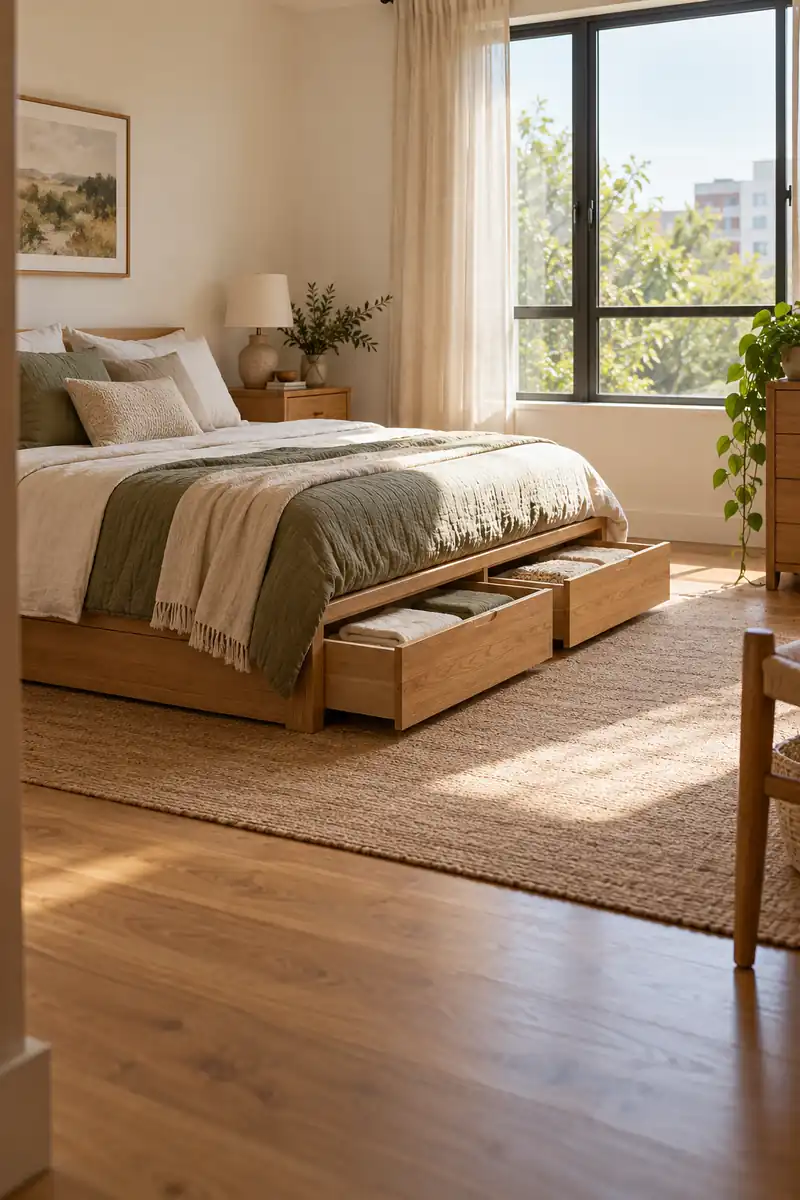
- Measure the clear opening beneath the bed frame.
- Choose drawers made for that bed or suitable low containers.
- Keep spare sheets together in one drawer.
- Leave enough floor space to pull everything out.
Underbed drawers work best for belongings you need regularly but do not want on display. Check the center support legs before buying containers, since they can divide the available space. Smooth handles make access easier. Avoid forcing overfilled drawers under the frame or interfering with any moving bed mechanism.
3. Daily Clothing Rail
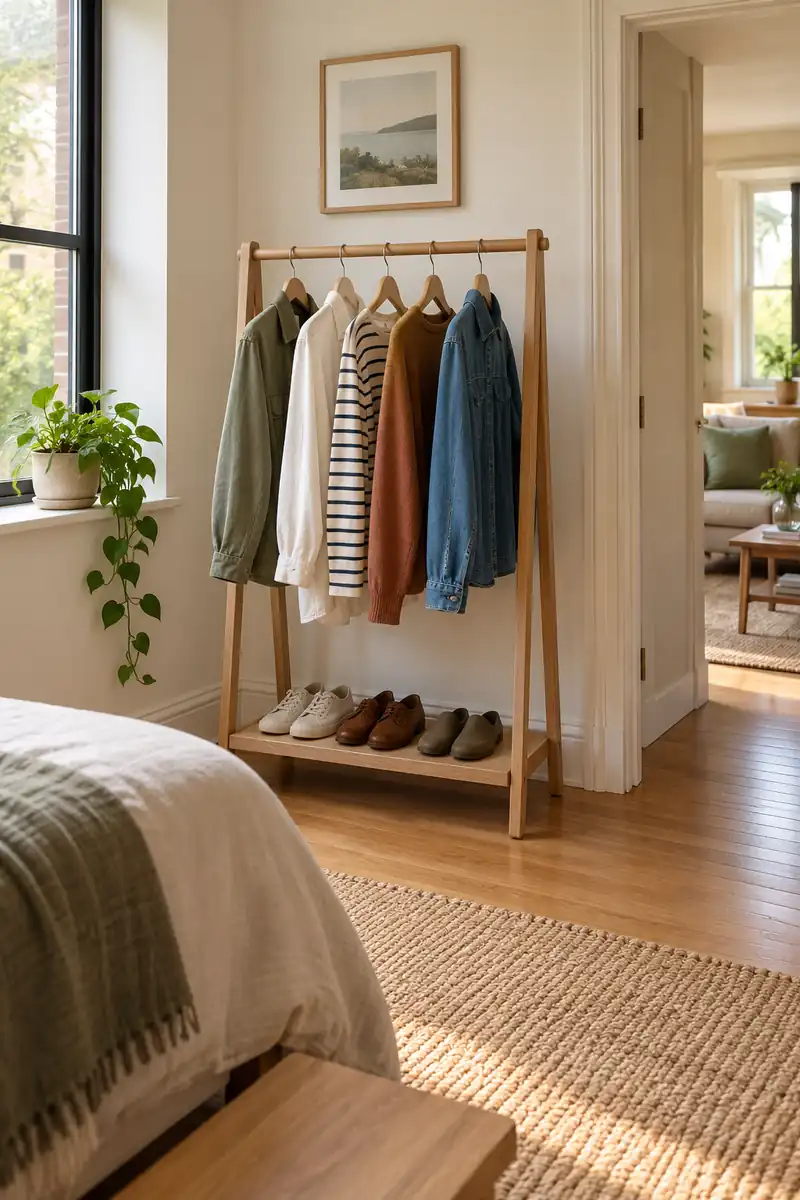
Quick Tip: Keep the rail focused on clothes you actually wear this week. Leave space between hangers so choosing an outfit does not disturb everything beside it.
A stable clothing rail can supply the hanging space that the apartment lacks. Choose a purpose-built model with a broad base and follow its load limit. Spread garments evenly across the bar. Keep bags off the ends, and position the rail against a quiet wall outside the main route.
4. Covered Garment Rack
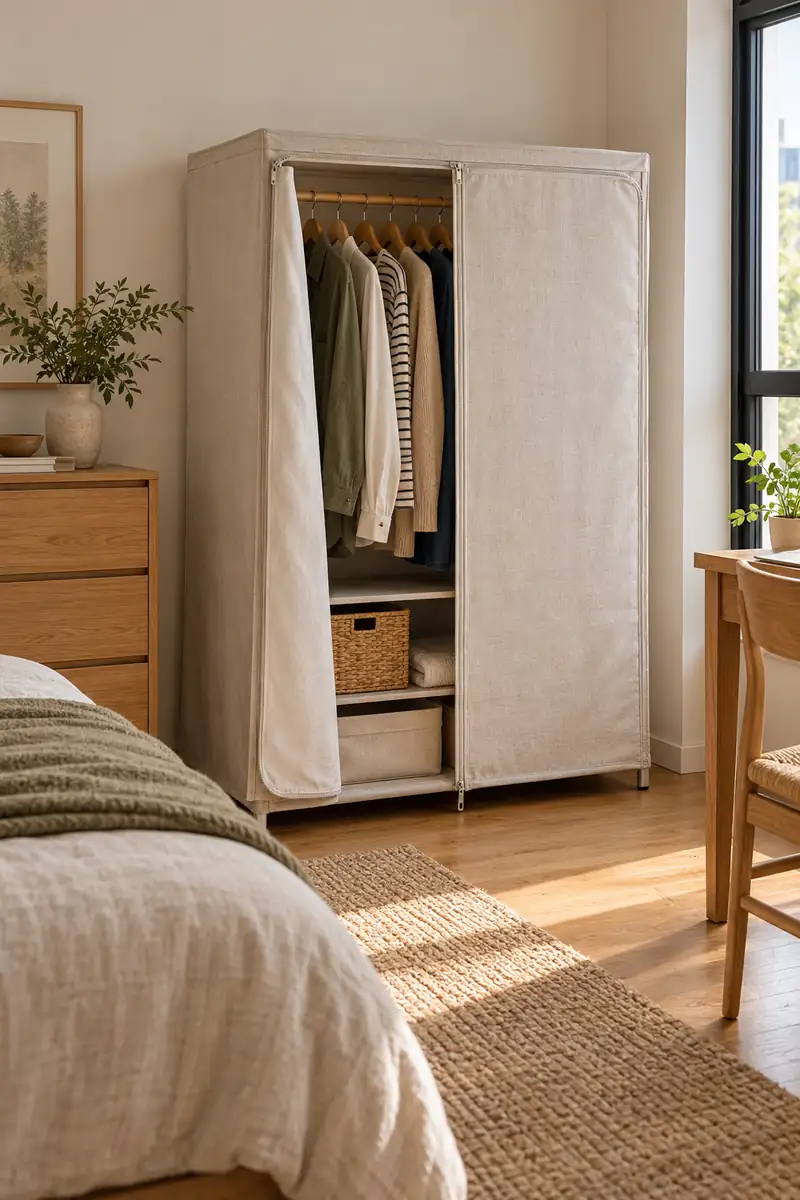
BEFORE: An open rail holds every coat, shirt, and spare tote. The varied shapes become the first thing you see from the sofa.
AFTER: A fitted cover gathers the same storage into one quieter outline. A small front opening keeps everyday clothes easy to reach.
Choose a covered rack designed as a complete unit rather than draping fabric over improvised supports. The cover should open without dragging on the floor or catching nearby furniture. Keep the contents within the rated load, allow garments to dry fully before storing them, and follow the product’s care instructions.
5. Storage Bed Base
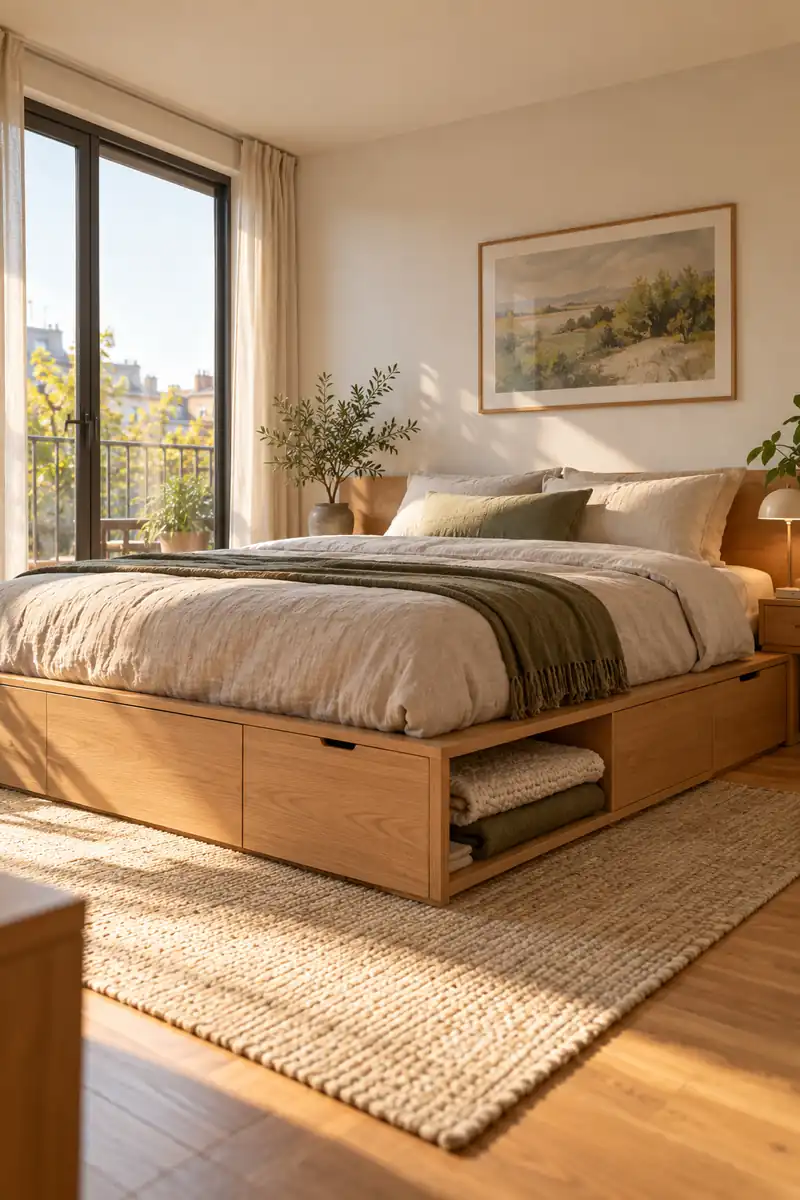
- List the belongings you would keep inside the bed.
- Compare the actual internal storage dimensions.
- Check how each compartment opens in your room.
- Follow assembly instructions and keep moving parts unobstructed.
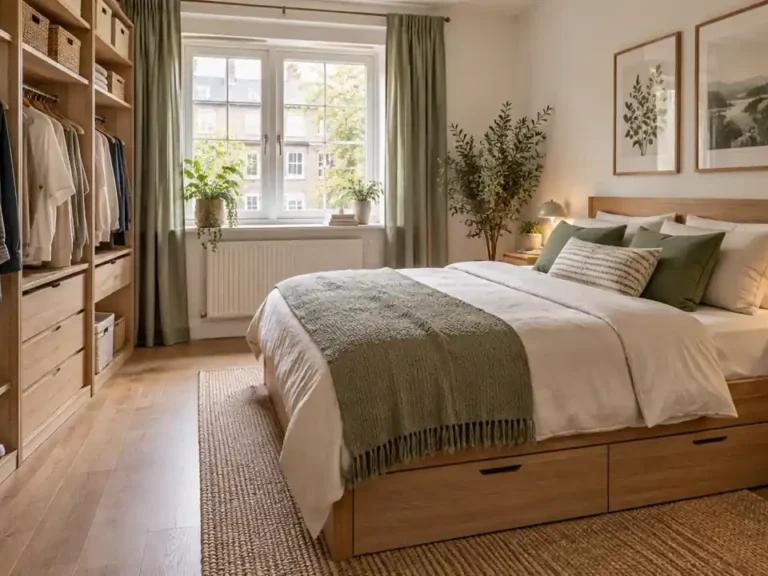
A storage bed can replace several separate containers with one planned furniture footprint. Side drawers suit rooms with open floor beside the mattress, while other mechanisms need their own clearance. Compare the bed’s everyday operation before choosing a style. Store belongings neatly so nothing catches in runners, hinges, or support hardware.
6. Sofa Drawer Storage
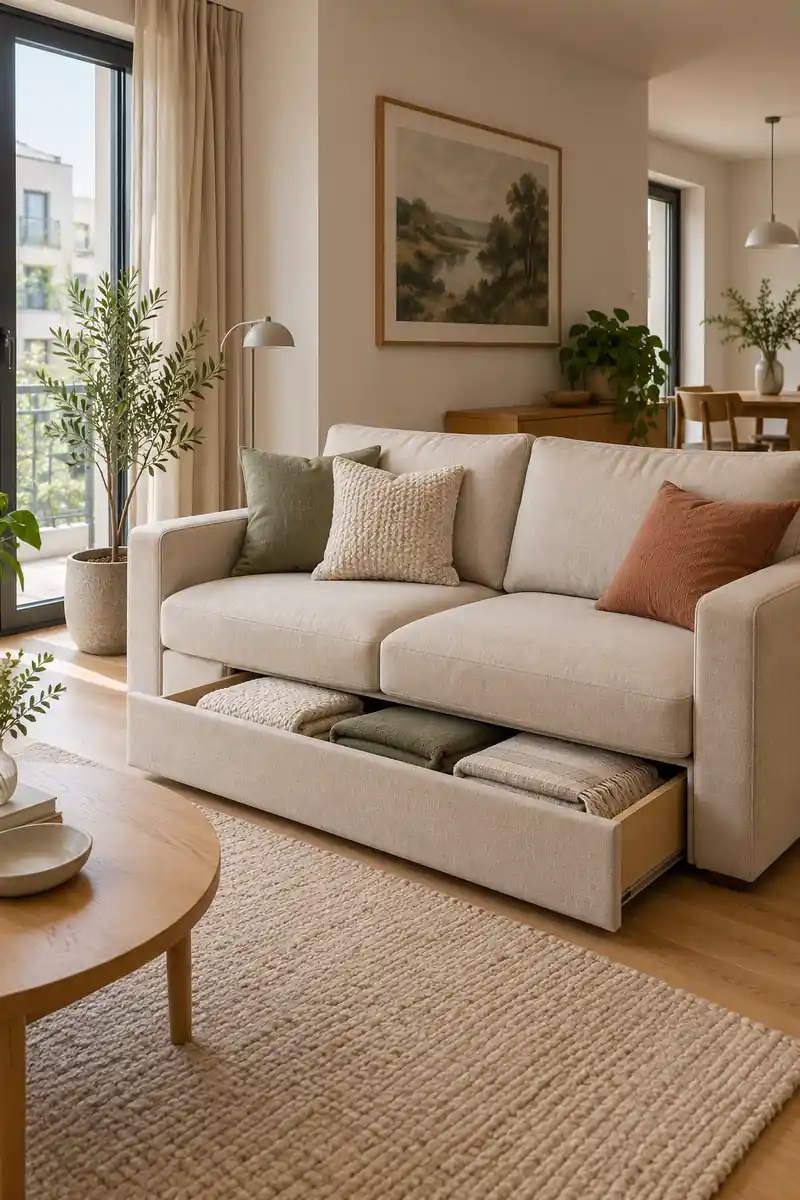
| Detail | Sofa drawers | Separate low boxes |
|---|---|---|
| Access | Built into the sofa base | Slide from an open base |
| Appearance | Matches the furniture | Depends on visible containers |
| Best fit | A planned sofa purchase | A compatible existing sofa |
Storage below the sofa suits occasional throws, spare pillow covers, or simple game supplies. Use only the space the furniture actually provides. Do not pack objects around reclining mechanisms, wiring, or structural supports. If you are replacing furniture anyway, these studio apartment furniture ideas can help you compare useful functions.
7. Ottoman Linen Station
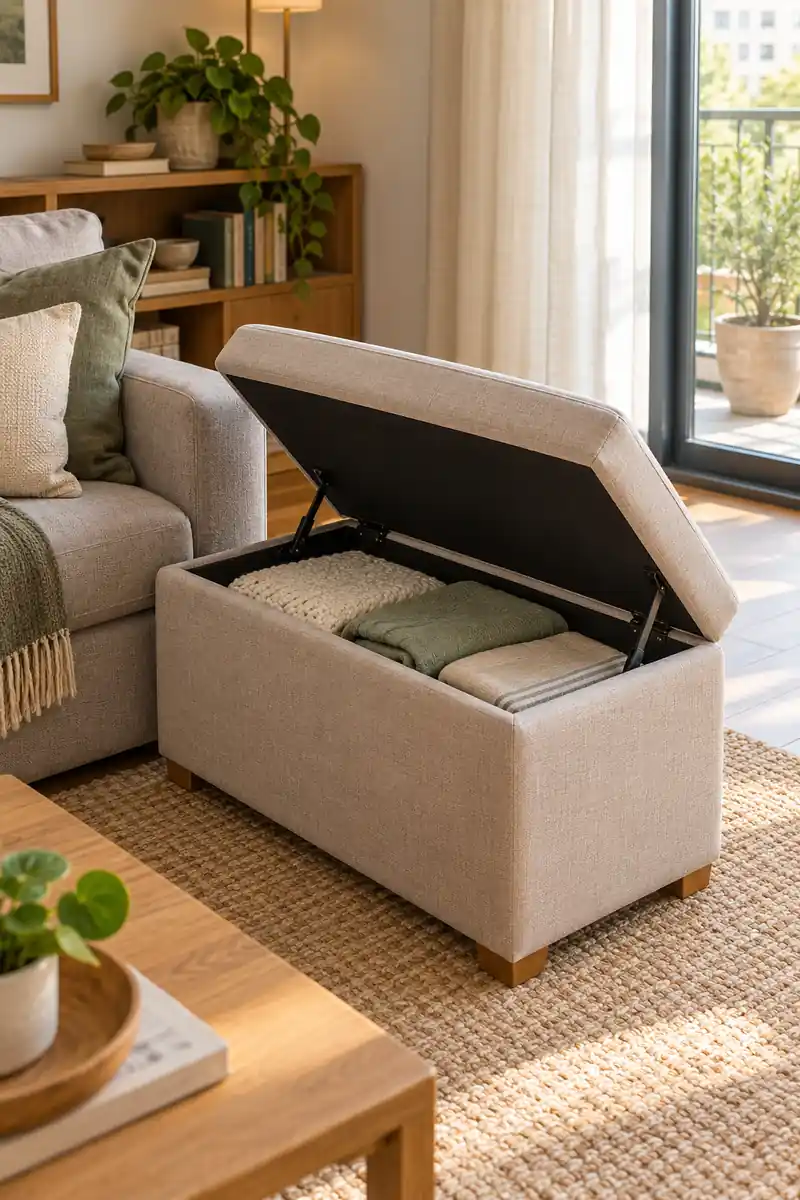
DO
- Choose a purpose-built storage ottoman.
- Check the lid or hinge instructions.
- Store soft, lightweight linens inside.
DON’T
- Balance an unsecured lid against the sofa.
- Overfill the compartment until it cannot close.
- Assume every ottoman is rated for seating.
An ottoman can collect bedding while adding a soft shape to the living area. Its value depends on easy access, so leave room to open it without moving half the room. Follow the maker’s intended uses and safety instructions, and choose a location that preserves the route around nearby furniture.
8. Luggage Storage Nest
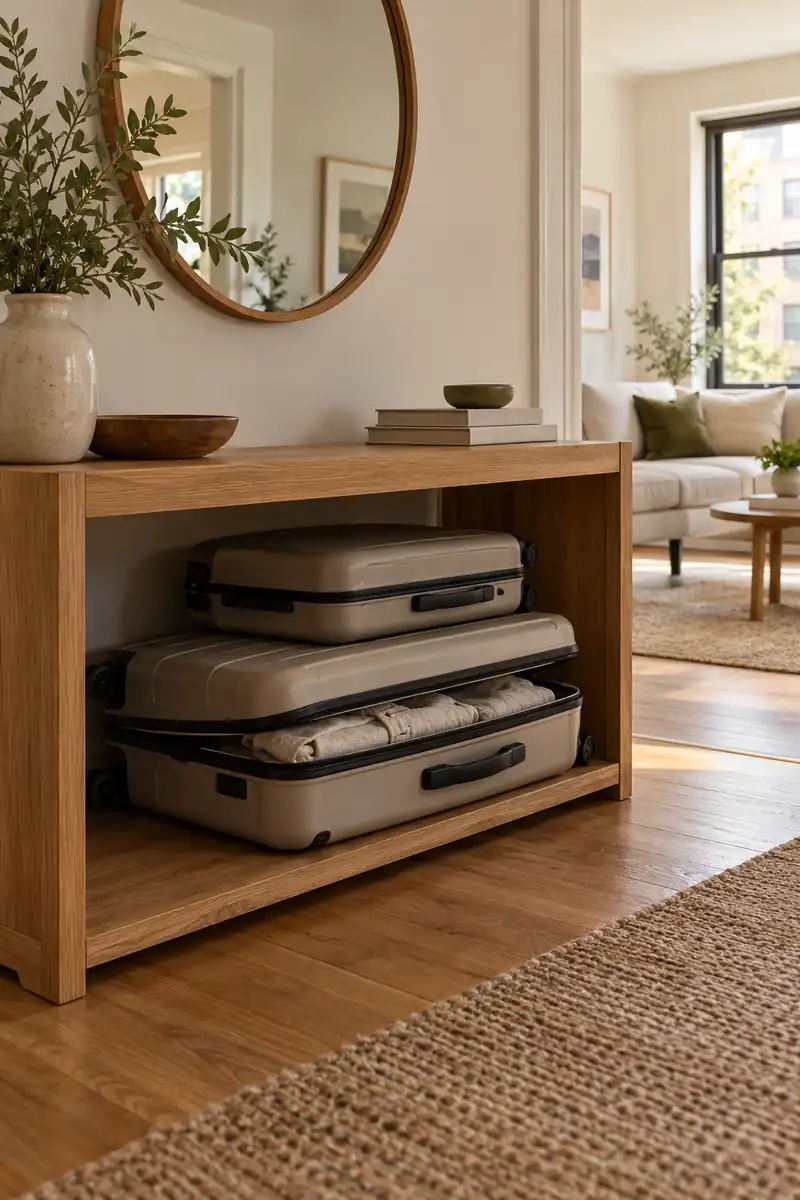
Best contents: Clean seasonal clothing in separate fabric bags.
Useful location: A dry low space beneath suitable furniture.
Easy retrieval: Handles face the room rather than the wall.
Simple limit: Avoid tall stacks of heavy cases.
Luggage already occupies space, so its interior can hold a small amount of seasonal storage between trips. Keep travel necessities in one removable pouch so packing remains straightforward. Store only clean, completely dry textiles, and avoid packing a case so tightly that you forget or cannot reach what is inside.
9. Drawer Divider Grid
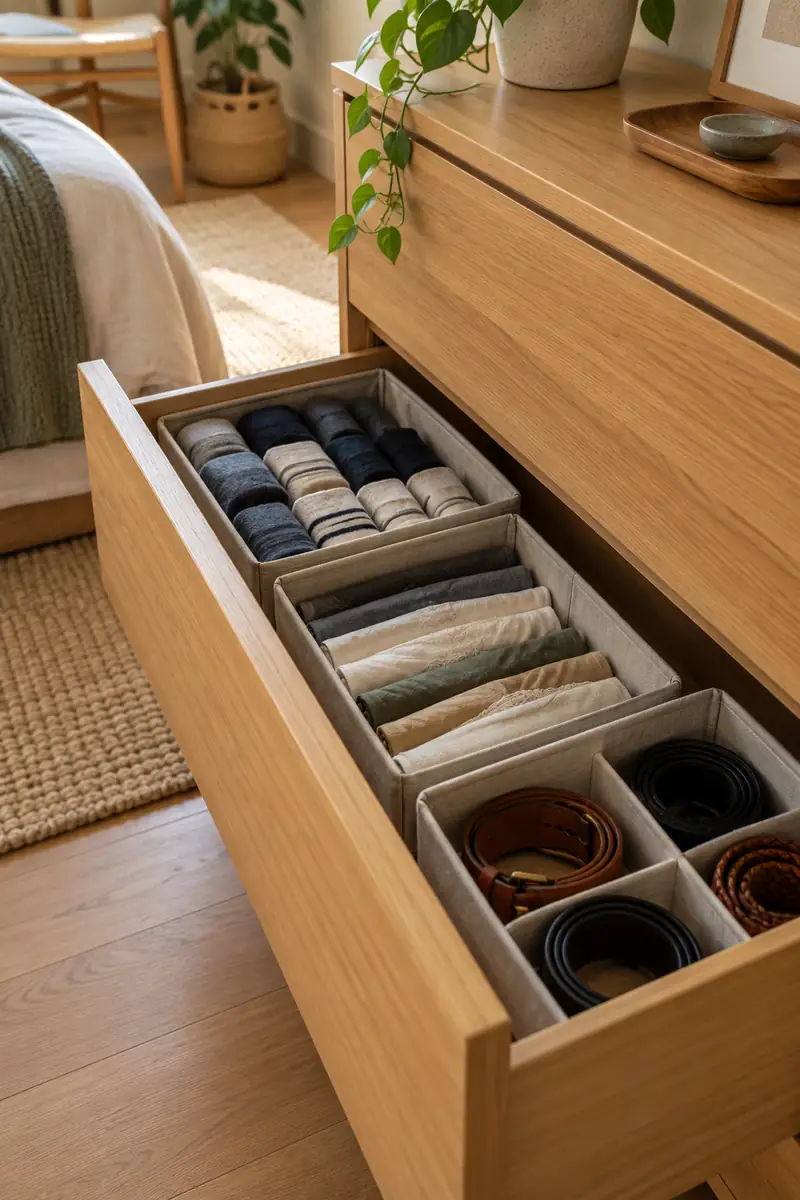
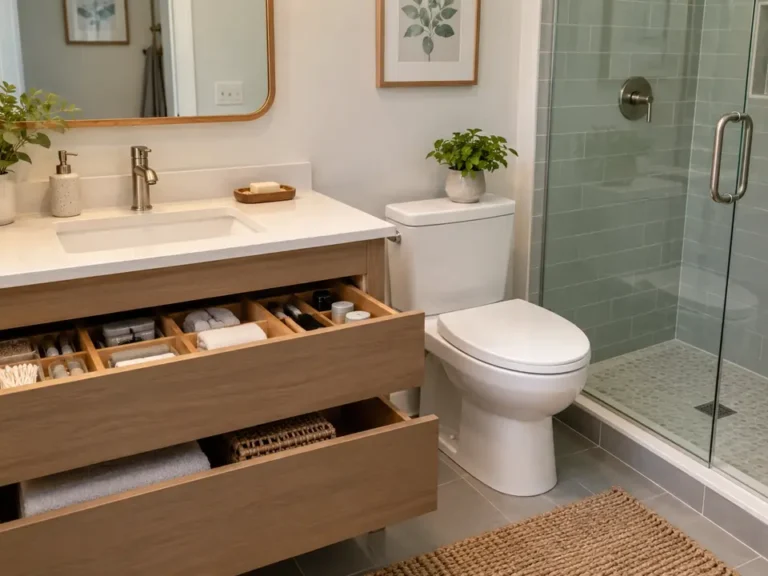
Drawer dividers help a modest chest hold more useful categories without becoming a jumble. Begin with the socks, underwear, and small accessories that tend to drift together. Soft boxes give each group a boundary while remaining easy to rearrange when your clothing changes between seasons or routines.
Measure the drawer interior rather than the front panel, and allow space below the closing edge. A tightly wedged organizer can make the drawer awkward to operate. Leave one compartment partly empty for laundry day, then remove any divider that makes putting clean clothes away feel unnecessarily fussy.
10. Matching Shelf Baskets

- Group one category in each basket.
- Choose handles you can grip comfortably.
- Measure the opening and the basket together.
- Keep heavier contents on the lowest suitable shelf.
Matching baskets can make open storage easier to read from across a studio. Use them for practical categories such as workout clothes, spare towels, or small household supplies. A low broad unit keeps access manageable. Secure furniture as its manufacturer requires, and avoid overloading either the baskets or the supporting shelves.
11. Entry Shoe Bench
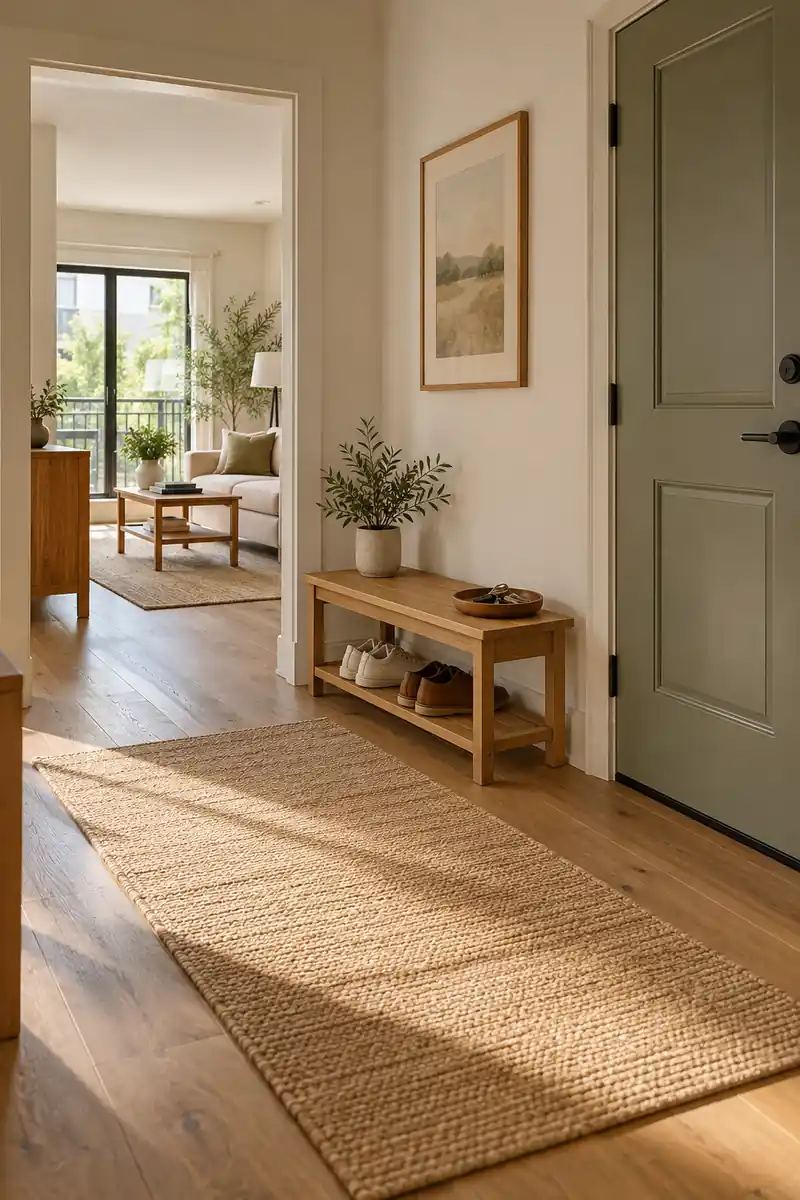
Quick Tip: Keep the bench focused on the shoes you wear now. Store less frequently used pairs elsewhere so the entrance stays easy to use.
A shoe bench gives the arrival routine a clear destination. Choose a stable piece intended for sitting, with a shelf or compartment below. Check the entry door at its full opening before deciding on placement. Keep shoes completely beneath the bench instead of allowing them to spread into the walking route.
12. Bedside Drawer Pair
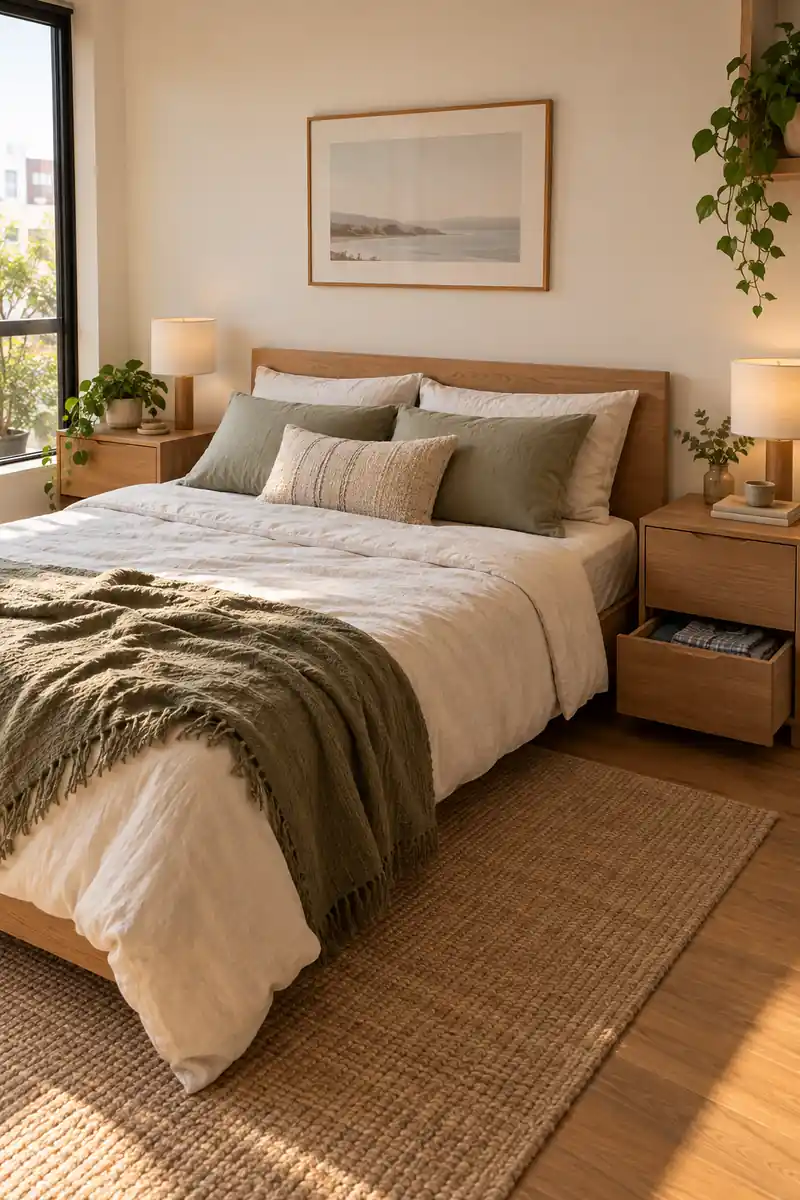
BEFORE: A bedside surface holds water, a book, and loose piles of clothing. Spare bedding has no consistent home.
AFTER: A low bedside cabinet contains sleepwear or a folded sheet set. The top keeps only the objects needed before bed.
A pair of compact bedside cabinets can distribute small clothing categories without creating one bulky storage wall. Check that drawers open comfortably from each side of the bed. Use the same category arrangement in both cabinets if you share the room, and follow the required anchoring and assembly instructions for each.
13. Low Storage Divider
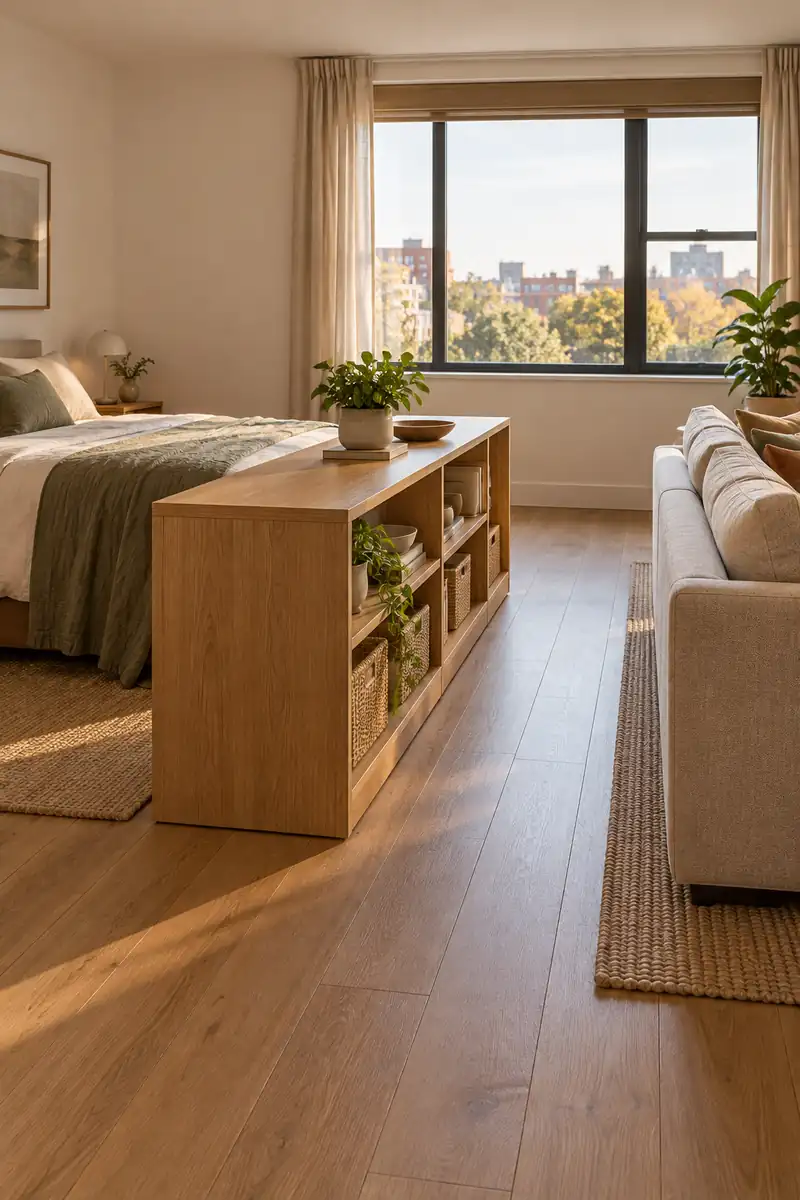
- Choose the bed edge that needs gentle separation.
- Measure the walking route around the proposed unit.
- Select furniture intended for that placement and installation.
- Keep its top clear enough to preserve the sightline.
A low storage divider can mark the sleeping area while holding folded clothing on the bed side. Confirm that its required anchoring works in the proposed location before buying it. If the manufacturer requires wall attachment, place it accordingly. Never treat heavy contents or adhesive strips as an alternative to proper restraints.
14. Laundry Sorting Corner
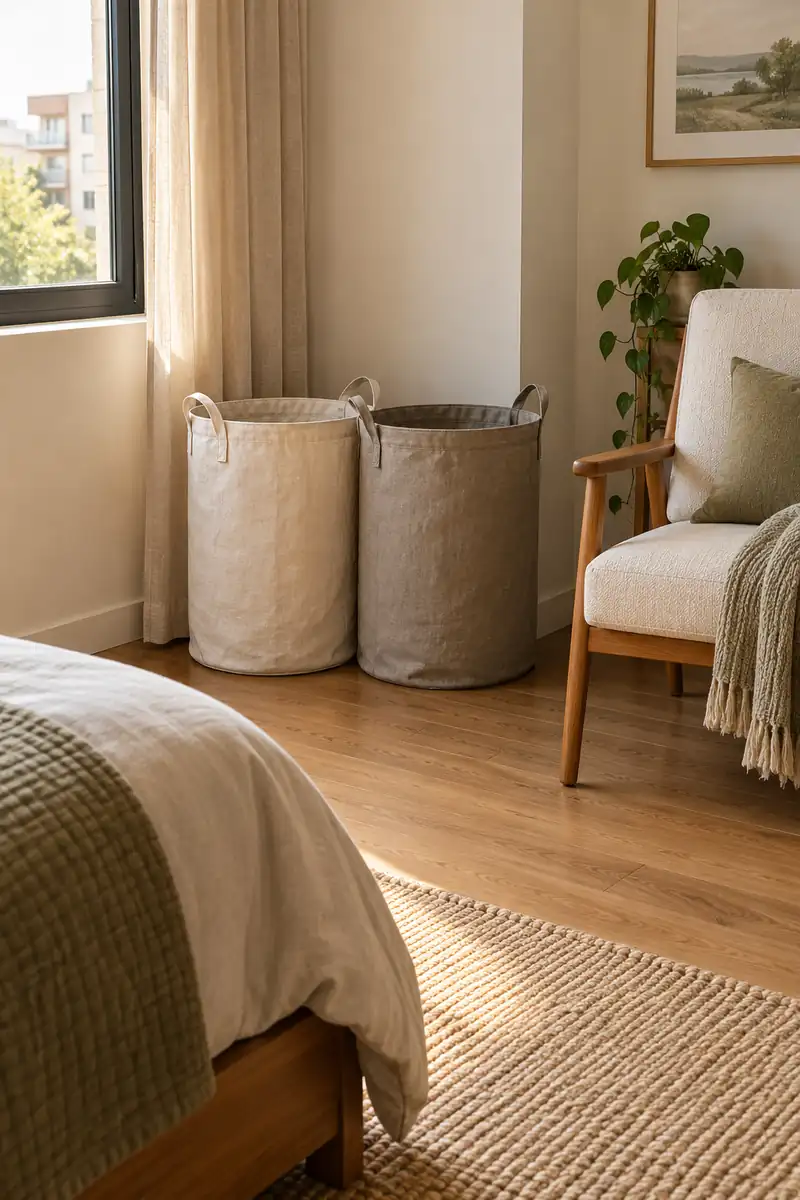
| Detail | One hamper | Two small hampers |
|---|---|---|
| Sorting | Sort on laundry day | Separate categories as you go |
| Footprint | One defined spot | Needs room for both |
| Carrying | One load container | Smaller separate loads |
Laundry deserves a planned place even when clothing storage is scarce. Choose washable containers that suit how you actually carry clothes to the machine. Keep damp items from sitting in a closed pile, and place hampers where they cannot block furniture operation. A simple system is easier to maintain than several narrow categories.
15. Freestanding Fold Station
DO
- Use a stable low surface for folding.
- Keep clean clothing separate from worn items.
- Clear the top after putting laundry away.
DON’T
- Use an unstable stack of storage boxes.
- Let the folding area occupy the hallway.
- Treat the bench as another permanent laundry pile.
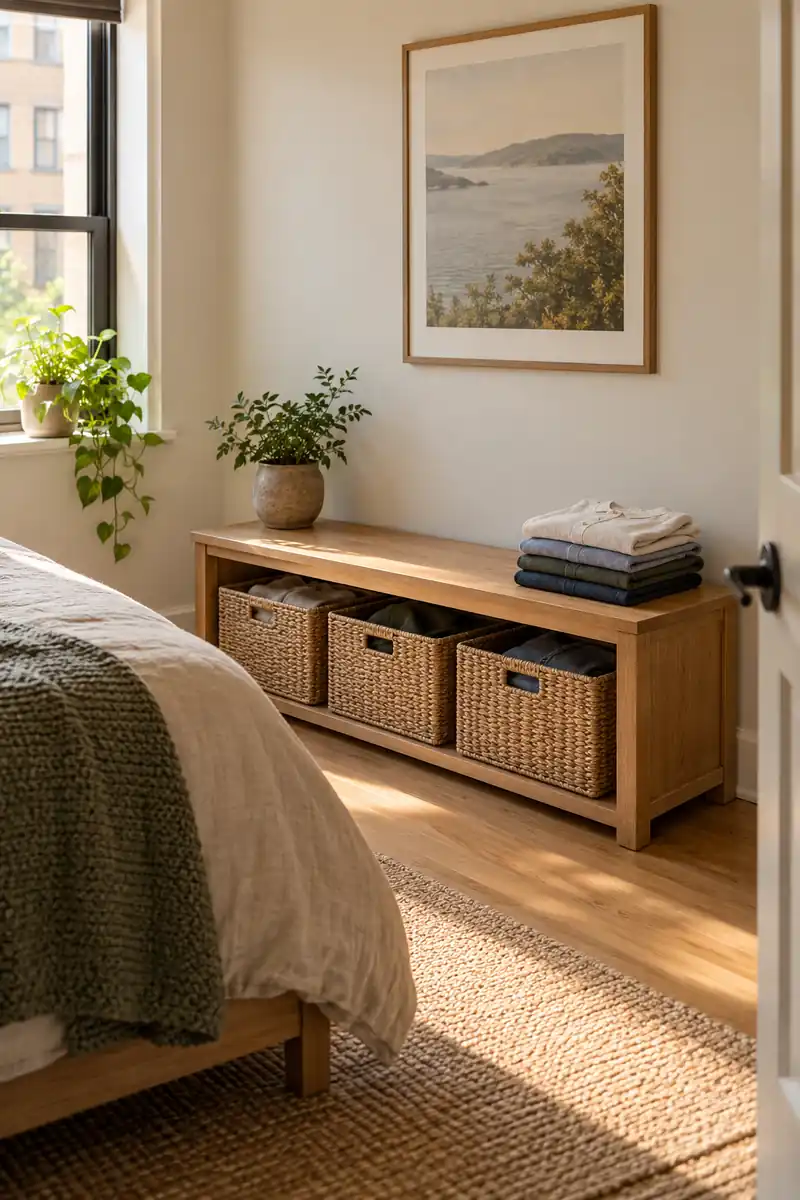
A low storage bench can give laundry a temporary landing spot while baskets below hold folded categories. Match the surface to your comfort rather than forcing every task into one place. If you fold elsewhere, use the bench only for sorting, then put each category into its permanent home before stopping.
16. Offseason Fabric Boxes
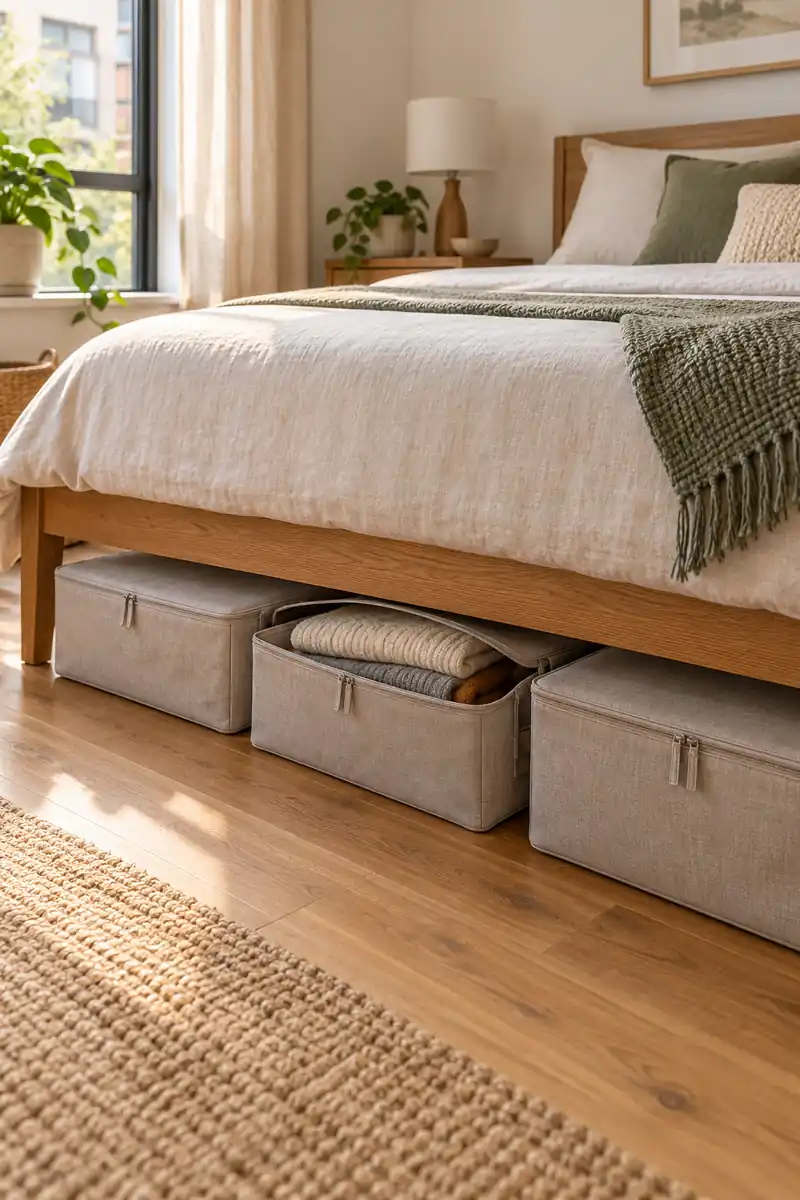
Container: Zipped fabric boxes sized for the available opening.
Contents: Clean dry clothing you will not need soon.
Placement: A low accessible area away from damp surfaces.
Reminder: A simple contents note inside the handle sleeve.
Offseason boxes keep occasional clothing from crowding everyday drawers. Sort by useful groups such as cold weather knitwear rather than by an elaborate color system. Leave room for the fabric to sit naturally. At the season change, review each box before putting everything back into the main clothing rotation again.
17. Accessories Tray Drawer
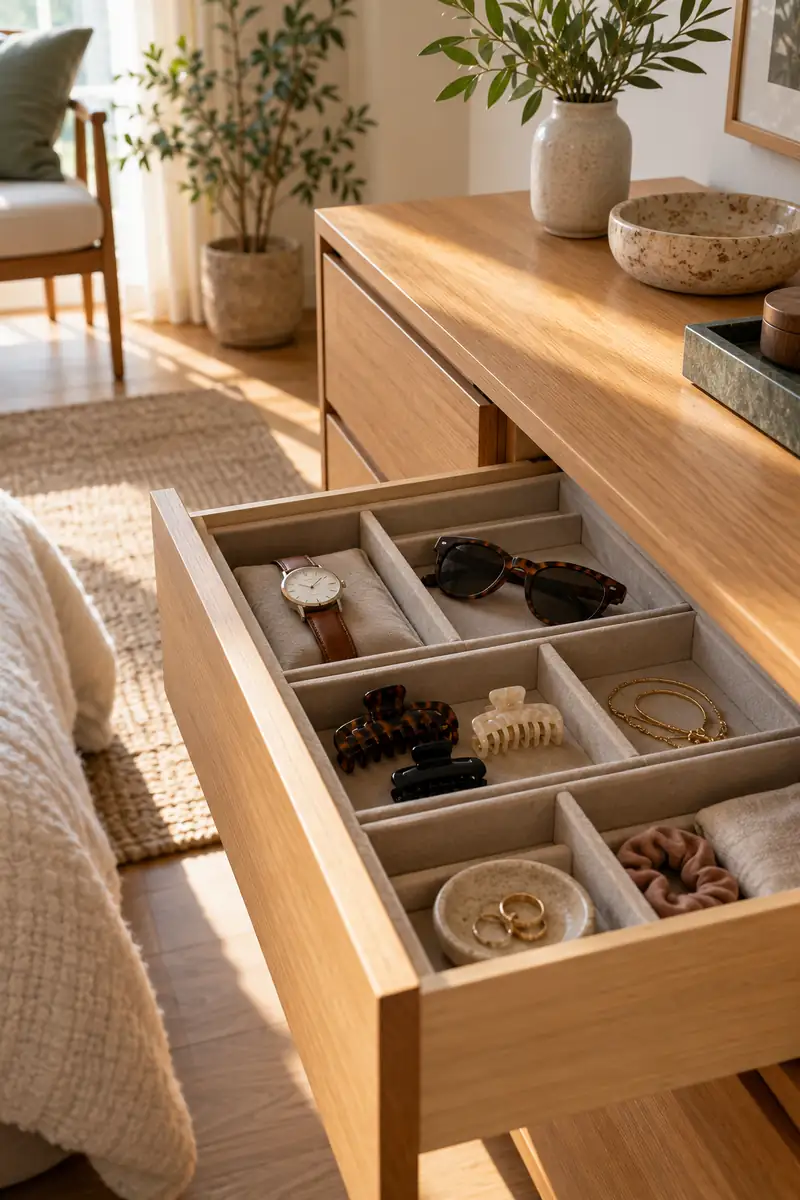
A shallow tray drawer gives accessories a home without needing another freestanding organizer. Separate watches, sunglasses, hair accessories, and rolled belts into small sections. Choose soft liners where appropriate for the objects you own, and leave enough space to lift each item without disturbing its immediate neighbors.
Keep the things you wear most near the front, then use the back for occasional pieces. The tray should sit flat and remain below the closing line of the drawer. A few well-sized compartments usually work better than many tiny ones that turn sorting into an extra chore.
18. Approved Wall Hooks
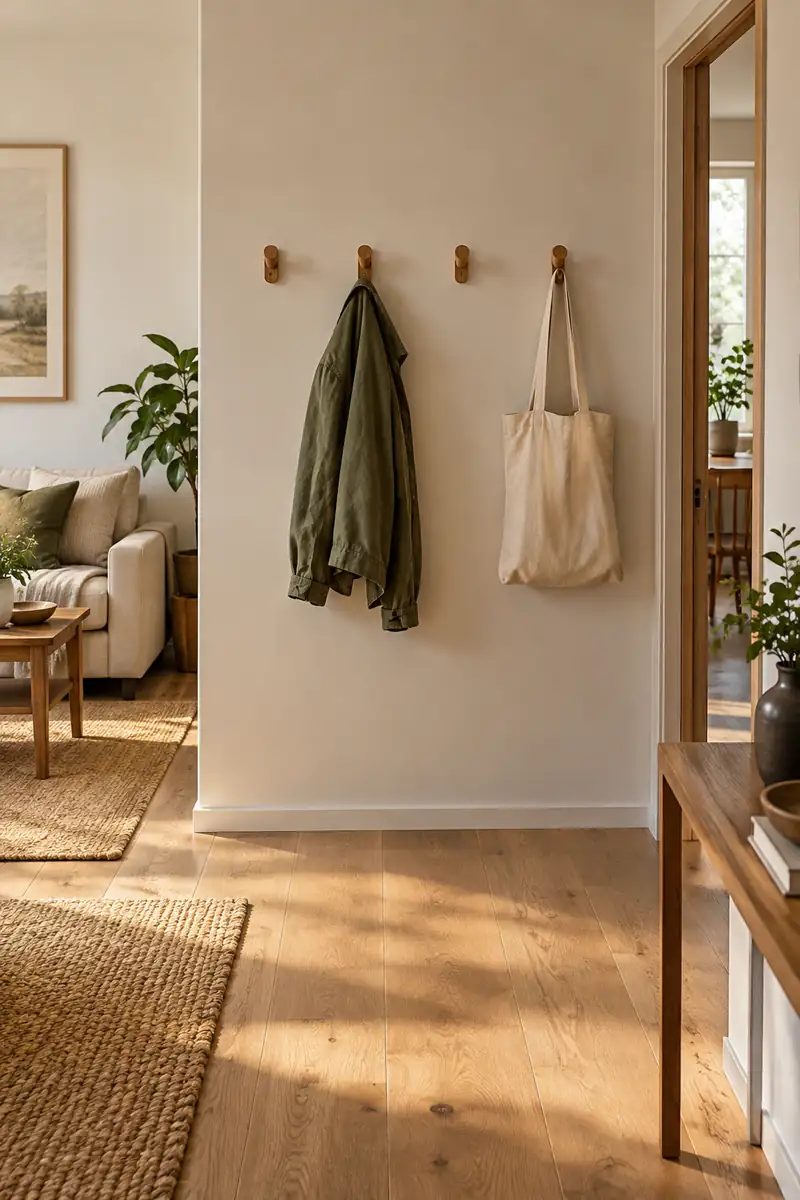
- Check the lease before adding wall fixings.
- Choose hooks suited to the surface and intended load.
- Keep coats away from heat sources and switches.
- Place hooks where hanging items stay outside the route.
A small group of approved wall hooks can handle a jacket and everyday bag without replacing a full wardrobe. Follow the hardware manufacturer’s installation instructions and obtain any needed permission first. Removable hooks have surface and weight restrictions, so never assume the word removable guarantees a clean finish when they come down.
19. One Wall Wardrobe
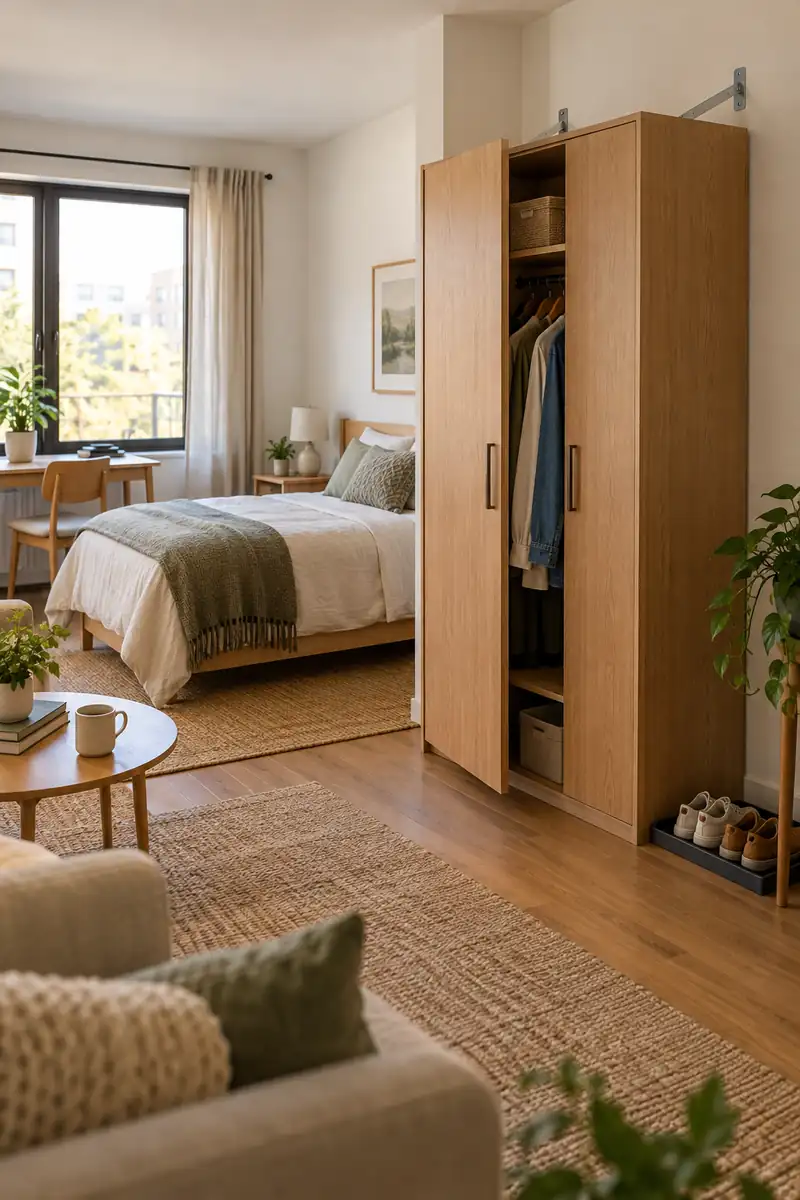
Quick Tip: Check the wardrobe with its doors fully open before committing to a location. Confirm the required wall attachment is permitted and practical.
A freestanding wardrobe creates a full hanging zone where none exists, but it needs more planning than a basket or rail. Measure its depth, delivery route, and assembly clearance. Use the manufacturer’s specified anti-tip installation with landlord permission where required. If you cannot complete that installation, choose another suitable storage arrangement.
20. Shelf Linen Stack
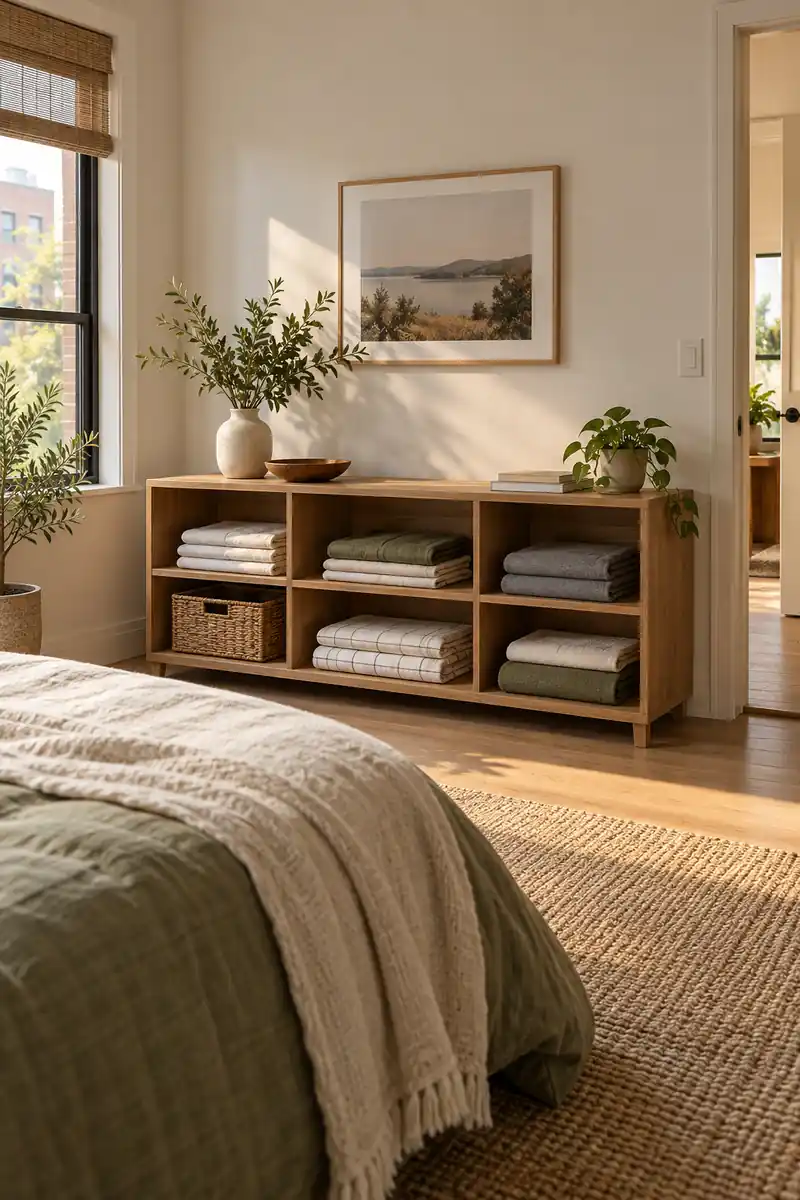
BEFORE: Towels sit in several unrelated piles around the bed. Finding a matching sheet set means opening multiple containers.
AFTER: One low shelf holds short linen stacks grouped by use. Each complete sheet set stays together in a single place.
A dedicated linen shelf can simplify the small household categories that otherwise invade clothing drawers. Fold pieces to suit the shelf depth rather than an arbitrary display size. Keep stacks short enough to remove the bottom item easily. Store textiles dry, and secure the supporting furniture according to its manufacturer’s instructions.
21. Weekly Outfit Basket
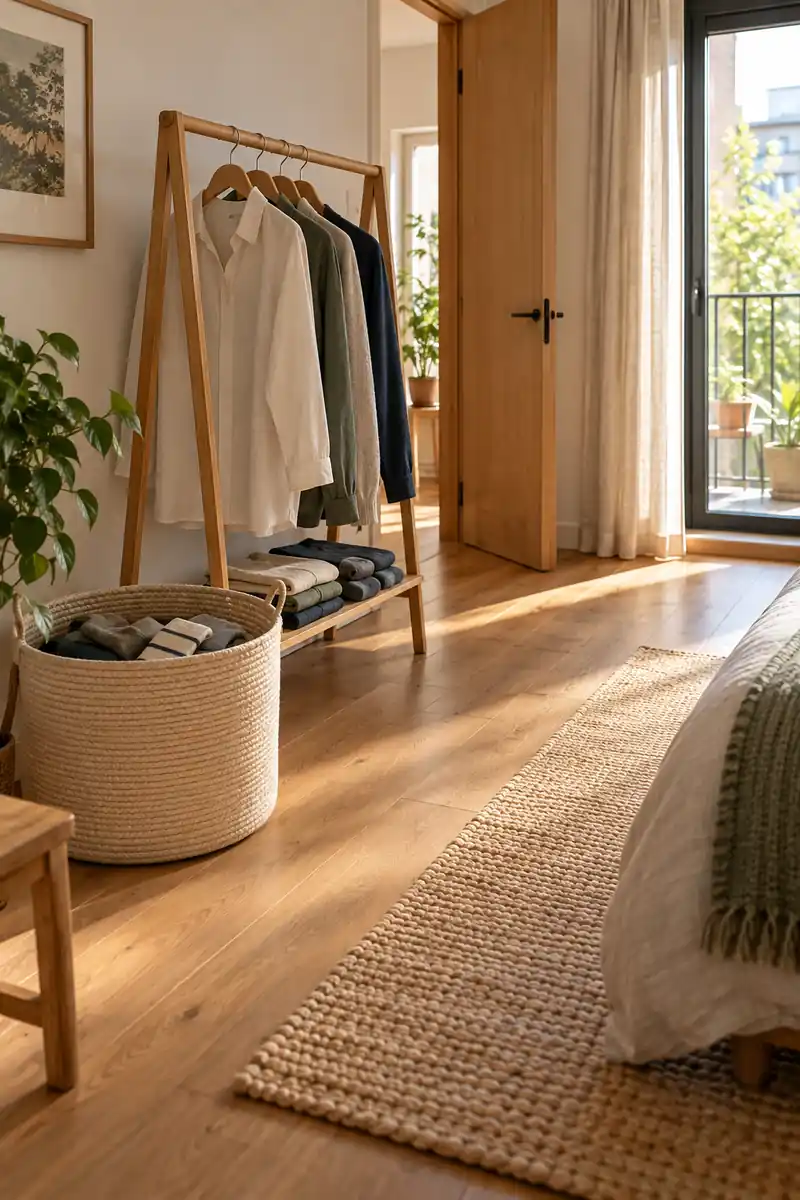
- Choose one small basket you already have.
- Add a limited selection for the coming week.
- Keep the basket beside the main clothing storage.
- Return unused pieces when you reset the basket.
A weekly outfit basket creates a temporary holding place for clothing you have already chosen. It is especially useful when your storage is spread between a rail and several drawers. Keep the basket light and outside the route, then empty it regularly so it does not become a second laundry hamper.
Conclusion
A studio apartment with no closet can still have a clear place for the things you use every day. Begin with the category that causes the most friction, whether that is clean laundry, shoes by the door, or coats without a home. Try one idea before adding another piece of furniture, and notice how it affects movement around the room. Keep storage easy to open, simple to maintain, and appropriate for your rental. Once that first spot works, move on to the next category that keeps piling up.
Community
Join the conversation
Add a useful idea, ask a specific question, or share what worked in your space. Every comment is reviewed before it appears.