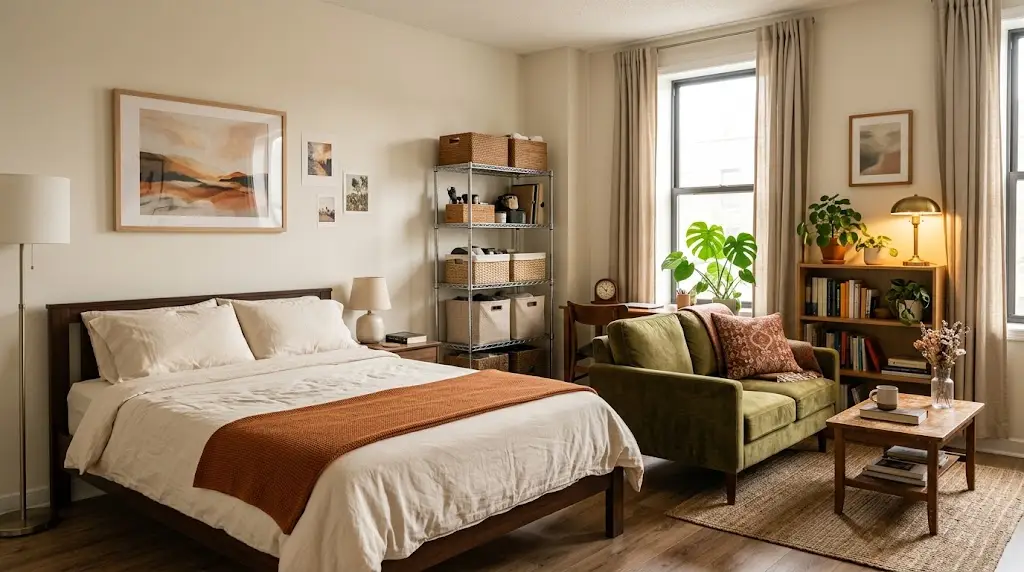
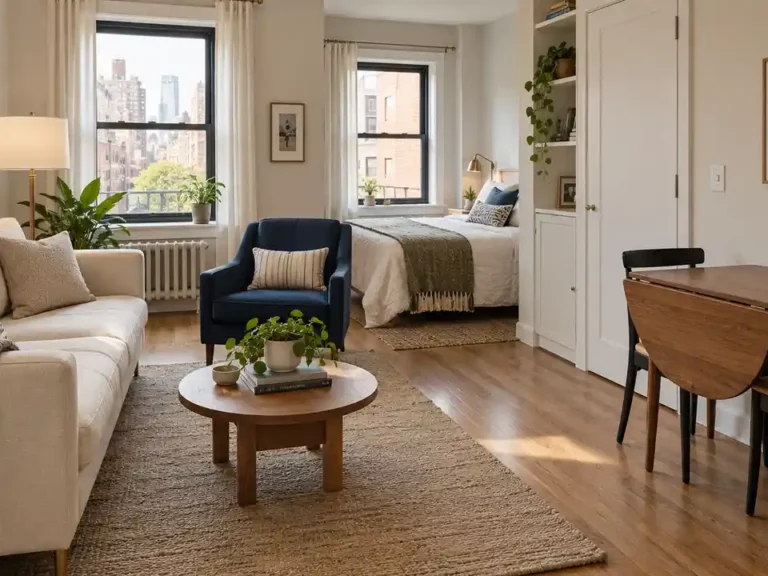
You can make your studio apartment look expensive without replacing your sofa or spending a fortune on decor. A well dressed bed, softer lighting, and curtains that fit properly can change how the whole room feels.
In a studio, almost everything is visible at once. That makes small details matter, from the cables beneath your desk to the blanket folded across your bed.
Start with the areas you see most often. A few thoughtful changes can give your home a more polished look while keeping your budget focused.
1. Start With an Edit
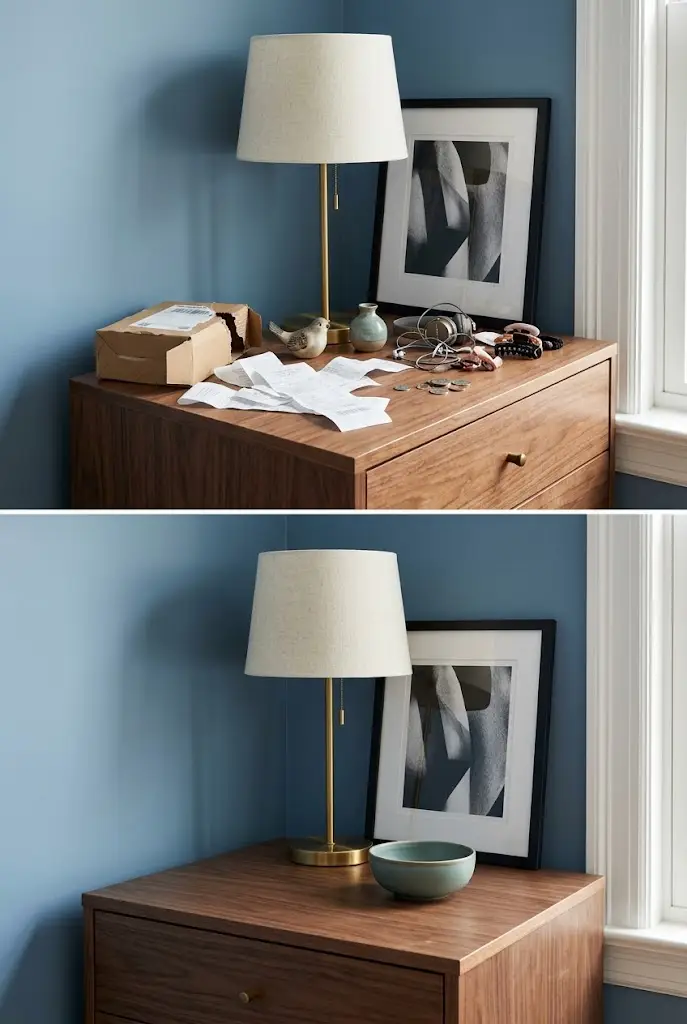
Before buying anything, look around your apartment from the entrance. Notice which surfaces feel crowded and which pieces interrupt the view.
Clear packaging, unused accessories, and furniture that no longer serves a purpose. Then give your favorite objects a little space around them.
A dresser with a lamp, a framed print, and one ceramic bowl can feel more considered than the same surface covered with small decorations.
Try moving things before replacing them. A vase that disappears on a crowded shelf might look beautiful on your dining table.
Put the pieces you are unsure about aside for a week before deciding whether they belong.
2. Repeat a Few Colors
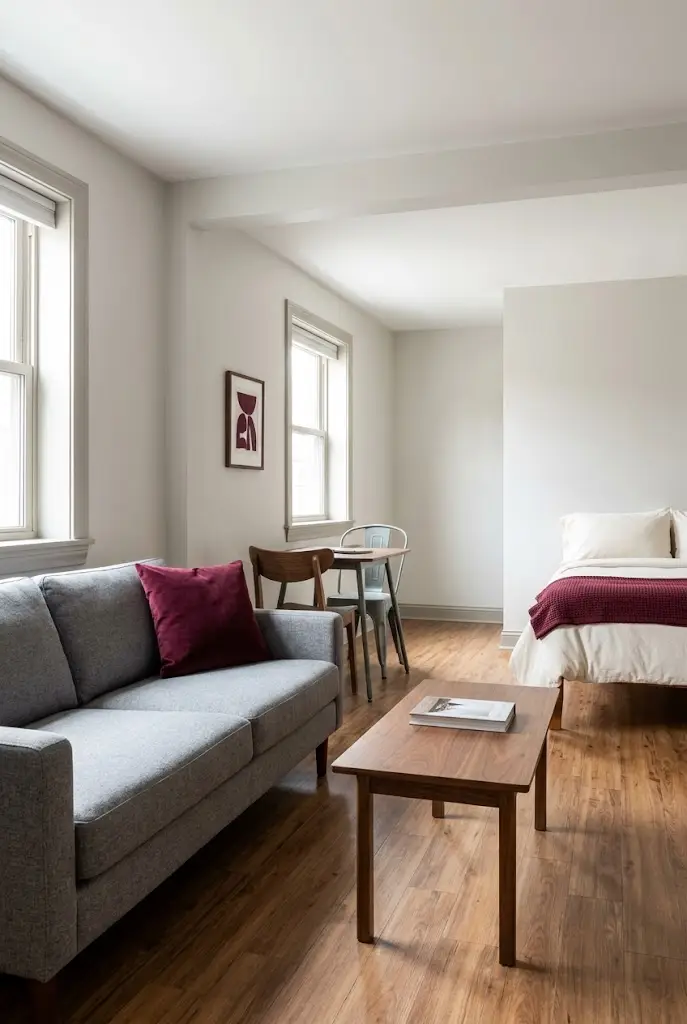
A room often feels more polished when its colors relate to one another.
Choose your palette from the largest pieces you already own. If you have a gray sofa, try connecting it with ivory bedding, walnut accents, and a touch of burgundy. A brown sofa might work with olive, warm white, and terracotta.
Repeat one accent in separate parts of the studio. A burgundy cushion can connect with a small print beside the bed.
You do not need matching furniture. A shared palette can bring different pieces together without the cost of replacing them.
3. Get Curtain Length Right
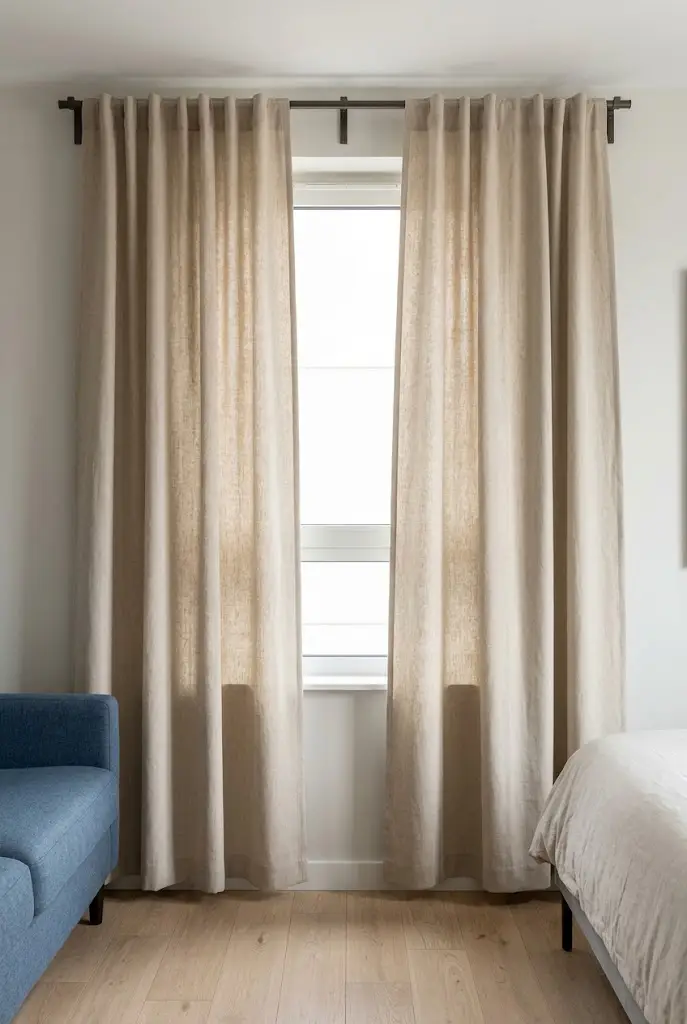
Curtains that stop at an awkward height or bunch heavily on the floor can make a room feel unfinished.
Measure before you buy, including the position of the rod or track. Where practical, choose panels that fall neatly close to the floor and open far enough to leave the glass clear.
Check the panel widths too. Fabric that barely stretches across a window can look strained when closed.
Plain curtains in a color that suits your walls are a useful starting point. Steam or press them according to their care instructions before hanging.
Keep the fabric clear of heaters and vents, and use mounting methods suitable for your wall and rental agreement.
4. Dress the Bed Simply
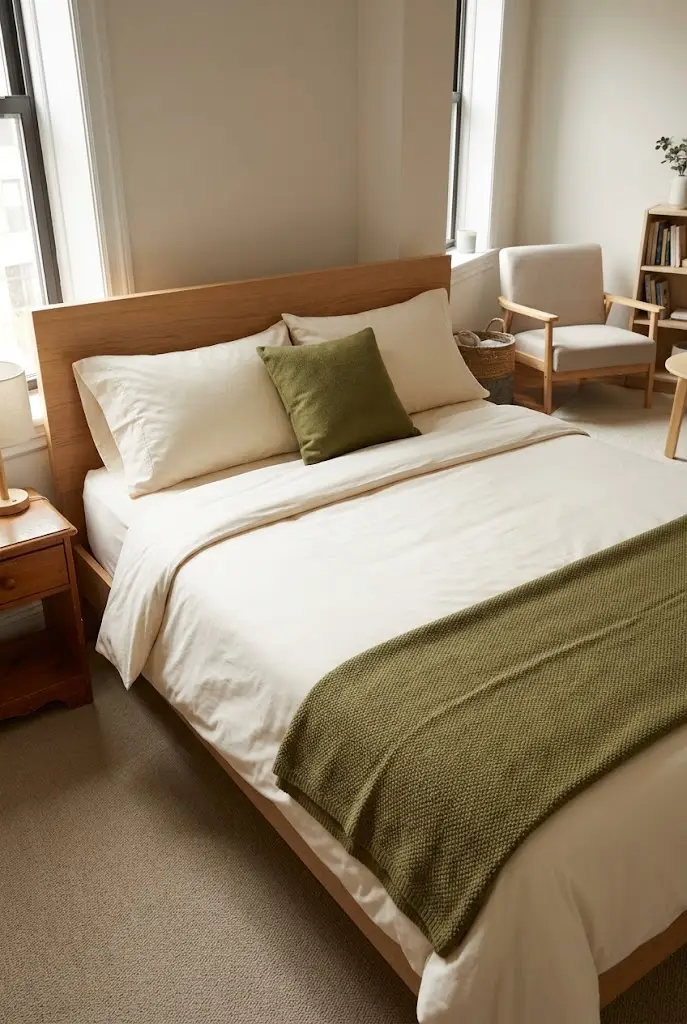
Your bed takes up a large part of a studio, so improving its appearance can affect the whole room.
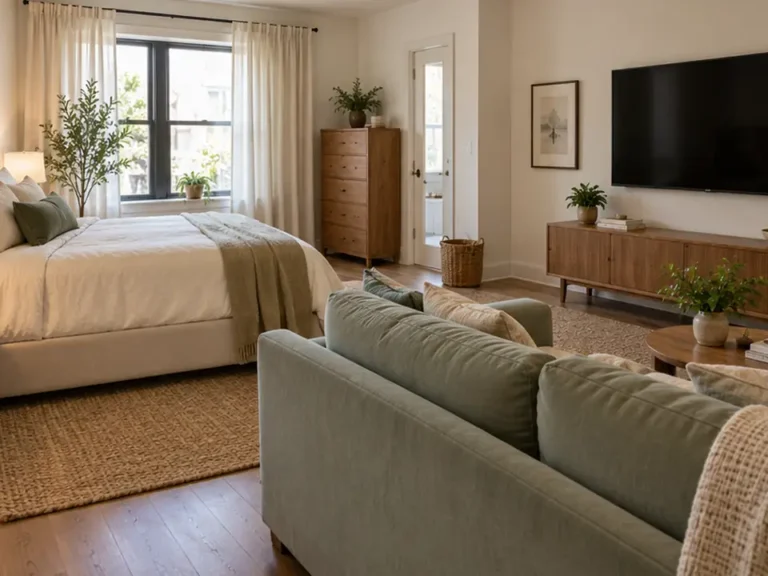
Start with clean, well fitting bedding. Smooth the duvet, straighten the pillows, and fold a blanket across the foot for a little contrast.
Try ivory bedding with an olive throw, or soft gray with a muted blue blanket. Texture can add interest without needing several patterns.
Spend on the bedding you touch before extra decorative pillows. Comfortable sheets are more useful than a pile of cushions you move onto the floor every night.
Two sleeping pillows and one decorative cushion may be all the styling you need.
5. Add Softer Lighting
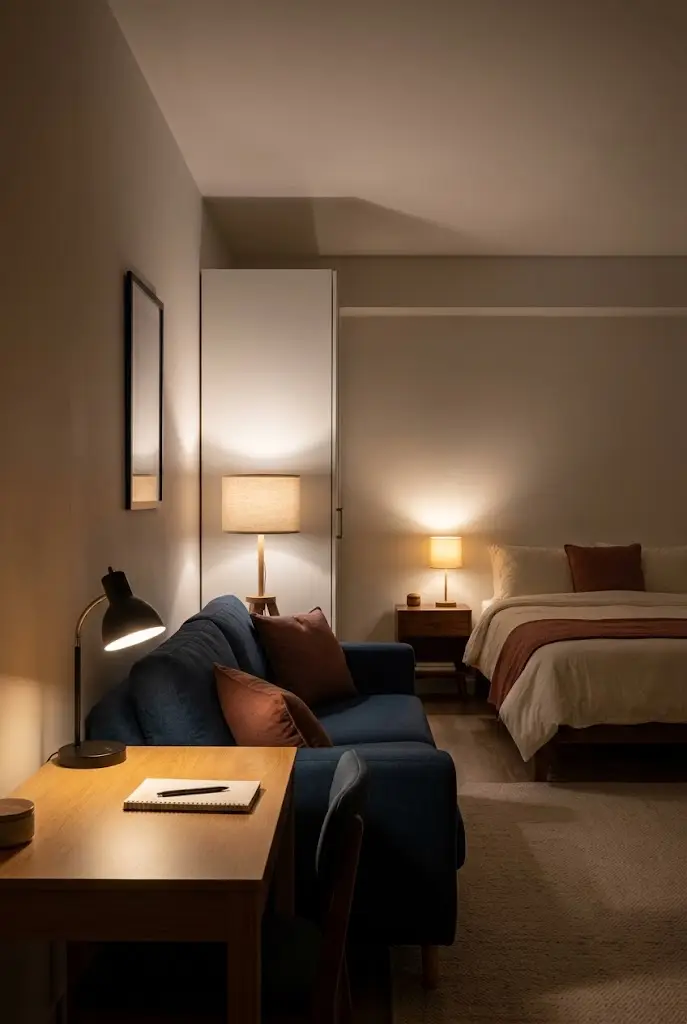
A single ceiling light can make an otherwise cozy studio feel stark.
Use lamps where you spend time: beside the bed, near the sofa, or on your desk. If you already own lamps, try moving them before buying more.
For the living and sleeping areas, bulbs with a similar warm appearance can help the room feel connected in the evening. Keep task lighting bright enough for reading and work.
A simple shade can also change how a lamp looks and distributes light. Check compatibility and the fixture’s bulb limits before making changes.
Let the light reach more than one corner so the room feels balanced.
6. Hide Everyday Cables
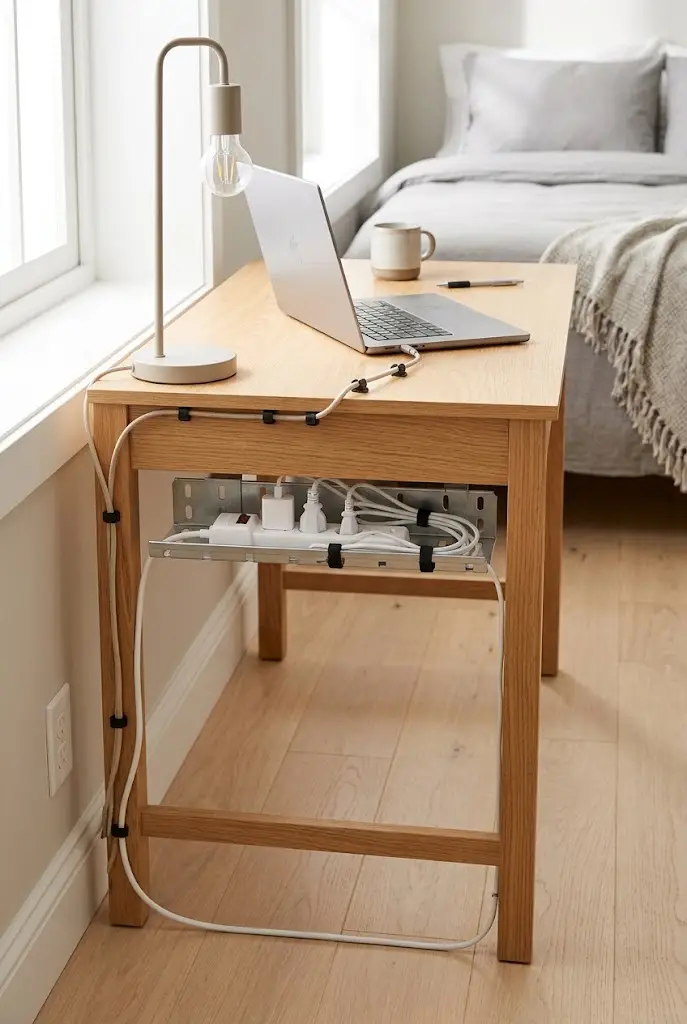
Visible charging cords and tangled leads can distract from furniture you otherwise love.
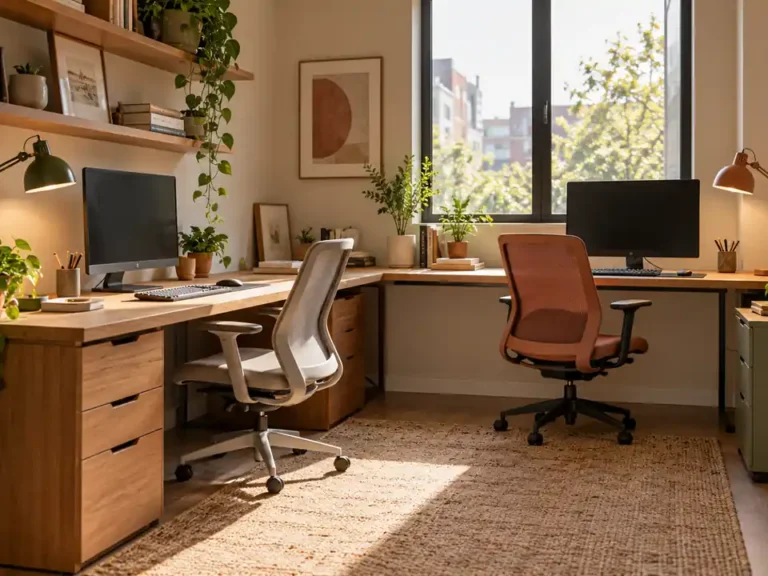
Group desk cables, position a power strip discreetly where it remains accessible, and use suitable cable clips to keep loose wires close to furniture.
A small drawer or basket can hold chargers when they are not in use. Keep power equipment ventilated and avoid running cords beneath rugs.
This is especially useful around a television or workspace, where several cables may cross the same area.
Neat cable placement costs less than replacing furniture and helps existing pieces look better.
7. Choose One Larger Artwork
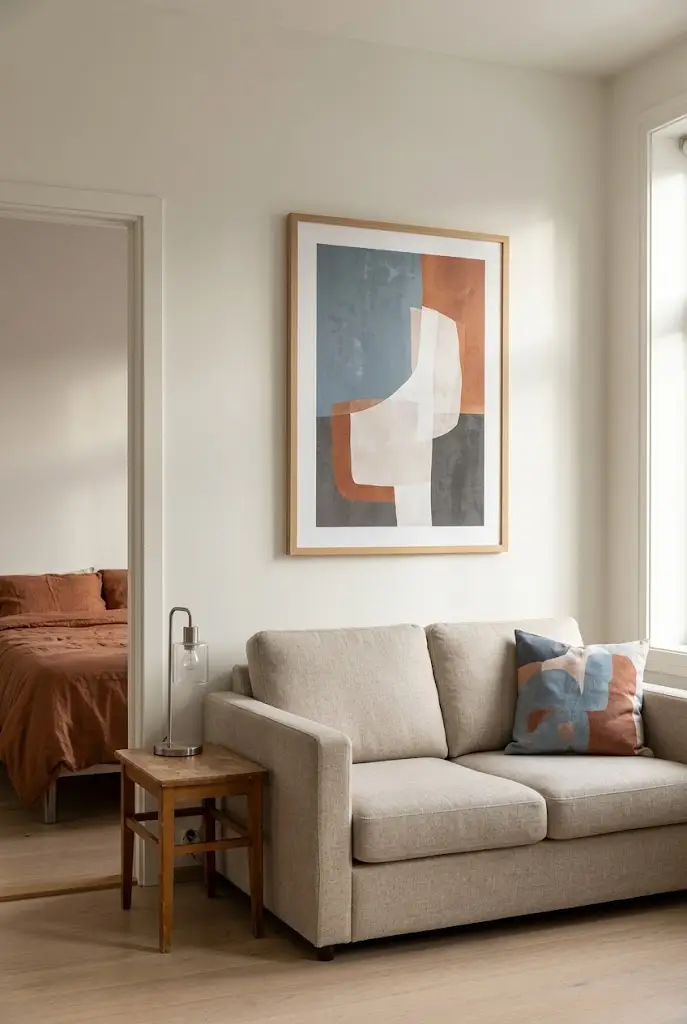
Several small decorations can feel scattered when they have no connection to one another.
Try one larger artwork above the sofa or bed, sized in relation to the furniture below it. A favorite photograph, an original drawing, or an affordable print can work well.
You can also group smaller pieces into one deliberate arrangement. Lay them out on the floor first to check the spacing.
Simple frames in a shared finish help inexpensive prints feel consistent. If a frame already suits the room, keep it and change the image inside.
The subject should mean something to you, rather than simply filling a blank wall.
8. Style With Texture
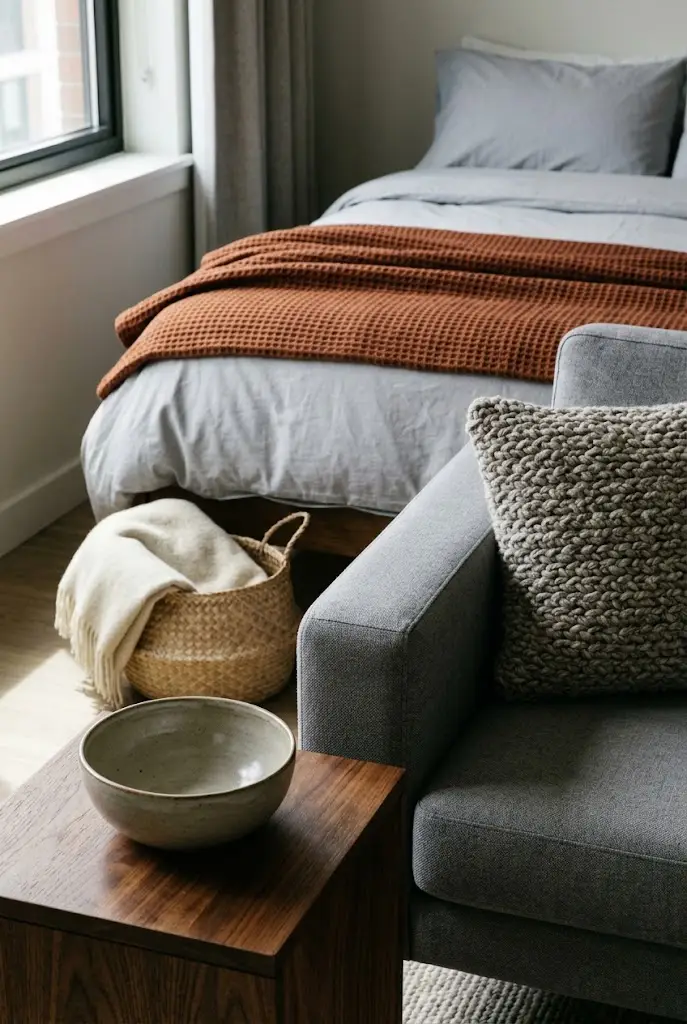
You do not need costly materials to create an interesting room.
Pair smooth cotton bedding with a woven throw. Place a matte ceramic bowl on a wood table. Add a textured cushion to a plain sofa.
Look at what you already have before shopping. A basket stored in a closet might be useful beside the bed, while a folded blanket can soften a chair.
Keep the palette fairly connected so the textures are easy to appreciate.
Choose a few tactile details instead of many small accessories. They can make everyday furniture feel more inviting without crowding its surfaces.
9. Make Storage Consistent
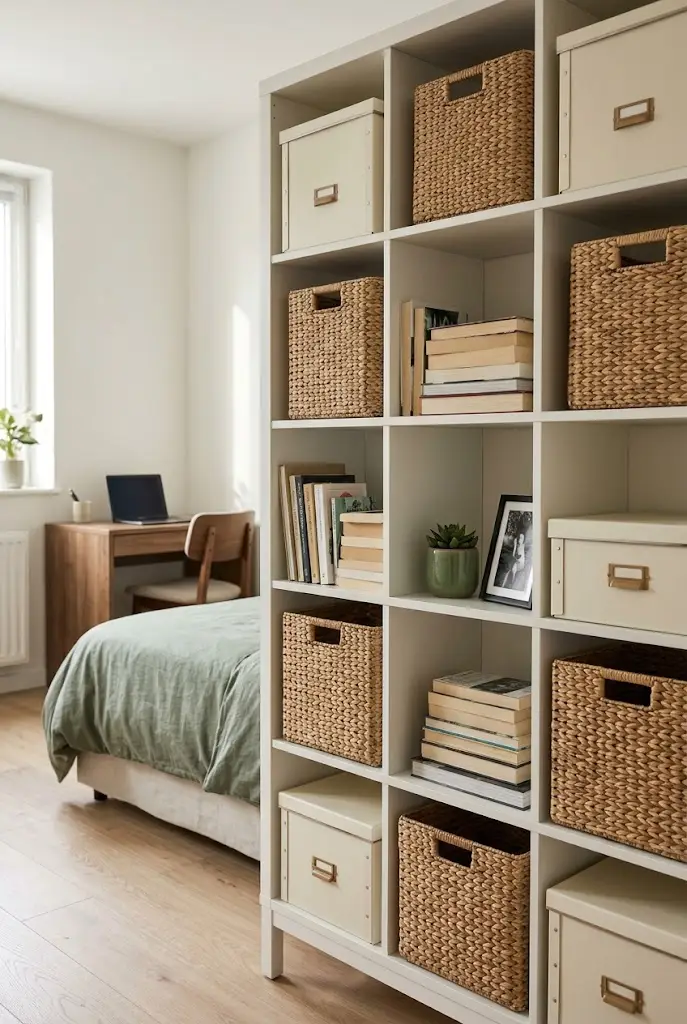
When your storage is visible, its appearance becomes part of the decor.
Group loose supplies in containers that relate to each other. They can share a color, material, or shape without coming from the same set.
Use your existing boxes first. Moving similar ones onto the same shelf may be enough to make the arrangement feel calmer.
Keep practical items in closed compartments and leave a few open spaces for books or personal objects.
Measure before buying baskets. A beautiful container is only useful if it fits the shelf and holds what you need.
10. Refresh Small Hardware
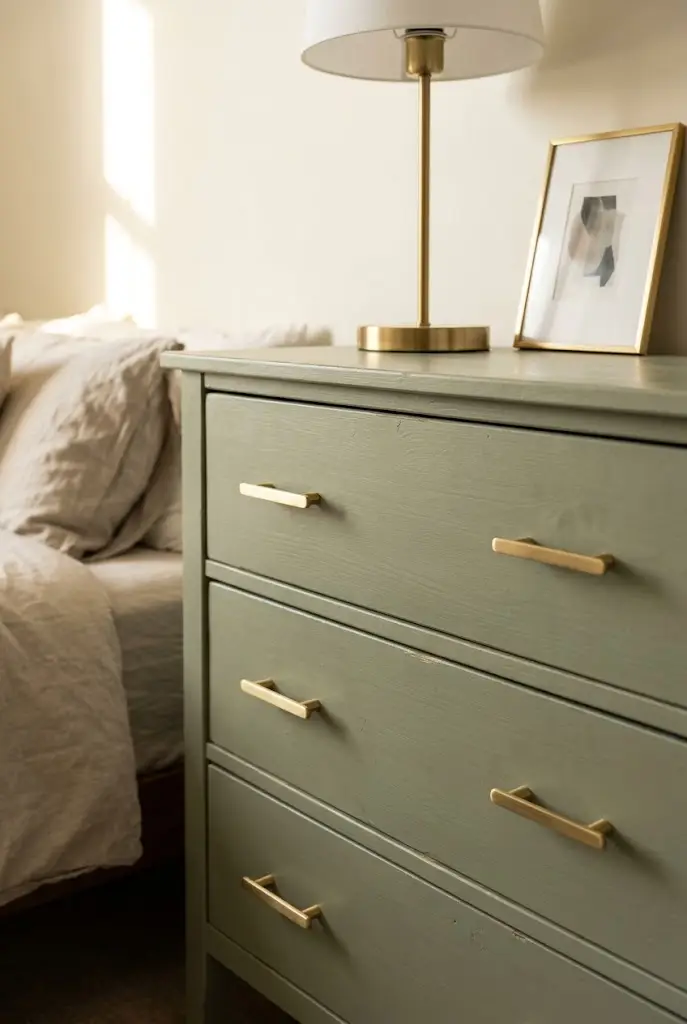
Plain furniture can sometimes benefit from different knobs or handles.
A dresser with simple brass pulls might connect with your lamp. Matte black handles can echo picture frames or table legs elsewhere in the room.
Before buying replacements, measure the existing screw spacing and check that the new fittings suit the furniture. Keep the original hardware if you rent or may want to reverse the change.
Start with one piece rather than replacing every handle at once.
This works best when the furniture is already functional and in good condition. New hardware will not fix damaged drawers or an unstable frame.
11. Give the Rug Purpose
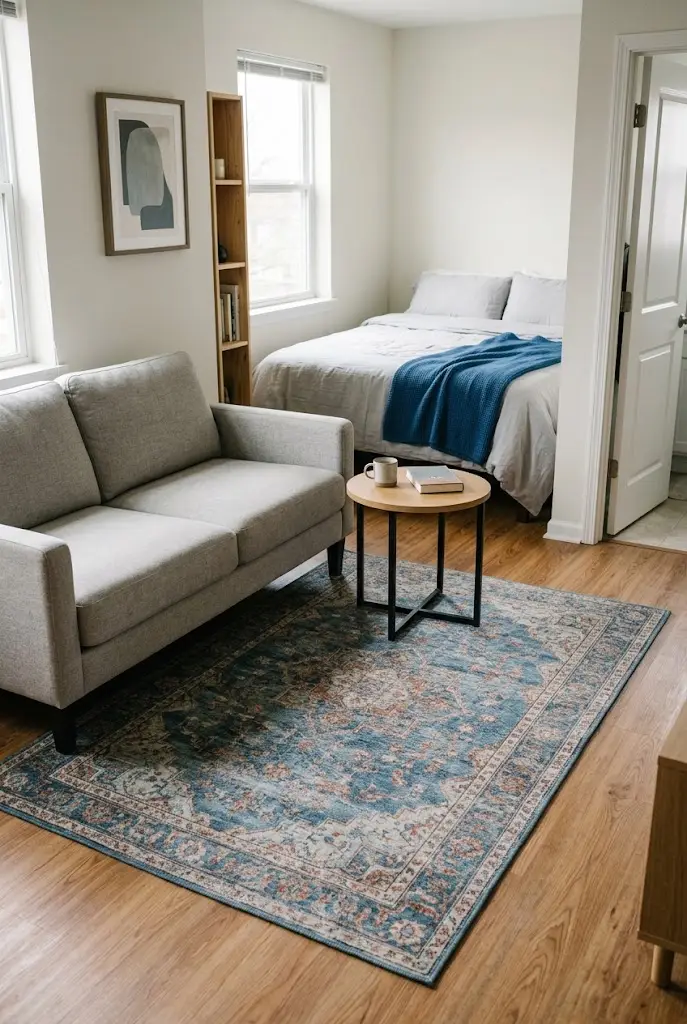
A rug should connect the furniture around it, rather than sit like an isolated patch in the middle of the floor.
Try adjusting its position so it relates clearly to the seating area. Where the room allows, place the sofa’s front legs on it.
If your existing rug is too small for the sofa, it might work better beside the bed or under a reading chair. Reusing it elsewhere may be more practical than immediately buying a replacement.
Check that doors open freely and the edges lie flat.
A clean rug in the right place can do more for the room than a new one with an awkward fit.
12. Create One Focal Point
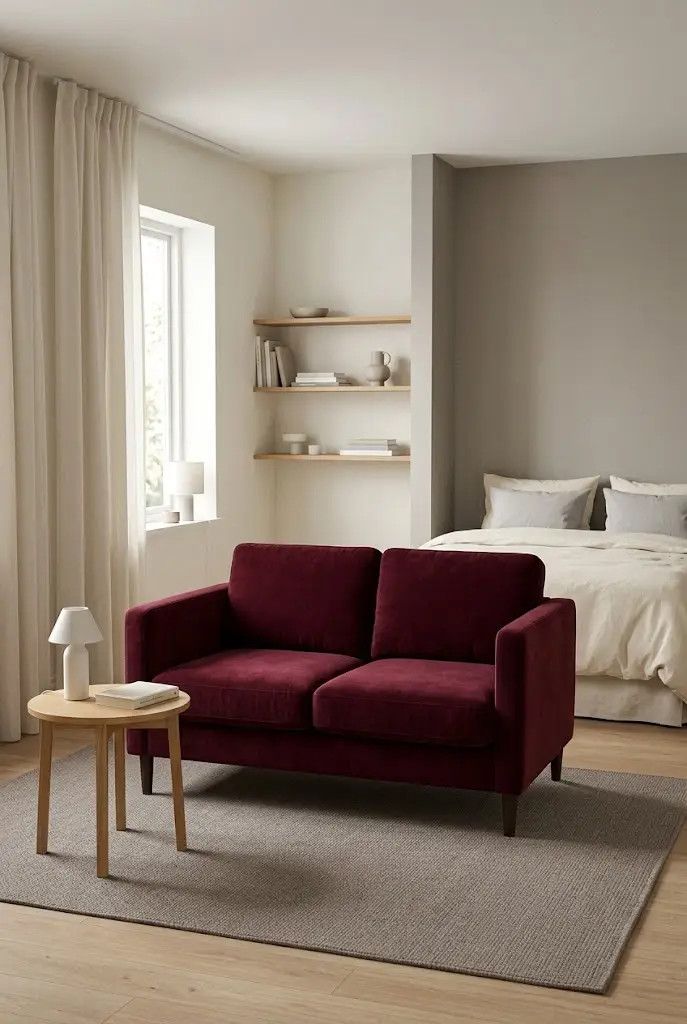
A studio can feel busy when the bed, sofa, shelves, and dining table all compete for attention.
Choose one main feature to emphasize. It could be a rich colored sofa, a striking painting, or a carefully styled sleeping area.
Keep the surrounding details quieter. If the sofa has a bold pattern, use simpler cushions and a less detailed rug.
You can create a focal point with something you already own. Move a favorite artwork somewhere more visible or give a beautiful chair its own clear corner.
Let the strongest piece stand out without adding more around it.
13. Use Mirrors Thoughtfully
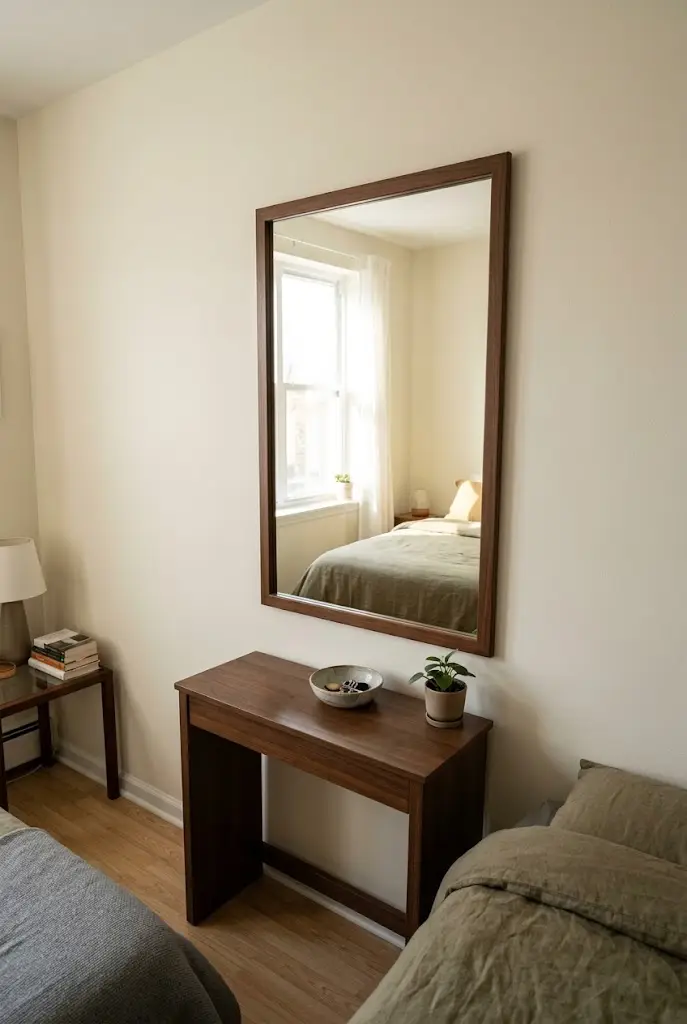
A mirror can reflect daylight and an attractive view of the room, but placement matters.
Before mounting it, check what appears in the reflection from the entrance and sofa. A mirror facing a tidy window area may work better than one reflecting laundry or kitchen clutter.
Choose a frame that relates to another finish in the studio. Wood, black, or a restrained metallic finish can all work.
Use appropriate hardware and secure the mirror according to its instructions.
One useful mirror can be enough. You do not need several reflective objects to create a polished look.
14. Finish the Everyday Corners
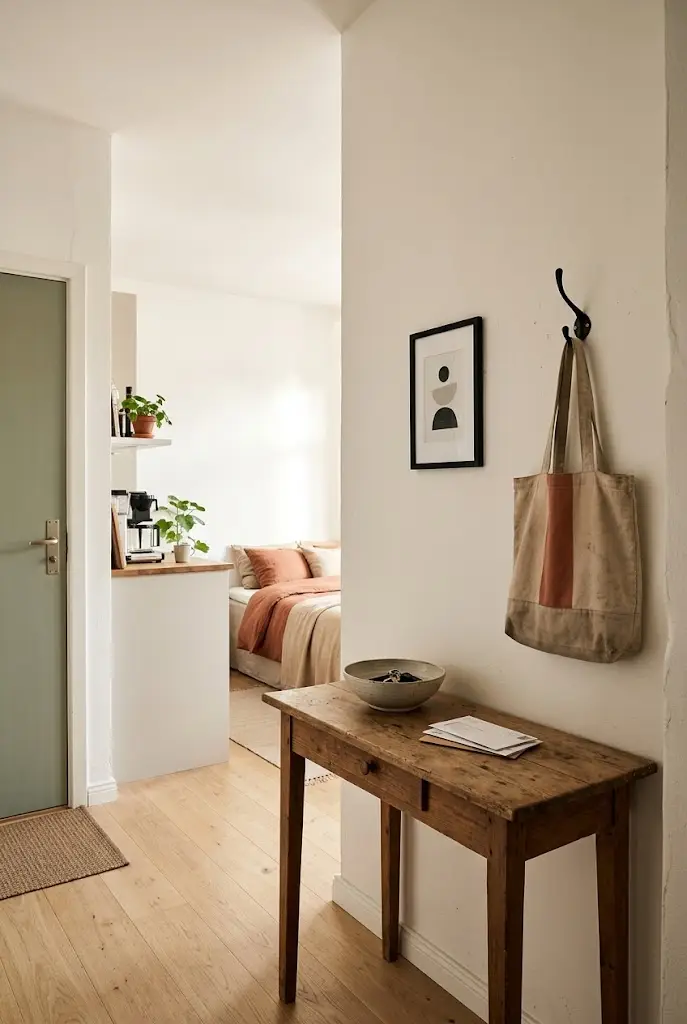
Small practical areas can make the apartment feel cared for.
Give keys a bowl near the entrance. Place soap on a washable tray beside the sink. Fold a kitchen towel neatly and choose a regular place for your bag.
These details work because they help everyday items look settled rather than abandoned.
Use dishes and trays you already own before buying matching accessories. Keep frequently used products easy to reach.
A styled corner should still work during a normal morning, not just when you take a photograph.
15. Keep Personal Pieces Visible
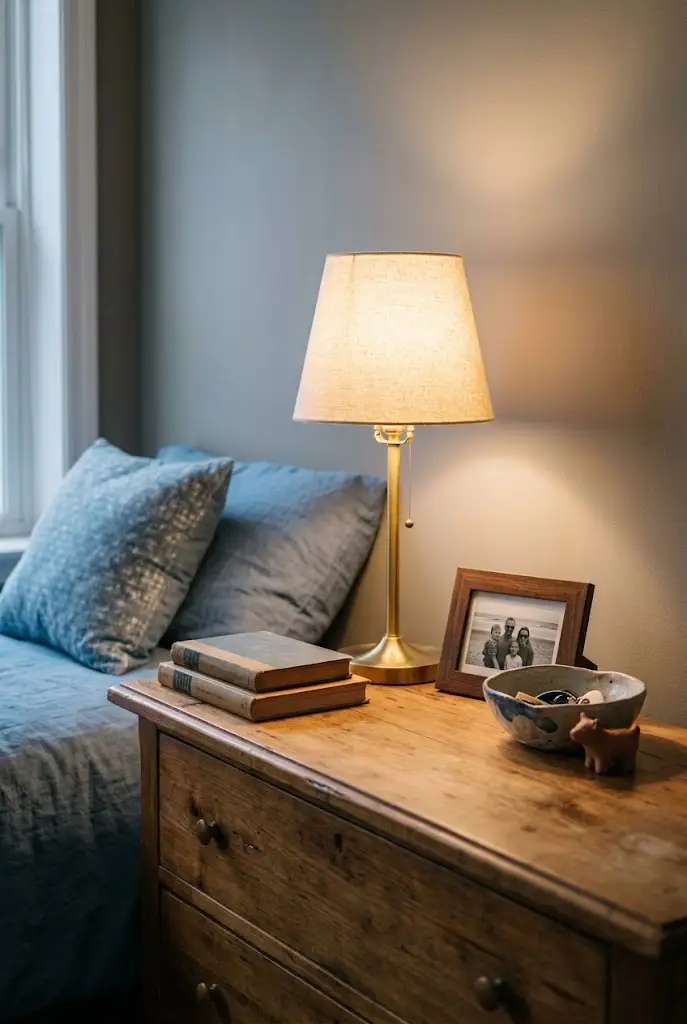
An expensive looking room can still feel warm and individual.
Display a favorite photograph, a handmade object, or a book you return to often. Give each piece enough space to be noticed.
A small group on a dresser might include a lamp, two books, and a meaningful keepsake. Repeat one color from the room through a frame or bowl.
Avoid buying generic decorations simply to finish a shelf. It is fine to leave space until you find something you enjoy.
A home feels more complete when its details reflect the person living there.
Spend Where It Shows
If your budget is limited, fix the most visible problem first.
| What feels unfinished | Start with |
|---|---|
| The room looks crowded | Clear surfaces and rearrange existing pieces |
| The bed dominates the room | Neater bedding and one coordinating throw |
| The windows look bare or awkward | Properly measured curtains |
| The room feels harsh at night | Better placement of lamps you own |
| Shelves look busy | Grouped storage and fewer display objects |
| Furniture feels disconnected | Repeated colors and finishes |
Make one change, then look at the whole room again before spending more. You may find that better curtains or a calmer bed setup makes several other purchases unnecessary.
You can make your studio apartment look expensive on a budget by paying attention to fit, placement, and everyday details. Keep the pieces that work, improve the areas that feel unfinished, and add new things slowly.
Community
Join the conversation
Add a useful idea, ask a specific question, or share what worked in your space. Every comment is reviewed before it appears.