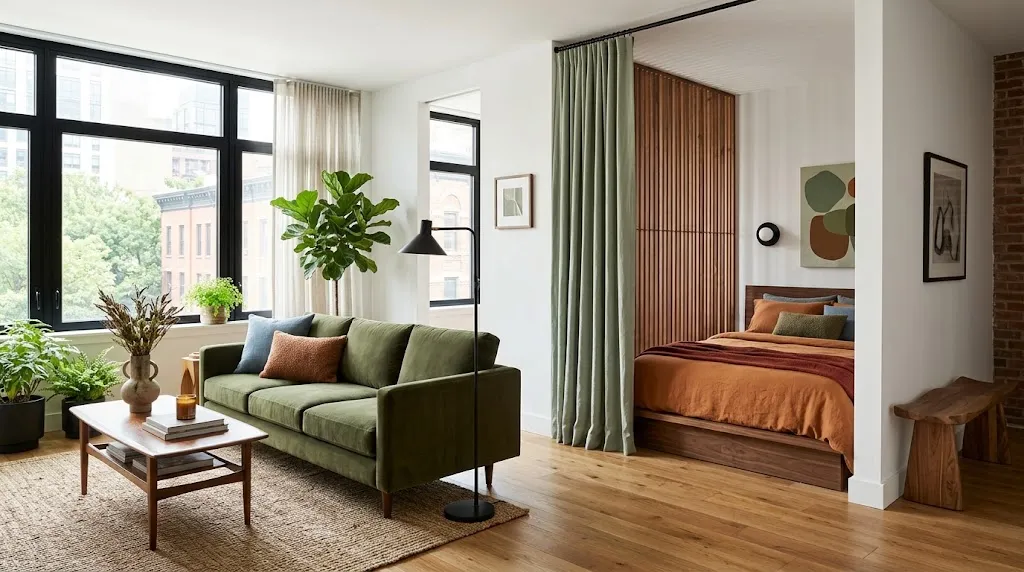
Introduction
A studio apartment can feel open and spacious without leaving the bed exposed to the entire room. Creating a cozy bedroom zone in a studio apartment is all about adding visual separation, comfort, and privacy without making the space feel smaller. This guide shares practical ways to define your sleeping area using slatted dividers, curtains, shelving, rugs, accent walls, canopies, and smart furniture placement. I’ve noticed that even one clear boundary can make a studio feel calmer and more organized. Whether you rent or own, these ideas will help you create a restful sleeping corner that looks intentional, works with limited square footage, and still lets light and movement flow naturally through your home.
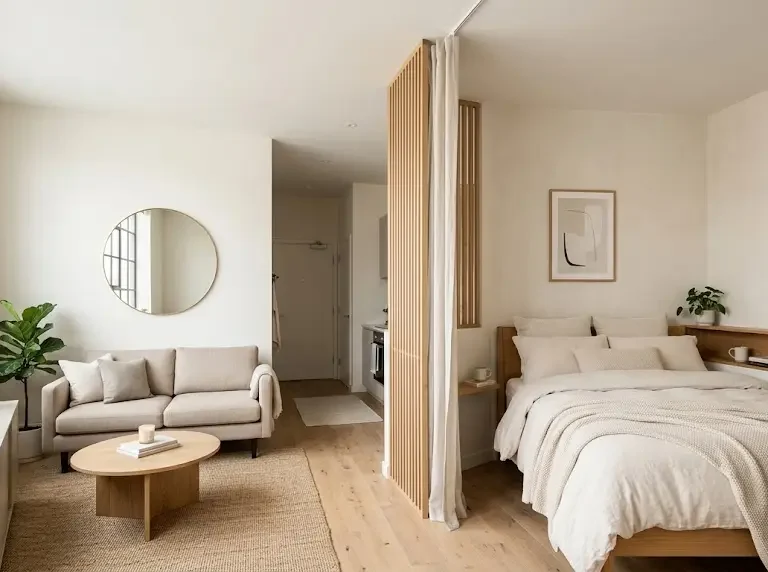
1. Walnut Slat Divider
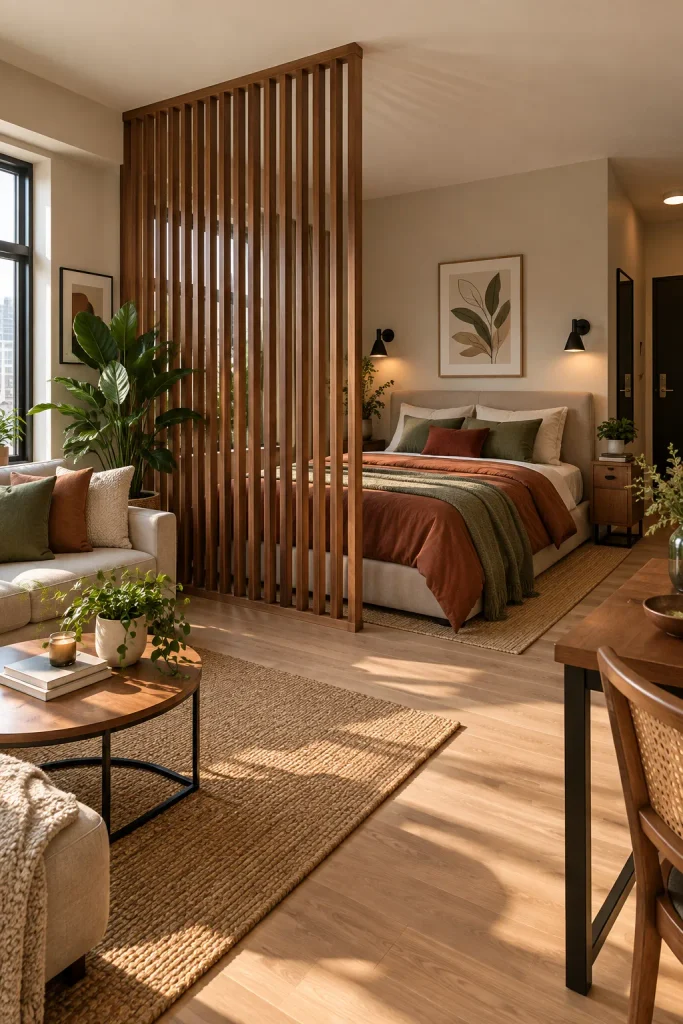
- Wood slats separate the bed without blocking natural light.
- A low bed keeps the sleeping area visually open.
- Warm wood adds texture without needing extra decor.
- Plants and rust-toned bedding soften the divider’s clean lines.
A slatted divider can make a sleeping corner feel instantly more intentional without closing off the rest of the studio. Place slim wood slats between the bed and living area to create a visual boundary while still letting light and air move through. This works especially well when the bed sits near a wall or window and needs definition rather than full privacy. Warm walnut, oak, or natural wood tones also add texture and depth. The result is a bedroom zone in a studio apartment that feels separate, airy, and beautifully integrated with the overall layout.
The spacing between the slats is what keeps this idea practical in a small home. In my experience, narrow gaps provide enough screening to soften direct views of the bed while avoiding the heavy feeling of a solid wall. Keep the bed low, repeat the wood tone in a nightstand or bench, and use one or two warm accent colors in the bedding. A nearby plant can soften the edges even more. You will notice stronger visual separation, better flow, and a sleeping area that feels designed rather than simply placed in the corner.
2. Sheer Curtain Nook
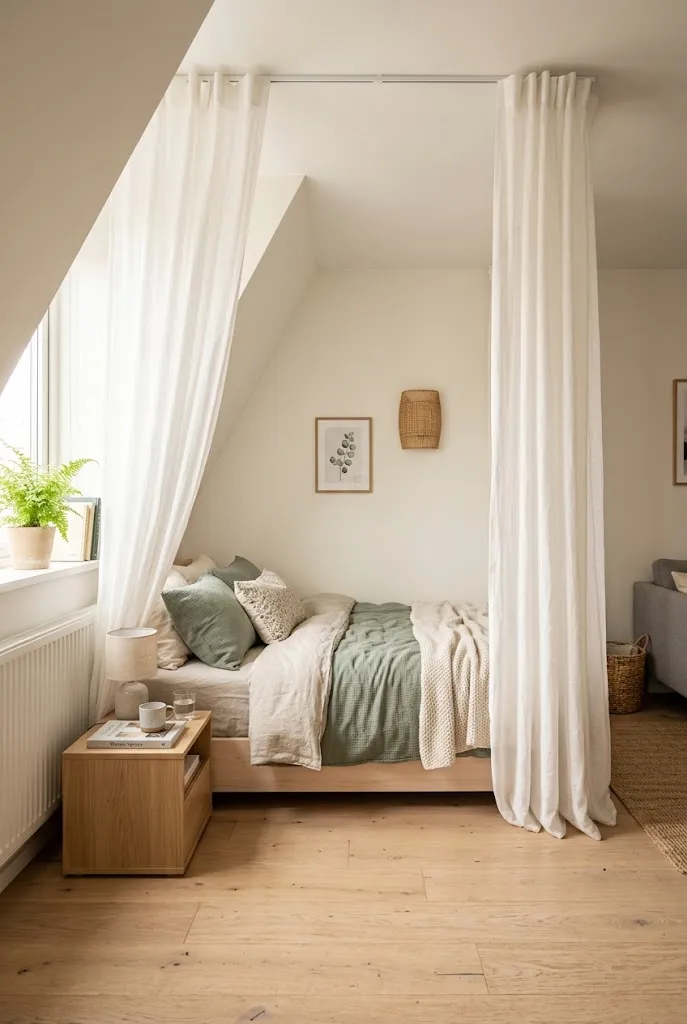
- Sheer fabric adds privacy while keeping the room bright.
- Ceiling-mounted curtains use almost no valuable floor space.
- The panels can open fully whenever you want a spacious layout.
- Soft linen adds movement and a relaxed bedroom feel.
Sheer curtains are one of the easiest ways to create privacy without making a studio feel smaller. Mount a ceiling track around the bed and choose lightweight linen or voile that filters daylight instead of blocking it. During the day, pull the panels aside so the room feels completely open; at night, close them to create a softer and more private sleeping nook. This works especially well for renters because the look feels polished without requiring a bulky divider. The fabric also adds movement and softness, helping the bed feel calmer and more separate from the living space.
What makes this setup so effective is its flexibility from morning to night. I’ve noticed that warm white, oatmeal, and soft beige curtains look more relaxed than bright optic white, especially beside wood floors and neutral bedding. Let the fabric fall almost to the floor for a more finished appearance, and keep the ceiling track close to the wall color so it visually disappears. Add one warm lamp inside the sleeping area for an extra layer of coziness. The room stays bright and adaptable, yet the bed gains a clear sense of privacy whenever you want it.
3. Open Bookshelf Screen
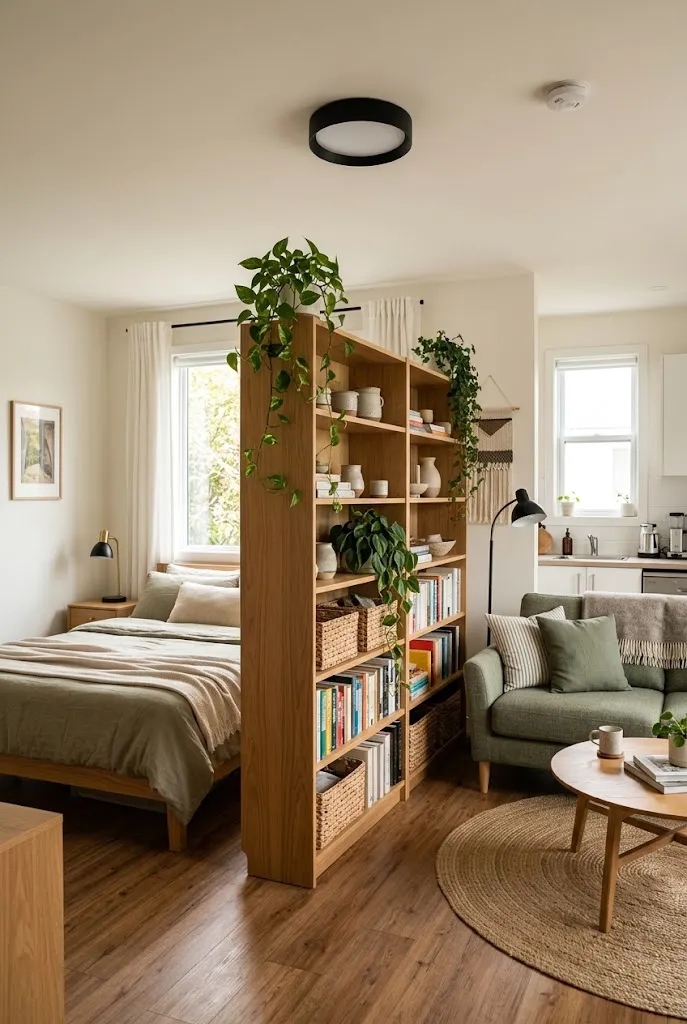
- Open shelves provide privacy and storage in one footprint.
- Empty sections allow daylight to move through the divider.
- Lower baskets keep everyday clutter hidden.
- Plants and ceramics make the divider attractive from both sides.
An open bookshelf gives the sleeping area privacy while adding storage exactly where a studio needs it most. Position a tall shelf between the bed and sofa, then keep enough compartments open for daylight and sightlines to pass through. Books, baskets, plants, and simple ceramics can make the divider useful from both sides without turning it into visual clutter. This approach is especially helpful when floor space is tight because one piece of furniture handles zoning, display, and organization at once. The bedroom feels more protected, while the rest of the apartment remains connected and easy to navigate.
A lightly styled shelf will always feel more spacious than one packed from top to bottom. Keep heavier baskets and everyday storage on the lower levels, then use the upper shelves for smaller plants, framed art, or a few favorite books. That’s why many designers recommend leaving some sections completely empty: the gaps let light travel through and prevent the unit from feeling like a wall. Match the shelf finish to another material already in the room, such as the coffee table or bed frame. The result feels cohesive, practical, and much more intentional from every angle.
4. Minimal Canopy Frame
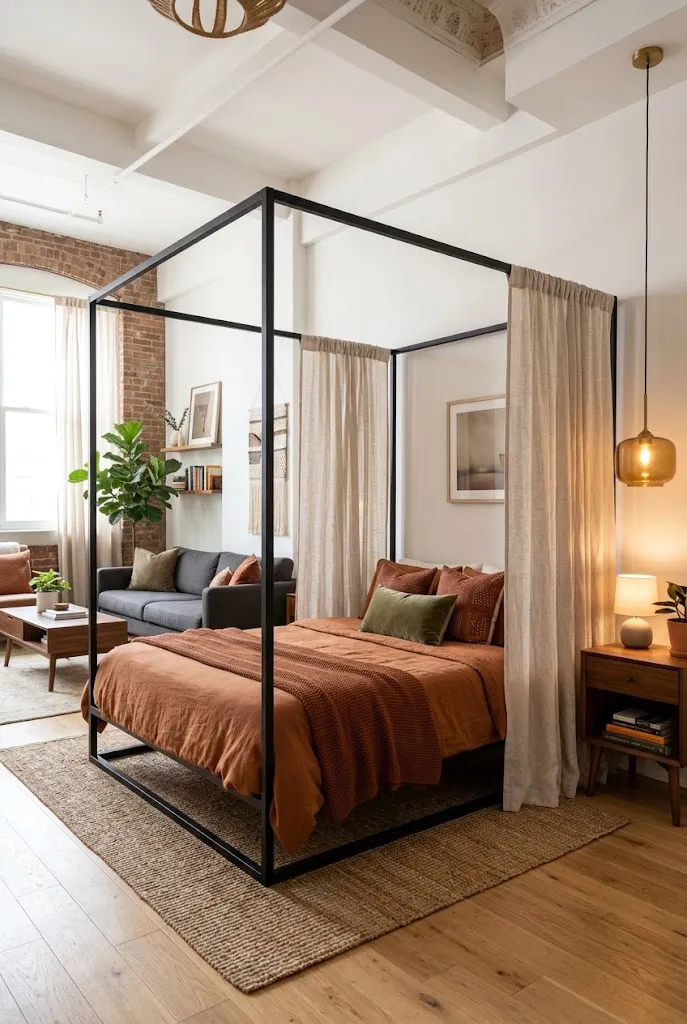
- A slim canopy creates structure without adding a solid divider.
- Partial curtains give privacy only where you need it.
- The frame visually separates the bed from the rest of the studio.
- Low furniture keeps the setup from feeling oversized.
A compact canopy frame can give a studio bed the feeling of a real room without adding solid walls. Choose a slim black or warm wood frame and keep the lines simple so the structure feels architectural rather than bulky. Add lightweight curtains only on the sides you want to screen, or leave the frame open during the day. This setup works especially well when the bed sits near the center of the apartment. The canopy creates a clear sleeping zone while preserving airflow, visibility, and the open character that makes small spaces feel comfortable.
The key is keeping the frame visually light and the textiles restrained overall. I’ve seen this work well with neutral linen panels, low bedding, and one soft rug beneath the bed to reinforce the boundary. Avoid heavy drapes on every side, because too much fabric can make the sleeping area feel enclosed. Instead, use partial curtains for privacy and let the rest remain open. A small pendant or bedside lamp inside the frame adds another layer of separation. The result feels intimate, stylish, and surprisingly flexible for everyday studio living.
5. Raised Bed Platform
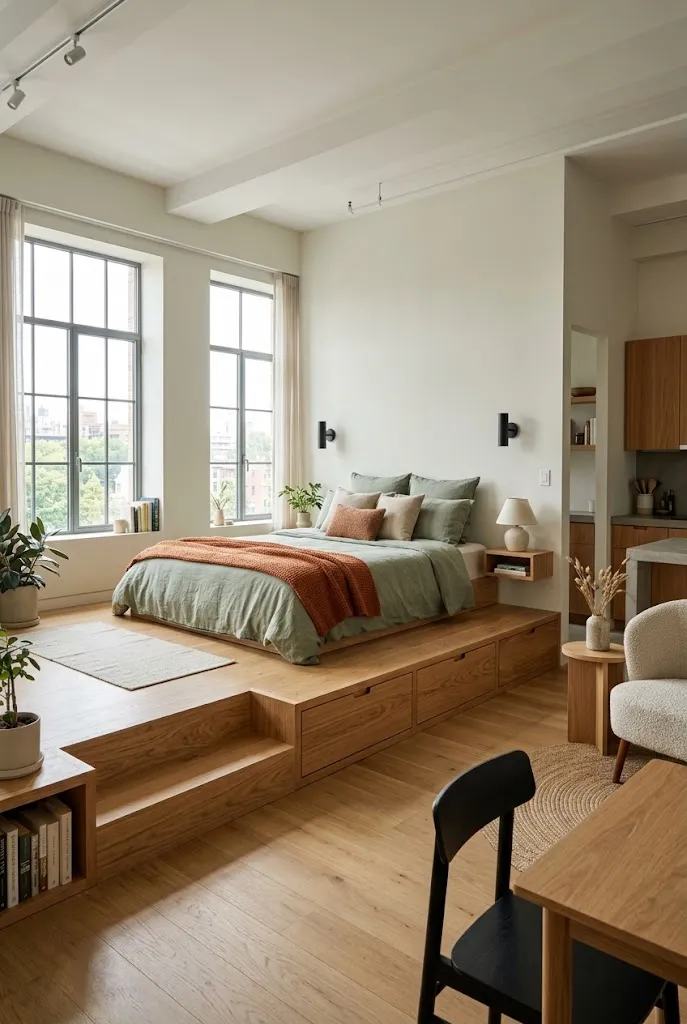
- A raised platform creates zoning without blocking light.
- Built-in drawers add valuable hidden storage.
- The change in floor level gives the bed its own identity.
- A low mattress keeps the overall look streamlined.
A raised platform can make the bed feel intentionally separated even when there is no divider at all. Lifting the sleeping area just a few inches creates a subtle change in level that signals a new zone and gives the studio more architectural character. Pair the platform with a low-profile mattress, simple bedding, and hidden drawers underneath for extra storage. This idea is especially useful in compact homes where every piece needs to work harder. The elevated bed reads as its own destination while the rest of the floor plan stays open and uncluttered.
Storage is what makes a platform bed especially valuable in real studio living. In my experience, deep drawers for extra linens, shoes, or seasonal items can replace a separate dresser and free up precious floor space. Keep the platform finish close to the flooring or nearby furniture so it looks built in rather than added later. A narrow runner, wall sconce, or small nightstand can complete the sleeping area without crowding it. You gain better organization, clearer zoning, and a bedroom corner that feels purposeful instead of simply occupying leftover space.
6. Deep Accent Wall
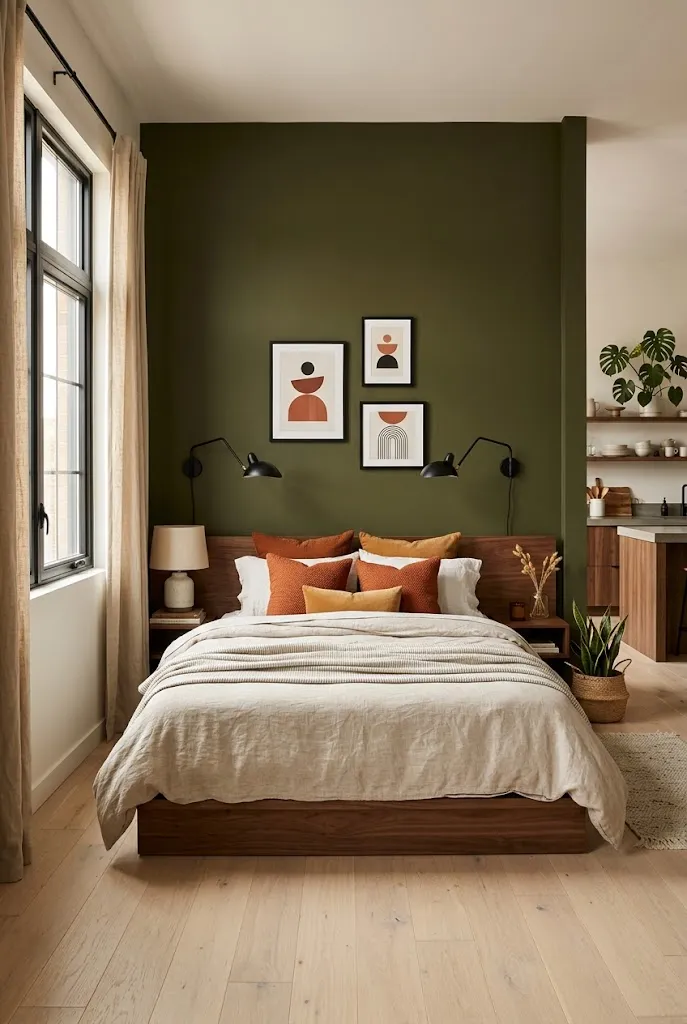
- A darker wall anchors the bed without using any floor space.
- Olive, terracotta, or muted blue can create clear visual contrast.
- Removable wallpaper offers a renter-friendly alternative to paint.
- Repeating the accent color lightly helps the zone feel cohesive.
A bold accent wall can define the sleeping area without sacrificing a single inch of floor space. Paint or wallpaper the wall behind the bed in a deeper shade such as olive, terracotta, charcoal, or muted blue, then keep the surrounding walls lighter. The color shift creates an immediate visual boundary and helps the bed feel anchored in its own zone. This approach works beautifully in rentals when removable wallpaper is allowed. It is simple, affordable, and especially effective when there is not enough room for shelving, curtains, or freestanding partitions.
Color works best when the rest of the sleeping area supports it without becoming too busy. I’ve noticed that repeating the accent shade once or twice in cushions, artwork, or a throw creates a more finished look than matching everything exactly. Keep larger pieces neutral and let the wall carry most of the visual weight. Warm lighting can deepen the color at night, while daylight keeps it fresh during the day. The result is a stronger bedroom identity, clearer zoning, and a studio that feels thoughtfully designed without adding any physical divider.
7. Low Half-Wall Divider
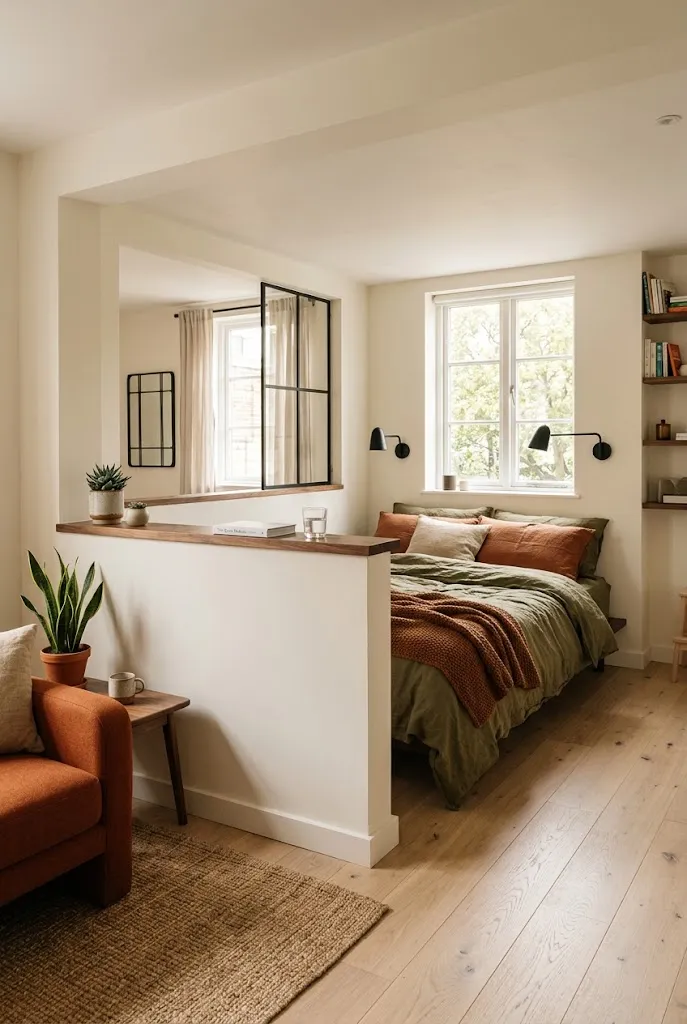
- A half-wall gives the bed privacy without blocking daylight.
- The top ledge can hold a lamp, books, or simple decor.
- Matching the divider to the walls keeps it visually light.
- Low furniture on both sides helps maintain an open feeling.
A low half-wall can give the bed meaningful privacy without cutting the studio in two. Build or place a waist-high divider between the sleeping and living areas so the bed feels tucked away while daylight still travels across the room. The ledge on top can hold a few books, a small lamp, or one framed print, adding function without extra furniture. This idea works especially well when you want stronger separation than a rug or color change can provide, but still need the apartment to feel bright, open, and easy to move through.
The best half-wall layouts keep the top surface simple and the surrounding furniture low. In my experience, matching the divider color to the walls makes it feel architectural rather than bulky, while a wood cap adds just enough warmth. Position the bed so the headboard sits behind the partition and keep the sofa on the opposite side to reinforce two clear zones. You will notice that the sleeping area feels quieter and more protected, yet the room still shares one continuous flow of light, flooring, and visual space throughout the day.
8. Woven Folding Screen
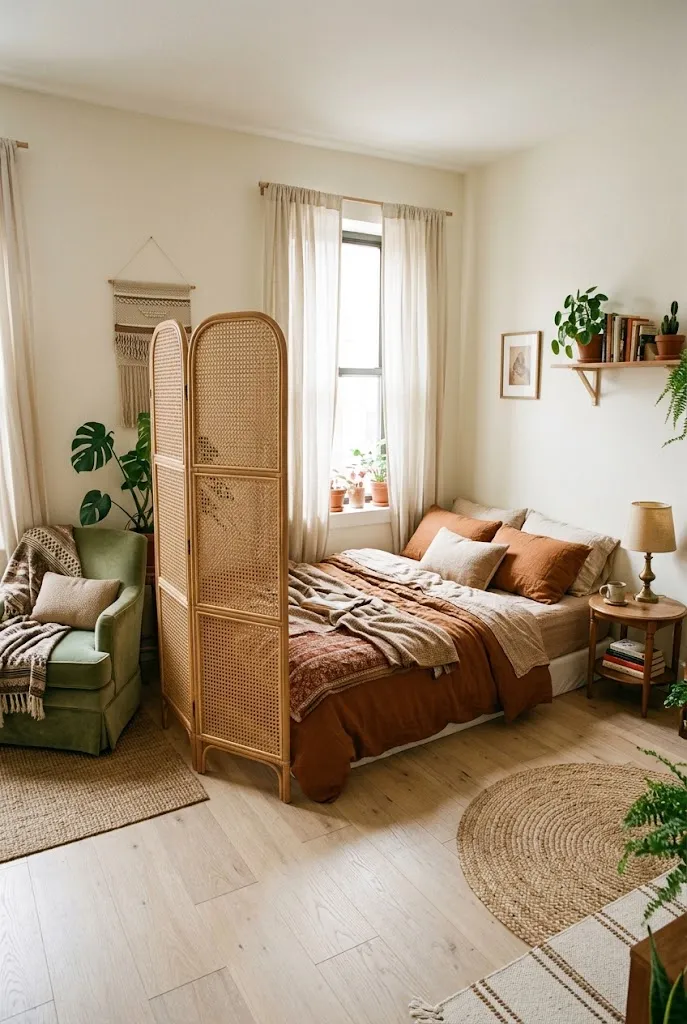
- A folding screen creates instant privacy without installation.
- Rattan and cane add warmth and natural texture.
- The panels can move whenever the layout needs to change.
- An angled placement feels softer than a rigid straight divider.
A folding screen is one of the fastest ways to carve out a sleeping corner without installing anything permanent. Choose a woven rattan, cane, or fabric-covered screen and angle it beside the bed so it blocks the most direct view from the sofa or entry. Because the panels can move, you can adjust the amount of privacy whenever the layout changes. Natural woven materials also add texture and warmth, making the divider feel decorative instead of temporary. It is a smart choice for renters who want flexibility without sacrificing a polished, intentional look.
Placement matters more than the size of the screen, especially in a compact room. I’ve noticed that positioning it slightly off-center creates a softer transition than lining it up rigidly with the bed. Keep one side open so the sleeping area never feels boxed in, and repeat the screen’s natural tone in a basket, lamp base, or small table nearby. When the divider is styled as part of the room rather than an obstacle, the bed gains privacy and character while the studio remains easy to rearrange for guests, cleaning, or everyday life.
9. Storage Headboard Wall
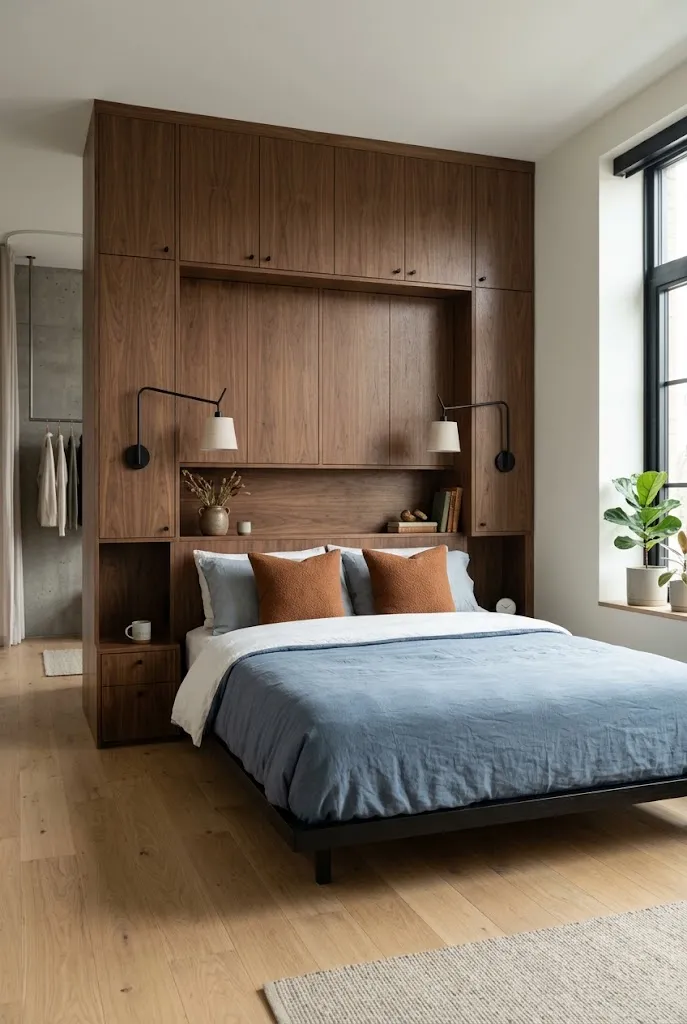
- A wide headboard visually frames the entire sleeping zone.
- Closed storage keeps bedding and everyday items out of sight.
- Built-in niches can replace bulky bedside tables.
- Extending the feature beyond the mattress makes the bed feel intentional.
A storage headboard wall can turn an ordinary bed into a defined destination while solving clutter at the same time. Use a wide built-in or freestanding unit behind the bed with shallow shelves, closed cabinets, or narrow ledges for everyday essentials. Extending the feature beyond the mattress visually frames the entire sleeping area, so it reads as a deliberate zone rather than furniture placed against a wall. This works especially well in studios where adding another divider would restrict circulation. The bed gains presence, storage, and structure without interrupting the room’s open floor plan.
Keep the storage mostly closed if you want the sleeping area to feel calm rather than busy. In my experience, one or two open niches for a lamp, book, or small object are enough to add personality without creating visual clutter. Match the unit to the bed frame or nearby wood tones, then use contrasting bedding to give the zone depth. Wall-mounted reading lights can free the nightstand surfaces completely. The finished setup feels tailored and efficient, and everything you need at bedtime stays close without adding bulky furniture around the bed.
10. Area Rug Boundary
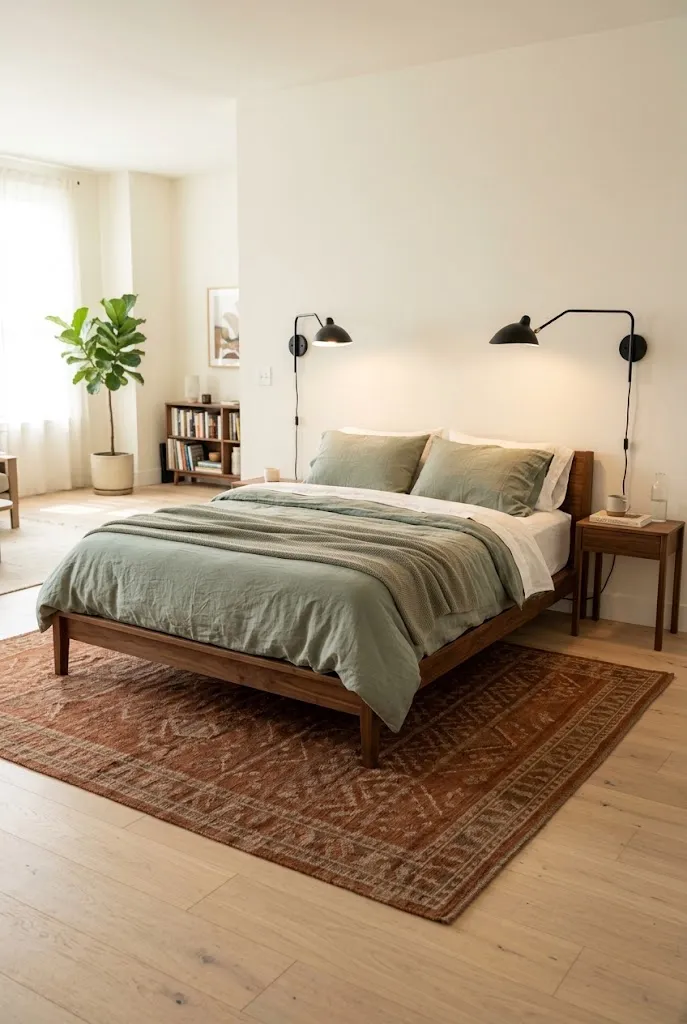
- A large rug creates a clear sleeping footprint without adding walls.
- Soft texture makes the bed area feel warmer and more comfortable.
- Visible flooring around the rug strengthens the visual boundary.
- Earthy colors help connect the bed with the rest of the studio.
A well-placed rug can make the bed feel like its own room even when no physical divider is possible. Choose a rug large enough to extend beyond the sides and foot of the bed, then keep the surrounding flooring visible to create a clear visual boundary. This approach works especially well in very small studios where shelving or screens would interrupt circulation. A textured wool, jute, or low-pile rug adds softness underfoot while giving the sleeping area a defined footprint. The result feels warmer, more intentional, and easier to read at a glance.
The strongest look comes from letting the rug support the bedding rather than compete with it. In my experience, muted patterns, warm neutrals, or earthy tones work beautifully because they add definition without making the corner feel busy. Keep the bed centered on the rug and repeat one color in a throw or cushion for a connected look. If the apartment already has bold decor, choose a quieter rug with visible texture instead. You will gain a stronger sense of separation, more comfort around the bed, and a softer transition between sleeping and living areas.
11. Lofted Sleeping Nook
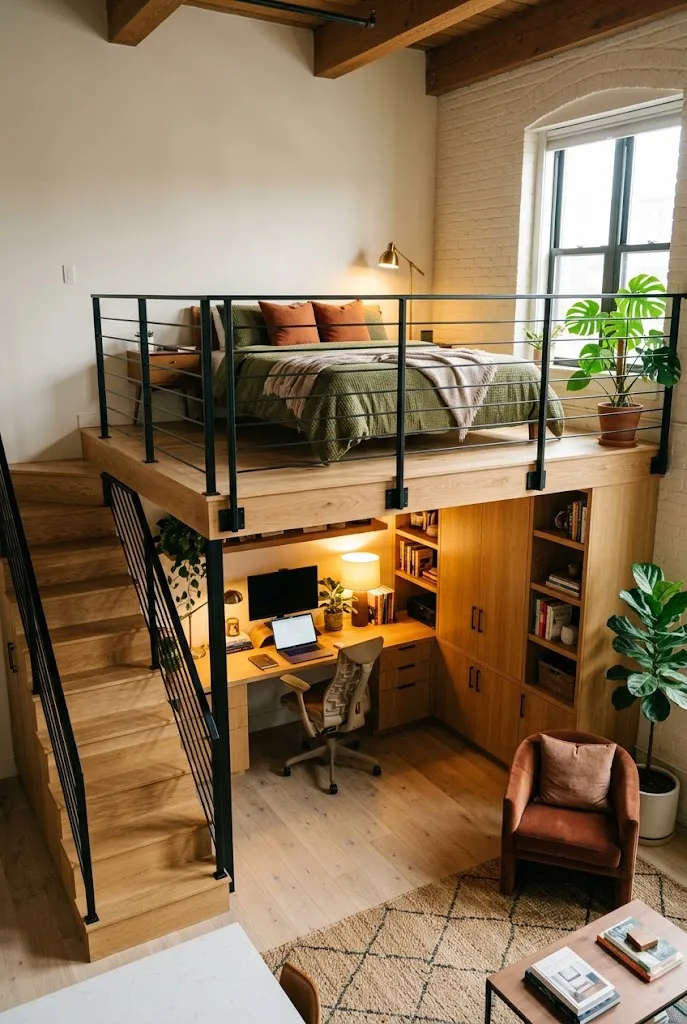
- Raising the bed frees valuable floor space underneath.
- The upper level naturally creates stronger bedroom separation.
- A desk or storage zone can fit below without expanding the footprint.
- Slim railings keep the loft visually open.
A lofted sleeping nook can completely change how a studio uses its limited floor area. Raising the bed above a desk, storage unit, or compact lounge creates a clear vertical bedroom zone while freeing valuable space below for another function. This works best in apartments with generous ceiling height and a layout that can safely support a raised structure. Keep the platform visually simple and use slim railings or open sides to avoid heaviness. The result feels clever and architectural, giving the sleeping area privacy while making the studio work harder without adding extra square footage.
Safety and scale matter most with this type of setup, so the structure should feel stable rather than improvised. I’ve seen this work well when the lower area stays light and uncluttered, using a small desk, built-in drawers, or a compact reading chair instead of bulky furniture. Match the ladder or steps to nearby wood tones for visual continuity, and add warm lighting beneath the loft so the lower zone never feels dark. The bed becomes a distinct retreat above, while the space underneath gains a practical purpose that makes everyday studio living feel more organized.
12. Gallery Wall Anchor
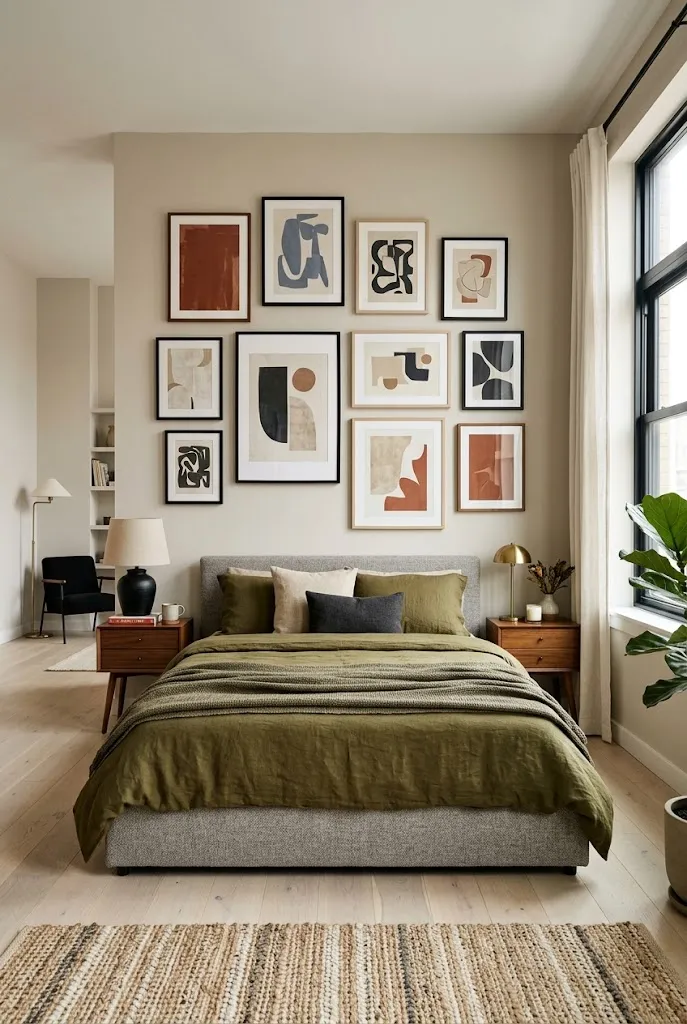
- A gallery wall visually frames the bed without using floor space.
- Repeating colors in the bedding makes the zone feel cohesive.
- A focused arrangement creates stronger impact than scattered artwork.
- Consistent frames keep the look polished and intentional.
A gallery wall can visually anchor the bed and make the sleeping area feel intentionally designed without using any floor space. Arrange a focused group of framed prints above the headboard, keeping the composition within the width of the bed so the eye reads it as one complete zone. Choose artwork with a shared color palette, such as muted blue, rust, black, and warm neutrals, to create cohesion. This simple trick gives the bed stronger presence and helps separate it visually from nearby dining, working, or lounging areas in the same open room.
The key is creating enough impact without turning the wall into visual clutter. In my experience, three to five pieces in varied sizes usually feel more balanced than covering the entire surface. Keep frame finishes consistent, then repeat one artwork color in the bedding or bedside lamp to tie everything together. If the studio is especially small, leave generous wall space around the arrangement so the zone can breathe. You will notice that the bed feels more finished, the room gains personality, and the sleeping corner becomes a clear focal point without needing curtains, shelving, or construction.
13. Soft Ceiling Canopy
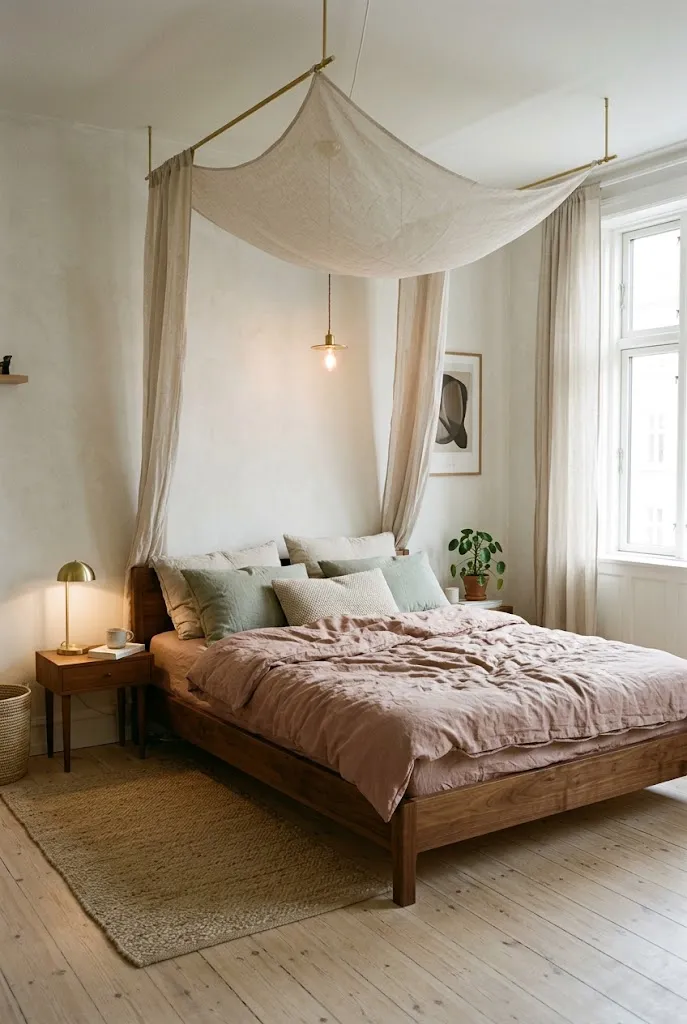
- A ceiling canopy defines the bed without using floor space.
- Lightweight fabric adds softness without making the studio feel enclosed.
- Warm lighting makes the sleeping zone feel more intimate at night.
- Keeping the canopy close to the bed preserves open circulation.
A ceiling canopy can make a sleeping corner feel intimate without turning it into a closed box. Suspend a lightweight fabric panel or slim canopy frame above the bed, then let soft linen fall just behind the headboard or along one side. This creates a gentle sense of enclosure while keeping the floor completely open. The idea works especially well when the bed sits in an exposed corner and needs visual definition. With warm lighting and simple bedding, the setup feels calm, cocooned, and clearly separate from the rest of the studio.
I’ve noticed this approach works best when the fabric stays light, breathable, and slightly sheer. Heavy curtains can make a compact room feel smaller, while soft linen or voile adds privacy without blocking daylight. Keep the canopy close to the bed’s footprint, and repeat one fabric tone in a pillow, throw, or rug for a cohesive finish. A wall sconce or small pendant inside the zone adds extra warmth at night. The result is a soft, memorable sleeping area that feels intentionally designed without using bulky furniture or permanent construction.
Conclusion
A defined sleeping area can make studio living feel calmer, more private, and much more polished. These ideas show that creating a bedroom zone in a studio apartment does not require a full renovation or permanent walls. A curtain, rug, bookshelf, accent wall, or thoughtful furniture arrangement can completely change how the room functions and feels. Start with the solution that fits your space and budget, then build from there. Save this post on Pinterest for future inspiration, try one or two ideas in your own studio, and share it with someone else who wants to make a small home feel beautifully organized.
Read More:
21 Micro Studio Apartment Ideas for 200 Sq Ft That Feel Surprisingly Spacious
21 Clutter-Free Studio Apartment Ideas You’ll Want to Try Today
Community
Join the conversation
Add a useful idea, ask a specific question, or share what worked in your space. Every comment is reviewed before it appears.