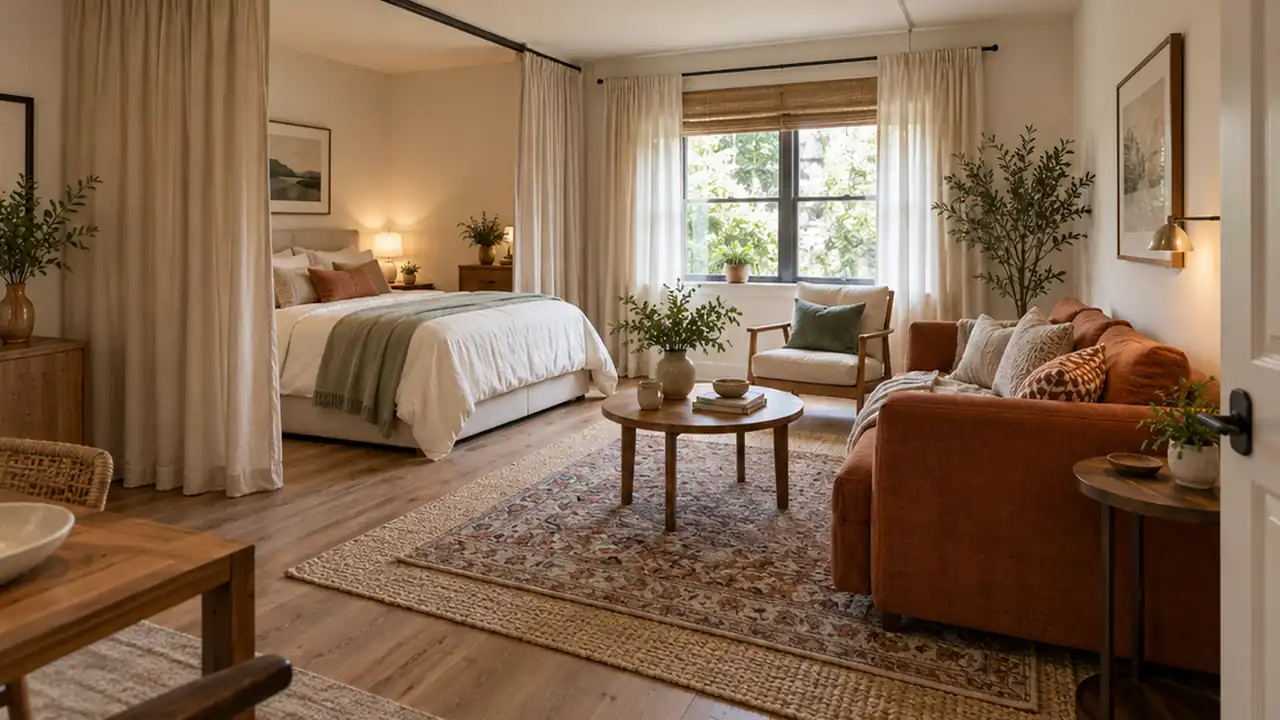
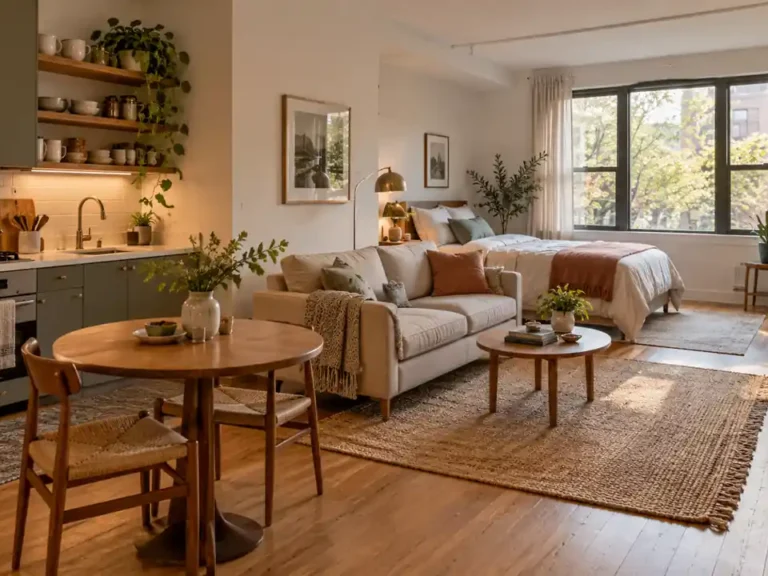
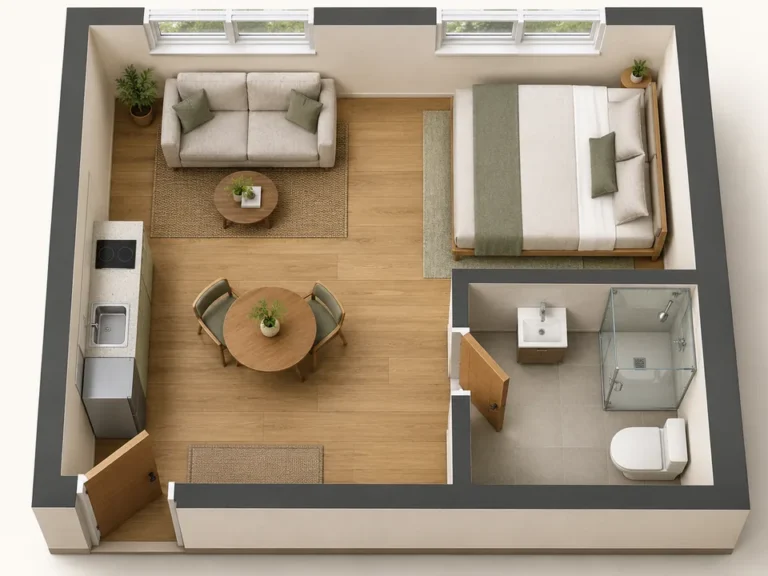
The best bedroom living room combo ideas give both parts of the room a clear purpose. You need a welcoming place to read, relax, or talk with a friend, plus a sleeping area that still feels personal at the end of the day. A small apartment can support those different moods without being divided into a maze of furniture.
Start by noticing the transitions that feel awkward. Perhaps guests can see straight into the bed, evening lamps brighten every corner, or cushions have nowhere to go at night. These nineteen ideas focus on privacy, shared light, practical boundaries, and easy daily resets, helping one room feel comfortable throughout your changing routine.
1. Entry Facing Lounge
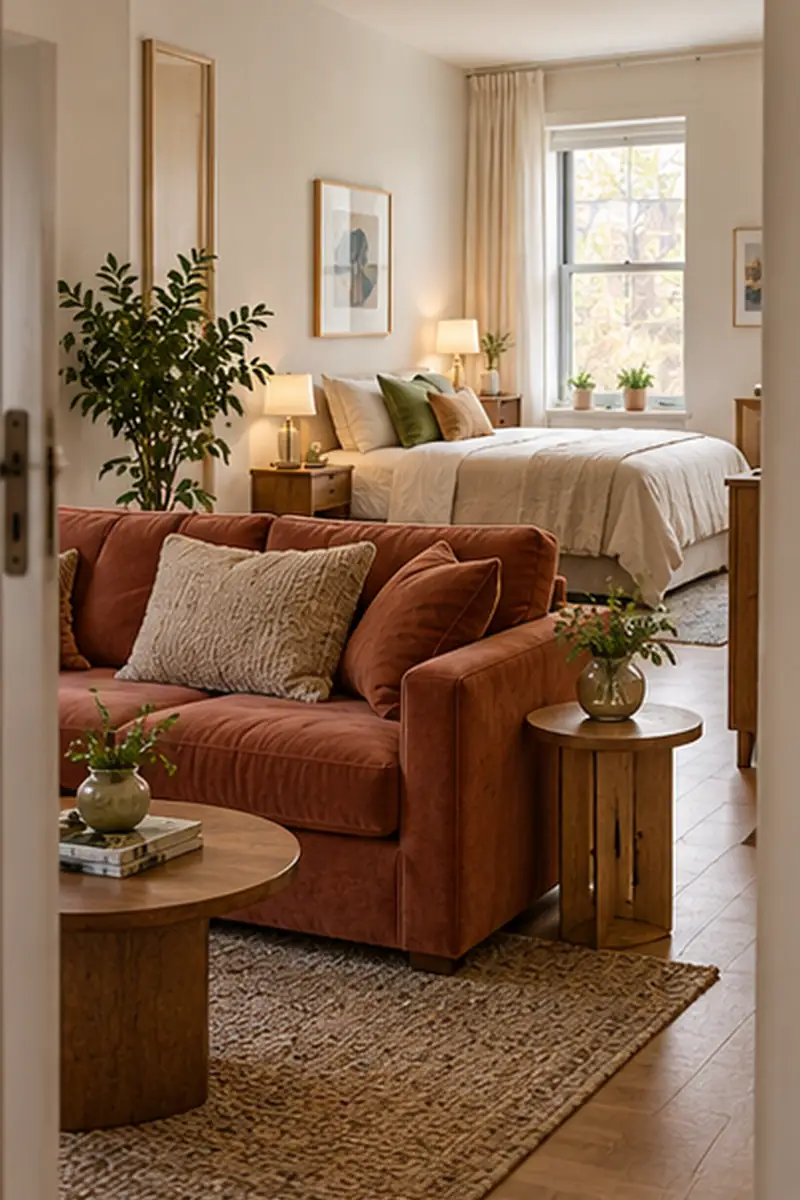
Let the first view through the door lead toward a welcoming place to sit. Position the sofa where visitors can approach it naturally, then place the bed farther from that opening if the room allows. A small side table and a lamp make the lounge feel purposeful from the entrance.
Test this arrangement by walking in with a bag and coat, then moving toward the seat. You should not need to cross the sleeping area or squeeze past bedside belongings. Keep the door fully usable, and leave a direct route through the room instead of enclosing the lounge with furniture.
2. Curtain Sleep Boundary
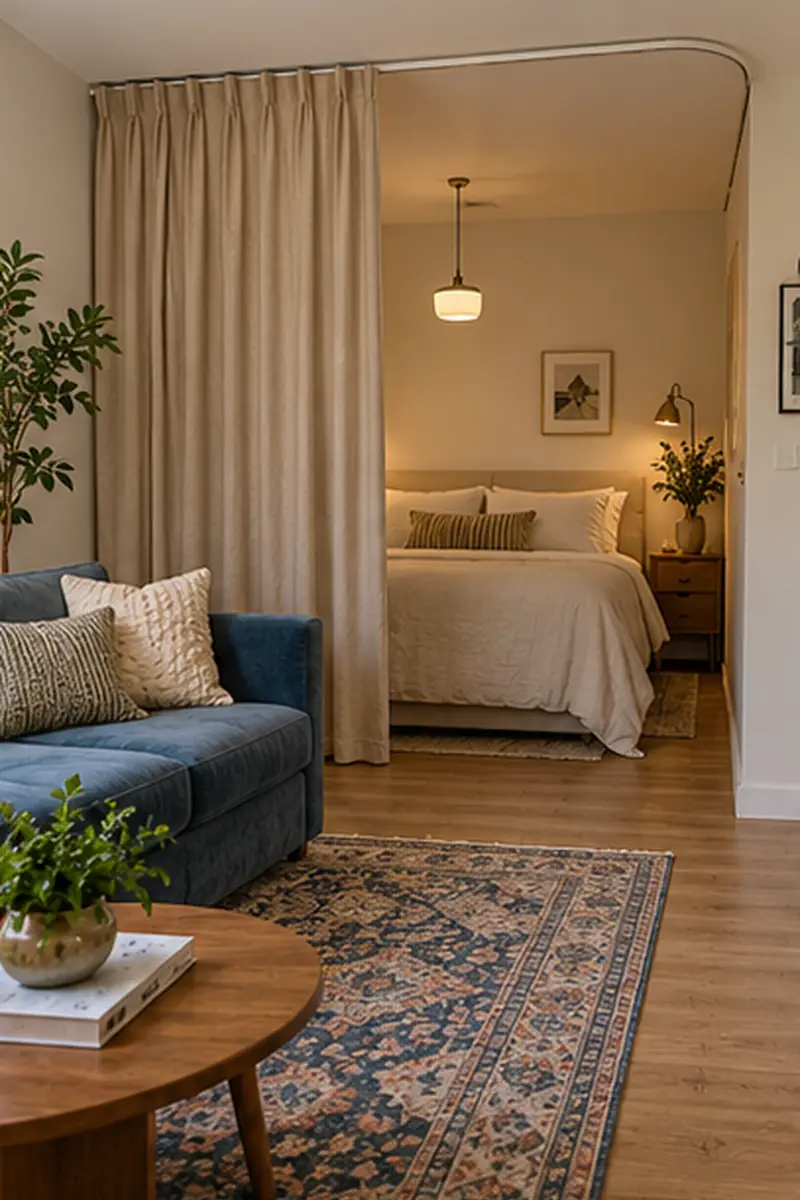
- Choose an opaque curtain when visual privacy is the main goal.
- Use a suitable track or purpose-built support system, with rental permission for any installation.
- Leave room for the curtain to gather fully at one side during the day.
- Keep fabric away from heat sources, outlets in use, and the route to doors or accessible windows.
A curtain lets the room change with your schedule. Close it when the sleeping area needs a little privacy, then draw it back to share light and floor space. Fabric does not create a soundproof room, so discuss quiet hours if someone rests while another person uses the living area.
3. Twin Rug Zones
Quick Tip:
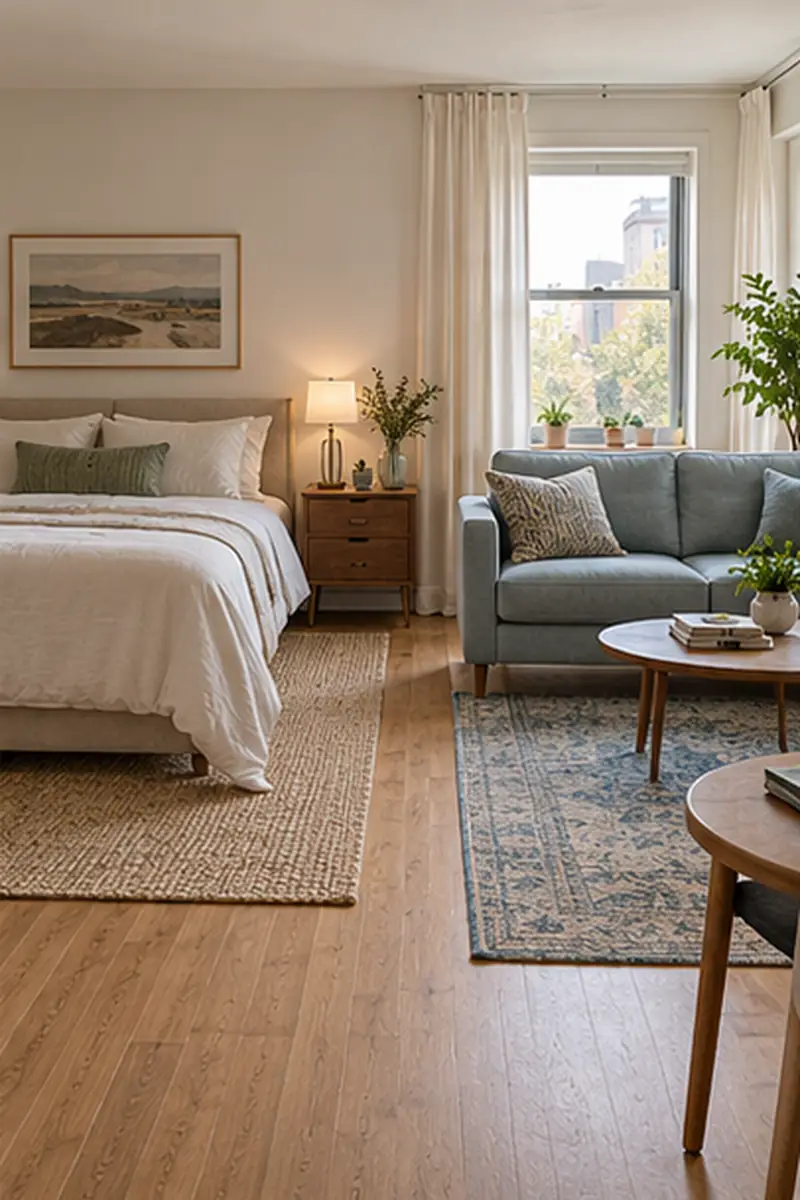
Mark two rug footprints before ordering either piece. Leave a visible strip of floor between them if the room is large enough, and check that the edges will lie flat along the walking route.
Give the sofa and bed separate soft foundations while keeping their colors related. A patterned lounge rug can handle more visual activity, while a quieter bedroom rug supports the restful side. Use suitable nonslip pads and avoid layering edges across the main path, where the change in thickness can catch feet.
4. Sofa Back Boundary
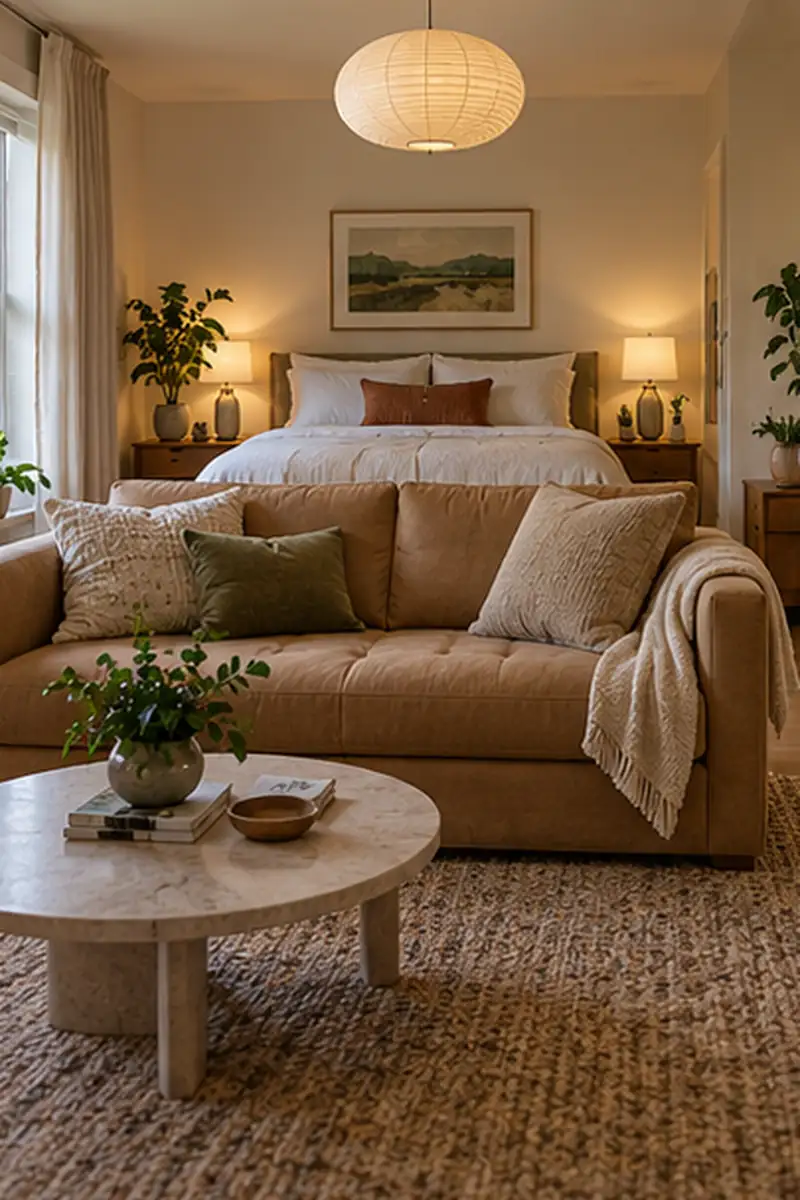
BEFORE: The bed and sofa both face the middle of the room, so their everyday belongings seem mixed together. The space feels like one oversized furniture grouping.
AFTER: A low sofa back draws a gentle line in front of the sleeping area. Each side has its own purpose while daylight still travels across the room.
Choose a sofa that looks finished from behind because its back becomes part of the view. Leave enough space to make the bed and move between the two areas. Skip the temptation to fill every gap with a console; the open floor around this boundary is what keeps the arrangement comfortable.
5. Quiet Window Bed
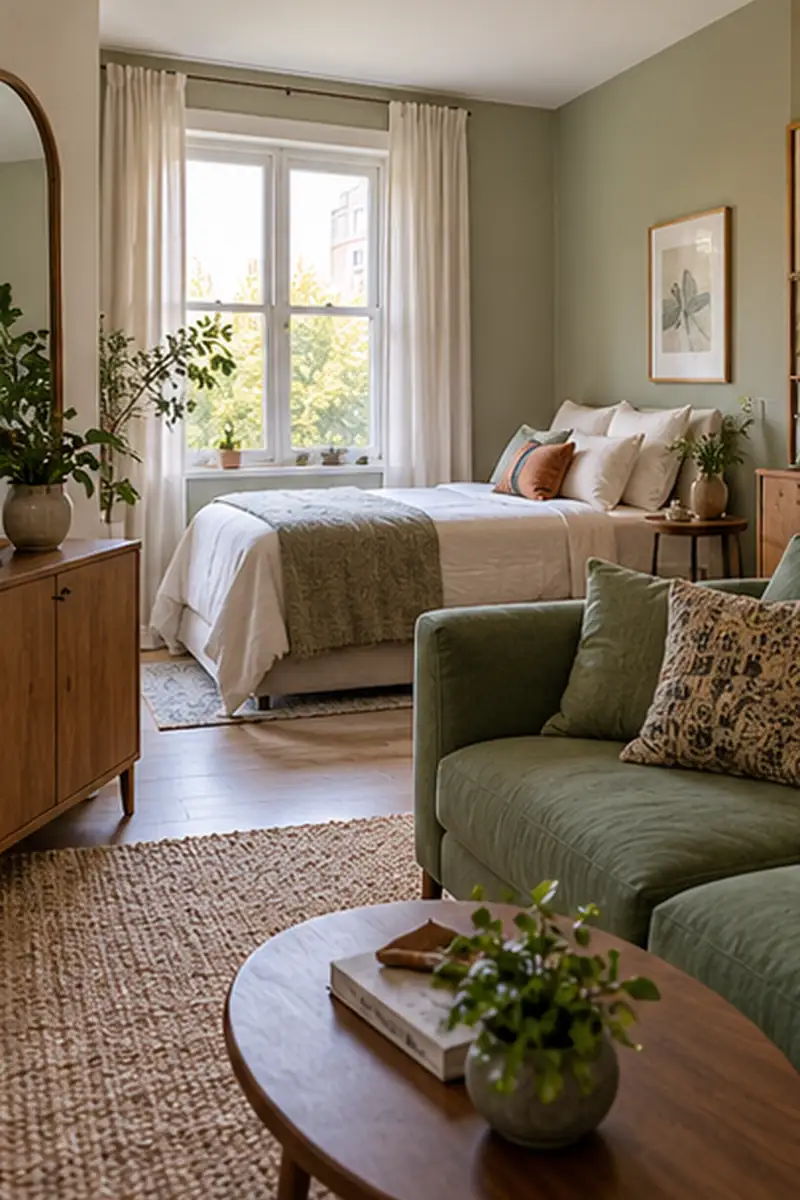
- Identify the quietest practical part of the room at the time you normally sleep.
- Position the bed there without blocking the window, its controls, or necessary access.
- Place the main living seat closer to the entrance if that keeps household activity away from the pillows.
- Test the window covering from bed and check that the bedside remains comfortable to reach.
A window-side sleeping area can feel tucked away when the living zone occupies the front of the room. Check light, temperature, and street noise before choosing it solely for the view. Keep any heater or vent clear according to its instructions, and leave the window available for its intended use.
6. Low Storage Edge
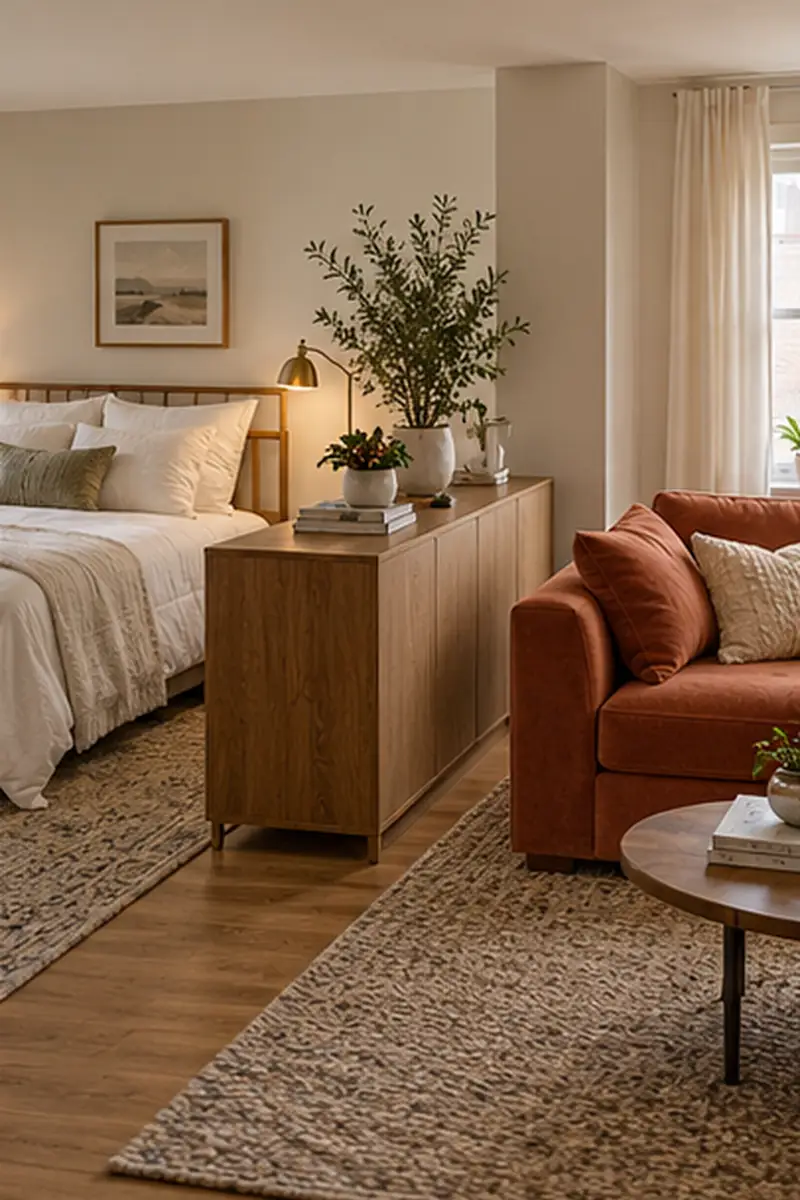
| Detail | Tall Open Divider | Low Closed Cabinet |
|---|---|---|
| Visual boundary | More noticeable separation | A gentle edge between zones |
| Shared daylight | Can interrupt light across the room | Usually leaves more open space above |
| Stored belongings | Items remain visible | Doors hide everyday clutter |
A low cabinet can separate uses while giving blankets or books a home. Choose furniture suited to the location and follow its stability and anchoring instructions. Keep the top lightly styled rather than stacking possessions into a taller barrier. Confirm that doors open without entering the route between bed and sofa.
7. Shared Color Thread
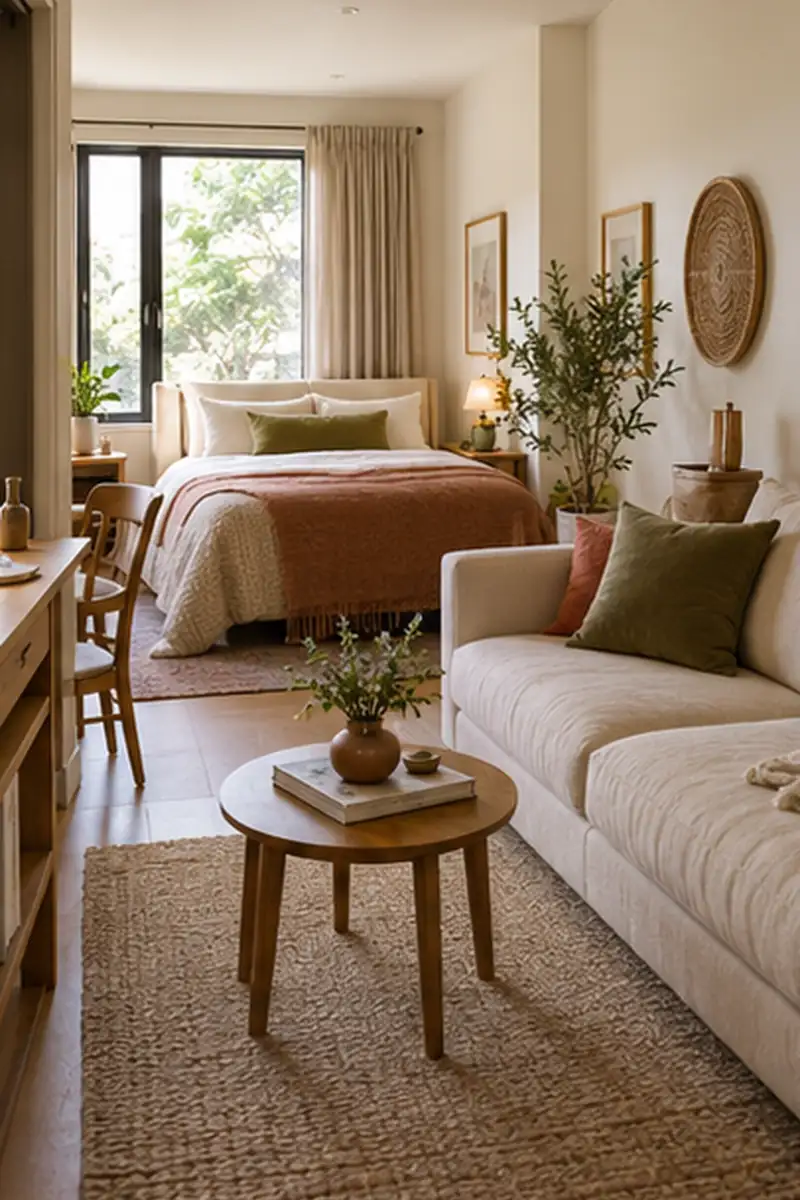
DO
- Repeat one accent color in both the bed and living textiles.
- Keep the largest surfaces within a compatible color family.
- Allow each zone to use a different balance of pattern and texture.
DON’T
- Buy a matching set just to make the room feel connected.
- Introduce a new strong color with every small accessory.
- Choose fabrics without checking them beside the existing floor.
A repeated color helps separate areas belong to the same home. Olive cushions on the sofa might connect to a small stripe in the bedding, while cream remains the common background. Bring samples together in the room before deciding. The connection can be subtle enough that each zone retains its own mood.
8. Bedside Lighting Zone
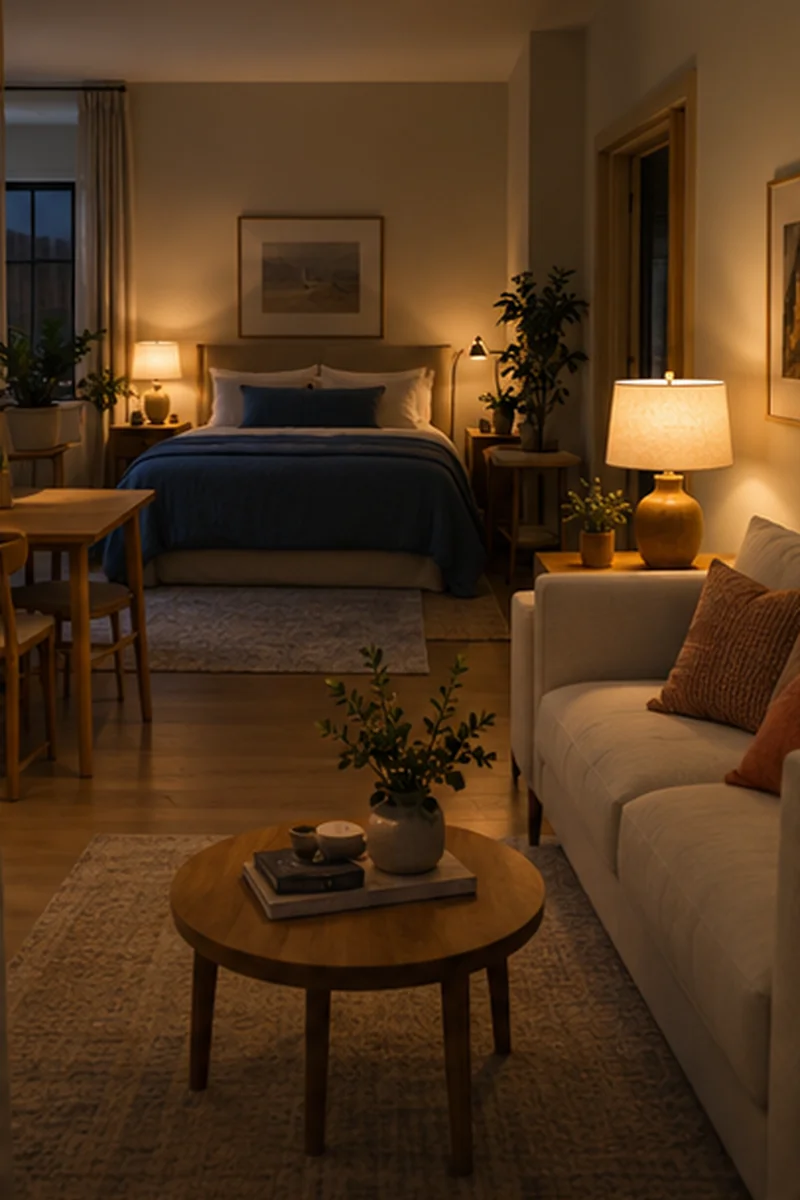
Rest Area: A reachable shaded lamp for winding down.
Living Area: Separate lighting for reading or conversation.
Control: Switches that let each zone work independently.
Cable Route: Along furniture edges and away from walking paths.
Different pools of light can make one room feel ready for two routines. Try the lamps after dark and notice what someone in bed can see. A bright exposed bulb beside the sofa may interrupt the resting area, even if the lamp itself looks attractive. Adjust its shade or position accordingly.
9. Living Room Focal Point
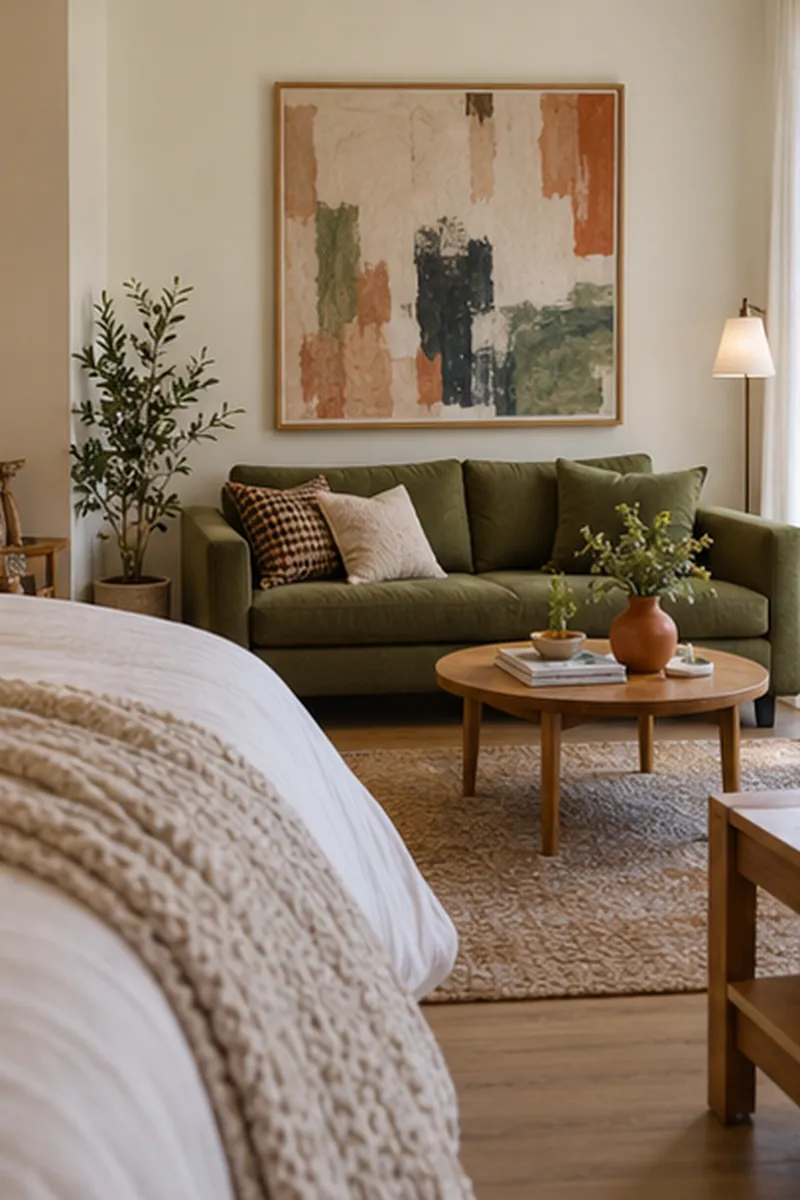
Give the living area something to gather around besides the bed across the room. One piece of artwork above the sofa, an appealing view, or a simple arrangement of books can establish a focus. Position seating so conversation naturally turns toward this part of the room rather than the pillows.
Keep that focal point proportional to the lounge area instead of spreading decorations over every wall. The bed can have a quieter backdrop with fewer small details. This difference helps guests recognize where to settle and makes it easier to leave the social part of the room behind at bedtime.
10. Guest Ready Daybed
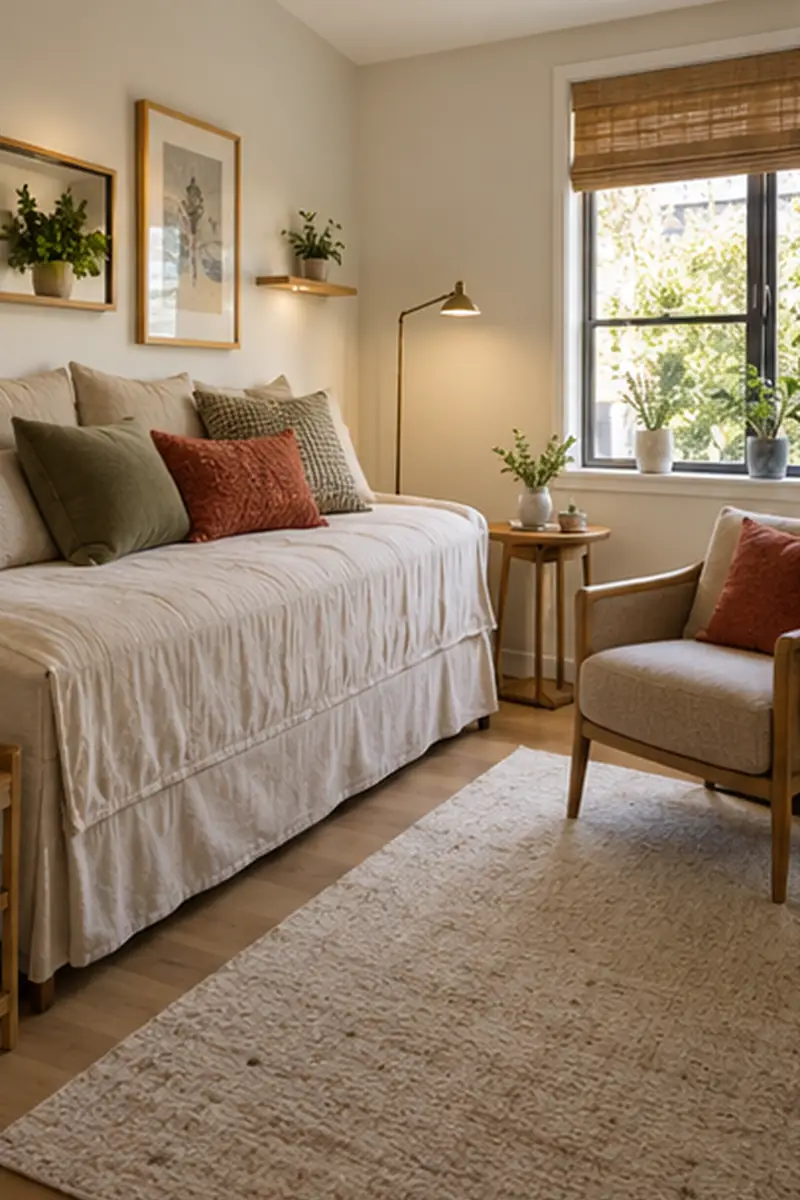
- Choose a daybed intended for both sitting and sleeping if one piece must do both jobs.
- Use a fitted cover or neatly tucked textile to create a clear daytime surface.
- Add supportive back cushions that have a storage place when it is time to sleep.
- Keep sleeping pillows and bedding clean and separate from the items used while hosting.
A daybed works best when the daily changeover feels easy enough to repeat. Put bedding within reach in a closed container or suitable drawer, then keep the daytime cushion count modest. Check that the mattress and seat depth suit your needs before choosing the style, especially when this is your main bed.
11. Reversible Folding Screen

Quick Tip:
Use a purpose-built screen to interrupt the view of the bed from the doorway. Follow its instructions for panel angles, support, and placement, and check that it stays stable before relying on the arrangement.
A folding screen gives you a boundary you can adjust as routines change. Place it beside the headboard end rather than boxing in the entire bed. Leave the route to the door open, and store the folded screen securely when it is not needed. Lightweight does not automatically mean tip-resistant.
12. Open Daytime Curtains
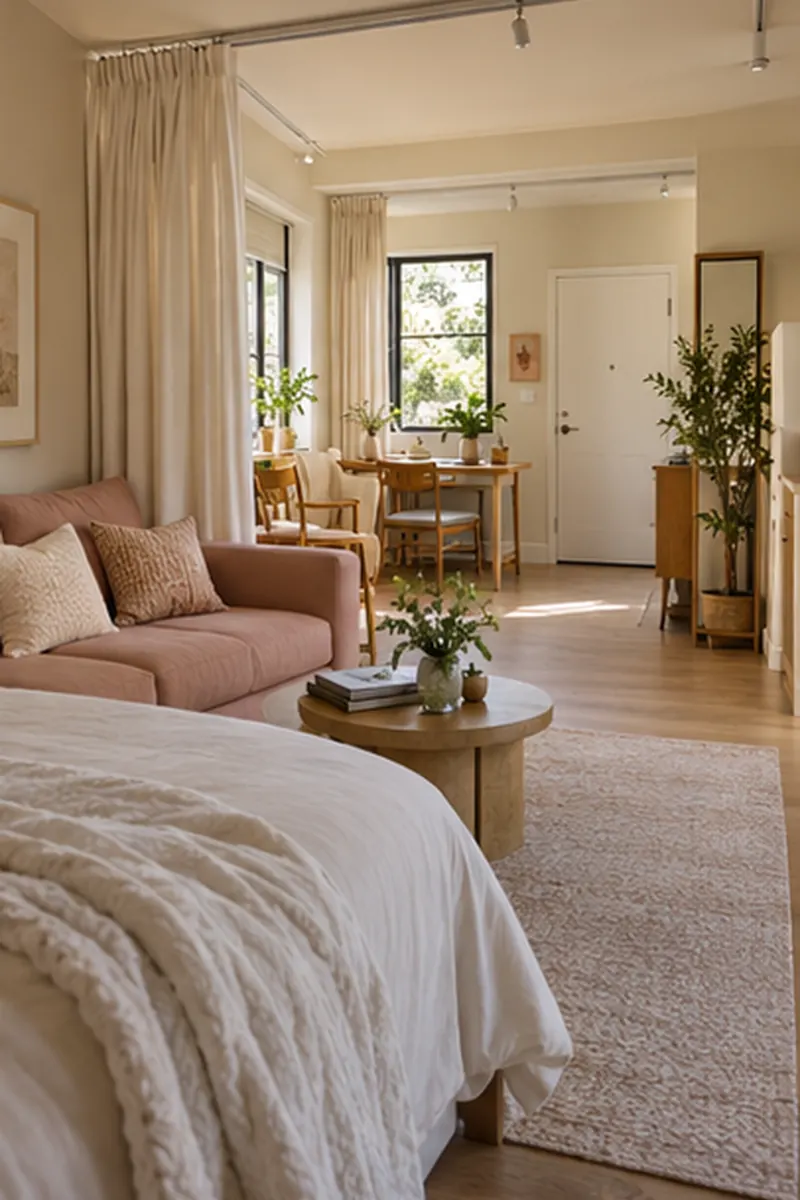
BEFORE: A sleeping curtain stays closed all day, leaving the lounge dim and the room visually chopped into small pieces. The fabric also gathers around a busy crossing point.
AFTER: The curtain has a dedicated stacking place clear of the walkway. Opening it each morning reconnects the room and makes the window easier to reach.
Plan where the curtain goes when it is open, not only where it hangs when closed. A panel that cannot gather neatly may need a different width or track arrangement. Keep the resting area simple enough that opening the curtain feels pleasant, with bedding straightened and personal items contained nearby.
13. Separate Reading Corner
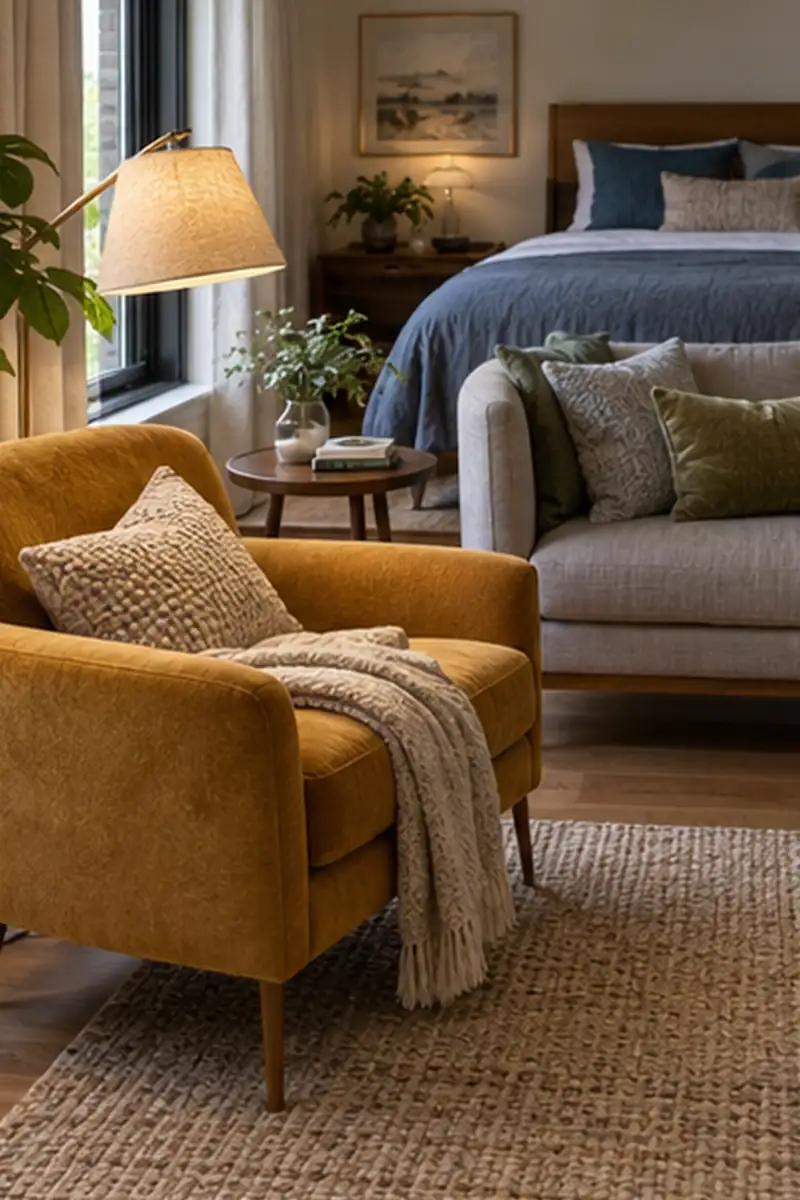
- Choose the part of the living area with comfortable light and a usable outlet nearby.
- Place a compact reading chair so its main view faces the lounge rather than the bed.
- Add one stable side surface for a book and drink if the floor space permits.
- Check that the chair and lamp leave an easy route between the room’s two functions.
A reading corner can provide a useful middle ground between socializing on the sofa and getting into bed. Keep it modest, especially if the room already has enough seating. A favorite sofa end with its own light can serve the same purpose when a separate chair would crowd the transition area.
14. Dual Purpose Surface
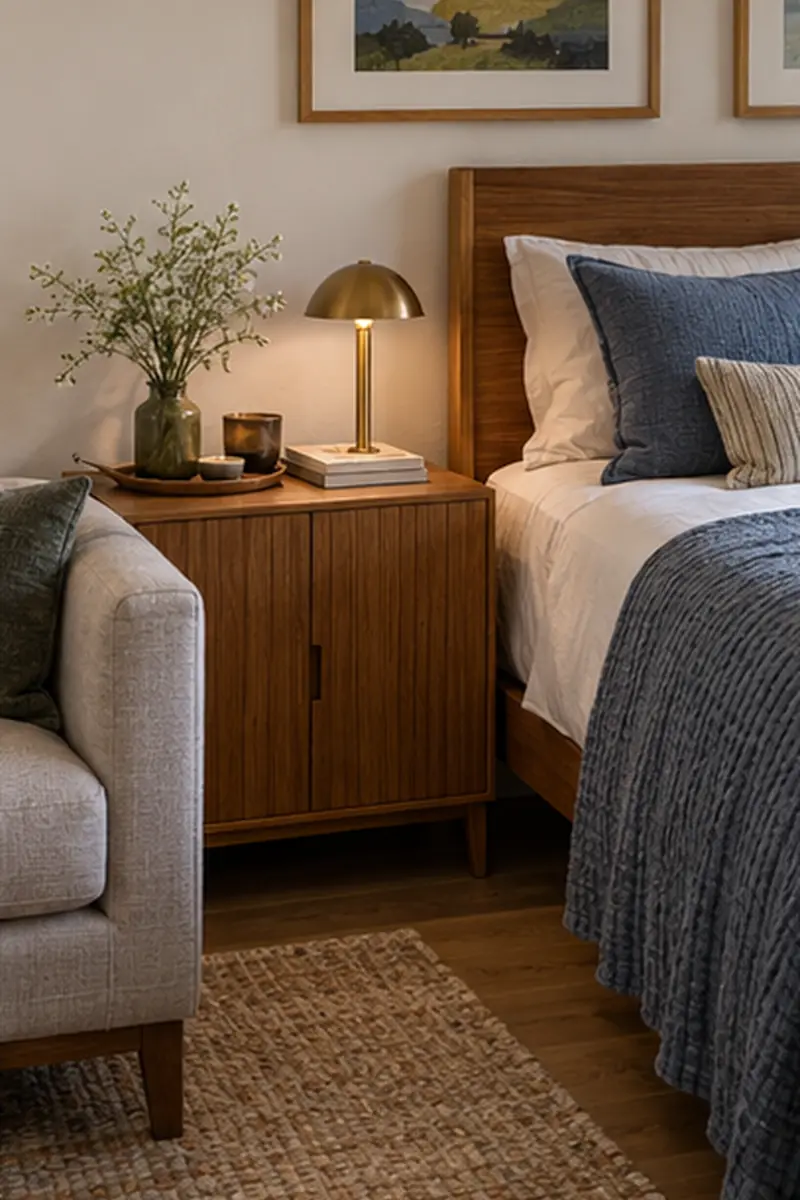
| Detail | Two Separate Tables | One Shared Surface |
|---|---|---|
| Floor use | A footprint in each zone | One footprint at the boundary |
| Organization | Belongings stay apart naturally | Small trays can separate uses |
| Reach | Each table fits its seat | Both positions need a reach test |
One low cabinet beside the bed and sofa can support both areas when the heights and distances work. Test it from each position before treating it as a shared solution. Use separate small trays for bedtime essentials and living room items, leaving enough free surface for a lamp or glass.
15. Closed Bedroom Storage
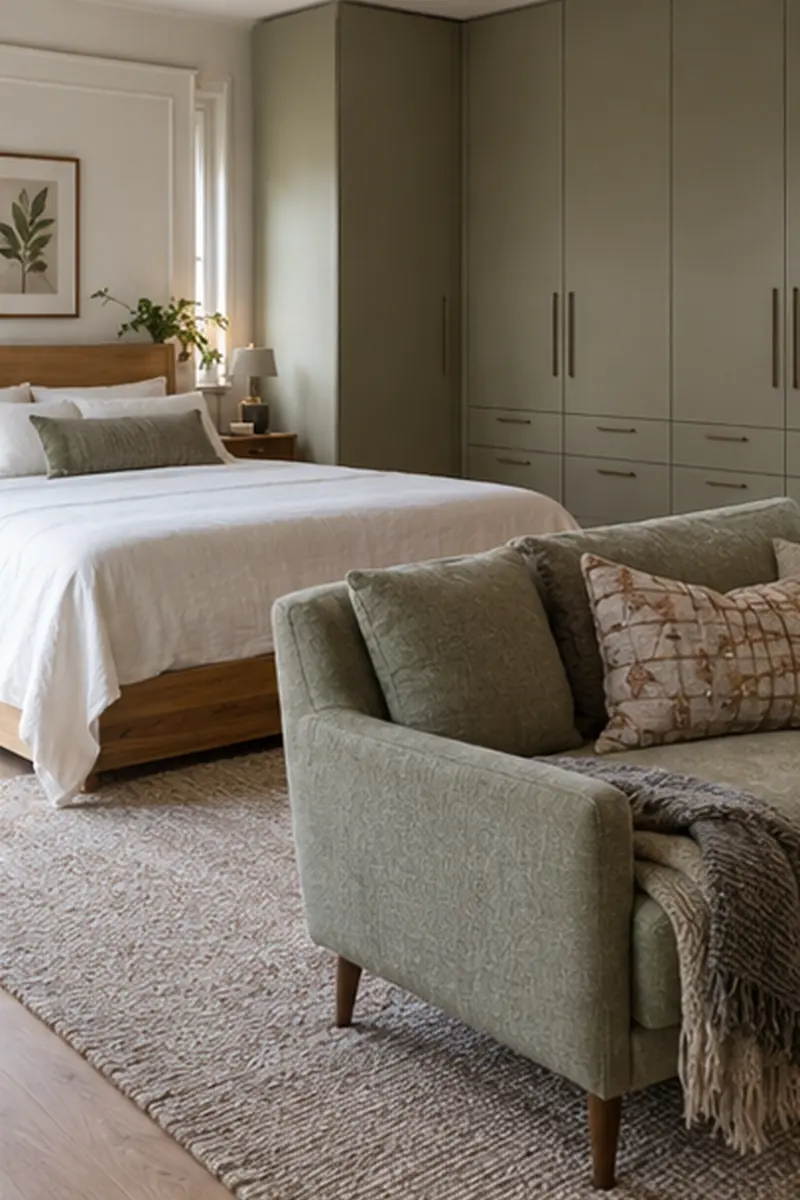
DO
- Give sleepwear and personal items a closed storage place.
- Keep everyday bedding within easy reach of the sleeping area.
- Reserve visible shelves for a few objects you enjoy seeing.
DON’T
- Use the sofa as the permanent landing place for clothes.
- Overfill a cabinet so that its doors stay open.
- Block wardrobe access with a privacy divider.
Closed storage helps the lounge feel ready for visitors without requiring a complete bedroom reset. Start with the belongings that most often migrate onto seats, then give each group a practical home. Follow furniture anchoring instructions and keep the storage easy to open, so tidying stays a small daily action.
16. Clear Transition Aisle
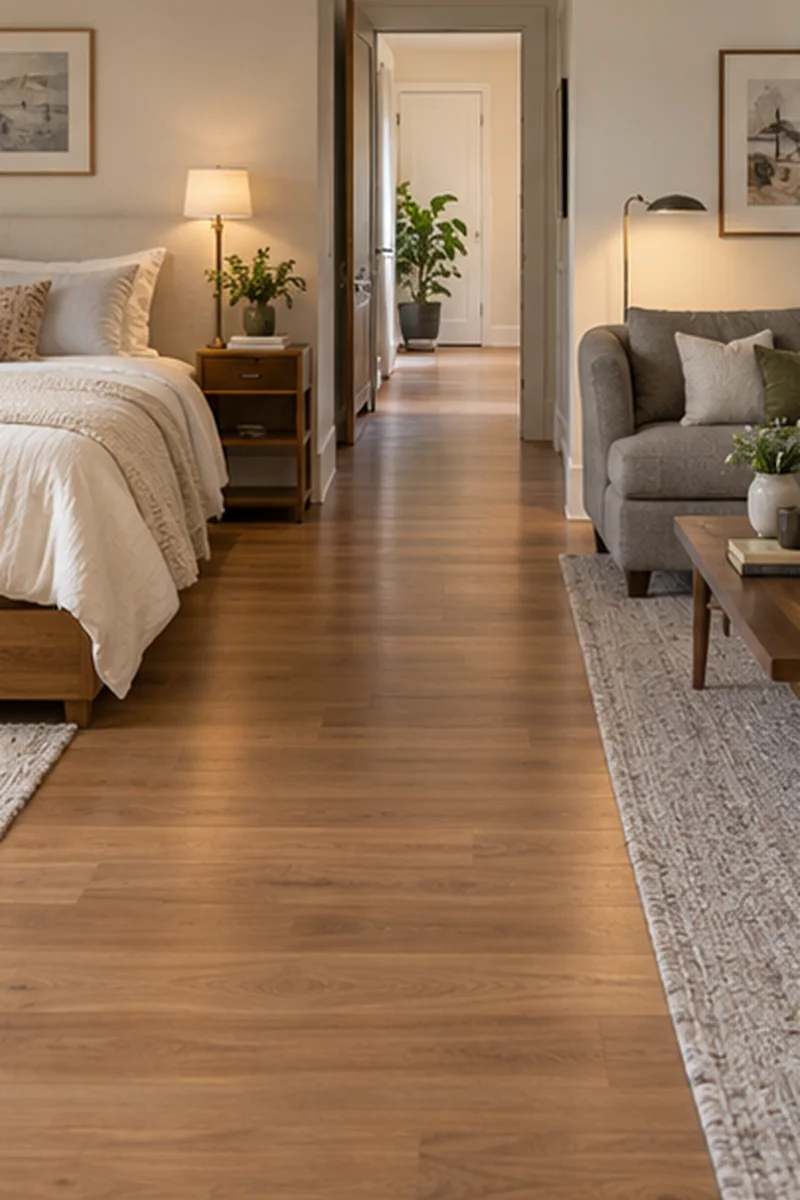
Main Route: Connect the entrance, living seat, and sleeping area.
Floor Surface: Keep rug edges flat and crossings uncomplicated.
Door Check: Test room doors and storage doors fully open.
Evening Check: Walk the route with only your usual nighttime lights.
The space between zones is where the combination succeeds or becomes frustrating. Leave this passage intentionally simple rather than decorating it with another stool or basket. Carry a laundry basket through as a practical test. If you must turn sideways around furniture, reconsider the boundary before adding more pieces to it.
17. Evening Reset Basket
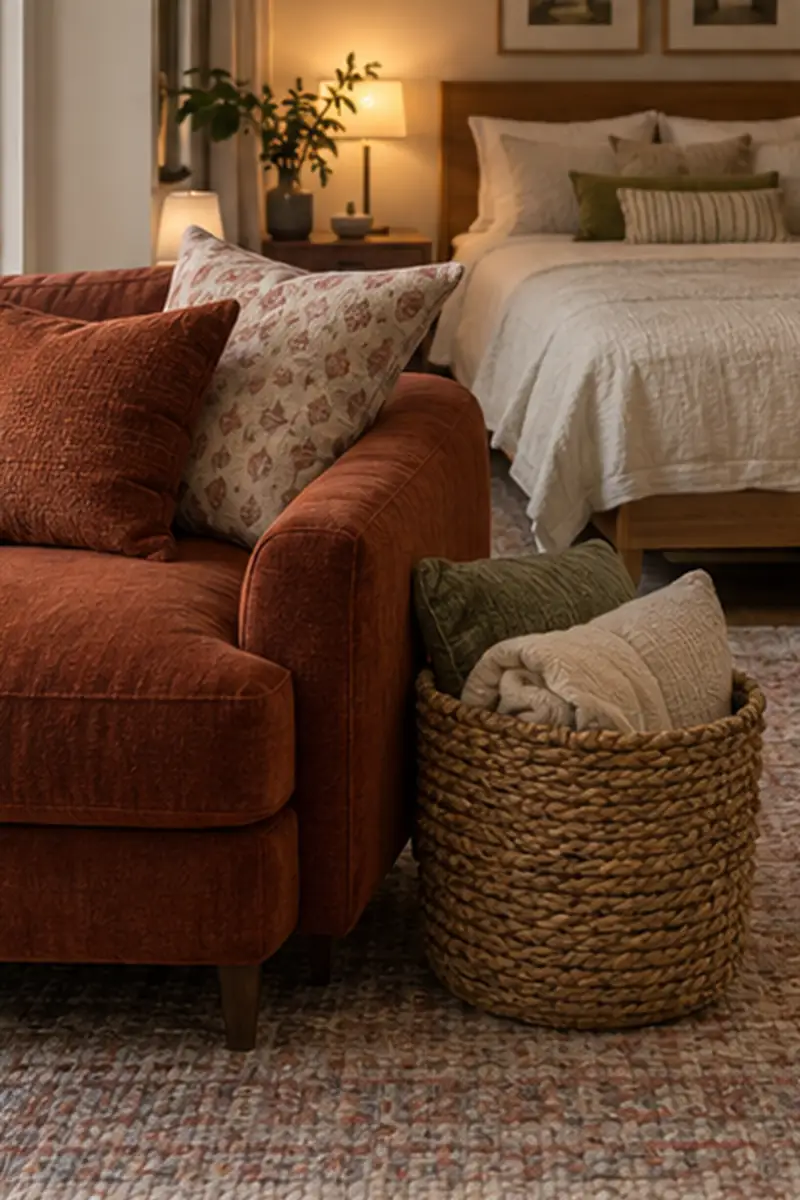
A small basket beside the sofa can hold the few soft items that move between daytime and bedtime. Give spare cushions and a light throw an obvious landing place, so the bed does not become their storage shelf. Choose a basket that fits beside furniture without projecting into the passage.
Keep the reset short enough to become part of your evening routine. Put reading materials away, return the remote or glasses to their usual spot, and straighten the bed. If the basket stays overflowing, reduce the extra textiles rather than adding another container that takes up more of the floor.
18. Balanced Textile Layers
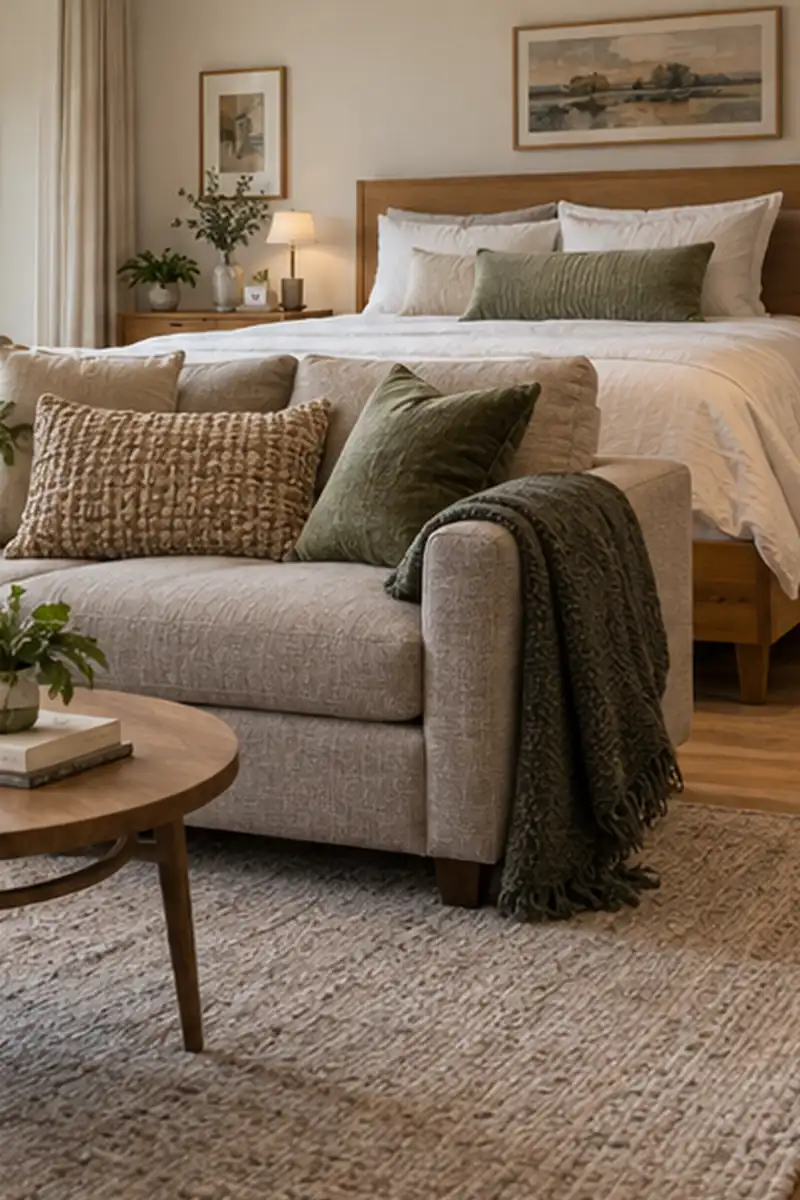
- Choose smoother, simpler bedding for the quieter sleeping side.
- Use one more textured cushion or throw on the sofa to give the living area its own character.
- Repeat a small amount of the same color across both zones so the contrast feels intentional.
- Keep spare layers within existing storage rather than piling them onto an unused chair.
Texture creates a change of mood without demanding a physical divider. Linen bedding and a nubby sofa throw can feel connected while serving different routines. Choose fabrics you can care for comfortably, and limit the number of layers to what you actually use. The room should still feel easy to reset.
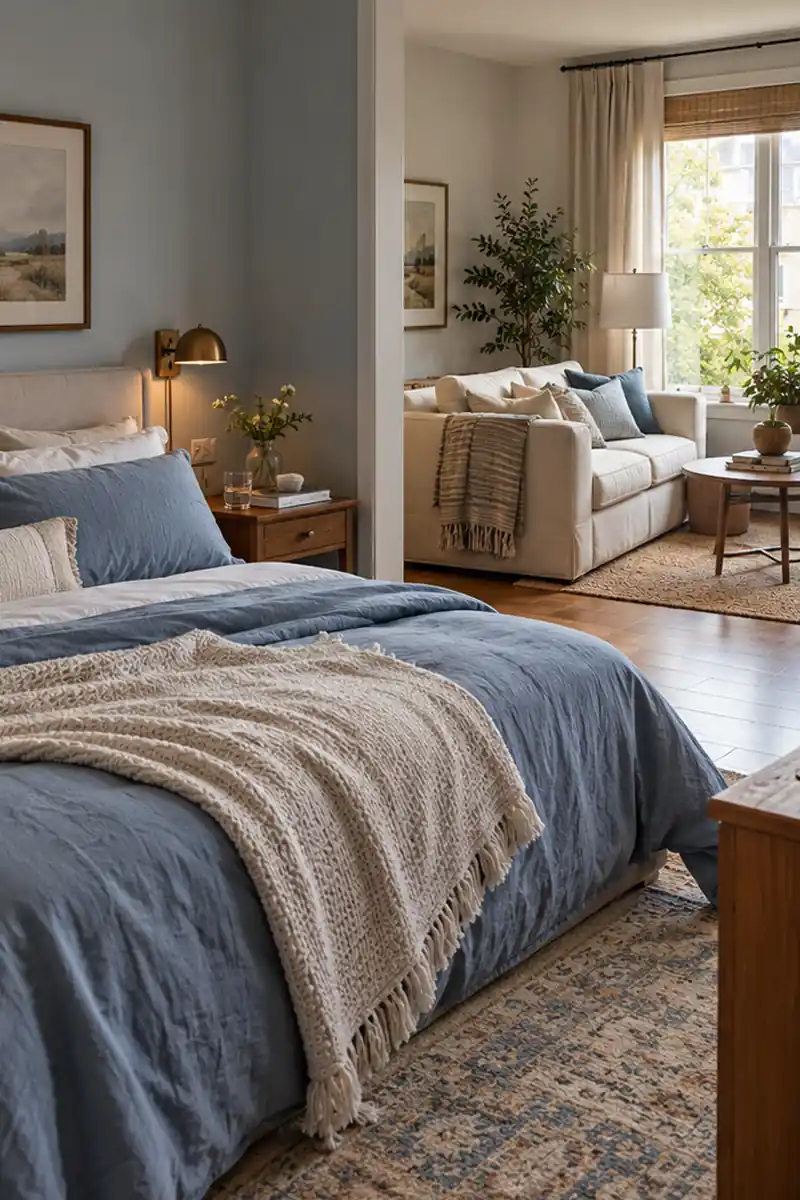
19. Personal Bedside Retreat
Quick Tip:
Give the sleeping area one small surface that belongs only to bedtime. Keep a book, water, and your usual essentials there, while leaving guest drinks and living room objects on the other side of the room.
A modest bedside retreat makes the sleeping zone feel respected even when the room stays open. Turn the main living seat slightly away if that improves the sense of separation. Keep the bedside reachable and uncluttered, then choose one comforting detail, such as a favorite textile, that marks the transition into rest.
Conclusion
Thoughtful bedroom living room combo ideas make the shift between daytime activity and nighttime rest feel easier. Start with one clear boundary, one practical storage habit, or separate lighting for the two zones. Keep the route through the room open and let your daily routine decide how much privacy you need. You can adjust the arrangement gradually instead of buying every piece at once. Save this post on Pinterest for your next small-space refresh, try one idea this week, and share the article with someone combining living and sleeping areas. A comfortable room leaves space for both company and quiet.
Community
Join the conversation
Add a useful idea, ask a specific question, or share what worked in your space. Every comment is reviewed before it appears.