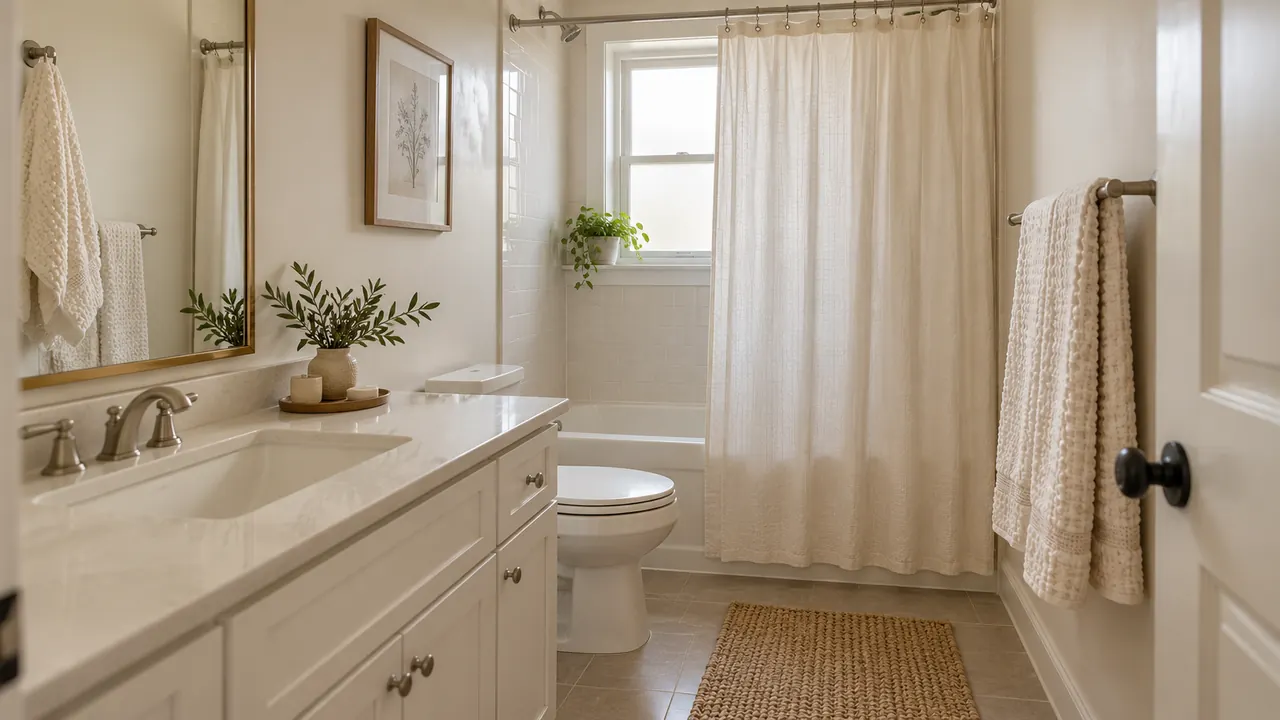
The best way to decorate a small bathroom starts with what you see from the doorway. A crowded counter, several strong colors, or a heavy curtain can make a useful little room feel busy. You do not need to change every fitting to soften that impression. Begin with the largest visible surfaces, then choose a few details that bring them together. These seventeen ideas focus on color, light, texture, and proportion rather than adding more storage. Try one change at a time, and keep the choices that make the room feel pleasant while leaving your daily routine easy to manage.
1. Warm White Walls
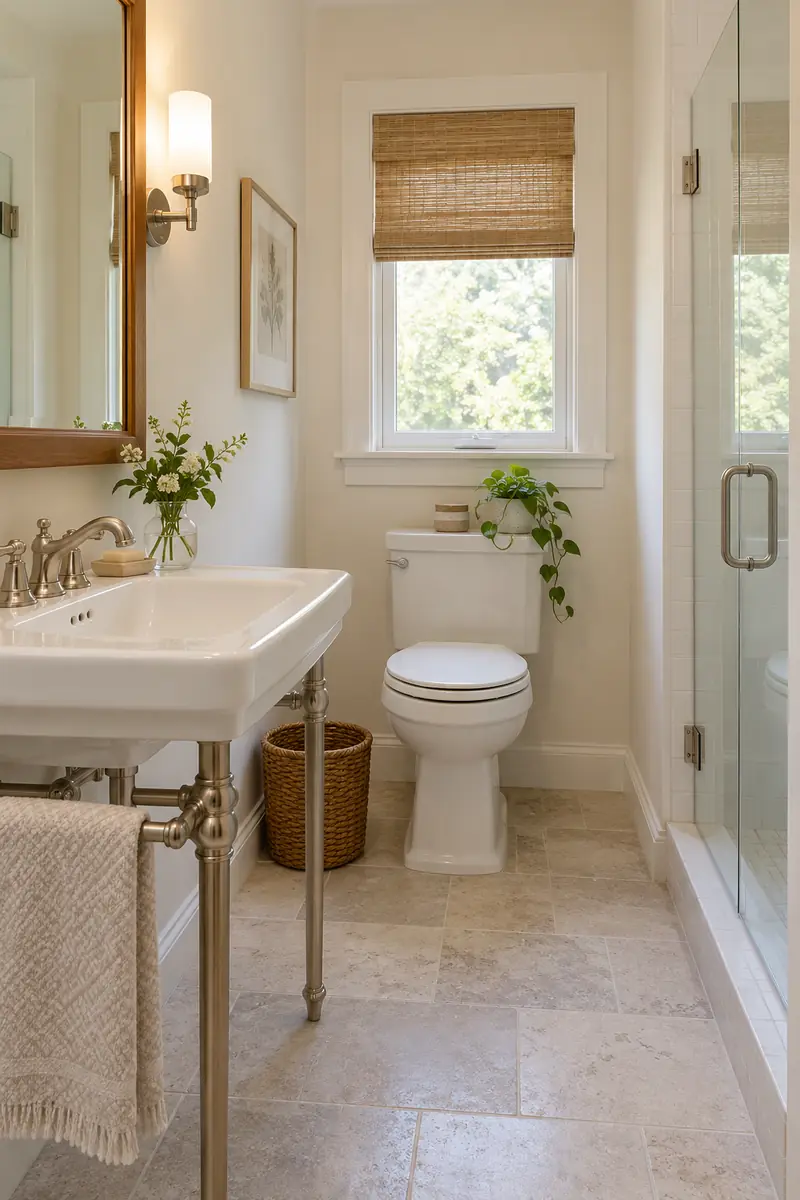
A warm white can soften the contrast between a white basin and the surrounding wall. Compare samples beside your existing tile rather than choosing from a screen. An ivory that looks gentle in daylight may seem yellow beside cool gray grout, so check the pairing before committing.
Let the tile guide the undertone. Keep the ceiling visually quiet. Compare the wall in morning and evening light. Choose a coating suitable for the bathroom conditions. A mostly pale room still needs some texture, whether that comes from towels, a curtain, or the floor.
2. One Quiet Accent
- Begin with a towel color you enjoy.
- Repeat it in one small accessory.
- Leave larger fixtures neutral.
- Remove an unrelated accent before adding another.
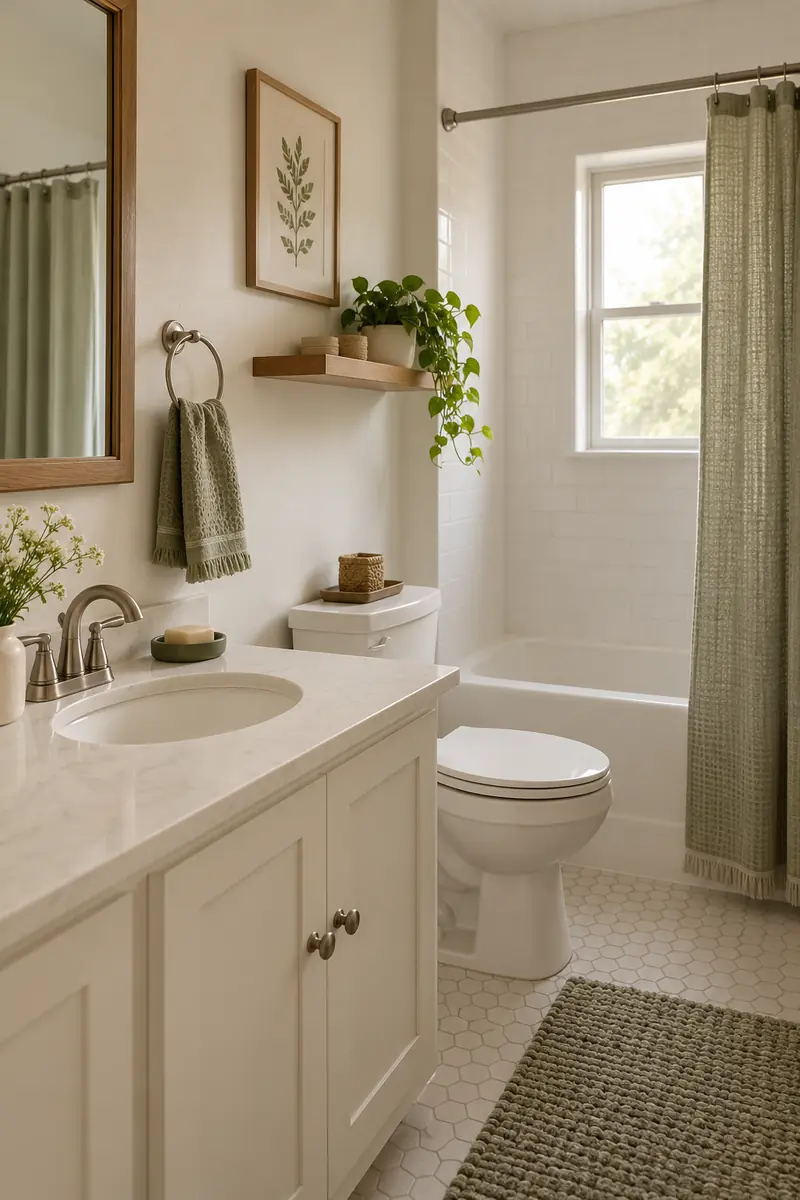
Choose one accent color and repeat it in just a couple of useful objects. Sage towels and a matching soap dish give the eye something to recognize without making every corner compete. Keep the surrounding finishes fairly quiet so the color reads as a deliberate choice rather than another layer.
3. A Taller Mirror
Quick tip: Mark the proposed outline with removable paper before buying.
Look at it from the doorway and while standing at the sink.
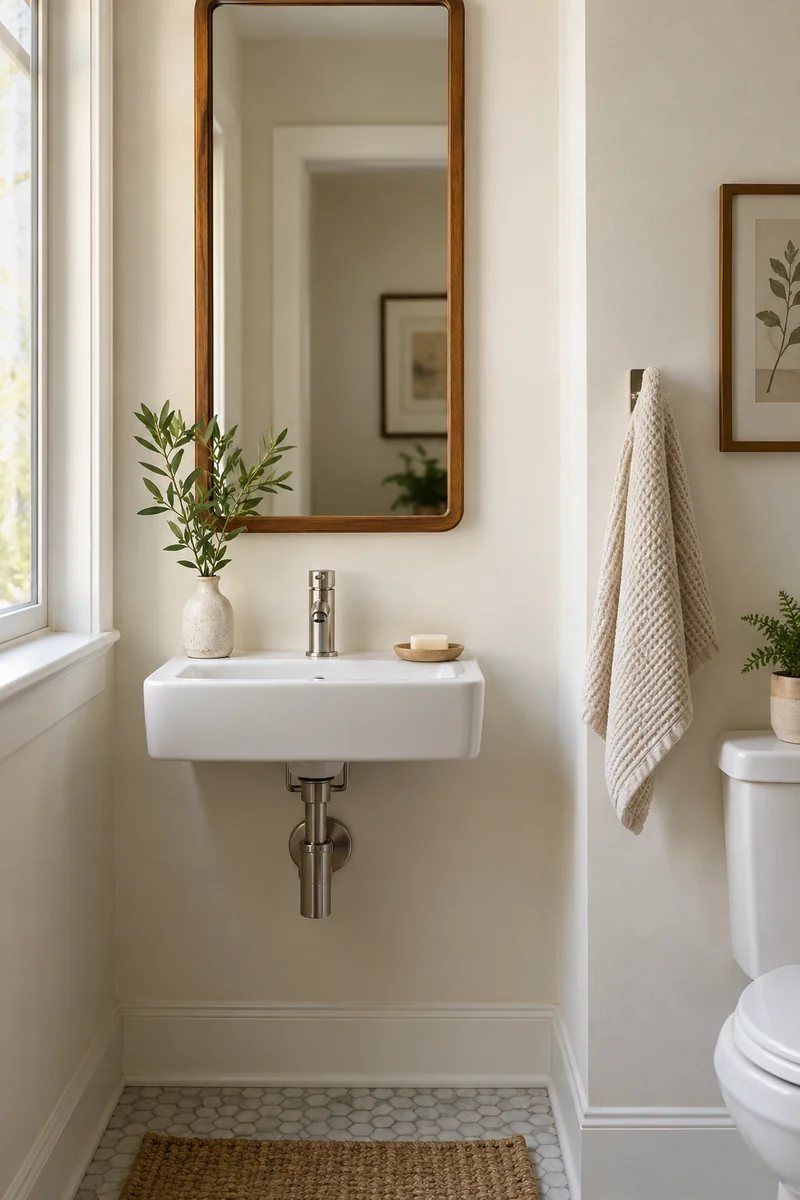
A taller mirror draws attention upward without adding another decorative object to the counter. Match its width to the basin area and leave a little wall showing around the frame. Before replacing a mirror, check the wall construction, mounting requirements, and any permissions needed for the work.
4. Soft Window Light
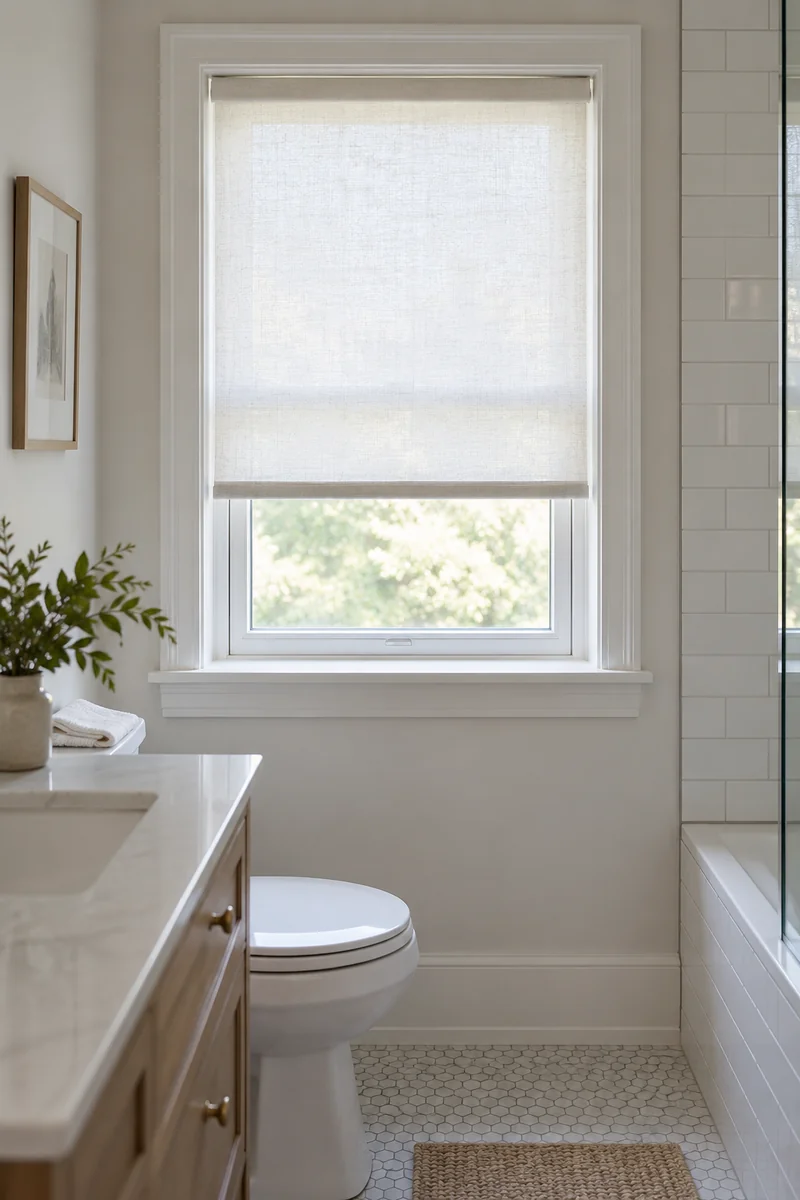
Before: A thick patterned curtain occupies most of the little window. Its folds become the first thing you notice.
After: A simple privacy shade keeps the window outline clear. Soft daylight becomes part of the room’s decoration.
If you have a window, keep its treatment as simple as privacy allows. A plain shade can soften daylight while avoiding the bulk of layered fabric. Compare samples in the actual room, and choose materials and fittings suitable for the moisture and cleaning conditions around that window.
5. A Unified Curtain
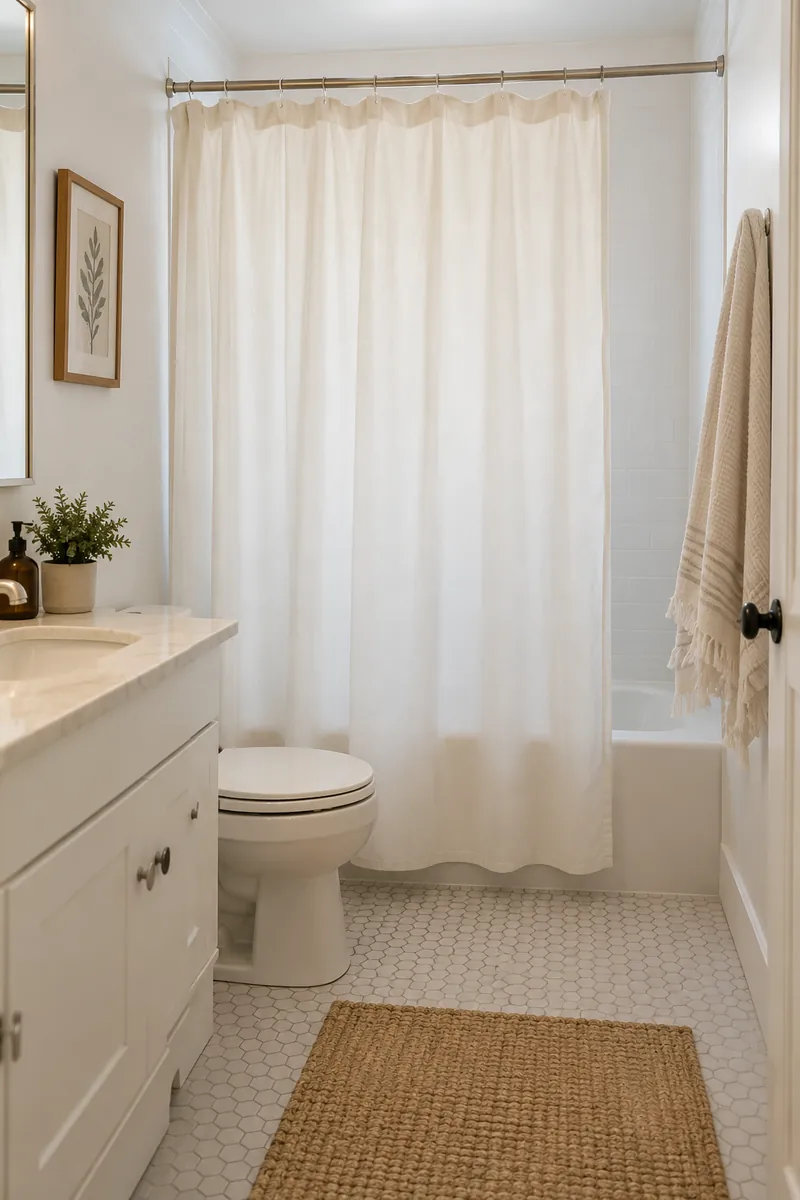
- Measure the hanging distance to the tub.
- Compare warm and cool white samples.
- Choose a simple fabric texture.
- Keep the necessary liner arranged inside the tub.
A plain shower curtain can act like a quiet wall when the tub is not in use. Pick a tone that relates to the surrounding tile rather than creating a separate color block. Check its length carefully so it works with the tub and does not drag across the floor.
6. Fine Or Bold Stripes
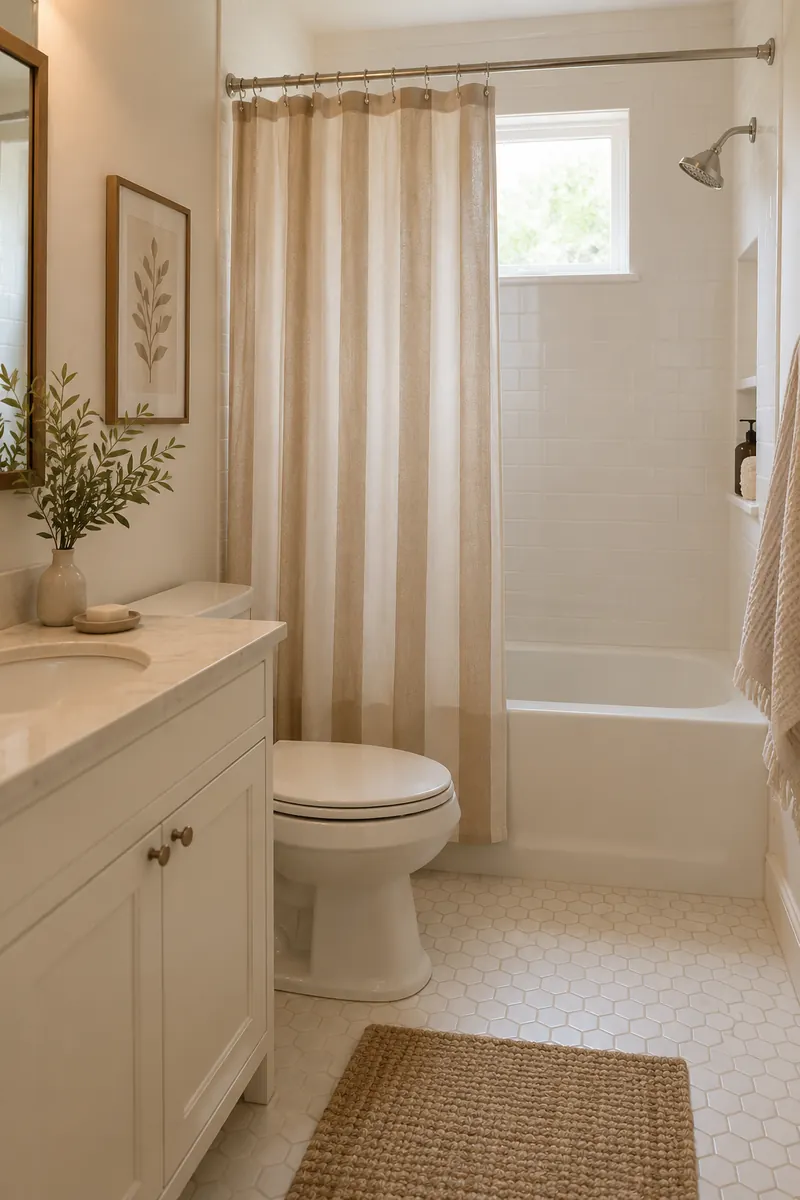
Fine stripes
Contrast: soft from the doorway
Towels: subtle texture works
Artwork: one simple print
Broad stripes
Contrast: graphic and clear
Towels: plain colors work
Artwork: quiet or omitted
Stripes can give a plain bathroom a little rhythm, but their spacing changes the mood. A few broad bands feel graphic; fine lines read more like texture from a distance. Keep other patterned accessories restrained, especially when the floor already has a strong repeating tile design.
7. Room Around Objects
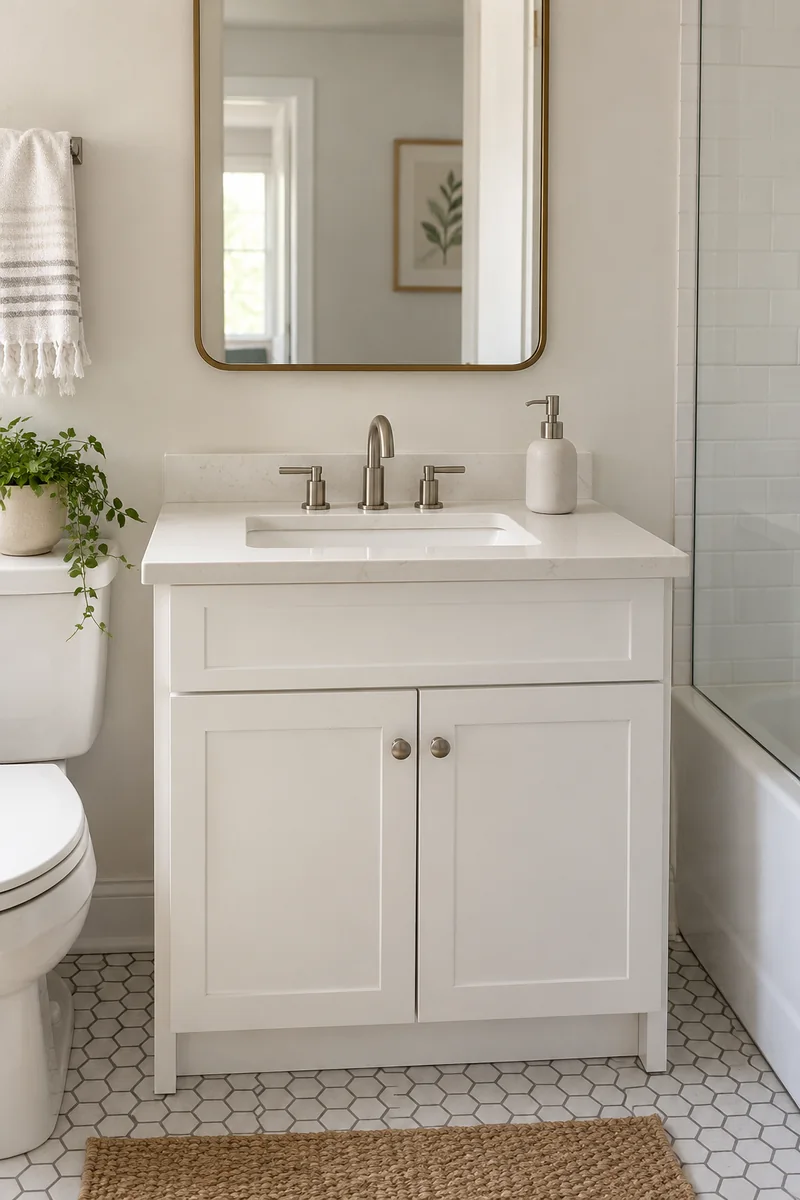
Do:
- Keep the faucet area clear.
- Choose one useful accent.
- Check the view from the door.
Don’t:
- Add a tray that crowds the basin.
- fill every empty corner.
- use fragile ornaments beside daily activity.
Clear space is part of the arrangement, not a gap that needs filling. Let one useful soap pump stand alone on the basin ledge if that is all the room needs. You can still introduce character through its shape or finish while keeping the counter easy to wipe.
8. Tonal Towel Texture
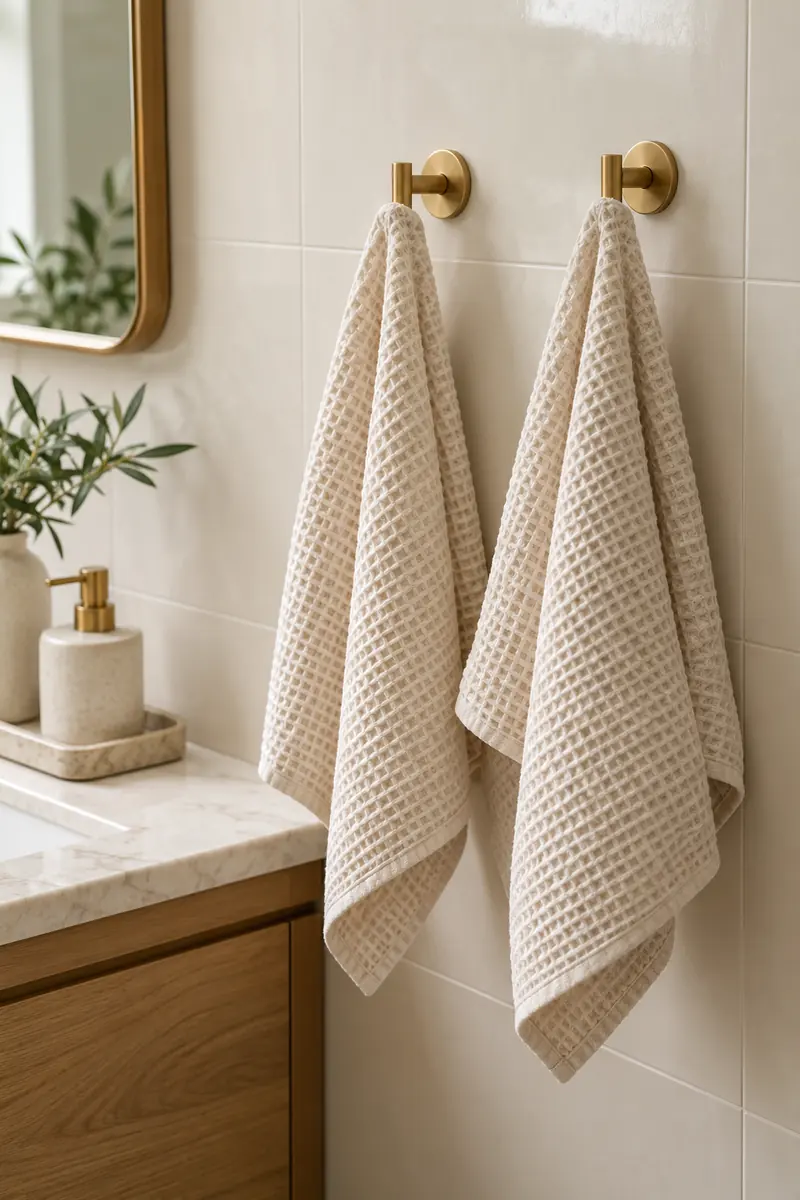
- Color: Cream keeps the contrast gentle.
- Pattern: Waffle weave adds small shadows.
- Placement: Hang towels where they can dry.
- Balance: Leave nearby tile and accessories simple.
Texture gives a pale bathroom depth without introducing another color. Waffle towels, a softly woven curtain, or a ribbed ceramic cup can each do that job. Choose one or two textures with different scales so the room feels considered rather than covered in competing raised patterns.
9. A Rounded Silhouette
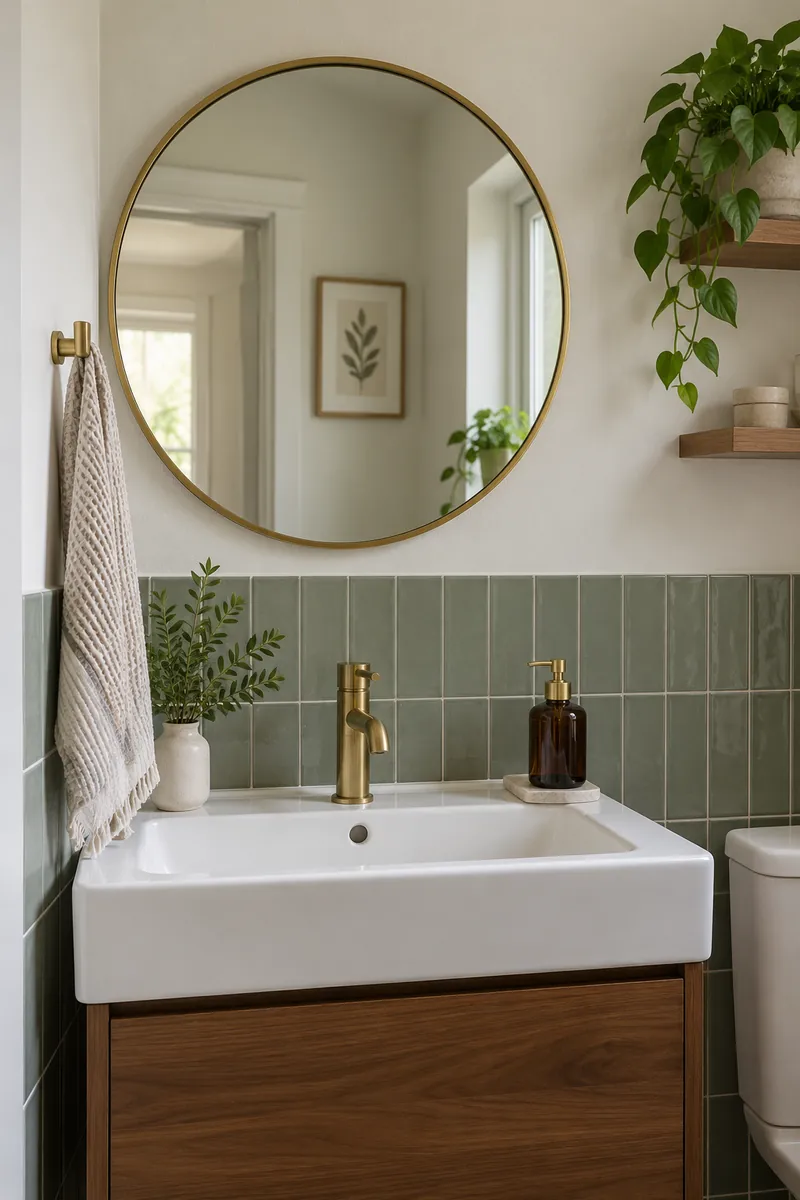
A round mirror can interrupt a room full of square tiles, straight grout lines, and rectangular fittings. The effect comes from the shape itself, so an elaborate frame is rarely necessary. Choose a diameter that leaves the basin usable and does not crowd neighboring walls or fixtures.
Look at the complete sink wall, not just the mirror in isolation. A thin frame keeps the outline clear. A deeper frame adds more weight. Repeat the curve once in a soap dish or cup if you like, then let the other shapes stay simple.
10. A Modest Color Field
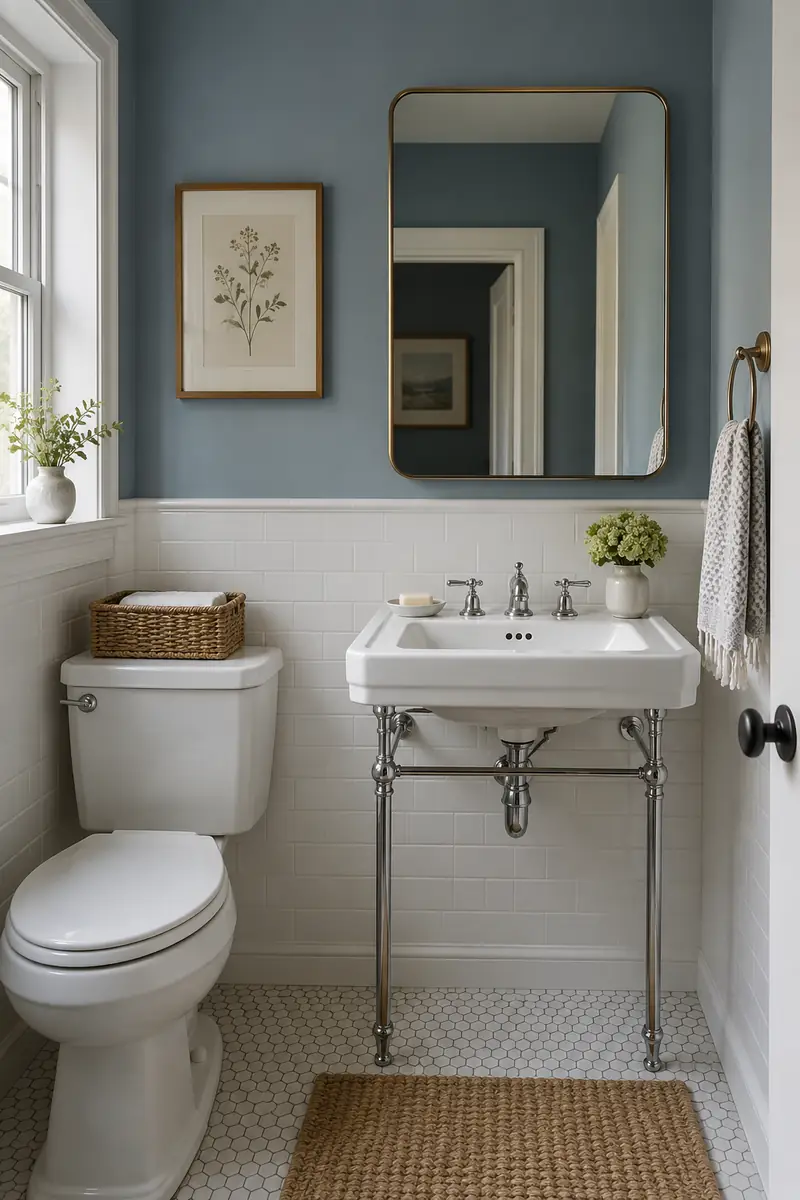
- Keep existing tile as the starting point.
- Test a sample near the mirror.
- Repeat the shade in one small detail.
- Leave the ceiling quiet if the room feels busy.
A modest area of color can make a bathroom feel personal without covering every surface. The upper wall above existing tile is one possible place to start. Use the tile and floor as your reference points, then test a muted shade that works with both rather than fighting them.
11. One Focused Print
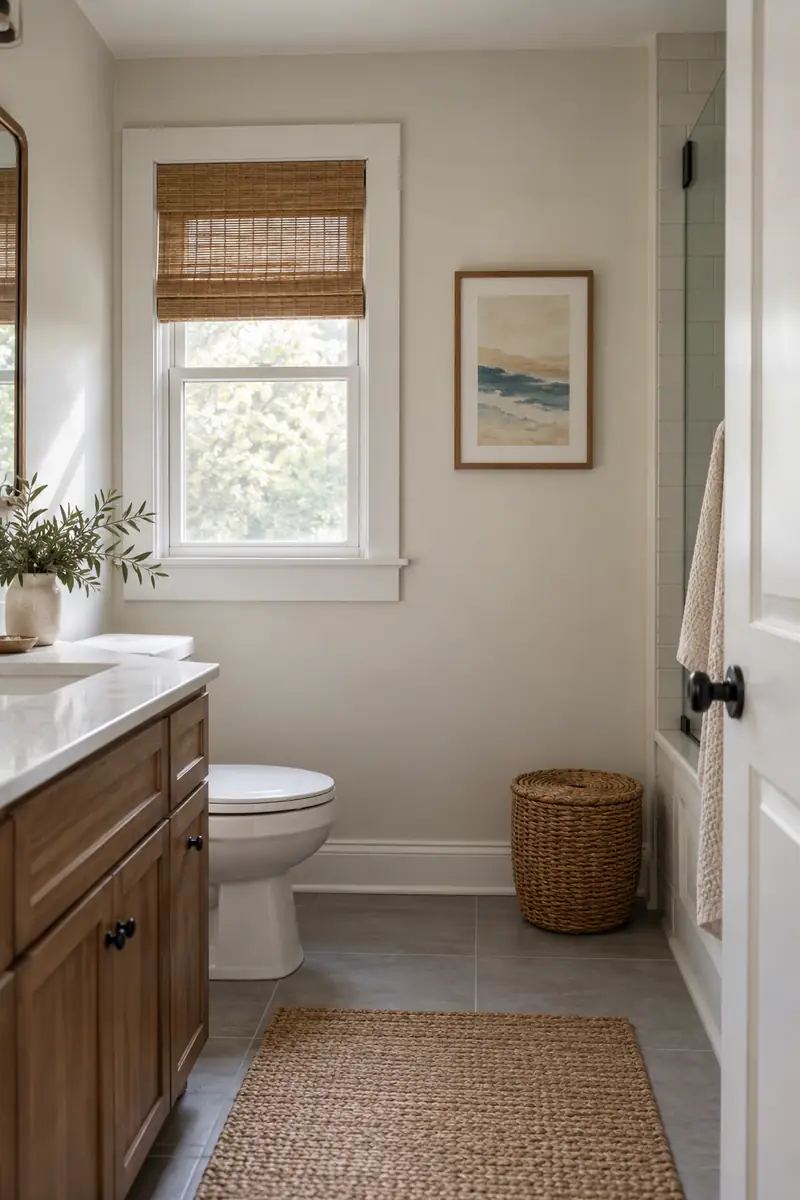
Quick tip: Choose a print with generous blank space if the tile is patterned.
A simple image will be easier to read across a small room.
One small artwork often gives a compact bathroom enough personality. Place it on a relatively dry wall away from direct spray, and choose framing suited to the conditions. For more ideas on scale, browse these small-apartment wall art ideas and adapt just one arrangement to your room.
12. A Restrained Metal Mix
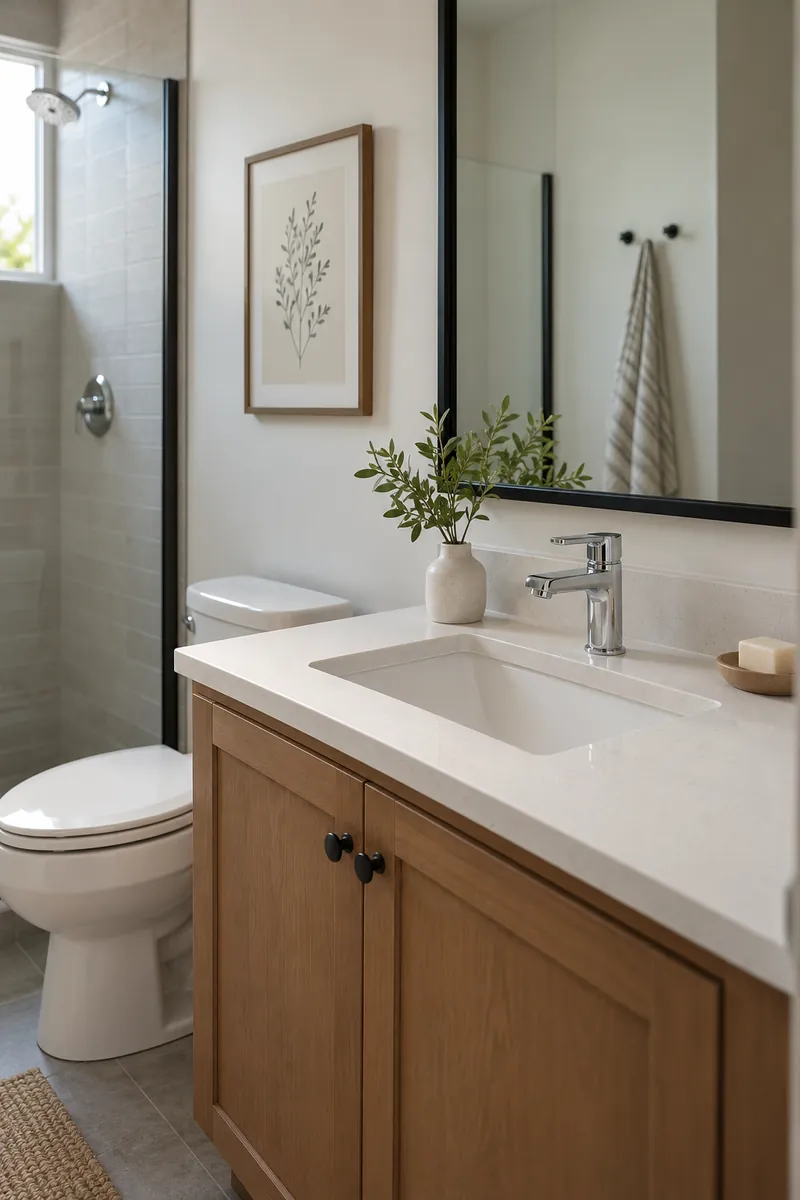
Before: Several unrelated shiny finishes compete around the basin. Each accessory seems to belong to a different room.
After: The existing chrome fittings remain the anchor. One slim dark frame provides a clear, controlled contrast.
You can work with an existing faucet finish rather than replacing everything to match. Repeat that metal where it already belongs, then use one contrasting finish sparingly. A narrow black mirror frame beside chrome fittings can look intentional when the rest of the accessories stay simple.
13. A Properly Sized Mat
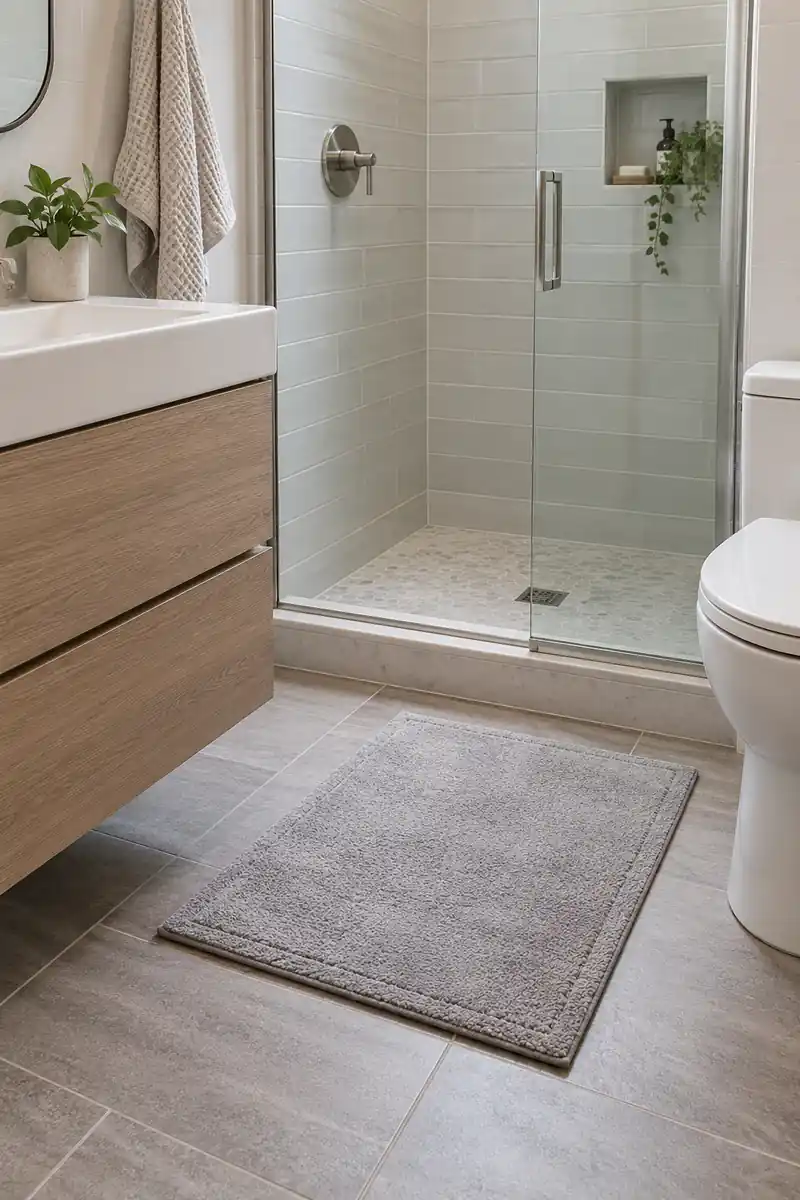
- Measure the usable landing area.
- Check the door swing.
- Choose a bathroom-appropriate mat.
- Compare its color with the floor rather than the wall.
A bath mat should fit the place where you step out, with enough visible floor around it to keep the room readable. Avoid choosing a decorative rug that overwhelms the doorway or bunches against fixtures. Check the mat’s care and surface requirements, and keep it flat and appropriately positioned.
14. A Light Wood Note
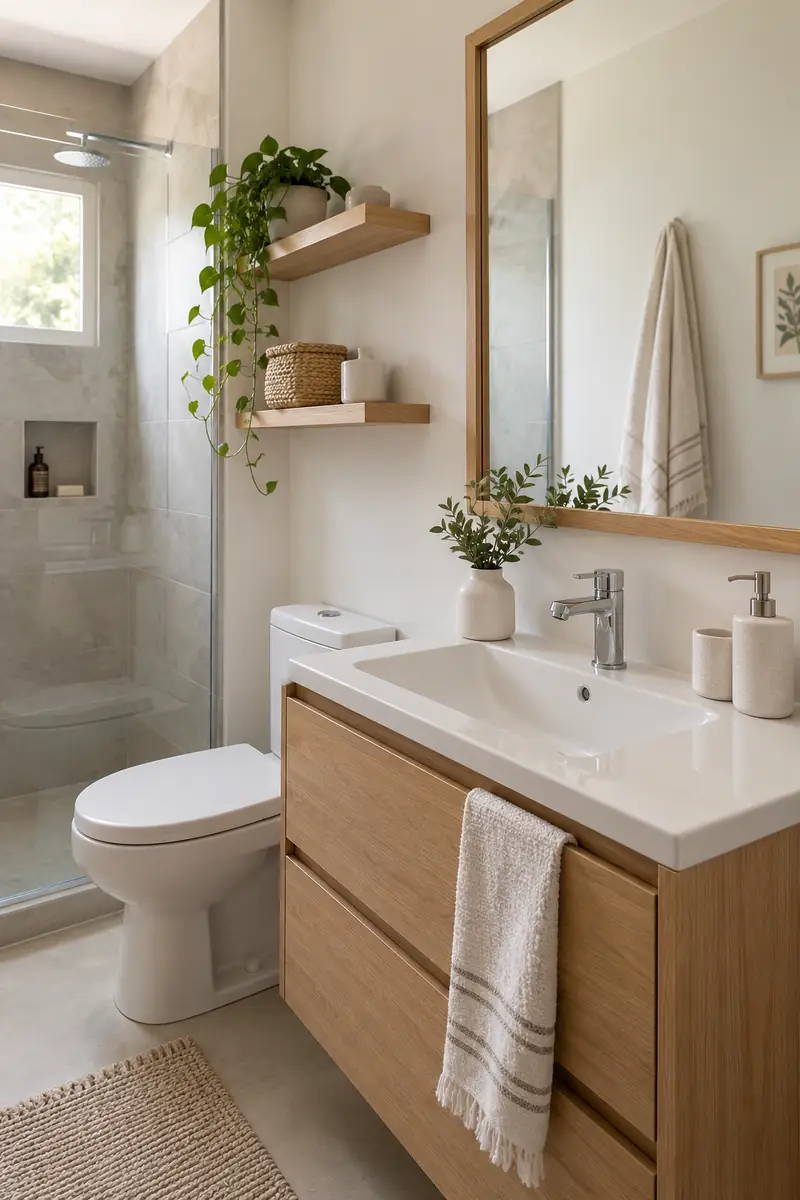
Light oak
Contrast: gentle against white
Grain: visually quiet
Impression: light and airy
Walnut tone
Contrast: stronger against white
Grain: richer and more visible
Impression: warm and defined
A small amount of wood can warm up tile and ceramic without turning the room into a material showcase. A mirror frame is one relatively contained option. Keep wood away from repeated splashes, follow its care guidance, and resist adding several unrelated wood tones in the same little space.
15. Greenery Near Daylight
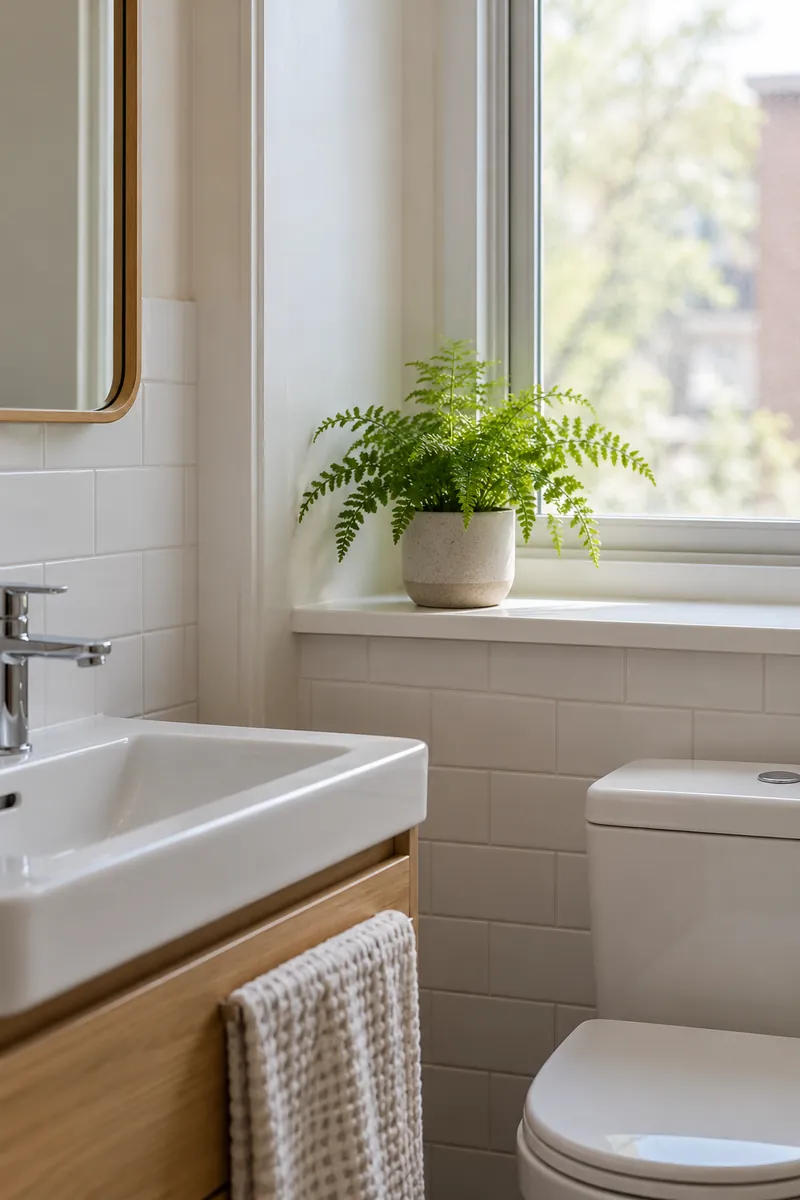
Do:
- Check available daylight.
- Keep the pot contained.
- Leave access to the window.
Don’t:
- block ventilation.
- place a plant in constant spray.
- assume every plant suits a bathroom.
Greenery works best when the bathroom actually provides the light the plant needs. A small pot on a dry windowsill may be enough to soften the hard finishes. These compact apartment plant ideas offer more placement inspiration, but keep the final choice suited to your own conditions.
16. A Deliberate Dark Detail
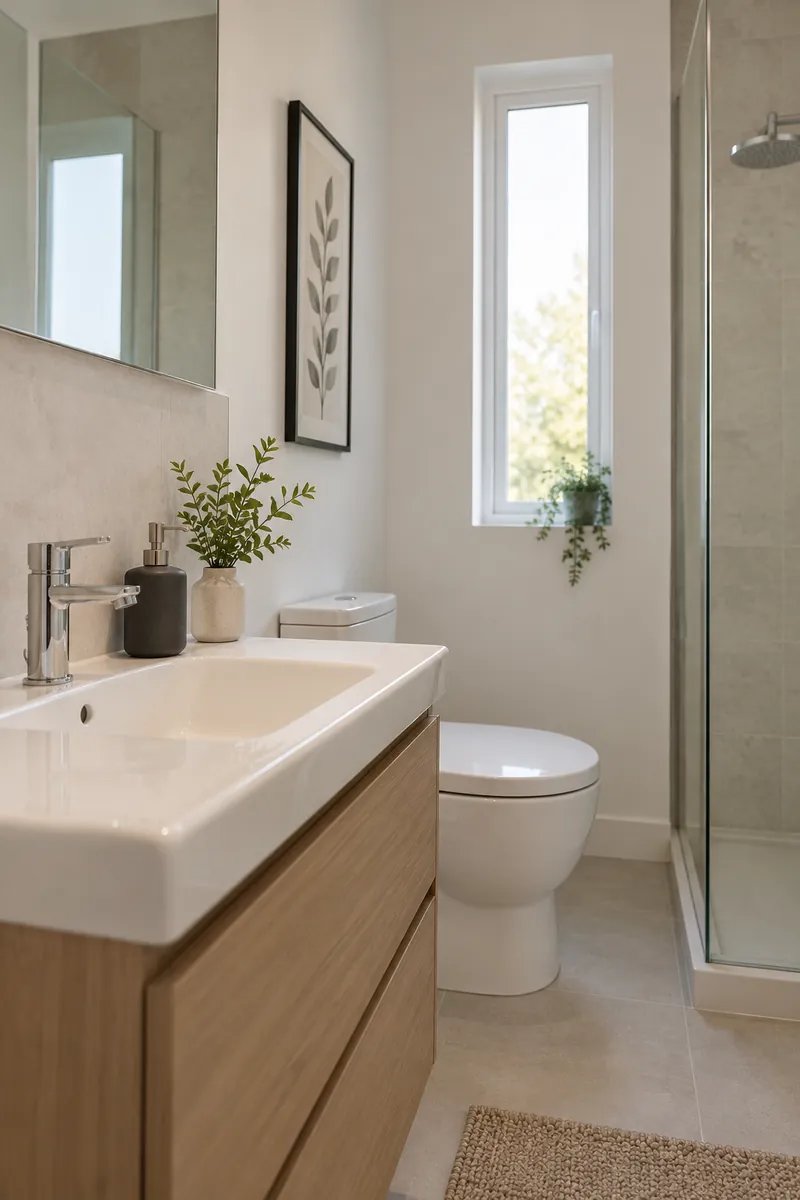
- Amount: One or two details are enough.
- Finish: Matte surfaces soften the contrast.
- Position: Keep useful objects within reach.
- Partner: Repeat a nearby line or shape.
A dark detail can sharpen a pale room without making the whole bathroom dark. Try a charcoal soap pump, a narrow frame, or a small dark dish. Keep the shape simple and the placement deliberate so the contrast gives the eye a resting point rather than another distraction.
17. A Calm Doorway View
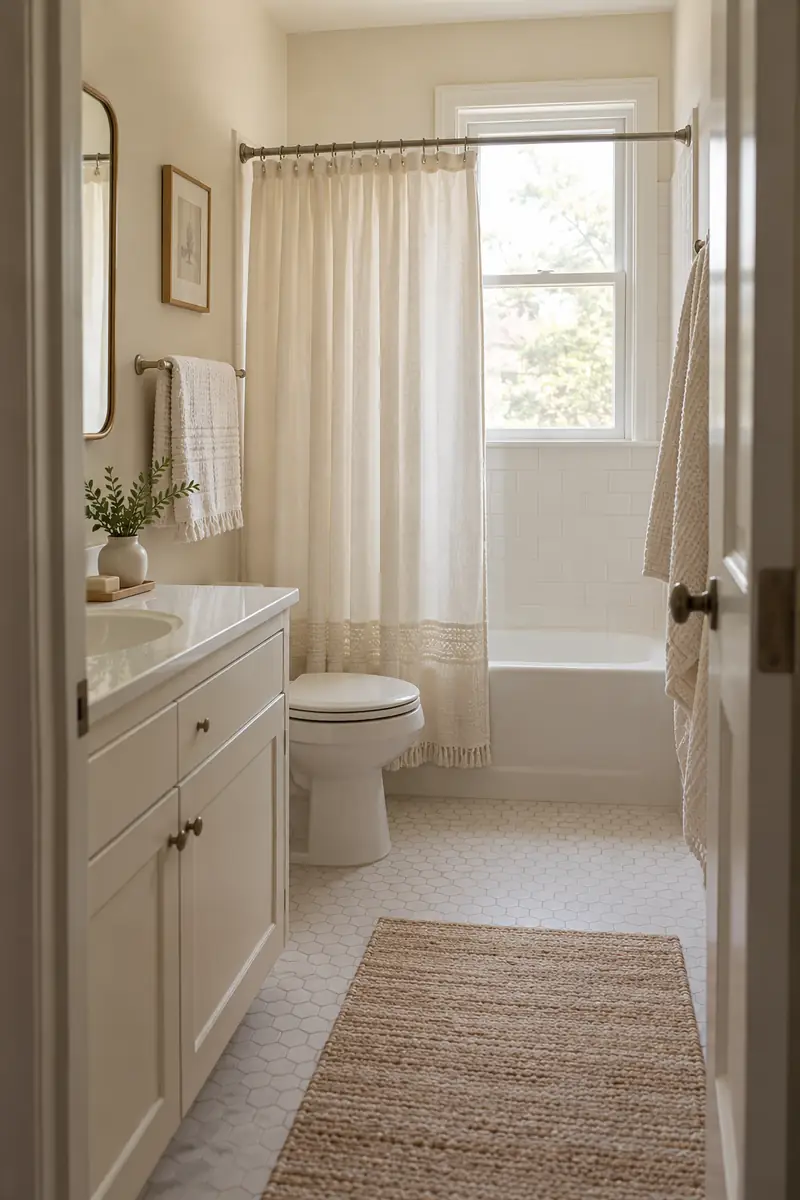
The doorway view is a useful final check because it shows the room as a whole. Stand back and notice what attracts your attention first. If it is a jumble of packaging or clashing towels, simplify that spot before buying another decorative piece for a different corner.
Check the curtain, mirror, towels, and floor together. Their colors do not need to match exactly, but they should feel comfortable beside one another. Keep the walkway clear and the necessary objects easy to reach. A finished room can still look relaxed, ordinary, and genuinely used.
Frequently Asked Questions
What should I change first in a small bathroom?
Start with the largest easy-to-change surface, usually the shower curtain or wall color. Then adjust towels and one small accessory to suit it. This gives you a clear direction before you spend time on tiny details.
Does a small bathroom have to be white?
No. Muted colors and darker accents can work well. The important question is how the color relates to the existing tile, available light, and other visible surfaces. Test it in the room rather than relying on a photograph.
How many decorative accessories are enough?
There is no fixed number. Start with objects you already use, such as towels and a soap pump, and give them pleasing colors or textures. Add art or greenery only where it does not interfere with ordinary use.
How can I decorate a rental bathroom?
Begin with a shower curtain, towels, bath mat, and removable countertop accessories. Check your lease or ask permission before painting, drilling, or replacing fittings. No adhesive or removable product is suitable for every surface, especially in damp conditions.
Conclusion
The best way to decorate a small bathroom is to make a few connected choices and give them room to work. Start with the wall or curtain, choose a quiet color relationship, and add texture through things you already need. Then check the mirror, mat, and accessories from the doorway. Keep the details that improve the whole view and remove anything that makes daily use awkward. A small bathroom does not need to look empty to feel calm. It needs a clear visual direction, a little personal character, and enough open space for the ordinary routines that happen there every day.
Community
Join the conversation
Add a useful idea, ask a specific question, or share what worked in your space. Every comment is reviewed before it appears.